‘Amazing Grace’ movie: Story of William Wilberforce, the Model Campaigner

One man, one resolve -- and history is changed!
“When people speak of great men, they think of men like Napoleon – men of violence. Rarely do they think of peaceful men. But contrast the reception they will receive when they return home from their battles. Napoleon will arrive in pomp and in power, a man who’s achieved the very summit of earthly ambition. And yet his dreams will be haunted by the oppressions of war. William Wilberforce, however, will return to his family, lay his head on his pillow and remember: the slave trade is no more.”

Those words are uttered by the character Lord Charles Fox in the British House of Commons towards the end of the 2006 movie Amazing Grace. They sum up the singular accomplishment of William Wilberforce (1759 – 1833), British politician, philanthropist and leader of the movement to abolish the slave trade.

The movie, based on his true story, is not just a well-made period drama. It also offers dramatic insights into one of the most successful – and consequential – social justice campaigns in history. It reminds us that a determined man or woman can, indeed, make a difference in our complex world.

Inspired by a recent visit to Yorkshire, where Wilberforce hailed from, I’ve just watched the movie — and am amazed to find how many such striking parallels there are to evidence-based policy change and law reform in a very different world of ours more than two centuries later.

But first, here’s the storyline from the Internet Movie Database (IMDb):

“In 1797, William Wilberforce, the great crusader for the British abolition of slavery, is taking a vacation for his health even while he is sicker at heart for his frustrated cause. However, meeting the charming Barbara Spooner, Wilberforce finds a soulmate to share the story of his struggle. With few allies such as his mentor, John Newton, a slave ship captain turned repentant priest who penned the great hymn, “Amazing Grace,” Prime William Pitt, and Olaudah Equiano, the erudite former slave turned author, Wilberforce fruitlessly fights both public indifference and moneyed opposition determined to keep their exploitation safe. Nevertheless, Wilberforce finds the inspiration in newfound love to rejuvenate the fight with new ideas that would lead to a great victory for social justice.”

A detailed plot synopsis on IMDB

Wikipedia has a good summary of how Wilberforce and his few determined friends sustained a campaign against this inhuman yet highly lucrative trade.

Wilberforce was every bit the resolute campaigner: used every trick in the book, and then some. He diligently amassed incriminating evidence about the mass-scale abuse of human rights taking place in far-away Africa and on the high seas transporting captured African slaves. He wrote and spoke extensively using facts and figures as well as appeals to human emotions. He collected eye witness testimonials, and gathered over 300,000 signatures in a petition from ordinary people calling for abolition of slavery — which countered the political argument that people didn’t care.

William Wilberforce by Karl Anton Hickel, circa 1794
Wilberforce must have been among the first to realise the power of collective consumer action. On his urging, conscientious consumers in Britain boycotted sugar grown in the Caribbean with slave labour. One of the most sucessful campaigns the Abolition Movement was responsible for was the Sugar Boycott. According to one source: “In 1791 the society distributed leaflets encouraging the public, and especially women, not to buy or use sugar produced in the West Indies by slaves. As a result about 300,000 people boycotted sugar and sales began to drop. In an effort to increase sales, some shops stocked only sugar imported from India, which had not been produced by slaves, and goods were labelled to show this.”

He also worked on and with influential religious and political connections. He surrounded himself with a few trustworthy friends who stay the course despite multiple setbacks, ridicule and character assassination. He was passionate to the point of being obsessive. Yet he also knew when to speak and when to make a tactical retreat. His timing was impeccable as were his patience and commitment.

He wasn’t successful with every social justice campaign he took up. First elected to Parliament in 1780, he campaigned unsuccessfully for penal and electoral reform. It was in 1787, at the encouragement of William Pitt the Younger — his long-long friend and Prime Minister — that he took up the cause of abolition at Westminster. But his humanitarian and ethical arguments had to meet the economic interests of those who had made vast fortunes from the slave trade or the use of slave labour. Many of his fellow Parliamentarians had deep vested interests that wanted to see the status quo continue. Others were in the pay of slave traders.

It was not until 1807 — full 20 years after Wilberforce first started his campaign — that the Abolition Bill was finally passed. Just before that, Wilberforce wrote his famous ‘Letter on the Abolition of the Slave Trade, Addressed to the Freeholders and Other Inhabitants of Yorkshire’, justifying his preoccupation with abolition against claims that he was neglecting their local interests at Westminster, and setting out all his arguments against the slave trade.

Then, as now, elected people’s representatives have to perform this difficult balancing act — between their constituency’s immediate, everyday needs and the greater good or national interest. Which is why all progressive legislators and social justice campaigners should watch Amazing Grace, and read the Wilberforce biography.

Times have indeed changed, but their challenges have not.

Wikipedia entry on Amazing Grace movie

Watch the trailer for Amazing Grace:
Resilience 2011: Banging Heads together to make lives better

What does Livelihood Resilience mean to them?

I am at Resilience 2011: Asia Regional Conference on Building Livelihood Resilience in Changing Climate, being held in Kuala Lumpur, Malaysia, from 3 – 5 March 2011. It is jointly organised by Wetlands International-South Asia (WISA), International Development Research Center (IDRC), The Climate and Development Knowledge Network (CDKN), Cordaid and ekgaon technologies

The conference has attracted three dozen researchers, practitioners and policy makers from across the Asia Pacific region, and from different ‘domains’: Disaster Risk Reduction (DRR) and disaster management; Ecosystem services and conservation; and livelihoods and socio-economic development.

I like hobnob with researchers and activists from whom I learn much. As a science and development communicator, I sit through their often very technical discussions and find ways of relating them to the bigger realities. For a start, I created a word map of the keywords being used in the conference. That gives an idea of concerns at a glance.

I then tried to make sense of the conference introduction note, published on the event website. It looks and reads like the work of a committee, and not the easiest to read and absorb unless one is deep immersed in these areas. Since most of us aren’t, I spent an hour or two rewriting it in my own language. Here it is — my version of what Resilience 2011 conference is trying to accomplish:

Building Livelihood Resilience in Changing Climate Asia Regional Conference
Kuala Lumpur, Malaysia, 3 – 5 March 2011
A layman’s interpretation of the vision, scope and aims of the conference

Asia, home to over 60 per cent of all human beings, is the largest and most diverse geographical region in the world. It is also a region of sharp contrasts and disparities in economic and social development.

Some Asian economies have been growing faster than any other on the planet, and even the global recession has not slowed them down too much. This growth has helped push tens of millions of people out of poverty during the past three decades. Yet, Asia still has the largest number of people living in poverty and food insecurity.

In some respects, gains have been lost. For example, the UN Millennium Development Goals Report for 2010 revealed that the proportion of undernourished Asians has increased recently to levels last seen during the 1990s. Two thirds of the world’s undernourished people live in Asia. At the same time, the natural resources on which food supplies depend – land, water and biodiversity – are degrading rapidly. Food shortages and water scarcities are already being experienced, or anticipated, in many countries.

Growing number and intensity of disasters adds further pressures. According to the international disaster database EM DAT, Asia accounted for nearly half (46 per cent) of the all water related disasters in the world, and 90 per cent of all affected people during 1980 to 2006. During this period, disasters in Asia caused a total of US$ 8 billion worth of economic damage. These disasters impacted disproportionately on the poor and vulnerable sections of society.

Climate change impacts will make this situation worse for everyone, and especially for the poor who already have limited options and ability to adjust to rapid changes. It is now clear that all efforts aimed at reducing poverty and protecting the socially vulnerable groups need to factor in the additional pressures created by changing climate.

To cope with these challenges, we need better understand how livelihoods are threatened, and what strategies can be adopted to improve resilience especially at the grassroots. Researchers and practitioners in natural resource management and poverty reduction are now focusing more and more on the nexus between resources, climate changes and livelihoods.

New ways of looking at the inter-linked challenges have emerged:
• Humanitarian aid workers active on disasters now focus on disaster risk reduction, expanding the scope of risk management to include preparedness and risk reduction.
• Development practitioners working on poverty reduction emphasize on increasing access to various capitals to help address disaster risk and poverty.
• A ‘systems approach’ is being used to look at poverty in broader terms of well-being of people and ecosystem services of Nature.

In addition, researchers and activists emphasize the value of freedoms for participation, economic facilities, social opportunities, transparency guarantees, protective security and ecological security. It is only by ensuring these freedoms that the poor will have a meaningful chance to assert their rights and make their own choices in what they do, and how they do it.

The slowly but steadily warming planet challenges everyone to rethink their conceptual frameworks, and redefine or reconfigure how they work. If there is one thing certain about these uncertain and turbulent times, it is business-as-usual won’t do!

What do we seek to achieve?

Each sector has accumulated a knowledge base, set of best practices and lessons learnt exist within individual domains. Each sector’s theories, approaches and actions within various domains differ on how to make livelihoods more resilient, especially in the often harsh realities of the developing world.

They are all necessary, but not sufficient. Taken individually, no single approach or solution can help make everybody’s livelihoods resilient from the multitude of pressures and impacts. Yet, what one strand cannot withstand on its own, a bundle of strands very likely can: bringing different areas of research, advocacy and practice is the way forward to ensuring better resilience at the grassroots.

This is easier said than done. Both researchers and practitioners have long worked in their own silos or compartments, with occasional nods at each other’s work and periodic exchanges. From this, we need to evolve more integrated framework that brings in the ecologists, disaster managers, social scientists and everyone else who share an interest in making lives better at the grassroots and at the bottom of the income pyramid.

The Kuala Lumpur conference attempts to address this formidable challenge. It will provide a common platform to practitioners and researchers from various ‘domains’ related to livelihoods to work out a shared vision on livelihoods resilience by seeking answers to these questions:
• What are the existing challenges to achieving livelihood resilience?
• What are the gaps in existing livelihood frameworks in relation to disaster, climate change adaptation and conservation in addressing livelihood resilience?
• What are the challenges in scaling up pilot models of Livelihood Resilience?
• How does social adaptation occur in resilience building?

Wildlife and Natural History Film making: Are Darwinian Rules at play?

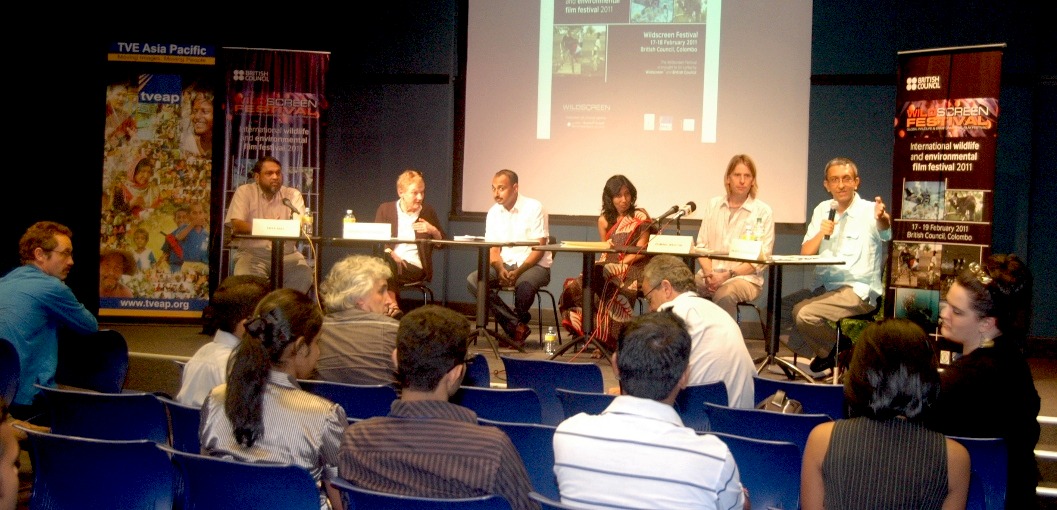
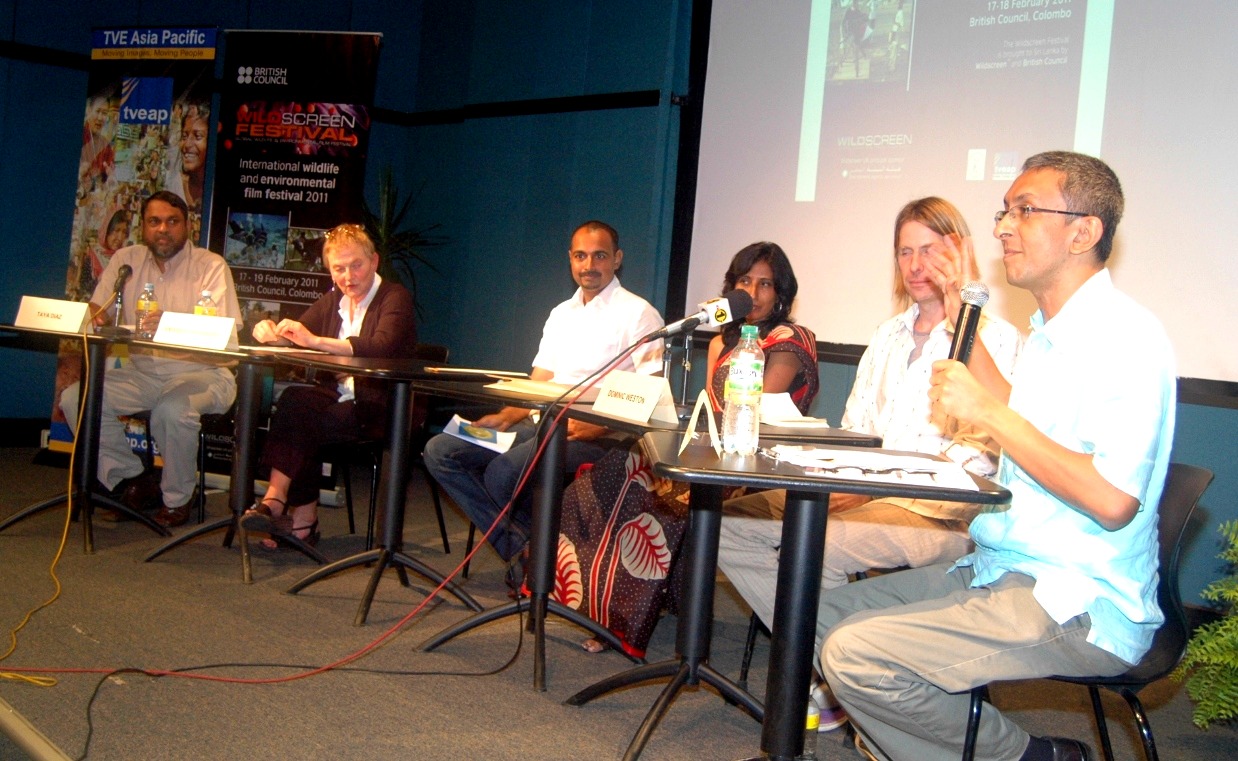
Wildscreen 2011 Colombo Panel: From L to R - Taya Diaz, Amanda Theunissen, Delon Weerasinghe, Anoma Rajakaruna, Dominic Weston and Nalaka Gunawardene

Is there an elite or ‘charmed’ circle of wildlife and natural history film makers in the world? If so, how does a new film maker break into this circle?

This is the question I posed to a group of visiting British film makers and their Sri Lankan counterparts during a panel discussion I moderated at the British Council Colombo on February 17 evening.

The panel, organised around the topic ‘Differences and mutual challenges in Asian, American and European productions/film making’, was part of the Wildscreen traveling film festival held hosted in Colombo, Sri Lanka, from 17 to 19 February 2011.

Amanda Theunissen, who has worked with the BBC Natural History Unit and National Geographic Television, gave a straight answer: yes, there is such a charmed circle.

And although she didn’t say it in so many words, it was clear from our overall discussions that the circle is jealously guarded, and it’s not easy for any newcomer to break into it. And the entry barrier becomes harder if the film maker is from the global South.

I opened the panel recalling the opening sentence of Our Common Future, the 1987 Report by the World Commission on Environment and Development: “The Earth is one but the world is not”. I said: “A similar disparity exists in wildlife and natural history film making. We are all covering the same planet Earth in all its splendour and diversity. But on this planet there are many different worlds of film making.”

I asked my five panelists — Amanda Theunissen and Dominic Weston from the UK, and Delon Weerasinghe, Anoma Rajakaruna, and Taya Diaz from Sri Lanka — to address three key challenges faced by all wildlife and natural history film makers everywhere: the art of effective story telling; fund raising to make films; and ensuring wide distribution of the films made.

The panel discussion was lively, wide-ranging and engaged the audience which comprised mostly aspiring film makers or film students. I didn’t want our discussion to scare any of them away from a career in environment and wildlife film making. But at the same time, we wanted to acknowledge the practical realities — and disparities — that exist within and across countries in this respect.

I’ve now written up a summary of the panel discussion for TVE Asia Pacific news. Its heading comes from a provocative question I asked during the panel: does wildlife film making operate on almost Darwinian rules?

Read the full story: Wildlife and Natural History Film making: Survival of the Fittest?

Wildscreen Colombo Panel: From L to R - Taya Diaz, Amanda Theunissen, Delon Weerasinghe, Anoma Rajakaruna, Dominic Weston, Nalaka Gunawardene

Wanted: More courageous little ‘Mack’s to unsettle Yertle Kings of our times!

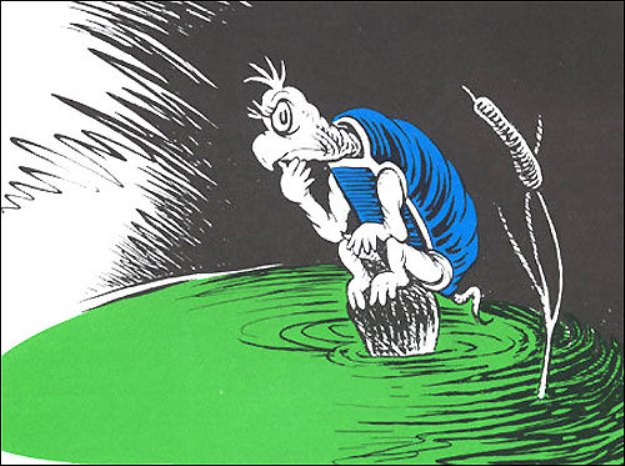
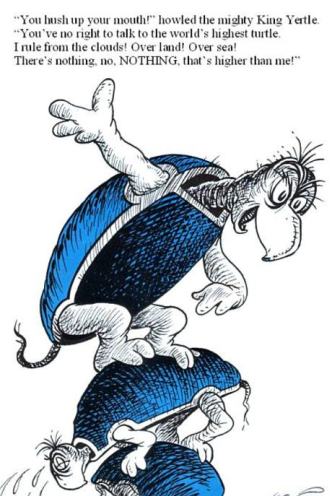
Yertle the Turtle King: My mental image of a despotic ruler!

Related blog post on 7 Feb 2011: Of Dictators and Terrible Cockroaches: A Russian children’s story…from 1925!

January 2011 has been an eventful month for democratic reform in the Middle East. As People Power successfully toppled the deeply entrenched dictator Ben Ali in Tunisia, and the ordinary Egyptians intensified their pressure on own 30-year-long regime of Hosni Mubarak, commentators around the world have been trying to make sense of the rapidly unfolding developments. One of them, David Kravets, writing in Wired linked to a blog post of mine that talked about the experience of one of the earliest successful demonstrations of people power — in the Philippines, when they toppled a long-misruling dictator in 1986.

Amidst all this, and while following the developments on the web, I have been re-reading my Dr Seuss. In particular, the delightfully inspiring tale of Yertle the Turtle King. To me, that is the perfect example of People Power in action — cleverly disguised as children’s verse!

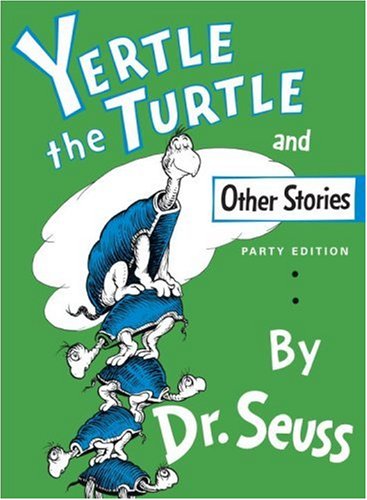
The story was first published in April 1958, in a picture book collection by Theodor Geisel, published under his more commonly-known pseudonym, Dr. Seuss. In 2001, Publishers Weekly listed it at No 125 on a list of the best-selling children’s books of all time.

For those poor Seuss-deprived readers, here’s a helpful summary I have adapted from Wikipedia:

The story is about Yertle the Turtle, the king of the pond in the far-away island of Sala-ma-Sond. Unsatisfied with the stone that serves as his throne, he commands the other turtles to stack themselves beneath him so that he can see further and expand his kingdom (he considers himself the master of all he can see). However, the stacked turtles are in pain. Mack, a very ordinary little turtle at the very bottom of the pile, asks Yertle for a respite, but Yertle just tells him to shut up. Dissent is suppressed.

King Yertle is still not happy: he wants ‘to expand his kingdom’. So he commands more and more turtles to add to his throne. Mack again asks for a respite because the increased weight is now causing extreme pain to the turtles at the bottom. Again Yertle yells at Mack to shut up. At this point, little Mack decides he has had enough and decides to do something to vent his anger and frustration: he just burps. That simple action shakes up the entire stack of turtles, and the mighty king comes crashing down into the pond — and all turtles are freed at last!

Required reading for all despots?Years ago, when I first read the story to my then very young daughter, I could immediately see strong parallels between the vain, merciless Yertle the turtle king and the equally egotistic megalomaniacs in the world of human politics and governance. I would later learn that Dr Seuss meant Yertle to be Adolf Hitler: the turtle’s rule of the pond and takeover of the surrounding areas signified Hitler’s regime in Germany and invasion of surrounding Europe.

The ordinary but courageous Mack epitomises long-suffering Everyman and Everywoman in all countries where autocratic or dictatorial regimes rule, piling ever more burdens on their people. Like the turtles in the stack, the people can go on for years taking a great deal of suffering and sacrifice while the despots plunder and make merry. But there comes a day when a ‘Mack’ says enough is enough…and emits a humble ‘burp’ that shakes up everyone.

As Dr Seuss wrote (and this is my favourite part!):

But, as Yertle, the Turtle King, lifted his hand
And started to order and give the command,
That plain little turtle below in the stack,
That plain little turtle whose name was just Mack,
Decided he’d taken enough. And he had.
And that plain little lad got a bit mad.
And that plain little Mack did a plain little thing.
He burped!
And his burp shook the throne of the king!

And Yertle the Turtle, the king of the trees,
The king of the air and the birds and the bees,
The king of a house and a cow and a mule…
Well, that was the end of the Turtle King’s rule!
For Yertle, the King of all Sala-ma-Sond,
Fell off his high throne and fell Plunk! in the pond!

And today the great Yertle, that Marvelous he,
Is King of the Mud. That is all he can see.
And the turtles, of course… all the turtles are free
As turtles and, maybe, all creatures should be.

Read the text of Yertle the Turtle King

I don’t mean to oversimplify or belittle the enormous courage and resolve it takes for ordinary people to take on a brutal regime, but as pop-culture metaphors go, it’s hard to find a better one than Mack and his defiant burp. That little burp by a tiny turtle brought a vain king down, and its real-world equivalent is called people power: when long-oppressed ordinary people take to the streets to protest against the accumulated excesses of their rulers, demanding reform or regime change.

Not all such ‘burps’ bring all ‘Yertles’ down in the real world. The mighty Soviet Union crumbled in the late 1980s thanks to the courage and persistence of ordinary people who stood up and stepped out. It also worked twice in the Philippines: first against an outright dictator (Marcos) in 1986, and then against a renegade elected president (Estrada) in 2001. A variation of it happened in Nepal against the brutal King Gyanendra, who was dumped into the dustbin of history with the entire monarchy in 2006. Each case had its own history, dynamics and outcomes but shared the common feat of people power.

Sounds familiar? That's because it's all too common!
But elsewhere, as in Tiananmen Square of China (1989) Burma (2007) and Thailand (2010), people power failed to change regimes and led to much violence and bloodshed. What particular combination of social, political and technological factors make people power work is currently the subject of intense study and debate among scholars, diplomats and activists.

But there’s no doubt that recent history has been shaped and made by Macks who broke the silence and, figuratively speaking, burped. Some such burps were heard around the world, and some Macks went on to lead prolonged revolutions that ended with them becoming rulers themselves: Lech Walesa, Cory Aquino and Valclav Havel come to mind.

For every ‘Mack’ who succeeds, though, there are many who go unsung —or much worse. We still have no idea what happened to that much photographed and celebrated ‘Tank Man’ who stood up against the Red Army’s tanks on Tiananman Square one fateful day in June 1989. We don’t even know his name, but his defiance against such enormous odds still inspires assorted Macks all over the world.

For sure, our world is a tiny bit larger — and more complex — than that muddy pond in far away Sala-ma-Sond. And we have an abundance of Yertles, of various colours and hues, riding literally on the backs of their fellow people.

At least some of these tyrants must be following the recent developments in Tunisia and Egypt with growing anxiety. We can only hope that there will be a steady stream of courageous little ‘Macks’ in all such countries who will finally speak up and say: ‘Oi, Enough is enough!’

And then…BURP!

PS: Interesting footnote: Dr Seuss was the first to use the word “burp” in print. That apparently was cause for some concern before publication. According to him, the publishers at Random House, including the president, had to meet to decide whether or not they could use “burp” because “nobody had ever burped before on the pages of a children’s book”.


See also this interesting poem The Vain King, by American poet Henry Van Dyke (1852 – 1933)

How do you measure progress? Say it in 3 min video!

How do you measure progress? Count simply the economic growth numbers? Or something more? Are people in richer countries necessarily happier? If not, what’s the key to real progress that makes people better economically, environmentally and socially?

The Organisation for Economic Co-operation and Development (OECD) wants to hear from young people about these issues through a video competition. To celebrate the OECD’s 50th Anniversary, young people worldwide are invited to create a short video describing their vision of Progress. In 3 mins, or 180 secs. The competition is open to young people (18-25 years) in every country worldwide.

Upload your video on YouTube and register online before MIDNIGHT (Paris time) on 1 March 2011. Details here. Promo video below:

Poddala Jayantha: Paying a high price for investigative journalism

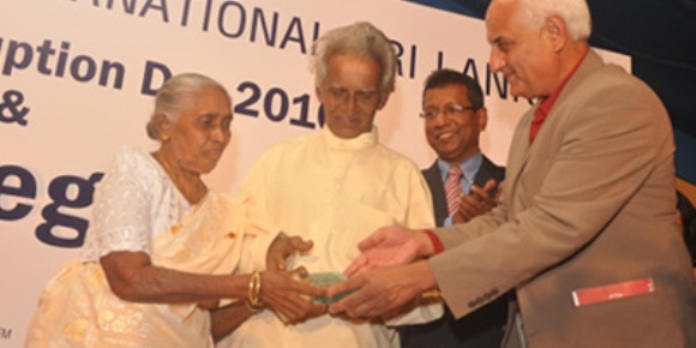
Poddala Jayantha's mother and father receiving award from Kanak Mani dixit (extreme R)

Two persons stood out among the several hundred people gathered at Sri Lanka National Integrity Awards ceremony on December 9 evening in Colombo. Dressed in off-white, the elderly couple looked dignified yet slightly bewildered by the pace of events at Colombo’s top conventions venue.

But when their moment arrived, the parents of investigative journalist Poddala Jayantha rose to the occasion: they accepted the Global Integrity Award presented to him by the anti-corruption watchdog Transparency International (TI).

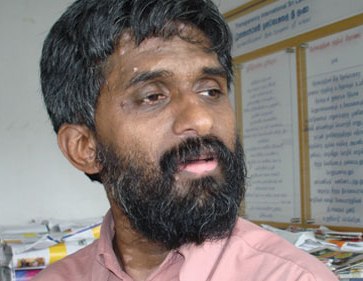
Jayantha could not turn up in person because his is under threat and fled Sri Lanka for safety. In June 2009, he was abducted by unidentified persons and assaulted. The attack, one among many on journalists in Sri Lanka, left him permanently disabled in his legs. That’s the high price he had to pay for systematically exposing corruption and irregularities in government and corporate sector in Sri Lanka.

TI, which created this award to recognise the courage and determination of individuals and organisations fighting corruption around the world, commended Jayantha for his “dedication to exposing injustice in Sri Lanka”.

It was originally presented at the Global Anti-Corruption Conference in Bangkok in November 2010.

Poddala Jayantha
“I am happy that I could fight against corruption and campaign for press freedom while working for the state media,” he told BBC Sinhala after the awards announcement. “But yes I had to leave the country as a result.”

I’ve long admired Poddala’s courage and meticulous research, and have been amazed that he managed to do so much while working in a state-owned media establishment like Lake House, where he was employed after leaving the independent Ravaya newspaper. Of course he was the exception to the rule, but what a refreshing exception that was — reminding us that even amidst all those sacred cows that state media journalists must tiptoe around, they can still serve the public interest if they want to…

Of course, there were also stories that he never got to write. In November 2008, I wrote about one such example in an essay commenting on the Lankan media’s shameful conduct in relation to our own Ponzi scheme and local Madoff called Sakvithi.

Fellow investigative journalist Dilrukshi Handunnetti has written an excellent tribute to Poddala on Groundviews.

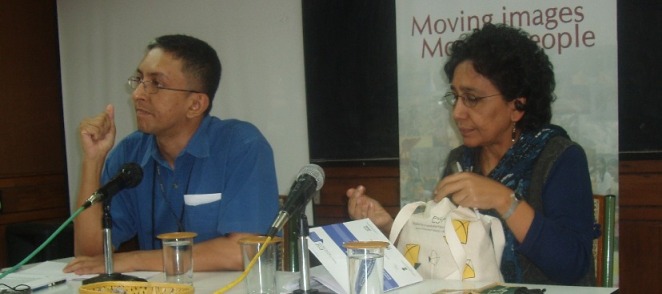
Connecting researchers and the media: Easy as A, B and C?

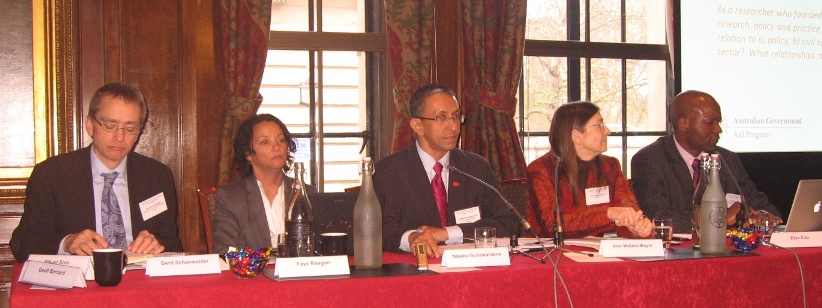
L to R - Gerd Shonwalder (IDRC Canada), Faye Reagon (HSRC South Africa), Nalaka Gunawardene, Ann Waters-Bayer (ETC Netherlands) & Eliya Zulu (AIDP, Kenya)

What needs to be done to improve connections between researchers and the media?

This was the first of three questions posed to me as a panel member during the International workshop on Improving the impact of development research through better communication and uptake, held at the Institute of Civil Engineers, London, UK, on 29 and 30 November 2010.

The workshop, organised by the UK Department for International Development (DFID) and the Australian Government Aid Programme (AusAid), brought together close to 100 research managers, science communicators and development donors from all regions of the world.

As always, I spoke from a practitioner’s perspective. Our panel was asked to discuss ‘different ways of making the links between research, policy and practice’. Each panel member was allowed 5 – 6 minutes of speaking time, with no PowerPoint or other visual aids.

I started off by flagging two fairly self-evident yet important points:
• Media is a PLURAL – there is no single recipe that works for all media because it is such a diverse sector!
• Media is only a SUB-SET of a wider process of communicating for social change.

Within this, there is always room for improvement! As a science journalist, I am a ‘critical cheerleader’ of researchers and their institutes. From that point of view, there are 3 elements that we need more of.
I call them A, B and C.

A is for Access: Today, 24/7 news cycles dominate the media landscape. That means, more often than not, journalists need quick and easy access to researchers, and rapid (or ‘live’) responses to breaking stories. Ideally, journalists want to talk to the researchers themselves, and not PR people or administrators within research institutes or universities.

B is for Bridges: To enable good access, we need strong and reliable links between researchers and the media. That can take many forms. They may be physical or virtual – including events, online platforms, and other activities. I see them as ‘Intersections’ where research, media and policy communities come together. These help share information, but also nurture trust –- that precious and rare virtue!

C is for Credibility: We’ve already heard how critical this element is to all our work as researchers and journalists. Credibility is something hard to earn, easy to lose. We can’t buy it – but good, long-term investments in people can help consolidate it.

I argued that these A, B and C can certainly help improve connections between researchers and the media, and ultimately, with the wider public.

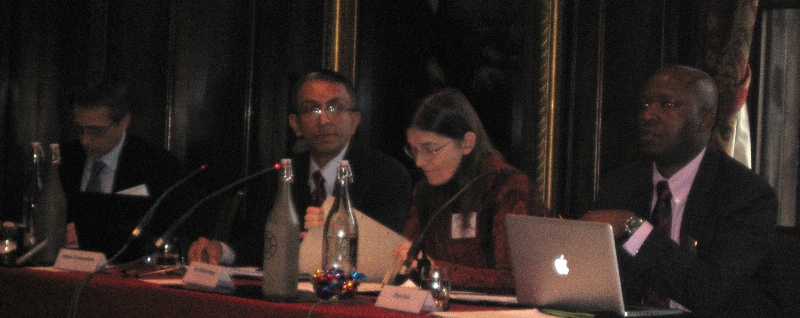
London workshop panel, 29 Nov 2010

Political Satire: When making fun is no laughing matter

Paper paper shining bright...but for how long? Cartoon by Mike Luckovich

My regular readers know my deep interest in political satire, and fascination with cartoons of all kinds including those political. On this blog, we’ve also discussed the worldwide decline in mainstream journalism.

I’ve just blended my thoughts in these strands in my latest op ed essay, ostensibly a book review. It has just been published by Groundviews.org as Political Satire in Sri Lanka: When Making Fun is No Laughing Matter

Here are the opening paras:

Political satire is nothing new: it has been around for as long as organised government, trying to keep the wielders of power in check. Over the centuries, it has manifested in many oral, literary or theatrical traditions, some of it more enduring — such as Gulliver’s Travels and Animal Farm. And for over a century, political cartoonists have also been doing it with such brilliant economy of words. Together, these two groups probably inspire more nightmares in tyrants than anyone or anything else.

“Today, political satire has also emerged as a genre on the airwaves and in cyberspace, and partly compensates for the worldwide decline in serious and investigative journalism. Many mainstream media outlets have become too submissive and subservient to political and corporate powers. Those who still have the guts often lack the resources and staff to pursue good journalism.

“If Nature abhors a vacuum, so does human society — and both conjure ways of quickly filling it up. Into this ‘journalism void’ have stepped two very different groups of people: citizen journalists, who take advantage of the new information and communications technologies (ICTs), and political satirists who revive the ancient arts of caricaturisation and ego-blasting…”

In this essay, I revisit a question I first posed in my July 2009 blog post: News wrapped in laughter: Is this the future of current affairs journalism?

Read the full essay:
Political Satire in Sri Lanka: When Making Fun is No Laughing Matter

You might also like to look at these other related blog posts:

August 2009: The XYZ Show: New horizon in political satire on African TV, but room to grow?

Sep 2009: XYZ Show controversy: Kenyan politicians forgetting ‘Hakuna matata’?

Ray Wijewardene: Passionate voice for small farmers and earthworms

Ray Wijewardene on the set of 'Sri Lanka 2048' TV show, June 2008: Cautiously optimistic about the future...
The small farmers, buffaloes and earthworms all over the world lost a true friend and spokesman this week when Lankan scientist Ray Wijewardene passed away.

Ray packed multiple interests and pursuits into his 86 years of life – including engineering, building and flying light aircraft, and Olympic-level competitive sailing. But he was happiest being a farmer and mechanic, and had strong opinions on the subject. He was vocal about misguided priorities in tropical farming his native Sri Lanka – and across the developing world.

He was especially passionate when speaking about small farmers in the developing world, with whom he worked many years of his international career as an expert on tropical farming systems.

Educated at Cambridge and Harvard universities, and with impeccable technical credentials, he was no stranger to the ways of academia. But he remained a sceptic about the efficacy and benefits of agricultural research — on which hundreds of millions of development funding is invested every year.

The main problem with agricultural research, he used to say, is that those who engaged in such studies and experimentation didn’t have to rely on farming for their sustenance. There was not enough self interest. In contrast, the small farmer had to eke out a meagre existence from whatever land, water and seeds or livestock she had. In her case — and a majority of small farmers around the world today are indeed women — it’s a stark choice of innovate or perish.

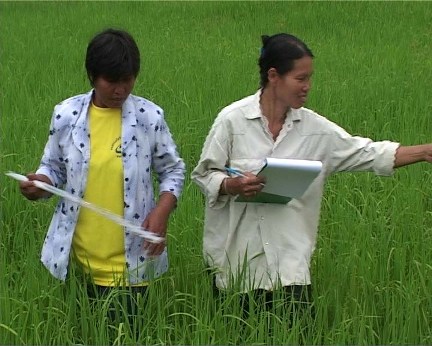
Thai researchers and farmers looking for field solutions (from Living Labs TV series)
The heroic efforts of small farmers were rarely recognised by the rest of humanity who consume their produce — and the farmers themselves are too busy planting crops or raising animals to speak on their own behalf. This is where Ray Wijewardene came in: with his education, exposure and talent, he made an outstanding spokesman for small farmers all over the tropics.

In the 1960s, as the inventor and promoter of the world’s first two-wheeled (Land Master) tractor, Ray travelled all over Asia, Africa and Latin America working with tropical farmers.

For half a century, Ray has championed the lot of the small farmer at national, regional and global levels with UN agencies, academic and research groups, corporate sector and governments. But in later years, he questioned the wisdom of trying to mechanise tropical farming, and considered that phase of his career a ‘big mistake’. He dedicated the rest of his life to researching and promoting ecologically sustainable agriculture, on which he co-wrote an authoritative book in 1984.

Ray had the rare ability to ask piercing questions without antagonizing his audiences. He was an activist in the true sense of the word, but one whose opinions were well informed and grounded in reality, not rhetoric.

This comes through very powerfully in an extensive media interview I did with Ray in 1995, which I released online this week as a tribute to Ray — who has been my mentor and friend for almost 25 years.

At the outset, Ray points out where the Green Revolutionists went astray: “All along in the Green Revolution, its promoters focused on maximizing yields through massive inputs. But they forgot that what the farmer wants is to maximize profits, not necessarily yields!”

We then talked about the particular challenges faced in tropical farming, and the mismatch of temperate farming systems promoted widely in the tropics where climatic and soil conditions are different. One of Ray’s main concerns was agriculture’s profligate use of water – more for weed control than to meet the strict biological needs of crop plants themselves!

Ray, a grandmaster in summing up complex technical issues in colourful terms, said at the time: “Water is rapidly becoming the most expensive herbicide in the world — and freshwater is increasingly scarce!” [A decade later, I would go on to script and executive produce a global TV series called Living Labs on just this issue: how to grow more food with less water, or get more crop per drop.]

Ray wasn’t fundamentally opposed to external, chemical inputs to boost soil fertility but he advocated a mix of natural and synthetic options. In our interview, he asked: “We have multinational companies supporting — directly or indirectly — the extensive use of chemical fertilizers. But who supports cow-dung? Who extols the virtues of the humble earthworm?”

He then added: “For us in Asia, these elements are far more important. Indians have recognized this, but we still haven’t. As long as our agricultural scientists are trained in the western mould of high external input agriculture, this (mindset) won’t change. Cow-dung and earthworms won’t stand a chance – until some western academic suddenly ‘re-discovers’ them…

It was Indian science writer and environmentalist Anil Agarwal who asked me, sometime in mid 1995, to interview Ray for Down to Earth, the science and environmental fortnightly magazine published by his Centre for Science and Environment. As Anil told me, “In Ray, you have not only one of the topmost agricultural experts in the developing world but one of its most original thinkers.”

By this time, I’d known Ray for almost a decade, and been exposed to several of his multiple facets. But each encounter with Ray was enriching for me, so I immediately seized the opportunity. The usually media-shy Ray already knew of and respected Anil, which helped.

Down to Earth is part of Anil Agarwal's legacy
The interview was audio taped over two long sessions, and I remember spending many hours transcribing it. I had to check some references with Ray, who cooperated wonderfully. I’ve been trained to observe the word limit set by editors, but in this instance, I sent in the full length Q&A, for it was so interesting. Down to Earth issue for 31 October 1995 carried a compact version, skillfully distilling the essence of that long exchange between Ray and myself — one of the most memorable interviews among hundreds I’ve done during 25 years of work in print and broadcast media.

How I wish the exchange was also preserved on audio tape! Indeed, it’s a small miracle that the original transcript survived for 15 years. The soft copy was lost in a hard drive crash of 1998, but fortunately I’d taken a full print-out. I’m grateful to a former colleague, Buddhini Ekanayake, for retyping the entire interview in mid 2008 when I considered releasing it in the wake of the global food crisis. That somehow didn’t work out, but the soft copy was ready at hand for me to rush to the editor of Groundviews on the day of Ray’s funeral. All I added was a new, 500-word introduction which tried to sum up the Ray Wijewardene phenomenon.

Read the full length interview with Ray Wijewardene, published for the first time, on Groundviews.org:
Who Speaks for Small Farmers, Earthworms and Cow Dung?

Celebrating Kalpana Sharma, a super-star of good journalism

My friend Kalpana Sharma just stepped down after serving on the Panos South Asia board for over a decade. The Executive Director A S Panneerselvan asked me to write a personalised piece felicitating her. Part of this was read at the annual meeting of the Board held in Dhaka last weekend. Here’s the full essay — a couple of mutual friends who read it say it isn’t too eulogistic! Now you can decide for yourself…

* * * * *

The Curious Ms Sharma of Mumbai

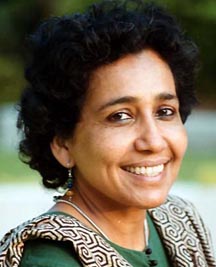
I knew Kalpana Sharma from her by-line long before I met her in person. Now, more than a dozen years after we became friends, she remains an inspiration and a role model.

Kalpana Sharma
Kalpana has been a path-finder and trail-blazer in journalism that cares. She has set the gold standard in investigating and critiquing development in the Indian media. Today, she continues her nearly four decades of association with the Indian media as a respected columnist, journalist and writer. Her stock in trade is a mix of curiosity, sense of social justice, wanderlust and a deep passion for people and issues. She is living proof that quality journalism can be pursued even in these turbulent and uncertain times for the mainstream, corporatised media.

Kalpana has been covering the ‘other India’ that is largely ignored by the Indian media. Its denizens are some 456 million people living under the global poverty line of $1.25 per day — a third of the world’s poor. (If they declared independence, they would immediately become the world’s third most populous nation.) Kalpana’s reporting from the ‘Ground Zero’ of many disasters and conflict zones has highlighted the multiple deprivations of these people living on the margins of survival.

For many such communities, a headline-creating event is just the latest episode in their prolonged and silent suffering. The media pack that descends on them after a sudden development can’t seem very different from the assorted politicians who turn up periodically during election campaigns. For too long, the grassroots have been treated merely as a grazing ground for stories or votes.

Kalpana doesn’t hesitate to be part of the media pack when duty calls, but once in the field, she sees connections often missed by other journalists looking for a quick sound byte or dramatic image. Unlike some news hounds, she doesn’t exploit the misery of affected people (“Hands up who’s poor, speaks English – and looks good on TV!”). And she returns to the same locations months or years later to follow up.

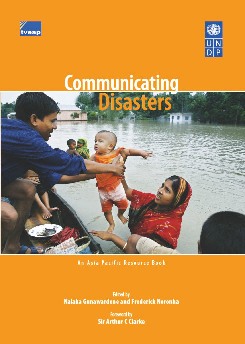
For all these reasons, Kalpana was our first choice to write the last chapter in a regional book on disasters and media that I co-edited with Indian journalist Frederick Noronha in 2007. Her 2,000-word reflective essay should be required reading for any journalist covering disasters and social disparity in South Asia.

Here is a passage that sums up her views on the subject: “Much of disaster reporting sounds and reads the same because the reporters only see what is in front of them, not what lies behind the mounds of rubble, figuratively speaking. What was this region before it became this disaster area? How were social relations between different groups? What was its history? What were its relations with the state government? Was it neglected or was it favoured? How important was it to the politics of the state?”

Kalpana has been asking such probing questions all her professional life. And it’s not just in the rural hinterland of India that Kalpana has travelled extensively listening and talking to people from all walks of life. Living in the world’s second most populous city Mumbai, she has been equally concerned with its burning issues of urban poverty, gender disparity, environmental mismanagement and governance.

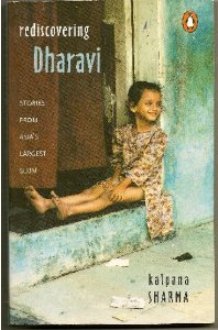
Kalpana once wrote an insightful book about the Dharavi slum in Mumbai, looking at both its social inequalities and the people’s remarkable resilience. Titled Rediscovering Dharavi: Stories from Asia’s largest slum (Penguin, 2000), it was called ‘a model of sane, human, down-to-earth writing’. All this was years before the Oscar-winning movie Slumdog Millionaire (2008) popularised the location through a dramatic tale.

In her quest for untold human stories, Kalpana has taken a particular interest in the plight of poor women. She has written many authentic and moving stories about women who struggle on the margins of the margin. A recurrent theme in her writing is how invisible ‘superwomen’ hold the social fabric together in much of India. Many communities and production systems –ranging from domestic work and child care to waste disposal and farming – would simply grind to a halt if these unseen and unsung women took even a single day off. In reality, of course, they just can’t afford such luxuries.

Kalpana’s column The Other Half, which started in The Indian Express and now appears in The Hindu, is a regular eye-opener. She takes a current topic – from politics, culture, sport or environment — and explores its gender dimensions. She does so by carefully blending facts, personal insights and opinion that makes her writing very different to the rhetorical shrill of gender activists.

Make no mistake: Kalpana is an activist in her own right, and one of the finest in modern India. It’s just that her approach is more subtle, rational and measured – and in the long run, wholly more effective. Long ago, she found how to balance public interest journalism with social activism. This is one more reason why I look up to her.

Partners in crime: Nalaka and Kalpana speaking at the Education for Sustainable Future conference in Ahmedabad, India, January 2005.

In her writing, television appearances and public speaking, Kalpana stays well within the boundaries of good, old-fashioned journalism based on its A, B and C: accuracy, balance and credibility. In my view, she enriches the mix by adding a ‘D’ and ‘E’: depth and empathy. Without these qualities, mere reporting is sterile and dispassionate.

And once we get to know her, we also discover the ‘F’ in Kalpana Sharma: she is a fun-loving, cheerful woman who doesn’t take herself too seriously. We can count on her to be adventurous, enthusiastic and endlessly curious.

Cultivating these attributes would certainly enrich any journalist. I can’t agree more when Kalpana says (in her chapter to a recent book on environmental journalism in South Asia): “Journalists are good or bad, professional or unprofessional. I am not sure if other labels, such as ‘environmental’ or ‘developmental’, ought to be tagged on to journalists.”

I hope Kalpana has no retirement plans. She has earned a break after a dozen years on the Board of Panos South Asia. But we want her to remain a guiding star – a bundle of energy that shines a light into the Darkness, and helps make sense of the tumult and frenzy that surrounds us.