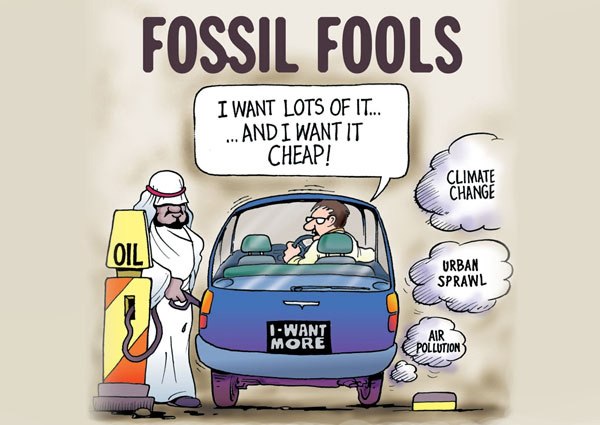
Cartoon courtesy Down to Earth magazine, CSE India
• To tackle enhanced global warming that leads to climate change, we need to better understand the global carbon cycle.
• Critical to this understanding is distinguishing between fossil carbon (coal and petroleum) and biotic carbon (photosynthetic biomass – living matter capable of absorbing atmospheric carbon).
• Biotic Carbon offers a ‘lifeboat’ to a world in search of solutions. Valuing biotic carbon can transform the role of farmers and rural communities currently sidelined in global climate change negotiations.
• Current methodologies of carbon trading have seriously warped both economics and ecology. What takes place today is more like carbon laundering.
These outspoken views are expressed in a new web video by Dr Ranil Senanayake, a globally experienced systems ecologist with four decades of experience across Asia, Africa and Latin America.
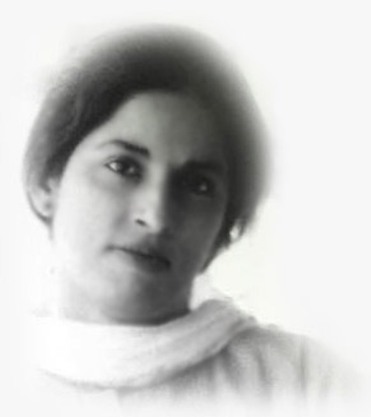
On 20 April 2012, we marked seven years since Saneeya Hussain left us. Journalist and activist Saneeya suffered a needless and tragic death at when she ran out of fresh air in South Asia and was caught up in the urban traffic congestion of Sao Paulo.
In this week’s Ravaya Sunday column, I remember Saneeya’s legacy and plight and discuss the latest dimensions of outdoor air pollution in Sri Lanka that threatens fellow asthma sufferers like myself. The same information is covered in English at: Gasping for Fresh Air, Seeking More Liveable Cities in South Asia
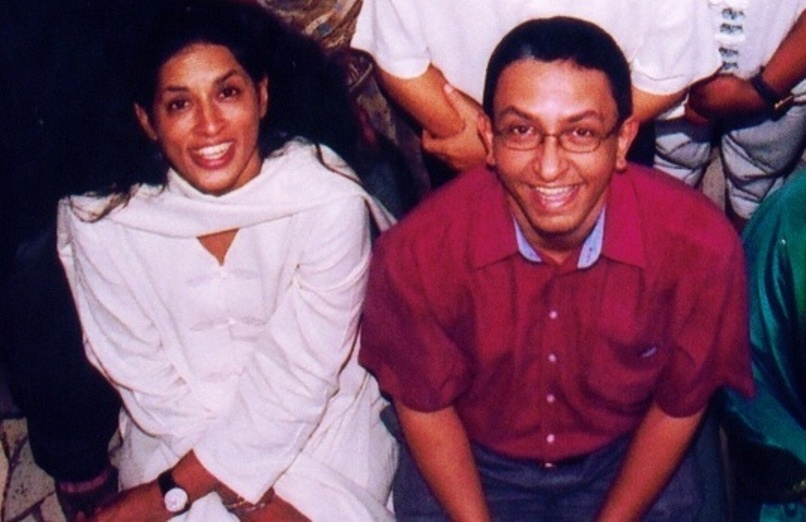
Saneeya Hussain & Nalaka Gunawardene: Singapore, Nov 2002
In this week’s Sunday column, published in Ravaya newspaper of 25 March 2012, I
return to take another critical look at the hype and hysteria surrounding the world ‘ending’ in December 2012.
Last week’s column elicited several reader responses online and offline. While many agreed with my rational reasoning, some were miffed by my puncturing their inflated obsession! A few challenged me to provide an assurance that there won’t be any major disasters in 2012 — we were NOT talking about random disasters, but a planetary scale one which qualifies as End of the World.
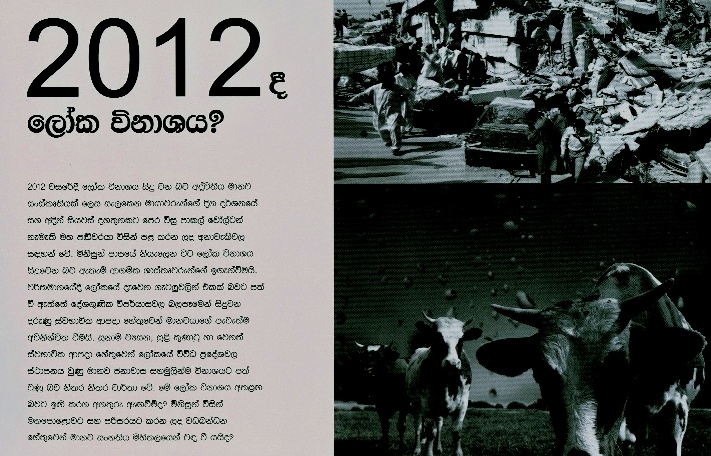
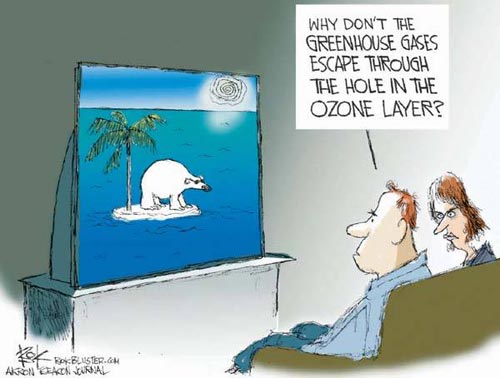
This week, we look at how certain environmentalists are linking global warming and 2012 world ending myth, adding to existing public confusion about climate change. I cite as an example of this green alarmism a highly distorted article Sinhala published by Practical Action Sri Lanka, a usually moderate and sensible development organisation. Its country director admits it was an ill-advised public outreach effort.
I also refer to a recent scientific analysis that probed whether highly destructive large-scale earthquakes in the past few years, in countries bordering the Pacific and Indian oceans, indicate an increased global risk of these deadly events. Its conclusion: there is no such evidence.
Robert Paul Lamb (1952 – 2012): The Earth’s Reporter
Robert Paul Lamb (1952 – 2012) was a planetary scale story teller. He used simple words and well chosen moving images to show us how we are abusing the only habitable planet we have.
He excelled in the world’s most pervasive mass medium, television. He effectively turned the small screen into a ‘mirror’ that showed how humans are constantly living beyond our natural means…as if we have spare planets in store.
For nearly three decades, Robert Lamb reported about the Earth to people all over the Earth. He ‘zoomed in’ to far corners of the planet to get a closer look at what was going on. He regularly ‘zoomed out’ for the bigger picture. All his life he probed why, as the Brundtland Commission had memorably noted in its 1987 report, “The Earth is one but the world is not”.
In this quest, he interviewed some of the finest minds and most passionate activists on what needs to be done, and how to do it. He also showcased the work of researchers, innovators and entrepreneurs trying out solutions to our many problems of resource and energy use. He always cheered these pathfinders who are our best hopes in overcoming the current ecological and economic quagmires.
Robert’s work was not easily pigeonholeable, which confused many. He wasn’t making wildlife or natural history films, although he sometimes touched on the subject from a human interaction angle. Perhaps the best summing up of his line of work was given by Mahatma Gandhi, who, when asked for his views on Indian wildlife decades ago, replied: “Wildlife is decreasing in the jungles — but it is increasing in the towns!”
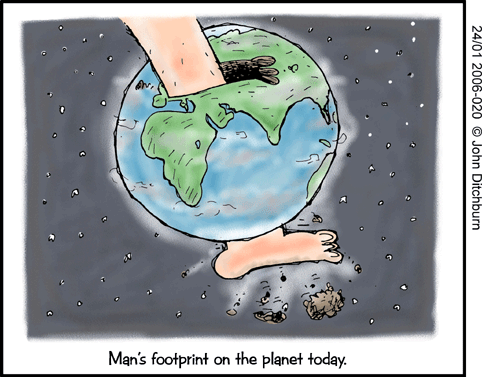
If this isn't wildlife, what is?Robert documented life going wild with far-reaching consequences. In the spectrum of factual TV programme production, he occupied a niche best described as scientifically based environmental films: those that explore the crushing ‘ecological footprint’ modern humans are having on the rest of Nature and ecosystems.
Robert was a journalist first and last. Although he later straddled the worlds of media and development, his outlook was firmly rooted in journalism where he started his career. He had a firm grasp of scientific, economic and political realities that shaped international development.
From 1984 to 2002, he was founder director of the UK-based media charity Television Trust for the Environment (TVE) from 1984 to 2002. TVE was set up to harness the potential of television and video to raise environmental awareness and catalyse sustainable development debates in the developing world.
Heading TVE for nearly two decades, Robert commissioned, produced or co-produced dozens of documentaries on a broad range of issues and topics.
Some were straightforward ones that ‘connected the dots’ for intelligent viewers. Others investigated complex — often contentious — causes and effects of environmental degradation or social exclusion.
These efforts dovetailed on-going discussions at the time on sustainable development. The Brundtland Commission had just defined it as a pattern of economic growth that “meets the needs of the present without compromising the ability of future generations to meet their own needs.”
Easier said than done in a world where many families could barely afford to think beyond their next meal while most governments chose not to see beyond the next election. Next generation thinking was rare then, as it is now. Only mavericks dare walk that path.
Besides, what exactly did that ideal mean for a subsistence farmer in Africa or a small entrepreneur in Asia? Did this long term view figure at all when politicians or bureaucrats struggled to balance their national budget or negotiate better terms of trade? How and where did women and children figure in these considerations?
Robert and his team followed the lofty intellectual debates and also tracked progress on the growing number of international treaties on specific environmental matters. They captured the essence of these through compelling moving image creations.
In doing so, this small band of individuals changed forever how environment was covered on TV. As he recalled in UNEP’s Our Planet magazine in 2000, “In the mid-1980s barely anyone had heard about the ozone layer or global warming. Natural history programming brought the wonders of plant and animal diversity into our living rooms but glossed over the complex causes of extinction.”
Robert was swimming against not one but several currents. As he wrote years later: “Television does not cope well with explaining the grey areas. Or rather it could — but the received wisdom is that it makes the viewer reach for the remote channel changer. Television prefers the black and white; the good guys versus the bad.”
He accomplished this through what I call the ‘triple-S formula’: mixing the right proportions of good Science and engaging Stories, told in Simple (but not simplistic) language.
He demystified jargon-ridden science and procedure-laden intergovernmental negotiations without losing their complexity or nuances. This is what public communication of science is all about.
We can only hope he isn’t our average TV viewer...but are we sure?Always look for what’s New, True and Interesting (the NTI Test), he used to tell us who followed the trail he blazed. All our efforts ultimately hinged on how we appealed to the viewer – and she held that all-powerful remote controller in hand!
Robert’s overarching advice: never underestimate your audience’s intelligence — or overestimate its interest levels.
“If we don’t engage our audiences in the first 60 to 90 seconds, they are gone,” Robert often told his producers. “Hook them – and make it worth their while to do so!”
Most people don’t carry good memories of school. When they sit down to watch TV – usually at the end of a long day – they just want something light and pleasant, and preferably not reminded of school…
Pervasive as TV was, the medium wasn’t a substitute for reading or a classroom. At best, we could only flag the highlights of an issue, and whet the appetite for viewers to go after more.
Sympathetic as he was to issues and concerns of the developing world, Robert applied the same rigorous editorial criteria on film makers based in the global South. He pointed out the latter’s sweeping generalizations, condescending elitist language or incoherent story telling. Some walked away grumbling, but realized years later that he was right…
Robert’s fast pace and no-nonsense demeanour probably won him as many admirers as detractors. Producers dreaded his piercing questions about evidence and coherence. Over time, staff got used to his sharp text editing, usually done with a thick-tipped pen.
He was most assertive in (video) edit rooms, where I have seen him in action only on a few occasions. While TV productions involve team work, editorial decisions have to be centralised. You can’t make films by committee. As series editor or executive editor, he was the master of all he surveyed. Conversely, he stood by his producers who’d done their homework.
A few days ago, I was deeply saddened to hear the news that my mentor and colleague Robert Lamb is no more. He lost his battle with cancer on 13 Feb 2012. He was 59.
Robert will be greatly missed. He was a visionary mentor and a strong supporter of our ideal of Asians telling their own stories using TV, video and web. This was what he set up TVE Asia Pacific (TVEAP) to do, back in 1996.
I was still in shock and grief when I wrote TVEAP’s official tribute, and a short statement of condolences. But Robert would have expected nothing less. The show must go on, he used to say, and getting the record right is very important.
Our statement opens: “Robert Lamb knew the power of moving images. For over three decades, he used them effectively to move people all over the world to reflect on how their daily actions impact their local environment and the planet.”
We also note how “Robert was very well informed, highly analytical yet kept an open mind for fresh angles and new perspectives. He inspired us without imposing his own views.”
Robert was an Englishman by birth, globalist in outlook and a planetary scale thinker and story teller. Unlike some activists and journalists, Robert practised Gandhi’s timeless advice: “Be the change you wish to see in the world”.
This is why I added this line to our statement: “He walked his talk, practising in personal life what he advocated in his films. If he breathed heavily in the edit room, he trod softly on the Earth.”
And that, more than any of his professional accomplishments in print, on TV and online, is how I shall always remember Robert Paul Lamb, on whose broad shoulders I continue to stand.
This is my latest Sinhala column published in Ravaya newspaper on 23 October 2011, which is about human-elephant interactions in Sri Lanka, which has the highest density of Asian elephants in the world. I have covered much of the same ground in English in another recent essay, Chandani: Riding a Jumbo Where No Woman Has Gone Before…
Years ago, I resolved not to watch any more documentaries about elephants – I have sat through far more than my fair share of them at film festivals across Asia and Europe. I have nothing against elephants; it’s just that most films about them are so predictably formulaic. Sooner or later, they all suggest: we greedy humans have robbed these giants of their jungles, and are now driving them to extinction.
While that is undeniable, the ground reality is a bit more nuanced. But few filmmakers or film commissioners want to go there. In any case, even the most balanced conservation film would still be trapped in an anthropocentric view of the human-elephant relationship: how differently might an elephant tell the same story?
Given these misgivings, I was pleasantly surprised by Arne Birkenstock’s new film, Chandani: The Daughter of the Elephant Whisperer (88 mins, 2010). He proves that it is always possible to find a refreshingly new way of telling a very old story.
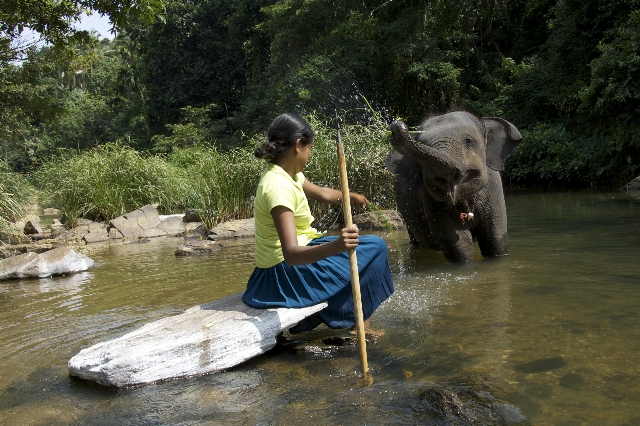
The German film, shot entirely on location in Sri Lanka, centres around a young girl who loves elephants so much that she wants to spend the rest of her life tending to them. Sixteen-year-old Chandani Renuka Ratnayake is the eldest daughter Sumanabanda, the chief mahout at the elephant orphanage in Pinnawela. They hail from a family that has tamed and looked after elephants for generations. Lacking a son, he agrees to let Chandani train as a mahout.
There is only one small problem: Chandani is going where no Lankan woman has gone before. Other mahouts and the community doubt whether the eager young lass can rise to the many challenges involved in this hitherto male-only profession.
Sumanabanda brings home an elephant calf named Kandula, and assigns it to Chandani. Under the watchful eye of her father, Chandani does all the feeding, bathing and other chores. She has to divide her time between school and her boisterous charge. Soon, the two young ones bond with each other.
She also receives guidance from a wildlife ranger named Mohammed Raheem. He takes her to the Udawalawe National Park, an important habitat for wild elephants. There, she gets glimpses of the daily skirmish between wild elephants and humans for the land claimed by both species.
Exploring the relationship between children and elephants is a recurrent theme for filmmakers across cultures and genres. An early example was Elephant Boy (1937), a British adventure film directed by documentary filmmaker Robert J. Flaherty and Zoltan Korda, based on Rudyard Kipling’s “Toomai, of the Elephants”. A few years ago I watched the Japanese film Hoshi ni natta shonen — with a goofy English name, Shining Boy and Little Randy — directed by Shunsaku Kawake in 2005. It was the bittersweet story of a young boy who goes to Thailand to become Japan’s first elephant trainer.
The child character is usually male, possibly influenced by Mowgli of Jungle Book fame. But here, Chandani is playing herself: she has grown up watching the complexities of ex-situ conservation of the largest land mammal.
The elephant orphanage, set up on a 10-hectare coconut estate in 1975 to look after young elephants whose mothers have been killed — often in violent confrontations with villagers — is now home to nearly a hundred elephants. A captive breeding programme, introduced in 1982, has resulted in several live births.
Pinnawela continues a long tradition — going back to over 3,000 years — where elephants are captured, tamed and trained in Sri Lanka. Jayantha Jayewardene, an expert on Asian elephants, says the elephant, although tamed and trained, is not quite a domesticated animal in the same sense that dogs are.
As he explains in his book, The Elephant in Sri Lanka: “It (the elephant) is an immensely powerful animal whose strength and wild nature calls for caution in handling it, especially during capture and the initial training stages. Later on, using less than a dozen words of command, the handler, called a mahout, is able to exercise control over this powerful animal. In most instances, the elephant and mahout develop a strong and lasting bond.”
After months of training, Chandani faces her moment of truth. She has to accompany Kandula in the local perahera, the procession that tours the streets with decoratively dressed elephants as star attractions. Peraheras are noisy, crowded and sometimes chaotic affairs: participating elephants and mahouts need focus and coordination.
The young girl and elephant prove their mettle. If Chandani’s family and peers are impressed by that public performance, the indifferent state is not. Sumanabanda is belatedly informed that he is not legally allowed to raise an elephant at home (even if he paid ‘good money’ for the creature). Eventually, he and his daughter agree that it is best for Kandula to return to the jungle. Their emotional attachment is strong by now, making separation painful. As Chandani watches Kandula being taken away, she reflects on her chosen future…
Relaxed Drama
The film is labeled as a documentary, but there is considerable movement, tension and other emotions that lend it a dramatic quality. Evidently, many sequences have been scripted. We don’t know how much time and effort that entailed. It probably helped that Chandani and Sumanabanda seem ease-going people. The director has managed to get even the (usually stiff) government officials to relax for the camera.
By staying tightly focused on his characters, Birkenstock avoids a common pitfall in many elephant films that either eulogise pachyderms or editorialise too heavily about their predicament. He blends striking images with an evocative soundtrack to tell a compelling story that is informed by real world issues — but not deep immersed in them.
This mix is welcome indeed. In 2000, when I served on the global jury of Wildscreen, the world’s leading wildlife and natural history film festival in Bristol, UK, we told filmmakers that simply documenting animal and plant behaviour and their habitats was no longer adequate in a world facing a multitude of environmental crises. There was an urgent need, our jury statement said, for films that explored the nexus between the natural environment and human society — both the conflict and harmony between the two.
Chandani and Kandula the elephant
Forming the backdrop to Chandani are the tough choices confronting biodiversity conservation in Sri Lanka. The wildlife ranger Mohammed, in particular, brings in both specialised knowledge and official perspective — mercifully without any activist shrill. Hard core environmentalists might not find this film ‘green enough’. For mass audiences worldwide, however, it conveys a very important message: how some ordinary Lankans are doing their bit for inter-species harmony against many odds.
That is no small accomplishment on our crowded island which has the world’s highest density of wild Asian Elephants. The first-ever nationwide elephant census in August 2011 produced a total of 7,379 jumbos across the island: 5,879 of them were spotted near parks and sanctuaries, while another 1,500 were estimated to be living in other areas. Some environmentalists were unhappy with the methodology and questioned its results. But even imperfect data can inspire more systematic conservation measures.
Sooner or later, we have to answer the hard question: how many wild elephants can the island’s remaining forests realistically sustain? This has already sparked off heated arguments. In the long-term, the survival of the Lankan Elephant might be assured only though captive breeding.
Meanwhile, every year, a few dozen elephants and humans perish in increasingly violent encounters over land and food. As we search for lasting solutions, we need more Chandanis, Mohammeds and Sumanabandas to show us the way.
Science writer Nalaka Gunawardene is far more interested in wild-life in urban jungles than wildlife in natural ones.
My weekly column on science, development and media, published in Ravaya newspaper on 28 August 2011 (converted into unicode Sinhala font using UCSC online facility, which has some limitations).
In this Ravaya column, in Sinhala and printed in the Ravaya newspaper of 3 July 2011,
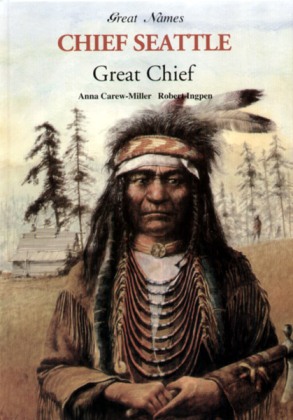
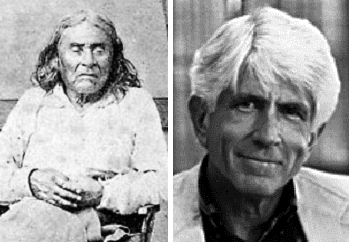
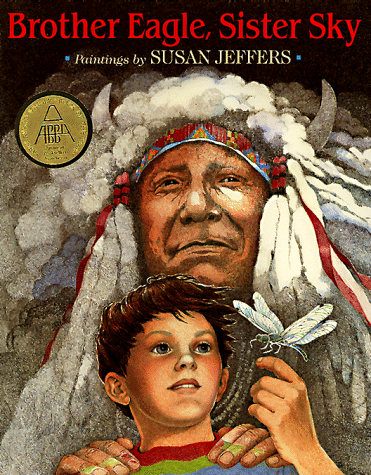
I point out that a certain speech said to be uttered by a native American chief is, in fact, a latter day script by a filmmaker.
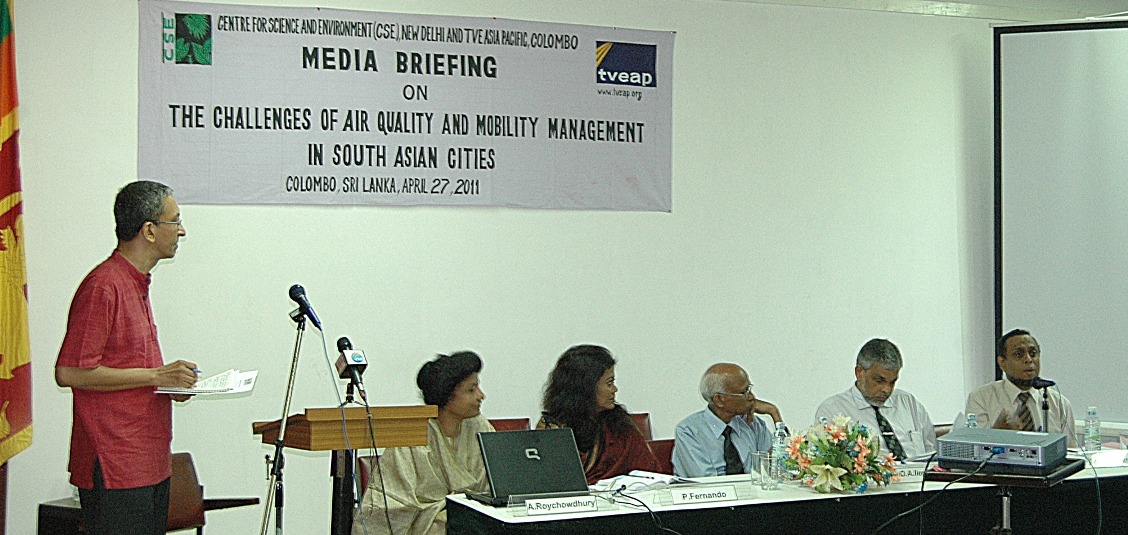
CSE TVEAP Media Briefing on Air Qualitry Issues in Colombo, 27 April 2011
Almost exactly four years ago, I wrote a blog post called Gasp! Asthma on the rise – and we made it all possible. I argued how we who suffer from Asthma — and our numbers keep increasing — are also contributing to making the bad problem worse.
I held up my life-saving inhaler that I always carry around wherever I go, and am never more than a few feet away from. This is not theatrics, but drama in real life. Almost exactly a year ago, I was rushed to hospital at night for nebulisation. I don’t suffer such attacks too often, thank goodness, but I also don’t want to take chances — as I can never count on good air in my home city.
And I’m far from being alone. Wherever I go, I find increasing numbers of fellow asthma sufferers: we gripe and groan, but only a few among us realise that our lifestyles, choices and apathy contributes to the worsening quality of our air.
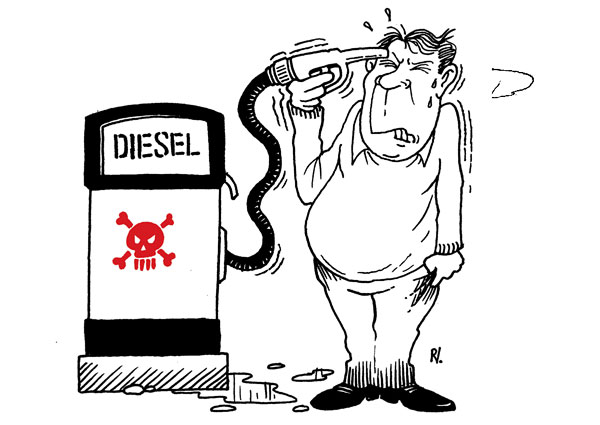
Almost every South Asian city today is reeling under severe air pollution and gridlocked urban traffic congestion. Colombo, a medium sized city by South Asian standards, has the (slight) advantage of the sea breeze flushing out part of its polluted air — but Greater Colombo is still struggling with polluting fuels, outdated vehicle technologies and rising numbers of private vehicles leading to massive congestion. Air quality levels vary considerably as we travel to the interior of the island, but some provincial cities now have mounting air pollution problems.
Finding the 'Common Air' in everybody's self interest...
This is why we collaborated with CSE, which has a long track record in knowledge-based advocacy for clean air in India and other countries of developing Asia, to organise this event. It was an open forum where air quality experts in Sri Lanka and India engaged Sri Lankan journalists and broadcasters on the status of Sri Lanka’s air quality and what it can learn from the neighbouring countries.
In my remarks, I said: “The quest for clean air in developing Asia is much more than a simple pollution story. It has many layers and complex links to government policies, regulation, industrial lobbies and technology options.
I added: “Our big challenge, as professional story-tellers, is to ask tough questions, seek clarity and then connect the dots for our audiences. At stake is our health, prosperity and indeed our very lives. Air pollution kills, slowly but surely!”




 Open Minds!