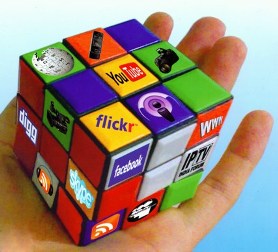
What’s the universal icon for the Internet? Is there one?

Would 2 billion recognise this?
What’s the first image that comes to your mind when you hear the word ‘Internet’?

If you’re a techie or geek, you’ll probably come up with a detailed answer that is technically accurate or precise. But most of the 2 billion plus people who use the Internet worldwide are not techies. They don’t know – or care – about the back-end technicalities.

A good icon is simple, language-neutral, and can be understood across different cultures and by people with very different educational backgrounds. For example, telephones – both fixed and mobile – have established symbols or icons. Sure, the devices have evolved beyond the well known imagery, but everybody recognises these.

So what’s the equivalent for the Internet, never mind its multitudinous applications and delivery methods?

We’re currently editing a short video on LIRNEasia’s broadband quality of service experience (QoSE) in emerging Asian economies. We play with images to tell complex stories in non-technical terms. We wanted to use an icon for the Internet (broadband or otherwise) — and couldn’t immediately think of one visual that everybody knows and recognises unambiguously as representing the global Internet.

So we searched. Our usually reliable friend Google wasn’t of much help. Google image search for ‘internet icon’ brought up hundreds of results — but none that is a universally accepted or recognised. But the search itself was interesting and revealing.

Some images, like Microsoft’s Internet Explorer browser’s famous ‘e’, are well known but are branded to one product and company.

Others, like the ethernet cable’s plug pin, are widely used — but how many non-techies will recognise it? Besides, when broadband access is increasingly going wireless, do the cables matter as much as they used to?

The same goes for those colourful images of fibre optic cables — dazzling points of light, but how many Digital Immigrants (or even Digital Natives) will know what they are?

At least wireless Internet seems to have settled its iconography — or has it? The little antenna transmitting omni-directionally seems to pop up everywhere these days, at least where such coverage is available. But there too, we have more than one icon — even if their main visual symbols are similar.

Then there’s the ubiquitous @ sign — originally introduced for, and still an integral part of, email addresses. But hey, Internet is a lot more than emails!

Are we settled on this?
We asked around IT industry friends and IT-watchers, but none could give us a definitive answer. The most that they could agree on was that the 3-letter formulation www (signifying the World Wide Web) comes close to a universally recognised sign for the Internet.

Hmm, that’s far from being a visually elegant design. And it’s decidedly biased to the roman alphabet too (ok, that’s the language of science).

But is there a better icon for the whole Internet, irrespective of delivery method and language-neutral? If not, isn’t it about time we agreed on one?

Designers, geeks and others with spare creative capacity, please take this up.
7 ‘ups’: A rough guide to engaging social media in the public interest

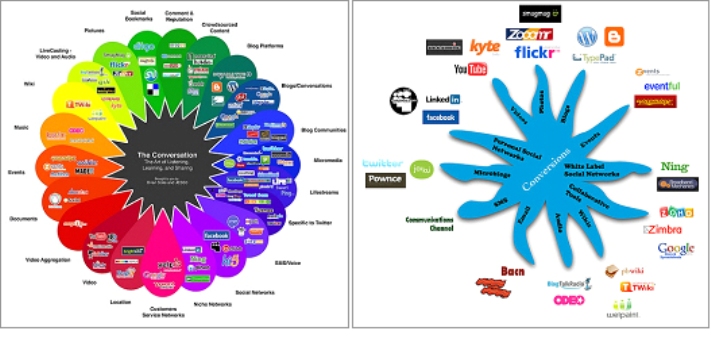
Depictions of social media: Conversations Prism (left) and Social Media Starfish

As I wrote in an earlier blog post, in the of social media, we need to be as daring and adventurous as Sinbad. Like the legendary sailor of Baghdad, we have to take our chances and venture into unknown seas. Instead of maps or GPS or other tools, we must rely on our ingenuity, intuition and imagination.

During his seven voyages in the Indian Ocean, Sinbad had fantastic adventures going to magical places, surviving assorted monsters, and encountering a host of supernatural phenomena. Armed simply with his guts, wits and wanderlust, he sailed to places where no man had gone before, and certainly none had returned alive from!

Preparing for my Beijing session last week on using social media to communicate in the public interest, I did a good deal of web browsing and online reading. I came across many attempts to map or visually depict the social media (including two shown above). I also found some interesting lists and guidelines – my favourite so far is 10 Things Your Grandmother can Teach You about Social Media.

This inspired me to come up with my own rough guide to get you started and keep you going. As a salute to Sinbad’s seven voyages, I call it the 7-‘ups’.

Turn up. As Woody Allen famously remarked, eighty per cent of success is just…showing up. You won’t get anywhere by simply observing or critiquing from the sidelines. You have to wade in and set sail — for better or worse.

• Once we join the planetary conversation, we need to do some catch up. Find your feet – and niche – in the online world. The Internet turned 40 in 2009, and its graphical interface – the World Wide Web – is now 20. So much has happened in that time – and a lot has also been superseded. You need to know what’s on, and what’s not.

What's your winning combination?
• After catching up, we also need to keep up — at least with the mega trends. Large companies like Google – as well as hundreds of individual geeks – keep releasing new applications frequently, many for free use. Popular websites (such as Wired, Mashable and their local equivalents) help us navigate through these depths and currents.

• Next one is harder. We have to give up our baggage of old habits and attitudes picked up over the years. For many Digital Immigrants, leaving the comfort zone of paper was scary enough. How can we let go of complete control over our communication products and processes? But that’s just what the social media demand. It’s not a choice, but an imperative.

• It’s also helpful – though not quite essential – if we are less glum, prim, exacting and academic in how we relate to others in social media. In short, ease up, mate! There are some basic norms for online behaviour, but crusty intellectuals or matronly bureaucrats don’t gain much traction. Keep things short, focused and simple. And hey, it’s okay to be funny, cheeky and irreverent…

• Conversations in this realm can last for weeks, months or longer. Some topics and discussions tend to have ‘long tails’. When we start something online, we have to be clear when to engage whom and how. Equally important is knowing when to shut up. (A bore is a bore, offline or online!).

• And if all this is making you feel dizzy…just cheer up: there are no real experts in this field. No one is an authority. Everything is ‘in beta’. We are all learning by doing. Neither is there a definitive road map to the social media world. In fact, in this partly Undiscovered Country, there is plenty of scope to explore, innovate and be original.

Are you a land-lubber who doesn’t trust any seas? Let me then offer you another metaphor. Think of this as hitchhiking or back-packing online. Take your chances. Be adventurous. Discover a whole new world!

We have some advantages over Sinbad. The virtual world poses no real danger to our lives. But beware: social media can be very time-consuming and even addictive.

You have been warned.

Here, for some edu-tainment, is an interesting video on social media that I found on…YouTube:

A more compact version of the 7-Ups appears in MediaHelpingMedia

Twitterless in Beijing: Talking aspirationally about social media…

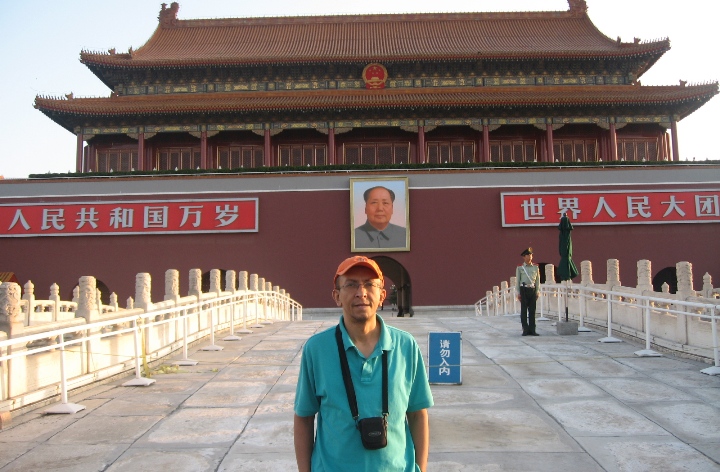
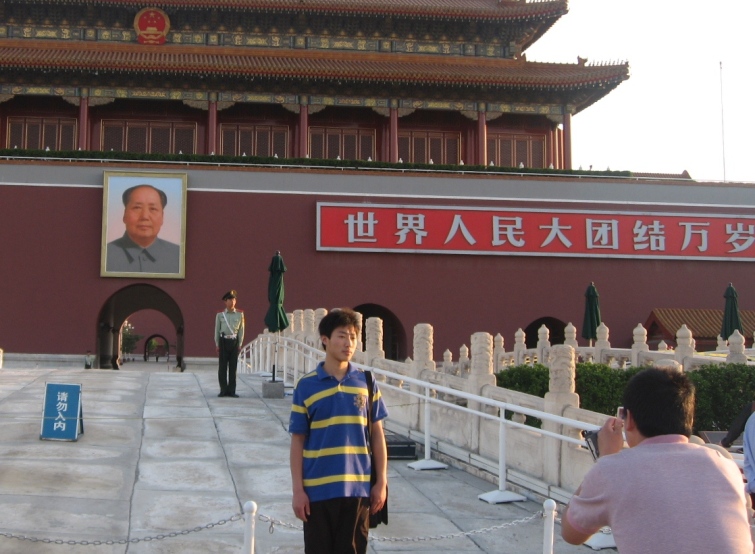
Under Chairman Mao's watchful eyes...

“Reading computer manuals without the hardware is as frustrating as reading sex manuals without the software!”

This is one of the less known, but more entertaining, dicta by Arthur C Clarke – he called it ‘Clarke’s 64th Law’, and I personally know he used to bring it up when meeting with particularly crusty or glum intellectuals. (Not all were amused.)

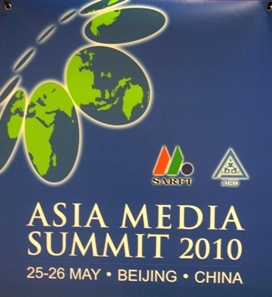
Clarke’s words kept turning in my mind as I moderated and spoke at a session on social media at Asia Media Summit 2010 held in Beijing China from 24 to 26 May 2010. The country with the world’s largest media market is not exactly the world’s most open or free – and certainly when it comes to social media, it’s a very different landscape to what we are used to…

These days, International visitors arriving in China discover quickly that access to YouTube, Twitter and Facebook is completely blocked. Apparently the brief ‘thaw’ in restrictions, seen before and during the 2008 Beijing Olympics, is now over — the current restrictions have been in place since the spring of 2009.

This doesn’t mean there is no social media in China. In fact, I heard from several Chinese friends and colleagues that there is a very large, dynamic and fast-evolving social media scene in China. For the most part, however, it’s not based on globally used and familiar platforms, and is happening in a digital universe of China’s own — under the watchful eye of the government.

Jump in...but some conditions apply!
For example, I found from this March 2010 blog post by Merritt Colaizzi that:
* 221 million people have blogs, largely in a diary-style.
* 176 million Chinese connect via social networking system (SNS) with their “real” friends and online networks.
* 117 million connect anonymously via bulletin board system (BBS). These interactive online message boards are the heart of social media in China. They’re where people go to find topic-based communities and where consumers talk about products and services.

There are lots of other blogs, mainstream media reports and research commentary on social media in China — just Google and see (now that’s another thing with limited – and uneven – access in China: Google itself is available, but search results come with lots of links that simply aren’t accessible). Much or all of this interaction happens in Chinese, of course. It’s a significant part of the web and social media landscapes, but if you’re in China on a short visit and want to stay connected to your own social media networks, that’s not at all helpful.

And, of course, it undermines one of the key attributes of a globally integrated information society: the interoperability of systems and platforms.

Luckily for me, perhaps, I can survive a few days without my social media fix: I have an appalling record of updating my Facebook account: days pass without me even going there. For the moment, at least, I’m also taking a break from regular blogging (well, sort of). But I’m more regular in my micro-blogging on Twitter, and visit YouTube at least once a day, sometimes more often. I could do neither during the few days in Beijing – and that was frustrating.

So imagine having to talk about social media as a new media phenomenon in such a setting. That’s only a tiny bit better than reading computer manuals without the hardware…But this is just what I did, with all the eagerness that I typically bring into everything I do. I planned and moderated a 90-minute session on Social Media: Navigating choppy seas in search of Treasures?

The session was part of the Asia-Pacific Media Seminar on Ozone Protection and Climate Benefit, so our context was how to use the social media to raise public awareness and understanding on the somewhat technical topics of ozone layer depletion and climate change (two related but distinctive atmospheric phenomena).

With access to key global social media platforms denied, we visitors and Chinese colleagues in the audience could speak mostly generically, theoretically and aspirationally. I didn’t want to place my hosts and seminar organisers in difficulty by harping on what was missing. Instead, we focused on what is possible and happening: how development communicators are increasingly social media networks and platforms to get their messages out, and to create online communities and campaigns in the public interest.

The thrust of my own opening remarks to the session was this: In the brave new world of social media, we all have to be as daring as Sinbad. Like the legendary sailor of Baghdad, we have to take our chances and venture into unknown seas. Instead of maps or GPS or other tools, we have to rely on our ingenuity, intuition and imagination.

More about the session itself in future blog posts.

For now, I want to share this TED Talk by American watcher of the Internet Clay Shirky on how cellphones, Twitter, Facebook can make history. Shirky shows how Facebook, Twitter and TXTs help citizens in repressive regimes to report on real news, bypassing censors (however briefly). The end of top-down control of news is changing the nature of politics.

PS: All this holds more than an academic interest for me, because there have been media reports in recent weeks that the Sri Lankan government is working with Chinese experts in formulating strategies for censoring internet access from Sri Lanka.

Impressions and images from Tiananmen, Gate of Heavenly Peace…

Tiananmen literally means Gate of Heavenly Peace...hmmm

I spent several hours at the Tian’anmen Square in Beijing, China, this week, while attending a media conference. I was returning to this landmark, now a key tourist attraction in modernised and assertive China, after nearly a decade. And much has changed…

Measuring 880 metres by 500 metres, and covering a total area of 440,000 square metres, the Tiananmen Square is the largest city square in the world. But mere superlatives don’t impress me. It’s what goes on behind the claims, labels and stereotypes that interest me.

I’ve been to the square on a couple of previous Beijing visits. The first was in October 1996, during my very first visit to China. I was also taken in a group tour on a later visit. If I remember right, my last sighting of the Square was in 2002 – just before I acquired my first digital camera. (That makes a difference, because Before Digital, my analog photographs on travel were sparingly taken…and my own memory is not a very reliable storage medium.)

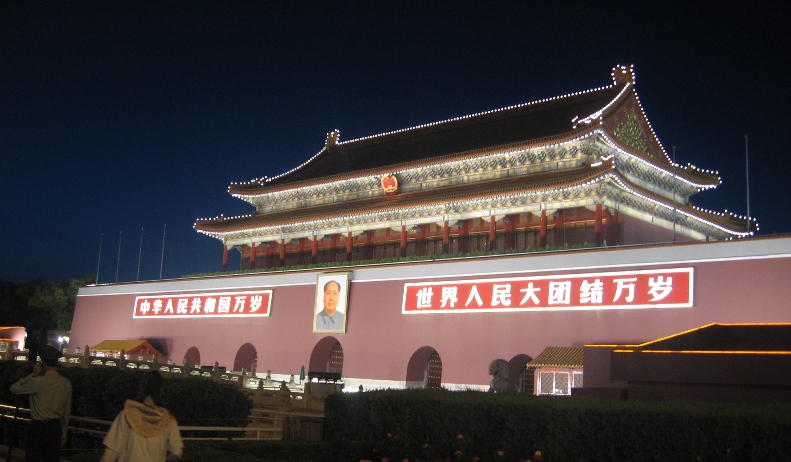
Day or night, he keeps vigil over Tiananmen Square...and 1.3 billion people

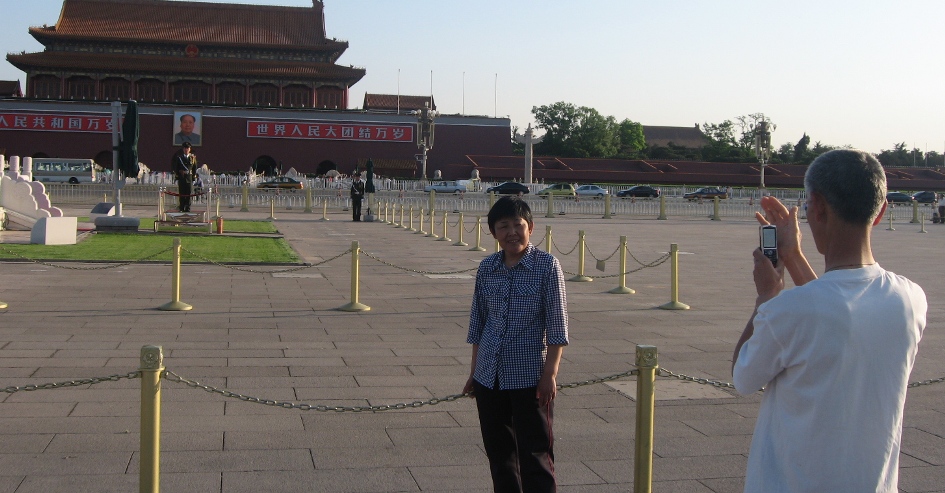
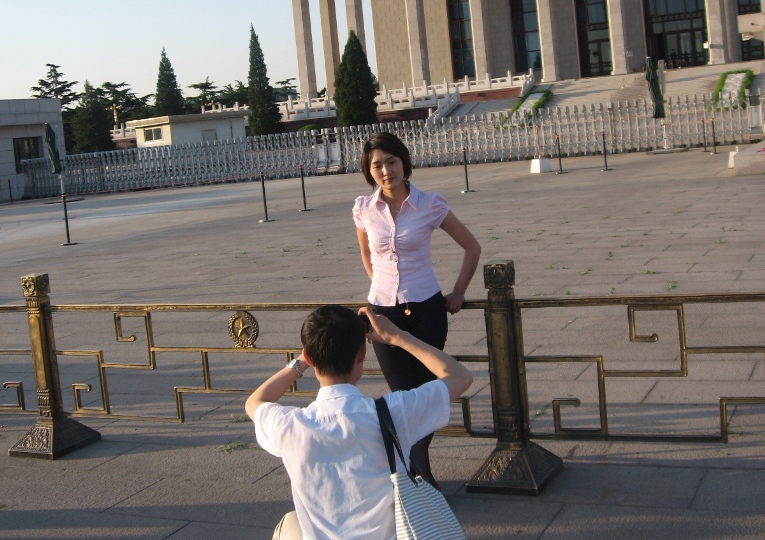
This time, I was armed with my digital camera and ample digital memory — and, it seemed, so were most other visitors! There were the obviously foreign tourists (including the loud and uninformed Americans), but it seemed most people thronging to the square were Chinese…many from out of town. For some, a visit to this centre of power is a rare occasion to be cherished and recorded.

I was impressed by just how many people were clicking away, using either digital cameras or mobile phone cameras. I shouldn’t be surprised by this, for China is the country with the largest number of mobile phones in use: by March 2010, there were some 780 million mobile subscribers, accounting for 58.5 per cent of all people in China.

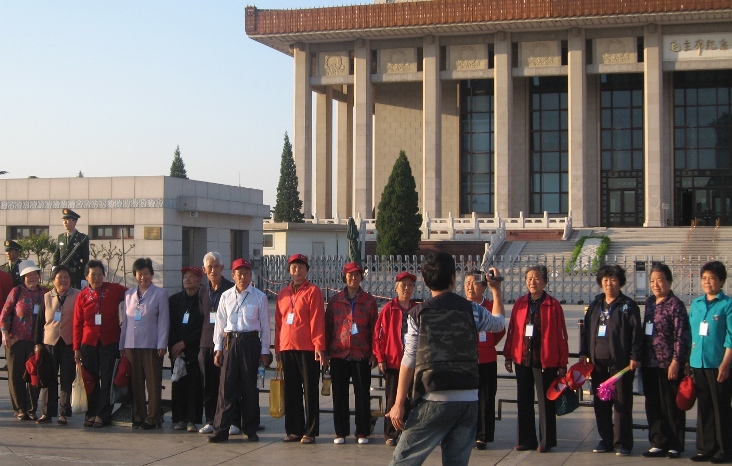
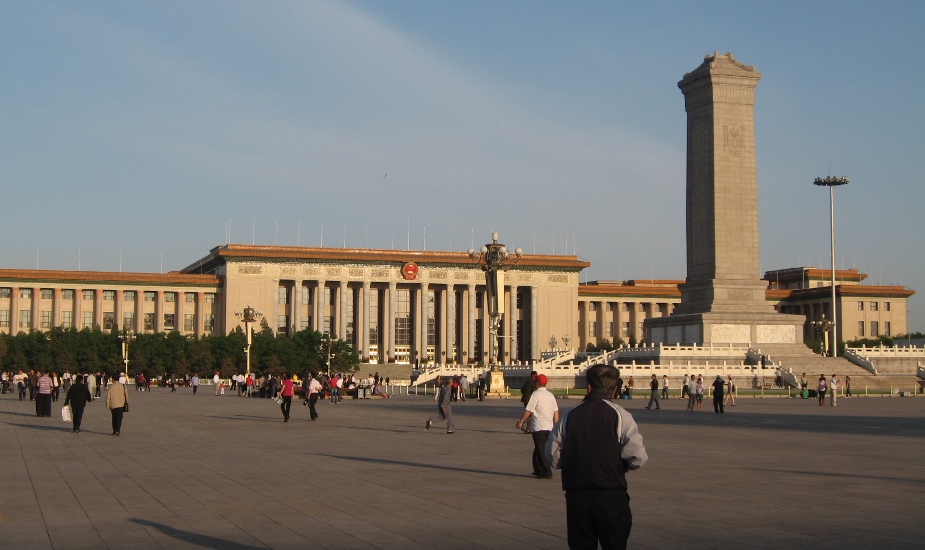
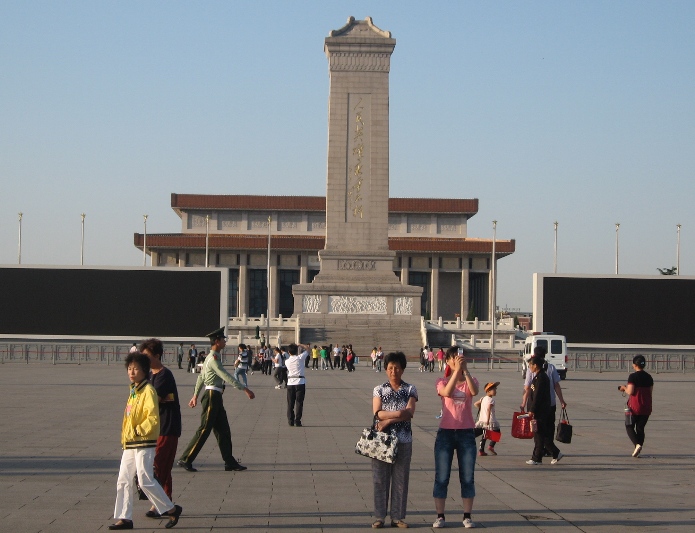
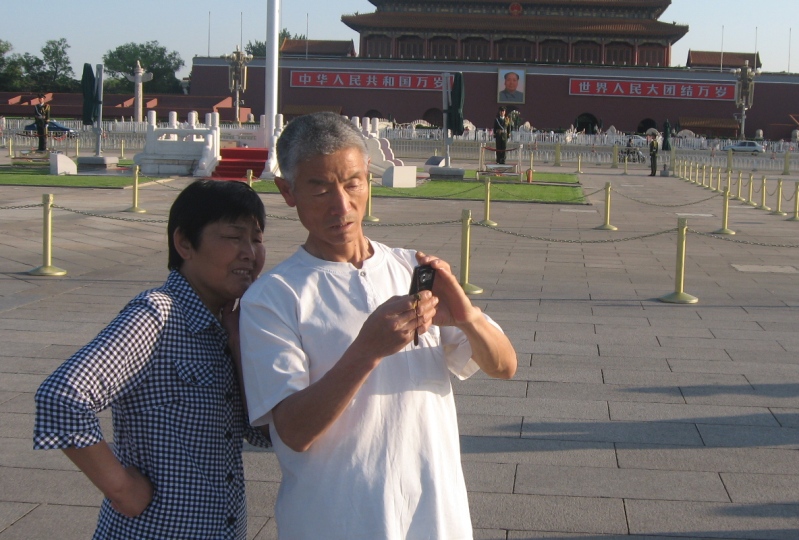
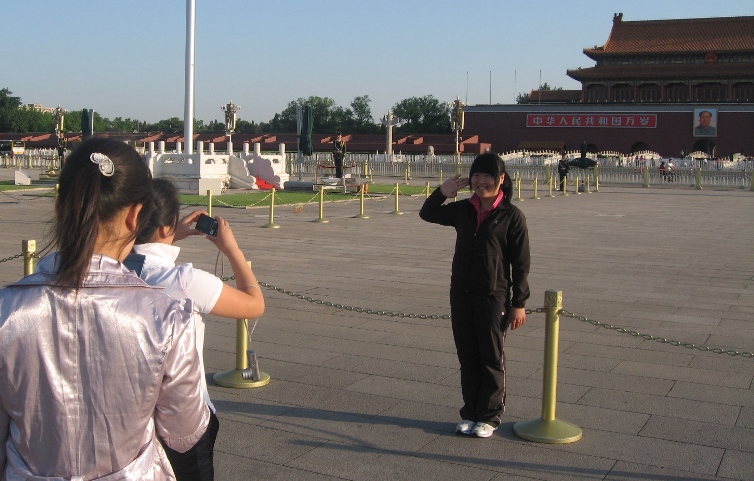
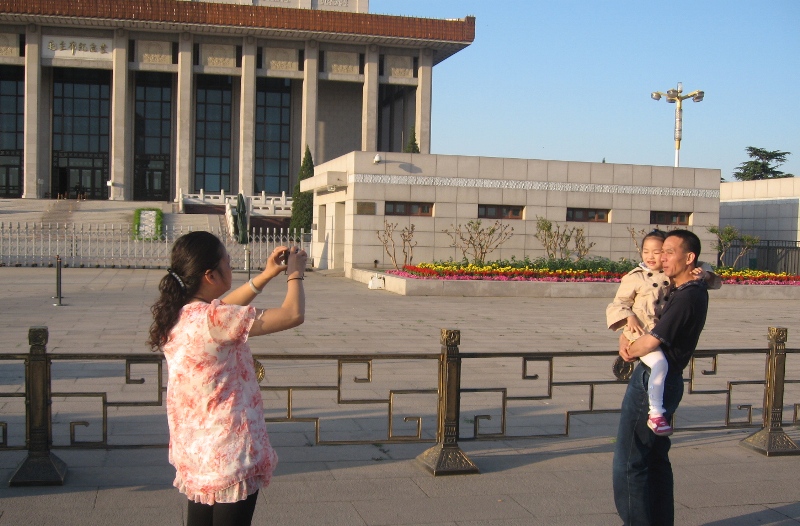
Keen to capture different scenes under varying kinds of daylight and night lights, I made three visits to the Square – including one at 5.30 in the morning to catch daybreak at the Gate of Heavenly Peace (literal meaning of Tiananmen). So here’s a sampling of my several dozen photos – this selection has a bias on people shooting each other, digitally speaking (a far cry from the kind of shooting that took place here 20 years ago).

Look serious, man - he's watching!
Now bring out your best smiles, all!
People milling about with Great Hall of the People in the background
Clicking away at Monument to the People's Heroes

One of the most striking moments I captured was of this elderly couple, very dignified and sprightly in their outlook, as they were taking a stroll on the square early morning and capturing memories on their mobile phone. They are old enough to have known another reality, but this was now and here…

This Square, and we, have seen and heard much in our time...
Did we get it alright?

I also noticed how the younger visitors were clearly at ease with digital technologies, just like their fellow Digital Natives elsewhere in the world. There is also a discernible easing up (not only among unknown people in public places, but also noticeable among older and younger Chinese friends I have): maybe it’s the exuberance of youth, but the NextGen Chinese don’t seem to be as somber and serious as their parents.

Or perhaps the younger people in China today just have more things to smile about?

Would Chairman Mao approve this pose, eh?
Heaven is in the eye of the beholder...
Digital Natives capturing memories for the Next Gen

It was a rushed visit of four nights and three days, so all my impressions are fleeting. They don’t begin to do justice to the nuanced complexity that is modern China. But they tell me one thing: even in a land with a proud history of over 5,000 years, ten years can still make a difference.

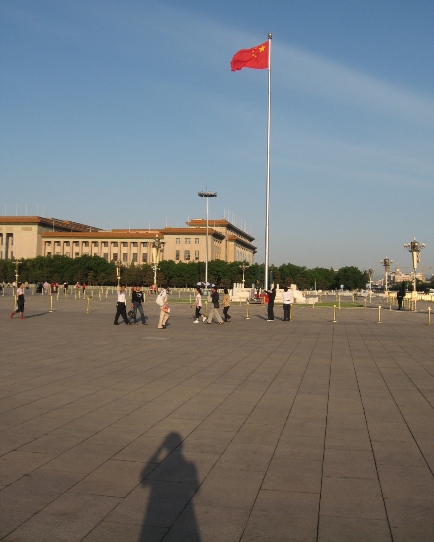
Bye for now: I take only photos, and leave only shadows behind...

Note: All photos were taken touristically for my own memory and personal archives, with no other intention.

TV Will Save the World, says Charles Kenny in TIME’s ’10 ideas for next 10 years’

Photo by Reza Deghati

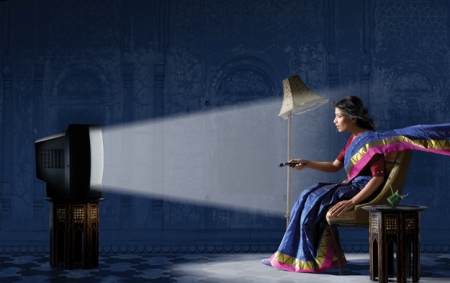
This is one of my favourite photos in media and development. It was taken by Reza Deghati, the renowned Iranian-French photojournalist (who works under the name Reza). I don’t know the story behind this photo, but even without a single word of annotation, it says a great deal.

I like this photo partly because it symobolises the enduring appeal of broadcast television in much of the developing world. For long years, the old-fashioned, boxy TV set used to be the top-selling consumer electronic item in the world — until the mobile phone came along. But even now, the much-maligned idiot box hasn’t lost its appeal to a significant section of humanity, never mind what the jaded academics and geeks might say.

So I was intrigued to read, in the latest issue of TIME Magazine, development economist Charles Kenny, reminding us that television is still the most influential medium around. In this gizmo-ridden new media age, it takes much courage to say so in public.

In a powerful short essay titled ‘TV Will Save the World’, he writes: “Forget Twitter and Facebook, Google and the Kindle. Forget the latest sleek iGadget. Television is still the most influential medium around. Indeed, for many of the poorest regions of the world, it remains the next big thing — poised, finally, to attain truly global ubiquity. And that is a good thing, because the TV revolution is changing lives for the better.”

Across the developing world, he says, some 60% of the households had their own TV set in 2005 — up from 45% in 1995. He adds: “Five million more households in sub-Saharan Africa will get a TV over the next five years. In 2005, after the fall of the Taliban, which had outlawed TV, 1 in 5 Afghans had one. The global total is another 150 million by 2013 — pushing the numbers to well beyond two-thirds of households.”

He ends his essay with these words that strongly resonate with me: “Too much TV has been associated with violence, obesity and social isolation. But TV is having a positive impact on the lives of billions worldwide, and as the spread of mobile TV, video cameras and YouTube democratize both access and content, it will become an even greater force for humbling tyrannical governments and tyrannical husbands alike.”

As Sir Arthur C Clarke, inventor of the communications satellie whose second death anniversary we mark this week, told me in a 2003 interview: “I’m not impressed by the attacks on television because of some truly dreadful programmes. I believe that every TV programme has some educational content. The cathode ray tube – and now the plasma screen – is a window to the world. Often it may be a very murky window, but I’ve slowly come to the conclusion that, on balance, even bad TV is preferable to no TV at all.”

Kenny’s essay is one of 10 ideas for the next 10 years that TIME has put together for its annual innovation issue.

Image courtesy Foreign Policy
The TIME essay is a much compacted version of what he wrote in November 2009 issue of Foreign Policy magazine, titled Revolution in a Box. That article noted the continuing global spread of television sets and an explosion of viewer choice driven by cable, satellite and digital technologies. It suggested this is a good thing, pointing to evidence that access to competitive television can improve womens’ standing in the home, increase girls schooling, reduce fertility rates, lower drug use, improve governance and (possibly) help foster global peace.

The editors of Foreign Policy ran the following blurb: “It’s not Twitter or Facebook that’s reinventing the planet. Eighty years after the first commercial broadcast crackled to life, television still rules our world. And let’s hear it for the growing legions of couch potatoes: All those soap operas might be the ticket to a better future after all.”

The full essay is well worth a careful read. At a time when I have been questioning many of the founding premises of my own work at TVE Asia Pacific, he has provided conceptual clarity and sharper focus.

Green activism at crossroads in Sri Lanka? Assessing Piyal Parakrama’s role in conservation movement

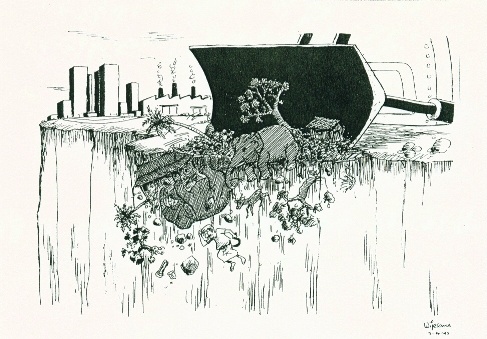
Price of Development, as seen by Cartoonist W R Wijesoma, 1993

Environmental activist and communicator Piyal Parakrama’s sudden death last week, of a heart attack, jolted Sri Lanka’s closely-knit green community. The activist community may bicker and argue endlessly among themselves, but there is also strong kinship among its cacophonous members. Many of them are still trying to come to terms with the loss.

As indeed am I – even if I’m not quite a certified member of the activist community, I consider myself a fellow traveler. I turn to words – either reflective prose or verse – when I want to make sense of something, and over the last weekend I wrote a new essay. It runs into 1,800 words and, as with all my tributes to public figures, this one is also social commentary laced in anecdotal reminiscence. It expands on initial thoughts that first appeared on this blog .

The full essay has just been published by Groundviews, and is titled: Death of a Green Activist: Tribute to Piyal Parakrama (1960 – 2010).

Here’s an excerpt where I talk about challenges faced by Sri Lanka’s environmental activists:

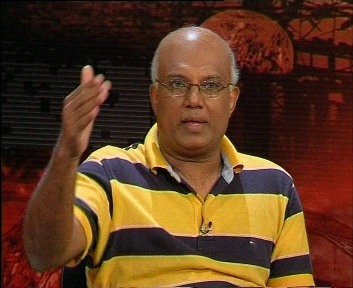
Piyal Parakrama on Sri Lanka 2048 TV show
During the past three decades, Piyal and fellow activists have taken up the formidable challenges of conserving Sri Lanka’s biodiversity, long under multiple pressures such as growing human numbers, rising human aspirations, and gaps in law enforcement. Adding to the sense of urgency was the 1999 designation of Sri Lanka as one of the world’s biodiversity hotspots, where high levels of endemic species (found nowhere else in the wild) were threatened with extinction. Public and media attention is disproportionately focused on a few charismatic mega-fauna like elephants and leopards; in reality, dozens of other animal and plant species are being edged out.

In search of viable solutions for entrenched conservation problems, Piyal collaborated with scientists, educators, journalists and grassroots activists. Some industrialists and investors hated his guts, but he was much sought after by schools, universities and community groups across the country. Concerned researchers and government officials sometimes gave him sensitive information which he could make public in ways they couldn’t.

Some eco-protests grew into sustained campaigns. Among them were the call to save the Buona-Vista reef at Rumassala and struggles against large scale sugarcane plantations in Bibile. A current campaign focuses on the Iran-funded Uma Oya multipurpose project, which involves damming a river for irrigation and power generation purposes.

While environmentalists ultimately haven’t block development projects, their agitations helped increase environmental and public health safeguards. Occasionally, projects were moved to less damaging locations – as happened in mid 2008, when Sri Lanka’s second international airport was moved away from Weerawila, next to the Bundala National Park.

The hard truth, however, is that our green activists have lost more struggles than they have won since the economy was liberalized in 1977. They have not been able to stand up to the all-powerful executive presidency, ruling the country since 1978 — most of that time under Emergency regulations. In that period, we have had ‘green’ and ‘blue’ parties in office, sometimes in coalitions with the ‘reds’. But their environmental record is, at best, patchy. In many cases, local or foreign investors — acting with the backing of local politicians and officials — have bulldozed their way on promises of more jobs and incomes. Environmentalists have sometimes been maligned as anti-development or anti-people. In contemporary Sri Lanka, that’s just one step away from being labeled anti-national or anti-government.

At the end of the essay, I try to sum up the multiple challenges faced by ALL activists in Sri Lanka today:

“Activism is not an easy path anywhere, anytime, and especially so in modern day Sri Lanka. All activists – whether working on democracy, governance, social justice or environment – are struggling to reorient themselves in the post-conflict, middle-income country they suddenly find themselves in. Their old rhetoric and strategies no longer seem to motivate the people or influence either the polity or policy. Many of them haven’t yet crossed the Other Digital Divide, and risk being left behind by the march of technology.”

I had earlier touched on these concerns in a January 2009 blog post titled Vigil for Lasantha: Challenges of keeping the flame alive. If I was harsh in that commentary, I have tried to be more considerate in the latest essay.

After all, I want our activists to be effective and successful as society’s conscience. My suggested author intro for this latest essay, somehow now included in the published version, read: “Science writer Nalaka Gunawardene dreams of becoming an activist one day, but for now, he remains a ‘critical cheer-leader’ of those who are more courageous.”

Read the full essay on Groundviews: Death of a Green Activist: Tribute to Piyal Parakrama (1960 – 2010).

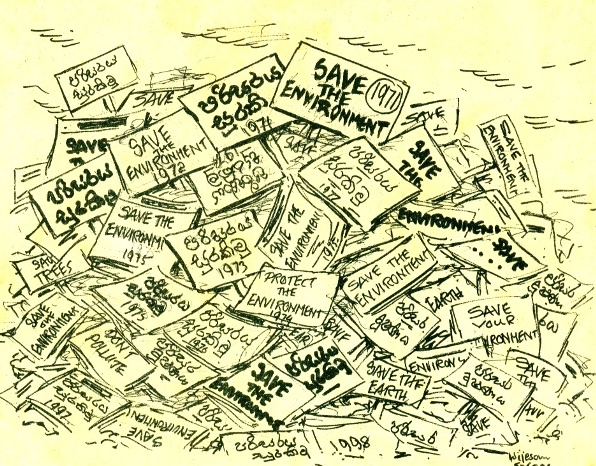
Is this how it all ends? Green activism - a cynical view by Wijesoma

Who’s Afraid of Amateur Radio? And why do our babus fear it?

When I was in my early teens (back in the early 1980s), I developed a great interest in radio. Not just in listening to radio broadcasts, which I did regularly while growing up in a country that had no television, but also in building a radio that could both receive and transmit signals.

My school teacher father, who encouraged me in many of my diverse pursuits, bought transistors, condensers and other ‘building blocks’ for a basic radio set. With the help of an amateur radio handbook, and through trial and error, he and I actually built a functional transmitter. It was exhilarating to listen to local and shortwave broadcasts on a home-made radio set, but even more exciting to be able to transmit rudimentary signals.

Even as a kid, I was not contented in being a passive recipient of information; I wanted to give out as much as I received…

That particular fancy didn’t last long: I soon moved on to other challenges, and never persisted with being a serious amateur radio enthusiast (or ‘radio ham’), but it left a lasting impression. A few years later, after leaving high school, I became a regular freelancer at the local radio station. By age 23, I was hosting my own weekly show on national radio, and my association with the radio medium would last for much of my 20s.

The humble low tech that saved the day...
My interest in amateur radio lay dormant — until five years ago, when I read reports about how radio hams helped revive emergency communications in the immediate aftermath of the Indian Ocean Tsunami.

The decades old practice was hailed as the ‘low tech’ miracle that literally helped save lives. Where electricity and telephone services — both fixed and mobile — had been knocked down, radio hams restored the first communication links. They were at the forefront of relief efforts, for example, in the Andaman and Nicobar Islands in India, and in Hambantota in southern Sri Lanka.

This intrigued Sir Arthur C Clarke, inventor of the communications satellite and long time resident of Sri Lanka. Shortly afterwards, he wrote in Wired magazine: “We might never know how many lives they saved and how many minds they put at ease, but we owe a debt to Marconi’s faithful followers.”

If Sir Arthur were alive, he would have been dismayed to find what has happened since. Notwithstanding their celebrated role after the tsunami, radio hams have been sidelined in Sri Lanka. Their very hobby is being frowned upon by the state on the grounds of…national security.

Looking back, it seems like the public-spirited radio hams were given their 15 minutes of fame and then soundly ignored. Worse, the short-lived prominence may have attracted new bureaucratic hurdles.

This is the thrust of my last op ed essay for 2009, published on 31 December 2009 on Groundviews.org under the title: Who’s Afraid of Amateur Radio? Tsunami’s heroic technology has few backers in Sri Lanka

“As the applause died away, everything was forgotten,” I quote Victor Goonetilleke, one time President and current Secretary of the Radio Society of Sri Lanka, which networks amateur radio practitioners in the country.

One reason for this bureaucratic fear and negativity, I argue, may be simple ignorance of what amateur radio really is — reflecting the disturbingly low levels of media literacy in Sri Lanka.

Read the full essay, and join the conversation on Groundviews, or on this blog.

Essay republished on AMIC Alternative Media Portal

Rust in Peace: Tribute to my old faithful Toshiba Satellite Pro A100

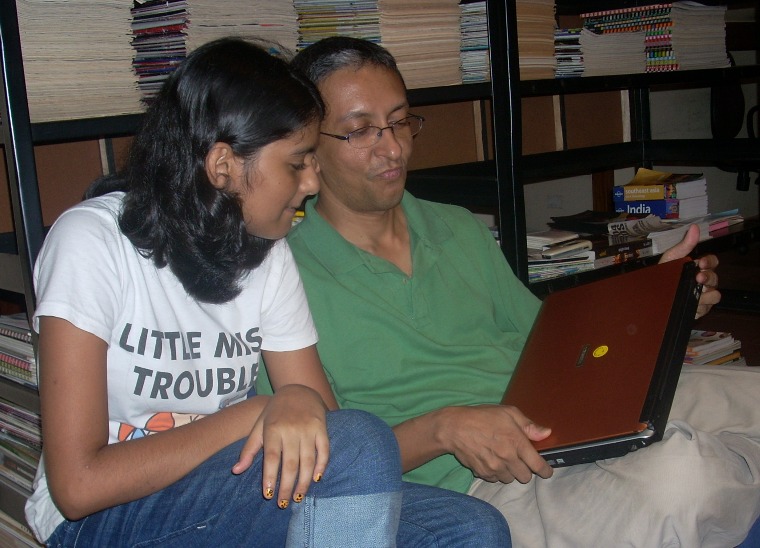
Dhara and Nalaka with their old faithful Toshiba, 24 Dec 2009 - Photo by Niroshan Fernando

For many of us, computers have become essential silicon extensions of our carbon selves — and we can’t imagine how we managed our work and leisure before their arriva. In my case, the attachment to my laptop goes beyond professional: it’s also my constant companion and travel partner.

So it’s akin to a death in the family when the old faithful finally goes the way of…all silicon. In 20 years of laptop use, I have mourned six: the average productive lifespan seems to be between three and four years. (Confession time: I have a cabinet full of very tired and fully expired laptops, mostly Toshiba.)

The latest calamity happened in early December, pushing me into a few days of digital turbulence just when I was trying to tie up various loose ends in what has been another hectic year. Fortunately, no data were lost, and I eventually managed a fairly orderly transfer.

It didn’t come entirely as a surprise. My Toshiba Satellite Pro (model A100) had been showing signs of wear and tear for a few months. The laptop screen is usually the first to develop problems of old age, but switching to a new machine is such a chore (and expense) that I was willing to live with an occasionally misbehaving display. But when bigger and deeper problems manifested – which our IT Manager Indika found were due to a malfunctioning motherboard – it was time to let go…

When I bought my latest Toshiba in mid 2006, I didn’t immediately like its metallic orange colour. I’d been using laptops with silver or electric blue coloured exteriors, and this was a clear departure from that range. But my female colleagues thought orange was rather ‘cool’. I didn’t easily warm up to this colour shift — until I realised the potential for some harmless fun.

Every few weeks, someone would ask me – inevitably, in the ICT circles that I move — whether I used Apple (the geekdom’s ultimate standard). For the past three and a half years, my honest yet confounding answer has been: ‘No, I’m perfectly happy with my Orange!’

Of course, my affection for the laptop was a lot more than skin deep. It has been an integral part of much of what I did professionally and personally in the past three and half years, both online and offline. My substantial volume of published output (op ed essays, book chapters, reviews and film scripts, etc.) took shape within it before flowing out in many and varied directions. I also generated a good deal of unpublished material, all of which is safely stored but not yet ready to see the light of day…

It was also the launch pad for this Moving Images blog, which I started from my friend Sue’s home in Washington DC in early Spring 2007.

It has travelled the world with me, going through hundreds of airports and keeping me much needed company in endless hotel rooms, conferences and meetings.

It has been my confidante in times of crisis – and the past 1,300 days have been among the most tumultuous in my personal and professional lives. While I’m not a social recluse, and cherish the company of my few close (human) friends, it’s sometimes nice to just pour my heart out to someone who listens, doesn’t judge and never resorts to wisecracks or amateur psychology…

So why do I then keep referring to such a trusted companion in the heartless third person as ‘it’? If ships and countries are decidedly female, what about computers that far more people in the world today relate to? That’s a good question, even if it brings up the heated – and as yet unresolved – debate among computer users on the correct gender of computers.

Assigning a gender isn’t that simple when I wasn’t the only regular user of the recently departed Toshiba. That is also another good reason why I was more attached to the last laptop than any of its predecessors: it’s the first machine that connected my Digital Native daughter Dhara to the internet. It arrived within days of her 10th birthday, and I finally ran out of excuses why she shouldn’t go online and get a digital life. (As I reported a few weeks ago, she has since made rapid progress.)

So it was rather apt that Dhara should come up with the perfect epitaph for our beloved, sorely missed silicon companion. It isn’t quite original, but sums up our shared sentiments very well: RIP: Rust In Peace…

PS: Rust in Peace is also the title of an interesting collection that New York magazine recently published of everyday stuff rendered obsolete in the first decade of this century. Among the 17 items listed are the fax machine, audio cassette, answering machine, cathode ray tube TV and incandescent bulb…

e-Asia 2009 in Colombo: Huge gaps remain between Sri Lanka’s ICT hype and reality

Say eeeeeeeeeee - and don't ask questions!
The much-hyped e-Asia 2009 conference and exhibition opens in Colombo, Sri Lanka, today. It is organised by our good friends at the Centre for Science, Development and Media Studies (CSDMS) in India and the Sri Lankan government agency known as Information and Communication Technology Agency (ICTA).

According to the conference website, e-Asia 2009 is meant also to celebrate Sri Lanka’s Year of ICT and English, 2009. The event has been preceded by a massive advertising blitz in Sri Lanka’s print and broadcast media, while Colombo and suburbs have been plastered with promotional banners and posters.

The foreign delegates will be exposed to a great deal of sunshine stories from the ICTA which was originally set up as a sunset agency (but hey, the sun never sets on some people!). Sri Lankan delegates will be too embarrassed or well mannered to point out glaring gaps between the hype and reality. Few people want to rock the boat these days!

I am reminded of a popular Sri Lankan folk tale. It relates an incident that happened when we were ruled by hereditary kings, and concerns jaggery — a delicious sugar substitute we make from the sap of the coconut palm.

The King of Lanka, being the curious type, wanted to know how jaggery was made. He sent for the official jaggery supplier to the Palace, who claimed that it was being produced under the most hygienic conditions by people who had mastered the technique for decades.

Unlike today’s rulers, however, the kings of yore didn’t believe everything they were told. So one day the King went in disguise to investigate. Which was just as well — because the reality was completely different! The king found his jaggery being made in a rickety old shack, with none of the hygienic conditions!

A very angry king revealed who he was, and demanded an explanation. He was then told: “That’s the hype, Your Majesty, and this is the reality!”

For one thing, today’s heads of state – overexposed in the media – can hardly expect to go anywhere incognito (and if they tried, security officers and assorted sycophants would immediately prevent it!). All the same, it is an interesting thought experiment to wonder what the President of Sri Lanka might uncover if he were to probe beyond the glitzy (almost giddy) propaganda being unleashed by ICTA!

As I wrote in CSDMS’s own regional magazine i4d a couple of years ago, the gulf between the hype and reality in our ICT circles can be as wide as it is shocking. When an agency invests so much time, effort and money in publicity, we can always suspect that there is more than what meets the eye…

People want their needs met and problems solved, not fancy projects...

The proof of the ICT pudding is in the societal acceptance and integration of ICT tools, processes and services in the daily living, work and leisure of people. As I said in my i4d essay: “Tragically, the ICT Agency of Sri Lanka, which has the mandate and powers to address these issues, is instead dissipating its energy and resources on setting up rural tele-centres, a task that it should leave to better positioned and experienced groups. This glaring inability to set and pursue the right priorities has been a bane of Sri Lankan ICT sector for years.”

What I wrote a couple of years ago is still valid. Here’s another excerpt:

No amount of legislation, policy formulation and paid propaganda by the ICTA is going to mainstream ICTs in Sri Lankan society. ICTs have to prove their worth, and be accepted as adding value to living and working conditions of ordinary people.

We can assess the utility and relevance of any new technology by asking a few simple questions. Does the new technology or process:
– put more food on their table?
– add More money in people’s pockets?
– make interfacing with govt easier?
– save time and effort involved in commuting?
– support cultural and personal needs of individuals and groups?
– put a smile on users’ faces?

Finally, is it affordable, user-friendly and widely available, with minimum entry level barriers?

Read my full essay, ICT Hype and Realities in i4d magazine

Confessions of a Digital Immigrant: Reflections on mainstream and new media

The Digital Native: Was there a life before the Internet, Dad?

In early August 2009, I talked to a captive audience of media owners, senior journalists and broadcasters in Colombo about the ‘digital tsunami’ now sweeping across the media world. (It has been reported and discussed in a number of blog posts on Aug 6, Aug 7, Aug 8 and Aug 31).

As I later heard, some in my audience had mistakenly believed that I was advocating everything going entirely online. Actually, I wasn’t. I like to think that both the physical and virtual media experiences enrich us in their own ways. Real world is never black and white; it’s always a mix or hybrid of multiple processes or influences.

So I’ve just revisited the topic. I adapted part of the talk, and included more personalised insights, and wrote an essay titled ‘Confessions of a Digital Immigrant‘, which has just been published on Groundviews, the path-breaking citizen journalism initiative.

It opens with these words:

“My daughter Dhara, 13, finds it incredible that I had never seen a working television until I had reached her current age — that’s when broadcast television was finally introduced in Sri Lanka, in April 1979. It is also totally inconceivable to her that my entire pre-teen media experience was limited to newspapers and a single, state-owned radio station.

“And she simply doesn’t believe me when I say — in all honesty and humility — that I was already 20 when I first used a personal computer, 29 when I bought my first mobile phone, and 30 when I finally got wired. In fact, my first home Internet connectivity — using a 33kbps dial-up modem — and our daughter arrived just a few weeks apart in mid 1996. I have never been able to decide which was more disruptive…

Groundviews: 1,000 posts and counting...“Dhara (photographed above, in mid 2007) is growing up taking completely for granted the digital media and tools of our time. My Christmas presents to her in the past three years have been a basic digital camera, an i-pod and a mobile phone, each of which she mastered with such dexterity and speed. It amazes me how she keeps up with her Facebook, chats with friends overseas on Skype and maintains various online accounts for images, designs and interactive games. Yet she is a very ordinary child, not a female Jimmy Neutron.

“Despite my own long and varied association with information and communication technologies (ICTs), I know I can never be the digital native that Dhara so effortlessly is. No matter how well I mimic the native ‘accent’ or how much I fit into the bewildering new world that I now find myself in, I shall forever be a digital immigrant.”

Read the full essay ‘Confessions of a Digital Immigrant’ on Groundviews…