Despite the recent International Year of Chemistry (2011), chemicals don’t get good press in Sri Lanka. If at all they make it to the news, or become a current affairs topic, that is usually as a bad story: a chemical spill, water contamination or suspected pesticide residues in our food.
All these happen, and we should be concerned. But chemicals are everywhere in our modern lives — reducing drudgery, protecting us from disease and overall improving the quality of life. It’s all a question of balancing risks with benefits. Also discerning what we really need as opposed to what we want.
Focusing on bad news is the media’s typical approach, and demonising science and technology is common in many sections of our print and broadcast media. Such posturing also fits well into the prevailing narrative of the ‘whole world being out to undermine, destabilise and destroy us’. So chemical industries must be part of that ‘conspiracy’, no?
Many of Lanka’s environmental activists don’t allow facts and analysis to get in the way of a good scare story. Uncritical journalists and their editors often peddle their half-baked arguments and conspiracy theories unsupported by any evidence. Very few scientists speak out for science and reason.
So when the Centre for Environmental Justice (CEJ), a moderate advocacy group, invited me to talk to a group of journalists and broadcasters at a media workshop, I welcomed the opportunity.
I based my talk on five scientists each of who took on once-revered chemicals and formidable industry interests, all in the public interest. By showcasing these champions of public science, I wanted to show that there are honest, diligent scientists who engage in evidence-based advocacy. Not all scientists are part of some global conspiracy to poison us…
The five are those who worked tirelessly and left their mark in their discipline, and in how we look at chemical and environmental management: Rachel Carson (1907 – 1964) Alice Hamilton (1869 – 1970) Sherwood Rowland (1927 – 2012) Theo Colborn (1927 – ) Anil Agarwal (1947 – 2002)
I ended by urging journalists to look for credible and moderate scientists who are led by evidence, not conjecture or prejudice. Amplifying their voices is something we in the media are well positioned to do, but don’t do nearly enough.
Presentation to Media workshop on scientific reporting on chemical issues, organised by Centre for Environmental Justice in Colombo, 25 September 2012:
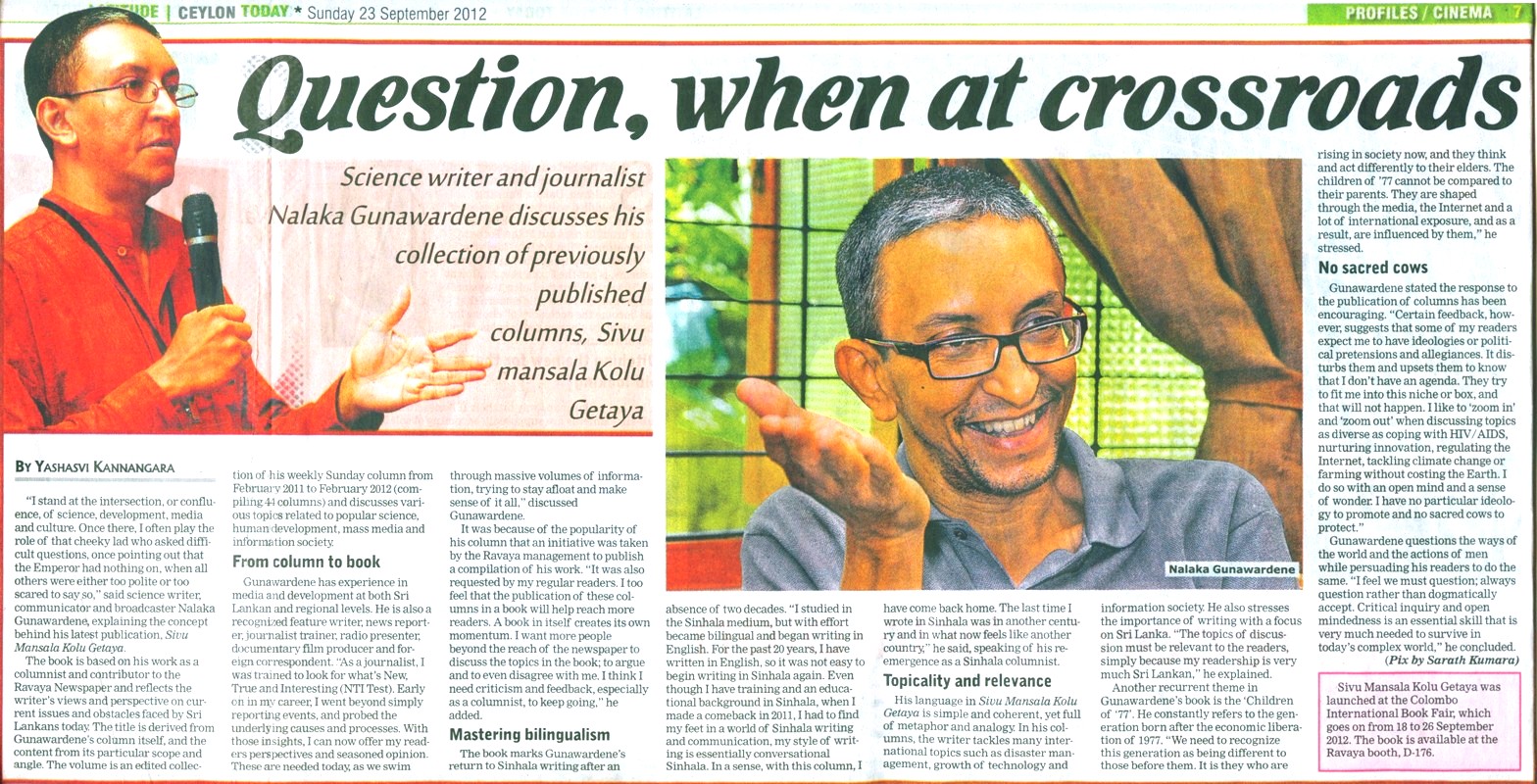
Nalaka Gunawardene, photo by Sarath Kumara“Question, When At Crossroads”
With that title, Ceylon Today on Sunday 23 September 2012 carries a profile of my new Sinhala language book, Sivu Mansala Kolu Getaya (SMKG for short).
The article is written by Yashasvi Kannangara based on an interview with myself, and her reading of the book that came out last week.
A recurrent theme in SMKG is my interest in Sri Lanka’s ‘Children of ’77’ — the generation who were born after the economy was liberalised in 1977 which, in turn, ushered in radical changes in our society, culture and media. So I’m intrigued to be profiled by a member of that very generation, @YashasviK!
Here’s an excerpt, where she quotes me directly:
“I studied in the Sinhala medium, but with effort became bilingual and began writing in English. For the past 20 years, I have written in English, so it was not easy to begin writing in Sinhala again. Even though I have training and an educational background in Sinhala, when I made a comeback in 2011, I had to find my feet in a world of Sinhala writing and communication, my style of writing is essentially conversational Sinhala. In a sense, with this column, I have come back home. The last time I wrote in Sinhala was in another century and in what now feels like another country!”
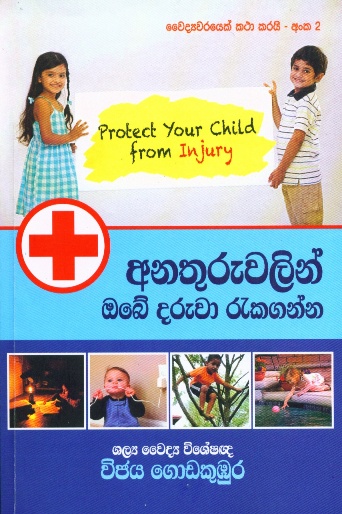
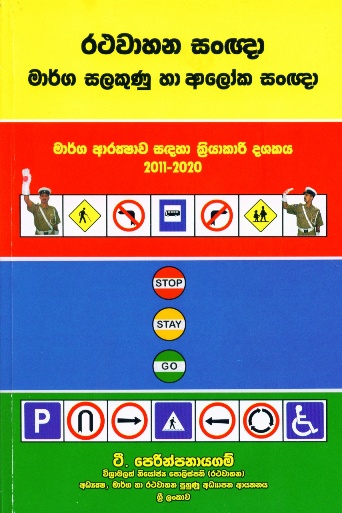
This is the text of my (Sinhala language) column in Ravaya newspaper of 23 September 2012. I review two new books, both of much public interest, and written by two senior professionals who have been passionately committed to public safety for decades.
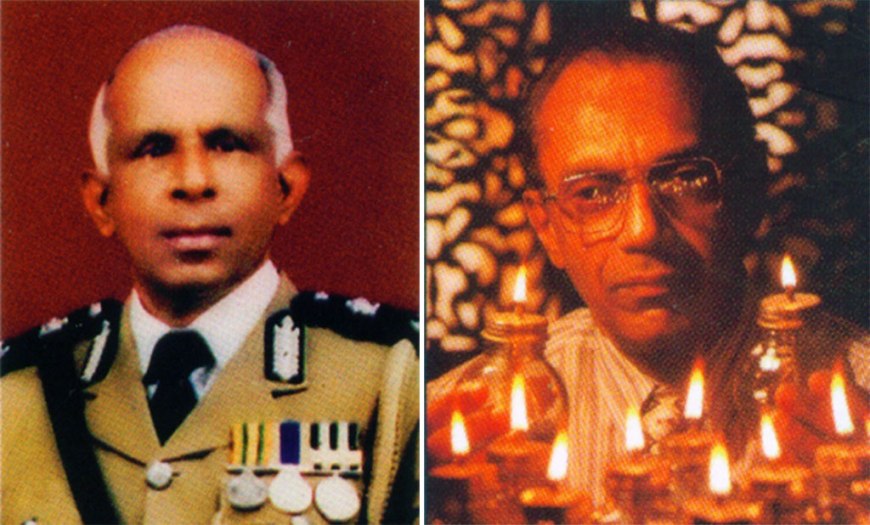
Protect Your Child from Injury (in Sinhala) is written by Dr Wijaya Godakumbura, while Traffic Signs, Road Markings and Traffic Signals is authored by T Perinpanayagam, a retired senior police officer.
T Perinpanayagam (left) and Dr Wijaya Godakumbura: Life-long commitment to safety
මේ සාහිත්ය මාසයයි. කොළඹ පොත් ප්රදර්ශනය පැවැත්වෙන සතියයි. මේ නිසා මෑතදී මට හමුවූ පොත් දෙකක් ගැන අද කථා කරනවා.
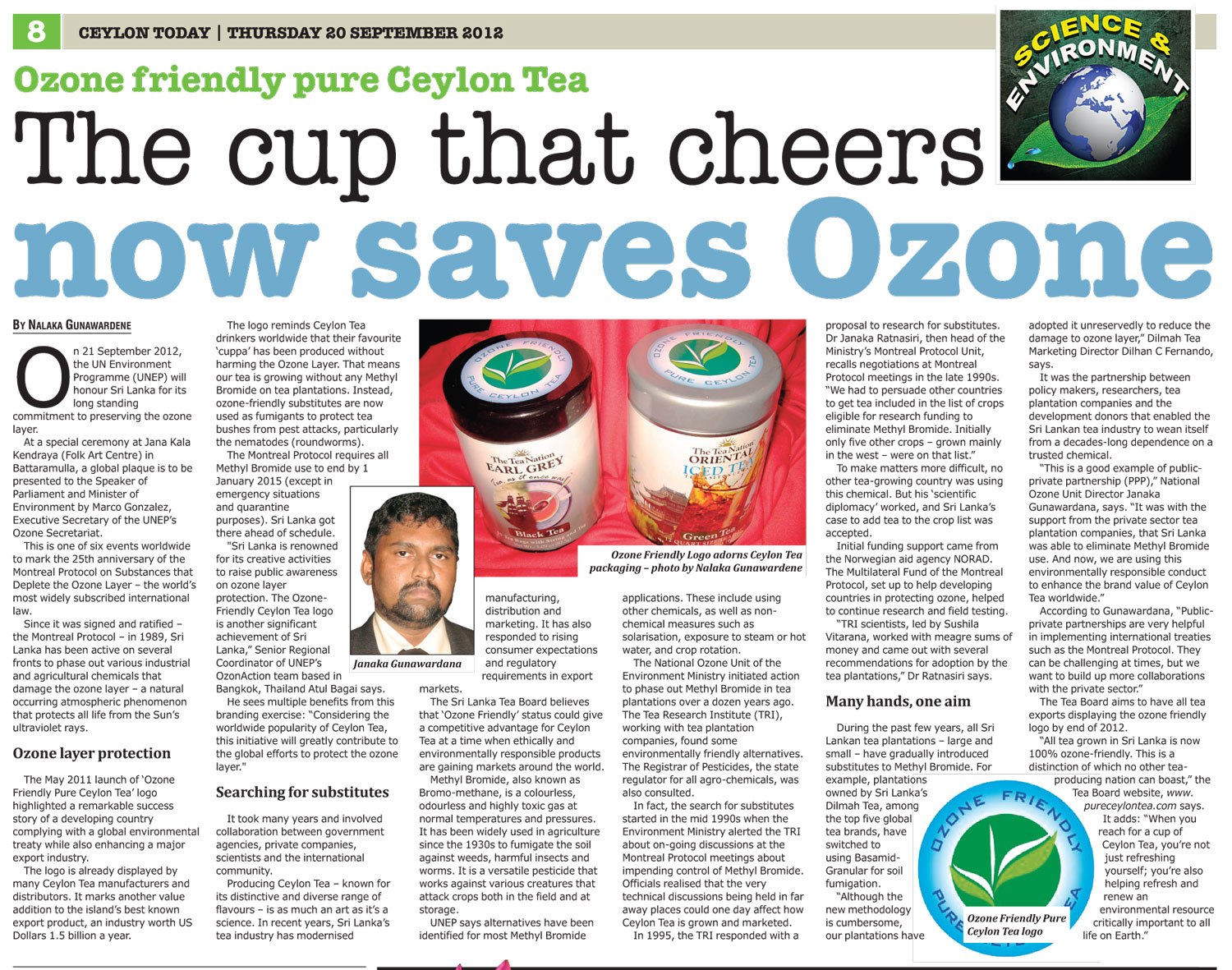
Text of my article that appears in Ceylon Today newspaper, on 20 September 2012
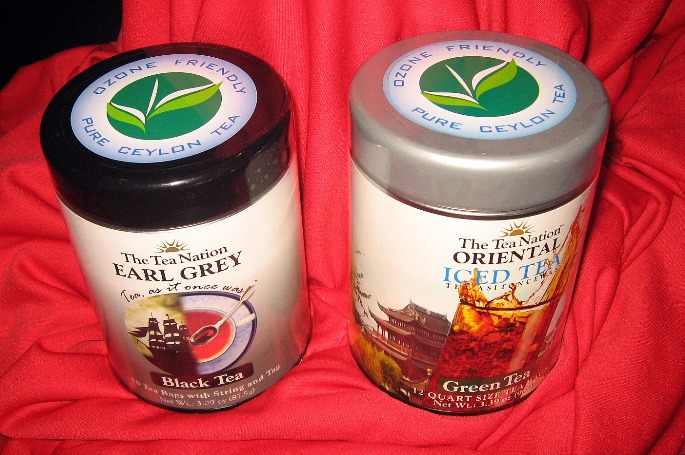
Ozone Friendly Logo adorns Ceylon Tea packaging – photo by Nalaka Gunawardene
On 21 September 2012, the UN Environment Programme (UNEP) will honour Sri Lanka for its long standing commitment to preserving the ozone layer.
At a special ceremony at Jana Kala Kendraya (Folk Art Centre) in Battaramulla, a global plaque is to be presented to the Speaker of Parliament and Minister of Environment by Marco Gonzalez, Executive Secretary of UNEP’s Ozone Secretariat.
This is one of six events worldwide to mark the 25th anniversary of the Montreal Protocol on Substances that Deplete the Ozone Layer — the world’s most widely subscribed international law.
Since it signed and ratified the Montreal Protocol in 1989, Sri Lanka has been active on several fronts to phase out various industrial and agricultural chemicals that damage the ozone layer – a natural occurring atmospheric phenomenon that protects all life from the Sun’s ultraviolet rays.
Among the many accomplishments is introducing the world’s first ozone friendly tea. The May 2011 launch of ‘Ozone Friendly Pure Ceylon Tea’ logo highlighted a remarkable success story of a developing country complying with a global environmental treaty while also enhancing a major export industry.
The logo is already displayed by many Ceylon Tea manufacturers and distributors. It marks another value addition to the island’s best known export product, an industry worth US Dollars 1.5 billion a year.
The logo reminds Ceylon Tea drinkers worldwide that their favourite ‘cuppa’ has been produced without harming the Ozone Layer. That means our tea is growing without any Methyl Bromide on tea plantations. Instead, ozone-friendly substitutes are now used as fumigants to protect tea bushes from pest attacks, particularly the nematodes (roundworms).
The Montreal Protocol requires all Methyl Bromide use to end by 1 January 2015 (except in emergency situations and quarantine purposes). Sri Lanka got there ahead of schedule.
“Sri Lanka is renowned for its creative activities to raise public awareness on ozone layer protection. The Ozone-Friendly Ceylon Tea logo is another significant achievement of Sri Lanka,” says Atul Bagai, Senior Regional Coordinator of UNEP’s OzonAction team based in Bangkok, Thailand.
He sees multiple benefits from this branding exercise: “Considering the worldwide popularity of Ceylon Tea, this initiative will greatly contribute to the global efforts to protect the ozone layer.”
Searching for Substitutes
It took many years and involved collaboration between government agencies, private companies, scientists and the international community.
Producing Ceylon Tea — known for its distinctive and diverse range of flavours — is as much an art as it’s a science. In recent years, Sri Lanka’s tea industry has modernised manufacturing, distribution and marketing. It has also responded to rising consumer expectations and regulatory requirements in export markets.
The Sri Lanka Tea Board believes that ‘Ozone Friendly’ status could give a competitive advantage for Ceylon Tea at a time when ethically and environmentally responsible products are gaining markets around the world.
Methyl Bromide, also known as Bromo-methane, is a colourless, odourless and highly toxic gas at normal temperatures and pressures. It has been widely used in agriculture since the 1930s to fumigate the soil against weeds, harmful insects and worms. It is a versatile pesticide that works against various creatures that attack crops both in the field and at storage.
UNEP says alternatives have been identified for most Methyl Bromide applications. These include using other chemicals, as well as non-chemical measures such as solarisation, exposure to steam or hot water, and crop rotation.
The National Ozone Unit of the Ministry of Environment initiated action to phase out Methyl Bromide in tea plantations over a dozen years ago. The Tea Research Institute (TRI), working with tea plantation companies, found some environmentally friendly alternatives. The Registrar of Pesticides, the state regulator for all agro-chemicals, was also consulted.
In fact, the search for substitutes started in the mid 1990s when the Ministry of Environment alerted the TRI about on-going discussions at Montreal Protocol meetings about controlling Methyl Bromide.
Perceptive officials realised how the highly technical discussions being held in far away places could one day affect how Ceylon Tea was grown and marketed.
Dr Janaka Ratnasiri, then head of the Ministry’s Montreal Protocol Unit, recalls negotiations at Montreal Protocol meetings in the late 1990s. “We had to persuade other countries to get tea included in the list of crops eligible for research funding to eliminate Methyl Bromide. Initially only five other crops – grown mainly in the west – were on that list.”
To make matters more difficult, no other tea-growing country was using this chemical. But his ‘scientific diplomacy’ worked, and Sri Lanka’s case to add tea to the crop list was accepted.
In 1995, the TRI responded with a proposal to research for substitutes. Initial funding support came from the Norwegian aid agency NORAD. The Multilateral Fund of the Montreal Protocol, set up to assist developing countries in protecting ozone, helped continue that research and field testing.
“TRI scientists, led by Ms Sushila Vitarana, worked with meagre sums of money and came out with several recommendations for adoption by the tea plantations,” says Dr Ratnasiri.
Many Hands, One Aim
During the past few years, all Sri Lankan tea plantations – large and small – have gradually introduced substitutes to Methyl Bromide. For example, plantations owned by Sri Lanka’s Dilmah Tea, among the top five global tea brands, have switched to using Basamid-Granular for soil fumigation.
“Although the new methodology is cumbersome, our plantations have adopted it unreservedly in order to reduce the damage to ozone layer,” says Dilhan C Fernando, marketing director of Dilmah Tea.
It was the partnership between policy makers, researchers, tea plantation companies and the development donors that enabled the Sri Lankan tea industry to wean itself from a decades-long dependence on a trusted chemical.
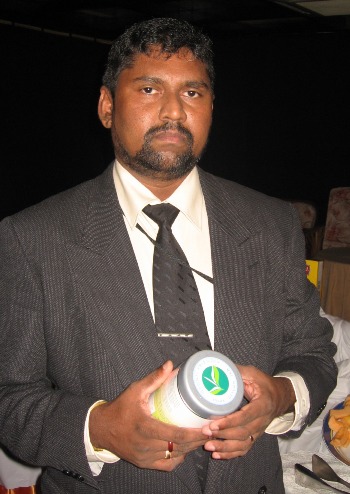
Janaka Gunawardana, Director of the National Ozone Unit with ozone friendly Ceylon Tea“This is a good example of public-private partnership (PPP),” says Janaka Gunawardana, Director of the National Ozone Unit. “It was with the support from the private sector tea plantation companies that Sri Lanka was able to eliminate Methyl Bromide use. And now, we are using this environmentally responsible conduct to enhance the brand value of Ceylon Tea worldwide.”
“Public-private partnerships are very helpful in implementing international treaties such as the Montreal Protocol,” says Gunawardana. “They can be challenging at times, but we want to build up more collaborations with the private sector.”
The Tea Board aims to have all tea exports displaying the ozone friendly logo by end 2012.
“All tea grown in Sri Lanka is now 100% ozone-friendly. This is a distinction of which no other tea-producing nation can boast,” says the Tea Board website, www.pureceylontea.com.
It adds: “When you reach for a cup of Ceylon Tea, you’re not just refreshing yourself; you’re also helping refresh and renew an environmental resource critically important to all life on Earth.”
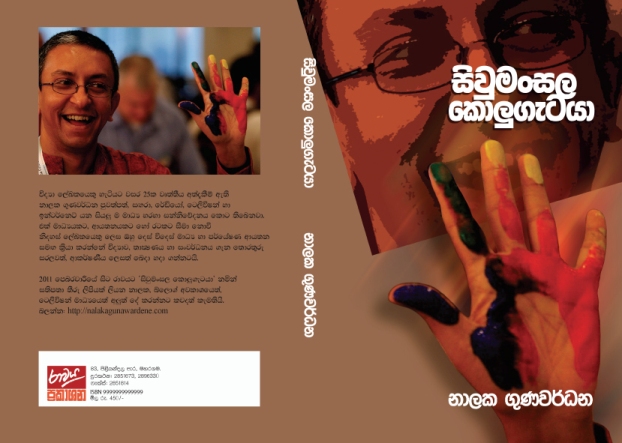
Sivu Mansala Kolu Getaya book cover: A Ravaya Publication
PROMOTIONAL NOTE FOR MY NEW BOOK IN SINHALA:
Colombo, Sri Lanka; 18 September 2012:
Science writer Nalaka Gunawardene’s new Sinhala book, Sivu Mansala Kolu Getaya (සිවුමංසල කොලූ ගැටයා), is being launched at the Colombo International Book Fair that runs from 18 to 26 September 2012.
A Ravaya Publication, the book is an edited collection of his weekly Sinhala columns by the same name, contributed to the Ravaya Sunday broadsheet newspaper in Sri Lanka during 2011.
Beginning in February 2011, Nalaka has sustained a column that touches on many and varied topics related to popular science, human development, mass media and information society. The book compiles 44 of these columns.
“The title is of my column is derived from its particular scope and angle. I stand at the intersection (or confluence) of science, development, media and culture. Once there, I often play the role of that cheeky lad who asked difficult questions, and once pointed out the Emperor(s) had nothing on when all others were either too polite or too scared to say so,” Nalaka says.
He calls the book a personalised exploration of how Sri Lanka can cope with many challenges of globalisation and modernisation. Nalaka writes in conversational Sinhala, rich in metaphor and analogy, and drawing on his own wide experiences as a journalist, filmmaker and development communicator. He often mixes the big picture level analysis (bird’s eye view) with ground level reality checks (toad’s eye view).
“I like to ‘zoom in’ and ‘zoom out’ when discussing topics as diverse as coping with HIV/AIDS, nurturing innovation, regulating the Internet, tackling climate change or farming without costing the Earth,” he says. “I do so with an open mind and sense of wonder. I have no particular ideology to promote and no sacred cows to protect!”
He adds: “As a journalist, I was trained to look for what’s New, True and Interesting (‘NTI Test’). Early on in my career, I went beyond simply reporting events, and probed the underlying causes and processes. With those insights, I can now offer my readers perspectives and seasoned opinion. These are much needed today as we swim through massive volumes of information, trying to stay afloat and make sense of it all.”
The book marks Nalaka’s return to Sinhala writing after an absence of two decades during which he communicated mostly in English to various international audiences. “In a sense, with this column I have come back home. The last time I wrote in Sinhala was in another century, and in what now feels like another country!” he says.
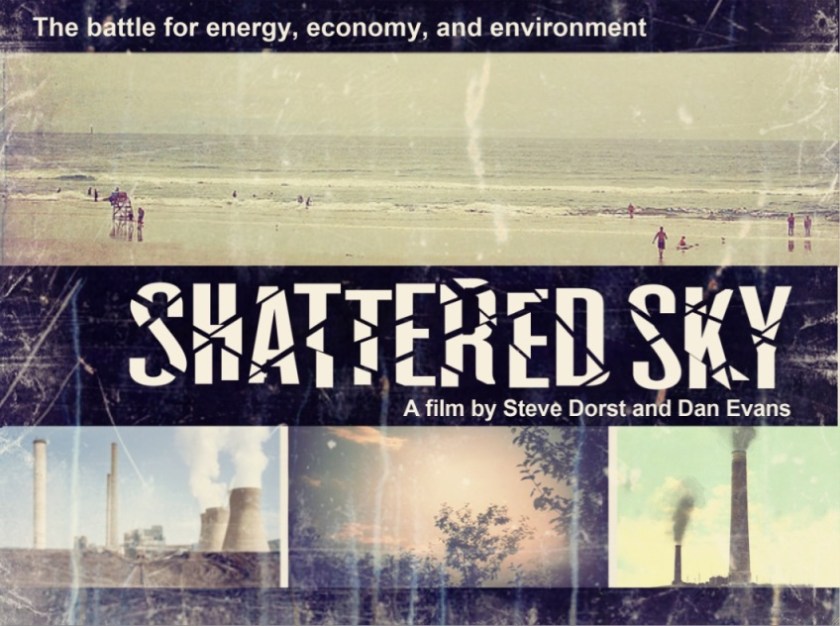
A film by Steve Dorst and Dan Evans.
An invisible compound threatens Earth’s life-support systems, with effects so pervasive that scientists sound the alarm, businesses must innovate, politicians are forced to take action—and American leadership is absolutely vital. Climate change? No…the hole in the ozone layer. For the first time in film, Shattered Sky tells the story of how—during geopolitical turmoil, a recession, and two consecutive Republican administrations— America led the world to solve the biggest environmental crisis ever seen. Today, will we dare to do the same on energy and climate?
A film by Steve Dorst and Dan Evans. The story of how America led the world to solve the biggest environmental crisis ever seen. Today, will we dare to do the same on energy and climate?
A new film looks at American leadership during the ozone crisis and compares it to the situation with global warming today. A good interview with the filmmaker.
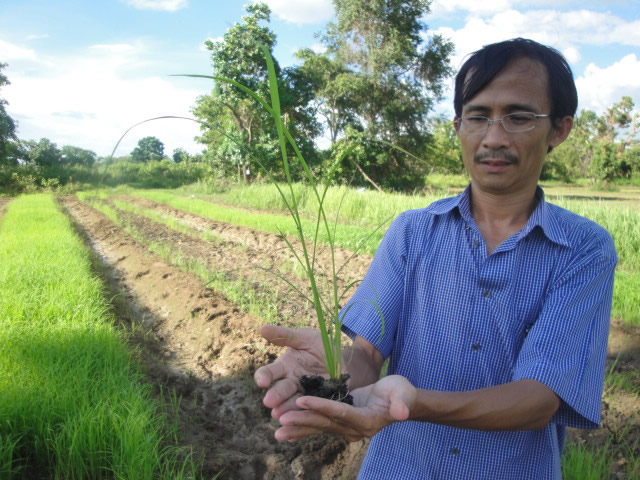
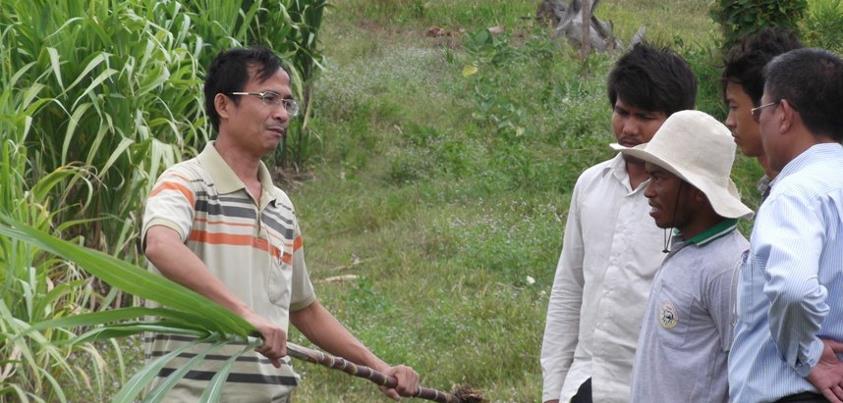
This week’s Ravaya column (in Sinhala) is about a maverick scientist: Dr Yang Saing Koma. For 15 years, this Cambodian agronomist has driven a grassroots revolution that is changing farming and livelihoods in one of the least developed countries in Asia.
A champion of farmer-led innovation in sustainable agriculture, Koma founded the Cambodian Centre for Study and Development in Agriculture (CEDAC) in 1997. Today, it is the largest agricultural and rural development organisation in Cambodia, supporting 140,000 farmer families in 21 provinces.
Malima (New Directions in Innovation) is a Sinhala language TV series on science, technology and innovation. This episode was produced and first broadcast by Sri Lanka’s Rupavahini TV channel on 23 August 2012.
Produced by Suminda Thilakasena and presented by science writer Nalaka Gunawardene, this episode features the following items:
• An interview with prolific Lankan inventor M A Prince Chandrasena (of Mawathagama, Kurunegala) who holds 4 Lankan patents with fifth one pending. A refrigerator technician by training, he has developed a compact refrigerator that can remain cold (i.e. retain its low temperature) without mains power supply even for 24 hours. This is ideal for storing vaccines that require an uninterrupted cold chain (most vaccines need to be stored between 3 and 7 degrees C). The “Plus 4-7” refrigerator is particularly helpful to pharmacies and the public health service in a country like Sri Lanka that experiences frequent electricity failures. Profile at: http://tiny.cc/MAPrin
• A Japanese innovation: a small gadget that can ‘read’ basic emotions of dogs. Can this make us better understand our best friends?
• Introducing another indigenous technology of Sri Lanka: the ‘Dee-rangaya’ that is locally made and helps keep pests away from farmlands.
• An interview with young inventor D Chathura Madushanka, until recently a student of Pinnawela Central College, Rambukkana, who has invented a multi-function shoe. Fitted to the expanded sole of this shoe is a small dynamo that turns kinetic energy of walking into electrical energy. A battery stores this energy which can help charge a range of electronic devices including mobile phones and iPods. The shoe also comes fitted with a torch light that helps walkers at night. He recently participated in Intel International Science and Engineering Fair (ISEF) in Pittsburgh, USA, in May 2012. More info at: http://www.ft.lk/2012/05/24/sri-lankan-students-win-big-at-intel-isef-in-usa/
Malima (New Directions in Innovation) is a Sinhala language TV series on science, technology and innovation.
Produced by Suminda Thilakasena and hosted by science writer Nalaka Gunawardene, this episode was produced and first broadcast by Sri Lanka’s Rupavahini TV channel on 9 August 2012.
• An interview with Dinesh Katugampola, a textile engineer who has invented the world’s first Radius Metre that calculates the radius of a circle. The Radius Meter – which comprises measuring instruments as well as a software based calculator – instantly works out the radius an arch or sphere by measuring only small part of that arch or sphere. In practical terms, this helps plot major arches in mechanical engineering, road and building construction and in many other fields. This invention won a silver medal in mechanical designs category at ‘Inventions Geneva’ international exhibition in April 2012. More at: http://www.sundaytimes.lk/120429/BusinessTimes/bt25.html
• Introducing Sri Lanka’s indigenous technology: Dongaraya is a simple device used by farmers to make noise from the breeze that, in turn, scares birds away from paddy fields.
• A Japanese university research team has developed a machine that can measure brain waves and capture different moods. We have a news story on what this means for future of brain-machine interface.
• An interview with Nipun Kavishka Silva a Grade 9 student at De Mazenod College, Kandana, Sri Lanka, who — with his sister Pipunika Silva, has invented ‘NP System’: a computer operating system for blind and visually impaired people. It assists those who cannot see to use computers by providing voice instructions as they use a Braille keyboard and mouse or touchpad. They were winners at Intel International Science and Engineering Fair (ISEF) in Pittsburgh, USA, in May 2012. More info at: http://www.ft.lk/2012/05/24/sri-lankan-students-win-big-at-intel-isef-in-usa/


 Open Minds!