Malima (New Directions in Innovation) is a Sinhala language TV series on science, technology and innovation. This episode was produced and first broadcast by Sri Lanka’s Rupavahini TV channel on 26 July 2012.
Produced by Suminda Thilakasena and hosted by science writer Nalaka Gunawardene, this episode features the following items:
• An interview with K M Wijepala, proprietor of Wijaya Agro Products in Nuwara Eliya, Sri Lanka, who has developed an entirely organic, liquid fertilizer as a substitute for imported, costly chemical fertilizers. Named GOLF (Gold Organic Lanka Fertilizer), it provides all required nutrients for all kinds of crops according to the innovator. Already patented in Sri Lanka, GOLF’s efficacy has been tested and confirmed by the state’s Tea Research Institute (TRI) and Industrial Technology Institute (ITI). Wijepala, a former field officer of the Department of Agriculture, is giving the recipe away to his fellow farmers as his contribution to a chemicals-free future for agriculture. In his view, the only ‘obstacle’ standing in the way of popularising this indigenous, low-cost fertilizer is the huge state subsidy given to imported chemical fertilizers. GOLF sells at one fifth of the real cost of chemical fertilizers but the 90% subsidy distorts the market. As long as the subsidy continues, farmers will have no interest or incentive in looking at any alternatives.
• An interview with young inventor Samali Gunasekera, a Grade 13 student at Bomiriya Central College, Kaduwala, Sri Lanka, who has designed a multipurpose helping handle for the kitchen. It helps raise cooking vessels, kettles and other utensils; it is also fitted with a spoon. This handle can make life easier for everyone including those with disabilities.
Buckminster Fuller, the visionary American engineer and designer who used challenge his audiences saying: “There’s no energy shortage; there’s no energy crisis; there’s a crisis of ignorance.”
In this episode of Malima (New Directions in Innovation), a Sinhala language TV series on science, technology and innovation, we feature a wide-ranging interview on how innovation can find solutions to the energy crisis.
Produced by Suminda Thilakasena and hosted by science writer Nalaka Gunawardene, this show interviews two Lankan specialists:
• Dr Ajith de Alwis, Professor of Chemical and Process Engineering, University of Moratuwa, Sri Lanka
• Engineer Asoka Abeygunawardana, Adviser to the Minister of Power and Energy and Executive Director, Energy Forum, Sri Lanka
The interview opens with an overview of Sri Lanka’s energy generation and use, and then looks at the current role and future potential of renewable energy sources – ranging from biomass and hydro electricity to wind, solar, biogas and dendro power. In particular, we look at what Lankan inventors can do to make renewable energies cheaper, safer and more user-friendly.
My Sunday (Sinhala) column in Ravaya this week was on impressions of the National Media Summit 2012 held at the University of Kelaniya, Sri Lanka, on 24-25 May 2012. My own talk at the Summit, during a session New Media policies for Sri Lanka, was titled New Media, Old Minds: A Bridge Too Far?.
This week’s Ravaya column (in Sinhala) is a preview of a key challenge being taken up at the UN Conference on Sustainable Development being held in Rio de Janeiro, Brazil, this month. I raise the question: how can Sri Lanka transform its economy into a green economy in pursuit of sustainable development?
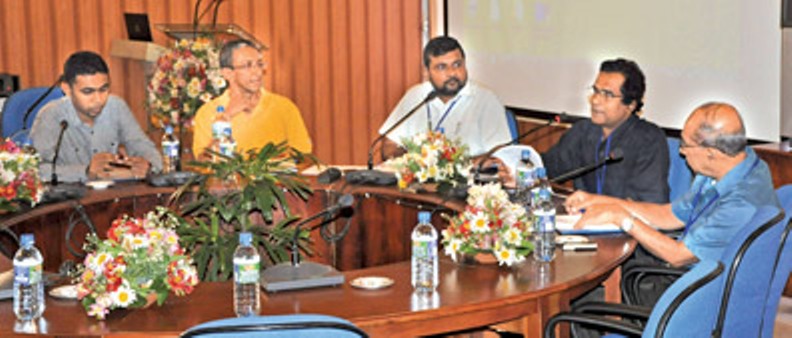
National Media Summit 2012 at University of Kelaniya, 25 May 2012 New Media, Old Minds: A Bridge Too Far?
This was the title of a presentation I made at National Media Summit 2012, at University of Kelaniya, Sri Lanka, this morning. I was asked to talk about New Media and policies for Sri Lanka.
In my audience were academics and researchers on journalism and mass communication drawn from several universities of Sri Lanka. I was told the biennial event is to help frame new research frameworks and projects.
Now, I’m not a researcher in the conventional sense of that term, and am fond of saying I don’t have a single academic bone in my body. Despite this, occasionally, universities and research institutes invite me to join their events as speaker, panelist or moderator.
University of Kelaniya, a state university in Sri Lanka, has the island’s oldest mass communication department, started in the late 1960s.
Perhaps inertia and traditions weigh down such places — while I had a patient hearing, I found our ensuing discussion disappointing. The historical analogies, policy dilemmas and coping strategies I touched on in my presentation didn’t get much comment or questions.
Instead, rather predictably, the ill-moderated discussion meandered on about the adverse social and cultural impacts of Internet and mobile phones and the need to ‘control’ everything in the public interest (where have I heard that before?).
And much time was wasted on debating on what exactly was new media and how to define and categorise it (I’d argued: it all depends on who answers the question!).
Part of the confusion arose from many conflating private, closed communications online (e.g. Facebook) with the open, more public interest online content (e.g. news websites). Similarly, the critical need for common technical standards (to ensure inter-operability) was mistaken by some as the need for dull and dreary orthodoxy in content!
Concepts like Citizen Journalism, user-generated content, privacy, right to information were all bandied around — but without clarity, focus or depth. Admittedly we couldn’t cover everything under the Sun. But we didn’t even discuss what options and choices policy makers have when confronted with rapidly evolving new media types.
Half anticipating this, I had included a line in my talk that said: “Academics must research, analyse & advise (policy makers). But are Lankan academics thought-leaders in ICT?”
I was being a polite guest by not explicitly answering my own question (but as a helpful hint, I mentioned dinosaurs a few times!). In the end, my audience provided a clear (and sadly, negative) answer: far from being path-finders or thought-leaders, they are mostly laggards who don’t even realise how much they have to catch up!
And some of them are framing Lankan media policy and/or advising government on information society issues. HELP!
Don’t take my word for it. Just try to find ANY online mention of National Media Summit 2012 that just ended a few hour ago. Google indexes content pretty fast these days — but there is NONE that I can find on Google as May 25 draws to an end (except my own PPT on SlideShare!).
Phoning each other during personal or shared emergencies is one of the commonest human impulses. Until recently, technology and costs stood in the way. No longer.
We now have practically all grown-ups (and some young people too) in many Asian countries carrying around phones or having easy, regular access to them. For example, Sri Lanka’s tele-density now stands at 106.1 phones 100 people (2011 figures).
What does this mean in times of crisis caused by disasters or other calamities? This is explored in a short video I just made for LIRNEasia:
Synopsis:
With the spread of affordable telecom services, most Asians now use their own phones to stay connected. Can talking on the phone help those responding to emergencies to be better organised? How can voice be used more efficiently in alerting and reporting about disasters? Where can computer technology make a difference in crisis management?
These questions were investigated in an action research project by LIRNEasia in partnership with Sarvodaya, Sri Lanka’s largest development organisation. Experimenting with Sahana disaster management software and Freedom Fone interactive voice response system, it probed how voice-based reporting can fit into globally accepted standards for sharing emergency data. It found that while the technology isn’t perfect yet, there is much potential.
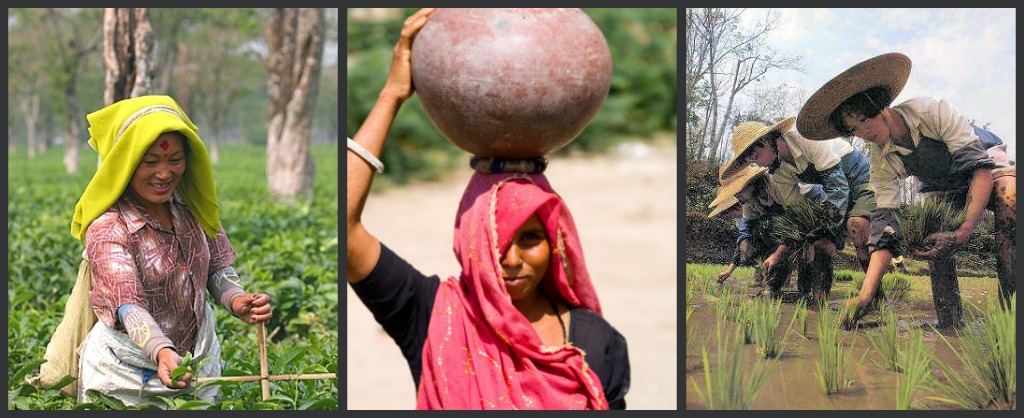
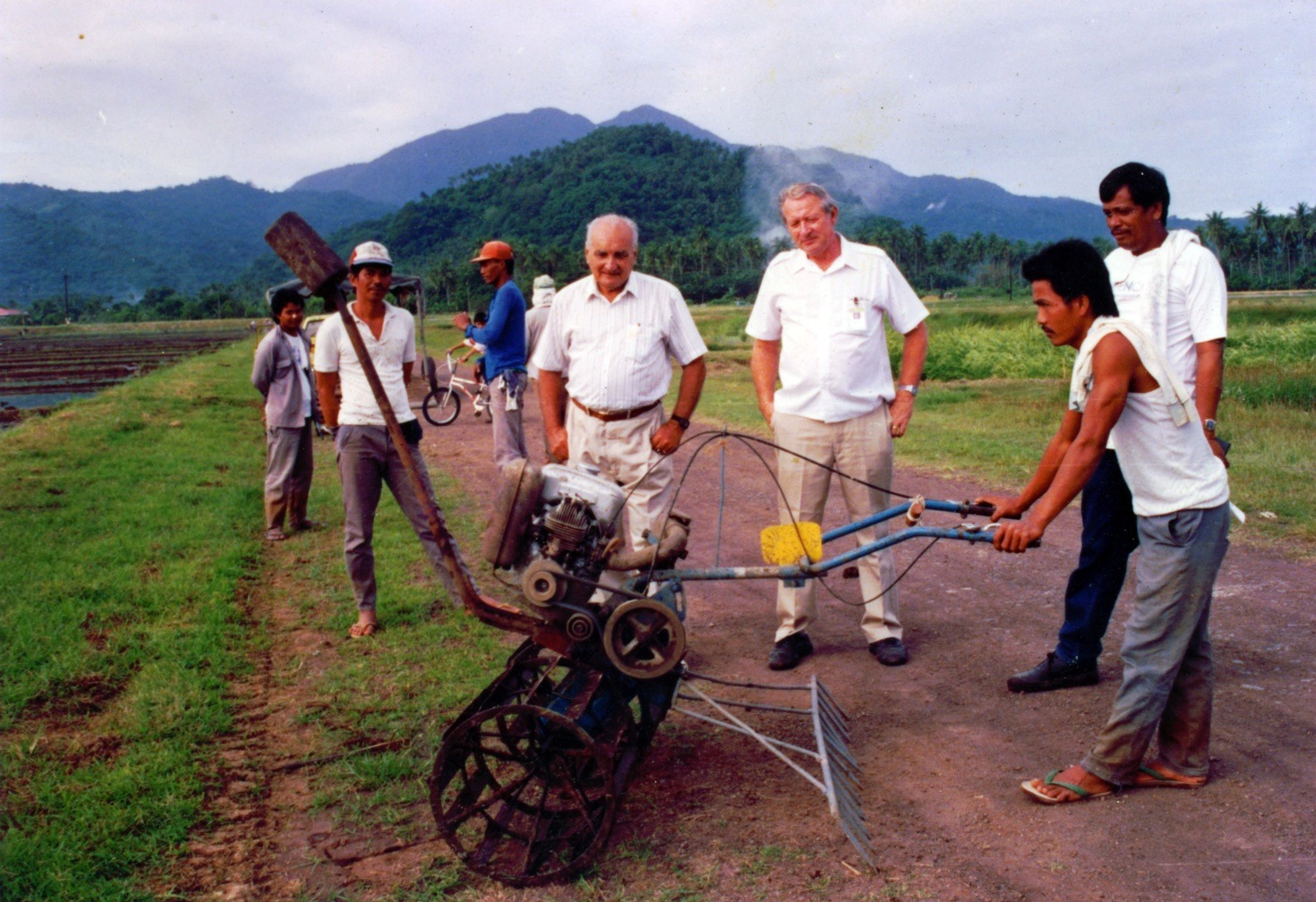
In our age of technology, hundreds of millions of people — most of them poor, and women — are still toiling away in tasks where simple machines or devices could reduce their daily drudgery. Few inventors have bothered with these — probably because the beneficiaries are on the margins of society. Their needs are not a priority for most research institutes or high tech laboratories.
This is the theme of my Ravaya column (in Sinhala) published on 8 Jan 2012, reproduced in full below.It was inspired by, and mostly based on the inaugural Ray Wijewardene memorial lecture delivered by Dr Anil Kumar Gupta, India’s top innovation-spotter, in Colombo on 13 December 2011. He spoke on “Grassroots Innovation for Inclusive Development: From Rhetoric to Reality”
My weekly column on science, development and media, published in Ravaya newspaper on 28 August 2011 (converted into unicode Sinhala font using UCSC online facility, which has some limitations).
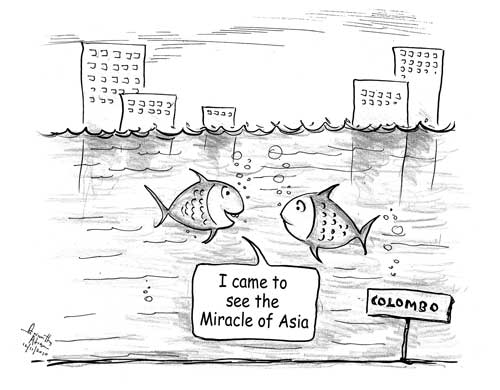
Cartoon in Daily Mirror, Sri Lanka, on 12 November 2010
Why do movie audiences in this part of the world cheer every time they see alien invaders blow up the White House? For a long time I thought it had something to do with anti-American sentiments; then I heard that many US audiences react the same way. Perhaps some among us get a kick out of seeing overbearing governments in trouble?
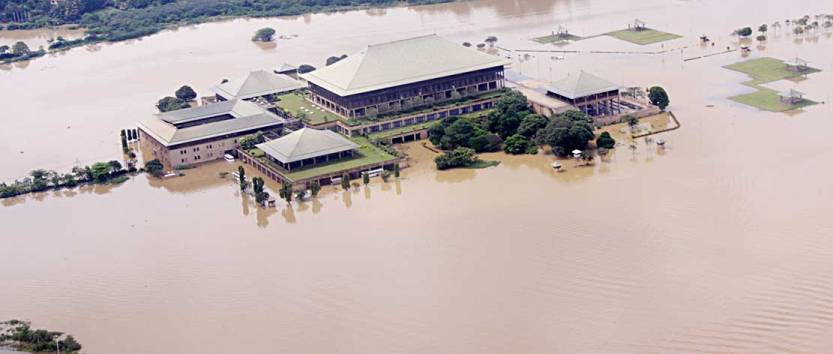
That might explain the gleeful tone with which the Colombo media reported the Sri Lankan Parliament being flooded after torrential rains in mid-November. Newspapers and television channels repeatedly showed images of the Parliamentary complex – built three decades ago on a marshland – completely marooned. The hapless people’s representatives were ferried across the expanse by the military, to take part in a brief session to extend Emergency Regulations. The symbolism was inescapable.
When the trapped rainwater engulfed many areas in and around Colombo, thousands of affected people groaned, but no one was really surprised. By now Sri Lankans know this is almost an annual routine. As I sat knee-deep in my own flooded office, I had a strong sense of déjà vu.
This is the opening of an op ed essay I’ve just written for Himal Southasian magazine, whose March issue carries a cover story on disasters in South Asia.
My essay, titled Drowning in media indifference, takes a personalised look at how the Lankan media have covered different disasters in the past two decades.
“Once again, the mainstream media in Sri Lanka has proven itself irrelevant in reporting and responding to catastrophic flooding,” says the intro — and that pretty much sums it up.
Sri Lankan Parliament flooded after torrential rains in mid-November 2010. The complex, built on a marshland, was completely marooned.
I recall how, back in 1992-93, the then media (fewer in number, with broadcasting still a state monopoly) provided saturation coverage for a major flood in the capital Colombo while under-reporting an even worse flood in the provinces a few months later.
“Fast forward to the present – and how little things have changed! During the past three months, as the fury of the formidable little girl (La Niña, the global weather anomaly) played havoc on the island, I have been struck by the similarly lop-sided coverage in the country’s mainstream print and broadcast media. Urban flooding once again received ample front-page coverage and ‘breaking news’ treatment. Everyone, from cartoonists and editorialists to talk-show hosts and radio DJs, ranted about what was taking place. Yet the much worse flooding, once again in the north, east and centre of the country, received proportionately much less attention. There were a few honourable exceptions, but by and large the 1992-93 disparity was repeated wholesale.”
I have been both an insider and outsider in this issue. I consider myself to be part of the extended mass media community in Sri Lanka for over two decades: I have worked for newspapers, magazines, radio and TV stations. At the same time, I retain the ability – and independence – to steps back and take a more critical and objective look at the media industry and community.
My interest in how disasters are covered and communicated go back to the time when my own house was flooded in mid 1992. I have since researched and commented extensively on this issue, and co-edited the 2007 book Communicating Disasters: An Asia Pacific Resource Book (TVEAP/UNDP).
In this latest essay, I reiterate an argument I’ve been making for sometime: “Media researchers have long accused the Western and globalised news media of having an implicit ‘hierarchy’ of death and destruction, in terms of how they report disasters in developing countries. But Sri Lanka’s own media’s indifference is equally appalling – the story of a quarter-million displaced people languishing in squalid conditions for weeks on end did not constitute front-page news. A starlet entering hospital after a domestic brawl excites news editors more than thousands of flood-affected provincial people starving while waiting for relief.”
1,100 million fools following 11 flannelled fools...for six weeks!“Eleven flannelled fools chasing a red ball, with eleven thousand fools cheering them.”
A few decades later, he might well have said 1,100 million fools cheering. Probably that many people will watch or otherwise follow the The ICC Cricket World Cup 2011, currently underway in the world’s most ardent cricketing region: South Asia!
In terms of television audiences and media-linked sponsorship money, the ICC Cricket World Cup is the world’s third largest sporting event: only the FIFA Football World Cup and the Summer Olympics are bigger than this event.
Not everyone is equally enthusiastic about cricket. Those in non-playing countries must wonder just what the cricket frenzy is all about. But frenzy time it is, right now, in much of South Asia. The ICC Cricket World Cup 2011 started on 19 February 2011, and will continue until 2 April 2011.
What's your score, mate?This is the world’s leading men’s one day international (ODI) cricket tournament, organized by the sport’s governing body, the International Cricket Council (ICC). National teams of 14 countries are participating in this tournament, being hosted jointly by Bangladesh, India and Sri Lanka.
I’m not a cricket fan myself, but living in South Asia, it is impossible to avoid catching at least bits and pieces of cricket fever. But cricket is not just a game of players and matches, but a whole cultural and social phenomenon, especially in South Asia. If the English invented cricket, the one-time British colonies have vastly globalised it.
So try your wider cricketing knowledge with this week’s quiz…and see what your score is!


 Open Minds!