Published in Ceylon Today newspaper, Sunday 5 February 2012
With or without our knowledge, worlds are colliding all around us, all the time. It happens in both physical and metaphorical realms.
The night sky might appear calm and serene to us, but the universe is a violent and constantly changing place. Astrophysicists are still unravelling the forces at work – they describe our Solar System as an ‘oasis of calm’ in comparison.
That’s relative, of course. Everything is always in motion – the Sun (our local star), planets, dwarf planets, asteroids, comets are all moving in their orbits, sometimes crossing paths of others. Luckily, space is big enough and empty enough to get by without crashing into each other.
Once in a while, however, near-misses or actual collisions are inevitable. Millions on Earth watched through telescopes a memorable recent event when Comet Shoemaker–Levy 9 crashed into Jupiter in July 1994.
Malima (New Directions in Innovation) is a Sinhala language TV series on science, technology and innovation produced and first broadcast by Sri Lanka’s Rupavahini TV channel on 26 January 2012.
Produced by Suminda Thilakasena and hosted by science writer Nalaka Gunawardene, it is a half-hour show in magazine style.
• An interview with engineering student W Rakitha Brito who has invented several tools and robots for use in the aviation industry
• A glimpse of the ‘pehi pattalaya’, an ancient Lankan technology for extracting medicinal oil from various seeds
• Why doesn’t the woodpecker get headaches after a hard day’s work? Scientists who probed this have come up with new technology to prevent injury in accidents.
• Interview with young inventor Jayashanka Dushan, 17, a student of Bomiriya National School in Kaduwela, on his invention of simplified, low-cost and energy efficient traffic light using LEDs
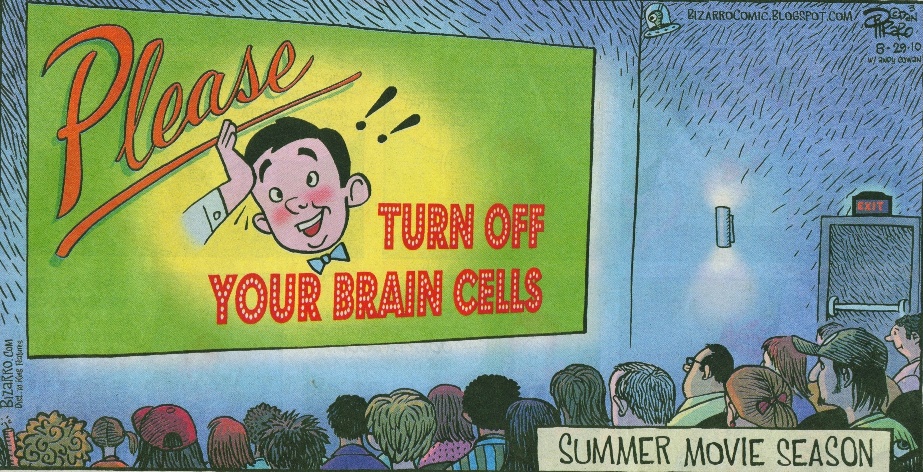
Is this the message that should be displayed at the entrance of some media and public institutions in Sri Lanka? In this latest Sunday column, appearing in Ravaya newspaper of 29 January 2012, I make a tongue-in-cheek suggestion for doing so. This is entirely justified given how much of superstition, half-baked stories and mind-rotting nonsense that a gullible public seems to lap up with little critical examination.
This week I continue what I started last week discussing challenges faced by rationalists in today’s Sri Lanka, a land under siege by dogma, charlatans and religious fanatics all of who operate with impunity, claiming ‘sacred cow’ status under various labels of religion, indigenous knowledge or national heritage.
Once again I pay tribute to the late Dr Abraham Thomas Kovoor (1898 – 1978), a Kerala-born science teacher who settled down in newly independent Ceylon and, after his retirement in 1959, took to investigating so-called supernatural phenomena and paranormal practices. Kovoor’s successors today have more communications tools and platforms than ever before, but find that charlatans have mastered many of them for hoodwinking the public…
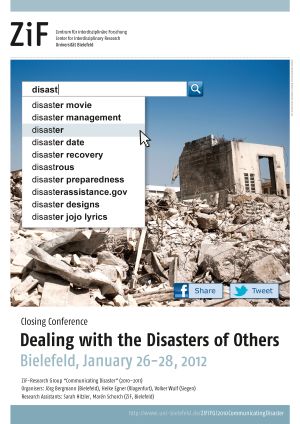
Communicating Disasters: ZiF Conference in BielefeldHow do we cope with a warming planet while living in an increasingly WikiLeakable world? Exactly one year ago, I explored this in my talk given at the University of Colombo during the LEAF Conference.
As I reflected then: “We live in a crisis-ridden world where we have to cope with multiple emergencies unfolding at the same time, impacting us on different fronts. This illustration captures three of them: crisis in biodiversity, man-made climate change, and the new reality of living in a rapidly WikiLeakable world — what I called the Global Glass House.”
I also built on ideas initially discussed in my 2007 book, Communicating Disasters, which was part of the reference material used during th ZiF research project.
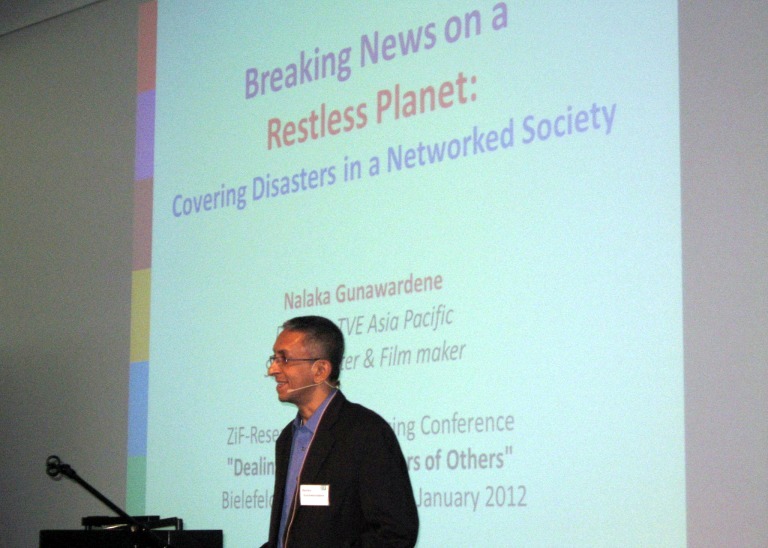
Nalaka Gunawardene speaks at ZiF Conference on Communicating Disasters, Bielefeld, Germany: 27 Jan 2012
Here’s the Summary (Abstract) of my talk. PowerPoint slides below.
Breaking News on a Restless Planet: Covering Disasters in a Networked Society
by Nalaka Gunawardene
Science Writer, Blogger & Columnist; Director – TVE Asia Pacific (TVEAP)
Communicating disasters — before, during and after they happen — is fraught with many challenges. The increased volume and flow of information, enabled by the proliferation of information and communication technologies (ICTs), fills some gaps — but not all. Other critical elements such as institution building, training and awareness raising are needed at all levels to create societies that are better informed and prepared.
The news media, driven by their quest for what is new, true and interesting, can be useful allies for disaster managers. But the nexus between these two groups has always been contentious, and the acceleration of the news cycle has made it more so. Having to sustain 24/7 coverage for their fragmented and distracted audiences places enormous pressures on news media to break news first — and reflect later. In this scenario, how can empathetic, ethical and balanced reporting happen?
As disasters increase in frequency and intensity partly due to climate change, mainstream media practitioners across Asia struggle to keep up. Disasters are more drawn out (e.g. Pakistan floods, 2010 & Thailand floods, 2011), geographically scattered (Indian Ocean tsunami, 2004) and economically devastating (Tohoku/Fukushima, 2011) than before. This stretches the capacities and resources of many news organisations. Saturation coverage of unfolding disasters can also cause ‘compassion fatigue’ and apathy in audiences.
In today’s networked society, news media are no longer the sole gatherers or distributors of news. Without the trappings and inertia of the institutionalised media, citizen journalists are quick to adopt ICT tools and platforms. What does this mean for communicating disasters that requires care and sensitivity? In which ways can we find synergy between mainstream and new/social media to better serve the public interest on a warming planet? What value-additions can the mainstream media still offer to the coverage of disasters near and far?
We examine these and other larger questions with reference to recent disasters in Asia.
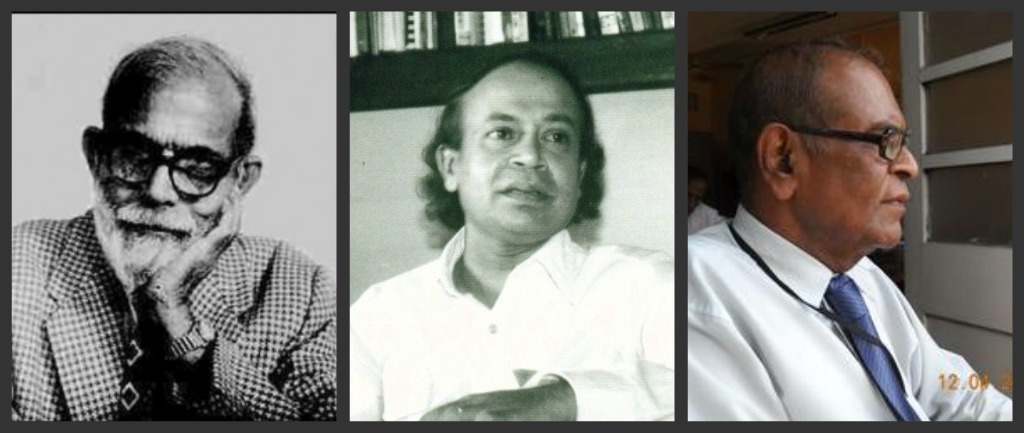
Keepers of Rationalist Flame L to R - Abraham Kovoor, Carlo Fonseka, Dharmapala Senaratne
Assorted charlatans and religious zealots across the island of Sri Lanka must have heaved a collective sigh of relief when they heard that Dharmapala Senaratne was no more. He had made it his business to make life difficult for those preying on the gullible public. Dharmapala was President of the Sri Lanka Rationalist Association (SLRA), a small group of earnestly sceptical enquirers who won’t take anyone’s word about anything. They want to investigate and debate.
The voluntary group was originally set up in 1960 by the late Dr Abraham Thomas Kovoor (1898 – 1978), a Kerala-born science teacher who settled down in newly independent Ceylon and, after his retirement in 1959, took to investigating so-called supernatural phenomena and paranormal practices. He found adequate physical or psychological explanations for almost all of them. In that process, he exposed many so-called ‘god men’ and black magicians who thrive on people’s misery and superstitions.
My column (in Sinhala) for Ravaya newspaper on 22 Jan 2012 is an exploration of the many challenges that rationalists and free thinkers face in today’s Sri Lanka. It’s also a critique of our mainstream media, where space/time for open discussion and debate today is LESS than what it was a generation ago — despite the channel explosion and proliferation of print publications.
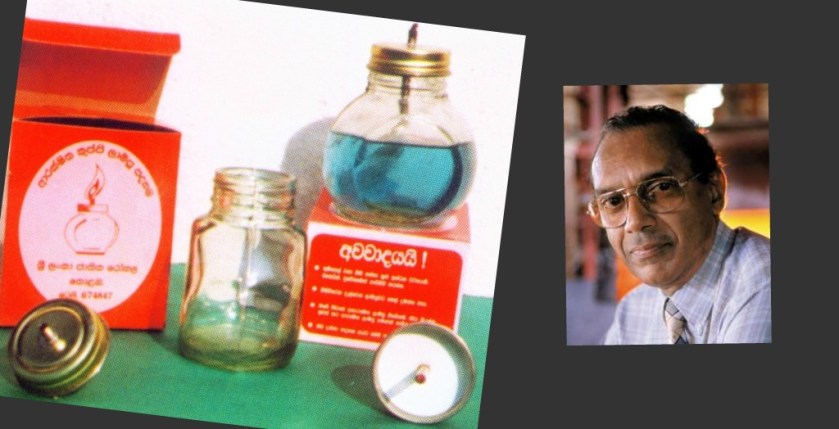
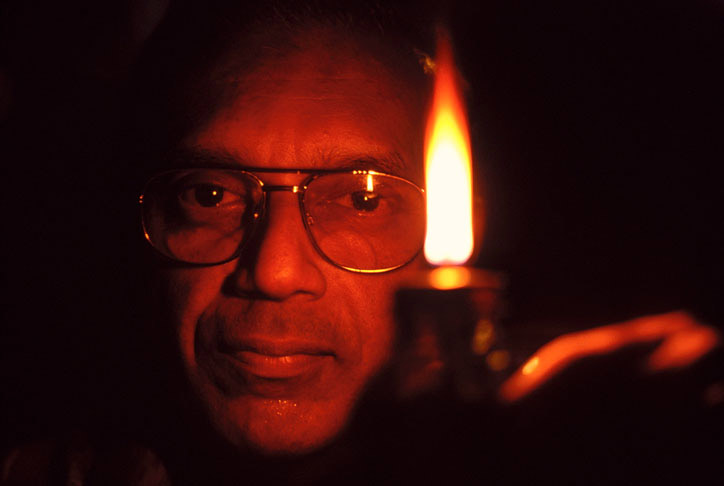
In December 2009, I wrote in a blog post: “It’s easy to curse the darkness, and many among us regularly do. Only a few actually try to light even a small candle to fight it. Dr Wijaya Godakumbura of Sri Lanka is one of them – he literally lights lamps, thousands of them, against the darkness of ignorance and poverty.”
“But his lamps are different, and a great deal safer compared to normal lamps and kerosene, which can start fires risking life and property of users. The design is simple yet effective, inspired in part by the Marmite bottle known the world over: it’s small and squat, with two flat sides – equipped with a safe metal screw cap to hold the wick. It’s quite stable and hard to topple.”
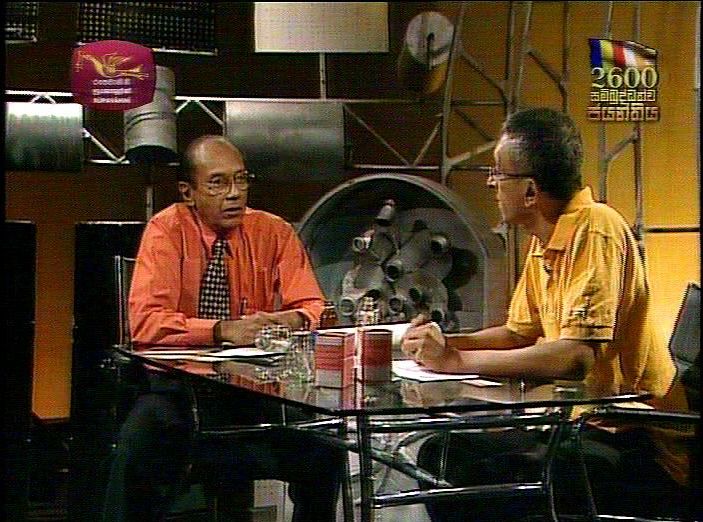
I have written this week’s Ravaya Sinhala science column about Dr Godakumbura and his innovative, life-saving bottle lamp. I also feature him in an interview in MALIMA – the new TV series on science, technology and innovation I host from this month on Sri Lanka’s national TV Rupavahini.
The inventive doctor and his life-saving bottle lamp
What’s new – or just round the corner? Join me on Malima to find out!
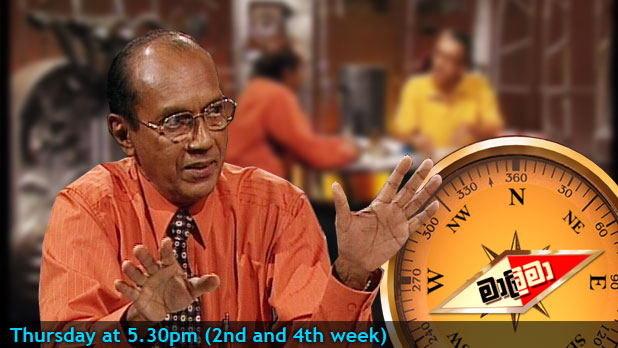
Malima is the Sinhala term for a compass. Malima is also the name of a new TV series on science, technology innovation that I am hosting from this month on Rupavahini, Sri Lanka’s national TV channel.
Produced by Suminda Thilakasena, the show premiered on 12 January 2012. It will be broadcast every other Thursday at 17:30 (5.30 pm) Sri Lanka time.
Malima is a half-hour show in magazine style. Each episode will have several short segments:
– compact interviews introducing accomplished Lankan inventors (with patents, awards, etc.)
– profiles of school children and/or youth who have come up with innovative devices or concepts
– interviews with leading scientists and engineers on frontiers of technology
– vignettes on traditional knowledge and Lankan technological heritage
– news from other countries on interesting new innovations or scientific insights
Dr Wijaya Godakumbura being interviewed by Nalaka Gunawardene on Malima
The first episode features:
• An interview with Dr Wijaya Godakumbura, inventor and promoter of the multi award winning Sudeepa safe bottle lamp that saves hundreds of lives
• German aircraft company e-volo has built the world’s first electric multicopter, a new kind of flying machine
• Ancient Lankan technology of extracting medicinal essence from plant products
• Interview with child inventor Sajini Jayanetti, 15, about two of her inventions: Automatic Fixed Amount Liquid Chemical Adder; and a new method to prevent drunken driving
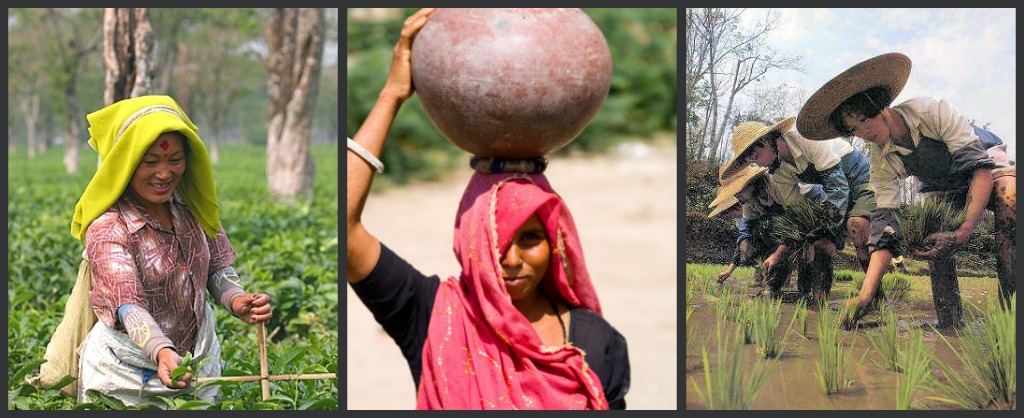
In our age of technology, hundreds of millions of people — most of them poor, and women — are still toiling away in tasks where simple machines or devices could reduce their daily drudgery. Few inventors have bothered with these — probably because the beneficiaries are on the margins of society. Their needs are not a priority for most research institutes or high tech laboratories.
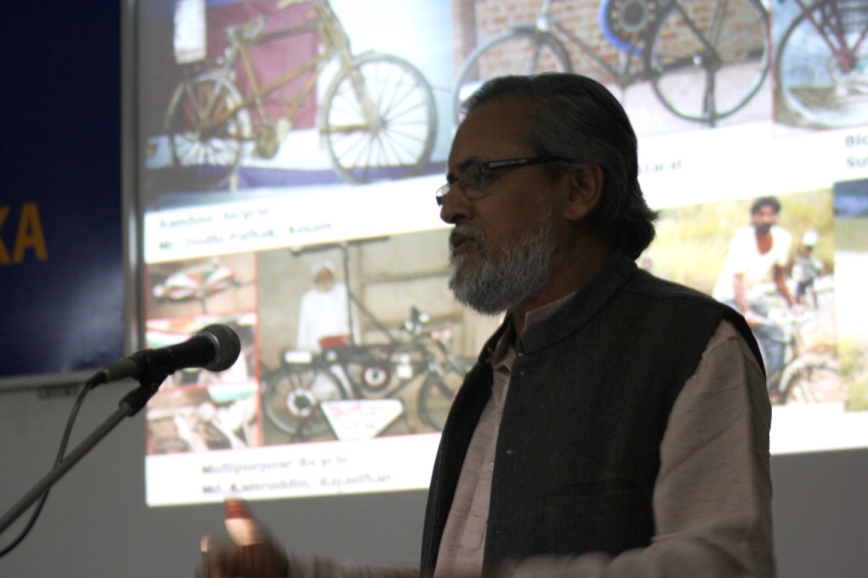
This is the theme of my Ravaya column (in Sinhala) published on 8 Jan 2012, reproduced in full below.It was inspired by, and mostly based on the inaugural Ray Wijewardene memorial lecture delivered by Dr Anil Kumar Gupta, India’s top innovation-spotter, in Colombo on 13 December 2011. He spoke on “Grassroots Innovation for Inclusive Development: From Rhetoric to Reality”
Simple explanations are always the best - but not entertaining enough?
So 2012 is finally here! I’ve been waiting for you…
Citing various ancient lore, some say this year will see the end of the world — where have we heard that before?
The Wikipedia describes the ‘2012 phenomenon’ as comprising a range of eschatological beliefs according to which cataclysmic or transformative events will occur on 21 December 2012.
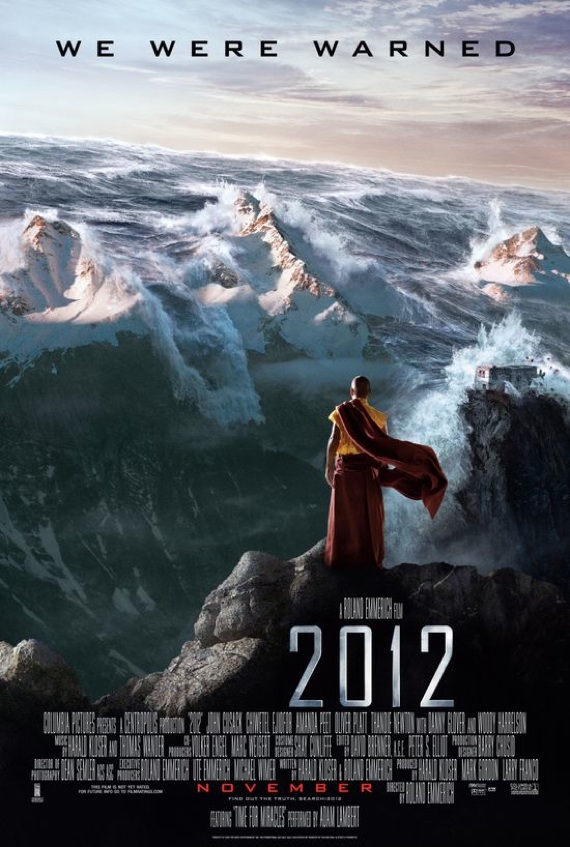
And to think that a blockbuster Hollywood movie, rather than any ancient prophecy, likely triggered this wave of public concern!
Wikipedia notes: “The 2009 disaster film 2012 was inspired by the phenomenon, and advance promotion prior to its release included a stealth marketing campaign in which TV spots and websites from the fictional ‘Institute for Human Continuity’ called on people to prepare for the end of the world. As these promotions did not mention the film itself, many viewers believed them to be real and contacted astronomers in panic.”
The campaign was heavily criticized by scientists, of course, but the public chose to believe the scary make-believe rather than the more sober reality.
Will life imitate art? Find out on 21 Dec 2012The film 2012 became one of the most successful of that year, grossing nearly $770 million worldwide. So the film’s producers were laughing all the way to their bank…
The US space agency NASA has stepped into the debate with sobering analysis. Its website says: “Impressive movie special effects aside, Dec. 21, 2012, won’t be the end of the world as we know. It will, however, be another winter solstice.”
Recalling the Year 2000 computer bug (Y2K problem) that didn’t quite materialise, it says: “Much like Y2K, 2012 has been analyzed and the science of the end of the Earth thoroughly studied. Contrary to some of the common beliefs out there, the science behind the end of the world quickly unravels when pinned down to the 2012 timeline.”
Meanwhile, a few weeks before 2012 started, Lankan astrophysicist Dr Kavan Ratnatunga issued a public challenge on prime time TV.
“I will give 10% of the value of any property to (its) legal owner who will write a deed of sale of their property to me, effective from 22 December 2012, after that owner is so confident the World was going to end on December 21st!”
So far, Kavan has had no takers.
But the hype continues, with the media stirring things up as much as they can: after all, if Hollywood made money from people’s gullibility, why not others?
So might End-of-the-World industries end this year? Not a chance. A sucker is born every minute, and this is one industry that will continue to thrive as long as there are credulous believers.



 Open Minds!