Malima (New Directions in Innovation) is a Sinhala language TV series on science, technology and innovation. This episode was produced and first broadcast by Sri Lanka’s Rupavahini TV channel on 23 February 2012.
Produced by Suminda Thilakasena and hosted by science writer Nalaka Gunawardene, it is a magazine style programme. This episode features:
• An interview with Lankan inventor and entrepreneur B K Maheepala, who runs his own company Buddhi Industries (Pvt) Ltd, which manufactures and markets his own patented design of a cashew shelling machine. He exports most of his machines to cashew producing countries across Asia and Africa, and can’t cope with the demand! See also newspaper article at: http://www.sundaytimes.lk/120129/BusinessTimes/bt25.html
• Steve Jobs (1955 – 2011) was called ‘technology’s great reinventor’ for transforming entire industries – computers, music, mobile phones – with systemic thinking that combined functionality with design elegance. We look at key lessons from his life for today’s inventors. A longer discussion of this is found in my tribute published on Groundviews.org in Oct 2011.
• Find a method to waterproof the ubiquitous mobile phone – win the gratitude of billions of mobile users worldwide. Inventors have taken up the challenge – and see what one group has introduced to the market. With this layer, never fear dropping your phone in water!
• Interview with young inventor Savindu Sanjana Jayasinghe, a student of Rajasinghe central school, Hanwella, who has invented a portable detector for measuring carbon emissions from vehicle exhaust fumes.
Text of my ‘When Worlds Collide’ column published in Ceylon Today Sunday newspaper on 26 Feb 2012
The late — and great – innovator Ray Wijewardene was best known for building and flying ultra-light aircraft. But he was also interested in finding ways to improve the ordinary bicycle.
Ray exchanged ideas with people around the world who were trying to improve the two-wheeled design – first introduced two centuries ago – so that riders could travel faster with less effort. Always mixing functionality with good design, he wanted to enhance performance while ensuring comfort.
In his garage, he built some strange looking pedalling devices. One had the rider seated in a reclined position, as in a go-cart. It certainly reduced drudgery for the rider, but wasn’t well suited for our chaotic road conditions.
Once, when it was being tested on a busy Colombo road, the rider was almost run over…
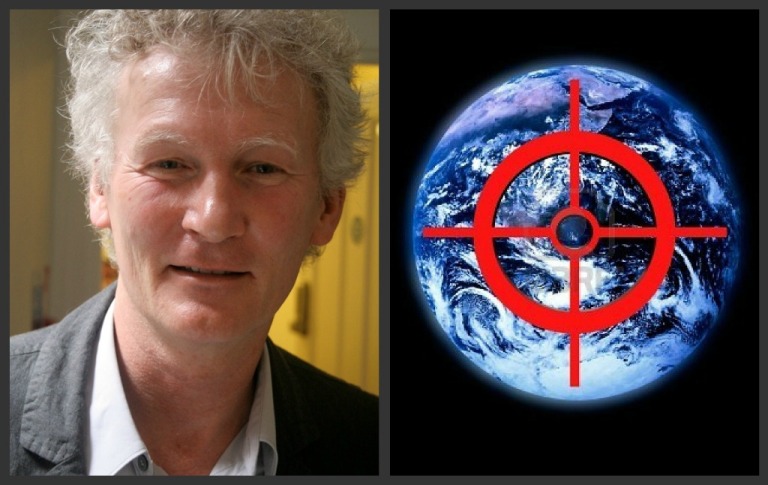
Robert Paul Lamb (1952 – 2012): The Earth’s Reporter
Robert Paul Lamb (1952 – 2012) was a planetary scale story teller. He used simple words and well chosen moving images to show us how we are abusing the only habitable planet we have.
He excelled in the world’s most pervasive mass medium, television. He effectively turned the small screen into a ‘mirror’ that showed how humans are constantly living beyond our natural means…as if we have spare planets in store.
For nearly three decades, Robert Lamb reported about the Earth to people all over the Earth. He ‘zoomed in’ to far corners of the planet to get a closer look at what was going on. He regularly ‘zoomed out’ for the bigger picture. All his life he probed why, as the Brundtland Commission had memorably noted in its 1987 report, “The Earth is one but the world is not”.
In this quest, he interviewed some of the finest minds and most passionate activists on what needs to be done, and how to do it. He also showcased the work of researchers, innovators and entrepreneurs trying out solutions to our many problems of resource and energy use. He always cheered these pathfinders who are our best hopes in overcoming the current ecological and economic quagmires.
Robert’s work was not easily pigeonholeable, which confused many. He wasn’t making wildlife or natural history films, although he sometimes touched on the subject from a human interaction angle. Perhaps the best summing up of his line of work was given by Mahatma Gandhi, who, when asked for his views on Indian wildlife decades ago, replied: “Wildlife is decreasing in the jungles — but it is increasing in the towns!”
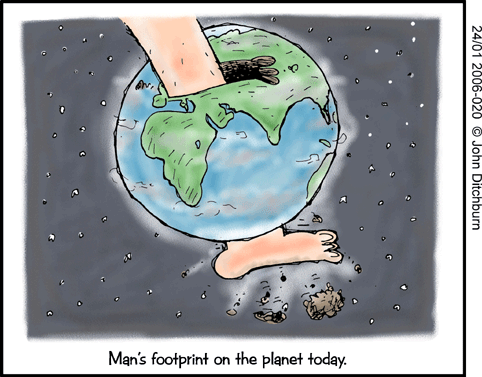
If this isn't wildlife, what is?Robert documented life going wild with far-reaching consequences. In the spectrum of factual TV programme production, he occupied a niche best described as scientifically based environmental films: those that explore the crushing ‘ecological footprint’ modern humans are having on the rest of Nature and ecosystems.
Robert was a journalist first and last. Although he later straddled the worlds of media and development, his outlook was firmly rooted in journalism where he started his career. He had a firm grasp of scientific, economic and political realities that shaped international development.
From 1984 to 2002, he was founder director of the UK-based media charity Television Trust for the Environment (TVE) from 1984 to 2002. TVE was set up to harness the potential of television and video to raise environmental awareness and catalyse sustainable development debates in the developing world.
Heading TVE for nearly two decades, Robert commissioned, produced or co-produced dozens of documentaries on a broad range of issues and topics.
Some were straightforward ones that ‘connected the dots’ for intelligent viewers. Others investigated complex — often contentious — causes and effects of environmental degradation or social exclusion.
These efforts dovetailed on-going discussions at the time on sustainable development. The Brundtland Commission had just defined it as a pattern of economic growth that “meets the needs of the present without compromising the ability of future generations to meet their own needs.”
Easier said than done in a world where many families could barely afford to think beyond their next meal while most governments chose not to see beyond the next election. Next generation thinking was rare then, as it is now. Only mavericks dare walk that path.
Besides, what exactly did that ideal mean for a subsistence farmer in Africa or a small entrepreneur in Asia? Did this long term view figure at all when politicians or bureaucrats struggled to balance their national budget or negotiate better terms of trade? How and where did women and children figure in these considerations?
Robert and his team followed the lofty intellectual debates and also tracked progress on the growing number of international treaties on specific environmental matters. They captured the essence of these through compelling moving image creations.
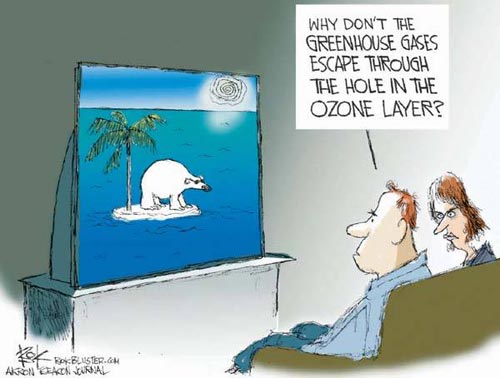
In doing so, this small band of individuals changed forever how environment was covered on TV. As he recalled in UNEP’s Our Planet magazine in 2000, “In the mid-1980s barely anyone had heard about the ozone layer or global warming. Natural history programming brought the wonders of plant and animal diversity into our living rooms but glossed over the complex causes of extinction.”
Robert was swimming against not one but several currents. As he wrote years later: “Television does not cope well with explaining the grey areas. Or rather it could — but the received wisdom is that it makes the viewer reach for the remote channel changer. Television prefers the black and white; the good guys versus the bad.”
He accomplished this through what I call the ‘triple-S formula’: mixing the right proportions of good Science and engaging Stories, told in Simple (but not simplistic) language.
He demystified jargon-ridden science and procedure-laden intergovernmental negotiations without losing their complexity or nuances. This is what public communication of science is all about.
We can only hope he isn’t our average TV viewer...but are we sure?Always look for what’s New, True and Interesting (the NTI Test), he used to tell us who followed the trail he blazed. All our efforts ultimately hinged on how we appealed to the viewer – and she held that all-powerful remote controller in hand!
Robert’s overarching advice: never underestimate your audience’s intelligence — or overestimate its interest levels.
“If we don’t engage our audiences in the first 60 to 90 seconds, they are gone,” Robert often told his producers. “Hook them – and make it worth their while to do so!”
Most people don’t carry good memories of school. When they sit down to watch TV – usually at the end of a long day – they just want something light and pleasant, and preferably not reminded of school…
Pervasive as TV was, the medium wasn’t a substitute for reading or a classroom. At best, we could only flag the highlights of an issue, and whet the appetite for viewers to go after more.
Sympathetic as he was to issues and concerns of the developing world, Robert applied the same rigorous editorial criteria on film makers based in the global South. He pointed out the latter’s sweeping generalizations, condescending elitist language or incoherent story telling. Some walked away grumbling, but realized years later that he was right…
Robert’s fast pace and no-nonsense demeanour probably won him as many admirers as detractors. Producers dreaded his piercing questions about evidence and coherence. Over time, staff got used to his sharp text editing, usually done with a thick-tipped pen.
He was most assertive in (video) edit rooms, where I have seen him in action only on a few occasions. While TV productions involve team work, editorial decisions have to be centralised. You can’t make films by committee. As series editor or executive editor, he was the master of all he surveyed. Conversely, he stood by his producers who’d done their homework.
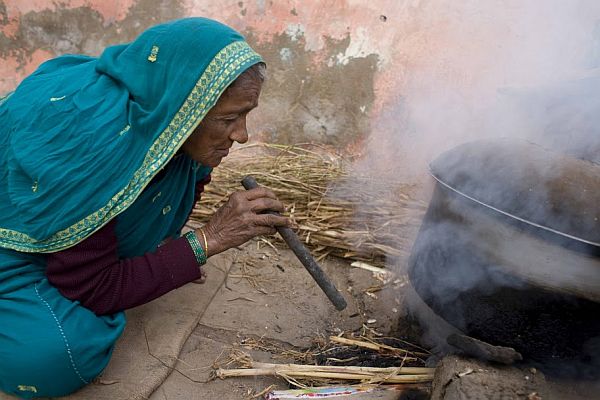
The ‘gas chamber’ in every home that rarely draws any attention!
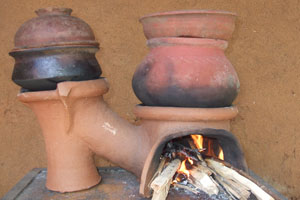
In this week’s Ravaya column, I look at indoor air pollution. This is often a neglected environmental and health issue caused mostly by inefficient cooking stoves that burn biomass. This affects mostly housewives and children who are exposed to kitchen smoke from poor ventilation and badly designed stoves.
In India, smoke from firewood use is estimated to cause half a million premature deaths every year. Studies indicate that indoor air can have more damaging impacts that outdoor air pollution in even some of the most polluted cities. People spend as much as 90% of their time indoors.
The numbers for Sri Lanka are not known, but it is wideapread. We look at not only the extent of the problem, but also attempts to reduce it — through a new fuel efficient cooking stove now on the market, and by improving kitchen ventilation. I cite the example of the rural community in Aranayake, off Mawanella, in Sri Lanka’s Kegalle district where Integrated Development Association (IDEA) has introduced a kitchen improvement project.
A few days ago, I was deeply saddened to hear the news that my mentor and colleague Robert Lamb is no more. He lost his battle with cancer on 13 Feb 2012. He was 59.
Robert will be greatly missed. He was a visionary mentor and a strong supporter of our ideal of Asians telling their own stories using TV, video and web. This was what he set up TVE Asia Pacific (TVEAP) to do, back in 1996.
I was still in shock and grief when I wrote TVEAP’s official tribute, and a short statement of condolences. But Robert would have expected nothing less. The show must go on, he used to say, and getting the record right is very important.
Our statement opens: “Robert Lamb knew the power of moving images. For over three decades, he used them effectively to move people all over the world to reflect on how their daily actions impact their local environment and the planet.”
We also note how “Robert was very well informed, highly analytical yet kept an open mind for fresh angles and new perspectives. He inspired us without imposing his own views.”
Robert was an Englishman by birth, globalist in outlook and a planetary scale thinker and story teller. Unlike some activists and journalists, Robert practised Gandhi’s timeless advice: “Be the change you wish to see in the world”.
This is why I added this line to our statement: “He walked his talk, practising in personal life what he advocated in his films. If he breathed heavily in the edit room, he trod softly on the Earth.”
And that, more than any of his professional accomplishments in print, on TV and online, is how I shall always remember Robert Paul Lamb, on whose broad shoulders I continue to stand.
Malima (New Directions in Innovation) is a Sinhala language TV series on science, technology and innovation. This episode was produced and first broadcast by Sri Lanka’s Rupavahini TV channel on 9 February 2012.
Produced by Suminda Thilakasena and hosted by science writer Nalaka Gunawardene, it is a magazine style programme. This episode features:
• An interview with versatile Lankan inventor Niranjan Weerakoon, who has several patents and won many awards. We take a quick look at his motorised bicycle (moped) already on the roads, as well as his coconut plucking machine, research on generating electricity from sea waves, and Lakro – the energy efficient wood stove he has recently introduced to the local market.
• The Wright Brothers were indefatigable inventors. What lessons can today’s inventors learn from their pursuit of building and flying the first successful aircraft in 1903?
• The dance of the dung beetle has long amused insect watchers. Researchers at Lund University in Sweden say the beetles use their circular strut as a corrective navigation system when moving dung balls away from the pile. This could inspire the design of future robots. More at: http://www.sciencedaily.com/releases/2012/01/120119101555.htm
• Interview with young inventor Pasindu Paveetha Ranawaka, age 8, a student of Vidyartha College, Kandy. He has invented a battery-operated electric pen that creates unusual lines and shapes. Can anyone become an artist with such a pen in hand? We experiment to find out.
Doyen of Sri Lankan cartoonists, Wijesoma, saw it all coming (courtesy: The Island)
In this Sinhala language column, published in Ravaya issue of 12 Feb 2012, I look at the state of Television Broadcasting in Sri Lanka. While TV was introduced in urban areas in April 1979, it was on 15 Feb 1982 that countrywide TV broadcasts commenced with national TV channel Rupavahini. A full generation has grown up with TV, but the Lankan TV industry hasn’t yet matured — there is no impartial history, no conservatory for TV programmes, and no proper TV awards festival that covers all 3 languages and various genres of TV. Now that we have 18 terrestrial channels (6 state owned and the rest, privately owned), and many more cable channels, how can we enhance the quality of programming and the industry as a whole? I raise this as someone who has been associated with all the major TV stations in Sri Lanka and has been appearing on TV for 30 years.
Text of my ‘When Worlds Collide’ column published in Ceylon TodaySunday newspaper on 12 Feb 2012
Question: What was gifted to Sri Lanka’s Children of ’77 in 1979, was properly unpacked three years later, and over the next three decades became an integral part of the island nation’s modern lives?
Well, at least until I was 13. That was when Greater Colombo started experiencing re-runs of Sesame Street, Electric Company and other imported programmes from the US and Europe. Big Bird, Ernie, Bert and friends heralded a new word for us kids – and our elders – hitherto raised on a diet of newspapers and radio. Life would never be the same again.
Nalaka G at a giant digital clock in Tokyo: Wandering everywhere with a sense of wonder...
This is the Sinhala text of my weekly column published in Ravaya newspaper for 5 February 2012. Here, I look back at one year of weekly columns and reflect on some reader feedback and their participation in my efforts to make sense of the world in turmoil that is all around me. I say ‘Thank You’ to the few writer friends and public intellectuals who have advised and guided me. I reaffirm my commitment to keep asking questions, connecting dots and following my own simple language style with none of the intellectual pretensions common in Sinhala newspaper writing.
Published in Ceylon Today newspaper, Sunday 5 February 2012
With or without our knowledge, worlds are colliding all around us, all the time. It happens in both physical and metaphorical realms.
The night sky might appear calm and serene to us, but the universe is a violent and constantly changing place. Astrophysicists are still unravelling the forces at work – they describe our Solar System as an ‘oasis of calm’ in comparison.
That’s relative, of course. Everything is always in motion – the Sun (our local star), planets, dwarf planets, asteroids, comets are all moving in their orbits, sometimes crossing paths of others. Luckily, space is big enough and empty enough to get by without crashing into each other.
Once in a while, however, near-misses or actual collisions are inevitable. Millions on Earth watched through telescopes a memorable recent event when Comet Shoemaker–Levy 9 crashed into Jupiter in July 1994.