සිවුමංසල කොලූගැටයා #74: පත්තර ලිපිවලින් විප්ලව කළ හැකි ද?

I’ve been writing op-ed essays in newspapers for a decade, and features for a quarter century in mainstream, broadsheet newspapers. Do they make a difference? I often ask that myself. There are no easy ways to measure the influence or impact of what we write — except when a reader tells me how a particular piece changed his/her mind. It’s always good to have such feedback, but most people don’t reach out even when they like what they read.

In this week’s Ravaya column (in Sinhala), I ask the big question: can an op-ed article in a newspaper make a difference? I cite four specific instances where they did — leading to the founding of WWF, Amnesty International, Sri Lanka Eye Donation Society and the Suriya Mal Movement in Sri Lanka that was a peaceful defiance of British rule in early 20th century Ceylon.

AI, WWF and Sri Lanka Eye Donation Society logos: each organisation started with a newspaper op-ed

‘පත්තරවලට ලියන්න ලැජ්ජා නැද්ද?’

මීට වසර කිහිපයකට පෙර මේ ප‍්‍රශ්නය මට යොමු කළේ ව්‍යාපාර කළමණාකාරීත්ව ක්‍ෂෙත‍්‍රයේ ඉහළට උගත්, රටේ සිදු වන දේ ගැන අවධියෙන් සිටින තරුණ වෘත්තිකයෙක්. ඇතැම් දෙනා මෙන් ඔහු සාවඥව කථා කරන්නකු ද නොවෙයි.

ඔහුට සැබැවින් ම ප‍්‍රශ්නයක් වී තිබුණේ මගේ නමින් ඉංග‍්‍රීසි හා සිංහල පුවත්පත්වලට ලිවීම මා දිගින් දිගට කරන්නේ ඇයි ද යන්නයි. මෙරට ජනමාධ්‍ය කලාව හා කර්මාන්තය ගැන පාඨකයකු හැටියට පමණක් හදුනන ඔහුගේ අවංක ආකල්පය වූයේ විසමතා රැසක් කැටි කර ගත් මේ ක්‍ෂෙත‍්‍රයේ සිය ආත්ම ගරුත්වය හා විශ්වාසනීයත්වය ගැන තකන කිසිවකුත් තව දුරටත් නොසිටිය යුතු බවයි.

වසර 25ක් තිස්සේ මාධ්‍ය ක්‍ෂෙත‍්‍රයේ විවිධාකාරයෙන් නියැලී සිටින මගේ මනසේ ද විටින් විට මතුවන ප‍්‍රශ්නයක් නම් මේ අප ලියන දෙයින් ජන සමාජයට හා පොදු උන්නතියට දායකත්වයක් ලැබේ ද යන්නයි.

හැම පුවත්පත් ලිපියක් ම එක හා සමාන වැදගත් වන්නේ නැහැ. ඇති කරන කෙටි කාලීන හා දිගු කාලීන සමාජයීය බලපෑම් ද වෙනස්. පුවත්පත් හා සගරාවල පළ වන ලිපි අති බහුතරයක් ඒ මොහොතේ කියවා පසෙක තබන නමුත් ඉඳහිට කලක් පවතින සමාජයීය වෙනස්කම් හා චින්තන විප්ලවයන් කරන්නට ලිපියක් සමත් වනවා. එයට ලේඛකයාගේ කරුණු ගවේෂණය හා ඉදිරිපත් කිරිමේ දක්ෂකම මෙන් ම එය පළ වීමෙන් පසු සමාජය එයට දක්වන ප‍්‍රතිචාරය ද බලපානවා.

අප කථා කරන්නේ ප‍්‍රවෘත්ති වාර්තාකරණය ගැන නොවෙයි. විශේෂාංග ලිපි හා මති මතාන්තර ලිපි ගැනයි. මේවා බොහෝ විට පුවත්පතක මාණ්ඩලික ලේඛකයන් නොව බාහිරව සිටින අය ලියන ඒවායි. පොදු උන්නතියට කැප වු බුද්ධිමතුන් (public intellectuals) සමාජමය වශයෙන් වැදගත් කාලීන මාතෘකා ගැන මහජන හා රජයේ අවධානය යොමු කිරිමටත් මෙබදු ලිපි යොදා ගැනීම ලොව ප‍්‍රචලිත සම්ප‍්‍රදායක්.

පුවත්පතක පළ වූ ලිපි නිසා පැහැදිලි සමාජ ප‍්‍රතිචාරයක් හා ක‍්‍රියාදාමයක් ඇති වූ බවට උදාහරණ හතරක් මට සිහිපත් වනවා.

1960 නොවැම්බර් 13 වනදා බි‍්‍රතාන්‍යයේ The Observer පත‍්‍රයට විද්වත් ලිපියක් ලියමින් ප‍්‍රකට ජීව විද්‍යාඥයකු වූ ආචාර්ය ජුලියන් හක්ස්ලි (Julian Huxley) අප‍්‍රිකාවේ වනජීවින් රැක ගැනීමට ජාත්‍යන්තර පෙළ ගැස්මක් අවශ්‍ය බවට ආයාචනයක් කළා. යුනෙස්කෝව වෙනුවෙන් නැගෙනහිර අප‍්‍රිකානු රටවල් 10ක කළ සංචාරයකදී මිනිස් ක‍්‍රියාකාරකම් නිසා වනාන්තර හා වනජීවීන් මහා පරිමානයෙන් විනාශ වන සැටි තමා දුටු බවත්, මේ ප‍්‍රවණතා දිගට ම පැවතුණොත් දශක කිහිපයක් තුළ සමස්ත අප‍්‍රිකානු වනජීවී සමුහය වඳ වී යනු ඇත බවටත් ඔහු අනතුරු ඇගවූවා. වනාන්තර හා තණබිම් මිනිස් ජනවාස සඳහා එළි කිරිම. වගා බිම්වල ගවයන් ඇති කිරිම, දඩමස් සදහා වනසතුන් මැරිම, වනාන්තරවලට ගිනි තැබීම ආදි තර්ජන රැසක් ගැන තමා විසින් ම ගත් ජායාරූප ද සමග ඔහු සංක්ෂිප්ත විස්තරයක් ඉදිරිපත් කළා.

කොටස් තුනකින් පළ වූ මේ ලිපිය කියැවු වික්ටර් ස්ටෝලන් නම් ව්‍යාපාරිකයා වන ජීවීන් බේරා ගැනීමට අරමුදලක් පිහිටුවිය යුතු බවට හක්ස්ලිට ලියුමක් ලියමින් යෝජනා කළා. තවත් ජීව විද්‍යාඥයක් කිහිප දෙනෙකු ද එකතු කර ගනිමින් ලෝක ව්‍යාප්ත වනජීවි අරමුදල (World Wildlife Fund, WWF) නමින් සංරක්ෂණ සංවිධානයක් බිහි වූයේ ස්ටෝලන්ගේ උනන්දුව හා මුලික පරිත්‍යාග නිසයි. තවත් ධනවත් ව්‍යාපාරිකයන් ගණනාවක් මේ සඳහා පරිත්‍යාග කිරිමට ඔහු කැමති කරවා ගත්තා.

WWF නිල වශයෙන් පිහිටු වනු ලැබුවේ 1961 අපේ‍්‍රල් 29දා. එහි මුල් කාර්යාලය ස්විට්සර්ලන්තයේ මෝර්ජස් නුවර විවෘත කළා. අද වන විට WWF සංවිධානයට ලෝකයේ රටවල් 100ක පැතිරුනු සාමාජිකයන් මිලියන් 5ක් සිටිනවා. එය ලෝකයේ බලගතු සංරක්ෂණ සංවිධානයක්. එහි ලාංජනය වන පැන්ඩා ලකුණු ලොව වඩාත් ම හොදින් හදුනන ප‍්‍රචාරණ සංකේතයක් (Brand).

දෙවන ලෝක යුද්ධයෙන් පසු බි‍්‍රතාන්‍යයේ ප‍්‍රගතශීලි මති මතාන්තරවලට ඉඩ දෙන, වඩාත් ම පාඨක විශ්වාසය දිනු පුවත්පත් ලෙස මතුව ආයේ The Observer පත‍්‍රයයි. ප‍්‍රධාන ප‍්‍රවාහයේ පුවත්පත් ලෙහෙසියෙන් ඉඩක් නොදෙන අසම්මත තේමා හා මතවාද සඳහා මේ පත‍්‍රය සිය පිටු විවෘත කළා.

1961 මැයි 28දා The Observer පත‍්‍රයේ විද්වත් ලිපියක් ලියමින් පීටර් බෙනෙන්සන් (Peter Benenson) නම් නීතිඥයා මානව හිමිකම් පිළිබඳ විශ්ව ප‍්‍රඥප්තිය (UDHR) 1948දී සම්මත කර ගත්ත ද ලොව බොහෝ රටවල එහි අඩංගු මුලික මානව අයිතීන් කඩ වන බවත්, ඒ ගැන උද්ඝෝෂණය කිරීමට එකමුතුවක් අවශ්‍ය බවත් පෙන්වා දුන්නා. ඔහු විශේෂ අවධානය යොමු කළේ ප‍්‍රඥප්තියේ 18 වන වගන්තිය (චින්තන හා මත දැරිමේ නිදහස) හා 19 වන වගන්තිය (අදහස් ප‍්‍රකාශනයේ නිදහස) ගැනයි.

රටේ නීතියට අනුව කිසිදු වරදක් නොකළත් පාලකයන්ට නොරිසි, විරුද්ධ මතයක් දැරීමේ හා ප‍්‍රකාශ කිරීමේ හේතුව නිසා පීඩාවට පත් කොට සිර ගත කරනු ලබන පුද්ගලයන් ‘දේශපාලන සිරකරුවන්’ ලෙස හදුන්වනවා. මෙබදු මතධාරීන් හා ක‍්‍රියාකාරිකයන් වෙනුවෙන් හ`ඩක් නගන ඇම්නෙස්ටි ඉන්ටර්නැෂනල් (Amnesty International) සංවිධානය පිහිටුවීමට මේ ලිපියේ රචකයා මුලික වුණා. එයට නිමිත්ත වුයේ 1961 ඔහු ලියු ලිපියට ලැබුණු පාඨක ප‍්‍රතිචාරයයි. ඒ ලිපිය පළ වී සති කිහිපයක් තුළ ලන්ඩන් නුවර සුළුවෙන් ඇරුඹුණු ඇම්නෙස්ටි සංවිධානයට අද සාමාජිකයන් මිලියන් 3කට අධික සංඛ්‍යාවක් සිටිනවා.

උඋත්‍ මෙන් ම ඇම්නෙස්ටි ද සිය අරමුදල් සම්පාදනය කර ගන්නේ මහජන පරිත්‍යාගවලින්. ලොකු කුඩා ඕනෑ ම ගණනක් පරිත්‍යාග ලෙස ඔවුන් බාර ගන්නවා. ඇම්නෙස්ටියේ ලාංජනය වන්නේ කටු කම්බියකින් වට වූ, දැල්වෙන ඉටිපන්දමක්. අන්ධකාරයට සාප කරනු වෙනුවට පහනක් දල්වන්න යන්න එයින් සංකේතවත් කැරෙනවා. 1977 නොබෙල් සාම ත්‍යාගය ලැබූ මේ ලෝක ව්‍යාප්ත සංවිධානය ඇරඹුණේ පුවත්පත් ලිපියකින්.

ශ‍්‍රී ලංකාවේ ද වසර 180 ක පුවත්පත් ප‍්‍රකාශන ඉතිහාසයක් තිබෙනවා. (මුල් ම ඉංග‍්‍රීසි පුවත්පත් පළ වූයේ 1832දී). මේ ඉතිහාසය තුළ වැදගත්, හරවත් ලිපි රැසක් අපේ සිංහල, දෙමළ හා ඉංග‍්‍රිසි පුවත්පත්වල පළ වී තිබෙනවා. රටට, සමාජයට දිගු කාලීන බලපෑමක් ඇති කළ ලිපිවලට උදාහරණ දෙකක් මට සිහිපත් වනවා.

පළමුවන ලෝක යුද්ධය නිල වශයෙන් හමාර වූ දිනය ලෙස සැළකෙන්නේ 1918 නොවැම්බර් 11දායි. එදා පටන් හැම වසරක ම නොවැම්බර් 11දා යුද්ධ සමරණ දිනය ලෙස බි‍්‍රතාන්‍ය අධිරාජ්‍යයට නතුව තිබූ හැම රටක ම සැමරීම කැරුණා. යුද්ධයට ගොස් පැමිණි හමුදා සෙබළුන්ට හා ඔවුන්ගේ පවුල්වලට අනුග‍්‍රහය දැක්වීමට පොපි මල් විකුණා මුදල් එකතු කිරිම සම්ප‍්‍රදායක් වුණා.

සැතපුම් දහස් ගණනක් දුරු රටක විශ‍්‍රාමික හමුදා සෙබළුන්ට ආධාර එකතු කිරිමට වඩා ලංකාවේ දුගී දුප්පත් මිනිසුන්ට උපකාර කිරිම වඩාත් වැදගත් හා හදිසි අවශ්‍යතාවයක් යයි විකල්ප මතයක් 1933 නොවැම්බරයේ Ceylon Daily News පත‍්‍රයේ ලිපියක් හරහා මතු වුණා. එය ලියා තිබුණේ ඊට වසර තුනකට පෙර ලංකාවේ ඉගැන්වීමට පැමිණි ඩොරීන් යංග් (Doreen Young)නම් බි‍්‍රතාන්‍ය ජාතික තරුණියක් විසින්. (ඇය පසුව වාමාංශික දේශපාලන නායක ආචාර්ය එස්. ඒ. වික‍්‍රමසිංහ සමග විවාහ වුණා).

මේ ලිපිය එවකට බි‍්‍රතාන්‍ය පාලකයන්ගේ දැඩි නොසතුටට හේතු වුවත් රැඩිකල්වාදී හා නිදහස් මතධාරි ලාංකිකයන්ගේ ප‍්‍රශංසාවට ලක් වුණා. පොපි මල් වෙනුවට සුරිය මල් අලෙවි කරමින් මෙරට අවශ්‍යතා සඳහා මුදල් එකතු කිරිමේ සුරියමල් ව්‍යාපාරය ඒ වන විටත් යුද්ධයේ සේවය කළ ලාංකික හමුදා භටයන් කිහිප දෙනෙකු විසින් සුළුවෙන් අරඹා තිබුණා. එය වඩාත් පණ ගැන්වී, දේශපාලන මුහුණුවරක් ද සහිතව පෙරට ආවේ මේ ලිපිය පළවීමෙන් අනතුරුව හට ගත් ආන්දෝලනය නිසා බව ඉතිහාස වාර්තා සඳහන් කරනවා.

1958 ජනවාරි 19 වනදා ලංකාදීප පත‍්‍රයේ ‘මළ නෙතට පණ’ නමින් ලිපියක් පළ වුණා. එය ලියා තිබුණේ එවකට වෛද්‍ය ශිෂ්‍යයකුට සිටි හඞ්සන් සිල්වා නම් තරුණයායි. නිරෝගී නෙත් යුවලක් හිමි කෙනකු මිය ගොස් පැය කිහිපයක් ඇතුළත ඒ නෙත්වල කුණිතය (cornea) වෛද්‍ය විද්‍යාත්මකව හා ඥාතීන්ගේ අවසරය ඇතිව ගලවා ගෙන හැකි ඉක්මණින් එය බද්ධ කිරිම හරහා ඇතැම් දෘශ්‍යාබාධවලින් ඇස් පෙනීම අඩාල වූ අයට නැවත පෙනීම ලබා දිය හැකි බව ඔහු කියා සිටියා. එය ඒ වන විටත් වෛද්‍ය විද්‍යාවේ පිළිගත් ක‍්‍රමවේදයක් බවට පත්ව තිබුණත් බොහෝ රටවල විශාල ප‍්‍රශ්නයක් වූයේ දන් දීමට කුණිත සොයා ගැනීමේ අපහසුතාවයි.

ඇතැම් ආගම් හා සංස්කෘතීන්ගේ මිය ගිය කෙනකුගේ අවයව (බද්ධ කිරිමට) ඉවත් කිරිමට අවසරයක් නැහැ. 1955 අංක 55 දරණ ඇස් දන්දීමේ පනත මෙරට සම්මත වී තිබුණත් රෝහල්වලට අවශ්‍ය තරම් කුණිතයක් සොයා ගැනිමට නොහැකි වී තිබුණා. එයට පිළියමක් ලෙස (බෞද්ධ සංස්කෘතික උරුමයේ ඉඩ දී ඇති පරිදි) අක්ෂිදාන සංගම් රට පුරා පිහිටු විය හැකි බවත්, තම ඇස් මරණින් පසු දන්දීම සඳහා ජීවත්ව සිටියදී ම ප‍්‍රතිඥා දීමට ලාංකිකයන්ට හැකි බවත් මේ ලිපියෙන් හඞ්සන් සිල්වා යෝජනා කළා.

පසු කලෙක අක්ෂිදාන ව්‍යාපාරය හා ශ‍්‍රී ලංකා අක්ෂිදාන සංගමය නමින් ජන සංවිධානයක් බිහි වුයේත්, ලොව පුරා ශ‍්‍රී ලංකාවට ඉමහත් කීර්තියක් හා ගෞරවයක් අත්කර දෙන ඇස් දන් දීමේ සත්කාර්යය ඇරඹුණෙත් මේ පුවත්පත් ලිපියෙන්.

මගේ උදාහරණ හතර ම මීට දශක කිහිපයකට පෙර පළ වූ පුවත්පත් ලිපි ගැනයි. ටෙලිවිෂන් නොතිබුණු හා නව මාධ්‍ය බිහි වීමට පෙර පැවති ඒ යුගයේ අද තරම් මාධ්‍ය ආයතන සංඛ්‍යාවක් තිබුණේ නැහැ. ඒ නිසාදෝ පත්තරයක, සගරාවක හොඳ ලිපියක් පළ වූ විට ඒ ගැන වාද විවාද ඇති වීමට වැඩි ඉඩක් තිබුණා. එමෙන් ම අසම්මත මාතෘතකාවක් ගැන වුවත් තර්කානුකූල ලිපියක් විද්වතුකුගෙන් ලද විට නොබිය එය පළ කිරිමට එකල පුවත්පත් කතුවරුන් හා ප‍්‍රකාශකයන් මැලි වුයේ නැහැ. එය ඞී ආර් විජේවර්ධනගේ සිට ඞී බී ධනපාල දක්වා පැවත ආ ගුණාංගයක්.

අද සමාජ යථාර්ථය හා මාධ්‍ය කර්මාන්තයේ ස්වභාවය සහමුලින් ම වෙනස්. පාඨකයන් සලිත කරවා පොදු උන්නතියට වැදගත් කරුණක් ගැන සමාජය කුළු ගන්වන ලිපි ඉඳහිට තවමත් ලියැවුණත් එයට ප‍්‍රතිචාර දක්වන්නේ කීයෙන් කී දෙනා ද? අපේ පුවත්පත් කලාවේ ස්වර්ණමය යුගය අවසාන ද?

Nalaka Gunawardene's avatarWhen Worlds Collide, by Nalaka Gunawardene

Text of my ‘When Worlds Collide’ column published in Ceylon Today Sunday newspaper on 8 July 2012

Sometimes well-meaning yet ill-informed environmentalists can be their own worst enemy. By barking up the wrong tree, they distort public sentiments and even affect policy responses.

Take air pollution in Sri Lanka, for example. For decades, the greens have vilified factories as the principal source. In reality, over 60% of outdoor air pollution is now caused by vehicle emissions.

Over a decade ago, when I first wrote about diesel fumes being potentially cancer-causing, some greens urged me not to take on ‘the poor man’s fuel’. On a similar reasoning, successive governments have subsidised diesel prices to the tune of billions.

It’s time to rethink. In early June 2012, the World Health Organisation (WHO) declared that diesel engine fumes can certainly cause cancer, especially lung cancer, in humans.

The International Agency for Research…

View original post 1,127 more words

Nalaka Gunawardene's avatarWhen Worlds Collide, by Nalaka Gunawardene

Text of my ‘When Worlds Collide’ column published in Ceylon Today Sunday newspaper on 1 July 2012

There is a best-selling little book titled Everything Men Know About Women. Written by Cindy Cashman (under the pseudonym of Dr Alan Francis), it has been in print for over two decades and contains a ‘profound message in its simplest form’: every page is completely blank.

My women friends claim this is the bare truth, but let’s not argue that here. I think of this book — I was once gifted a copy! – whenever I listen to environmental scientists say how little we still know about our home planet.

At the recent Rio+20 summit and in the weeks leading to it, many experts reminded us of the limits of our scientific understanding of the intricate and inter-linked natural systems on Earth. We know even less about how 7 billion of us…

View original post 1,057 more words

සිවුමංසල කොලූගැටයා #73: රියෝ නුවර සැණකෙලියෙන් එහා ලෝකය

In this week’s Ravaya column (in Sinhala), I share my impressions and reflections of the city of Rio de Janeiro that just hosted the Rio+20 conference. But this piece is not about the event, but its venue — where the first world of affluence and third world of deprivation co-exist.

Similar impressions were shared in an English column last week: When Worlds Collide #21: Walking in Rio with Three Friendly Ghosts…

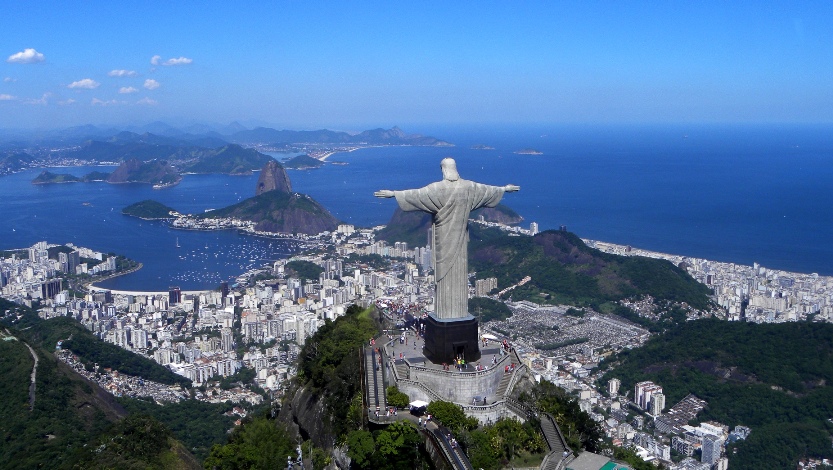
Statue of Christ te Redeemer looks down on Rio de Janeiro from Corcovado Mountain

තිරසාර සංවර්ධනය පිළිබඳ එක්සත් ජාතීන්ගේ සමුළුව (UN Conference on Sustainable Development, Rio+20) බ‍්‍රසීලයේ රියෝ ද ජනෙයිරෝ නුවර පැවැත්වුණා.

රාජ්‍ය නිලධාරී, සිවිල් සමාජ ක‍්‍රියාකාරිකයන්, විද්වතුන් හා ජනමාධ්‍ය නියෝජිතයන් 50,000කට අධික සංඛ්‍යාවක් 2012 ජූනි මස මැදදී රියෝ නුවරට පැමිණියා.

එයින් බොහෝ දෙනකු රැස්වීම්, ප‍්‍රදර්ශන හා උද්ඝෝෂණ ආදිය පැවැත්වෙන තැන්වල කල් ගත කළ නිසා රියෝ නුවර දැක බලා ගන්නට කෙතරම් අවකාශ ලැබුණාදැයි කියන්නට අමාරුයි. රාජ්‍ය නායක සමුළුව ඇරඹුණු දිනයේ ඒ සියල්ල පසෙක තබා රියෝ නුවර එදිනෙදා ජීවිතය අත් විඳින්නට මා පැය කිහිපයක් වීදි සංචාරය කළා.

රියෝ ද ජනෙයිරෝ නුවර බ‍්‍රසීලයේ දෙවන විශාලතම නගරයයි. (පළමු තැනට එන්නේ සාවෝ පෝලෝ මහා නගරයයි.) වර්ග කීමී 1,260ක් විශාල රියෝ නගර සභා ප‍්‍රදේශයේ මිලියන 6ක් දෙනා වාසය කරනවා. එමෙන් තුන් ගුණයක් විශාල මහා රියෝ (Metro Rio) ප‍්‍රදේශයේ සිටින පදිංචිකරුවන් ගණන මිලියන් 12.5කට වැඩියි.

අත්ලාන්තික් සාගරය අබියස පිහිටි මේ මනරම් වෙරළබඩ නගරය, දකුණු අමෙරිකානු සාංස්කෘතික කේන්ද්‍රස්ථානයක් ලෙසත්, සංචාරක ආකර්ශනයක් ලෙසත් ලෝක ප‍්‍රසිද්ධයි. වාර්ෂිකව පැවැත්වෙන, දින ගණනක් පුරා දිවෙන වීදි සැනකෙලිය (Rio Carnival) නිසාත්, අවට පිහිටි ගිරි ශිඛර හා කඳු මුදුන් නිසාත්, පියකරු වෙරළ තීරයන් නිසාත් මේ නගරය ගැන ලොව පුරා පවතින්නේ හිතකර ආකල්පයක්. දැඩි තරගකාරී පසුබිමක් තුළ 2016 ඔලිම්පික් උළෙල පැවැත්වීමේ වරම දිනා සිටින්නේ ද රියෝ නුවරයි.

එහෙත් රියෝ හුදෙක් පියකරු දසුන් හා විනෝද කෙළිවලට සීමා වූවක් නොවෙයි. ඉසුරුබර බ‍්‍රසීල ජාතිකයන් හා දුගී දුප්පත් වැසියන් දෙපිරිසට ම නිවහනක් වන මේ නගරය ලෝකයේ විසමතා හා අසමානතා කැටි කරන කැඩපතක් වගෙයි.

සමස්තයක් ලෙස එනුවර යටිතල පහසුකම් හා පොදු ප‍්‍රවාහන සේවා යම් මට්ටමකට දියුණු වී ඇතත්, ඉසුරුබර රියෝ වැසියන් වෙසෙන ප‍්‍රදේශ හා දුප්පත් ජනයා වෙසෙන ප‍්‍රදේශ අතර ඇස් පනාපිට පෙනෙන වෙනස්කම් තිබෙනවා.

රියෝ වැසියන්ගෙන් සියයට 20ක් පමණ වෙසෙන්නේ ෆවෙලා (favela) නමින් හඳුන්වන අඩු ආදායම් නිවාස ගොනුවලයි. එබඳු ෆවෙලා දහසකට වැඩි සංඛ්‍යාවක් තිබෙනවා. ඒවායේ ජීවත්වන වැසියන්ගේ ආදායම, සෞඛ්‍ය හා අධ්‍යාපන මට්ටම් මෙන් ම අනෙකුත් සමාජ-ආර්ථික සාධක වඩාත් පහළයි. දුගී බවින් මතුව එන වීදි ප‍්‍රචණ්ඩත්වය, මත්ද්‍රව්‍ය භාවිතය, අපරාධ වැඩි වීම හා පොලීසියේ දුෂණ වංචා ආදී සමාජ විසමතා රැසක් එහි හමු වනවා.

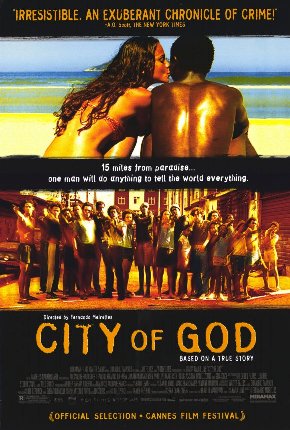
City of God, 2002
2002දී නිෂ්පාදනය කළ ‘දෙවියන්ගේ නගරය’(City of God) නම් බ‍්‍රසීල වෘතාන්ත චිත‍්‍රපටය හරහා මේ ෆවෙලා ජනපදවල එදිනෙදා ජීවිතය ගැන නෙතඟ බැල්මක් සෙසු ලෝකයට ලැබුණා. දරිද්‍රතාවයේ හා ප‍්‍රචණ්ඩත්වයේ ග‍්‍රහණයට හසු වූවත් ෆවෙලා යනු මිනිසත් බවේ කාන්තාර නොවෙයි. හිත හොඳ මිනිසුන් හා ගැහැනුන් එහි සිටිනවා. එනයින් බලන විට ෆවෙලාහි යථාර්ථය බොම්බාය, ජකර්තාව හා මැනිලා වැනි ආසියානු මහා නගරවල පැල්පත්වලට සමානයි. මෙබඳු සංකීර්ණ සමාජ සම්බන්ධතා කෙටි සංචාරයකින් තේරුම් ගැනීමත් අසීරුයි.

‘දෙවියන්ගේ නගරය’ චිත‍්‍රපටයේ නිරූපණය වූ රියෝ ෆවෙලා, දශකයක් ඉක්ම ගිය පසු තරමක් යහපත් අතට හැරී තිබෙන බව බ‍්‍රසීල මාධ්‍ය මිතුරන් කියනවා. ෆවේලා වැසියන්ගේ දායකත්වය නැතිව එනුවර ඉසුරුබර ප‍්‍රදේශවලට පැවතිය නොහැකි බවත් ඔවුන් පිළි ගන්නවා.

‘දෙවියන්ගේ නගරය’ චිත‍්‍රපටයේ නිරූපණය වූ රියෝ ෆවෙලා, දශකයක් ඉක්ම ගිය පසු තරමක් යහපත් අතට හැරී තිබෙන බව බ‍්‍රසීල මාධ්‍ය මිතුරන් කියනවා. ෆවේලා වැසියන්ගේ දායකත්වය නැතිව එනුවර ඉසුරුබර ප‍්‍රදේශවලට පැවතිය නොහැකි බවත් ඔවුන් පිළි ගන්නවා.

රියෝ නුවර අවිධිමත් ආර්ථිකය, වීදි හා පදික වෙළඳුන්, කැලි කසල ඉවත් කරන්නන් හා තවත් බොහෝ සේවා සපයන්නේ ෆවෙලා වාසීන් විසින්. ඉසුරුබර සුළුතරයක ඉහළ ජීවන තත්ත්‍වය පවත්වා ගන්නට මේ බහුතරයකගේ ක‍්‍රියාකාරිත්වය නැතිව ම බැහැ. සුවිශේෂත්වය නම් දුප්පත් – පොහොසත් දෙපිරිස රියෝ නගරය බෙදා ගෙන සමාන්තර ජීවිත ගත කිරීමයි. මෙබඳු සාපේක්‍ෂව සාමකාමී සහජීවනයක් ලෝකයේ හැම මහා නගරයක ම හමු වන්නේ නැහැ.

2002දී මිහිතල සමුළුව පැවැත් වූ දකුණු අප‍්‍රිකාවේ ජොහැන්නස්බර්ග් නුවර තත්ත්‍වය මීට ඉඳුරා ම වෙනස්. 1994දී වර්ණභේදවාදී අමිහිරි අතීතයෙන් මිදී ප‍්‍රජාතන්ත‍්‍රවාදී රාමුවක් තුළ, නව ව්‍යවස්ථාවක් යටතේ දකුණු අප‍්‍රිකානු ජනයා දිවි ගෙවනවා. එහෙත් ඓතිහාසිකව මුල් බැස ගත් දැඩි ඇති නැති පරතරයක් එරට තිබෙනවා. දකුණු අප‍්‍රිකාවේ ඉසුරුබර සුළුතරය කල් ගෙවන්නේ මංකොල්ලකෑම්, මිනීමැරුම් ආදිය පිළිබඳ නිරන්තර බියෙන් හා සැකයෙන්.

ජොහැන්නස්බර්ග් හා කේප්ටවුන් නගර සමඟ සසඳන විට ඊට වැඩි සැහැල්ලූවකින් රියෝ නුවර දිවි ගෙවෙන බව පෙනෙනවා. මෙයට එක් හේතුවක් විය හැක්කේ දශකයකට වැඩි කලක් තිස්සේ මානුෂික මුහුණුවරක් ඇති ධනවාදී ආර්ථිකයක් ඇති කරන්නට එරට රජයන් ගන්නා උත්සාහයයි.

බ‍්‍රසීලය සොබා සම්පත් හා ජන සම්පත් අතින් පොහොසත්. අද ලෝකයේ මතුව එන ආර්ථක බලවතකු ලෙස සැළකෙන ප‍්‍රමුඛ පෙළේ රාජ්‍යයක්. භූමි ප‍්‍රමාණයෙන් මෙන් ම ජනගහනයෙන් ද බ‍්‍රසීලය ලෝකයේ පස් වන විශාලතම රටයි. එය ඉන්දියාව මෙන් තුන් ගුණයක් විශාලයි. ජනගහනය මිලියන් 192යි. එරට ඒක පුද්ගල දළ ජාතික ආදායම අමෙරිකානු ඩොලර් 12,000යි. ඇති නැති පරතරය පැවතුණත් ගෙවී ගිය දශකය තුළ එරට දුගී ජනයාගේ ජීවන මට්ටම ද ඉහළ ගොස් තිබෙනවා.

මිහිතලයේ ඉදිරි පැවැත්ම ගැන පුළුල්ව හා ගැඹුරින් විවාද කරන ජගත් සමුළුවක් සිය නගරයේ පැවැත් වෙන අතර, තමන්ගේ ජීවන අරගලයේ නිරත වන රියෝ වැසියන් ඒ ගැන එතරම් තැකීමක් කළේ නැහැ. අපේ පොදු අනාගතය (Our Common Future) බඳු උතුම් සංකල්ප ගැන සිතන්නට කලින් අද දවසේ දිවි ගැට ගසා ගන්නා අභියෝගයට බහුතරයක් රියෝ වාසීන් හා බ‍්‍රසීල ජාතිකයන් මුහුණ දෙනවා.

ලොව පුරා තිරසාර සංවර්ධනයට යොමු වන සමාජයන්ට ඇති පොදු අභියෝගය වන්නේත් එයයි. පැහැබර හෙට දවසක් ගැන සිතන්නට අවකාශයක් නැති අති විශාල ජනකායකට අද දවසේ මූලික ජීවන අවශ්‍යතා සපයා දෙන්නේ කෙසේ ද? එබඳු පසුබිමක් තුළ පරිසරය හා සොබා සම්පත් ප‍්‍රවේශමින් පරිහරණය කරන අතර ආර්ථික සංවර්ධනයේ ප‍්‍රතිලාභ හැමට බෙදී යන ආකාරයේ ප‍්‍රතිපත්ති හා සැළසුම් සකස් කරන්නේ කෙසේ ද?

1992 ජූනි මාසයේදීත් රියෝ නුවර මිහිතල සමුළුවක් පැවැත්වුණා. තිරසාර සංවර්ධනයේ අභියෝග ගැන රාජ්‍ය නායකයන් හා සමාජ ක‍්‍රියාකාරිකයන් විවාද කරන අතර, මගේ ජ්‍යෙෂ්ඨ සහෘදයකු වූ බි‍්‍රතාන්‍ය පුවත්පත් කලාවේදී හා වාර්තා චිත‍්‍රපට නිෂ්පාදක රොබට් ලෑම්බ් (Robert Lamb) අසම්මත රටාවක වාර්තාකරණයකට මුල පිරුවා.

සමුළුව පැවැත් වූ කාලයට ආසන්නව උපත ලත් දරු දැරියන් 11 දෙනකුගේ ජීවිතය, ඔවුන්ගේ සමාජ හා ආර්ථික සාධක මගින් තීරණය කැරෙන්නේ කෙසේදැයි දිගු කාලීන විමර්ශනයක් ඔහු ඇරඹුවා. බ‍්‍රසීලය, චීනය, කෙන්යාව, පැපුවා නවගිනියාව, දකුණු අප‍්‍රිකාව (කළු සහ සුදු දරුවන් දෙදෙනෙක්), වෙනසුවෙලාව හා ඉන්දියාව යන දියුණු වන රටවලත්, අමෙරිකාව, බි‍්‍රතාන්‍ය හා නෝර්වේ යන දියුණු රටවලත් 1992 උපන් දරුවන්ගේ ප‍්‍රගමනය මේ යටතේ වසර දෙකෙන් දෙකට චිත‍්‍රපට ගත කරනු ලැබුවා.

රොබට් එයට දුන් කථාමාලා නාමය ‘Children of Rio’ හෙවත් ‘රියෝ පරම්රාවේ දරුවෝ’ යන්නයි. විසි වසරකට පෙර ලෝකයේ රටවල් සිය වැසියන්ට වඩාත් හොඳ අනාගතයක් බිහි කරන්නට දුන් ප‍්‍රතිඥාවන් කෙතරම් දුරට ක‍්‍රියාත්මක කොට හා සාර්ථක වී ඇත්දැයි ඉඟියක් මේ හරහා ලද හැකියි.

අද වන විට මේ දරුවන් වයස 20ට ආසන්නයි. මේ දශක දෙක තුළ ඔවුන් හා පවුල් අත්දුටු යථාර්ථය සංවේදී ලෙස හසු කර ගැනීම හරහා තිරසාර සංවර්ධනයේ සැබෑ තත්ත්‍වය පිළිබිඹු වන ලෝක ව්‍යාප්ත මාධ්‍ය අත්හදා බැලීමක් බවට මෙය පත්ව
තිබෙනවා.

රියෝ පරම්පරාවේ එක් දරුවකු රියෝ නුවර ම ෆවෙලා පවුලක උපන් රෝසාමරියා (Rosamaria) දැරියයි. ඇය කුඩා කල ඇගේ පියා ඔවුන් හැර දමා යන්නට ගියා. ඇය හදා වඩා ගත්තේ මව හා ඥාතීන් විසින්. රෝසාමරියා පාසල් ගියත් ඉගෙනීමට ඇල්මක් හෝ පසුබිමක් තිබුණේ නැහැ. විනය හේතුන් නිසා පාසලෙන් නෙරපනු ලබන ඇය නව යෞවන වියේ දරු දැරියන් සමග නිදැල්ලේ කල් ගෙවීම කෙළවර වන්නේ වයස 18දී ඇයත් මවක බවට පත් වීමෙන්.

මේ දරුවා හදා ගන්නට ඇයත් සහකරුවාත් දැඩි අරගලයක යෙදෙනවා. හරිහැටි අධ්‍යාපනයක් නැති නිසා ඇයට ආදායමක් ඉපැයීමට ඇති අවස්ථා සීමිතයි. අපරාධ හා විෂමාචාර මෙන් ම හොඳහිත හා ධෛර්යවන්තකම ද බහුල ෆවේලාවක සිට කවදා හෝ තමන් නොලද වරප‍්‍රසාද සිය බිළිඳු පුතුට ලබා දීමට රෝසාමරියා අධිෂ්ඨාන කර ගෙන සිටිනවා. http://tiny.cc/CORosa

ඇගේ කථාව අනුවේදනීය වනවා මෙන් ම රියෝ සමුළුවේ ගෝලීය අරමුණු අවසන් විනිශ්චයේදී සැබෑ ලෝකයේ ගැහැනුන්. මිනිසුන් හා දරුවන්ට අදාල වන සැටි ගැන ප‍්‍රබල විවරණයක් සපයනවා.

‘Children of Rio’ බඳු දිගු කාලීන මාධ්‍ය වාර්තාකරණයන් කිරීමට මාධ්‍ය සම්පත් හා කුසලතා පෙළගැස්මක් අවශ්‍යයි. දුවන ගමන් ප‍්‍රවෘත්ති වාර්තා කරන මාධ්‍යවේදීන්ට එබඳු විමර්ශනාත්මක හා සංවේදී වාර්තාකරණයකට අවකාශ නැහැ. එබඳු දිගු කාලීන ආයෝජනයක් කරන්නට බොහෝ මාධ්‍ය ආයතන කැමතිත් නැහැ.

1980 දශකයේ මුල මහවැලි ජනපදවල පදිංචි කෙරුණු පවුල් කිහිපයක ඉදිරි ගමන දශක දෙක තුනක් තිස්සේ රූපමය ආකාරයෙන් වාර්තා කළ හැකි වී නම් කෙතරම් අපූරු ද? යුද්ධයෙන් පසු අධිවේගී සංවර්ධනයකට යොමුව ඇති ශ‍්‍රී ලංකාව පිළිබඳව දිගු කාලීන මානුෂික වාර්තාකරණයකට දැන් වුවත් යොමු විය හැකි නම් ශීර්ෂ පාඨයන්, උද්‍යෝග පාඨයන් හා දේශපාලන සංකල්ප සියල්ලෙන් ඔබ්බට යන ගැඹුරු විග‍්‍රහයක් ලද හැකියි.

රියෝ පරම්පරාවේ කථාව දශක දෙකක් සම්පූර්ණ වන මොහොතේ එය බෙදා හදා ගන්නට මගේ ටෙලිවිෂන් ගුරුවරයා වූ රොබට් ලෑම්බ් අප අතර නැහැ. පිලිකාවකින් පරාජය වූ රොබට් මේ වසරේ පෙබරවාරියේ මිය යන විට වයස 59යි.

රියෝ පරම්පරාවේ කථාව ඔහුගේ අනුගාමිකයන් දිගට ම වාර්තා කරයි ද? තවත් වසර 10කින්, 20කින් මේ ජීවිතවල ඉදිරි කථාව කුමන අයුරකින් ලියැවේද? මේ අවිනිශ්චිත බවට මැදි වෙමින් මා රියෝ නුවරින් සමු ගෙන ආපසු පැමිණියා.

There’s No Tomorrow: Making fun of today’s oil and energy crisis…

Animation films are hard to make all around. Even with digital technologies, the art and science of making entertaining and informative animations remains a challenge — and that’s why there are few good ones around.

I was thus happy to discover There’s No Tomorrow, a half-hour animated documentary about resource depletion, energy and the impossibility of infinite growth on a finite planet.

Inspired by the pro-capitalist cartoons of the 1940s, the film is an introduction to the energy dilemmas facing the world today. It is made by Incubate Pictures.

Their intro text says:

“The average American today has available the energy equivalent of 150 slaves, working 24 hours a day. Materials that store this energy for work are called fuels. Some fuels contain more energy than others. This is called energy density.”

“Economic expansion has resulted in increases in atmospheric nitrous oxide and methane, ozone depletion, increases in great floods, damage to ocean ecosystems, including nitrogen runoff, loss of rainforest and woodland, increases in domesticated land, and species extinctions.”

“The global food supply relies heavily on fossil fuels. Before WW1, all agriculture was Organic. Following the invention of fossil fuel derived fertilisers and pesticides there were massive improvements in food production, allowing for increases in human population.The use of artificial fertilisers has fed far more people than would have been possible with organic agriculture alone.”

සිවුමංසල කොලූගැටයා #72: ඉන්ටර්නෙට් නොදැන ගොස් මංමුලා වූ උගත්තු…

My Sunday (Sinhala) column in Ravaya this week was on impressions of the National Media Summit 2012 held at the University of Kelaniya, Sri Lanka, on 24-25 May 2012. My own talk at the Summit, during a session New Media policies for Sri Lanka, was titled New Media, Old Minds: A Bridge Too Far?.

I shared my impressions in an English blog post on May 25 itself.

National Media Summit 2012 at University of Kelaniya, 25 May 2012

සාමාන්‍ය ජනතාව බැලූ බැල්මට පෙනෙන පරිද්දෙන් හෝ කලක් තිස්සේ සිතේ මුල් බැසගත් ආකල්පයන් පදනම් කර ගෙන හෝ ප‍්‍රශ්න විග‍්‍රහ කළත්, සරසවි ඇදුරන් හා පර්යේෂකයන් ඊට වඩා විවෘත මනසකින් ක‍්‍රමානුකූලව කටයුතු කරනු ඇතැයි අපේක්‍ෂාවක් තිබෙනවා.

පෙනෙන මානය (perception) හා සැබෑ තත්ත්‍වය අතර වෙනසක් තිබිය හැකියි. මේ හිඩැස අඩු කර ගන්නට අපට සමීක්‍ෂණ, නිල සංඛ්‍යා ලේඛන හා විද්වත් පර්යේෂණ උදවු වනවා. සාක්‍ෂි මත පදනම් වූ තර්ක වඩාත් ප‍්‍රබලයි. එහෙත් යල්පැන ගිය දත්ත හා තොරතුරු භාවිත නොකිරීමට අප සැවොම වග බලා ගත යුතුයි.

කැළණිය සරසවිය 2012 මැයි 24 – 25 දෙදින පැවැත් වූ 2012 ජාතික මාධ්‍ය සමුළුවේ නව මාධ්‍ය හා ප‍්‍රතිපත්ති ගැන සැසියේ කථා කරන්නට මට ද ඇරැයුම් කර තිබුණා. සංවාද කරන්නට ඇරැයුම් ලද විට මා කරන්නේ බහුලව එල්බගත් මතවාදයන් හා ජනප‍්‍රිය තර්කවලින් ඔබ්බට ගොස් අසම්මත විදියට ප‍්‍රශ්න විග‍්‍රහ කිරිමට මා අමතන සභාවට අභියෝග කිරිමයි.

මෙරට ජන මාධ්‍ය හා සන්නිවේදනය උගන්වන හැම සරසවියකින් ම ඇදුරු හා සිසු මට්ටමේ නියෝජිතයන් කැළණිය සරසවියට පැමිණ සිටියා. අපේ ජන මාධ්‍ය ක්ෂේත‍්‍රයට ඉදිරි වෘත්තිකයන් බිහි කරන්නෙත්, මාධ්‍ය හා තොරතුරු සමාජයට අදාළ ප‍්‍රතිපත්ති ගැන රජයට උපදෙස් දෙන්නෙත් මේ දැනුම් ගවේෂක උදවියයි.

මේ අයට මා සරල ප‍්‍රශ්න දෙකක් ඉදිරිපත් කළා. මේ ප‍්‍රකාශ දෙක සත්‍ය ද අසත්‍ය දැයි විමසුවා.

• මෙරට ග‍්‍රාමීය ප‍්‍රදේශවල තවමත් වැඩිපුර ම ප‍්‍රචලිත ජනමාධ්‍යය රේඩියෝවයි.

• ඉන්ටර්නෙට් යනු අපේ ජනගහනයෙන් 5%කට අඩු ප‍්‍රතිශතයක් භාවිත කරන, ඇති හැකි අයට සීමා වූ වියදම් අධික මාධ්‍යයකි.

සභාවේ බහුතරයක් දෙනා කියා සිටියේ රේඩියෝව අපේ ගම්වල ප‍්‍රචලිත ම මාධ්‍යය බවයි. ඉන්ටර්නෙට් ගැන ප‍්‍රකාශය හරි ද වැරදි ද යන්න ගැන ඊට වඩා මත බෙදුමක් ඇති බව පෙනී ගියා.

මෙහි සැබෑ තත්ත්වය මොකක්ද? නිල සංඛ්‍යා ලේඛන පදනම් කර ගනිමින් මා පෙන්වා දුන්නේ බොහෝ දෙනා සිත් සෝදිසියට විශ්වාස කරන දේ සත්‍ය නොවන බවයි.

• ජන ලේඛන හා සංඛ්‍යාලේඛන දෙපාර්තමේන්තුව කළ 2009-2010 ගෘහස්ත ඒකක ආදායම් හා වියදම් සමික්ෂණයට අනුව මෙරට නාගරික, ග‍්‍රාමීය හා වතු යන ප‍්‍රදේශ තුනේ ම නිවෙස්වල මේ වන විට රේඩියෝ යන්ත‍්‍රවලට වඩා ටෙලිවිෂන් යන්ත‍්‍ර තිබෙනවා. දීප ව්‍යාප්තව නිවාස 80%ක ටෙලිවිෂන් හමු වන විට රේඩියෝ ඇත්තේ නිවාස 75.4%ක පමණයි. (2012 පෙබරවාරි 26 කොලම කියවන්න) www.tiny.cc/HIES910 බලන්න.

ශ‍්‍රී ලංකා විදුලි සංදේශ නියාමන කොමිසම එක් රැස් කරන නිල තොරතුරුවලට අනුව 2011 අවසන් වන විට මෙරට ස්ථාපිත ඉන්ටර්නෙට් සබඳතා 375,000ක් සහ ජංගම ඉන්ටර්නෙට් සබඳතා 711,000ක් තිබුණා. මේ දෙක එකතු කළ විට සබ`දතා 1,086,000 (මිලියන් එකයි අසුහය දහසක්) වුණා. එක සබඳතාවකින් තිදෙනකු ඉන්ටර්නෙට් හා බද්ධ වනවා යයි උපකල්පනය කළොත් ඉන්ටර්නෙට් භාවිත කරන්නන්ගේ සංඛ්‍යාව මිලියන් 3 ඉක්මවා යනවා. ලෝක විදුලිසංදේශ සංගමය (ITU) දත්ත දුවා දක්වන තවත් මුලාශ‍්‍රයක් කියන්නේ ශ‍්‍රී ලංකාවේ අඩු තරමින් ඉන්ටර්නෙට් නිතිපතා (සතියකට දෙතුන් වතාවක්වත්) භාවිත කරන සංඛ්‍යාව මිලියන් 2.5ක් පමණ වන බවයි. මේ අඩු ඇස්තමේන්තුව ගත්ත ද එය ජනගහනයෙන් 10% ඉක්මවා යනවා.

මෙරට ඉන්ටර්නෙට් භාවිත කරන සමස්ත සංඛ්‍යාව හරිහැටි ගණන් බැලීම ඉතා අසීරු නමුත් 2012 පෙබරවාරිය වන විට එය මිලියන් 2 හා 2.5 අතර සංඛ්‍යාවක තිබු බව තොරතුරු සමාජයේ ප‍්‍රගමනය අධ්‍යයනය කරන ලර්න්ඒෂියා (LIRNEasia) පර්යේෂණායතනය ඒ මාසයේ ප‍්‍රකාශයට පත් කළ Broadband in Sri Lanka නම් වාර්තාවේ කියනවා. http://tiny.cc/BBSL බලන්න.

මෙබදු නිල සංඛ්‍යා ලේඛන හා විද්වත් විශ්ලේෂණ අද වන විට පහසුවෙන් ඉන්ටර්නෙට් හරහා ම සොයා ගත හැකියි. එසේ තිබියදීත් අපේ ඇතැම් ජනමාධ්‍ය ඇදුරන් පිළුණු වූ දත්ත මත එල්බ ගෙන සිිටින්නේ ඇයි?

ශ‍්‍රී ලංකාවට ජංගම දුරකථන තාක්ෂණය 1989දීත්, වාණිජ මට්ටමේ ඉන්ටර්නෙට් සේවා 1995දීත් හදුන්වා දුන්නා. වසර 23ක ජංගම දුරකථන ඉතිහාසයක් හා වසර 17ක ඉන්ටර්නෙට් අත්දැකීමක් ලක් සමාජයට තිබෙනවා. මුල් වසරවල ඇති හැකි අය අතර සෙමින් පැතිරුණු මේ නව මාධ්‍ය තාක්ෂණයන් 2000 දශකයේදී සමාජයේ විවිධ ආර්ථික මට්ටම් හරහා විහිද ගියා. නිසි විදුලි සංදේශ නියාමන ප‍්‍රතිපත්ති හා වඩා ලාබදායක විද්යුත් උපකරණ බිහි වීම මෙයට දායක වුණා.

ඉක්මණින් පරිනාමය වන විද්යුත් මාධ්‍ය හා වෙබ් මාධ්‍ය ගැන විද්‍යාත්මක පර්යේෂණ නිබන්ධන හා පෙළපොත් ලියැවෙන තුරු බලා සිටිය නොහැකියි. ලෝකයේ වෙනත් රටවල මාධ්‍ය ඇදුරන් හා පර්යේෂකයන් කරන්නේ නව මාධ්‍ය හා නව තාක්ෂණය ඔස්සේ ම ඒවා ගැන නිරික්ෂණ කරමින්, අළුත් මතවාද හා සංවාද ඒ හරහා ගොඩ නැංවීමයි.

බි‍්‍රතාන්‍යයේ විවෘත විශ්ව විද්‍යාලයේ ආචාර්ය ජෝන් නෝට්න් (Dr John Naughton) එවැනි අයෙක්. ප‍්‍රධාන ප‍්‍රවාහයේ The Observer පුවත්පතට කොලම් ලියන අතර ඔහු මාධ්‍ය හා තොරතුරු සමාජය ගැන ඒවා හරහා ම බ්ලොග්, ට්විටර් ආදිය ඔස්සේ නිතර කථා බහ කරනවා. එබදු ගවේෂණය කරන ඉන්දියානු, ඉන්දුනීසියානු, තායි හා සෙසු ආසියානු පර්යේෂකයන් ද සිටිනවා.

අපේ කිසිදු සරසවියක එබදු නව මාධ්‍ය පෙරගමන්කරුවකු සිටිදැයි සොයා ගන්නට අපහසුයි. කැළණියේ මාධ්‍ය සමුළුවේ වෙබ් මාධ්‍ය ගැන සංවාද හරවත්ව හෝ ඉලක්කගතව කිරීමට රැස්ව සිටි උගතුන් අපොහොසත් වුණා.

නව මාධ්‍ය (new media) අර්ථ දක්වන්නේ කෙසේ ද? මෙය සෙද්ධාන්තිකව ක්ෂේත‍්‍රය හැදැරීමේදී අදාළ සහ වැදගත් වුවත් ප‍්‍රායෝගිකව විග‍්‍රහ කිරිම එතරම් ලෙහෙසි නැහැ. නව මාධ්‍ය සැසියේ සැළකිය යුතු කාලයක් මේ ගැන තර්ක විතර්කවලට වෙන් කෙරුණා. මගේ අදහස වුයේ ඕනෑ ම මාධ්‍යයක් “නව” මාධ්‍යයක් වීම පුද්ගලයාට මෙන් ම ජන සමාජයකටත් සාපේක්ෂ සාධකයක් බවයි. (1980 දශකයේ ටෙලිවිෂන් අපට නව මාධ්‍යයක් වන විට ලෝකයේ බොහෝ රටවල එය අරභයා පරම්පරාවක හෝ දෙකක අත්දැකීම් සමුදායක් තිබුණා.)

ඉන්ටර්නෙට් මාධ්‍යය හරහා ප‍්‍රවෘත්ති හෝ ඕපාදුප බෙදා හරින වෙබ් අඩවි සුළුතරයක් තිබෙනවා. මේවා ගැන උඩින් පල්ලෙන් බලා පොදු නිගමනවලට එළඹීම හා ප‍්‍රතිපත්ති නිර්දේශ කිරිම අනතුරුදායක මෙන්ම ඇතැම් විට හාස්‍යජනක ක‍්‍රියාවක්. “රජයට හා ප‍්‍රභූන්ට අපහසා කරන වෙබ් අඩවි පාලනය කළ යුතුයි”, වැනි සරල උද්‍යොගපාඨ දේශපාලන වේදිකාවලින් ඇසී පුරුදු වුණත්, විද්වත් සභාවල මීට වඩා කරුණු තෝරා බේරා ගෙන සමබරව විග‍්‍රහ කිරිමේ හැකියාවක් උගතුන්ට තිබිය යුතුයි. අවාසනාවකට එදා සංවාදයේ මෙබදු විසමතා, අතිශයෝක්තීන් හා අනවශ්‍ය තරමට ලඝු කිරීම් ගණනාවක් දකින්නට හා අසන්නට ලැබුණා.

උදාහරණයකට බොහෝ කොට සංවෘත අවකාශයක් වන Facebook සහ සහජයෙන් ම විවෘත හා පොදු අවකාශයක් (Public Space) වන සමස්ත ඉන්ටර්නෙට් මාධ්‍යය අතර මූලික වෙනස පවා තේරුම් නොගත් උගතුන් සිටින බව පෙනී ගියා.

ලක් සමාජය අන් කවරදාටත් වඩා වේගයෙන් වෙනස් වෙමින් පවතිනවා. එය ආර්ථික, දේශපාලනමය, සාංස්කෘතික මෙන් ම තාක්ෂණික අංශයන්ට ද අදාළයි. මේ වෙනස්කම්වලට ජන ව්‍යූහයේ (demographic), තාක්‍ෂණයේ මෙන්ම පාරිභෝගික රටාවල බලපෑම ද හේතු වනවා. අපේ පෞද්ගලික අත්දැකීම්වලට සීමා වී මිලියන් 20ක ජන සමාජයේ තත්ත්‍වය ගැන නිගමනවලට එළඹීම ශාස්ත‍්‍රවේදීන් නොකළ යුත්තක්. ඔවුන් ඊට වඩා පර්යේෂණ හා තර්කානුකූල පදනමකින් ක‍්‍රියා කළ යුතුයි.

ඉන්ටර්නෙට් හරහා පැමිණෙන මාධ්‍ය අපේ සමාජයේ හා ජනප‍්‍රිය සංස්කෘතියේ තවත් පැතිකඩක් බවට පත් වී ගෙන යනවා. මෙය එයට සමීප හා එයත් සමග ගනුදෙනු කරන අයට නම් අරුමයක් හෝ අසාමාන්‍ය දෙයක් නොවෙයි. එහෙත් එයට ආගන්තුක උදවියට නම් මේ ප‍්‍රවාහය “උන්මාදයක්” හෝ “මනෝ විකාරයක්” ලෙස පෙනිය හැකියි.

නමුත් ඉන්ටර්නෙට් නොදැන හා පරිහරණය නොකර වත්මන් තොරතුරු සමාජයේ යම් මට්ටමකින් ඔබ්බට යා නොහැකි ආකාරයේ යථාර්ථයක් බිහි වෙමින් පවතිනවා. විශේෂයෙන් නව දැනුම සොයා යන, දැනුම ගවේෂණය කරමින් එයට එකතු කරන පර්යේෂකයන්ට, ශිෂ්‍යයන්ට හා සරසවි ඇදුරන්ට නව මාධ්‍ය හැකියාව අවශ්‍යයි.

එයින් අදහස් වන්නේ පරිගණක දෘඩාංග හා මෘදුකාංග ගැන ඉංජිනේරු මට්ටමේ දැනුමක් හැමට තිබිය යුතුයි කියා නොවෙයි. වසර 20කට වැඩි කලක් දිනපතා පරිගණක භාවිත කරන මට පරිගණකයක් අළුත්වැඩියා කිරීමට හෝ එහි කාර්මික ගැටළු විසඳීමට හැකියාව නැහැ. මා එය දකින්නේ මෝටර් රථ භාවිතය වගෙයි.

වත්මන් සමාජයේ මධ්‍යම පාංතික බොහෝ දෙනා තමන්ගේ කාරයක්, මෝටර් බයිසිකලයක් හෝ ත‍්‍රීරෝද රථයක් මිළට ගෙන පදවා ගෙන යන්නට පෙළඹෙනවා. එසේ කරන බොහෝ දෙනා මෝටර් කාර්මික තාක්ෂණය ගැඹුරින් දන්නේ නැහැ. වාහනයේ ඉන්ධන, ලිහිස්සි තෙල් හා වතුර අවශ්‍ය පමණට යොදන්නටත්, හදිසියේ රෝදයක හුළං බැස්සොත් එය මාරු කර ගන්නටත් රියදුරන් වන අප බොහෝ දෙනාට හැකියි. එමෙන්ම මාර්ග නීතිවලට අනුව ආරක්‍ෂාකාරී ලෙස රිය පදවන සැටි අප දන්නවා. වඩාත් සංකීර්ණ නඩත්තු හෝ අලූත්වැඩියාවක් අවශ්‍ය වූ විට අප මෝටර් කාර්මික ගරාජයකට යනවා.

පරිගණක භාවිතය හරහා සයිබර් අවකාශයේ සැරිසරන අයටත් තිබිය යුතු මූලික දැනුමක්, කුසලතාවක් හා රීති මාලාවක් තිබෙනවා. මේවා නොදත් ඇතැම් විද්වතුන් හා වෘත්තිකයන්, ලෙහෙසියෙන් වළක්වා ගත හැකි තොරතුරු තාක්‍ෂණ වැරදි කරනවා. බැට කෑ විට තාක්‍ෂණයට දොස් පවරනවා. කුමන්ත‍්‍රණවාදී තර්ක කරනවා!

ස්වයංමුලාවට පත් සරසවි ඇදුරන්ගෙන් උගන්නා සිසුන් මෙන් ම ඔවුන්ගෙන් ගුරුහරුකම් ගන්නා රාජ්‍ය නිලධාරින්ට කුමක් සිදු වේද? තොරතුරු සමාජයේ ඉදිරි ගමන උපෙක්ෂා සහගතවත්, මැදහත් ලෙසිනුත් නිරික්සමින් විද්වත් අදහස් දැක්වීමේ වගකීම සරසවි ඇදුරන්ට තිබෙනවා. එය හරිහැටි ඉටු නොවන බව පැය කිහිපයක් ඔවුන් සමග ගත කිරිමෙන් මට පෙනී ගියා. http://tiny.cc/NMOM ද බලන්න.

Nalaka Gunawardene's avatarWhen Worlds Collide, by Nalaka Gunawardene

Text of my ‘When Worlds Collide’ column published in Ceylon Today Sunday newspaper on 24 June 2012

As government officials, activists, researchers and journalists from around the world converged in Rio de Janeiro this week for the UN Conference on Sustainable Development, everyone was clamouring for answers, solutions and agreements.

There are 50,000 bees and a lot of buzz, but where’s the honey asked fellow science journalist Aisling Irwin, consultant news editor at SciDev.Net.

For journalists, at least, there was no shortage of stories – if only we went off the beaten track.

I wanted to see real city beyond the tourist hype and summit frenzy. So, as the heads of state sat down for their talkfest at the Rio Centro convention centre, I walked the streets of downtown Rio.

The city had declared three days of holiday, life went on as usual. Planet saviours were in town, but the…

View original post 1,278 more words

Dispatch from Rio+20: The UN Kicks the Paper Habit – at last!

Text of my news feature published in Ceylon Today newspaper on 23 June 2012

The UN Kicks the Paper Habit – at last!

By Nalaka Gunawardene
In Rio de Janeiro, Brazil

The United Nations secretariat – the world’s largest bureaucracy – has long been known as a formidable ‘paper factory’. It cranks out millions of documents every year in the organisation’s six working languages. Some of it is not read even once.

A few years ago, it acknowledged producing over 700 million printed pages every year (2005 figures). The cost of printing documents in its New York and Geneva offices along was over 250 million dollars a year.

And major international conferences convened by the UN have seen a splurge of paper – both official documents and many that are simply self-promotional of various participating national delegation, development agencies or companies. When such events end, literally tons of paper are left behind convention sites.

Environmentalists have been urging the UN to go easy on paper for many years, both to save trees pulped to make paper, and to reduce chemicals use and carbon emissions in printing or copying.

The message is finally being heeded. The United Nations Conference on Sustainable Development in Rio de Janeiro is the first major UN event to reduce paper use – and it shows.

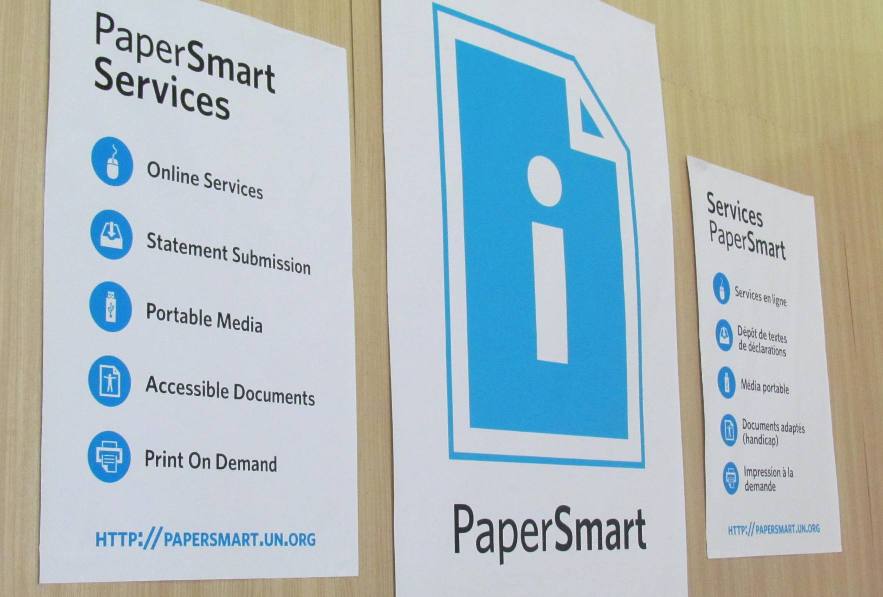
The entire meeting process is using less paper, and more electronic means for generating and sharing information. It’s the result of a new initiative called PaperSmart.

The vast Rio Centro convention centre, where the main inter-governmental meetings and major groups’ discussions are being held, is surprisingly paper-free.

So is the media centre, the operations base for hundreds of journalists from all over the world covering dozens of parallel sessions and events. In the past, this was a favourite ‘dumping ground’ for paper based materials.

At Rio+20 this week, only a handful of non-governmental organisations, academic bodies and activist groups still peddled paper. Most others had cut back on indiscriminate distribution of publications, posters, postcards and other materials.

Of course, the UN system loves to belabour the point. A dedicated website (http://papersmart.un.org) explains the underlying thinking and mechanics. PaperSmart is based on four principles: sustainability, efficiency, accessibility and knowledge management.

Switching from atoms to electrons has not been easy or smooth. Some participants – including web-savvy journalists – have been struggling with the complicated Rio+20 website and related online UN information services.

It’s still a work in progress, but PaperSmart is definitely a positive development to be cheered.

“After decades of sanctimonious preaching about the environment, the United Nations is taking a step in the right direction,” says Thalif Deen, the UN Bureau Chief of the developing world’s news agency, Inter Press Service (IPS).

Deen is a veteran of many UN conferences and processes who has seen how telexes and teleprinters gave way to instant global communications with Internet-enabled laptops and smartphones.

He recalls: “I was on the reporting staff of the first conference newspaper IPS published during the 1992 Earth Summit in Rio where the UN’s carbon foot print was all over the conference centre: reams and reams of reports and documents and thousands of UN staffers flying in from UN offices the world over.”

Deen hails Rio+20 as “a major breakthrough for a global institution long accused of extravagance and conspicuous consumption”.

A few years ago, Deen asked Shashi Tharoor, then UN under-secretary-general for public information, on when the paperless office might finally arrive at the UN Secretariat.

The digitally savvy Tharoor admitted the UN’s track record was not a good one. He then offered a comparison: “The amount of paper we use in a year to produce every single UN document, in all six official languages, is equivalent to what the New York Times consumes to print a single Sunday edition.”

Things have evolved a bit both in the newspaper industry and the UN bureaucracy since that remark was made in 2005. Newspapers in the west are now selling less, especially in paper editions.

Simply stamping out paper use can be misleading unless the total energy and resource uses are factored in. In recent years, concerns have been raised on the carbon emissions of massive internet servers.

Of course, these are dwarfed by the amount of planet-warming gases spewed out by delegates flying long distances to be in the same crowded conference with thousands of others.

As at June 20 evening, Rio+20 had close to 40,000 officially registered participants in various categories. Many unofficial events attract more.

Environmentalists, relieved by the reduced use of paper, would also be quick to point out growing problems of electronic waste.

It seems there is no such thing as an impact-free communication!

Dispatch from Rio+20: Next Election or Next Generation?

Text of my news feature published in Ceylon Today newspaper on 22 June 2012

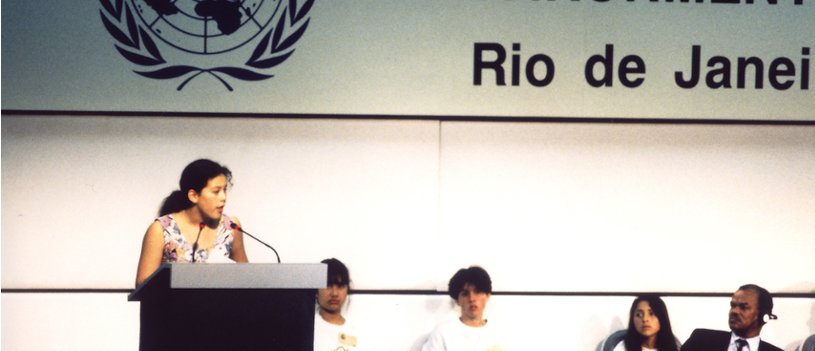
Severn Cullis-Suzuki addressing Earth Summit in Rio, June 1992

Next Election or Next Generation?
By Nalaka Gunawardene in Rio de Janeiro, Brazil

Twenty years ago, a passionate young girl addressed – and challenged – the world leaders gathered at the Earth Summit in Rio de Janeiro, Brazil.

They called it the speech that stopped the world for six minutes. All the platitudes and rhetoric of heads of state are long forgotten, but this speech endures. It has been viewed million of times online.

Her speech was uncluttered and sincere. “I am only a child and I don’t have all the solutions, but I want you to realize neither do you…If you don’t know how to fix it, please stop breaking it!”

Her name was Severn Cullis-Suzuki, and she was 12 years old. The young Canadian environmental activist closed a Plenary Session with her powerful speech that received a standing ovation.

Raised in Vancouver and Toronto, Severn is the daughter of writer Tara Elizabeth Cullis and environmental activist turned TV personality David Suzuki. When she was 9, she started the Environmental Children’s Organization (ECO), a small group of children committed to learning and teaching other kids about environmental issues.

They did various local projects and in 1992, raised enough money to go to the Rio Earth Summit. Their wanted to remind the world leaders that the future of all children – indeed, all future generations – were going to be impacted by decisions made at the Summit.

Listen to the memorable speech at the Earth Summit by Severn Cullis-Suzuki:

Two decades on, another young girl from the Asia Pacific earned her chance to address Rio+20, the follow up to the original Summit, this time with the theme ‘The Future We Want’

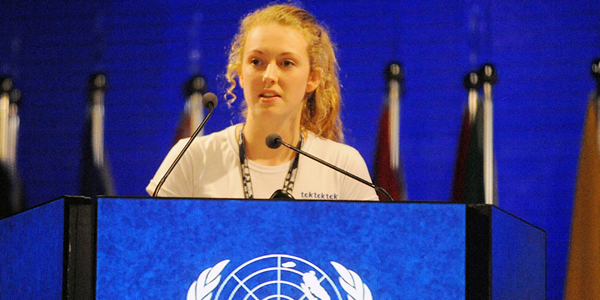
As it opened on the morning of 20 June 2012, Brittany Trilford, a 17-year-old school girl from New Zealand, spoke truth to power.

Brittany Trilford at Rio+20 conference on 20 June 2012

Addressing over 130 heads of state from around the world, assembled in Rio Centro conference centre, she said: “Please ask yourselves why you are here. Are you here to save face? Or are you here to save us?”

Brittany won an international competition to earn her five minutes of fame. The ‘Date with History Contest’ was a global online search for a person under 30 to represent youth and future generations at Rio+20.

Organised by the Global Campaign for Climate Action, Climate Nexus and the Natural Resources Defence Council (NRDC), contest participants were asked to upload a 2 to 3 minute short video speech about the future they wanted.

After entries closed in early May 2012, online voting was allowed for 22 finalists – which included at least 3 from each region of the world. The final winner was chosen by an international panel that included environmentalists, UN officials and celebrities such as actor Leonardo DiCaprio.

Brittany Trilford addresses world leaders at the UN Earth Summit

Brittany is a final year student attending school in Wellington, New Zealand. In her winning entry, she wished for more innovation and imagination.

“One solution would be to change our education system to embrace creativity and innovation. To tackle our problems there are definitely out there. Our leaders have to listen, be open-minded and persistent enough to give these ideas a chance,” she said.

As she ended the speech: “I want a future where education encourages innovative thinking, creativity and entrepreneurship. I want a future where we run with natural processes and not against them. I want a future where leaders will stop talking and start acting. I want a future where leaders lead.”

Her video was filmed at home with basic camera equipment. As she explained, “I entered to show solidarity with youth around the world, demanding that our leaders remember we are all their children and they owe us a fighting chance at a future we want to inherit.”

In a poignant media event hours before the Summit opened, the star of 1992 Severn Cullis-Suzuki joined the winner of 2012, Brittany Trilford.

Severn is now a writer and activist on culture and environmental issues, as well as the mother of two young boys.

“I have grown up a lot these 20 years but those six minutes of speaking to the UN two decades ago remains the most powerful thing I have ever done in my life to affect people,” she said wistfully.

Shortly after arriving in Rio – her first time since 1992 – Severn addressed a group of young delegates working with Green Cross International, the global environmental group created by Mikhail Gorbachev.

Severn’s message today remains the same, but now she also thinks about the future of her own children. She returned to Rio on their behalf to appeal for solutions to issues like global climate change which she called an “inter-generational crime”.

The world’s children have spoken loud and clear, twice over. But will they be heard by the world’s governments – preoccupied with multiple crises and more concerned about staying on in office.

Will the next generation prevail over the next election?

Dispatch from Rio+20: Ensure Good Governance and People’s Rights for a Sustainable Sri Lanka

Text of my news feature published in Ceylon Today newspaper on 21 June 2012

Hemantha Withanage in Rio de Janeiro

Ensure Good Governance and People’s Rights for a Sustainable Sri Lanka, urge civil society in Rio

By Nalaka Gunawardene in Rio de Janeiro, Brazil

As world leaders gather in Rio de Janeiro for the United Nations Conference on Sustainable Development, 50 Lankan civil society organisations (CSOs) have issued a joint statement calling for good governance and respect for people’s rights in Sri Lanka.

Mere economic growth – by raising per capita Gross National Product (GNP) — can be a highly misleading indicator of development, the statement said.

“Better governance is a must for a sustainable society. Better environmental governance and environmental justice should be ensured for sustainable living,” it added.

The 15-page document is signed by 50 people’s organisations working on environment, development and human rights issues at the grassroots level. It urged the government of Sri Lanka to “follow the middle path in development as we proposed in 2002 for the World Summit on Sustainable Development (WSSD)”.

The statement has been released on the web and is being distributed to over 40,000 participants attending the major UN conference, also known as Rio+20. (Full text at: http://tiny.cc/SLRio20)

The government of Sri Lanka was also due to release its official report for the conference, but copies of it were not available. There was also no mention of it anywhere on the Ministry’s official website.

CSOs underlined the need to respect the basic rights of people while ensuring environmental safeguards and maintaining a slow growth. It emphasized that sustainable development and good governance were inseparable.

The statement called for greater media freedom, right to freedom of expression and right to dissent as articulated in Article 14 of the Universal Declaration of Human Rights, and in Agenda 21, an action plan for sustainable development that countries adopted at the original Earth Summit in Rio in June 1992. Sri Lanka has committed itself to both.

“It is very well known that without access to information, public participation, accountability, rule of law and predictability — which are the basic pillars of good governance — you cannot achieve sustainable development,” said Hemantha Withanage, the statement’s principal author in an exclusive interview.

“The sustainable development principles agreed at the Earth Summit in 1992 had environment, social and economical pillars. But today, we know that without a political pillar, sustainable development cannot be achieved,” added Withanage, Executive Director of the Centre for Environmental Justice in Sri Lanka.

“The space for CSOs and recognition of their role in development is vital,” the statement noted, calling for greater civil society involvement in policy formulation in all areas of development.

The statement mentions a wide array of issues and concerns raised by ordinary Lankans who were consulted during its preparation. These range from local and national to global, and cover sectors such as agriculture, water, livelihoods, energy, public health, disaster management and biodiversity conservation.

“The world needs to move towards a simultaneous action at local, national, regional and international level to confront the social, economic and ecological crises which the present development model has caused,” it notes. “What we need instead is to defend our commons and total transformation towards sustainable consumption and production patterns.”

It explicitly called “to stop all kinds of corporate control, capture and monopolisation of natural resources.”

“Our demands are not only for Rio+20. After all, this is just another meeting of the world nations under the UN flag. We should not treat this as an end of everything. It is an on-going process,” Withanage said.

He recalled being involved in the ‘Citizens Report on Environment and Development’ that Sri Lanka civil society organisations collectively prepared for the Earth Summit in 1992. Many of its aspirations were never met, he lamented.

“Meanwhile, we have seen more deterioration of the social and environmental rights over the past two decades,” he said.

CSOs also called for an assessment of environmental and social costs of Sri Lanka’s prolonged civil conflict that ended in 2009. Its impact on natural resources remains little understood even as economic development projects are being rolled out in conflict affected areas, the statement said.

The CSO statement was produced at the end of Sri Lanka Civil Society Dialogue on Rio+20 held in Negombo on 17 – 18 May 2012. It was convened by the Centre for Environmental Justice/Friends of the Earth Sri Lanka, National Fisheries Solidarity Movement (NAFSO) and the Sri Lanka Nature Group.

Read my interview with Hemantha Withanage on Groundviews.org
Rio+20 interview: “Green Economy should not justify Greed Economy!”