The Sunday Times (Sri Lanka) asked me to list the best book I’ve read in 2013 (and why); and also for the book I’d like to receive as a Christmas present.
Here’s my essay in full: it wasn’t easy to pick one good title in a year in which I read many enjoyable and mind-stretching books.
Word power amplifies political power…
Words that Saved the World
By Nalaka Gunawardene
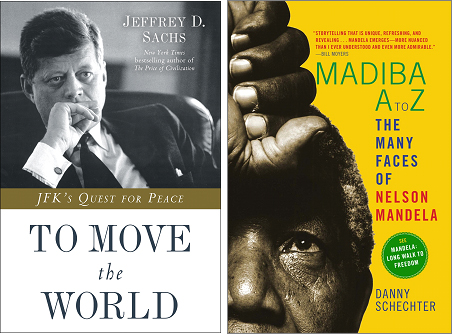
Although it lasted only a thousand days, John F Kennedy’s presidency was eventful and memorable in many respects. His legacy has inspired an estimated 40,000 books and films. This year, which marked the 50th anniversary of his assassination, I read an exceptional addition to this (still rising) pile.
To Move the World: JFK’s Quest for Peace (Random House, 2013), by Columbia University economist Jeffrey Sachs, revisits the extraordinary days from October 1962 to September 1963. That was JFK’s Annus mirabilis (Year of wonders) when he marshalled the power of oratory and political skills to achieve more peaceful relations with the Soviet Union and a dramatic slowdown in the proliferation of nuclear weapons.
During that year, which started with momentous ‘13 days’ of the Cuban missile crisis, JFK he gave a series of speeches where he argued that peace with the Soviet Union was both possible and highly desirable. One delivered to the American University in Washington DC in June 1963 is generally referred to as his Peace Speech. Sachs shows why it was one of the most important foreign policy speeches of the 20th Century – ultimately more consequential than any other by JFK.
If Winston Churchill “mobilized the English language and sent it into battle” during World War II, Kennedy used his mastery of the same language to talk the US and Soviet Union down from the brink of a planetary nuclear war.
What I’d love to get for Christmas is Madiba A to Z: The Many Faces of Nelson Mandela (Seven Stories Press, 2013) just written by my journalist friend Danny Schechter. We can count on Danny, who has spent 40 years chronicling the story of Mandela and South Africa’s struggle for freedom and equality, to provide plenty of depth, nuance and analysis.
Nalaka Gunawardene is a science writer and blogger.
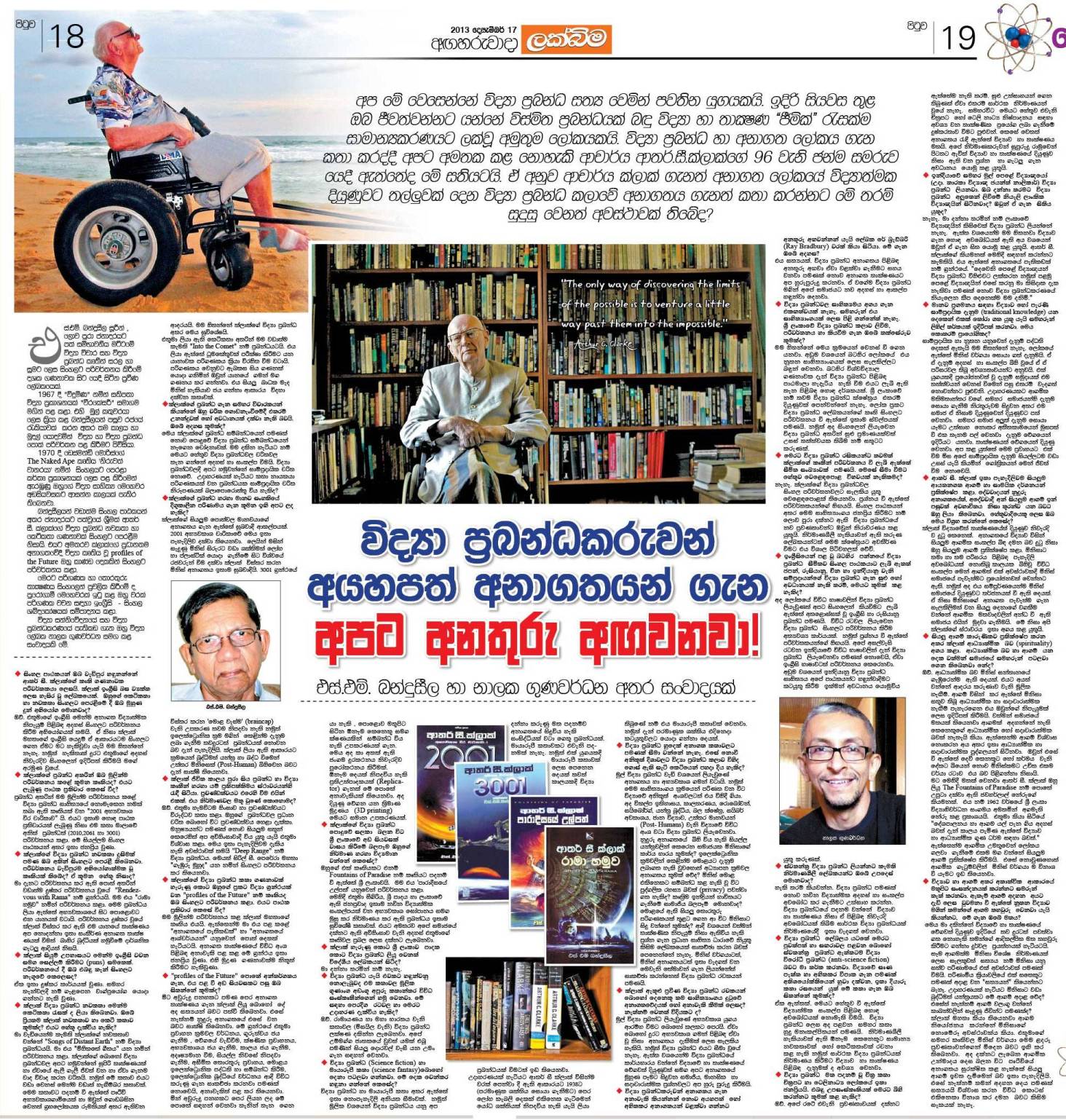
Lakbima Sinhala daily newspaper has just published my long interview with S M Banduseela who is widely recognised as Sri Lanka’s foremost translator of science and science fiction. He is best known as Arthur C Clarke’s Lankan translator.
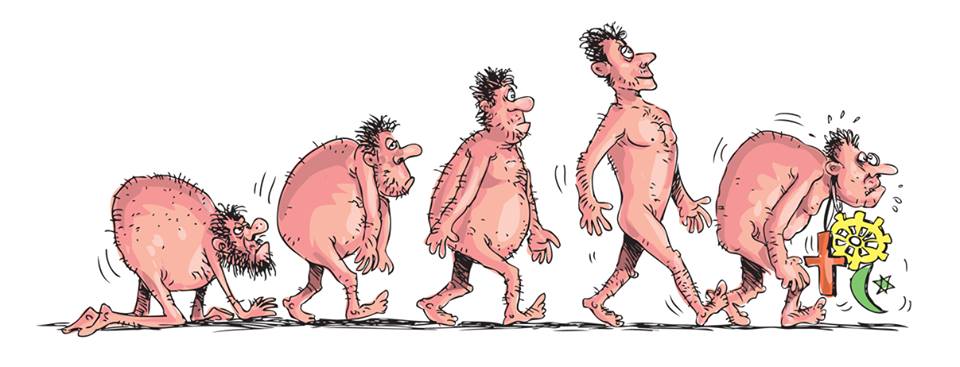
Those segments are not repeated here. Lakbima has also carried my questions related to Clarke’s views on traditional knowledge, and on religion. Banduseela answers them in his capacity as a leading rationalist and free thinker in Sri Lanka.
As he often said: “One of the great tragedies of mankind is that morality has been hijacked by religion. So now people assume that religion and morality have a necessary connection. But the basis of morality is really very simple and doesn’t require religion at all. It’s this: “Don’t do unto anybody else what you wouldn’t like to be done to you.” It seems to me that that’s all there is to it.”
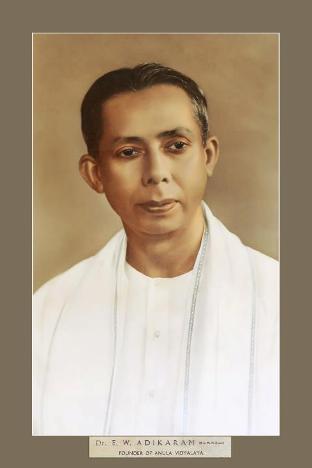
In this week’s Ravaya column (in Sinhala), I explore another facet of the scholar and free thinker Dr E W Adikaram (1905-1985). On 10 Nov 2013, I discussed his contributions as a pioneer in public communication of science in Sinhala. Today, I discuss his uncompromising stand on non-violence (ahimsa) and his debunking of racial segregation of humanity for which there is no biological basis.
S M Banduseela is widely recognised as Sri Lanka’s foremost translator of science and science fiction. Beginning in 1970, when he translated into Sinhala language The Naked Ape by zoologist and ethologist Desmond Morris, Banduseela has introduced Sinhala readers to over two dozen world acclaimed titles.
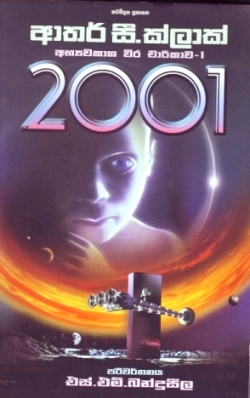
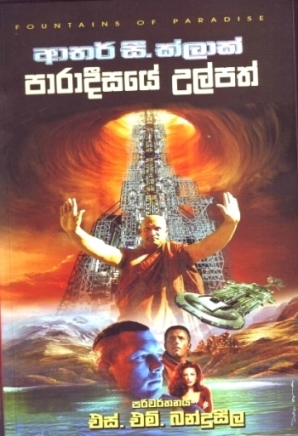
He is best known as Arthur C Clarke’s Lankan translator. In the mid 1970s, he translated Clarke’s landmark 1962 volume Profiles of the Future, which was well received. Encouraged, Banduseela took to translating Clarke’s key science fiction novels beginning with 2001: A Space Odyssey. Over the years, he rendered into Sinhala all four Odyssey novels, as well as other works like The Fountains of Paradise, Rendezvous with Rama and The Hammer of God.
In this wide ranging interview, published in the Sinhala Sunday newspaper Ravaya (24 Nov 2013), I discuss with Banduseela various aspects of science fiction in the Lankan context: the niche readership for this literary genre; its enduring appeal among Sinhala readers; and prospects of original science fiction in Sinhala. He also recalls the challenges he faced translating Clarke’s technically complex and philosophically perceptive novels. I ask him why Sinhala readers have yet to discover the rich worlds of science fiction written in countries like Russia, Japan, China and India.
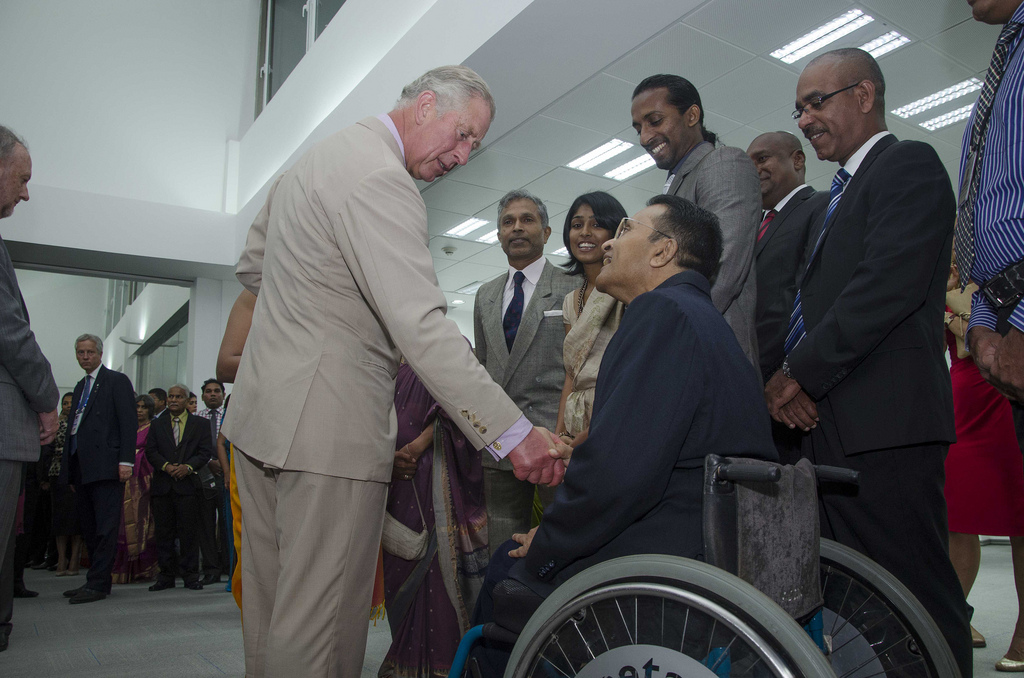
Prince Charles talks with Dr Ajith C S Perera, activist for mobility access, at the opening of British Council new building in Colombo, 16 Nov 2013 – Photo courtesy British Council Sri Lanka
Charlie is a charmer: he can be engaging, a good listener and smiles a lot.
At least these are my impressions of having watched Prince Charles at close range at a reception hosted by the Colombo British Council this evening – coupled with the opening of their new building.
The future king was ushered in without much fanfare (even his security was light touch and courteous). He spent around 40 minutes talking his way through the crowded room.
He chatted with many of the 250 or so guests — friends and partners of the British Council. It included a number of students and youth activists, as well as teachers, writers and scholars.
The Prince listened to short speeches by the British Council Sri Lanka Director and their global CEO. He then made the shortest speech of the evening: less than a minute, in which he made us laugh.
He basically thanked everyone, and expressed relief that the building he’d inaugurated on his last visit (1998) hadn’t been demolished.
Shortly afterwards, he left as quietly as he arrived. The party continued.
It was a brief encounter, but devoid of hype and pomposity that have characterised the Commonwealth Heads of Government Meeting (CHOGM) taking place in Colombo this week — the main reason why Prince Charles was in town.
I was quite tempted to take a quick photo with my mobile phone (cameras were not allowed). But our hosts had earnestly requested that we don’t take any photos. For once, I played by the rules.
In a more officious setting, I would quite likely have defied the restriction (after all, no one was watching our good conduct, as usually happens at Lanka government functions these days).
Yet the British Council has a special place in our hearts and minds. It’s a friendly oasis for artistes, learners, performers and activists. While they pursue their mission of promoting British cultural interests abroad, British Councils truly engage the community. Violating their request for taking a murky crowd photo would have been too unkind…
Part of that brand loyalty for British Council is explained in this short essay by Eranda Ginige of British Council Sri Lanka. In it, he reflects on their library in Colombo, which remains a community hub even as most readers trade paperbacks for portable devices.
Charlie produced unexpected gains, too. When I finally reached home, I had a rousing welcome from the two adorable females – a teenager and Labrador – who raise me:
Dear Charlie, You’ve boosted my approval rating among household teenagers but Digital Native puzzled I didn’t snap u! http://t.co/h0hPmBM8Ec
In this week’s Ravaya column (in Sinhala), I pay tribute to scholar and free thinker Dr E W Adikaram (1905-1985), a Lankan pioneer in public communication of science in Sinhala.
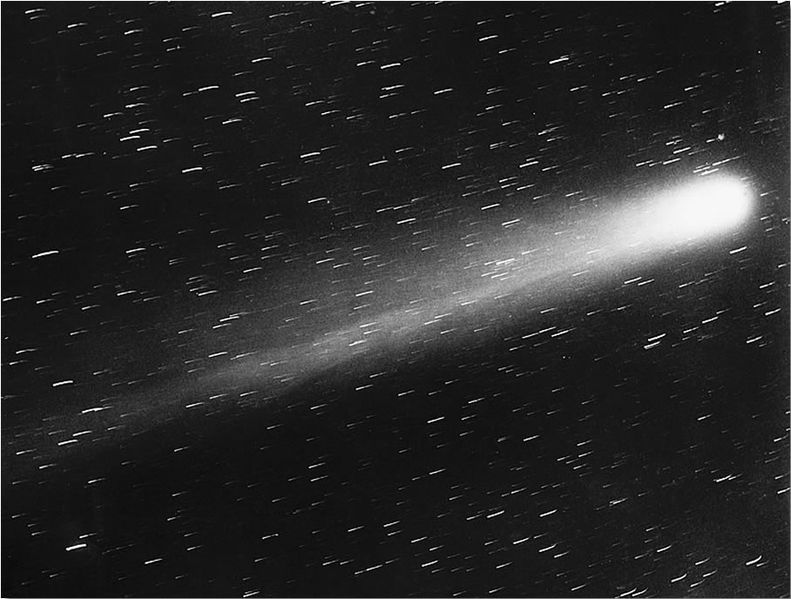
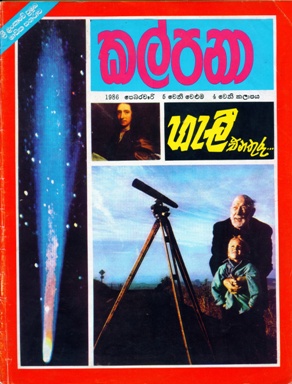
I also recall with gratitude how, a few months before his death at age 80, he advised and guided me through a challenging science writing assignment on the history and science of comets.
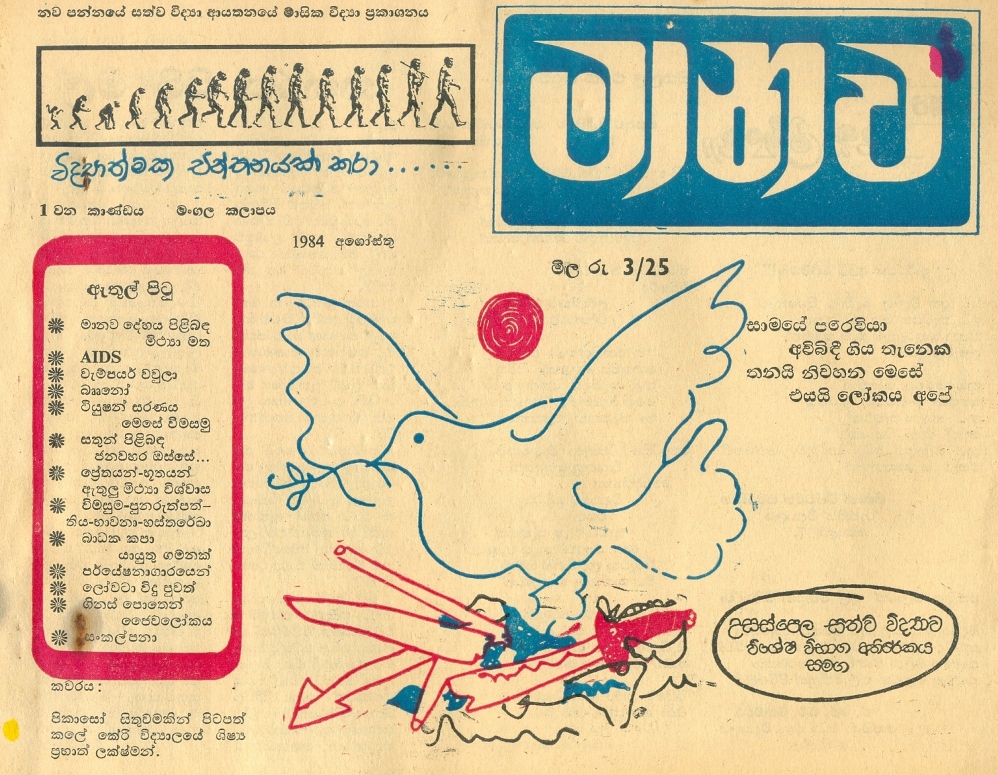
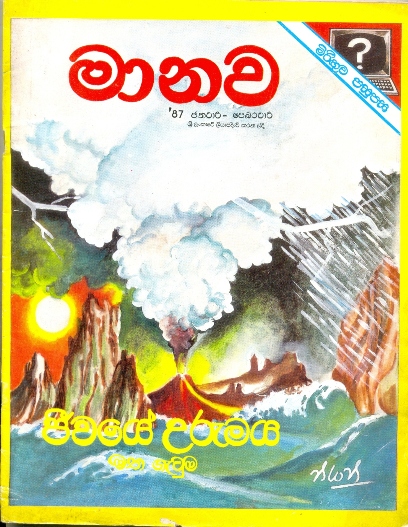
My latest book is dedicated to Asanga Abeysundara who was my zoology teacher 30 years ago, as well as my earliest editor-publisher. For several years in the 1980s, he edited and published (in properly printed form) a progressive science magazine in Sinhala named Maanawa (meaning ‘human’).
This non-profit publication, started in 1978 as a wall newspaper at the University of Colombo by its founder when he was an undergraduate there, evolved into a printed magazine in 1984 with a small circulation and loyal readership.
Maanawa Sinhala science magazine first print issue, Aug 1984
It was a platform for aspiring young writers – many of them in school or university at the time – to write about science, technology and their impact on society. As part of the editorial team, I remember we covered big issues like the origins of life, cost-benefits of space exploration, HIV/AIDS and human evolution.
Maanawa was entirely a labour of love: everybody, including the editor, worked for free. But printers and distributors charged for their services, which the limited sales couldn’t recover. So, despite passion and voluntary editorial inputs, the magazine stopped printing after sometime.
Yet, showing resilience and innovation, Maanawa became the first Sinhala publication to produce an Internet edition in 1996 — the year after commercial connectivity was introduced in Sri Lanka. The web edition, which played a pioneering role, is no longer online.
I have written this week’s Ravaya column (in Sinhala) about Maanawa.
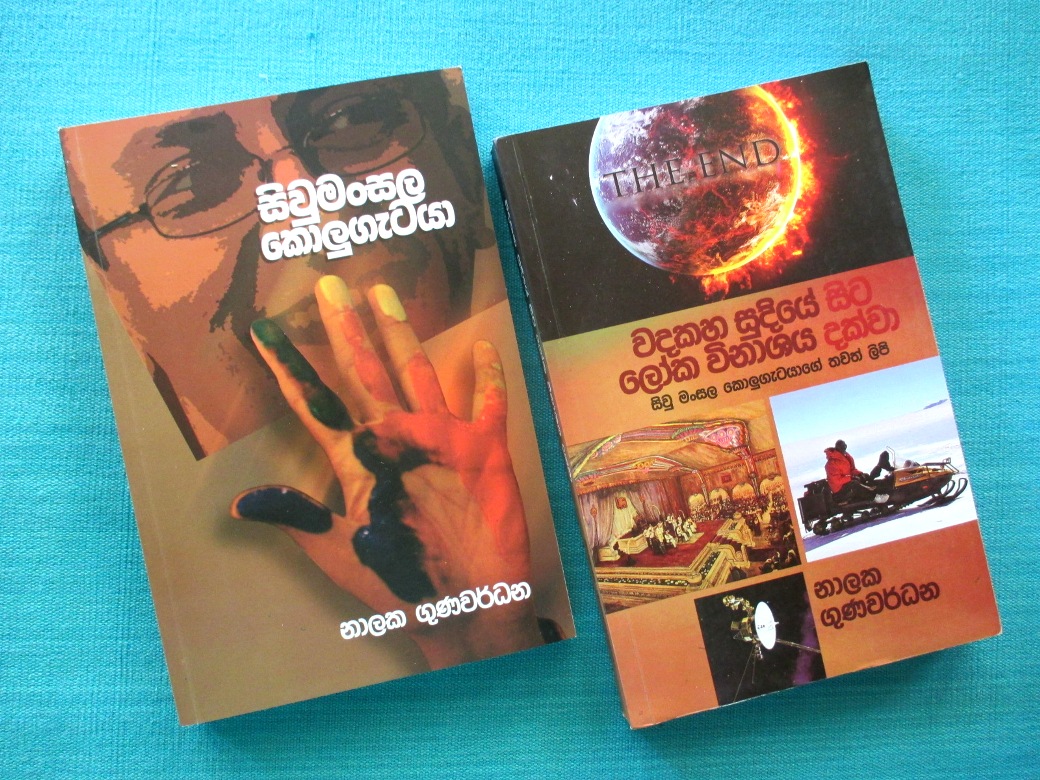
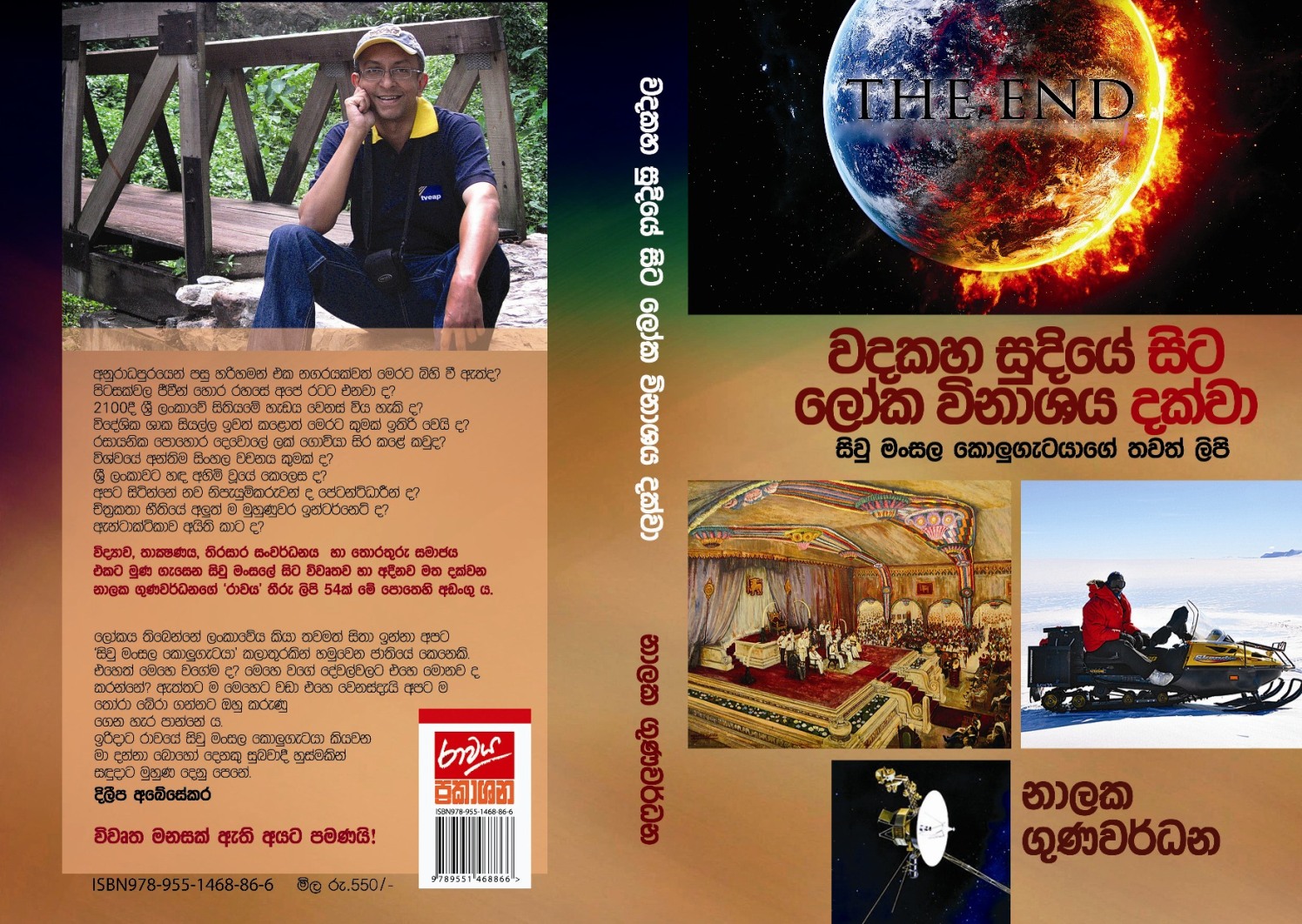
Cover of Sivu Mansala Kolu Getaya Book 2 by Nalaka Gunawardene, pub Sep 2013
PROMO NOTE FOR MY LATEST BOOK:
Science writer Nalaka Gunawardene’s latest Sinhala book, Wada Kaha Sudiye Sita Loka Winashaya Dakwa, will be released at the Colombo International Book Fair that starts on 14 September 2013.
Through 54 columns, the book offers personalised insights and non-technical analysis related many current issues and topics in science, technology, sustainable development and information society in the Lankan context. It is written in an easy, conversational Sinhala style rich in metaphor and analogy.
In particular, this collection probes how and why Lankan society is increasingly prone to peddling conspiracy theories without critical examination or rational discussion. From astrological hype linked to end of the world in 2012 to claims of mass poisoning via agrochemicals, Nalaka seeks to separate facts from hype, conjecture and myth.
The book defies easy categorisation, as it covers topics as diverse as alternative histories, agrochemical misuse, disaster management, Internet censorship, Antarctic exploration, asteroid impacts, cricket history and road safety.
“I seem to have outgrown the neat label of science writer,” says Nalaka. “Indeed, the very title of my column suggests how I sit at the intersection (or confluence) of science, development, mass media and information society. From that point, I explore tensions between modernity and tradition — and ask more questions than I can easily answer!”
In his quest for clarity and reason, Nalaka talks to researchers, activists and officials. He also draws on his many experiences and global travels as a journalist, TV producer and development communicator.
The 340-page book is priced at Rs. 550. It will be available from leading bookstores, and at special discounts from the Ravaya booth during the Colombo Book Fair.






 Open Minds!