Avatar: Blockbuster film as socio-political and green allegory?


“Pictures are for entertainment, messages should be delivered by Western Union.”

Those words by American film producer and studio founder Sam Goldwyn (1879-1974) sum up Hollywood’s attitude to movie-making for the past many decades.

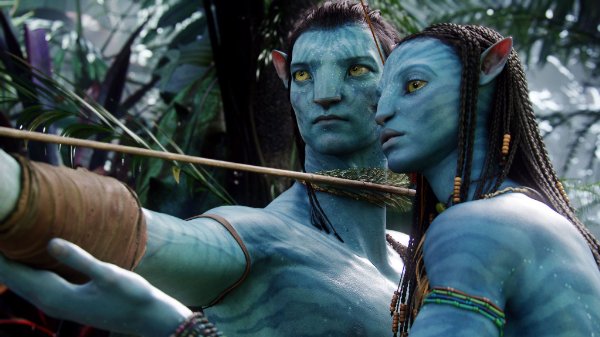
As I watched James Cameron’s latest blockbuster movie Avatar, I kept wondering how the master film maker managed to subvert this so completely. Beneath the 3D, special effects and riot of other worldly colours, the movie is one long (2 hrs 40 mins) and powerful commentary on why might is not right when it comes to exploiting resources — belonging to other countries, people, or as in this case, other worlds.

This is not just another worthy indie movie made by an idealistic movie maker defiant of Hollywood traditions and big money. James Cameron is one of the most commercially successful directors in the mainstream film industry – and perhaps one of the very few who can get away with this kind of stunt. At a budget of over US$ 300 million , Avatar is one of the most expensive films ever made, and the costliest ever for 20th Century Fox.

The big gamble is certainly paying off. On 26 January 2010 came the news that Avatar has surpassed Titanic as the highest-grossing movie worldwide. According to the studio, worldwide box office total for Avatar at that point stood at US$1.859 billion, beating the US$1.843 billion racked up by Cameron’s romantic drama in 1997-98. Avatar broke that record in a little over six weeks.

Part of the reason for such appeal is the extraordinary special effects: it’s an action-packed thriller where good and evil battle it out on another planet. The strange landscapes give it a video game like feel, but no small screen can match the theatrical experience, especially if you watch it in IMAX 3D (I didn’t). And for a change, this time the aliens inhabiting planet Pandora are benign, while it’s the humans who are ruthless invaders and brutal killers. Well, at least most of the time…

Here’s the official blurb: “Avatar takes us to a spectacular world beyond imagination, where a reluctant hero embarks on an epic adventure, ultimately fighting to save the alien world he has learned to call home. James Cameron, the Oscar-winning director of Titanic, first conceived the film 15 years ago, when the means to realize his vision did not exist yet. Now, after four years of production, AVATAR, a live action film with a new generation of special effects, delivers a fully immersive cinematic experience of a new kind, where the revolutionary technology invented to make the film disappears into the emotion of the characters and the sweep of the story.”

And here’s AVATAR – Official International Launch Trailer (HD)

Film critics and social commentators around the world have noticed the many layers of allegory in the film. Interestingly, depending on where you come from, the movie’s underlying ‘message’ can be different: anti-war, pro-environment, anti-Big Oil, anti-mining, pro-indigenous people, and finally, anti-colonial or anti-American. Or All of the Above…

It looks as if Cameron has made the ultimate DIY allegory movie: he gives us the template into which any one of us can add our favourite injustice or underdog tale — and stir well. Then sit back and enjoy while good triumphs over evil, and the military-industrial complex is beaten by ten-foot-tall, blue-skinned natives brandishing little more than bows and arrows (and with a little help from Ma Nature). If only it works that way in real life…

But the multi-purpose allegory is apparently working well. Take these two from opposite sides of the planet:

Thomas Eddlem wrote in The New American: “Avatar, is a visually stunning epic that is a perfect allegory for any of a dozen or more Indian wars in American history. From King Philip’s War in New England to Tippecanoe in Indiana to Horseshoe Bend in Alabama — and all the way across the American continent, for that matter — the story was the same. Colonists simply take land from the natives, as the Sully explains: ‘This is how it’s done. When people are sitting on something that you want, you make them your enemy so that you can drive them out.’

Mayank Shekhar wrote in The Hindustan Times newspaper: “Between a green worldview and the globe’s war over a natural resource, James Cameron’s twin analogies of present-day politics are fairly complete. They lend his science fiction ‘event picture’ a certain soul, even if not much of a story line.”

So did Cameron set out trying to send a message? Or was it all an incidental byproduct? Listen to the director himself in these two online video stories:

James Cameron’s Vision Featurette

CBS Interview with James Cameron: From Titanic to Avatar

The most compelling social commentary on Avatar I have so far read comes from Naomi Wolf, the American political activist, author and social critic. In an op ed essay written for Project Syndicate, she sees two revealing themes in Avatar: “the raw, guilty template of the American unconscious in the context of the ‘war on terror’ and late-stage corporate imperialism, and a critical portrayal of America – for the first time ever in a Hollywood blockbuster – from the point of view of the rest of the world.”

She adds: “In the Hollywood tradition, of course, the American hero fighting an indigenous enemy is innocent and moral, a reluctant warrior bringing democracy, or at least justice, to feral savages. In Avatar , the core themes highlight everything that has gone wrong with Americans’ view of themselves in relation to their country’s foreign policy.”
Does the box office triumph of Avatar make James Cameron one of the most effective campaigners for social justice on the planet (comparable, in some ways, to Michael Jackson having been one of the biggest environmental communicators of his time)?

And is Avatar the most expensive piece of info-tainment or edu-tainment ever made, just like the Lord of the Rings trilogy was one long (even if unintended) commercial for the breathtaking sights and sounds of New Zealand?

Certainly, mixing messages with entertainment is such a difficult and delicate art that most people who dabble in it fall between the two stools. The entertainment value of Cameron’s latest flick is not in question. Granted, it’s not as heart-breaking as Titanic, and the storyline is oh-so-predictable. But 3D and SFX magic alone can’t hold today’s audiences gripped for 160 long minutes. And if the underlying story starts movie-goers thinking and talking about many parallels between the fictional world of Pandora and our own Earth, he’s certainly getting somewhere.

As Naomi Wolf says: “Ironically, Avatar will probably do more to exhume Americans’ suppressed knowledge about the shallowness of their national mythology in the face of their oppressive presence in the rest of the world than any amount of editorializing, college courses, or even protest from outside America’s borders. But I am not complaining about this. Hollywood is that powerful. But, in the case of Avatar , the power of American filmmaking has for once been directed toward American self-knowledge rather than American escapism.”

Perhaps this wasn’t part of the script, but would the executives at 20th Century Fox care as they laugh all the way to their bank?


Open Moment, Closed Minds: New essay to mark 250 days of ‘Peace’ in Sri Lanka

Today marks exactly 250 days since Sri Lanka’s civil war officially ended on 18 May 2009.

In a new op ed essay — titled ‘Open Moment’, Closed Minds! — just published on Groundviews.org, I look back and ask some hard questions.

Here’s an excerpt:

“We all knew the hard-won peace had to be nurtured and consolidated. We also realised just how formidable the challenges of healing and rebuilding were. But could anyone have imagined the dramatic turn of political events since?

“Who would have thought that the victors of the war would soon be engaged in a nasty battle for personal glory and power? Who expected the historical feud between ‘lions’ and ‘tigers’ to be replaced so swiftly by a showdown between self-proclaimed ‘patriots’ and ‘traitors’?”

I raise these questions in the context of a fiercely contested presidential election scheduled for 26 January 2010. I note: “The two main contenders both claim to hold a mutually exclusive key to a better future for our land and people. Their dizzy campaigns bombard us with lofty claims and counter-claims 24/7 delivered through broadcast, broadband, mobile and other media.”

I ask whether either of the leading candidates has the open mind needed to seize the historic ‘open moment’ since the war ended. I recall how we completely missed the last such open moment created by the tsunami of December 2004.

I write: “Having missed the tsunami’s open moment, we cannot afford to bungle again. Rebuilding a nation of lasting peace, pluralism and prosperity will require many sections of society to change their mindset. This is especially and urgently needed in our media, much of which has become uncritical cheerleaders for patriotism and tribalism in recent years.”

Despite the many disappointments of the past 250 days, I still remain cautiously optimistic. But for how long?

The origins of this essay can be traced back to a blog post I wrote on 19 May 2009: Us and Them: Sri Lanka’s first landmine on the road to peace…

Read the full essay, and join the conversation at Groundviews.org

Who’s Afraid of Amateur Radio? And why do our babus fear it?

When I was in my early teens (back in the early 1980s), I developed a great interest in radio. Not just in listening to radio broadcasts, which I did regularly while growing up in a country that had no television, but also in building a radio that could both receive and transmit signals.

My school teacher father, who encouraged me in many of my diverse pursuits, bought transistors, condensers and other ‘building blocks’ for a basic radio set. With the help of an amateur radio handbook, and through trial and error, he and I actually built a functional transmitter. It was exhilarating to listen to local and shortwave broadcasts on a home-made radio set, but even more exciting to be able to transmit rudimentary signals.

Even as a kid, I was not contented in being a passive recipient of information; I wanted to give out as much as I received…

That particular fancy didn’t last long: I soon moved on to other challenges, and never persisted with being a serious amateur radio enthusiast (or ‘radio ham’), but it left a lasting impression. A few years later, after leaving high school, I became a regular freelancer at the local radio station. By age 23, I was hosting my own weekly show on national radio, and my association with the radio medium would last for much of my 20s.

The humble low tech that saved the day...
My interest in amateur radio lay dormant — until five years ago, when I read reports about how radio hams helped revive emergency communications in the immediate aftermath of the Indian Ocean Tsunami.

The decades old practice was hailed as the ‘low tech’ miracle that literally helped save lives. Where electricity and telephone services — both fixed and mobile — had been knocked down, radio hams restored the first communication links. They were at the forefront of relief efforts, for example, in the Andaman and Nicobar Islands in India, and in Hambantota in southern Sri Lanka.

This intrigued Sir Arthur C Clarke, inventor of the communications satellite and long time resident of Sri Lanka. Shortly afterwards, he wrote in Wired magazine: “We might never know how many lives they saved and how many minds they put at ease, but we owe a debt to Marconi’s faithful followers.”

If Sir Arthur were alive, he would have been dismayed to find what has happened since. Notwithstanding their celebrated role after the tsunami, radio hams have been sidelined in Sri Lanka. Their very hobby is being frowned upon by the state on the grounds of…national security.

Looking back, it seems like the public-spirited radio hams were given their 15 minutes of fame and then soundly ignored. Worse, the short-lived prominence may have attracted new bureaucratic hurdles.

This is the thrust of my last op ed essay for 2009, published on 31 December 2009 on Groundviews.org under the title: Who’s Afraid of Amateur Radio? Tsunami’s heroic technology has few backers in Sri Lanka

“As the applause died away, everything was forgotten,” I quote Victor Goonetilleke, one time President and current Secretary of the Radio Society of Sri Lanka, which networks amateur radio practitioners in the country.

One reason for this bureaucratic fear and negativity, I argue, may be simple ignorance of what amateur radio really is — reflecting the disturbingly low levels of media literacy in Sri Lanka.

Read the full essay, and join the conversation on Groundviews, or on this blog.

Essay republished on AMIC Alternative Media Portal

Breathing Hope into Kabul: Prince Mostapha Zaher, TIME Hero of the Environment 2009

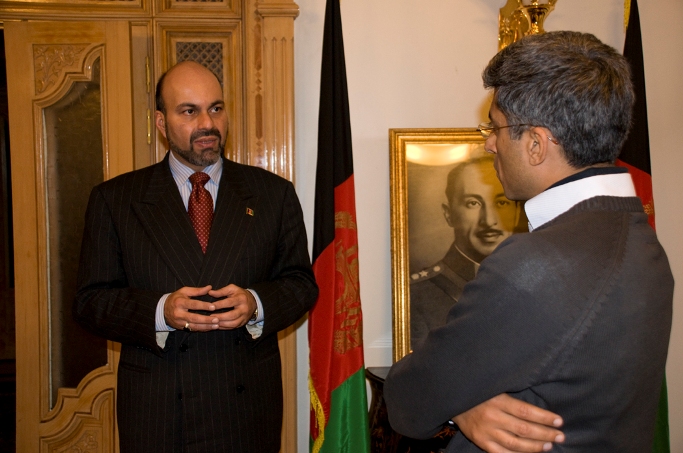
Prince Mostapha Zaher (left) with Indian film-maker Rohit Gandhi in Kabul
Prince Mostapha Zaher (left) with Rohit Gandhi in Kabul

I haven’t yet met Prince Mostapha Zaher in person, but feel almost as if I have. That’s because he features prominently in a short documentary film we released earlier this year on the environmental problems in Kabul, the capital of Afghanistan — where he is now the environmental chief, and where his grandfather was Afghanistan’s last king, Mohammed Zahir Shah (1914-2007).

In January 2009, I was watching a rough edit of the film (Breathing Life into Kabul) in Delhi, where Indian film-maker Rohit Gandhi was putting it together. In the interview, Mostapha Zaher came across as authoritative and resolute.

And does he have formidable challenges to deal with! Since the Taliban regime fell in 2001, people have been returning to Afghanistan after years in neighbouring countries. This massive influx is exerting pressure on the resources and infrastructure of the capital Kabul. Among the effects are high levels of air and water pollution, massive shortages of electricity and mounting problems waste.

Addressing these and other environmental issues is made that much more difficult because Afghanistan is one of the poorest countries in Asia, where large parts of the country are still engulfed in a prolonged conflict with extremists and the Taliban.

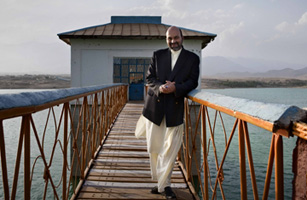
Prince Mostapha Zaher, photographed for TIME
For staying the course in this daunting task, Prince Mostapha Zaher has just been named as one of TIME Magazine’s Heroes of the Environment 2009. He is among ‘Leaders and Visionaries’ from around the world selected by the editors of the international news magazine. The list includes President Mohamed Nasheed of the Maldives, Hollywood star Cameron Diaz, and Indian film maker Mike Pandey.

TIME describes how Zaher gave up his comfortable post as ambassador to Italy to take up the job of director of Afghanistan’s newly formed Afghanistan’s National Environmental Protection Agency (NEPA) in 2004.

Says TIME: “Since then he has worked to rewrite the nation’s environmental laws, enshrining in the constitution an act that declares it the responsibility of every Afghan citizen to “protect the environment, conserve the environment and to hand it over to the next generation in the most pristine condition possible.” In a country ravaged by 25 years of war, it was an extraordinary feat.”

TVE Asia Pacific’s short film looks at how the United Nations Environment Programme (UNEP) is working with NEPA to develop environmental laws, policies and standards.

Watch Breathing hope into Kabul (10 mins):


Read full profile of Prince Mostapha Zaher in TIME Heroes of the Environment 2009


TVEAP News: New film documents environmental restoration in Afghan capital

My War – My Love (1975): A Polish movie on World War II that changed my life

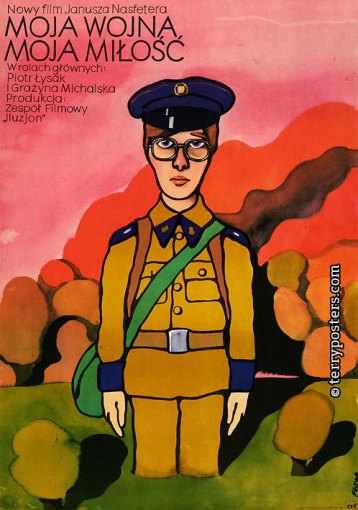
My War - My Love (1975) movie poster

Memory is a curious phenomenon. Sometimes memories of our personal past are evoked in the most unexpected manner, reviving nostalgia for days that are forever lost in the sands of time.

I have never visited Poland, but it’s been on my mind in recent days. 1 September 2009 marked the 70th anniversary of the beginning of the Second World War – which was sparked off by Nazi Germany’s invasion of Poland.

That’s also the day when the Anglo-American poet W H Auden wrote his deeply evocative poem, September 1, 1939. He wrote it sitting in a New York bar and distraught by the clouds of hatred gathering over Europe. I’ve been reading and re-reading it this year as the war Sri Lanka – which lasted almost five times longer – officially ended in May 2009.

As I wrote at the time: “Almost 70 years later, at the end of my own 30-year-long war, I have been reading and re-reading September 1, 1939. I’m trying to make sense of what is happening around me. The near hysterical mass euphoria on one side, and bewildered dejection on the other.”

I have only just remembered that Poland in September 1939 holds another significance for me. It has to do with the Polish film Moja Wojna – Moja Milosc (My War-My Love, 1975), which I saw in the summer of 1979 at a Colombo cinema as a 13-year-old school boy.

Not only did I see the film, but I also wrote an essay reviewing it and entered it into a competition organised by the Embassy of Poland. Growing up in a country that didn’t have broadcast television until that very year, I had only seen a handful of movies up to that time. I was no movie critic, but my views on the film and its resonance with my own times must have struck a chord with the judges. For I won the second prize in the Sinhala essay competition.

Being runner-up was no big deal by itself, but this was the first time that my writing was competitively judged and ranked by anyone outside my immediate circles. My prize included a fountain pen, white polyester cloth for school uniforms, and an LP record of Polish music (yes, LPs were still in use, but on their way out at the time!).

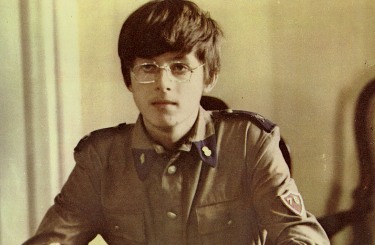
From My War - My Love
I would go on to win many essay competitions during my teens, and one day earn an honest living as a wordsmith. But that movie review – long since lost in the mists of time – was my first success. My career in literary crime was thus forged…thanks to a Polish movie!

From the little that I can still remember, 30 summers later, My War-My Love wasn’t a pretty film. It is set during the week of the Nazi invasion of Poland in 1939. Daring 17-year-old schoolboy Marek (Piotry Lyjak), inspired by the example of the Sobieski cadets during 1831 insurrection, vows to take on Germans single-handedly. He devotes most of his energy to protecting a young girl who lost her mother during the invasion.

As one reviewer wrote, “My War-My Love could not, by its very nature, end altogether happily, but the film can be regarded as life-affirming.”

War has no place for innocence - then or now...
That film was my first visual introduction to the horrors of war, a topic that was to dominate my own future for the next 30 years to come. In that Sri Lankan war, child soldiers several years younger than the film’s character Marek would play a prominent role.

At a far more personal level, I had never been in love when I saw My War-My Love. In the three decades to follow, I would fall in love three times — and lose out every time, though for very different reasons (none of which involved ‘my’ war). I must now carry the pain of these lost loves for the rest of my time. But that is another story…

Thanks to the wonders of Google, I’ve been able to track down some specifics about the film. It was directed by Janusz Nasfeter (1920 – 1998), a versatile Polish film maker whose career in writing and directing films spanned from the late 1940s to the early 1980s. He was 19 when the Germans came marching in.

It was one of many films that have used the Second World War as its backdrop. There have been several other Polish films that looked back on the Polish resistance, Poland Holocaust and Warsaw uprising of 1944 and other key events that left an indelible mark on the country. In fact, as this listing in Wikipedia shows, when Janusz Nasfeter made My War-My Love, the theme was pretty much covered by different Polish film makers in numerous ways.

I haven’t seen any of these other Polish films, and even My War-My Love is now only a distant memory. But as a moving image creation that moved my life in a certain direction, it would always have a special place in my heart.

Sri Lanka: Can Spice island turn into a bland nation?

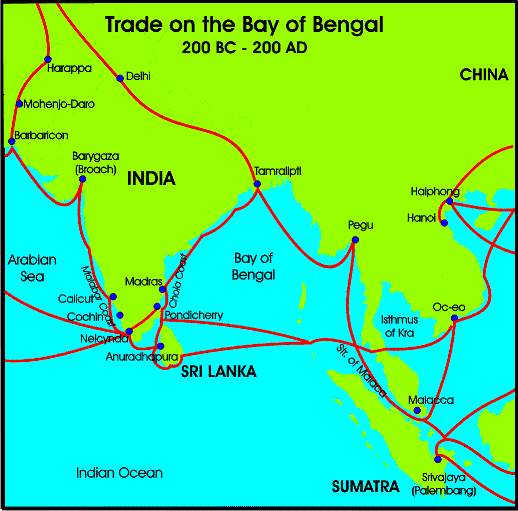
Ancient Lanka: Open and engaged with the world - image courtesy http://nabataea.net

I am neither a historian nor chef, but have a healthy interest in the subject areas of both. The two rarely come together, except when one goes in search of culinary history. I have just written an essay titled ‘Sri Lanka: Spice Island or Bland Nation?’ which blends the two in a social commentary highlighting a challenge we face as we rebuild our island nation after the war.

This is how the short version of the essay, published in Groundviews website, opens:

“Located strategically in the Indian Ocean, Sri Lanka was a hub in the maritime silk and spice routes for millennia. It drew traders from the east and west for both business and pleasure. Notable among the attractions were spices, whose many aromas and flavours formed an integral part of the tropical paradise experience.

“The traditional Lankan curry contained up to 13 spices and herbs. Most plants were not native – cardamom came from South India, cloves from Indonesia and chilli all the way from the Americas. Cinnamon was Sri Lanka’s unique contribution to this delightful mix. The origins didn’t really matter: the islanders knew just how to mix the native and the foreign to achieve legendary results.

Groundviews “As Sri Lanka embarks on national integration after three decades of highly divisive war, it is worth recalling these aspects of its heritage. For the war not only devastated our economy and blighted the prospects of a generation; it also nurtured high levels of insecurity, insularity and mutual suspicion. In recent years, democratic dissent has become ‘unpatriotic’. Everything foreign is suspect – especially if from the west.

“Suddenly, the spice island is in danger of turning into a ‘bland’ nation with xenophobia the only condiment in use.”

Himal SouthasianThe longer version appears in Himal Southasian magazine, July 2009 issue.

Both versions of the essay end with an ardent plea for a return to pluralistic, cacophonic society we have been for much of our long and well-chronicled history.

“Throughout history, the spice island nurtured plurality without losing its identity or integrity. It withstood numerous invasions, colonialism and tsunamis. Sri Lanka is more resilient than many of its citizens think — and more vibrant and diverse than it appears at first glance. That’s the legacy of good geography and open frontiers.

“Let genes, ideas and spices flow freely again! We have nothing to lose – except our temporary blandness.”


Read my blog post on 29 May 2009: Living with diversity – Salad or soup, asks Mallika Sarabhai

Sri Lanka: Memories of War, Dreams of Peace

Sri Lanka: Island of suspended dreams has a second chance...

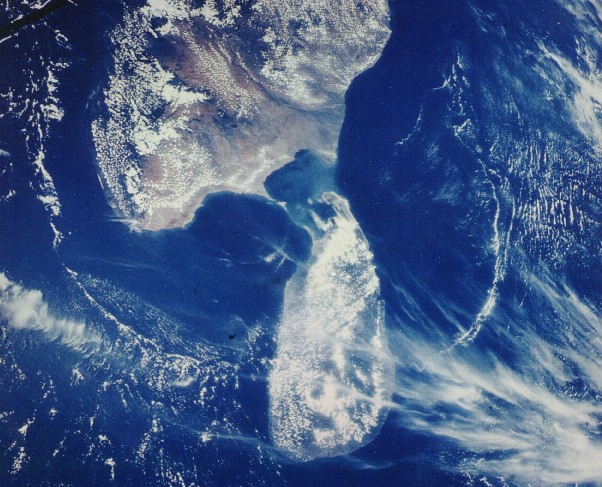
This is one of my favourite images. Showing southern part of India and my native Sri Lanka, it was captured by one of the early US space missions, nearly four decades ago.

Much has happened on the tear-drop shaped island since this image was taken: among other things, we’ve been through a civil war that lasted a generation, and robbed the dreams of at least two generations. That war officially ended on 18 May 2009.

The Day After, on 19 May 2009, I wrote a 1,500-word essay titled Memories of War, Dreams of Peace. The editor of Groundviews, Sri Lanka’s leading citizen journalism website, published it in full, and within minutes of my emailing the text to him.

I’m humbled and gratified that in the past few days, it has been widely read, commented on, quoted online and reproduced. Some have agreed with me; others have dismissed me as a naive dreamer. A writer cannot ask for more.

20 May 2009: MediaChannel.org (New York) reproduces the essay in full


24 May 2009: The Sunday Leader (Colombo) reprints the essay in full

I look back briefly on the brutal and tragic war – not in anger, but in great sadness. I then look forward in a wistful, dreamy mode. My premise was: “Now that the war is officially over, will this mark the beginning of real peace? I want to believe so. I want to audaciously dream of peace. The alternative is too dreadful to consider.”

This is not exactly what I’ve been trained to do. As a science writer and film-maker, I gather and analyse information, which I try to present in logical, coherent and accessible ways. In recent years, I’ve also been writing op ed essays in areas where I have some competence and experience. In writing this essay, I consciously departed from all that. I’m neither political scientist nor activist to engage in ideological or technocratic discussions, which others have already started in earnest. I wrote this at an emotional level, looking back and looking forward.

But my training did come in handy in framing the timely and necessary questions. My chosen ‘author intro’ for this essay thus reads: “Writer Nalaka Gunawardene has been a dreamer for all his 43 years. He asks more questions than he can answer.”

We've doused the flames of war, but much more needs to be done...
If my views come across as naive or idealistic, I shall plead guilty as charged. My emotions this week are best described as cautiously optimistic, but as some readers on Groundviews pointed out in their comments, our high hopes have been betrayed before. But can we afford not to dream privately and publicly at this juncture? I don’t think so. We have suspended our dreams for too long, and it’s time to start dreaming again.

There are as many kinds of dreamers as there are dreams. One of my favourite quotes comes from the British soldier and writer T E Lawrence (of Lawrence of Arabia fame): “All men dream, but not equally…the dreamers of the day are dangerous men, for they may act their dream with open eyes, to make it possible.”

Post-war Sri Lanka: Can we dial up a better future?

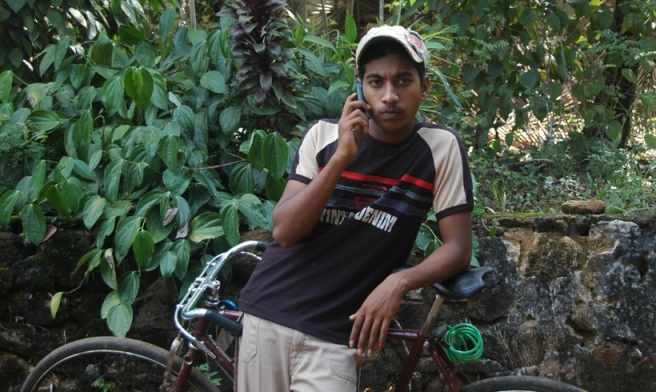
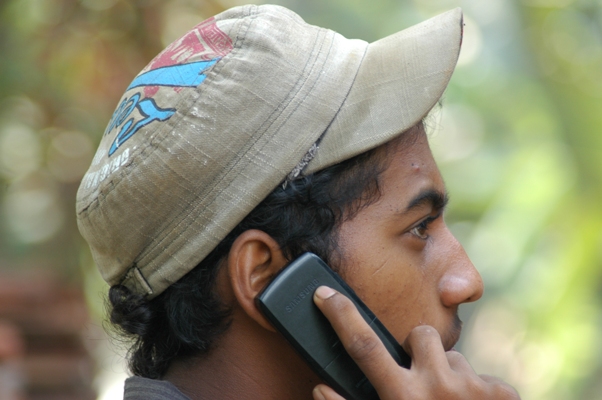
Chamara Pahalawattage: At 18, he is already using his 6th mobile (Photo by Niroshan Fernando, TVEAP)

When many able-bodied young men and women of his age were joining the armed forces in large numbers, Sri Lankan school-leaver Chamara Pahalawattage chose differently. He decided to try his luck with odd jobs at construction sites.

That, by itself, was nothing unusual. Tens of thousands of young men and women like Chamara join the labour market every year. Schools don’t equip them with attitudes or skills for self employment, so most would idle years away looking for regular jobs in Sri Lanka’s public and private sectors. Frustration would prompt some to take to political agitation, or worse.

Chamara is at such crossroads in his own life, but he is unlikely to go astray. The enterprising young man has boosted his chances of part-time work by getting himself a mobile phone.

“After buying a phone, I get calls asking me to come for work. The phone makes it so easy,” he says. “Otherwise people will have to come looking for me…or I have to go to them.”

If a skilled mason or carpenter takes him on as an assistant, Chamara gets a daily wage of LKR 700 (US$ 6 approx) plus a mid-day meal. That income augments the modest LKR 4,000 a month (US$35) his mother makes cooking meals at a nearby factory.

In February 2009, we filmed a day in the life of Chamara, a resident of Gonapola, in Sri Lanka’s western province. This was part of a profiling of telephone users at the bottom of the (income) pyramid – or BOP – in emerging Asian economies, undertaken by TVE Asia Pacific on behalf of the regional ICT research organisation LIRNEasia.

Watch our short video profile of Chamara Pahalawattage:

Going by his household income, Chamara is BOP at the moment – but his aspirations extend above and beyond. An only child raised by his widowed mother, Chamara developed an interest in mobiles while still in his mid teens. He bought his first mobile two years ago, when in Grade 11 at school.

“Almost everyone had phones, so I also wanted one,” he recalls. “From then on, I got used to having a phone!”

And has he been keeping up with technology! He buys second-hand phones for better features: he currently owns his sixth phone in just over two years. He had paid LKR 7,500 (US$ 65) for his latest phone at the beginning of 2009.

Besides voice and SMS (texting), his phone supports MP3, video recording, song downloading, voice recording and some other functions. After a hard day’s work, he unwinds listening to the radio, or swapping songs with friends — all using their mobiles.

Chamra spends an average of US$3 to 4.50 per month on phone use, and – like all other BOP telephone users we interviewed in India, Philippines and Thailand – he is thrifty with value added services that cost extra. This is something that has been confirmed by LIRNEasia’s Teleuse@BOP 2008 survey.

“Some of my friends access the internet through their phones and download songs,” he says. “I then get these songs from them. My phone has bluetooth. I use it to transfer songs from my friends’ phones.”

Chamara has every intention of moving up the labour market – someday, he wants to hold a more regular job, with an assured monthly income. Right now, in spite of being connected, he can’t predict how many days a month he’d find work.

Hello, can you hear our dreams?
Hello, can you hear our dreams? Photo by Niroshan Fernando, TVEAP
“I don’t check newspapers for jobs. Instead I ask the people I know…mostly my friends,” he says. This probably indicates another shift from a wide-spread habit among literate Sri Lankans scanning newspapers for recruitment notices.

LBO 9 March 2009: Sri Lankan low income customers can use mobiles more for business: study

The official end of the 30-year-long war should be good news for Chamara and millions of other tech-savvy, eager youth like him. Like me, they can once again start dreaming of better tomorrows.

Telecommunications would be a good place to start. For several years, it has been the fastest growing sector in the Sri Lankan economy — one that has not only connected people across distances and cultures, but also been a ‘social leveller’.

The telephone subscriber base grew by 35.5% in 2008 (and 47% in 2007). The country’s tele-density (number of telephones per 100 persons) jumped to 71.9 in 2008, from 53.4 in 2007 -– thanks largely to the phenomenal spread of mobile phones.

As I noted last year: “It is not by accident that telecom has remained the fastest growing sector in the economy for a decade. This was triggered and sustained by the far-reaching policy and regulatory reforms which ended the then fully state-owned telecom operator’s monopoly, and allowed the entry of new players, technologies and business models.”

Of course, improved telecommunications are necessary, but not sufficient by itself, for us to evolve into an inclusive information society. Building on technology and systems, we must become discerning creators and users of information. Knowledge – not paranoia or rhetoric – needs to form the basis of policy and actions that propel us to the future.

Photos courtesy Niroshan Fernando, TVE Asia Pacific

I remember Auden: We must love one another or die…

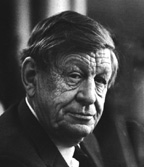
W H Auden (1907 - 1973)
It begins in a bar, and ends with a prayer. It was written in another century by a poet on the opposite side of the planet on the day the deadliest war in history broke out.

Almost 70 years later, at the end of my own 30-year-long war, I have been reading and re-reading September 1, 1939. I’m trying to make sense of what is happening around me. The near hysterical mass euphoria on one side, and bewildered dejection on the other.

I was just six when the poet W H Auden died, and only 13 when this bloody, protracted war started. As I wrote in an essay published on the day after the war ended, I have lived all my adult years with this war providing a constantly grim, sometimes highly disruptive backdrop.

I survived the war in its various phases, including uneasy lulls when guns were temporarily silent. I watched most of my own friends join the exodus of genes and talent from a land where they saw no hope or future. I chose to stay on, but questioned the wisdom of it each time a major atrocity took place. I went through six jobs and one marriage, and raised a child who would soon be the same age as I was when the war started.

Are we at the end of the long, dark tunnel? Is the promised land of peace and prosperity now at hand? Have we seen the last of multi-barrel guns, grenade launchers, helicopter gunships, claymore mines and the deadly suicide bombers? Or will national security and anti-terrorism continue to dictate what we can or cannot do as citizens in a free, democratic and finally peaceful country?

I honestly don’t know. Probably it’s too early to tell. But I’m uneasy with celebrations when so much healing and rebuilding need to be done. I’m worried about continuing the simplistic division of people into patriots and traitors. As I wrote earlier this week, this perception of Us and Them is our first landmine on the long road to peace. I don’t know why we as a people continue to insist on everything being in black and white. What happened to the myriad shades of grey?

For some months now, I’ve been turning to classical and modern poems for solace and comfort. When prose fails, verse must take over. Auden himself disliked this poem, but few words in English move me as his line: “We must love one another or die.”

So here it is, the full and original words of September 1, 1939 – for whatever resonance it may offer us across the gulf of seven decades straddling two centuries:

September 1, 1939

I sit in one of the dives
On Fifty-second Street
Uncertain and afraid
As the clever hopes expire
Of a low dishonest decade:
Waves of anger and fear
Circulate over the bright
And darkened lands of the earth,
Obsessing our private lives;
The unmentionable odour of death
Offends the September night.

Accurate scholarship can
Unearth the whole offence
From Luther until now
That has driven a culture mad,
Find what occurred at Linz,
What huge imago made
A psychopathic god:
I and the public know
What all schoolchildren learn,
Those to whom evil is done
Do evil in return.

Exiled Thucydides knew
All that a speech can say
About Democracy,
And what dictators do,
The elderly rubbish they talk
To an apathetic grave;
Analysed all in his book,
The enlightenment driven away,
The habit-forming pain,
Mismanagement and grief:
We must suffer them all again.

Into this neutral air
Where blind skyscrapers use
Their full height to proclaim
The strength of Collective Man,
Each language pours its vain
Competitive excuse:
But who can live for long
In an euphoric dream;
Out of the mirror they stare,
Imperialism’s face
And the international wrong.

Faces along the bar
Cling to their average day:
The lights must never go out,
The music must always play,
All the conventions conspire
To make this fort assume
The furniture of home;
Lest we should see where we are,
Lost in a haunted wood,
Children afraid of the night
Who have never been happy or good.

The windiest militant trash
Important Persons shout
Is not so crude as our wish:
What mad Nijinsky wrote
About Diaghilev
Is true of the normal heart;
For the error bred in the bone
Of each woman and each man
Craves what it cannot have,
Not universal love
But to be loved alone.

From the conservative dark
Into the ethical life
The dense commuters come,
Repeating their morning vow;
“I will be true to the wife,
I’ll concentrate more on my work,”
And helpless governors wake
To resume their compulsory game:
Who can release them now,
Who can reach the deaf,
Who can speak for the dumb?

All I have is a voice
To undo the folded lie,
The romantic lie in the brain
Of the sensual man-in-the-street
And the lie of Authority
Whose buildings grope the sky:
There is no such thing as the State
And no one exists alone;
Hunger allows no choice
To the citizen or the police;
We must love one another or die.

Defenceless under the night
Our world in stupor lies;
Yet, dotted everywhere,
Ironic points of light
Flash out wherever the Just
Exchange their messages:
May I, composed like them
Of Eros and of dust,
Beleaguered by the same
Negation and despair,
Show an affirming flame.

– W. H. Auden

Us and Them: Sri Lanka’s first landmine on the road to peace…

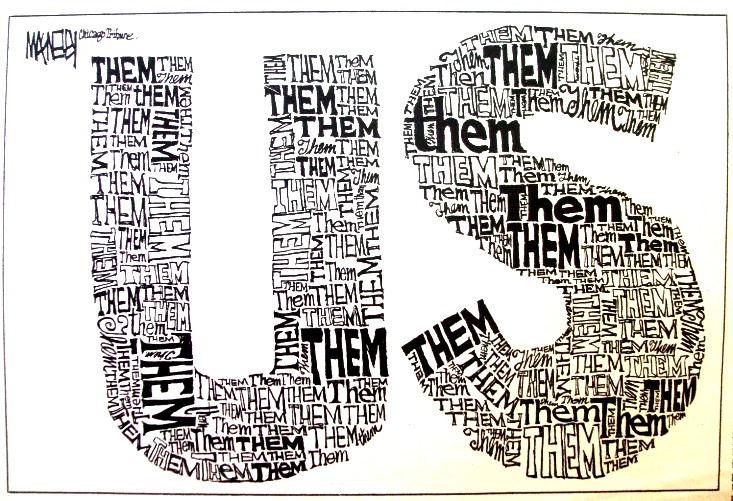
Cartoon by Jeff MacNelly, Chicago Tribune

In our troubled times, cartoonists often provide more than mere caricature and entertainment. War and peace are no laughing matters, and neither is the profound advice some cartoons offer us. As a product of our image-saturated, popular culture driven world, I derive part of my insights from cartoonist-philosophers whose economy of words is unbeatable.

I haven’t discovered exactly what provoked the American cartoonist Jeff MacNelly (1947 – 2000) to draw this brilliantly perceptive cartoon in May 1992. But the three-time Pulitzer prize winning editorial cartoonist of the Chicago Tribune (and creator of popular comic strip Shoe) has captured a sentiment that has characterised so many tensions and suspicions in his land and mine: us and them.

It’s at the root of so much conflict and grief, be it between Islam and the West, or Israel and Palestine, or Sinhalese and Tamils in Sri Lanka. Its entirely a matter of perception, largely a creation of our insecure and insular minds. Yet we argue, wage war and kill each other for the sake of this strong tribal perception.

In an op ed essay published on Sri Lankan citizen journalism website Groundviews today, titled Memories of War, Dreams of Peace, I asked:

“Can we as a nation finally stop glorifying the war and its weapons, and return to our cultural heritage of ahimsa? How do we turn the current opportunity for peace into something tangible and lasting, so that we don’t allow political violence and war ever again? Do we have what it takes to go beyond chest thumping and finger pointing, and begin to care and share? Would we eventually be able to liberate our minds from our deep-rooted tribalism that sees everything through the prism of us and them?”

Indeed, one of the first – and hardest – challenges as we try to unify Sri Lankans and rebuild our war-ravaged country is to get over this division.

Read the full essay: Memories of War, Dreams of Peace