Michael Jackson (1958 – 2009): Mixed celebrity, entertainment and good causes

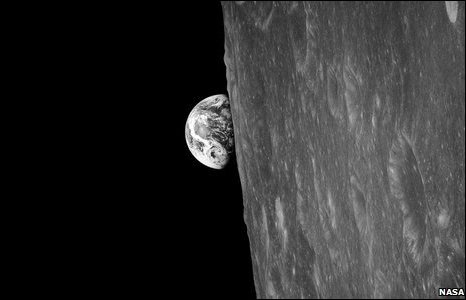
Did you ever stop to notice...The crying Earth the weeping shores?

Read later blog post: 8 July 2009 – Michael Jackson: A Tale of Two Moonwalks

Michael Jackson, who has just died aged 50, has been called the Elvis Presley of our times. He certainly was a global cultural icon with an enormous following in the West and East, North and South. And he used this celebrity status for more than mere entertainment (which he did exceedingly well): he had a long-standing history of releasing socially conscious songs that spread public interest messages with great ease and power.

Mixing social messages with entertainment is a difficult and delicate art that only a few artistes manage to get right. Jackson was one of them — his mass appeal or sales didn’t suffer because he occasionally endorsed a worthy cause. He wasn’t overtly political like Pete Seeger, who turned 90 last month, but Jackson did it in his own unique way in songs like “We Are the World“, “Man in the Mirror” and “Heal the World“.

In fact, Michael Jackson’s biggest selling UK single ever was a song about the environment: Earth Song. Released in November 1995, it sold over a million copies and was at the top of the charts for six weeks.

Earth Song was the first of his songs that overtly dealt with the environment and animal welfare. Written and composed by Jackson himself, Earth Song opened with these words:
MichaelJackson-EarthSong
What about sunrise
What about rain
What about all the things
That you said we were to gain.. .
What about killing fields
Is there a time
What about all the things
That you said was yours and mine…
Did you ever stop to notice
All the blood we’ve shed before
Did you ever stop to notice
The crying Earth the weeping shores?

Jackson wanted to create a song that was lyrically deep yet melodically simple, so the whole world, particularly non-English-speaking fans, could sing along. He conceptualized a song that had an emotional message.

As he later recalled: “I remember writing Earth Song when I was in Austria, in a hotel. And I was feeling so much pain and so much suffering of the plight of the Planet Earth. And for me, this is Earth’s Song, because I think nature is trying so hard to compensate for man’s mismanagement of the Earth. And with the ecological unbalance going on, and a lot of the problems in the environment, I think earth feels the pain, and she has wounds, and it’s about some of the joys of the planet as well. But this is my chance to pretty much let people hear the voice of the planet. And this is ‘Earth Song’. And that’s what inspired it. And it just suddenly dropped into my lap when I was on tour in Austria.”

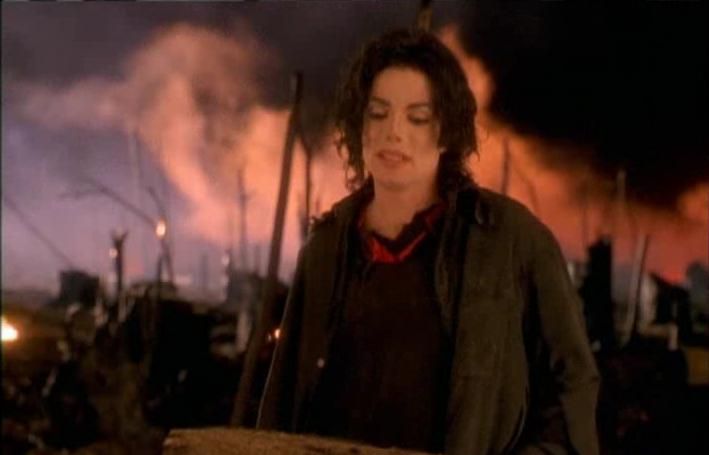
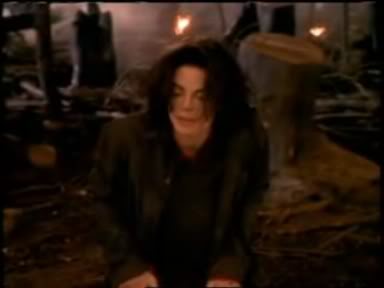
The video of the Earth Song was among the most expensive ever made – it was filmed in four geographic regions and involved scenes from the Amazon forest, Croatia, Tanzania and New York city, USA. It starts with a long tracking shot through a lush rain forest that then cuts to a scene showing Jackson walking through a scorched, desolate landscape. The environmental imagery then rolls on: dead elephants, evil loggers, belching smoke stacks, snared dolphins, seal clubbing, and hurricane winds. The video closes with a request for donations to Jackson’s Heal the World Foundation.

Watch Earth Song by Michael Jackson:

Although not as widely selling, ‘Will you be there‘ is my personal favourite among Jackson’s socially conscious songs. First released as a single in 1993, it was taken from the 1991 album Dangerous and also appeared on the soundtrack to Free Willy – the charming story of a boy befriending a killer whale.

The song won the MTV Movie Award for “Best Song in a Movie” in 1994. It was also included in the album All Time Greatest Movie Songs, released by Sony in 1999. Jackson also performed songs for the film’s two sequels.

Watch Michael Jackson’s ‘Will You Be There’ in Free Willy:

However, Earth Song had much wider and more lasting appeal, almost becoming an anthem for the global environmental movement in the past decade. But its real impact was not among the converted – with this song, Jackson took the green message to the heartland of the Facebook generation.

Few global figures commanded the audience he had – as the New York Times noted: “At the height of his career, he was indisputably the biggest star in the world; he has sold more than 750 million albums.”

“The song is a very rare thing: a hit record with a powerful message about our impact on the environment,” says Leo Hickman writing in The Guardian earlier today.

He adds: “What struck me today watching the video was how it is very much the product of an age before climate change had become a mainstream concern. The lyrics and imagery speak of over-fishing, deforestation, and smog. All of them are still huge and legitimate concerns, of course, but they have all now become somewhat dwarfed by climate change, the most compelling and over-arching environmental issue of our age.

“But that shouldn’t distract us from the song’s impact on its fans. Given its universal success and the repeated showing of its powerful video, it is highly likely that it was the spark that made many people – particularly young Michael Jackson fans, which, even in the mid-1990s, would have numbered many millions of people around the world – stop and think about environment for the first time.”

Talk about moving images moving people!
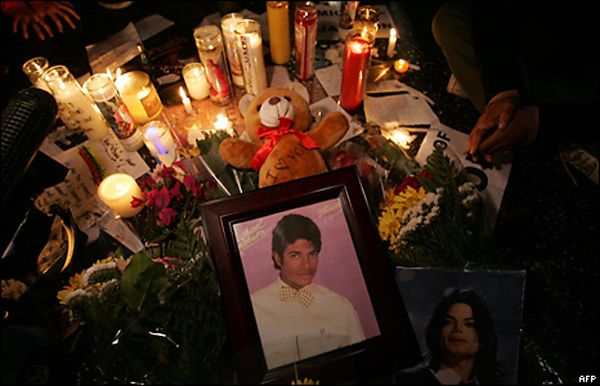
Peace...at last
Peace...at last

Somali pirates: Part of the story mainstream media hasn’t told us!

Do they have a story to tell? Who is listening?
Piracy has a chequered history, and even the Wikipedia offers a carefully qualified definition. One person’s pirate can be another person’s defender. There’s an argument that the European colonial powers rode on the backs of their pirates or buccaneers. And I’m writing this in English language possibly because the English were more successful in their overseas piracy than other nations!

Piracy is all over the news again, due to increased activity off Somalia. But in the past few weeks, we’ve started hearing another side of the Somali piracy story — one that the mainstream media didn’t tell us.

Johann Hari, a columnist for the London Independent, posted an op ed in Huffington Post on 13 April 2009 that took a different look at Somali pirates. His main argument: “In 1991, the government of Somalia – in the Horn of Africa – collapsed. Its nine million people have been teetering on starvation ever since – and many of the ugliest forces in the Western world have seen this as a great opportunity to steal the country’s food supply and dump our nuclear waste in their seas.”

In recent days, two interesting short videos have been posted by two activist groups to support the same point of view. I haven’t investigated this story myself, but am intrigued by their take on a widely reported topic…especially because it’s an angle that we don’t read or see in the mainstream media!

The Media Is Lying to You About Pirates

The IFC Media Project’s “News Junkie” deconstructs the mainstream media’s half-baked coverage of Somali Pirates.


Are They Really “Pirates”?

This film from Awareness Unfolds highlights the fact that the media is lying about the so called “pirates” of Somolia. According to the blurb: “They (media) choose not to tell you about the toxic waste dumping going on by American, European, and Asian countries that have lead to the death of many Somolian citizens.”

As Johann Hari says at the end of his article: “The story of the 2009 war on piracy was best summarised by another pirate, who lived and died in the fourth century BC. He was captured and brought to Alexander the Great, who demanded to know “what he meant by keeping possession of the sea.” The pirate smiled, and responded: “What you mean by seizing the whole earth; but because I do it with a petty ship, I am called a robber, while you, who do it with a great fleet, are called emperor.” Once again, our great imperial fleets sail in today – but who is the robber?”

Johann Hari has reported from Iraq, Israel/Palestine, the Congo, the Central African Republic, Venezuela, Peru and the US, and his journalism has appeared in publications all over the world. In 2007 Amnesty International named him Newspaper Journalist of the Year. In 2008 he became the youngest person ever to win Britain’s leading award for political writing, the Orwell Prize.

Crisis of Credit: The story of bright, greedy bankers with no common sense…

A complex crisis made simple...

At the height of the Cold War, some of the best brains in both the United States and the now extinct USSR worked for their respective nation’s nuclear weapons development and maintenance work. They were basically driven by Mutually Assured Destruction, a doctrine of military strategy in which a full-scale use of nuclear weapons by two opposing sides would effectively result in the destruction of both the attacker and the defender. It was appropriately abbreviated as M.A.D.

The men (it was mostly if not entirely male) with these deadly toys have been described as very smart people with no common sense. They’ve been the subject of much study, commentary and satire — Stanley Kubrick’s 1964 black comedy film Dr Strangelove among them.

Where would very smart men with no common sense (and few, if any, scruples) find work in the post Cold War period? Looks like some of them went into banking!

How else could we explain the deadly games played by bankers that triggered the credit crisis which has snowballed into a global economic recession affecting us all?

Sub-prime mortgages, collateralised debt obligations, frozen credit markets and credit default swaps. These terms are now being bandied around but a year ago, few had heard of them and even now, how many of us non-bankers understand what they mean?

Aren’t they the weapons of mass destruction of our times? While the nukes were well guarded and their use was tightly controlled (with only a few near misses over decades), where was regulatory oversight when bankers accumulated toxic credit over time?

In September 2008, I wrote a blog called Financial Meltdown: Putting pieces together of a gigantic whodunnit with links to some current affairs documentaries that tried to explain what was happening. In December 2008, I named the American blogger, investigative journalist and film-maker Danny Schechter as Moving Images Person of the Year for his relentless, now prophetic work cautioning about the coming credit crisis from years ago.

Now, design artist Jonathan Jarvis has come up with a brilliant animation that tells the ‘Short and Simple Story of the Credit Crisis’.

Watch it on YouTube: Crisis of Credit, part 1 of 2

Crisis of Credit, part 2 of 2

Here’s his description:
The goal of giving form to a complex situation like the credit crisis is to quickly supply the essence of the situation to those unfamiliar and uninitiated. This project was completed as part of my thesis work in the Media Design Program, a graduate studio at the Art Center College of Design in Pasadena, California.

For more on his thesis work exploring the use of new media to make sense of a increasingly complex world, visit jonathanjarvis.com

See also: Prudent Banking 101: A lesson from Mary Poppins

Return of (true) Mass Media: Let there be millions of sparkling conversations!

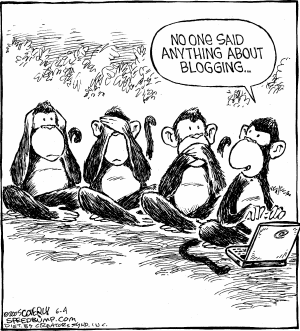
Being the fourth monkey?
“Historically, organised and commercialised mass media have existed only in the past five centuries, since the first newspapers — as we know them — emerged in Europe. Before the printing press was invented, all news was local and there were few gatekeepers controlling its flow. Having evolved highly centralised systems of media for half a millennium, we are now returning to a second era of mass media — in the true sense of that term. Blogs, wikis and citizen journalism are all signs of things to come.”

This is how Sir Arthur C Clarke and I summed up the transformative change that is currently taking place in the world of mass media, in an essay we co-wrote for the Indian news magazine Outlook in October 2005.

We’d given it the title ‘From Citizen Kane to Citizen Journalist’ – a formulation that I’m still proud of – but the editors changed it to ‘Arise, Citizen Journalist!’. Of course, our original title made evocative sense only for those who knew the popular culture reference to the movie Citizen Kane.

I recently had a chance to revisit these issues and explore them further in a half-hour, in-depth TV interview with media researcher/activist and fellow citizen journalist Sanjana Hattotuwa. This was part of The Interview series produced by Young Asia Television, and broadcast on two Sri Lankan TV channels, TNL and ETV during the second week of February 2009.

Sanjana covered a wide range in his questions. Starting with a brief reflection on my 21-year association with Sir Arthur Clarke, we moved on to the bewildering world of new media and its co-existence with the mainstream media. We discussed the fragmentation of audience and the concern that some current and would-be bloggers harbour: is anyone listening or reading?

And more importantly, how do we get conversations started and going. I look back on my own experience as an active blogger for almost two years, and assert that if we have something new and worthwhile to say, and know how to express it well, we can slowly build up an audience. There’s no blueprint or road map – everything is in ‘beta’ mode, and the name of the game is try-it-and-see!

Here’s that full interview on YouTube, broken into four parts:

Sanjana Hattotuwa talks to Nalaka Gunawardene – Part 1 of 4:

Sanjana Hattotuwa talks to Nalaka Gunawardene – Part 2 of 4:

Sanjana Hattotuwa talks to Nalaka Gunawardene – Part 3 of 4:

Sanjana Hattotuwa talks to Nalaka Gunawardene – Part 4 of 4:

“It’s an immensely exciting time for people working with video!” – Sam Gregory

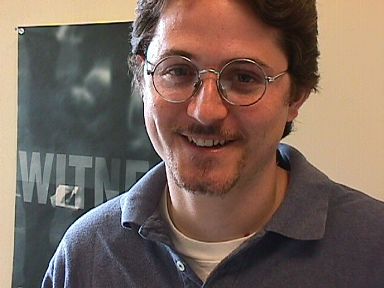
Sam Gregory
Sam Gregory
“It’s an immensely exciting time for people working with video. More and more people creating and using video, more places to share it, more ways to place it in front of people who can make a difference.

“It raises challenges too: saturation of images and compassion-fatigue, finding your place to be heard, and the safety and security and consent issues that arise when many more people are filming each other.

“But overall I think we’re seeing a really powerful moment for individual expression but also collective accountability being supported via image-making.”

So says Sam Gregory programme director of Witness, a human rights organisation which uses video and online technologies to open the eyes of the world to human rights violations. The New York-anchored organisation works around the world to ’empower people to transform personal stories of abuse into powerful tools for justice, promoting public engagement and policy change’.

Sam is a video producer, trainer and human rights advocate who knows and taps into the power of moving images to move people. He was speaking with Indian journalist and cyber activist Frederick Noronha in an interview just published at the Info Activism website.

www.witness.org
http://www.witness.org
Sam recalls how he was once making films and also involved in activism, and ‘frustrated at how the two didn’t fit together’.

He adds: “In the traditional TV documentary world, the advocacy purpose of film was under-utilized. The fact that you got 500,000 viewers for a TV broadcast told you nothing about whether that turned into action. So I started looking for ways to really make the video fit as a tool for real advocacy and change-making, and came upon WITNESS.”

Read full interview on InfoActivism website

We at TVE Asia Pacific worked closely with Sam in 2002-2004, when we implemented a collaborative Asian regional project called Truth Talking where Witness was a partner. It was through Witness that I met courageous info activists like Joey R B Lozano.

Al Jazeera shares broadcast footage through Creative Commons

Al Jazeera has done it again.

They were the first mainstream news broadcaster to offer most of its content on YouTube. And now, they have started sharing their news footage online through a Creative Commons license.

Uncommon move, once again!
This allows others to download, share, remix, subtitle and eventually rebroadcast (or webcast) the material originally gathered by Al Jazeera’s own reporters or freelancers. It has the potential to revolutionise how the media industry gathers and uses TV news and current affairs footage – a lucrative market where there are only a very few suppliers operating at global scale.

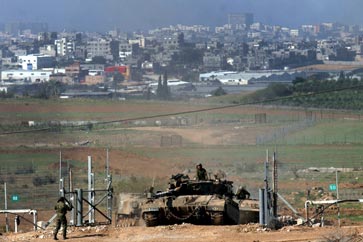
Al Jazeera’s uncommon sharing has started with the network’s coverage of the conflict in the Gaza strip, Palestine. Each day they plan to add the latest footage coming from Gaza. Additional Gaza footage from the start of the war is to be made available shortly.

This is the first time that video footage produced by a news broadcaster is released under the ‘Creative Commons 3.0 Attribution’ license which allows for commercial and non-commercial use.

“We have made available our exclusive Arabic and English video footage from the Gaza Strip produced by our correspondents and crews” says the introductory text in Al Jazeera Creative Commons Repository. “The ongoing war and crisis in Gaza, together with the scarcity of news footage available, make this repository a key resource for anyone.”

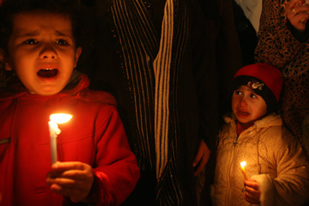
Gaza in darkness
Gaza in darkness
The website adds: “This means that news outlets, filmmakers and bloggers will be able to easily share, remix, subtitle or reuse our footage.”

Under the Creative Commons framework, Al Jazeera seeks no payment (licensing fees) of any kind. Users are free to reuse the material with acknowledgement to Al Jazeera. This means such users must attribute the footage to Al Jazeera (“but not in any way that suggests that we endorse you or your use of our work”). They are also required to leave the Al Jazeera logos intact, give reference to the Al Jazeera Creative Commons Repository, and the ‘Creative Commons 3.0 Attribution’ license itself.

Says Joi Ito, CEO of Creative Commons: “Video news footage is an essential part of modern journalism. Providing material under a Creative Commons license to allow commercial and amateur users to share, edit, subtitle and cite video news is an enormous contribution to the global dialog around important events. Al Jazeera has set the example and the standard that we hope others will follow.”

Gaza under siege...
Gaza under siege...
Professor Lawrence Lessig, founder of Creative Commons, has hailed this initiative: “Al Jazeera is teaching an important lesson about how free speech gets built and supported. By providing a free resource for the world, the network is encouraging wider debate, and a richer understanding.”

Al Jazeera – which means ‘the island’ or ‘the peninsula’ in Arabic – started out in 1995 as the first independent Arabic news channel in the world dedicated to providing comprehensive television news and live debate for the Arab world. Al Jazeera English, the 24-hour English-language news and current affairs channel, was launched in 2006 and is headquartered in Doha, Qatar. The organisation is the world’s first global English language news channel to be headquartered in the Middle East.

On this blog, we have been critical cheerleaders of Al Jazeera. We hailed their commitment to present the majority world’s voice and perspective in international news, but expressed our dismay on how hard Al Jazeera English channel’s aping of BBC World TV. We have sometimes questioned or challenged the ethics of how they sourced or filmed their stories.

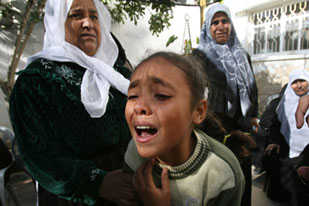
Screams, amplified by media?
But we have no hesitation in applauding their sharing of news footage. This move makes it easier for many television stations, websites and bloggers to access authentic moving images from the frontlines of news — we certainly hope Gaza marks only the beginning of AJ’s sharing.

It would also make commercial distributors of news and current affairs footage a bit nervous, for such material trades in hundreds or thousands of dollars per second. The logistical difficulties in gathering such footage, and sometimes the enormous risks involved to the news crews, partly explains the high cost. But the small number of suppliers and syndicators has made it possible for high prices to be maintained. If Al Jazeera sustains its sharing, that could mark the beginning of the end for another pillar of the mainstream media industry.

All images used in this blog post are courtesy Al Jazeera websites

Moji Riba and Mountain Eye: A digital time capsule

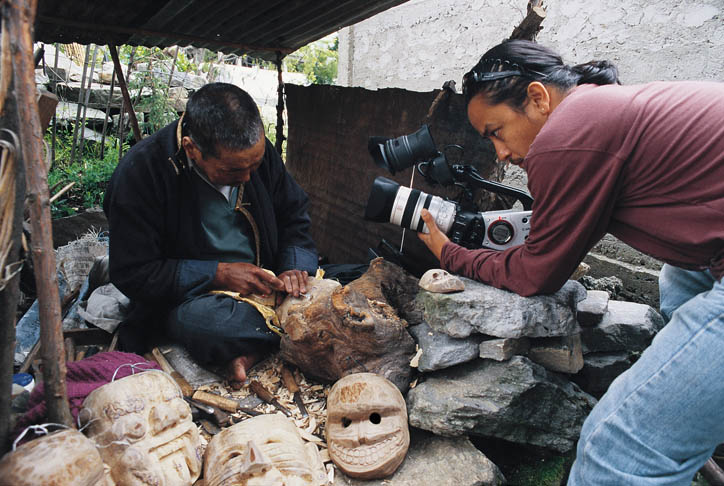
Moji Riba capturing living cultural heritage before it's too late...
A race against time: Moji Riba capturing living cultural heritage before it's too late...

When young Moji Riba started taking an interest in video cameras and filming, his father was a bit concerned.

“I don’t want my son to end up as a cameraman,” he said, reflecting on the fact that a videographer was considered to be no more than a skilled worker in some sections of Indian society.

He need not have worried. Moji went on to become both a well respected film maker and a teacher of mass communications. But more importantly, he has turned his skill into capturing and preserving the highly diverse cultures and traditions of his home state of Arunachal Pradesh in India’s north-east.

Working below the mainstream media’s radar and improvising with available resources, Moji has been engaged in this pursuit passionately and diligently for nearly a dozen years. These efforts finally came into global spotlight in November 2008 when he was selected for a prestigious Rolex Award for Enterprise.

Rolex recognised Moji for ‘helping to preserve and document the rich cultural heritage of India’s Arunachal Pradesh tribes’. He was among the 10 winners of the 2008 Rolex Awards, which for more than 30 years have supported pioneering work in science and medicine, technology and innovation, exploration and discovery, the environment and cultural heritage.

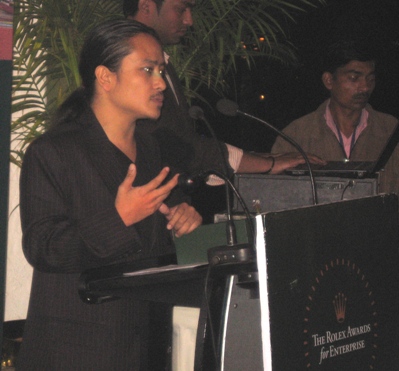
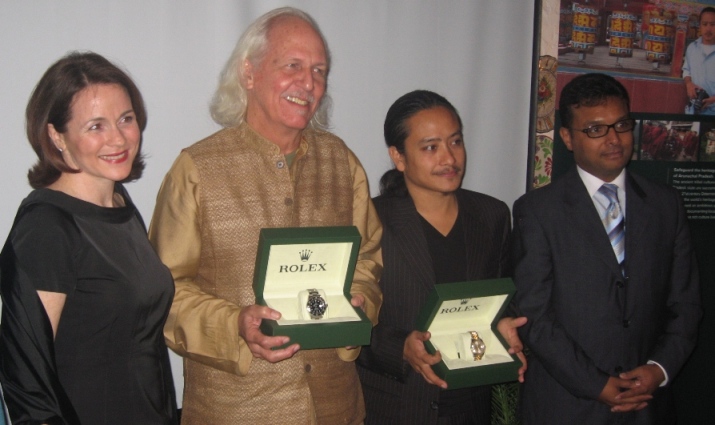
Moji Riba accepting Rolex Award 2008 in Delhi
The award was presented to him at a simple ceremony held in New Delhi on 22 January 2009. I was glad to be a ‘fly on the wall’ on that joyous occasion, when Moji and fellow winner Romulus Whitaker were felicitated.

Accepting his award certificate and Rolex chronometer, Moji said: “In the end, this award is not about material rewards. Our most important gain was the process of the application and evaluation which were so intense and demanding that we have had to go through a lot of introspection.”

He added: “That process made us pause and ask ourselves: why are we doing our work, are we doing it right and what results are we going to achieve. That was worth a great deal for us.”

In his short and witty acceptance speech, Moji thanked everyone who has believed and supported his team’s work. His wife Purnima and two young children were there, along with several friends some of who had especially flown in for the occasion. Moji acknowledged his father, who, alas, didn’t live to share this proud moment.

Through a rigorous and discerning selection process, Rolex Awards support path-breaking work in progress, giving laureates new momentum and recognition. In the 2008 award cycle, Moji was one of 10 enterprising individuals chosen from among nearly 1,500 applicants in 127 countries by an independent panel of scientists, educators, economists and other experts.

Barbara Geary of Rolex Awards secretariat, Romulus Whitaker, Moji Riba & Yogesh Shah, CEO of Rolex India
L to R: Barbara Geary of Rolex Awards secretariat, Romulus Whitaker, Moji Riba & Yogesh Shah, CEO of Rolex India

Enthused by the Rolex Award, Moji will return to pursue his most ambitious project yet to preserve the living cultural heritage of Arunachal Pradesh, home to 26 major tribal communities. Each one has its own distinctive dialect, lifestyle, faith, traditional practices and social mores. They live side by side with about 30 smaller communities. Moji sees this richness “like a wonderful shawl woven in a myriad of colours and patterns”.

In recent years, this heritage has come under pressure from economic development, improved means of communication, the exodus of the young and the gradual renunciation of animist beliefs for mainstream religions. Instead of challenging these larger processes beyond anybody’s control, Moji is trying to harness digital technology to capture at least the essence of it for posterity.

That’s the basic idea behind the Mountain Eye Project, an unconventional initiative of his Centre for Cultural Research and Documentation (CCRD) based in Naharlagun. Magic Eye aims to create a ‘cinematic time capsule’ documenting a year in the life of 15 different ethnic groups.

Moji will train young people from each community to do the filming. This gives him access to enough film-makers as well as access to people with an intimate understanding of village life. Beginning in early 2009, these novice film-makers will capture a broad range of the tribes’ oral histories, as well as the rituals, ceremonies and festivals that take place over a year in their villages.

Moji expects to collect about 300 hours of film per village, all of which will be recorded and archived in their native languages. He believes that the resulting 4,000+ hours of video will provide an invaluable record of life as it has been lived in his state for centuries. The project will also engage scholars belonging to the 15 tribes from the Rajiv Gandhi University at Itanagar to analyse and translate this vast amount of data and organize it in a publicly accessible database.

This innovative work epitomises the spirit of Rolex Awards, which nurture excellence in individuals who often work against many odds — determined women and men lighting a few candles on their own, instead of just cursing the darkness…

As I enjoyed the company of Moji, Romulus and their many admirers well into Delhi’s chilly evening, these words the Malaysian social and environmental activist Anwar Fazal kept turning in my mind: “In a world that is increasingly violent, wasteful and manipulative, every effort at developing islands of integrity, wells of hope and sparks of action must be welcomed, multiplied and linked…”

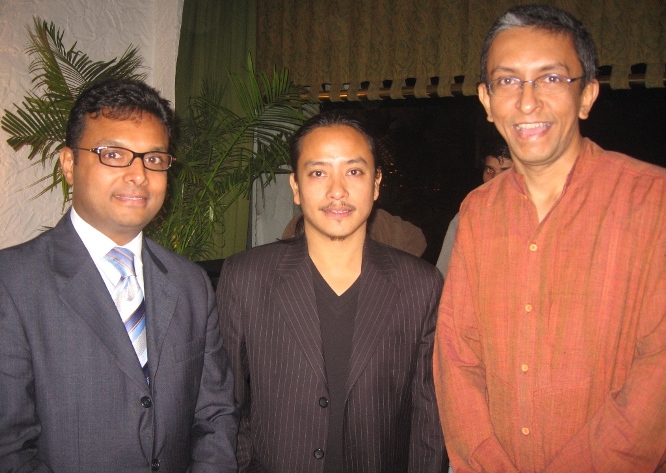
L to R - Yogesh Shah, Moji Riba, Nalaka Gunawardene
One more shot: L to R - Yogesh Shah, Moji Riba, Nalaka Gunawardene

Barack Obama: President of the New Media World – and watch out for those citizen journalists!

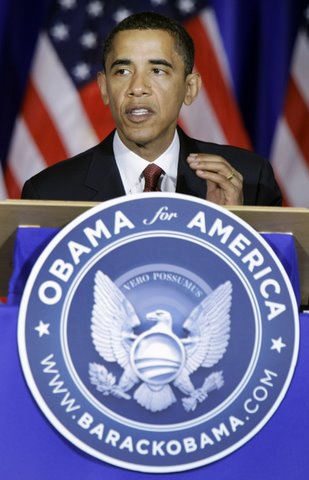
His own brand...
His own brand...
Inauguration Day is finally here! Today, 20 January 2009, Barack Obama will be sworn in as the 44th President of the United States of America.

Obama campaigned – and won – on the core promise of change. And even before he moved into the White House, he achieved many firsts. Among them was being the first American leader to understand the power of new media and to use it effectively to harness both campaign contributions and, eventually, votes.

On 6 November 2008, soon after the election results were confirmed, we noted how Obama had just been elected ‘President of the New Media world’. I explained: “Obama’s rise has epitomised change in many ways. Among other things, he is the first elected leader of a major democracy who shows understanding and mastery over the New Media World, which is radically different from the old media order.”

Of course, others had different takes on the same outcome. One of the funniest was by The Onion, which proclaimed: Black Man Given Nation’s Worst Job.’ It read, in part: “African-American man Barack Obama, 47, was given the least-desirable job in the entire country Tuesday when he was elected president of the United States of America. In his new high-stress, low-reward position, Obama will be charged with such tasks as completely overhauling the nation’s broken-down economy, repairing the crumbling infrastructure, and generally having to please more than 300 million Americans and cater to their every whim on a daily basis.”

The sheer magnitude of Obama’s challenges has become clearer in the weeks following the historic election. While the economy will certainly dominate his agenda, he will also have to live up to the many expectations of hope that his campaign sparked off in hundreds of millions of people — and not just in the United States.

How will the ‘President of the New Media world’ remain engaged with the millions of conversations taking place 24/7 on the web and through mobile devices? Is this realistically possible given his roles as the chief executive of beleaguered America, Inc., and commander-in-chief of the world’s only superpower?

Already, there is much interest whether security concerns and legal requirements will allow Obama to keep using his BlackBerry, to which he admits being addicted. “I’m still clinging to my BlackBerry,” Obama said only a few days ago in an interview with The New York Times. “They’re going to pry it out of my hands.”

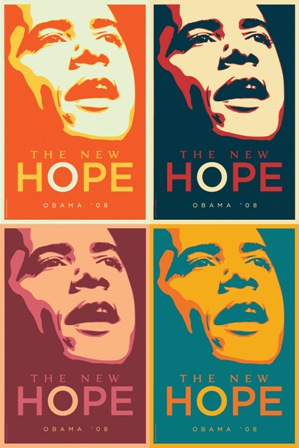
The new face of Hope
More to the point, how long will the mainstream media’s honeymoon with the new President last? And how will citizen journalists, many of who cheerled Obama in his long and arduous campaign, now relate to their man in Washington DC? Can the Obama Administration strike deals with citizen journalists as every administration has done with the mainstream media over the decades? Outside the strict security cocoon of the White House, will this presidency ever be able to have any moments ‘off the record’ with every digitally connected person being a potential citizen journalist?

Remember how his comments about “bitter” small-town Americans clinging to their guns and religion — uttered at a ticket-only and supposedly no-media San Francisco fund-raiser during the campaign — came to be publicised? And that, too, by a pro-Obama blogger writing on the openly pro-Democratic blogger site Huffington Post!

Then there’s the power of moving images moving around online as broadband rolls out across the planet, and speeds improve to support real time video-watching. The day Americans went to the polls to elect Obama, we recalled the hugely popular Obama Girl (‘I got a crush on Obama’) – an internet viral video, first posted on YouTube in June 2007 – and asked Can this little video change history? We had our answer within 24 hours.

While Obama Girl was a well-edited, slick campaign-boosting video released online, the thousands of citizen-filmed videos being posted online are not. And yet, in that no-frills mode, some bring out public interest concerns that have implications for public policy debates and/or law enforcement.

A current example is the sad case of Oscar Grant, a young, unarmed black man who was fatally shot by police officers while laying face-down on a BART subway platform in Oakland, California, on 31 December 2008. Several citizens filmed the incident on their mobile phones. Three separate videos, circulating online at a rapid pace, show various angles and stages of the incident. See one of them here. These have already put the spotlight on police conduct and may influence the judicial process.

President Obama arrives at the White House to lead the executive of a nation that is unlike any his predecessors faced. His inauguration will be the most digitised, but that’s only the beginning. For four or eight years, Obama’s every move, word and gesture will be captured, dissected and debated to exhaustion by admirers and detractors alike. And his administration will be under scrutiny by thousands of citizen journalists who don’t share much except the digital platforms and social networks on which they post their impressions.

Welcome to the New Media Presidency. The hard work – and real fun – begin now!

Watch this cyberspace…

MEAN Sea Level: An ironic film from the frontline of climate change

What does sea level rise mean to you and me?
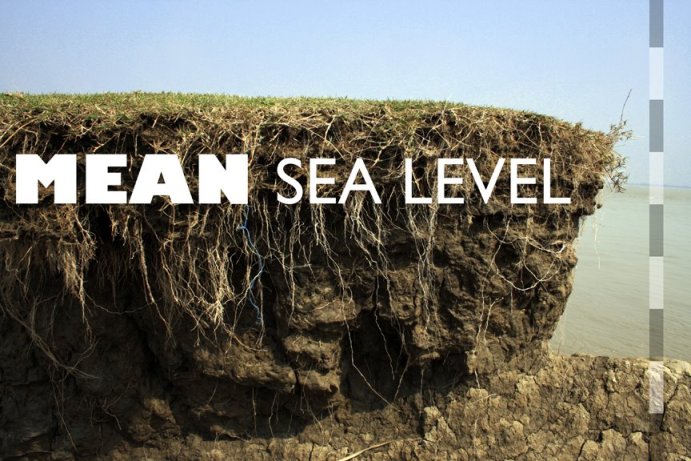
In October 2008, while attending an Asian regional workshop on moving images and changing climate in Tokyo, I had the chance to see Indian writer and film-maker Pradip Saha‘s latest film, MEAN Sea Level.

As I wrote at the time: “The few of us thus became the first outsiders to see the film which I found both deeply moving and very ironic. With minimal narration, he allows the local people to tell their own story. There’s only one expert who quickly explains just what is going on in this particularly weather-prone part of the world.”

The world’s rich are having a party, and millions living in poverty are the ones footing the bill. This is the premise of the film, which looks at the impact of climate change on the inhabitants of Ghoramara and Sagar islands in the the Sundarban delta region in the Bay of Bengal.

Almost 7,000 inhabitants have been forced to leave Ghoramara in the last 30 years, as the island has become half in size. The biggest island, Sagar which hosted refugees from other islands all these years is witnessing massive erosion now. 70,000 people in the 9 sea-facing islands are at the edge of losing land in next 15 years. For these people climate change is real.

As the sea level rises and takes with it homes and livelihoods in the delta, the villagers of Sagar are paying a hefty price for a problem that they did not create. Meanwhile, middle class India and the political elite are becoming aware of the problem of global warming, but prefer to look the other way.

I’m glad to note that the film is now being screened to various audiences and making ripples. By showing people – including those still not convinced about climate change – what sea level rise is already doing to poor people, the film is stretching the limits of debate and focusing attention on the need to act, not just talk.

It’s also creating ripples in environmental and/or human rights activist circles where all too often, passionate discussions don’t go very far beyond the rhetoric to bring in the real world voices and testimonies. Pradip’s film accomplishes this with authenticity and empathy yet, mercifully, without the shrill and overdose of analysis found in activist-made films. It powerfully and elegantly tells one of the biggest stories of our times.

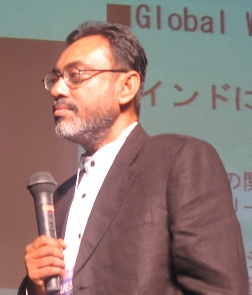
Pradip Saha
Pradip Saha
In November 2008, Pradip showed and talked about his film at a screening organised by SACREDMEDIACOW (SMC), an independent postgraduate collective on Indian media research and production (and much more) at the School of Oriental and African Studies (SOAS) at the University of London. Before it started, Pradip told his audience to ‘forget that this is a documentary about climate change’ and just watch.

As one member of his audience, Sophia Furber, later wrote: “The film’s approach to climate change is completely non-didactic. Mean Sea Level is no acronym-fest sermon or disaster story, but an intimate portrait of a way of life which is on the verge of going underwater.”

In his day job as editor of Down to Earth magazine, published from India with a global outlook, Pradip excels in wading through the (rapidly expanding) sea of jargon and acronyms surrounding many topics related to science, environment and development. In typical style, his recently started blog is named alphabet soup @ climate dinner.

Read Sophia Furber’s account of SOAS screening in London

The more Pradip shares his film, the more people who notice the irony that I experienced in Tokyo. A short review by the Campaign against Climate Change says: “There is a greater irony. These poor people got nothing out of the economy that created climate change, nor do they contribute to global warming. Mean Sea Level is a testimony of reckless political economy of our times. Climate change is real, and only a sign of our recklessness.”

Last heard, Pradip was planning to screen MEAN Sea Level on Sagar Island so that the story’s participants can see the film for themselves. The idea was to power the event entirely through renewable energy sources, such as solar power.

I hope he will soon place his film – or at least highlights/extracts – online on YouTube or another video sharing platform. This film is too important to be confined to film festivals and public screenings. Whether it would also be broadcast on television in India and elsewhere, we’ll just have to wait and see. I won’t hold my breath on that one…


Down to Earth: Is climate changing? Yes, say Sundarbans Islanders

International Herald Tribune, 10 April 2007: Living on the Edge: Indians watch their islands wash away

Look carefully...
Look carefully...

Earthrise at 40: The accidental first snap-shot of our home planet

Apollo 8's enduring legacy (image courtesy NASA)
Earthrise: Apollo 8's enduring legacy (image courtesy NASA)

I can never have enough of this photo — the first ever snapshot of Earth.

This photo of “Earthrise” over the lunar horizon was taken by the Apollo 8 crew on Christmas eve 1968, showing Earth for the first time as it appears from deep space. It forever changed how humans look at – and feel about – their home planet.

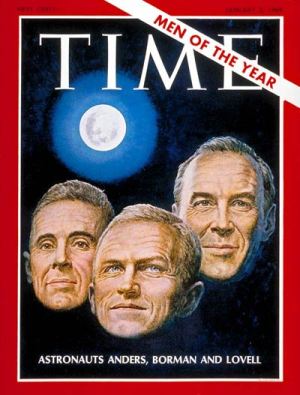
And here’s the best part: this image was captured by accident! In all the meticulous planning for the Apollo 8 mission, no one had anticipated or thought about it. All attention was on the Moon itself, which humans would be viewing at such close range for the first time. None of the astronauts on board Apollo 8 – Mission Commander Frank Borman, Command Module Pilot James Lovell and Lunar Module Pilot William Anders – were ready for the opportunity to witness their own Earthrise.

And if they had stuck to the mission plan, and not acted spontaneously, this image might never have been captured at the time it was.

Frozen in TIME...
Earth's photographers frozen in TIME...
As Apollo historian and film-maker Dr Christopher Riley recalled on the 40th anniversary of this remarkable event a few days ago:

For the first three orbits, preoccupied by the Moon and their latest TV broadcast, the spacecraft was not orientated to give them a chance to see the Earth. But as Apollo 8 nosed its way back from the far side of the Moon for the fourth time, one of the crew spotted the view by chance from a window, his reaction captured by the on board tape recorder.

“Oh, my God! Look at that picture over there!” he exclaimed. “Isn’t that something…”

After a quick joke about the fact that it was not in their flight plan to photograph it, the crew abandoned protocol and scrambled to get a snap of the occasion with their stills camera.

The Hasselblad only had a black and white film magazine in, resulting in the image (below) – the first photograph of Earthrise taken by a human as he watched it happen.

The first Earthrise ever photographed; a colour photograph followed minutes later

But this first historic picture is rarely reproduced. Not content with this first monochromatic image, the astronauts rushed to find a colour film, and Bill Anders managed to snap two more frames which became the choice of photo editors for the rest of history.

Read the rest of Christopher Rileyreminiscences on BBC Online.

Apollo 8 was an important prelude to actually landing on the Moon (which took place in July 1969). It achieved many firsts — including the first manned launch from NASA’s new Moonport, first manned mission to leave the earth’s gravitational field and reenter the earth’s atmosphere at tremendous speeds, first pictures taken by humans of the Earth from deep space, and first live TV coverage of the lunar surface. A Christmas Eve reading from the book of Genesis from Apollo 8 was heard by an estimated 2 billion people, the biggest TV audience in history.

Here are the highlights of that broadcast, also known as Apollo 8 Genesis reading:

And this is how BBC’s James Burke talked about it live on air with astronomer Patrick Moore:

Some might consider Apollo 8 as no more than a technological rehearsal to the eventual landing on the Moon, by astronauts of Apollo 11, but the images of Earthrise have had far-reaching implications. The rise of the global environmental movement in the 1970s was partly inspired by this new perspective of our planet. In his Oscar-award winning film An Inconvenient Truth, Al Gore acknowledges this as he sets the stage with a series of images of Earth in space, helping us to appreciate the beauty and fragility of our planet in distress.

In an op ed essay to mark the 40th anniversary, Oliver Morton wrote in the New York Times on 24 December 2008: “The photograph of that earthrise by the astronaut Bill Anders forms part of the Apollo program’s enduring legacy — eclipsing, in many memories, any discoveries about the Moon or renewed sense of national pride. It and other pictures looking back at the Earth provided a new perspective on the thing that all humanity shares. As Robert Poole documents in his history, ‘Earthrise: How Man First Saw the Earth‘, that perspective had deep cultural effects, notably in the emotional resonance it offered the growing environmental movement. Seen from the Moon, the Earth seemed so small, so isolated, so terribly fragile.”

He goes on to argue that the planet is not as fragile or vulnerable as some suggest. But he ends with these words: ““Earthrise” showed us where we are, what we can do and what we share. It showed us who we are, together; the people of a tough, long-lasting world, shot through with the light of a continuous creation.”

The lessons of Earthrise images have been on other people’s minds as the anniversary passed. On his informative blog Dot Earth, New York Times reporter Andrew C. Revkin recently asked his readers to share what the Earthrise images meant to them. He has received a wide range of comments from people as diverse as former astronauts, scientists, school teachers and children.

Watch Jim Lovell & Apollo 8: Christmas Eve Heard Round the World – WGN (Chicago)’s producer Pam Grimes takes a look back at the 1968 Apollo mission through the eyes of astronaut Jim Lovell:

And here is how NASA Television looked back at their historic mission, 40 years later. In this video Astronauts Frank Borman, James Lovell and Bill Anders recount man’s first voyage around the moon:

One final comment: The world is grateful to NASA, America’s space agency, for adopting from the early days of space exploration a far-sighted, public spirited policy that all its space images are made available free of copyrights to anyone, anywhere on the planet. This is what enables me to use space images on my blog – and keeps tens of thousands of such images in the public domain. Space agencies of other countries, also funded by tax-payer money, have been far less generous when it comes to sharing copyrights. The Heavens may be free, but some images of it are not.

Read my October 2007 blog post: No copyright on this planet – thank Heavens (and NASA) for that!