‘Climate Challenge’ marks turning point in Vietnam’s climate concerns

Seeking local solutions for a global problem
Climate Challenge TV series: Seeking local solutions for a global problem

Many media reports and documentaries on climate change tend to be scary. Even the most balanced and scientifically informed ones caution us about dire scenarios that can rapidly change the world as we know it.

But it’s not all doom and gloom. Like every crisis, climate change too presents humanity with formidable challenges that can become opportunities to do things differently — and better.

Climate Challenge is a rare TV series that adopts this positive attitude. The 6-part series co-produced by One Planet Pictures in the UK and dev.tv in Switzerland, links the global climate crisis with location action for both mitigation (trying to reduce further aggravation) and adaptation (learning to cope with impacts).

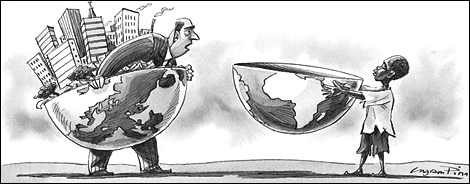
It also makes the point: in the fight against global warming, developed and developing countries must work hand-in-hand to find viable solutions for all.

The film-makers of Climate Challenge focus on some of the most promising approaches to turning down the global thermostat. Climate Challenge goes in search for solutions that won’t put a break on economic growth.

The series had its original run on BBC World News in April – May 2007. Shortly afterwards, TVE Asia Pacific (TVEAP) started distributing it to TV channels, educational institutions and civil society groups across the Asia Pacific region. It has been one of the more popular items on our catalogue of international TV films on sustainable development and social justice.

Our deal with Asia Pacific broadcasters is a barter arrangement. TVEAP clears copyrights for developing countries in our region (more than 30 countries or territories) and offers films free of license fee that normally prevent many southern broadcasters from using this content.

We offer a new set of titles every two months to our broadcast partners – now numbering over 40 channels. They select and order what interests them, and often pay for the cost of copying on to professional tape and dispatch by courier.

When they receive the tapes, accompanied by time-coded scripts, many TV stations version the films into their local language/s using sub-titles or voice-dubbing. They do this at their expense, and then assign a good time slot for airing the films once or several times. They are free to re-run the films as often as they want. The only expectation is that they give us feedback on the broadcasts, so that we can report to the copyright owners once a year.

This arrangement works well, and bilateral relationships have developed between TVEAP’s distribution team and programme managers or acquisition staff at individual TV stations across Asia. Everything happens remotely — through an online ordering system and by email. It’s rarely that we at TVEAP get to meet and talk with our broadcast colleagues in person.
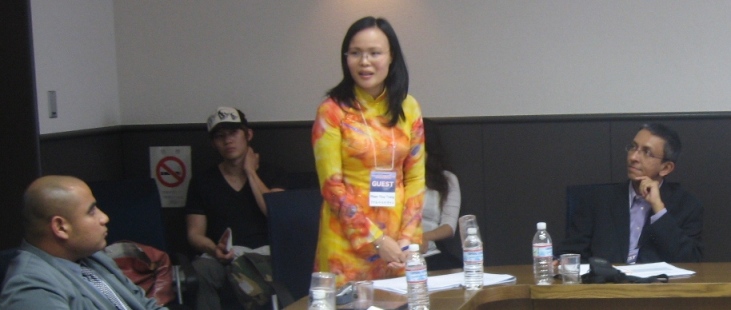
Pham Thuy Trang speaks in Tokyo

I was delighted, therefore, to meet one of our long-standing broadcast colleagues in Tokyo earlier this month when we ran a regional workshop on changing climate and moving images. Pham Thuy Trang, a reporter with news and current affairs department of Vietnam Television (VTV), was one of the participants. She turned out to be an ardent fan of our films.

She told the Tokyo workshop how the Climate Challenge series marked a turning point in Vietnam’s public discussion and understanding of climate change issues.

In mid 2007, VTV was one of many Asian broadcasters who ordered Climate Challenge. Having versioned it into Vietnamese, VTV broadcast the full series in December 2007 to coincide with the 13th UN climate change conference in Bali, Indonesia.

“This was the first time the issue received indepth coverage on TV,” Trang said. This was particularly significant because a 2007 survey had revealed low levels of interest in climate issues by the media in Vietnam.

Vietnam has a 3,000km long coastline
“In fact, the World Bank has identified Vietnam, with its 3,000 km long coastline, as among the countries most vulnerable to climate change impact. Our media has been reporting some developments – such as increased coastal erosion – as purely local incidents without making the climate link,” she noted.

The series, originally broadcast in the foreign documentaries slot, was noticed by the VTV senior management who then arranged for its repeat broadcast in the long-established environmental slot. The latter slot, well established for a decade, commands a bigger audience.

“Our Director General was impressed by our receiving such a good series on an important global issue,” Trang recalled. She added: “We need more films like this – that explain the problem and help us to search for solutions.”

Trang kept on thanking TVEAP for Climate Challenge and other films that bring international environment and development concerns to millions of Vietnamese television viewers. I said we share the credit with generous producers like One Planet Pictures and dev.tv, who let go of the rights to their creations for the global South.

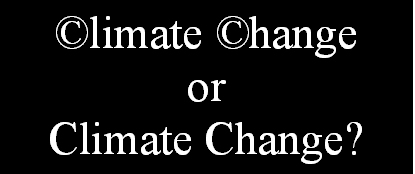
If only more producers of TV content on climate and other development issues think and act as they do. That was also the call we made at the end of our workshop: recognise climate change as a copyright free zone.


Related blog post: Climate in crisis and planet in peril – but we’re squabbling over copyrights!
India’s climate change NIMBYsm and middle class apathy

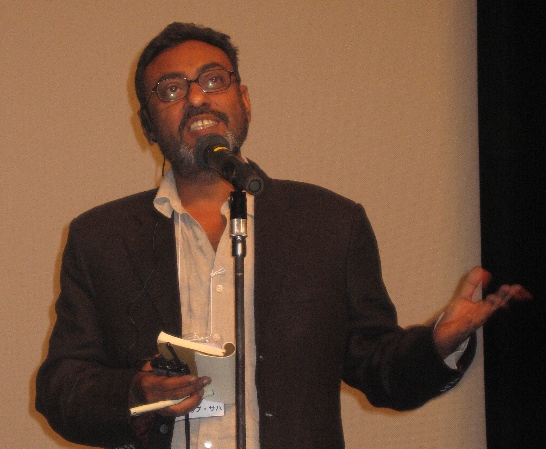
Pradip Saha in Tokyo

The global climate is indeed changing, but not everyone is equally affected by it – or bothered about it either. Take, for example, the majority of India’s 300 million+ middle class, which is roughly the size of the entire population of the United States.

According to environmental activist and independent film-maker Pradip Saha, it’s not a question of ignorance, but apathy.

“Our educated middle classes understand what’s happening, but they are also big contributors to the problem – with their frenzy to burn oil and coal. They look for any excuses for not acting on this issue,” Pradip said during a recent regional workshop in Tokyo, Japan.

The Asia Pacific workshop on ‘Changing Climate and Moving Images’, held in Tama New Town, Tokyo, was organised by TVE Japan in collaboration with TVE Asia Pacific and supported by Japan Fund for Global Environment.

Pradip, associate director of the Centre for Science and Environment – a leading research and advocacy organisation – has been tracking climate change issues for two decades. He sees this Big Issue in three ways: science of climate change, politics of climate change and feelings of climate change.

To fully understand how the complex Indian society perceives and responds to the climate crisis, all three dimensions need to be studied, he says. And particular attention must be paid to the plight of those who are already experiencing changes in their local climate.

From the Himalayan mountains to the small islands in the Bay of Bengal, millions of Indians are living and coping with climate change. “Large sections of our poor feel it, and are among the worse impacted.”

Many such affected people may never have heard of climate change. They are bewildered by rapid changes in rainfall, river flows, sunshine and other natural phenomena.

Pradip drew an example from the Sundarban delta region in the Bay of Bengal. With 10,000 square kilometres of estuarine mangrove forest and 102 islands, it is the world’s largest delta. Here, some islands are slowly being eroded and submerged by rising sea levels. Three small islands have already gone underwater. Others are experiencing problems of salt water intrusion, posing major difficulties for the local people.

Sundarban delta as seen from space

Analysis of surface data near Sagar island in the Sundarbans reveals a temperature increase of 0.9 degree celsius per year. Experts are of the opinion that this is one of the first regions bearing the brunt of climate change.

But the islanders – like most other poor people in India – don’t have enough or any voice to express their concerns to the policy makers, civil society groups and captains of industry. For these members of the middle class, the Sundarbans mean just one thing: the Royal Bengal Tiger.

And most of them probably have never heard of Sagar island. They might just shrug it off, saying: It’s Not In My Backyard (NIMBY).

During the past few months, Pradip has been filming on these islands trying to capture the unfolding human and environmental crisis. He was inspired by an investigative story that appeared in early 2008 in the Down to Earth science and environmental magazine where he is managing editor.

Pradip screened the 64-minute long film, aptly titled Mean Sea Level, at our workshop. The few of us thus became the first outsiders to see the film which I found both deeply moving and very ironic. With minimal narration, he allows the local people to tell their own story. There’s only one expert who quickly explains just what is going on in this particularly weather-prone part of the world.

Confronted with middle class apathy and indifference, activists and journalists like Pradip Saha face an uphill task. “Knowledge is not turning into action because those who know (about climate change causes and responses) are also the biggest culprits,” he says.

To make matters worse, government policies are not formulated with adequate public consultations. Sections of central and state governments in India have also started responding to individual effects of climate change without understanding the bigger picture. Such piecemeal solutions can do more harm than good.

Then there is India’s obsession with motor cars – a topic on which Pradip has already made a short film.

Pradip’s views on climate change activism in India resonates with those of the Filipino academic-activist Walden Bello. Speaking at the Greenaccord international media forum in Rome in November 2007, he called for a mass movement at the grassroots across the developing countries of the global South to deal with climate change – the biggest environmental threat faced by the planet today.

As I quoted him saying, such a movement might be unpopular not only with the Southern elite but also with sections of the urban-based middle class sectors that have been the main beneficiaries of the high-growth economic strategy that has been pursued since the early 1990s.

Read my April 2007 post: Fossil Fools in India

Climate in Crisis and planet in peril – but we’re squabbling over copyrights!

Climate in Crisis - a global documentary

On my recent visit to Tokyo for a regional workshop on changing climate and moving images, I watched a number of excellent documentary films on the subject. One of them was Crude: The Incredible Journey of Oil, the excellent Australian film that I wrote about in March.

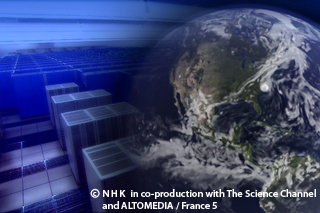
Another was Climate in Crisis, an outstanding global documentary in two parts (2 x 52 mins) co-produced in 2006 by Japan’s public broadcaster NHK together with The Science Channel and ALTOMEDIA/France 5.

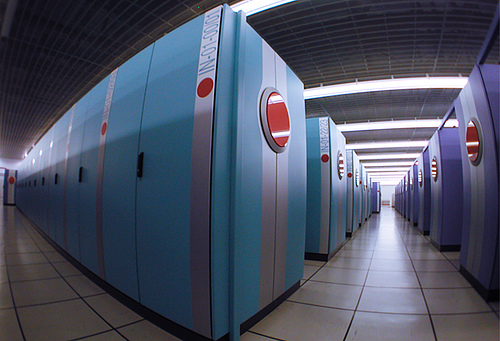
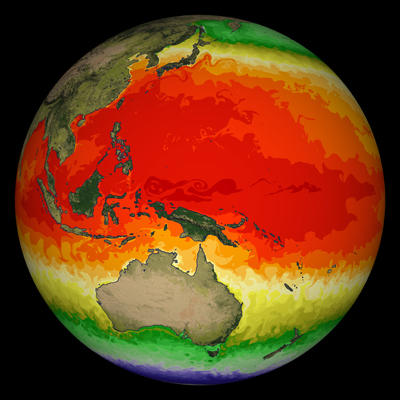
Directed by Fujikawa Masahiro, the film draws heavily on the Earth Simulator — one of the world’s most powerful supercomputers — which Japanese scientists used to project the climatic disasters in next 100 years. The system was developed in 1997 for running global climate models to evaluate the effects of global warming and problems in solid earth geophysics. It has been able to run holistic simulations of global climate in both the atmosphere and the oceans — down to a resolution of 10 km.

NEC Earth Simulator in Japan

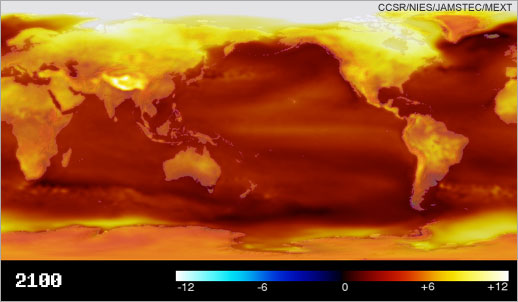
The results, captured in this documentary, are truly mind-boggling. Atmospheric temperatures may rise by as much as 4.2 degrees Celsius, more hurricanes may attack and deserts may spread from Africa to southern Europe, and half of the Amazon rainforest may be gone. Climate in Crisis shows a severe projection on environmental destruction based on rigorous scientific data and considers whether humankind can avoid this.

This film, made in the same year as Al Gore’s Oscar-winning film An Inconvenient Truth, has won several awards including the Earth Vision Award at the 15th Earth Vision Tokyo Global Environmental Film Festival.

I was curious why this excellent film – in my view, better made than Al Gore’s one – hasn’t been more widely seen, talked about and distributed. To be honest, I’d not even heard of this one until my Japan visit — and I try to keep myself informed on what’s new in my field of endeavour.

The reasons soon became apparent: copyright restrictions! The co-producers are keeping the rights so tight that only the highest bidders will be allowed to acquire it on a license fee.

This is a standard broadcast industry practice that didn’t surprise me. But I was taken aback by how jealously the rights are guarded. All other films that were part of our event, including high budget commercial productions like Crude, were screened to the public at the Parthenon in Tama New Town in Tokyo.

Not so with Climate in Crisis, which we – the overseas participants to the workshop – had to watch at a theatre inside NHK’s Tokyo headquarters. No public screening was possible. As we later heard, NHK itself was willing to allow a public screening (after all, it draws a good part of its income from the Japanese public), but their international co-producing partners, especially the Science Channel, would simply not agree to it. Wow.

Twenty centuries ago, emperor Nero fiddled while Rome burned. Today, some people are squabbling over copyrights while the whole planet is in peril.

Earth in 2100 - as seen by Earth Simulator

Our workshop participants came from solid backgrounds in broadcasting or independent film-making, and we are not naive activists asking hard-nosed broadcasters to let go of their precious rights which generates vital income. But we would have expected them to allow films such as Climate in Crisis to circulate a bit more freely in everybody’s interest.

This reminded me of correspondence I had last year with the Canadian producers of another outstanding climate film titled The Great Warming. The initial discussions with its director were promising, but when the distribution people started talking about ‘revenue optimising’, our negotiations stalled.

It also reminded me of similar experiences of other environment and natural history film makers, such as South Africa’s Neil Curry. He had a long struggle with the BBC to clear the non-broadcast use rights of his own film that he wanted to take back to the locations in Botswana where it was filmed.

Many broadcast and production companies in the west don’t realise that TV broadcasters in developing Asia operate on a very different basis. Talking about broadcast ‘pre-sales’ or ‘commissions’ loses meaning when many stations are operating on tiny budgets — or in some cases, no budgets — for factual content. Many are struggling to survive in tough, emerging economies.

Is this our future?
Is this our future?

TVE Asia Pacific operates a regional film distribution service that brings environment and development films within reach of such broadcasters. We operate without getting mired in license fees or royalties.

Our 2-day workshop called for climate change to be recognised as a ‘copyright free zone’. This would enable audio-visual media content on the subject to move freely across borders and to be used widely for broadcast and narrowcast purposes.

Here’s the full reference from our statement of concern:

“Prevailing copyright regimes prevent the sharing and wider use of outstanding TV programmes and video films on climate and development issues. We are deeply concerned that even content developed partly or wholly with public funding (government grants, donor funds or lottery funds) remain unfairly locked into excessive copyright restrictions. Sometimes film-makers and producers themselves are willing but unable to allow their creations to be used for non-commercial purposes by educational, civil society and advocacy groups. We appreciate the media industry’s legitimate needs for intellectual property management and returns on investment. At the same time, the climate crisis challenges us to adopt extraordinary measures, one of which can and should be recognising climate change as a ‘copyright free zone’. Such agreement would encourage media organisations and independent producers to share content across borders, and with entities outside the media industry engaged in climate education, advocacy and activism.”

Here’s the simple question I raised during the workshop, which is worth being posed to all those who hesitate to even discuss this issue:

Can anyone manage their intellectual property rights on a dead planet?

This is the real question!

Warning: Is climate change the new HIV of our times?

From www.sprattiart.com
From http://www.sprattiart.com


Is climate change the new HIV of our times?

I asked this question when addressing a group of television journalists and film-makers from the Asia Pacific last week. I was making introductory remarks to an Asia Pacific Workshop and Open Film Screening on ‘Changing Climate and Moving Pictures‘ held on 3 – 4 October 2008 in Tokyo, Japan. It was organised by TVE Japan in collaboration with TVE Asia Pacific, and supported by the Japan Fund for Global Environment.

I acknowledged that climate change was not just another environmental issue or even the latest planetary scare. “This time we’re in deep trouble – and still finding out how deep,” I said.

Climate change has brought into sharp focus the crisis in:
• how we grow economically;
• how we share natural resources and energy; and
• how we relate to each other in different parts of the world.

In that sense, I noted, climate change is acting like a prism — helping to split our worldly experience into individual issues, concerns and problems that combine to create it. Just like an ordinary prism splits sunlight into the seven colours (of the rainbow) that it’s made of.

“Climate shows up the enormous development disparities within our individual societies and also between them. When this happens, we realise that climate is not just a scientific or environmental problem, but one that also has social, political, security, ethical and human rights dimensions,” I added.

Climate change in an uneven world

I then outlined some parallels between the current climate crisis and the HIV/AIDS pandemic that emerged some 25 years ago.

Consider these similarities:
• When HIV was first detected, it was considered a medical issue affecting specific sections of society.
• It took years for the wider societal, development and human rights aspects of HIV to be understood and then accepted.
• Some countries and cultures wasted precious years in HIV denial; a few are still in this mode.
• It took overwhelming impact evidence and mounting pressure from affected persons for states and international community to respond.
• Then…everybody jumped the bandwagon and HIV became a fundable, profitable enterprise.

I have been commenting in this blog about this ugly side of HIV/AIDS in my own country Sri Lanka, where some NGOs and charities have turned HIV activism into a self-serving, lucrative industry. There are fierce ‘turf wars’ to claim persons living with HIV as their institutional ‘property’. Some have appropriated HIV as their own virus, and would rather not allow others to work in this area.

And it’s not just NGOs who are riding the HIV gravy train. The United Nations programme for AIDS, or UNAIDS, created by the UN system in response to the global crisis, has evolved into a behemoth whose efficacy and relevance are now being widely questioned.

UNAIDS “is obsolete and an obstacle to improving healthcare in developing countries” claims Roger England, an international health expert. Writing in the British Medical Journal in May 2008, England pointed out that HIV causes 3.7 per cent of mortality and kills fewer people than pneumonia or diabetes, yet it received 25 per cent of all international healthcare aid and a big chunk of domestic expenditure. This has resulted in wasting vast sums of funding on esoteric disciplines instead of beefing up public health capacity. Despite this criticism, UNAIDS is calling for huge increases in its funding — from its current US$9 billion to US$54 billion by 2015.

All this makes me wonder: is climate the new HIV of our times? This is the question I raised in Tokyo.

I added: “If so, I sincerely hope it does not evolve in the same manner that HIV crisis did. There are worrying signs that the drive towards a low carbon economy is being exploited by various groups – including some in civil society – for self gain.”

Certain development agencies and ‘think tanks’ are clearly exploiting climate change to make money. Suddenly, everybody is ‘climate-proofing’ their activities — meaning they are talking about climate change no matter what they do, whether it is teacher training or micro-credit.

In the run up to the Bali climate conference in late 2007, I wrote a blog post titled ‘Beware of bad weather friends’ about a London-based NGO engaging in some media training on climate issues, but deriving its legitimacy from a dubious survey. This post apparently irked the party concerned a great deal.

In Tokyo, a workshop participant confirmed that this was already happening in his country.

“Every crisis today is being turned into a business opportunity – and not just by the corporate sector,” said Pradip Saha, associate director of the Centre for Science and Environment in India.

He added: “Consultancy companies and some NGOs have realised there is big money to be made in climate related areas like carbon offsets and the Clean Development Mechanism. They are already riding the climate bandwagon!”.

Read the full text of my introductory remarks to the Tokyo workshop.changing-climate-moving-images-nalaka-gunawardene-intro-3-oct-2008

Remembering Anita Roddick, a year after her hasty departure

September 10 marked a year since Anita Roddick left us in hurry, with so much unfinished business.

At the end of our last encounter in the summer of 2003, she autographed for me a copy of her latest book with these words: “Remember me!”.

She remains one of the most remarkable people I have met. Especially in the past year, which has been eventful and tumultuous for me, I have often thought of Anita’s long and colourful journey from working class mom to one of the most successful entrepreneurs of our time….and onward to become an outspoken and passionate activist for social justice, human rights and the environment.

As she has written, it was not an easy ride to do well in the male-dominated world of business, nor was it any easier to do good in the greed-dominated world at large. But she not only did it, but had great fun doing so.

What would Anita do? I find myself asking this question every now and then when I seem to be struggling against enormous odds (which is increasingly often). I don’t always find the answers I’m looking for, but it’s always a useful reflection.

I now find that others have been asking this question. Visiting Anita Roddick’s official website this week, I read a moving post by Brooke Shelby Biggs, who worked with Anita for 8 years. She writes:
“I’ve lived most of this past year having conversations with Anita in my mind. What would she say when I told her about considering a move back to magazine journalism? How should I handle my role in the Free the Angola 3 movement? How would she get on with my new romantic interest? Should I move back to my parents’ home town to help care for my ailing mother? I’ve tried to spend this time living according to the philosophy of What Would Anita Do (WWAD?). It was a lot easier when I could ask her myself. But some part of me knows she gave me a lot of tools to figure the hard stuff out on my own. Sometimes I just wish I had her courage.”

website inspired by Anita Roddick
I am an activist: website inspired by Anita Roddick

Brooke links to a website called I am an Activist that draws information and inspiration from Anita’s many and varied struggles in support of various local and global causes. Prominently displayed on the home page are Anita’s now famous words: “This is no dress rehearsal. You’ve got one life, so just lead it and try and be remarkable.”

Well, we can honestly say that she’s one person who practised what she preached.

‘I am an Activist’ is also the sub-title of a DVD that celebrates the life of Dame Anita Roddick, which is available for sale and/or download from Anita Roddick.com. It compiles footage gathered on 23 October 2007, when thousands of thinkers, artists, activists, and other heroic saboteurs of the status quo gathered to celebrate the remarkable life and legacy of Anita Roddick. According to the blurb, it features key people from groups like Amnesty International, Greenpeace, Reprieve, The Body Shop, as well as family and close friends, as they laugh and cry and ultimately take to the streets to launch.

Anita’s daughter Sam is quoted as saying in her tribute: “My mother treated life like each day was her last, and this gave her the permission for incredible bravery. … Tonight I am personally pledging that I Am An Activist, and within that, I also will have a lot of fun, and I also will be silly. I will not be polite and I will never, ever, ask for permission.”

In the weeks and months since Anita’s death, more video material featuring her public talks and interviews have been shared on YouTube by individuals and organisations. I have this week watched several of them, and felt there still isn’t sufficiently good moving images about her. In her time she must have done hundreds or thousands of interviews for broadcast television, corporate audiences as well as community groups. At least some of these must have been recorded and archived. But we still don’t see enough out there, at least in easily accessible public video platforms like YouTube.

Here are two that I did find which are interesting:

Anita speaks on the lessons she learnt from running her own home business, which she started in 1976 to augment her family income. She talks about how she had absolutely no business training, faced many odds and put up with male sarcasm:

From University of California Television comes this video of Anita delivering the Nuclear Peace Age’s third annual Frank K. Kelly Lecture on Humanity’s Future in Feb 2004.

Banishing poverty to a museum: The grand vision of Muhammad Yunus

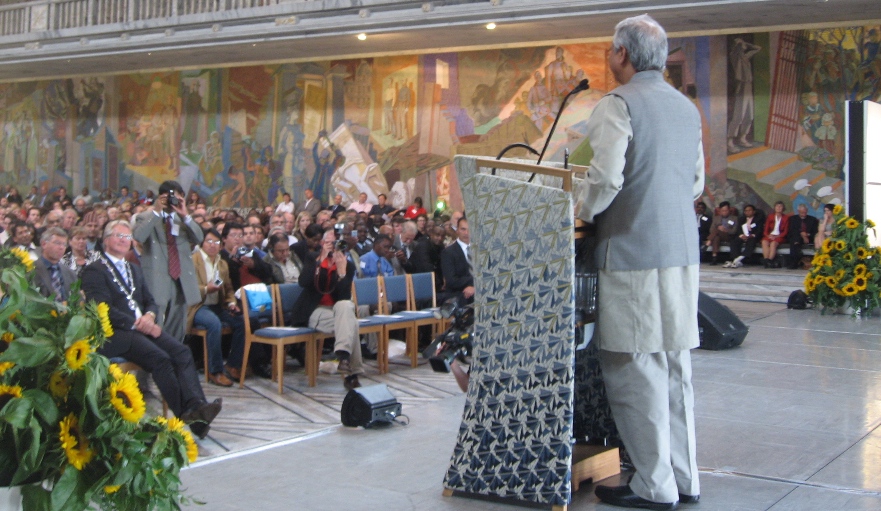
Muhammad Yunus speaking at Oslo City Hall on 4 Sep 2008

The celebrated Bangladeshi economist and anti-poverty activist Muhammad Yunus returned to Oslo’s City Hall today, more than one and a half years after he accepted the 2006 Nobel Peace Prize there. In a passionate, insightful talk to a full house of over 900 people, he revisited his favourite topic: how to banish poverty from our planet.

The occasion was 2008 North-South Forum, convened and hosted by Fredskorpset, the Norwegian peace corp, together with the city council of Oslo. I was among the 350 international participants who have come from 50 countries to participate in this event.

In his talk, the founder of the Grameen Bank reiterated the central message in his recent book, Creating a World Without Poverty: Social Business and the Future of Capitalism.

“We can and must chip away at poverty, and get rid of it – just like what they did to the Berlin Wall,” he said. “I’m dreaming of the day when there is no more poverty on this planet…the day when our future generations would have to visit a museum to see what it was like to live in poverty.”

Wistfully, he added: “I would then want to offer a million dollar prize to anyone who can find a poor person.”

He tempered this idealistic vision with the economist’s strong realism: to overcome poverty, we first need to understand and come to terms with factors that cause and sustain it.

“There is nothing intrinsically wrong with poor people,” Yunus said. “They are ordinary people like you and me – many of them talented and capable. But they have never had the opportunity to do well in life. Poverty is not created by poor people, but by the (social and economic) system we have created around us.”

Banishing poverty is not just a matter of social justice – it is also an ‘insurance’ against social disintegration and other major problems of our times like crime and terrorism.

Prof Yunus made the same points in this interview with the Nobel Prize website:

See full interview on Nobel website

For several years, Yunus has been voicing concerns about the so-called war on terror diverting much needed attention and resources away from the war on poverty. In his Nobel Prize lecture delivered in the same hall on 10 December 2006, he said: “I believe terrorism cannot be won over by military action. Terrorism must be condemned in the strongest language. We must stand solidly against it, and find all the means to end it. We must address the root causes of terrorism to end it for all time to come. I believe that putting resources into improving the lives of the poor people is a better strategy than spending it on guns.”

When Yunus speaks, he sounds far more like an amiable story teller than the professor of economics that he once was. He appeals to the heart and mind of his listeners, in that order. He did not dazzle his audience with endless facts and figures. There were no fancy Power Points or endless charts – the essential tools of poverty researchers. And, mercifully, he never once referred to the dubious millennium development goals or MDGs, the favourite mantra of assorted UN types. (They started off as a well-intended set of targets, but have become self-limiting, self-serving distractions for the development community.)

Instead, he drew from the practical, real life experiences of the Grameen Bank that he founded in 1976, when working as a professor at the University of Chittagong in Bangladesh. Grameen’s three decades of work providing small loans to the poorest of the poor is ample evidence, he said, that the vicious cycles of poverty, debt and misery can be broken by ‘tiny interventions, sustained over time’. Grameen started with 27 poor people in a single village. Today, it has over 7 million participating in its micro credit programes, 97 per cent of them women.

Read Shahidul Alam’s account of Grameen and its founder

Yunus offers a grand vision without grandiose claims or pomposity. He is fond of the word ‘tiny’ – using it to describe the various initiatives he and his team have been taking to attack poverty from many different fronts. The results are anything but tiny.

In his new book, Professor Yunus describes the role of business in promoting social reform and his vision for an innovative business model that would combine the power of free markets with a quest for a more humane, egalitarian world that could help alleviate world poverty, inequality, and other social problems. He calls it ‘social business’ – a hybrid of the profit-maximising corporate sector and charitable non-profit sector.

Listen to Muhammad Yunus speak at Google New York City campus on 10 January 2008 about ideas captured in his new book:

In 2006, the Nobel Peace Prize was awarded to Muhammad Yunus and Grameen Bank for their efforts to create economic and social development from below. In doing so, the Norwegian Nobel Committee noted: “Lasting peace can not be achieved unless large population groups find ways in which to break out of poverty. Micro-credit is one such means. Development from below also serves to advance democracy and human rights.” Read full statement

Watch an indepth interview with Yunus by the US journalist and doyen of TV interviewers, Charlie Rose:

Free us from our addiction to oil: New PSAs from Al Gore’s climate campaign

In July 2007, we had an interesting discussion on this blog on the shrinking durations of nature and environment films and TV programmes. The moving images community is divided on this, with some purists holding out that to pack complex, nuanced messages into a few minutes is akin to dumbing everything down. Noted film-makers like Neil Curry disagreed.

But there’s no argument of the sheer power of well produced public service announcements (PSAs) to move people with a specific, short message. Nothing can beat them for the economy of time and efficacy of delivery.

During August 2008, Al Gore’s ‘We’ campaign for climate change activism released two new PSAs, both appealing to Americans to change their energy habits, especially their addiction to oil. This follows and promotes the challenge Al Gore posed to America in July 2008 “to commit to producing 100 percent of our electricity from renewable energy and truly clean carbon-free sources within 10 years”.

Make the Switch, Repower America

Real change can happen real fast. We can strengthen our economy, lower fuel costs, free ourselves from our addiction to oil, and help solve the climate crisis. We can do this by switching to clean, free energy sources like the wind and sun — and to do it within 10 years. Meeting this ambitious goal would create millions of new jobs, lead to permanently lower energy costs for families and help America lead the fight against global warming. William H. Macy narrates in this ad which premiered on network TV in the US during the 2008 Beijing Olympics coverage.

To Our Leaders: Give Us 100% Clean Electricity in 10 Years

We must save our economy, lower fuel costs, free ourselves from our addiction to oil, and solve the climate crisis. To do this, we must demand that we Repower America with 100% clean electricity within 10 years.

The We Campaign is a project of The Alliance for Climate Protection — a nonprofit, nonpartisan effort founded by Nobel laureate former Vice President Al Gore. Its ultimate aim is to halt global warming

Vulnerability Exposed: Micro films on how climate change affects YOU!

Vulnerability Exposed!

Never underestimate the power of moving images. Al Gore tipped the balance in the long-drawn climate change debate with his Oscar-winning film, An Inconvenient Truth. The rest is recent history.

Thanks to the film – and sustained advocacy of hundreds of scientists and activists – climate change is no longer a speculative scenario; it’s widely accepted. The challenge now is to understand how it impacts different people in a myriad ways.

Now the World Bank wants people to use their video cameras to capture how climate change may already be affecting their ways of living and working. The Bank’s Social Development Department has just announced the launch of a worldwide documentary competition that will highlight the social aspects of climate change as experienced and/or observed by the film-maker(s).

Called Vulnerability Exposed, the contest is open to anyone anywhere in the world who wishes to have their voice heard. The submitted films should innovatively illustrate the consequences of climate change through one of the following theme categories: conflict, migration, the urban space, rural institutions, drylands, social policy, indigenous peoples, gender, governance, forests, and/or human rights. The submission period ends on 24 October 2008.

Caroline Kende-Robb, Acting Director, Social Development Department, said, “There is a need to see climate change as an issue of global social justice. The rights, interests and needs of those affected by climate change must be acknowledged.”

Watch the Bank’s short video, where she explains further:

The contest has two award categories:
1) Social Dimensions of Climate Change Award (general category) – open to professional and amateur; and
2) Young Voices of Climate Change (youth category) – open to entries submitted by filmmakers under 24 years old.

Award winners will be chosen through a combination of public voting and a judging panel. The film with the most public votes in each theme category will receive honorable mention.

Judging process
Vulnerability Exposed film competition: Judging process

This contest indicates that the World Bank is slowly but surely opening up to the currently untapped communication potential of web 2.0 – the very point I made in a recent op ed essay.

There are several noteworthy aspects in this competition, some more positive than others. I offer this critique in the spirit of improving a commendable initiative.

Three cheers to the bank for accommodating both amateurs and professionals. It’s about time those who don’t video film for a living (some of who are no less talented in the craft) had more opportunities to showcase their products.

It’s good to see the preference for shorter films, in this contest defined between 2 and 5 mins in duration. This certainly resonates with TVE Asia Pacific’s experience with Asian broadcasters, many of who now prefer shorter films. Longer films have their place, of course, but shorter ones are clear favourites of 24/7 news channels and also online.

Most film contests are judged exclusively by an all-powerful jury (I’ve been on several over the years), but here the online public have a chance to vote for their favourite entries. Let’s hope the judges will consider the story telling power of entries as the most important deciding factor. (The examples in the YouTube film given above are misleading – they all seem extracts from expensively made documentaries.)

The big challenge for many aspiring contestants would be to relate climate change to daily realities in their societies. Despite global headlines and the development community’s current frenzy about it, climate change as a phrase and concept still isn’t clearly understood in all its ramifications. If science now knows 100 facts about the murky processes of climate change, the average public knows less than 25 and understands even less. So it will be interesting to see how entries relate the big picture to their individual small pictures.

I’m a bit disappointed that the World Bank is not offering any cash prize to the winners. Instead, “the winners will receive an all expenses paid trip to Washington, DC for a screening of their film and will have the opportunity to attend a series of networking and learning events organized by…the World Bank in December 2008.” This is all useful, but video – even at the low end – is not exactly cheap, and even labour of love creations cost money to make. We are currently running a comparable the Asia Pacific Rice Film Award – which seeks entries no longer than 10 mins on any aspect of rice – and despite being a non-profit, civil society initiative we have a prize of US$ 2,000 to the winner. And we wish we could offer more.

But my biggest concern is the unequal, unfair terms of copyrights found in the small print of the competition rules. This is where the lawyers have done their usual handiwork, and with the usually lopsided results. The World Bank wants all contestants to make absolutely sure that all material used is fully owned by the contestants, or properly licensed. That’s fine. But tucked away on page 7, under section 12 titled Entrant’s permission to the organiser, is a set of conditions which will allow all affiliated institutions of the World Bank group to use the submitted material for not just promoting this contest (a standard clause in most competitions), but for ‘climate change work program of the organiser’.

What this means, in simpler terms, is that without offering a single dollar in prize money, the World Bank is quietly appropriating the unlimited user rights for any and all the submitted material. These are the core materials in the moving images industry, and nothing is more precious to their creators.

I have long advocated a more balanced, equitable and liberal approach to managing copyrights and intellectual property by both the broadcast television industry and development community — especially where public funded creations are concerned. I have nothing but contempt for lawyers and accountants who often determine the copyrights policies in large broadcast and development organisations. They set out terms that may be justified in strict legal terms, but are totally unfair, unjust and, in the end, counterproductive to the development cause and process. It seems that while our friends in the social and communication divisions were not looking, the Bank’s lawyers have done their standard hatchet job.

While this doesn’t detract from the overall value of Vulnerability Exposed, it diminishes its appeal and potential. Many professional video film-makers who value their footage – gathered with much trouble and expense – may not want to sign future user rights away for simply entering this contest. And worse, the unsuspecting enthusiasts who don’t necessarily earn their living from making films – but are entitled to the same fair treatment of their creations – would be giving away material whose industrial value they may not even fully appreciate.

It’s certainly necessary and relevant for development organisations like the World Bank and the UN system to engage web 2.0. But they must be careful not to import or impose rigid, one-sided and outdated copyright regimes of the past on this new media.

I hope the Bank would consider revising these unfair copyright terms, and treat the submitted material with greater discretion and respect. If not, all entrants risk seeing their material popping out of bluechip films produced by top-dollar production companies in North America and Europe who have ‘mining rights’ to the Bank’s video archives.

Vulnerability Exposed can have more meanings than one. We’d rather not consider some.

Calling Hydrocarbons Anonymous: Admitting my oil addiction…

Living with climate change
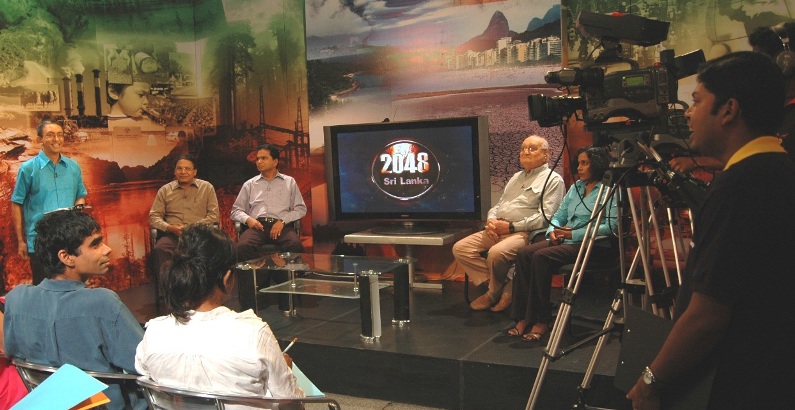
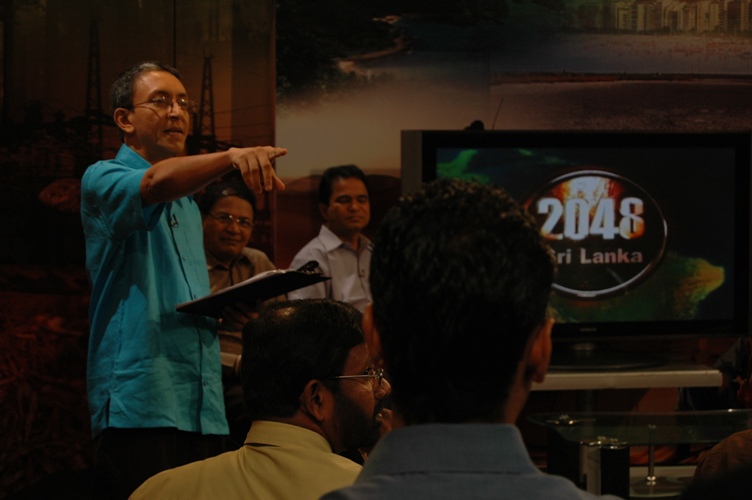
On the set of Sri Lanka 2048: Living with climate change

I have finally done it…and not a moment too soon!

There I was, moderating an hour-long TV debate on Saturday evening prime time television on Sri Lanka’s premier English language Channel One MTV. Our topic for this edition of Sri Lanka 2048 was living with climate change. After exploring its many facets, I was beginning to wind up.

But not before underlining the need for us to take personal responsibility for changing our lifestyles whose cumulative impact on the planet is significant.

The philosophical and political debates over climate change will continue for a long time, I said. Meanwhile, we have to live with climate change impacts that are already happening…and change how we use energy and resources so that we don’t make matters any worse.

This means we must consume less, share more, live simply and pursue smart solutions through green technologies. Of course, at the basis of all this is finding meaningful, practical ways of kicking our addiction to oil.

That’s when I put my hand up and admitted, on air, my own substance addiction: I am hooked on hydrocarbons, a.k.a. petroleum. I’m struggling to break free from it, but it’s not easy.

Of course, my individual addiction pales into insignificance when we look at how entire industries, sectors and countries are addicted to oil and stubbornly insist on continuing the status quo. But we must be the change we seek, so it’s never too late for me to work on my oil problem. When enough of us individuals do, countries and economies will follow.

But people with addictions often need expert guidance, as well as to keep the company of fellow addicts who are similarly trying to kick the habit. That’s why those having drinking problems find help in Alcoholics Anonymous.

We oil addicts could do with some organised help — environmental activist groups, please note. And Sir Arthur C Clarke has already suggested the perfect name for such a movement: Hydrocarbons Anonymous. Read his 2004 essay on Hydrocarbons Anonymous.

* * * * *

Race Against Time
Nalaka Gunawardene moderates Sri Lanka 2048: Race Against Time

Here’s what the promotional blurb for last weekend’s show said:

Sri Lanka 2048 looks at living with climate change: how challenges can become opportunities

Climate change is no longer a theory; it’s already happening. What awaits Sri Lanka – and how best can we adapt to live with extreme weather events, disrupted rainfall, sea level rise and other projected impacts? How can Sri Lanka play a meaningful role in mitigating further damage to the world’s climate?

These and related questions will be raised in this week’s Sri Lanka 2048, the series of TV debates exploring Sri Lanka’s prospects for a sustainable future in the Twenty First Century. The one-hour debate, in English, will be shown on Channel One MTV from 8 to 9 pm on Saturday, 26 July 2008.

Titled Race Against Time, this week’s debate brings together concerned Sri Lankans from academic, corporate, civil society and government backgrounds to discuss the many challenges of living with climate change. The debate looks at aspects such as promoting renewable energy to reduce our carbon emissions, and emerging opportunities for individuals, communities and businesses to adopt low carbon lifestyles and practices.

This week’s panel comprises: Dr. W. L. Sumathipala Director, National Ozone Unit, Ministry of Environment & Natural Resources; Dr. Suren Batagoda, CEO, Sri Lanka Carbon Fund; Dr Ray Wijewardene, Eminent engineer and specialist in renewable energies; and Darshani de Silva, Environmental Specialist, World Bank Office in Colombo. The debate is moderated by TVE Asia Pacific’s Director Nalaka Gunawardene.

The debate also seeks answers to questions such as: What niche can Sri Lanka occupy in the fast-growing global carbon market? How much money can we make from this market? What is the role of the recently established Sri Lanka Carbon Fund? Is the Clean Development Mechanism the right way forward?

The debate concludes with the recognition that climate Change is not just an environmental concern, but also has economic, social, political and security implications. While the philosophical and political debates over climate change will continue for a long time, everyone has to learn fast to live with it. This calls for consuming less, sharing more, living simply and pursuing smart solutions that reduce carbon emissions without compromising the quality of living.

Sri Lanka 2048 debates are co-produced by TVE Asia Pacific, an educational media foundation, and IUCN, the International Union for Conservation of Nature, in partnership with MTV Channel (Private) Limited. This editorially independent TV series is supported under the Raising Environmental Consciousness in Society (RECS) project, sponsored by the Government of the Netherlands.

Sri Lanka 2048
Sri Lanka 2048

Photos by Amal Samaraweera, TVE Asia Pacific

Sri Lanka 2048: Business As Unusual

Sri Lanka 2048 - Nalaka Gunawardene moderating

When our Sri Lanka 2048 TV debate series started a few weeks ago, I had no idea that I’d be hosting some programmes. But through an interesting turn of events, I’ve ended up doing just that.

The series, which TVE Asia Pacific is co-producing with IUCN and MTV Channel (Pvt) Limited — Sri Lanka’s ratings leading TV broadcaster — has been going out once every week from 22 May 2008. As I wrote at the time the series started, most programmes (8 out of 10) were hosted by Sirasa TV’s versatile and dynamic presenter Kingsly Rathnayaka.

Our plan was to do two shows in English, exploring the topics living with climate change and the nexus between business and the environment. We were still searching for a presenter for these two even as we produced and aired the Sinhala programmes.

In the end, the channel management as well as our production team all suggested for me to take it on. I’ve been hosting quiz shows on TV since 1990, and have been a regular ‘TV pundit’ on a broad range of development, science and technology issues for at least a decade. I’ve also been doing a fair amount of moderating sessions and panels at international conferences. Hosting Sri Lanka 2048 challenged me to combine all these skills — and to be informed, interested and curious about our topics under discussion.

I enjoyed being the ‘skeptical inquirer’, a role I’ve had fun playing for long years as a development journalist. Our viewers can judge how well I fared. My aim was to keep the panel and audience focused, engaged and moving ahead. My style is slower and more reflective than Kingsly’s fast-paced, chatty one. Direct comparisons would be unfair and unrealistic since we are very different personalities.

But I’m enormously grateful to the younger, more experienced Kingsly for his advice and guidance in preparing for my new role. The TV camera is ruthless in capturing and sometimes magnifying even minor idiosyncrasies in presenters. It has as much to do with style as with substance. Hope I made the grade…

Sri Lanka 2048 series branding

Here’s the promotional blurb for this weekend’s show, titled Business As Unusual (yes, I borrowed the apt title from our sorely missed inspiration Anita Roddick). It was broadcast on Channel One MTV, the English language channel of Sri Lanka’s Maharaja broadcasting group.

Sri Lanka 2048 looks at Business As Unusual: How can companies do well while doing good?

The private sector is acknowledged as the engine of our economic growth. But how long can this ‘engine’ keep running without addressing its many impacts on society and the natural environment? With public concerns rising everywhere for a cleaner and safer environment, how best can businesses respond to the environmental challenges — and find new opportunities to grow and innovate?

These and related questions will be raised in this week’s Sri Lanka 2048, the series of TV debates exploring Sri Lanka’s prospects for a sustainable future in the Twenty First Century. The one-hour debate, this time in English, will be shown on Channel One MTV from 8 to 9 pm on Saturday, 19 July 2008.

Titled Business As Unusual, this week’s debate brings together concerned Sri Lankans from academic, corporate, civil society and government backgrounds to discuss what choices, decisions and tradeoffs need to be made for businesses to become environmentally responsible — and still remain profitable. Increasingly, there are examples of smart companies achieving this balance.

This week’s panel comprises (seated left to right in the photo below): Professor Sarath W Kotagama, Professor of Environment Science, University of Colombo; Renton de Alwis, Chairman, Sri Lanka Tourism Development Authority; Dilhan C Fernando, Marketing Director, MJF Group; and Jeevani Siriwardena, Director – Product Management, Sri Lanka Export Development Board.

Sri Lanka 2048 panel on business and environment broadcast on 19 July 2008

The wide ranging discussion — looking at both domestic and international markets, and covering a range of industries — notes that many companies already address not just financial but also social and environmental bottomlines. Adopting cleaner production practices have helped increase profits through being thrifty with resources and careful with waste.

The debate also looks at the findings of a survey that IUCN and the Ceylon Chamber of Commerce carried out last year of 45 companies on their corporate social responsibility (CSR) policies and practices. It revealed that a significant number of companies are actively applying CSR principles, with slightly over half (53%) already having environmental components in their CSR (known as CSER). The survey also found that local companies were stronger on CSR/CSER than the local operations of multinational companies.

As some panelists and audience members argue, embracing sound environmental practices goes well beyond CSR. With rising consumer awareness and greater scrutiny of how companies source materials and energy, ‘going green’ has become an integral part of responsible corporate citizens.

Sri Lanka 2048 debates are co-produced by TVE Asia Pacific, an educational media foundation, and IUCN, the International Union for Conservation of Nature, in partnership with MTV Channel (Private) Limited. This editorially independent TV series is supported under the Raising Environmental Consciousness in Society (RECS) project, sponsored by the Government of the Netherlands.

Sri Lanka 2048 - Nalaka briefing audience just before recording starts...

Wherever you are, Anita, I hope you were watching our show tonight — and hopefully nodding… When you insisted that businesses must care for community and the environment, you were so ahead of the pack. We’re still struggling to catch up.

Nalaka with panelist Jeevani Siriwardena
On the set of Sri Lanka 2048: Nalaka with panelist Jeevani Siriwardena

Photos by Amal Samaraweera, TVE Asia Pacific