සිවුමංසල කොලූගැටයා #21: ප‍්‍රතිනිර්මාණය වූ සියැටල් නායක කථාව/මිථ්‍යාව

In this Ravaya column, in Sinhala and printed in the Ravaya newspaper of 3 July 2011,
I point out that a certain speech said to be uttered by a native American chief is, in fact, a latter day script by a filmmaker.

The same ground was covered in English in my April 2009 blog post: ‘Chief Seattle speech’: Global environmental legend, or pervasive myth?

අද්භූත හෝ අහඹු සිදුවීම් පාදක කර ගත් කථාන්තරවලට අපි මිථ්‍යා (myths) යයි කියනවා. දේව විශ්වාස, ඇදහිලි ආදියත් ඇතැම් අය මේ ගණයට ම එකතු කරනවා. ඒවායේ ඇත්ත නැත්ත කෙසේ වෙතත් මිථ්‍යාවන්ට දැඩි ඇල්මක් එදා මෙන් ම අදත් මිනිස් සමාජයේ තිබෙනවා. 21 වන සියවසට පිවිසියත් අප ඇතැම් දෙනකු තවමත් නූතන මිථ්‍යාවන් වැළඳගන්නේ ඒ නිසයි. එබදු මිථ්‍යාවන්, උගත් හා වෘත්තිකයන් සේ පුහුණව ලැබූ අය අතරත් හමුවනවා. ‘සියැටල් නායකයාගේ මහා දාර්ශනික පාරිසරික පණිවුඩය’ එයින් එකක්.

මේ කථාවේ කතුවරයා ලෙස බොහෝ දෙනා සළකන්නේ Chief Seattle නමින් ප‍්‍රකට, 1780-1866 කාලයේ වාසය කළ අමෙරිකාවේ ආදිවාසී ජන නායකයෙක්. (ඉතිහාසයේ වැරදි නම් කිරීමක් නිසා කලක් මේ ජනයාට ‘රතු ඉන්දියනුවන්’ යයි කීවත් අද ඒ නම භාවිතයේ නැහැ.) ඒ ආදිවාසීන්ගේ නිජබිම්වල 16 හා 17 වන සියවස්වල පැමිණ පදිංචි වූ යුරෝපීය සුදු ජාතිකයන් සමග සාමකාමීව සහජීවනය වෙත යොමු වූ නායකයකු ලෙස සියැටල් ඉතිහාසගත වී තිබෙනවා. ඔහුගේ නම විවිධාකාරයෙන් ලියනවා. Sealth, Seathl හා See-ahth වශයෙන්. එහෙත් වඩාත් ම ප‍්‍රකට සියැටල් නායකයා හැටියටයි. මිනිසාගේ පාරිසරික වගකීම් ගැනත්, මිහිතලය හා අප කරන ගනුදෙනුව ගැනත් උදාර අදහස් පළ කළ කෙනකු ලෙස අප ඔහු ගැන අසා තිබෙනවා.
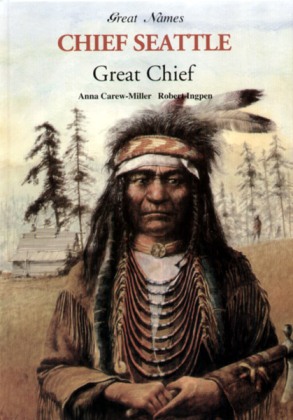
The man was real; the speech wasn't his
1854 වසරේ මුල් කාර්තුවේ දවසක බටහිර ඇමෙරිකාවේ සියැටල් නගරයේ එලිමහන් රැස්වීමකදී සියැටල් නායකයා හැගීම්බර කථාවක් කළ බවට යම් සාක්‍ෂි තිබෙනවා. එයට ආසන්න ම හේතුව වූයේ පාරම්පරිකව ආදිවාසීන් ජීවත් වූ ඉඩම් සුදු ජාතිකයන්ට විකුණන ලෙස රජයෙන් කළ ඉල්ලීමයි. ‘ඉඩම් අයිතිය’ පිළිබඳ සංකල්පයක් නොතිබූ ආදිවාසීන් මෙයින් වික්‍ෂිප්ත වුණා. ඒ වන විට සිදුවෙමින් තිබූ පාරිසරික හා සාමාජයීය අකටයුතුකම් ගැන ද නායකයාගේ සිතේ ලොකු කලකිරීමක් තිබෙන්නට ඇති. නමුත් ඔහු තමන්ගේ බසින් එදා කළ කථාවේ වාර්තාවක් නැහැ.

ඊට වසර කිහිපයකට පසු සුදු ජාතික වෛද්‍යවරයකු හා ලේඛකයකු වූ හෙන්රි ස්මිත් මුල් වරට ඒ කථාවේ ඉංග‍්‍රීසි අනුවාදයක් සකස් කළා. ඒ සඳහා ඔහු කිහිප වතාවක් සියැටල් නායකයා මුණ ගැසී කථා බහ කළත් ඔහුගේ අනුවාදයට වැල්වටාරම් හා මනරම් අදහස් එකතු කළ බව ඇන්ඩි කාර් (Andy Carr) නම් අමෙරිකානු පරිසරවේදියා හා පර්යේෂකයා විශ්වාස කරනවා.

1887දී මේ ඉංග‍්‍රීසි අනුවාදය මුල් වරට Seattle Sunday Star පුවත්පතේ පළ වුණා. එයින් පසු විවිධ දාර්ශනික, ආගමික හා පාරිසරික ප‍්‍රකාශනවල එය නැවත නැවතත් පළ කරනු ලැබුවා. 1969 දී අමෙරිකාවේ ටෙක්සස් විශ්ව විද්‍යාලයේ සම්භාව්‍ය සාහිත්‍යය පිළිබඳ මහාචාර්ය විලියම් ඇරෝස්මිත් (Prof William Arrowsmith) නැවත වරක් එය කාලානුරූපිත ලෙස සංස්කරණය කළා.

1970 අපේ‍්‍රල් 22 දා අමෙරිකාවෙන් ඇරඹුණු මිහිතල දිනය (Earth Day) සඳහා පරිසරවේදීන් මිලියන් 20ක් දෙනා යොදා ගත්තේ ඒ සංශෝධිත කථාවයි. ඒ වන විට වාත දුෂණය, ජල දුෂණය හා රසායනික ද්‍රව්‍ය අධික ලෙස ආහාරපානවලට මිශ‍්‍රවිම ආදී කරුණු ගැන අමෙරිකානු ජනතාව දැනුවත් වෙමින්, කලබල වෙමින් සිටියා. මේ කාලීන සිතුම් පැතුම් මහාචාර්යවරයාගේ සංශෝධනයට ඔහු ඇතුළත් කළා.
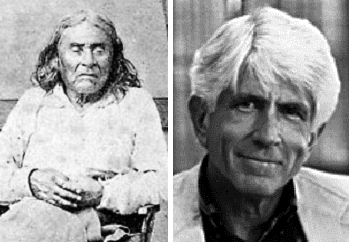
Chief Seattle (left) and actual speech writer Ted Perry

මේ සංශෝධිත කථාව මුල් මිහිතල දිනයේදී ඇසු අය අතර ටෙඞ් පෙරී (Ted Perry) නම් චිත‍්‍රපට තිර රචකයකු ද සිටියා. ඊට ටික දිනකට පසුව එරට කි‍්‍රස්තියානි ටෙලිවිෂන් සමාගමක් (Southern Baptist Television Commission) ඔහුට ඇරයුම් කළා ඒ වන විට සිදුවෙමින් තිබූ පරිසර විපත් පිළිබඳව කිතු දහම පදනම් කරගෙන සාමයිකව විග‍්‍රහ කරන වාර්තා චිත‍්‍රපටයක් රචනා කරන්නට.

සියැටල් නායකයා 1970 දී සිටියා නම්, එවකට මතු වී තිබූ පාරිසරික ප‍්‍රශ්න හා සංවර්ධන පිළිබඳ සංකල්පමය අර්බුද ගැන ඔහු කුමක් කියනු ඇත්දැයි ටෙඞ් පෙරී කල්පනා කළා. මේ අනුව යමින් සියැටල් නායකයාගේ කථාවේ අළුත්ම ප‍්‍රතිනිර්මාණයක් ඔහු ලයාන්විත හා කාව්‍යමය බසින් තිර රචනයකට නැගුවා. මුල් කථාවේ නොතිබුණු දෙවියන් පිළිබඳ ක‍්‍රිස්තියානි සංකල්පත් ඔහු මේ තිර රචනයට එකතු කළා. 1973දී මේ වාර්තා චිත‍්‍රපටය එළි දැක්කේ Home නමින්. චිත‍්‍රපටයට වඩා විශාල ජනප‍්‍රියතාවයක් ලැබුණේ එහි යොදා ගත් සියැටල් නායකයා කළා යැයි කියන දාර්ශනික කථාවටයි.

පසුගිය වසර 40කට අසන්න කාලයක් තිස්සේ ලොව පුරා ප‍්‍රචලිත වී, විවිධ භාෂාවලට පෙරැළී ඇත්තේ මෙසේ හෙන්රි ස්මිත්ගේ මුල් අනුවාදය, විලියම් ඇරෝස්මිත් විසින් කාලානුරූපීව සංශෝධනය කර ටෙඞ් පෙරී විසින් ප‍්‍රතිනිර්මාණය කරන ලද කථාවයි! එඞ්වින් ආරියදාස හා ධර්මසිරි ගමගේ යන ලේඛකයන් මෙහි අගනා සිංහල අනුවාදයන් කර තිබෙනවා.

1980 දශකය අගවන විට ලොව පුරා පාරිසරික ශුද්ධ ලියවිල්ලක මට්ටමට පිළිගැනීමක් ලැබුණු මේ කථාවේ ඓතිහාසික විශ්වාසනීයත්වය ගැන ටික දෙනකු ප‍්‍රශ්න කරන්නට පටන් ගත්තා. සියවසකට වැඩි කාලයක් පුරා සියැටල් නායක කථාවේ පරිනාමය ගැන ජෝන් ස්කල් (John Scull) නම් පර්යේෂකයා විස්තරාත්මකව අධ්‍යයනය කළා. ආදිවාසී නායකයකුගෙන් පටන්ගෙන ක‍්‍රිස්තියානි වාර්තා චිත‍්‍රපටයකින් හමාර වූ ඒ ගමනේදී, මුල් අදහස් විශාල වශයෙන් වෙනස් වී ඇති සැටි ඔහු සාක්‍ෂි සහිතව පෙන්වා දුන්නා. (සාමයික කලා කෘතීන් ගැන මට ප‍්‍රශ්නයක් නැහැ. මෙහිදී අප කථා කරන්නේ පසු කාලීනව සාමයික මුහුණුවරක් දීමෙන් මුල් කෘතිය විකෘති වීම ගැනයි. එහෙත් ‘මුල් කෘතිය’ කුමක්දැයි කිසිවකු හරිහැටි නොදන්නා නිසා සිදු වී ඇති වෙනස්කම් සිතාගන්නටත් අමාරුයි!)

1992 වන විට මේ සැබෑ තත්ත්වය හෙළි කරන ගවේශණාත්මක වාර්තා New York Times හා Newsweek ප‍්‍රකාශනවල පළ වුණා. එහෙත් ඒ වන විට සියැටල් නායක කථාව ලෝක ව්‍යාප්ත මිථ්‍යාවක් බවට පත් වී හමාරයි. ‘සියැටල් නායකයා මෙබදු අදහස් සැබැවින් ම කීවත්, නොකීවත් ඔහු වැනි ශ්‍රේෂ්ඨ පරිසරවේදියකුගේ මුවට මෙබදු අදහස් ආරෝපණය කිරීමේ වරදක් නැතැයි’ පරිසරවේදීන් තර්ක කළා.

එය ප‍්‍රශ්න කරන අයට පරිසරවේදීන්ගෙන් දැඩි විවේචන එල්ල වුණා. ‘සම්ප‍්‍රදායික දැනුම හෙළා දකින්නට උත්සාහ කරන සුදු ජාතික කුමන්ත‍්‍රණයක කොටස්කරුවන්’ හැටියට හදුන්වා දෙනු ලැබුවා. (2009 අපේ‍්‍රල් 22 වනදා මගේ බ්ලොග් අඩවියේ මේ ගැන විග‍්‍රහයක් මා ලියා පළ කළා. එයට ලැබුණු පාඨක ප‍්‍රතිචාර බහුතරයක් ද මේ ආකාරයේ එවායි. ආදිවාසී දැනුම හෙලා දකින බටහිර ඒජන්තයෙකු ලෙස ඇතැම් පාඨකයන් මට අවලාද නැගුවා. (http://tiny.cc/Seattle බලන්න).

ජෝන් ස්කල් මීට වසර කිහිපයකට පෙර මුලින් මතු කළ, මා මතවාදීව එකග වෙන තර්කය මෙයයි. පරිසරය රැකගන්නට අධ්‍යාත්මික හා චින්තනමය වෙනසක් ද අවශ්‍ය බව ඇත්ත. එහෙත් කාව්‍යමය බසින් විසිතුරු වුණු, තාර්කික බවින් හීන වූ මෙබදු ලියැවිල්ලක් කරන්නේ මානව පරිනාමය ගැන අප තුළ මහා කලකිරීමක් හා ඉච්ඡභංගත්වයක් ඇති කිරීමයි. ගොඩ ගන්නට බැරි තරම් අසාධ්‍ය වුණු රෝගියකුගේ මට්ටමට මිහිතලය පත්ව ඇතැයි අදහසක් ද එයින් ජනිත වෙනවා. පරිසරය හා මිනිසා අතර යම් තුලනයක් හා සංහිදියාවක් ඇති කිරීමට අවශ්‍ය මානසික රාමුව මෙය යයි මා සිතන්නේ නැහැ.

1990දී ආචාර්ය ආනන්ද ඩබ්ලිව් පී ගුරුගේ මහාවංශයේ සඳහන් වන ප‍්‍රධාන ඓතිහාසික අවස්ථා පාදක කර ගෙන නිර්මාණාත්මක කෘතියක් ලිව්වා. ‘Voices of Ancient Sri Lanka’ නම් එහි අඩංගු වූයේ මෙරට ඉතිහාසයේ වැදගත් සංධිස්ථානවලදී එවකට විසූ රජවරුන් හා අනෙකුත් ප‍්‍රභූන් පවත්වන්නට ඇතැයි අනුමාන කළ හැකි මහජන කථා පෙළක්. එය පසුව ‘ශ්‍රී ලංකා ප‍්‍රතිරාවය’ නමින් සිංහලෙන් ද පළවුණා.

ඒ පොතේ ලියැවී ඇති වදන්මාලා ගුරුගේ සූරීන්ගේ පරිකල්පනයෙන් මතු වූ, ඔහුගේ කෘතහස්ත ශෛලියෙන් ඔප් වැටුණු ඒවායි. සැබැවින් ම ඒ පුද්ගලයන් එම අදහස් කී බවට තිරසාර සාක්‍ෂි නැහැ. එහෙත් එසේ වූ පමණට එම කතා රසවීදීමට අපට බාධාවක් ද නැහැ. සියැටල් නායකයාගේ කථාවත් මෙයට සමාන තත්ත්වයක්.

සියැටල් නායකයා හරබර කථාවක් කරන්නට ඇති. එය ඔහුට ම ආවේණික උපමා, රූපක ආදියෙන් පිරී තිබෙන්නටත් ඇති. එහෙත් අද ලෝකයේ සංසරනය වන විචිත‍්‍ර කථාව සියැටල්ගේ නොව තිර රචක ටෙඞ් පෙරීගේ බව සිහි තබා ගැනීම වැදගත්. චිත‍්‍රපටය පරිකල්පනාවේ නිදහස ඇති කලාවක්. අප සැබෑ ලෝකය හා පරිකල්පනා ලෝකය අතර වෙනස හදුනාගත යුතුයි.
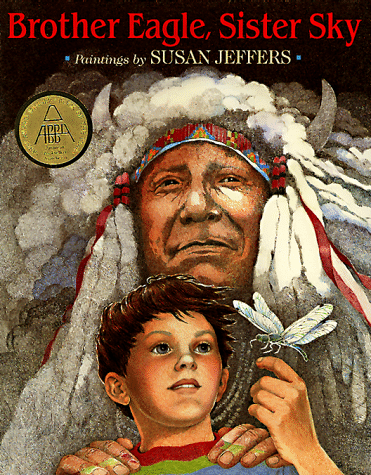
This 1991 book built on the Chief Seattle fable
නොකපන ලද දියමන්තියක් සියැටල් බිහි කළා නම් එය ටෙඞ් පෙරීගේ අතින් හැඩ වැඩ වී ඔටුන්නක සවි වුණා යයි කිව හැකියි. මුල් දියමන්තියේ කාන්තිය වඩාත් ප‍්‍රබල කිරීමේ ගෞරවය තිර රචකයාට හිමි විය යුතුයි. සියැටල් ඇත්තට ම කී දේ කුමක්ද තිර රචකයා එයට එකතු කළේ මොනවාද යන්න මේ වන විට පැහැදිළි නැහැ. ආදීවාසී නායකයෙකු මහා ප‍්‍රාඥයකු හැටියට හුවා දක්වන්නට පරිසරවේදීන් මෙන් ම අධ්‍යාපනවේදීන් ද කැමතියි. එහි ලොකු වරදක් නැති වූවත් මිථ්‍යාවක් මත ගොඩ නගන දර්ශනයට කල් පැවතිය නොහැකි බව අප සිහි තබා ගත යුතුයි.

සියැටල් නායකයා මහ පොළවේ පය ගසා ගෙන එහි හද ගැස්ම හදුනාගත් අය බවට විවාදයක් නැහැ. තමන් මිහිතලය සමග නිරන්තර ගනුදෙනුවක් කරමින් සිටින බවත්, එහිදී ඕනෑවට වඩා උකහා ගත්තොත් එහි අහිතකර විපාක විදින්නට සිදුවන බවත් ආදිවාසීන් හොදාකාර දන්නවා. අද ලෝකයේ සංවර්ධන අර්බුදයේ ලොකු ම අභියෝගයත් එයයි. අපේ (සහ අන් ජීවීන්ගේ) පැවැත්මට අවශ්‍ය පාරිසරික ප‍්‍රවාහයන් විනාශ නොකොට අපේ භෞතික අවශ්‍යතා සපුරා ගන්නේ කෙසේ ද?

ප‍්‍රාග්-නූතන යුගයේ හෝ ගල් යුගයේ ජීවන රටාවකට ආපසු යන්නට හැකියාවක් නැහැ. අල්පේච්ඡ දිවි පෙවෙතක් ගැන කථා කරන පරිසරවේදීන් පවා එබන්දකට සූදානම් නැහැ. මේ නිසා ප‍්‍රායෝගිකව කළ හැකි තුලනයන් මොනවා ද යන්න හදුනාගෙන ඒ සඳහා අපේ කාලය, ශ‍්‍රමය හා නිර්මානශීලී හැකියාව යොමු කිරීමයි අවශ්‍ය වන්නේ. එසේ නැතිව යටගිය දවසකින් නොතිබුණු රොමෑන්ටික් සිහිනයකට හෝ චිත‍්‍රපට තිරනාටක රචකයෙකුගේ වදන් සිත්තමකට හෝ අපේ ලෝකයේ මහා ප‍්‍රශ්න විසඳන්නට හැකියාවක් නැහැ.

පරිසරවේදීනි, දැන්වත් අවදිවන්න!
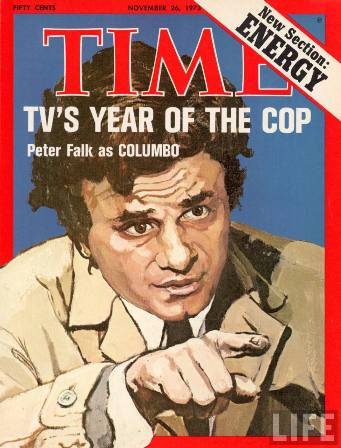
Peter Falk (1927-2011): Goodbye to Columbo from a fan in Colombo

Peter Falk (1927-2011)
Actor Peter Falk, who just died aged 83, was truly an icon of globalised popular culture. With no props besides his rumpled jacket and raspy voice, he held a whole generation spell-bound with intelligent television (and showed why the term need not be an oxymoron).

Columbo’s creators, Richard Levinson and William Link, modeled the character after the crazy-like-a-fox sleuth in the French classic “Les Diaboliques’’ (1955). But it was Peter Falk who brought the character alive and gave it a unique flavour.

It turns out that Falk didn’t originate the role of Lieutenant Columbo of the Los Angeles police. Bert Freed had first played Columbo in a 1960 teleplay. Falk wasn’t even the front-runner for the part when NBC wanted to revive the character in 1968 for a made-for-television movie, “Prescription: Murder.’’ The network had hoped to cast entertainer Bing Crosby for that program.

“An agent called and said that Crosby was scheduled to play golf and couldn’t turn it down to go over and talk’’ to the show’s creators, Falk told The Washington Post in 1990.

“He did love golf,’’ Mr. Falk said. “I play, too, but I went over and talked to them.’’

‘Just One More Thing’: Remembering Peter Falk, TV’s ‘Columbo’

Columbo could elicit an inadvertent confession from a suspect by prefacing his question with a seemingly harmless, “Just one more thing” – the phrase that became synonymous with his character and the title of the actor’s 2006 memoir.

Falk once described the character he played for 30 years in these words: “He’s unique — if he were up for auction, he would be described as ‘one of a kind, a human with the brain of Sherlock Holmes who dresses like the homeless.’ ’’

Arthur C Clarke once complained, good-naturedly, that Falk was the reason why most Americans couldn’t correctly spell the capital of Sri Lanka. (I have my own theories on geographically challenged Americans, but those can wait.)

Growing up in suburban Colombo in the 1980s, when we had just two (state-owned) TV channels and limited international fare, Columbo gave me hours of stimulating, enriching entertainment. So this is one ardent fan saying Thank You and Goodbye from…Colombo.

‘Amazing Grace’ movie: Story of William Wilberforce, the Model Campaigner

One man, one resolve -- and history is changed!
“When people speak of great men, they think of men like Napoleon – men of violence. Rarely do they think of peaceful men. But contrast the reception they will receive when they return home from their battles. Napoleon will arrive in pomp and in power, a man who’s achieved the very summit of earthly ambition. And yet his dreams will be haunted by the oppressions of war. William Wilberforce, however, will return to his family, lay his head on his pillow and remember: the slave trade is no more.”

Those words are uttered by the character Lord Charles Fox in the British House of Commons towards the end of the 2006 movie Amazing Grace. They sum up the singular accomplishment of William Wilberforce (1759 – 1833), British politician, philanthropist and leader of the movement to abolish the slave trade.

The movie, based on his true story, is not just a well-made period drama. It also offers dramatic insights into one of the most successful – and consequential – social justice campaigns in history. It reminds us that a determined man or woman can, indeed, make a difference in our complex world.

Inspired by a recent visit to Yorkshire, where Wilberforce hailed from, I’ve just watched the movie — and am amazed to find how many such striking parallels there are to evidence-based policy change and law reform in a very different world of ours more than two centuries later.

But first, here’s the storyline from the Internet Movie Database (IMDb):

“In 1797, William Wilberforce, the great crusader for the British abolition of slavery, is taking a vacation for his health even while he is sicker at heart for his frustrated cause. However, meeting the charming Barbara Spooner, Wilberforce finds a soulmate to share the story of his struggle. With few allies such as his mentor, John Newton, a slave ship captain turned repentant priest who penned the great hymn, “Amazing Grace,” Prime William Pitt, and Olaudah Equiano, the erudite former slave turned author, Wilberforce fruitlessly fights both public indifference and moneyed opposition determined to keep their exploitation safe. Nevertheless, Wilberforce finds the inspiration in newfound love to rejuvenate the fight with new ideas that would lead to a great victory for social justice.”

A detailed plot synopsis on IMDB

Wikipedia has a good summary of how Wilberforce and his few determined friends sustained a campaign against this inhuman yet highly lucrative trade.

Wilberforce was every bit the resolute campaigner: used every trick in the book, and then some. He diligently amassed incriminating evidence about the mass-scale abuse of human rights taking place in far-away Africa and on the high seas transporting captured African slaves. He wrote and spoke extensively using facts and figures as well as appeals to human emotions. He collected eye witness testimonials, and gathered over 300,000 signatures in a petition from ordinary people calling for abolition of slavery — which countered the political argument that people didn’t care.

William Wilberforce by Karl Anton Hickel, circa 1794
Wilberforce must have been among the first to realise the power of collective consumer action. On his urging, conscientious consumers in Britain boycotted sugar grown in the Caribbean with slave labour. One of the most sucessful campaigns the Abolition Movement was responsible for was the Sugar Boycott. According to one source: “In 1791 the society distributed leaflets encouraging the public, and especially women, not to buy or use sugar produced in the West Indies by slaves. As a result about 300,000 people boycotted sugar and sales began to drop. In an effort to increase sales, some shops stocked only sugar imported from India, which had not been produced by slaves, and goods were labelled to show this.”

He also worked on and with influential religious and political connections. He surrounded himself with a few trustworthy friends who stay the course despite multiple setbacks, ridicule and character assassination. He was passionate to the point of being obsessive. Yet he also knew when to speak and when to make a tactical retreat. His timing was impeccable as were his patience and commitment.

He wasn’t successful with every social justice campaign he took up. First elected to Parliament in 1780, he campaigned unsuccessfully for penal and electoral reform. It was in 1787, at the encouragement of William Pitt the Younger — his long-long friend and Prime Minister — that he took up the cause of abolition at Westminster. But his humanitarian and ethical arguments had to meet the economic interests of those who had made vast fortunes from the slave trade or the use of slave labour. Many of his fellow Parliamentarians had deep vested interests that wanted to see the status quo continue. Others were in the pay of slave traders.

It was not until 1807 — full 20 years after Wilberforce first started his campaign — that the Abolition Bill was finally passed. Just before that, Wilberforce wrote his famous ‘Letter on the Abolition of the Slave Trade, Addressed to the Freeholders and Other Inhabitants of Yorkshire’, justifying his preoccupation with abolition against claims that he was neglecting their local interests at Westminster, and setting out all his arguments against the slave trade.

Then, as now, elected people’s representatives have to perform this difficult balancing act — between their constituency’s immediate, everyday needs and the greater good or national interest. Which is why all progressive legislators and social justice campaigners should watch Amazing Grace, and read the Wilberforce biography.

Times have indeed changed, but their challenges have not.

Wikipedia entry on Amazing Grace movie

Watch the trailer for Amazing Grace:

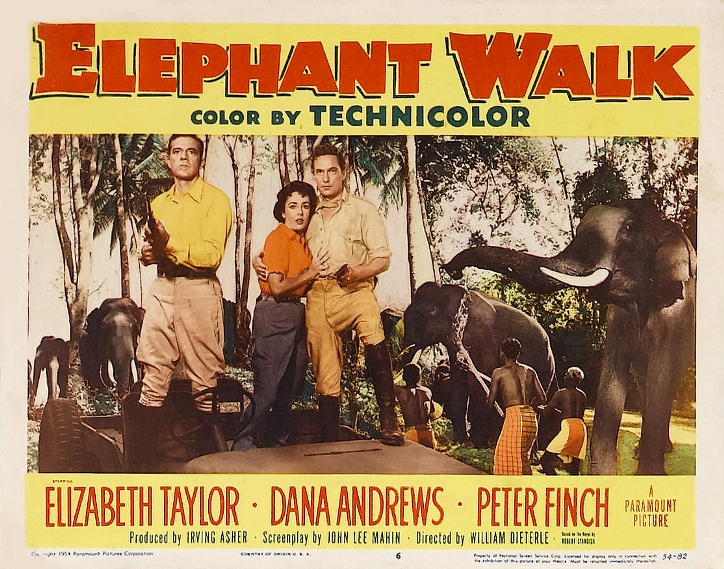
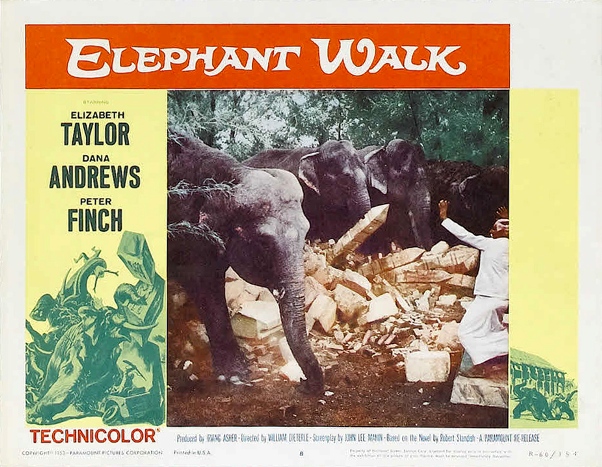
Elephant Walk film review: Prescient movie that forewarned about Ceylon’s crowded, troubled future?

Elephant Walk: Another century, another island - but casting its shadow on us?
How can anyone review a film made nearly six decades ago — especially if its first release took place even before I was born? Well, there is only one way to find out – by just doing it.

I’ve just done it with Elephant Walk (103 mins, colour), released by Paramount Pictures in April 1954 — a dozen years before I was born on the same island (then Ceylon, now Sri Lanka) where the movie was set and filmed. In fact, this was among several that were shot on location in Ceylon in the 1950s when Hollywood studios ‘discovered’ the island as an exotic, relatively inexpensive and hassle-free location. But this is the only one whose story is actually set in Ceylon.

Elephant Walk was directed by William Dieterle, and based on the 1948 novel with the same title, written by “Robert Standish” — actually the pseudonym of English novelist Digby George Gerahty (1898-1981). It starred Elizabeth Taylor, Dana Andrews, Peter Finch and Abraham Sofaer.

One benefit of reviewing a film so long after its original release is that it allows the benefit of hindsight and perspective. I have exploited this to the full in my review cum op ed essay, titled Elephant Walk revisited: Mixing Tea, Jumbos and Monsoons, just published on Groundviews.org.

Here’s an excerpt:

“The movie has been remarkably prescient on several fronts, which can only be appreciated now — in another century, and on a wholly different island. A key theme of the movie was the human-elephant conflict, but passing references to social exclusion and rampant poverty in post-independent Ceylon are also of much interest.

“I doubt if Paramount’s writers were intentionally making any social commentary. One of the studio’s co-founders, Samuel Goldwyn, had famously cautioned against it. When asked about movies with a “message” some years earlier, he had replied, “If you want to send a message, use Western Union.”

“Nevertheless, the movie (and perhaps the book on which it is based, which I haven’t read) was contrasting the British planters’ opulent lifestyle with the forced austerity in post-War Britain. Even more striking is the poverty and squalor among the hundreds of resident workers whose sweat, toil — and occasional tears — ensured that the ‘cups that cheer’ were always brimming.”

Read the full review:
Elephant Walk revisited: Mixing Tea, Jumbos and Monsoons, on Groundviews.org

Can cricket unite a divided Sri Lanka? Answer is in the air…will it be caught?

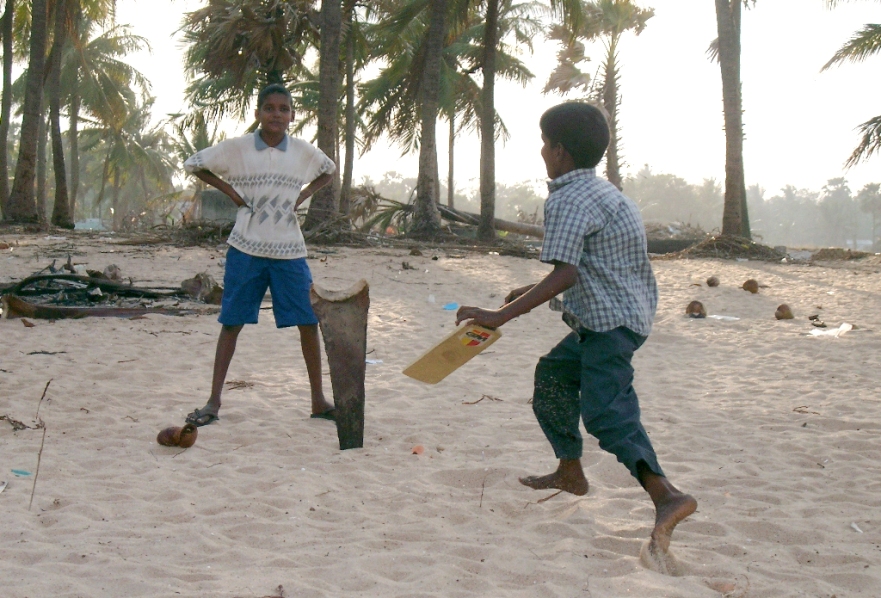
Boys playing cricket on tsunami hit beach in eastern Sri Lanka, January 2005 (photo by Video Image)

Two boys playing cricket on a beach, with a makeshift bat and wicket. What could be more ordinary than this in cricket-crazy Sri Lanka, where every street, backyard or bare land can host an impromptu game?

But the time and place of this photo made it anything but ordinary. This was somewhere along Sri Lanka’s east coast, one day in mid January 2005. Just a couple of weeks after the Indian Ocean tsunami had delivered a deadly blow to this part of the island on 26 December 2004.

My colleagues were looking for a survivor family whose story we could document for the next one year as part of the Children of Tsunami media project that we had just conceived. On their travels, they came across these two boys whose family was hit hard by the tsunami: they lost a sibling and their house was destroyed.

They were living in a temporary shelter, still recovering from the biggest shock of their short lives. But evidently not too numbed to play a small game of cricket. Perhaps it was part of their own way of coping and healing.

More than six years and many thousand images later, I still remember this photo for the quiet defiance and resilience it captured. Maybe that moment in time for two young boys on a devastated beach is symbolic of the 20 million plus men, women and children living in post-war Sri Lanka today.

We are playing cricket, or cheering cricket passionately and wildly even as we try to put a quarter century of war, destruction and inhumanity behind us. And at least on the cricket front, we’re doing darn well: the Sri Lanka national team beat New Zealand on March 29 to qualify for the ICC Cricket World Cup finals on April 3 in Mumbai.

We’ve been here once before – in March 1996 – and won the World Cup against many odds. Can we repeat or improve that performance? We’ll soon know.

Of course, rebuilding the war-ravaged areas and healing the deep-running wounds of war is going to be much harder than playing the ball game.

My friends at Groundviews is conducting an interesting informal poll: World Cup cricket aiding reconciliation in Sri Lanka: Fact or fiction?

A few days ago, Captain of Lankan cricket team Kumar Sangakkara described post-war northern Sri Lanka as a scene of devastation after paying his first visit to the region. People of the north have been deprived for 30 years of everything that is taken for granted in Colombo, he told the media.

He toured the north with team mate and wiz bowler Muttiah Muralitharan, who is patron of the Foundation of Goodness. The charity, itself a response to the 2004 tsunami, “aims to narrow the gap between urban and rural life in Sri Lanka by tackling poverty through productive activities”.

Earlier this month, Lankan novelist Shehan Karunatilaka wrote a highly moving essay in the London Observer titled ‘How cricket saved Sri Lanka’. The blurb read: “As co-host of the current World Cup, Sri Lankans are relishing their moment on the sport’s biggest stage. And no wonder. For them, cricket is much more than a game. After years of civil war, the tsunami and floods, it’s still the only thing holding their chaotic country together.”

In that essay, which is well worth a read, he noted: “Many of us believe in the myth of sport; some more than others. Clint Eastwood and Hollywood have turned the 1995 Rugby World Cup into a sport-conquers-apartheid fantasy in Invictus. CLR James believed cricket to be the catalyst for West Indian nationalism. A drunk in a Colombo cricket bar once told me that Rocky IV had hastened the fall of the Soviet Empire.”

He added: “Let’s abandon the myths for now. Sport cannot change a world. But it can excite it. It can galvanise a nation into believing in itself. It can also set a nation up for heartbreak.”

Cricket has indeed excited the 20 million Lankans from all walks of life, and across the various social, economic and cultural divides. It has rubbed off on even a cricket-skeptic like myself.

We will soon know whether the Cricket World Cup will be ours again. Whatever happens at the Wankhede Stadium in Mumbai on April 2, we have a long way to go on the road to recovery and reconciliation.

Colombo, 29 March 2011: When Sri Lanka beat New Zealand to qualify for Cricket World Cup 2011 Finals

T (Tambiaiah) Sabaratnam: Fond farewell to a pathfinder science journalist

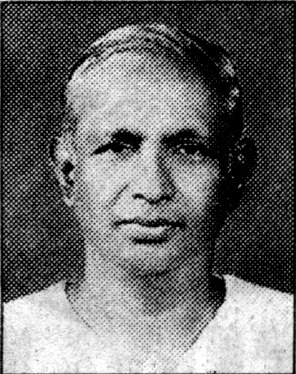
Tambiaiah Sabaratnam
I seem to be writing a few fond farewells to fellow travellers every year, becoming an obituarist of sorts in that process. I don’t go to funerals if I can help it (they’re too depressing), and instead I withdraw to a corner to write my memories. Some are published; others are privately circulated.

I’ve just published such a tribute on veteran Lankan journalist T (Tambiaiah) Sabaratnam, who died on March 5 aged 79. He was a senior colleague when I entered the world of journalism in the late 1980s. He retired (sort of) in 1997, but remained active in the world of media to the very end.

He was an outstanding journalistic story-teller. As I wrote in the tribute: “He was a pathfinder and leading light in Sri Lankan science journalism for over a generation. Throughout his long association with the English and Tamil press, he advocated the pursuit of public science: tax-payer funded scientific research for the benefit of the people and economy.”

Here’s another excerpt, more personalised:
“He was a source of inspiration and encouragement to me during my early years in science journalism. Our paths crossed often in the late 1980s and early 1990s when he and I covered many of the same scientific events. He was approachable and helpful, but I could never bring myself to call him ‘Saba’. When I knew him, he had already been in journalism for longer than I’d been alive. To me, he was always ‘Mr Sabaratnam’.

“He reached out despite our generational, media house and other divides. He was genuinely interested in my progress as a science journalist, and offered me advice on both style and substance. Occasionally, he also cautioned about on various ‘pitfalls’ in the local scientific scene — personal rivalries, exaggerated claims or oversized egos.”

Read the full tribute on Groundviews.org: Tambiaiah Sabaratnam (1932 – 2011): The Storyteller of Public Science

Read compact version in Daily News, 15 March 2011: Tambiaiah Sabaratnam (1932 – 2011): Storyteller of public science

Taya Diaz: Amiable tour guide to a (biological) Treasure Island

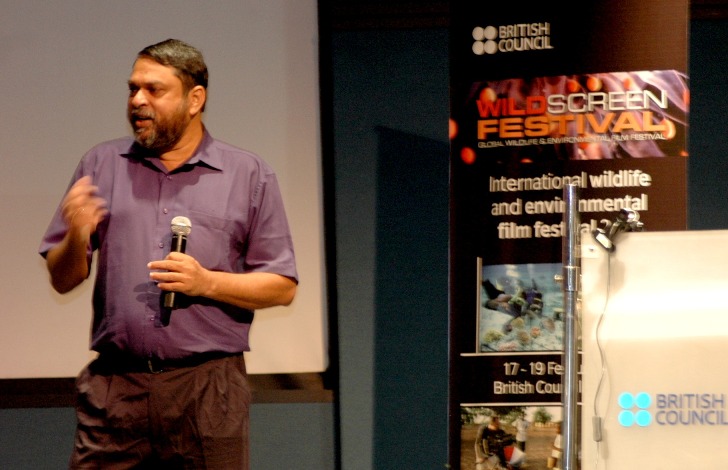
Taya Diaz conducts film making master class during Wildscreen 2011 in Colombo

“Taya Diaz has the shortest name in Sri Lanka but is a big man with a personality to match and a bushy black beard. Apart from being an excellent guide with good knowledge of all aspects of Sri Lankan Wildlife, he’s also a writer and film maker and is excellent company.”

That’s how a bird-watching website once described Taya Diaz, Sri Lankan conservationist turned wildlife film maker.

During the past two decades, Taya has collaborated in making over 20 full-length international wildlife documentaries, all showcasing Sri Lanka’s rich biological diversity and ecosystems. He has been a scientific investigator, presenter, narrator or Sinhalese scriptwriter.

One of his earliest involvements in international film making was with The Temple Troop. Made in 1997, for the BBC and Discovery Channel, it documented a year in the life of a troop of monkeys living in Sri Lanka’s ancient city of Polonnaruwa. These monkeys have been the subject of a long-running study by the Smithsonian Institution’s Primate Biology Program.

Trained as a scientist, Taya has worked in a number of field based conservation projects including the Smithsonian study of monkeys. But it’s as a wildlife and natural history that he now makes a name both in Sri Lanka and overseas.

The Urban Elephant (2000, for PBS/National Geographic), and The Last Tusker (2000, for BBC/Discovery) are two other productions that used Taya’s ground knowledge and scientific expertise. He has provided local liaison for broadcasters such as New Zealand TV, Canal+, Discovery channel, and BBC1.

Taya Diaz: Enough stories to last a lifetime!
For all these reasons, Taya was a natural choice when TVE Asia Pacific was asked to recommend a Sri Lankan film maker to present a master class when the Wildscreen traveling film festival held in Colombo from 17 to 19 February 2011. His master class, titled “Untold Stories of Sri Lanka”, looked at Sri Lanka’s as yet largely untapped potential for authentic, factual stories related to wildlife, natural history and the environment.

He explained the premise for his master class: “Sri Lanka is a pot of plenty in every aspect — the opportunities for a documentary filmmaker are astounding. But sadly, what most audiences see on the airwaves is very standard and boringly similar, touching on the same topics year in and year out.”

Taya feels that documentary films and TV programmes are also essential for educating Sri Lankans about their own natural heritage. Sri Lanka has an impressively high number of plant and animal species for its relatively small land area — which makes it one of the most biologically diverse countries in the world.

“Sri Lankan naturalists, wildlife experts and environmentalists should collaborate more closely with film makers and/or broadcasters to make more local films aimed at local audiences,” he said during a panel discussion I moderated on February 17. “This is essential for raising awareness on environment and sustainable development issues as Sri Lanka pursues rapid economic development after the war.”

Read TVEAP News story on Taya’s master class: Story telling through the local eyes vital, says Taya Diaz

Wildlife and Natural History Film making: Are Darwinian Rules at play?

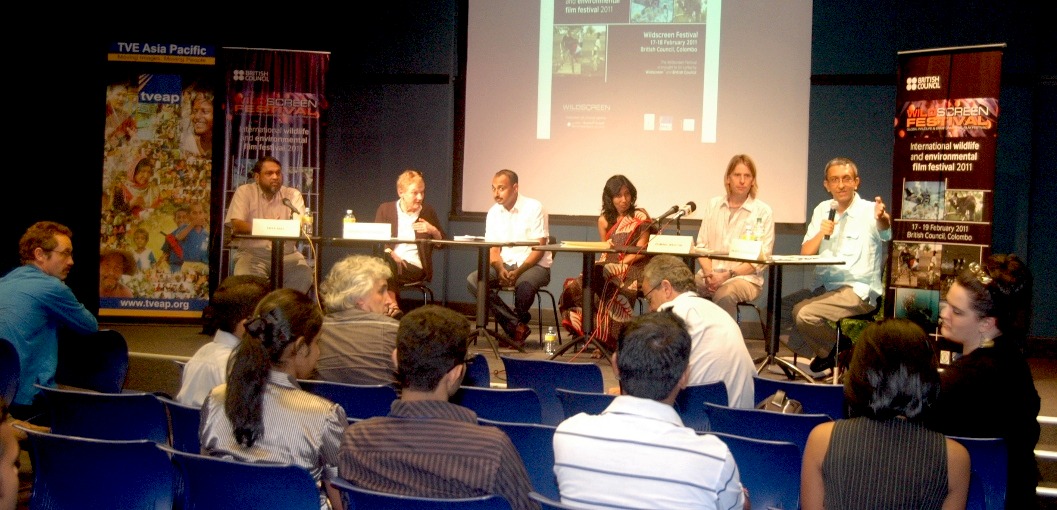
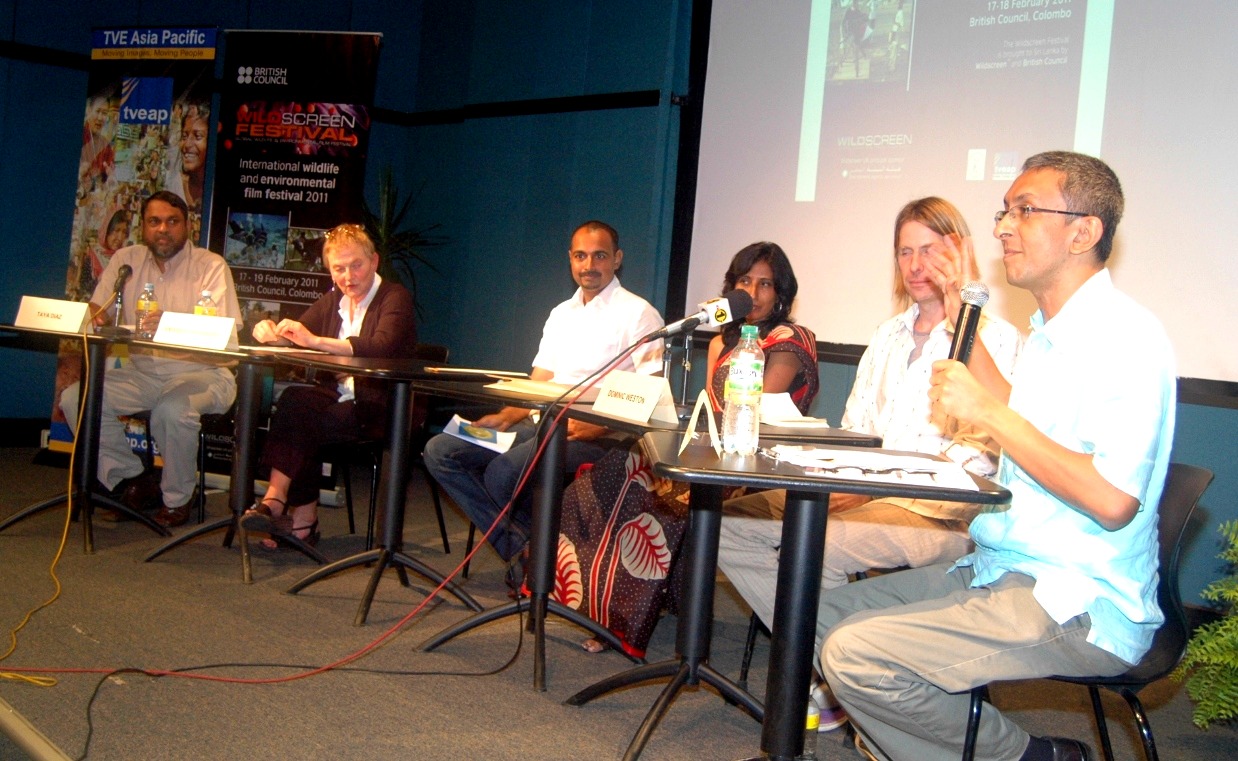
Wildscreen 2011 Colombo Panel: From L to R - Taya Diaz, Amanda Theunissen, Delon Weerasinghe, Anoma Rajakaruna, Dominic Weston and Nalaka Gunawardene

Is there an elite or ‘charmed’ circle of wildlife and natural history film makers in the world? If so, how does a new film maker break into this circle?

This is the question I posed to a group of visiting British film makers and their Sri Lankan counterparts during a panel discussion I moderated at the British Council Colombo on February 17 evening.

The panel, organised around the topic ‘Differences and mutual challenges in Asian, American and European productions/film making’, was part of the Wildscreen traveling film festival held hosted in Colombo, Sri Lanka, from 17 to 19 February 2011.

Amanda Theunissen, who has worked with the BBC Natural History Unit and National Geographic Television, gave a straight answer: yes, there is such a charmed circle.

And although she didn’t say it in so many words, it was clear from our overall discussions that the circle is jealously guarded, and it’s not easy for any newcomer to break into it. And the entry barrier becomes harder if the film maker is from the global South.

I opened the panel recalling the opening sentence of Our Common Future, the 1987 Report by the World Commission on Environment and Development: “The Earth is one but the world is not”. I said: “A similar disparity exists in wildlife and natural history film making. We are all covering the same planet Earth in all its splendour and diversity. But on this planet there are many different worlds of film making.”

I asked my five panelists — Amanda Theunissen and Dominic Weston from the UK, and Delon Weerasinghe, Anoma Rajakaruna, and Taya Diaz from Sri Lanka — to address three key challenges faced by all wildlife and natural history film makers everywhere: the art of effective story telling; fund raising to make films; and ensuring wide distribution of the films made.

The panel discussion was lively, wide-ranging and engaged the audience which comprised mostly aspiring film makers or film students. I didn’t want our discussion to scare any of them away from a career in environment and wildlife film making. But at the same time, we wanted to acknowledge the practical realities — and disparities — that exist within and across countries in this respect.

I’ve now written up a summary of the panel discussion for TVE Asia Pacific news. Its heading comes from a provocative question I asked during the panel: does wildlife film making operate on almost Darwinian rules?

Read the full story: Wildlife and Natural History Film making: Survival of the Fittest?

Wildscreen Colombo Panel: From L to R - Taya Diaz, Amanda Theunissen, Delon Weerasinghe, Anoma Rajakaruna, Dominic Weston, Nalaka Gunawardene

People Power beyond regime change: Now for the long haul in Egypt…

It's more than just a change at the top...

This is one of the more popular cartoons about People Power revolution in Egypt. The icon of pyramid has been irresistible for many cartoonists, but this one is especially profound: it says so much with so little!

We salute all ordinary Egyptians whose 18 days of resolve and agitation have driven out the dictator Hosni Mubarak. But as I tweeted to my Egyptian friend Nadia El-Awady on the night of 11 February soon after hearing Mubarak’s resignation: “One huge roadblock is now gone; we hope you’ll persist in your long march to democratic freedom.”

Toppling an unpopular, ruthless dictator is never easy, but the immediate aftermath is the most decisive – and dangerous – moment. This is when the ultra-nationalists and fundamentalists will compete with the democrats and liberals to fill the void. In Iran, when the Shah fell in 1979 after prolonged people power, it was a theocracy that replaced the autocracy. So people power requires constant vigilance, especially now.

People Power does not – and should not – stop at elections or revolutions in any country: regime change is only half of the struggle won. Ensuring people have a say in how their governments are run requires constant engagement by their citizens. This is a topic I have long been interested in, and written about. I also helped produce a global TV documentary on the subject in 2004. See these blog posts and web story about that film:

People Power beyond elections and revolutions: New documentary from TVE Asia Pacific profiles social accountability in practice

Blog post in August 2007: People Power: Going beyond elections and revolutions

Blog Post in August 2007: New Face of People Power: Social Accountability in Action

Of Dictators and Terrible Cockroaches: A Russian children’s story…from 1925!

Tarankanische (The Terrible Cockroach) original book cover, 1925

Sometime ago, when I gave a talk at the Sri Lanka Rationnalists’ Association, a member of my audience asked if parents should be banned from reading fairy tales to their children. His argued that children should be raised on reality and not fantasy. I was talking about science fiction and their social relevance, and I answered: there is absolutely no harm in fairy tales as they nurture in our young minds those vital qualities of imagination and sense of wonder. I quoted C S Lewis as saying that the only people really against escapism were…jailers!

These days, not all children’s stories are fairy tales and some of them actually carry very down-to-earth messages either overtly or covertly. Members of that largest club in the world – Parenthood – keep discovering new depths and insights in some children’s stories.

On 30 January, as people power struggles were unfolding in Tunisia and Egypt, I wrote a blog post titled Wanted: More courageous little ‘Mack’s to unsettle Yertle Kings of our times!. I related how, while following the developments on the web, I have been re-reading my Dr Seuss. In particular, the delightfully inspiring tale of Yertle the Turtle King. To me, that is the perfect example of People Power in action — cleverly disguised as children’s verse!

Turns out another parent on the opposite side of the planet had a similar insight, but from an even older children’s story written in Russia! Philip Shishkin has shared his experience in the latest issue of Newsweek.

Tarankanische, or ‘The Terrible Cockroach’ (also translated as ‘The Giant Cockroach’) is a children’s story written by the Russian author Kornei Chukovsky (1882-1969). The first edition, with illustrations by Sergeii Chekhonin, was published in (then) Leningrad 1925.

I was raised on translated Russian children’s stories (the only books of that genre we could access in the closed-economy, socialist misadventures of Sri Lanka during the early 1970s). Whatever economic realities that thrust those books on my childhood, many of them were very fine stories, always well illustrated. But I had somehow missed out on this one — so I quickly did some web searching for this story. And what a fantastic fable it is!

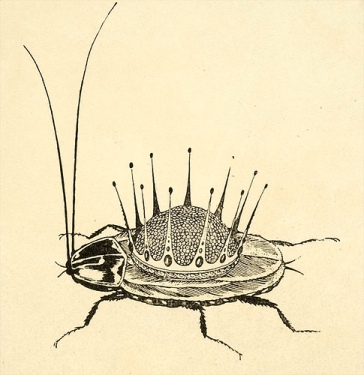
Tarankanische tells the nonsense tale of a threatening cockroach who is so fierce that he terrifies all the animals who are out to enjoy a picnic. Even the mighty elephants are helpless in his presence. The cockroach bullies and scares animals much larger than itself, and demands they surrender their cubs so he can eat them. He is seen as “a terrible giant: the red-haired, big-whiskered cockroach.”

Tarankanische, or The Terrible Cockroach, Sergeii Chekhonin, illustrator, 1925
The little tyrant rules the whole jungle on a mix of fear, submission and misery. A laughing kangaroo points out that it’s no giant, but merely a cockroach. The hippos tell him to shut up: “You’ll make things worse for us”. Then, one day, Nature finally restores balance (as it always does): a sparrow comes along and gobbles up the Terrible Cockroach.

In his essay titled Watching the Mighty Cockroach Fall, Philip Shishkin writes: “It is hard not to read the poem as an allegory for the rise and fall of a dictatorship. Despots tend to appear invincible while they rule, and then laughably weak when they fall. Once their subjects call them out on their farce, dictators look ridiculous. Often, they react by killing and jailing people, which buys them more time in power (Iran, Belarus, and Uzbekistan come to mind). But just as often, when faced with a truly popular challenge, dictators shrink to the size of their inner cockroaches.”

Shishkin then raises an interesting question: Did Kornei Chukovsky have Joseph Stalin in mind when he wrote it? Was Stalin prominent enough when the story was first published in 1925? To find out, read the full essay.

According to his mini-bio on IMDB, Chukovsky was a praised Russian translator of Charles Dickens, Mark Twain, Walt Whitman, and other English and American authors. His writings for children are regarded as classics of the form. His best-known poems for children are “Krokodil”, “Moydodyr”, “Tarakanische”, and “Doctor Aybolit” (Doctor Ouch).