Pay it forward: A charming idea for our hard times?

The power of three...to do good!
Just imagine…
You do a favour that really helps someone, and tell him/her not to pay it back…
Instead, you ask that it be paid FORWARD to three other people who, in turn, must each pay it forward to three more…and so on.

Impossible? Well, not quite – if you believe (as I do) in the essential goodness of human beings, no matter what their class, race and other divisive factors are.

This idea is known as ‘Pay it forward’. It is really simple: it asks that a good turn be ‘repaid’ by having it done to others instead. Paying it forward has been around as a concept for more than two millennia, from the time of ancient Greece. It was rediscovered in modern times by Benjamin Franklin and later, by Ralph Waldo Emerson, one of my favourite essayists.

In his 1841 essay titled ‘Compensation’, Emerson wrote: “In the order of nature we cannot render benefits to those from whom we receive them, or only seldom. But the benefit we receive must be rendered again, line for line, deed for deed, cent for cent, to somebody.”

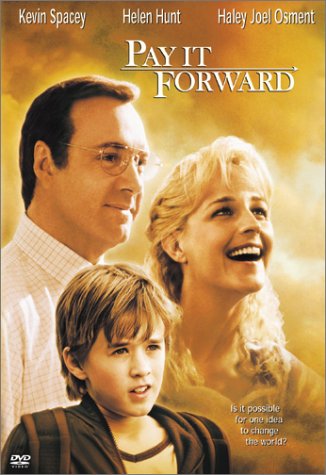
During the Twentieth Century, science fiction author Robert A Heinlein popularised the concept in his book Between Planets (1951). It formed the central theme of Pay It Forward (2000), a novel by Catherine Ryan Hyde, which was soon turned into a movie by the same name.

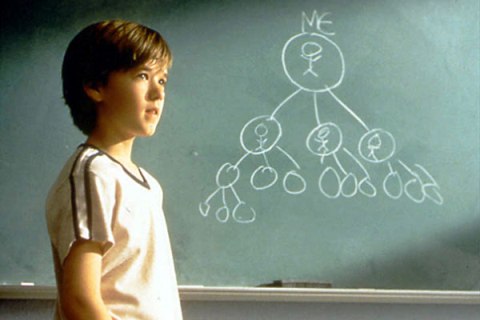
In that story, a thoughtful teacher challenges his seventh grade students with ‘an assignment to save the world’. One perceptive student devices a scheme where one has to carry out three good deeds for others as repayment of a good deed received. Such good deeds should be things that the beneficiaries cannot accomplish on their own.

It was through Pay It Forward the movie, made in 2000 and directed by Mimi Leder, that I first came cross the idea. It’s one of those simple and elegant ideas that packs so much power to change people and the world. Its implementation requires trust, honour and imagination, which most human beings can muster in sufficient quantity when challenged.

Then I realised that, without a conscious plan and not labelling it as such, I was already ‘paying it forward’ myself — and not just to three new people, but many. That was the least I could do for the many breaks, blessings and opportunities I had received in my professional life.

More about that in a minute. First, take a look at the official trailer for Pay it Forward:

And this is how it all started in the movie, with one thoughtful class teacher challenging his seventh grade pupils with ‘an assignment to save the world’:

Here’s an extended, unofficial trailer remixed by a fan using the official trailer, some scenes from the movie and a few interviews with the key stars:

Journalism – especially the industrialised, mainstream version of it – is by definition a highly collaborative business: newspapers, magazines, as well as TV/radio broadcasts are produced by several or many people working together, each playing a specified part.

And because the media are a mirror on our society and our times, the stories we journalists produce just won’t be possible unless our sources share their information, experiences and insights. This is why Bill Moyers, one of the most respected and credible voices in American broadcasting (a land where such professionals are endangered), says: “We journalists are simply beachcombers on the shores of other people’s knowledge, other people’s experience, and other people’s wisdom. We tell their stories.”

During the early years of my career as a science writer and journalist, I was enormously lucky in both respects. I had kind, indulgent, nurturing senior colleagues who showed me the ropes, expecting nothing in return except good stories. And I benefited much from the kindness and thoughtfulness of many accomplished men and women – mostly in the worlds of science, environment and development – who took the time and trouble to talk to me, clarify even basics to a rookie like myself, and allow me to attribute information or quotes them. I was a complete stranger to many of them, yet they cared enough in spite of busy schedules (there were also a few didn’t, but that’s only to be expected).

Then there were opportunities, some competitively earned, others bestowed on me. In those formative years, the opportunities for training, mentoring and other influences sharpened my skills and shaped my worldview. It was easy to grow up angry with the world and seeing conspiracies everywhere; it was much harder to acquire a balanced view of the world and to become a skeptical enquirer without turning into an incurable cynic.

Among those early influences were:
• Working with the Centre for Science and Environment (CSE) in India, under the late Anil Agarwal and his worthy successor Sunita Narain
• Regional and international training programmes, organised by various UN agencies and other entities such as the Abdus Salam International Centre for Theoretical Physics in Trieste, Italy
• Invaluable support from the International Science Writing Association (ISWA), which leverages far more benefits than its modest resources would indicate at first glance (again, the power of networking!)
• Editorial training and global syndication from Panos, which provided my first outlet to publish internationally through Panos Features (sadly, no more).

Then there was my mentor Sir Arthur C Clarke, who gave me the rare privilege of spending 21 years as his research assistant — a long and unique apprenticeship that enriched me so much.

These and others helped fill gaps in my formal training in science journalism. And such exposure was worth so much more in the days before commercial internet connectivity. There was no Google or YouTube, and early versions of email were just beginning to roll out.
Just do it, and hope others will keep doing it too...
And now it’s my turn to ‘pay it forward’. It’s plain and simple; there’s no grand pledge or plan. No one asked me to sign up to any binding agreement. There is no spiritual or intellectual compulsion. I just do it, because that’s a good thing to do.

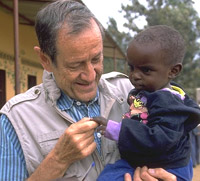
This is why, despite pressure of work, I work with young journalists and producers, organising training workshops through TVE Asia Pacific, or readily agreeing to be a resource person for good programmes organised by others. This is also why I mentor a few eager, committed young professionals in my native Sri Lanka and elsewhere in developing Asia. Read here my tribute to one of them, whose death four years ago was hard to bear. And this is why every year I donate a couple of weeks of my time serving on boards of management of two media/development related charities whose vision and mission I share.

This is also why I spent a good part of my recent Easter/New Year holidays putting together a detailed response to a young script writer who is passionately promoting a film project related to climate change. I have never met him in person, and until a few weeks ago, I’d never heard of him. A cynical British colleague used to caution me that any crazy nut sitting under a banyan tree can write a letter (or more likely an email these days) claiming to be anything he wasn’t. There’s always that risk. But I’m taking my chances.

Years ago I stopped counting the favours I paid forward, and I no longer even keep track of the people that I give little nudges along the way. Being a secular rationalist with no absolutely religious belief of any kind, I don’t collect brownie points for any ‘next world account’. I just do these little good deeds to make this world a little better place.

If further justification were needed, I cannot say it better than Steven Grellet, a prominent French Quaker missionary who once said (and I quote him for its secular essence): “I expect to pass through this world but once; any good thing therefore that I can do, or any kindness that I can show to any fellow creature, let me do it now; let me not defer or neglect it, for I shall not pass this way again.”

Message placement: Gates Foundation discovers TV soaps are good for health!

There's still time for TV to redeem itself...
In the developing (or majority) world, we have been doing it for years: embedding subtle messages on health, environment, family planning or civic behaviour in popular, highly-rated entertainment shows on television.

In parts of Asia, Africa and Latin America, there is a long history of collaboration among non-formal educators, advocacy groups and broadcast companies to mix entertainment with public education — a difficult balance to achieve without putting off viewers who tune in for entertainment. See, for example, my coverage of the BBC World Service Trust’s work in India.

Now, it seems, this ‘edu-tainment‘ approach is also being tried out seriously in the home of ‘soap operas’ or television drama: the United States.

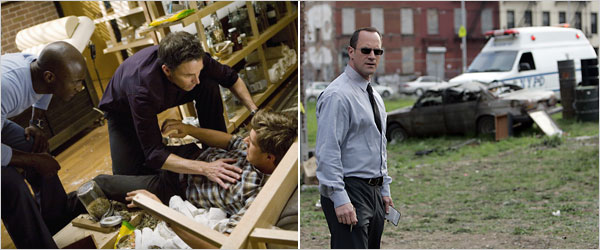
A recent report in the New York Times describes how the Bill and Melinda Gates Foundation is working with video production companies and broadcast networks to shape story lines and insert health-related messages into popular entertainment like the television shows “ER,” “Law & Order: SVU” and “Private Practice.”

Already, the foundation’s messages on HIV prevention, surgical safety and the spread of infectious diseases have found their way into these shows.

The report, written by Tim Arango and Brian Stelter, said: “Now the Gates Foundation is set to expand its involvement and spend more money on influencing popular culture through a deal with Viacom, the parent company of MTV and its sister networks VH1, Nickelodeon and BET.”

They called it “message placement”: the social or philanthropic corollary to product placement deals in which marketers pay to feature products in shows and movies. Instead of selling Coca-Cola or G.M. cars, they promote education and healthy living.

Some viewers in television-saturated US might say: it’s about time! In the past, many American companies producing entertainment content have resisted approaches from social activists to use the mass medium for public good.

In the late 1980s, when I shared some Asian experiences of mixing television drama and public education at an international science communication conference in Spain, American academics and journalists in the audience were intrigued. “But this can never happen in the United States…we keep our education and entertainment separate, and with good reason!” one of them said during question time.

Clearly, those hard attitudes have been changing slowly. As the NYT article says: “The efforts of philanthropies to influence entertainment programming is not new…. The Kaiser Family Foundation, which focuses on health issues, has been doing such work for a dozen years. It has worked story lines about H.I.V. and AIDS into programs on CBS and UPN (now known as the CWnetwork), including the reality show “America’s Next Top Model.”

Left, ABC’s “Private Practice,” and NBC’s “Law & Order: SVU.” The story lines of both shows have spread the health-related messages of the Gates Foundation. Images courtesy ABC & NBC

The Norman Lear Center at the University of Southern California’s Annenberg School for Communication is at the forefront of blending entertainment with public education. “There’s a lot of research that shows that when a character in a series says, ‘I’m going to be an organ donor,’ it’s effective, more effective than giving out a pamphlet,” said Martin Kaplan, director of the Centre.

The Centre has a Hollywood, Health & Society programme that provides entertainment industry professionals with accurate and timely information for health storylines. It organises meetings between health specialists and script writers for entertainment shows – not just drama, but also reality and variety shows.

“Our view is you don’t have to sacrifice entertainment value to be accurate,” Kaplan is quoted as saying in the NYT article.

That’s a view – and experience – shared by TV writers, producers and programme managers from Mexico to South Africa, and from India to the Philippines. In fact, this is an approach the Gates Foundation should consider rolling out in the majority world countries where they are already a key player in selected areas of health and development. Despite the recent spread of broadband internet, broadcast television is still the dominant mass medium – and primary source of news and entertainment – for most people in much of the developing world. That’s billions of eyeballs we’re talking about – and the cost of producing quality entertainment (even with education subtly embedded in some places) is significantly less than in the west.

In short, Gates can get a bigger bang for its bucks on the airwaves in the global South. And there’s really no need to convince TV industry gate-keepers and producers on how edu-tainment works: they’ve been at it for years, using whatever resources they can find.

Read full article: Messages With a Mission, Embedded in TV Shows, NYT 2 April 2009

Teenage Affluenza: A viral video to stir our minds

I’m a bit anxious about impending teenhood. No, not my own, thank you, but my kid’s.

As a single parent raising a 12-year-old who will soon turn 13, I keep reading and hearing all kinds of advice these days on how best to cope with a teenager in the house — that phase in growing up that everyone predicts will involve some turbulence.

On top of all else that comes with hormones-on-legs, there’s now the worry of Teenage Affluenza. It’s a condition that affects millions of teenagers around the world. Most of them live in the developed countries, but in this topsy-turvey, globalised world, there’s no stopping the rapid spread of such conditions all over the majority world.

Look closely, and you can see the symptoms of TA
Look carefully, and you can see the symptoms of TA - image courtesy WorldVision Australia

I belatedly came across this campaign video called Teenage Affluenza, made by the charity WorldVision Australia in mid 2007. It was first made for a promotion kit for the 40 Hour Famine, to be used in Australian schools. World Vision media staff worked with Rohan Zerna Films, Melbourne, who had worked on previous spots for World Vision. The team decided to take the route of irony, providing a spoof feel. The budget wasn’t high. A family friend of the producer starred as the Melbourne teenager. The voice-over was donated by a regular with World Vision promotions. Overseas footage, already held by World Vision Australia, was spliced into the story.

Read news story in The Age newspaper, Australia, on 2 July 2007

Erin is a fifteen year old girl living deep in the South Eastern suburbs of Melbourne, Australia. She is at risk from teenage affluenza, like five million children and teenagers in her country. She still sleeps in the wooden colonial bed her parents bought her when she was ten. Although meals, travel and education are readily available to girls like Erin, many are forced to live on less than $40 pocket money each week. Erin’s iPod only holds 1 GB.

And so the satirical commentary continues. Juxtaposed with Erin’s ‘tragic life’ is the reality faced by children and teenagers in Vietnam, Sudan and other countries affected by famine and the long term impact of civil war. The video ends with the message “Do something else. Do something real. Do something.”

Teenage Affluenza is Spreading Fast: From WorldVision Australia

The video has attracted thousands of responses on YouTube’s online-comments section, including some honest self-analysis from teenagers, while others started a discussion about who is to blame – corrupt governments or first-world greed.

Meanwhile, WorldVision US has released another version of the video, slightly shorter and featuring American teeangers. If anything, the condition is more prevalent there.

Teenage Affluenza: from WorldVision United States


The message to parents is clear: we’re the ones who can prevent our teenagers from contracting Affluenza. All it takes is thoughtful and sustained action. When teens say gimme-gimme-gimme, we have to known when it’s really needed and when it’s wanted. Easier said than done. I know, because teenages seem to arrive in pre-teens these days.

We the parents would certainly welcome reinforcements from any sensible source. WorldVision Australia runs an interesting website called Stir, which tries to engage youth on issues of development and global justice. As a direct intervention charity, WorldVision doesn’t leave it to governments, but urges people to get involved — and do something.

Moving images blog, two years on: The journey continues…

Blogs put ME back into MEdia...
The Moving Images blog completes two years today. So we pause briefly to look back – and forward.

I launched the blog with two posts from near-freezing Washington DC on 17 March 2007, while participating in the DC Environmental Film Festival. Both concerned my own offering to the festival: Children of Tsunami: The Journey Continues, product of monthly filming with 8 survivor families in 4 countries for nearly one year after the Asian tsunami.

Since then, this blog’s own journey has continued: in 24 months, we have produced 342 posts in 134 categories and with 562 tags. These elicited a total of 622 comments from readers who came from all walks of life, and all parts of the world. To the end of 16 March 2009, I received a cumulative total of slightly over 246,900 page visits. I now average 500 – 600 visits a day.

I share my blogging journey with these readers who have enriched it in various ways. Some commented under their own names; others used pseudonyms. Some left email details; others none. A few have actually suggested stories that I later wrote up as blog posts. I don’t know most of my readers in person, and have only met them online. As this blog enters its 25th month, I thank them all. You’ve kept me going in a particularly tough time in the world…and in my personal life.

Moving Images wasn’t my first blog – in late 2006 I had started another blog called Communicating Majority World under the name ‘Lost Alien’, which I somehow didn’t sustain for more than a few weeks and a handful of posts. For reasons that I can no longer quite recall, the Lost Alien abandoned his original blog – and migrated over here!

When I started Moving Images, I was driven by a simple motive: to discuss and reflect on the many and varied topics and subjects that interest me professionally. In one way or another, these fall into the area of communicating science, development and environment to the non-specialist public. Because my work at TVE Asia Pacific involves using television and video for this purpose, there is a bias on moving images in many things I do.

But by design, this is not an official blog of TVE Asia Pacific, or any other organisation that I am associated with. In fact, I regularly express here views that I cannot say wearing any of these hats — because we live in a world where most people still react not just to the song, but also the singer (and can’t separate the two).

Are we there yet? No!
So this blog is unashamedly, intentionally self-centred: it puts ME back in Media. I make no apologies for speaking my mind on a variety of topics, and for returning to some issues that I’m passionate about.

After 22 years in journalism, broadcasting or communicating development, I find I have sufficient perspective in which to anchor my thoughts, and to express my views in a way, I hope, interests and engages readers. Like the ancient Greeks, I try to ask the right questions – even when I don’t always know or get the right answers. And I have more than a few stories to spice up the narrative.

I’m well aware of the inherent danger of combining writer-editor-publisher all in one: personal blogs don’t always operate under the usual checks and balances that we expect and presume in the more structured media outlets (whether they are in the mainstream or new media spheres). On more than one occasion, I’ve written impulsively – in frustration, anger or elation, and sometimes on the run. Thanks to the training in my news reporter days, I can still churn out readable prose fast. And only once in all these 24 months and 342 posts have I regretted rushing to publish (so, using my absolute discretion as the media tycoon of this blog, I pulled it down).

Do I see myself as a citizen journalist? Yes and no. I don’t report news, and only very occasionally write on latest developments (or breaking news, as it’s now called). I see myself more as a citizen commentator – the op ed equivalent in the new media domain. Yes, I do occasionally report from large conferences that I attend as a speaker or panelist. But I have found how demanding it is to blog from events while keeping up with everything that is going on.

Do I see myself as a Sri Lankan blogger? Not really. Scanning the 342 blog posts I’ve written, I can count only a two dozen that have an appreciable reference to Sri Lanka. This is not because I’m aloof or disengaged; I have simply set a framework for myself that goes well beyond the country of my residence and social/cultural anchor.

Another reason for this intentional lack of geographical focus is that besides this blog, I regularly write op ed essays for other online outlets like Groundviews, MediaChannel.org and MediaHelpingMedia, and print news magazines like Montage. I use these platforms for commenting on Sri Lankan issues that interest or concern me.

I find it a bit incongruous that we who use the new media tools of web 2.0 – which signify the end of old geography – must contain ourselves to geographical or cultural cocoons. Thus, while I sometimes join gatherings of bloggers based in Sri Lanka, and share concerns for freedom of expression, I have consciously avoided joining Kottu, the leading aggregator of Sri Lankan blogs.

gvo-logo-lgAnd I get more than a little miffed when the excellent aggregation service Global Voices constantly labels me as a Sri Lankan voice (with a map of Lanka to boot!) whenever they helpfully flag my blog posts for wider attention. I have privately discussed this with GV’s South Asia coordinator who says their current tagging and categorisation do not allow anything else. Is this an example a new media platforms being trapped in an old media mindset?

If you really must pin me down to some place, call me a South Asian (or, as my friends at Himal would like to write it, Southasian).

Do I see myself as a new media activist?
I’m not sure. I’m not a geek, and have no great knowledge or insights on the back-end technologies that make all this possible. My interest is in how the new media tools shapes societies, cultures and politics in emerging Asia. Those braver and smarter than me are actually innovating and improvising new media tools for social activism. I just watch — and occasionally blog to critically cheerlead them. Mine is definitely the easy part…

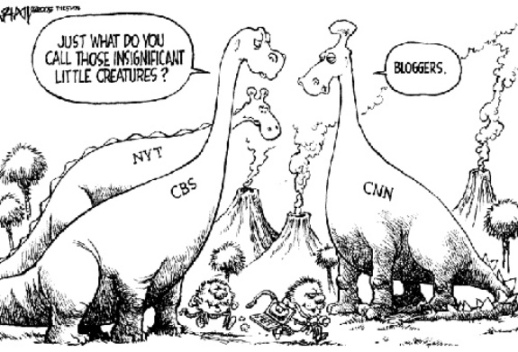
Mainstream media...and bloggers
On this blog, I place a higher premium on still and moving images. Regular readers know my fondness for cartoons, which I avidly search for and collect on a wide range of topics. In fact, I believe cartoonists are the best social and cultural commentators of our times – they say so much with such economy of words!

Similarly, I try to embed relevant online videos that I can find. Sometimes it takes me longer to scan YouTube and other platforms than to write the accompanying text for a blog post. And I get frustrated when WordPress does not allow embedding from certain online platforms like EngageMedia, a new Asia-based service that we have recently started to collaborate with.

As I travel around in Asia and Europe, and move across the sometimes overlapping circles of development, media and communications technology, I keep meeting readers who read and follow this blog. Some have never commented on any post; a few have chosen to write emails to me on specific matters.

This means some of the conversations inspired by this blog happen bilaterally — for example, film festival organisers have written asking me for contacts of specific film-makers whose work I have reviewed. Students often write to me seeking additional information or my own views. Long lost friends or associates have revived contact after stumbling upon this blog. I have no illusions of being famous, but it’s nice to stay engaged.

My policy on visitors’ comments is clearly stated in my intro page: “This is a moderated blog where I approve/disapprove the publication of readers’ comments to individual posts. I do allow all reasonable comments left by readers — including those that radically disagree with my own views. The basic rules of my moderation: I don’t publish comments that are outright libelous of individuals, or are so explicitly self-promotional bordering on spam.

Only once in the short history of this blog have I been threatened by someone whose conduct I questioned in the public interest. In late 2007, I wrote a hard-hitting comment on how certain media organisations are exploiting concerns surrounding climate change to their institutional advantage. I was standing by to publish their response, for the institution I named claims to promote public discussion and debate. None came my way, although some peer pressure was used, unsuccessfully, to make me remove the blog post. In mid 2008, when our paths accidentally crossed in a European capital, the individual concerned confronted me. I gave him a patient hearing, and reiterated my offer to publish his response in full. He insisted on my deleting the post (gosh, it must have hit a raw nerve!). He ended our unpleasant encounter saying: “If you lived in my jurisdiction, I would have sued you!”

There has never been a denial or rebuttal from this person or his institution on the substantive points in my blog post. But I was repeatedly told that my candid remarks are ‘not helpful’. Perhaps. But anyone who remotely believes in ‘illuminating debate’ would have engaged me on this blog, or theirs, or in a neutral forum (plenty exist).

Luckily, I've rarely faced this situation
Encouragingly, many others have done just that. This includes the reader who thinks I have an axe to grind with the BBC (I don’t, but I’m also not a fan of the ageing Auntie), and a few who feel I’ve been unkind to the fledgling global newscaster Al Jazeera English.

Then there are those who assume that I hate state-owned, so-called public broadcasters (again, I don’t, although I question their conduct more rigorously because they are public-funded). In fact, I have sung praise of Burmese TV as a model public broadcaster, and maintained excellent relations with NHK and other public broadcasters in Asia. I’m regularly invited as a speaker or panelist at gatherings of mainstream broadcasters – where I express pretty much the same views as I do on this blog.

Some think I’m too harsh on the United Nations, especially UNICEF. Again, I’m a great believer and supporter of the UN’s ideals, but never hesitate to critique the public communication policies and practices of individual UN agencies. I like to think that the United Nations is bigger (and deeper) than the inflated egos of its senior officials. In fact, middle level officials and experts working in various UN agencies have privately commended me for keeping the spotlight on their agencies. During the two years of this blog, I have worked closely with UN-OCHA, UNEP and UNAIDS, and they have been pluralistic enough to engage me in the greater public interest.

I believe that it’s not just the UN, but the entire development sector, that needs to get its act together when it comes to communicating policies, practices and choices. Having occasionally (and luckily, only briefly) forayed into the charmed development circles, I realise how detached from reality, self-referential and inward looking many development professionals and their institutions are. Communication is often no more than self-promotional publicity for overambitious agency heads. I have watched how the sector has struggled to adjust to the new realities in media and communications technology. Sometimes I have ridiculed their worse attempts on this blog; more often than not, I have quietly worked with them in small groups or bilateral meetings trying to build their capacity to do things better with greater focus and impact.

I survived mediasaurus - and lived to tell the tale!
Precisely because I have access to various policy, development and research circles in Asia while (or despite?) being a blogger critiquing the same players, I exercise caution in quoting people or citing examples. Some meetings I attend discuss matters too sensitive for immediate publication; others operate on the Chatham House rule (generic points may be communicated, but without attribution). As a journalist, I’ve been trained to clarify what is on the record and what isn’t; in sourcing content for this blog, I follow the same principles.

Every writer, editor and publisher has her own agenda. Mine is fairly easy to discern, for example from the recurrent themes on this blog. These include: * humanising development communication (going beyond mere facts, figures, analysis and jargon); * demystifying and debunking self-serving development myths (for example, about community radio, or rural poverty); * practising what we preach (broadcasters addressing their own carbon emissions); * evolving more inclusive copyright policies (poverty and climate change as copyright free zones); and * engaging in simple, clear and effective communicating of science and technology in society.

For those who occasionally look for a hidden agenda, my only advice is: get a life. I write this blog for fun. I don’t set out to kick anyone – although I often get a kick out of receiving online or offline feedback.

And that’s my wish for the coming months and years: while I work hard to earn some honest bucks else where, may I continue to derive my kicks here. And if some of you also get a mental kick out of reading or commenting on this blog, that’s my bonus.

Since I remain open-minded and eager for new knowledge, my views on some topics and issues keep evolving over time. Although it’s tempting to go back and edit some of my earlier blog posts in the light of new knowledge or understanding, I refrain from doing so. And if that sometimes presents (minor) inconsistencies, I can only quote Walt Whitman in my defence:
Do I contradict myself?
Very well then I contradict myself,
(I am large, I contain multitudes.)

Mixing oil and water: Media’s challenges in covering human security

Talking to the last drop: All streams flow to Istanbul?

The 5th World Water Forum opens in Istanbul, Turkey, today. It will be held in the historic city – a bridge between the east and west – from 16 to 22 March 2009.

Held every three years, the World Water Forum is the main water-related event in the world. It seeks to put water firmly on the international agenda with a view to fostering collaboration – not confrontation – in sharing and caring for the world’s finite supplies of the life-giving liquid. The forums bring together officials, researchers, activists and media to a few days in which they can drown in their own cacophony…well, almost.

I haven’t been to one of these mega-events – I almost did in 2003, when it was hosted by Kyoto, Japan. That forum was almost entirely eclipsed – as far as the media coverage was concerned – by the United States deciding to invade Iraq during the same week. This inspired me to write an op ed essay on oil, water and media which was syndicated by Panos Features and widely reproduced at the time in newspapers, magazines and even in a few activist and development publications. But six years later, it’s hard to locate it online, so I’m publishing it here, unedited, exactly as I wrote in that eventful week in mid March 2003:

Oil on water: will the media get this Big Story?

By Nalaka Gunawardene: 20 March 2003

“If the wars of this century were fought over oil, the wars of the next century will be fought over water.” Ismail Serageldin, an eminent Egyptian architect and planner, made this remark in 1995 when he was vice president for sustainable development at the World Bank.

Well, we are in that new century now, but old habits die hard. The war in Iraq has been fuelled by oil interests, and – starting at the time it did, on March 20 –effectively sidelined global talks to secure freshwater for all.

Clean water, anyone?
Even as the United States launched its attack on the country that sits on the world’s second largest oil reserve, the Third World Water Forum was in progress at the Japanese cities of Kyoto, Shiga and Osaka. The event, running from March 16 to 23, is this year’s biggest international conference on a sustainable development issue and involved hundreds of government and civil society representatives trying to resolve one of the major survival issues of our time: equitably sharing the world’s finite freshwater resources for our homes, farms and factories.

The two processes cannot be more different. One aims to use force while the other seeks to foster co-operation among nations to cope with water scarcity. The increasingly isolated United States has abandoned the United Nations process in its single-minded determination to disarm Iraq, a nation it considers a major threat to peace and security. Meanwhile in Kyoto, the nations of the world – including, but not led by, the United States – were discussing an issue that is far more central to humanity’s security. It has the full blessings of the UN, which has designated 2003 the International Year of Freshwater.

Yet the water forum seems hardly newsworthy to the major news organisations that are preoccupied with war. For months, the global television networks were gearing up for Iraq war coverage. The first Gulf War helped globalise CNN, and this time around, there are other international and regional channels competing for the eye balls. Locked in a battle for dominant market share, CNN International and BBC World are trying to outdo each other in covering the conflict exhaustively — and to the exclusion of everything else. In the do-or-die media marketplace, ‘soft issues’ such as water are easily edged over by conflict. As cynical news editors will confirm, if it bleeds, it leads.

The notions of national and global ‘security’ – on which the Iraq war is being waged – are relics of the Cold War that are completely out of sync with today’s global realities. Who says we have entered the 21st century?

In the closing decade of the last century, as the world grappled with one crisis after another – ranging from famine and drought to global warming and HIV/AIDS – the notion of ‘security’ was radically redefined to include ecological and social dimensions. What is now termed ‘human security’ is concerned not so much with weapons as with basic human dignity and survival. As first articulated in the UN Development Programme’s Human Development Report in 1994, human security includes safety from chronic threats such as hunger, disease and repression, as well as protection from sudden and harmful disruptions in the patterns of daily life.

Mahbub ul Haq
Mahbub ul Haq
The rationale for this was brilliantly summed up by the late Mahbub ul Haq, former Finance Minister of Pakistan and architect of the Human Development Index: “If people are sleeping on pavements, ministers have no business shopping for modern jets and howitzers. While children suffocate in windowless classrooms, generals go about in their air-conditioned jeeps. Nations might accumulate all the weaponry they want, but they have no strength when their people starve…”

A world in which four out of every ten people live in areas of water scarcity is not secure. And if urgent action is not taken, this will increase to two thirds of humanity by 2005. Ensuring water quality is as important as basic access: preventable diarrhoeal diseases – including cholera and dysentery — kill more than seven million children every year. That is 6,000 deaths every day.

James P Grant
James P Grant
James Grant, former executive director of UNICEF, once used a powerful metaphor to describe this scandalous situation: it was as if several jumbo jets full of children were crashing everyday – and nobody took any notice.

If the media are obsessed with death and destruction, why aren’t these numbers registering on their radars? Why is it that silent emergencies forever remain ignored or are only superficially covered? Even statistics don’t set the media agenda: for example, according to the UN, twice as many people are still dying from diarrhoeal diseases as from HIV/AIDS in China, India and Indonesia. But the international donors and media assign far more importance to HIV than to clean water.

No other factor can distort reality as oil. Oil comes on top of water both in the physical world, and in the murky world of global politics. Our collective dependence on petroleum immediately ensures the Iraq war a disproportionately high rank in public and media concerns.

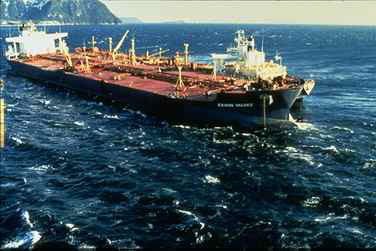
It’s not just the United States that is addicted to oil – we all are. Addicts tend to lose sight of the cost of their dependence, as we have. On 24 March 1989, the oil tanker Exxon Valdez ran aground on in Prince William Sound in Alaska and a fifth of its 1.2 million barrels of oil spilled into the sea, causing massive damage to over 3,800 km of shoreline. Investigations implicated its captain for grossly neglecting duty. Shortly afterwards, Greenpeace ran a major advertising campaign with the headline: “It wasn’t his driving that caused the Alaskan oil spill. It was yours.”

Exxon Valdez: Drunken driving!
Greenpeace continued: “It would be easy to blame the Valdez oil spill on one man. Or one company. Or even one industry. Too easy. Because the truth is, the spill was caused by a nation drunk on oil. And a government asleep at the wheel.”

A nation drunk on oil is waging a war that has more to do with oil than anything else. Our news media are behaving just like cheer-leaders.

War is undoubtedly a big story. But so should be water. One in six humans does not have safe drinking water, and one third of humankind lacks adequate sanitation. We may be living on the Blue Planet, but the waters are muddy and life-threatening to billions.

For sure, a bunch of people huddling together in three Japanese cities won’t solve this crisis overnight. But unless knowledge and skills are shared, and a political commitment is secured, safe water for all will forever remain a pipe dream.

Will it take a full-scale war over water in one of the flashpoints around the world for the military-industrial-media complex take sufficient interest in this survival issue? (That might happen sooner than we suspect.)

It’s ironic that the World Water Forum was undermined by the Iraq war breaking out in the very same week. Washington has now poured oil over everybody’s water.

[Nalaka Gunawardene is an award-winning Sri Lankan science writer, journalist and columnist. He heads TVE Asia Pacific, a regional media organisation working on sustainable development issues, and is on the board of Panos South Asia. The views expressed here are his own.]

Crisis of Credit: The story of bright, greedy bankers with no common sense…

A complex crisis made simple...

At the height of the Cold War, some of the best brains in both the United States and the now extinct USSR worked for their respective nation’s nuclear weapons development and maintenance work. They were basically driven by Mutually Assured Destruction, a doctrine of military strategy in which a full-scale use of nuclear weapons by two opposing sides would effectively result in the destruction of both the attacker and the defender. It was appropriately abbreviated as M.A.D.

The men (it was mostly if not entirely male) with these deadly toys have been described as very smart people with no common sense. They’ve been the subject of much study, commentary and satire — Stanley Kubrick’s 1964 black comedy film Dr Strangelove among them.

Where would very smart men with no common sense (and few, if any, scruples) find work in the post Cold War period? Looks like some of them went into banking!

How else could we explain the deadly games played by bankers that triggered the credit crisis which has snowballed into a global economic recession affecting us all?

Sub-prime mortgages, collateralised debt obligations, frozen credit markets and credit default swaps. These terms are now being bandied around but a year ago, few had heard of them and even now, how many of us non-bankers understand what they mean?

Aren’t they the weapons of mass destruction of our times? While the nukes were well guarded and their use was tightly controlled (with only a few near misses over decades), where was regulatory oversight when bankers accumulated toxic credit over time?

In September 2008, I wrote a blog called Financial Meltdown: Putting pieces together of a gigantic whodunnit with links to some current affairs documentaries that tried to explain what was happening. In December 2008, I named the American blogger, investigative journalist and film-maker Danny Schechter as Moving Images Person of the Year for his relentless, now prophetic work cautioning about the coming credit crisis from years ago.

Now, design artist Jonathan Jarvis has come up with a brilliant animation that tells the ‘Short and Simple Story of the Credit Crisis’.

Watch it on YouTube: Crisis of Credit, part 1 of 2

Crisis of Credit, part 2 of 2

Here’s his description:
The goal of giving form to a complex situation like the credit crisis is to quickly supply the essence of the situation to those unfamiliar and uninitiated. This project was completed as part of my thesis work in the Media Design Program, a graduate studio at the Art Center College of Design in Pasadena, California.

For more on his thesis work exploring the use of new media to make sense of a increasingly complex world, visit jonathanjarvis.com

See also: Prudent Banking 101: A lesson from Mary Poppins

Channel News Asia at 10: Making of a pan-Asian news channel

Asian voice in a global village
“We’re the messenger for all the stories that might not have been told…that’s our job,” says Glenda Chong, the Shanghai-based China correspondent (and former anchor) of Channel NewsAsia (CNA), the Singapore-based Asian regional news broadcaster that just turned 10.

For a decade, CNA has covered Asia for Asians and the rest of the world. It has uncovered stories missed – or ignored – by other, global news channels. Just as important, it has also found the Asian voices and angles in mega stories originating from Asia that gripped the world’s attention — such as the outbreak of SARS, Indian Ocean tsunami, earthquakes in Sichuan and Kashmir.

Started on 1 March 1999 and owned by Singapore’s MediaCorp, CNA is now a major Asian news broadcaster with programmes telecast to more than 20 Asian countries and territories. Visit CNA’s 10th anniversary website for a look back…and forward.

“In the early days, when we talked about a news channel from Singapore, you could cut the cynicism with a knife,” said Woon Tai Ho, managing director of MediaCorp News.

That was inevitable for any media venture anchored in Singapore, ranked currently at 144 out of 173 countries in the World Press Freedom Index. But CNA has shown that geography need not be destiny.

Asians telling their own story
In 10 years, it has emerged as a primary source of news in Asia, and along the way, has picked up a plethora of high-profile awards — including two silver medals at the New York Festivals 2009 and three awards at Asia Television Awards 2008.

Channel News Asia turns 10 – article in Today newspaper, Singapore: 2 March 2009

Started as a business news channel at the tail end of the Asian financial crisis of 1997, CNA later evolved into a fully-fledged news and current affairs channel covering all facets, aspects and territories of Asia – the world’s largest region, home to half of humanity. Map showing CNA geographical coverage

Ironically, CNA enters double-digits chronicling the region once again in the midst of a financial crisis, this time of global proportions and repercussions.

Unlike Al Jazeera English (AJE), the global news channel launched from Qatar in November 2006, CNA has relied on Asian talent for anchoring and reporting. While AJE has shamelessly and desperately tried to ape the BBC, CNA has forged its own identity in offering a world class product.

Whereas AJE tries so hard to please its audiences in Europe and North America (is it so anxious for western acceptance?), CNA has focused its energies in telling the myriad stories of emerging Asia primarily for Asia’s upwardly mobile, burgeoning middle classes.

For example, when an interviewee gives his/her views in a language other than English, Channel NewsAsia does not voice-over the original audio with an anglo-saxon voice like other major news channels do. Instead, an English subtitle appears, preserving and complementing the original audio.

At TVE Asia Pacific, we have had a positive experience of engaging this regional broadcaster. In late 2005, we were looking for a broadcast partner to co-produce a documentary looking back at the first year after the Indian Ocean tsunami through the eyes of eight survivor families – in India, Indonesia, Sri Lanka and Thailand – that we had tracked on video under the Children of Tsunami project. We had a mass of professionally and ethically filmed material, and a unique collection of stories we were keen to be amplified to the world.

When we approached Channel NewsAsia through a friend, they immediately welcomed the collaboration. They invested their time, resources and talent to edit Children of Tsunami: No More Tears, a half hour that distilled some of the stories that we had painstakingly captured for a year. No money changed hands. Legalities were kept to a minimum. CNA saw we had a story that was relevant and important for their viewers. They found the story authentic, as captured by local crews who spoke the language in each country and who lived through the traumas of the tsunami themselves (no ‘parachute film crews’ were involved). So CNA just did it — with none of the airs of pomposity and self importance that so characterise the BBC in any collaboration.

CNA producer Joanne Teoh Kheng Yau shared her experience in telling this story at a regional event we organised in December 2006. The full experience is now documented in a chapter in our book, Communicating Disasters: An Asia Pacific Resource Book.

Children of Tsunami: No More Tears was first broadcast globally on Channel NewsAsia in the last week of December 2005 to mark the tsunami’s first anniversary with this intro: “Young survivors of the Asian tsunami let us into their lives to personalise the mass of statistics, aid pledges and recovery plans. ‘Children of Tsunami’ is a tapestry of intimate stories, woven by voices of individual and collective resilience, heroism and recovery.”

Children of Tsunami: No More Tears Part 1:

How ‘Hole in the Wall’ ICT experiment inspired ‘Slumdog Millionaire’

21st Century, here we come...
With the 81st annual Academy Awards (Oscars) to be announced on February 22, all eyes are now on the nominated movies.

Updated on Oscar night: Slumdog wins 8 Oscars out of 10 nominations!

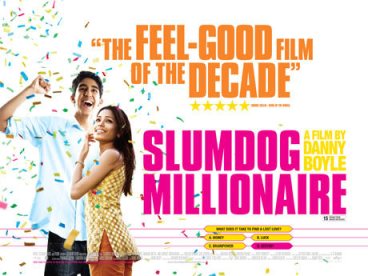
Few films in recent years have generated as much buzz as Slumdog Millionaire, the British-Indian film based in the slums of Mumbai. It has won five Critics’ Choice Awards, four Golden Globes and seven BAFTA Awards, and is nominated for ten Academy Awards, including Best Picture.

Much has been written about the movie’s depiction of India’s stark urban realities of poverty, organised crime and street children. But there is another face of India that the movie captures: how information and communication technologies (ICTs) are changing culture, economy and social relations in the world’s largest democracy.

I just called to ask...
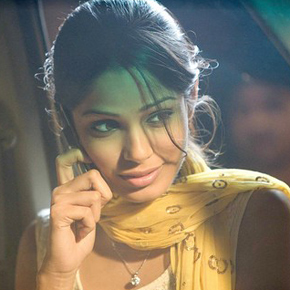
Early on, film critic Ben Walters spotted this aspect. He asked in The Guardian on 9 December 2008: Is Slumdog Millionaire the first truly 21st-century film? Among his reasons: “Jamal works in a call centre decorated with London Underground paraphernalia and whose employees are kept up to date on EastEnders plotlines to improve their chances of successful small talk with their customers. Aptly enough, the customers are mobile phone users – another emblem of 21st-century connectivity – and a mobile plays a crucial part in the story’s climax.”

Indeed, the mobile phone combined with live broadcast television both feature in the story’s climax. The film was partly shot on the actual studio set used by Kaun Banega Croreparti (KBC), the Indian version of Who Wants to be a Millionaire. As I wrote earlier, the cerebral world of quizzing blends seamlessly with the rough world of Mumbai slums to produce an enthralling 120 minutes.

And now it turns out that a real life ICT experiment triggered the idea of the Slumdog story.

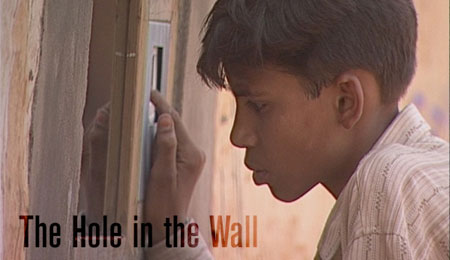
Indian author Vikas Swarup, on whose 2005 novel Q&A the movie is based, has recently revealed how he was inspired by the hole-in-the-wall project. This was an initiative by Dr. Sugata Mitra, chief scientist at NIIT, a leading computer software and training company in New Delhi. Mitra embedded a high-speed computer in a wall separating his firm’s headquarters from an adjacent slum, he discovered that slum children quickly taught themselves how to surf the net, read the news and download games and music. He then replicated the experiment in other locations. Each time the results were similar: within hours, and without instruction, the children began browsing the Internet.

Swarup told Indian Express in January 2009: “That got me fascinated and I realised that there’s an innate ability in everyone to do something extraordinary, provided they are given an opportunity. How else do you explain children with no education at all being able to learn to use the Internet. This shows knowledge is not just the preserve of the elite.”

Discover your world...
Dr Mitra’s project was the subject of a 2002 documentary film, called Hole in the Wall, made by the New York based production company GlobalVision.

The film was introduced as follows: A revolution in information technology is redefining poverty, as how much you know is becoming just as important as how much you own. “The Hole in the Wall” examines one possible solution to the growing technological gap between rich and poor — the so-called ‘digital divide’ — that threatens to consign millions to an “information underclass.”

The film was made by Rory O’Connor and Gil Rossellini. An 8-min version was broadcast by PBS in October 2002 in their program Frontline/World. A 60-min version was screened at the United Nations in New York City in December 2002. The film has been widely screened, and won several awards.

Initiator of the Hole in the Wall project carries on his mission to adapt ICTs to serve the unmet needs of India’s poor. Watch Dr Sugata Mitra talk about his work in this TED Video:

Judging the ‘Green Oscars’: Memories of Wildscreen 2000 Festival

Shooting wildlife...in moving images

What happens when a small and culturally diverse group is flown in from different parts of the world, put up in a comfortable hotel, fed well — and mandated to watch two or three dozen excellent films and asked to come up with a selection of ‘the best of the best’?

That pretty much sums up the experience of the final jury process of international film festivals that have a competitive element. The festival secretariat lines up the logistics but entrusts all the rankings and selections of entries to an independent jury – which typically serves without pay, and works long and hard.

Hosting the Wildscreen Film Festival in Colombo, Sri Lanka, which ended last evening, brought back memories from eight years ago, when I served on the global jury of Wildscreen festival in Bristol in October 2000. It wasn’t just the turn of the millennium that made the festival especially remarkable that year. In some ways, Wildscreen 2000 marked a significant change in how wildlife and natural history films are assessed and honoured.

wildscreen-festivalI’ve done this a few times before and since 2000 — among them Earth Vision (Tokyo) in 1993 and Japan Wildlife Festival (Toyama) in 2003. But being on Wildscreen jury was special, for it’s considered to be the world’s largest and most prestigious wildlife and environmental film festival — the ‘green’ equivalent of the Oscars.
Serving on film festival juries can be both tedious and highly rewarding. On the plus side, I get to watch the best of contemporary factual film making on these subjects from all over the world, and then discuss their relative merits with some of the best professionals in the industry. The downside is that no jury can ever satisfy all film makers who enter their work, nor come up with a selection that is universally accepted: after every festival, there are those who feel their creations didn’t receive the recognition they deserved.

While all the film juries I have served on managed to reach consensus decisions, it often wasn’t easy. Much depends on the jury chair’s ability to find common ground among jury members who hold diverse – sometimes even opposite – views. Wildscreen 2000 jury was very ably chaired by Peter Goodchild, who came from a background of science film making, and was once editor of BBC’s Horizon science series (He was called in on short notice when the chair designate Christopher Parsons, co-founder of Wildscreen, fell ill.)

Endless golden sunsets...
Among my fellow jurors were conservationist Dr Lee Durrell and Canadian film-maker and co-inventor of Imax Roman Kroitor. Jane Krish, then Executive Director of Wildscreen, kept us going and made sure there wasn’t too much blood on the expensively carpeted floors of the Bristol Marriot hotel where we were holed up.

Details of what happened during that week is now buried too deep beneath sediments of memory. I remember watching and discussing some great films in great company and racing against time to reach our decisions for the awards night. Parallel to this, the festival’s multiple events were taking place in nearby venues but we couldn’t join them – except some social events in the evenings.

I’m only sorry that I haven’t got a single photograph of that occasion in my personal collection – it was a year or two later that I started the routine of taking my camera on all my travels. But I’ve just located, from the digital archives two laptops ago, the opening remarks that Peter Goodchild made at the awards ceremony, which he’d typed out on my machine. That neatly sums up our extraordinary experience:

“In the past week my jury and I have, in effect, left the human race. During our four days’ viewing we have seen no less than 54 films. And in that time we have tramped over billions of tons of sand, swum in every ocean of the world with trillions of fish, experienced 80 full moons, watched the production of 30 tons of elephant droppings, around 120 copulations (not ourselves), 15 rapes (not ourselves), 210 killings including 30 infanticides, several thousand insect bites, and we have done all this in temperatures of 50 degrees Fahrenheit below and temperatures of 50 degrees Centigrade above.

“In those aforementioned copulations we were privy to the sight of a pair of 1 ton testicles accompanied by what looked like 3 meters of stout garden hose, but was referred, very tastefully, by the narrator as a ‘flexible friend’.

“And so it goes on, 73 assorted prehistoric animals, 18 symphony orchestras, around half a dozen heavenly choirs and — we have refrained from killing each other and we learned that Nature is prolific, but merciless, that humankind has screwed things up quite a bit, and still is, but we are beginning to try to remedy our ignorance and mistakes. And now we return to you here with the results of our deliberations amongst what is, with one or two exceptions, an embarrassment of riches…

Panda Award, a.k.a. 'Green Oscar'
From then on, each member of the jury took turns in announcing winners in various categories, some technical and others more editorial. Each winner received the coveted Panda Award, affectionately (and unofficially) known as the ‘Green Oscar’. Wildlife film-makers from Australia, Britain, France, India, the Netherlands, Norway, South Africa and the United States shared the honours that evening.

Each Panda award was introduced with a brief citation. I presented two: the Conservation/Environment Award and the award for the best film entry from a country that did not have a long tradition of making natural history films.

When presenting the latter, I noted: “It is tempting to draw parallels between the natural world and the world of natural history film making. There are enormous inequalities and disparities in both. Film makers everywhere find it increasingly difficult to raise adequate budgets, but this has always been a stark fact of life for film makers in those parts of the world that lack a long tradition of producing natural history films. In these harsh conditions, the resourcefulness and ingenuity of film makers are tested on many fronts.

“This festival received relatively few entries from such parts of the world and from such film makers, but we understand that it is better than last time. This indicates the presence of talented professionals working against many odds, and trying to exploit the medium to raise public understanding of the environment. The finalists we saw bear testimony to the resolve and commitment of their film makers — who clearly know the art of story telling on television in ways that best engage their audiences. And we need to remember that some of them reach out to hundreds of millions of viewers. These people can make a difference for the planet.”

The award went to Indian film maker Mike Pandey, for his film Shores of Silence: Whale Sharks in India. The 25-minute film, made in early 2000, was the first ever revelation of the killing of whale sharks on the Indian coastline. It so stirred the collective conscience of the authorities, that the government banned the hunting of these endangered marine creatures seven months later.

Every jury’s selection sends out signals, and this is especially so when it concerns the natural history film industry’s most coveted awards. Beyond selecting the winners, our jury also recommended the expansion of the festival’s scope in two ways.

Firstly, we pointed out that simply documenting animal and plant behaviour and their habitats was no longer adequate in a world facing a multitude of environmental crises. There was an urgent need, we said, to mainstream films that looked at the nexus between the natural environment and human society – both conflict and harmony between the two.

Secondly, we recognised the rapid changes taking place in the worlds of broadcasting and web, which challenges film makers to try out new formats or genres, including some that used much shorter durations than those used in wildlife and natural history films until recently. Reviewing eligible film formats was necessary, we said, in an industry that was embracing multimedia to retain or attract eyeballs.

As Peter Goodchild noted in his remarks: “There’s little doubt that there will be increasing demands for personality led programmes, for cheaper format programmes and, because a valuable award – a panda on the mantelpiece – is one potent way of moderating any feared slides into banality, it seemed to us that the Festival needed to create an award rooted in entertainment, where good work in this kind of programming would be recognised.”

It’s heartening to note that Wildscreen festival took note of these recommendations, as evidenced by changes in subsequent editions of the festival. But Peter’s words still hold true: “What is needed, in our view, is to keep testing alternative forms and approaches, expanding the range of programming and avoiding the dangers of a rut based on a past successes.”

The quest for next David Attenborough continues…

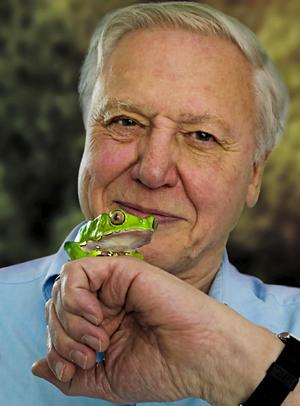
Human Ambassador to the natural world...David Attenborough

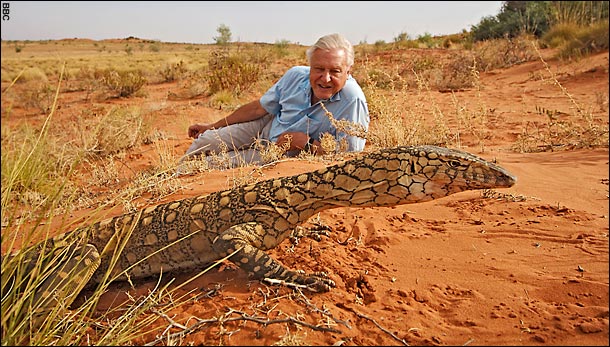
I spent most of today at the Wildscreen film festival being held at the British Council Colombo. Naturalist and broadcaster Sir David Attenborough featured prominently in two films screened: Can We Save Planet Earth? (2006) and Life in Cold Blood: Armoured Giants (2008).

For me, it was more than a fascinating journey to far corners of our endangered planet in the company of the world’s best known broadcaster, and Britain’s most trusted public figure. I recalled how in this very venue, as an eager teenager growing up in the simpler, pre-web days of the 1980s, I watched his pioneering series Life on Earth (1979) and The Living Planet (1984). These path-breaking series redefined how natural history documentaries were made, and inspired a whole new generation of film-makers and nature lovers. A quarter century later, I’m still hooked.

Over the last 25 years, Attenborough has established himself as the world’s leading natural history programme maker with more landmark series: The Trials of Life (1990), The Private Life of Plants (1995), The Life of Birds (1998), The Life of Mammals (2002) and Life in the Undergrowth (2005). The final chapter in the ‘Life’ series is Life in Cold Blood (2008).

As fellow broadcaster Jeremy Paxman noted in a Time magazine tribute to Attenborough: “Life After Death is almost the only natural-history series yet to be made by Attenborough. In a career that has taken him to every corner of the world, he has explored life in all its richness — from mammals and birds to plants and reptiles. No living person has done more to make the people of Planet Earth aware of the world around them.”

Close encounters?
Close encounters?
But as I wrote in May 2007, “like all creatures big and small in the great Circle of Life that Sir David has so avidly told us about, he too is mortal. At 81, it’s time for the world to look for the next David Attenborough.”

In his Time tribute, Paxman noted that what distinguishes Attenborough is “that boundless, schoolboyish enthusiasm, the infectious joy of discovering the infinite variety of life”. Yet as the popular song goes, dragons live forever, but not so little boys – so the quest for the next Attenborough has quietly preoccupied the minds of many practising or following the world of natural history and environmental film making.

I’m not obsessed with this question (and I wish Sir David many more years of life on Earth and life on the airwaves), but I today popped it to Jeremy Bristow, a producer of environmental programmes at BBC Television, at the end of his fascinating master class on The role of films in Environmental Conservation. Jeremy’s most recent project has been two films hard-hitting films on Climate Change with Sir David Attenborough for BBC1 and the Discovery Channel.

The bad news is that despite searching far and wide – even some competitions – the David Attenborough has yet to be discovered.

“There are many talented, passionate natural history film makers and some of them also have good screen presence — but none to match Sir David,” said Jeremy Bristow. “I know many in the natural history film world have kept their eyes open for a potential successor.”

Perhaps Sir David is a unique product of his time and circumstances, Jeremy speculated. Certainly, there weren’t too many getting into this business in the early days of television broadcasting. The first major programme series to feature Sir David was BBC’s Zooquest, which ran from 1954 to 1963. And then, one thing led to another…and more than 50 years later, he’s still in the business.

To me, it’s the voice – authoritative without at all being pompous or pontificating – that gives Sir David enduring and endearing appeal. Time called it ‘the voice of the environment’.

Now is the time when that voice of reason, moderation and passion is needed more than ever. A time when the natural world is under siege from human-induced accelerated climate change even as the world of science takes daily beatings from assorted fundamentalist forces.

At 82, Sir David still remains not just our most versatile ambassador to the natural world, but also one of the best spokespersons for the rigors of science and intellectual curiosity.

Here’s a recent example of Sir David – taking us on a quick, animated guide to evolution of life on Earth, in a 2009 documentary called Charles Darwin and the Tree of Life to mark 150 years since Charles Darwin published his famous Origin of the Species: