සිවුමංසල කොලූගැටයා #58: විනාශයක් ළග එනවා – ඒකට අපි සැරසෙනවා!

In this week’s Sunday column, published in Ravaya newspaper of 18 March 2012, I take a critical look at the mounting hype and hysteria about the world ending in December 2012.

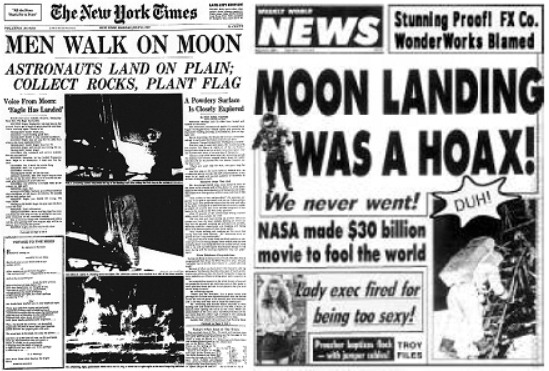
The Wikipedia describes the ‘2012 phenomenon’ as comprising a range of eschatological beliefs according to which cataclysmic or transformative events will occur on 21 December 2012. In reality, it’s a blockbuster Hollywood movie, rather than any ancient prophecy, that triggered this wave of public concern!

Much of this information was drawn from NASA’s webpage on the topic where reputed scientists answer questions that they are frequently asked regarding 2012.
See also my English blogpost on this, written on 5 Jan 2012.

2012දී ලෝක විනාශයක් සිදු වෙයි ද? එසේ වන බවට අතීත ශිෂ්ටාචාරයක් හෝ පිටසක්වල ජීවීන් හෝ කල් තබා අනතුරු අගවා ඇත් ද? එසේ නම් අපි පණ බේරා ගන්නේ කොහොමද?

මේ දිනවල නිතර කථා බහට තේමා වන ප‍්‍රශ්න අතර මේවා ද තිබෙනවා. ලෝකයේ ආර්ථික ප‍්‍රශ්නල පාරිසරික ප‍්‍රශ්නල යුද්ධ අරගල ආදිය මදිවාට ලෝක විනාශය ගැනත් අප බිය විය යුතු ද? මොකක්ද මෙහි සැබෑ කථාව?

ලෝකය විනාශ වීම අතීතයේ සිට මිනිසුන් තුළ තිබූ බියක්. ලෝකය හා විශ්වය ගැන විද්‍යාත්මක තොරතුරු දැන ගත් පසුවත් බොහෝදෙනා තුළ තවමත් යන්තමින් හෝ මෙබදු භීතියක් තිබෙනවා. විද්‍යාව හා තර්කානුකූල චින්තනය හෙළා දකින ඇතැම් දෙනාල ස්වයංමුලාවකට පත් වීමටත්, අන් අය බිය වැද්දීමටත් භාවිත කරන එක් සංකල්පයක් නම් යම් නිශ්චිත දිනෙක ලෝකය විනාශ වීමයි.

ලෝක විනාශය ගැන විග‍්‍රහයේදී භෞතික විද්‍යාවට අමතරව සමාජ විද්‍යාව හා මනෝ විද්‍යාව ද යොදා ගත යුතු වන්නේ මේ නිසයි. මගෙන් මේ ගැන විමසන අයට මා කියන්නේ ලෝක විනාශ ව්‍යාපාරය (End of the World Industry) නම් අළුත් වෙළදාමක් බිහි වී ඇති නිසා එයට හසු නොවන ලෙසයි.

එහෙත් අසුබවාදී දෙය අදහන්නට අපේ ඇත්තන්ට ලොකු ඕනෑකමක් තිබෙනවා. ‘2012 ලෝක විනාශය’ ගැන විමසීම් රැසක් ලැබෙන්නට පටන් ගත් විට අමෙරිකාවේ අභ්‍යවකාශ කටයුතු භාර නාසා ආයතනය ඒ ගැන විද්වත් තොරතුරු ඇතුළත් වෙබ් පිටුවක් 2011 නොවැම්බරයේ ආරම්භ කළා. බලන්න: http://www.nasa.gov/topics/earth/features/2012.html

ඉංග‍්‍රීසි බසින් ඇති මේ වෙබ් පිටුවේ මුල් ම ප‍්‍රශ්නය හා උත්තරය මෙයයි.
ප‍්‍රශ්නය: 2012 දෙසැම්බරයේ ලෝක විනාශය සිදුවන බවට බොහෝ දෙනා හා ඇතැම් වෙබ් අඩවි කියනවා. මෙහි ඇත්ත කුමක් ද?

උත්තරය: 2012 දී පෘථිවියට එසේ විපතක් හෝ අන්තරායක් ඇති වේ යයි කීමට පදනමක් නැහැ. වසර බිලියන් 4කට වැඩි කලක් තිස්සේ පැවත එන පෘථිවිය 2012 මහා තර්ජනයකට ලක් වන බවට ලොව කිසිදු විද්‍යාඥයකු ප‍්‍රකාශ කර නැහැ.

2012 ලෝක විනාශය ගැන ලෝක ව්‍යාප්ත විශ්වාසයේ අගමුල නාසා වෙබ් අඩවිය විග‍්‍රහ කරනවා. එය ඇරඹුණේ නිබිරු (Nibiru) නම් අයාලේ යන ග‍්‍රහලෝකය ගැන ප‍්‍රබන්ධයකින්. තාරකා විද්‍යාඥයන් නොදන්නා මේ අද්භූත ග‍්‍රහලෝකයල පෘථිවියේ ගැටෙනවා යයි මුලින් ‘අනාවැකි’ පළකර තිබුණේ 2003දි. එහෙත් එය සිදු නොවූ විට ලෝක විනාශ සංකල්පවාදියෝ කිසි ලැජ්ජාවකින් තොරව ඒ දිනය 2012 දෙසැම්බරයට මාරු කළා!

මධ්‍යම ඇමෙරිකාවේ අද හොන්ඩුරාස්, ගුවාතමාලා, නිකරාගුවා සහ මෙක්සිකෝව නමින් හැදින්වෙන ප‍්‍රදේශවල සියවස් ගණනක් තිස්සේ පැවති මායානු ශිෂ්ටාචාරයත් මේ ලෝක විනාශ කතන්දරයට ඈදා ගෙන තිබෙනවා. මායාවරුන්ගේ ඓතිහාසික කැලැන්ඩරය අපේ සම්මත වර්ෂවලින් 5,125ක් දිගු බවත්, එය අවසන් වන්නේ 2012 දෙසැම්බර් 21 වනදා බවත් පෙන්වා දෙන උදවිය, එයින් සංකේතවත් කැරෙන්නේ මානව සංහතියෙ අවසානය බවත් කියනවා. මේ සඳහා ඔවුන්ට තර්කානුකූල සාක්‍ෂි නැතත්, අද්භූත හා විනාශකාරී තොරතුරුවලට ලොල් බවක් දක්වන ජනයා අතරේ ජනප‍්‍රිය වීමට හැකිව තිබෙනවා.

නාසා වෙබ් අඩවිය කියන්නේ යම් අවස්ථාවක නිබිරූ ප‍්‍රබන්ධය හා මායා කැලැන්ඩරයේ ප‍්‍රබන්ධය එකිනෙකට බද්ධ වී වඩාත් බිහිසුණු ලෝකවිනාශ ”අනාවැකියක්” බවට පත් වී ඇති බවයි.

පුරාණ මායාවරුන්ගේ කැලැන්ඩරය 2012න් අවසන් වූවත්, අප දැන් භාවිත කරන වර්ෂ ක‍්‍රමයේ අළුත් වසරක් හැම ජනවාරි 1වනදා ම ඇරඹෙන අයුරින් ඔවුන්ගේ ද නව දිනවකවානු චක‍්‍රයක් ඇරඹිය හැකියි. කැලැන්ඩරයක් හමාර වූ පලියට ලෝකය හමාර නොවන බව නාසා අපට මතක් කර දෙනවා. ඒ අතර මායාවරුන්ගේ කැලැන්ඩරය 2012න් අවසන් වීමට තවත් හාස්‍යජනක හේතූන් දක්‍ෂ කාටූන් ශිල්පීන් ද මතු කර තිබෙනවා!

Simple explanations are always the best – but not entertaining enough?

2012 දී ලොව විනාශ වන බවට කිසිදු සඳහනක් අතීත මායාවරුන්ගේ ලේඛනවල හෝ පුරාවස්තු නටඹුන්වලින් හමු වී නැති බව මායා ශිෂ්ටාචාරය ගැඹුරින් අධ්‍යයනය කළ මානව විද්‍යාඥයෝ හා පුරා විද්‍යාඥයෝ කියනවා.

‘ලෝක විනාශය’ නොයෙක් දෙනා තේරුම් ගන්නේ විවිධාකාරයෙන්ග සමහරුන් එය දකින්නේ අපේ ග‍්‍රහලෝකය ම පුපුරා කැබලි වී යන හැටියට. ඇතමුන් එය මිහිතලය මත ජීවය විනාශ වී ගොස් අජීවී ද්‍රව්‍ය පමණක් ඉතිරි වීමක් ලෙස සළකනවා. මේ දෙක අතර තවත් විවිධ විය හැකියාවන් පරිකල්පනය කළ හැකියි. එයින් ඇතැම් ඒවාට විද්‍යාත්මක පදනමක් ඇතත් විය හැකියාව අඩුයි.

උදාහරණයක් නම් ලෝක ව්‍යාප්ත න්‍යෂ්ටික යුද්ධයක්. මුළු මහත් ජීවීන් සියළු දෙනා මිහිපිටින් අතු ගා දමන්නට නම් ඉතා අධික විකිරණශීලිතාවයක් ග‍්‍රහලෝකය පුරා පැතිරිය යුතුයි. සීතල යුද්ධයේ ඇතැම් අවස්ථාවල එබදු තුන්වන ලෝක යුද්ධයක අභිමුඛයට ආවත් එබන්දක් සිදු වූයේ නැහැ.

2012 දී ග‍්‍රහලෝක එක ම හෝ ආසන්න හෝ රේඛාවක පිහිටීමෙන් පෘථිවියට අහිතකර බලැපෑම් ඇති විය හැකි ද? මේ පැනයටත් නාසා පිළිතුරු දෙනවා. එවැනි ග‍්‍රහ පිහිටීමක් 2012දී හෝ තවත් දශක ගණනාවකට සිදු නොවන බවත්, එබන්දක් සිදු වන විට පවා (ග‍්‍රහලෝක අතර ඇති අති විශාල දුර ප‍්‍රමාණ නිසා) කිසිදු බලපෑමක් ඇති නොවන බවත් ඔවුන් අවධාරණය කරනවා.

අපේ චක‍්‍රාවාටයේ (ගැලක්සියේ) තලයට සාපේක්‍ෂව පෘථිවියේ පිහිටීම ගැන විවිධ අද්භූත මත ප‍්‍රචලිත වී ඇතත් එබදු කිසිවක් අපේ ලෝකයට දැනෙන ආකාරයේ බලපෑමක් කළ නොහැකි යයි නාසා කියනවා.

අයාලේ යන ග‍්‍රහ කැබැල්ලක් හෝ උල්කාපාතයක් හෝ පෘථිවියේ ගැටීමෙන් මහ විනාශයක් සිදුවිය හැකි ද? මෙය විද්‍යාත්මක පදනමක් ඇති ප‍්‍රශ්නයක්. පෘථිවි ඉතිහාසය පුරා මෙබදු ගැටුම් විටින් විට සිදු වී ඇති බවට භූ විද්‍යාත්මක සාක්‍ෂි තිබෙනවා. එහෙත් මහා පරිමානයේ ගැටුම් ඉතා විරලයි. අවසන් වරට එබන්දක් සිදුව ඇත්තේ වසර මිලියන් 65කට පෙර. ඩයිනසෝරයන් ඇතුළු බොහෝ ජීවීන් වඳ වී යාමට තුඩු දුන් ඒ ගැටුමෙන් ද මිහිපිට ජීවය තුරන් වූයේ නැහැ.

පෘථිවිය ආසන්නයට එන හා ගැටීමේ ඉඩ ඇති සියළුම ග‍්‍රහවස්තු ගැන ලොව පුරා තාරකා විද්‍යාඥයෝ නිරතුරුව විමසිල්ලෙන් සිටින නිසා අද දවසේ එබදු අනතුරක් වසර ගණනකට පෙර දත හැකියි. එබන්දක් දැන ගත් විට එයට ගත හැකි ක‍්‍රියාමාර්ග තිබෙනවා. 2012දී එබදු ග‍්‍රහ ගැටුමක සේයාවක්වත් නැහැ. මේ සියළු තාරකා විද්‍යා තොරතුරු ඕනෑ ම කෙනකුට බලාගත හැකි පරිදි වෙබ් අඩවිගත කර තිබෙනවා. කුමන්ත‍්‍රණවාදී වෙබ් අඩවි වෙනුවට පිළිගත් විද්‍යාත්මක වෙබ් අඩවිවලින් තොරතුරු ලබා ගන්න.

මහජනයා බිය කර භාණ්ඩ හා සේවාවන් විකුණන අයට නම් මේ වසර හොඳ අවස්ථාවක්. 2012 ලෝක විනාශය පිළිබඳ මිථ්‍යාවලට බෙහෙවින් දායක වූයේ ද මීට තෙවසරකට පෙර හොලිවුඞ් නිපද වූ චිත‍්‍රපටයක් ‘2012’ නම් වූ එය ඉතා ත‍්‍රාසජනක ලෙසින් ඉදිරිපත් කළේ මේ වසරේදී භූමිකම්පා, ගිනිකදු විදාරණය ඇතුළු භූවිද්‍යාත්මක ව්‍යසනයන් රැසක් සිදු වී මිහිපිට බොහෝ ජනාවාස විනාශ වී යන සැටියි.

තනිකර ම ප‍්‍රබන්ධයක් වන මේ චිත‍්‍රපටයේ අලෙවිකරණ උපක‍්‍රමයක් ලෙස ලෝක විනාශය ගැන ‘විද්‍යාත්මක’ ගවේෂණ කරන වෙබ් අඩවියක හැඩ රුව රැගත් බොරු වෙබ් අඩවියක් මුදා හරිනු ලැබුවා. Institute for Human Continuity නම් කල්පිත ආයතනයක නමින් පවත්වාගෙන ගිය මේ වෙබ් අඩවියල නිර්මාණශීලී උත්සාහයක් වූවත් එය සැබෑවක් ලෙස වරදවා වටහා ගත් බොහෝ දෙනා බියපත් වී සිටිනවා.

සැබෑ විද්‍යාඥයන් හා අධ්‍යාපනවේදීන් මේ ප‍්‍රචාරණ ක‍්‍රමය දැඩි සේ විවේචනය කළත් අන්තිමේදී 2012 චිත‍්‍රපටය ඩොලර් මිලියන් 770ක ආදායමක් ලබා ගත්තා. මේ දෙස බලා සිටි ටෙලිවිෂන් ආයතන, පොත් ප‍්‍රකාශකයෝ හා වෙනත් ව්‍යාපාරිකයෝ ද මේ 2012 භීතියෙන් ආදායම් උපදවා ගැනීමේ උපක‍්‍රම දියත් කළා.

අද බොහෝ දෙනකු මංමුලා වී සිටින්නේ සැබෑව හා මිථ්‍යාව තෝරාගත නොහැකිවයි. නිල මූලාශ‍්‍රයන් හා විද්වත් ආයතන කියන දේට වඩා කුමන්ත‍්‍රණවාදීන් කියන දේ අදහන්නට කවදත් කැමති පිරිසකුත් හැම සමාජයක ම සිටිනවා. කණගාටුව නම් පුරාණ මායාවරුන් ද මේ නූතන භීතිකා ව්‍යාපාරයට සම්බන්ධ කර ගැනීමයි.

එමෙන්ම 2012 ලෝක විනාශයක් ගැන කථා කිරීමෙන් අද ලොව හමුවේ තිබෙන සැබෑ අභියෝගවලට ලැබිය යුතු අවධානය අඩුවන බවත් මැදහත් විද්‍යාඥයන්ගේ මතයයි. ගෝලීය දේශගුණ විපර්යාස,ජීවී විශේෂ වඳ වී යාමේ තර්ජනය හා ආහාර-ජලය-බලශක්ති පිළිබඳ හිගයන් අද අපට මුහුණ දීමට ඇති මහා ප‍්‍රශ්න අතර තිබෙනවා. 2012 දෙසැම්බරයේ අප සියළු දෙනා විනාශ වනවා නම් මේ ප‍්‍රශ්න විසදීමට උත්සාහ කිරීමේ තේරුමක් ඇත් ද? මේ අයුරින් බලන විට සංත‍්‍රාසය ඇති කිරීමට සමහරුන් ගෙන යන ලෝක විනාශ සංකල්පවාදය මුළුමනින් විචාර බුද්ධියට හා තර්කානුකූල චර්යාවන්ට එරෙහි බව පැහැදිලියි.

2012 දෙසැම්බර් 21දා ‘ලෝක විනාශය’ ගැන කෙළවරක් නැති ප‍්‍රලාඵයන්ගෙන් විඩාවට පත් තාරකා විද්‍යාඥ ආචාර්ය කාවන් රත්නතුංග, ඒ ගැන තර්ක කරන අයට විවෘත අභියෝගයක් කරනවා. 2011 නොවැම්බර් 15දා රූපවාහිනියේ ‘බටහිර අහස’ සජීව වැඩසටහන ඔස්සේ ඔහු කීවේ මෙයයි: “ලෝක විනාශයක් ගැන ඔය තරමට දැඩි සේ අදහනවා නම් 2012 දෙසැම්බර් 22 වනදා සිට බල පවත්වන පරිදි ඔබ සතු දේපළ මට උරුම වන්නට නීත්‍යානුකූලව පවරන්න. එසේ කරන කෙනකුට ඒ දේපොල වටිනාකමින් සියයට 10ක් දැන් ගෙවීමට මා සූදානම්!”

2012 මාර්තු 15දා වන තුරුත් කාවන්ගේ අභියෝගය කිසිවකු භාර ගෙන තිබුණේ නැහැ. එහෙත් 2012 ලෝක විනාශ ප‍්‍රබන්ධය රස කරමින් පතුරුවන අයගේ අඩුවක් ද නැහැ. ඉදිරි මාස කිහිපයේ මේ ප‍්‍රබන්ධය හරහා ස්වයංමුලාවට පත් වන අය මෙන් ම එයින් අවස්ථාවාදී ලෙස බඩ වඩා ගන්නා අය ගණනත් ඉහළ යනු ඇති. මුළු මහත් ලොව ම වැනසෙන විට ආනුභාව සම්පන්න ලංකා දිවයින පමණක් කෙසේ හෝ නොනැසී පවතිනු ඇතැයි අපේ ජ්‍යොතිෂකාරයකු කියන්නටත් ඉඩ තිබෙනවා!

2012 දෙසැම්බර් 22දාට පසු යළිත් මේ ගැන කථා කරමු.

සිවුමංසල කොලූගැටයා #57: ශ්‍රී ලංකාවට හඳ අහිමි වූ සැටි

This is the Sinhala text of my Ravaya newspaper column published on 11 March 2012. Today I write about How Sri Lanka Missed the Moon. I wrote an English article in July 2009 covering the same ground, but this is NOT a translation. I don’t do translations.

‘විශ්වයේ අන්තිම සිංහල වචනය’ මැයෙන් මා පසුගිය සතියේ ලියූ කොලමට ප‍්‍රතිචාර කිහිපයක් ලැබුණා. අමෙරිකානු වොයෙජර් අභ්‍යවකාශ යානා ලෝකයේ භාෂා 55කින් විශ්වයට යැවෙන කෙටි පණිවුඩ ඇතුළත් රන් ආලේපිත තඹ තැටියක් රැගෙන උඩුගුවන්ගත කොට වසර 35ක් ගත වී තිබෙනවා. පිටසක්වල ජීවීන්ට යොමු කෙරුණු ඒ සන්නිවේදනයේ සිංහලෙන් ‘ආයුබෝවන්’ කීමට අහම්බෙන් තෝරා ගත් ලාංකිකයා ගැන ඇතැම් අයට ප‍්‍රශ්න මතු වී තිබෙනවා.

සිංහල කථා කරන සැම වෙනුවෙන් විශ්වය ඇමතීමේ වරප‍්‍රසාදය ලැබුණේ කාටද – ඒ තීරණය නිල නොවන මට්ටමින් අමෙරිකානු සරසවියක් ගත්තේ කෙලෙසද – එය අමෙරිකානු අධිපතිවාදයේ ම තවත් උදාහරණයක් ද – ආදී වශයෙන් ඇතැම් පාඨකයන් මා සමග තර්ක කළා.

නාසා (NASA) මූලාශ‍්‍රවලින් තොරතුරු උකහාගෙන වාර්තා කිරීම හැරෙන්නට ඒ ගැන විනිශ්චයක් දීමට මා උත්සාහ කළේ නැහැ. නමුත් එයට අට වසරකට පෙර සඳ තරණය සම්බන්ධයෙන් නිල වශයෙන් ම ලංකා නියෝජනයක් ලබා ගන්නට අමෙරිකානු රජය ගත් උත්සාහයක් ගැන තවත් කථාවක් අද මගේ තේමාවයි.

අවධාරණය කළ යුතු එක් කරුණක් නම් නාසා යනු ලෝක අභ්‍යවකාශ එජන්සියක් නොව අමෙරිකාවේ ජාතික ගගන හා අභ්‍යවකාශ අධිකාරිය බවයි. අමෙරිකානු ජනයාගේ බදු මුදලින් පවත්වා ගෙන යන ඒ රාජ්‍ය ආයතනය වග කියන්නේ එරට රජයට හා ජනතාවටයි. හැකි අවස්ථාවල මානව වර්ගයා ම උදෙසා අභ්‍යවකාශ ගවේෂණ කටයුතුවල යෙදීමට උත්සාහ කළත් එසේ කිරීමට නාසා ආයතනයට නීතිමය බැදීමක් නැහැ. නමුත් අභ්‍යවකාශ ගවේෂණයේ යෙදෙන අනෙකුත් රටවල් (රුසියාව, ජපානය, යුරෝපා රටවල්, ඉන්දියාව හා චීනය) සමග නාසා සහයෝගයෙන් ක‍්‍රියා කරනවා.

1969 ජුලි 20 වනදා ඇපලෝ 11 යානයෙන් ගිය අමෙරිකානු අජටාකාශගාමීන් (නීල් ආම්ස්ට්‍රෝං සහ එඞ්වින් ඔල්ඞ්රින්) මුල් වරට සද මතු පිට පා තැබූ ඓතිහාසික අවස්ථාවේ එය අමෙරිකාවේ පමණක් නොව මුළු මානව වර්ගයාගේ ම ජයග‍්‍රහණයක් ලෙස හුවා දැක්වීමට නාසා ආයතනය කටයුතු කළා. ඒ දෙදෙනා සඳ මතුපිට තැන්පත් කළ ඵලකයේ (ඉංග‍්‍රීසියෙන්) මෙසේ සඳහන් වුණා. “1969 ජුලි මාසයේ පෘථිවියේ සිට පැමිණි මානවයෝ මුල් වරට සඳට පා තැබුවෝය. මුළු මිනිස් සංහතියට සාමය පතා ගෙන මෙහි ආවෙමු.” එහි අත්සන් හතරක් තිබුණා: ඇපලෝ 11 අජටාකාශගාමීන් තිදෙනා සහ එවකට අමෙරිකානු ජනාධිපති රිචඞ් නික්සන්ගේ.

මාධ්‍ය හරහා විශාල ප‍්‍රසිද්ධියක් ලද මේ ඵලකයට අමතරව ඇපලෝ 11 ගොඩ බැසි හඳ නිසල මුහුදේ තැන්පත් කළ තවත් සිහිවටනයක් තිබුණා. එය අමෙරිකානු සත 50ක කාසියක් (අපේ සත 50 ට සමාන) තරම් වූ සිලිකන් තැටියක්. එහි ඉතා කුඩා ප‍්‍රමාණයට (miniaturized) සටහන් කර තිබුණේ මේ මුල් ම සඳ ගමනට ලෝකයේ එවකට සිටි නායකයන් 73 දෙනකුගෙන් ලද සුභාශිංසන පණිවුඩයි.

මිනිසුන් සඳ ට යවා නිරුපද්‍රිතව ආපසු ගෙන්වා ගැනීමේ දැවැන්ත ඇපලෝ වැඩපිළිවෙල 1961 සිට ක‍්‍රියාත්මක වූවා. රුසියාව (එවකට සෝවියට් දේශය) සමග මහා අභ්‍යවකාශ තරගයක නියැලී සිටි අමෙරිකාව ඒ සඳහා ඉතිහාසයේ විශාලතම තාක්‍ෂණික ප‍්‍රයත්නය හා මුදල් ආයෝජනය කළා. එහි මල්ඵල ගැන්වෙන 1969 ජුලි මාසයට සති කිහිපයකට පෙර එවකට නාසා අධිපති වූ තොමස් පෙන්ට ලෝක නායකයන්ගේ පණිවුඩ ලබා ගැනීමේ අදහසක් ආවා.

එරට විදේශ අමාත්‍යාංශය වන රාජ්‍ය දෙපාර්තමේන්තුවේ අනුමැතිය එයට ලැබුණේ 1969 ජුනි මුලදී. ඇපලෝ 11 උඩුගුවන්ගත වීම නියමිතව තිබුණේ ජුලි 16දා. මේ නිසා සති කිහිපයක් තුළ හැකි තාක් රටවලින් පණිවුඩ ලබා ගන්නට නාසා ආයතනයත්, රාජ්‍ය දෙපාර්තමේන්තුවත් උත්සුක වුණා.

එවකට එක්සත් ජාතීන්ගේ සංවිධානයේ සාමාජිකත්වය ලද රටවල් 127ක් තිබුණා (දැන් 193යි). ඒ අතරින් වොෂිංටන් නුවර තානාපති කාර්යාල තිබූ රටවල් 116කට මේ ආරාධනය යොමු වුණා. අද මෙන් ෆැක්ස්, ඊමේල් හෝ වෙනත් දියුණු සන්නිවේදන ක‍්‍රම නොතිබූ ඒ කාලයේ ටෙලෙක්ස් හා ටෙලිෆෝන් මගින් සිදු කළ රාජ්‍ය තාන්ත‍්‍රික සබඳතාවලට යම් කාලයක් ගත වුණා. අන්තිමේදී රටවල් 72ක නායකයන්ගෙන් සුභ පැතුම් ලැබී ඒවා ඇපලෝ 11 සිලිකන් තැටියේ අන්තර්ගත කළා. අමෙරිකානු ජනාධිපතිගේ පණිවුඩයත් සමග මුළු සංඛ්‍යාව 73ක් වුණා.

තාක්‍ෂණය අද තරම් දියුණු නොවූ 1960 දශකයේ මෙබදු තැටියක් නිර්මාණය කිරීම ද අභියෝගයක් වුණා. ඒ සඳහා නාසා ආයතනයේ ඇනවුම පරිදි නව තාක්‍ෂණ ක‍්‍රමයක් අමෙරිකාවේ ස්ප‍්‍රාග් ඉලෙක්ටි‍්‍රක් සමාගම (Sprague Electric Company) නිපද වූවා. මෙයට සිලිකන් තෝරා ගත්තේ හඳ මතු පිට අධික උණුසුමට ඔරොත්තු දීම පිණිසයි. හැම රාජ්‍ය නායක ලිපියක් ම 200 වාරයක් කුඩා කොට ඒ තැටියට සුරක්‍ෂිතව ආලේප කළා. පරිගණකවල භාවිතා වන ක්ෂුද්‍ර පරිපථ (integrated circuits) මුද්‍රණය කිරීමේදී මේ තාක්‍ෂණය තවමත් යොදා ගන්නවා.

මේ ප‍්‍රයත්නයට අදාල සියළු ලිපි ගනුදෙනු හා ලියවිලි වොෂිංටනයේ කොංග‍්‍රස් පුස්තකාලයේ ලේඛනාගාරගතව තිබෙනවා. ඒවා පරිශීලනය කිරීමෙන් මේ සිලිකන් තැටියේ කථාව ගැන වෛද්‍ය ටහීර් රහ්මන් (Dr Tahir Rahman) නම් අභ්‍යවකාශ ඉතිහාසවේදියා 2007දී පොතක් ලියා පළ කළා.

1969 ජුනි-ජුලි කාලයේ ලෝක නායකයන් 73 දෙනකු කඩිමුඩියේ ලියූ පණිවුඩ හරහා ඒ වකවානුවේ පැවති චකිතයන් හා බලාපොරොත්තු ගැන දළ හැගීමක් ලැබෙන බව වෛද්‍ය රහ්මාන් කියනවා. මේ ගැන නාසා ආයතනයේ නිල ප‍්‍රවෘත්ති නිවේදනය බලන්න (සියළු රාජ්‍ය නායක පණිවුඩවල ඉංග‍්‍රීසි පරිවර්තන මෙහි තිබෙනවා) http://tiny.cc/MoonPR

සමහර නායකයන් ටයිප් කරන ලද ලියුම් එවන විට ඇතැම් දෙනකු තම අත්අකුරින් ම ලියා එව්වේ මේ ඓතිහාසික අවස්ථාවේ වැදගත්කම හොඳ හැටි තේරුම් ගත් නිසායි. (තවමත් සිහසුන දරණ) තායිලන්තයේ භූමිබෝල් අදුල්යාදෙජ් රජතුමා මේ ප‍්‍රයත්නය ගැන මුලින් වැඩි විස්තර ඉල්ලා සිටියා. එය ලැබුණු පසු අන්තිම මොහොතේ ඔහු පණිවුඩයක් දුන්නා. එදා පණිවුඩ දායක කළ රාජ්‍ය නායකයන් 73 දෙනාගෙන් තවමත් තනතුරේ සිටින්නේ තායිලන්තයේ රජතුමාත්, එංගලන්තයේ දෙවන එලිසබෙත් රැුජිනත් පමණයි.

එවකට ලෝකයේ පැවති සීතල යුද්ධයේදී සෝවියට් පිලේ සිටි රටවල් (ඇරැයුම් ලැබුණත්) මේ තැටියට පණිවුඩ දීමෙන් වැළකුණා. (රුමේනියාවේ නායක නිකලායි චෞචෙස්කු පමණක් තනි වැකියක පණිවුඩයක් එවා තිබුණා.) ආසියාවේ රටවල් රැසක් උද්‍යොගිමත් පණිවුඩ ලබා දුන්නා. ඒ අතර ජපානය, කොරියාව, පිලිපීනය, මැලේසියාව, ඉන්දියාව, පකිස්ථානය, ඇෆ්ගනිස්ථානය හා මාලදිවයින ද වූවා.

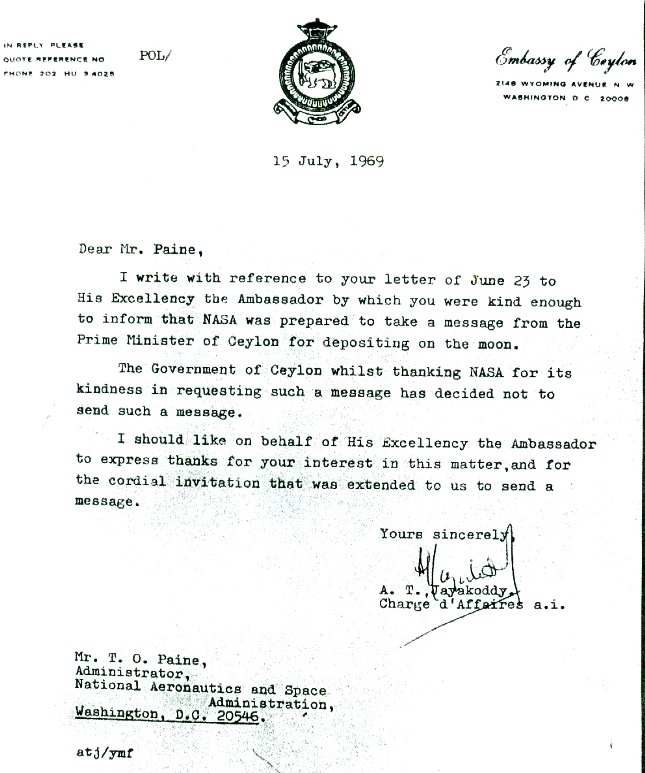
නමුත් මේ ඓතිහාසික අවස්ථාවේ නිල වශයෙන් එයට සහභාගි වීමට ලැබුණු ආරාධනය ශ්‍රී ලංකාව පිළිගත්තේ නැහැ! එවකට බලයේ සිටි ඩඞ්ලි සේනානායක අගමැතිවරයාගේ රජය කාරුණිකව මේ ඇරයුම ප‍්‍රතික්ෂේප කළා!

ඇපලෝ 11 උඩුගුවන්ගත කිරීමට පෙර දිනයේ අමෙරිකාවේ ශ්‍රී ලංකා තානාපති කාර්යාලය නාසා ප‍්‍රධානියාට ලියූ ලිපියේ හරය මෙයයි: පෙන් මහත්මයාණෙනි, (1969) ජුනි 23 දා ඔබ එවූ ලිපිය සම්බන්ධයෙනි. ශ්‍රී ලංකා අග‍්‍රාමාත්‍යවරයාගේ පණිවුඩයක් ද සඳ මතු පිට තැන්පත් කිරීම සඳහා නාසා ආයතනයෙන් ඉල්ලා සිටීම ගැන ස්තුතිවන්ත වන අතර, මේ අවස්ථාවේ එබදු පණිවුඩයක් නිකුත් නොකිරීමට ලක් රජය තීරණය කර ඇති බව දැනුම් දෙමු.”

එයට අත්සන් කර ඇත්තේ එවකට වොෂිංටන් නුවර ශ්‍රී ලංකා තානාපති කාර්යාලයේ දෙවැනියා ලෙස ක‍්‍රියා කළ ඒ. ටී. ජයකොඩි නම් විදේශ සේවා නිලධාරියායි. ඔහු එසේ ලියුවේ කොළඹින් ලද උපදෙස් මත බව පැහැදිලියි. එහෙත් මේ ප‍්‍රතික්ෂේප කිරීමට හේතුව කුමක්දැයි කීම අපහසුයි.

දශක හතරකට පසු අපට කළ හැක්කේ ඒ ගැන අනුමාන කිරීම පමණයි. 2009 දී මේ ගැන ඉංග‍්‍රීසියෙන් ලිපියක් ලියන විට සිලිකන් තැටියේ කථාව ගවේෂණය කළ වෛද්‍ය රහ්මාන් සමග මා ඊමේල් සන්නිවේදනය කළා. ඔහු කීවේ අදාල සියළු ලිපි ගනුදෙනු පිරික්සීමෙන් පසුව වූවත් ලංකාව මේ අවස්ථාව මග හැරියේ ඇයිද යන්නට කිසිදු ඉගියක් ඔහුට සොයා ගත නොහැකි බවයි.

ඇපලෝ සඳ ගමන් ගැන අමෙරිකානු ටෙලිවිෂන් සජීව විකාශයන්ට කථනයෙන් සහභාගී වූ ආතර් සී ක්ලාක්ට වෛද්‍ය රහ්මාන් සිය පොතේ පිටපතක් එවා තිබුණා. ක්ලාක් මිය යන්නට වසරකට පමණ පෙර මා ඔහුගෙන් ද මේ ගැන විමසුවා. තමන් ඩඩලි සේනානායක අගමැතිවරයා හා ඔහුගේ ජ්‍යෙෂ්ඨ ඇමතිවරුන් දැන හදුනාගෙන සිටියත් මේ තීරණය ගැන කිසිවක් නොදත් බව ඔහු කීවා. ”සමහර වෙලාවට රාජ්‍ය තාන්ත‍්‍රික මට්ටමින් රටවල් ක‍්‍රියාකරන ආකාරය තර්කානුකූල නැහැ.” ඔහු ප‍්‍රකාශ කළා.

ඇපලෝ 11 සඳ ගමනට වසර 40 ක් පිරුණු 2009 ජුලි මාසයේ Groundviews.org වෙබ් අඩවියේ මේ ගැන මා ලියූ ලිපිය පළ වුණේ ”ලංකාවට හඳ අහිමි වූ සැටි” නම් හෙඩිම සමගයි. එයට පාඨක ප‍්‍රතිචාර රැසක් ලැබුණත් එකී තීරණයට පසුබිම් වූ හේතු සාධක මොනවාදැයි හෙළිදරව් වූයේ නැහැ. ඒ වෙනුවට මාතෘකාවට ඍජුව අදාල නොවන කාරණා ඇතැම් පාඨකයන් මතු කර තිබුණේ අපේ ඇත්තන්ගේ පටු මානසිකත්වය ලොවට ම පෙන්වා දෙමින්.

දිවයිනේ දැවෙන ප‍්‍රශ්න රැුසක් විසදීමේ අභියෝගයට මුහුණ දී සිටි ඩඞ්ලි රජයට හඳ මතුපිට තැන්පත් කැරෙන සිලිකන් තැටියක් ගැන සිතීමට ඉස්පාසුවක් නොතිබුණා විය හැකි යයි ඇතැම් පාඨකයෝ අනුමාන කළා. සෙනසුරාදා-ඉරිදා සති අන්තය වෙනුවට පෝය හා පෙරපෝය සති අන්තය බවට පත් කළ ඩඞ්ලි රජය, එවකට බෞද්ධ බලපෑම්වලට බොහෝ සේ නතුව සිටි නිසාත් සඳ ශුද්ධ වස්තුවක් ලෙස සළකා සඳ ගමන් ගැන විමතියෙන් හෝ සැකයෙන් හෝ පසු වන්නට ඇතිදැයි තවත් අය විමසුවා.

සඳ ගමන එවකට පැවති සීතල යුද්ධයේ එක් පෙරමුණක් වූ නිසා නොබැදි පිළිවෙතට අනුව යමින් අමෙරිකානු පිළට පක්‍ෂග‍්‍රාහී වීම නොමනා යයි එවකට විදේශ කටයුතු උපදේශකයන් සිතන්නට ඇත් ද? මේ තවත් තර්කයක්. (එහෙත් නොබැදි ජාතීන්ගේ පුරෝගාමියෙකු වූ යුගොස්ලාවියාවේ ජෝසිප් බ්‍රෝස් ටිටෝ ජනාධිපතිවරයාත් මේ තැටියට පණිවුඩයක් ලබා දුන්නා.)

අමෙරිකානුවන් සඳ තරණය කොට එය තවත් අමෙරිකානු ජනපදයක් කිරීමේ උත්සාහයක යෙදී සිටි නිසා ලක් රජය එයට සහභාගි නොවූවා යයි කියන උදවිය නොදන්නා සත්‍යයක් තිබෙනවා. තනි රටක් පෘථිවියෙන් බැහැර කිසිදු අභ්‍යවකාශ වස්තුවක් අයිති කර ගැනීම වළක්වන පිටසක්වල ගිවිසුම (Outer space Treaty) 1967 දී ජාත්‍යන්තර නීතියක් ලෙස ලෝකය පිළි ගත්තා. අද වන විට අභ්‍යවකාශ තරණයේ නියැලෙන සියළු රටවල් එයට බැදී සිටිනවා.

බි‍්‍රතාන්‍යයේ කේම්බි‍්‍රජ් සරසවියේ උගත්, බටහිර ලිබරල් ආකල්ප දැරූ ඩඞ්ලි සේනානායක අගමැතිවරයා අමෙරිකානු විරෝධියකු වූවා යයි සිතීම අපහසුයි. ඔහුගෙ රජය දේශපාලන වශයෙන් දක්‍ෂිනාංශික යැයි අපට සැළකිය හැකියි. සඳ තැටියට එක් නොවීමට ඊට වඩා තර්කානුකූල හේතුවක් ඔහුගේ රජයට තිබෙන්නට ඇති. එය කුමක් ද? මෙය කියවන පාඨකයකුවත් එයට ඉගියක් ලබා දෙයි ද?

මෙරටින් බිහි වූ ශ්‍රේෂ්ඨ බෞද්ධ නායකයකුට අවමන් කරනවා යයි මගේ ඉංග‍්‍රීසි ලිපියට ප‍්‍රතිචාර දැක් වූ එක් (නිර්නාමික) පාඨකයෙක් මගේ බ්ලොග් අඩවිය හරහා මට චෝදනා කළා. හඳට පණිවුඩ නොයැවුවාට ඩඞ්ලිගේ දේශපාලන ප‍්‍රතිරූපයේ අඩුවක් සිදු වී නැහැ. එහෙත් නිල වශයෙන් අභ්‍යවකාශ කටයුත්තකදී ලක් රජය සම්බන්ධ කර ගන්නට 1969දී ගත් උත්සාහය ව්‍යර්ථ වූ නිසා 1977දී වොයෙජර් යානාවල තැන්පත් කැරුණු හඩ තැටියට නිල නොවන මට්ටමින් විද්වත් දායකත්වයක් ලබා ගැනීම ගැන නාසා ආයතනයට දොස් තැබිය හැකි ද?

සිවුමංසල කොලූගැටයා #56: විශ්වයේ අන්තිම සිංහල වචනය?

This is the Sinhala text of my Ravaya newspaper column published on 4 March 2012. Today, I talk about the gold-plated disk containing sounds and images of our Earth that was sent to the universe with Voyager 1 and 2 spacecraft launched by NASA in mid 1977.

In particular, I look at how a Sinhala language greeting was included on it, and thank Cornell University and project leader astronomer Carl Sagan for keeping it entirely a scholarly effort with nothing official about it. Thank you, Carl, for keeping the babus out of humanity’s ‘message in a bottle’ sent adrift to the depths of space.

සිවුමංසල කොලූගැටයා #57: ශ්‍රී ලංකාවට හඳ අහිමි වූ සැටි

සිංහල භාෂාව මවුබස ලෙස කථා කරන සමස්ත ජන සංඛ්‍යාව මිලියන් 16ක් පමණ වන අතර තවත් මිලියන් 2ක් ජනයා එය ප‍්‍රායෝගිකව භාවිත කරන බව විකිපීඩියාව කියනවා. භාෂා නිතිපතා පරිනාමය වෙනවා. කිසිදු භාෂාවක් සදා කල් පවතින්නේ නැහැ. සංස්කෘතිය යනු කෞතුකාගාරයක හෝ සංරක්‍ෂණාගාරයක දමා දැඩි ආරක්‍ෂාව යටතේ ප‍්‍රවේශම් කළ හැකි දෙයක් නෙවෙයි. එය සජීව හා ගතික සංසිද්ධියක්.

නූතන සිංහලය ක‍්‍රි.ව. 12 වන සියවසෙන් පමණ පසු භාවිතයේ පවතින නමුත් ගෙවී ගිය සියවස් කිහිපය පුරා විවිධ භාෂාවලින් එය පෝෂණය වී තිබෙනවා. යටත්විජිත බලපෑම්, වෙළඳ සබඳතා, ගෝලීයකරණය හා තාක්‍ෂණය සිංහල භාෂාවට බලපා ඇති සාධක අතර වනවා.

සිංහල භාෂාවේ ආරම්භය හරියට ම කවදා කෙලෙස සිදු වී දැයි කිව නොහැකිවාක් මෙන් ම සිංහලයේ අනාගතය කෙසේ පරිනාමය වේ දැයි කියන්නටත් බැහැ. නමුත් එක් තොරතුරක් මා දන්නවා. දුර අනාගතයේදී විශ්වයේ ඉතිරිවන අවසාන සිංහල වචනය ‘ආයුබෝවන්’. එය දැනටමත් කථා කර හමාරයි!

මා එසේ කියන්නේ ඇයි? මේ පිටුපස රසවත් කථාවක් තිබෙනවා.

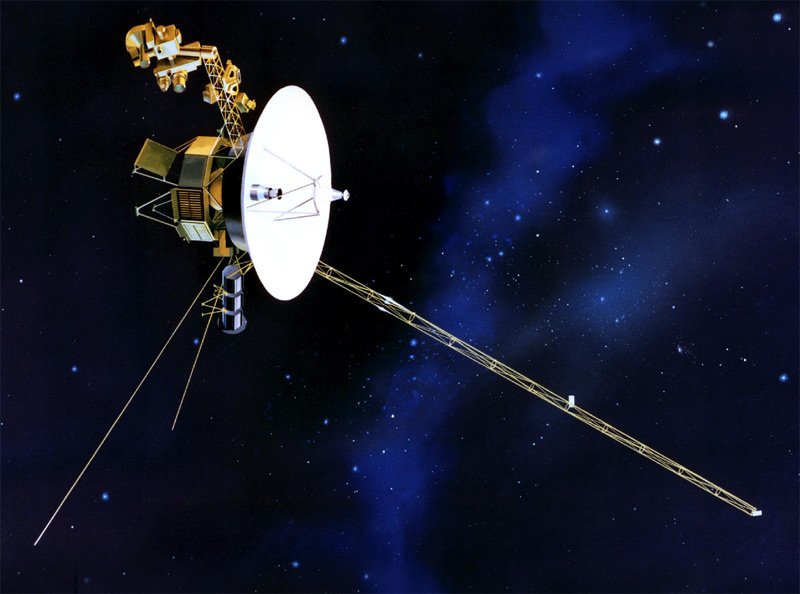
මීට 35 වසරකට පෙර 1977දී අමෙරිකානු අභ්‍යවකාශ අධිකාරිය වන නාසා (NASA) ආයතනය ග‍්‍රහලෝක ගවේෂණය සඳහා වොයෙජර් 1 හා වොයෙජර් 2 නම් ස්වයංක‍්‍රීය අභ්‍යවකාශ යානා දෙකක් උඩුගුවන් ගත කළා. බ‍්‍රහස්පති, සෙනසුරු, යුරේනස් හා නෙප්චූන් යන ග‍්‍රහලෝක හතරට සමීප වෙමින් 1979-89 කාලය තුළ මේ යානා දෙක අති විශාල තොරතුරු හා ඡයාරූප සමුදායක් රේඩියෝ සංඥා මගින් පෘථිවියට සම්පේ‍්‍රෂණය කළා.

කිසිදු ග‍්‍රහලෝකයකට ගොඩ නොබැස, සමීපවීම් හරහා පමණක් මේ ගවේෂණයන් කළ වොයෙජර් යානා දෙක ඉනික්බිති අපේ ග‍්‍රහමණ්ඩලයෙන් පිටත ඈත අභ්‍යවකාශයට ගමන් කිරීමට සළස්වා තිබෙනවා. මේ වන විට මිනිස් සංහතිය උඩුගුවන් ගත කළ යානාවලින් පෘථිවියෙන් වැඩි ම දුරකට ගොස් ඇත්තේ මේ යානා දෙකයි. අභ්‍යවකාශයේ වේගය බාල වීමක් නැති නිසා (යම් අනතුරක් නොවුණොත්) මේ යානා දෙක දිගින් දිගට ම සියවස් හා සහශ‍්‍ර ගණනක් තිස්සේ අභ්‍යවකාශයේ ගමන් කරනු ඇති. යානා දෙක කිසිදු නිශ්චිත ඉලක්කයක් කරා ගමන් නොකළත්, වෙනත් තරුවකට ළගා වන්නට තව වසර 40,000ක් වත් ගත වනවා.

මිනිස් සංහතියේ යාන්ත‍්‍රික නියෝජිතයා ලෙස විශ්වයට යන මේ දුතයන් දෙදෙනා තුළ තැන්පත් කර තිබෙන විශ්ව පණිවුඩයක් තිබෙනවා. එය රත්රන් ආලේපිත තඹ තැටියක් (phonographic record). පෘථිවි ග‍්‍රහලෝකය හා මානව වර්ගයා නියෝජනය කැරෙන විවිධ ශබ්ද හා රූප රැසක් එහි තැටිගත කොට තිබෙනවා. වසර දහස් ගණනක ගමනකින් පසුව යම් දිනෙක බුද්ධිමත් ජීවීන්ට මේ යානා මුණ ගැසුණොත් ඔවුන්ට වොයෙජර් යානා නිපද වූ හා අභ්‍යවකාශයට යැවූ මානව වර්ගයා පිළිබඳ ඉගියක් ලබා දීම එහි අරමුණයි.

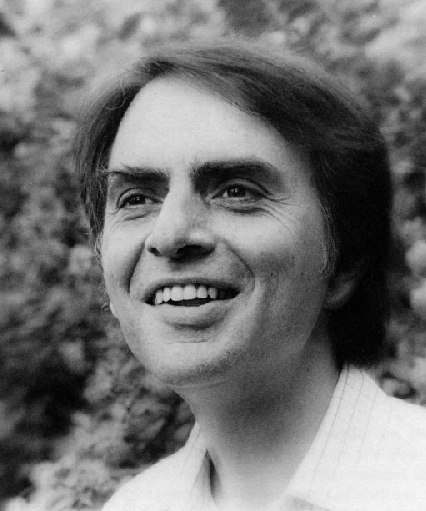
මෙබදු සංක්‍ෂිප්ත සන්නිවේදයක් හරහා විස්තරාත්මක තොරතුරු දිය නොහැකි වූවත් එය සම කළ හැකි වන්නේ මුහුදේ පාළු දුපතක අතරමං වූවකු බෝතලයක් තුළ පණිවුඩයක් ලියා සාගර රැුලි අතර එය පාකොට යැවීමටයි. වොයෙජර් යානාවල තැන්පත් කළ ශබ්ද හා රූප තැටිල අපෙන් විශ්ව සාගරයට යැවෙන බෝතල් පණිවුඩයකට සමාන බව එම අදහසේ මූලිකයා වූ අමෙරිකානු තාරකා විද්‍යාඥ හා කෝනෙල් සරසවියෙ ආචාර්ය කාල් සේගාන් (1934 – 1996) කියා තිබෙනවා.

මිනිස් හඩට අමතරව සොබා දහමේ ශබ්ද (අකුණු, ගිගිරුම, මුහුදේ රළ බිෙඳන සැටි, සැඩ සුළග ආදිය) සහ විවිධ සතුන්ගේ ශබ්ද (කුරුළු නාද, තල්මසුන්ගේ සංගීතමය හඩ) එම තැටියට ඇතුළත් වුණා. එමෙන්ම විවිධ සංස්කෘතීන් නියෝජනය කැරෙන පරිදි සංගීත ඛණ්ඩයන් ගණනාවක් ද තෝරා ගනු ලැබුවා.
පෘථිවියේ ජෛව විවිධත්වය හා සංස්කෘතික විවිධත්වය ඡයාරූප ගොන්නකුත් එහි අඩංගුයි.

මේ තැටියේ අන්තර්ගතය තීරණය කිරීමේ භාරදුර වගකීම නාසා ආයතනය කෝනෙල් සරසවියෙ විද්‍යාඥ පිරිසකට පැවරුවා. කෝනෙල් සරසවිය විද්‍යා – කලා ක්‍ෂෙත‍්‍ර දෙකෙහි ම පෙරමුණ ගත් අමෙරිකානු සරසවියක් නිසා මෙබදු ඓතිහාසික තේරීම් ක‍්‍රියාවලියකදී තිබිය යුතු බහුවිධ ක්‍ෂෙත‍්‍ර නියෝජනය හරිහැටි සිදු වුණා. එසේ නොවන්නට එය රාජ්‍ය තාන්ත‍්‍රික මට්ටමේ සංකීර්ණ ක‍්‍රියාවලියක් වන්නට ඉඩ තිබුණා!

ලෝකයේ කථා කැරෙන භාෂා 55කින් භාෂිත ඉතා කෙටි සුභාශිංසන පණිවුඩ මේ තැටියේ ශබ්ද අතර තිබෙනවා. කවදත් තම ජාතිකත්වයට වඩා දුර දැක්මකින් ක‍්‍රියා කළ කාල් සේගාන්ට ඕනෑ වුණේ හැකි තාක් මානව සංහතිය නියෝජනය කරන ආකාරයේ රූප-ශබ්ද එකතුවක් හදන්නටයි. එහෙත් ඒ සඳහා ඔහු ඇතුළු කෝනෙල් සරසවියේ පිරිසට තිබුණේ මාස කිහිපයක කාලයක් හා සීමිත මුදල් ප‍්‍රතිපාදනයක් පමණයි.

ඔවුන්ට උදක් ම ඕනෑ වුණේ ලෝකයේ වැඩිපුර ජන සංඛ්‍යාවක් කථා කරන භාෂා 25කින් මේ තැටියට සුභාශිංසන ලබා ගන්නටයි. ඒ ඉලක්කය ළගා වූ පසු තවත් භාෂා 30කට එය පුළුල් කරනු ලැබුවා. සිංහල භාෂාව එයට එක් වූයේ එලෙසයි.

“මේ තේරීම අප කළේ පිටසක්වල බුද්ධිමත් ජීවීන් සඳහා වූවත් මේ හරහා අපේ ලෝකයේ දැනට ජීවත්ව සිටින මානවයන්ටත් ප‍්‍රබල සංකේතාත්මක පණිවුඩයක් ලැබෙන බව අප හො`දාකාරව දැන සිටියා,” ආචාර්ය සේගාන් ලියා තැබුවා.

එහෙත් භාෂා 55ක සම්මාදම කෙටි කලක් තුළ ලබා ගැනීම ඔවුන්ට ලොකු අභියෝගයක් වුණා. කෝනෙල් සරසවියේ එවකට (1976-77 වකවානුවේ) සිටි ශිෂ්‍යයන්, ඇදුරන් හා ඔවුන්ගේ නෑ හිතමිතුරන් අතරින් ලෝකයේ භාෂා රැසක් කථා කරන පුද්ගලයන් සොයා ගන්නට හැකි වුණා.

‘පිටසක්වලට ඔබේ භාෂාවෙන් ඉතා කෙටි පණිවුඩයක් දෙන්න’ යන පොදු ඉල්ලීමට ප‍්‍රතිචාර ලෙස නොයෙක් දෙනා විවිධාකාරයේ අදහස් ගැබ් වූ කෙටි වාක්‍ය තැටිගත කළා. කිසිදු රජයක, තානාපති කාර්යාලයක හෝ නිල ආයතනයක මැදිහත්වීමක් තිබුණේ නැහැ. අන්තිමේදී විශ්වයට ගිය මානව පණිවුඩ තැටිය නිල නොවන, ශාස්ත‍්‍රීය තේරීමක් වීම ගැන මා ඉතා සතුටු වනවා!

සිංහලෙන් මේ සුභාශිංසනය විශ්වයට යැවීමේ දුර්ලභ අවස්ථාව ලැබුණේ ආචාර්ය කමල් ඩි ආබෲ (Dr Kamal De Abrew) නම් ලාංකිකයාටයි. මෙය සිදු වී ඇත්තේ අහම්බෙන්. මීට වසර කිහිපයකට පෙර ටෙලිවිෂන් වැඩසටහනකට සූදානම් වෙද්දී මෙහි පසුබිම් කථාව මා අසා දැන ගත්තා.

ඒ කාලයේ ඔහු සිය ආචාර්ය උපාධියට කෝනෙල් සරසවියේ පශ්චාත් උපාධි සිසුවෙක්. සේගාන්ගේ පිරිස ඔහුගෙන් ඉල්ලා සිටියා සිංහලෙන් පණිවුඩයක් දෙන ලෙස. ඒ අනුව ඉතා කෙටි එහෙත් අපේ සංස්කෘතිය හරවත් ලෙස නියෝජනය කැරෙන ‘ආයුබෝවන්’ යන වචනය ඔහුගේ හඩින් මේ තැටියට ලබා දුන්නා. ඉංග‍්‍රීසි භාෂාව පිළිබඳ මහාචාර්යවරයකු හැටියට විවිධ සරසවිවල සේවය කර ඇති ආචාර්ය ඩි ආබෲ තවමත් සක‍්‍රීය සරසවි ඇදුරෙක්.

කමල් ඩි ආබෲ එසේ 1977 වසරේ දිනෙක කෝනෙල් සරසවියේදී පැවසූ ‘ආයුබෝවන්’ වචනය අන් සියළු සිංහල වචනවලට වඩා වැඩි කලක් පැවතීමේ ඉඩක් පවතිනවා. මිහිතලය මත කාලගුණ, දේශගුණ, සොබාවික විපත් හා වෙනත් අනපේක්‍ෂිත සිදුවීම් නිසා සහස‍්‍ර ගණනක් යම් දෙයක හෝ යම් භාෂාවක පැවැත්ම ගැන සහතික වන්නට බැහැ. එහෙත් හිස් අභ්‍යවකාශය හරහා අපෙන් ඔබ්බට ඇදී යන (එකිනෙකට වෙනස් දිශාවලට යොමු වී ඇති) වොයෙජර් 1 හා 2 යානාවල ඇති විශ්වයට යැවෙන පණිවුඩයල අපේ වර්ගයාට වැඩි කාලයක් පවතිනු ඇති. විශ්වයේ කිසිවක් සාදාතනික නොවූවත්, සාපේක්‍ෂව තව වසර 40,000ක් හෝ ලක්‍ෂයක් වූවද එය නිරුපද්‍රිතව තිබීමේ සම්භාවිතාව ඉහළයි. ආයුබෝවන් වචනයේ අරුතින් ම ඒ අන්තිම සිංහල වචනය වැඩි ම කලක් රැදී පවතිනු ඇති.

ලෝක නායකයන් අතරින් මේ තැටියේ ලිඛිත පණිවුඩ යවා ඇත්තේ එවකට සිටි අමෙරිකානු ජනාධිපති ජිමී කාටර් සහ එවකට එක්සත් ජාතීන්ගේ මහලේකම් කුර්ට් වෝල්ඩයිම් පමණයි. මෙය දේශපාලකයන් දුරස්ත කරමින්, විද්වතුන්, කලාකරුවන් හා සාමාන්‍ය මිනිසුන්ගේ සාමුහික ප‍්‍රයත්නයක් කළ කාල් සේගාන්ට අපේ ප‍්‍රණාමය!

“අපට ලෙහෙසියෙන් සිතා ගත නොහැකි තරම් ඉදිරි අනාගතයේ දී, එනම් අදින් වසර මිලියන් ගණනක් ගෙවී ගිය පසු අපේ පෘථිවියේ මහාද්වීප වෙනස් වී, ජීවීන් මුළුමනින් පරිනාමය වී හෝ වඳ වී හෝ තිබිය හැකියි. අපේ විවිධ ශිෂ්ඨාචාරයන් ඉදි කළ සියල්ල කාලයාගේ ඇවෑමෙන් දුවිලි බවට පත්වනු ඇති. එහෙත් මේ සියල්ලෙන් දුරස්තව විශ්වයේ යම් තැනෙක 1977දී අප උඩුගුවන් ගත කොට යැවූ වොයෙජර් යානා දෙක අපේ රූප හා හඩ පමණක් නොවෙයි, අපේ සිහින හා පැතුම් ද රැගෙන ගමනේ යෙදෙනු ඇති. යම් දිනෙක මුළු මිහිතලය වෙනුවෙන් විශ්වයේ ඉතිරි වන්නේ එය පමණක් ද විය හැකියි.” ඉතා දාර්ශනික ලෙසින් ආචාර්ය කාල් සේගාන් එසේ කියනවා.

ඇත්තට ම මෙබදු තැටියක් වාදනය කොට අපේ රූප හා ශබ්ද ග‍්‍රහණය කිරීමෙන් අපේ ලෝකය හා එහි විවිධ සභ්‍යත්වයන් ගැන දළ හැගීමක් හෝ ලබන්නට පිටසක්වල ජීවීන්ට හැකි වේද? මෙයට හරි පිළිතුරක් දෙන්න අමාරුයි. පියාඹන පීරිසි ගැන විවිධ ප‍්‍රබන්ධ කථා කෙතරම් ප‍්‍රචලිත වුණත් බුද්ධිමත් පිටසක්වල ජීවයක් ඇති බවට පැහැදිලි සාක්‍ෂි තවමත් අපට ලැබී නැහැ.

විශ්වයේ අප වැනි හෝ අපටත් වඩා දියුණු ජීවීන් වාසය කරන බව අද බහුතරයක් විද්‍යාඥයන්ගේ පිළිගැනීමයි. නමුත් විශ්වයේ ලෝක අතර ඇති ඉමහත් දුර ප‍්‍රමාණ නිසා ඔවුන් හා අප අතර සන්නිවේදනය දුෂ්කර කාරියක්.

යම් දිනෙක අපට බෙහෙවින් වෙනස් පිටසක්වල ජීවීන් මේ තැටියට සවන් දුන්නොත් ඔවුන් අපේ ලෝකය හා අපේ වර්ගයා ගැන කුමක් සිතයි ද?

වොයෙජර් තැටියේ අන්තර්ගතය සඳහා බලන්න
http://voyager.jpl.nasa.gov/spacecraft/goldenrec.html

විශ්වයේ අන්තිම සිංහල වචනයට සවන් දෙන්න
http://voyager.jpl.nasa.gov/spacecraft/greetings.html

සිවුමංසල කොලූගැටයා #57: ශ්‍රී ලංකාවට හඳ අහිමි වූ සැටි

First Orbit: Retracing the historic journey of Yuri Gagarin, 50 years ago

Yuri Gagarin: On 12 April 1961, he really went where no human had gone before...
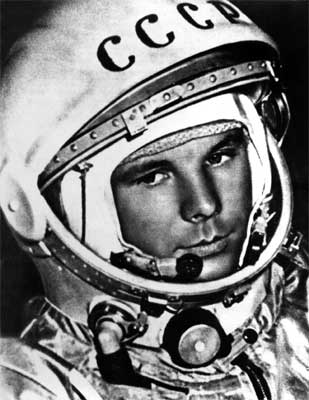
It was exactly 50 years ago that a human being first traveled to outer space. Yuri Alekseyevich Gagarin was launched into Earth orbit by the former Soviet Union on 12 April 1961, creating history.

He travelled to orbit aboard the Vostok 3KA-3 (Vostok 1), which made a single orbital flight that lasted 108 minutes, or just under two hours. The maximum speed reached was 28,260 kilometers per hour – faster than any human had moved before. At its highest point, Gagarin was about 200 miles (327 kilometers) above Earth.

He paved the way for hundreds of men and women from many nations to travel to near space as well as to the Moon. Up to mid 2010, a little over 500 human beings have travelled to space from 38 nationalities.

First Orbit, a new documentary film that reconstructs Gagarin’s historic flight, has just been released for free viewing on YouTube. The making of this documentary is a remarkable story in itself.

Gagarin’s original spacecraft did not have space or capacity for filming, so there is no visual record of what he saw. But he kept in touch with his control room via radio, and gave many interviews upon return that help us imagine what he experienced.

These words by Gagarin have become famous: “Circling the Earth in the orbital spaceship, I marvelled at the beauty of our planet. People of the Earth, let us safeguard and enhance this beauty – not destroy it!”

Now, First Orbit literally takes us to space in an attempt to retrace what Gagarin saw. It is directed by Dr Christopher Riley, the British writer, broadcaster and film maker, and was made in partnership with the Russian space agency. Additional material has come from the European Space Agency (ESA) and NASA.

The new documentary has been partly filmed by Italian astronaut Paolo Nespoli, currently on a long-duration mission at the International Space Station (ISS) in Earth orbit. By matching the orbital path of ISS, as closely as possible, to that of Gagarin’s Vostok 1 spaceship and filming the same vistas of the Earth through the new giant cupola window, the film has captured a new digital high definition view of the Earth below, half a century after Gagarin first witnessed it. Read more about how the film was made

Most importantly, First Orbit is a a free film that everyone can watch online in full, and also allowed to be downloaded for free. This is in the spirit of Gagarin’s first flight which was not just for one nation, but for all mankind.

Watch the trailer for First Orbit:

Watch the full length documentary First Orbit (1 hr 39 mins):

Space Shuttle Challenger disaster, 25 years later: Communication Lessons

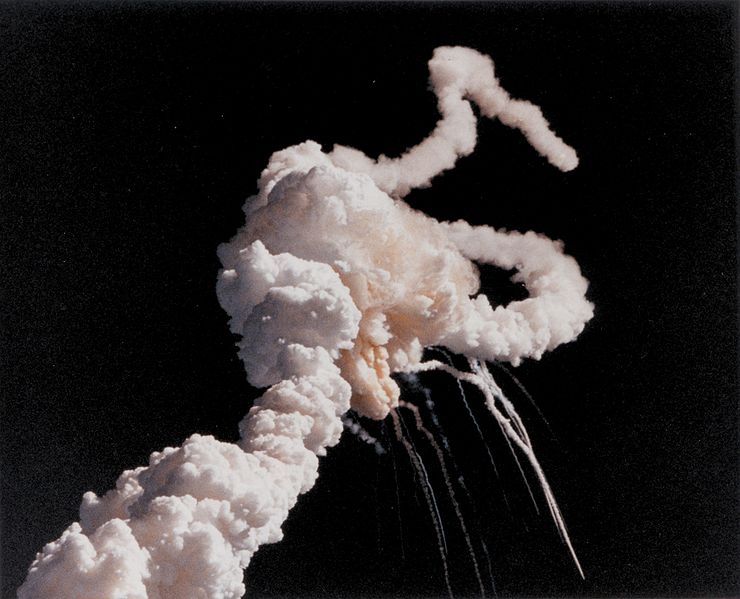
Space Shuttle Challenger's smoke plume after in-flight breakup that killed all seven crew members

Today marks the 25th anniversary of the Space Shuttle Challenger disaster. It was the worst accident in the history of manned space exploration up to that time. All seven crew members died in the disaster — among them was Christa McAuliffe, who was selected to be the first teacher in space, and the first strict civilian to go to space as part of the US space programme.

Challenger was destroyed as it broke up in mid-flight in the second minute of its 10th mission, on 28 January 1986 at 11:38:00 am Eastern Standard Time. The break-up was later found to have been due to the failure of an O-ring on its right solid-fuel rocket booster (SRB). The O-rings are used to seal the joints between the multiple segments of the SRBs.

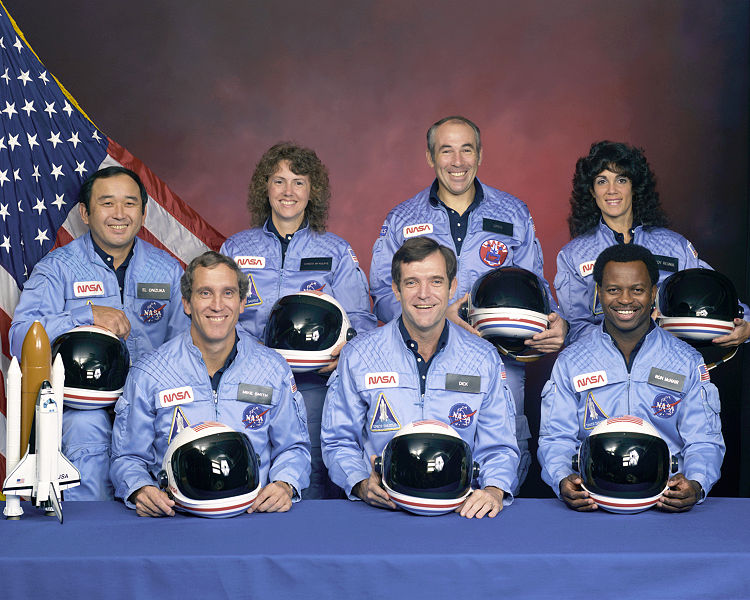
STS-51-L crew (front row) Michael J. Smith, Dick Scobee, Ronald McNair; (back row) Ellison Onizuka, Christa McAuliffe, Gregory Jarvis, Judith Resnik.

While the presence of Christa McAuliffe on the crew had provoked some media interest, shuttle launches had become commonplace by this time and there was little live broadcast coverage of the launch. The only live national TV coverage available publicly was provided by CNN.

Challenger Disaster Live on CNN

The accident was thoroughly investigated and has been well documented. What interests me are the communication lessons drawn from the incident – it continues to be cited as a case study in subjects as diverse as engineering safety, the ethics of whistle-blowing, effective communications, and the perils of group decision-making.

According to the Wikipedia, Roger Boisjoly, the engineer who had warned about the effect of cold weather on the O-rings, left his job at Morton Thiokol and became a speaker on workplace ethics. For his honesty and integrity leading up to and directly following the shuttle disaster, Roger Boisjoly was awarded the Prize for Scientific Freedom and Responsibility from the American Association for the Advancement of Science. Many colleges and universities have also used the accident in classes on the ethics of engineering.

Information designer Edward Tufte has used the Challenger accident as an example of the problems that can occur from the lack of clarity in the presentation of information. He argues that if Morton Thiokol engineers had more clearly presented the data that they had on the relationship between low temperatures and burn-through in the solid rocket booster joints, they might have succeeded in persuading NASA managers to cancel the launch.

To me, it was extraordinary how President Ronald Reagan handled the aftermath of the tragedy. On the night of the disaster, he was scheduled to give his annual State of the Union Address. He postponed it by a week and instead gave a national address on the Challenger disaster from the Oval Office. The speech, written by author Peggy Noonan who was the president’s primary speech writer, is a fine piece that combines grief, tribute and resolve in just the right proportions. No lofty intellectualisation or pontification. Just plain, short sentences that appeal to the hearts. Ably delivered by the Great Communicator, it remains an excellent study in how a national leader can counsel a nation in grief without descending into either despair or denial. Draw your own contrasts with other tragedies before and since.

Ronald Reagan’s speech to the nation after the Challenger Shuttle explosion

President Reagan spoke at 5 pm EST from the Oval Office at the White House. The address was broadcast live on nationwide radio and television. Here is the full text of his speech (emphasis is mine):


Address to the Nation on the Explosion of the Space Shuttle Challenger

January 28, 1986

Ladies and gentlemen, I’d planned to speak to you tonight to report on the state of the Union, but the events of earlier today have led me to change those plans. Today is a day for mourning and remembering. Nancy and I are pained to the core by the tragedy of the shuttle Challenger. We know we share this pain with all of the people of our country. This is truly a national loss.

Nineteen years ago, almost to the day, we lost three astronauts in a terrible accident on the ground. But we’ve never lost an astronaut in flight; we’ve never had a tragedy like this. And perhaps we’ve forgotten the courage it took for the crew of the shuttle. But they, the Challenger Seven, were aware of the dangers, but overcame them and did their jobs brilliantly. We mourn seven heroes: Michael Smith, Dick Scobee, Judith Resnik, Ronald McNair, Ellison Onizuka, Gregory Jarvis, and Christa McAuliffe. We mourn their loss as a nation together.

For the families of the seven, we cannot bear, as you do, the full impact of this tragedy. But we feel the loss, and we’re thinking about you so very much. Your loved ones were daring and brave, and they had that special grace, that special spirit that says, “Give me a challenge, and I’ll meet it with joy.” They had a hunger to explore the universe and discover its truths. They wished to serve, and they did. They served all of us. We’ve grown used to wonders in this century. It’s hard to dazzle us. But for 25 years the United States space program has been doing just that. We’ve grown used to the idea of space, and perhaps we forget that we’ve only just begun. We’re still pioneers. They, the members of the Challenger crew, were pioneers.

And I want to say something to the schoolchildren of America who were watching the live coverage of the shuttle’s takeoff. I know it is hard to understand, but sometimes painful things like this happen. It’s all part of the process of exploration and discovery. It’s all part of taking a chance and expanding man’s horizons. The future doesn’t belong to the fainthearted; it belongs to the brave. The Challenger crew was pulling us into the future, and we’ll continue to follow them.

I’ve always had great faith in and respect for our space program, and what happened today does nothing to diminish it. We don’t hide our space program. We don’t keep secrets and cover things up. We do it all up front and in public. That’s the way freedom is, and we wouldn’t change it for a minute. We’ll continue our quest in space. There will be more shuttle flights and more shuttle crews and, yes, more volunteers, more civilians, more teachers in space. Nothing ends here; our hopes and our journeys continue. I want to add that I wish I could talk to every man and woman who works for NASA or who worked on this mission and tell them: “Your dedication and professionalism have moved and impressed us for decades. And we know of your anguish. We share it.”

There’s a coincidence today. On this day 390 years ago, the great explorer Sir Francis Drake died aboard ship off the coast of Panama. In his lifetime the great frontiers were the oceans, and an historian later said, “He lived by the sea, died on it, and was buried in it.” Well, today we can say of the Challenger crew: Their dedication was, like Drake’s, complete.

The crew of the space shuttle Challenger honored us by the manner in which they lived their lives. We will never forget them, nor the last time we saw them, this morning, as they prepared for their journey and waved goodbye and “slipped the surly bonds of earth” to “touch the face of God.”

British Interplanetary Society (BIS) remembers Sir Arthur C Clarke

Humanity’s journey to the stars began here…Photo by Greg Fewer


I seem to have a knack for visiting the UK just when Nature decides to remind the hapless islanders who is really in charge. Last April it was the Icelandic volcano Eyjaffjalljokull coughing up. Last week it was sub-zero temperatures and freezing winds coming all the way, with love, from Siberia…

But London’s spirits are not so easily dampened by ash or snow (but they all groaned when their bid for FIFA World Cup 2018 lost to Russia’s). A highlight of my week’s stay was a visit to the British Interplanetary Society (BIS) headquarters on South Lambeth Road.

BIS, founded in 1933 by Phil E Cleator, is the oldest organisation in the world whose aim is exclusively to support and promote astronautics and space exploration. It was originally set up not only to promote and raise the public profile of astronautics, but also to undertake practical experiments in rocketry. But the pioneering British ‘space cadets’ soon discovered that Britain’s the Explosives Act of 1875 prevented any private testing of liquid-fuel rockets.

Undaunted, they continued with their thought experiments, discussions and public advocacy. Perhaps it was just as well that they didn’t get into the messy (and potentially hazardous) business of rocketry. For over 75 years, they have been preparing humanity’s engagement with the realm and challenges of space. Unlike its American and German counterparts, the BIS never became absorbed into the rocket or space industries that developed after the Space Age began in 1957.

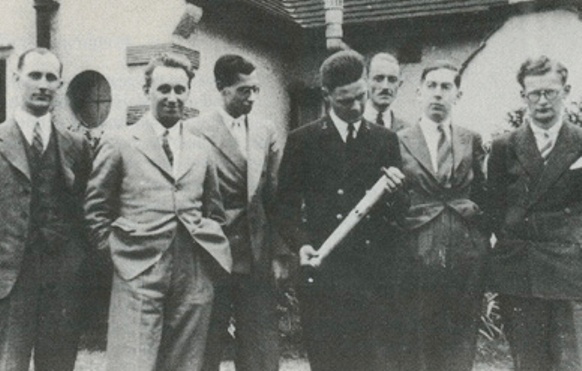
Arthur C. Clarke (far right) and other members of the British Interplanetary Society had a visit from rocket pioneer Robert Truax (holding the rocket model) in 1938

I have always admired the BIS for their pioneering role in popularising space travel, and having ha the audacity to dream of it and in public too. So I was delighted to be invited to the BIS annual Christmas get-together on the evening of December 1. This year, they celebrated the life and times of their founder member and two-time chairman, Arthur C Clarke.

Mark Stewart, the energetic librarian and archivist at BIS, heard I was visiting London and invited me to join their members-only event. Mark is currently looking after one of the finest collections on astronautics on this side of the Atlantic. Some records and documents at the BIS Library go back to the 1930s.

It was good to finally visit ‘ground zero’ of where it all began — nothing less than humanity’s long (and eventual) journey to the stars, hatched by a group of starry-eyed youth as an entirely private, citizen initiative. It took another 20 years — and considerable battering of London by Germany’s V2 rockets — for the British government to take it seriously.

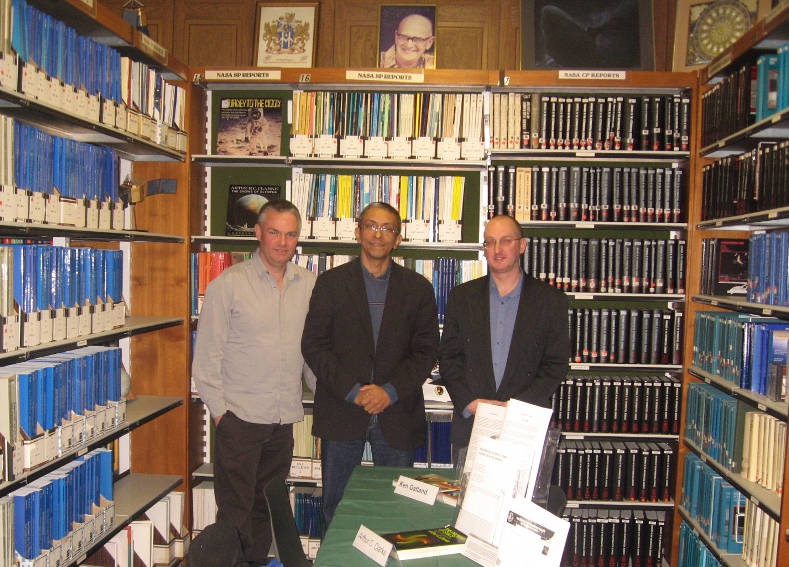
I spent the afternoon chatting with Mark and Colin Philip, a BIS Fellow. Joining us later was Mark’s teenage son Alex, a next-gen space cadet already volunteering at the society. They gave me the guided tour — only a few months ago, I heard, a certain N. Armstrong had been similarly shown around. The society is certainly proud of its history and Sir Arthur’s photos, books, papers and posters are prominently displayed.

L to R – Colin Philip, Naaka Gunawardene, Mark Stewart, BIS Library 1 Dec 2010

The evening gathering was attended by 40 – 50 members, who were treated to an illustrated talk by Mat Irvine, British TV personality who has worked on many science and science fiction shows over the years, gave an illustrated talk about his friend Arthur. (Confession: I was so engrossed in his talk that I forgot to take any photos of him making it!)

I was familiar with much of the ground that Mat covered, but there were occasional revelations. For example, I didn’t know that circa 1995, Mat and (Sir Arthur’s brother) Fred Clarke had worked with the Isle of Man Post Office to issue some stamps bearing Sir Arthur’s visage and other iconic images associated with him, e.g. the monolith from 2001, comsats, etc. Alas, the plans didn’t work out, but Mat still has the designs and is hopeful that the British Post Office might consider it for the author’s birth centenary in 2017. Of course, some lobbying will be needed…but there’s plenty of time for that.

Like all non-profits these days, the BIS is struggling financially. It also faces the challenge of recruiting younger members – the average age of the Christmas gathering seemed to be 55 or 60. They have fascinating stories to tell (among them: the inside story how Apollo 13 was saved), but forward transmission requires more new blood.

The Council, I heard, is working on repositioning the society for the Facebook generation, and I wish them every success. ‘Imagination to reality’ is their motto, and they have seen a good deal of day-dreaming of the pioneering space cadets come true.

Nalala Gunawardene (L) with Mark Stewart at BIS Library

Sri Lanka’s Sacred Cows and Orbital Dreams: Asking difficult questions

Holy cow! How does she do it?
Cows have been a part of South Asian cultures, economics and societies for millennia. Many among us are connected to cows in one way or another – some worship them while others feast on them. Even a secular vegetarian in South Asia – like myself – can’t avoid bumping into the occasional cow on our delightfully messy streets…

We probably gave the term ‘sacred cow’ to the English language. It means an object or practice which is considered immune from criticism, especially unreasonably so. As the Wikipedia explains, “The term is based on the popular understanding of the place of cows in Indian religions as objects that have to be treated with respect, no matter how inconvenient.”

Well, some of us beg to differ on modern-day sacred cows. My latest op ed essay, just published on Groundviews.org, is all about sacred cows in rapidly modernising South Asia. It starts with my experience as a young science journalist covering the impending launch of Pakistan’s first digital communications satellite, Badr 1, in early 1990.

At the time, Pakistan had recently returned to civilian rule after many years of dictatorship, and Benazir Bhutto was Prime Minister (in her first term). The political mood was generally upbeat. But I soon found out — from Pakistani journalists and independent scientists — that they weren’t allowed to ask critical questions about the country’s nuclear or space programmes.

In Sacred Cows and Orbital Dreams in Sri Lanka, I write: “The message was clear: democracy or not, some sacred cows always enjoy their privileged status! This has certainly been the case with both the space and nuclear programmes in India and Pakistan: they have been shielded from public and media scrutiny for decades.

What price for having our own?
“For the past few months, it seemed as if we too were following this South Asian tradition. Plans to build Sri Lanka’s own satellites were announced and pursued with little information disclosure and no public debate. The government wanted to launch our very own ‘sacred cows’ into orbit. We the public were to just applaud on cue, and then cough up the money for it…”

The essay is a critique of Sri Lanka’s much hyped plans to build its own satellites. The project was announced in February 2009 and appeared to gain momentum during the year. Going by official statements and media reports, the plan was to launch not one but two satellites.

Suddenly, there seems to be a change of heart. In a interview on 6 June 2010 covering a range of issues, head of the Telecom Regulatory Commission (TRC) disclosed that the government was not going ahead with the much-hyped project. At least not in its originally announced form. The reason: the very high cost, and the need to ‘explore other options such as hiring satellites’ instead of building our own.

Hmmm. Better to be wise later than never. This is the first time in over 15 months that the high costs of this high cost project have been acknowledged.

The satellite is not the only mega-science project being pursued in post-war Sri Lanka. In June 2009, the Ministry of Science and Technology directed the Atomic Energy Authority to set up a national committee to study technical and financial aspects of setting up a nuclear power plant.

Again, this mega project has not been opened up for public discussion and debate, in spite of a few citizens and activists expressing concern, highlighting safety and public health risks, high cost of construction and the unresolved problem of nuclear waste disposal.

I end the essay arguing that as long as public safety and public funds are involved, sacred cows – whether orbital or radioactive – can’t be allowed free range.

Read the full essay on Groundviews: Sacred Cows and Orbital Dreams in Sri Lanka

A compact version appeared in The Sunday Times, 13 June 2010: Sri Lanka’s Satellite: Lost in Space?

Remastered Star Trek – The Original Series (TOS): A treasure worth waiting for!

I haven’t been blogging much during April. One reason is that I’ve been travelling across space — and time.

I was in London for 10 days, and with its lovely Spring weather, I had every reason to be offline. I’ve also been spending a good deal of time back in 1966-67, and having a great deal of fun doing so. (The 1960s had a charm of their own that’s never been repeated…)

Let me explain. I’ve been watching the digitally remastered original Star Trek episodes, which had their first broadcast in that now far-away year — the same year I was born. And what an exhilerating experience to go back to these superbly crafted stories: they offer me both timeless mental stimulation and a sentimental journey to my own childhood/boyhood.

I’d heard of the digitally remastered DVDs’ release a couple of years ago, and was delighted when I found the last copy of Season 2 in a DVD store in Amsterdam in late March. The remastered episodes look and sound crisp, thanks to digitally restored imagery and audio. But the more daring work involved updating the shows’ visual effects with CGI to bring them more in line with the look and quality of later Trek efforts. That’s proving to be a real treasure – well worth waiting for…

As the promotional blurb reads on Amazon.com: “Star Trek, the NBC series that premiered on 6 September 1966, has become a touchstone of international popular culture. It struggled through three seasons that included cancellation and last-minute revival, and turned its creator, Gene Roddenberry, into the progenitor of an intergalactic phenomenon. Eventually expanding to encompass five separate TV series, an ongoing slate of feature films, and a fan base larger than the population of many third-world countries, the Star Trek universe began not with a Big Bang but with a cautious experiment in network TV programming. Even before its premiere episode (“The Man Trap”) was aired, Star Trek had struggled to attain warp-drive velocity, barely making it into the fall ’66 NBC lineup.”

To boldly go where no man has gone before...

As I’ve said before, I’m as old as Star Trek: we were born a few months apart in 1966 (I’m older by seven months). But because we grew up on opposite sides of planet Earth in the pre-Internet era, our worlds didn’t collide until we were both well into our teens.

I have vivid memories of that delightful first encounter, which changed the course of my life forever. In mid or late 1982, Sri Lanka’s newly launched national TV channel Rupavahini started airing a space adventure series called Star Trek. Although I was already familiar with Star Wars movies (of which two had been made by then), I’d not heard about Star Trek until the publicity accompanying the local broadcast.

Star Trek (the original series, now abbreviated as TOS) aired on my local TV – we had just two channels back then – on Wednesdays from 7 to 8 pm, which was prime time just before the evening news at 8. I remember the series ran for at least a year, during which time around 50 episodes were broadcast. I managed to watch most of them.

That wasn’t as easy as it sounds. Our household didn’t yet have a television set, so I had to go across to my aunt’s house next door to watch Star Trek. My school teacher parents took a long time to warm up to the new medium – we didn’t acquire a TV set until early 1983, almost four years after TV was introduced to Sri Lanka in April 1979. And because they placed such emphasis on studies, I was allowed only an hour of television per week. I have absolutely no regrets that while it lasted, I devoted my entire weekly TV quota for Star Trek.

So every week at the appointed time, the United Star Ship Enterprise and its intrepid crew took my young mind roaming around the universe, providing me a welcome escape from the dull and monotonous routine of my teenhood. Even today, hundreds of movies and many thousands of TV hours later, I can just close my eyes and instantly replay in my mind the evocative theme narration and music of Star Trek TOS:

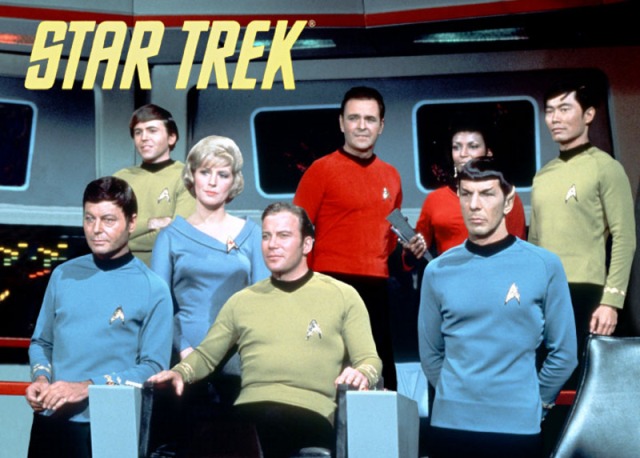
I sat awestruck by the adventures of Captain James T Kirk (played by William Shatner), First Officer Spock (Leonard Nimoy), chief engineer Lieutenant Commander Montgomery Scott (James Doohan), Dr. Leonard “Bones” McCoy (DeForest Kelley), Communications Officer Uhura (Nichelle Nichols) and others. The stories appealed to me as much for insights into the infinite possibilities (and combinations) of life, technology and power at a cosmic scale, as for the glimpses of the near-Utopian human society in the 23rd century.

See May 2009 blog post: Star Trek: Advocating a world of equality, tolerance and compassion

The series was already 15 years old, and it was showing signs of age. It had the faded Technicolor look and feel of films and TV programmes made in the 1960s and 1970s. The sets were basic and special effects appeared simple — computer-generated images (CGI) was not yet invented. On such technical merits, Star Trek TOS appears elementary when compared to the original Star Wars movie that would roll out just a decade later, in 1977. (A decade is a very long time in the entertainment industry.)

But what the series lacked in looks, the show more than made up in its brilliant story lines and rich imagination. Inadequacies in production values didn’t really matter to me — or to millions of other ‘Trekkies‘ scattered across the planet. The storylines were entertaining and mind-stretching, frequently carrying concepts distilled from the finest in science fiction literature (in fact, some of the genre’s accomplished writers were involved in writing stories for the series, e.g. Robert Bloch, Normal Spinrad, Harlan Ellison and Theodore Sturgeon). The characters were strong, diverse and played by actors who soon developed global fan clubs of their own.

And now, I can relive those journeys again — this time at my leisure, packing as many, or as few, into my private screening schedule. No broadcaster or parent holds me captive any more.

Here’s how the digitally remastered version of the same series opens (aficionados, please spot the differences):

And here are a couple of comparisons between the old and remastered versions that fans have done and released on YouTube:

Of course, remastering a series held in such awe and regard by millions of fans worldwide was a calculated risk.

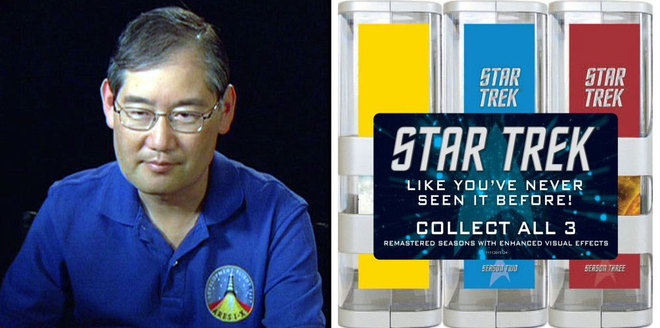
As Wired noted in a December 2008 story: When Star Trek designer Mike Okuda began remastering the original Star Trek episodes for a series of DVD releases, there was a chance that the show’s more devoted fans would want him beamed to a Klingon prison planet for altering the 1960s classic. To guard against this, Okuda insisted that the new effects would have to be closely based on the originals to retain the visual spirit of the ’60s series.

Wired, December 2008: Star Trek Tweaker Talks Perils of Remastering Original Series

We’re grateful to Mike Okuda and everyone else on the remastering team for giving us the best of both worlds.

Star Trek designer Mike Okuda

Buzz Aldrin at 80: Still blasting off imagination everyday

Moonwalker No 2

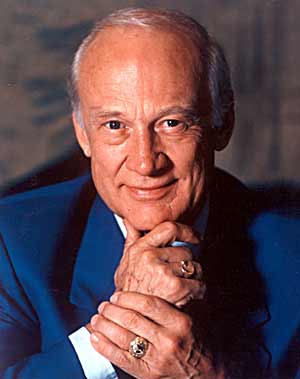
This is one of history’s most famous photographs – and also one that is frequently misidentified. The man behind the space mask is a pioneer Moon walker – but it’s not Neil Armstrong. It’s the Buzz Aldrin, the second Man on the Moon.

According to space historians, all the famous photos from the first Moon landing are actually of Aldrin, with Armstrong reflected in the visor. This is an occupational hazard for those who take photos!

Buzz, who celebrated his 80th birthday on January 20, remains active and publicly engaged as he has been for most of the past 40 years since the first Moon landing in July 1969.

I’m following Buzz on his Twitter feed, from which I find that he’s just back from a trip to Antarctica with a National Geographic cruise, was at the premiere for the movie Avatar in mid December, and is now busy promoting his latest autobiography, Magnificent Desolation.

On his 80th birthday, Buzz asked fans to donate US$8 ot 80 to the Clinton-Bush Haiti Fund. And he will soon launch my iPhone App, Buzz Aldrin Portal to Science and Space Exploration.

This contrasts with Neil Armstrong, who is notoriously shy. He rarely speaks in public, turns down all media interviews and has also refused autograph requests since 1994.

Trained as an engineer, the two-time space traveller Buzz has been keeping up with new media pretty well. He has his own website, and launched his own YouTube channel only a month ago, where we can see his latest broadcast and film appearances. Through these and other means, he continues to promote causes like space exploration, science education and nurturing imagination.

To mark his 80th birthday, we present some of the many Buzz Aldrin videos available online.

First, here’s the moment when Buzz Aldrin set foot on the Moon, in a partial restoration by NASA Video

Here’s the DVD Promo Overview of the latest Buzz video:

On the 40th anniversary of the Apollo 11 crew landing on the moon, former astronaut Buzz Aldrin shares his experience and predicts where man will go in the future. (Assciated Press video, 20 July 2009)

Buzz has long years of close association with popular culture. For example, the popular space ranger character Buzz Lightyear, in Pixar’s Toy Story movie series, is named after him. Apparently the film’s makers felt that he has “the coolest name of any astronaut.”

NASA video: Follow Buzz Lightyear on Spaceship Discovery

Finally, for comic relief, here’s the 2003 interview Buzz did with Ali G (Sacha Baron Cohen) in the British comedy series Ali G in da USA, during which Ali G referred to him as Buzz Lightyear:

P.S.: If you prefer a more detached look at the man and his career:
The Guardian, July 2009: The Man who fell to Earth

Lights, Camera, Apollo: Did NASA and Hollywood co-produce Moon Landings?

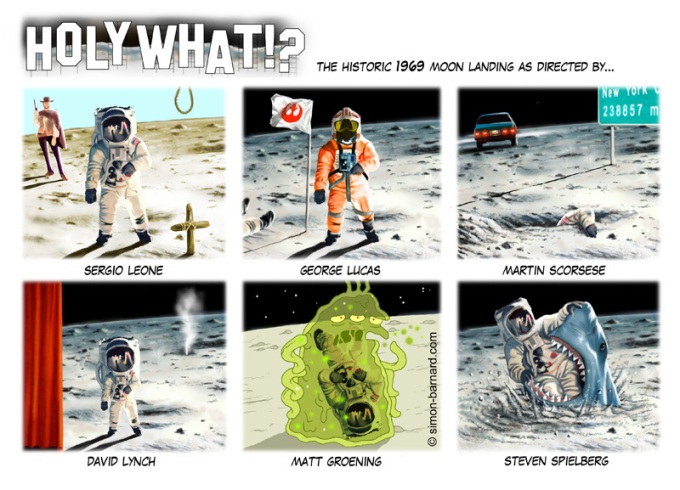
Is this how it really happened? Just kidding!
When NASA announced last week that they were working with a leading digital imaging company in Hollywood to remaster the original Apollo 11 Moon walk video footage, I told myself: that’s one more cannon to the conspiracy theorists!

Everyone would welcome a quality improvement in those murky, grainy moving images capturing humanity’s grand achievement. But the choice of Lowry Corporation, best known for restoring old Hollywood films, could fuel the fire of conspiracy theorists who argue that the entire Moon landing was faked by NASA with the connivance and participation of Hollywood. They believe that the entire Apollo programme – that landed people on the moon six times between 1969 and 1972 – was staged on a movie set or secret military base.

This link didn’t bother Richard Nafzger, the NASA engineer who oversaw television processing at the ground-tracking sites during the Apollo 11 mission, and now involved in their restoration. “This company is restoring historic video. It mattered not to me where the company was from,” Nafzger was quoted as saying.

Technically and officially, NASA is right. The US space agency has always dismissed the conspiracy theorists, and not spent much time discussing the outrageous idea. As it says on NASA website: “The Apollo Moon landings were among the most completely documented and observed events in history. Moon rocks have been examined by scientists from all over the world, not just the U.S. Video special effects were in their infancy in the late 60’s so that faking a landing on the Moon would probably have been more difficult than actually going there, and it seems highly unlikely that the hundreds or even thousands of people who would have had to be involved in such a conspiracy would have kept it a secret for so long.”

In another place, NASA website says Moon rocks and common sense prove Apollo astronauts really did visit the Moon.

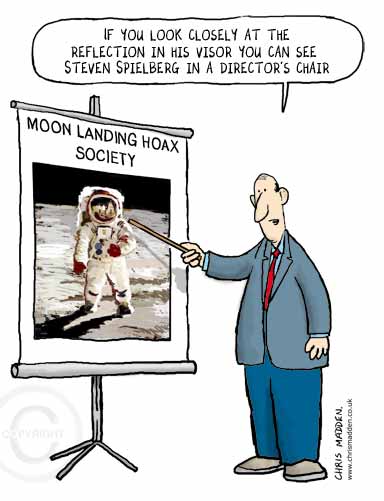
Err, Wasn't Spielberg only 23 at the time...?
Independent scientists point out that it would be impossible for tens of thousands of NASA employees and Apollo contractors to keep such a whopping secret for almost four decades. Tell that to those who are deeply suspicious of anything to do with governments, who historically don’t have the best record for transparency and full disclosure!

So the conspiracy theory lingers. Like many other crazy ‘theories’, it has spread rapidly with the growth of the Internet. It’s really an old one: even at the time Apollo astronauts landed on the Moon, a few people refused to believe it as it apparently conflicted with their religious beliefs.

The Moon Hoax, as it’s popularly called, accuses NASA of manufacturing, destroying, or tampering with evidence — including photos, telemetry tapes, transmissions, and rock samples; and that the deception continues to this day. These theorists concede that the Apollo launches did take place. But instead of going to the Moon, which they say was technologically impossible at the time, the astronauts just orbited the Earth for a few days while NASA carefully fed the media with manufactured images. And then they returned to a heroes’ welcome!

Before we proceed, let’s agree that there is independent, verifiable and irrefutable evidence that the Moon landings did take place. Here are a few online sources for details:
Bad Astronomy website by Phil Plaits
Did We Really Land on the Moon? Suggestions for Science Teachers from Rational Inquiry
Wikipedia entry: collaborative discussion with multiple sources cited
Clavius.org website

My curiosity in conspiracy theories stems from my interest in popular culture. In this instance, I’m intrigued to note how moving images have fuelled the Moon Hoax theory in a number of ways. A cornerstone in the doubters’ argument is that NASA’s photos and videos from the moon contained ‘suspicious anomalies’ (all of which, by the way, have been satisfactorily explained by scientists.)

Superb entertainment, but it was just that...
Some believe that these theories inspired the 1978 movie Capricorn One, where NASA fakes a Mars landing on a military base on Earth, and then goes to desperate lengths to cover it up. It’s entirely possible that some people can’t discern fact from fiction. Or why allow facts to get in the way of a damn good story?

In 1980, the Flat Earth Society was one of the first to accuse NASA of faking the Moon landings, arguing that these events were actually staged in Hollywood studios and based on a script written by Arthur C. Clarke! Another group suggested that acclaimed film director Stanley Kubrick, who co-wrote with Clarke the classic movie 2001: A Space Odyssey, was strong-armed into shooting much of the Apollo footage.

Sir Arthur Clarke, with whom I worked for over 20 years, used to laugh these off. He’d enjoyed a ring side seat when he joined Walter Cronkite in covering Apollo 11 and later missions for CBS News.

At one point in the early 1990s, he wrote to the NASA Administrator, with his tongue firmly in his cheek, saying: “Dear Sir, On checking my records, I see that I have never received any payment for this work. Could you please look into this matter with some urgency? Otherwise, you will be hearing from my solicitors, Messrs Geldsnatch, Geldsnatch and Blubberclutch.”

Of course, he never received – nor expected – a reply. But when media reports about this appeared, some with no sense of humour considered it further ‘proof’ of a cover-up!

And here’s another connection: Peter Hyams, who directed Capricorn One, went on to direct the movie adaptation of Arthur C Clarke’s 2010: Odyssey Two, which was released in 1984.

More seriously, in later years Sir Arthur was concerned that at one point a few years ago, millions of Americans harboured doubts whether the Moon landings actually took place. That indicated a failure of the education system to produce people with critical thinking abilities, he said.

The conspiracies received a boost when, on 15 February 2001, the Fox News TV network aired
Conspiracy Theory: Did We Land on the Moon?. Hosted by X-Files actor Mitch Pileggi, this hour-long, sensational documentary peddled what it called eerie “inconsistencies” in NASA’s Apollo images and TV footage. Among them: no blast craters are visible under the landing modules; shadows intersect instead of running parallel, suggesting the presence of an unnatural light source; and a planted American flag appears to ripple in a breeze although there’s no wind on the moon.

It concluded that the whole Apollo Moon landings were faked in the Nevada desert because, cccording to the conspiracy theorists, NASA did not have the technical capability of going to the Moon, but pressure due to the Cold War with the Soviet Union forced them to fake it. Fox TV did preface the programme with a notice saying: “The following programme deals with a controversial subject. The theories expressed are not the only possible interpretation. Viewers are invited to make a judgement based on all available information.” But skeptics felt Fox didn’t do enough to provide a minimum level of balance in their discussion.

Warning: This is a funny cartoon and not meant to be taken seriously
The documentary’s ‘evidence’ has since been refuted point by point. NASA has also dismissed the documentary’s claims. It prompted Sir Arthur Clarke to protest to his long-time friend Rupert Murdoch, owner of the Fox TV network, for peddling unscientific nonsense.

Rather than being a ‘true believer’, Fox TV may have been trying to boost its audience ratings. But others in the moving images industry apparently take the matter very seriously. Among them is the film-maker Bart Sibrel. His aggressive interview tactics once provoked astronaut Buzz Aldrin (second man to walk on the Moon) to punch him in the face in a 2002 encounter.

“I don’t want to call attention to the individuals who are trying to promote and shuffle off this hoax on people,” Aldrin told CNN in a recent interview. “I feel sorry for the gullible people who’re going to go along with them. I guess it’s just natural human reaction to want to be a part of ‘knowing something that somebody doesn’t know.’ But it’s misguided. It’s just a shame.”

One of the strongest rebuttals of the Moon hoax on TV has come from the Mythbusters series of popular science programmes produced by Beyond Television Productions, originally for the Discovery Channel. The series features special effects experts Adam Savage and Jamie Hyneman, who use basic elements of the scientific method to test the validity of various rumors, myths, movie scenes, internet videos and news stories in popular culture.

In August 2008, they tackled a number of pervasive myths associated with the Moon landing, debunking them one by one. To film the episode, Adam, Jamie and the rest of the Mythbusters team visited the NASA Marshall Space Flight Center in Alabama. A team of Marshall scientists helped the Mythbusters with several of their tests. Here are two excerpts:

Mythbusters probe the ‘Moonlanding photo hoax’

Mythbusters investigate ‘Moonwalk hoax’:


Read Space.com coverage about how Mythbusters busted the Moon Hoax.

Read Popular Mechanics coverage on the Mythbusters exposure

As the 40th anniversary of the first Moon landing passes, the scientific community and rationalists will have to make some hard choices. How much more time and energy must they expend countering such wildly fanciful theories and fantasies? In a world that still has a (dwindling?) number of people who believe in more ancient concepts like the Flat Earth theory, is it really surprising that the Space Age would inspire its own share of modern-day myths?

No matter what the scientists say and how overwhelming the evidence is, conspiracy theories will always believe what they want. Often their convictions border on a blind faith – and as Arthur C Clarke was fond of saying (in relation to religions), one definition of faith is ‘believing in what you know isn’t true!’.

In a pluralistic world, people choose what to believe in
Then there is simple demographics. The total world population in 1969 was 3.6 billion. Today, it has surpassed 6.7 billion. This means nearly half of the people alive today were not even born when Neil and Buzz stepped on to the Moon. At 43, even I have only a headline memory of Apollo 11, even if it’s a strong one.

NASA itself is well aware of this. “As the number of people who were not yet born at the time of the Apollo program increases, the number of questions [about the moon landings] also may increase,” NASA said in a statement on the eve of the anniversary. “Conspiracy theories are always difficult to refute because of the impossibility of proving a negative.”

Perhaps what the Moon Hoax debate really needs is what Sir Arthur Clarke once proposed as a response to the obsession with UFOs and alien abductions: a decade or so of benign neglect. Conspiracy theorists and myth-makers thrive on counter-arguments and debate. When they don’t get it for long enough, they’ll probably run out of steam.

Meanwhile, networks like Fox News should stick to making entertainment programming that is labeled as such. Who can find fault with creations like The Simpsons?