TWTYTW: Our own (very subjective) list of best and worst of 2009…

All journalism is subjective; it’s just that some of us are better at disguising it! As we head for the end of 2009, we at Moving Images blog take one last fleeting, impressionistic, judgemental and, yes, darn too opinionated look at the past 365 days. That Was The Year That Was…and here’s our list of superlatives!

Best news and biggest relief (national): Sri Lanka’s nearly three decades long and brutal civil war finally ended in mid May 2009 – and not a moment too soon. It rightly created headlines around the world, and also made it to TIME’s top 10 news of the year. Within 24 hours of that much-awaited news, I wrote and published one of my most emotionally charged essays ever, Memories of War, Dreams of Peace. I probably spoke for a whole generation of Lankans: “As we stand on the threshold of peace, I am overwhelmed with memories of our collective tragedy. I hope we can once again resume our long suspended dreams for a better today and tomorrow.” With the hindsight of seven months, I still want to believe every word…although it’s become increasingly hard to cling on to such ideals.

Biggest disappointment (national): Ending the Lankan war entailed tremendous effort, cost and sacrifice, and we all knew that consolidating peace and restoring normalcy were going to be even harder – delivering peace dividends is no mean task. As weeks became months, our cautious optimism slowly turned into disappointment and dismay: it became clear that the triumphalist government was treating the historic ‘open moment’ simply as as blank cheque to do pretty much what it wanted. My May 19 essay on Dreams of Peace had ended with a question that resonated with millions: “Would our leaders now choose the Mandela Road or the Mugabe Road for the journey ahead?” Can we please ask that question again…? Hello, anybody listening?
Most evocative piece of writing: Without competition, that distinction goes to The Last Editorial by Lasantha Wickrematunga, the courageous investigative journalist (and de facto leader of the political opposition) in Sri Lanka, who was brutally slain on January 8 while on his way to work. That editorial, which appeared post-humously in his newspaper The Sunday Leader on 11 January 2009, embodies the best of Lasantha’s liberal, secular and democratic views. Nearly a year after the dastardly daylight crime, his killers have not been caught and independent media remains under siege even in post-war Sri Lanka.

Most memorable quote: While people like Lasantha articulated our cherished dreams for a truly pluralistic society, our billion+ neighbours in India have been building it for over six decades. It’s still a work in progress, and the ideals need occasional reiteration. This is precisely what classical dancer Mallika Sarabhai did when she ran as an independent candidate when India conducted the world’s largest democratic election in April-May. She lost, but wrote one of the most insightful pieces on what it means to live amidst the huge cultural, social and political diversity in India: “We are a salad-like melange of cultures and not a soup where all variations get reduced to a homogeneous pulp—this, to me, is our greatest strength.” (She inspired my own essay: Sri Lanka – Spice Island or Bland Nation?)

Biggest disappointment (global):
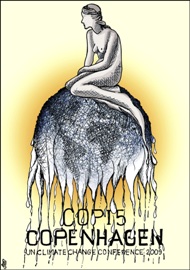
The UN climate conference in Copenhagen, held in December and officially dubbed COP15, ended up in what many activists felt was a cop-out. Greenpeace echoed the frustration of many when they said at the end of what was, at its start, billed as the ’14 days to seal seal history’s judgment on this generation‘: “Don’t believe the hype, there is nothing fair, ambitious or legally binding about this deal. The job of world leaders is not done. Today they shamefully failed to save us all from the effects of catastrophic climate change.” I was glad I wasn’t part of the mega event — I’ve burnt enough aviation fuel this year, but almost all events I participated in on three continents were more productive than the Danish debacle…

Biggest Under-achiever: If the world laboured a mountain and delivered a mouse in Copenhagen, the mid-wife of that process must surely have been the current UN chief Ban Ki Moon. More secretary than general, Ban is, in his own admission, the UN’s Invisible Man. All the top speech writers and PR agents in the world can’t animate this the perennially dull and dour diplomat. Not ideal change-maker when the world is racing against catastrophe. Kofi Annan, we miss you!
Most moving work of moving images: The world’s rich are having a party, and millions living in poverty are the ones footing the bill. This is the premise of Indian journalist and activist Pradip Saha’s latest film, MEAN Sea Level, which looks at the impact of climate change on the inhabitants of Ghoramara and Sagar islands in the the Sundarban delta region in the Bay of Bengal. I found it both deeply moving and very ironic. With minimal narration, he allows the local people to tell their own story. As it turned out, these testimonies were lost on the bickering politicians in Copenhagen…
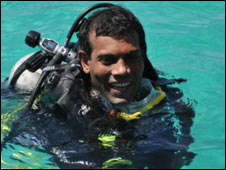
Best media stunts: We are a bit divided here. At a time of ever-shrinking attention spans, it takes much creativity and guts to grab the cacophonous media’s attention, especially for a good cause. Two very different men succeeded where many have failed. In February Bill Gates, the world’s top geek now working for its meek, released some mosquitoes at the TED 2009 conference to highlight the continuing grip that malaria has on the developing world, especially Africa. In October, climate crusader President Mohamed Nasheed of the Maldives held the world’s first underwater cabinet meeting to remind everyone of the watery future that awaits low lying island nations like his when climate change rises sea levels.

Biggest Irony: NASA announced in November that an unmanned space probe that was intentionally crashed on the Moon had discovered the presence of ‘significant amounts’ of water there. That bit of scientific evidence cost US$79 million to obtain…and was not the most comforting news for a planet that rapidly running short of usable freshwater. In the wake of the Apollo Moon landings in the late 1960s, misguided voters in Sri Lanka elected a government that promised ‘to bring rice even from the Moon’. When might we hear politicians promise us water from the Moon?

Well, that’s it folks — the highs and lows of 2009 according to the Blogger-in-Chief and his team of elves here at the Moving Images Media Empire. We’ve waded through our several dozen blog posts to come up with the above, and make no claims for being fair, balanced or comprehensive…

Indeed, we hope you don’t agree with all our picks, and invite you to express alternative – even dissenting – views. All comments that are not outright libellous or blatantly self-promotional will be published.

We take this opportunity to thank each and everyone who read our posts over the year — and especially those who left comments, sometimes radically disagreeing with our views. We also reiterate our pledge to frustrate those few persistent detractors who keep demanding to see our nationalistic, religious or other credentials…

May the cacophony continue and intensify in 2010!
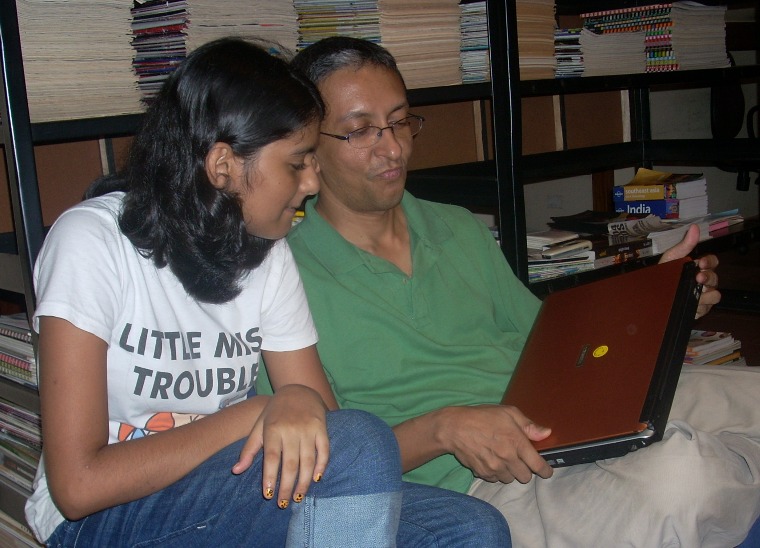
Rust in Peace: Tribute to my old faithful Toshiba Satellite Pro A100

Dhara and Nalaka with their old faithful Toshiba, 24 Dec 2009 - Photo by Niroshan Fernando

For many of us, computers have become essential silicon extensions of our carbon selves — and we can’t imagine how we managed our work and leisure before their arriva. In my case, the attachment to my laptop goes beyond professional: it’s also my constant companion and travel partner.

So it’s akin to a death in the family when the old faithful finally goes the way of…all silicon. In 20 years of laptop use, I have mourned six: the average productive lifespan seems to be between three and four years. (Confession time: I have a cabinet full of very tired and fully expired laptops, mostly Toshiba.)

The latest calamity happened in early December, pushing me into a few days of digital turbulence just when I was trying to tie up various loose ends in what has been another hectic year. Fortunately, no data were lost, and I eventually managed a fairly orderly transfer.

It didn’t come entirely as a surprise. My Toshiba Satellite Pro (model A100) had been showing signs of wear and tear for a few months. The laptop screen is usually the first to develop problems of old age, but switching to a new machine is such a chore (and expense) that I was willing to live with an occasionally misbehaving display. But when bigger and deeper problems manifested – which our IT Manager Indika found were due to a malfunctioning motherboard – it was time to let go…

When I bought my latest Toshiba in mid 2006, I didn’t immediately like its metallic orange colour. I’d been using laptops with silver or electric blue coloured exteriors, and this was a clear departure from that range. But my female colleagues thought orange was rather ‘cool’. I didn’t easily warm up to this colour shift — until I realised the potential for some harmless fun.

Every few weeks, someone would ask me – inevitably, in the ICT circles that I move — whether I used Apple (the geekdom’s ultimate standard). For the past three and a half years, my honest yet confounding answer has been: ‘No, I’m perfectly happy with my Orange!’

Of course, my affection for the laptop was a lot more than skin deep. It has been an integral part of much of what I did professionally and personally in the past three and half years, both online and offline. My substantial volume of published output (op ed essays, book chapters, reviews and film scripts, etc.) took shape within it before flowing out in many and varied directions. I also generated a good deal of unpublished material, all of which is safely stored but not yet ready to see the light of day…

It was also the launch pad for this Moving Images blog, which I started from my friend Sue’s home in Washington DC in early Spring 2007.

It has travelled the world with me, going through hundreds of airports and keeping me much needed company in endless hotel rooms, conferences and meetings.

It has been my confidante in times of crisis – and the past 1,300 days have been among the most tumultuous in my personal and professional lives. While I’m not a social recluse, and cherish the company of my few close (human) friends, it’s sometimes nice to just pour my heart out to someone who listens, doesn’t judge and never resorts to wisecracks or amateur psychology…

So why do I then keep referring to such a trusted companion in the heartless third person as ‘it’? If ships and countries are decidedly female, what about computers that far more people in the world today relate to? That’s a good question, even if it brings up the heated – and as yet unresolved – debate among computer users on the correct gender of computers.

Assigning a gender isn’t that simple when I wasn’t the only regular user of the recently departed Toshiba. That is also another good reason why I was more attached to the last laptop than any of its predecessors: it’s the first machine that connected my Digital Native daughter Dhara to the internet. It arrived within days of her 10th birthday, and I finally ran out of excuses why she shouldn’t go online and get a digital life. (As I reported a few weeks ago, she has since made rapid progress.)

So it was rather apt that Dhara should come up with the perfect epitaph for our beloved, sorely missed silicon companion. It isn’t quite original, but sums up our shared sentiments very well: RIP: Rust In Peace…

PS: Rust in Peace is also the title of an interesting collection that New York magazine recently published of everyday stuff rendered obsolete in the first decade of this century. Among the 17 items listed are the fax machine, audio cassette, answering machine, cathode ray tube TV and incandescent bulb…

Asian Tsunami+5: Are we sure there won’t be a surprise next time?

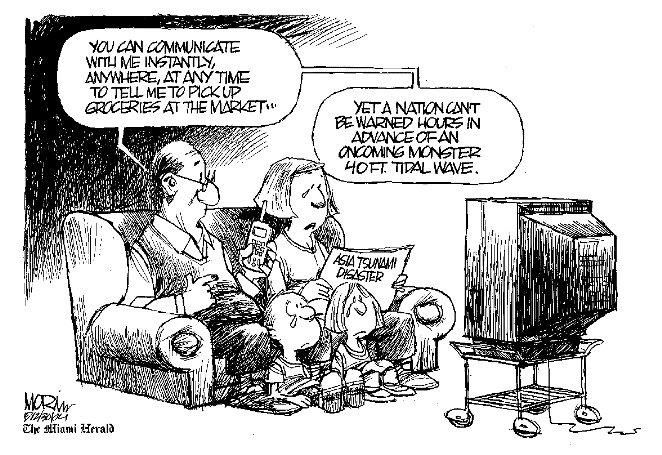
A monumental failure in communication...

This is one of the most memorable cartoons about the Asian Tsunami of December 2004. It was drawn by Jim Morin, the Pulitzer Prize winning editorial cartoonist of the Miami Herald.

It summed up, brilliantly, one of the biggest shocks associated with that mega-disaster. As I wrote in my op ed essay to mark the fifth anniversary: “It took a while for the tsunami waves, traversing the Indian Ocean at the speed of a jetliner, to reach India, the Maldives, Sri Lanka and Thailand. Yet, in this age of instantaneous telecom and media messaging, coastal residents and holiday makers were caught completely unawares — there was no public warning in most locations. Institutional, technological and systemic bottlenecks combined to produce this monumental failure in communication.”

Chanuka Wattegama
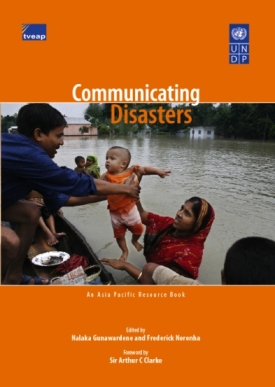
My friend Chanuka Wattegama, trained as an engineer and now working as a senior research manager at LIRNEasia, has studied this vital aspect of early warnings. He contributed a whole chapter on the subject to Communicating Disasters: An Asia Pacific Resource Book that I co-edited with Frederick Noronha two years ago.

After doing a dispassionate analysis of what went wrong in Sri Lanka in the crucial hours just before and during the 2004 tsunami, he asked: “So what remedies one can suggest so that when the next disaster happens — which may or may not be a tsunami — we do not see the same series of events repeated? What exactly is the role that the media can play?”

He outlined five action areas, all of which can be read in his chapter available for free online access (as is the rest of the book).

Here’s an excerpt:

Disaster warning is everyone’s business: Life for most of us would have been easier had the government taken full charge of disaster warnings. Unfortunately, the things do not work that way. These are some of key stakeholders and they have specific roles that they can play:

Views from Ground Zero of several disasters...
• The scientific community: Develop the early warning systems based on their expertise, support the design of scientific and systematic monitoring and warning services and translate technical information to layman’s language.
• National governments: Adopt policies and frameworks that facilitate early warning, operate Early Warning Systems, issue warnings for their country in a timely and effective manner.
• Local governments: Analyse and store critical knowledge of the hazards to which the communities are exposed. Provide this information to the national governments
• International bodies: Provide financial and technical support for national early warning activities and foster the exchange of data and knowledge between individual countries.
• Regional institutions and organizations: Provide specialized knowledge and advice in support of national efforts, to develop or sustain operational capabilities experienced by countries that share a common geographical environment.
• Non-governmental organizations: Play a critical role in raising awareness among individuals and organizations involved in early warning and in the implementation of early warning systems, particularly at the community level.
• The private sector: Play an essential role in implementing the solutions, using their know-how or donations (in-kind or cash) of goods or services, especially for the communication, dissemination and response elements of early warning.
• The media: It has to play an important role in improving the disaster consciousness of the general population, and disseminating early warnings. This can be the critical link between the agency that offer the warning and the recipients.
• Communities: These are central to people-oriented early warning systems. Their input to system-design and their ability to respond ultimately determines the extent of risk associated with natural hazards.

And here’s his conclusion:
“Technology is important. The sole reason behind the seemingly incredible advancements that have happened in the field of human development is the spurt in the growth of new technology. However without people to handle it properly, the technology per se can achieve little. What we can expect a sophisticate earthquake detecting device to do, if there are no human beings to take note what it indicates? So, while giving technology its due position, let us focus on the people-side of the problems. “

Spoken like an uncommon engineer, for sure.

Read full chapter: Nobody told us to run, by Chanuka Wattegama

Asian Tsunami+5: It’s governance, stupid!

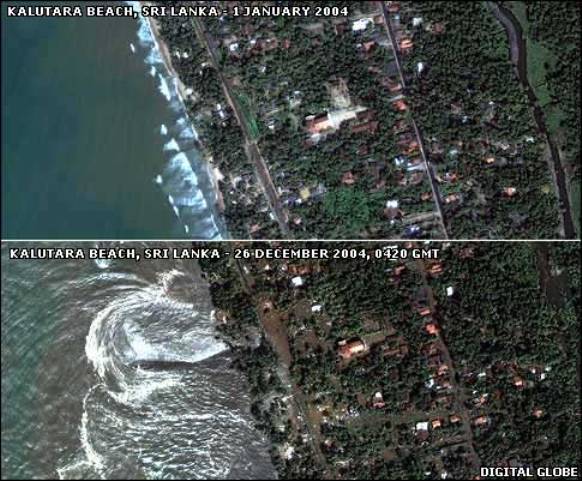
Kalutara beach in south-western Sri Lanka before & during the 2004 tsunami - Satellite image courtesy Digital Globe

This montage of satellite images was taken by the DigitalGlobe Quickbird satellite. It shows a portion of the south-western coast of Sri Lanka, in Kalutara, some 40km south of the capital Colombo. The lower image was taken on Sunday 26 December 2004, at 10.20 am local time, shortly after the moment of impact of the Indian Ocean tsunami that wreaked havoc in South and Southeast Asia that day. For comparison, we have an image of the same location on a normal day a few months earlier.

The tsunami was one of the most widely photographed and videographed disasters in history. In fact, it marked a turning point for citizen journalism in Asia.

For many of us in the media and communication sectors, this was the biggest story of our lives. Because the killer waves hit numerous coastal locations in several countries, this disaster’s ‘Ground Zero’ was scattered far and wide. Not even the largest news organisations could see, hear and capture everything. Everyone had to choose.

And not just geographically, but thematically too, the tsunami’s impact was felt across sectors, issues and concerns. That provided both ample scope and many challenges for journalists, aid workers and others who rushed to the multiple scenes of disaster.

But there was a downside. Because the tsunami’s scale was so vast and its effects spread so wide, no single individual or organisation could comprehend the full picture for months. For many of us in the Indian Ocean rim, culturally unfamiliar with tsunamis, it was as if a Godzilla had stomped through our coasts. Grasping the full, strange phenomenon was hard.

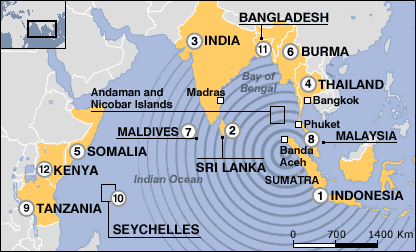
Countries affected by 2004 Dec tsunami - map courtesy BBC
Journalists, professionally trained to hastily produce ‘first drafts of history’, found it a bit like being close to a huge tapestry still being woven: we all absorbed parts of the unfolding complexity. We reported or analysed those elements that held our interest. But we were too close, and too overwhelmed, for much perspective.

Five years on, we can ‘zoom out’ more easily to see the bigger picture. When I do, one overarching factor stands out as the most important and lasting lesson of the tsunami: the need for better governance.

The absence of good governance was at the root of most major stories about the tsunami. It cut across every level in our societies — politics, public institutions, corporate sector, humanitarian agencies, academia and civil society.

This is the thrust of my latest op ed essay, written in time for the tsunami’s fifth anniversary being marked today. I briefly recall three aspects of the tsunami that I covered as a journalist — early warnings, deluge of aid and environmental lessons — to show how the absence of governance aggravated matters in each case.

The lesson is not simply one of academic interest: it holds many practical, survival level implications. I end by quoting Maldivian President Mohamed Nasheed, who argues that democracy and good governance are also the most important elements in climate change adaptation.

Read the full essay online:
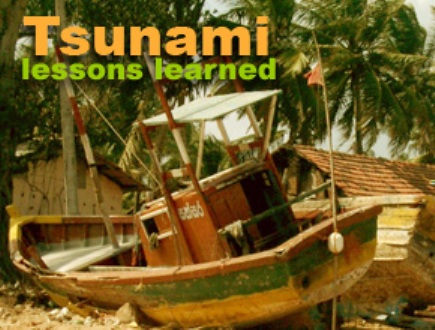
Media Helping Media (UK): Tsunami five years on – the lessons learned
OneWorld.Net (UK): The big lesson of the tsunami: better governance
DNA newspaper (India: condensed version): The Tsunami Effect
Groundviews.org: Better governance – The Biggest Lesson of 2004 Tsunami
Himal Southasian Online edition: Better Governance: The biggest lesson of 2004 tsunami
The Sunday Times (Sri Lanka): Better Governance: The biggest lesson of 2004 tsunami

Dance for the Climate: dance your anger and joys to a U2 tune!

Hopenhagen?
As the UN climate conference culminates today in Copenhagen, there seem to be lots of angry people in the Danish capital. Many civil society and environmental activists, and some journalists, have been frustrated by the inter-governmental bickering process and the occasionally tough crowd control measures by the Danish police.

As author and activist Naomi Klein wrote at the end of the first week: “By the end, around 1,100 people had been arrested. That’s just nuts. Saturday’s march of roughly 100,000 people came at a crucial juncture in the climate negotiations, a time when all signs point either to break down or a dangerously weak deal. The march was festive and peaceful but also tough. ‘The Climate Doesn’t Negotiate’ was the message, and Western negotiators need to head it.”

I’m not in Copenhagen for uptodate news, but the 5,000+ journalists and over 10,000 activists are keeping us well informed on what’s happening (or not happening). Perhaps part of their anger can be dissipated by heeding a creative call to Dance for the Climate.

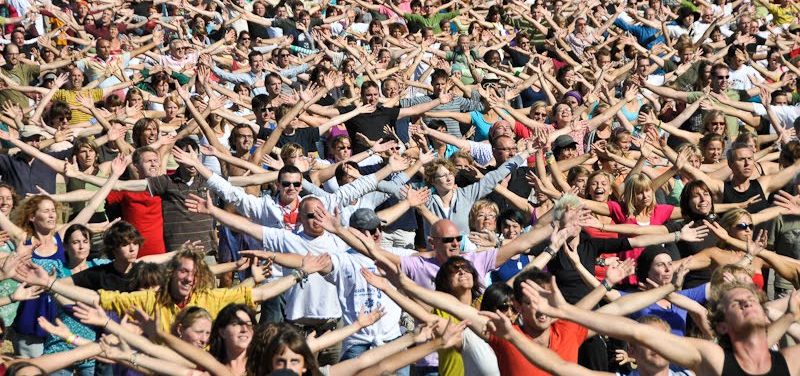
It’s an alternative way of demonstration, made into an inspiring and hopeful video clip by award winning Belgian film director Nic Balthazar. It shows 12 000 people on a Belgium beach in a truly spectacular simultaneous choreography dancing to the U2 hit single ‘Magnificent’. Bono and his band graciously gave the rights to their music. The message of the clip to politicians in Copenhagen is to ‘start moving, together, before it’s too late. The time is now to change climate change’.

In a recent email, Seppe Verbist, handling international distribution of “Dance for the Climate” clip, wrote: “We believe that the chances of success of the UN Conference are influenced by the clear signals from ordinary people to their politicians. The ‘Dance for the Climate-clip’ wants to contribute to this, and we sincerely hope we can count on your support!”

According to her, the clip has been released three weeks ago and they are now trying to spread it worldwide. In Europe the distribution goes pretty well as the European Broadcasters Network (EBU) offered the clip to all her members. They are picking up the offer and integrating the clip into their Copenhagen content. In Canada weather forecasters from different broadcast networks are organizing an imitation of Dance For The Climate, and the clip will be shown 24/7 at the World Expo 2010 in Shanghai in the Meteo World Pavilion. They’re expecting 100 000 visitors every day for six months. The Al Gore Climate Project also supported the clip and shared it with their network. It’s been on TV in Brazil and Mexico as well.

Dancing can be a powerful way to express not just joy, but a range of emotions. One of my favourite calls to action came from Ken Saro-Wiwa, the Nigerian poet, author, environmentalist and minority rights activist (for his Ogoni people) who was executed by Nigeria’s military on 10 November 1995. While in jail facing an uncertain future, he wrote these momentous words:
“Dance your anger and your joys,
Dance the military guns to silence,
Dance oppression and injustice to death,
Dance my people,
For we have seen tomorrow
And there is an Ogoni star in the sky.”

And today, we must also dance for saving our climate.

All You Need is Love: When the world sang one song for HIV…

We must love one another or die...

Our planet is one, but our world speaks and sings in a myriad tongues — and that’s part of our cherished cultural diversity. Once in a while, however, it’s good to see that cacophony morph into a symphony when the world shares a few moments — in awe, horror, love or happiness.

It happened last week when the world sang for an extremely good cause. On 7 December 2009 at 1:30pm GMT, Starbucks invited musicians from all over the world to sing together at the same time to raise awareness for HIV/AIDS in Africa. In one breathtaking moment, musicians from 156 countries played “All You Need is Love” together. The live participation of most nations together to sing this song became a Guinness world record.

Watch now, as musicians from all around the world come together and share a song.

My former colleague Buddhini Ekanayake joined this global production by coordinating the input from Sri Lanka. “Personally, I am really glad to take part in this event together with my team, on behalf of Watermelon Creatives,” she says on her blog, where she shares some info and images.

You can still join in by lending your own voice to the Starbucks Love Project.. Watch streaming video from countries around the world and then join in by singing All You Need is Love yourself. For each video submitted, Starbucks will make a contribution to the Global Fund to help fight against AIDS in Africa. You can also help increase the Starbucks contribution to the Global Fund by submitting a drawing to the Love Gallery.

The global sing-along is part of our continuing efforts to help fight AIDS in Africa. In just one year in partnership with (RED), Starbucks has generated money equivalent to more than 7 million days of medicine to help those living with HIV in Africa.

“All You Need Is Love” is a song written by John Lennon and credited to Lennon/McCartney. It has been associated with path-breaking initiatives before. It was first performed by The Beatles on Our World, the first live global television link. Watched by 400 million in 26 countries, the programme was broadcast via satellite on 25 June 1967.

Confessions of a Digital Immigrant: Reflections on mainstream and new media

The Digital Native: Was there a life before the Internet, Dad?

In early August 2009, I talked to a captive audience of media owners, senior journalists and broadcasters in Colombo about the ‘digital tsunami’ now sweeping across the media world. (It has been reported and discussed in a number of blog posts on Aug 6, Aug 7, Aug 8 and Aug 31).

As I later heard, some in my audience had mistakenly believed that I was advocating everything going entirely online. Actually, I wasn’t. I like to think that both the physical and virtual media experiences enrich us in their own ways. Real world is never black and white; it’s always a mix or hybrid of multiple processes or influences.

So I’ve just revisited the topic. I adapted part of the talk, and included more personalised insights, and wrote an essay titled ‘Confessions of a Digital Immigrant‘, which has just been published on Groundviews, the path-breaking citizen journalism initiative.

It opens with these words:

“My daughter Dhara, 13, finds it incredible that I had never seen a working television until I had reached her current age — that’s when broadcast television was finally introduced in Sri Lanka, in April 1979. It is also totally inconceivable to her that my entire pre-teen media experience was limited to newspapers and a single, state-owned radio station.

“And she simply doesn’t believe me when I say — in all honesty and humility — that I was already 20 when I first used a personal computer, 29 when I bought my first mobile phone, and 30 when I finally got wired. In fact, my first home Internet connectivity — using a 33kbps dial-up modem — and our daughter arrived just a few weeks apart in mid 1996. I have never been able to decide which was more disruptive…

Groundviews: 1,000 posts and counting...“Dhara (photographed above, in mid 2007) is growing up taking completely for granted the digital media and tools of our time. My Christmas presents to her in the past three years have been a basic digital camera, an i-pod and a mobile phone, each of which she mastered with such dexterity and speed. It amazes me how she keeps up with her Facebook, chats with friends overseas on Skype and maintains various online accounts for images, designs and interactive games. Yet she is a very ordinary child, not a female Jimmy Neutron.

“Despite my own long and varied association with information and communication technologies (ICTs), I know I can never be the digital native that Dhara so effortlessly is. No matter how well I mimic the native ‘accent’ or how much I fit into the bewildering new world that I now find myself in, I shall forever be a digital immigrant.”

Read the full essay ‘Confessions of a Digital Immigrant’ on Groundviews…

How to become a global publisher or broadcaster in just 100 minutes!

cartoons_02
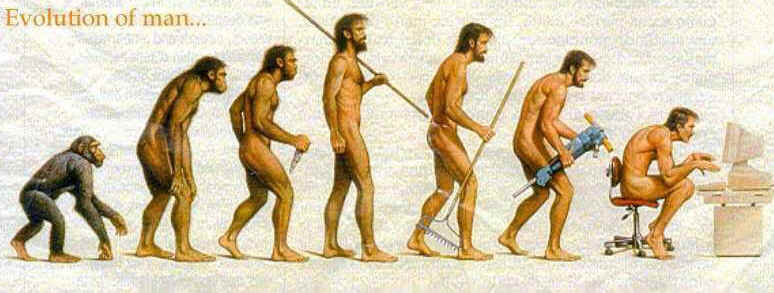
Evolution or revolution?

I was born three years before the Internet (which turned 40 a few weeks ago), and raised entirely on newspapers and radio in a country where broadcast television didn’t arrive until I was 13.

From the time I could read and write, I always wanted to be a media publisher. In that pre-history of the Personal Computer and Internet, my choices were pretty limited: I published a hand-written household newspaper and was its editor, reporter, printer and distributor all rolled into one. But I was obsessive in my work even then, and the newspaper lasted a couple of years in which over two dozen issues were released (all of them now mercifully lost).

My school teacher parents were my first patrons, supplying me with plenty of paper, pencils and ink. But there must have times when they rather wished that I didn’t indulge in my own brand of independent journalism. I loved to criticise and lampoon the ‘management’ in my editorials — even as a kid, I was already critical of the establishment!

Fortunately for me, the ‘management’ left me alone and to my own devices, but most independent editors in history haven’t been so lucky. As the American journalist A.J. Leibling (1904 -1963) once said, “Freedom of the press is guaranteed only to those who own one.” In his time, this was perfectly true.

There was a time, until recently, when press barons and media moguls led, and the rest of society followed. In our topsy-turvy times, however, the reverse is increasingly true.

In theory, at least, anyone can be a global broadcaster and publisher in less than two hours using free tools that can be downloaded and activated in minutes.

david brewer photo
David Brewer (photo from http://www.i-m-s.dk)
My British media activist friend David Brewer has just published an online guide on how to become a publisher or broadcaster in 100 minutes. (Okay, the non-geeks among us might need a bit longer than that, but still, you can be in business in just a few hours.)

David Brewer’s journalistic and managerial experience spans newspapers, radio, television, and online, and he now runs Media Ideas International Ltd, a media strategy consultancy with clients in Europe, the Balkans, the CIS, the Middle East, Asia, Africa and Central America.

David has worked with what I like to call the A-B-C of global broadcasting. He was the launch managing editor of BBC News Online in 1997, and moved to CNN, as managing editor, to set up CNN.com Europe, Middle East and Africa and CNNArabic.com. He was an editorial consultant for the launch of Al Jazeera English in 2006 and continues to work with Al Jazeera English as a new media consultant.

In his spare time, he runs Media Helping Media , a network and online resource to support media in areas where freedom of expression is under threat.

Who’s making video clips? Not me…but does it matter anymore?

video clip
Clip, clip, clip...
I’m usually happy and eager to explain my work to anyone who asks. I keep cool when people mix up technicalities related to film and video – after all, I don’t know the finer points in other professions and industries.

One thing I’m a bit tired of hearing is the wide-spread misuse of the term ‘video clip’. I try to keep a straight face when well-meaning people ask me about recent ‘video clips’ I’ve made. The truth is, I don’t make any: I make fully edited films – sometimes long, sometimes short, but always finished (That is, if a film can ever be called ‘finished’. An industry giant once told me that no film is ever finished; it’s only abandoned…)

For example, my latest climate film Small Islands – Big Impact is slightly under 6 minutes, yet it’s a complete product. I spent two months working on actually making it, and almost 20 years covering the story itself.

But the distinction between film and clip is not widely understood. In fact, the digital revolution seems to have added to the confusion.

The Wikipedia says a media clip is a short segment of media either an audio clip or a video clip. In other words, a part of something bigger.

It further explains: “Media clips may be promotional in nature, as with movie clips. For example, to promote upcoming movies, many actors are accompanied by movie clips on their circuits. Additionally, media clips may be raw materials of other productions, such as audio clips used for sound effects.”

Video clips are short clips of video, usually part of a longer piece. Wikipedia adds, however, that this term is “also more loosely used to mean any short video less than the length of a traditional television program.”

That’s part of the confusion. With the spread of broadband Internet , which enabled greater bandwidth to both content creators and users, video clips have become very popular online.

About.com, another widely used online reference, says: “A video clip is a small section of a larger video presentation. A series of video frames are run in succession to produce a short, animated video. This compilation of video frames results in a video clip.”

But that’s not all. While the TV/video industry widely accepts the above definition, the computer industry seems to use ‘video clip’ generically to mean any short video, processed or otherwise. This is how video clip is defined, for example, by YourDictionary.com and PC Magazine’s online encyclopedia.

New Real Player
Snip, snip, snip...?
In this era of media convergence, when films an TV programmes are made using non-linear technologies enabled by computers, it’s no wonder that ‘video clip’ means different things to different people.

Wikipedia also talks of an emerging clip culture: “The widespread popularity of video clips, with the aid of new distribution channels, has evolved into clip culture. It is compared to “lean-back” experience of seeing traditional movies, refers to an internet activity of sharing and viewing a short video, mostly less than 15 minutes. The culture began as early as the development of broadband network, but it sees the boom since 2005 when websites for uploading clips are emerging on the market, including Shockinghumor, YouTube, Google Video, MSN Video and Yahoo! Video. These video clips often show moments of significance, humour, oddity, or prodigy performance. Sources for video clips include news, movies, music video and amateur video shot. In addition to the clip recorded by high-quality camcorders, it is becoming common to produce clips with digital camera, webcam, and mobile phone.”

Until recently, I used to get irked when people ask me about ‘video clips’ I make. My stock answer has been: “We only make fully edited, self-contained short films of various durations…partly because less is more these days. We don’t, as a policy, make ‘clips’ which in TV industry terms means semi-edited or unedited extracts that are not self-contained.”

Maybe I should stop being such a purist. After all, as I keep reminding my colleagues, students and anyone else who cares to listen to me, media is a plural!

One thing is for sure. Literacy rates and computer literacy rates have been rising worldwide in recent decades. But when it comes to basic media literacy, our societies still have a long way to go.

PS: In July 2007, we had an interesting discussion on this blog on the shrinking durations of Nature and environment films and TV programmes. The moving images community seems divided on this, with some purists holding out that to pack complex, nuanced messages into a few minutes is akin to ‘dumbing down’. Noted film-makers like Neil Curry disagreed.

Internet at 40: Over the hill or real life begins from now?

Where does wireless come in?

When Apollo XI astronauts became the first humans to land on the Moon in July 1969, the whole world knew – and about a quarter of humanity actually watched it live on television. The 40th anniversary of that ‘giant leap for mankind’ was marked a few months ago.

Something else with far-reaching implications happened a few weeks later, but was not noted as significant outside the circles of nerds and geeks. On 2 September 1969, computer scientists at the University of California, Los Angeles, established a network connection between two computers — creating the very first node of what we now know as the Internet.

At the time, engineer and computer scientist Leonard Kleinrock and his colleagues were charged with developing the Advanced Research Projects Agency Network (or ARPANET), a US government-funded research project in global computer communications that eventually grew into the Internet.

Although some celebrated the Internet’s 40th birthday on 2 September 2009, others held that the network didn’t really have ‘life’ until 29 October 1969. On that day, a message was typed by Kleinrock and sent to the second node at Stanford Research Institute. That “was the first breath of life the Internet ever took,” says Kleinrock.

Given the complexity that the Internet has evolved to, it isn’t surprising that the actual birthday is hard to pin down and is the subject of endless discussion among geeks and wonks online. For the rest of us grateful users of the Internet — most of the 1.6 billion people estimated as connected — we can celebrate the Internet’s 40th birthday through the months of September and October 2009.

But as this recent AP story reminds us, goofy videos weren’t on the minds of Len Kleinrock and his team at UCLA when they began tests 40 years ago on what would become the Internet.

Associated Press story, 31 August 2009: Internet Creators Didn’t Foresee Today’s Web

So as the Internet turns 40 – is it downhill from now? Or does life actually begin at 40? (As someone who is three years older than the Internet, I would say yes!).

“The Internet has just reached its teenage years,” Kleinrock said in an interview with Computerworld recently. “It’s just beginning to flex its muscles. The fact that it’s just gotten into its dark side – with spam and viruses and fraud — means that it’s like an [unruly] teenager. That too will pass as it matures.”

British techno-historian and columnist John Naughton (author of ‘A Brief History of the Future: Origins of the Internet‘) describes the Internet as an attempt to answer the following question: How do you design a network that is “future proof”–that can support the applications that today’s inventors have not yet dreamed of? The solution was to devise a network of networks that would not be biased in favor of any particular application. The Internet’s creators didn’t want the network architecture–or any single entity–to pick winners and losers. Because it might pick the wrong ones. Instead, the Internet’s open architecture pushes decision-making and intelligence to the edge of the network–to end users, to the cloud, to businesses of every size and in every sector of the economy, to creators and speakers across the country and around the globe.

In the words of Tim Berners-Lee, the Internet is a “blank canvas”–allowing anyone to contribute and to innovate without permission. It was Berners-Lee, as a young computer scientist, who is credited with inventing the World Wide Web, making the first proposal for it in March 1989. So the web turns 20 this year as the Internet itself passes 40.

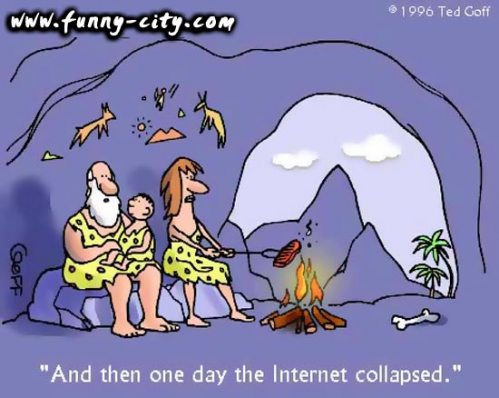
Anyone dares to predict what can happen in the next 20 years? Here’s one prophecy I hope will never come to pass…

Back to Year Zero?
Back to Year Zero?