සිවුමංසල කොලූගැටයා #43: HIV වයිරසයටත් වඩා දරුණු AIDS හංවඩුව

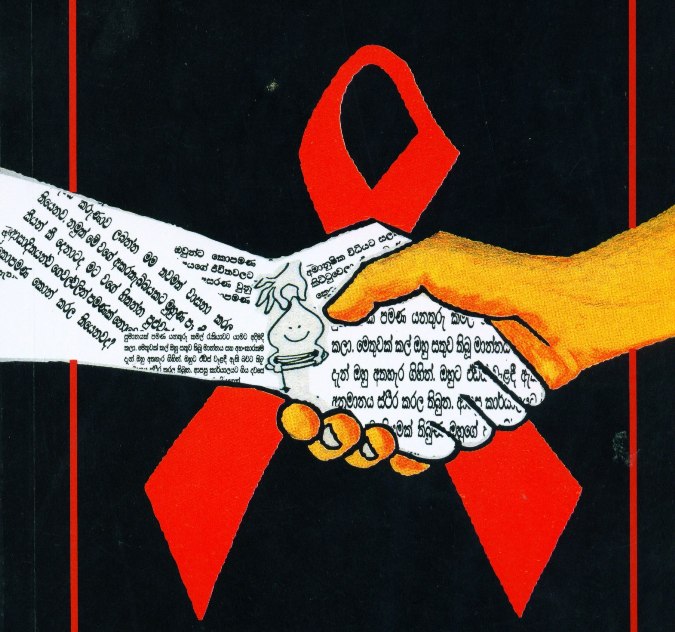
HIV communication needs media partnership - image courtesy Panos South Asia

On this blog, I have written regularly about challenges in communicating on HIV/AIDS through media and non-media methods. To mark World AIDS Day 2011, and 30 years since the discovery of AIDS, I have devoted this week’s (Sinhala) Sunday column in Ravaya newspaper to the topic of HIV/AIDS coverage in the Lankan mass media. I have drawn heavily from a 1999 handbook on HIV/AIDS communication written by my good friend Dr Vinya Ariyaratne, a specialist in community medicine, but the opinions are all mine.

“ඒඩ්ස් ගොඩට තව 114ක් එකතු වෙලා!”

මේ මෑත දී ඇරැඹුණු ජාතික පුවත්පතක මංගල කලාපයේ මුල් පිටුවේ පුවත් සිරස්තලයක්. ගෙවී මාස කිහිපය තුළ මෙරට හඳුනාගෙන ඇති ඒඩ්ස් රෝගීන් සංඛ්‍යාව 114ක් බව, ඒ වාර්තාවේ ආරම්භයේදී ම කියනවා. මේ සංඛ්‍යාවෙන් ඔබ්බට යන කිසිදු විග්‍රහයක් එහි තිබුණේ නැහැ. බැලූ බැල්මට පෙනෙන්නේ එය උද්වේගකාරී වාර්තාකරණයට තවත් උදාහරණයක් බවයි. එමෙන්ම ‘ඒඩ්ස් රෝගීන්’ අහසින් කඩා නොවැටෙන බව මේ වාර්තාකරු නොදන්නවා විය යුතුයි.

HIV සමග ජීවත් වන බහුතරයක් අයට AIDS රෝග ලක‍ෂණ පහළ වී නැහැ. HIV ශරීරගත වීමෙන් පසු වසර හෝ දශක ගණනක් ජීවත්වීමේ හැකියාව අද වන විට වෛද්‍ය විද්‍යාත්මකව ලබා ගෙන තිඛෙනවා. එහෙත් ඒ සදහා නිතිපතා Anti Retro Viral (ARV) ඖෂධ ගැනීම අවශ්‍යයි. බොහෝ දියුණු වන රටවල අඩු ආදායම් ලබන HIV ආසාදිතයන්ට මේ ඖෂධ ලබා දෙන්නේ රජයේ වියදමින්.

මේ මූලික දැනුම පවා නොමැතිව, නොඑසේ නම් ඒ ගැන නොතකා, කරන මාධ්‍ය වාර්තාකරණය සිංහල මෙන් ම ඉංග්‍රීසි පුවත්පත්වලත් තවම දැකිය හැකියි. මෙරට සම්මාන දිනු සති අන්ත ඉංග්‍රීසි පුවත්පතක ද මෙයට සමාන ආකාරයේ වචන යෙදීමක් හා ජනතාව කලබලයට පත් කළ හැකි වාර්තාකරණයක් මීට සති කිහිපයකට පෙර මා දුටුවා.

HIV/AIDS මුල්වරට මෙරටින් වාර්තා වී වසර 25 කට පසුව පවා මෙබඳු අසංවේදි හා වගකීමෙන් තොර මාධ්‍ය වාර්තාකරණයක් සිදු වනු දැකීම කණගාටුදායකයි. දශක දෙකකට වැඩි කාලයක් පුරා සෞඛ්‍ය අමාත්‍යාංශය, වෙනත් රාජ්‍ය ආයතන හා රාජ්‍ය නොවන සංවිධාන HIV ගැන මාධ්‍යවේදීන් දැනුවත් කිරීමේ හා සංවේදී කිරීමේ වැඩමුළු විශාල සංඛ්‍යාවක් පවත්වා තිඛෙනවා. මේ විෂය ආවරණය කරද්දී මාධ්‍යවේදීන්ට ඇති ගැටළු හා අභියෝග ගැන විවිධ සංවාදවලට මා ද සහභාගි වී තිඛෙනවා. එහෙත් කොයි තරම් මහන්සි වී වෙස් බැන්දත් පෙරහැර යන විට තවමත් පරණ පුරුදු හා අවිචාරශීලි ආකල්ප මතු වන බවක් පෙනෙනවා.

AIDS රෝගය මුලින් ම වාර්තා වී වසර තිහක් ගත වී තිඛෙනවා. අමෙරිකාවේ මුල් වරට මේ රෝග ලක‍ෂණ සහිතව රෝගීන් වාර්තා වන්නට පටන් ගත්තේ 1981දී. එයට හේතුව HIV නම් වයිරසය බව සොයා ගත්තේ ඊට දෙවසරකට පසුව. අද HIV/AIDS ලෝක ව්‍යාප්ත වසංගතයක් හා ලෝකයේ ප්‍රධාන පෙළේ සංවර්ධන අභියෝගයක් බවට පත්ව තිඛෙනවා. අළුත් ම සංඛ්‍යා ලේඛනවලට අනුව 2010 අග වන විට HIV ශරීරගත වී ජීවත්වන සංඛ්‍යාව මිලියන් 34ක්. වසරකට අළුතෙන් ආසාදනය වන සංඛ්‍යාව මිලියන් 2.6ක්. HIV ආසාදනය උත්සන්න අවස්ථාවේ AIDS රෝගය ඇති වී මිය යන සංඛ්‍යාව වසරකට මිලියන් 2ට වැඩියි.

සෞඛ්‍ය අමාත්‍යාංශය යටතේ ක්‍රියාත්මක වන ජාතික ලිංගාශ්‍රිත රෝග හා ඒඩ්ස් මර්දන වැඩසටහන (NSACP) මේ ජාතික ප්‍රශ්නයට වගකීම දරණ ප්‍රධාන ආයතනයයි. ඔවුන්ගේ වෙබ් අඩවිය කියන හැටියට තවමත් ලංකාව සැලකෙන්නේ ්‍යෂඪ ආසාදන සාපේක‍ෂව අඩුවෙන් වාර්තාගත රටක් හැටියටයි. http://www.aidscontrol.gov.lk

ලංකාවේ මුල් ම HIV ආසාදිත පුද්ගලයා වාර්තා වුණේ 1986දී. ඔහු විදේශිකයෙක්. ඊළඟ වසරේ HIV ආසාදිත ලාංකිකයෙකු හමු වුණා. එදා පටන් HIV ආසාදනයට ලක් වූ සංඛ්‍යාව ටිකෙන් ටික වැඩි වුවත්, තවමත් නිල වාර්තාවලට අනුව මෙරට HIV ආසාදිත සංඛ්‍යාව 1,429 යි. එමෙන්ම HIV ආසාදනයේ උච්ච අවස්ථාව වන AIDS රෝගයට ළඟා වී මිය ගිය සංඛ්‍යාව 221යි. 2011 සැප්තැම්බර් අග දක්වා මේ වසරේ අළුතෙන් වාර්තා වූ ්‍යෂඪ ආසාදිත සංඛ්‍යාව 114යි.

එසේ වුවත් HIV වයිරසය ශරීරගත වී ඒ බව දැනුවත්ව හෝ නොදැනුවත්ව මෙරට ජීවත් වන සංඛ්‍යාව 3,000 ඉක්මවන බව රජයේ HIV නිල වෙබ් අඩවිය අනුමාන කරනවා. එසේම HIV ආසාදන වඩාත් ශීඝ්‍ර ලෙස පැතිර යාමට දායක විය හැකි සාධක ගණනාවක් මෙරට තිඛෙන බව පර්යේෂකයන් පෙන්වා දෙනවා. මිලියන් එක හමාරක් පමණ ලාංකිකයන් විදේශ රැකියාවල නිරතන සිටින අතර නිරතුරු ආගමනය හා විගමනය කරනවා. යුද්ධයෙන් පසු සංචාරකයන්ගේ පැමිණිමේ සංඛ්‍යාත්මක වර්ධනයක් තිඛෙනවා.

HIV ආසාදිතයන් තම සැබෑ තත්ත‍වය සෞඛ්‍ය සේවාවන්ට පවා හෙළි කිරීමට ඉදිරිපත් නොවන්නේ HIV/AIDS සම්බන්ධයෙන් මෙරට පුළුල් ලෙස පැතිර පවතින අපකීර්තිය (stigma) හා ඒ අයට එරෙහිව මතුව එන විචක‍ෂණය හෙවත් වෙනස්කම් කිරීම (discrimination) බව ඒ පිළිබඳව කලක සිට පර්යේෂණ කරන වෛද්‍යවරුන් හා සමාජ විද්‍යාඥයන් කියනවා. මෙය ලෝකයේ වෙනත් රටවල ද අඩු වැඩි වශයෙක් දැකිය හැකි අහිතකර ප්‍රවණතාවක්.

HIV & communication book by Dr Vinya Ariyaratne - cover
HIV/AIDS යනු හුදෙක් සෞඛ්‍ය ගැටළුවකට වඩා පුළුල් වූ සමාජ ප්‍රශ්නයක් බවත්, වෛද්‍ය විද්‍යාත්මක හේතුන්ට වඩා සදාචාරාත්මක, නීතිමය හා මානව හිමිකම් පිළිබඳ පැතිකඩයන් ඒ හරහා මතු වන බවත් ‘HIV/AIDS සන්නිවේදන මාර්ගෝපදේශනය’ නමින් 1999දී පොතක් ලියු වෛද්‍ය වින්යා ආරියරත්න පෙන්වා දෙනවා.

ප්‍රජා වෛද්‍ය විශේෂඥයෙකු වන වෛද්‍ය ආරියරත්න මේ පොත් පිංච ලිවීමට නිමිත්ත වූයේත්, HIV පිළිබඳව අපේ ජන සමාජයේ ප්‍රචලිත වූ මිථ්‍යා මත, බොරු භීතිකා හා විසම අදහස් දුරු කිරීම සඳහා නිරවුල් වෛද්‍ය විද්‍යාත්මක අවබෝධය යොදා ගන්නටයි. ඔහු ඒ පොත ලියා දශකයකට වැඩි කාලයක් ගත වී ඇතත් එදා සඳහන් කළ අභියෝග තවමත් අප හමුවේ ඇති බවත්, HIV ආසාදන සංඛ්‍යාව මේ කාලය තුල සිව් ගුණයකින් වැඩි වී ඇති බවත් සිහිපත් කිරීම වැදගත්. දෙසැම්බර් 1 වනදාට යෙදෙන ලෝක AIDS දැනුවත් කිරීමේ දිනය මේ ගැන සංවාදයකට නිමිත්තක් සපයනවා.

HIV ආසාදනයට ලක් වු අය නිරෝධායනය (quarantine) කිරීම අවශ්‍ය නැහැ. එයට හේතුව ප්‍රධාන වශයෙන් පැතිරෙන්නේ අනාරක‍ෂිත ලිංගික සම්බන්ධතා මගින් හා එන්නත් කරන ඉඳිකටු හරහා වීමයි. ආසාදිත වූවන් හුදකලා කිරීම වෙනුවට අවශ්‍ය වන්නේ ආරක‍ෂිත උපක්‍රම සමග ආසාදිතයන්ට සමාජයේ හැකි තාක් සාමාන්‍ය ජන ජීවිතයක් ගත කිරීමට ඉඩකඩ සලසාදීමයි. HIV සමග ජීවත් වන කෙනෙකු සමග කථා බහ කිරීමෙන්, ස්පර්ශ කිරීමෙන් හෝ ඔවුන් අත තැබු යමක් භාවිත කිරීමෙන් වයිරසය පැතිරෙන්නට ඉඩක් නැහැ. මේ බව ජනප්‍රිය සංස්කෘතියේ ප්‍රබල ලෙස හුවා දැක් වූ අවස්ථාවක් වූයේ බ්‍රිතාන්‍යයේ ඩයනා කුමරිය HIV සමග ජීවත්වන අය ප්‍රසිද්ධියේ වැළඳ ගැනීමේ මාධ්‍ය වාර්තාකරණයයි.

HIV සමග ජීවත් වන අයට මෙරට ආණ්ඩුක්‍රම ව්‍යවස්ථාවේ ඇති සියලූම මූලික අයිතිවාසිකම් මෙන් ම අනෙකුත් නීතිවල රැකවරණය ද හිමි වන බව වෛද්‍ය වින්යා ආරියරත්න අවධාරණය කරනවා. පෞද්ගලිකත්වයට ඇති නිදහස, එහා මෙහා යාමට, විවාහ වීමට හා පවුලක් වීමට, රැකියාවක් කිරීමට, අධ්‍යාපනය ලැබීමට මෙන්ම මහජන සෞඛ්‍ය සේවාවන්ගෙන් වෛද්‍ය ප්‍රතිකාර ලබා ගැනීමට ද අන් හැම අයට මෙන් ම ඔවුන්ටත් අයිතිවාසිකම් ඇති බව ඔහු කියනවා. ඒ අතරම HIV වයිරසය අන් අයට පැතිරීම වැළැක්වීමට අවශ්‍ය ආරක‍ෂිත පියවර ගැනීමේ යුතුකමක් හා වගකීමක් HIV ආසාදිතයන්ට තිඛෙනවා. මෙයට ලිංගික චර්යාව මෙන් ම ඉඳිකටු හෝ බ්ලේඩ්තල හවුලේ භාවිතය, ලේ හෝ අනෙක් ශරීර අවයව දන්දීම ආදිය ද ඇතුළත්.

වෛද්‍ය ආරියරත්න තම පොතෙහි අවධාරණය කරන තවත් කරුණක් නම් HIV/AIDS තව දුරටත් ඇතැම් සමාජ කොටස්වලට සීමා වූ ප්‍රශ්නයක් නොවන බවයි. “සියලූ සදාචාරයන්ගෙන් හෙබි සහ සියලූ වෘත්තීන්ගේ නියැළුණු ජනයා HIV ආසාදනයේ අවදානමට ලක්ව ඇත. එය සදාචාරය පදනම් කර ගත් රෝගි තත්ත‍වයක් නොවේ.”

මෙසේ වුවත් ලාංකික සමාජය HIV/AIDS සම්බන්ධයෙන් භීතිය, කලබලය හා හෙළා දැකීම වැනි ප්‍රතිචාර දක්වන්නේ ඇයි? HIV සමග ජීවත්වන අයට එම තත්ත‍වය විවෘතව කියන්නට හැකි සමාජ වාතාවරණයක් තවමත් අපේ රටේ නැත්තේ ඇයි? පළමු HIV ආසාදිතයා හමු වී වසර 25ක් ගත වී තිබියදීත් අප සමාජයක් හැටියට තවමත් මේ සමාජ අර්බුදය ගැන ඉතා ප්‍රථමික හා දරදඩු ආකල්පවල එල්බගෙන සිටින්නේ කුමන හේතු නිසා ද?

මේ ප්‍රශ්නවලට එක එල්ලේ පිළිතුරු සොයා ගන්නට මට හැකි වුයේ නැහැ. එහෙත් මෙබඳු ප්‍රශ්න විවෘත සංවාදයට පාත්‍ර විය යුතු බව මා විශ්වාස කරනවා. එහිදී ජනමාධ්‍යයන්ට මීට වඩා කාර්යභාරයක් කළ හැකියි.

HIV/AIDs ගැන සන්නිවේදනයේදී මාධ්‍යවේදින්, දේශකයන් හා ගුරුවරුන් විශේෂයෙන් සැලකිලිමත් විය යුතු ගුණාංග හතරක් වෛද්‍ය ආරියරත්න හුවා දක්වනවා. එනම් තොරතුරු නිවැරදි හා අළුත් වීම, පෞද්ගලිකත්වයට ගරු කිරීම, විෂයයට අදාල වීම හා ආවේග මූලිකව සන්නිවේදනය නොකිරීමයි.

HIV ගැන දැනුවත් කිරීමේදී විශාල වැඩ කොටසක් කළ හැකි ජනමාධ්‍යවලින් ඒ ගැන අහිතකර මතිමතාන්තර පැතිරීමට ද ලොකු ඉඩක් ඇති බව ඔහු උදාහරණ සහිතව පෙන්වා දෙනවා. විශේෂයෙන් “AIDS මාරයා” වැනි යෙදුම්, මිනිස් හිස් කබල්, ඇට සැකිලි හා යක‍ෂ රූප භාවිතය තුලින් මේ වයිරසය පිළිබඳ අනවශ්‍ය භීතියක් ජන මනසේ වර්ධනය විය හැකියි. එමෙන්ම සිනමා තරු හෝ ක්‍රීඩකයන් හෝ HIV ආසාදනය වීම පිළිබඳ ඕපාදූප කථා කරනවාට වඩා මේ ආසාදනයෙන් ප්‍රවේශම් වීම පිළිබඳ ප්‍රායෝගික සන්නිවේදනයක යෙදීමේ වැදගත්කම ඔහු අවධාරණය කරනවා.

HIV ආසාදිතයන් කොන් කිරීමට තුඩු දෙන ආකාරයේ විග්‍රහයන් ඉතා අහිතකරයි. අපේ ඇතැම් මාධ්‍යවල තවමත් වැඩි අවධානය යොමු වන්නේ ආසාදිතයකුගේ විවාහක – අවිවාහක බව, ලිංගික චර්යා නැඹුරුව, ඔහු/ඇය කරන රැකියාවේ ස්වභාවය ආදී කරුණුවලටයි. වාර්තාකරණයෙන් ඔබ්බට යන සුචරිතවාදයක් පෙරටු කර ගත් විට HIV පිළිබඳ ප්‍රශස්ත සන්නිවේදනයක යෙදීමට නොහැකි වනවා.

“ඒඩ්ස් රෝගීන්” මහා පව්කාරයන් බවත්, ඔවුන්ට එළව එළවා පහර දිය යුතු බවත්, ඔවුන්ගේ නම් ගම් හෙළිදරව් කරමින් ඔවුන් කොන් කළ යුතු බවත් මෙරට එක්තරා ජාතික පුවත්පත් කතුවරයෙකු මීට වසර කිහිපයකට පෙර තම කාර්යය මණ්ඩලයට පැවසු බව වැඩමුළුවකට ආ මාධ්‍යවේදියෙකු වරක් මට හෙළි කළා. HIV ආසාදිතයන් ගැන මෙරට සමාජයේ හැම ස්ථරයක ම පාහේ දැකිය හැකි අධිසුචරිතවාදී හා කුහක ආකල්ප මාධ්‍ය ෙක‍ෂත්‍රයට ද පොදුයි.

එහෙත් තම පෞද්ගලික මතවාද මෙසේ පොදු ආකල්ප බවට පත් කරන්නට ඇතැම් මාධ්‍ය වෙර දැරීම කෙතරම් සාධාරණ ද? HIV වයිරසයේ පැතිරීමට එරෙහි හොඳ ම ආරක‍ෂණය දැනුවත්කම බව පිළිගැනෙන අද කාලයේ එබඳු යහපත් සන්නිවේදනයක් කිරීමේ විශාල හැකියාවක් ඇති මාධ්‍ය ආයතන ඒ වෙනුවට HIV ආසාදිතයක් පිටු දකිමින් නින්දා අපහාස කිරීමට යොමු වීම කෙතරම් ඛේදජනක ද?

HIV ආසාදිතයන් ගැන කථා කරද්දී ඩෙංගු රෝගීන් ගැන කථා කරන සරල ලිහිල් මට්ටමට එහා යන අවබෝධයක් හා සංයමයක් මාධ්‍ය සන්නිවේදකයන් සතු විය යුතුයි. බස හැසිරවීමේදි පවා ඒ ප්‍රවේශම්කාරි බව අවශ්‍යයි. ඕනෑකම ඇත්නම් මෙබඳු වෙනස්කම් කළ හැකි බවට අපේ මාධ්‍යවලින් ම සාක‍ෂි තිඛෙනවා. කලකට පෙර “අංගවිකල” (crippled) යන යෙදුම භාවිත කළත් අද “ආබාධිත” (disabled) යන්න යොදනවා. අඳ, ගොළු, බිහිරි වෙනුවට දෘශ්‍යාබාධිත ආදී වඩාත් සංවේදී වචන භාවිතයට ඇවිත්.

HIV/AIDS ගැන වසර 25ක් ගත වීමෙන් පසු හෝ වඩාත් සංවේදී මානුෂික වචන යෙදුමක් හා වාර්තාකරණයක් හදා ගත හැකි නම් කෙතරම් අපූරු ද?
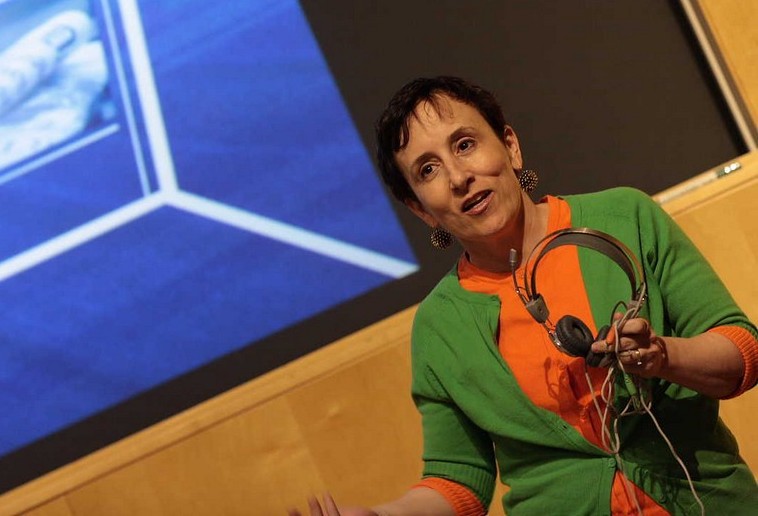
Christina Scott (1961 – 2011): Passionate science journalist, interrupted mid-sentence…

Christina Scott: A funny story always got funnier when she related it...

I was travelling in the Himalayan Republic of Nepal when I heard the sad news: Christina Scott, a pioneering science journalist from South Africa, has just been killed in a road accident. She would have turned 50 on November 20.

As Mike Shanahan, whose tweet broke the sad news of Christina’s hasty departure, wrote: there is one star less in Africa.

Christina’s tragic and abrupt departure elicited an outpouring of grief, memories and tributes from science journalists, scientists and others who knew and admired her. I’m late to join that, I know, but here’s the slightly expanded version of what I just posted on SciDev.Net as a reader comment:

“Short, stroppy reporter with a funny accent. Likes to eat sushi. No head for alcohol and caffeine addiction.” That’s how Canadian-born Christina chose to introduce herself. Everyone has an anecdote about her, reminding us of the colourful and highly talented person she was.

Christina was passionate, articulate and had a clear vision of how science, technology and innovation could make a difference to millions of people in Africa, Asia and Latin America. She made science fun. She was also great fun to work with.

Christina and I didn’t meet that often, separated as we are by time zones and the Indian Ocean. But our few encounters — usually at professional gatherings of science journalists — left a deep impression.

We first met at the Fifth World Conference of Science Journalists in Melbourne in April 2007, where we were both speakers.

She and I were part of a memorable plenary session on ‘Reporting Science in Emerging Economies’ that was put together by SciDev.Net and produced by Julie Clayton. It had science journalists or editors from Brazil, China, India, Sri Lanka and Zambia.

It was Christina who came up with a novel idea to dim the meeting hall lights just as we started. In the semi-darkness, she lit a single cigarette lighter to symbolise how science journalists in the developing world struggled daily with power outages, poor literacy, unsympathetic editors and uncaring governments.

Earlier in that conference, Christina compared some of her professional tribe to extremophile bacteria: hardy enough to survive in very harsh environments. The broad conclusion from our session was that, just as life finds a way against many odds, so does science journalism. In conditions far from ideal, science journalism happens — and even thrives — thanks to the resilience, resourcefulness and commitment of its practitioners.

Christina Scott (left) making a point. Photo courtesy WFSJ

Christina excelled in communicating science through print, web and broadcast media. She switched easily between written and spoken words, and could hold an audience in any medium. Such multimedia journalists are rare.

But she didn’t allow the technology ‘tail’ to wag the journalism ‘dog’. In 2007, she was still wondering if Internet, computes and online communications could make much headway in reaching out a majority of South Africans. It wasn’t a lack of connectivity and computers any longer, but a more basic absence of electricity in many remote areas.

To her, old fashioned radio was still the most cost-effective way to reach more people quickly. That was also her favourite medium, one in which she did some of most memorable coverage.

Christina had a fine sense of theatrical performance to engage a live audience. She knew just how to shook and hook them. She had no time or patience for political correctness or euphemisms; she just spoke truth to power.

I learnt much by being in her audience, or sharing a platform with her. It was exhilarating to see how she engaged audiences full of jaded and sceptical journalists.

Once, during a panel discussing HIV/AIDS, she asked her audience how many were aged over 50 years. A few hands went up. “In South African terms, chances are you’re already dead,” she declared.

She didn’t have comforting words for those below 35 either: “You’re probably infected with HIV, and don’t know it yet — and go around giving it to others!”
That’s how she summed up the stark realities of South Africa, which has one of the highest HIV infection rates in the world. She then personalized, with a wish was that her daughter, then 15, would get through college without contracting HIV.

Christina Scott was a supernova who shone bright and fiery. Her trail would continue to blaze for a long time. But we won’t hear that spirited voice, in that funny accent, always ready to tell an interesting story.

Here are links to some tributes found online:

Christina Scott: Editorial by SciDev.Net editor David Dickson

ResearchResearh.com: Christina Scott, doyenne of African science journalism, dies
by Ehsan Masood

Mail & Guardian: Christina Scott: Farewell to ‘short, stroppy’ giant
by Adele Baleta

Mike Shanahan blog: One less star in Africa tonight

WFSJ Website: Tribute to Christina Scott RIP

Africa STI: Christina Scott, Africa’s Foremost Science Journalist, dies

Facebook Page: Remembering Christina Scott

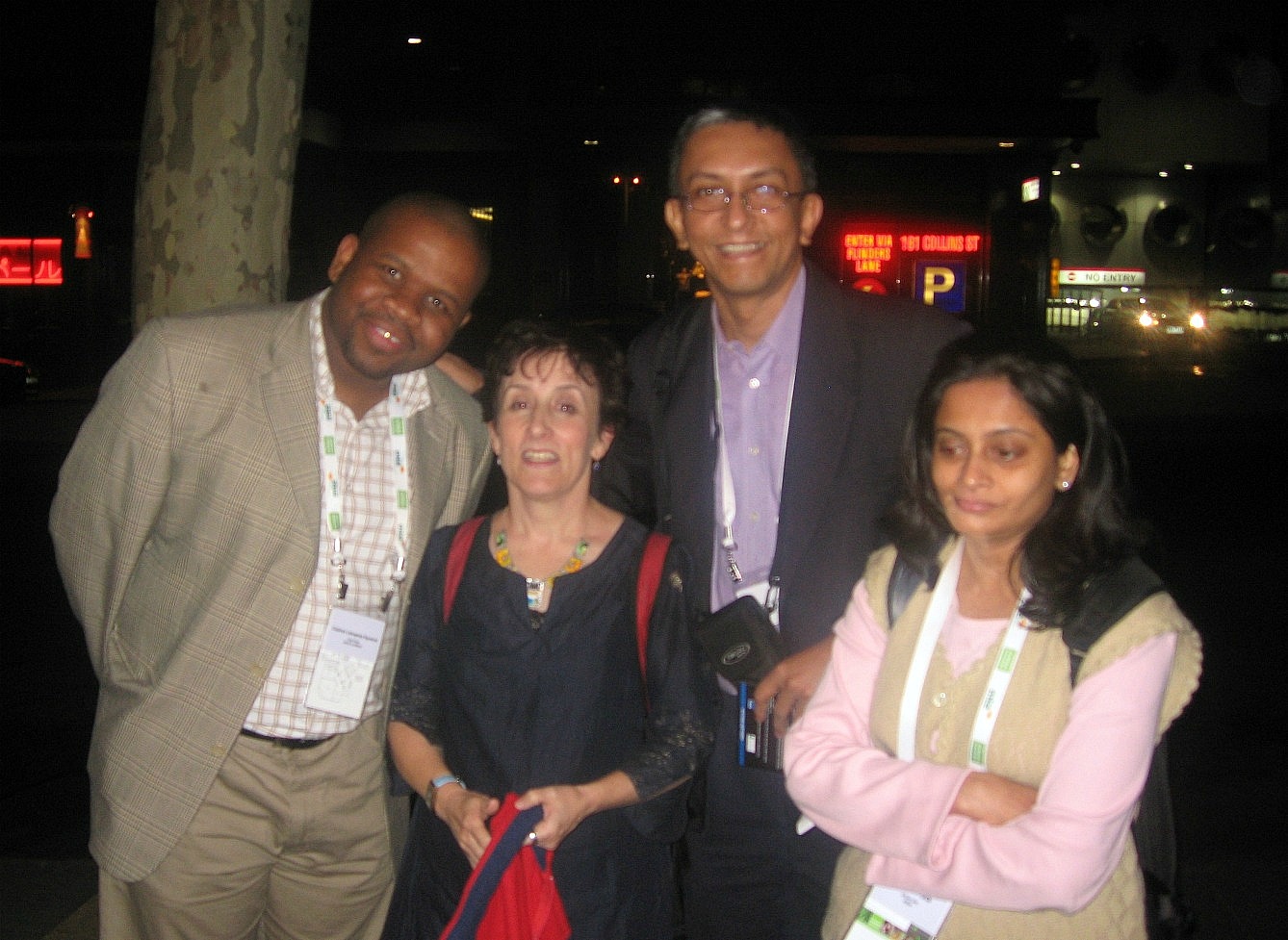
In Melbourne, April 2007: L to R - To be identified, Christina Scott, Nalaka Gunawardene and T V Padma

සිවුමංසල කොලූගැටයා #25: “බටහිර විද්‍යාව”, “සාම්ප්‍රදායික දැනුම” සහ දකුණු අප‍්‍රිකාවේ බිහිසුනු HIV/AIDS මංමුලාව

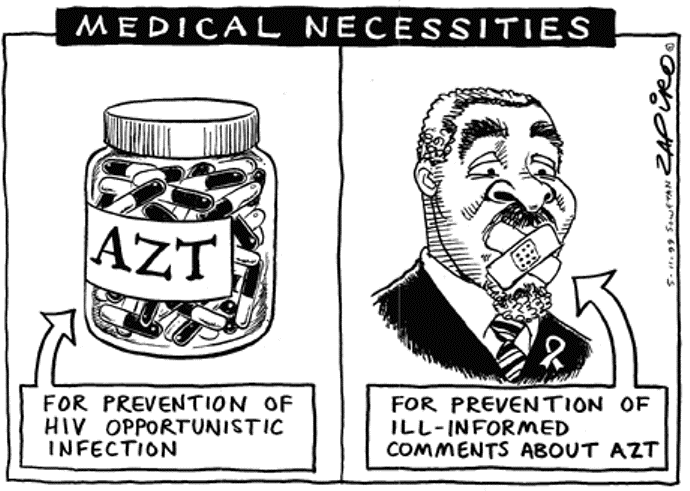
In my Ravaya column (in Sinhala) for 31 July 2011, I look back at South Africa’s HIV/AIDS misadventure under President Thabo Mbeki, who refused to accept the well-established scientific consensus about the viral cause of AIDS and the essential role of antiretroviral drugs in treating it. Instead, he and his health minister embarked on a highly dubious treatment using garlic, lemon juice and beetroot as AIDS remedies — all in the name of ‘traditional knowledge’.

It turned out to be a deadly experiment, and one of the worst policy debacles in the history of public health anywhere in the world. In 2008,  A study by Harvard researchers estimated that the South African government could have prevented the premature deaths of 365,000 people if it had provided antiretroviral drugs to AIDS patients and widely administered drugs to help prevent pregnant women from infecting their babies.

There are lessons for all governments addressing complex, technical issues: do not allow a vocal minority to hijack the policy agenda, ignoring well established science and disallowing public debate on vital issues.

South African cartoonist  Zapiro lampooned President Mbeki's HIV folly
South African cartoonist Zapiro lampooned President Mbeki’s HIV folly

AIDS රෝගය මුලින් ම වාර්තා වී වසර තිහක් ගත වී තිබෙනවා. අමෙරිකාවේ මුල් වරට මේ රෝග ලක්ෂණ සහිතව රෝගීන් වාර්තා වන්නට පටන් ගත්තේ 1981දී. එයට හේතුව HIV නම් වයිරසය බව සොයා ගත්තේ ඊට දෙවසරකට පසුව.

අද HIV/AIDS ලෝක ව්‍යාප්ත වසංගතයක් හා ලෝකයේ ප්‍රධාන පෙළේ සංවර්ධන අභියෝගයක් බවට පත්ව තිබෙනවා. අළුත් ම සංඛ්‍යා ලේඛනවලට අනුව 2009 වන විට HIV ශරීරගත වී ජීවත්වන සංඛ්‍යාව මිලියන් 33ක්. අළුතෙන් ආසාදනය වන සංඛ්‍යාව වසරකට මිලියන් 2.6ක්. HIV ආසාදන උත්සන්න අවස්ථාවේ AIDS රෝගය ඇති වී මිය යන සංඛ්‍යාව වසරකට මිලියන් 2ට වැඩියි.

HIV/AIDS ගැන විවිධ කෝණවලින් විග්‍රහ කළ හැකියි. දුගී දුප්පත්කම, බලශක්ති අර්බුද, පරිසර දූෂණය හා ගැටුම්කාරී තත්ත්වයන්ට මුහුණ දෙන දියුණුවන ලෝකයේ බොහෝ රටවලට ගෙවී ගිය දශක තුන තුළ HIV/AIDS නම් අමතර අභියෝගයට ද මුහුණ දීමට සිදු වුණා. එයින් දැඩි සේ පීඩාවට පත් දකුණු අප්‍රිකාවේ HIV/AIDS ප්‍රතිපත්තිය වසර ගණනක් අයාලේ ගිය කථාවයි අද විග්‍රහ කරන්නේ. මෑතදී මා නැවතත් දකුණු අප්‍රිකාවට ගිය අවස්ථාවේ මගේ දැනුම අළුත් කර ගන්නට ලැබුණු නිසායි.

ලෝකයේ වැඩි ම HIV ආසාදිත ජන සංඛ්‍යාවක් සිටින රට දකුණු අප්‍රිකාවයි. 2007 දී HIV සමග ජීවත් වන දකුණු අප්‍රිකානුවන් සංඛ්‍යාව මිලියන් 5.7 ක් පමණ වුණා. එනම් මුළු ජනගහනය මිලියන් 48න් සියයට 12ක්. එය එරට සෞඛ්‍ය අර්බුදයක් පමණක් නොව සමාජයීය හා ආර්ථීක ප්‍රශ්නයක් ද වෙනවා.

ජනාධිපති නෙල්සන් මැන්ඩෙලාගේ 1994-99 ධූර කාලයේ HIV/AIDS පිළිබඳව දකුණු අප්‍රිකාවේ සෞඛ්‍ය ප්‍රතිපත්ති සකස් වූයේ ලොව පිළිගත් වෛද්‍ය දැනුම හා උපදෙස් මතයි. HIV සමග ජීවත් වන අයට හැකි තාක් කල් නීරෝගීව දිවි ගෙවන්නට ඖෂධ සපයන අතරේ වයිරසය පැතිරයාම වැළැක්වීමේ දැනුවත් කිරීම් හා මහජන අධ්‍යාපන ව්‍යාපාරයක් දියත් වුණා.

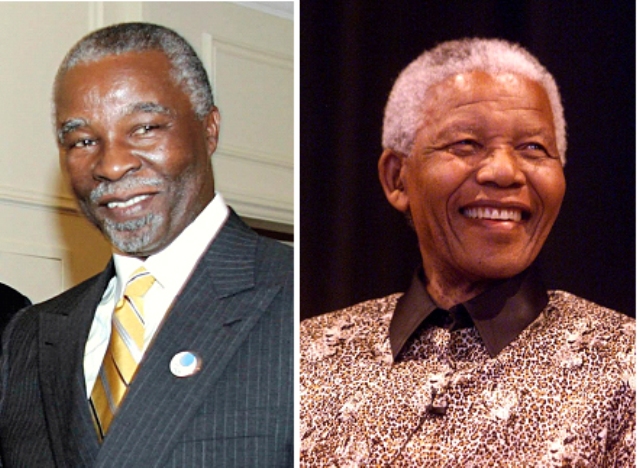
Thabo Mbeki (left) succeeded Nelson Mandela

එහෙත් ඔහුගෙන් පසු ජනාධිපති වූ තාබෝ එම්බෙකි (Thabo Mbeki) මේ ගැන ප්‍රධාන ප්‍රවාහයේ වෛද්‍ය විද්‍යාත්මක දැනුම ප්‍රශ්න කරන්නට පටන් ගත්තා. වෛද්‍ය විශේෂඥ දැනුමක් නොතිබුණත් තියුණු බුද්ධියකින් හෙබි එම්බෙකි, මෙසේ අසම්මත ලෙස සිතන්නට යොමු වුණේ HIV/AIDS ගැන විකල්ප මතයක් දරන ටික දෙනකුගේ බලපෑමට නතු වීම නිසයි.

මේ අයට ඉංග්‍රීසියෙන් AIDS Denialists කියනවා. ඔවුන්ගේ තර්කය AIDS රෝගය හට ගන්නේ HIV වයිරසය නිසා නොව දුප්පත්කම, මන්ද පෝෂණය වැනි සමාජ ආර්ථීක සාධක ගණනාවක ප්‍රතිඵලයක් ලෙසින් බවයි.

එම්බෙකිගේ සෞඛ්‍ය ඇමතිනිය (1999-2008) ලෙස ක්‍රියා කළ මාන්ටෝ ෂබලාලා සිමැංග් (Manto Tshabalala Msimang) මේ අවුල තවත් ව්‍යාකූල කළා. HIV ආසාදනය පාලනය කරන බටහිර වෛද්‍ය විද්‍යාවේ ඖෂධ වෙනුවට සම්ප්‍රදායික අප්‍රිකානු දැනුමට අනුව සුදුළුෑනු, දෙහි සහ බීට්රූට් යුෂ ගැනීම සෑහෙන බවට ඇය ප්‍රසිද්ධියේ ප්‍රකාශ කළා!

මේ නිසා HIV වයිරසයට ප්‍රහාර එල්ල කිරීම වෙනුවට දුප්පත්කම පිටුදැකීම කළ යුතු යයි ස්ථාවරයකට එම්බෙකි යොමු වුණා. HIV මර්දන සෞඛ්‍ය කටයුතු අඩපණ කරන්නටත්, මහජන සෞඛ්‍ය සේවා හරහා ඖෂධ ලබා දීම නතර කිරීමටත් එම්බෙකි රජය පියවර ගත්තා.

HIV සමග ජීවත්වන බහුතරයක් දකුණු අප්‍රිකානුවන්ට AIDS රෝග ලක්ෂණ පහළ වී නැහැ. HIV ශරීරගත වීමෙන් පසු වසර හෝ දශක ගණනක් ජීවත්වීමේ හැකියාව අද වන විට වෛද්‍ය විද්‍යාත්මකව ලබා ගෙන තිබෙනවා. එහෙත් ඒ සඳහා නිතිපතා Anti-Retroviral (ARV) ඖෂධ ගැනීම අවශ්‍යයි.

බොහෝ දියුණු වන රටවල අඩු ආදායම් ලබන HIV ආසාදිතයන්ට මේ ඖෂධ ලබා දෙන්නේ රජයේ වියදමින්. HIV ආසාදිත කාන්තාවන්ට ARV ඖෂධ නිසි කලට ලැබුණොත් ඔවුන් බිහි කරන දරුවන්ට මවගෙන් HIV පැතිරීම වළක්වා ගත හැකියි. එහෙත් එම්බෙකි රජය HIV වයිරසය ගැන විශ්වාස නොකළ නිසා ප්‍රජනන වියේ සිටින HIV ආසාදිත කාන්තාවන්ට එම ඖෂධ දීමත් නතර කළා.

දකුණු අප්‍රිකාව ජාතීන්, භාෂා හා දේශපාලන පක්ෂ රැසක සම්මිශ්‍රණයක්. එමෙන් ම 1994 සිට නීතියේ ආධිපත්‍යය හා රාජ්‍යයේ බල තුලනය පවතින රටක්. ප්‍රජාතන්ත්‍රවාදී සම්ප්‍රදායයන් හා ආයතන ප්‍රබල කරන්නට සැබෑ උත්සාහ ගන්නා රටක්.

මෙබඳු රටක වුවත් වසර කිහිපයක් පුරා ජනාධිපතිවරයාට හා සෞඛ්‍ය ඇමතිනියට මෙබඳු ප්‍රබල ප්‍රශ්නයකදී මේ තරම් අයාලේ යන්නට ඉඩ ලැබුණේ කෙලෙසදැයි මා එරට විද්‍යාඥයන් හා මාධ්‍යවේදීන් කිහිප දෙනකුගෙන් ඇසුවා. ඔවුන් දුන් පිළිතුරුවල සම්පිණ්ඩනය මෙයයි.

තාබෝ එම්බෙකි යනු වර්ණභේදවාදයට එරෙහිව දශක ගණනක් අරගලයක යෙදුණු,  පාලක ANC පක්ෂයේ ප්‍රබල චරිතයක්. ඔහුගේ දේශපාලන කැපවීම පිළිබඳව විවාදයක් නැහැ. මැන්ඩෙලා 1994දී ජනාධිපති වන විට එම්බෙකි උප ජනාධිපති වුණා.

1994-99 කාලය තුළ එරට ආර්ථීක වර්ධනයට හා සමාජ සංවර්ධනයට නායකත්වය සැපයූ ඔහු අප්‍රිකානු කලාපයේ දක්ෂ රාජ්‍ය තාන්ත්‍රිකයකු ලෙස නමක් දිනා ගත්තා. මැන්ඩෙලා එක් ධූර කාලයකින් පසු කැමැත්තෙන් විශ්‍රාම ගිය විට එම්බෙකි ANC ජනාධිපති අපේක්ෂකයා වී ජයග්‍රහණය කළා.

පරිණත දේශපාලකයකු රටේ ජනාධිපති ලෙස මහජන ඡන්දයෙන් තේරී පත්ව සිටින විටෙක, වැරදි උපදෙස් නිසා එක් වැදගත් ප්‍රශ්නයක් සම්බන්ධයෙන් ඔහු නොමග යාමට අභයෝග කරන්නේ කෙසේ ද? දකුණු අප්‍රිකාවේ වෛද්‍යවරුන් හා අනෙක් විද්වතුනට තිබූ ප්‍රශ්නය එයයි. සාම්ප්‍රදායික දැනුම එක එල්ලේ හෙළා නොදැක, එහි සීමාවන් ඇති බව පෙන්වා දෙමින්, රටේ නායකයා හා සෞඛ්‍ය ඇමති සමග හරවත් සංවාදයක යෙදෙන්නට සීරුවෙන් හා සංයමයෙන් කටයුතු කරන්නට ඔවුන්ට සිදු වුණා.

South African cartoonist Zapiro ridicules HIV denialist health minister 'Madam Beetroot'
South African cartoonist Zapiro ridicules HIV denialist health minister ‘Madam Beetroot’

ANC පක්ෂය තුළ ම එම්බෙකිගේ HIV/AIDS ස්ථාවරය ගැන ප්‍රශ්න මතු වුණා. එහෙත් මැන්ඩෙලා මෙන් විකල්ප අදහස් අගය කිරීමේ හැකියාවක් එම්බෙකිට නොතිබූ නිසාත්, ජනාධිපති හැටියට වඩා ඒකමතික පාලනයක් ඔහු ගෙන යන්නට උත්සාහ කළ නිසාත් පක්ෂය ඇතුළෙන් දැඩි ප්‍රතිරෝධයක් ආවේ නැහැ.

2002 දී පැවති ANC පක්ෂ රැස්වීමකදී මැන්ඩෙලා මේ ගැන සාවධානව අදහස් දැක් වූ විට එම්බෙකි හිතවාදියෝ ‘ජාතියේ පියා’ හැටියට අවිවාදයෙන් සැළකෙන මැන්ඩෙලාට වාචිකව ප්‍රහාර එල්ල කළා. එයින් පසු මැන්ඩෙලා ද තම අනුප්‍රාප්තිකයාගේ HIV/AIDS ප්‍රතිපත්ති ප්‍රසිද්ධියේ ප්‍රශ්න කිරීමෙන් වැළකුණා.

එම්බෙකි හිතවාදියෝ එතැනින් නතර වුණේ නැහැ. සිය නායකයාගේ අසම්මත HIV/AIDS න්‍යායට එරෙහිව කථා කරන විද්‍යාඥයන් හා වෛද්‍යවරුන්ට මඩ ප්‍රහාර දියත් කළා. දකුණු අප්‍රිකාවේ සිටින ලොව පිළිගත් ප්‍රතිශක්තිවේදය පිළිබඳ විශේෂඥයකු වූ මහාචාර්ය මක්ගොබා (Prof Malegapura Makgoba) ජනාධිපතිගෙන් ඉල්ලා සිටියා ලොව හිනස්සන මේ න්‍යායෙන් අත් මිදෙන ලෙස.

මේ මහාචාර්යවරයා බටහිර විද්‍යාවට ගැතිකම් කරන, අප්‍රිකාවේ සාම්ප්‍රදායික දැනුම හෙළා දකින්නකු ලෙස ජනාධිපති කාර්යාලය විසින් හදුන්වනු ලැබුවා. සුදු ජාතික හෝ ඉන්දියානු සම්භවය සහිත විද්වතකු ජනාධිපති මතවාද ගැන ප්‍රශ්න කළ විට එය ‘කළු ජාතික නායකයාට අවමන් කිරීමේ’ සරල තර්කයකට ලඝු කරනු ලැබුවා.

මේ මඩ ප්‍රහාර හා රාජ්‍ය යාන්ත්‍රණයට එරෙහිව හඬක් නැගූ සුදු හා කළු ජාතික දකුණු අප්‍රිකානුවන් ටික දෙනකු ද සිටියා. ඔවුන් විද්‍යා ක්‍ෂෙත‍්‍රයෙන් පමණක් නොව සාහිත්‍ය, කලා සහ සාමයික ක්‍ෂෙත‍්‍රවලින් ද මතුව ආවා.

එහිදී  දැවැන්ත කාර්ය භාරයක් ඉටු කළේ කේප්ටවුන්හි ආච්බිෂොප් ඩෙස්මන්ඩ් ටූටූ. වර්ණභේදවාදයට, අසාධාරණයට හා දිළිඳුබවට එරෙහිව දශක ගණනක් තිස්සේ අරගල කරන, 1984 නොබෙල් සාම ත්‍යාග දිනූ ඔහු, මුළු ලෝකය ම පිළිගත් චරිතයක්. 1994න් පසු ඡන්දයෙන් බලයට පත් හැම රජයක ම හොඳ දේ අගය කරන අතර වැරදි ප්‍රතිපත්ති නොබියව විවේචනය කරන්නෙක්.

ඩෙස්මන්ඩ් ටූටූ මුලදී පෞද්ගලිකවත් පසුව මහජන සභාවලත් එම්බෙකිගේ HIV/AIDS මංමුලාව ගැන කථා කළා. මහජන උන්නතියට ඍජුව ම බලපාන මෙබඳු ප්‍රශ්න සම්බන්ධයෙන් විවෘත සංවාදයක් පැවතිය යුතු බවත්, බහුතර විද්වත් මතයට ගරු කිරීම ප්‍රජාතන්ත්‍රවාදී රජයක වගකීම බවත් ඔහු අවධාරණය කළා.

2004 දී එක් ප්‍රසිද්ධ දේශනයකදී ඔහු කීවේ: “සුදු පාලකයන්ට එරෙහිව අරගල කරන සමයේ අපි ඉතා ප්‍රවේශමෙන් කරුණු ගවේෂණය කර, තර්කානුකූලව ඒවා ඉදිරිපත් කළා. දැන් ටිකෙන් ටික ඒ වෙනුවට එහෙයියන්ගේ හා ප්‍රෝඩාකාරයන්ගේ සම්ප්‍රදායක් ඉස්මතු වෙමින් තිබෙනවා. HIV/AIDS ගැන ජනාධිපති එම්බෙකිගේ විශ්වාස මීට වඩා බෙහෙවින් විවාදයට ලක් කළ යුතුයි. අභියෝග හා විවාදවලට ලක් කිරීමෙන් සත්‍යයට හානි වන්නේ නැහැ. එය වඩාත් නිරවුල් වෙනවා. මෙසේ ප්‍රශ්න කිරීම නිසා මා ජනාධිපතිගේ හතුරකු වන්නේ නැහැ. ජනසම්මතවාදී සමාජවල නායකයා කියූ පළියට යමක් පරම සත්‍යය වන්නේ නැහැ. එය තර්කානුකූල හා සාක්ෂි මත පදනම් වී ඇත්දැයි විවාදාත්මකව විග්‍රහ කිරීම අත්‍යවශ්‍යයි.”

1991 නොබෙල් සාහිත්‍ය ත්‍යාගය දිනූ සුදු ජාතික දකුණු අප්‍රිකානු ලේඛිකා නැඩීන් ගෝඩිමර් ද මේ සංවාදයට එක් වුණා. 2004 දී ඇය ප්‍රසිද්ධ ප්‍රකාශයක් කරමින් කීවේ ජනාධිපති එම්බෙකීගේ අනෙක් සියළු ප්‍රතිපත්ති තමා අනුමත කරන නමුත් HIV/AIDS ගැන ඔහුගේ ස්ථාවරය පිළි නොගන්නා බවයි.

දකුණු අප්‍රිකාවේ ස්වාධීන ජනමාධ්‍ය ද ජනාධිපති හා ඇමතිනියන්ගේ HIV/AIDS මනෝ විකාර දිගට ම විවේචනය කළා. ඇමතිනියට Madam Beetroot හෙවත් ‘බීට්රූට් මැතිනිය’ යන විකට නාමය දෙනු ලැබුවා. එහෙත් මේ දෙපළ දිගු කලක් තම වැරදි මාර්ගයෙන් ඉවත් වූයේ නැහැ. විවේචකයන්ගේ දේශපාලන දැක්ම, ජාතිය හා සමේ වර්ණය අනුව යමින් මේවා හුදෙක් ‘විරුද්ධවාදීන්ගේ කඩාකප්පල්කාරී වැඩ’ ලෙස හඳුන්වා දුන්නා.

2002 වන විට ANC පක්ෂය තුළින්, රට තුළින් හා ජාත්‍යන්තර විද්වත් සමූහයා වෙතින් මතුව ආ ප්‍රබල ඉල්ලීම් හමුවේ ජනාධිපති එම්බෙකි එක් පියවරක් ආපස්සට ගත්තා. එනම් ආන්දෝලනයට තුඩු දුන් HIV/AIDS ප්‍රතිපත්ති ගැන මින් ඉදිරියට ප්‍රසිද්ධියේ කිසිවක් නොකීමට. ජනාධිපති මෙසේ මුනිවත රැක්කත් සෞඛ්‍ය ඇමතිනියගේ අයාලේ යාම තවත් කාලයක් සිදු වුණා.

2003 දී විශ්‍රාමික අමෙරිකානු ජනාධිපති බිල් ක්ලින්ටන් එම්බෙකි හමු වී පෞද්ගලික ආයාචනයක් කළා. නොමග ගිය දකුණු අප්‍රිකානු HIV/AIDS ප්‍රතිපත්ති නැවත හරි මඟට ගන්නට ක්ලින්ටන් පදනම විද්වත් හා මූල්‍ය ආධාර දීමට ඉදිරිපත් වූ විට එම්බෙකි එය පිළි ගත්තා. (මෙය ප්‍රසිද්ධ වූයේ වසර ගණනාවකට පසුවයි.)

එහෙත් එරට HIV/AIDS ප්‍රතිපත්ති යළිත් ප්‍රධාන ප්‍රවාහයට පැමිණීම එම්බෙකිගේ ධූර කාලය හමාර වන තුරු ම හරිහැටි සිදුවුණේ නැහැ. 2008 සැප්තැම්බරයේ ඔහු තනතුරින් ඉල්ලා අස් වූ පසු කෙටි කලකට ජනාධිපති වූ කලේමා මොට්ලාතේ තනතුරේ මුල් දිනයේ ම එම්බෙකිගේ සෞඛ්‍ය ඇමතිනිය ඉවත් කළා. ඒ වෙනුවට HIV/AIDS සම්බන්ධයෙන් කාගේත් විශ්වාසය දිනාගත් බාබරා හෝගන් සෞඛ්‍ය ඇමති ලෙස පත් කළා. ඇය ප්‍රතිපත්ති හරි මගට ගන්නට හා ARV ප්‍රතිකාර ව්‍යාප්ති කරන්නට ඉක්මන් පියවර ගත්තා.

එහෙත් ඒ වන විට අතිවිශාල හානියක් සිදු වී හමාරයි. 2008 නොවැම්බරයේ අමෙරිකාවේ හාවඩ් සරසවියේ පර්යේෂකයෝ ගණන් බැලීමක් කළා. 2002-2005 වකවානුවේ නොමග ගිය HIV/AIDS ප්‍රතිපත්ති නිසා ප්‍රතිකාර හා සෞඛ්‍ය පහසුකම් අහිමි වූ දකුණු අප්‍රිකානුවන් සංඛ්‍යාව පිළිබඳව. ඍජු හෝ වක්‍ර වශයෙන් 365,000ක් දෙනා මේ අවිද්‍යාත්මක ප්‍රතිපත්ති නිසා අකාලයේ මිය ගිය බව ඔවුන්ගේ නිගමනයයි. (ක්‍රමවේදය සඳහා බලන්න: http://www.hsph.harvard.edu/news/magazine/spr09aids/)

මේ ජීවිත හානි වලට වගකිව යුත්තේ කවුද?

දිවි සුරකින දැනුම සම්බන්ධයෙන් සෙල්ලම් කරන්නට යාමේ අවදානම හා එහි භයානක ප්‍රතිඵලවලට දකුණු අප්‍රිකාවේ HIV/AIDS මංමුලාව මතක හිටින පාඩමක්.

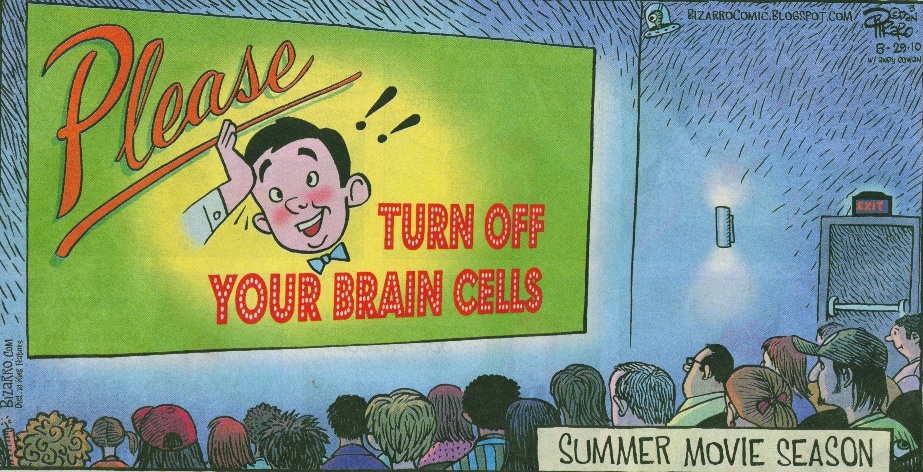
Bizarro: Turn off your brain cells before the screening!

A candid request from the management...

We’re all familiar with the request at cinemas, theatres and concert halls for everyone to turn off their cell phones (a.k.a. mobiles) before the show starts. Not that everyone complies — there are enough deviants among us who just can’t disengage themselves from their electronic leashes even for a couple of hours.

But here’s a new twist to that common (and much needed) request: I came across this in the Bizarro cartoon, which offers some fascinating insights into our topsy turvy times. There are times when I feel that every TV set should come with this line printed on top!

Everyone has a story about cell phones going off at the wrong time in the wrong place. Here’s my favourite.

Together with my TVEAP team, I was running the 2004 AIDS Film Festival in Bangkok, Thailand, during the 15th International AIDS Conference, in July 2004. The festival was held across three venues, and showcased over 50 film titles from around the world — we had nearly half the film makers turning up in person to be introduce their films.

One such film maker, an academic turned film maker, was eagerly talking about his film (an excellent one, unusual for academics) when somebody’s cell phone went off.

The film maker wasn’t amused. He told the full house: “Unless you’re a person with nuclear trigger responsibility, can everyone PLEASE turn off their cell phones?”

But the cell phone ring continued, getting louder.

It took a full minute for its owner to be found — who turned out to be our speaker himself! His own cell phone had been ringing in his trouser pocket all this time, disrupting his own talk.

Moral of the story: Turn off your cell phone at a public performance, especially if it’s your own performance!

All You Need is Love: When the world sang one song for HIV…

We must love one another or die...

Our planet is one, but our world speaks and sings in a myriad tongues — and that’s part of our cherished cultural diversity. Once in a while, however, it’s good to see that cacophony morph into a symphony when the world shares a few moments — in awe, horror, love or happiness.

It happened last week when the world sang for an extremely good cause. On 7 December 2009 at 1:30pm GMT, Starbucks invited musicians from all over the world to sing together at the same time to raise awareness for HIV/AIDS in Africa. In one breathtaking moment, musicians from 156 countries played “All You Need is Love” together. The live participation of most nations together to sing this song became a Guinness world record.

Watch now, as musicians from all around the world come together and share a song.

My former colleague Buddhini Ekanayake joined this global production by coordinating the input from Sri Lanka. “Personally, I am really glad to take part in this event together with my team, on behalf of Watermelon Creatives,” she says on her blog, where she shares some info and images.

You can still join in by lending your own voice to the Starbucks Love Project.. Watch streaming video from countries around the world and then join in by singing All You Need is Love yourself. For each video submitted, Starbucks will make a contribution to the Global Fund to help fight against AIDS in Africa. You can also help increase the Starbucks contribution to the Global Fund by submitting a drawing to the Love Gallery.

The global sing-along is part of our continuing efforts to help fight AIDS in Africa. In just one year in partnership with (RED), Starbucks has generated money equivalent to more than 7 million days of medicine to help those living with HIV in Africa.

“All You Need Is Love” is a song written by John Lennon and credited to Lennon/McCartney. It has been associated with path-breaking initiatives before. It was first performed by The Beatles on Our World, the first live global television link. Watched by 400 million in 26 countries, the programme was broadcast via satellite on 25 June 1967.

Message placement: Gates Foundation discovers TV soaps are good for health!

There's still time for TV to redeem itself...
In the developing (or majority) world, we have been doing it for years: embedding subtle messages on health, environment, family planning or civic behaviour in popular, highly-rated entertainment shows on television.

In parts of Asia, Africa and Latin America, there is a long history of collaboration among non-formal educators, advocacy groups and broadcast companies to mix entertainment with public education — a difficult balance to achieve without putting off viewers who tune in for entertainment. See, for example, my coverage of the BBC World Service Trust’s work in India.

Now, it seems, this ‘edu-tainment‘ approach is also being tried out seriously in the home of ‘soap operas’ or television drama: the United States.

A recent report in the New York Times describes how the Bill and Melinda Gates Foundation is working with video production companies and broadcast networks to shape story lines and insert health-related messages into popular entertainment like the television shows “ER,” “Law & Order: SVU” and “Private Practice.”

Already, the foundation’s messages on HIV prevention, surgical safety and the spread of infectious diseases have found their way into these shows.

The report, written by Tim Arango and Brian Stelter, said: “Now the Gates Foundation is set to expand its involvement and spend more money on influencing popular culture through a deal with Viacom, the parent company of MTV and its sister networks VH1, Nickelodeon and BET.”

They called it “message placement”: the social or philanthropic corollary to product placement deals in which marketers pay to feature products in shows and movies. Instead of selling Coca-Cola or G.M. cars, they promote education and healthy living.

Some viewers in television-saturated US might say: it’s about time! In the past, many American companies producing entertainment content have resisted approaches from social activists to use the mass medium for public good.

In the late 1980s, when I shared some Asian experiences of mixing television drama and public education at an international science communication conference in Spain, American academics and journalists in the audience were intrigued. “But this can never happen in the United States…we keep our education and entertainment separate, and with good reason!” one of them said during question time.

Clearly, those hard attitudes have been changing slowly. As the NYT article says: “The efforts of philanthropies to influence entertainment programming is not new…. The Kaiser Family Foundation, which focuses on health issues, has been doing such work for a dozen years. It has worked story lines about H.I.V. and AIDS into programs on CBS and UPN (now known as the CWnetwork), including the reality show “America’s Next Top Model.”

Left, ABC’s “Private Practice,” and NBC’s “Law & Order: SVU.” The story lines of both shows have spread the health-related messages of the Gates Foundation. Images courtesy ABC & NBC

The Norman Lear Center at the University of Southern California’s Annenberg School for Communication is at the forefront of blending entertainment with public education. “There’s a lot of research that shows that when a character in a series says, ‘I’m going to be an organ donor,’ it’s effective, more effective than giving out a pamphlet,” said Martin Kaplan, director of the Centre.

The Centre has a Hollywood, Health & Society programme that provides entertainment industry professionals with accurate and timely information for health storylines. It organises meetings between health specialists and script writers for entertainment shows – not just drama, but also reality and variety shows.

“Our view is you don’t have to sacrifice entertainment value to be accurate,” Kaplan is quoted as saying in the NYT article.

That’s a view – and experience – shared by TV writers, producers and programme managers from Mexico to South Africa, and from India to the Philippines. In fact, this is an approach the Gates Foundation should consider rolling out in the majority world countries where they are already a key player in selected areas of health and development. Despite the recent spread of broadband internet, broadcast television is still the dominant mass medium – and primary source of news and entertainment – for most people in much of the developing world. That’s billions of eyeballs we’re talking about – and the cost of producing quality entertainment (even with education subtly embedded in some places) is significantly less than in the west.

In short, Gates can get a bigger bang for its bucks on the airwaves in the global South. And there’s really no need to convince TV industry gate-keepers and producers on how edu-tainment works: they’ve been at it for years, using whatever resources they can find.

Read full article: Messages With a Mission, Embedded in TV Shows, NYT 2 April 2009

Warning: Is climate change the new HIV of our times?

From www.sprattiart.com
From http://www.sprattiart.com


Is climate change the new HIV of our times?

I asked this question when addressing a group of television journalists and film-makers from the Asia Pacific last week. I was making introductory remarks to an Asia Pacific Workshop and Open Film Screening on ‘Changing Climate and Moving Pictures‘ held on 3 – 4 October 2008 in Tokyo, Japan. It was organised by TVE Japan in collaboration with TVE Asia Pacific, and supported by the Japan Fund for Global Environment.

I acknowledged that climate change was not just another environmental issue or even the latest planetary scare. “This time we’re in deep trouble – and still finding out how deep,” I said.

Climate change has brought into sharp focus the crisis in:
• how we grow economically;
• how we share natural resources and energy; and
• how we relate to each other in different parts of the world.

In that sense, I noted, climate change is acting like a prism — helping to split our worldly experience into individual issues, concerns and problems that combine to create it. Just like an ordinary prism splits sunlight into the seven colours (of the rainbow) that it’s made of.

“Climate shows up the enormous development disparities within our individual societies and also between them. When this happens, we realise that climate is not just a scientific or environmental problem, but one that also has social, political, security, ethical and human rights dimensions,” I added.

Climate change in an uneven world

I then outlined some parallels between the current climate crisis and the HIV/AIDS pandemic that emerged some 25 years ago.

Consider these similarities:
• When HIV was first detected, it was considered a medical issue affecting specific sections of society.
• It took years for the wider societal, development and human rights aspects of HIV to be understood and then accepted.
• Some countries and cultures wasted precious years in HIV denial; a few are still in this mode.
• It took overwhelming impact evidence and mounting pressure from affected persons for states and international community to respond.
• Then…everybody jumped the bandwagon and HIV became a fundable, profitable enterprise.

I have been commenting in this blog about this ugly side of HIV/AIDS in my own country Sri Lanka, where some NGOs and charities have turned HIV activism into a self-serving, lucrative industry. There are fierce ‘turf wars’ to claim persons living with HIV as their institutional ‘property’. Some have appropriated HIV as their own virus, and would rather not allow others to work in this area.

And it’s not just NGOs who are riding the HIV gravy train. The United Nations programme for AIDS, or UNAIDS, created by the UN system in response to the global crisis, has evolved into a behemoth whose efficacy and relevance are now being widely questioned.

UNAIDS “is obsolete and an obstacle to improving healthcare in developing countries” claims Roger England, an international health expert. Writing in the British Medical Journal in May 2008, England pointed out that HIV causes 3.7 per cent of mortality and kills fewer people than pneumonia or diabetes, yet it received 25 per cent of all international healthcare aid and a big chunk of domestic expenditure. This has resulted in wasting vast sums of funding on esoteric disciplines instead of beefing up public health capacity. Despite this criticism, UNAIDS is calling for huge increases in its funding — from its current US$9 billion to US$54 billion by 2015.

All this makes me wonder: is climate the new HIV of our times? This is the question I raised in Tokyo.

I added: “If so, I sincerely hope it does not evolve in the same manner that HIV crisis did. There are worrying signs that the drive towards a low carbon economy is being exploited by various groups – including some in civil society – for self gain.”

Certain development agencies and ‘think tanks’ are clearly exploiting climate change to make money. Suddenly, everybody is ‘climate-proofing’ their activities — meaning they are talking about climate change no matter what they do, whether it is teacher training or micro-credit.

In the run up to the Bali climate conference in late 2007, I wrote a blog post titled ‘Beware of bad weather friends’ about a London-based NGO engaging in some media training on climate issues, but deriving its legitimacy from a dubious survey. This post apparently irked the party concerned a great deal.

In Tokyo, a workshop participant confirmed that this was already happening in his country.

“Every crisis today is being turned into a business opportunity – and not just by the corporate sector,” said Pradip Saha, associate director of the Centre for Science and Environment in India.

He added: “Consultancy companies and some NGOs have realised there is big money to be made in climate related areas like carbon offsets and the Clean Development Mechanism. They are already riding the climate bandwagon!”.

Read the full text of my introductory remarks to the Tokyo workshop.changing-climate-moving-images-nalaka-gunawardene-intro-3-oct-2008

Go ahead, just say the word: Condom! Now say it again…

not an easy task...
Acting out condoms in broad daylight in India: not an easy task...

Condom!

No one is certain how or where the word originated, but it has become one of those ubiquitous items in modern society.

It’s a two syllable word, fairly easy to pronounce. Then how come so many people – at least in South Asia, home to a fifth of humanity – get their tongues tied or twisted in saying it?

That’s because it’s to do with sex! That’s not a subject that many South Asians still feel comfortable in talking about, in public or even private.

Sex may be a very private matter, but individuals’ sexual behaviour has direct and serious public health implications. Especially today when the world is still struggling to contain and overcome the spread of HIV that causes AIDS.

Condoms originally came into wide use to help prevent unwanted pregnancies and the spread of sexually transmitted diseases (STDs). In the past quarter century, condoms have become a major weapon against HIV.

Despite this, condoms still remain a hush-hush topic among many grown ups, even as the younger generation warms up to them. Across South Asia, we still have some hurdles to clear in normalising condoms – or making it socially and culturally acceptable for people to talk about condom use, and to go out and buy them without fear or shame.

They come in all colours and shapes!

This is the challenge that various communication groups have taken up, especially in India. According to a 2007 survey by UNAIDS and India’s National AIDS Control Organisation (NACO), at least 2.5 million people live with the HIV virus in India, placing the country third in the world after South Africa and Nigeria. However, AIDS prevention in the country is not an easy job. Many people, especially in rural areas, cling on to preconceived taboos about sex — and are often hesitant to use condoms.

In recent weeks, I’ve heard from two campaigns that are trying to change this. One is the BBC World Service Trust working with Indian broadcasters and other partners to normalise condom use through a campaign. I’ll be writing a separate blog post on that effort.

Last month, I received en email from someone called ‘Spread Word for a Better World’, who shared with me web links on a socio-cultural group based in Hyderabad, who are using the performing arts to promote condom awareness.

For over a decade, the Nrityanjali Academy has been singing and dancing their way to the glorification of condom use. They see it as a crucial fight in their central region, where 2 per cent of the population is HIV positive.

P Narsingh Rao, director of Nrityanjali, recently told France 24 online: “Our main target groups are people vulnerable to the HIV virus like sex workers, transsexuals or truck drivers. We tour villages in mobile video vans to show the film. The screening is followed by a question and answer session about condom use and sexually transmitted diseases.”

He added: “We also encourage the use of female condoms, a relatively new concept. We tell the women to negotiate the use of female condoms with their male partners: for men with little sex education, the insertion of the female condom in the vagina can in itself be an erotic act.”

Here are some YouTube videos showcasing their work:

This is an entertaining and educational video in Telugu language on Condom usage, to prevent from sexually transmitted infections and HIV:

A more instructional video on how to use condoms properly:

And finally, an HIV/AIDS song in Telugu – with all the fast-beat music, gyrating and riot of colours we typically associate Bollywood movies and songs with:

The videos speak for themselves. They are matter of fact, engaging and presented by ordinary people (trained entertainers) rather than by jargon-totting medical doctors or health workers. There is none of the awkwardness typically associated with conversations of this subject. No one is tip-toeing around perceived or real cultural taboos. They just get on with it.

Importantly, they involve both men and women, both in performances and in their audiences.

Training young men on just how to do it right...

Related blog posts:

July 2007: The Three Amigos: Funny condoms with a serious mission

April 2007: Beware of Vatican Condoms – and global warming!

Images courtesy France 24’s The Observers.

Happy 90th, (ex) prisoner 46664!

Nelson Mandela turns 90 on 18 July 2008.

Moving Images blog joins the world in wishing him many happy returns of the day — and many more birthdays to come!

To mark the occasion, we feature the song 46664 (That’s My Number) Nelson Mandela recorded some years ago to draw attention to HIV/AIDS.

This background story comes from the YouTube channel of Andrew Heath:

46664
was Nelson Mandela’s prison number when he was incarcerated on Robbin Island, Cape Town for 18 years.

46664 is a global movement fighting against HIV/AIDS in Africa and around the globe and MUSIC is a key element of the 46664 campaign.

In 2003 Jacqui Joseph (TV Presenter & Director of GHC Productions) was asked to host the first “live” Nelson Mandela 46664 Concert at Green Point Stadium in Cape Town with an audience of 40,000 that was broadcast globally and on the internet to 2 Billion people.

Jacqui provided her services for free and interviewed all the artists performing at the concert including Beyonce, Bono, The Edge, Peter Gabriel, Dave Stewart, Brian May, Roger Taylor, Ladysmith Black Mambazo and Angelique Kidjo and did the voice over for the official 46664 DVD.

As a result of her charity work and involvement with 46664 Jacqui and all involved in the campaign became official Ambassadors to the Nelson Mandela Foundation. Although a number of years have passed since Jacqui fronted the first big 46664 music event she now feels the time is right to re-energise and raise the public awareness and profile for the 46664 campaign.

In order to do this, Jacqui asked Max & Andy (remixer/producers) to come up with a fresh musical anthem & video for the 46664 campaign.

In 2006 Max & Andy completed the track and video and the result is: 46664 (THAT’S MY NUMBER)

46664 (That’s my Number) combines samples taken from Nelson Mandela’s inaugural 46664 speech in 2003 over dubbed onto an infectious re-mix of pop, ska and reggae classics.

The 46664 (that’s my number) video includes images sampled from the first official 46664 DVD and live concert shot in 2003 as well as original clips filmed for the GHC Productions video.

Nelson Mandela 46664

Portraits of Commitment: New face of HIV/AIDS in Asia

Sabina Yeasmin Putul, photo by Shahidul Alam

Today, 1 December, is World AIDS Day — and this is the new face of HIV/AIDS in Asia.

Well, at least one of 50 faces that my friend Shahidul Alam captured during this year for a UNAIDS-published book titled ‘Portraits of Commitment: Why people become leaders in the AIDS response’.

It profiles men and women who are confronting HIV/AIDS in their lives, professions, work places and families in a variety of ways, each of them remarkable and courageous.

In August 2007, Shahidul held an exhibition in Colombo that featured the South Asians who were photographed for the book. Adorning the cover of the exhibition brochure was this 17-year-old Bangladeshi girl, Sabina Yeasmin Putul.

And this is what Karen Yap Lih Huey of Inter Press Service/TerraViva wrote about her and the exhibition:

Sabina Yeasmin Putul has a silent, determined look with her left fist clenched tight in front of her face – a vision of strength, grace, and resilience all in one.

The 17-year-old Bangladeshi has a lot going for her. Mature beyond her age, she had a good understanding of what she has been through, as a daughter of a sex worker, and of how society sees and judges her. And she probably doesn’t know this – that her struggles inspired respected Bangladeshi photographer, writer and activist Shahidul Alam.

“The way she tackles issues regarding her mother and the people around her is powerful. Of course, among other things, she did martial arts and I thought rather than showing child of a sex worker, I photographed her as this powerful woman who came across with powerful ideas,” said Alam, managing director and founder of the Dhaka-based Drik Photo Library.

Posters of her in a martial arts pose was the face for Shahidul’s photography exhibition, a project produced by a team from Pathshala, the South Asian Institute of Photography which is the education wing of the award-winning agency Drik.

Read the article in full on IPS/TerraViva

Read my Aug 2007 blog post on another Portrait of Courage: Rajiv Kafle of Nepal

Photograph by Shahidul Alam/Drik/Majorityworld