සිවුමංසල කොලූගැටයා #38: පණ්ඩිතයන්ගෙන් ළදරු රූපවාහිනිය බේරා ගත් ටයි මාමා

In this column, which appears in Ravaya newspaper on 30 October 2011, I pay tribute to the late film and TV professional Titus Thotawatte. I recall how he founded and headed the effort to ‘localise’ foreign-produced programmes during the formative years of Sri Lanka’s national TV, Rupavahini, launched in 1982. In particular, I describe how Titus resisted attempts by intellectuals and civil servants to turn the new medium into a dull and dreary lecture room, and insisted on retaining quality entertainment as national TV’s core value.

See also my English tribute Titus Thotawatte (1929 – 2011): The Final Cut. However, this is a different take; I NEVER translate even my own writing.

Bugs Bunny, Dr Dolittle and Top Cat. - all localised by Titus T

ටයිටස් තොටවත්ත සූරීන් අඩ සියවසක් පුරා රූප, නාද හා වචනවලින් හපන්කම් රැසක් කළා. සිංහල සිනමාවේ තාක‍ෂණික වශයෙන් අති දක‍ෂ සංස්කාරකයකු හා චිත්‍රපට අධ්‍යක‍ෂවරයකු හැටියට ඔහු කළ නිර්මාණ වඩාත් මතක ඇත්තේ අපේ දෙමවුපියන්ගේ පරම්පරාවට. ලංකාවේ පළමුවන ටෙලිවිෂන් පරම්පරාවට අයිති මා වැනි අයට තොටවත්තයන් සමීප වූයේ ටෙලිවිෂන් මාධ්‍යයෙන් නව මං සොයා යාම නිසයි. මේ නිසා ඇතැම් දෙනකුට ටයි මහත්තයා වූ ඔහු, මගේ පරපුරේ අයට ‘ටයි මාමා’. ටෙලිවිෂන් තිරය මතුපිට මෙන් ම එය පිටුපසත් මෙතරම් විවිධ දස්කම් පෙන්වූවන් අපේ ටෙලිවිෂන් ඉතිහාසයේ දුර්ලභයි. ටයි මාමාගේ ටෙලිවිෂන් දායාදය ගැන ටිකක් කථා කරන්නේ ඒ නිසයි.

ලෝකයේ ඕනෑ ම සංස්කෘතියක ඇති හොඳ දෙයක් සොයා ගෙන එය අපට දිරවා ගත හැකි, අපට ගැලපෙන ආකාරයෙන් ප්‍රතිනිර්මාණය කිරීමට දේශීයකරණය කියා කියනවා. මා වඩා කැමති යෙදුම ‘අපේකරණයයි’. අපේ ටයි මාමා අපේකරණයට ගජ හපනෙක්!

1982 වසරේ රූපවාහිනී සංස්ථාව අරඹා මාස කිහිපයක් ඇතුළත එයට එක් වූ ටයි මාමා, ලංකාවට නැවුම් හා ආගන්තුක වූ මේ නව මාධ්‍යය අපේකරණයට විවිධ අත්හදා බැලීම් කළා. පුරෝගාමී ටෙලි නාට්‍ය කිහිපයක් මෙන් ම වාර්තා වැඩසටහන් ගණනාවක් ද ඒ අතර තිබුණත් අපට වඩාත් ම සිහිපත් වන්නේ ඔහු කළ හඩ කැවීම් හා උපශීර්ෂ යෙදීම් ගැනයි.

රූපවාහිනී සංස්ථාවේ හඩ කැවීම් හා උපශීර්ෂ සේවාව ඇරඹුවේ 1984දී. එයට දිගු කල් දැක්මක් හා තාක‍ෂණික අඩිතාලමක් ලබා දුන්නේ ටයි මාමායි. අළුත ඇරැඹුණු නව මාධ්‍යයෙන් විකාශය කරන්නට අවශ්‍ය තරම් දේශීය වැඩසටහන් නොතිබුණු, එමෙන්ම දේශීය නිර්මාණ එක්වර විශාල පරිමානයෙන් කරන්නට නොහැකි වුණු පසුබිමක් තුළ තෝරා ගත් විදෙස් වැඩසටහන් මෙරට භාෂාවලට පෙරළා ගැනීම ටෙලිවිෂන් මුල් දශකයේ එක් උපක්‍රමයක් වුණා.

මේ අනුව සම්භාව්‍ය මට්ටමේ විදෙස් වාර්තා චිත්‍රපට, නාට්‍ය හා කාටුන් කථා සිංහලයට හඩ කැවීම හෝ උපශීර්ෂ යෙදීම ටයි මාමාගේ නායකත්වයෙන් ඇරඹුණා. මුල් කාලයේ තාක‍ෂණික පහසුකම් සීමිත වුණත් නිර්මාණශීලීව ඒ අඩුපාඩුකම් මකා ගෙන ඔවුන් ඉතා වෙහෙස මහන්සිව වැඩ කළා. විදෙස් කෘතීන්ගේ කථා රසය නොනසා, අපේ බස ද නොමරා හොඳ හඩ කැවීම් හා උපශීර්ෂ යෙදීම් කරන සැටි පෙන්වා දුන්නා. මේ ගැන මනා විස්තරයක් නුවන් නයනජිත් කුමාර 2009 දී ලියූ ‘සොඳුරු අදියුරු සකසුවාණෝ’ නමැති තොටවත්ත අපදානයේ හතරවැනි පරිච්ඡේදයේ හමු වනවා.

එහි එක් තැනෙක ටයි මාමා ආවර්ජනය කළ පරිදි: “හැම ප්‍රේක‍ෂකයකු විසින් ම රස විඳිය යුතු ඉතා උසස් ගණයේ ඉංග්‍රීසි වැඩසටහන් බොහොමයක් තිඛෙන වග වැටහුණේ රූපවාහිනියට බැඳුණාට පසුවයි. ඒත් අපේ රටේ කීයෙන් කී දෙනාට ද ඉංග්‍රීසි භාෂාව තේරුම් ගන්නට පුළුවන්. උපසිරැසි යොදා හෝ හකවා හෝ එම චිත්‍රපට වැඩසටහන් විකාශය කිරීමට මා උනන්දු වුණේ ඒ නිසා…ඒවාහි අපට ඉගෙන ගත හැකි ආදර්ශවත් දෑ කොතෙකුත් තිඛෙනවා. කාටුන් වැඩසටහන්වලට පුංචි එවුන් පමණක් නොවෙයි, වැඩිහිටි අපිත් කැමැතියි. මා උත්සාහ කරන්නේ ඒ හඩ කැවීම් වුණත් අපේ දේශීයත්වයට හා රුචිකත්වයට අනුකූලව සකස් කරන්නයි. එහිදී මා යොදා ගන්නා දෙබස් හා උපසිරස්තල අපේ සංස්කෘතියට සමීප ව්‍යවහාරයේ පවතින දේයි.”

හාන්ස් ක්‍රිස්ටියන් ඇන්ඩර්සන්ගේ කථා ඇසුරෙන් නිර්මිත ඉංග්‍රීසි වැඩසටහනක් ‘අහල පහල’ හා ‘ලොකු බාස් – පොඩි බාස්’ නමින් සිංහලට හ~ කවා මුල් වරට විකාශය කළේ 1985 පෙබරවාරි 15 වනදා. එතැනින් පටන් ගත් විදෙස් වැඩසටහන් අපේකරණය විවිධාකාර වූත් විචිත්‍ර වූත් මුල් කෘතීන් රාශියක් මෙරට ටෙලිවිෂන් ප්‍රේක‍ෂයන්ට දායාද කළා. මේ අතරින් ඉතා ජනාදරයට පත් වූයේ ලෝක ප්‍රකට කාටුන් වැඩසටහන්. (ටයි මාමාගේ යෙදුම වූයේ ‘ඇසිදිසි සැකිලි රූ’.)

Titus Thotawatte saved young Rupavahini from over-zealous intellectuals

උදාහරණයකට ‘දොස්තර හොඳ හිත’ කථා මාලාව ගනිමු. එහි මුල් කෘතිය Dr Dolittle නම් ලෝක ප්‍රකට ළමා කථාවයි. හියු ලොෆ්ටිං (Hugh Lofting) නම් බ්‍රිතාන්‍ය ලේඛකයා 1920 සිට 1952 කාලය තුළ දොස්තර ජෝන් ඩූලිට්ල් චරිතය වටා ගෙතුණු කථා පොත් 12ක් ලියා පළ කළා. සතුන්ට කථා කළ හැකි, කරුණාවන්ත හා උපක්‍රමශීලි වෛද්‍යවරයකු වන ඔහු මිනිසුන් හා සතුන්ගෙන් සැදුම් ලත් මිතුරු පිරිසක් සමඟ නැවකින් ගමන් කරනවා. ඔහුට එදිරිවන මුහුදු කොල්ලකරුවන් පිරිසක් — ‘දිය රකුස්’ සහ ඔහුගේ සගයෝ — සිටිනවා. මේ පොත් පාදක කර ගෙන වෘතාන්ත චිත්‍රපට ගණනාවක්, වේදිකා නාට්‍ය හා රේඩියෝ වැඩසටහන් නිපදවී තිඛෙනවා. 1970-71 කාලයේ අමෙරිකාවේ NBC ටෙලිවිෂන් නාලිකාව විකාශය කළ Doctor Dolittle නම් කාටුන් කථා මාලාව තමයි ටයි මාමා ඇතුළු පිරිස දොස්තර හොඳ හිත නමින් සිංහලට හඩ කැවූයේ.

බ්‍රිතාන්‍ය ලේඛකයකුගේ කථා, අමෙරිකානු ශිල්පීන් අතින් ඇසිදිසි කථා බවට පත්ව මෙහි ආ විට එය අපේ කථාවක් කිරීමේ අභියෝගයට ටයි මාමා සාර්ථකව මුහුණ දුන්නා. එහිදී ප්‍රේමකීර්ති ද අල්විස් ලියූ රසවත් හා හරවත් ගීත අපේකරණය වඩාත් ඔප් නැංවුවා. කථා රසය රැක ගන්නා අතර ම සිංහලට ආවේනික වචන, යෙදුම්, ප්‍රස්තාපිරුළු හා ආප්තෝපදේශවලින් දෙබස් උද්දීපනය කළා.

මෙය ලෙහෙසි කාරියක් නොවෙයි. විදෙස් කාටූනයක් හඩ කවද්දී එහි පින්තූරවල වෙනසක් කරන්නේ නැහැ. මුල් කෘතියේ ධාවන වේගය හා සමස්ත ධාවන කාලය එලෙස ම පවත්වා ගත යුතුයි. එහිදි ඉංග්‍රීසි දෙබස්වලට ආදේශ කරන සිංහල දෙබස් එම තත්පර ගණන තුළ ම කියැවී හමාර විය යුතුයි. මේ තුලනය පවත්වා ගන්නට බස හොඳින් හැසිර වීම මෙන් ම විනෝදාස්වාදය නොනැසෙන ලෙස අපේකරණය කිරීමත් අත්‍යවශ්‍යයි.

ටයි මාමා සාර්ථක ලෙස අපේකරණය කළ කාටුන් කථා මාලා රැසක් තිඛෙනවා. 1944දී වෝනර් බ්‍රදර්ස් සමාගම නිපදවීම පටන් ගත්, දශක ගණනක් තිස්සේ ලෝ පුරා ප්‍රේක‍ෂකයන් කුල්මත් කළ Bugs Bunny කාටුන් චරිතයට ඔහු ‘හා හා හරි හාවා’ නම දුන්නා. එයට ආභාෂය ලැබුවේ කුමාරතුංග මුනිදාස සූරීන්ගේ ‘හාවාගේ වග’ ළමා කවි පෙළින්. 1961-62 කාලයේ මුල් වරට අමෙරිකාවේ විකාශය වූ, හැනා-බාබරා කාටුන් සමාගමේ නිර්මාණයක් වූ Top Cat කථා මාලාව, ටයි මාමා සහ පිරිස ‘පිස්සු පූසා’ බවට පත් කළා. මෙබඳු කථාවල අපේකරණය කෙතරම් සූක‍ෂම ලෙස සිදු වූවා ද කිවහොත් ඒවා විදෙස් කෘතීන්ගේ හ~ කැවීම් බව බොහෝ ප්‍රේක‍ෂයන්ට දැනුනේත් නැති තරම්.

ටයි මාමා අපේකරණය කළේ බටහිර රටවල නිෂ්පාදිත කාටූන් පමණක් නොවෙයි. ලෝකයේ විවිධ රටවලින් ලැබුණු උසස් ටෙලිවිෂන් නිර්මාණ සිංහල ප්‍රේක‍ෂකයන්ට ප්‍රතිනිර්මාණය කළා. මේ තොරතුරු නුවන් නයනජිත් කුමාරගේ පොතෙහි අග ලැයිස්තුගත කර තිඛෙනවා. රොබින් හුඩ් හා ටාසන් වැනි ත්‍රාසජනක කථා, මනුතාපය හා සිටුවර මොන්ත ක්‍රිස්තෝ වැනි විශ්ව සාහිත්‍යයේ සම්භාව්‍ය කථා, මල්ගුඩි දවසැ, ඔෂින් වැනි පෙරදිග කථා ආදිය එයට ඇතුළත්.

මෙසේ අපේකරණයට පත් කළ විදෙස් නිර්මාණවලට අමතරව ස්වතන්ත්‍ර ටෙලි නිර්මාණ රැසකට ද ටයි මාමා මුල් වූ බව සඳහන් කළ යුතුයි. එමෙන්ම ටෙලිවිෂන් සාමූහික ක්‍රියාදාමයක් නිසා ටයි මාමා නඩේ ගුරා ලෙස හපන්කම් කළේ දැඩි කැපවීමක් තිබූ, කුසලතාපූර්ණ ගෝල පිරිසක් සමඟ බවත් සිහිපත් කරන්න ඕනෑ. ප්‍රධාන ගෝලයා වූ අතුල රන්සිරිලාල් අදටත් ඒ මෙඟහි යනවා.

ටයි මාමාගේ සිනමා හා ටෙලිවිෂන් හපන්කම් ගැන ඇගැයීම් පසුගිය දින කිහිපය පුරා අපට අසන්නට ලැබුණා. මා ඔහු දකින්නේ අඩ සියවසක් පුරා පාලම් සමූහයක් තැනූ දැවැන්තයකු හැටියටයි. පාලමක් කරන්නේ වෙන් වූ දෙපසක් යා කිරීමයි. ටයි මාමා කිසි දිනෙක දූපත් මානසිකත්වයකට කොටු වුනේ නැහැ. ඔහු පෙරදිග හා අපරදිග හැම තැනින්ම හොඳ දේ සොයා ගෙන, ඒ නිර්මාණ අපේ ප්‍රේක‍ෂකයන්ට ග්‍රහණය කළ හැකි ලෙස අපේකරණය කළා. එමෙන්ම සිනමාව හා ටෙලිවිෂන් මාධ්‍යය අතර හැම රටක ම පාහේ මතුවන තරගකාරී ආතතිය වෙනුවට මාධ්‍ය දෙකට එකිනෙකින් පෝෂණය විය හැකි අන්දමේ සබඳතාවන් ඇති කළා. වැඩිහිටියන් හා ළමයින් වශයෙන් ප්‍රේක‍ෂකයන් ඛෙදා වෙන් කිරීමේ පටු මානසිකත්වය වෙනුවට අප කාටත් එක සේ රසවිඳිය හැකි ඇසිදිසි නිර්මාණ කළ හැකි බව අපේකරණය කළ වැඩසටහන් මෙන් ම ස්වතන්ත්‍ර වැඩසටහන් හරහා ද ඔප්පු කළා. ඔහුගේ පරම්පරාව හා මගේ පරම්පරාව අතර පරතරය පියවන්නත් ටයි මාමා දායක වුණා.

ටයි මාමා පාදා දුන් මෙඟහි ඉදිරියට ගිය දක‍ෂයකු වූ පාලිත ලක‍ෂ්මන් ද සිල්වා ගැන කථා කරමින් (2011 ජූනි 26 වනදා) මා කීවේ ටෙලිවිෂන් මාධ්‍යයේ අධ්‍යාපනික විභවය මුල් යුගයේ මෙරට ඒ මාධ්‍යය හැසිර වූ අය ඉතා පටු ලෙසින් විග්‍රහ කළ බවයි. ඒ අයගේ තර්කය වුණේ හරවත් දේ රසවත්ව කීමට බැරි බවයි. ඔවුන්ගේ පණ්ඩිතකම වෙනුවට ටයි මාමා අපට ලබා දුන්නේ හාස්‍යය, උපහාසය, රසාස්වාදය මනා සේ මුසු කළ එහෙත් හරවත් ටෙලිවිෂන් නිර්මාණයි. උවමනාවට වඩා ශාස්ත්‍රීය, ගාම්භීර හා ‘ප්‍රබුද්ධ’ විදියට නව මාධ්‍යය ගාල් කරන්නට උත්සාහ කළ සරසවි ඇදුරන්ට හා සිවිල් සේවකයන්ට ටයි මාමාගෙන් වැදුණේ අතුල් පහරක්.

උදාහරණයකට සිංහල ජනවහරේ හමු වන ‘උඹ’ හා ‘මූ’ වැනි වචන ළමා ළපටින් නරඹන ටෙලිවිෂන් කථාවලට උචිතදැයි සමහර සංස්කෘතික බහිරවයන් ටයි මාමා සමඟ තර්ක කර තිඛෙනවා. ටෙලිවිෂන් එකෙන් එබඳු වචන ඇසුවත් නැතත් සැබෑ ලෝකයේ එබඳු යෙදුම් එමට භාවිත වන බව ටයි මාමාගේ මතය වුණා. මෙසේ දැඩි ස්ථාවරයෙන් සිටීමට ඔහුට හැකි වුණේ ඇසිදිසි මාධ්‍ය ගැන මෙන්ම සිංහල බස ගැනත් බොහෝ සේ ඇසූ පිරූ කෙනකු නිසායි.

ඔහු කළ ලොකු ම සංස්කෘතික විප්ලවය නම් ළදරු රූපවාහිනී සංස්ථාවේ වැඩසටහන් පෙළගැස්ම අනවශ්‍ය ලෙසින් ‘පණ්ඩිත’ වන්නට ඉඩ නොදී, එයට සැහැල්ලූ, සිනහබර ශෛලියක් එකතු කිරීමයි. කට වහර හා ජන විඥානය මුල් කර ගත් ටයි මාමාගේ කතන්දර කීමේ කලාව නිසා රූපවාහිනිය යන්තම් බේරුණා. එසේ නැත්නම් සැළලිහිනියා පැස්බරකු වීමේ සැබෑ අවදානමක් පැවතුණා.

ලොව හැම තැනෙක ම බහුතරයක් දෙනා ටෙලිවිෂන් බලන්නේ රටේ ලෝකයේ අළුත් තොරතුරු (ප්‍රවෘත්ති) දැන ගන්නට හා සරල වින්දනයක් ලබන්නට. ටෙලිවිෂනය හරහා අධ්‍යාපනික හා සාංස්කෘතික වශයෙන් හරවත් දේ කළ හැකි වුවත් එය හීන් සීරුවේ කළ යුතු වැඩක්. හරියට ඛෙහෙත් පෙතිවලට පිටතින් සීනි ආලේප ගල්වනවා වගෙයි. එසේ නැතිව තිත්ත ඛෙහෙත් අමු අමුවේ දෙන්නට ගියොත් වැඩි දෙනෙකු කරන්නේ චැනලය මාරු කිරීමයි.

ටෙලිවිෂන් මාධ්‍යයේ නියම ‘ලොක්කා’ දුරස්ථ පාලකය අතැZති ප්‍රේක‍ෂකයා මිස නාලිකා ප්‍රධානීන්, වැඩසටහන් පාලකයන් හෝ නිෂ්පාදකයන් නොවෙයි. නාලිකා දෙකක් පමණක් පැවති 1980 දශකයේ දී වුවත් මේ සත්‍යය හොඳාකාර වටහා ගත් ටයි මාමා, අප හිනස්සන අතරේ අපට නොදැනී ම හොඳ දේ ඛෙදන ක්‍රමවේදයක් ප්‍රගුණ කළා. ටයි පාරේ ගියොත් ටෙලිවිෂන් කලාවට වරදින්නට බැහැ!

විශේෂ ස්තුතිය: නුවන් නයනජිත් කුමාර

Titus Thotawatte (1929 – 2011): The Final Cut

Also published on Groundviews.org on 20 Oct 2011

Titus Thotawatte: The Magician

Emmanuel Titus de Silva, who was better known as Titus Thotawatte, was the finest editor in the six decades of the Lankan cinema. He was also a great assimilator and remixer – a ‘builder of bridges’ across cultures, media genres and generations.
Titus straddled the distinctive spheres of cinema and television with a technical dexterity and creativity rarely seen in either one. Both spheres involve playing with sound and pictures, but at different levels of scale, texture and ambition. Having excelled in the craft of making movies in the 1960s and 1970s, Titus successfully switched to television in the 1980s and 1990s. There, he again blaze his own innovative trail in Sri Lanka’s nascent television industry. As a result, my generation remembers him for his television legacy whereas my patents’ generation recall more of his cinematic accomplishments.

Titus left an indelible mark in the history of moving images. The unifying thread that continued from 16mm and 35mm formats in the cine world to U-matic and Betacam of the TV world was his formidable genius for story telling.

Titus de Silva, as he was then known, was a member of the ‘three musketeers’ who left the Government Film Unit (GFU) in the mid 1950s to take their chances in making their own films. The other two were director Lester James Peries and cinematographer Willie Blake. Lester recalls Titus as “an extraordinarily talented but refreshingly undisciplined character” who had been shunned from department to department at GFU “as he was by nature a somewhat disruptive force”!

The trio would go on to make Rekava (Line of Destiny, 1956) – and make history. In his biography by A J Gunawardana, Lester recalls how they were full of self-confidence, “cocky as hell” and determined to overcome the artificiality of studio sets. “We were revolutionaries, shooting our enemies with the camera, and set on changing the course of Sinhala film. In our ignorance, we were blissfully unaware of the hazards ahead – seemingly insurmountable problems we had to face, problems that no book on film-making can ever tell you about!”

In the star-obsessed world of cinema, the technical craftsmen who do the real magic behind the cameras rarely get the credit or recognition they deserve. Editors, in particular, must perform a very difficult balancing task – between the director, with his own vision of how a story should be told, and the audience that fully expects to be lulled into suspending their disbelief. Good editors distinguish themselves as much for what they include (and how) as for what they leave on the ‘cutting room floor’.

The tango between Lester and Titus worked well, both in the documentaries they made while at GFU, and the two feature films they did afterward: Rekava was followed by Sandeshaya (The Message, 1960).

They also became close friends. At his own expense, Titus also accompanied Lester to London where they re-edited and sub-titled Rekava (into French) for screening at the Cannes festival of 1957. As Lester recalls, “Titus was a great source of moral and technical strength to me; his presence was invaluable during sub-titling of the film”.

Titus Thotawatte - photo courtesy biography by Nuwan Nayanajith Kumara

In all, Titus edited a total of 25 Lankan feature films, nine of which he also directed. The cinematic trail that started with Rekava in 1956 continued till Handaya in 1979. While most were in black and white, typical of the era, Titus also edited the first full length colour feature film made in Sri Lanka: Ran Muthu Duwa (1962).

His dexterity and versatility in editing and making films were such that his creations are incomparable among themselves. In the popular consciousness, perhaps, Titus will be remembered the most for his last feature film Handaya – which he both directed and edited. Ostensibly labelled as a children’s film, it reached out and touched the child in all of us (from 8 to 80, as the film’s promotional line said). It was an upbeat story of a group of children and a pony – powerful visual metaphors for the human spirit triumphing in a harsh urban reality that has been exacerbated in the three decades since the film’s creation.

Handaya swept the local film awards at the Saravaviya, OCIC and Presidential film awards for 1979/1980. It also won the Grand Prix at the International Children and Youth Film Festival in Giffoni, Italy, in 1980. That a black and white, low-budget film outcompeted colour films from around the world was impressive enough, but the festival jury watched the film without any English subtitles was testimony to Titus’s ability to create cine-magic that transcended language.

Despite the accolades from near and far, a sequel to Handaya was scripted but never made: the award-winning director just couldn’t raise the money! This and other might-have-beens are revealed in the insightful Thotawatte biography written by journalist Nuwan Nayanajith Kumara. Had he been born in a country with a more advanced film industry with greater access to capital, the biographer speculates, Titus could have been another Steven Spielberg or Walt Disney.

Titus Thotawatte was indeed the closest we had to a Disney. As the pioneer in language versioning at Rupavahini from its early days in 1982, he not only voice dubbed some of the world’s most popular cartoons and classical dramas, but localised them so cleverly that some stories felt better than the originals! Working long hours with basic facilities but abundant talent, Titus once again sprinkled his ‘pixie dust’ in the formative years of national television.

In May 2002, when veteran broadcaster (and good friend) H M Gunasekera passed away, I called him the personification of the famous cartoon character Tintin. I never associated Titus personally, but having grown up in the indigenised cartoon universe that he created on our television, I feel as if I have known him for long. Therefore, Therefore, I hope Titus won’t mind my looking for a cartoon analogy for himself.

I don’t have to look very far. According to his loyal colleagues (and his biographer), Titus was a good-hearted and jovial man with a quick temper and scathing vocabulary. It wasn’t easy working with him. That sounds a bit like the inimitable Captain Haddock, the retired merchant sailor who was Tintin’s most dependable human companion. Haddock had a unique collection of expletives and insults, providing some counterbalance to the exceedingly polite Tintin. Yet beneath the veneer of gruffness, Haddock was a kind and generous man. It was their complementarity that livened up the globally popular stories, now a Hollywood movie by Steven Spielberg awaiting December release.

Perhaps that’s too simplistic an analogy for Titus. From all accounts, he was a brilliantly creative and multi-layered personality who embodied parts of Dr Dolittle (Dosthara Honda Hitha), Top Cat (Pissu Poosa), Bugs Bunny (Haa Haa Hari Haawa) and a myriad other characters that he rendered so well into Sinhala that some of my peers in Sri Lanka’s first television generation had no idea of their ‘foreign’ origins…

Titus was also a true ‘Gulliver’ whose restlessly imaginative mind traversed space and time — even after he was confined to one place during the last dozen years of his life.

A pity he spent too much time in Lilliput…

Chandani: Riding a Jumbo Where No Woman Has Gone Before…

Chandani Ratnayake with Kandula: She wants to become Sri Lanka's ambassador to elephants...

This film review has just appeared in The Nation newspaper, Sri Lanka, and can be accessed online at http://www.nation.lk/2011/10/16/eyefea6.htm

Years ago, I resolved not to watch any more documentaries about elephants – I have sat through far more than my fair share of them at film festivals across Asia and Europe. I have nothing against elephants; it’s just that most films about them are so predictably formulaic. Sooner or later, they all suggest: we greedy humans have robbed these giants of their jungles, and are now driving them to extinction.

While that is undeniable, the ground reality is a bit more nuanced. But few filmmakers or film commissioners want to go there. In any case, even the most balanced conservation film would still be trapped in an anthropocentric view of the human-elephant relationship: how differently might an elephant tell the same story?

Given these misgivings, I was pleasantly surprised by Arne Birkenstock’s new film, Chandani: The Daughter of the Elephant Whisperer (88 mins, 2010). He proves that it is always possible to find a refreshingly new way of telling a very old story.

The German film, shot entirely on location in Sri Lanka, centres around a young girl who loves elephants so much that she wants to spend the rest of her life tending to them. Sixteen-year-old Chandani Renuka Ratnayake is the eldest daughter Sumanabanda, the chief mahout at the elephant orphanage in Pinnawela. They hail from a family that has tamed and looked after elephants for generations. Lacking a son, he agrees to let Chandani train as a mahout.

There is only one small problem: Chandani is going where no Lankan woman has gone before. Other mahouts and the community doubt whether the eager young lass can rise to the many challenges involved in this hitherto male-only profession.

Sumanabanda brings home an elephant calf named Kandula, and assigns it to Chandani. Under the watchful eye of her father, Chandani does all the feeding, bathing and other chores. She has to divide her time between school and her boisterous charge. Soon, the two young ones bond with each other.

She also receives guidance from a wildlife ranger named Mohammed Raheem. He takes her to the Udawalawe National Park, an important habitat for wild elephants. There, she gets glimpses of the daily skirmish between wild elephants and humans for the land claimed by both species.

Exploring the relationship between children and elephants is a recurrent theme for filmmakers across cultures and genres. An early example was Elephant Boy (1937), a British adventure film directed by documentary filmmaker Robert J. Flaherty and Zoltan Korda, based on Rudyard Kipling’s “Toomai, of the Elephants”. A few years ago I watched the Japanese film Hoshi ni natta shonen — with a goofy English name, Shining Boy and Little Randy — directed by Shunsaku Kawake in 2005. It was the bittersweet story of a young boy who goes to Thailand to become Japan’s first elephant trainer.

The child character is usually male, possibly influenced by Mowgli of Jungle Book fame. But here, Chandani is playing herself: she has grown up watching the complexities of ex-situ conservation of the largest land mammal.

The elephant orphanage, set up on a 10-hectare coconut estate in 1975 to look after young elephants whose mothers have been killed — often in violent confrontations with villagers — is now home to nearly a hundred elephants. A captive breeding programme, introduced in 1982, has resulted in several live births.

Pinnawela continues a long tradition — going back to over 3,000 years — where elephants are captured, tamed and trained in Sri Lanka. Jayantha Jayewardene, an expert on Asian elephants, says the elephant, although tamed and trained, is not quite a domesticated animal in the same sense that dogs are.

As he explains in his book, The Elephant in Sri Lanka: “It (the elephant) is an immensely powerful animal whose strength and wild nature calls for caution in handling it, especially during capture and the initial training stages. Later on, using less than a dozen words of command, the handler, called a mahout, is able to exercise control over this powerful animal. In most instances, the elephant and mahout develop a strong and lasting bond.”

After months of training, Chandani faces her moment of truth. She has to accompany Kandula in the local perahera, the procession that tours the streets with decoratively dressed elephants as star attractions. Peraheras are noisy, crowded and sometimes chaotic affairs: participating elephants and mahouts need focus and coordination.

The young girl and elephant prove their mettle. If Chandani’s family and peers are impressed by that public performance, the indifferent state is not. Sumanabanda is belatedly informed that he is not legally allowed to raise an elephant at home (even if he paid ‘good money’ for the creature). Eventually, he and his daughter agree that it is best for Kandula to return to the jungle. Their emotional attachment is strong by now, making separation painful. As Chandani watches Kandula being taken away, she reflects on her chosen future…

Relaxed Drama

The film is labeled as a documentary, but there is considerable movement, tension and other emotions that lend it a dramatic quality. Evidently, many sequences have been scripted. We don’t know how much time and effort that entailed. It probably helped that Chandani and Sumanabanda seem ease-going people. The director has managed to get even the (usually stiff) government officials to relax for the camera.

By staying tightly focused on his characters, Birkenstock avoids a common pitfall in many elephant films that either eulogise pachyderms or editorialise too heavily about their predicament. He blends striking images with an evocative soundtrack to tell a compelling story that is informed by real world issues — but not deep immersed in them.

This mix is welcome indeed. In 2000, when I served on the global jury of Wildscreen, the world’s leading wildlife and natural history film festival in Bristol, UK, we told filmmakers that simply documenting animal and plant behaviour and their habitats was no longer adequate in a world facing a multitude of environmental crises. There was an urgent need, our jury statement said, for films that explored the nexus between the natural environment and human society — both the conflict and harmony between the two.

Chandani and Kandula the elephant

Forming the backdrop to Chandani are the tough choices confronting biodiversity conservation in Sri Lanka. The wildlife ranger Mohammed, in particular, brings in both specialised knowledge and official perspective — mercifully without any activist shrill. Hard core environmentalists might not find this film ‘green enough’. For mass audiences worldwide, however, it conveys a very important message: how some ordinary Lankans are doing their bit for inter-species harmony against many odds.

That is no small accomplishment on our crowded island which has the world’s highest density of wild Asian Elephants. The first-ever nationwide elephant census in August 2011 produced a total of 7,379 jumbos across the island: 5,879 of them were spotted near parks and sanctuaries, while another 1,500 were estimated to be living in other areas. Some environmentalists were unhappy with the methodology and questioned its results. But even imperfect data can inspire more systematic conservation measures.

Sooner or later, we have to answer the hard question: how many wild elephants can the island’s remaining forests realistically sustain? This has already sparked off heated arguments. In the long-term, the survival of the Lankan Elephant might be assured only though captive breeding.

Meanwhile, every year, a few dozen elephants and humans perish in increasingly violent encounters over land and food. As we search for lasting solutions, we need more Chandanis, Mohammeds and Sumanabandas to show us the way.

Science writer Nalaka Gunawardene is far more interested in wild-life in urban jungles than wildlife in natural ones.

Chandani and Kandula pass a very public test!

Can cricket unite a divided Sri Lanka? Answer is in the air…will it be caught?

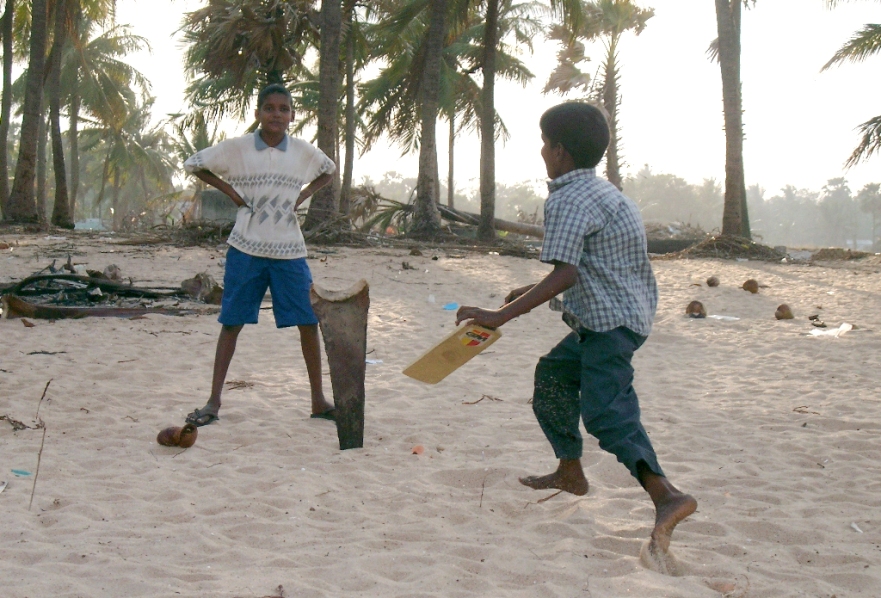
Boys playing cricket on tsunami hit beach in eastern Sri Lanka, January 2005 (photo by Video Image)

Two boys playing cricket on a beach, with a makeshift bat and wicket. What could be more ordinary than this in cricket-crazy Sri Lanka, where every street, backyard or bare land can host an impromptu game?

But the time and place of this photo made it anything but ordinary. This was somewhere along Sri Lanka’s east coast, one day in mid January 2005. Just a couple of weeks after the Indian Ocean tsunami had delivered a deadly blow to this part of the island on 26 December 2004.

My colleagues were looking for a survivor family whose story we could document for the next one year as part of the Children of Tsunami media project that we had just conceived. On their travels, they came across these two boys whose family was hit hard by the tsunami: they lost a sibling and their house was destroyed.

They were living in a temporary shelter, still recovering from the biggest shock of their short lives. But evidently not too numbed to play a small game of cricket. Perhaps it was part of their own way of coping and healing.

More than six years and many thousand images later, I still remember this photo for the quiet defiance and resilience it captured. Maybe that moment in time for two young boys on a devastated beach is symbolic of the 20 million plus men, women and children living in post-war Sri Lanka today.

We are playing cricket, or cheering cricket passionately and wildly even as we try to put a quarter century of war, destruction and inhumanity behind us. And at least on the cricket front, we’re doing darn well: the Sri Lanka national team beat New Zealand on March 29 to qualify for the ICC Cricket World Cup finals on April 3 in Mumbai.

We’ve been here once before – in March 1996 – and won the World Cup against many odds. Can we repeat or improve that performance? We’ll soon know.

Of course, rebuilding the war-ravaged areas and healing the deep-running wounds of war is going to be much harder than playing the ball game.

My friends at Groundviews is conducting an interesting informal poll: World Cup cricket aiding reconciliation in Sri Lanka: Fact or fiction?

A few days ago, Captain of Lankan cricket team Kumar Sangakkara described post-war northern Sri Lanka as a scene of devastation after paying his first visit to the region. People of the north have been deprived for 30 years of everything that is taken for granted in Colombo, he told the media.

He toured the north with team mate and wiz bowler Muttiah Muralitharan, who is patron of the Foundation of Goodness. The charity, itself a response to the 2004 tsunami, “aims to narrow the gap between urban and rural life in Sri Lanka by tackling poverty through productive activities”.

Earlier this month, Lankan novelist Shehan Karunatilaka wrote a highly moving essay in the London Observer titled ‘How cricket saved Sri Lanka’. The blurb read: “As co-host of the current World Cup, Sri Lankans are relishing their moment on the sport’s biggest stage. And no wonder. For them, cricket is much more than a game. After years of civil war, the tsunami and floods, it’s still the only thing holding their chaotic country together.”

In that essay, which is well worth a read, he noted: “Many of us believe in the myth of sport; some more than others. Clint Eastwood and Hollywood have turned the 1995 Rugby World Cup into a sport-conquers-apartheid fantasy in Invictus. CLR James believed cricket to be the catalyst for West Indian nationalism. A drunk in a Colombo cricket bar once told me that Rocky IV had hastened the fall of the Soviet Empire.”

He added: “Let’s abandon the myths for now. Sport cannot change a world. But it can excite it. It can galvanise a nation into believing in itself. It can also set a nation up for heartbreak.”

Cricket has indeed excited the 20 million Lankans from all walks of life, and across the various social, economic and cultural divides. It has rubbed off on even a cricket-skeptic like myself.

We will soon know whether the Cricket World Cup will be ours again. Whatever happens at the Wankhede Stadium in Mumbai on April 2, we have a long way to go on the road to recovery and reconciliation.

Colombo, 29 March 2011: When Sri Lanka beat New Zealand to qualify for Cricket World Cup 2011 Finals

Of Dictators and Terrible Cockroaches: A Russian children’s story…from 1925!

Tarankanische (The Terrible Cockroach) original book cover, 1925

Sometime ago, when I gave a talk at the Sri Lanka Rationnalists’ Association, a member of my audience asked if parents should be banned from reading fairy tales to their children. His argued that children should be raised on reality and not fantasy. I was talking about science fiction and their social relevance, and I answered: there is absolutely no harm in fairy tales as they nurture in our young minds those vital qualities of imagination and sense of wonder. I quoted C S Lewis as saying that the only people really against escapism were…jailers!

These days, not all children’s stories are fairy tales and some of them actually carry very down-to-earth messages either overtly or covertly. Members of that largest club in the world – Parenthood – keep discovering new depths and insights in some children’s stories.

On 30 January, as people power struggles were unfolding in Tunisia and Egypt, I wrote a blog post titled Wanted: More courageous little ‘Mack’s to unsettle Yertle Kings of our times!. I related how, while following the developments on the web, I have been re-reading my Dr Seuss. In particular, the delightfully inspiring tale of Yertle the Turtle King. To me, that is the perfect example of People Power in action — cleverly disguised as children’s verse!

Turns out another parent on the opposite side of the planet had a similar insight, but from an even older children’s story written in Russia! Philip Shishkin has shared his experience in the latest issue of Newsweek.

Tarankanische, or ‘The Terrible Cockroach’ (also translated as ‘The Giant Cockroach’) is a children’s story written by the Russian author Kornei Chukovsky (1882-1969). The first edition, with illustrations by Sergeii Chekhonin, was published in (then) Leningrad 1925.

I was raised on translated Russian children’s stories (the only books of that genre we could access in the closed-economy, socialist misadventures of Sri Lanka during the early 1970s). Whatever economic realities that thrust those books on my childhood, many of them were very fine stories, always well illustrated. But I had somehow missed out on this one — so I quickly did some web searching for this story. And what a fantastic fable it is!

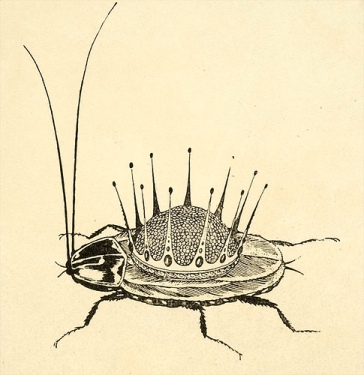
Tarankanische tells the nonsense tale of a threatening cockroach who is so fierce that he terrifies all the animals who are out to enjoy a picnic. Even the mighty elephants are helpless in his presence. The cockroach bullies and scares animals much larger than itself, and demands they surrender their cubs so he can eat them. He is seen as “a terrible giant: the red-haired, big-whiskered cockroach.”

Tarankanische, or The Terrible Cockroach, Sergeii Chekhonin, illustrator, 1925
The little tyrant rules the whole jungle on a mix of fear, submission and misery. A laughing kangaroo points out that it’s no giant, but merely a cockroach. The hippos tell him to shut up: “You’ll make things worse for us”. Then, one day, Nature finally restores balance (as it always does): a sparrow comes along and gobbles up the Terrible Cockroach.

In his essay titled Watching the Mighty Cockroach Fall, Philip Shishkin writes: “It is hard not to read the poem as an allegory for the rise and fall of a dictatorship. Despots tend to appear invincible while they rule, and then laughably weak when they fall. Once their subjects call them out on their farce, dictators look ridiculous. Often, they react by killing and jailing people, which buys them more time in power (Iran, Belarus, and Uzbekistan come to mind). But just as often, when faced with a truly popular challenge, dictators shrink to the size of their inner cockroaches.”

Shishkin then raises an interesting question: Did Kornei Chukovsky have Joseph Stalin in mind when he wrote it? Was Stalin prominent enough when the story was first published in 1925? To find out, read the full essay.

According to his mini-bio on IMDB, Chukovsky was a praised Russian translator of Charles Dickens, Mark Twain, Walt Whitman, and other English and American authors. His writings for children are regarded as classics of the form. His best-known poems for children are “Krokodil”, “Moydodyr”, “Tarakanische”, and “Doctor Aybolit” (Doctor Ouch).

Why isn’t school very cool? Have we asked our kids yet?

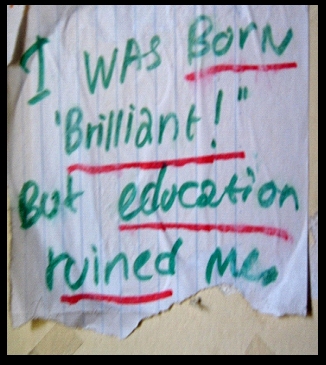
Look what education is doing to me!
A few days ago, while cleaning the spare room in our home, I came across a piece of paper stuck on to the wall. These words were scribbled on it: “I was born brilliant – but education ruined me!” (see photo).

My daughter Dhara, 14, admitted authorship without any hesitation. It’s not her original line, of course — but a clear reflection of how she feels about schooling and formal education. When we think about it, these few innocent words become a severe indictment of a mass-scale system in which families, societies and countries invest so much money, time and hope.

She’s certainly not alone in her misgivings about the value of institutionalised education. As George Bernard Shaw once declared, “The only time I interrupted my education was in school.”

Although I had a happy school life, I can well appreciate how and why many people feel like this about school. Don’t take my word for it – do a quick, random sampling of those around you. How many of them will admit to having happy memories of their school days?

Let’s face it: the whole concept of a school is flawed. Education may be a great leveller among human beings, but schooling in most parts of the world operates at the lowest common denominator level. How can you group together 30 or 40 children at random, expose them to the same curriculum, imparted at the same pace, and expect all to thrive? Some will keep up; others will lag behind; and a few will be completely bored out of their minds – like I was, for a good part of my primary and secondary schooling.

Yet there is not much that even the most dedicated teacher could do under such trying circumstances. Oddly enough, no one in any self-respecting healthcare system would want to prescribe the same medicine for patients with very different ailments. Yet the one-size-fits-all approach is never questioned when it comes to education. Why?

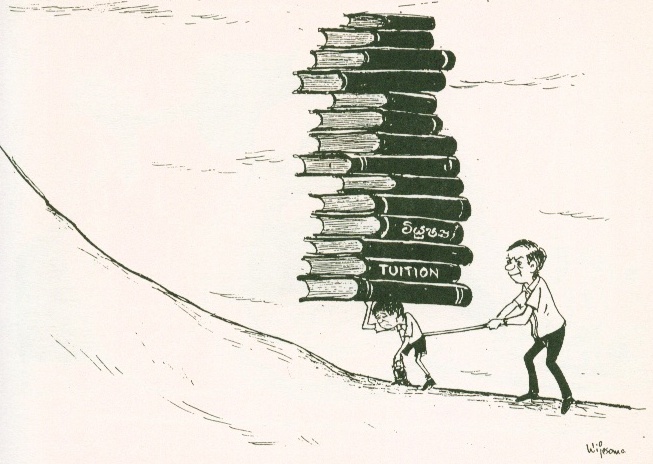
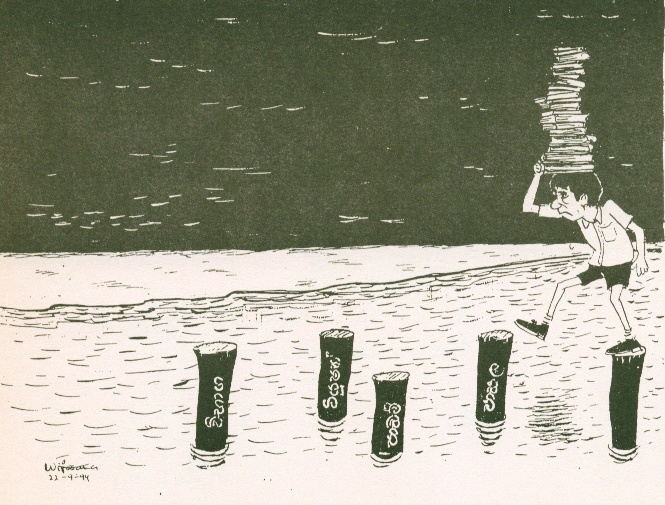
A hapless school kid being primed for the Great Rat Race - cartoon by W R Wijesoma, 1994

One reason why this abuse has thrived is because no one listens to the most important voice in this debate: the average schoolgirl and schoolboy. The learner’s perspective is largely missing in most educational policies and plans. There is so much emphasis on teaching, infrastructure, performance and resources. The handful of men and women who decide what should be taught in our schools hardly ever pause to think how their decisions affect the last link in the chain: the hapless, overburdened, over-driven student. Over 4 million of them — like the one in the cartoon above.

Must things remain like this forever? Is there any hope that our much-tinkered (and much-maligned) education system could one day be more student friendly, more learning oriented and more responsive to the different needs of different students? Will those in charge of the system begin to treat students and teachers as something more than movable statistics? And most importantly, can we restore the joy of learning, the sense of wonder and fun of schooling?

I don’t have easy answers to these – nobody does. But these are worth asking, even if they are uncomfortable and unpopular questions to pose. For too long, the formal education sector has carried on with its business-as-usual with the typical self-righteousness and arrogance of a matronly school principal.

It’s time for us to storm the citadels of learning and make them more caring, accommodating and sensitive to the needs of the most important people in the system: the learners.

Nothing less than our children’s individual and collective futures are at stake.

Note: The views in this blog post are adapted from a longer essay I wrote in 2002, titled Let’s Restore the Joy of Learning.

Related blog post, March 2010: SOS from the Next Generation: “We need Good Parents!”

A perilous journey covering school, lessons, tuition classes, exams...Cartoon by W R Wijesoma, 1994

SOS from the Next Generation: “We need Good Parents!”

Market forces suspended here?

“Good parents are sooo hard to find these days!” exclaimed my teen-aged daughter Dhara recently. She was talking with her tongue firmly in her cheek — I hope!

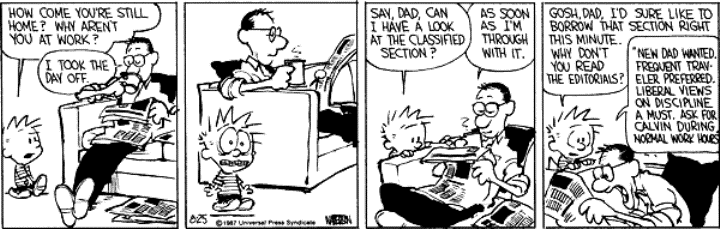
In recent days, she’s been re-reading our collection of Calvin and Hobbes books, where the world’s most cheeky six-year-old keeps making wisecracks about his own mom and dad (‘Your approval ratings among household six-year-olds are way down’, ‘When are you standing for re-election, dad?’, etc.).

But Dhara’s light comment rang true, generally speaking. As every parent discovers sooner or later, parenting is a 24/7 job that lasts for two decades or longer. There’s no help desk or emergency number we can call. It’s more an art than a science, for which there is no comprehensive, fail-proof guide — even though plenty of advice is available on TV and online (some of it better than others).

Generic advice is helpful but not sufficient. Every parent-child situation is unique, and every parent has to find what works for him or her…ideally, the two parents working in tandem.

Does parenting come naturally? If only it did! I don’t believe in this grandma-knew-best kinda romanticising. For sure, some in our grandparents’ generation got it right, but there were also many who never did.

For something so consequential for the future of our species, there’s no minimum age or entry level or qualification. (As Dhara occasionally asks me, “You didn’t have to take any exam for this job, did you, dad?”. Come to think of it, I didn’t — although, in my case, I did give it a lot of thought first. Honest!)

Dhara with her dad-for-life, Jan 2010
Geeks express it a bit differently. “A human being is the best computer available to place in a spacecraft. . . It is also the only one that can be mass produced with unskilled labour,” said the German-American rocket scientist Wernher von Braun, the brains behind the Apollo project that landed men on the Moon.

Although I can’t vouch for its authenticity, a similar quote from the mid 1960s is attributed to the US space agency NASA: “Man is the lowest-cost, 150-pound, nonlinear, all-purpose computer system which can be mass-produced by unskilled labour.”

I don’t like their cynical analysis of something far more nuanced than their usual hardware and software. But they got a point there. Biomedical sciences have advanced much since the Moon landings, and today some medi-geeks are trying to ‘play God’ in creating life in a lab. I’d like to see how they can get a machine to mimic the 20+ year parenting process…

Making babies may be accomplished by unskilled humans in the right age, but raising babies is most decidedly a high skill, high intensity and highly demanding job. Especially in this day and age, when many kids are more tech savvy than their parents: the Digital Natives can easily run virtual rings around their Digital Immigrant parents.

We have to watch out, though, to listen carefully to what our children are saying to us — and also about us!

By the way, as one of my favourite authors, Roald Dahl, reminded us, “To children, all grown ups are like giants — who tell them what to do all the blooming time!”. (The worst parents in my mind are also created by Roald Dahl’s imagination: Mr and Mrs Wormwood, in his 1988 novel Matilda, which was adapted into a movie in 1996. In the movie, Papa Wormwood tells the precocious little Matilda: “Listen, you little wiseacre: I’m smart, you’re dumb; I’m big, you’re little; I’m right, you’re wrong; and there’s nothing you can do about it!”).

The bottomline: am I a good parent? It’s not for me to judge — but I try hard being one. It isn’t an easy act for anyone, and especially for a single parent that I now am.

Someday, I hope, the one-woman jury won’t be too harsh on me…and may she never need to advertise for a replacement.

Back to school for 2010: Beware of friendly new-comers!

Schools across Asia are re-opening this week after the Seasonal holidays. In some countries, as in Sri Lanka, it also marks the beginning of a new school year (we summer-less folks follow the calendar year).

So I want to share this great cartoon, recently drawn by Nate Beeler, the award-winning editorial cartoonist for The Washington Examiner.

New kid on the block?

This is no laughing matter. According to WHO, as of 27 December 2009, worldwide more than 208 countries and overseas territories or communities have reported laboratory confirmed cases of pandemic influenza H1N1 2009, including at least 12220 deaths.

The WHO director-general, Margaret Chan, said on 4 January 2010 that the swine flu — influenza A(H1N1) — pandemic may not be conquered until 2011.

So watch out – but just how do we get kids to stop being…kids?

I still haven’t figured that out. Have you?

Blog post in May 2009: Good communications to combat swine flu?

Asian Tsunami+5: Revisiting survivor Heshani Hewavitharana of Sri Lanka…

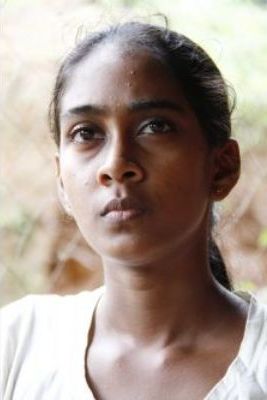
Heshani in Feb 2005: Creative and reflective - Photo courtesy TVEAP

Heshani Madushika Hewavitharana, 13, was an eager student in school who also excelled in creative writing, in which she’d won certificates and awards. All of these, along with her school books and everything else her family owned, was lost in the Asian Tsunami of 26 December 2004. Their beach front house, in Suduwella in Sri Lanka’s southern district of Matara, was badly damaged. They escaped with their lives — and were among the luckier ones.

When we found Heshani and family a few weeks after the tragedy, they were taking refuge in a friend’s house. Her fisherman father could not immediately return to his work without his boat and gear, also washed away by the waves. The family was living on the mother’s meagre income from spinning coir ropes.

Despite their plight, Heshani and family agreed to participate in the Children of Tsunami media project, where local film crews in India, Indonesia, Sri Lanka and Thailand tracked how eight survivor families were rebuilding their lives and livelihoods after the Asian tsunami disaster.

We at TVE Asia Pacific documented on TV, video and web the personal recovery stories of eight affected families in these worst affected countries for one year after the disaster. Our many media products — distributed on broadcast, narrowcast and online platforms -– inspired wide ranging public discussion on disaster relief, recovery and rehabilitation. In that process, we were also able to demonstrate that a more engaged, respectful kind of journalism was possible when covering post-disaster situations.

Watch Heshani’s first monthly video update, February 2005:

Not all our participating families recovered from the tsunami’s mighty blow within one year, but we ran out of money and had to stop capturing their stories by the end of 2005, which I called Asia’s longest year. In a goodbye tribute to the courage and resilience of these families, I wrote in December 2005: “Our journey with the eight families ends with the first anniversary. We know their own journeys to recovery are far from finished. We can only wish them well.

Heshani in Nov 2009 - Courtesy Xinhua
Since then, I have often wondered how the eight children were faring. (In March 2007, it suddenly became seven when the Theeban, the boy in Sri Lanka’s east whose story we tracked, was brutally murdered.) However, I have resisted the temptation to revisit the children as I felt we had been intrusive enough already during that first difficult year after the tsunami. They must now be allowed to continue their lives in private.

Yet, I was intrigued by a recent report where two correspondents working for the Chinese news agency Xinhua, Chen Zhanjie and Liu Yongqiu, tracked down Heshani and family. They wrote a story on Xinhua’s website for the Universal Children’s Day in November which focused attention on the protection and welfare of children. Heshani is now 17, and her younger sister Dimalka, 12. Already having passed the GCE Ordinary Level exam, Heshani is now preparing for her Advanced Level exam slated for August 2010.

While Dimalka aspires to be a doctor, Heshani wants to become a banker. Their father believes the tragedy has added a new dimension to the girls’ lives: “They have leant their responsibilities from the tsunami. Now the two girls have no fears.”

Read the full story on Xinhua website: From tsunami to trauma to trek ahead

Children of Tsunami: No More Tears…

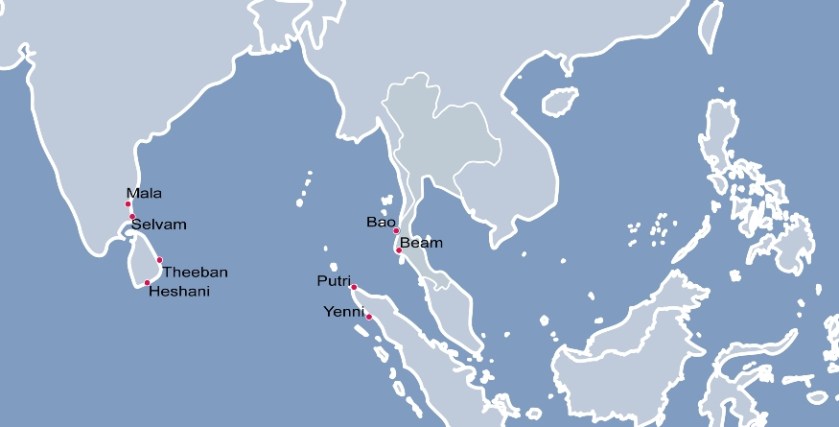
where Children of Tsunami stories were filmed for much of 2005
Four countries, eight locations: where Children of Tsunami stories were filmed for much of 2005

They have never met each other. Some have never travelled beyond their native village. On December 26 2004, the sea rose and rose and took everything they cherished.

Documented over the year, locally-based filmmakers returned to Asia’s battered coasts in India, Indonesia, Sri Lanka and Thailand to track the healing and the hurt through the eyes of children.

Asia’s recovery process from the tsunami is being captured through the stories of three girls and two boys aged 8 to 16 years.

Of different races, worshipping different Gods, they live on different shores in different countries. They are the tsunami generation, sharing the vulnerability of a child and the legacy of the tragic tides.

Young survivors of the Asian tsunami let us into their lives to personalise the mass of statistics, aid pledges and recovery plans. “Children of Tsunami” is a tapestry of intimate stories, woven by voices of individual and collective resilience, heroism and recovery.

Children of Tsunami: No More Tears – Part 1 of 3

Part 2 of 3

Part 3 of 3

Duration: 24 mins
Year of production: 2005
Countries filmed in: India, Indonesia, Sri Lanka, Thailand
In each country, a locally based production crew carried out filming for TVE Asia Pacific.

Regional Production Team
Supervising Producer: Bruce Moir
Production Assistant: Yohan Abeynaike
Production Manager: Manori Wijesekera
Executive Producers: Joanne Teoh Kheng Yau and Nalaka Gunawardene

Co-Produced by: Channel News Asia, Singapore
In partnership with TVE Asia Pacific

Broadcast Asia-wide on the first anniversary of the Asian Tsunami, 26 Dec 2005

For more information, visit: www.childrenoftsunami.info

See also: Channel News Asia – Making of a pan-Asian news channel