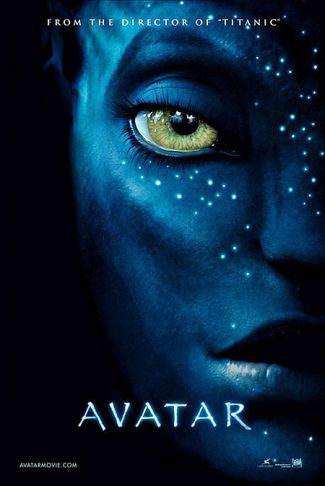
Avatar: Blockbuster film as socio-political and green allegory?


“Pictures are for entertainment, messages should be delivered by Western Union.”

Those words by American film producer and studio founder Sam Goldwyn (1879-1974) sum up Hollywood’s attitude to movie-making for the past many decades.

As I watched James Cameron’s latest blockbuster movie Avatar, I kept wondering how the master film maker managed to subvert this so completely. Beneath the 3D, special effects and riot of other worldly colours, the movie is one long (2 hrs 40 mins) and powerful commentary on why might is not right when it comes to exploiting resources — belonging to other countries, people, or as in this case, other worlds.

This is not just another worthy indie movie made by an idealistic movie maker defiant of Hollywood traditions and big money. James Cameron is one of the most commercially successful directors in the mainstream film industry – and perhaps one of the very few who can get away with this kind of stunt. At a budget of over US$ 300 million , Avatar is one of the most expensive films ever made, and the costliest ever for 20th Century Fox.

The big gamble is certainly paying off. On 26 January 2010 came the news that Avatar has surpassed Titanic as the highest-grossing movie worldwide. According to the studio, worldwide box office total for Avatar at that point stood at US$1.859 billion, beating the US$1.843 billion racked up by Cameron’s romantic drama in 1997-98. Avatar broke that record in a little over six weeks.

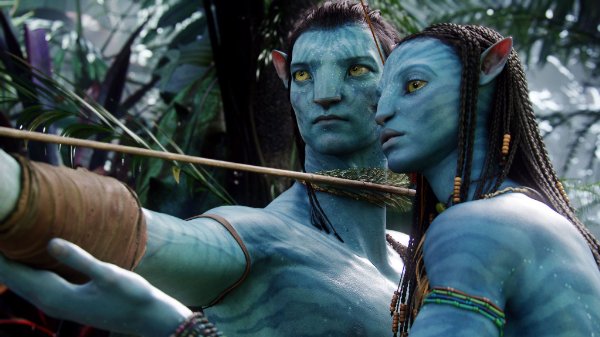
Part of the reason for such appeal is the extraordinary special effects: it’s an action-packed thriller where good and evil battle it out on another planet. The strange landscapes give it a video game like feel, but no small screen can match the theatrical experience, especially if you watch it in IMAX 3D (I didn’t). And for a change, this time the aliens inhabiting planet Pandora are benign, while it’s the humans who are ruthless invaders and brutal killers. Well, at least most of the time…

Here’s the official blurb: “Avatar takes us to a spectacular world beyond imagination, where a reluctant hero embarks on an epic adventure, ultimately fighting to save the alien world he has learned to call home. James Cameron, the Oscar-winning director of Titanic, first conceived the film 15 years ago, when the means to realize his vision did not exist yet. Now, after four years of production, AVATAR, a live action film with a new generation of special effects, delivers a fully immersive cinematic experience of a new kind, where the revolutionary technology invented to make the film disappears into the emotion of the characters and the sweep of the story.”

And here’s AVATAR – Official International Launch Trailer (HD)

Film critics and social commentators around the world have noticed the many layers of allegory in the film. Interestingly, depending on where you come from, the movie’s underlying ‘message’ can be different: anti-war, pro-environment, anti-Big Oil, anti-mining, pro-indigenous people, and finally, anti-colonial or anti-American. Or All of the Above…

It looks as if Cameron has made the ultimate DIY allegory movie: he gives us the template into which any one of us can add our favourite injustice or underdog tale — and stir well. Then sit back and enjoy while good triumphs over evil, and the military-industrial complex is beaten by ten-foot-tall, blue-skinned natives brandishing little more than bows and arrows (and with a little help from Ma Nature). If only it works that way in real life…

But the multi-purpose allegory is apparently working well. Take these two from opposite sides of the planet:

Thomas Eddlem wrote in The New American: “Avatar, is a visually stunning epic that is a perfect allegory for any of a dozen or more Indian wars in American history. From King Philip’s War in New England to Tippecanoe in Indiana to Horseshoe Bend in Alabama — and all the way across the American continent, for that matter — the story was the same. Colonists simply take land from the natives, as the Sully explains: ‘This is how it’s done. When people are sitting on something that you want, you make them your enemy so that you can drive them out.’

Mayank Shekhar wrote in The Hindustan Times newspaper: “Between a green worldview and the globe’s war over a natural resource, James Cameron’s twin analogies of present-day politics are fairly complete. They lend his science fiction ‘event picture’ a certain soul, even if not much of a story line.”

So did Cameron set out trying to send a message? Or was it all an incidental byproduct? Listen to the director himself in these two online video stories:

James Cameron’s Vision Featurette

CBS Interview with James Cameron: From Titanic to Avatar

The most compelling social commentary on Avatar I have so far read comes from Naomi Wolf, the American political activist, author and social critic. In an op ed essay written for Project Syndicate, she sees two revealing themes in Avatar: “the raw, guilty template of the American unconscious in the context of the ‘war on terror’ and late-stage corporate imperialism, and a critical portrayal of America – for the first time ever in a Hollywood blockbuster – from the point of view of the rest of the world.”

She adds: “In the Hollywood tradition, of course, the American hero fighting an indigenous enemy is innocent and moral, a reluctant warrior bringing democracy, or at least justice, to feral savages. In Avatar , the core themes highlight everything that has gone wrong with Americans’ view of themselves in relation to their country’s foreign policy.”
Does the box office triumph of Avatar make James Cameron one of the most effective campaigners for social justice on the planet (comparable, in some ways, to Michael Jackson having been one of the biggest environmental communicators of his time)?

And is Avatar the most expensive piece of info-tainment or edu-tainment ever made, just like the Lord of the Rings trilogy was one long (even if unintended) commercial for the breathtaking sights and sounds of New Zealand?

Certainly, mixing messages with entertainment is such a difficult and delicate art that most people who dabble in it fall between the two stools. The entertainment value of Cameron’s latest flick is not in question. Granted, it’s not as heart-breaking as Titanic, and the storyline is oh-so-predictable. But 3D and SFX magic alone can’t hold today’s audiences gripped for 160 long minutes. And if the underlying story starts movie-goers thinking and talking about many parallels between the fictional world of Pandora and our own Earth, he’s certainly getting somewhere.

As Naomi Wolf says: “Ironically, Avatar will probably do more to exhume Americans’ suppressed knowledge about the shallowness of their national mythology in the face of their oppressive presence in the rest of the world than any amount of editorializing, college courses, or even protest from outside America’s borders. But I am not complaining about this. Hollywood is that powerful. But, in the case of Avatar , the power of American filmmaking has for once been directed toward American self-knowledge rather than American escapism.”

Perhaps this wasn’t part of the script, but would the executives at 20th Century Fox care as they laugh all the way to their bank?


Open Moment, Closed Minds: New essay to mark 250 days of ‘Peace’ in Sri Lanka

Today marks exactly 250 days since Sri Lanka’s civil war officially ended on 18 May 2009.

In a new op ed essay — titled ‘Open Moment’, Closed Minds! — just published on Groundviews.org, I look back and ask some hard questions.

Here’s an excerpt:

“We all knew the hard-won peace had to be nurtured and consolidated. We also realised just how formidable the challenges of healing and rebuilding were. But could anyone have imagined the dramatic turn of political events since?

“Who would have thought that the victors of the war would soon be engaged in a nasty battle for personal glory and power? Who expected the historical feud between ‘lions’ and ‘tigers’ to be replaced so swiftly by a showdown between self-proclaimed ‘patriots’ and ‘traitors’?”

I raise these questions in the context of a fiercely contested presidential election scheduled for 26 January 2010. I note: “The two main contenders both claim to hold a mutually exclusive key to a better future for our land and people. Their dizzy campaigns bombard us with lofty claims and counter-claims 24/7 delivered through broadcast, broadband, mobile and other media.”

I ask whether either of the leading candidates has the open mind needed to seize the historic ‘open moment’ since the war ended. I recall how we completely missed the last such open moment created by the tsunami of December 2004.

I write: “Having missed the tsunami’s open moment, we cannot afford to bungle again. Rebuilding a nation of lasting peace, pluralism and prosperity will require many sections of society to change their mindset. This is especially and urgently needed in our media, much of which has become uncritical cheerleaders for patriotism and tribalism in recent years.”

Despite the many disappointments of the past 250 days, I still remain cautiously optimistic. But for how long?

The origins of this essay can be traced back to a blog post I wrote on 19 May 2009: Us and Them: Sri Lanka’s first landmine on the road to peace…

Read the full essay, and join the conversation at Groundviews.org

Plastics-free 2010? No laughing matter, says comedian Tim Minchin

For the first time this Season, I didn’t receive a single paper-based greetings card at home – a sign of our increasingly digital times.

Among the many e-cards and email-based greetings I received was an environmentally conscious friend who sent me the link to an upbeat, meaningful song by Tim Minchin, the British-born Australian comedian, actor and musician. This is a simple song about an everyday matter that has far-reaching implications: how to reduce plastics dumped in our environment.

In this case, simply by carrying a cloth/canvas bag to the supermarket, we can cut down on the needless use of plastic shopping bags.

Last FM wrote about Canvas Bags: “An ‘emotional’ tune that has fun lyrics. Tim Minchin is Australian, but you can’t really tell. Trying to show that he can send out a serious message, Minchin explains how plastic is the bane of the universe and that we can only save our planet by eliminating it and “taking our canvas bags to the supermarket”. Of course, this message is punctuated by the usual splashes of humour that Minchin has made his trademark.”

Canvas Bags by Tim Minchin

Directed by Stephen Leslie, this is the unedited version of Tim Minchin’s Environmental Anthem film clip recorded for BBC3’s Comedy Shuffle.

Here are the first few lines:

Take your canvas bags
When you go
To the supermarket
Why use plastic bags when you know
You know the world can’t take it

Take your canvas bags
When you go
To the supermarket market market
Don’t you use those plastic ones
No, no, no
Don’t you know that you’ll feel better for it…


Read the full lyrics

All You Need is Love: When the world sang one song for HIV…

We must love one another or die...

Our planet is one, but our world speaks and sings in a myriad tongues — and that’s part of our cherished cultural diversity. Once in a while, however, it’s good to see that cacophony morph into a symphony when the world shares a few moments — in awe, horror, love or happiness.

It happened last week when the world sang for an extremely good cause. On 7 December 2009 at 1:30pm GMT, Starbucks invited musicians from all over the world to sing together at the same time to raise awareness for HIV/AIDS in Africa. In one breathtaking moment, musicians from 156 countries played “All You Need is Love” together. The live participation of most nations together to sing this song became a Guinness world record.

Watch now, as musicians from all around the world come together and share a song.

My former colleague Buddhini Ekanayake joined this global production by coordinating the input from Sri Lanka. “Personally, I am really glad to take part in this event together with my team, on behalf of Watermelon Creatives,” she says on her blog, where she shares some info and images.

You can still join in by lending your own voice to the Starbucks Love Project.. Watch streaming video from countries around the world and then join in by singing All You Need is Love yourself. For each video submitted, Starbucks will make a contribution to the Global Fund to help fight against AIDS in Africa. You can also help increase the Starbucks contribution to the Global Fund by submitting a drawing to the Love Gallery.

The global sing-along is part of our continuing efforts to help fight AIDS in Africa. In just one year in partnership with (RED), Starbucks has generated money equivalent to more than 7 million days of medicine to help those living with HIV in Africa.

“All You Need Is Love” is a song written by John Lennon and credited to Lennon/McCartney. It has been associated with path-breaking initiatives before. It was first performed by The Beatles on Our World, the first live global television link. Watched by 400 million in 26 countries, the programme was broadcast via satellite on 25 June 1967.

Wanted, urgent: Next-Gen Jacque Cousteaus to be our tour guides to Planet Ocean!

Tony Fontes

As my Australian diver friend Valerie used to say, the trouble with many of us land-lubbers is that we have ‘no idea what’s going on in the sea that covers three quarters of our planet’.

Yet what we do – and don’t do – affects the fate of the sea and all its creatures and systems. That’s a big problem.

Take, for example, roral reefs. Among the most biologically diverse ecosystems on our planet, they are sometimes called rainforests of the sea. And these rich and colourful habitats are now under siege from multiple pressures, ranging from indiscriminate fishing and tourism practices to global warming.

Yet, the coral reefs haven’t attracted the same kind of public concern and outcry as has the destruction of tropical rainforests. How come?

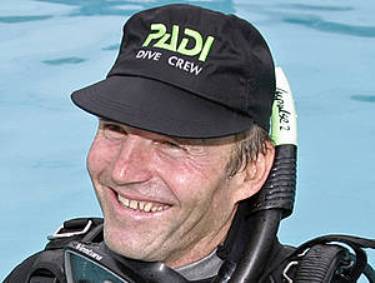
Is this a case of out of sight and out of mind for a majority of the world’s land-lubbers? This is what I asked Australian diver Tony Fontes, who has been a diver and dive instructor for 30 years, much of it at the largest reef of all – the Great Barrier Reef off the north-eastern coast of Australia.

“It sure is – and ideally, everyone should become a diver, so we can all see and feel the wonders of the reef,” he replied.

He added: “At a minimum, we have to do lots of awareness raising. This is why we need to bring back Jacques-Yves Cousteau!”

Tony was engaging journalists at the 7th Greenaccord International Media Forum on the Protection of Nature, held in Viterbo, Italy, from 25 – 29 November 2009.

This year’s theme is ‘Climate is changing: stories, facts and people’, and Tony was one of 10 Climate Witnesses who travelled to the central Italian city from far corners of the world to share their stories of ground level changes induced by climate change. Climate Witness is a global programme by WWF International to enable grassroots people to share their story of how climate change affects their lives and what they are doing to maintain a clean and healthy environment. All Climate Witness stories have been authenticated by independent scientists.

Great Barrier Reef: A planetary treasure under siege

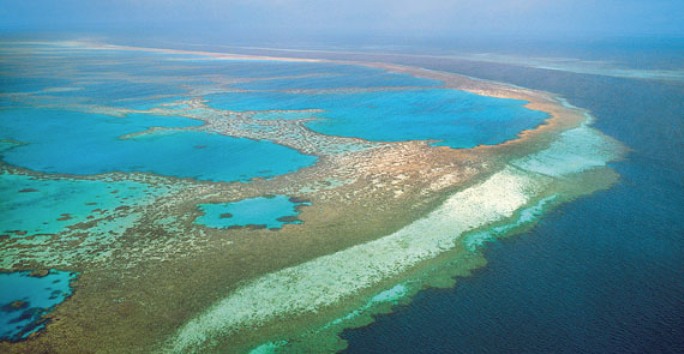
Tony lives and works in Airlie Beach (Whitsundays) in Queensland, Australia. It’s a small seaside community right in the heart of the Great Barrier Reef. Most of his time is spent underwater on training dives – he has clocked over 10,000 hours of professional diving. He generally dives many of the same sites over and over again.

This long and deep immersion in the marine realm gives him uncommon insights into the state of the reef – and it’s not a healthy or pretty picture.

He says: “Through personal observations as well as those by other divers, I have noted changes to the (marine) environment hat are most likely climate induced.”

Increase in coral bleaching is the most noticeable change. From a rare occurrence in the 1980s, it went on to become a regular summer event by the mid 1990s. The past decade has witnessed the largest coral bleaching events on record. And unlike in the past, these have led to large scale coral death and decay.

“Many popular dive sites have lost their lustre due to coral bleaching,” he says, pointing out that the reefs need up to 10 years to fully recover.

He adds: “However, with more bleaching events occurring every year, I wonder if the reefs will ever recover. Without the postcard reef scenes, many visitors are disappointed in their reef experience and are not likely to return.”

It’s not just warmer seas that affects the Great Barrier Reef. Occasional outbreaks of crown-of-thorns starfish, marine pests who eat up the healthy reef, add pressure on the reef. In recent years, scientists have identified another threat – sediments, fertilisers and pesticides from agricultural run-off. This was investigated in Sally Ingleton’s 2003 film, Muddy Waters: Life and Death on the Great Barrier Reef.

Listening to Tony reminded me of Muddy Waters, which journeys to the sugarcane plantations of northern Queensland and into an underwater world to find out what’s killing the reef and what can be done to save it. I was on the international jury of Japan Wildlife Film Festival 2003 when we voted it for the Best Environment and Conservation Award.

“It’s hard to get farmers to change their ways,” says Tony, who works with three local initiatives aimed at reef conservation and related educational outreach. This includes Project AWARE, a non-profit environmental organisation that encourages divers to take action and protect the environment.

The clown fish who moved the world
Global warming now threatens to nullify all these efforts. “If the coral reefs of the world are to survive, we cannot afford the predicted 2 – 3 degree increase in ocean temperature. But we also need to…reduce all impacts on the Great Barrier Reef. This would include improving the water quality of the reef.”

Tony comes across as a man of few, carefully chosen words. His answers are brief and precise. But his passion for the reef and the ocean is clearly evident.

He had a simple, emphatic message to the world’s leaders and activists meeting soon in Copenhagen for the UN Climate Summit: “How are we going to explain to our children and their children that we lost the Great Barrier Reef?”

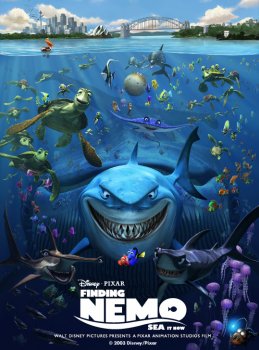
Perhaps we need not only the next generation of Jacques Cousteaus, but also every kind of communicator who can take the marine conservation messages through factual and entertainment media formats. It’s encouraging to note that Finding Nemo, the 2003 Disney-Pixar animation movie set in the Great Barrier Reef, is the highest selling DVD of all time – more than 40 million copies, and counting.

WWF Australia backgrounder on the Great Barrier Reef

‘Thank you for warming the planet (good for business)’ — Africa’s malaria mosquitoes

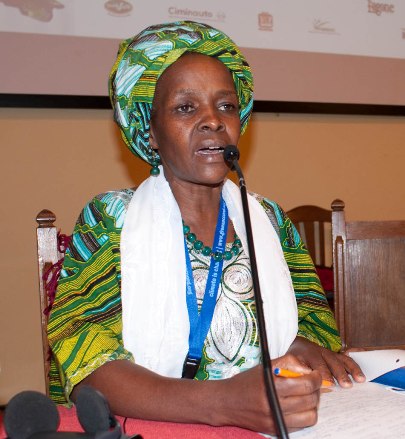
Nelly Damaris Chepkoskei: Voice of Hope
Malaria still claims over a million lives every year, most of them in Africa. This is not simply a public health statistic for Nelly Damaris Chepkoskei – she lost a daughter to the ancient scourge that continues to outsmart human attempts to control it.

“It was very sad when my daughter died of malaria at the age of four,” she recalls. What makes it especially tragic is the fact that malaria is a new arrival in her area.

Nelly, 51, is a farmer living in Kenya’s Kericho District. Located high in the mountains, Kericho’s cold weather has kept mosquitoes at bay for centuries. But not any longer: global warming has raised the area’s average temperature, and mosquitoes have appeared in recent years, bringing malaria with them.

“I had never seen a mosquito until I was 20 years old. But now they are everywhere – people are even dying of malaria, something that was virtually unheard of 20 or 30 years ago,” Nelly told the 7th Greenaccord International Media Forum on the Protection of Nature, being held in Viterbo, Italy, 25 – 29 November 2009.

The theme this year is ‘Climate is changing: stories, facts and people’. Nelly Chepkoskei is one of 10 Climate Witnesses who travelled to the historic city from far corners of the world to share their stories of ground level changes induced by climate change.

Climate Witness is a global programme by WWF International to enable grassroots people to share their story of how climate change affects their lives and what they are doing to maintain a clean and healthy environment. All Climate Witness stories have been authenticated by independent scientists.

Married with five children, Nelly grows maize and tea, and keeps a few cows – the pride and joy of Kenyan farmers. Lacking faith in politicians and government, she is working with women in her community to pursue their own development.

Life was never easy, but climate change is making it even harder.

“Rainfall patterns have changed drastically in recent decades,” she says. “In the Kericho district, we used to have rain throughout the year. I remember clearly that my family celebrated Christmas when it was raining heavily. But today, Christmas is usually dry.”

Unlike 20 years ago, the dry season is now hotter, drying up all the grass. In the past, the grass would remain green throughout the year.

“This means there isn’t enough fodder for my cows, leading to a drop in milk production and my income,” she explains. “The soils are also left bare during the dry season, which means more erosion when rains come in.”

With higher temperatures, more pests have turned up to damage crops. This prompts farmers to use more pesticides, increasing production costs and polluting the environment with hazardous chemicals.

Nelly turned out to be the most outspoken Climate Witness in Viterbo. In a frank exchange with an audience of 130 journalists, activists and scientists drawn from 55 countries, she exclaimed: “Don’t talk to politicians – they are the same everywhere! I can’t understand why journalists always follow politicians and are so keen to talk to them!”

She continued: “There is so many good things happening in Africa, but we don’t see it reported in the local and international media. You only hear about fighting, famine and corruption. So we continue to be seen and known as the Dark Continent.”

In her view, what Africa needs more than anything else is education. She firmly believes that higher levels of literacy and education would reduce the incidence of conflict and plunder.

Nelly herself is a high school drop out, and places a very high value on education to empower all Africans, especially women.

“There is a big gap between Kenyan intellectuals and the ordinary people. Knowledge is not where and how it is needed,” she says.

I asked her what she thought of foreign aid to Kenya and rest of Africa. This elicited a passionate and emphatic response: “If you want to spoil and corrupt Africa more, then keep giving aid to our governments. Aid money mostly ends up in the wrong hands, or buying guns to fight each other.”

She added: “We do need help, but don’t give aid to our governments. Instead, support NGOs who are better in delivering to the grassroots.”

Nelly and her network of women are digitally empowered. They refer the web to find out information on what aid and opportunities are available and then pursue them with all available means. Armed with the latest data, they lobby local and provincial governments to ensure that aid pledged from international donors reach the intended communities.

Nelly may not be Wangari Maathai, the Kenyan environmentalist and women’s right activist, but she admits to being a Wangaari in spirit. And having listened to the first African woman to win the Nobel Peace Prize at a previous Greenaccord forum, I readily agree: women like Nelly are a beacon of hope not just for Africa, but to the entire Majority World.

If only the mosquitoes could spread their passion and concern for the land and people…

Read WWF report on climate change impacts in East Africa

Images courtesy Greenaccord and WWF

Taste the Waste: Uncovering a crime against humanity and Nature

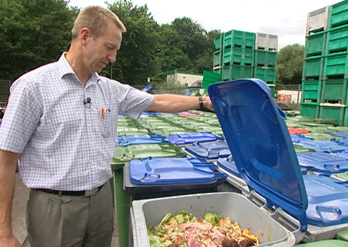
Opening the lid...

“How can we explain the fact that one sixth of humanity goes to bed hungry every night, when the world already produces enough food for all?

“The short answer is that there are serious anomalies in the distribution of food. Capricious and uncaring market forces prevent millions of people from having at least one decent meal a day, while others have an abundance of it. For the first time in history, the number of severely malnourished persons now equals the number suffering from over-consumption: about a billion each!”

That was the opening of an article on the future of food, co-authored by Sir Arthur Clarke and myself in 2000. It was circulated by the UN Food and Agriculture Organisation (FAO) to mark World Food Day that year, and was reproduced in 2008 in The Hindu newspaper, India.

Nearly a decade after we wrote those words, the situation hasn’t really improved. There still are a billion people for whom chronic hunger is a grim fact of life. About 25,000 people die of hunger every day. Meanwhile, at the other end of the spectrum, the number of obese people has grown to 1.5 billion.

Talk about a world of contrast and disparity!

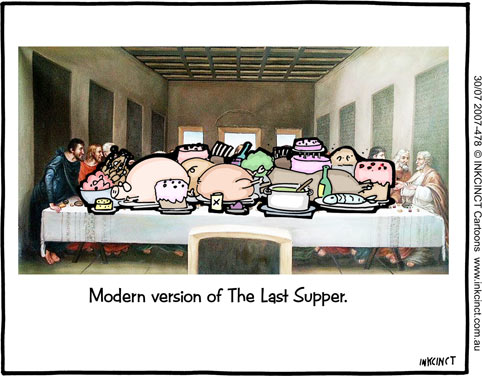
Here’s more shocking news: we routinely throw away half of all food produced in this world. Between plough and plate, or from farms to homes, we waste almost as much food as we eat.

Eyes Wide Shut?
Many countries don’t have the slightest idea how much is wasted. Britain made an effort to measure the waste pile and came to a staggering 15 million tons of food a year. This includes 484 million unopened tubs of yoghurt, 1.6 billion untouched apples, bananas worth £370 million and 2.6 billion slices of bread.

In his recent book Waste: Uncovering the Global Food Scandal, Tristram Stuart documented the extent of waste in the food industry worldwide.

Taste the Waste is a new documentary film linked to an online campaign that shows us what is being thrown away: where, why, when and by whom.

The film maker turned campaigner, Valentin Thurn, has come up with one more reason why we should stem this callous waste: “Cutting food waste is an easy solution to reduce climate emissions and hunger,” he says.

Reducing food waste means a big opportunity to reduce greenhouse gas emissions – if we threw away only half of the avoidable waste, the consequences for the climate would be the same as taking one out of five cars off our roads.

It would also help the hungry, because they also depend on the global food cycle. Cash crops from all over the world are traded on the stock exchange. The agricultural resources on this planet are limited. The farmland taken up to produce the food that we throw away could instead be producing food for them.

Young activists protest against this situation by rescuing the wasted food. People eating rubbish – a habit that sounds disgusting until you see the loads of perfectly edible food in the bins of your supermarket or sandwich shop around the corner.

Thurn’s call to action: “We need your help! Go out, look around and tell us about the food in the bins where you live. Send texts, photos, videos, and help to reveal the huge scandal of how we are wasting food.”

Watch the film’s trailer on YouTube:


According to the latest FAO figures, there are more hungry people in the Asia Pacific (642 million) than all other regions combined. This is followed by Sub-Saharan Africa (265 million), Latin America and the Caribbean (53 million), and the Near East and North Africa (42 million). Sub-Saharan Africa has the highest percentages of people living in hunger, while the Middle East and North Africa saw the most rapid growth in the number of hungry people (13.5%) during 2008.

The UN’s definition of hunger is based on the number of calories consumed. Depending on the relative age and gender ratios of a given country, the cutoff varies between 1,600 and 2,000 calories a day.

Starting in 2008, activist groups worldwide observe 16 October as World Foodless Day. Their argument: World Food Day is a mockery and is much better named World Foodless Day.

It’s a day of global action on the crises that beleaguer the people. The objectives are to: “create public awareness and media attention on the root causes of the food crisis; provide policy recommendations and organize meetings with government officials, opinion makers and leaders; organise activities to raise our voices against neoliberal policies and their impact; and highlight people’s recommendations to respond to the world food crisis.”

Watch PAN-Asia Pacific’s video for World Foodless Day 2008:


Read an excellent review of Tristram Stuart’s book: Watching our wasteline, By Darryl D’Monte

The Toilet is still a luxury for 2.5 billion people worldwide…

No laughing matter, this...

It had to happen sooner or later: a world day dedicated to, ahem, toilets. When all sorts of public interest causes are claiming the 365 days of our year, it was only a matter of time.

19 November is World Toilet Day – a day to celebrate the humble, yet vitally important, toilet and to raise awareness of the global sanitation crisis. It was established in 2001 by the World Toilet Organization (the other WTO!), a global non- profit organization committed to improving toilet and sanitation conditions worldwide.

The World Toilet Day promotes the importance of toilet sanitation and each person’s right to a safe and hygienic sanitary environment.

Did you know, for instance:
* 2.5 billion people do not have somewhere safe, private or hygienic to go to the toilet?
* One gram of faeces can contain 10 million viruses, one million bacteria, 1,000 parasite cysts and 100 parasite eggs?

Here’s a cool viral video that WaterAid have produced to mark the event:

A third of the world’s population lacks any toilets. The rest of us who do have a toilet don’t always make the most efficient use of it – when we typically use 10 litres of water to flush away one litre of urine, that’s not very thrifty, is it?

On this day, I came across an interesting essay by Debra Shore, Commissioner, Metropolitan Water Reclamation District of Greater Chicago, in The Huffington Post. She writes: “Using freshwater in toilets is not smart and it is not sustainable. I believe the homes of the future will be designed to use “grey” water — the water from our washing machines and dishwashers, the water from our showers and from rain captured in barrels and cisterns — to flush our toilets. This kind of redesign of water use, both residential and industrial, will be one of the growth industries of coming decades.”

She adds: “So, on World Toilet Day, here is my plea: monitor your water use. Think about ways to conserve water. And consider how lucky we are.”

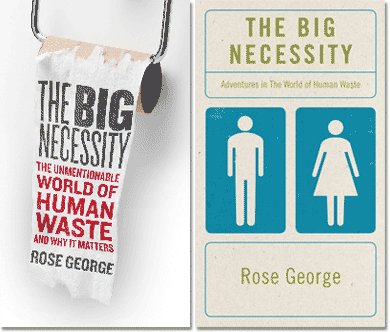
Rose George, author of The Big Necessity: The Unmentionable World of Human Waste and Why It Matters says toilets are a privilege that nearly half the world still lacks. At least 2.6 billion people around the planet have no access to a toilet — and that doesn’t just mean that they don’t have a nice, heated indoor bathroom. It means they have nothing — not a public toilet, not an outhouse, not even a bucket. They defecate in public, contaminating food and drinking water, and the disease toll due to unsanitized human waste is staggering. George notes that 80% of the world’s illnesses are caused by fecal matter.

Read more: Toilet Tales: Inside the World of Waste, by Bryan Walsh in TIME, Nov 2008

Calculate your water footprint

Blog post in July 2007: A Silent Emergency: More television sets than toilets!

Blog post in July 2007: Faecal Attraction: There’s no such thing as a convenient flush…

Tata Young: Singing up a storm for the Ozone Layer

Tata Young - photo by Nirmal Ghosh
“Tata Young sings up a storm for Ozone Layer.”

That was a headline in the Bangkok Post newspaper on 8 October 2009, while I was in Thailand for the Ozone Media Roundtable. My friends at the UN Environment Programme (UNEP) were ecstatic.

Tata Young, 28, is a Thai-American singer, model and actress who is one of the best known performers in Thailand, with a growing following across Southeast Asia. Last week, she was among the performers at the “What on Earth!” concert in Bangkok, part of the EU Green Days event to coincide with the latest round of negotiations of the UN Framework Convention on Climate Change, UN-FCCC.

Tata is the latest Asian entertainment celebrity to join the climate bandwagon. Inside the UN Convention Centre in Bangkok, the climate negotiations were making slow progress. Environmental activists and campaigners were trying every trick in their books to speed things up — but governments bickered over selfish interests even as the planet heated up.

Tata’s newest album, Ready for Love, has its cover printed on recycled paper and sports a sticker that says “Protect the Ozone Layer”. Her interest in campaigning for ozone was sparked when she donated her time filming an ozone related public service announcement for UNEP last year.

The PSA is one of four that UNEP’s ozone team in Asia produced in 2008 as part of their public awareness campaign. They all draw attention to an important date that is drawing close: by or before 1 January 2010, all consumption and production of chlorofluorocarbons, or CFCs, one of the main destroyers of the ozone layer would be phased out in all countries of the world. That is a significant achievement under the Montreal Protocol that nations of the world adopted in 1987 to save the endangered ozone layer.

The PSAs started screening in movie theatres in the Philippines earlier this year, to be followed by Thailand and other countries in the region.

Watch Tata Young’s ozone PSA for UNEP:

In June this year, talking to journalist Nirmal Ghosh, Tata Young said: “It’s important that people are aware of the little things you can do to protect our world, are aware (of ozone) and know what’s going on, especially because unlike garbage and other types of pollution, you can’t see the ozone layer.”

Read the full text on Nirmal’s blog: More Than Just Hot Air, 4 June 2009

Tata is now singing and speaking for the ozone layer on her own steam. Unlike some other UN agencies, UNEP does not have a formal goodwill ambassador programme. But she has de facto become one.

Full credit to her for this choice. After all, the Ozone Layer – located between 10 and 50 kilometres above the Earth, and invisible to the naked eye – is not something tangible like cuddly animals or endangered plants. Moving ordinary people to care for something they can’t see or touch is that much harder, even if all life on Earth depends critically on it (the Ozone Layer absorbs most of the Sun’s harmful ultra-violet days).

Tata used to hit the headlines in Thailand for some songs which were considered a little too ‘hot’ for the conservative guardians of culture. But looking at the less-than-glacial pace kept by climate change talks in Bangkok, perhaps activists should roll out Tata Young to turn on the heat…

Asia Pacific Rice Film Award: Say thank you to rice in moving images!

Have a rice day!
Have a rice day!

If an alien spaceship were to randomly descend to the one third of our planet that is not covered by ocean, chances are high that it would land on a rice field.

So I was told a few years ago, when spending time with some rice researchers. Rice is the most widely cultivated food crop in the world. It is also the most important staple food for a large part of the world’s human population, especially in East Asia, South Asia, Southeast Asia, Latin America and the West Indies. From risotto to sushi to paella, food-savvy consumers are using rice as the main ingredient in recipes from around the world. Rice lends substance and texture to many dishes.

Despite all this, rice is under some pressures both economically and culturally. For one thing, it has been taken for granted by many of those who regularly have a ‘rice day’ and think nothing further about it.

That’s the reason for the first-ever Asia Pacific Rice Film Award – a regional competition to celebrate the role of rice in Asian cultures and societies. This is a regional partnership involving Pesticide Action Network Asia Pacific (PAN-AP), my own organisation TVE Asia Pacific and Public Media Agency of Malaysia.

APRFA logo
APRFA logo
I have just given an interview to TimeOut Kuala Lumpur magazine, October 2009 issue. In my capacity as head of the seven-member international jury, I answered questions from the magazine’s Brian Kwan. Here is the full text of the interview, which is also available online here:

How effective do you think this award will be?
When we set out on this joint effort, we posed two big questions: What feeds 3 billion people? And what is slowly but surely disappearing without anyone noticing it? The answer to both questions is Rice! We wanted this film award to draw attention to the central role that rice plays in Asian and Pacific cultures and economies. The measure of our success will be a long term one, and will depend on how many take part in this competition and how far and wide we will be able to distribute their creative efforts.

Why do you think Asia is in need for a wake up call on the subject of rice?
Rice one of our most revered treasures in the Asia Pacific, and many of us take it for granted. It is central to the Asian way of life — its cultural heritage and diversity, spirituality and traditions. This precious rice heritage is under threat from corporate or industrialized agriculture, neo-liberal globalization, private control of the rice seeds, and genetic engineering of the rice genome. Rice lands are also being torn away from small rice farming communities in the name of “development” projects such as special economic zones, cash cropping, and agro-fuel plantations.

Time Out KLPesticide Action Network Asia Pacific (PAN-AP) has for the last two decades championed the food sovereignty of the grassroots, namely, farmers, agricultural workers, indigenous people and consumers. In 2003, PAN-AP launched the SAVE OUR RICE CAMPAIGN. It is founded on Five Pillars of Rice Wisdom: Rice Culture, Community Wisdom, Biodiversity based Ecological Agriculture, Safe Food and Food Sovereignty. Last year, PAN-AP joined TVE Asia Pacific and Public Media Agency to organise this film competition as part of the on-going campaign. We all share the ideals of promoting rice in Asia and the Pacific.

APRFA co-organisers
APRFA co-organisers
What would you be looking out for in the short films?
The Asia Pacific Rice Film Award will be presented to creators of short innovative television, video or cinematic films that effectively educate the public on the role of rice in Asian cultures, economies and communities/societies. The films should use the ‘Five Pillars of Rice Wisdom’ as guiding principles. They should enhance appreciation of the rice heritage of Asia; raise public awareness of the issues on and threats to rice; highlight the role of small farmers, women in rice; strengthen the people’s resolve and action to save rice; and encourage a stronger role for youth in rice.

Any tips for the participants?
We are looking for short films that are innovative, imaginative and ultimately effective in raising public awareness. Rice may be a pervasive topic in Asia, but the threats to rice are not yet widely appreciated. How do we take this message to the three billion rice growers and eaters of Asia using moving images? How do we engage the YouTube generation – predominantly youthful populations of Asia – with films that open eyes and provoke minds to think further? What would work best — factual reportage, drama, humour, performing arts or other formats? These questions are worth pondering. As organisers, we are open to all formats. We want to be surprised!

After all this, what would be the next step/project?
As I said, this is an on-going campaign, so the winning and commended entries will become new tools and resources for that campaign. Making films and ranking them is only the first half of our shared challenge. We then have to get these films distributed far and wide, using broadcast, narrowcast, webcast and mobile platforms. Three billion people means six billion eye balls that need to be reached! That should keep all of us busy for a while…

Read more about the Asia Pacific Rice Film Award 2008/2009

Deadline for entries is 31 December 2009!