Of Dictators and Terrible Cockroaches: A Russian children’s story…from 1925!

Tarankanische (The Terrible Cockroach) original book cover, 1925

Sometime ago, when I gave a talk at the Sri Lanka Rationnalists’ Association, a member of my audience asked if parents should be banned from reading fairy tales to their children. His argued that children should be raised on reality and not fantasy. I was talking about science fiction and their social relevance, and I answered: there is absolutely no harm in fairy tales as they nurture in our young minds those vital qualities of imagination and sense of wonder. I quoted C S Lewis as saying that the only people really against escapism were…jailers!

These days, not all children’s stories are fairy tales and some of them actually carry very down-to-earth messages either overtly or covertly. Members of that largest club in the world – Parenthood – keep discovering new depths and insights in some children’s stories.

On 30 January, as people power struggles were unfolding in Tunisia and Egypt, I wrote a blog post titled Wanted: More courageous little ‘Mack’s to unsettle Yertle Kings of our times!. I related how, while following the developments on the web, I have been re-reading my Dr Seuss. In particular, the delightfully inspiring tale of Yertle the Turtle King. To me, that is the perfect example of People Power in action — cleverly disguised as children’s verse!

Turns out another parent on the opposite side of the planet had a similar insight, but from an even older children’s story written in Russia! Philip Shishkin has shared his experience in the latest issue of Newsweek.

Tarankanische, or ‘The Terrible Cockroach’ (also translated as ‘The Giant Cockroach’) is a children’s story written by the Russian author Kornei Chukovsky (1882-1969). The first edition, with illustrations by Sergeii Chekhonin, was published in (then) Leningrad 1925.

I was raised on translated Russian children’s stories (the only books of that genre we could access in the closed-economy, socialist misadventures of Sri Lanka during the early 1970s). Whatever economic realities that thrust those books on my childhood, many of them were very fine stories, always well illustrated. But I had somehow missed out on this one — so I quickly did some web searching for this story. And what a fantastic fable it is!

Tarankanische tells the nonsense tale of a threatening cockroach who is so fierce that he terrifies all the animals who are out to enjoy a picnic. Even the mighty elephants are helpless in his presence. The cockroach bullies and scares animals much larger than itself, and demands they surrender their cubs so he can eat them. He is seen as “a terrible giant: the red-haired, big-whiskered cockroach.”
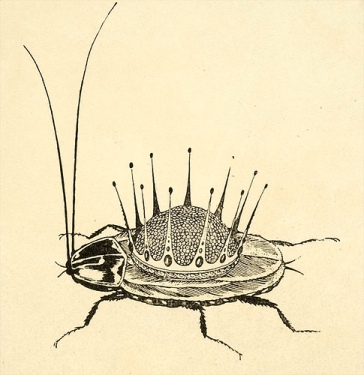
Tarankanische, or The Terrible Cockroach, Sergeii Chekhonin, illustrator, 1925
The little tyrant rules the whole jungle on a mix of fear, submission and misery. A laughing kangaroo points out that it’s no giant, but merely a cockroach. The hippos tell him to shut up: “You’ll make things worse for us”. Then, one day, Nature finally restores balance (as it always does): a sparrow comes along and gobbles up the Terrible Cockroach.

In his essay titled Watching the Mighty Cockroach Fall, Philip Shishkin writes: “It is hard not to read the poem as an allegory for the rise and fall of a dictatorship. Despots tend to appear invincible while they rule, and then laughably weak when they fall. Once their subjects call them out on their farce, dictators look ridiculous. Often, they react by killing and jailing people, which buys them more time in power (Iran, Belarus, and Uzbekistan come to mind). But just as often, when faced with a truly popular challenge, dictators shrink to the size of their inner cockroaches.”

Shishkin then raises an interesting question: Did Kornei Chukovsky have Joseph Stalin in mind when he wrote it? Was Stalin prominent enough when the story was first published in 1925? To find out, read the full essay.

According to his mini-bio on IMDB, Chukovsky was a praised Russian translator of Charles Dickens, Mark Twain, Walt Whitman, and other English and American authors. His writings for children are regarded as classics of the form. His best-known poems for children are “Krokodil”, “Moydodyr”, “Tarakanische”, and “Doctor Aybolit” (Doctor Ouch).
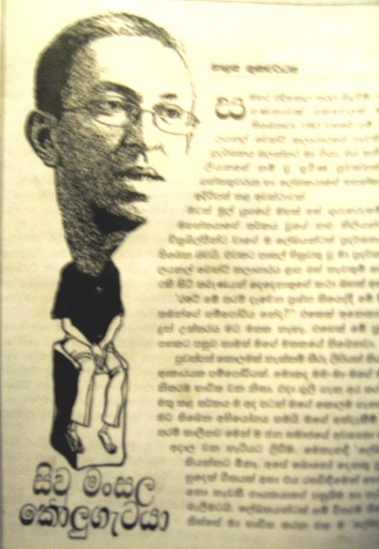

New column in Ravaya newspaper: Little Boy asking Big Questions…

Graphics identity for my new Ravaya column As a journalist, I was trained to look for what’s New, True and Interesting (‘NTI Test’). Early on, I went beyond just reporting events, and probed the underlying causes and processes. With experience, I can now offer my audiences something more: perspective and seasoned opinion. These are needed today more than ever as we wade through massive volumes of information, trying to make sense of it all.

I’ve been privileged to chronicle and comment on the closing decade of the 20th Century and the opening one of the 21st – years of unprecedented change, and considerable turmoil, in my country (Sri Lanka), region (Asia) and the world. In my chosen areas of science, technology and sustainable development, changes have happened at a dazzling and often bewildering speed.

As a science writer and development film maker, I work with researchers, activists and officials across Asia who struggle to balance ecological concerns with economic development imperatives. I call myself a ‘critical cheer-leader’ of their efforts. Through TVE Asia Pacific, SciDev.Net and my other affiliations, I seek to enhance the public understanding of complex issues and choices required in pursuing sustainable development.

I sometimes feel a strange kinship with the ancient Greeks, who first asked some fundamental questions about the universe. They didn’t always get the answers right, and neither do I. But it is very important that we question and critique progress – I do so with an open mind, enthusiasm and optimism. On some occasions, this involves asking uncomfortable questions that irk those in positions of power and authority. In that sense, I sometimes play the role of that little boy who told the Emperor had no clothes on. (Does anyone know what happened to the boy after that?).

This is the basic premise for a new weekly newspaper column I am writing from this month in the Sinhala weekend newspaper Ravaya. A few weeks ago, the executive editor of Ravaya invited me to write a regular column, which I accepted after some hesitation. My hesitation was not about them; it was about my own ability to express myself in Sinhala, a language I studied more than a quarter century ago, but have not worked in for over 20 years. But I’ve decided to take it on as a challenge, and see how far I can go and how well I can write on topics and issues that are close to my heart: science, technology, environment and development. The first column has just appeared in the Ravaya issue for 6 Feb 2011.

Ravaya: Always Open for Debate

I have been a regular reader of Ravaya in all its 25 years of publication. As I wrote in a book review last year: “It is an extraordinary publication that has, for nearly a quarter of a century, provided a platform for vibrant public discussion and debate on social and political issues. It does so while staying aloof of political party loyalties and tribal divisions. While it cannot compete directly (for circulation) with newspapers published by the state or press barons, this sober and serious broadsheet commands sufficient influence among a loyal and discerning readership.”

Published by a company owned by journalists themselves, Ravaya is almost unique among Lankan newspapers for another reason: its columnists and other contributors are allowed to take positions that are radically different from those of its formidable editor, Victor Ivan. I’m not sure how soon I will get to test this, but such pluralism is very rare in today’s mainstream media in Sri Lanka.

When the Twerms Came: Arthur C Clarke’s easy guide for aliens to invade Earth?

Why waste all that energy when there are smarter ways? Image courtesy movie 'Independence Day'

It’s time to come clean: I have a fascination with alien invasions of our planet.

As a kid, I was an avid listener of radio (my only electronic medium, as I grew up in a land without television, and in a time before the Internet) — and expected the regular transmissions to be interrupted any moment to break the news of an alien invasion underway. The spoilsports shattered my childhood dreams everyday.

Now slightly older, I keep looking for the perfect moments for that history-shattering event. A widely reproduced op ed essay I wrote in July 2010 opened with these words:

“If you’re an alien planning to invade the Earth, choose July 11. Chances are that our planet will offer little or no resistance. Today, most members of the Earth’s dominant species – the nearly 7 billion humans – will be preoccupied with 22 able-bodied men chasing a little hollow sphere. It’s only a game, really, but what a game: the whole world holds its breath as the ‘titans of kick’ clash in the FIFA World Cup Final…”

The careless aliens didn’t heed my advice, but I live in hope. I keep looking for the strategic moments and smart ways to take over the planet — with as little violence as possible. After all, I’m a peace-loving person (even if I’m unhappy with the planet’s current management).

I’m not alone in this noble quest. Science fiction writers have been at it for decades, and future Earth invaders are well advised to first study these useful instructions masquerading as popular literature. In an op ed essay published today, I highlight one such story by Sir Arthur C Clarke.

Click on this ONLY if you're a prude...
I wrote WikiLeaks, Swiss Banks and Alien invasions with my tongue in my cheek about half the time (go figure!). I’ve been following the WikiLeaks cablegate saga for several weeks, and was intrigued to read that other critically sensitive secrets — that have nothing to do with garrulous American diplomats — were also reaching this online platform for assorted whistle-blowers.

One such story, appearing in the London Observer on 16 January 2011, reported how the Swiss whistleblower Rudolf Elmer plans to hand over offshore banking secrets of the rich and famous to WikiLeaks. That reminded me of an obscure short story that Arthur C Clarke had written more than 40 years ago, which is not as widely known as it should be. This short essay is an attempt to revive interest in it.

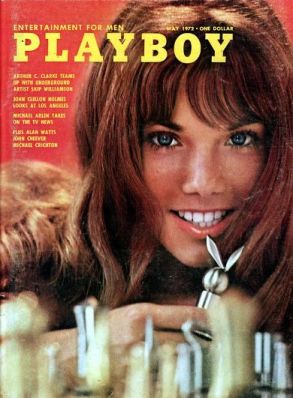
I describe how PLAYBOY Magazine used the story as a basis for a psychedelic comic strip illustrated by the American underground cartoonist Skip Williamson. That appeared in their issue for May 1972 — and I’m still trying to locate that story. All in the interests of pop culture, of course.

Read WikiLeaks, Swiss Banks and Alien invasions on Groundviews.org

New Year 2011 is here: The Future isn’t what it used to be!

2011 is here! We’re not ones to be easily affected by a mere landmark in our particular system of chronology, but as watchers of popular culture, we go along with the mood of the moment — if only to blend in with the planet’s natives…

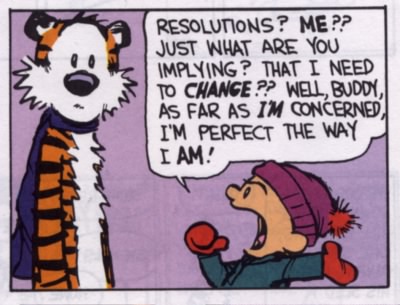
As for our own mind (which is large and contains multitudes), Bill Watterson – the inimitable creator of Calvin and Hobbes – has once again captured my thoughts so well…and so colourfully.

The future isn't what it used to be!

As for resolutions, the only one I have is that I get to write more, and get read more widely. What more can a wordsmith ask for?

Besides, I tend to agree with Calvin when he says here…

Change? Why change?

This Blogger is Over-capacity: We’ll be back soon!

Please bear with us while we're out makin' an honest living...

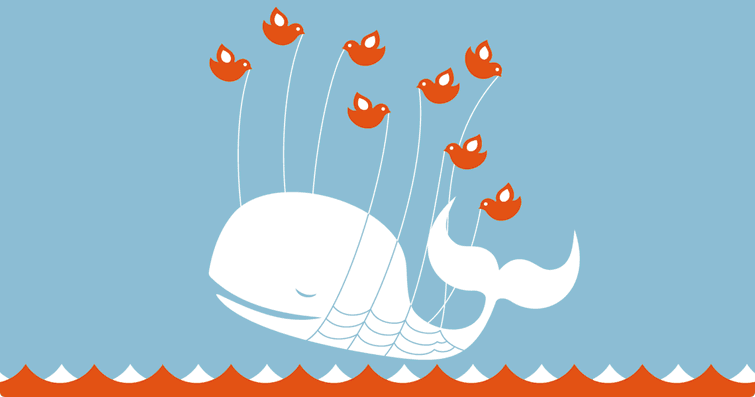
When Twitter experiences over-capacity (i.e. too many demands on its system), users see this delightful image. Known as the “fail whale” error message, it is an image created by Yiying Lu, an artist and a designer in Sydney, Australia. The New York Times Magazine called it ‘a successful failure’.

Well, I’m over-capacity too these days! That’s because I’m out there earning an honest living and that takes most of my waking hours. As a result, I’ve been blogging less and less in recent weeks. On such days, I have just enough energy for a quick tweet or two, but not for a fully-fledged blog post. (Yes, I take my blogging seriously.)

Sorry about that folks! I don’t look anything like the Fail Whale, although I’ve always been fascinated by these creatures. Right now, I’m as over-capacity as Twitter sometimes gets.

As Woody Woodpecker used to say: Don’t go away! We’ll be back soon….

We’re all prisoners, who dream being free! Dedicated to Ray Wijewardene

Are they really free - or prisoners of elements like all of us?
“Ah, but a man’s reach should exceed his grasp, or what’s a heaven for?” – Robert Browning

Show me a ‘free man’
And I’ll show you a prisoner:
Of time and space,
Of elements and gravity,
Firmly and forever
In the grips of
Forces of Nature
And Laws of Physics,
With no prospect
Of any release,
Or any escape.

Gravity holds us captive,
Time holds us in its grip,
We are prisoners of oxygen,
And confined to bits of land
On this Blue Planet Ocean.

We may breathe the air
But can never fly through it
On our own power:
We’ve dreamed of it
Before and since Icarus
But we’re truly stuck
On the thin, crowded crust
Of our Home Planet
Between air and water.
Between past and future.

So who can still claim
To be a free man or woman?

We are prisoners
One and all,
Of time and space,
Of elements and gravity,
Firmly and forever
In the grips of
Forces of Nature
And Laws of Physics,
With no prospect
Of any release,
Or any escape.

Except, that is —
In our imagination:
May we forever
Dream of being free!

– Nalaka Gunawardene
Colombo, 25 August 2010

Dedicated to Ray Wijewardene: high flyer, dreamer and imagineer.
Ad astra per ardua!

Ray Wijewardene: Passionate voice for small farmers and earthworms

Ray Wijewardene on the set of 'Sri Lanka 2048' TV show, June 2008: Cautiously optimistic about the future...
The small farmers, buffaloes and earthworms all over the world lost a true friend and spokesman this week when Lankan scientist Ray Wijewardene passed away.

Ray packed multiple interests and pursuits into his 86 years of life – including engineering, building and flying light aircraft, and Olympic-level competitive sailing. But he was happiest being a farmer and mechanic, and had strong opinions on the subject. He was vocal about misguided priorities in tropical farming his native Sri Lanka – and across the developing world.

He was especially passionate when speaking about small farmers in the developing world, with whom he worked many years of his international career as an expert on tropical farming systems.

Educated at Cambridge and Harvard universities, and with impeccable technical credentials, he was no stranger to the ways of academia. But he remained a sceptic about the efficacy and benefits of agricultural research — on which hundreds of millions of development funding is invested every year.

The main problem with agricultural research, he used to say, is that those who engaged in such studies and experimentation didn’t have to rely on farming for their sustenance. There was not enough self interest. In contrast, the small farmer had to eke out a meagre existence from whatever land, water and seeds or livestock she had. In her case — and a majority of small farmers around the world today are indeed women — it’s a stark choice of innovate or perish.

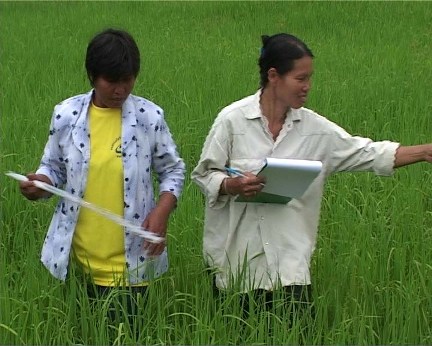
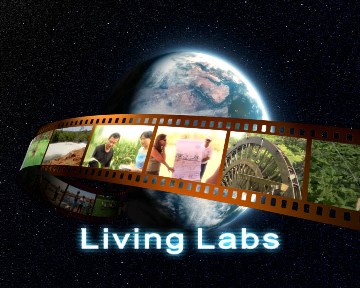
Thai researchers and farmers looking for field solutions (from Living Labs TV series)
The heroic efforts of small farmers were rarely recognised by the rest of humanity who consume their produce — and the farmers themselves are too busy planting crops or raising animals to speak on their own behalf. This is where Ray Wijewardene came in: with his education, exposure and talent, he made an outstanding spokesman for small farmers all over the tropics.

In the 1960s, as the inventor and promoter of the world’s first two-wheeled (Land Master) tractor, Ray travelled all over Asia, Africa and Latin America working with tropical farmers.

For half a century, Ray has championed the lot of the small farmer at national, regional and global levels with UN agencies, academic and research groups, corporate sector and governments. But in later years, he questioned the wisdom of trying to mechanise tropical farming, and considered that phase of his career a ‘big mistake’. He dedicated the rest of his life to researching and promoting ecologically sustainable agriculture, on which he co-wrote an authoritative book in 1984.

Ray had the rare ability to ask piercing questions without antagonizing his audiences. He was an activist in the true sense of the word, but one whose opinions were well informed and grounded in reality, not rhetoric.

This comes through very powerfully in an extensive media interview I did with Ray in 1995, which I released online this week as a tribute to Ray — who has been my mentor and friend for almost 25 years.

At the outset, Ray points out where the Green Revolutionists went astray: “All along in the Green Revolution, its promoters focused on maximizing yields through massive inputs. But they forgot that what the farmer wants is to maximize profits, not necessarily yields!”

We then talked about the particular challenges faced in tropical farming, and the mismatch of temperate farming systems promoted widely in the tropics where climatic and soil conditions are different. One of Ray’s main concerns was agriculture’s profligate use of water – more for weed control than to meet the strict biological needs of crop plants themselves!

Ray, a grandmaster in summing up complex technical issues in colourful terms, said at the time: “Water is rapidly becoming the most expensive herbicide in the world — and freshwater is increasingly scarce!” [A decade later, I would go on to script and executive produce a global TV series called Living Labs on just this issue: how to grow more food with less water, or get more crop per drop.]

Ray wasn’t fundamentally opposed to external, chemical inputs to boost soil fertility but he advocated a mix of natural and synthetic options. In our interview, he asked: “We have multinational companies supporting — directly or indirectly — the extensive use of chemical fertilizers. But who supports cow-dung? Who extols the virtues of the humble earthworm?”

He then added: “For us in Asia, these elements are far more important. Indians have recognized this, but we still haven’t. As long as our agricultural scientists are trained in the western mould of high external input agriculture, this (mindset) won’t change. Cow-dung and earthworms won’t stand a chance – until some western academic suddenly ‘re-discovers’ them…

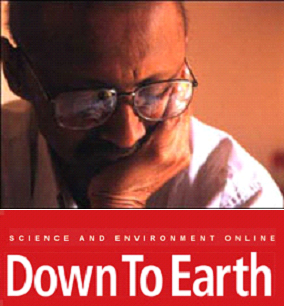
It was Indian science writer and environmentalist Anil Agarwal who asked me, sometime in mid 1995, to interview Ray for Down to Earth, the science and environmental fortnightly magazine published by his Centre for Science and Environment. As Anil told me, “In Ray, you have not only one of the topmost agricultural experts in the developing world but one of its most original thinkers.”

By this time, I’d known Ray for almost a decade, and been exposed to several of his multiple facets. But each encounter with Ray was enriching for me, so I immediately seized the opportunity. The usually media-shy Ray already knew of and respected Anil, which helped.

Down to Earth is part of Anil Agarwal's legacy
The interview was audio taped over two long sessions, and I remember spending many hours transcribing it. I had to check some references with Ray, who cooperated wonderfully. I’ve been trained to observe the word limit set by editors, but in this instance, I sent in the full length Q&A, for it was so interesting. Down to Earth issue for 31 October 1995 carried a compact version, skillfully distilling the essence of that long exchange between Ray and myself — one of the most memorable interviews among hundreds I’ve done during 25 years of work in print and broadcast media.

How I wish the exchange was also preserved on audio tape! Indeed, it’s a small miracle that the original transcript survived for 15 years. The soft copy was lost in a hard drive crash of 1998, but fortunately I’d taken a full print-out. I’m grateful to a former colleague, Buddhini Ekanayake, for retyping the entire interview in mid 2008 when I considered releasing it in the wake of the global food crisis. That somehow didn’t work out, but the soft copy was ready at hand for me to rush to the editor of Groundviews on the day of Ray’s funeral. All I added was a new, 500-word introduction which tried to sum up the Ray Wijewardene phenomenon.

Read the full length interview with Ray Wijewardene, published for the first time, on Groundviews.org:
Who Speaks for Small Farmers, Earthworms and Cow Dung?

In praise of slow reading: Let the words go marching by…

Don't run races with me...

I’m a slow reader. Let me qualify that: I’m a slow reader of books.

I can read fast when I need to — and I do that with newspapers, magazines, websites and many other displays of text that surrounds us. It’s almost an essential survival skill for today’s information society.

But when it comes to books, I take my time. Especially with good books (and I try to discern). Books are not to be rushed through; they are to be taken slowly, one page and one chapter at a time. I savour books as I savour a good meal. (And unlike with a meal, I regurgitate good books, which further slows me down.)

As a writer myself, I enjoy good writing by others. I can appreciate how hard it is to produce readable and enjoyable prose out of an alphabet of 26 letters (I write only in English) and a handful of punctuation marks. If a fellow writer went to all that trouble to create something out of nothing, the least I can do is to absorb and digest it well. (I should also add: I’m ruthlessly discerning in what I choose to read.)

Those around me are sometimes amused and puzzled by this. They know my capacity to marshal information and ideas, so they can’t figure why I don’t read books fleetingly. My friends as exasperated by another trait: how I read several books at the same time, progressing through multiple titles by switching between them. I guess this means I have Attention Deficit Disorder (ADD). Ah, well…

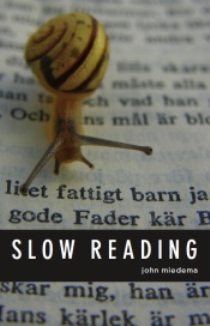
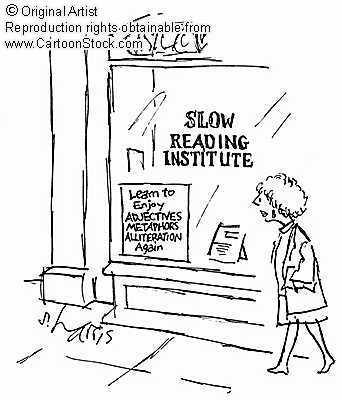
I was delighted to discover recently that there are others who cherish slow, reflective reading. There is, in fact, a slow reading movement — an eclectic group of academics and writers who want us to switch off our computers every so often and rediscover both the joy of personal engagement with physical texts, and the ability to process them fully.

Read a book, lately?
“Readers make choices in the kinds of attention they give to texts–from scanning, skimming and speed reading to deep reading and rereading,” says Professor Catherine L Ross, Faculty of Information & Media Studies, University of Western Ontario when reviewing a recent book, Slow Reading by John Miedema.

Miedema, a technology specialist at IBM in Ottawa, Ontario, draws on both his personal reading experience and the extensive research literature on reading to make a powerful case for the deep pleasures of engaged, reflective reading.

He likens the slow reading movement to the Slow Food movement, which was founded in Italy in the mid 1980s as a backlash against American-style fast food. Both movements encourage increased mindfulness in the conduct of routine activity. As he says: “It’s not just about students reading as slowly as possible. Slow reading is about bringing more of the person to bear on the book.”

In a recent essay in Newsweek, Malcolm Jones asked if slow reading is antidote for a fast world. As he wrote: “…But it doesn’t take a rocket scientist to realize that we are all reading too much too fast these days. Yes, we’re drowning in information, but, clearly, reading faster and faster is not the way out of the deep end.”

It’s from this article that I found out there is now an International Day of Slowness, June 21. The Canadians, reflective and thoughtful people as they’ve always been, are giving leadership to it. By the time I read about it (slowly, of course), the day had already passed. But there’s always next year…

Another article, in The Guardian a few days ago, posed related questions: Has endlessly skimming short texts on the internet made us stupider? The writer, Patrick Kingsley, summed up recent research suggesting that an increasing number of experts think so. He came to the same conclusion as Miedema: it’s time to slow down…

Here’s part of the book’s promotional blurb: “Slow Reading brings attention to emerging ideas in technology and culture. The traditional technologies of print and the book have persisted as part of our information ecology because of the need for slow reading and deep comprehension. The theme of locality in the Slow Movement provides insight into the importance of physical location in our relationship with information. Most of all, Slow Reading represents a rediscovery of the pleasure of reading for its own sake.”

Read Chapter 2 of the book: Slow Reading in an Information Ecology

I want to read this book — but not online. I’ll get hold of it and meander slowly through it, as I do with any good book. This particular writer would expect nothing less.

Sri Lanka’s Sacred Cows and Orbital Dreams: Asking difficult questions

Holy cow! How does she do it?
Cows have been a part of South Asian cultures, economics and societies for millennia. Many among us are connected to cows in one way or another – some worship them while others feast on them. Even a secular vegetarian in South Asia – like myself – can’t avoid bumping into the occasional cow on our delightfully messy streets…

We probably gave the term ‘sacred cow’ to the English language. It means an object or practice which is considered immune from criticism, especially unreasonably so. As the Wikipedia explains, “The term is based on the popular understanding of the place of cows in Indian religions as objects that have to be treated with respect, no matter how inconvenient.”

Well, some of us beg to differ on modern-day sacred cows. My latest op ed essay, just published on Groundviews.org, is all about sacred cows in rapidly modernising South Asia. It starts with my experience as a young science journalist covering the impending launch of Pakistan’s first digital communications satellite, Badr 1, in early 1990.

At the time, Pakistan had recently returned to civilian rule after many years of dictatorship, and Benazir Bhutto was Prime Minister (in her first term). The political mood was generally upbeat. But I soon found out — from Pakistani journalists and independent scientists — that they weren’t allowed to ask critical questions about the country’s nuclear or space programmes.

In Sacred Cows and Orbital Dreams in Sri Lanka, I write: “The message was clear: democracy or not, some sacred cows always enjoy their privileged status! This has certainly been the case with both the space and nuclear programmes in India and Pakistan: they have been shielded from public and media scrutiny for decades.

What price for having our own?
“For the past few months, it seemed as if we too were following this South Asian tradition. Plans to build Sri Lanka’s own satellites were announced and pursued with little information disclosure and no public debate. The government wanted to launch our very own ‘sacred cows’ into orbit. We the public were to just applaud on cue, and then cough up the money for it…”

The essay is a critique of Sri Lanka’s much hyped plans to build its own satellites. The project was announced in February 2009 and appeared to gain momentum during the year. Going by official statements and media reports, the plan was to launch not one but two satellites.

Suddenly, there seems to be a change of heart. In a interview on 6 June 2010 covering a range of issues, head of the Telecom Regulatory Commission (TRC) disclosed that the government was not going ahead with the much-hyped project. At least not in its originally announced form. The reason: the very high cost, and the need to ‘explore other options such as hiring satellites’ instead of building our own.

Hmmm. Better to be wise later than never. This is the first time in over 15 months that the high costs of this high cost project have been acknowledged.

The satellite is not the only mega-science project being pursued in post-war Sri Lanka. In June 2009, the Ministry of Science and Technology directed the Atomic Energy Authority to set up a national committee to study technical and financial aspects of setting up a nuclear power plant.

Again, this mega project has not been opened up for public discussion and debate, in spite of a few citizens and activists expressing concern, highlighting safety and public health risks, high cost of construction and the unresolved problem of nuclear waste disposal.

I end the essay arguing that as long as public safety and public funds are involved, sacred cows – whether orbital or radioactive – can’t be allowed free range.

Read the full essay on Groundviews: Sacred Cows and Orbital Dreams in Sri Lanka

A compact version appeared in The Sunday Times, 13 June 2010: Sri Lanka’s Satellite: Lost in Space?

Desiderata: Happiness is a journey, not just a destination…

“Desiderata” is Latin for “desired things”, and the plural of desideratum. Desiderata is also the title of a famous prose poem written by Max Ehrmann an American spiritual writer and attorney.

It captures his thoughts about attaining happiness in life. Its universal and timeless sentiments have resonated with people all over the world. As with the ‘Chief Seattle speech‘, another urban legend has emerged suggesting that this poem was “found” at Old St. Paul’s Church in Baltimore and is as old as 1692.

But in this instance, the Church itself has clarified Ehrmann actually wrote it himself and copyrighted it in 1927.

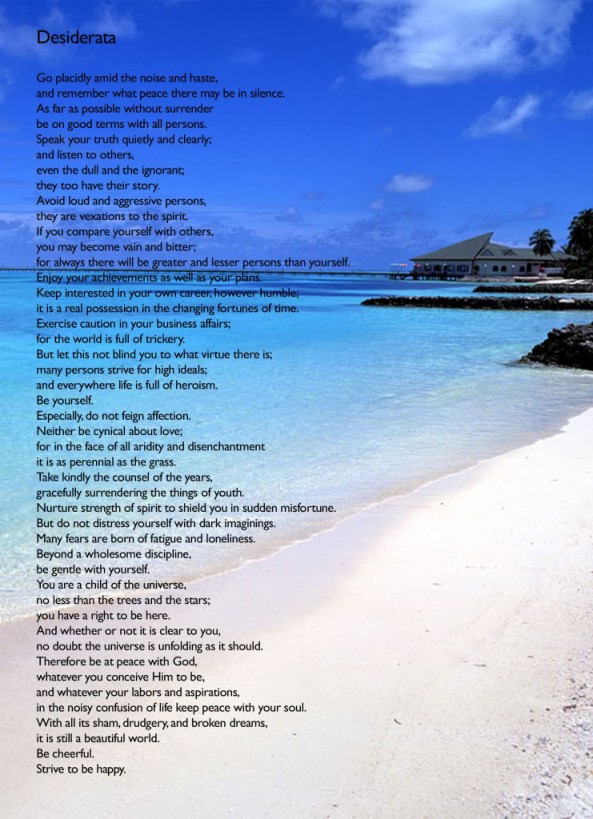
None of this takes away from the beauty and profundity of the poem. Living in a world full of clutter and noise, I find much comfort in this. Here’s one illustrated version I found online: