සිවුමංසල කොලූගැටයා #46: තොරතුරු ගලනයේ වේලි බිදී යයි!

In December 2003, on the eve of the World Summit on the Information Society (WSIS), I did a wide-ranging interview with Sir Arthur Clarke on satellite TV, internet, censorship and other challenges of emerging information societies. It was published in One World South Asia on 5 December 2003.

I adapted into Sinhala parts of that interview for my Ravaya Sunday newspaper column last week (18 Dec 2011),making the point that much of what he said about satellite TV at the time is now equally relevant to the rapid spread of the Internet.

For this week’s column, appearing in the print edition for 25 Dec 2011, I have adapted more segments of that interview covering topics such as: violence in society and media’s role; educational potential of television; does satellie TV spread cultural imperialism; and how technology – not politicians or generals – now determine the free flow of information across borders. This cartoon, drawn by David Granlund a year ago, aptly captures that last point!
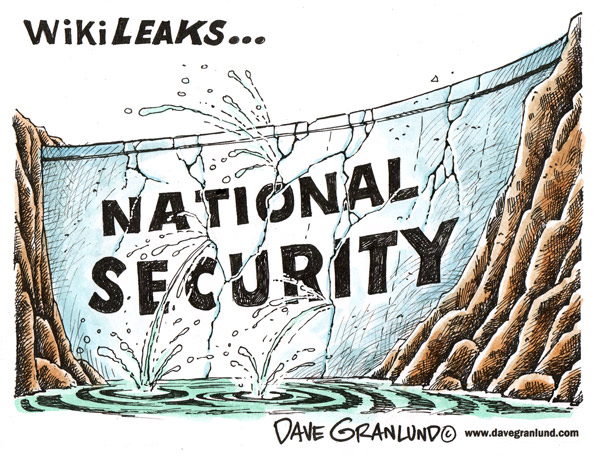
A welcome dam breach, this one! - cartoon by Dave Granlund

See also my essay of 19 Dec 2010: Living in the Global Glass House: An Open Letter to Sir Arthur C Clarke

ප්‍රබලව මතුව එන තොරතුරු තාක්ෂණ හා සන්නිවේදන අභියෝගයන්ට ප්‍රශස්තව මුහුණ දෙන සැටි අන්තර් රාජ්‍ය මට්ටමින් සාකච්ඡා කළ තොරතුරු සමාජය පිළිබඳ පළමුවන ලෝක සමුළුව (World Summit on the Information Society, WSIS-1) 2003 දෙසැම්බරයේ ජිනීවා නුවර පවත්වනු ලැබුවා. මේ සමුළුවට දින කිහිපයකට පෙර ශ්‍රීමත් ආතර් සී ක්ලාක් සමග මා කළ දීර්ඝ සාකච්ඡාවක් (ඉන්දියාවෙන් සංස්කරණය කැරෙන) One World South Asia ජාත්‍යන්තර වෙබ් අඩවිය පළ කළා. එහි අරමුණ වූයේ අද තොරතුරු සමාජයේ පෙර ගමන්කරුවෙකු වූ ක්ලාක් එවකට දැකිය හැකි අළුත් ප්‍රවණතා සහ අභියෝග ගැන දරණ විද්වත් අදහස් ලෝකය සමග ඛෙදා ගැනීමයි.

පසුගිය සතියේ (2011 දෙසැම්බර් 18) ඒ සාකච්ඡාවෙන් කොටස් කිහිපයක් මා සිංහලට අනුවාදය කළා. අද එහි ඉතිරි කොටස.

නාලක: භූස්ථාවර කක්ෂයේ (Geostationary orbit) රදවන ලද පණිවුඩ චන්ද්‍රිකා මගින් ලෝක ව්‍යාප්ත සන්නිවේදන ජාලයක් ඇති කළ හැකි යයි ඔබ මුල් වරට පෙන්වා දී වසර 50ක් ගත වී තිඛෙනවා. මේ අඩ සියවස ගැන ඔබේ අදහස් මොනවා ද?

ක්ලාක්: තාක්ෂණික දියුණුව කෙසේ සිදු වේද යන්නත්, එය කෙතරම් ඉක්මනින් සිදු විය හැකි ද යන්නත් ගැන අනාවැකි කීම ඉතා අපහසුයි. 1945දී මා Wireless World සගරාවේ ලිපිය ලියන කාලයේ සිතුවේ පණිවුඩ චන්ද්‍රිකා සැබැවින් නිර්මාණය වී උඩුගුවනට යන්නට අඩු තරමින් වසර 50ක්වත් ගත වනු ඇති කියායි. එමෙන් ම ඒවා මහා පරිමාණයේ අභ්‍යවකාශ මධ්‍යස්ථාන වේ යයි ද, ඒවා නඩත්තුවට කක්ෂගත වූ කාර්මික පිරිස් සිටිනු ඇතැයි ද මා සිතුවා. එහෙත් (1948 දී නිපද වූ) ට්‍රාන්සිස්ටරය හා 1950 ගණන්වල සිදු වූ ක්ෂුද්‍ර ඉලෙක්ට්‍රොනික නිපදවීම් නිසා 1940 ගණන්වල අප දැන සිටි තාක්ෂණ මට්ටමට වඩා ඛෙහෙවින් සංකීර්ණ, සංයුක්ත හා ස්වයංක්‍රීය වූ චන්ද්‍රිකා නිපදවීමට හැකියාව ලැබුණා. මේ නිසා චන්ද්‍රිකා තාක්ෂණය ලොකු ඉදිරි පිම්මක් පනින්නට සමත් වුණා. මගේ ලිපිය පළ වී වසර 20ක් ගෙවී ගිය තැන – 1965දී – මුල් ම වාණිජමය පණිවුඩ චන්ද්‍රිකාව (Early Bird) උඩුගුවන් ගත කළා. ට්‍රාන්සිස්ටරය නිපදවූයේ නැතිනම් සමහර විට චන්ද්‍රිකා තාක්ෂණය මෙන් ම අභ්‍යවකාශ තරණයේ සෙසු ජයග්‍රහණත් මීට වඩා වෙනස් වන්නට ඉඩ තිබුණා.

පණිවුඩ චන්ද්‍රිකා අධ්‍යාපනික වශයෙන් වැදගත් ටෙලිවිෂන් වැඩසටහන් විකාශය කිරීමට යොදා ගත යුතු බව ඔබ කලක සිට විශ්වාස කරනවා. අද වන විට ව්‍යාප්තව ඇති චන්ද්‍රිකා ටෙලිවිෂන් සේවාවන් මේ කාර්යය හරි හැටි ඉටු කරනවා ද?

අද ලෝකයේ සිටින ප්‍රධානතම මාධ්‍ය හිමිකරුවන් දෙදෙනකු වන රූපර්ට් මර්ඩොක් සහ (CNN ආරම්භක) ටෙඩ් ටර්නර් සමග චන්ද්‍රිකා මාර්ගයෙන් සම්බන්ධ වන්නට මෑත අවස්ථා දෙකකදී මට හැකි වුණා. එහිදී මා ඔවුන් දෙදෙනාට චන්ද්‍රිකා ටෙලිවිෂන් මාධ්‍යය හොදට හා නරකට යොදා ගැනීම පිළිබ`දව අවවාද කිහිපයක් දුන්නා. මා මුලින් ම සිහිපත් කළේ බ්‍රිතාන්‍යයේ පුවත්පත් හිමිකරුවන් සම්බන්ධයෙන් කලකට ඉහත බ්‍රිතාන්‍ය අගමතිවරයකු කී කථාවක්. ඔහු කීවේ පුවත්පත් හිමිකරුවන් වගකීමකින් තොර වූ බලයක් නතු කර ගෙන එය හසුරුවන බවත් ඉතිහාසය මුළුල්ලේ මෙබඳු තැනක් හිමි කර ගෙන සිටියේ ගණිකාවන් පමණක් බවත් (“The privilege of the harlot throughout the ages: power without responsibility.”)

මෑතක් වන තුරු මුද්‍රිත මාධ්‍යය හිමි කර ගෙන සිටි බලයටත් වඩා විශාල බලයක් අද ටෙලිවිෂන් මාධ්‍යය ලබා ගෙන තිඛෙනවා. මෙසේ මිනිස් සිතුම් පැතුම්, චර්යාවන් හා ජීවන රටාවන් සම්බන්ධයෙන් ඉමහත් බලපෑමක් එල්ල කළ හැකි මාධ්‍යයක් වන ටෙලිවිෂනයට, ඒ හා සමානුපාතික වූ ඉමහත් වගකීමක් ද අනිවාර්යෙන් ම පැවරෙන බව මා මේ දෙපළට කියා සිටියා.

දියුණු වන ලෝකයේ රටවල ටෙලිවිෂන් මාධ්‍යයේ තවමත් සැළකිය යුතු ප්‍රමාණයකින් බටහිර වැඩසටහන් දැකිය හැකියි. මේ ගැන ඔබේ අදහස් මොනවා ද?

යම් මට්ටමකින් ‘විද්‍යුත් අධිරාජ්‍යවාදයක්’ ලෝකයේ සිදු වන බව අප පිළිගත යුතුයි. පවතින වෙළඳපොළ ආර්ථීක රටාව තුළ මෙය මුළුමනින් නතර කිරීමට හෝ අධික ලෙස පාලනය කිරීම අපහසුයි. අනෙක් අතට මෙබඳු ප්‍රවණතා නිසා සිදු වන්නේ සමාජයේ නිරායාසයෙන් ම සිදු වන්නට නියමිත විපර්යාසයන් වඩාත් ඉක්මනින් සිදු වීමයි.

සුබවාදීව බලන විට තාක්ෂණය හා බද්ධ වූ නව සන්නිවේදන මාධ්‍ය මඟින් අපේ සංස්කෘතික දායාදයන්, උරුමයන් හා සිරිත් විරිත් අනාගත පරම්පරාවලට දැක බලා ගත හැකි පරිදි සංරක්ෂණය කර තැබීමට අවස්ථා ලැඛෙනවා. සමහර විට සැබෑ ලෝකයේ ක්‍රමයෙන් තුරන් වී ගෙන යන ඇතැම් ජන කලා හා සංස්කෘතික අංග අපේ දූ දරුවන්ට දැක බලා ගත හැකි වනු ඇත්තේ ටෙලිවිෂන්, ඉන්ටර්නෙට් හා CD බඳු මාධ්‍ය තුළින් පමණක් විය හැකියි. ඉතිහාසවේ මීට පෙර වකවානුවල පැවැති වටිනා කලා ශිල්ප හෝ සාංස්කෘතික අංග එසේ සුරකින්නට හැකියාවක් තිබුණේ නැහැ.

නිදහසේ තොරතුරු ගලායාම (free flow of information) මින් ඉදිරියට තීරණය කරන්නේ ඉංජිනේරුවන් විසින් මිස දේශපාලකයන් හෝ නිලධාරීන් හෝ විසින් නොවන බව ඔබ කියන්නේ ඇයි?

එළඹෙන දශකය තුළ වඩ වඩාත් මාධ්‍යවේදීන්, ව්‍යාපාරිකයන් හා සංචාරකයන් ජංගම දුරකථන ලෝක ව්‍යාප්ත මට්ටමින් භාවිතා කරනු ඇති. එමෙන් ම කටහ`ඩ සන්නිවේදනයට පමණක් සීමා නොවී, ඔවුන්ට හ`ඩ හා රූප දෙක ම සන්නිවේදනය කළ හැකි වනු ඇති. ඒ ස`දහා පහසුවෙන් අතේ ගෙන යා හැකි, ජංගම සන්නිවේදන කට්ටල භාවිතයට එනවා. මේවා පණිවුඩ හුවමාරු කරන්නේ පොළව මත ඇති විදුලි සංදේශ රැහැන් පද්ධති හරහා නොව, පණිවුඩ චන්ද්‍රිකා හරහායි. මෙම කට්ටල වඩාත් ලාබදායී වන විට රට රටවල් අතර සංචාරයේ යෙදෙන හැම දෙනකු ම පාහේ මේවා භාවිතා කරන්නට පටන් ගනීවි. එවිට දේශීය මට්ටමේ දුරකථන හා අනෙකුත් සන්නිවේදන සේවා මත ඔවුන්ට යැපෙන්නට සිදු වන්නේ නැහැ.

මෙහි ප්‍රතිඵලය සිතා බලන්න. තමන්ගේ රටේ ජනතාවගේ මානව හිමිකම් කඩකරමින් රජය, හමුදා හෝ අන් පාක්ෂිකයන් විසින් සිදු කරන අපරාධ හෝ සමූල ඝාතන බදු කිසිවක් පිටස්තර ලෝකයෙන් තව දුරටත් වසන් කරන්නට රටකට හැකි වන්නේ නැහැ. මෙබදු නව සන්නිවේදන තාක‍ෂණයන් හා ඒවා හො`ද හැටි භාවිතා කරන කැපවීමකින් යුතු මාධ්‍යවේදීන් සිටින විට අකටයුතුකම් කිරීමෙන් වැළකී සිටීමට රාජ්‍ය පාලකයන් හා වෙනත් බල කණ්ඩායම් මත ලොකු බලපෑමක් ඇති කෙරෙනවා.

සමහරුන් අද දවසේ ප්‍රචලිත ප්‍රචණ්ඩත්වය තාක්ෂණයේ අතුරු ඵලයක් යැයි කියනවා. ඔබ මේ තර්කයට එකඟ වනවාද?

ප්‍රචණ්ඩත්වය යනු පරිනාමීය ඉතිහාසය මුළුල්ලේ මානව වර්ගයා සතුව තිබු ලක්ෂණයක්. මේ නිසා එය තාක්ෂණයෙන් ඉස්මතු වූවා යැයි කීම වැරදියි. තාක්ෂණය සිදු කර ඇත්තේ ප්‍රචණ්ඩත්වය ප්‍රකාශ කළ හැකි මාර්ග හා අවස්ථා ප්‍රමාණ වැඩි කිරීමයි. තාක්ෂණය මෙසේ අනිසි හා අයහපත් ලෙස යොදා ගැනීම මිනිස් මනසේ වරදින් සිදුවන දෙයක්.

මා විශ්වාස කරන්නේ ඕනෑ ම ශිෂ්ටාචාරයක ඉදිරි ගමනට තාක්ෂණික දියුණුව සමඟ අත්වැල් බැඳ ගෙන ආධ්‍යාත්මික හා සදාචාරාත්මක දියුණුවක් සමාන්තරව සිදු විය යුතු බව. එසේ සිදු නොවී, තාක්ෂණය පමණක් කඩිමුඩියේ ඉදිරියට ගිය හොත් වැඩි දුර යන්නට කලින් ස්වයං විනාශයක් සිදු වෙනවා. අපේ වර්ගයා මුහුණ දී තිඛෙන ලොකු ම අන්තරාය මෙයයි.

මා සිතන්නේ අද සමාජයේ ප්‍රබල ප්‍රශ්නයක් බවට පත්ව ඇති ප්‍රචණ්ඩත්වය සඳහා යම් තාක් දුරට වගකීම ටෙලිවිෂන් මාධ්‍යය භාර ගත යුතු බවයි. (එහෙත් ප්‍රචණ්ඩත්වය ප්‍රවර්ධනය කරන එක ම මාර්ගය මෙය නොවෙයි.) සිය ගණන් අහිංසක මිනිසුන්ට, දරුවන්ට මරු කැඳවන, නැතහොත් ඔවුන් සදාකාලිකව ආබාධිත කරවන බෝම්බ, වෙඩි තැබීම් හා වෙනත් ප්‍රචණ්ඩ ක්‍රියා සඳහා යම් තරමක හෝ දායකත්වයක් ශ්‍රව්‍ය-දෘශ්‍ය මාධ්‍යයෙන් ලැඛෙනවා. බොහෝ විට චිත්‍රපට හා ටෙලිවිෂන් වෘතාන්ත කථාවල පෙන්නුම් කරන දෙයක් නම් යුක්තිය, සාධාරණත්වය හෝ සත්‍යය සඳහා සටන් කරන අයට ඕනෑ තරම් ප්‍රචණ්ඩ ක්‍රියා කළ හැකි බව. මෙය ළමා හා තරුණ මනසට ව්‍යාකූල හා වැරදි අදහස් ඇතුළු කරන්නට පුළුවන්.

ටෙලිවිෂන් මාධ්‍යයේ නියැලී සිටින සමහරුන් කියන්නේ හොලිවුඩ් හා බොලිවුඩ් වෙතින් එන ඇතැම් චිත්‍රපට තමන්ගේ නිෂ්පාදනවලටත් වඩා පහත මට්ටමක් පවතින බවයි.

මෙය පිළිගත හැකි සංසන්දනයක් නොවෙයි. චිත්‍රපටවල හා ටෙලිවිෂන් වැඩසටහන්වල නිරූපනය වන ප්‍රචණ්ඩත්වය සාධාරණීකරණය කරන තවත් තර්කයක් නම් ඇතැම් මිනිසුන් තුළ සහජයෙන් පැන නඟින ප්‍රචණ්ඩ සිතුවිලි මෙබඳු නිර්මාණ නැරඹීම නිසා අවිහිංසක ලෙස පහ වී යන බවත් (catharsis), ඒ නිසා සැබෑ ලෝකයේ ප්‍රචණ්ඩකම් කිරීමට ඔවුන් නොපෙළඹෙන බවත්. මෙය ද පිළිගත හැකි තර්කයක් නොවෙයි. චිත්‍රපට හා ටෙලිවිෂන් ඇත්තට ම මිනිස් චර්යාවන්ට ප්‍රබල බලපෑමක් එල්ල නොකරනවා නම්, කෝටි ගණන් මුදල් වැය කරමින් ටෙලිවිෂන් දැන්වීම් පෙන්වන්නට වෙළඳ ආයතන ක්‍රියා කරයි ද?

ප්‍රතිපත්තියක් හැටි මා මාධ්‍ය වාරණයට විරුද්ධයි. එහෙත් අද දවසේ සමහර ටෙලිවිෂන් නාලිකා විකාශය කරන බාල මට්ටමේ, හරසුන් වැඩසටහන් ගැන සිතන විට යම් තරමක හෝ විනයක්, වගකීමක් මාධ්‍ය තූළින් මතු නොවන්නේ ඇයිදැයි ප්‍රශ්න කරන්නට සිදු වනවා.
Sarvodaya Leader A T Ariyaratne at 80: Conscience of a Bruised Nation

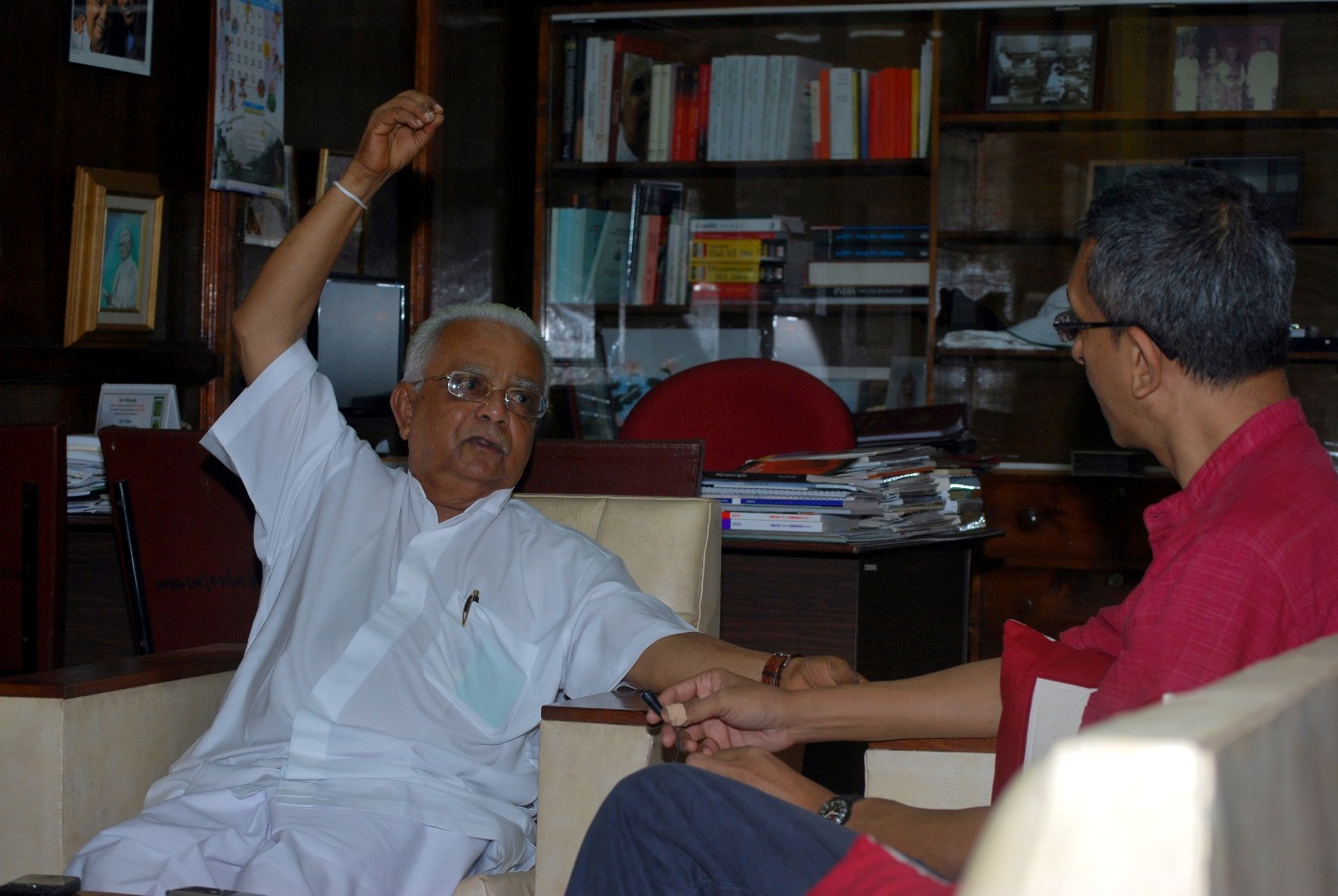
Dr A T Ariyaratne (left) in an expressive moment with Nalaka Gunawardene

When Dr A T Ariyaratne, founder and president of the Sarvodaya Shramadana Movement of Sri Lanka, turned 80 years on 5 November 2011, felicitations poured in from all over the world. This spontaneous act was an indication — if any were needed — of how much and how widely he has touched the lives of millions.

Ari is also our elder statesman of inclusive development. For over half a century, he and Sarvodaya have advocated a nuanced approach to overcoming poverty, illiteracy and various social exclusions. Unlike some die-hard activists, Ari doesn’t ask us to denounce materialism or revert to pre-industrial lifestyles. Instead, he seeks a world without extreme poverty or extreme affluence.

Suddenly, his quest for social justice and equality is resonating all over the world. In fact, Ari has been speaking out for the 99 per cent of less privileged people decades before a movement by that name emerged in the West. In a sense, those occupying Wall Street and other centres of affluence are all children of Sarvodaya.

While Ari shares their moral outrage, his own strategy has been quite different. He didn’t occupy physical spaces in his struggle; he went straight to the fount of all injustice – our minds.

* * * * *

Thus opens my personalised tribute, published on Groundviews.org as Ari of Sarvodaya: Conscience of a Bruised Nation.

In this 2,400-word essay, I salute a hero of mine who continues to speak truth to power, and makes a difference to millions of people in his land and elsewhere. For doing this, he has been ridiculed, harassed and vilified by small minds and the state. He continues undaunted, and shows no sign of slowing down after turning 80.

Here’s another excerpt:

In Ari, we find elements of Mahatma Gandhi (non-violent pursuit of the greater good); the Dalai Lama (interpreting Buddhist philosophy for the modern world); Martin Luther King, Jr. (struggling for the rights and dignity of marginalised people); Nelson Mandela (nurturing democracy and healing society); and Jimmy Carter (globalism with a humanitarian agenda).

“Yet Ari is more than the sum of these noble parts; he is his own unique visionary. And an adroit ‘remixer’ who constantly blends the best of East and West. He adapts our civilisational heritage to tackle the Twenty First Century’s anxieties and uncertainties. Thankfully, though, he doesn’t peddle simplistic solutions to today’s complex problems.

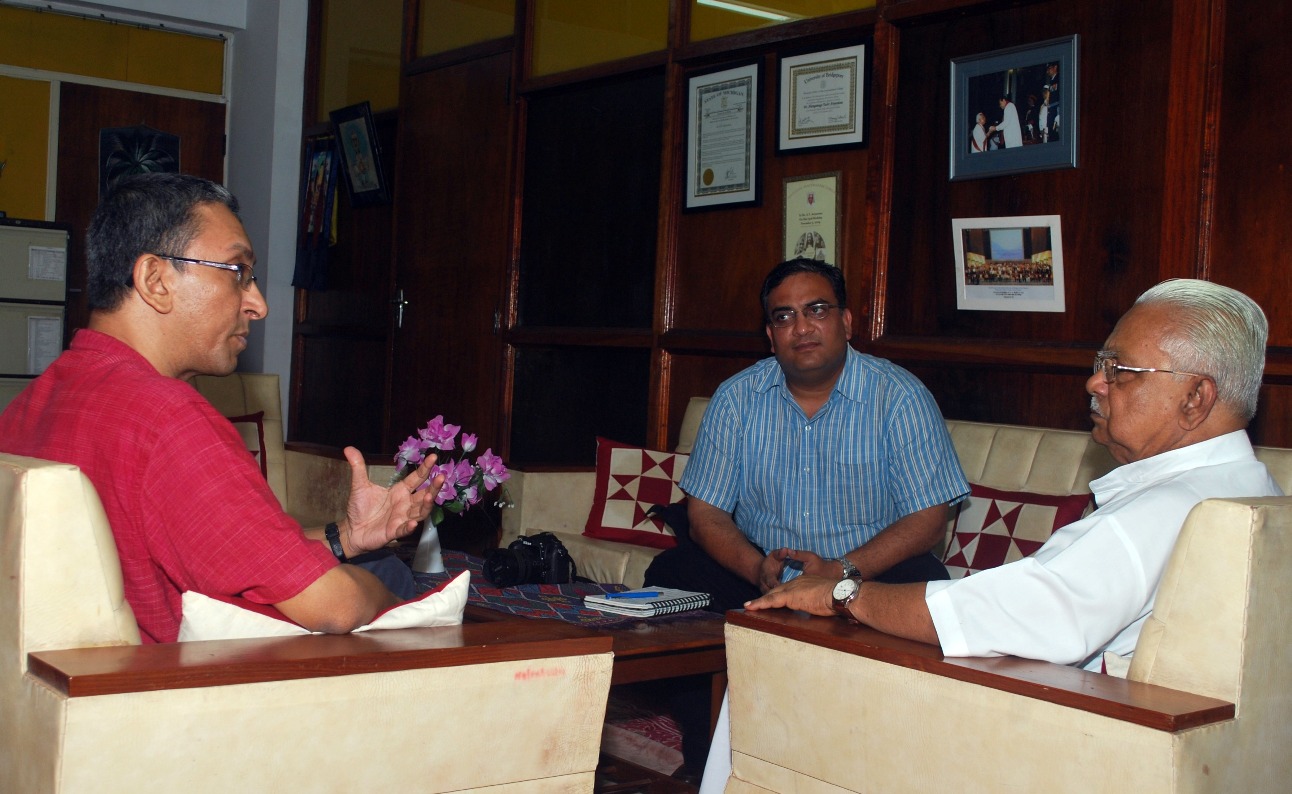
I also recall my first encounter with Ari, in early 1991, when a tyrant leader of Sri Lanka had virtually declared ‘war’ on this unarmed, non-violent small man. I have interviewed him several times since then – the most recent was in March 2011, when I accompanied my journalist friend Aditya Batra from India to talk to Ari (photo, below).

Read the full essay on Groundviews.org: Ari of Sarvodaya: Conscience of a Bruised Nation

Read a compact version of the essay on Light Millennium website (New York)

Read a compact version on Down to Earth magazine (New Delhi): Sri Lanka’s Gandhi Turns 80

L to R - Nalaka Gunawardene, Aditya Batra & Dr A T Ariyaratne of Sarvodaya, March 2011

සිවුමංසල කොලූගැටයා #31: 9/11 – ලොව සසල කළ මහ පුවතක මුල්පිටු මතකය

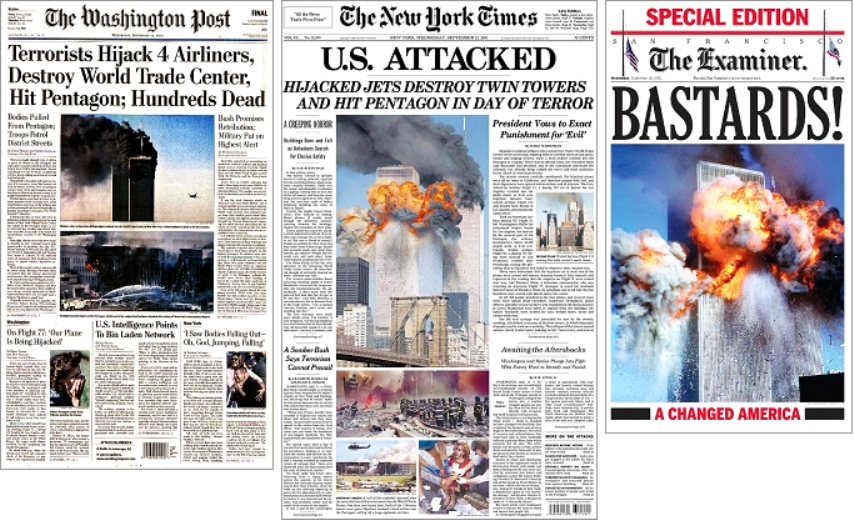
Text of my Sinhala column for Ravaya issue of 11 September 2011. In this one, I discuss how front pages of newspapers around the world reported 9/11 terrorist attacks, and how the dichotomy between reporting and editorialising blurred in some media outlets.

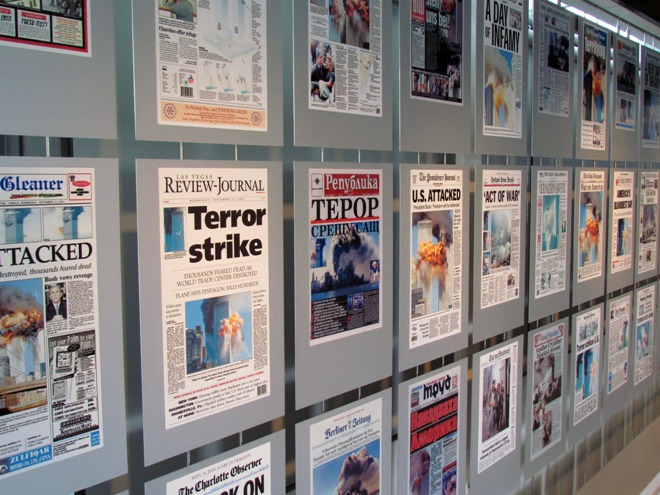
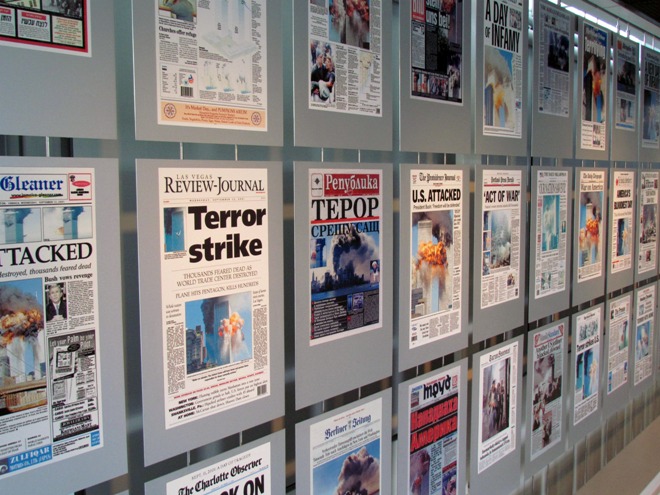
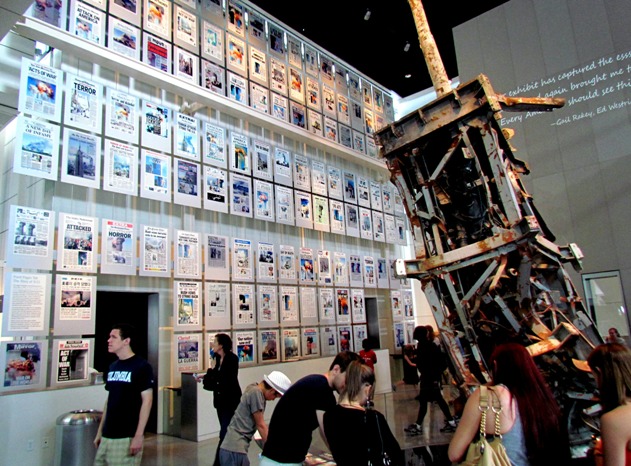
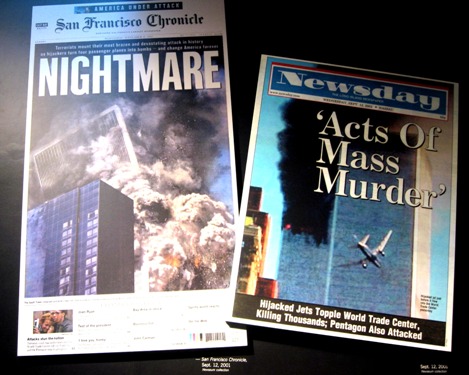
9-11 Frontpages at Newseum in Washington DC, photos by Nalaka Gunawardene
“පුවත්පත් කලාව යනු ඉතිහාසයේ මුල් කෙටුම්පතයි” (‘Journalism is the first rough draft of history.’)

මෙසේ කීවේ ඇමෙරිකාවේ වොෂිංටන් පෝස්ට් පත්‍රයේ ප්‍රකාශක ෆිලිප් ග්‍රහැම්. ඉතිහාසඥයන් මුහුණ නොදෙන අභියෝගයන්ට මාධ්‍යවේදීන් දිනපතා ප්‍රතිචාර දක්වනවා. දවසේ පැය 24 පුරා සජීව ලෙසින් ප්‍රවෘත්ති ආවරණය කැරෙන විද්්‍යුත් හා වෙබ් මාධ්‍ය බහුල අද කාලේ, හද සසල කරන මහා ප්‍රවෘත්තියක් අත්විදිමින් ම ඒ ගැන වාර්තා කරන්නට, විග්‍රහ කරන්නට ඔවුන්ට සිදුවනවා.

මෙය මාධ්‍ය ග්‍රාහකයන් හිතන තරම් ලෙහෙසි කාරියක් නොවෙයි. අපේ රටේ මෑත අවුරුදුවල මෙබදු මහා ප්‍රවෘත්ති අතරින් 2009 මැයි 18 වනදා මෙරට යුද්ධය අවස්න වීමත්, 2004 දෙසැම්බර් 26 වනදා සුනාමි ව්‍යසනයත් සිහිපත් වෙනවා. මේ සිදුවීම් දෙකේදී මාධ්‍ය ආවරණය සිදු වූ ආකාරය ගැන මාධ්‍ය පර්යේෂකයන් හා මාධ්‍යවේදීන් තවමත් වාද විවාද කරනවා. ඒ තරම් ම වාද විවාදයට ලක් වූ මහා ප්‍රවෘත්තියක් අදට හරියට වසර 10කට කලින් (2001) අමෙරිකාවේ නිව්යෝක් හා වොෂිංටන් නගරවල සිදු වුණා.

ඒ තමා අල්කයේඩා ත්‍රස්ත්‍රවාදීන් විසින් අමෙරිකාවේ වාණිජමය හා ආරක‍ෂක මර්මස්ථානවලට එල්ල කරන ලද සමෝධානිත ප්‍රහාරය. එදින උදේ මගී ගුවන්යානා 4ක් බලහත්කායෙන් අත්පත් කරගත් අල්කයේඩා පිරිසක් එයින් දෙකක් නිව්යෝක් නුවර ලෝක වෙළද මධ්‍යස්ථානය (World Trade Centre, WTC) නම් ගොඩනැගිලි සංකීර්ණයේ ගැටීමට පියාසර කළා. තවත් එකක් එරට ආරක‍ෂක අමාත්‍යාංශය පිහිටි වොෂිංටනයේ පෙන්ටගන් සංකීර්ණයට කඩා වැටෙන්නට සැළැස් වූ අතර සිවුවැනි යානය ඉලක්කයක් කරා යාමෙන් වැළකුණේ එහි සිටි මගීන් (ජීවිත පූජාවෙන්) ගුවන්යානාවේ කොල්ලකරුවන් සමග ගැටුණු නිසායි. එය පෙන්සිල්වේනියා ප්‍රාන්තයේ ෂැන්ක්ස්විල් ස්ථානයට කඩා වැටුණා.

පැය කිහිපයක් ඇතුළත රටවල් 70ක ජාතිකයන් 3,000ක් පමණ දෙනාට මරු කැදවූ මේ ත්‍රස්ත ප්‍රහාරය නිසා සමස්ත අමෙරිකාව පමණක් නොවෙයි මුළුමහත් ලෝකය ම භීතියෙන් ඇලලී ගියා. දරුණු කම්පාවට පත්වුණා. WTC ප්‍රහාරය මේ අතරින් වඩාත් බිහිසුණු වූ අතර, ඉන්ධන පිරවුණු ගුවන්යානා ගැටී ගිනි ගැනීම නිසා ඉතා සවිමත් සේ තැනුණු මහා ගොඩනැගිලි දෙක කෙටි කාලයක් තුළ දිය වී කඩා හැලූණා. එහිදී මියගිය 2,753 දෙනා අතරට උදවුවට එහි ගිය ගිනි නිවන භටයන් 343ක් හා පොලිස් නිලධාරීන් 60ක් ද සිටියා.

සැප්තැම්බර් 11 වනදා සිදු වූ නිසා මෙය කෙටියෙන් 9/11 ප්‍රහාරය කියා හදුන්වනවා. ස්ථාන ගණනක් පුරා විසිරුණු, පැය ගණනක් පුරා පැතිරුණු මෙබදු සිදුවීමක් ගැන මාධ්‍ය ආවරණය කරන්නේ කොහොමද? මේ අභියෝගයට අමෙරිකානු මාධ්‍යවේදීන් ප්‍රමුඛ ප්‍රවෘත්ති වාර්තාකරණයේ නියැලි ලොව පුරා මාධ්‍ය ආයතන එදා විවිධ ආකාරයෙන් මුහුණ දුන්නා. දශකයකට පසුව එම ප්‍රහාරය ගැන මෙනෙහි කරන අයට මතකයන් පණ ගන්වන්නට උපකාර වන්නේත් එදා සහ ඉනික්බිති එළඹුණු දින ගණනක් තිස්සේ මාධයවේදීන් වචනවලින්, රූපවලින් කළ ආවරණයන් හා විග්‍රහයන් තමයි.

අමෙරිකාවේ වාණිජමය වශයෙන් වඩා ම වැදගත් නගරය වන නිව්යෝක්හි බොහෝ මාධ්‍ය ආයතන මූලස්ථානගත වී හෝ ප්‍රමුඛපෙළේ කාර්යාල පිහිටුවා තිඛෙනවා. ලෝක ව්‍යාප්ත මාධ්‍ය ජාල රැසක් කාර්යාලත් එහි තිඛෙනවා. මේවායේ සේවයේ නියුතුව සිටි මාධ්‍යවේදීන්, තමන්ගේ ජීවිතාරක‍ෂාව ගැන නොබලා තම නගරයට එල්ල වූ ප්‍රහාරය විස්තරාත්මකව වාර්තා කළා. ලොව පුරා විසුරුණු බිලියනයකට අධික ටෙලිවිෂන් ප්‍රේක‍ෂකයන් සංඛ්‍යාවක් සජීව ලෙසින් මේ වාර්තාකරණය නැරඹුවා. තමන්ගේ නෑ හිතමිතුරන්ට අනතුරක් වී ඇත්දැයි දැන ගැනීමට පවා ඉස්පාසුවක් නැතිව තම ග්‍රාහකයන්ගේ තොරතුරු දැන ගැනීමේ අයිතිය වෙනුවෙන් සුවිශාල මෙහෙයක් ඉටු කළ හැම මාධ්‍යවේදියකුට ම 9/11 ප්‍රහාරය ජන මනසේ සනිටුහන් කිරීම ගැන ප්‍රනාමය හිමි වෙනවා.

ප්‍රහාරය නිසා ඇතැම් මාධ්‍ය ආයතනවලට ද හානි සිදු වුණා. The Wall Street Journal පුවත්පතේ කාර්යාලය තිබුණේ ඇද හැළුණු WTC කුළුණු අසලයි. හදිසියේ ම ඔවුන්ට කාර්යාලය අත්හැර දමා සැතපුම් 50ක් දුරින් පිහිටි තැනකට යාමට සිදු වුණා. එහෙත් මාධ්‍යවේදීන් එතැන සිට හෝ තම නිවෙස්වල සිට හෝ දිගට ම පුවත්පත පළ කළා. අධික පීඩනයක් යටතේ වුව මැදහත් හා විස්තරාත්මක වාර්තාකරණයක යෙදීම ගැන (පුවත්පත් කලාවේ නොඛෙල් ත්‍යාගය වැනි) පුලිට්සර් සම්මානයක් එම කාර්ය මණ්ඩලයට පසුව පිරිනමනු ලැබුවා.

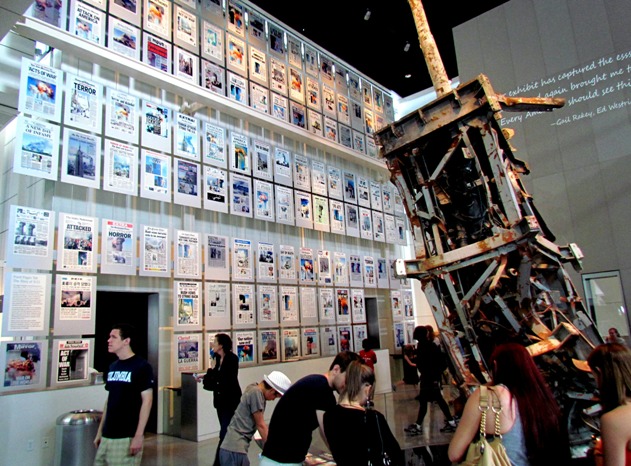
9/11 ප්‍රහාරය අනුස්මරණය කිරීමේ විවිධ සාමයික, ශාස්තී්‍රය හා වෘත්තිමය අවස්ථා මේ දිනවල අමෙරිකාවේ පැවැත්වෙනවා. ඒ අතරින් මාධ්‍ය ආවරණය මෙනෙහි කරන හොද ම උත්සාහය හැටියට මා දකින්නේ වොෂිංටන් අගනුවර පිහිටි මාධ්‍ය හා සන්නිවේදන කෞතුකාගාරයේ (Newseum) තිඛෙන 9/11 මාධ්‍ය ස්මාරකයයි. එහි ප්‍රදර්ශන ශාලාවක් පුරා විහිදෙන මේ ස්මාරකය මැද තිඛෙන්නේ එදා ත්‍රස්ත ප්‍රහාරය නිසා ගිනි ගෙන කඩා වැටුණු WTC උතුරු කුළුණේ ඉහළ රදවා තිබූ විද්්‍යුත් මාධ්‍ය විකාශන ඇන්ටෙනාවේ අඩි 31ක කොටසක්. එය වට කර ගෙන ඇත්තේ 9/11 ප්‍රහාරය ගැන අමෙරිකාවේ හා ලෝකයේ ඇතැම් පුවත්පත් සිය මුල්පිටුවලින් වාර්තා කළ ආකාරයයි.

පුවත්පත් කලාව ඉතිහාසයේ මුල් කෙටුම්පත් ලියනවා නම්, එහි හද ගැස්ම වඩාත් ම හසු කර ගන්නේ මුල් පිටු ඔස්සේයි. මහා ප්‍රවෘත්තියක් ගැන විවිධ පුවත්පත් මුල්පිටු වාර්තා කළ හැටි මෙසේ එක් තැන් කිරීම හොද ප්‍රදර්ශන උපක්‍රමයක්. එයින් අපේ බුද්ධියට හා හැගීම්වලට කළ හැකි බලපෑම පසුගියදා ඒ ප්‍රදර්ශනය නැරඹීමෙන් මා හොදාකාර අත් වින්දා.

බහු විධ පැතිකඩ ඇති සිදුවීමක් විවිධ මාධ්‍ය ආයතන හා මාධ්‍යවේදීන් විවිධාකාරයෙන් වාර්තාකිරීම ස්වාභාවිකයි. එහිදී සිදුවීමට වඩාත් සමීප පුවත්පත් වඩා ආවේගශීලීව වාර්තාකරන සැටිත්, කිලෝමීටර් දහස් ගණනක් ඈත සිට වඩාත් මැදහත්ව වාර්තා කළ සැටිත් අපට තේරුම් ගත හැකියි. 9/11 සිදුවීම වාර්තා කළ පුවත්පත් 127ක මුල් පිටු මේ ප්‍රදර්ශනයට ඇතුළත්. (එයින් සමහරක් එදින ම සවස්වරුවේ නිකුත් කළ විශේෂ මුද්‍රණ. අනෙක්වා පසුවදා.) අමෙරිකාවේ විවිධ ප්‍රාන්ත හා නගරවල පළ කැරෙන පුවත්පත් 93කත්, වෙනත් රටවල් පුවත්පත් 34කත් මුල්පිටු මේ ප්‍රදර්ශනයට යොදා ගෙන තිඛෙනවා. (ආසියාවෙන් ඇත්තේ ජපන් හා කොරියානු පුවත්පත් තුනක් පමණයි.)

පුවත්පත් කලාවේ එක් මූලික ආචාර ධර්මයක් නම් ප්‍රවෘත්ති වාර්තාකරණයේ කරුණු නිවැරදි හා සමබර විය යුතු අතර, මත දැක්වීම නිදහස් බවයි. මෙය ඉංග්‍රීසියෙන් කියන්නේ ‘Facts are sacred, but comment is free’. සාමාන්‍යයෙන් මුල්පිටු යොමු වන්නේ අළුත් ම තොරතුරු කැටි කැරුණු පුවත් වාර්තා කරන්න. එහෙත් සුවිශේෂී අවස්ථාවල පුවත්පතේ කතුවැකිය මුල් පිටුවට යෙදීමට කතුවරුන් තීරණය කරනවා. එහිදීත් එය කතුවැකියක් බව හොදින් හුවා දක්වනවා.

9/11 ප්‍රහාරය ගැන වාර්තා කිරීමේදී පුවත් හා මත දැක්වීම් අතර මේ ඛෙදීම ඇතැම් අමෙරිකානු පුවත්පත් අතින් ගිලිහී ගිය ආකාරය දැකිය හැකියි. ගිනි ගෙන දැවෙන හෝ කඩා වැටෙන උඔක‍ කුළුණුවල විශාල ප්‍රමාණයේ ඡායාරූප සමග ඇතැම් පුවත්පත් පොල්ගෙඩි අකුරින් හෙඩිම් පළ කළා. ‘Evil Acts!’ (අති දුෂ්ඨ ක්‍රියාවක්). ‘Bloody Terror!’ (ලේ හැලෙන භීතියක්). මුල්පිටු කිහිපයක හෙඩිම වූයේ ‘Act of War!’ හෙවත් යුද්ධමය ක්‍රියාවක් යන්නයි.

එවකට අමෙරිකානු ජනාධිපති ජෝර්ජ් ඩබ්ලිව් බුෂ් සැප්තැම්බර් 11 සවස ටෙලිවිෂනයෙන් ජාතිය අමතා කළ කථාවේ ඇතැම් යෙදුම් ද සමහර පුවත්පත් සිය ප්‍රධාන හෙඩිමට උධෘත ලෙසින් යොදා ගත්තා. වඩාත් ම ආවේගශීලී හෙඩිම ලෙස මා දකින්නේ සැන්ෆ්රැන්සිස්කෝ ඉක්සැමිනර් පත්‍රයේ පළ කළ ‘BASTARDS!’ එය ‘තක්කඩියො’ හැටියට අපට සිංහලෙන් අරුත් දිය හැකියි. මේ ප්‍රහාරයට වගකිව යුත්තේ කවුද යන්න ගැන එකහෙළා ම නම් කිරීමක් ජනාධිපතිවරයා නොකළත්, ඇතැම් මාධ්‍ය ඒ වන විටත් දොස් තැබීම පටන් ගෙන තිබුණා.

මේ ආවේගයන් අතරේ වඩා සන්සුන්ව තොරතුරු වාර්තා කළ හා විග්‍රහ කළ පුවත්පත් ද තිබුණා. ප්‍රහාරයේ මුව විට සිට ගෙනත් නිව්යෝක් ටයිම්ස් පුවත්පත කළ වාර්තාකරණය එයට කදිම නිදසුනක්. ප්‍රහාරයේ ස්වරූපය, එහි ප්‍රතිඵල, විපතට පත් වූවන්ට සහන සැළසීමේ පියවර, ජනාධිපතිගේ කථාව වැනි පුවත් කිහිපයක් කැටිකර ගත් ඒ මුල් පිටුව රැගත් සැප්තැම්බර් 12 වනදා නිව්යෝක් ටයිම්ස් කලාපයේ පිටපත් හාර ලක‍ෂයක් අලෙවි වුණා. ප්‍රහාරයට ලක් වූ අනෙක් නගරයේ ප්‍රධාන පුවත්පත වන වොෂිංටන් පෝස්ට් ද එයට සමාන සංයමයක්, සමබරතාවයක් පෙන්නුම් කළා. කෙතරම් විද්්‍යුත් මාධ්‍ය වාර්තාකරණයක් පැවතියත්, වඩාත් විස්තරාත්මක විග්‍රහයන් සදහා අමෙරිකාව පුරා ජනයා පත්තර මිළට ගත් සැටි මේ ප්‍රදර්ශනයේ පුවරුවලින් කියා පානවා.

One incident, three different takes

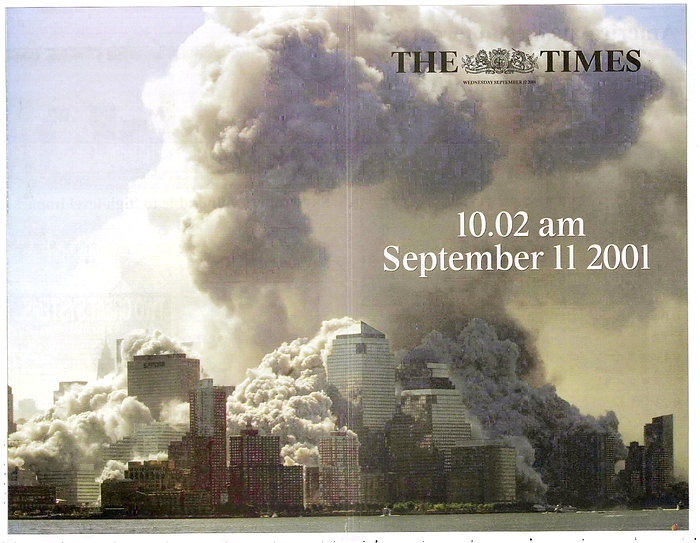
මේ අතර යුරෝපයේ, මැදපෙරදිග හා ආසියාවේ පුවත්පත් මේ ප්‍රවෘත්තිය විවිධාකාරයෙන් වාර්තා කළා. ඒ ගැන නෙතග බැල්මක් මුල්පිටු තුළින් අපට ලද හැකියි. පුවත්පත් 127 අතරින් මුල් පිටුවට කිසිදු ඡායාරූපයක් අඩංගු නොකළ එක ම පුවත්පත ලෙබනනයේ. අන් හැමෙකක් ම ප්‍රහාරයේ ත්‍රාසජනක අවස්ථා වර්ණ හෝ කළුසුදු හෝ ඡායාරූපවලින් පෙන්නුම් කළා. ඒ අතරින් මගේ නෙත් ගන්නේ ලන්ඩන් ටයිම්ස් පත්‍රයේ නිමාවයි. 2001 සැප්තැම්බර් 12 එහි සමස්ත මුල්පිටුව හා අවසන් පිටුව පුරා ඇත්තේ දැවැන්ත තනි ඡායාරූපයක් පමණය‘. ගිනිගෙන දැවෙන නිව්යෝක් දුර සිට හසු කරගත් මේ ඡායාරූපයට උඩින් “10.02 a.m. September 11 2001” යන්න පමණක් මුද්‍රිතයි. විස්තරාත්මක වාර්තාකරණය ඇත්තේ ඇතුළු පිටුවලයි.

The Times London front page - 12 Sep 2001.jpg

මේ මට මුල්පිටුව හොදට මතකයි. ඒ දිනවල මා සිටියේ ලන්ඩන් නුවර. නිව්යෝක් නුවරට ත්‍රස්ත ප්‍රහාරය එල්ල වීම ගැන පුවත ලන්ඩනයට මුලින් ලැඛෙන විට එදින පස්වරු 1.30 පමණ වන්නට ඇති. ටික වේලාවකින් සියළු ප්‍රවෘත්ති සේවාවන් මේ සිදුවීම වාර්තාකරණයට කැප කෙරුණා. සමහරක් ලන්ඩන් පුවත්පත් එදින සවස නිකුත් කළ විශේෂ මුද්‍රණ මා තවමත් සුරැකිව තබා ගෙන සිටිනවා.

පුවත්පතක මුල් පිටුව සැකසීමත් සුවිශේෂ කලාවක්. ඉදහිට පත්තර ලෑල්ලකින් පිටපතක් මිළට ගන්නා අහඹු පාඨකයන් ඇද ගන්නා අතර ම, නිතිපතා කියවන පාඨකයන්ගේ තොරතුරු පිපාසය සංසිදවන්නටත් මුල්පිටුව සමත් විය යුතුයි. ඉතිහාසය තමන්ගේ තීරණ ගැන කුමන ආකාරයකින් විග්‍රහ කරාවි ද යන්න සිතන්නට මුල් පිටුව සකසන කතුවරුන්ට හා මුද්‍රණ තාක‍ෂණ ශිල්පීන්ට වෙලාවක් නැහැ. නමුත් මහා ප්‍රවෘත්ති වාර්තාකරණයේදී හුදෙක් ඒ මොහොතට පමණක් නොව ඉතිහාසයටත් තොරතුරු සංරක‍ෂණය කිරීමක් මුල් පිටු හරහා නිරායාසයෙන් ම ඉටු කැරෙනවා.

මා දන්නා තරමට මුල් පිටු මාධ්‍යයක් හැටියට යොදා ගෙන ලංකාවේ කැරෙන ආවර්ජන ඉතා සීමිතයි. මුල්පිටු ඇතුළු යටගිය දවස පුවත්පත් බලන්නට අප ලේඛනාගාරයට යා යුතුයි. තනි මාධ්‍ය ආයතන තම තමන්ගේ ප්‍රකාශනවල මුල් පිටු ඇතැම්විට ආවර්ජනා සදහා යොදා ගත්තත්, තනි සිදුවීමක් මෙරට සියළු ම පුවත්පත් මුල් පිටු හරහා වාර්තා කළ ආකාරය හසු කර ගෙන නැහැ.

Newseum කෞතුකාගාරයේ මා ගත කළ දෙදින තුළ දුටු එක ම ලාංකික පුවත්පත 2004 දෙසැම්බර් 27 වනදා Daily Mirror මුල් පිටුවයි. සුනාමි විපත ආසියාතික පුවත්පත් වාර්තා කළ ආකාරයට එක් උදාහරණයක් හැටියට. භේදයකින් තොරව මුළු රට ම කම්පා කළ සලිත කළ සුනාමිය ගැන කල් ගත වී හෝ මාධ්‍ය ස්මාරකයක් බිහි කළ හැකි නම්, මුල් පිටුවලින් කළ වාර්තාකරණය එහි මුල් තැනක් ගන්නවා සිකුරුයි!

9/11 plus 10: Recalling a news tremour through (archived) live TV news and front pages

Breaking News indeed!

I can remember exactly where I was and what I was doing when the news of 9/11 attacks on the World Trade Centre Twin Towers in New York reached me.

It was around 1.15 pm in the UK, a bright sunny afternoon. I was just entering London’s Kings Cross Station to buy tickets. My colleague Marietta, walking with me, received a call to her mobile phone giving the breaking news that somebody had just flown a plane into WTC.

Another clumsy pilot, I thought — recalling how a B-25 Mitchell bomber aeroplane had once accidentally crashed into the Empire State Building, back in 1945. But as we soon found out, this was no accident: it was a dastardly terrorist attack by suicidal fanatics who somehow penetrated the already high aviation security arrangements.

Life in London continued normally, but we were all completely distracted. I had work to do in an office, but can’t remember any of us actually focusing on our chores. Instead, we just watched the live TV coverage of unfolding events across the Atlantic with mounting horror. So did over a billion other people around the world.

It was a world changing event about which much has been written and said. More reflective and less impulsive commentary on this 10th anniversary puts events and their aftermath in better perspective. Of course, we now have the benefit of hindsight.

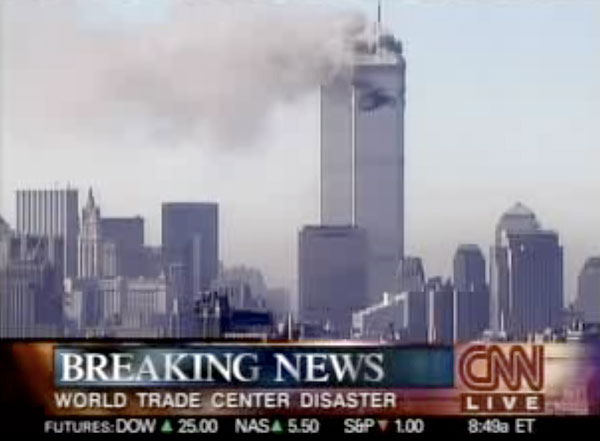
Journalism is the first rough draft of history. The reporters on duty that day were challenged to cover a breaking news event whose magnitude and historical context would become clearer only as the hours and days passed. CNN was the first to break the news live on the air, followed by the rest of the news pack. On the whole, journalists in all media rose to the enormous challenges of covering a scary, bewildering and earth-shattering story.

CNN Breaks the Big News at 8.49 am Eastern Standard Time on 9/11:

If anyone thought (like I did, for a few minutes) that it was a terrible accident, all doubts were removed when the second plane hit. By this time, all cameras were focused on the already burning first tower.

News networks cover the second plane crashing into the second tower LIVE on air at 9.03 am EST

And now, a decade later, media professionals and researchers are looking back at their own impressionistic, on-the-run coverage. Among the many attempts at retrospection, I’ve found two particularly interesting:

Understanding 9/11: A Television News Archive.
This collection contains television news programs recorded live from around September 11, 2001 by the non-profit Television Archive to help patrons research this important part of United States history. These materials were originally available on the televisionarchive.org site from October 2001 through 2003.


9/11 Gallery at Newseum in Washington DC: Chronicling an Attack on America

This gallery explores the horrendous events of Sept. 11, 2001, and the extraordinary challenges that faced the journalists trying to report the news to a shaken nation and world. The gallery includes a tribute to photojournalist William Biggart — a journalist who died covering the attacks — and some of the final photographs he took. Also featured are front pages from around the globe about the attacks and first-person accounts from reporters and photographers who covered the story.

9-11 Frontpages at Newseum, photo by Nalaka Gunawardene
Visitors to 9/11 Frontpages exhibit at Newseum in Washington DC, photo by Nalaka Gunawardene
Front pages of fear, fury and more...

9/11 plus 10: Remembering the WTC Twin Towers from the movies…

In the end, movie memories are all that we are left with.

As we remember the 9/11 tragedy 10 years later, a cool compilation released online last month packs extracts from lots of movies that featured the World Trade Centre Twin Towers.

As the Los Angeles Times noted, Dan Meth — a New York animator and filmmaker who generally works creating humorous videos for the Web — has put together a deceptively simple, deeply moving tribute to the twin towers by creating a montage of their appearances on film.

Twin Tower Movie Cameos 1969 – 2001

The filmmaker says about this creation:
“From 1969 to 2001, the Twin Towers made countless cameos in Hollywood films. Sometimes featured prominently in the foreground, sometimes lurking in the distance. This montage celebrates the towers’ all-too-short film career with songs that capture the passing decades. Man, I miss them.”

Read the story behind this compilation in the Los Angeles Times

සිවුමංසල කොලූගැටයා #30: නීතිය, සාමය, ජාතික ආරක‍ෂාව හා ඉන්ටර්නෙට්

Text of my weekly column, printed in Ravaya newspaper on 4 September 2011. This week I take off from the role of social media in fuelling, as well as countering the recent London riots – and discuss how governments, telecom operators and law enforcement authorities should respond to the always on, pervasive connectivity now enabled by mobile phones and other devices.

Tweeting while London burns?

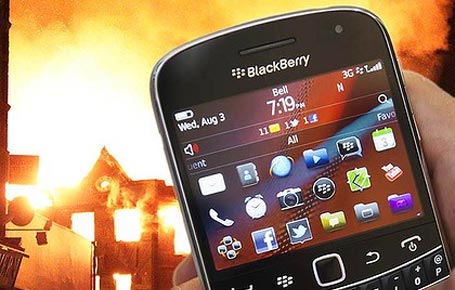
2011 අගෝස්තු 6 සිට 11 වනදා අතර කාලයේ බ්‍රිතාන්‍යයේ ලන්ඩන් ඇතුළු නගර ගණනාවක වීදි කලහ කිරීම්, පොදු හා පෞද්ගලික දේපල ගිනි තැබීම් හා කොල්ලකෑම් සිදුවුණා. සාමාන්‍යයෙන් සාමකාමී රටක් ලෙස ප්‍රකට බ්‍රිතාන්‍යයේ මේ සිදුවීම් නිසා එරට පමණක් නොවෙයි මුළු ලෝකය ම කැළඹීමට පත් වුණා. මේ ගැන ප්‍රවෘත්ති වාර්තාකරණය දුර සිට බලා සිටි මගේ වැඩි අවධානය යොමු වුණේ ජංගම දුරකථන සේවා හා ඉන්ටර්නෙට් මාධ්‍යයන් මේ කලහයන්ට බද්ධ වූ ආකාරය ගැනයි.

ඇතැම් කලහකරුවන් තම ප්‍රචන්ඩ ක්‍රියා සම්බන්ධීකරණයට මේ සන්නිවේදන තාක‍ෂණයන් යොදා ගත් බව සනාථ වී තිඛෙනවා. එහෙත් ඊට වඩා අති විශාල සංඛ්‍යාවක් සාමකාමී ජනයා නීතිය හා සාමය රැකීමටත්, ප්‍රහාරයන්ට ගොදුරු වූ පොදු හා පෞද්ගලික ස්ථාන පිලිසකර කිරීමටත් එම සන්නිවේදන තාක‍ෂණයන් ම යොදා ගත් සැටි ද වාර්තාගතයි. හොදට නරකට දෙකට ම දායක විය හැකි තොරතුරු තාක‍ෂණයන් හා සන්නිවේදන සේවා ගැන අපේ ප්‍රතිචාරය විය යුත්තේ කුමක් ද? ඒවායේ නියාමනය කෙසේ විය යුතු ද?

නීතිය හා සාමය කඩ වූ අවස්ථා වල දැඩි ස්ථාවරයක සිටීමට ඕනෑ ම රටක රජයට සමාජයීය බලපෑම් එල්ල වනවා. ඇති වූ කලහකාරී තත්ත්වය ගැන බ්‍රිතාන්‍ය අගමැති ඩේවිඩ් කැමරන් අගෝස්තු 11 වනදා පාර්ලිමේන්තුවේ විශේෂ ප්‍රකාශයක් කළා. කලහකරුවන්ට එරෙහිව රටේ පවත්නා නීතිය දැඩි සේ ක්‍රියාත්මක කරන බවට ප්‍රතිඥා දෙමින් ඔහු කියා සිටියේ මේ ගිනි තැබීම්, කොල්ලකෑම්වලට තුඩු දුන් සමාජ හා ආර්ථීක සාධක ගැනත් ගැඹුරින් අධ්‍යයනයකට යොමු වන බවයි.

එම ප්‍රකාශයේදී මේ කලහකරුවන් සන්නිවේදන තාක‍ෂණ හා Facebook, Twitter වැනි වෙබ් මාධ්‍ය (social media) යොදා ගත් ආකාරය ගැනත් ඔහු සදහන් කළා. “කලහකරුවන් වෙබ් මාධ්‍ය භාවිතය හරහා කාර්යක‍ෂම ලෙසින් සංවිධානය වූ බවක් අපට පෙනී ගියා. නිදහසේ තොරතුරු ගලා යාම සමාජයට හිතකර බව ඇත්තයි. එහෙත් එම නිදහස ම සමාජයට එරෙහිවත් යොදා ගත හැකියි. සමාජ විරෝධී පුද්ගලයන් නීති විරෝධී ක්‍රියා සදහා වෙබ් මාධ්‍ය යොදා ගන්නා විට අප එය නතර කළ යුතුයි. ඒ නිසා පොලීසිය, බුද්ධි සේවා ගැන සන්නිවේදන සමාගම් සමග අප කථා කරනවා. ඉදිරියේදී මෙබදු අවස්ථාවල නීතිවිරෝධී ප්‍රචන්ඩ ක්‍රියා ස`දහා වෙබ් අඩවි, දුරකථන සේවා හෝ වෙනත් වෙබ් මාධ්‍ය තාක‍ෂණයන් යොදාගන්නා බව පෙනී ගිය හොත් එයට ඇති ඉඩකඩ නැති කළ හැකිද නැති කළ යුතු ද කියා.”

බ්‍රිතාන්‍යයේ මේ සිදුවීම් වන අතරේ ඊට කිලෝමීටර් දහස් ගණනක් දුර අමෙරිකාවේ සැන්ෆ්රැන්සිස්කෝ නගරයේ තවත් සිදුවීමක් වාර්තා වුණා. BART නමින් හදුන්වන එනුවර දුම්රිය සේවය අගෝස්තු 12 වනදා පැය තුනක් පුරා ජංගම දුරකථන සේවාවල සංඥා දුම්රිය තුළ ඛෙදාහැරීම නතර කළා. ඊට දින කිහිපයකට පෙර පොලීසිය විසින් දුම්රියක් මතට නැගි පුද්ගලයකුට වෙඩි තබා මරා දැමීමට එරෙහිව දුම්රිය මගීන් සාමකාමී විරෝධතාවයක් සැළසුම් කර තිබුණා. BART සේවයේ ප්‍රධාන දුම්රිය ස්ථානයට මහ පිරිසක් එකවර රැස් වුවහොත් සේවා අඩාල විය හැකි බවත්, නීතිය හා සාමය කඩවිය හැකි බවත් කියමින් දුම්රිය බලධාරීන් දුරකථන සංඥා මෙසේ ක්‍රියා විරහිත කළා. මෙයින් කුපිත වූ ඇතැම් මගීන් දිගින් දිගට දුම්රිය සේවයට එරෙහිව විරෝධතා දක්වන්නට පටන් ගත්තා. ඒ අතර නිර්නාමික (Anonymous) නමින් හදුන්වන පරිගණක කි්‍රයාකාරීන් පිරිසක් BART සේවයේ පරිගණකවලට අනවසරයෙන් පිවිසී (hack කොට) බලපෑම් කළා.

A call to arms? Or to heal?
මේ සිදුවීම් වලට ආසන්න ම හේතූන් කුමක් වූවත් මෙබදු අවස්ථාවල (උසාවි නියෝගයකින් තොරව) දුරකථන හෝ ඉන්ටර්නෙට් සේවා තාවකාලිකව නතර කිරීමේ අයිතිය පොලීසියට හෝ දුම්රිය පාලකයන්ට හෝ නැති බවට අමෙරිකාවේ ප්‍රකාශන අයිතිය පිළිබ`ද ක්‍රියාකාරිකයන් දැඩි ලෙස තර්ක කරනවා.

ප්‍රජාතන්ත්‍රවාදය උදෙසා උද්ඝෝෂණය කරමින් 2011 ජනවාරියේ ඊජිප්තු රටවැසියන් පෙළගැසෙන විට හිටපු ඒකාධිපති පාලක හොස්නි මුබාරක් එරට ඉන්ටර්නෙට්, දුරකථන හා මාධ්‍ය සේවා ක්‍රියා විරහිත කළා. එසේ කළේ සන්නිවේදන ජාලයන් හරහා ක්‍රියාකාරිකයන් මනා සේ සම්බන්ධීකරණය වීම වළක්වන්නටයි. එහෙත් එය අන්තිමේදී මුබාරක්ගේ වසර 30 ක පාලනයේ බිද වැටීම වඩාත් ඉක්මන් කළා. අමෙරිකාවේ එක් නගරයක සිදු වු ප්‍රවාහන සිදුවීම සමස්ත ඊජිප්තු රාජ්‍ය පෙරළිය සමග සැසදිය නොහැකි වුනත්, අවස්ථා දෙකේ ම මූලධර්මය එකයි.

නීතිය හා සාමය හෝ ජාතික ආරක‍ෂාව හෝ රැකීමට යයි කියමින් මහජන සන්නිවේදන සේවා අඩපණ කිරීමට නැතිනම් නතර කිරීමට බලධාරීන්ට නීතිමය හා සදාචාරාමය අයිතියක් ඇත් ද? ඒ අයිතිය ක්‍රියාත්මක කිරීමේදී පාලකයන් කුමන තුලනයන්ට හා අධීක‍ෂණයන්ට නතු විය යුතු ද? තොරතුරු සමාජයේ සීඝ්‍ර ප්‍රගමනය සමග මේ ප්‍රශ්න වඩාත් ප්‍රබල ලෙසින් මතුව එනවා. ලෝකයේ කිසිම රටක් මේ අභියෝගයන්ට මුහුණදීමේ සම්පූර්ණ ක්‍රමවේදයක් තවම සකසා ගෙන නැහැ. අද අවශ්‍ය වන්නේ ආවේගශීලී නොවී, අදාල සියළු පාර්ශවයන් මේ ගැන හොදින් වාද විවාද කිරීමයි. පරිනත ප්‍රජාතන්ත්‍රවාදයක් පවතින රටවල හා ශිෂ්ට සමාජවල ස්වභාවය එයයි. එහිදී රාජ්‍යයේ හෝ බලයේ සිටින රජයේ හෝ මතය පමණක් ක්‍රියාත්මක කිරීම සෑහෙන්නේ නැහැ.

බ්‍රිතාන්‍යයේ දැනට සිටින ජ්‍යෙෂ්ඨතම විද්‍යා කතුවරයකු වන ඩේවිඩ් ඩික්සන් (David Dickson) මේ ගැන ඉතා මැදහත් විග්‍රහයක් කරනවා. සන්නිවේදන තාක‍ෂණයේ බල මහිමය හා පොදු සමාජ යහපත තුලනය කර ගැනීමේ අභියෝගයට දියුණු රටවල් මෙන් ම දියුණු වන රටවල් ද එක සේ මුහුණ දෙන බව SciDev.Net වෙබ් අඩිවියේ අගෝස්තු 19 වනදා කතුවැකිය ලියමින් ඔහු පෙන්වා දෙනවා.

ඔහු කියන හැටියට:”ඉදහිට ඇතැම් දෙනකු සන්නිවේදන තාක‍ෂණයන් නීති විරෝධී වැඩකට යොදා ගත් පමණින් මුළු තාක‍ෂණයක් ම දෝෂාරෝපණයට ලක් කිරීම හෝ ඒවා සීමා කිරීමට උත්සාහ කිරීම හො`ද නැහැ. තොරතුරු ගලනයේ හා අදහස් ප්‍රකාශනයේ සීමා ඇති කිරීමට එබදු සිද්ධීන් යොදා ගැනීම පරිනත සමාජයකට ගැලපෙන ප්‍රතිචාරයක් නොවෙයි. නවීන සන්නිවේදන තාක‍ෂණයන්ගේ ඉමහත් බලය හ`දුනාගෙන, ඒවා වඩාත් වගකීම් සහිතව යොදා ගන්නේ කෙසේ ද යන්න තීරණය කළ යුතුයි.”

ඩේවිඩ්ගේ කතුවැකිය කියවන විට මට සිහිපත් වූයේ කලකට පෙර රාජ්‍යයට එරෙහිව අරගල කළ මෙරට උදවිය තැපැල් සේවය හා පුවත්පත්වල ලූහු`ඩු දැන්වීම් නිර්මාණශීලි ලෙස තමන්ගේ සන්නිවේදන ස`දහා යොදා ගත් ආකාරයයි.

අයහපත් පුවතක් රැගෙන එන පණිවුඩකරුට පහර දෙන්නට එපා (Don’t shoot the messenger!) යයි ප්‍රකට කියමනක් තිඛෙනවා. සමාජයේ විෂමතා හා අකටයුතුකම් ගැන මාධ්‍ය වාර්තා කරන විට එයින් අපහසුතාවයට පත් වන ඇතැම් අය මාධ්‍යවලට පහරදීම වැරදි ප්‍රතිචාරයක්. සන්නිවේදන තාක‍ෂණයන් හා ඒවා භාවිතා කරන අයගේ කි්‍රයා කලාපය යනු එකක් නොව දෙකක් බවටත්, සංඛ්‍යාත්මකව සුළුතරයක් අතින් සිදුවන තාක‍ෂණික නොපනත්කම් නිසා තොරතුරු සමාජයේ ඉදිරිගමනට වැටකඩුළු බාධක පැනවිය යුතු නැති බවටත් ඩේවිඩ් ඩික්සන් තර්ක කරනවා.

ඩේවිඩ් තවදුරටත් කියන හැටියට: “ලෝකයේ ඕනෑම තැනකට ක්ෂණිකව බද්ධවීමේ හැකියාව ලබා දෙන නූතන සන්නිවේදන තාක‍ෂණයන් අපට ලැබී ඇති දෙපැත්ත කැපෙන පිහියක් වගෙයි. සමාජ යහපතට පමණක් ඒවායේ හැකියාව යොදා ගන්නට අවශ්‍ය නීතිමය, සදාචාරමය හා අධ්‍යාපනික පසුබිම සකස් කිරීම අප කාගේත් ලොකු වගකීමක් වෙනවා. එහිදී ඉතා දැඩි (draconian) නීතිරීතිවලට වඩා අපට අවශ්‍ය වන්නේ නම්‍යශීලී, ප්‍රජාතන්ත්‍රවාදී හා සුමට ප්‍රතිචාරයක්. එමෙන් ම බ්‍රිතාන්‍යය, ඇමෙරිකාව වැනි ප්‍රජාතන්ත්‍රවාදී රටවල් නව සන්නිවේදන තාක‍ෂණයන් නියාමනය කරන්නේ කෙසේ ද යන්න ලෝකයේ සෙසු රටවල් ඉතා විමසිල්ලෙන් බලා සිටින බව ද අමතක නොකරන්න.”

විකිලීක්ස් වෙබ් අඩවිය හරහා තම තානාපති නිලධාරීන්ගේ රහස් වාර්තා හෙළිදරවු වන්නට ගත් විට ඇමෙරිකානු රජය මුහුණ දුන් අපහසුතාවයට සමාන තත්ත්වයකට ලන්ඩන් කලහයන්ගේ පසු බි්‍රතාන්‍ය රජය ද පත්ව සිටිනවා. අදහස් ප්‍රකාශනයේ හා තොරතුරු ගලනයේ මානව අයිතීන්ට දශක ගණනක් තිස්සේ සැබැවින් ම කැපවුණු එම රටවල වෙබ් මාධ්‍ය මතු කරන නව අභියෝගයන්ට මුහුණ දෙන්නේ කෙසේ ද යන්න ගැන ලොකු විවාදයක් සිදු වනවා.

පරිනත ප්‍රජාතන්ත්‍රවාදයක් පවතින බි්‍රතාන්‍ය වැනි රටවල හොඳ ලක්ෂණයක් නම් ඕනෑ ම නව ප්‍රතිපත්තියක් හෝ නීතියක් හෝ පුළුල් වශයෙන් ප්‍රසිද්ධ වාද විවාදයට ලක් වීම. අත්තනෝමතිකව කි්‍රයා කරන්නට බලයේ සිටින රජයට හෝ ආරක‍ෂක අංශවලට හැකියාවක් නැහැ. අගෝස්තු 24 වැනිදා ලන්ඩනයේ නගරාධිපති, පාලක කොන්සර්වේටිව් පාක‍ෂික බොරිස් ජොන්සන් වැදගත් ප්‍රකාශයක් කළා. අර්බුදකාරී අවස්ථාවල නව මාධ්‍යවල කි්‍රයාකාරීත්වය පාලනය කිරීමට හෝ තාවකාලිකව නතර කිරීමට හෝ වඩා සූක‍ෂම (smart) ප්‍රතිචාරය වන්නේ ඒවා හරහා සන්නිවේදනය වන තොරතුරු හා මතිමතාන්තර බුද්ධිසේවා මගින් අධ්‍යයනය කිරීම බව ඔහු කියනවා.

ඔහු තම ස්ථාවරය පැහැදිළි කළා: “ලන්ඩනයේ කළහකාරී කි්‍රයාවලට හේතු වූ බහුවිධ සාධක තිඛෙනවා. එමෙන්ම එයට සම්බන්ධ වූ අය විවිධ සන්නිවේදන ක්‍රම භාවිතා කළා. ලන්ඩන් පොලිස් අධිකාරීන් සමග මේ ගැන කථා කළ පසු මගේ අවබෝධය නම් අර්බුදකාරී අවස්ථාවක වෙබ් මාධ්‍ය හරහා හුවමාරු වන පණිවුඩ නීරීක‍ෂණය හා විශ්ලේෂණය වඩාත් ප්‍රයෝජනවත් බවයි. ඒ මාධ්‍ය තාවකාලිකව වසා දැමුවහොත් ඒවාට වඩා රහසිගත සන්නිවේදන ක්‍රමවලට කලහකරුවන් යොමු වන්නටත් හැකියි.”

අගෝස්තුවේ ප්‍රචණ්ඩ කි්‍රයා සිදුවන විට ම කලහකරුවන් හඳුනා ගැනීම සඳහා වෙබ් මාධ්‍ය යොදා ගන්නට ලන්ඩන් පොලීසිය උත්සුක වුණා. උදාහරණයක් හැටියට ප්‍රහාරයට ලක් වූ කඩ සාප්පු හා කාර්යාලවල සවිකර තිබූ ආවෘත පරිපථ වීඩියෝ කැමරා (CCTV) වලට හසු වූ ප්‍රහාරකයන්ගේ රූපරාමු පොලීසිය විසින් ත‍කසජනරගජදප නමැති ඡායාරූප හුවමාරු කර ගන්නා ජනපි්‍රය වෙබ් අඩවියේ ප්‍රසිද්ධ කරනු ලැබුවා. ප්‍රහාරකයන් හඳුනා ගන්නට මහජන උපකාර ඉල්ලා සිටියා.

නමුත් CCTV රූපරාමුවල හසු වී ඇති හැම කෙනකුගේ ම රූප කලහකරුවන්ගේ බව සැක හැර දැන ගන්නේ කෙසේ ද? ඒ මොහොතේ එතැන සිටි වික‍ෂිප්ත වූවත් ද රූපවලට හසු විය හැකියි නේද?

මෙබදු ප්‍රශ්නවලට තවමත් හරිහැටි පිළිතුරු නැහැ. නමුත් තොරතුරු සමාජයේ ප්‍රගමනයත් සමග අර්බුද අවස්ථාවල රජයන්, ආරක‍ෂක සේවාවන් හා තාක‍ෂණවේදීන් ක්‍රියා කරන ආකාරය ගැන තුලනාත්මකව හා ප්‍රවේශමෙන් සිතා බැලිය යුතු බව හා විවාද කළ යුතු බව නම් ඉතා පැහැදිලියි.

Of Dictators and Terrible Cockroaches: A Russian children’s story…from 1925!

Tarankanische (The Terrible Cockroach) original book cover, 1925

Sometime ago, when I gave a talk at the Sri Lanka Rationnalists’ Association, a member of my audience asked if parents should be banned from reading fairy tales to their children. His argued that children should be raised on reality and not fantasy. I was talking about science fiction and their social relevance, and I answered: there is absolutely no harm in fairy tales as they nurture in our young minds those vital qualities of imagination and sense of wonder. I quoted C S Lewis as saying that the only people really against escapism were…jailers!

These days, not all children’s stories are fairy tales and some of them actually carry very down-to-earth messages either overtly or covertly. Members of that largest club in the world – Parenthood – keep discovering new depths and insights in some children’s stories.

On 30 January, as people power struggles were unfolding in Tunisia and Egypt, I wrote a blog post titled Wanted: More courageous little ‘Mack’s to unsettle Yertle Kings of our times!. I related how, while following the developments on the web, I have been re-reading my Dr Seuss. In particular, the delightfully inspiring tale of Yertle the Turtle King. To me, that is the perfect example of People Power in action — cleverly disguised as children’s verse!

Turns out another parent on the opposite side of the planet had a similar insight, but from an even older children’s story written in Russia! Philip Shishkin has shared his experience in the latest issue of Newsweek.

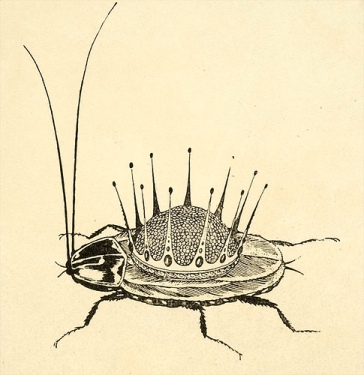
Tarankanische, or ‘The Terrible Cockroach’ (also translated as ‘The Giant Cockroach’) is a children’s story written by the Russian author Kornei Chukovsky (1882-1969). The first edition, with illustrations by Sergeii Chekhonin, was published in (then) Leningrad 1925.

I was raised on translated Russian children’s stories (the only books of that genre we could access in the closed-economy, socialist misadventures of Sri Lanka during the early 1970s). Whatever economic realities that thrust those books on my childhood, many of them were very fine stories, always well illustrated. But I had somehow missed out on this one — so I quickly did some web searching for this story. And what a fantastic fable it is!

Tarankanische tells the nonsense tale of a threatening cockroach who is so fierce that he terrifies all the animals who are out to enjoy a picnic. Even the mighty elephants are helpless in his presence. The cockroach bullies and scares animals much larger than itself, and demands they surrender their cubs so he can eat them. He is seen as “a terrible giant: the red-haired, big-whiskered cockroach.”

Tarankanische, or The Terrible Cockroach, Sergeii Chekhonin, illustrator, 1925
The little tyrant rules the whole jungle on a mix of fear, submission and misery. A laughing kangaroo points out that it’s no giant, but merely a cockroach. The hippos tell him to shut up: “You’ll make things worse for us”. Then, one day, Nature finally restores balance (as it always does): a sparrow comes along and gobbles up the Terrible Cockroach.

In his essay titled Watching the Mighty Cockroach Fall, Philip Shishkin writes: “It is hard not to read the poem as an allegory for the rise and fall of a dictatorship. Despots tend to appear invincible while they rule, and then laughably weak when they fall. Once their subjects call them out on their farce, dictators look ridiculous. Often, they react by killing and jailing people, which buys them more time in power (Iran, Belarus, and Uzbekistan come to mind). But just as often, when faced with a truly popular challenge, dictators shrink to the size of their inner cockroaches.”

Shishkin then raises an interesting question: Did Kornei Chukovsky have Joseph Stalin in mind when he wrote it? Was Stalin prominent enough when the story was first published in 1925? To find out, read the full essay.

According to his mini-bio on IMDB, Chukovsky was a praised Russian translator of Charles Dickens, Mark Twain, Walt Whitman, and other English and American authors. His writings for children are regarded as classics of the form. His best-known poems for children are “Krokodil”, “Moydodyr”, “Tarakanische”, and “Doctor Aybolit” (Doctor Ouch).

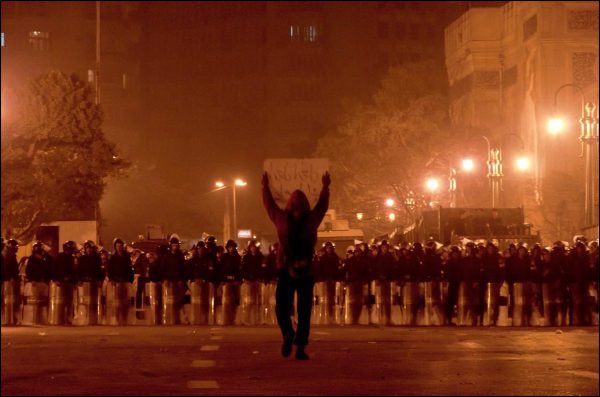
Revolution at the Bottom of the Pyramid: Egyptians want freedom – video

This short video is currently a high favourite online. Created by Tamer Shaaban. Another Egyptian who’s had enough.

Their blurb: “Violent clashes between police and demonstrators as over ten thousand gather on the streets of Cairo. The Egyptian people have endured a tyrant’s rule for far too long, millions struggle each day to find where their next meal is coming from. January 25th, 2011 marks the day when the people rise and take back what’s rightfully there’s. This isn’t the end, but hopefully the beginning to a long awaited regime change! Send to everyone and let them know.”

Song: “Into the Fire” – Thirteen Senses

Thanks to the following news sources for their footage
Daily News Egypt
The Guardian
CNN
New York Times
Al Masry Al Youm

The video was posted on reddit and has gained momentum!

#Facebook Link: Egypt’s Peaceful Revolution

Related blog post: Wanted: More courageous little ‘Mack’s to unsettle Yertle Kings of our times!

Revolution in the making...at the bottom of the pyramid

Wanted: More courageous little ‘Mack’s to unsettle Yertle Kings of our times!

Yertle the Turtle King: My mental image of a despotic ruler!

Related blog post on 7 Feb 2011: Of Dictators and Terrible Cockroaches: A Russian children’s story…from 1925!

January 2011 has been an eventful month for democratic reform in the Middle East. As People Power successfully toppled the deeply entrenched dictator Ben Ali in Tunisia, and the ordinary Egyptians intensified their pressure on own 30-year-long regime of Hosni Mubarak, commentators around the world have been trying to make sense of the rapidly unfolding developments. One of them, David Kravets, writing in Wired linked to a blog post of mine that talked about the experience of one of the earliest successful demonstrations of people power — in the Philippines, when they toppled a long-misruling dictator in 1986.

Amidst all this, and while following the developments on the web, I have been re-reading my Dr Seuss. In particular, the delightfully inspiring tale of Yertle the Turtle King. To me, that is the perfect example of People Power in action — cleverly disguised as children’s verse!

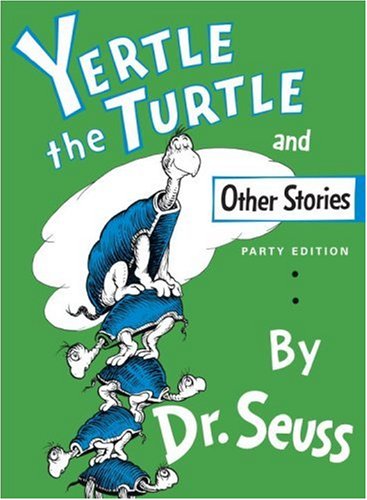
The story was first published in April 1958, in a picture book collection by Theodor Geisel, published under his more commonly-known pseudonym, Dr. Seuss. In 2001, Publishers Weekly listed it at No 125 on a list of the best-selling children’s books of all time.

For those poor Seuss-deprived readers, here’s a helpful summary I have adapted from Wikipedia:

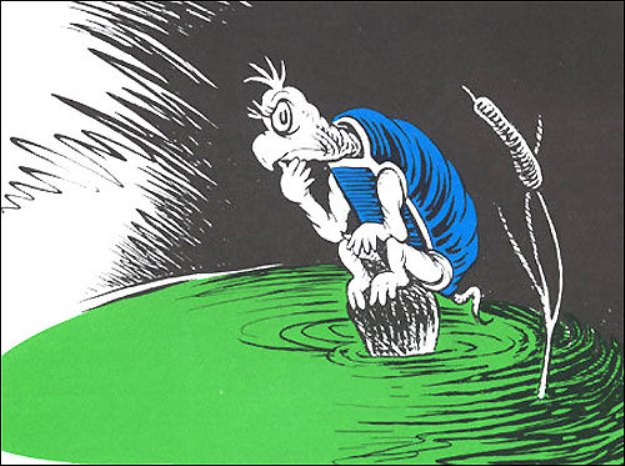
The story is about Yertle the Turtle, the king of the pond in the far-away island of Sala-ma-Sond. Unsatisfied with the stone that serves as his throne, he commands the other turtles to stack themselves beneath him so that he can see further and expand his kingdom (he considers himself the master of all he can see). However, the stacked turtles are in pain. Mack, a very ordinary little turtle at the very bottom of the pile, asks Yertle for a respite, but Yertle just tells him to shut up. Dissent is suppressed.

King Yertle is still not happy: he wants ‘to expand his kingdom’. So he commands more and more turtles to add to his throne. Mack again asks for a respite because the increased weight is now causing extreme pain to the turtles at the bottom. Again Yertle yells at Mack to shut up. At this point, little Mack decides he has had enough and decides to do something to vent his anger and frustration: he just burps. That simple action shakes up the entire stack of turtles, and the mighty king comes crashing down into the pond — and all turtles are freed at last!

Required reading for all despots?Years ago, when I first read the story to my then very young daughter, I could immediately see strong parallels between the vain, merciless Yertle the turtle king and the equally egotistic megalomaniacs in the world of human politics and governance. I would later learn that Dr Seuss meant Yertle to be Adolf Hitler: the turtle’s rule of the pond and takeover of the surrounding areas signified Hitler’s regime in Germany and invasion of surrounding Europe.

The ordinary but courageous Mack epitomises long-suffering Everyman and Everywoman in all countries where autocratic or dictatorial regimes rule, piling ever more burdens on their people. Like the turtles in the stack, the people can go on for years taking a great deal of suffering and sacrifice while the despots plunder and make merry. But there comes a day when a ‘Mack’ says enough is enough…and emits a humble ‘burp’ that shakes up everyone.

As Dr Seuss wrote (and this is my favourite part!):

But, as Yertle, the Turtle King, lifted his hand
And started to order and give the command,
That plain little turtle below in the stack,
That plain little turtle whose name was just Mack,
Decided he’d taken enough. And he had.
And that plain little lad got a bit mad.
And that plain little Mack did a plain little thing.
He burped!
And his burp shook the throne of the king!

And Yertle the Turtle, the king of the trees,
The king of the air and the birds and the bees,
The king of a house and a cow and a mule…
Well, that was the end of the Turtle King’s rule!
For Yertle, the King of all Sala-ma-Sond,
Fell off his high throne and fell Plunk! in the pond!

And today the great Yertle, that Marvelous he,
Is King of the Mud. That is all he can see.
And the turtles, of course… all the turtles are free
As turtles and, maybe, all creatures should be.

Read the text of Yertle the Turtle King

I don’t mean to oversimplify or belittle the enormous courage and resolve it takes for ordinary people to take on a brutal regime, but as pop-culture metaphors go, it’s hard to find a better one than Mack and his defiant burp. That little burp by a tiny turtle brought a vain king down, and its real-world equivalent is called people power: when long-oppressed ordinary people take to the streets to protest against the accumulated excesses of their rulers, demanding reform or regime change.

Not all such ‘burps’ bring all ‘Yertles’ down in the real world. The mighty Soviet Union crumbled in the late 1980s thanks to the courage and persistence of ordinary people who stood up and stepped out. It also worked twice in the Philippines: first against an outright dictator (Marcos) in 1986, and then against a renegade elected president (Estrada) in 2001. A variation of it happened in Nepal against the brutal King Gyanendra, who was dumped into the dustbin of history with the entire monarchy in 2006. Each case had its own history, dynamics and outcomes but shared the common feat of people power.

Sounds familiar? That's because it's all too common!
But elsewhere, as in Tiananmen Square of China (1989) Burma (2007) and Thailand (2010), people power failed to change regimes and led to much violence and bloodshed. What particular combination of social, political and technological factors make people power work is currently the subject of intense study and debate among scholars, diplomats and activists.

But there’s no doubt that recent history has been shaped and made by Macks who broke the silence and, figuratively speaking, burped. Some such burps were heard around the world, and some Macks went on to lead prolonged revolutions that ended with them becoming rulers themselves: Lech Walesa, Cory Aquino and Valclav Havel come to mind.

For every ‘Mack’ who succeeds, though, there are many who go unsung —or much worse. We still have no idea what happened to that much photographed and celebrated ‘Tank Man’ who stood up against the Red Army’s tanks on Tiananman Square one fateful day in June 1989. We don’t even know his name, but his defiance against such enormous odds still inspires assorted Macks all over the world.

For sure, our world is a tiny bit larger — and more complex — than that muddy pond in far away Sala-ma-Sond. And we have an abundance of Yertles, of various colours and hues, riding literally on the backs of their fellow people.

At least some of these tyrants must be following the recent developments in Tunisia and Egypt with growing anxiety. We can only hope that there will be a steady stream of courageous little ‘Macks’ in all such countries who will finally speak up and say: ‘Oi, Enough is enough!’

And then…BURP!

PS: Interesting footnote: Dr Seuss was the first to use the word “burp” in print. That apparently was cause for some concern before publication. According to him, the publishers at Random House, including the president, had to meet to decide whether or not they could use “burp” because “nobody had ever burped before on the pages of a children’s book”.


See also this interesting poem The Vain King, by American poet Henry Van Dyke (1852 – 1933)

When the Twerms Came: Arthur C Clarke’s easy guide for aliens to invade Earth?

Why waste all that energy when there are smarter ways? Image courtesy movie 'Independence Day'

It’s time to come clean: I have a fascination with alien invasions of our planet.

As a kid, I was an avid listener of radio (my only electronic medium, as I grew up in a land without television, and in a time before the Internet) — and expected the regular transmissions to be interrupted any moment to break the news of an alien invasion underway. The spoilsports shattered my childhood dreams everyday.

Now slightly older, I keep looking for the perfect moments for that history-shattering event. A widely reproduced op ed essay I wrote in July 2010 opened with these words:

“If you’re an alien planning to invade the Earth, choose July 11. Chances are that our planet will offer little or no resistance. Today, most members of the Earth’s dominant species – the nearly 7 billion humans – will be preoccupied with 22 able-bodied men chasing a little hollow sphere. It’s only a game, really, but what a game: the whole world holds its breath as the ‘titans of kick’ clash in the FIFA World Cup Final…”

The careless aliens didn’t heed my advice, but I live in hope. I keep looking for the strategic moments and smart ways to take over the planet — with as little violence as possible. After all, I’m a peace-loving person (even if I’m unhappy with the planet’s current management).

I’m not alone in this noble quest. Science fiction writers have been at it for decades, and future Earth invaders are well advised to first study these useful instructions masquerading as popular literature. In an op ed essay published today, I highlight one such story by Sir Arthur C Clarke.

Click on this ONLY if you're a prude...
I wrote WikiLeaks, Swiss Banks and Alien invasions with my tongue in my cheek about half the time (go figure!). I’ve been following the WikiLeaks cablegate saga for several weeks, and was intrigued to read that other critically sensitive secrets — that have nothing to do with garrulous American diplomats — were also reaching this online platform for assorted whistle-blowers.

One such story, appearing in the London Observer on 16 January 2011, reported how the Swiss whistleblower Rudolf Elmer plans to hand over offshore banking secrets of the rich and famous to WikiLeaks. That reminded me of an obscure short story that Arthur C Clarke had written more than 40 years ago, which is not as widely known as it should be. This short essay is an attempt to revive interest in it.

I describe how PLAYBOY Magazine used the story as a basis for a psychedelic comic strip illustrated by the American underground cartoonist Skip Williamson. That appeared in their issue for May 1972 — and I’m still trying to locate that story. All in the interests of pop culture, of course.

Read WikiLeaks, Swiss Banks and Alien invasions on Groundviews.org