Asian Tsunami+5: Are we sure there won’t be a surprise next time?

A monumental failure in communication...

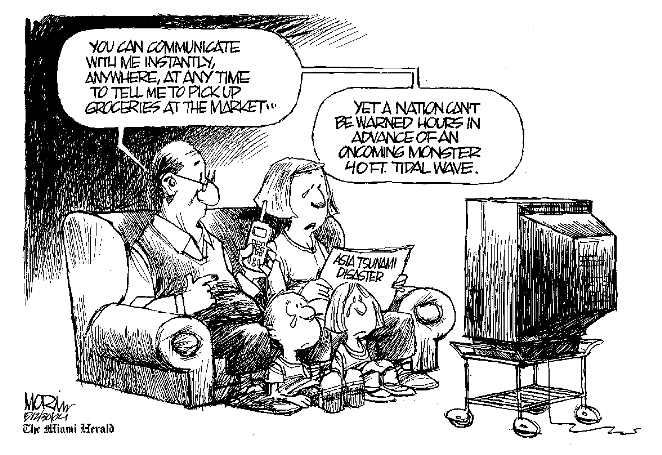
This is one of the most memorable cartoons about the Asian Tsunami of December 2004. It was drawn by Jim Morin, the Pulitzer Prize winning editorial cartoonist of the Miami Herald.

It summed up, brilliantly, one of the biggest shocks associated with that mega-disaster. As I wrote in my op ed essay to mark the fifth anniversary: “It took a while for the tsunami waves, traversing the Indian Ocean at the speed of a jetliner, to reach India, the Maldives, Sri Lanka and Thailand. Yet, in this age of instantaneous telecom and media messaging, coastal residents and holiday makers were caught completely unawares — there was no public warning in most locations. Institutional, technological and systemic bottlenecks combined to produce this monumental failure in communication.”

Chanuka Wattegama
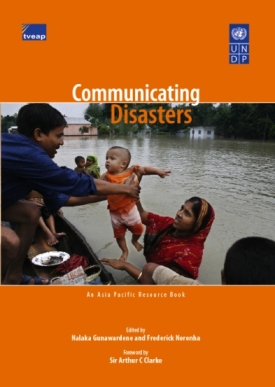
My friend Chanuka Wattegama, trained as an engineer and now working as a senior research manager at LIRNEasia, has studied this vital aspect of early warnings. He contributed a whole chapter on the subject to Communicating Disasters: An Asia Pacific Resource Book that I co-edited with Frederick Noronha two years ago.

After doing a dispassionate analysis of what went wrong in Sri Lanka in the crucial hours just before and during the 2004 tsunami, he asked: “So what remedies one can suggest so that when the next disaster happens — which may or may not be a tsunami — we do not see the same series of events repeated? What exactly is the role that the media can play?”

He outlined five action areas, all of which can be read in his chapter available for free online access (as is the rest of the book).

Here’s an excerpt:

Disaster warning is everyone’s business: Life for most of us would have been easier had the government taken full charge of disaster warnings. Unfortunately, the things do not work that way. These are some of key stakeholders and they have specific roles that they can play:
Views from Ground Zero of several disasters...
• The scientific community: Develop the early warning systems based on their expertise, support the design of scientific and systematic monitoring and warning services and translate technical information to layman’s language.
• National governments: Adopt policies and frameworks that facilitate early warning, operate Early Warning Systems, issue warnings for their country in a timely and effective manner.
• Local governments: Analyse and store critical knowledge of the hazards to which the communities are exposed. Provide this information to the national governments
• International bodies: Provide financial and technical support for national early warning activities and foster the exchange of data and knowledge between individual countries.
• Regional institutions and organizations: Provide specialized knowledge and advice in support of national efforts, to develop or sustain operational capabilities experienced by countries that share a common geographical environment.
• Non-governmental organizations: Play a critical role in raising awareness among individuals and organizations involved in early warning and in the implementation of early warning systems, particularly at the community level.
• The private sector: Play an essential role in implementing the solutions, using their know-how or donations (in-kind or cash) of goods or services, especially for the communication, dissemination and response elements of early warning.
• The media: It has to play an important role in improving the disaster consciousness of the general population, and disseminating early warnings. This can be the critical link between the agency that offer the warning and the recipients.
• Communities: These are central to people-oriented early warning systems. Their input to system-design and their ability to respond ultimately determines the extent of risk associated with natural hazards.

And here’s his conclusion:
“Technology is important. The sole reason behind the seemingly incredible advancements that have happened in the field of human development is the spurt in the growth of new technology. However without people to handle it properly, the technology per se can achieve little. What we can expect a sophisticate earthquake detecting device to do, if there are no human beings to take note what it indicates? So, while giving technology its due position, let us focus on the people-side of the problems. “

Spoken like an uncommon engineer, for sure.

Read full chapter: Nobody told us to run, by Chanuka Wattegama

All You Need is Love: When the world sang one song for HIV…

We must love one another or die...

Our planet is one, but our world speaks and sings in a myriad tongues — and that’s part of our cherished cultural diversity. Once in a while, however, it’s good to see that cacophony morph into a symphony when the world shares a few moments — in awe, horror, love or happiness.

It happened last week when the world sang for an extremely good cause. On 7 December 2009 at 1:30pm GMT, Starbucks invited musicians from all over the world to sing together at the same time to raise awareness for HIV/AIDS in Africa. In one breathtaking moment, musicians from 156 countries played “All You Need is Love” together. The live participation of most nations together to sing this song became a Guinness world record.

Watch now, as musicians from all around the world come together and share a song.

My former colleague Buddhini Ekanayake joined this global production by coordinating the input from Sri Lanka. “Personally, I am really glad to take part in this event together with my team, on behalf of Watermelon Creatives,” she says on her blog, where she shares some info and images.

You can still join in by lending your own voice to the Starbucks Love Project.. Watch streaming video from countries around the world and then join in by singing All You Need is Love yourself. For each video submitted, Starbucks will make a contribution to the Global Fund to help fight against AIDS in Africa. You can also help increase the Starbucks contribution to the Global Fund by submitting a drawing to the Love Gallery.

The global sing-along is part of our continuing efforts to help fight AIDS in Africa. In just one year in partnership with (RED), Starbucks has generated money equivalent to more than 7 million days of medicine to help those living with HIV in Africa.

“All You Need Is Love” is a song written by John Lennon and credited to Lennon/McCartney. It has been associated with path-breaking initiatives before. It was first performed by The Beatles on Our World, the first live global television link. Watched by 400 million in 26 countries, the programme was broadcast via satellite on 25 June 1967.

e-Asia 2009 in Colombo: Huge gaps remain between Sri Lanka’s ICT hype and reality

Say eeeeeeeeeee - and don't ask questions!
The much-hyped e-Asia 2009 conference and exhibition opens in Colombo, Sri Lanka, today. It is organised by our good friends at the Centre for Science, Development and Media Studies (CSDMS) in India and the Sri Lankan government agency known as Information and Communication Technology Agency (ICTA).

According to the conference website, e-Asia 2009 is meant also to celebrate Sri Lanka’s Year of ICT and English, 2009. The event has been preceded by a massive advertising blitz in Sri Lanka’s print and broadcast media, while Colombo and suburbs have been plastered with promotional banners and posters.

The foreign delegates will be exposed to a great deal of sunshine stories from the ICTA which was originally set up as a sunset agency (but hey, the sun never sets on some people!). Sri Lankan delegates will be too embarrassed or well mannered to point out glaring gaps between the hype and reality. Few people want to rock the boat these days!

I am reminded of a popular Sri Lankan folk tale. It relates an incident that happened when we were ruled by hereditary kings, and concerns jaggery — a delicious sugar substitute we make from the sap of the coconut palm.

The King of Lanka, being the curious type, wanted to know how jaggery was made. He sent for the official jaggery supplier to the Palace, who claimed that it was being produced under the most hygienic conditions by people who had mastered the technique for decades.

Unlike today’s rulers, however, the kings of yore didn’t believe everything they were told. So one day the King went in disguise to investigate. Which was just as well — because the reality was completely different! The king found his jaggery being made in a rickety old shack, with none of the hygienic conditions!

A very angry king revealed who he was, and demanded an explanation. He was then told: “That’s the hype, Your Majesty, and this is the reality!”

For one thing, today’s heads of state – overexposed in the media – can hardly expect to go anywhere incognito (and if they tried, security officers and assorted sycophants would immediately prevent it!). All the same, it is an interesting thought experiment to wonder what the President of Sri Lanka might uncover if he were to probe beyond the glitzy (almost giddy) propaganda being unleashed by ICTA!

As I wrote in CSDMS’s own regional magazine i4d a couple of years ago, the gulf between the hype and reality in our ICT circles can be as wide as it is shocking. When an agency invests so much time, effort and money in publicity, we can always suspect that there is more than what meets the eye…

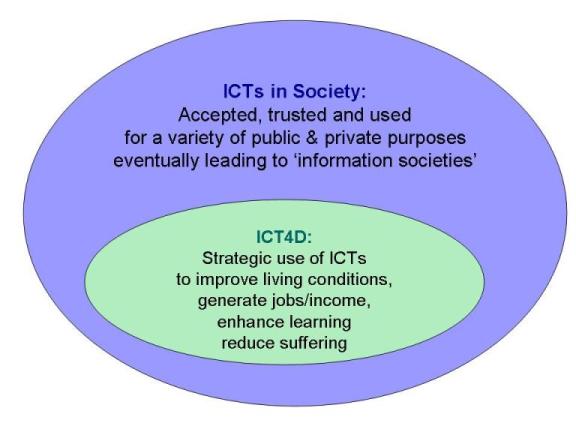
People want their needs met and problems solved, not fancy projects...

The proof of the ICT pudding is in the societal acceptance and integration of ICT tools, processes and services in the daily living, work and leisure of people. As I said in my i4d essay: “Tragically, the ICT Agency of Sri Lanka, which has the mandate and powers to address these issues, is instead dissipating its energy and resources on setting up rural tele-centres, a task that it should leave to better positioned and experienced groups. This glaring inability to set and pursue the right priorities has been a bane of Sri Lankan ICT sector for years.”

What I wrote a couple of years ago is still valid. Here’s another excerpt:

No amount of legislation, policy formulation and paid propaganda by the ICTA is going to mainstream ICTs in Sri Lankan society. ICTs have to prove their worth, and be accepted as adding value to living and working conditions of ordinary people.

We can assess the utility and relevance of any new technology by asking a few simple questions. Does the new technology or process:
– put more food on their table?
– add More money in people’s pockets?
– make interfacing with govt easier?
– save time and effort involved in commuting?
– support cultural and personal needs of individuals and groups?
– put a smile on users’ faces?

Finally, is it affordable, user-friendly and widely available, with minimum entry level barriers?

Read my full essay, ICT Hype and Realities in i4d magazine

Confessions of a Digital Immigrant: Reflections on mainstream and new media

The Digital Native: Was there a life before the Internet, Dad?

In early August 2009, I talked to a captive audience of media owners, senior journalists and broadcasters in Colombo about the ‘digital tsunami’ now sweeping across the media world. (It has been reported and discussed in a number of blog posts on Aug 6, Aug 7, Aug 8 and Aug 31).

As I later heard, some in my audience had mistakenly believed that I was advocating everything going entirely online. Actually, I wasn’t. I like to think that both the physical and virtual media experiences enrich us in their own ways. Real world is never black and white; it’s always a mix or hybrid of multiple processes or influences.

So I’ve just revisited the topic. I adapted part of the talk, and included more personalised insights, and wrote an essay titled ‘Confessions of a Digital Immigrant‘, which has just been published on Groundviews, the path-breaking citizen journalism initiative.

It opens with these words:

“My daughter Dhara, 13, finds it incredible that I had never seen a working television until I had reached her current age — that’s when broadcast television was finally introduced in Sri Lanka, in April 1979. It is also totally inconceivable to her that my entire pre-teen media experience was limited to newspapers and a single, state-owned radio station.

“And she simply doesn’t believe me when I say — in all honesty and humility — that I was already 20 when I first used a personal computer, 29 when I bought my first mobile phone, and 30 when I finally got wired. In fact, my first home Internet connectivity — using a 33kbps dial-up modem — and our daughter arrived just a few weeks apart in mid 1996. I have never been able to decide which was more disruptive…

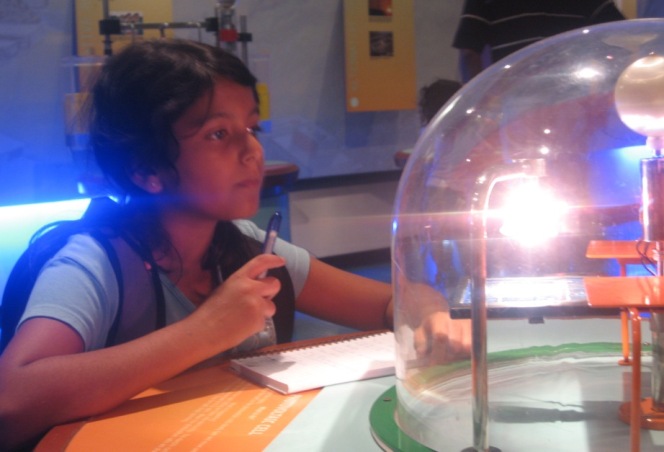
Groundviews: 1,000 posts and counting...“Dhara (photographed above, in mid 2007) is growing up taking completely for granted the digital media and tools of our time. My Christmas presents to her in the past three years have been a basic digital camera, an i-pod and a mobile phone, each of which she mastered with such dexterity and speed. It amazes me how she keeps up with her Facebook, chats with friends overseas on Skype and maintains various online accounts for images, designs and interactive games. Yet she is a very ordinary child, not a female Jimmy Neutron.

“Despite my own long and varied association with information and communication technologies (ICTs), I know I can never be the digital native that Dhara so effortlessly is. No matter how well I mimic the native ‘accent’ or how much I fit into the bewildering new world that I now find myself in, I shall forever be a digital immigrant.”

Read the full essay ‘Confessions of a Digital Immigrant’ on Groundviews…

How to become a global publisher or broadcaster in just 100 minutes!

cartoons_02
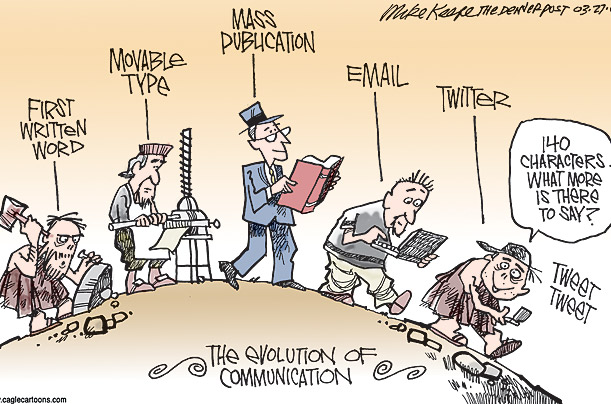
Evolution or revolution?

I was born three years before the Internet (which turned 40 a few weeks ago), and raised entirely on newspapers and radio in a country where broadcast television didn’t arrive until I was 13.

From the time I could read and write, I always wanted to be a media publisher. In that pre-history of the Personal Computer and Internet, my choices were pretty limited: I published a hand-written household newspaper and was its editor, reporter, printer and distributor all rolled into one. But I was obsessive in my work even then, and the newspaper lasted a couple of years in which over two dozen issues were released (all of them now mercifully lost).

My school teacher parents were my first patrons, supplying me with plenty of paper, pencils and ink. But there must have times when they rather wished that I didn’t indulge in my own brand of independent journalism. I loved to criticise and lampoon the ‘management’ in my editorials — even as a kid, I was already critical of the establishment!

Fortunately for me, the ‘management’ left me alone and to my own devices, but most independent editors in history haven’t been so lucky. As the American journalist A.J. Leibling (1904 -1963) once said, “Freedom of the press is guaranteed only to those who own one.” In his time, this was perfectly true.

There was a time, until recently, when press barons and media moguls led, and the rest of society followed. In our topsy-turvy times, however, the reverse is increasingly true.

In theory, at least, anyone can be a global broadcaster and publisher in less than two hours using free tools that can be downloaded and activated in minutes.

david brewer photo
David Brewer (photo from http://www.i-m-s.dk)
My British media activist friend David Brewer has just published an online guide on how to become a publisher or broadcaster in 100 minutes. (Okay, the non-geeks among us might need a bit longer than that, but still, you can be in business in just a few hours.)

David Brewer’s journalistic and managerial experience spans newspapers, radio, television, and online, and he now runs Media Ideas International Ltd, a media strategy consultancy with clients in Europe, the Balkans, the CIS, the Middle East, Asia, Africa and Central America.

David has worked with what I like to call the A-B-C of global broadcasting. He was the launch managing editor of BBC News Online in 1997, and moved to CNN, as managing editor, to set up CNN.com Europe, Middle East and Africa and CNNArabic.com. He was an editorial consultant for the launch of Al Jazeera English in 2006 and continues to work with Al Jazeera English as a new media consultant.

In his spare time, he runs Media Helping Media , a network and online resource to support media in areas where freedom of expression is under threat.

Who’s making video clips? Not me…but does it matter anymore?

video clip
Clip, clip, clip...
I’m usually happy and eager to explain my work to anyone who asks. I keep cool when people mix up technicalities related to film and video – after all, I don’t know the finer points in other professions and industries.

One thing I’m a bit tired of hearing is the wide-spread misuse of the term ‘video clip’. I try to keep a straight face when well-meaning people ask me about recent ‘video clips’ I’ve made. The truth is, I don’t make any: I make fully edited films – sometimes long, sometimes short, but always finished (That is, if a film can ever be called ‘finished’. An industry giant once told me that no film is ever finished; it’s only abandoned…)

For example, my latest climate film Small Islands – Big Impact is slightly under 6 minutes, yet it’s a complete product. I spent two months working on actually making it, and almost 20 years covering the story itself.

But the distinction between film and clip is not widely understood. In fact, the digital revolution seems to have added to the confusion.

The Wikipedia says a media clip is a short segment of media either an audio clip or a video clip. In other words, a part of something bigger.

It further explains: “Media clips may be promotional in nature, as with movie clips. For example, to promote upcoming movies, many actors are accompanied by movie clips on their circuits. Additionally, media clips may be raw materials of other productions, such as audio clips used for sound effects.”

Video clips are short clips of video, usually part of a longer piece. Wikipedia adds, however, that this term is “also more loosely used to mean any short video less than the length of a traditional television program.”

That’s part of the confusion. With the spread of broadband Internet , which enabled greater bandwidth to both content creators and users, video clips have become very popular online.

About.com, another widely used online reference, says: “A video clip is a small section of a larger video presentation. A series of video frames are run in succession to produce a short, animated video. This compilation of video frames results in a video clip.”

But that’s not all. While the TV/video industry widely accepts the above definition, the computer industry seems to use ‘video clip’ generically to mean any short video, processed or otherwise. This is how video clip is defined, for example, by YourDictionary.com and PC Magazine’s online encyclopedia.

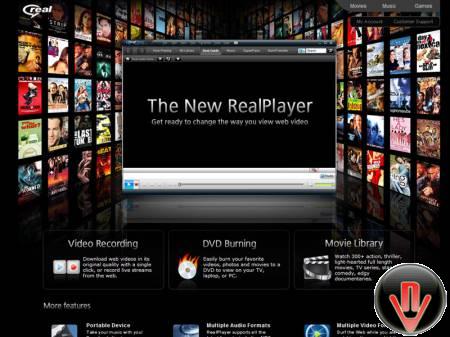
New Real Player
Snip, snip, snip...?
In this era of media convergence, when films an TV programmes are made using non-linear technologies enabled by computers, it’s no wonder that ‘video clip’ means different things to different people.

Wikipedia also talks of an emerging clip culture: “The widespread popularity of video clips, with the aid of new distribution channels, has evolved into clip culture. It is compared to “lean-back” experience of seeing traditional movies, refers to an internet activity of sharing and viewing a short video, mostly less than 15 minutes. The culture began as early as the development of broadband network, but it sees the boom since 2005 when websites for uploading clips are emerging on the market, including Shockinghumor, YouTube, Google Video, MSN Video and Yahoo! Video. These video clips often show moments of significance, humour, oddity, or prodigy performance. Sources for video clips include news, movies, music video and amateur video shot. In addition to the clip recorded by high-quality camcorders, it is becoming common to produce clips with digital camera, webcam, and mobile phone.”

Until recently, I used to get irked when people ask me about ‘video clips’ I make. My stock answer has been: “We only make fully edited, self-contained short films of various durations…partly because less is more these days. We don’t, as a policy, make ‘clips’ which in TV industry terms means semi-edited or unedited extracts that are not self-contained.”

Maybe I should stop being such a purist. After all, as I keep reminding my colleagues, students and anyone else who cares to listen to me, media is a plural!

One thing is for sure. Literacy rates and computer literacy rates have been rising worldwide in recent decades. But when it comes to basic media literacy, our societies still have a long way to go.

PS: In July 2007, we had an interesting discussion on this blog on the shrinking durations of Nature and environment films and TV programmes. The moving images community seems divided on this, with some purists holding out that to pack complex, nuanced messages into a few minutes is akin to ‘dumbing down’. Noted film-makers like Neil Curry disagreed.

Satinder Bindra: It’s the message, stupid (and never mind the UN branding)!

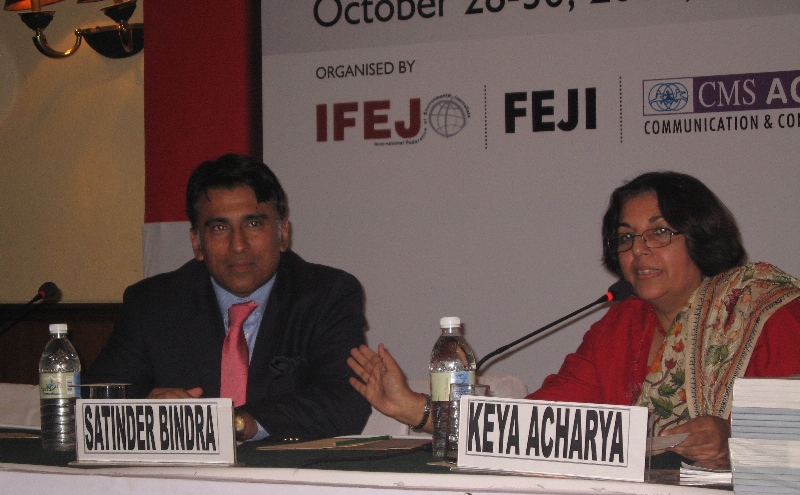
Satinder Bindra (left) and Keya Acharya
Satinder Bindra (left) and Keya Acharya at IFEJ 2009 Congress

Satinder Bindra left active journalism a couple of years ago when he joined the UN Environment Programme (UNEP) as its Director of the Division of Communications and Public Information (DCPI) based at UNEP Headquarters in Nairobi. But thank goodness he still thinks and acts like a journalist.

Satinder, whom I first met in Paris in the summer of 2008 soon after he took up the new post, gave a highly inspiring speech to the latest congress of the International Federation of Environmental Journalists (IFEJ), held at India Habitat Centre in New Delhi from 28 to 30 October 2009.

We have gone beyond the cautionary stage of climate change, and are now acting out ‘Part II’ where we have to focus on what people can do, he said. “Climate change is no longer in doubt, and if anything, the IPCC’s scenarios are turning out to be under-estimates.”

He was referring to the IFEJ congress theme, “Bridging North-South Differences in Reporting Climate Change: Journalists’ role in Reaching an Ambitious Agreement at COP15 in Copenhagen”.

Satinder sounded emphatic when he said: “We have a limited time in which to reach as many people as possible. Environment is the single biggest challenge we face in the world today, and we as journalists have a tremendous responsibility in providing the latest, accurate information to our audiences.”

He added: “There is still a debate among journalists on whether or not we should be advocates for the environment. We should not be scared to push the best science, even if we don’t choose to engage in advocacy journalism.”

Satinder mentioned the “Paris Declaration on Broadcast Media and Climate Change,” adopted by delegates at the first UNESCO Broadcast Media and Climate Change conference held in Paris on 4-5 September 2009. It resolved to “strengthen regional and international collaboration, and encourage production and dissemination of audiovisual content to give a voice to marginalized populations affected by climate change”.

Satinder, who was a familiar face on CNN as its South Asia bureau chief until 2007, acknowledged that the media landscape was evolving faster than ever before. “Thanks to the web and mobile media, our distribution modes and business models are changing. YouTube has emerged as a key platform. Viral is the name of the game.”

His message to broadcasters, in particular, was: “You may be rivals in your work, but when it comes to saving the planet, put those differences aside.”

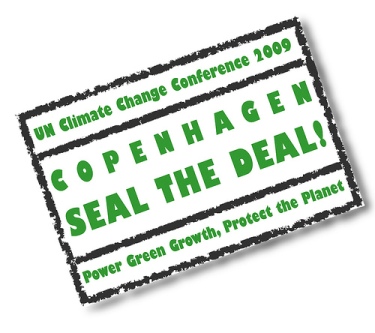
Copy of Seal the Deal
A call to the whole planet...
Satinder is spearheading, on behalf of UNEP, the UN-wide Seal the Deal Campaign which aims to galvanize political will and public support for reaching a comprehensive global climate agreement in Copenhagen in December.

To me at least, the most important part of Satinder’s speech was when he said that he was not seeking to promote or position the UNEP or United Nations branding. His open offer to all journalists and broadcasters: “If you need to use the hundreds of UNEP films, or make use of our footage in your own work, go right ahead. We want you to make journalistic products. There’s no need or expectation to have the UN branding!”

Wow! This is such a refreshing change — and a significant departure — from most of his counterparts at the other UN agencies, who still think in very narrow, individual agency terms. They just can’t help boxing the lofty ideals of poverty reduction, disaster management, primary health care and everything else within the agenda setting and brand promotion needs of their own agencies.

I have serious concerns about this which I have shared on a number of occasions on this blog. See, for example:
May 2007: Feeding Oliver Twists of the world…and delivering UN logos with it!
August 2007: ‘Cheque-book Development’: Paying public media to deliver development agency logos
October 2007: The many lives of PI: Crisis communication and spin doctors
July 2009: Why can’t researchers just pay the media to cover their work?

In a widely reproduced op ed essay published originally on MediaChannel.org in August 2007, I wrote:

“As development organisations compete more intensely for external funding, they are increasingly adopting desperate strategies to gain higher media visibility for their names, logos and bosses.

“Communication officers in some leading development and humanitarian organisations have been reduced to publicists. When certain UN agency chiefs tour disaster or conflict zones, their spin doctors precede or follow them. Some top honchos now travel with their own ‘embedded journalists’ – all at agency expense.

“In this publicity frenzy, these agencies’ communication products are less and less on the issues they stand for or reforms they passionately advocate. Instead, the printed material, online offerings and video films have become ‘logo delivery mechanisms’.”

Let’s sincerely hope that the pragmatic and passionate Satinder Bindra will be able to shake up the communication chiefs and officers of the UN system, and finally get them to see beyond their noses and inflated egos. It’s about time somebody pointed out that vanity does not serve the best interests of international development.

See also April 2007 blog post: MDG: A message from our spin doctors?

Internet at 40: Over the hill or real life begins from now?

Where does wireless come in?

When Apollo XI astronauts became the first humans to land on the Moon in July 1969, the whole world knew – and about a quarter of humanity actually watched it live on television. The 40th anniversary of that ‘giant leap for mankind’ was marked a few months ago.

Something else with far-reaching implications happened a few weeks later, but was not noted as significant outside the circles of nerds and geeks. On 2 September 1969, computer scientists at the University of California, Los Angeles, established a network connection between two computers — creating the very first node of what we now know as the Internet.

At the time, engineer and computer scientist Leonard Kleinrock and his colleagues were charged with developing the Advanced Research Projects Agency Network (or ARPANET), a US government-funded research project in global computer communications that eventually grew into the Internet.

Although some celebrated the Internet’s 40th birthday on 2 September 2009, others held that the network didn’t really have ‘life’ until 29 October 1969. On that day, a message was typed by Kleinrock and sent to the second node at Stanford Research Institute. That “was the first breath of life the Internet ever took,” says Kleinrock.

Given the complexity that the Internet has evolved to, it isn’t surprising that the actual birthday is hard to pin down and is the subject of endless discussion among geeks and wonks online. For the rest of us grateful users of the Internet — most of the 1.6 billion people estimated as connected — we can celebrate the Internet’s 40th birthday through the months of September and October 2009.

But as this recent AP story reminds us, goofy videos weren’t on the minds of Len Kleinrock and his team at UCLA when they began tests 40 years ago on what would become the Internet.

Associated Press story, 31 August 2009: Internet Creators Didn’t Foresee Today’s Web

So as the Internet turns 40 – is it downhill from now? Or does life actually begin at 40? (As someone who is three years older than the Internet, I would say yes!).

“The Internet has just reached its teenage years,” Kleinrock said in an interview with Computerworld recently. “It’s just beginning to flex its muscles. The fact that it’s just gotten into its dark side – with spam and viruses and fraud — means that it’s like an [unruly] teenager. That too will pass as it matures.”

British techno-historian and columnist John Naughton (author of ‘A Brief History of the Future: Origins of the Internet‘) describes the Internet as an attempt to answer the following question: How do you design a network that is “future proof”–that can support the applications that today’s inventors have not yet dreamed of? The solution was to devise a network of networks that would not be biased in favor of any particular application. The Internet’s creators didn’t want the network architecture–or any single entity–to pick winners and losers. Because it might pick the wrong ones. Instead, the Internet’s open architecture pushes decision-making and intelligence to the edge of the network–to end users, to the cloud, to businesses of every size and in every sector of the economy, to creators and speakers across the country and around the globe.

In the words of Tim Berners-Lee, the Internet is a “blank canvas”–allowing anyone to contribute and to innovate without permission. It was Berners-Lee, as a young computer scientist, who is credited with inventing the World Wide Web, making the first proposal for it in March 1989. So the web turns 20 this year as the Internet itself passes 40.

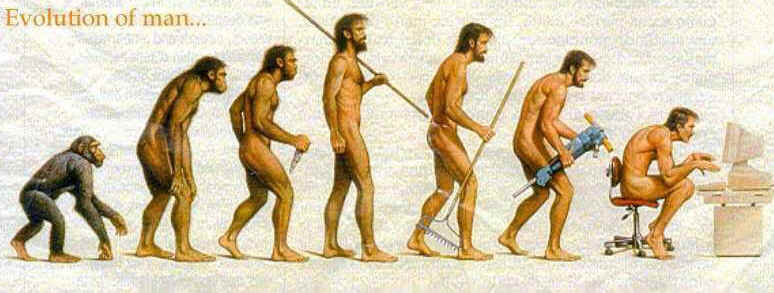
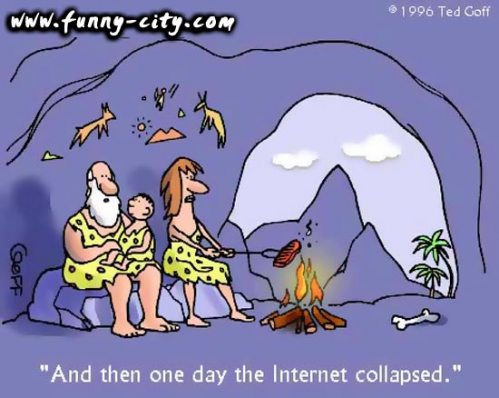
Anyone dares to predict what can happen in the next 20 years? Here’s one prophecy I hope will never come to pass…

Back to Year Zero?
Back to Year Zero?

One minute to midnight — or just one minute to save the world?

How much can you pack into 60 seconds?

How much can you pack in to one minute, or 60 seconds? That’s a lot of air time, as broadcasters and advertisers know very well.

One Minute to Midnight‘ has been a favourite metaphor of dooms-dayers – and is the title of a 2008 book. It was widely used in relation to the world drawing closer to nuclear war during the second half of the 20th century.

Now, as global climate change surpasses fears of global nuclear war, we are given just one minute to save the world.

One Minute to Save the World is an international short film competition to raise awareness of climate change. Entries are currently being sought from professionals and amateurs, with 31 October 2009 as the deadline. There is also a category for under 18s and for entries shot on mobile phones.

The idea is to enable anyone, anywhere, to deliver a short but powerful message to the world on climate change. The winning films will be sent around the world in November as an online campaign to raise awareness of the Copenhagen Climate Conference in December 2009.

Good planets are hard to find...
British TV presenter and adventurer Bruce Parry, a founder of the competition, says: “Together we will be looking for films that convey a powerful message about how climate change affects you and those around you. Were you a flood victim? Have you seen a change in the plants and wildlife in your garden? How has your world been affected and how can we address it?

He adds: “So, we hope you’ll all get thinking and shooting – whether you’re a seasoned pro or just someone who cares. Your planet needs you and your talents. One minute might not seem like a long time but it’s actually longer than many advertisers spend hundreds of thousands of pounds on. It’s also an easy length of time to hold people’s attention. And that is one of the things we urgently need to do if we’re going to turn things around for our planet before it’s too late.”

The winning entries will be judged by an international panel that includes Parry himself, award-winning director and climate change activist Shekhar Kapur; Franny Armstrong, director of Age of Stupid and The Guardian‘s environment editor John Vidal.

The website will become an online film festival which requires no travel or celebrity status to attend – all you need is access to a computer. “And as everyone knows, the power of the net can make the most unexpected video attract the attention of millions globally,” says Bruce Parry.

Read Bruce Parry on One Minute to Save the World

One Minute to Save the World competition rules and more info

Watch entries on YouTube

The XYZ Show: New horizon in political satire on African TV, but room to grow?

Anyone can do ABC; it takes effort to make it all the way to XYZ...
Anyone can do ABC; it takes a special effort to make XYZ...


Update on 1 Sep 2009: Controversy over XYZ Show: Kenyan politicians forgetting Hakuna matata?

I ended a recent blog post, News wrapped in laughter, with this thought: “There is another dimension to satirising the news in immature democracies as well as in outright autocracies where media freedoms are suppressed or denied. When open dissent is akin to signing your own death warrant, and investigative journalists risk their lives on a daily basis, satire and comedy becomes an important, creative – and often the only – way to comment on matters of public interest. It’s how public-spirited journalists and their courageous publishers get around draconian laws, stifling regulations and trigger-happy goon squads. This is precisely what is happening right now in countries like Kenya and Sri Lanka, and it’s certainly no laughing matter.

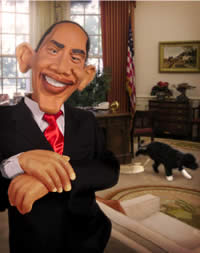
An interesting experiment in political satire on Kenyan television has just ended its first season on 9 August 2009. It’s a show called the XYZ Show, which was broadcast weekly on Kenya’s Citizen TV. Started in mid May 2009, the first season introduced Kenyan viewers to a new form of satire television, with life-sized puppets made to resemble famous persons, mostly politicians.

Gado the Creator
Gado the Creator
The XYZ Show was inspired by famous puppet satire series like the British “Spitting Image” and the French “Les Guignols de l’Info” shows. In the XYZ Show, the puppets commented on news and current events from both Kenya and overseas.

The XYZ Show was developed by a team led by Kenyan cartoonist Godfrey Mwampembwa, alias Gado. He is the most widely syndicated cartoonist in East and Central Africa. He publishes a daily cartoon in The Nation, the largest newspaper in Kenya, and his work has been published in Le Monde (France), Washington Times (US), De Standaard (Belgium) and The Japan Times.

According to its creators, the XYZ Show challenged famous figures from Kenyan high society and politics using humour and satire. It aimed to become a new forum for social and political debate, one that provides room for open discussion.

Watch XYZ Show’s first episode trailer, produced one year ago:

Says the Prince Claus Fund of the Netherlands, which supported the show’s production: “Although freedom of the press is a constitutional right in Kenya, it is difficult for many journalists to practice their profession without interference. Gado and his team hope that the XYZ Show will contribute positively to strengthening freedom of the press and increasing political and social awareness among the people of Kenya. The show provides commentary on current social and political developments and aims to use humour and artistry to reinforce freedom of speech in Kenya.”

From what I’ve been able to watch online, on the show’s YouTube channel and elsewhere, the production values are at a high standard, comparable to such shows made in Europe and East Asia. The puppets are attractive, movements convincing and the pace quick and slick.

Who pulls his strings?
The producers have also tried hard to make XYZ more than just a TV show. The website, in English, shows how the content is being adapted for the web (as webisodes) and mobile phones (as mobisodes). The show’s official blog takes us on to the set and shares with us the story behind the story, and introduces us to the artists and technical geniuses involved. Full marks for trying to engage the audience.

Then there is Barack Obama. Using his Kenyan connections, the show casts him (really, a puppet in his image) in a ‘supporting actor’ role. This has clearly inspired some interest in the show beyond Kenya.

So far, so good. But how does it work with the audience? The show is directed mainly at local audiences, and even if it’s presented in a mix of English and local language, it’s not something a complete outsider like myself can appreciate.

So I ‘crowd-sourced’ by asking a Kenyan reader of my blog, Marion N N, for her opinion. Marion is part of Sojourner, which her blog introduces as “a social enterprise that exists to promote the origination, production and distribution of African viewpoints through visual media. We are passionate about African film-making and seek its viable promotion globally”.

Marion wrote a comment in her blog after watching one episode a few weeks ago. She lives and works in Kenya, and her views are far more valid than my own.

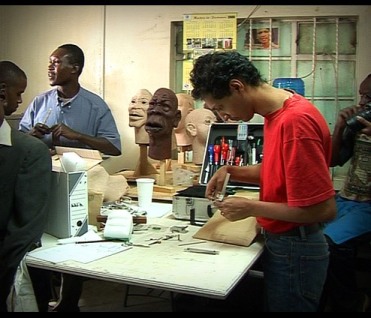
Behind the screen, creators at work...
She wrote: “My first off impression was fascination about the quality of the show in terms of animation which is very new to the local TV production scene in Kenya. Once past the fascination of the animation, I found that the content failed to hold my interest, connect with me or engage me as an audience. As a socio-political spoof show, humor ideally should be the hook that captures audience but in this case, humor comes across as mindless, illogical or simply stupid action on the screen. As if in evidence to this fact, at some point my husband in between laughter remarked ‘This show is really stupid’. I would imagine this would be a compliment to the Production becuase it provoked laughter in a viewer. However beyond that moment, it seemed only natural for us to flick over to more substantial entertainment having enjoyed that brief flight of fancy that failed to arouse an appetite for more.”

Marion also wondered what the show’s intended audience was, and highlighted the many challenges in getting the levels and balances right in doing political satire: “That politicians sometimes (nay, most times) behave ridiculously is not new or fresh. But the treatment, underlying themes, ideas communicated to audiences should be. Why do I suggest this? Because political satire by its nature speaks to an audience that is fairly mature, and exposed. To use childish humor that is poorly developed will not hold the audience’s attention. Infact at some point the content may become a tad irritating to watch. Political satire needs to be treated with a peppering of fact, wit, fresh perspective or take -out: The achievement of some underlying objective and not just mindless visual gimmicks that lead to the feeling of ‘stooping to idiocy; by audiences. This seeming insult of intelligence causes us as an audience to switch off.”

XYZ Show logoIn my own view, The XYZ Show had at least three major challenges. Doing any puppet show is hard enough, and these days the on-air competition is neither local nor fair: it comes from global entertainment corporations like MTV and their regional variations, usually with deep pockets. Doing political satire is even harder, especially if the political culture is intolerant or repressive. To get the look, feel and balances right in a country where such a show is being done locally for the first time is a formidable challenge by itself.

But I’ll let Marion have the last word. In spite of the various concerns, she feels that the XYZ Show has ‘room to grow and conquer the airwaves’. But, as she notes, “The production team have their work cut out for them in pre-production. It’s back to the drawing board and ask who is my audience? What appeals to them? How do I connect with them, define an objective for the show and its audiences? Research facts and opinions about national sentiment on issues then develop scripts and sequences…”

Read Marion’s full comment on her blog

All images used on this blog post are courtesy The XYZ Show.