සිවුමංසල කොලූගැටයා #21: ප‍්‍රතිනිර්මාණය වූ සියැටල් නායක කථාව/මිථ්‍යාව

In this Ravaya column, in Sinhala and printed in the Ravaya newspaper of 3 July 2011,
I point out that a certain speech said to be uttered by a native American chief is, in fact, a latter day script by a filmmaker.

The same ground was covered in English in my April 2009 blog post: ‘Chief Seattle speech’: Global environmental legend, or pervasive myth?

අද්භූත හෝ අහඹු සිදුවීම් පාදක කර ගත් කථාන්තරවලට අපි මිථ්‍යා (myths) යයි කියනවා. දේව විශ්වාස, ඇදහිලි ආදියත් ඇතැම් අය මේ ගණයට ම එකතු කරනවා. ඒවායේ ඇත්ත නැත්ත කෙසේ වෙතත් මිථ්‍යාවන්ට දැඩි ඇල්මක් එදා මෙන් ම අදත් මිනිස් සමාජයේ තිබෙනවා. 21 වන සියවසට පිවිසියත් අප ඇතැම් දෙනකු තවමත් නූතන මිථ්‍යාවන් වැළඳගන්නේ ඒ නිසයි. එබදු මිථ්‍යාවන්, උගත් හා වෘත්තිකයන් සේ පුහුණව ලැබූ අය අතරත් හමුවනවා. ‘සියැටල් නායකයාගේ මහා දාර්ශනික පාරිසරික පණිවුඩය’ එයින් එකක්.

මේ කථාවේ කතුවරයා ලෙස බොහෝ දෙනා සළකන්නේ Chief Seattle නමින් ප‍්‍රකට, 1780-1866 කාලයේ වාසය කළ අමෙරිකාවේ ආදිවාසී ජන නායකයෙක්. (ඉතිහාසයේ වැරදි නම් කිරීමක් නිසා කලක් මේ ජනයාට ‘රතු ඉන්දියනුවන්’ යයි කීවත් අද ඒ නම භාවිතයේ නැහැ.) ඒ ආදිවාසීන්ගේ නිජබිම්වල 16 හා 17 වන සියවස්වල පැමිණ පදිංචි වූ යුරෝපීය සුදු ජාතිකයන් සමග සාමකාමීව සහජීවනය වෙත යොමු වූ නායකයකු ලෙස සියැටල් ඉතිහාසගත වී තිබෙනවා. ඔහුගේ නම විවිධාකාරයෙන් ලියනවා. Sealth, Seathl හා See-ahth වශයෙන්. එහෙත් වඩාත් ම ප‍්‍රකට සියැටල් නායකයා හැටියටයි. මිනිසාගේ පාරිසරික වගකීම් ගැනත්, මිහිතලය හා අප කරන ගනුදෙනුව ගැනත් උදාර අදහස් පළ කළ කෙනකු ලෙස අප ඔහු ගැන අසා තිබෙනවා.
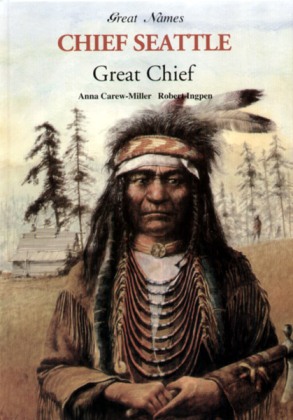
The man was real; the speech wasn't his
1854 වසරේ මුල් කාර්තුවේ දවසක බටහිර ඇමෙරිකාවේ සියැටල් නගරයේ එලිමහන් රැස්වීමකදී සියැටල් නායකයා හැගීම්බර කථාවක් කළ බවට යම් සාක්‍ෂි තිබෙනවා. එයට ආසන්න ම හේතුව වූයේ පාරම්පරිකව ආදිවාසීන් ජීවත් වූ ඉඩම් සුදු ජාතිකයන්ට විකුණන ලෙස රජයෙන් කළ ඉල්ලීමයි. ‘ඉඩම් අයිතිය’ පිළිබඳ සංකල්පයක් නොතිබූ ආදිවාසීන් මෙයින් වික්‍ෂිප්ත වුණා. ඒ වන විට සිදුවෙමින් තිබූ පාරිසරික හා සාමාජයීය අකටයුතුකම් ගැන ද නායකයාගේ සිතේ ලොකු කලකිරීමක් තිබෙන්නට ඇති. නමුත් ඔහු තමන්ගේ බසින් එදා කළ කථාවේ වාර්තාවක් නැහැ.

ඊට වසර කිහිපයකට පසු සුදු ජාතික වෛද්‍යවරයකු හා ලේඛකයකු වූ හෙන්රි ස්මිත් මුල් වරට ඒ කථාවේ ඉංග‍්‍රීසි අනුවාදයක් සකස් කළා. ඒ සඳහා ඔහු කිහිප වතාවක් සියැටල් නායකයා මුණ ගැසී කථා බහ කළත් ඔහුගේ අනුවාදයට වැල්වටාරම් හා මනරම් අදහස් එකතු කළ බව ඇන්ඩි කාර් (Andy Carr) නම් අමෙරිකානු පරිසරවේදියා හා පර්යේෂකයා විශ්වාස කරනවා.

1887දී මේ ඉංග‍්‍රීසි අනුවාදය මුල් වරට Seattle Sunday Star පුවත්පතේ පළ වුණා. එයින් පසු විවිධ දාර්ශනික, ආගමික හා පාරිසරික ප‍්‍රකාශනවල එය නැවත නැවතත් පළ කරනු ලැබුවා. 1969 දී අමෙරිකාවේ ටෙක්සස් විශ්ව විද්‍යාලයේ සම්භාව්‍ය සාහිත්‍යය පිළිබඳ මහාචාර්ය විලියම් ඇරෝස්මිත් (Prof William Arrowsmith) නැවත වරක් එය කාලානුරූපිත ලෙස සංස්කරණය කළා.

1970 අපේ‍්‍රල් 22 දා අමෙරිකාවෙන් ඇරඹුණු මිහිතල දිනය (Earth Day) සඳහා පරිසරවේදීන් මිලියන් 20ක් දෙනා යොදා ගත්තේ ඒ සංශෝධිත කථාවයි. ඒ වන විට වාත දුෂණය, ජල දුෂණය හා රසායනික ද්‍රව්‍ය අධික ලෙස ආහාරපානවලට මිශ‍්‍රවිම ආදී කරුණු ගැන අමෙරිකානු ජනතාව දැනුවත් වෙමින්, කලබල වෙමින් සිටියා. මේ කාලීන සිතුම් පැතුම් මහාචාර්යවරයාගේ සංශෝධනයට ඔහු ඇතුළත් කළා.
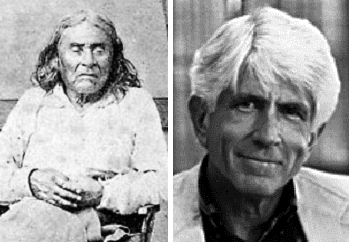
Chief Seattle (left) and actual speech writer Ted Perry

මේ සංශෝධිත කථාව මුල් මිහිතල දිනයේදී ඇසු අය අතර ටෙඞ් පෙරී (Ted Perry) නම් චිත‍්‍රපට තිර රචකයකු ද සිටියා. ඊට ටික දිනකට පසුව එරට කි‍්‍රස්තියානි ටෙලිවිෂන් සමාගමක් (Southern Baptist Television Commission) ඔහුට ඇරයුම් කළා ඒ වන විට සිදුවෙමින් තිබූ පරිසර විපත් පිළිබඳව කිතු දහම පදනම් කරගෙන සාමයිකව විග‍්‍රහ කරන වාර්තා චිත‍්‍රපටයක් රචනා කරන්නට.

සියැටල් නායකයා 1970 දී සිටියා නම්, එවකට මතු වී තිබූ පාරිසරික ප‍්‍රශ්න හා සංවර්ධන පිළිබඳ සංකල්පමය අර්බුද ගැන ඔහු කුමක් කියනු ඇත්දැයි ටෙඞ් පෙරී කල්පනා කළා. මේ අනුව යමින් සියැටල් නායකයාගේ කථාවේ අළුත්ම ප‍්‍රතිනිර්මාණයක් ඔහු ලයාන්විත හා කාව්‍යමය බසින් තිර රචනයකට නැගුවා. මුල් කථාවේ නොතිබුණු දෙවියන් පිළිබඳ ක‍්‍රිස්තියානි සංකල්පත් ඔහු මේ තිර රචනයට එකතු කළා. 1973දී මේ වාර්තා චිත‍්‍රපටය එළි දැක්කේ Home නමින්. චිත‍්‍රපටයට වඩා විශාල ජනප‍්‍රියතාවයක් ලැබුණේ එහි යොදා ගත් සියැටල් නායකයා කළා යැයි කියන දාර්ශනික කථාවටයි.

පසුගිය වසර 40කට අසන්න කාලයක් තිස්සේ ලොව පුරා ප‍්‍රචලිත වී, විවිධ භාෂාවලට පෙරැළී ඇත්තේ මෙසේ හෙන්රි ස්මිත්ගේ මුල් අනුවාදය, විලියම් ඇරෝස්මිත් විසින් කාලානුරූපීව සංශෝධනය කර ටෙඞ් පෙරී විසින් ප‍්‍රතිනිර්මාණය කරන ලද කථාවයි! එඞ්වින් ආරියදාස හා ධර්මසිරි ගමගේ යන ලේඛකයන් මෙහි අගනා සිංහල අනුවාදයන් කර තිබෙනවා.

1980 දශකය අගවන විට ලොව පුරා පාරිසරික ශුද්ධ ලියවිල්ලක මට්ටමට පිළිගැනීමක් ලැබුණු මේ කථාවේ ඓතිහාසික විශ්වාසනීයත්වය ගැන ටික දෙනකු ප‍්‍රශ්න කරන්නට පටන් ගත්තා. සියවසකට වැඩි කාලයක් පුරා සියැටල් නායක කථාවේ පරිනාමය ගැන ජෝන් ස්කල් (John Scull) නම් පර්යේෂකයා විස්තරාත්මකව අධ්‍යයනය කළා. ආදිවාසී නායකයකුගෙන් පටන්ගෙන ක‍්‍රිස්තියානි වාර්තා චිත‍්‍රපටයකින් හමාර වූ ඒ ගමනේදී, මුල් අදහස් විශාල වශයෙන් වෙනස් වී ඇති සැටි ඔහු සාක්‍ෂි සහිතව පෙන්වා දුන්නා. (සාමයික කලා කෘතීන් ගැන මට ප‍්‍රශ්නයක් නැහැ. මෙහිදී අප කථා කරන්නේ පසු කාලීනව සාමයික මුහුණුවරක් දීමෙන් මුල් කෘතිය විකෘති වීම ගැනයි. එහෙත් ‘මුල් කෘතිය’ කුමක්දැයි කිසිවකු හරිහැටි නොදන්නා නිසා සිදු වී ඇති වෙනස්කම් සිතාගන්නටත් අමාරුයි!)

1992 වන විට මේ සැබෑ තත්ත්වය හෙළි කරන ගවේශණාත්මක වාර්තා New York Times හා Newsweek ප‍්‍රකාශනවල පළ වුණා. එහෙත් ඒ වන විට සියැටල් නායක කථාව ලෝක ව්‍යාප්ත මිථ්‍යාවක් බවට පත් වී හමාරයි. ‘සියැටල් නායකයා මෙබදු අදහස් සැබැවින් ම කීවත්, නොකීවත් ඔහු වැනි ශ්‍රේෂ්ඨ පරිසරවේදියකුගේ මුවට මෙබදු අදහස් ආරෝපණය කිරීමේ වරදක් නැතැයි’ පරිසරවේදීන් තර්ක කළා.

එය ප‍්‍රශ්න කරන අයට පරිසරවේදීන්ගෙන් දැඩි විවේචන එල්ල වුණා. ‘සම්ප‍්‍රදායික දැනුම හෙළා දකින්නට උත්සාහ කරන සුදු ජාතික කුමන්ත‍්‍රණයක කොටස්කරුවන්’ හැටියට හදුන්වා දෙනු ලැබුවා. (2009 අපේ‍්‍රල් 22 වනදා මගේ බ්ලොග් අඩවියේ මේ ගැන විග‍්‍රහයක් මා ලියා පළ කළා. එයට ලැබුණු පාඨක ප‍්‍රතිචාර බහුතරයක් ද මේ ආකාරයේ එවායි. ආදිවාසී දැනුම හෙලා දකින බටහිර ඒජන්තයෙකු ලෙස ඇතැම් පාඨකයන් මට අවලාද නැගුවා. (http://tiny.cc/Seattle බලන්න).

ජෝන් ස්කල් මීට වසර කිහිපයකට පෙර මුලින් මතු කළ, මා මතවාදීව එකග වෙන තර්කය මෙයයි. පරිසරය රැකගන්නට අධ්‍යාත්මික හා චින්තනමය වෙනසක් ද අවශ්‍ය බව ඇත්ත. එහෙත් කාව්‍යමය බසින් විසිතුරු වුණු, තාර්කික බවින් හීන වූ මෙබදු ලියැවිල්ලක් කරන්නේ මානව පරිනාමය ගැන අප තුළ මහා කලකිරීමක් හා ඉච්ඡභංගත්වයක් ඇති කිරීමයි. ගොඩ ගන්නට බැරි තරම් අසාධ්‍ය වුණු රෝගියකුගේ මට්ටමට මිහිතලය පත්ව ඇතැයි අදහසක් ද එයින් ජනිත වෙනවා. පරිසරය හා මිනිසා අතර යම් තුලනයක් හා සංහිදියාවක් ඇති කිරීමට අවශ්‍ය මානසික රාමුව මෙය යයි මා සිතන්නේ නැහැ.

1990දී ආචාර්ය ආනන්ද ඩබ්ලිව් පී ගුරුගේ මහාවංශයේ සඳහන් වන ප‍්‍රධාන ඓතිහාසික අවස්ථා පාදක කර ගෙන නිර්මාණාත්මක කෘතියක් ලිව්වා. ‘Voices of Ancient Sri Lanka’ නම් එහි අඩංගු වූයේ මෙරට ඉතිහාසයේ වැදගත් සංධිස්ථානවලදී එවකට විසූ රජවරුන් හා අනෙකුත් ප‍්‍රභූන් පවත්වන්නට ඇතැයි අනුමාන කළ හැකි මහජන කථා පෙළක්. එය පසුව ‘ශ්‍රී ලංකා ප‍්‍රතිරාවය’ නමින් සිංහලෙන් ද පළවුණා.

ඒ පොතේ ලියැවී ඇති වදන්මාලා ගුරුගේ සූරීන්ගේ පරිකල්පනයෙන් මතු වූ, ඔහුගේ කෘතහස්ත ශෛලියෙන් ඔප් වැටුණු ඒවායි. සැබැවින් ම ඒ පුද්ගලයන් එම අදහස් කී බවට තිරසාර සාක්‍ෂි නැහැ. එහෙත් එසේ වූ පමණට එම කතා රසවීදීමට අපට බාධාවක් ද නැහැ. සියැටල් නායකයාගේ කථාවත් මෙයට සමාන තත්ත්වයක්.

සියැටල් නායකයා හරබර කථාවක් කරන්නට ඇති. එය ඔහුට ම ආවේණික උපමා, රූපක ආදියෙන් පිරී තිබෙන්නටත් ඇති. එහෙත් අද ලෝකයේ සංසරනය වන විචිත‍්‍ර කථාව සියැටල්ගේ නොව තිර රචක ටෙඞ් පෙරීගේ බව සිහි තබා ගැනීම වැදගත්. චිත‍්‍රපටය පරිකල්පනාවේ නිදහස ඇති කලාවක්. අප සැබෑ ලෝකය හා පරිකල්පනා ලෝකය අතර වෙනස හදුනාගත යුතුයි.

This 1991 book built on the Chief Seattle fable
නොකපන ලද දියමන්තියක් සියැටල් බිහි කළා නම් එය ටෙඞ් පෙරීගේ අතින් හැඩ වැඩ වී ඔටුන්නක සවි වුණා යයි කිව හැකියි. මුල් දියමන්තියේ කාන්තිය වඩාත් ප‍්‍රබල කිරීමේ ගෞරවය තිර රචකයාට හිමි විය යුතුයි. සියැටල් ඇත්තට ම කී දේ කුමක්ද තිර රචකයා එයට එකතු කළේ මොනවාද යන්න මේ වන විට පැහැදිළි නැහැ. ආදීවාසී නායකයෙකු මහා ප‍්‍රාඥයකු හැටියට හුවා දක්වන්නට පරිසරවේදීන් මෙන් ම අධ්‍යාපනවේදීන් ද කැමතියි. එහි ලොකු වරදක් නැති වූවත් මිථ්‍යාවක් මත ගොඩ නගන දර්ශනයට කල් පැවතිය නොහැකි බව අප සිහි තබා ගත යුතුයි.

සියැටල් නායකයා මහ පොළවේ පය ගසා ගෙන එහි හද ගැස්ම හදුනාගත් අය බවට විවාදයක් නැහැ. තමන් මිහිතලය සමග නිරන්තර ගනුදෙනුවක් කරමින් සිටින බවත්, එහිදී ඕනෑවට වඩා උකහා ගත්තොත් එහි අහිතකර විපාක විදින්නට සිදුවන බවත් ආදිවාසීන් හොදාකාර දන්නවා. අද ලෝකයේ සංවර්ධන අර්බුදයේ ලොකු ම අභියෝගයත් එයයි. අපේ (සහ අන් ජීවීන්ගේ) පැවැත්මට අවශ්‍ය පාරිසරික ප‍්‍රවාහයන් විනාශ නොකොට අපේ භෞතික අවශ්‍යතා සපුරා ගන්නේ කෙසේ ද?

ප‍්‍රාග්-නූතන යුගයේ හෝ ගල් යුගයේ ජීවන රටාවකට ආපසු යන්නට හැකියාවක් නැහැ. අල්පේච්ඡ දිවි පෙවෙතක් ගැන කථා කරන පරිසරවේදීන් පවා එබන්දකට සූදානම් නැහැ. මේ නිසා ප‍්‍රායෝගිකව කළ හැකි තුලනයන් මොනවා ද යන්න හදුනාගෙන ඒ සඳහා අපේ කාලය, ශ‍්‍රමය හා නිර්මානශීලී හැකියාව යොමු කිරීමයි අවශ්‍ය වන්නේ. එසේ නැතිව යටගිය දවසකින් නොතිබුණු රොමෑන්ටික් සිහිනයකට හෝ චිත‍්‍රපට තිරනාටක රචකයෙකුගේ වදන් සිත්තමකට හෝ අපේ ලෝකයේ මහා ප‍්‍රශ්න විසඳන්නට හැකියාවක් නැහැ.

පරිසරවේදීනි, දැන්වත් අවදිවන්න!

‘Cheque-book development’: BBC World News editorial air time being sold to development agencies?

The BBC Trust – an independent body which safeguards the values of the publicly funded British Broadcasting Corporation – recently faulted the BBC Panorama series for faking child labour footage in India, apologised to the corporate house falsely implicated, and returned a prestigious TV award won by the 2008 programme concerned.

This was certainly a welcome move. But there is much more that the guardian of BBC values can and should investigate, among them the conduct of the BBC’s global TV broadcasting arm currently branded as BBC World News (earlier called BBC World TV). In this context, I want to draw attention to an op-ed essay I wrote in August 2007 that flagged an on-going practice where publicity-hungry development agencies were paying intermediaries who are apparently selling editorial coverage on BBC World. This is unethical and possibly illegal. I called it ‘Cheque-book development’.

The essay originally appeared in MediaChannel.org, an outspoken media-watch website produced from New York by the highly respected ‘News Dissector’ and media activist Danny Schechter. MediaChannel.org has since experienced funding difficulties and their online archive is currently not accessible. My op-ed also appeared, in full, at Asia Media Forum where it is still available.

Excerpts of the essay were featured in my blog post of 15 August 2007: ‘Cheque-book Development’: Paying public media to deliver development agency logos

I am reproducing the full text of my op-ed essay without any changes so it is more widely available. Despite expressions of dismay from fellow media watchers, there was no reaction of any kind from the BBC at the time. Let us hope the BBC Trust will now consider it worth looking into.

‘Cheque-book development’ corrupting the media?

By Nalaka Gunawardene (August 2007)

BLURB: In their ceaseless efforts to keep their organisations in the media spotlight, spin doctors of development agencies are distorting news values and corrupting the media, turning issue-based communication products into ‘logo delivery mechanisms’.

There is a new kind of ‘tout’ accosting development and humanitarian agency officials at international meetings.

These smart and well-heeled persons are not looking for a supply contract. In the age of spin, they are offering agencies ‘product placement’ – in the globalised news media.

“I can get your agency on BBC World,” is a common claim. In some quarters now, Al Jazeera International (AJI) is also being mentioned.

This is not an over-enthusiastic journalist looking for a scoop. These intermediaries are peddling the jealously-guarded access to highly visible news and current affairs TV channels.

Some are freelancers or stringers, while others are film production company executives. Their media access is hard earned: they all have track records of producing TV news features or documentaries to international broadcast standards.

There is only one problem: they are not supposed to sell this media access to the highest bidder.

But it happens more frequently than we suspect.

I have personally witnessed this kind of offer being made. Worryingly, the development community does not find anything ethically or morally wrong with this practice.

One possible reason: the competition among development and humanitarian organisations for public recognition has intensified in the past decade. Their communication officers are under tremendous pressure to raise the profile of their organisations -– and in some cases, of egotistic bosses.

So when a cash-for-media coverage opportunity comes along, it is too good to be missed.

The obvious question is hardly raised: how come access to a trusted news outlet is being marketed? Instead, many development professionals simply ask: how much?

The answer depends on how many precious seconds of air time, on which broadcast outlet and for what kind of story. But we are not talking about small change: some of these deals involve fifty or hundred thousand US dollars.

And those funds are drawn from the already tight communication budgets of development and humanitarian agencies.

At Asia Media Summit 2006 in Kuala Lumpur, the regional communication chief of a leading UN agency told me how she’d worked with such an ‘access peddler’ to get a post-tsunami story on BBC World TV. The few minutes of coverage almost drained her budget – but the agency management was highly pleased with their ‘few minutes of fame’.

I found that it was not a BBC staffer but a freelancer who was involved. Money had exchanged hands, though I didn’t find out how much, or on what kind of contractual arrangement it was done.

This is not an isolated incident. As development organisations compete more intensely for external funding, they are increasingly adopting desperate strategies to gain higher media visibility for their names, logos and bosses.

Communication officers in some leading development and humanitarian organisations have been reduced to publicists. When certain UN agency chiefs tour disaster or conflict zones, their spin doctors precede or follow them. Some top honchos now travel with their own ’embedded journalists’ – all at agency expense.

In this publicity frenzy, these agencies’ communication products are less and less on the issues they stand for or reforms they passionately advocate. Instead, the printed material, online offerings and video films have become ‘logo delivery mechanisms’.

The access peddlers know this weakness very well, and have turned it into a veritable cottage industry.

It’s not just the development sector’s vanity that fuels this process. Many 24/7 news channels are struggling to fill their hours inexpensively. Some turn a blind eye to ethical sourcing as long as they can have a steady supply of subsidised content.

Some media outlets are harder to penetrate than others. CNN International regulations prevent access peddling by its staff or intermediaries. The Public Broadcasting System (PBS) in the United States does not allow interviews with representatives of any entity sponsoring the production or broadcast of a programme.

Sadly, not every broadcaster is as careful.

This practice is wrong on two counts. One, allowing intermediaries to sell access to the airwaves is a form of corruption. Two, every time this happens, it siphons off tax-payer supported development funds intended for combating poverty and suffering in the majority world.

It is the reverse of cheque-book journalism, where some media organisations pay celebrity or other sources for exclusive access to their stories. When development agencies are paying sections of the media to get promotional or favourable stories aired, we must call it ‘cheque-book development’.

Some practitioners might argue that the end justifies the means. But beyond narcissism, the development benefit of logo-delivery media coverage is highly debatable.

Journalistic stories, whether on development, humanitarian or any other topic, must earn their place in the media on their intrinsic value. Despite greater corporatisation of the media, a good story can still stand up on its own.

Attaching cash to a development story seriously distorts those news values, making it harder for other development players to get rightful media coverage for their stories.

The origins of this unhealthy trend dates back to at least the 1970s, when the World Bank and some UN agencies started buying air time on public television networks to broadcast promotional films. Throwing money was a lot easier than working with producers to generate sustained coverage on issues of public interest. This spoilt the chances for others who were not willing or able to buy airtime but had public interest content to offer.

Paradoxically, the same development agencies take to the moral high ground on transparency and corruption in the global south. But as they broker more cash-for-media coverage deals behind the scenes, we are left gasping at the hypocrisy of it all.

Nalaka Gunawardene writes on media, development and society. The views in this essay are entirely his own. He can be reached on and he blogs at https://movingimages.wordpress.com

BBC Panorama, caught faking child labour footage, returns prestigious TV award

Primark: On the Rack
Two weeks after the BBC admitted that its journalists had partly faked child labour footage in India, the public broadcaster has returned a prestigious television award won by the controversial programme.

BBC had earlier won the Current Affairs Home Prize at the Royal Television Society awards for its show Primark: On The Rack, which was first broadcast on BBC 1 channel in June 2008.

In an internal investigation, the BBC Trust – an independent body which safeguards the values of the publicly funded corporation – found that it ‘more likely than not’ that certain footage in the Panorama programme was not authentic.

The implicated retailer, Primark, criticised the BBC for taking so long to find in its favour when evidence casting doubt on some of the video material has been in the corporation’s possession since before the documentary first aired in 2008.

BBC Panorama claims to be the world’s longest running investigative TV show, and has been on the air for more than 50 years. In that time, it has done some excellent exposures on matters of vital public interest.

Yet hinting a decline in both editorial and ethical standards at the BBC, the reporting team was found to have taken liberties with certain visuals in this particular programme. It investigated Primark’s claims that it can deliver ‘cheap, fast fashion’ without breaking ethical guidelines, and included footage obtained in a Bangalore workshop of three boys carrying out an activity described in the programme as ‘testing the stitching’ on Primark garments.

According to the Daily Mail: “The BBC Trust’s Editorial Standards Committee examined evidence such as the unedited ‘rushes’ of the programme and emails to the production team from the freelance journalist Dan McDougall, who obtained the footage.”

BBC Trustee and Chair of the ESC Alison Hastings said after their investigations: “The BBC’s investigative journalism is rightly held in very high regard, and for more than fifty years Panorama has made a very significant contribution to that. But great investigative journalism must be based on the highest standards of accuracy, and this programme on Primark failed to meet those standards. While it’s important to recognise that the programme did find evidence elsewhere that Primark was contravening its own ethical guidelines, there were still serious failings in the making of the programme. The Trust would like to apologise on behalf of the BBC to Primark and to the audience at home for this rare lapse in quality.”

Read full report here.

Despite all these developments, the BBC Panorama official web page for this programme shows no indication of this turn of events. Accessed on at 01:30 GMT on 30 June 2011, the page says it was “last updated at 13:31 GMT, Wednesday, 18 June 2008 14:31 UK”. No apology, no correction, no link to the BBC Trust’s report.

The programme’s blurb still reads: “Panorama puts Primark’s claims that it can deliver cheap, fast fashion without breaking ethical guidelines to the test. Posing as industry buyers in India, the programme’s reporter Tom Heap and his team find some of India’s poorest people working long, gruelling hours on Primark clothes in slum workshops and refugee camps.”

So who puts the BBC Panorama to test? Are investigative journalists above the ethics of journalism because their work is hazardous, and is ultimately meant to be in the public interest?

Even Homer nods, and the best intended investigative journalists can – and do – make occasional mistakes. The important question is whether this was a bona fide error in judgement, or does it suggest a trend where the BBC’s investigative journalists and producers arrogantly believe that the end justifies the means?

Many documentaries rely on re-enactments for certain scenes, which are usually labelled as such. Does exposing child labour in supply chains give the license for do-gooding journalists to manipulate individuals and images to suit a preconceived notion of a corporation’s complicity? Could they not have resorted to other means – perhaps with less dramatic visuals, but more honest in their sourcing?

Does this rare admission of error on the part of the BBC also raise questions about the integrity of some other hard-hitting and controversial Panorama investigations over the years which have taken on some big-time targets such as the Vatican, the United Nations Peace Keepers or the CIA?

Hard questions indeed for the usually self-righteous Auntie Beeb.

‘Amazing Grace’ movie: Story of William Wilberforce, the Model Campaigner

One man, one resolve -- and history is changed!
“When people speak of great men, they think of men like Napoleon – men of violence. Rarely do they think of peaceful men. But contrast the reception they will receive when they return home from their battles. Napoleon will arrive in pomp and in power, a man who’s achieved the very summit of earthly ambition. And yet his dreams will be haunted by the oppressions of war. William Wilberforce, however, will return to his family, lay his head on his pillow and remember: the slave trade is no more.”

Those words are uttered by the character Lord Charles Fox in the British House of Commons towards the end of the 2006 movie Amazing Grace. They sum up the singular accomplishment of William Wilberforce (1759 – 1833), British politician, philanthropist and leader of the movement to abolish the slave trade.

The movie, based on his true story, is not just a well-made period drama. It also offers dramatic insights into one of the most successful – and consequential – social justice campaigns in history. It reminds us that a determined man or woman can, indeed, make a difference in our complex world.

Inspired by a recent visit to Yorkshire, where Wilberforce hailed from, I’ve just watched the movie — and am amazed to find how many such striking parallels there are to evidence-based policy change and law reform in a very different world of ours more than two centuries later.

But first, here’s the storyline from the Internet Movie Database (IMDb):

“In 1797, William Wilberforce, the great crusader for the British abolition of slavery, is taking a vacation for his health even while he is sicker at heart for his frustrated cause. However, meeting the charming Barbara Spooner, Wilberforce finds a soulmate to share the story of his struggle. With few allies such as his mentor, John Newton, a slave ship captain turned repentant priest who penned the great hymn, “Amazing Grace,” Prime William Pitt, and Olaudah Equiano, the erudite former slave turned author, Wilberforce fruitlessly fights both public indifference and moneyed opposition determined to keep their exploitation safe. Nevertheless, Wilberforce finds the inspiration in newfound love to rejuvenate the fight with new ideas that would lead to a great victory for social justice.”

A detailed plot synopsis on IMDB

Wikipedia has a good summary of how Wilberforce and his few determined friends sustained a campaign against this inhuman yet highly lucrative trade.

Wilberforce was every bit the resolute campaigner: used every trick in the book, and then some. He diligently amassed incriminating evidence about the mass-scale abuse of human rights taking place in far-away Africa and on the high seas transporting captured African slaves. He wrote and spoke extensively using facts and figures as well as appeals to human emotions. He collected eye witness testimonials, and gathered over 300,000 signatures in a petition from ordinary people calling for abolition of slavery — which countered the political argument that people didn’t care.

William Wilberforce by Karl Anton Hickel, circa 1794
Wilberforce must have been among the first to realise the power of collective consumer action. On his urging, conscientious consumers in Britain boycotted sugar grown in the Caribbean with slave labour. One of the most sucessful campaigns the Abolition Movement was responsible for was the Sugar Boycott. According to one source: “In 1791 the society distributed leaflets encouraging the public, and especially women, not to buy or use sugar produced in the West Indies by slaves. As a result about 300,000 people boycotted sugar and sales began to drop. In an effort to increase sales, some shops stocked only sugar imported from India, which had not been produced by slaves, and goods were labelled to show this.”

He also worked on and with influential religious and political connections. He surrounded himself with a few trustworthy friends who stay the course despite multiple setbacks, ridicule and character assassination. He was passionate to the point of being obsessive. Yet he also knew when to speak and when to make a tactical retreat. His timing was impeccable as were his patience and commitment.

He wasn’t successful with every social justice campaign he took up. First elected to Parliament in 1780, he campaigned unsuccessfully for penal and electoral reform. It was in 1787, at the encouragement of William Pitt the Younger — his long-long friend and Prime Minister — that he took up the cause of abolition at Westminster. But his humanitarian and ethical arguments had to meet the economic interests of those who had made vast fortunes from the slave trade or the use of slave labour. Many of his fellow Parliamentarians had deep vested interests that wanted to see the status quo continue. Others were in the pay of slave traders.

It was not until 1807 — full 20 years after Wilberforce first started his campaign — that the Abolition Bill was finally passed. Just before that, Wilberforce wrote his famous ‘Letter on the Abolition of the Slave Trade, Addressed to the Freeholders and Other Inhabitants of Yorkshire’, justifying his preoccupation with abolition against claims that he was neglecting their local interests at Westminster, and setting out all his arguments against the slave trade.

Then, as now, elected people’s representatives have to perform this difficult balancing act — between their constituency’s immediate, everyday needs and the greater good or national interest. Which is why all progressive legislators and social justice campaigners should watch Amazing Grace, and read the Wilberforce biography.

Times have indeed changed, but their challenges have not.

Wikipedia entry on Amazing Grace movie

Watch the trailer for Amazing Grace:

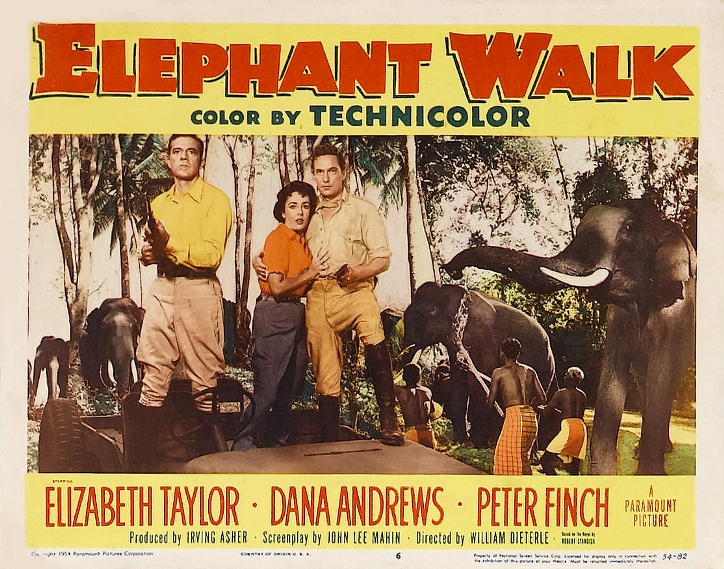
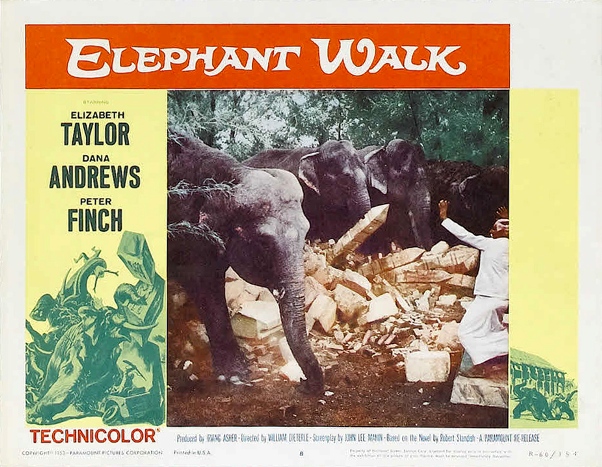
Elephant Walk film review: Prescient movie that forewarned about Ceylon’s crowded, troubled future?

Elephant Walk: Another century, another island - but casting its shadow on us?
How can anyone review a film made nearly six decades ago — especially if its first release took place even before I was born? Well, there is only one way to find out – by just doing it.

I’ve just done it with Elephant Walk (103 mins, colour), released by Paramount Pictures in April 1954 — a dozen years before I was born on the same island (then Ceylon, now Sri Lanka) where the movie was set and filmed. In fact, this was among several that were shot on location in Ceylon in the 1950s when Hollywood studios ‘discovered’ the island as an exotic, relatively inexpensive and hassle-free location. But this is the only one whose story is actually set in Ceylon.

Elephant Walk was directed by William Dieterle, and based on the 1948 novel with the same title, written by “Robert Standish” — actually the pseudonym of English novelist Digby George Gerahty (1898-1981). It starred Elizabeth Taylor, Dana Andrews, Peter Finch and Abraham Sofaer.

One benefit of reviewing a film so long after its original release is that it allows the benefit of hindsight and perspective. I have exploited this to the full in my review cum op ed essay, titled Elephant Walk revisited: Mixing Tea, Jumbos and Monsoons, just published on Groundviews.org.

Here’s an excerpt:

“The movie has been remarkably prescient on several fronts, which can only be appreciated now — in another century, and on a wholly different island. A key theme of the movie was the human-elephant conflict, but passing references to social exclusion and rampant poverty in post-independent Ceylon are also of much interest.

“I doubt if Paramount’s writers were intentionally making any social commentary. One of the studio’s co-founders, Samuel Goldwyn, had famously cautioned against it. When asked about movies with a “message” some years earlier, he had replied, “If you want to send a message, use Western Union.”

“Nevertheless, the movie (and perhaps the book on which it is based, which I haven’t read) was contrasting the British planters’ opulent lifestyle with the forced austerity in post-War Britain. Even more striking is the poverty and squalor among the hundreds of resident workers whose sweat, toil — and occasional tears — ensured that the ‘cups that cheer’ were always brimming.”

Read the full review:
Elephant Walk revisited: Mixing Tea, Jumbos and Monsoons, on Groundviews.org

Thor, Superman and Arthur C Clarke’s Third Law: Technology or Magic?

Thor: Another spectacular moving image creation from Marvel
Last evening, I wanted an escape from reality. So I walked into a local cinema with two friends and watched Thor – the latest cinematic production from Marvel Comics.

It’s another superhero spectacle, with lots of special effects and great fireworks. Not entirely plausible in the universe as we know it, but hey – we enter cinema halls willing to suspend disbelief. As C S Lewis was fond of saying, the only people really against escapism are…jailers!

Thor even has some reasonable acting and occasionally enjoyable dialogue. Half way into the story, I was pleasantly surprised to see Natalie Portman’s character quote Arthur C Clarke’s Third Law (of prediction): “Any sufficiently advanced technology is indistinguishable from magic”.

Then I realised how much the story depends on this ‘Law’ to make it plausible. Returning home, I asked my resident magician Google for some insights, and she found others have already noted this.

On Discovery magazine’s blog, Kyle Munkittrick has an interesting post titled Thor Pays Tribute to Arthur C. Clarke’s Rule About Magic and Technology. He says:

“…the Marvel universe is internally consistent… Clarke’s rule of magical tech helps create some of that consistency. I both love and loathe Clarke for that statement. Love because it strikes at the heart of what technology is: a way for humans to do things previously believed not just implausible, but impossible. Loathe because it creates an infinite caveat for lazy authors and screenwriters. It seems like anytime some preposterous technology is injected into a narrative either as a McGuffin or a deus ex machina, that damn quotation from Clarke gets trotted out as the defense.”

He adds: “Thor does not pull a George Lucas and attempt to over-science the magical elements. Thor is not superhuman because he has some Norse equivalent of midichlorians. He is superhuman because he is magical. Sure, that magic is allegedly based in technology, but technology so incredibly advanced, we can’t distinguish it from magic. That lack of distinguishability is the indicator of just how advanced the Asgardians actually are. It’s also what let’s us enjoy the movie for what it is.” Read the full post.

On the indispensable Internet Movie Database, it says: “This acknowledgement that one man’s science is another man’s magic/faith (with a hat tip to Arthur C. Clarke’s “Third Law”) is just enough to make Marvel’s comic book appropriation of mythology palatable for a mainstream Hollywood audience.”

So Clarke’s Third Law keeps popping up in popular culture, and as Kyle Munkittrick says, it’s so very convenient for script writers! The grandmaster of science fiction has given them a blanket cover to take whatever creative liberties…

And some don’t always acknowledge the source when they take cover in this quote/law. For example, the Third Law was famously uttered by Lex Luthor in Superman Returns (2006) — but without any mention of the source.

At that time, I was working with Sir Arthur as his research assistant, and remember how much the late author was intrigued by this reference. For a brief few seconds, he was (slightly) miffed that there was no attribution — and then he cheered up. He accepted that Clarke’s Three Laws are now out there in popular culture and the public imagination, having assumed a momentum and identity of their own. The product of his fertile mind was roaming free.

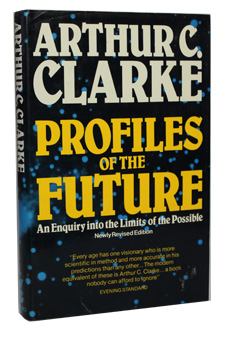
Profiles of the Future - 1982 UK edition
It’s about time too. The Three Laws have been in print for nearly half a century, in various forms. The first law was published in an essay titled “Hazards of Prophecy: The Failure of Imagination'” in the timeless Arthur C Clarke non-fiction classic Profiles of the Future: An Enquiry into the Limits of the Possible, 1962. The book itself was a collection of essays exploring the far future, written during the period 1959 – 1961, and originally published in various popular magazines — most notably Playboy, where many Clarke pieces first appeared in the 1950s and 1960s.

The First Law read: “When a distinguished but elderly scientist states that something is possible, he is almost certainly right. When he states that something is impossible, he is very probably wrong.”

In the original essay, Sir Arthur actually offered further insights on the threshold of elderly: “Perhaps the adjective ‘elderly’ requires definition. In physics, mathematics and astronautics, it means over thirty; in the other disciplines, senile decay is sometimes postponed to the forties. There are, of course, glorious exceptions; but as every researcher just out of college knows, scientists of over fifty are good for nothing except board meetings, and should at all costs be kept out of the laboratory.”

The Second Law was included as a simple observation in the same essay; its status as Clarke’s Second Law was conferred on it by others. That read: “The only way of discovering the limits of the possible is to venture a little way past them into the impossible.”

In an endnote to the ‘Hazards of Prophecy’ chapter (two) in the 1982 revised edition of the book, Sir Arthur wrote: “Originally, I had only one law, but my French editor started numbering them. The Third, which arises from material in this chapter, is perhaps the most interesting (and most widely quoted).”

In fact, this best known Third Law didn’t appear in its currently known form until the 1973 revision of Profiles of the Future. He wanted to round out the number, he said, and added: “Since three laws were sufficient for both the Isaacs — Newton and Asimov — I have decided to stop here. At least for the present…”

The first and second Laws of Clarke are known and cited among scientists and other technical experts. But it’s the Third Law that is the best known among the public: in fact, Wikipedia has compiled a collection of citations in other works.

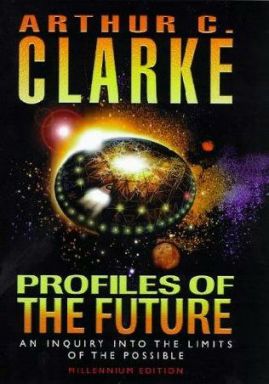
Profiles of the Future - 1999 Millennium edition
As Sir Arthur’s biographer, Neil McAleer, wrote in the 1992 biography Odyssey: “Profiles of the Future has been, and continues to be, an influential book for all those interested in science, technology and the future. Some thirty years after its original publication, it still stands out from the dozens of less important books that attempted to imitate it.”

Neil quotes Gene Roddenberry, creator of Star Trek, as saying how Profiles left a lasting impression on him. Says Roddenberry: “I read Childhood’s End, of course, and was mightily moved by it. And I should say that Profiles of the Future was the next most important Clarke work in my life because a great deal of what I did on Star Trek was guided by that.”

Star Trek: The Original Series debuted on US network television in September 1966. The publication of Profiles, four years earlier, was clearly fortuitous. Star Trek would have been made anyway, without or without Profiles — but the 23rd Century universe might well have been different…

Profiles of the Future was revised by Sir Arthur Clarke on three occasions — in 1973, 1982 and again in 1999. The last revision, where I played a part in assisting the author, came out as the Millennium Edition.

These revisions were not extensive. As the cover blurb of the first revision noted: “Since it (the book) was concerned with ultimate possibilities, and not with achievements to be expected in the near future, even the remarkable events of the last decade have dated it very little.”

The same held for the last revision. But by then, the First Law was updated for Political Correctness:
“When a distinguished but elderly scientist states that something is possible, (s)he is almost certainly right. When (s)he states that something is impossible, (s)he is very probably wrong.”

Next year, 2012, will mark the 50th anniversary of this future-shaping book’s first publication. Fans of science fiction and science fact should perhaps do something to mark the occasion — and not leave it entirely to the whim and fancy of Hollywood script writers.

Read also:
May 2009 blogpost: Star Trek: Advocating a world of equality, tolerance and compassion

‘The Futurist’ Interview with Sir Arthur C Clarke, published shortly after his death in March 2008

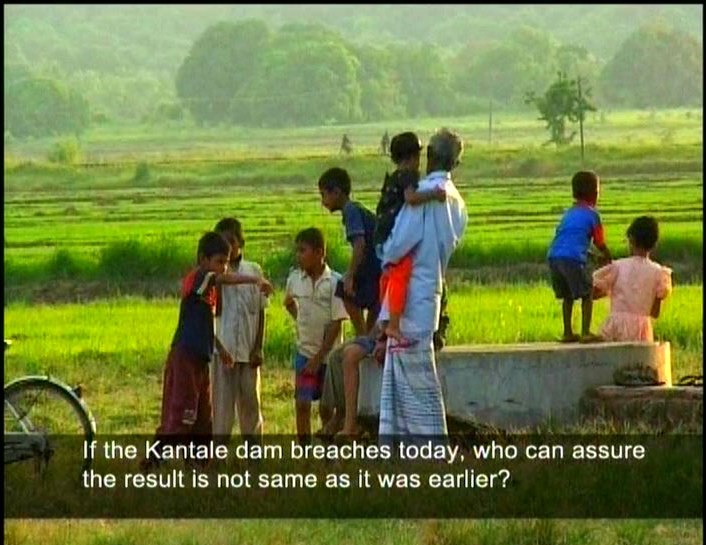
Kantale Dam Breach, 25 years later: Film captures memories and worries

Kantale Reservoir: Full again, but what if another dam breach happens as in April 1986?

There are approximately 320 medium and large dams in Sri Lanka and over 10,000 small dams, most of which were built more than 1,000 years ago. The consequences of a major dam failure in Sri Lanka can be devastating to life, property and the environment.

One such dam disaster happened exactly 25 years ago, on 20 April 1986, when the ancient Kantale dam, 50 feet high and over 13,000 feet long, breached. Its waters rapidly flooded several villages downstream, killing 127 people and destroying over 1,600 houses and paddy lands.

A short documentary made in 2005 revisited the scene of this disaster 19 years later to gather memories and opinions of the affected people and engineers involved. The film, made by Divakar Gosvami, was part of a 2005 study on dam safety by LIRNEasia, Vanguard Foundation, Sri Lanka National Committee of Large Dams and Sarvodaya. Its final report asked: if there were to be a catastrophic dam failure in Sri Lanka today, is there a warning system in place to detect the failure and issue timely warnings? Have the downstream communities participated in evacuation drills and know what action needs to be taken when a warning is issued?

Kantale Dam Breach Revisited: Part 1 of 2

Kantale Dam Breach Revisited: Part 2 of 2

This film is not merely documenting a tragic moment of recent history. It also carries the caution: have we learned the lessons from this incident?

Dr Rohan Samarajiva, Chair and CEO of LIRNEasia, has just written: “As I watch it again in April 2011, I wonder whether all that they had built up since 1986 had got washed away, again. Two successive periods of heavy rainfall at the beginning of the year devastated the livelihoods of the people of the wav bandi rajje, the irrigation civilization we are so proud of. Flood upon flood. More than 200 small tanks breached; big tanks were saved by the emergency actions of irrigation engineers.”

In another recent piece, he asks: Twenty five years after Kantale: Have we learned?

First Orbit: Retracing the historic journey of Yuri Gagarin, 50 years ago

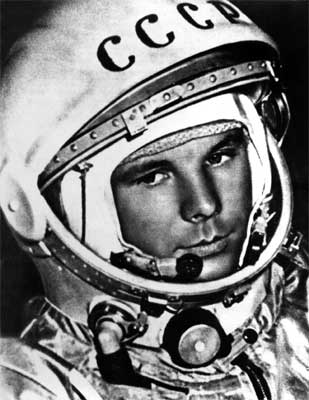
Yuri Gagarin: On 12 April 1961, he really went where no human had gone before...
It was exactly 50 years ago that a human being first traveled to outer space. Yuri Alekseyevich Gagarin was launched into Earth orbit by the former Soviet Union on 12 April 1961, creating history.

He travelled to orbit aboard the Vostok 3KA-3 (Vostok 1), which made a single orbital flight that lasted 108 minutes, or just under two hours. The maximum speed reached was 28,260 kilometers per hour – faster than any human had moved before. At its highest point, Gagarin was about 200 miles (327 kilometers) above Earth.

He paved the way for hundreds of men and women from many nations to travel to near space as well as to the Moon. Up to mid 2010, a little over 500 human beings have travelled to space from 38 nationalities.

First Orbit, a new documentary film that reconstructs Gagarin’s historic flight, has just been released for free viewing on YouTube. The making of this documentary is a remarkable story in itself.

Gagarin’s original spacecraft did not have space or capacity for filming, so there is no visual record of what he saw. But he kept in touch with his control room via radio, and gave many interviews upon return that help us imagine what he experienced.

These words by Gagarin have become famous: “Circling the Earth in the orbital spaceship, I marvelled at the beauty of our planet. People of the Earth, let us safeguard and enhance this beauty – not destroy it!”

Now, First Orbit literally takes us to space in an attempt to retrace what Gagarin saw. It is directed by Dr Christopher Riley, the British writer, broadcaster and film maker, and was made in partnership with the Russian space agency. Additional material has come from the European Space Agency (ESA) and NASA.

The new documentary has been partly filmed by Italian astronaut Paolo Nespoli, currently on a long-duration mission at the International Space Station (ISS) in Earth orbit. By matching the orbital path of ISS, as closely as possible, to that of Gagarin’s Vostok 1 spaceship and filming the same vistas of the Earth through the new giant cupola window, the film has captured a new digital high definition view of the Earth below, half a century after Gagarin first witnessed it. Read more about how the film was made

Most importantly, First Orbit is a a free film that everyone can watch online in full, and also allowed to be downloaded for free. This is in the spirit of Gagarin’s first flight which was not just for one nation, but for all mankind.

Watch the trailer for First Orbit:

Watch the full length documentary First Orbit (1 hr 39 mins):

Wiz Quiz 9: Arthur C Clarke’s HAL, are you here yet?

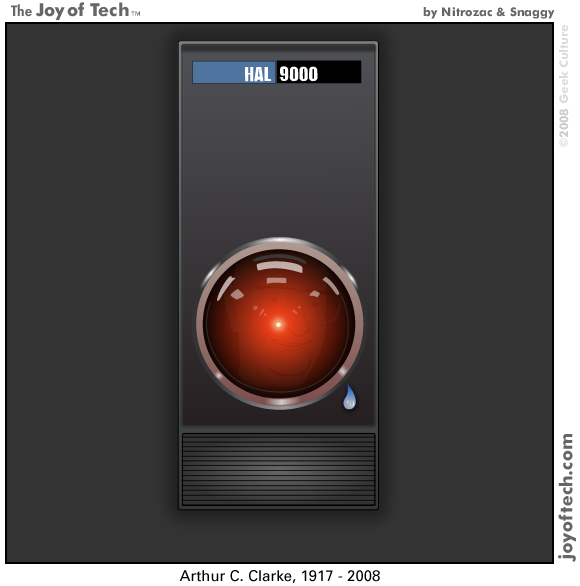
Joy of Tech tribute to Arthur C Clarke, 19 March 2008
This week marks the third death anniversary of Sir Arthur C Clarke, author and futurist.

Among the numerous tributes that poured out all over the world following his departure, I found one especially poignant. It was the ‘Joy of Tech’ cartoon above, showing the sentient computer HAL 9000 (from 2001: A Space Odyssey) shedding a single tear in his memory…

In fact, researchers in artificial intelligence (AI) are still trying to create a real-life HAL, which remains the ‘Holy Grail’ in their line of work: a machine-based intelligence that mimics the human mind in all its nuances, and not just in raw processing power.

This is proving much harder than creating chess-playing or quiz-winning computers: human beings are capable of a wide range of emotions some of which – such as intuition and sense of humour – are still not within the capabilities of advanced AI systems.

In this week’s Wiz Quiz, I pay tribute to both HAL and his creator with a few questions on the march of supercomputers. We ask the long-running question: Can computers outsmart us?

Indeed, that prospect is becoming more real every passing year. An IBM supercomputer named Deep Blue created history in May 1997 when it won a six-game match by two wins to one with three draws against the then world chess champion. A few weeks ago, another human bastion fell — and this one concerns me more as a quiz enthusiast (I never learnt the rules of chess, and don’t understand what all that fuss is about.)

On 17 February 2011, a supercomputer owned by the IBM Corporation beat two veteran quizzers to win a high profile game in the long-running US quiz show called Jeopardy. The supercomputer won with US$77,147, while its nearest rival Ken Jennings, a 74-time winner of the popular trivia quiz, came in second with US$24,000. Brad Rutter, who has in previous appearances won a total of US$3.3 million, was third with US$21,600. IBM plans to donate the computer’s winnings to charity.

What was the name of this quiz-winning supercomputer?

In HAL 9000’s name, what did the letters HAL stand for?

Which famous rocket scientist once said: “Man is the best computer we can put aboard a spacecraft…and the only one that can be mass produced with unskilled labour”?

These are among the 15 questions in this week’s Wiz Quiz. Test your brains against ours (supercomputers may not participate!).

Wiz Quiz 7: Films, canals and famous cities

Toy Story 3: Reaching out to the child in all of us? Photo courtesy - Pixar Animation Studios/Walt Disney Pictures
Why did a 3D CGI comedy-adventure film on the abandoned toys of a upper teenager become the highest grossing feature film in the US, and also worldwide, during 2010? What does it say about our common psyche when Toy Story 3, a variation on an already twice-tested theme, earned more than a billion dollars — making it one of the top five money earners of all time?

Psycho-analysts can debate that for years to come. Toy Story series must tug on some deep emotions in many of us, for the third film was not only highly popular, but also received near universal critical acclaim.

Writing in The New York Times, movie critic A. O. Scott noted: “This film—this whole three-part, 15-year epic—about the adventures of a bunch of silly plastic junk turns out also to be a long, melancholy meditation on loss, impermanence and that noble, stubborn, foolish thing called love.”

At the 83rd Oscar Awards ceremony last weekend, Toy Story 3 won two awards — for best animated feature and best original song — out of five nominations.

Wiz Quiz this week, appearing just two days after the Oscar Awards ceremony, started off with a few questions based on some films that received nominations for the best film of 2010 (officially called the Best Picture Award). At the time we compiled the quiz, the winners were not yet announced. But we probed the 10-movie nominations list deeper to see connections not immediately apparent.

We then roam the world of ancient and modern cultures, hopping from Hindu mythology to modern day Japanese cartoons. In between, we take a look at the Suez Canal that was recently in the news, and salute Ronald Reagan.

Wiz Quiz 7: Films, canals and famous cities