Rule of the Gun in Sugarland: A film by Joey R B Lozano

In June 2007, I did a belated tribute to Joey R B Lozano, a courageous Filipino journalist who crusaded for human rights and social justice. Armed with his video camera and laptop, he was one of the early citizen journalists long before that term – and practice – became fashionable.

From Seeing is Believing

As I wrote:
Joey used his personal video camera to assert indigenous land rights, and to investigate corruption and environmental degradation in his native Philippines. Joey was an independent human rights activist and also one of the country’s leading investigative reporters.

He freelanced for the Philippine Daily Inquirer, covering Indigenous peoples’ rights and the environment, considered the two most dangerous beats in the Philippines. But years earlier, he had moved out of the capital Manila, and committed his life and career to stories and issues at the grassroots that many of his city-based colleagues had no time or patience in covering on an on-going basis.

Trained as a print journalist, Joey mastered new media and technologies whose potential he quickly realised. He moved into television and video media with ease, and later became an active blogger.

I have just tracked down on YouTube one of his documentaries, Rule of the Gun in Sugarland (2001; 9 minutes; English). It’s a powerful documentary that tells the story of Manobo villagers’ efforts to claim their ancestral land in the Philippines, and the abuse they endured because of their claim. It contains both graphic and heart wrenching scenes.

Here’s some background on indigenous people’s rights in the Philippines, as compiled by Witness – the human rights activist group with which Joey worked closely.

Source: Witness nomination of Joey R B Lozano as a Hero on Universalrights.net

The history of the Philippines is a history of colonization, resettlement and battles over who will rule the land.

First the Spanish, then the Americans, then the Japanese, and now multinational corporations have at one time or another dominated the Filipino landscape. Each wave of colonization has forced people off more land, creating a domino effect across the 7,000 islands. Resettlement in turn, has created even more pressure on successive islands as settlers move in, pushing even more people out.

Today, despite continued widespread poverty across the Philippines, Indigenous tribe members remain the most marginalized sector of Philippine society.

In a country of 76.5 million people, almost 20 per cent are Indigenous peoples. They belong to at least 32 different ethnolinguistic groups. More than half are on Mindanao, the largest southern island.

Over the last century, Indigenous peoples have lost their traditional lands, as the logging industry, ranchers and large plantations have forcibly taken over lands, piece by piece.

Much like in other parts of the world, the land was won parcel by parcel. Original verbal agreements were made and often respected between individual ranchers and Tribe leaders to “borrow” land from the Tribe. But the agreements were quickly forgotten when the rancher died. Over the years, the land was then resold without the Tribes’ consent.

From Rule of the Gun in Sugarland

And then, under the Marcos regime, Indigenous people suffered along with farmers, as massive tracts of land were appropriated for the dictator and his cronies. When Marcos was finally thrown out by a people’s revolt, and flown out on a U.S. helicopter, successive democratic governments introduced multiple land reforms intended to redistribute the land justly, but none of these reforms ever really worked.

On the ground level, corruption and misuse of power prevented the land from being rationed and made accessible to the people the reforms were intended to help.

Meanwhile, the land reforms were intended to help the peasants and the fact that many of the lands in question were Indigenous Ancestral domains was never addressed.

Mindanao is rich in natural resources – some of the world’s last ancient rainforests, fertile soils, underground treasures of gold, an abundancy of fish — all now under the threat of overdevelopment.

In 1997, the Indigenous Peoples Rights Act was signed into law. The law is explicit on the Indigenous peoples’ right to ancestral lands. But this has not become operational to date. This fact is exacerbated by the present government’s industrialization thrust and commitment to globalization. Tribal lands, thus, are being continually opened for extractive business.

For more information, check Seeing is Believing website

Can Your Film Change the World? Find out on Pangea Day!

Here’s an extraordinary invitation to all who love to watch, create or critique moving images.

Either watch the above video, linked to PangeaDay YouTube channel, or (if your bandwidth does not allow easy playing of online video) read the text I have just transcribed off the video:

In this age
Images are powerful.
Powerful enough to divide…
…to spread fear…
…to remove hope.

Powerful enough to unite
to build trust, to inspire action.

Until now, images of the many
have been held in the hands of the few.

Finally, that is changing.

Millions of people around the world
are telling their own stories.

For the first time in history
we have a chance to see the world differently.
To see it through the eyes of each other.

Imagine if we could get inside
each other’s heads for a day!
What would we see?

We are about to find out.
A worldwide search has begun
to find films of unique power.

Films that provoke…
…entertain…
…inspire.

Films made by the world
for the world.

On May 10, 2008
millions of people across the globe
will gather to witness these films
in a spectacular event
broadcast live to the entire world.

Visionaries…
…and musicians
will join the celebration.

And it will continue afterwards in cyberspace
as a newly connected global community.

You can be part of it.

Pangea Day.

Here’s the blurb from the official website:

Pangea Day taps the power of film to strengthen tolerance and compassion while uniting millions of people to build a better future.

In a world where people are often divided by borders, difference, and conflict, it’s easy to lose sight of what we all have in common. Pangea Day seeks to overcome that – to help people see themselves in others – through the power of film.

On May 10, 2008 – Pangea Day – sites in Cairo, Dharamsala, Kigali, London, New York City, Ramallah, Rio de Janeiro, and Tel Aviv will be videoconferenced live to produce a 4-hour program of powerful films, visionary speakers, and uplifting music.

Lakshmi and Me: Filming an invisible superwoman

Seen but never noticed?
It’s so clichéd to say that behind every successful man stands a woman. With so many women being successful in so many spheres of activity on their own terms, this assertion is not particularly relevant or sensitive any longer.

But who stands behind some of these successful women? Writing in her regular Sunday column in The Hindu newspaper, my friend Kalpana Sharma suggests an answer: the unsung, unappreciated and often poorly paid housemaids or domestic workers.

Here’s how Kalpana opens her column, aptly titled ‘Invisible women’:

“They flit in and out of our homes like ghosts in the night. They sweep and swab, wash and cook, look after our children, care for the elderly. Yet we know little about them. Most of us just about know their first names. We don’t know where they ’re from, where they live, whether they are married, how many children they have, how many other homes they work in, what they earn — how they survive. They are virtually invisible.

“We usually wake up to their existence when they don’t turn up for work. And the first response is annoyance, because of the inconvenience caused to us. Many professional women don the title of being superwomen because they manage jobs and homes — work life balance. But in fact the real superwomen are these silent workers, without whom few professional women in India would be able to function. Yet, while those in formal employment get sick leave, casual leave, privileged leave and weekends, our domestic help is not entitled to any of this. If she rests too long, she’s lazy. If she doesn’t turn up for work, she’s a shirker. It would appear that these women don’t have the right to relax, to fall sick, to have some fun. And of course, no one acknowledges that when they’re done with our homes, they still have their own homes where they have to do the very same jobs, sweep and swab, wash clothes, cook and take care of children and elderly.

With this, Kalpana introduces a recently made Indian documentary, Lakshmi and Me (Nishtha Jain 59′, India, USA, Finland, Denmark, 2007), where the middle class film maker turns her camera on her 21-year-old part-time maid Lakshmi.

Superwoman at work...but who can see her?
As Kalpana says: “Nishtha Jain, a Mumbai-based documentary filmmaker has done what all of us need to do. She has not just acknowledged that this silent worker in her home has a name, but she’s followed her life so that we see the person behind the name — a person just like any of us. And instead of viewing the woman from a distance, the filmmaker has bravely placed herself in the frame, honestly dissecting her own relationship as an employer. “Lakshmi and Me” is a remarkably honest documentary about 21-year-old Lakshmi and the filmmaker, Nishtha.”

I haven’t yet seen the film, and after reading Kalpana’s review, I quite look forward to catching it. I hope it goes beyond the clichéd approach of offering glimpses of how the other half lives, which afflicts many documentaries of this kind made by well-meaning middle class film-makers who can’t quite break free from their own social framework.

Watch the trailer for Lakshmi and Me on IDFA festival website

About the film-makers: Nishtha Jain and Smriti Nevatia

Kalpana Sharma Column in The Hindu: 30 December 2007: Invisible Women

Director’s Note by Nishtha Jain, writer and director of Lakshmi and Me

Lakshmi and Me film website

Kalpana Sharma blog

Photos courtesy Lakshmi and Me film

Hard Times: Give us more cars and less traffic!

In July 2007, we featured an interesting new film called Faecal Attraction. It probed the link between sewage disposal and river water pollution in India — specifically, the River Yamuna, part of the massive Indo-Gangetic river system.

Now the intrepid film-maker Pradip Saha has taken on another big, messy subject that has even bigger vested interests: the auto industry and its contribution to worsening traffic congestion, air pollution and public health in metropolitan India, especially the capital Delhi.

The film couldn’t have come at a better (worse?) time. India’s Tata Motors will be unveiling their people’s car, priced at Indian Rupees 100,000 (US$ 2,600 approx) on 10 January 2008 at Auto Expo in New Delhi.

“A car priced at hundred thousand Indian Rupees means a lot in terms of urban planning, urban life,” says Pradip, who is also the editor of Down to Earth magazine on science and environment. “Roads are already clogged, winter air is thick with SOX and NOX, our cities will be swarming with small cars.”

He says a few gunfights have already taken place in Delhi between neighbours over claims on parking space. Automobile industry has made urban space pretty absurd.

Pradip Saha Courtesy CSE India
Courtesy CSE Down to Earth

Yet, he adds, any opposition to the introduction of these swarming small cars on account of increasing traffic congestion and pollution has been termed by the car maker and their friends as ‘elitist’. “This car maker has positioned itself as the agent of liberation, where we all have cars. Kink has no boundary.”

So Pradip decided to take the issue head on, making fun of a very serious situation.

Here’s the story behind the film, in Pradip Saha’s own words:

I was invited for an art residency by Khoj, an international artist’s association in Delhi. The brief was to create a public artwork with urban ecological concern.

I decided to do something on automobiles. My initial response was to respond to the way automobiles are sold, playing with desire. I also find certain policy issues related to automobile use pretty kinky. For example, when the auto bosses complain to highest financial authority about slump in auto sale, the highest financial authority calls the bank bosses to make car loans easy. Isn’t it kinky? I was thinking of pushing these kinks and business of desire a bit and create pornography that has automobiles as characters.

I made two. But wasn’t sure about putting them in public as kids will be seeing them too. I have been talking a few friends to create a website of automobile porns, mimicking standard porn site sensibilities.

So I turned to another format. I created a fake news TV channel called HARD TIMES, and went to the road interviewing drivers and riders in cars stuck in traffic jam in Delhi. The style is a take on News TV style, where they stick a microphone down your throat on any occasion, pretending a democratic format that generates peoples’ voice.

I did the same, with 2 basic questions: What is the reason of traffic jam? and How can we solve traffic jam? I edited 5.50 minutes video, and showed it as a loop in Connaught place, on the pavement on a large plasma screen. It also had an accompanying LED display board, a la, railway station information system, that went on giving out important numbers related to absurdity of automobile use in the city. This was a loop too.

Ultra low-cost small cars — such as the much-hyped models being planned by the Tatas and other carmakers — can mean big trouble for India, unless the country makes drastic policy changes. A new study by Centre for Science and Environment (CSE) , released in October 2007, said the influx of these cars would drive public transport and two-wheelers off the roads and greatly increase urban congestion and pollution.

Courtesy CSE Down to Earth

Read CSE’s Down to Earth cover story on 15 October 2007: Small car revolution: Who cares about congestion, pollution

Sri Lanka: What killer waves united, killer humans divided again…

Today is the third anniversary of the Indian Ocean tsunami, which left a trail of destruction in many countries in South and Southeast Asia.

Today we remember those who perished and salute those who survived and endured enormous hardships.

We thank everyone everywhere who donated to help, and curse those who plundered or squandered the outcome of that generosity.

As I wrote in my only published verse, When the Waves Came, written on 28 December 2004 – when the disaster’s full impact was dawning on the world:

When the waves came
Roaring and moving mightily,
Unleashing the power of
A million bombs exploding at once,
They didn’t care
And just didn’t discern
Who or what was in their way.

My basic premise was that the killer waves had been a brutal ‘equaliser’ of all men and women. It no longer mattered on which side of law, morality, economics or social class they stood. This was particularly apt for Sri Lanka, a land divided for a quarter of a century by an armed separatist struggle that has hardened fundamentalist positions at both Sinhalese and Tamil ends of our ethnic spectrum. Towards the end of the verse, I noted:

As we in the aftermath tiptoe
Through endless depressing scenes
Of death and utter devastation
Can we tell the difference
Between Sinhala and Tamil,
Or Muslim and Burgher,
Or soldier and rebel
Or policeman and prisoner
Or rich and poor?

For a few days after the tsunami, there was a flicker of hope that the lashing from the seas might finally convince everyone of the complete futility of war. Political cartoonists in Sri Lankan newspapers were among the first to make this point. One cartoon, appearing two days after the disaster, showed a government soldier and Tiger rebel swimming together in the currents, struggling to save their lives. (Indeed, there were some reports of them helping each other in the hour of need.)

The cartoonists and other media commentators asked a common question: what happened to the land, and the dividing border that both sides had fought so hard and long for?

Alas, what Nature proposed we humans (Sri Lankans) disposed. While the tsunami helped usher in a negotiated settlement to the long-drawn armed struggle in Aceh, Indonesia, it only created a temporary lull in the Sri Lankan conflict. As soon as both sides recovered from Nature’s blow, they were back at each others’ throats again. (This contrast has been studied by various groups – see, for example, the summary of a Worldwatch Institute study Beyond Disasters: Creating Opportunities for Peace).

Looking back three years later, all I can say is that the land killer waves temporarily and forcibly united, killer human beings have managed to divide again for petty political, communal and personal gains.

theeban-survived-the-tsunami-but-not-sri-lankas-conflict.jpg

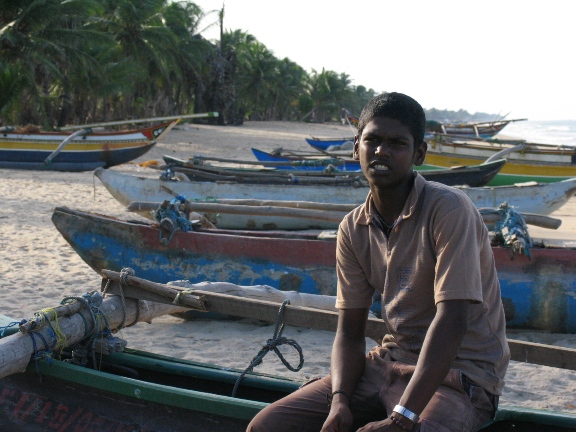
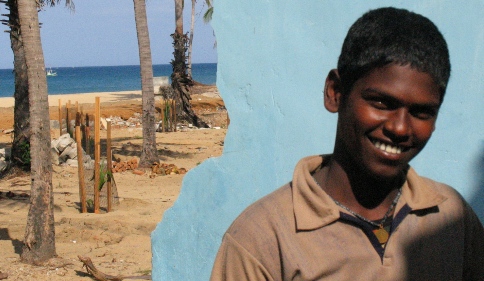
This boy, Thillainayagam Theeban, epitomizes that bigger tragedy. He survived the tsunami — but not the escalation of Sri Lanka’s ethnically driven civil war, which consumed his life in March 2007.

Theeban was one of eight surviving children – from India, Indonesia, Sri Lanka and Thailand – whose remaining families we tracked and filmed for a year in Children of Tsunami media project, a citizens’ media response to the Indian Ocean Tsunami.

Theeban was murdered by unidentified gunmen who stormed into his ‘temporary’ tsunami shelter on 3 March 2007. The death was linked to political violence that has engulfed Sri Lanka since 2006.

theeban.jpg

When the shocking news reached us three days later, our Sri Lankan camera team at Video Image and we at TVE Asia Pacific just couldn’t believe it. We were all in tears, and some of us were also angry. Theeban, who survived the killer waves 26 months earlier (but lost his mom and kid brother in the disaster) suffered many indignities in displacement. And now, he is gone.

We still don’t know who killed Theeban. He was abducted by an armed group sometime in 2006, from whom he escaped in early 2007. It is believed that Theeban was killed as a punishment for running away — and as a warning to all others.

He was 16 years at the time of his death. It is unlikely that his killers would ever face justice.

As I wrote in my personal tribute to Theeban in March 2007, published by UCLA’s Asia Media and MediaHelpingMedia, UK: “The disaster’s Sri Lankan death toll (close to 40,000 dead or missing) shocked the world when it happened within a few hours or days. Yet, at least twice as many people -– most of them unarmed and uninvolved civilians — have been killed in over a quarter century of fighting. That doesn’t always grab headlines.

“Thillainayagam Theeban has become another statistic in a ‘low-intensity conflict’ (as some researchers call it). And while this war lasts, it will continue to consume thousands of other young lives — a grim roll call of Sri Lanka’s Lost Generation.”

The third anniversary of the tsunami is a reminder – if any were needed – that man’s inhumanity to man is often worse than Nature’s fury.

March 2007 blog post: Remembering Theeban

April 2007 blog post: More memories of Theeban

Children of Tsunami: Documenting Asia’s Longest Year

Thillainayagam Theeban (1990 – 2007)

After the Tsunami: Going the Long Last Mile in Sri Lanka

hazlnfo-video-j-a-malani-hambantota.jpg

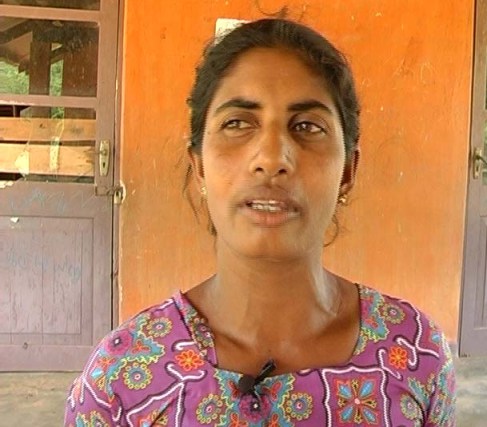
This is J A Malani. She’s an ordinary Sri Lankan woman living in Hambantota, on the island’s southern coast. Several hundred people in her town perished when the Indian Ocean Tsunami arrived on 26 December 2004 without any public warning. When the waves finally stopped their hammering, close to 40,000 people were dead or missing in the biggest disaster the island nation experienced.

Survivor Malani and her neighbours – lucky to be alive – are naturally apprehensive about when the next disaster might arrive, in what form and from where.

And this time around, too, they worry whether there would be anyone to warn them about it.

There just might be. Since the big tsunami three years ago, several Sri Lankan telecom operators, civil society organisations, IT companies and researchers have come together to test out a community-based hazard warning system — one that would prevent the repetition of the nasty surprise Malani’s community experienced not too long ago.

‘Evaluating Last Mile Hazard Information Dissemination Project’ (HazInfo project for short) was an action research project by LIRNEasia to find out how communication technology and training can be used to safeguard grassroots communities from disasters. It involved Sarvodaya, Sri Lanka’s largest development organisation, and several other partners, and was supported by International Development Research Center (IDRC) of Canada.

The project studied which information and communications technologies (ICTs) and community mobilisation methods could work effectively in disseminating information on hazards faced by coastal communities. The exercise was not confined to tsunamis alone; other rapid onset disasters such as cyclones and floods were also covered.

In its first phase, the project worked in 32 chosen coastal villages (all impacted by the tsunami) and mobilised local communities from muslim, Sinhala and Tamil backgrounds. Malini’s community was among those participating in this field testing of an approach that Sarvodaya hopes to roll out progressively to all 15,000 villages they work in.

That initial engagement by itself was reassuring to Malani. “This has helped us to get rid of fear and hesitation in our minds,” she said in a television interview recorded some weeks ago. “Now we know what we should do when a disaster strikes.”

That peace of mind is priceless to any human being, and that knowledge is liberating – particularly to one who has survived a major disaster that came from nowhere.

Malani is one of several beneficiaries featured in a 12-minute film TVE Asia Pacific recently produced. Several other participants from different coastal locations expressed similar views — and hopes that next time around, they will not be taken unawares.

The Long Last Mile can be viewed on YouTube in two parts:

The Long Last Mile, part 1 of 2:

The Long Last Mile, part 2 of 2:

LIRNEasia researchers analysed how each ICT tool or combination was integrated into communities to deliver timely warnings to those designated as first responders. The factors needed for efficient functioning of the hazard information hub were also studied. Read detailed findings and analysis here.

The HazInfo project grew out of a participatory concept paper that LIRNEasia developed in the aftermath of the 2004 tsunami. It noted that a national early warning system was a ‘pure public good’, and the responsibility of its supply would normally fall on the government. However, the paper acknowledged that, due to lack of capacity, “it is unlikely that the last mile of such a system will be provided by the local government or private firms operating in the marketplace”.

I have written a whole chapter on this project, titled Bridging the Long Last Mile, in Communicating Disasters: An Asia Pacific Resource Book (co-edited by Nalaka Gunawardene and Frederick Noronha). Read that chapter here:

bridging-the-long-last-mile-final-text-formated.pdf

GlobalVision at 20: Insiders turned outsiders keep kicking


GlobalVision, the path-breaking media company anchored in New York with a truly global outlook and a strong commitment to social justice, completed 20 years this week.

It was launched in November 1987 out of one room in Soho (New York) as a mission-driven company with little money but a big idea: to improve news coverage of the world through an “inside-out” approach that would offer voices not usually heard on the air in the US.

The founders were Danny Schechter, who became, in his words, a “network refugee” from ABC News 20/20 and Rory O’Connor, then with CBS News 48 Hours.

As the company introduction says:

“The whole world is watching… From Baghdad to Beijing, from Madrid to Manhattan, information is moving at the speed of light. Media and communications technology are transforming our lives — and those of our six billion neighbors. But in the emerging global village, whose stories get told — and who gets to tell them?

“At Globalvision, we believe in telling stories from the inside out. That means working with other cultures — not at them –and helping people to tell their own stories in their own way, to a world that’s getting smaller every day.”

In an industry saturated with media companies known more for their style than substance, Global Vision has not only blazed new trails, but used moving images in ways that moved people towards social change, political reform and – just as importantly – constantly question and challenge conventional wisdom and traditional authority.

They have also never hesitated to challenge the fellow journalists and corporate media on their servility, acquiescence and willing suspension of journalistic norms in the United States, especially under the current Bush administration.

They have won numerous awards and professional recognition for its pioneering international newsmagazine South Africa Now, which first broke through censorship to smuggle footage out of what was once the land of apartheid — and later chronicled Nelson Mandela’s transition from prisoner to President.

The company followed up with another award winning series, Rights & Wrongs: Human Rights Television with Charlayne Hundter-Gault, which aired for four years in sixty-two countries around the world.

Danny and Rory have also directed and produced more than thirty hard-hitting documentaries, many involving controversial issues and investigations — some for the PBS “Frontline” series” and others for television systems worldwide. Current films deal with subjects such as America’s child farm workers, bridging the global digital divide, flawed media coverage of the War in Iraq, and the ongoing debt crisis that threatens the global economic system.

I met Danny in person only once – in the Fall of 1995, when I spent a few weeks in New York on a fellowship to study the United Nations. Danny was one of the more colourful people we met (besides lots of men in suits from the UN, only a few of whom I can now recall by name). Danny introduced himself as a (TV) ‘network refugee’ — and gave a workshop on television journalism in defence of the public interest and human rights that had a lasting influence on myself.

Ever since, I have followed his books, incisive NewsDissector blog and Global Vision output with much interest.

So here’s wishing Danny, Rory and team at GlobalVision many more years of kicking ass!

MediaChannel.org: Global Vision marks 20th anniversary

Read Danny Schechter on: The Days of Our Dominion: Global Vision celebrations 20 years in the trenches

Rory O’Connor’s tribute to the late Anita Roddick, a long-standing supporter of Global Vision

“Hands up who is poor, speaks English – and looks good on TV!”

“Hands up who is poor, speaks English – and looks good on TV!”

With that title, I opened my panel remarks to the 8th Annual Symposium on Poverty Research in Sri Lanka on the morning of 30 November 2007.

Sri Lanka’s Centre for Poverty Analysis (CEPA) had invited me to speak during a session on ‘Taking it off the page: Alternative mediums of communication to influence change’. The theme of the overall symposium was ‘Communicating research and influencing change’.

Part of my talk was on challenges in using moving images to communicate development related research. The other part was on how most sections of the mainstream media covers stories of the poor — or those living at the bottom of the income pyramid.

I noted that as Asia’s billions strive for a better today and better tomorrow, there are millions of stories at the bottom of the pyramid. But most mainstream media manage to miss these stories due to their ignorance, or arrogance, or both.

But reporting from the bottom of the pyramid need not be all about doom, gloom and alarm. In fact, so much is happening there that a well informed story-teller won’t have much time to spend on negativity (while acknowledging a great deal of suffering that remains).

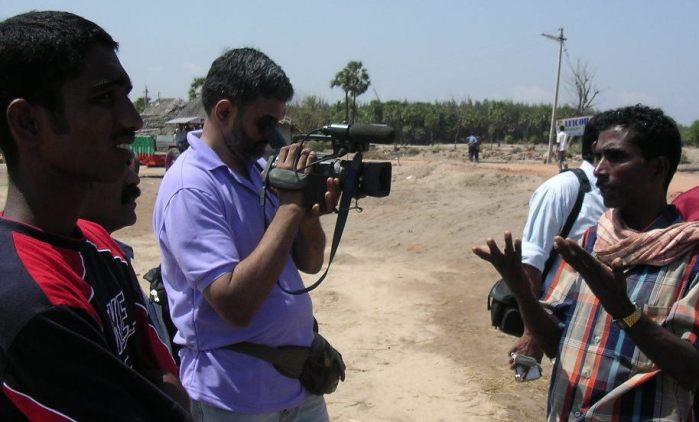
interviewing-tsunami-survivor-in-tamil-nadu-india.jpg

In my remarks, I emphasised that to discover these stories and tell them with empathy and accuracy, we as story-tellers need to recognise a few basic realities:
• The poor are not another species to be treated as if they were endangered! They are living and loving human beings as complex and nuanced as anyone in this room.
• Nor are the poor a ‘sub-human species’ with a simpler set of needs and aspirations. They have as many primary, secondary and tertiary needs – just like anyone else!
• When it comes to information, they have not only survival and practical information needs (which many development projects try to provide), but also what I call ‘information wants’ – cultural and social information – which many development projects completely ignore.
• The poor have opinions too — and are often more articulate and expressive when someone cares to listen and capture these.

So telling media stories from the Bottom of Pyramid needs the knowledge base, socio-cultural understanding and ethical framework in which to gather and process these stories. We at TVE Asia Pacific don’t claim to have got everything right, here are our basic rules of engagement:
• We treat the rich, middle class and poor alike – extending the same courtesy and respect (including obtaining personal clearances for interviews).
• We caption everyone on-screen by name and location, irrespective of their social and economic status.
• We film people – for interviews or generic footage – only with informed consent.
• Wherever possible, we take our the finished TV products back to where they were filmed and share with those who told us their stories. (We are not alone in this: I have written blog posts about Earthcare Films of India and the Brock Initiative of the UK who are also doing this.)

Our industry of broadcast TV is not always known for its class-less treatment of every human being with respect and dignity. In fact, the poor often become ‘Canon-fodder’ for camera crews looking for dramatic images of human suffering.

from-mediachannelorg.jpg from-mediachannelorg.jpg

The globalised media continue to use stereotyped images of the global South – captured mostly by northern photographers and camera crews. As my friend Shahidul Alam, founder of Drik Picture Library in Bangladesh, says: “Invariably, films about the plight of people in developing countries show how desperate and helpless they are…. Wide angle black and white shots, grainy, high contrast images characterise the typical third world helpless victim.”

This explained my title: “Hands up who is poor, speaks English and looks good on TV!” It’s a caricature of how some camera crews go looking for that convenient sound-bite with some doom-and-gloom visuals to match.

But it’s not just the northern media who sensationalise and oversimplify life at the bottom of the pyramid in the South. Many of our own media outlets, rooted in the cities and obsessed with middle class life styles, are also good (or bad) in this game!

And the media are not alone. When development agencies and ‘pro-poor’ activists presume – in their middle class arrogance – that the poor only need survival or sustenance related information, the latter is immediately reduced to sub-human status.

Nov 2005 op ed: Communication rights and communication wrongs


Nov 2006 op ed: Ethical news gathering: Al Jazeera’s biggest challenge

Aug 2007 blog post: Wanted: Ethical sourcing of international TV News

Moving images moving research…beyond academic circles!

Although I’ve dabbled in some media research at times, I don’t think of myself as a researcher. So when Sri Lanka’s Centre for Poverty Analysis (CEPA) invited me to speak at their 8th Annual Symposium on Poverty Research in Sri Lanka, I spoke on what I know a little bit about — communicating research using the audio-visual media.

My panel remarks, delivered on the morning of 30 November 2007, were on ‘alternative mediums of communication to influence change’. I opened with the provocative title “Hands up who is poor, speaks English – and looks good on TV!” (see separate blog post on media related aspects of my talk).

These days, so much of research in physical, biological and social sciences is justified in the name of poverty reduction. Yes, studying and understanding development problems is the essential first step of solving them. But without properly communicating this research, the results won’t help the poor — or anyone else.

We at TVE Asia Pacific are committed to covering Asia’s development issues using TV, video and web. Our small challenge is to capture the many and varied facets of how Asians are working for a better today and better tomorrow. Reducing and eventually eliminating poverty is a significant part of that process.

As Asia’s billions strive for better lives, there are millions of stories at the bottom of the income pyramid. But most mainstream media manage to miss these stories due to their ignorance, or arrogance, or both.

For us, one key source of information and analysis is researchers – people who study trends and conditions, and keep reflecting on how and why. Their knowledge and insights are invaluable for us to tell stories from and about the bottom of the pyramid.

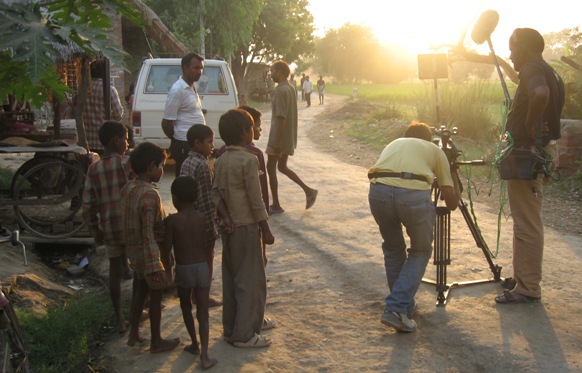
filming-living-labs-in-uttar-pradesh-india.jpg

As I told the researchers in my audience: “Part of our challenge is to know what you are studying — and then figure out the public interest and human interest angles of your work. As communicating research to those outside the scientific or research communities is more an art than a science.”

I cited three recent examples where we had produced engaging TV/video content to communicate research directly relevant or related to the poor.

Digits4Change
was our attempt to understand and document how information and communication technologies (ICTs) are changing the way Asians live, work and play. We covered technologies such as Internet, computers, mobile phones and satellite communications applied in education, healthcare and rural business development. The knowledge base for this 2006 series came from IDRC’s Pan Asia programme which supports action research that addresses specific problems.

Also in 2006, we produced The Greenbelt Reports to take a close look at the environmental lessons of the Indian Ocean tsunami. We visited a dozen locations in India, Indonesia, Sri Lanka and Thailand to find out how community and conservation interests can be balanced in relation to coral reefs, mangroves and sand dunes. In telling these stories, we worked with researchers from global agencies like IUCN the World Conservation Union and UNEP as well as national organisations like the M S Swaminathan Research Foundation in India.

The Greenbelt Reports

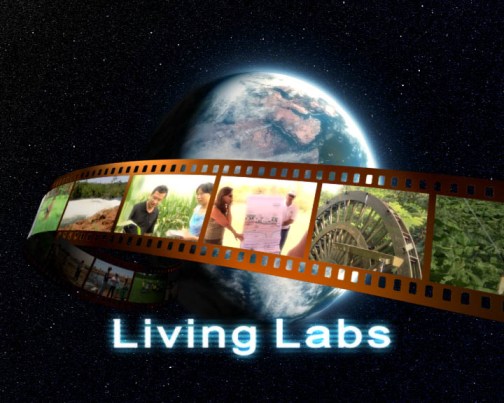
Living Labs is our most recent series, released in March 2007. Filmed in 9 countries in Africa, Asia, Europe and Latin America, it looked at how researchers are addressing different aspects of a major challenge in agriculture: how to grow more food with less water. We worked with a global action research project called the CGIAR Challenge Programme on Water and Food, which gave us exclusive access to their on-going field work and emerging findings in nine major river basins of the developing world.

living-labs-by-tveap.jpg

In telling these and other stories, we work within a certain framework we have defined for ourselves. Among its salient points:
• We don’t set out trying to communicate messages; we just want to tell good stories and development communication is a by-product.
• We look for under-reported/ignored development issues, or a less covered angle in a widely reported story.
• We don’t just talk to technical experts but to many other individuals involved or affected – women, men and children from all walks of life.
• We seek and accommodate different points of view, not allowing single-issue activists or one source to dominate/monopolise a story.
• Our finished products are informed by science but never immersed in science – we always keep in mind that our audience is non-specialsits.

All our stories cover real people dealing with real world issues and challenges. And since Asia has more people living in poverty than anywhere else in the world, most of the time our stories concern what’s happening at the bottom of the pyramid – or what can directly impact people living there.

And without exception, all these TV series and individuals films are available free of any license fees for broadcast, civil society and educational use. They are also available for online viewing at TVE Asia Pacific’s channel on YouTube.

Communicating research through moving images is not easy. Packing years of hard work into a few mins of engaging visuals and narration involves ruthless condensation which sometimes leaves some researcher egos bruised. When covering the work of large research organisations, we’ve also had deal with internal politics and hierarchies: for example, what to do when a junior researcher is more authentic and articulate than her supervisor?

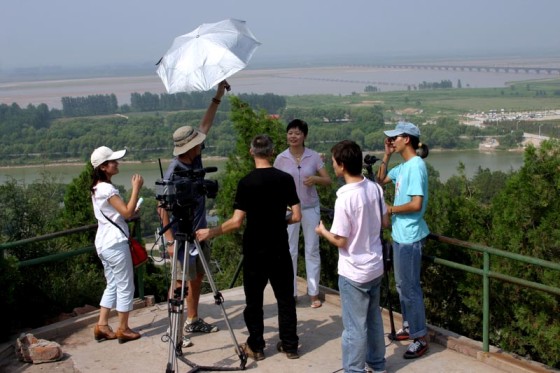
Producing Living Labs based on filming in 9 countries on 3 continents in just 5 months during 2006 was a challenge in both logistics and political negotiations. As editor-in-chief, I had to balance the public accessibility of our end product with researchers’ keenness to pack their stories with facts and figures.

living-labs-being-filmed-in-yellow-river-basin-china.jpg

We didn’t please everyone. One senior researcher told us that his multi-faceted, multi-year nad multi-million dollar was like an elephant — and we’d only glimpsed just one part of that big creature!

That’s just the point: we can never cover the whole elephant in a media product intended for non-specialists. So we choose which part of the elephant is most interesting and present it in a way that will make viewers realise — and hopefully, appreciate — that there’s a lot more that’s worth finding out.

Moving image products often act only as ‘teasers’ — communicating highlights of research, and directing those interested to online or offline sources that offer more information.

Because they act as a/v versions of executive summaries, these ‘teasers’ by themselves are a powerful way of reaching out those who are unlikely to look up the details: that includes many policy makers, government officials and business people.

Winston Churchill used to ask his staff to give him everything ‘on one page’. These days, he might have asked for everything to be summed up in a five minute video — as we often do.

Al Jazeera English is one: Getting better at imitating its rival BBC World!

al-jazeera.jpg

Al Jazeera English (AJE), the world’s newest global news and current affairs channel, completed one year on the air on 15 November 2007.

This in itself is a commendable accomplishment, and we extend heart-felt first birthday greetings to the channel that entered the highly competitive arena of global newscasting offering to ‘balance the information flow from South to North, providing accurate, impartial and objective news for a global audience from a grass roots level, giving voice to different perspectives from under-reported regions around the world.

AJE wanted to revolutionise English language TV in the same way Al Jazeera turned Arabic TV world upside down, ending the monopoly of the airwaves by state broadcasters.

First, the good news. AJE has done well on some fronts, adding to the diversity in international news and current affairs television, and enriching the often endangered media pluralism in a world that is, ironically, having more broadcast channels than ever before in history. It has brought to us stories ignored by other news outlets, while offering us somewhat different takes on widely covered stories.

In a self-congratulatory note and video clip posted this week on YouTube, the channel says: “A year ago Al Jazeera English was launched, marking the start of a new era in international journalism. In the last 12 months we have brought a fresh perspective to world events and shed light on many of the world’s little reported stories.”

Here are some of the highlights compiled by AJE.

In another post on its own website, AJE offers a selection of exclusive video stories from its correspondents to show how it ‘continues to set the news agenda’.

We also salute AJE for withstanding the unofficial yet widespread ‘block out’ of its distribution by North American cable operators, depriving most viewers in the US and Canada the opportunity of watching it on their TV screens. In a nifty move, the channel started placing some of its more consequential content on YouTube, making it available to anyone, anywhere with a sufficiently high speed Internet connection.

Image courtesy Al Jazeera

And now, on to the not-so-good news…

If AJE in its first year somewhat stood apart from the other two global newscasters – BBC World and CNN International – that was occasional and superficial, and not quite consistent or substantial. In fact, the only thing that AJE has consistently done is to under-deliver on its own lofty promise of doing things differently.

As I wrote in a blog post in August 2007: “I’m looking long and hard for the difference that they (AJE) so emphatically promised. Instead, I find them a paler version of BBC World, at times trying oh-so-hard to be just like the BBC!”

Of course, AJE – or any other broadcaster, for that matter – is fully entitled to set a trend or follow a model already set by another channel, even that of a rival. But to so blatantly imitate the BBC while all the time claiming to be different is simply not credible.

And credibility is the most important virtue for a news and current affairs media operation. Earn and sustain it and the world will be on their side. Lose it, and they will be the laughing stock on the air.

I’m not suggesting that has happened yet. But as I cautioned in an op ed written days after AJE started broadcasting in November 2006, “unless it’s very careful and thoughtful, AJE runs the risk of falling into the same cultural and commercial traps that its two rivals are completely mired in.”

Here’s a simple test. If viewers were to watch AJE, BBC World and CNN International without logos and any other tell-tale branding, how many would be able to tell the channels apart?

To me, CNN is in a league of its own for a variety of positive and negative reasons. Their offering is technically and professionally superior, even if I have objections to some of their editorial choices and analysis.

However, it’s harder to discern differences between the often befuddled BBC World and its enthusiastic imitator, Al Jazeera English. Perhaps it’s no coincidence that the latter has a significant number of former BBC reporters and presenters, many of who have been poached. While that again is a choice for AJE’s management, they must realise that we the viewers in the global South do not want a global channel rooted in our part of the world to dress up in the BBC’s increasingly discredited clothes.

And then there is the whole question of ethical sourcing of content — an important consideration which most global, regional and national TV channels continue to ignore. Many roaming news journalists’ key operating guideline seems to be: get the story ahead of rivals, no matter what — or who gets hurt in that process.

That business as usual must end. As I have argued in this blog and elsewhere: “If products of child labour and blood diamonds are no longer internationally acceptable, neither should the world tolerate moving images whose origins are ethically suspect.”

Aug 2007 blog post: Wanted: Ethical sourcing of international TV news

Nov 2005 op ed on SciDev.Net: Communication rights and communication wrongs, by Nalaka Gunawardene

In August 2007, I critiqued some Sri Lanka related stories appearing on AJE’s People & Power strand, pointing out some ethically questionable practices in how their reporter got the story, possibly placing some of her sources and interviewees at personal risk. To her credit, the reporter Juliana Ruhfus engaged me in this blog, explaining her side. Read the full exchange here.

But there are other key areas where AJE needs to very carefully guard its image and credibility. In the past year, the world’s assorted development and humanitarian agencies have realised that it’s ‘cool’ to be seen on Al Jazeera than on BBC and CNN. Some of their propagandists (sorry, public information officers) had beaten a path to AJE offices in London, Doha and Kuala Lumpur, seeking to cut various deals to get coverage.

Yes, the development and humanitarian communities certainly have worthwhile messages and issues to communicate, many of which need urgent, wide dissemination. Tragically, what most agencies seek is self-promotion and ego-massaging, not issue based discussion. It is precisely this alarming trend of paying media outlets to carry agency propaganda that I have labelled ‘cheque-book development’.

Aug 2007: ‘Cheque-book Development’ – paying public media to deliver development agency logos

It’s no secret that BBC World has shamelessly allowed its airwaves to be sold for cash by assorted ‘touts’ claiming to have privileged access to the once-respected broadcaster. In the past year, some of these touts have extended their tentacles to AJE. We don’t yet know if these are entirely pro bono acts of goodwill by AJE, or if money has exchanged hands somewhere along the line.

If the latter has happened, we ardently hope that someone within AJE would blow the whistle in their own collective self interest. Or perhaps AJE wants to be too much like BBC World in every respect — including the corruption part?

Meanwhile, the real challenge to Al Jazeera remains exactly what I said one year ago: to usher in real change, it needs to transform not just how television news is presented and analysed, but also how it is gathered.

Despite having a code of ethics for its conduct, the well-meaning, south-cheering channel has yet to rise to that part of the challenge. Let’s hope that in its second year, Al Jazeera English would spend less time imitating its rivals, and more time in living up to its own promise.

Personal note: Some readers have asked why I continue to hold AJE to higher standards in a world where media ethics are being observed in the breach all the time. It’s simply because I still see AJE as the best hope for the majority world to tell its own stories in its own myriad voices and accents. I desperately want AJE to succeed on all fronts, not just in audience ratings, signal coverage and market penetration. For that, it must fast find its identity and stop defining itself by its rivals.