Dispatch from Rio+20: Next Election or Next Generation?

Text of my news feature published in Ceylon Today newspaper on 22 June 2012
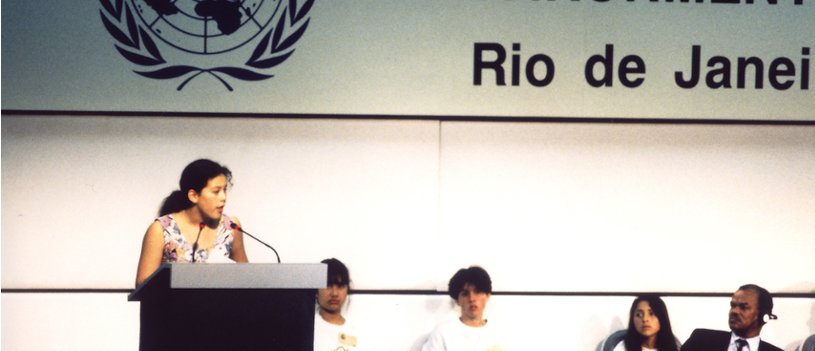
Severn Cullis-Suzuki addressing Earth Summit in Rio, June 1992

Next Election or Next Generation?
By Nalaka Gunawardene in Rio de Janeiro, Brazil

Twenty years ago, a passionate young girl addressed – and challenged – the world leaders gathered at the Earth Summit in Rio de Janeiro, Brazil.

They called it the speech that stopped the world for six minutes. All the platitudes and rhetoric of heads of state are long forgotten, but this speech endures. It has been viewed million of times online.

Her speech was uncluttered and sincere. “I am only a child and I don’t have all the solutions, but I want you to realize neither do you…If you don’t know how to fix it, please stop breaking it!”

Her name was Severn Cullis-Suzuki, and she was 12 years old. The young Canadian environmental activist closed a Plenary Session with her powerful speech that received a standing ovation.

Raised in Vancouver and Toronto, Severn is the daughter of writer Tara Elizabeth Cullis and environmental activist turned TV personality David Suzuki. When she was 9, she started the Environmental Children’s Organization (ECO), a small group of children committed to learning and teaching other kids about environmental issues.

They did various local projects and in 1992, raised enough money to go to the Rio Earth Summit. Their wanted to remind the world leaders that the future of all children – indeed, all future generations – were going to be impacted by decisions made at the Summit.

Listen to the memorable speech at the Earth Summit by Severn Cullis-Suzuki:

Two decades on, another young girl from the Asia Pacific earned her chance to address Rio+20, the follow up to the original Summit, this time with the theme ‘The Future We Want’

As it opened on the morning of 20 June 2012, Brittany Trilford, a 17-year-old school girl from New Zealand, spoke truth to power.
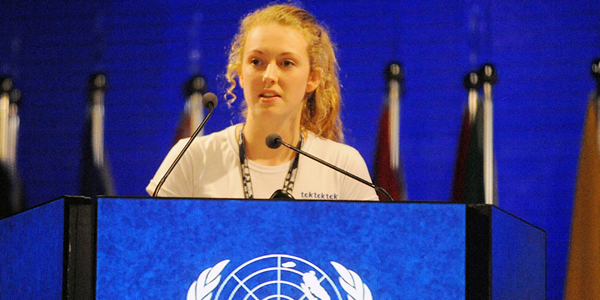
Brittany Trilford at Rio+20 conference on 20 June 2012

Addressing over 130 heads of state from around the world, assembled in Rio Centro conference centre, she said: “Please ask yourselves why you are here. Are you here to save face? Or are you here to save us?”

Brittany won an international competition to earn her five minutes of fame. The ‘Date with History Contest’ was a global online search for a person under 30 to represent youth and future generations at Rio+20.

Organised by the Global Campaign for Climate Action, Climate Nexus and the Natural Resources Defence Council (NRDC), contest participants were asked to upload a 2 to 3 minute short video speech about the future they wanted.

After entries closed in early May 2012, online voting was allowed for 22 finalists – which included at least 3 from each region of the world. The final winner was chosen by an international panel that included environmentalists, UN officials and celebrities such as actor Leonardo DiCaprio.

Brittany Trilford addresses world leaders at the UN Earth Summit

Brittany is a final year student attending school in Wellington, New Zealand. In her winning entry, she wished for more innovation and imagination.

“One solution would be to change our education system to embrace creativity and innovation. To tackle our problems there are definitely out there. Our leaders have to listen, be open-minded and persistent enough to give these ideas a chance,” she said.

As she ended the speech: “I want a future where education encourages innovative thinking, creativity and entrepreneurship. I want a future where we run with natural processes and not against them. I want a future where leaders will stop talking and start acting. I want a future where leaders lead.”

Her video was filmed at home with basic camera equipment. As she explained, “I entered to show solidarity with youth around the world, demanding that our leaders remember we are all their children and they owe us a fighting chance at a future we want to inherit.”

In a poignant media event hours before the Summit opened, the star of 1992 Severn Cullis-Suzuki joined the winner of 2012, Brittany Trilford.

Severn is now a writer and activist on culture and environmental issues, as well as the mother of two young boys.

“I have grown up a lot these 20 years but those six minutes of speaking to the UN two decades ago remains the most powerful thing I have ever done in my life to affect people,” she said wistfully.

Shortly after arriving in Rio – her first time since 1992 – Severn addressed a group of young delegates working with Green Cross International, the global environmental group created by Mikhail Gorbachev.

Severn’s message today remains the same, but now she also thinks about the future of her own children. She returned to Rio on their behalf to appeal for solutions to issues like global climate change which she called an “inter-generational crime”.

The world’s children have spoken loud and clear, twice over. But will they be heard by the world’s governments – preoccupied with multiple crises and more concerned about staying on in office.

Will the next generation prevail over the next election?
Dispatch from Rio+20: Ensure Good Governance and People’s Rights for a Sustainable Sri Lanka

Text of my news feature published in Ceylon Today newspaper on 21 June 2012

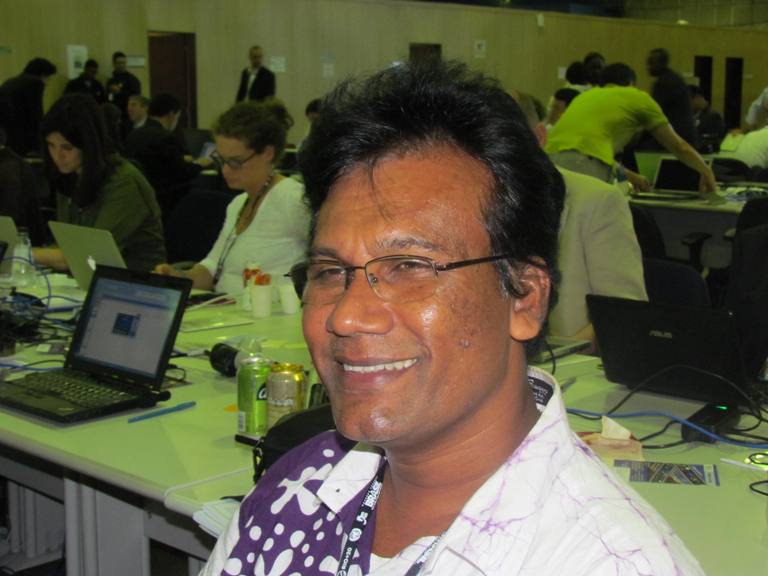
Hemantha Withanage in Rio de Janeiro

Ensure Good Governance and People’s Rights for a Sustainable Sri Lanka, urge civil society in Rio

By Nalaka Gunawardene in Rio de Janeiro, Brazil

As world leaders gather in Rio de Janeiro for the United Nations Conference on Sustainable Development, 50 Lankan civil society organisations (CSOs) have issued a joint statement calling for good governance and respect for people’s rights in Sri Lanka.

Mere economic growth – by raising per capita Gross National Product (GNP) — can be a highly misleading indicator of development, the statement said.

“Better governance is a must for a sustainable society. Better environmental governance and environmental justice should be ensured for sustainable living,” it added.

The 15-page document is signed by 50 people’s organisations working on environment, development and human rights issues at the grassroots level. It urged the government of Sri Lanka to “follow the middle path in development as we proposed in 2002 for the World Summit on Sustainable Development (WSSD)”.

The statement has been released on the web and is being distributed to over 40,000 participants attending the major UN conference, also known as Rio+20. (Full text at: http://tiny.cc/SLRio20)

The government of Sri Lanka was also due to release its official report for the conference, but copies of it were not available. There was also no mention of it anywhere on the Ministry’s official website.

CSOs underlined the need to respect the basic rights of people while ensuring environmental safeguards and maintaining a slow growth. It emphasized that sustainable development and good governance were inseparable.

The statement called for greater media freedom, right to freedom of expression and right to dissent as articulated in Article 14 of the Universal Declaration of Human Rights, and in Agenda 21, an action plan for sustainable development that countries adopted at the original Earth Summit in Rio in June 1992. Sri Lanka has committed itself to both.

“It is very well known that without access to information, public participation, accountability, rule of law and predictability — which are the basic pillars of good governance — you cannot achieve sustainable development,” said Hemantha Withanage, the statement’s principal author in an exclusive interview.

“The sustainable development principles agreed at the Earth Summit in 1992 had environment, social and economical pillars. But today, we know that without a political pillar, sustainable development cannot be achieved,” added Withanage, Executive Director of the Centre for Environmental Justice in Sri Lanka.

“The space for CSOs and recognition of their role in development is vital,” the statement noted, calling for greater civil society involvement in policy formulation in all areas of development.

The statement mentions a wide array of issues and concerns raised by ordinary Lankans who were consulted during its preparation. These range from local and national to global, and cover sectors such as agriculture, water, livelihoods, energy, public health, disaster management and biodiversity conservation.

“The world needs to move towards a simultaneous action at local, national, regional and international level to confront the social, economic and ecological crises which the present development model has caused,” it notes. “What we need instead is to defend our commons and total transformation towards sustainable consumption and production patterns.”

It explicitly called “to stop all kinds of corporate control, capture and monopolisation of natural resources.”

“Our demands are not only for Rio+20. After all, this is just another meeting of the world nations under the UN flag. We should not treat this as an end of everything. It is an on-going process,” Withanage said.

He recalled being involved in the ‘Citizens Report on Environment and Development’ that Sri Lanka civil society organisations collectively prepared for the Earth Summit in 1992. Many of its aspirations were never met, he lamented.

“Meanwhile, we have seen more deterioration of the social and environmental rights over the past two decades,” he said.

CSOs also called for an assessment of environmental and social costs of Sri Lanka’s prolonged civil conflict that ended in 2009. Its impact on natural resources remains little understood even as economic development projects are being rolled out in conflict affected areas, the statement said.

The CSO statement was produced at the end of Sri Lanka Civil Society Dialogue on Rio+20 held in Negombo on 17 – 18 May 2012. It was convened by the Centre for Environmental Justice/Friends of the Earth Sri Lanka, National Fisheries Solidarity Movement (NAFSO) and the Sri Lanka Nature Group.

Read my interview with Hemantha Withanage on Groundviews.org
Rio+20 interview: “Green Economy should not justify Greed Economy!”

Anthropocene film opens Rio+20 Summit, reminds who’s culpable…

A scene from The Anthropocene film

In March, I wrote about the high impactful short film called Welcome to the Anthropocene that launched the Planet Under Pressure conference, London 26-29 March 2012.

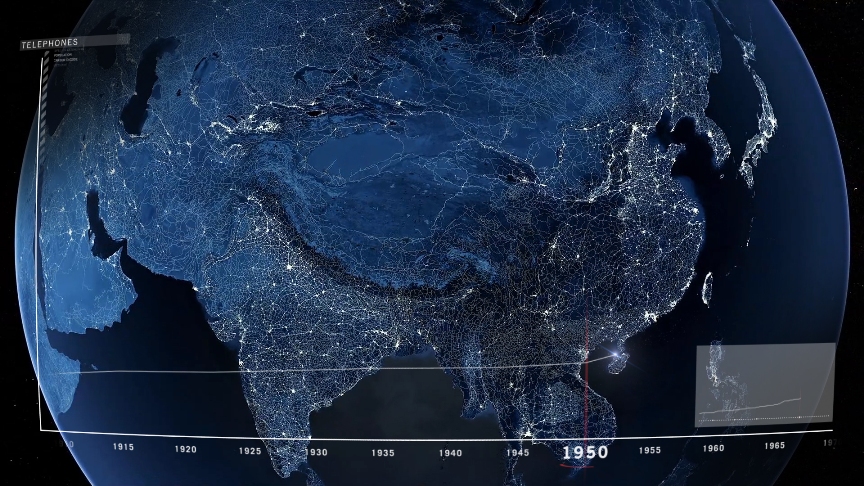
It is a three-minute blast through the last few centuries of Earth’s history, starting in 1750 and finishing at the Rio+20 Summit. It graphically depicts how one species has transformed Earth and shows why many scientists now say we have entered a new geological epoch, the Anthropocene.

Produced by the International Geosphere-Biosphere Programme (IGBP) and partners, it opened the United Nations Rio+20 summit today in Rio de Janeiro.

Welcome to the Anthropocene from WelcomeAnthropocene on Vimeo.

This information is found in a media notice released by IGBP today:

The data visualization, which is already an online viral hit with over 700,000 views, demonstrates that while we have had a dramatic impact on Earth for many thousands of years, it has only been since the 1950s we have grown into a colossal global force.

“The Anthropocene changes our relationship with the planet. We have a new responsibility and we need to determine how to meet that responsibility,” says co-director of the film, Owen Gaffney, director of communications at the International Geosphere-Biosphere Programme (IGBP), based in Stockholm.

“The Rio+20 summit is the largest UN event ever held and the first major international gathering on global sustainability since the concept of the Anthropocene was first popularised,” added Mr Gaffney.

The film opens at the beginning of the Industrial Revolution. As the camera swoops over Earth, viewers watch the planetary impact of humanity: cities, roads, railways, pipelines, cables and shipping lanes until finally the world’s planes spin a fine web around the planet. The film is produced as part of the world’s first educational portal on the Anthropocene.

The film was co-directed by Canadian data visualization expert and anthropologist Felix Pharand-Deschenes from the education organization GLOBAIA.

Pharand-Deschenes said: “Data visualization is a powerful tool to help us view the world and our place in it and to help foster the global awareness needed to support global sustainability and governance. Science can make use of these tools to help bring research to more people.”

The film was commissioned for a major international science conference, Planet Under Pressure, held in March 2012. The conference was designed to provide scientific leadership in support of the Rio+20 summit.

Conference co-chair Dr Mark Stafford Smith from CSIRO in Australia, said: “The film picks up the main theme of the Planet Under Pressure conference: the risks we face are global, urgent and interconnected. Our search for solutions must take this into account.”

The film was produced by the International Geosphere-Biosphere Programme and Globaia. It is part of the website, Anthropocene.info which is co-sponsored by IGBP; Globaia, CSIRO, Stockholm Resilience Centre, Stockholm Environment Institute, International Human Dimensions Programme.

සිවුමංසල කොලූගැටයා #71: රියෝ සමුළුව – තිරසාර අනාගතයකට හුදකලා චාරිකාවක්?

This week’s Ravaya column (in Sinhala) is a preview of a key challenge being taken up at the UN Conference on Sustainable Development being held in Rio de Janeiro, Brazil, this month. I raise the question: how can Sri Lanka transform its economy into a green economy in pursuit of sustainable development?

I explored similar ground in my English column on 10 June 2012: When Worlds Collide #19: How Green is the Lankan Economy?

Rio+20 UN Conference Logo

පරිසරය හා සංවර්ධනය පිළිබඳ එක්සත් ජාතීන්ගේ මහා සමුළුවක් බ‍්‍රසීලයේ රියෝ ද ජනෙයිරෝ නුවර පැවැත් වෙනවා. ජ්‍යෙෂ්ඨ රාජ්‍ය නිලධාරින්, අමාත්‍යවරුන් හා රාජ්‍ය නායක මට්ටමින් පවත්වන අන්තර්-රාජ්‍ය රැස්වීම්වලට අමතරව විද්‍යාඥයන්, පරිසරවේදීන් හා වෙනත් විද්වතුන් එක් රැස් කරන සාකච්ඡ, වැඩමුළු, සම්මන්ත‍්‍රණ රාශියක් ද මේ දිනවල එම නගරයේ සංවිධානය කැරෙනවා.

1955 සිට එක්සත් ජාතීන්ගේ සංවිධානයේ රාජ්‍ය මට්ටමින් සාමාජිකත්වය දරණ (සහ ඒ සඳහා වාර්ෂිකව සාමාජික ගාස්තුවක් මහජන මුදලින් ගෙවන) ලක් රජය ද මේ සමුළුවට රාජ්‍ය මට්ටමින් සහභාගි වනවා.

මෙය හුදෙක් හරිත ප‍්‍රශ්න පිළිබඳ පාරිසරික සමුළුවක් නොවෙයි. ලෝකයේ දුගී දුප්පත්කම, සමාජ අසමානතා හා විසමතා දුරු කිරීමට ආර්ථික සංවර්ධනය අත්‍යවශ්‍ය බවත්, එම සංවර්ධනය තිරසාර කරගැනීමට ක‍්‍රමවේදයන් සකසා ගත යුතු බවත් රියෝ සමුළුවේදී එයට සහභාගි වන රටවල් ප‍්‍රතිපත්ති මට්ටමින් පිළි ගන්නවා.

ලක් රජයේ ඇතැම් කොටස්කරුවන් නොදන්නාකමට එක්සත් ජාතීන්ගේ සංවිධානය හෙළා දැක්කත්, මේ සමුළුවේ වැදගත්කම අවබෝධ කරගත් මෙරට පරිසර අමාත්‍යාංශය හා විදේශ කටයුතු අමාත්‍යාංශය මාස ගණනාවක් තිස්සේ ඒ සඳහා නිල සුදානමක් සිදු කළා. එක්සත් ජාතීන්ගේ සාමාජිකත්වය දරණ රටවල් 193න් එකක් හැටියට රියෝ සමුළුවේදී ශ‍්‍රී ලංකාව ද තිරසාර සංවර්ධනය සම්බන්ධයෙන් දේශීය මට්ටමේ ප‍්‍රගතිය හා ඉදිරි දැක්ම කැටි කැරෙන වාර්තාවක් ඉදිරිපත් කරනු ඇති.

මානව හිමිකම් සුරැකීම සම්බන්ධයෙන් එක්සත් ජාතීන්ගේ රාමුව තුළ අනවශ්‍ය ලෙස ගැටුම් ඇති කර ගන්නා ලක් රජය, අනාගත මානව සුබසිද්ධිය ගැන ලෝක මට්ටමින් කථාබහ කරන මේ සමුළුවේදී වඩාත් සුබවාදී ලෙසින් සහභාගි වීම අගය කළ යුතුයි.

රියෝ සමුළුවේ එක් ප‍්‍රධාන තේමාවක් වන්නේ වර්තමාන ආර්ථික රටාව වඩාත් පරිසරයට හා මානවයන්ට හිතකර එකක් බවට පත්කර ගන්නේ කෙසේ ද යන්නයි. මෙයට Green Economy හෙවත් හරිත ආර්ථිකය යයි කීව ද මෙහිදී ‘හරිත’ යන්න විග‍්‍රහ කැරෙන්නේ වඩාත් පුළුල් අරුතින්. අපේ ඇතැම් හරිතවේදීන් බහුලව යොදා ගන්නා ගස්කොළ, වනසතුන් හා සොබාදහම යන පටු අරුතින් නොවෙයි.

එක්සත් ජාතීන්ගේ පාරිසරික වැඩසටහන (UNEP) හරිත ආර්ථිකය විග‍්‍රහ කරන්නේ “මානව උන්නතිය හා සමාජ සාධාරණත්වය ප‍්‍රවර්ධනය කරන අතර ම පාරිසරික අවදානම් අඩු කරමින් සොබා සම්පත් නැණවත්ව පරිහරණය කරන අන්දමේ ආර්ථික ක‍්‍රමයක්” හැටියටයි.

එබදු ආර්ථිකයක මූලික ගුණාංග හා අරමුණ තුනක් හදුනාගෙන තිබෙනවාථ

• පාෂාණිභූත ඉන්ධන (පෙට‍්‍රල්, ගල් අගුරු හා ගෑස්) වඩාත් අඩුවෙන් දහනය කරමින්, මිහිතලය උණුසුම් කරන කාබන් ඩයොක්සයිඞ් අඩුවෙන් පිට කරන ආර්ථිකයක්.

• සොබා සම්පත් අරපිරිමැස්මෙන් භාවිත කරන, නාස්තිය අවම කළ, වඩාත් කාර්යක්ෂම ආර්ථිකයක්.

• සංවර්ධනයේ ප‍්‍රතිලාභ දුප්පත් හා පොහොසත් හැම අතර සාධාරණව බෙදා ගන්නා ආර්ථිකයක්.

මෙයින් තෙවැනි අරමුණ ඉටු කර ගැනීම ලෙහෙසි පහසු කාරියක් නොවේ. සියවස් ගණනාවක් තිස්සේ යුතෝපියානු (Utopian) ඉලක්කයක් ලෙස සැළකුණු මේ සමානාත්මතාවය, ධනවාදය තුළන් හෝ සමාජවාදය තුළින් හෝ ළගා කර ගන්නට නොහැකිව තිබෙනවා. මේ සදාතනික පැතුමට හරිත ආර්ථිකයෙන්වත් නව ජවයක් ලැබෙයි ද? එය කියන්නට බැහැ. එයට මුල් වන්නේ දේශපාලනික හා සමාජයීය සාධක නිසා.

ඉහත පළමු හා දෙවැනි අරමුණු සඳහා නම් විද්‍යාව හා තාක්ෂණය නැණවත්ව හා ක‍්‍රමවත්ව යොදා ගත හැකියි. එහෙත් හරිත ආර්ථිකයක් වසරකින් හෝ දශකයකින් එකවර පැන නැෙඟන්නේ නැහැ. එය සෙමෙන් හා ක‍්‍රමයෙන් ගොඩ නැඟිය යුතු ක‍්‍රමීය වෙනසක්. සොබාදහම රැක ගැනීමට පමණක් ලඝු කළොත් එය සිදු වන්නේත් නැහැ. හරිත ආර්ථිකයකට යොමු වීම හරහා රටක, ප‍්‍රජාවක මෙන් ම පවුලක ආර්ථිකයකටත් ලාබදායී හා ප‍්‍රයෝජනවත් විය යුතුයි.

විශේෂයෙන් බලශක්ති සම්බන්ධයෙන් හරිත ආර්ථිකයකට යොමු වීමේ වැඩි නැඹුරුවක් ඇතැයි UNEP කියනවා.මෙයට එක් ප‍්‍රධාන හේතුවක් නම් ඉහළ යන තෙල් මිළයි. ඛනිජ තෙල් වඩාත් පිරිමැසුම්දායක ලෙස භාවිතා කරන අතර පුනර්ජනනීය ඉන්ධන ප‍්‍රභවයන් (Renewable energy sources) වෙත යොමු වීමේ හදිසි අවශ්‍යතාවය අද ලෝකයට ම තේරුම් ගොස් තිබෙනවා.

සූර්ය, සුළං හා ජෛව ඉන්ධන බලශක්තිය වඩාත් කාර්යක්ෂමව ජනනය කොට, ගබඩා කොට, ප‍්‍රයෝජනයට ගැනීමේ තාක්ෂණයන් දියුණු කරන්නට ඉන්දියාව, චීනය, ජපානය, අමෙරිකාව, බ‍්‍රසීලය වැනි රටවල් අද විශාල ලෙස පර්යේෂණ කරනවා. මුදල් ආයෝජනය කරනවා.

එහෙත් හරිත ආර්ථිකයක් බිහිවීමට නවීන තාක්ෂණයන් හා ක‍්‍රමවේදයන් පමණක් සෑහෙන්නේ නැහැ. එයට හිතකර ප‍්‍රතිපත්ති රාමුවක් හා සමස්ත රාජ්‍ය ක්ෂේත‍්‍රයේ ම කැපවීම අවශ්‍යයි. මෙරට පුනර්ජනනීය බලශක්ති ප‍්‍රවර්ධනය කරන පෞද්ගලික සමාගම් මෙන් ම ස්වෙච්ඡ ආයතනවලටත් කලක් තිස්සේ තිබෙන ගැටළුවක් නම් එබදු පැහැදිලි හා හිතකර ප‍්‍රතිපත්ති රාමුවක් නොතිබීමයි.

මේ තත්ත්වය කෙමෙන් හොඳ අතට හැරෙන බව ද කිව යුතුයි. විදුලි හා බලශක්ති අමාත්‍යාංශය පුනර්ජනනීය බලශක්තිය නිපදවන තනි පුද්ගලයන්ගෙන් හා සමාගම්වලින් අතිරික්ත විදුලිය ලබා ගැනීමට කැමති වීම එක් මෑත හොඳ ප‍්‍රවණතාවක්. Net Metering ලෙස හැදින්වෙන මෙය ජාතික විදුලිබල ජනන ජාලය මත දැනට ඇති පීඩනය යම් තරමකට හෝ සැහැල්ලූ කිරීමට උදවු වනු ඇති.

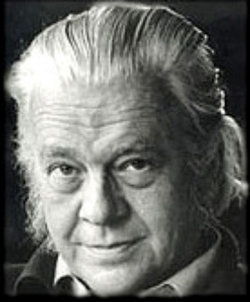
Ernst “Fritz” Schumacher

තිරසාර සංවර්ධන ගැනත්, අළුත් ආර්ථික ක‍්‍රමයක දැඩි අවශ්‍යතාවය ගැනත් මීට වසර 40කට පෙර පෙන්වා දුන් ජර්මානු-බි‍්‍රතාන්‍ය ආර්ථික විද්‍යාඥ අර්න්ස්ට් ෂූමාකර්ගේ (Ernst Schumacher) ජන්ම ශත සංවත්සරය සමරන්නට මාර්තුවේ කොළඹදී වැඩමුළුවක් පැවැත් වුණා. අසීමිත ලෙස ආර්ථික වර්ධනය පසුපස හඹා යාම සොබා සම්පත්වලට හා මානව සමාජයට දිගු කාලීනව දරා ගත නොහැකි බව කල් තබා වටහා ගෙන ලෝකයට අනතුරු ඇගවූ අසාමාන්‍ය ගණයේ විද්වතකු හැටියට ෂූමාකර් පිළි ගැනෙනවා.

එහෙත් “පුංචි නම් ලස්සනයි” (Small is Beautiful) නමින් 1973දී ඔහුගේ වඩාත් ම ප‍්‍රකට කෘතිය ලියූ වකවානුවේ එබදු සංකල්ප මතු කරන්නන් දෙස බොහෝ දෙනා බැලූවේ සැකයෙන් හා අවඥාවෙන්. මානව චින්තනය වෙනස් කරන්නට අසම්මත ලෙස සිතු හා අදහස් පළ කළ බොහෝ දෙනා මෙන් ෂූමාකර් ද තමන් ජීවත් වූ යුගයට වඩා ඉදිරියෙන් සිටි බව කොළඹ වැඩමුළුවේ කථිකයන් කියා සිටියා.

එහිදී කථා කළ බලශක්ති සංසදයේ විධායක අධ්‍යක්ෂක හා බලශක්ති අමාත්‍යාංශයේ උපදේශක අසෝක අබේගුණවර්ධන කීවේ මෙරට බලශක්ති ජනනයට සිදු කැරෙන කාබන් ඩයොක්සයිඞ් විමෝචනය ටිකෙන් ටික සීමා කිරීමේ උවමනාව හදුනාගෙන ඇති බවත්, ඒ සඳහා 2020න් පසුව ක‍්‍රමානුකූලව යොමු වනු ඇති බවත්. එහෙත් මේ ඉලක්කය වෙත ළගා වීමට හරස්වන තාක්ෂණික හා ආර්ථික බාධක ඉවත් කළ යුතුව ඇතැයි ද ඔහු සඳහන් කළා. (මේ බාධක මොනවාදැයි ඔහු විස්තර කළේ නැහැ.)

තිරසාර සංවර්ධනයට මෙරට තිබෙන ලොකු ම බාධකයක් ලෙස හදුනාගෙන ඇත්තේ රජයේ විවිධ ආයතන අතර සම්බන්ධිකරණයක් නැති විමයි. මේ සම්බන්ධිකරණය ඇති කිරීමට තිරසාර සංවර්ධනය සඳහා ජාතික කවුන්සිලයක් (National Council for Sustainable Development) 2008දී පිහිටුවනු ලැබුවා. ජනාධිපතිවරයාගේ සභාපතිත්වයෙන් යුත් එහි ආර්ථික ක්ෂේත‍්‍රයට අදාළ අමාත්‍යාංශ 22ක් නියෝජනය වනවා. රජයේ පාරිසරික ප‍්‍රතිපත්ති හා හරිත ලංකා පාරිසරික වැඩසටහන ක‍්‍රියාත්මක කිරීමට සහය වීම මේ කවුන්සිලයේ වගකීමයි.

හරිත ලංකා වැඩසටහන යටතේ පුළුල් ඉලක්ක 10ක් ප‍්‍රකාශයට පත් කොට තිබෙනවා. සැමට පිවිතුරු වාතය ලබා දීම, වගකීමක් සහිත ඉඩම් පරිහරණය, නාගරික ප‍්‍රදේශවල පාරිසරික තත්ත්ව පාලනය, කාර්මික ක‍්‍ර‍්‍රියාවලින් ඇති වන පාරිසරික බලපෑම් කළමණාකරණය, දේශගුණ විපර්යාසවලට මුහුණදීම ආදිය ඒ අතර තිබෙනවා.

නම සඳහන් නොකිරිමේ එකගත්වය මත පරිසර අමාත්‍යාංශයේ ජේ්‍යෂ්ඨ නිලධාරියකු කීවේ මේ උතුම් අරමුණු සදඟා රජයේ සෙසු අමාත්‍යාංශ හා ආයතන ඒකරාශි කොට සම්බන්ධිකරණය කිරිම ඉතා අපහසු වී ඇති බවයි. ඉඩම්, ජලය, කෘෂිකර්මාන්තය, බලශක්ති ජනනය, කර්මාන්ත, ප‍්‍රවාහනය ආදී ප‍්‍රධාන ප‍්‍රවාහයේ ක‍්‍රියාකාරකම් සියල්ල සිදු වන්නේ පරිසර අමාත්‍යාංශයෙන් පරිබාහිරවයි.

මේ යථාර්ථය තුළ තිරසාර සංවර්ධනයක් ඇති කරන්නට නම් සොබා සම්පත් කළමණාකරණය කරන හෝ පාරිසරික බලපෑම් ඇතිකරන හෝ දැවැන්තයන්ගේ දායකත්වය අත්‍යවශයි. එය හුදෙක් පරිසර දිනයකට, මිහිතල දිනයකට හෝ හරිත ලියවිල්ලකට සීමා නොවිය යුතුයි.

මෑත උදාහරණයක් ගනිමු. හරිත ලංකා වැඩසටහනේ එක් ඉලක්කයක් නම් 2016 වන විට මෙරටට අවශ්‍ය ඛනිජ තෙල් ප‍්‍රමාණයෙන් 10%ක් ජෛව ඉන්ධනවලින් (biofuel) නිපදවා ගැනීමයි. (පෙට‍්‍රල් වාහනවල එන්ජින් වෙනස්කමක් නොකොට, එන්ජින්වලට හානියක් ද නොවී 10-15%ක් ඊතයිල් මද්‍යසාරය මිශ‍්‍ර කළ හැකියි. වාහනවල ඛනිජ තෙල් බිල අඩු කර ගන්නට ඒවාට මධ්‍යසාර මිශ‍්‍ර කිරිම විද්‍යාත්මකව අත්දුටු ක‍්‍රමයක්.)

එහෙත් මෑතදී මාධ්‍ය වාර්තා කලේ මෙරට අතිරික්ත බඩඉරිගු ටොන් 10,000ක් කැනඩාවට හා තායිවානයට විකිණූ බවයි. එය අපේ කෘෂිකර්මයේ හා ජාත්‍යන්තර වෙළදාමේ ජයග‍්‍රහණයක් ලෙස හුවා දක්වා තිබුණා. බඩඉරිගු ටොන් 10,000 අලෙවියෙන් මෙරට කොපමණ විදේශ විනිමයක් ලැබෙනවා දැයි ප‍්‍රකාශිත නැතත්, මේ අතිරික්තය ජෛව ඉන්ධන නිපදවීමට යොදා ගත්තා නම් කොපමණක් වටිනා ඛනිජතෙල් සඳහා ආදේශ කළ හැකිව තිබුණා ද?

බඩඉරිගු පැසවීමෙන් ජෛව ඉන්ධන මද්‍යසාර නිපදවා ගත හැකියි. රියෝ සමුළුවට බ‍්‍රසීලයට යන අපේ නිලධාරින්ට හා අමාත්‍යවරුන්ට එරට ජෛව ඉන්ධන අත්දැකීම දැක බලා ගත හැකි නම් අගෙයි. බහුලව වවන උක් යොදා ගෙන ජෛව ඉන්ධන නිපදවා ඛනිජතෙල්වලට මිශ‍්‍ර කිරීම බ‍්‍රසීලය ඇරඹුවේ 1976දී. අද දියුණු වන රටවල් අතර ජෛව ඉන්ධන බහුලව ම භාවිතා කරන රටත්, ඒ සදහා හොදම තාක්ෂණික හැකියාව ඇති රටත් බ‍්‍රසීලයයි.

තිරසාර සංවර්ධනය කරා යන ගමන පරිසර අමාත්‍යාංශයට පමණක් තනිව යා හැකි හුදකලා චාරිකාවක් නොවෙයි. පරිසර අමාත්‍යාංශයට හැක්කේ ඒ සඳහා ගමන් මග හෙළි පෙහෙළි කොට, පෙර ගමන්කරුවන් වීම හා මාර්ගෝපදේශනයයි. අන්තිමේදී එය පාළු මාවතක් බවට පත් නොකර තිරසාර අනාගතයකට දිවෙන සක‍්‍රිය මාර්ගයක් කිරීමේ වගකීම රාජ්‍ය ක්ෂේත‍්‍රයේ මෙන් ම පෞද්ගලික හා විද්වත් ක්ෂේත‍්‍රවල ආයතන හා තීරක හැම දෙනාට පැවරෙනවා.

අභියෝගයේ බැරුම්කම හරිහැටි හදුනා ගෙන, මනා පෙළගැස්මකින් තිරසාර ගමන ගයොත් රියෝ සමුළුවෙන් ඔබ්බට ශ‍්‍රීලංකාවට බොහෝ දුර යා හැකියි. එහෙත් හිස් වදන් හා ප‍්‍රකාශවලට සීමා වී එක තැන පල් වුණොත්, සමුළුවෙන් සමුළුවට ගොස් එක ම තනුව වාදනය කරන පිරිසක් බවට පත්වීමේ අවදානම ද තිබෙනවා.

දැන ගියොත් රියෝ. නොදැන ගියොත් අනාථයි!

Eco Myths Can’t Save the Planet. Wake Up and Smell the Foul Air!

We Can’t Save the Planet with Green Myths!

This was the title of a talk I gave to Sri Lanka Rationalists’ Association (SLRA) in Colombo, Sri Lanka, on 7 June 2012 — two days after World Environment Day.

In this, I shared my observations on how attempts aimed at environmental conservation and sustainable resource use in Sri Lanka are often hindered by many misconceptions and myths about natural resources and our impact on them.

I invoked the words of George Monbiot, journalist/columnist, The Guardian, UK: “One of the most widespread human weaknesses is our readiness to accept claims that fit our beliefs and reject those that clash with them. We demand impossible standards of proof when confronted with something we don’t want to hear — but will believe any old cobblers if it confirms our prejudices…”

At the outset, I proposed a basic categorization of eco-myths as myths of the first, second and third kind – the last one being the most pervasive and harmful. Drawing on my 25 years of experience as a science writer and journalist, I cite several examples from air pollution, biodiversity and climate change.

There is also the mother of all eco-myths that Lankan nationalists never tire of repeating: romanticising the ‘good old days’ before modernisation and colonisation. Ah, if only real life were that simple…

I acknowledged that scientific knowledge and understanding on some ecological matters are evolving so have to keep an open, inquisitive mind: science does not have all the answers, but provides a framework in which to ask the right questions and to go in search of answers supported by evidence.

I also conceded that many individuals – and their societies – are not always rational. Governments (at least in democracies) take their cue from the people, and so…irrationality feeds on itself.

The bottomline: it’s a free world and individuals may cling on to any fantasy or belief. As long as it doesn’t harm others around the believer, and/or affects collective thinking. When it does, the good of the many must outweigh the good of one.

The last time I took on a myth was April 2009 with my blog post: ‘Chief Seattle speech’: Global environmental legend, or pervasive myth?

See, in particular, the kind of comments and berating I received from the true-believers!

සිවුමංසල කොලූගැටයා #70: ශ‍්‍රී ලංකාවෙන් ලෝකයට දායාද කළ සදෘශ්‍ය වනවගා විප්ලවය

In this week’s Ravaya column (in Sinhala), I write about Analog Forestry, a Lankan innovation that is now adopted in many tropical countries in Africa, Asia and Latin America.

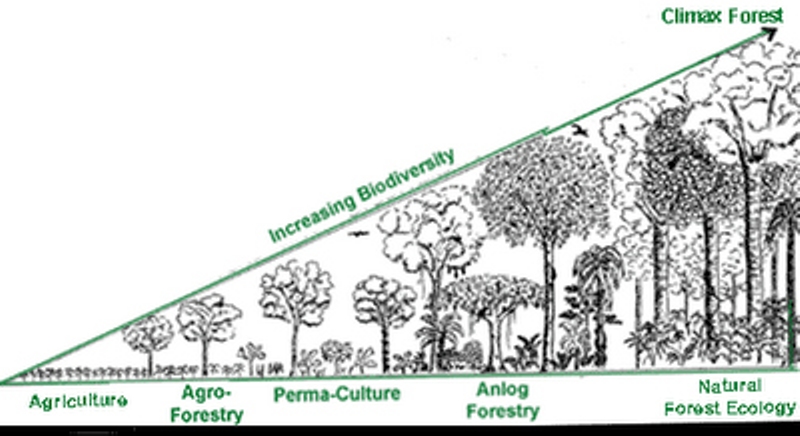
Analog Forestry is a system of planned, managed forests that are designed to mimic the function and ecology of the pre-existing climax vegetation for the area, and are also designed to provide economic benefits.

Read: Just like a forest by Aditya Batra, Down to Earth magazine, 15 June 2011

තවත් ලෝක පරිසර දිනයක් ජුනි 5 වනදා සමරනු ලැබුවා. සෑම වසරක ම මේ කාලයට පරිසරය හා සොබා සම්පත් ගැන අවධානය යොමු වනවා. පරිසරවේදීන් කියන්නේ මහා පරිමානයේ සංවර්ධන ව්‍යාපෘති හා පාරිභෝගික සමාජය නිසා අපේ පරිසරයට විශාල තර්ජන ඇති බවයි. පරිසරයේ නිල සුරැකුම්කරුවන් ලෙස නීතිමය බලතල හා ප‍්‍රතිපත්තිමය වගකීම් ඇති රාජ්‍ය ආයතන කියන්නේ අභියෝග බොහොමයකට නිසි ප‍්‍රතිචාර දක්වන බවයි.

මේ දෙපිරිස වාද විවාද කරන අතරේ නිහඩව නමුත් ගැඹුරින් පාරිසරික තත්ත්වයන් අධ්‍යයනය කරමින් ප‍්‍රායෝගික විසදුම් සොයන හා නව සංකල්ප අත්හදා බලන ටික දෙනෙකුත් සිටිනවා. නිලබලය හෝ ප‍්‍රසිද්ධිය හෝ හඹා නොයන එහෙත් සොබා සම්පත් හා මානව සමාජය අතර සංහිදියාවක් ඇති කරන්නට වෙර දරන පර්යේෂකයන්, බිම් මට්ටමේ ක‍්‍රියාකාරිකයන් අපේ රටේ සිටිනවා. බැනර්, මාධ්‍ය ප‍්‍රකාශ හෝ පෙළපාලිවලින් තොරව නිහඩව වැඩ කර ගෙන යන මේ අය සැබෑ පරිසර වීරයෝ. මා කවදත් වැඩි අවධානයක් යොමු කරන්නේ ඔවුන් ගැනයි.

අපට සොබා දහම මවන්නනට බැහැ. එහෙත් සොබාදහම අධ්‍යයනය කොට එහි ක‍්‍රියාදාමයන් අනුකරණය කළ හැකියි. සොබාදහමට එරෙහි වනවා වෙනුවට සොබාදහම සමග සහයෝගයෙන් අපේ අවශ්‍යතා ඉටුකර ගැනීමේ ක‍්‍රමවේදයන් දැන් හඳුනා ගෙන තිබෙනවා. ගිය සතියේ කොලමින් මා හදුන්වා දුන් මෙරට සිටින ප‍්‍රවීණතම පාරිසරික විද්‍යාඥයකු වන ආචාර්ය රනිල් සේනානායකගේ නව්‍යකරණයක් වන සදෘශ්‍ය වන වගාව (Analog Forestry) ගැන සොයා බලමු.

සදෘශ්‍ය වන වගාවේ ආරම්භය 1975 දක්වා අතීතයට යනවා. රනිල් සේනානායක සිය පරිසර විද්‍යා ආචාර්ය උපාධියට ක්ෂේත‍්‍ර පර්යේෂණ කරමින් ශ‍්‍රී ලංකාවේ බොහෝ ගම්බද හා කැලෑබද ප‍්‍රදේශවල සංචාරය කළා. කෙටි කලකින් පසුව වුවත් එක ම ස්ථානයට නැවත ගිය විට එතැන ඉන් පෙර හමු වූ උභයජීවින්, කටුස්සන්, සර්පයන් හා අනෙකුත් ජීවීන් සංඛ්‍යාවෙනුත් විවිධත්වයෙනුත් අඩු වන සැටි ඔහු දුටුවා. මෙයට හේතුව ඔවුන්ට උන්හිටි තැන් අහිමිවීමයි. ස්වභාවික වනාන්තර අඩු වීමයි.

ස්වභාවික වනාන්තරවලට පසුව වඩාත් ම මේ ජීවින්ට හිතකර පරිසරයක් ඇත්තේ අපේ පුරාණ ගම්වල බව විකී අතුකෝරාල නම් මිතුරකු රනිල්ට පෙන්වා දුන්නා. මේ ඔස්සේ ගවේෂණය කළ රනිල් සොයා ගත්තේ පුරාණ ගම්වල තුරුලතා හා භූමි සැකසුම බොහෝ දුරට ස්වභාවික වනාන්තරය අනුකරණය කළ බවයි. මේ නිසා මිනිස් ජනවාස අතර වුවත් අනතුරකින් තොරව පවතින්නට සොබා දහමට ඉඩ ලැබී තිබුණා.

අමෙරිකාවේ කැලිෆෝනියා සරසවියෙන් ආචාර්ය උපාධිය ලබා 1978දී යළි ශ‍්‍රී ලංකාවට ආ රනිල්, 1980 දශකයේ වැඩි කලක් ගත කළේ වනාන්තර අනුකරණය කරමින් සොබා දහමටත් ගැමියන්ටත් හිතකර හා ප‍්‍රයෝජනවත් පරිසර පද්ධති බිහි කළ හැකි ද යන්න සෙවීමටයි.

වනාන්තරයක් වැවෙන්නේ පියවරෙන් පියවර දශක ගණනාවක් පුරා. තණ කොළ හා කුඩා පදුරුවලින් ඇරැඹී ටිකෙන් ටික වඩාත් විශාල ගස් බිහි වනවා. ඒ වටා සංකීර්ණ වූත් විචිත‍්‍ර වූත් ශාක හා සත්තව සමුහයක් එක්තැන් වනවා. මේ ක‍්‍රියාදාමය සමීපව අධ්‍යයනය කිරිමෙන් පසු මුඩුබිමක් හෝ විවෘත බිම් පෙදෙසක ටිකෙන් ටික වනාන්තරයක් අනුකරණය කැරෙන විදියේ ගස්වැල් වැඩෙන්නට සැලැස්විය හැකියි.

අපේ පුරාණ ගම්මානවල භූමි පරිභෝජන රටාවට අමතරව දකුණු අමෙරිකාවේ ගෝතමාලා රටේ වනාන්තර හා ගම්බද ප‍්‍රදේශ ආශ‍්‍රිතවත් ඔහු පර්යේෂණ කළා. මේ සියල්ලේ ප‍්‍රතිඵලය හැටියට සදෘශ්‍ය වනවගාව නමින් අළුත් සංකල්පයක් ලෝකයාට ඉදිරිපත් කරන්නට රනිල්ට හැකි වුණා.

සදෘශ්‍ය වන වගාව යනු වනාන්තරයක හා ගොවි බිමක සම්මිශ‍්‍රණයක්. සීමිත භූමි ප‍්‍රමාණයක මිලියන් 20ක මානව ජනගහනයක් හා විශාල ජෛව විවිධත්වයක් පවත්වා ගන්නට උපකාර වන එක් ක‍්‍රමවේදයක්. ගොවිබිම් සොයා වනබිම් ගිනි තබා එලි පෙහෙලි කරනවා වෙනුවට වනාන්තර හා ගොවිබිම් එක ම බිම් පෙදෙසහි එක ම කාලයේ පවත්වා ගැනීමට හැකිවිම මෙහි සුවිශේෂී ලක්ෂණයයි.

මෙහි විද්‍යාත්මක සිද්ධාන්ත තහවුරු කර ගත් පසු ප‍්‍රායෝගිකව අත්හදා බලන්නට රනිල්ට ඕනෑ වුණා. එහෙත් රජයේ වන දෙපාර්තමේන්තුව මේ සංකල්පය ගැන කිසිදු උනන්දුවක් දැක් වූයේ නැති බව ඔහු කියනවා.

එයින් අධෛර්්‍යයට පත් නොවූ ඔහු, පාරම්පරිකව තමන්ට කොළඹ හිමි වූ ඉඩමක් විකුණා ඒ මුදලින් ඌව පළාතේ බණ්ඩාරවෙලට සමීප මිරහවත්ත ප‍්‍රදේශයෙන් ඉඩමක් මිළට ගෙන සදෘශ්‍ය වන වගාවේ ප‍්‍රායෝගික අත්හදා බැලීම් ඇරඹුවා. පුරාණ ගම්මානවලින් හා ලෝකයේ වෙනත් රටවලින් උගත් දේ එහිදී වසර අටක් පුරා පෞද්ගලික වියදමින් හා පරිශ‍්‍රමයෙන් ක‍්‍රියාත්මක කළා. මේ සඳහා තවත් උද්යෝගිමත් පර්යේෂක පිරිසක්ද සම්බන්ධ කරගෙන Neo-Synthesis Research Centre (NSRC) නම් ලාබ නොලබන, පර්යේෂණ ආයතනයක් ද ආරම්භ කළා.

‘‘අපේ වන දෙපාර්තමේන්තුව යටත් විජිත යුගයේ ආරම්භ කළේ දැව උකහා ගැනීමේ මුඛ්‍ය අරමුණින් මිස වනාන්තර රැුක ගැනීමට නොවෙයි. අවාසනාවකට අද දක්වා එහි බොහෝ නිලධාරීන් වනාන්තර දකින්නේ දැව සඳහා උකහා ගත හැකි ගස් එකතුවක් ලෙසයි. වනාන්තර යනු ඉතා සංකීර්ණ පරිසර පද්ධති බවත්, ඒවායේ ජෛව විවිධත්වයේ බහුතරයක් ඇත්තේ මහ ගස්වල නොව කුඩා පැළෑටි, පඳුරු, වැල්, අපිශාක හා පාංශු ජීවින්ගේ බව ඔවුන් දකින්නේ නැහැ’’ ඔහු කියනවා.

සදෘශ්‍ය වන වගා බිමෙහි ආර්ථික වශයෙන් ප‍්‍රයෝජනවත් කුළුබඩු, පළතුරු හා වෙනත් බෝග වර්ග වවන්නට හැකියි. වගා කරන්නට පෙර ස්වභාවිකව යම් තැනෙක තිබෙන සියළු ගස්වැල් කපා ඉවත් කිරිම වෙනුවට ඒවා සෙවනෙහි ම වගා කළ හැකියි. සමශීතෝෂ්ණ දේශගුණය ඇති රටවල පුළුල්ව කැරෙන විවෘත වගාබිම් සංකල්පය ගෙඩිපිටින් ඝර්ම කලාපීය අපේ රටට ආදේශ කරනු වෙනුවට මේ විකල්පය වඩාත් පරිසර හිතකාමියි.

එමෙන්ම බෝග ඵලදායිතාවේ හා ගොවීන්ගේ ආදායම්වල වැඩිවීමක් මිස අඩුවක් වන්නෙත් නැහැ. එහෙත් බටහිර සංකල්පවලට නතු වූ අපේ කෘෂි විද්‍යාඥයන්ට හා කෘෂි ව්‍යාපෘති නිලධාරින්ට මෙලෙස වනය හා ගොවිබිම මුසු කිරිම දිරවා ගන්නට අමාරුයි. මේ නිසා සදෘශ්‍ය වන වගාවේ සාර්ථක හා හිතකර බව හොදින් සනාථ වී තිබියදීත් අපේ කෘෂි හා වන දෙපාර්තමේන්තු තවමත් එය පිළි ගන්නේ නැහැ.

“1980 දශකයේ වන දෙපාර්තමේන්තුව හා ඔවුන්ගේ විදේශ විශේෂඥයන් විශ්වාස කලේ මෙරටට තනිකර ම ආගන්තුක පයිනස් හා යුකැලිප්ටස් ගස් යොදා ගෙන කෘත‍්‍රිම වන වගා කිරීම ගැන පමණයි. වන බිම් අසල වෙසෙන ගම් වාසීන්ගේ ආදායම් උවමනාකම් ගැන කිසිදු හැගීමක් හෝ තැකීමක් වන නිලධාරින්ට තිබුණේ නැහැ. මේ නිසා සදෘශ්‍ය වන වගාව වැනි සංකල්පයක් නිලධාරින් අගය කළේ නැහැ,” රනිල් කියනවා.

වනාන්තර අනුකරණය කරමින් ගම්වල සදෘශ්‍ය වන වගා කිරීම හරහා වනය රැක ගන්නා අතර ගැමි ජනයාගේ ආදායම් ද වැඩි කළ හැකි බව වසර 25 ක් පුරා NSRC පර්යේෂණ ආයතනය මෙරට බදුල්ල, මොණරාගල වැනි දිස්ති‍්‍රක්කවල අත්දැකීමෙන් ඔප්පු කොට තිබෙනවා.

ශ‍්‍රී ලංකාවේ මිරහවත්තෙන් පටන් ගත් වනය හා ගොවිබිම් එක්තැන් කිරිමේ විප්ලවය දැන් ලෝකයේ ඝර්ම කලාපීය රටවල් ගණනාවකට පැතිර ගොස් තිබෙනවා. Analog Forestry Network (www.analogforestrynetwork.org) නමැති විද්වත් ජාලයට රටවල් 16ක සදෘශ්‍ය වන වගාකරුවන් අයත්. එය ක‍්‍රියාත්මක වන්නේ ඒ රටවල රාජ්‍ය නිලධාරී, පර්යේෂක හා ගොවි සංවිධානවල සහභාගිත්වයෙන්. සදෘශ්‍ය වන වගාව දශක දෙකක් තිස්සේ විද්‍යාත්මක අධ්‍යයනයට ද ලක්ව තිබෙනවා. ඒ ගැන MSc හා PhD මට්ටමේ පර්යේෂණ නිබන්ධන ගණනාවක් හා ජාත්‍යන්තර නිබන්ධන රැසක් ලියැවී තිබෙනවා.

“සදෘශ්‍ය වන වගාව සෑබැ ලෝකයේ ප‍්‍රායෝගික ලෙස ක‍්‍රියාත්මක වන, පාරිසරික මෙන් ම සමාජයීය ලෙසින් විපුල ඵල දෙන ක‍්‍රමවේදයක් බවට අද ආසියාව, අප‍්‍රිකාව හා දකුණු ඇමෙරිකාව පුරා පිළි ගෙන තිබෙනවා. එහෙත් එය උපන් ශ‍්‍රී ලංකාවේ තවමත් කිසි පිළි ගැනීමක් නොලැබීම අපේ අවාසනාවක්. නිලධාරින්ගේ අධිපතිවාදයේ දරුණුකම එයින් පෙනෙනවා,” යයි රනිල් සේනානායක කියනවා.

2008දී මා විධායක නිෂ්පාදනය කළ “2048 ශ‍්‍රී ලංකාව” ටෙලිවිෂන් සංවාද මාලාවේ එක් වැඩසටහනකට, මොණරාගල මාරගලකන්ද ගම්මානය ආශ‍්‍රිතව කැරෙන සදෘශ්‍ය වන වගාව ගැන කෙටි වීඩියෝ වාර්තාවක් නිෂ්පාදනය කළා. රජයේ සෘජු මැදිහත්වීමකින් තොරව, පෞද්ගලික ඉඩම් යොදා ගෙන ගම්වාසීන්ගේ විශ්වාසය හා සහයෝගය දිනා ගෙන කරගෙන යන මේ වන වගාවේ සාර්ථකත්වය හොඳාකාර දැක බලා ගන්නට අපට හැකි වුණා. http://tiny.cc/SL48AF

රනිල් සේනානායක ඇරඹු NSRC අද ඉදිරියට යන්නේ එහි වත්මන් අධ්‍යක්ෂ කැමී මෙල්වානිගේ නායකත්වයෙන්. උඩරට කදුකරයේ ලොකු කුඩා තේ වතු ආශ‍්‍රිතව සදෘශ්‍ය වන වගා ඔවුන් අරඹා තිබෙනවා. මේවා අවට ගම්වාසීන්ට අතුරු ආදායම් ලබාදෙන අතර කලක් තිස්සේ වගාකිරිමෙන් නිසරු වූ බිම්වලට නැවත ජීවය ලබා දීමක් (Ecological Restoration) හැටියටත් NSRC දකිනවා. කුරුදු, කරාබුනැටි, අලිගැට පේර වැනි ආර්ථික වටිනාකමක් ඇති බෝග මේ වන වගා අතර වවනවා. මේ සඳහා තේවතු හිමියන් මෙන් ම වතු කම්කරුවන් ද හවුල් කර ගෙන තිබෙනවා.

“සදෘශ්‍ය වන වගාවක සාර්ථකත්වය දකින්නට වසර ගණනාවක් ඉවසිල්ලෙන් ක‍්‍රියා කළ යුතුයි. සොබාවික පරිසරයේ සිටින ගෙම්බන්, සමනලයන්, කූරන් ආදී සතුන් සදෘශ්‍ය වන වගාවට පැමිණෙන්නට ගත් විට එය වනයක හොඳ අනුකරණයක් බවට පත්ව හමාරයි,” මෙල්වානි කියනවා.

NSRC අමතරව ඌව පළාත කේන්ද්‍ර කර ගත් අනාගතේ අපේ අතේ (Future in Our Hands) නම් ස්වෙච්ඡ සංවිධානය ද සදෘශ්‍ය වන වගාවේ යෙදෙනවා. හේන් ගොවිතැන සඳහා අක්කර ගණන් කැලෑ බිම් ගිනි තබා හෙළි පෙහෙලි කරනු වෙනුවට සදෘශ්‍ය වන වගාවේ නිරත වීම හරහා ආදායම් ලැබීමට ගොවීන් කැමතියි.www.futureinourhands.org

මේ ක‍්‍රියාදාමයන්ට බිම් මට්ටමේ රාජ්‍ය නිලධාරින්ගේ සහයෝගය ලැබෙනවා. ජාතික මට්ටමේ නිල පිළගැනිම හෝ අනුදැනුම නැතිව වුවත් දැනුම, කැපවීම හා සංවිධානය වීම හරහා පරිසරය රැක ගනිමින් ගැමි ආදායම් ද ඉහළ නැංවිය හැකි බවට සදෘශ්‍ය වන වගාව හොඳ උදාහරණයක්.

පරිසරය රැක ගන්නවා කියන්නේ සොබා සම්පත් පරිහරණය නොකර ඒවා කොටු කර, හමුදා ආරක්ෂාව යටතේ තැබීම නොවේ! සොබාදහමේ පුනර්ජනනීය සම්පත්, යම් සීමාවන්ට අදාළව නැණවත්ව හා ප‍්‍රවේශමින් පරිහරණය කිරීමේ කිසිදු වරදක් නැහැ. අද අපට අවශ්‍ය වන්නේ පරිසරය ද නොනසා, මානවයන් ද රැක ගන්නට හැකි තිරසාර වූත් ප‍්‍රායෝගික වූත් සංවර්ධන දැක්මක්.

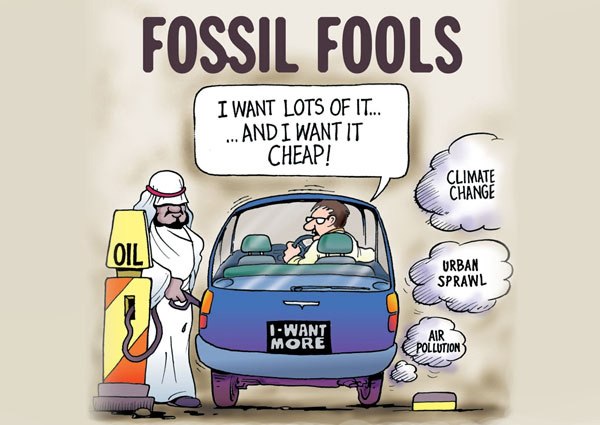
Don’t Be a Fossil Fool: A case for valuing Biotic Carbon in climate talks

Cartoon courtesy Down to Earth magazine, CSE India

• To tackle enhanced global warming that leads to climate change, we need to better understand the global carbon cycle.

• Critical to this understanding is distinguishing between fossil carbon (coal and petroleum) and biotic carbon (photosynthetic biomass – living matter capable of absorbing atmospheric carbon).

• Biotic Carbon offers a ‘lifeboat’ to a world in search of solutions. Valuing biotic carbon can transform the role of farmers and rural communities currently sidelined in global climate change negotiations.

• Current methodologies of carbon trading have seriously warped both economics and ecology. What takes place today is more like carbon laundering.

These outspoken views are expressed in a new web video by Dr Ranil Senanayake, a globally experienced systems ecologist with four decades of experience across Asia, Africa and Latin America.

Titled “Rethinking Carbon and Climate Change”, the 16 minute video is released on TVE Asia Pacific’s YouTube channel in time for World Environment Day 2012 and ahead of the UN Conference on Sustainable Development, or Rio+20 in Brazil.

This is edited from a long interview I filmed with the maverick scientist in mid March 2012.

Watch the full film online:

This film is released under Creative Commons Attribution-NonCommercial-ShareAlike 3.0 license.

Read Q&A style interview on Groundviews (covers much else):
Sri Lanka’s Fast-track to Post-war Development: Remember the Mahaweli’s Costly Lessons!

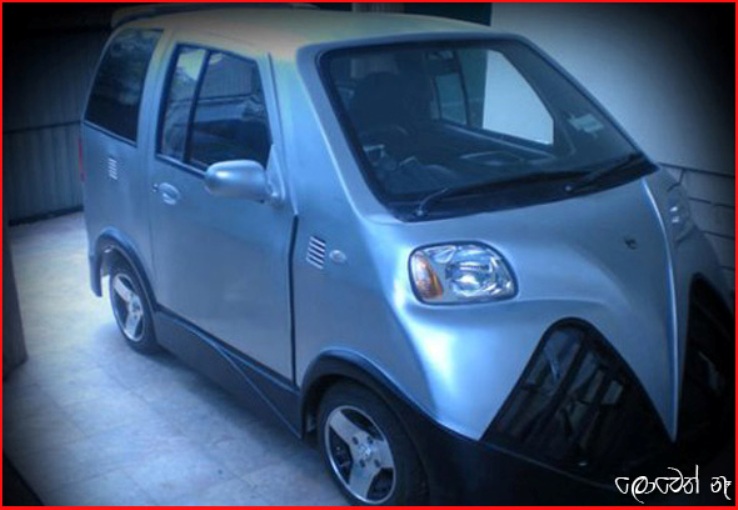
Malima: Episode #7: Meet ELCA, Sri Lanka’s own battery-powered electric car!

ELCA prototype built by Nilanga Senevirathne Epa 2012

Malima (New Directions in Innovation) is a Sinhala language TV series on science, technology and innovation. This episode was produced and first broadcast by Sri Lanka’s Rupavahini TV channel on 10 May 2012.

Produced by Suminda Thilakasena and hosted by science writer Nalaka Gunawardene, this episode features three stories:

REVA meets ELCA! Indian-made compact electric car REVA has been on the market for a decade. Now, a young Lankan has made a home-grown version. Nilanga Senevirathne Epa’s ELCA (short for Electric Car) is a two-door, two-seater ideal for city and suburban running; it can reach speeds of up to 60 km per hour. Over 60% of the car is made locally but the motor and battery are imported from Japan. When fully charged, its lead-acid batteries can power the car for 80 to 100 km on — recharging can be done at home by connecting it to 5 Amp ordinary power outlet for 8 hours. Nilanga is now working with a leading company to mass produce ELCA for the local market. Next target: make batteries locally to sell them cheaper. If all goes well, ELCA should be running on Lankan roads before end 2013.

Ride, pack and go! Nearly two centuries after the bicycle was invented, they are still innovating with it. We bring you an international story about a bicycle that can be folded up and carried in a case!

Dengue mosquitoes, beware! An interview with school boy inventor G A Hirun Dhananjaya Gajasinghe, of Ruwanwella Rajasinghe Central School, who has designed a device with which gutters can be remotely turned upside down for easy cleaning. By emptying water and leaf debris collecting in gutters without having to climb to the roof, this invention can help in the battle against dengue-carrying mosquitoes – a formidable public enemy in many parts of Sri Lanka. This comes just in time for the rainy season!

How can scientists use web videos to communicate climate science?

Let’s face it: not every scientist is a potential David Attenborough, David Suzuki or Carl Sagan. Such supernovae are rare in any field.

But in this digital age, most scientists can use online platforms and simple digital tools to communicate directly with the public and/or policy makers. At least some scientists try to tap this potential — and we are grateful.

The World Resources Institute (WRI), a respected non-profit research and advocacy group, is currently trying to understand “how recent climate science discoveries can best be communicated via video”.

With support from Google, and with the help of three climate scientists, WRI has recently produced 3 different video types in order to test which works best. They are currently on display on their website, with a request for readers to vote and comment:

1. “A webcam talk” uses a self-recorded video of the scientist discussing his findings

2. “A conversation” uses a slideshow with a voiceover of the scientist discussing his findings

3. “A whiteboard talk” is a professionally shot video of the scientist in front of whiteboard discussing his findings

Here is the comment I submitted: the challenges WRI face are common and widely shared. And I do have some experience covering climate and other complex science and environmental stories across Asia for the visual and print media.

First, thanks for asking — and for exploring best public engagement method, which most technical experts and their organisations don’t bother to do.

Second, Andy Dessler comes across as an eager expert — not all scientists are! Some are visibly condescending and disdainful in doing ‘public’ talks that they immediately put off non-technical audiences.

Third, the options you’ve presented above are NOT mutually exclusive. For best results, you can mix them.

Webcam method is helpful, but people don’t want to see any talking head for more than a few seconds at a time. They want to see WHO is talking, and also WHAT is being talked about. The images in Conversation method come in here.

I realise webcams are usually set up inside buildings, but visually speaking the more interesting backdrops are in the open. In this case, if Andy Dessler were to record his remarks outdoors, on a clear and sunny day with some clouds in the far background sky, that would have been great!

I’m personally less convinced about Whiteboard Talk: many in your audience probably don’t want to be lectured to, or be reminded of college days. I would avoid that.

More about my work at http://www.tveap.org/

සිවුමංසල කොලූගැටයා #62: හුස්ම ගන්නට ආසයි – බයයි!

On 20 April 2012, we marked seven years since Saneeya Hussain left us. Journalist and activist Saneeya suffered a needless and tragic death at when she ran out of fresh air in South Asia and was caught up in the urban traffic congestion of Sao Paulo.

In this week’s Ravaya Sunday column, I remember Saneeya’s legacy and plight and discuss the latest dimensions of outdoor air pollution in Sri Lanka that threatens fellow asthma sufferers like myself. The same information is covered in English at: Gasping for Fresh Air, Seeking More Liveable Cities in South Asia

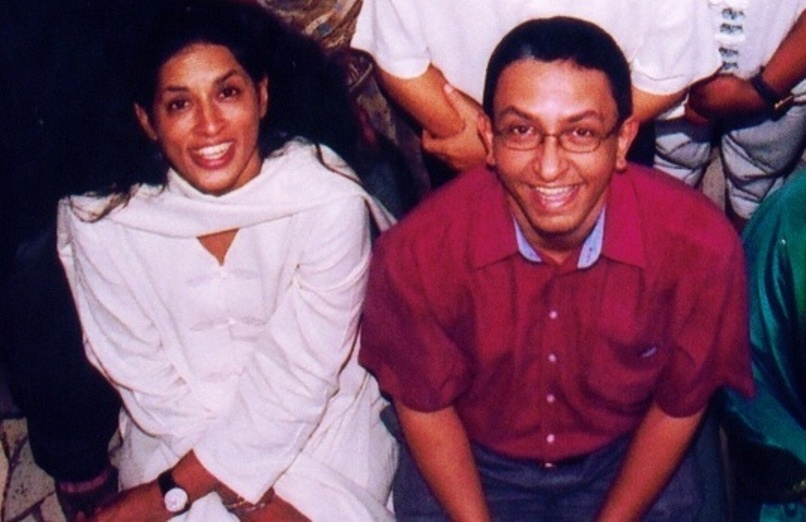
Saneeya Hussain & Nalaka Gunawardene: Singapore, Nov 2002

පාරිසරික ප‍්‍රශ්න විද්‍යාත්මක තොරතුරු මත පදනම් වී, තර්කානුකූලව හා තුලනාත්මකව විග‍්‍රහ කිරීම අවශ්‍යයි. එහෙත් බොහෝ දෙනා දත්ත හා සංඛ්‍යා ලේඛනවලින් පමණක් සෑහීමකට පත් වන්නේ නැහැ. සන්නිවේදකයන් හොදින් අත්දුටු සත්‍යයක් නම් ඕනෑ ම තර්කානුකූල විග‍්‍රහයකට මානුෂික මානයක් ද (human interest) තිබිය යුතු බවයි.

වාහන හා කර්මාන්ත ශාලාවලින් පිට වන දුමාරයෙන් ඇති වන වාත දුෂණය ගැන අප මීට පෙර විග‍්‍රහ කළා. මෙරට වාතදුෂණයේ අමිහිරි පැත්ත ගැන විද්‍යාත්මකව කළ කථාව එතැන් සිට ඉදිරියට ගෙන යන්නට මගේ මිතුරියකගේ සැබෑ කථාවක් අද යොදා ගන්නවා.

ඇගේ නම සනියා හුසේන් (Saneeya Hussain). ඇය උපන්නේ 1954දී පාකිස්ථානයේ ලාහෝර් නුවර. ඉසුරුබර පවුලක උපන්නත්, ලැබිය හැකි ඉහළ ම පාසල් හා සරසවි උගෙනුමක් ලැබුවත් ඇයට ඕනෑ වුණේ සමාජ සාධාරණත්වය හා පොදු උන්නතිය (public interest) සදහා ක‍්‍රියා කරන්නයි. මේ නිසා ඇය වෘත්තියෙන් පුවත්පත් කලාවේදීනියක් වුණා.

පාකිස්ථානයේ ඉංග‍්‍රීසි පුවත්පත් හා සගරාවල ගවේෂණාත්මක මාධ්‍යවේදිනියක් හැටියට වසර ගණනාවක් සනියා කටයුතු කළා. විශේෂයෙන් ම 1980 දශකයේ පාරිසරික ප‍්‍රශ්න ගැන හරිත කෝණයට සීමා නොවී (වනාන්තර හා වනජීවීන්ට පමණක් කොටු නොවී) මානව සමාජයට ම බලපාන සම්පත් පරිභෝජනය, ආපදා හා තිරසාර සංවර්ධනය ගැන ඈ පුරෝගාමී සන්නිවේදනයක යෙදුණා. පසුව ලෝක සංරක්‍ෂණ සංගමයේ (IUCN) පාකිස්ථානු කාර්යාලයේ සන්නිවේදන ප‍්‍රධානියා හැටියටත් කටයුතු කළා.

2002දී සනියා පැනෝස් දකුණු ආසියා (Panos South Asia) ආයතනයේ විධායක අධ්‍යක්‍ෂ හැටියට පත් වුණා. එය දකුණු ආසියාතිකයන් විසින් ම පාලනය කරන, දකුණු ආසියාව සඳහා ම කැප වූ ආයතනයක්. සාක් කලාපයේ රටවල සංවර්ධනය පිළිබඳව හරවත් සංවාද හා විවේචනයන් කිරීමට මේ කලාපයේ මාධ්‍යවේදීන්, ජන සංවිධාන ක‍්‍රියාකාරිකයන් හා පර්යේෂකයන්ට අනුග‍්‍රහය දීම මේ ආයතනයේ අරමුණයි.

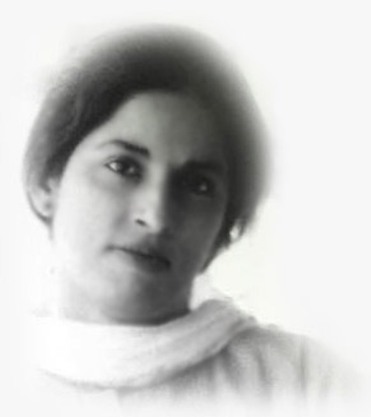
Saneeya Hussain 1954 – 2005

එහි මූලස්ථානය ඇත්තේ නේපාලයේ කත්මණ්ඩු නුවරයි. නව තනතුර භාර ගෙන ඉතා උද්‍යොගයෙන් සනියා කත්මණ්ඩු නුවරට පදිංචියට ගියත් ඇයට එහි වාසය කිරීම ලෙහෙසි වුණේ නැහැ. එයට හේතුව ඇය ළමා වියේ සිට ම ඇදුම රෝගියකු වීම.
කත්මණ්ඩු නුවර කදුවලින් වට වූ නිම්නයක්. හරියට අපේ මහනුවර වගෙයි (නමුත් මුහුදු මට්ටමින් ඊට වඩා පිහිටීම උසයි (මීටර 1,350; අඩි 4,430) නිම්නයේ වාතය එක් රැස් වුණත් පිට වන්නට කපොල්ලක් නැහැ. මේ නිසා දුෂණය වූ වාතය කත්මණ්ඩු නිම්නයේ ම රැඳෙමින් එහි වැසියන්ට පීඩා කරනවා.

කත්මණ්ඩු වාත දුෂණයට ප‍්‍රධාන හේතුව වාහනවලින් පිට වන දුමාරය. විශේෂයෙන් ම ද්විත්ව පහර (two stroke) එන්ජින් තිබෙන මෝටර් සයිකල හා ත‍්‍රීරෝද රථවල දුමාරය තුළ හරිහැටි නොදැවී පිටවෙන සියුම් අංශු (particulate matter) රැසක් තිබෙනවා. හුස්ම ගන්නා විට ශරීරගත වී වැඩි ම හානියක් කරන්නේ මේවායි.

වසර දෙකකට වැඩි කාලයක් කත්මණ්ඩු වාතය සමග සනියා පොර බැදුවා. ඒ කාලය තුළ ඇය පැනෝස් හරහා විශාල වැඩ කොටසක් කළා. එහෙත් ඇදුම රෝගය එන්න එන්න ම උත්සන්න වෙද්දී ඇයට පරාජය පිළි ගන්නට සිදු වුණා. (ඇය තරම් දරුණු ඇදුම රෝගියකු නොවූවත් මටත් කත්මණ්ඩු හා නවදිල්ලිය බදු නගර ගැන පෙනහල්ලෙන් අත්දුටු මතකයන් තිබෙනවා.)

අන්තිමේදී 2004දී ඇය පැනෝස් රැකියාවෙන් අස් වී, ඇගේ බ‍්‍රසීල ජාතික සැමියා සමග ඔහුගේ රටේ සාඕ පෝලෝ (Sao Paulo) නුවරට ගියා. එය දකුණු ඇමෙරිකාවේ තිබෙන විශාලතම හා අතිශය ජනාකීර්ණ නගරයයි. මිලියන 21ක ජනගහනයක් වාසය කරනවා. ඒ කියන්නේ ශ‍්‍රී ලංකාවේ සමස්ත ජන සංඛ්‍යාවයි.

ඇගේ ඇදුම රෝගය ඇයත් සමග සාඕ පොලෝ නගරයටත් ආවා. බෙහෙත් මගින් එය පාලනය කර ගන්නට ඇය උත්සාහ කලා. 2005 අපේ‍්‍රල් 7දා ඇයට ප‍්‍රබල ඇදුම තත්ත්වයක් හට ගත්තා. සැමියා ලූයිස් ඇය වාහනයේ දමා ගෙන ආසන්න ම රෝහලට ගියා. අවාසනාවට එසේ ගියේ නගරයේ සවස තදබදය තිබෙන විටයි. ආපදා එළි පත්තු කර ගෙනල හදිසියක් බව අගවමින් ලූයිස් හැකි තරම් ඉක්මනට රෝහලට යන්නට මහත් උත්සාහයක් ගත්තා.

ඒත් කිලෝමීටර් 2ක් යන්නට ඔහුට විනාඩි 20ක් ගත වුණා. රෝහලට ළගාවන විට සනියාට සිහිය තිබුණේ නැහැ. එහි ගිය විගස හදිසි ප‍්‍රතිකාර ලැබුණත් ඒ වන විට ඇගේ මොළයට ඔක්සිජන් නොලැබී විනාඩි 15ක් ගත වී තිබුණා. මේ නිසා වෙන කිසිදු ශාරීරික හානියක් නොමැති වූවත් ඇය කෝමාවකට පත් වුණා. ඒ කෝමාවෙන් ඇය යළිත් ප‍්‍රකෘති තත්ත්වයට ආවේ නැහැ.

මහාද්වීප හතරක විහිදුණු මිතුරු මිතුරියන් කම්පාවට පත් කරවමින් සනියා හුසේන් 2005 අපේ‍්‍රල් 20 වනදා මිය ගියා. එවිට ඇගේ වයස 51යි. ඇගේ වියෝවෙන් පසු ලොව වටා මිතුරන්ට ඊමේල් පණිවුඩයක් යවමින් ලූවිස් ඇසුවේ: “සනියා මැරුණේ ඇදුම නිසා ද? වාහන තදබදය නිසා ද?”

මේ ප‍්‍රශ්නයට උත්තරය කුමක් වූවත්, ශ්වසන රෝගාබාධ නිසා මෙන්ම නාගරික වාහන තදබදය නිසාත් අකාලයේ මිය යන මිනිසුන් සංඛ්‍යාව වසරක් පාසා ඉහළ යන බව සංඛ්‍යා ලේඛනවලින් ඔප්පු වනවා.

සනියා හුසේන්ගේ අවාසනාවන්ත ඉරණම අද හෝ හෙට දිනෙක අප බොහෝ දෙනකුටත් අත් විය හැකියි. ඇදුම රෝගයෙන් විටින් විට පීඩා විදින්නකු ලෙස මේ ප‍්‍රශ්නයට මා පෞද්ගලිකව ම මුහුණ දෙනවා.

ඇදුම උත්සන්න වීමට කාලගුණික හා වෙනත් භෞතික සාධක ද යම් තරමකට හේතු වූවත් එයට බලපාන ප‍්‍රධාන සාධකය වාත දුෂණයයි. වාත දුෂණයට අති විශාල දායකත්වයක් සපයන්නේ වාහනවලින් පිටවන දුමාරය මිස (අපේ ඇතැම් පරිසරවේදීන් පැරණි දත්ත මත පදනම් වී කියන හැටියට) කර්මාන්ත ශාලා නොවෙයි.

මීට වසර 15කට හෝ දශකයකට හෝ පෙර නවදිල්ලිය, කත්මණ්ඩු වැනි දකුණු ආසියාතික අගනගර මහත් සේ වාත දුෂණයට ලක් වී තිබුණා. කැළඹුණු මහජනයාගේ බලපෑම් නිසා වාත දුෂණය අඩු කිරීමේ දිගු කාලීන ප‍්‍රතිපත්ති හා පියවර හදුන්වා දීමට ඒ නගරවල හා රටවල බලධාරීන් පෙළඹුණා.

දකුණු ආසියාවේ නාගරික වාත දුෂණයට එරෙහිව තීරණාත්මක පියවර ගැනීම අතින් පෙරමුණ ගත්තේ නවදිල්ලි නාගරික ප‍්‍රදේශයයි. මිලියන් 14කට වැඩි ජනතාවක් වාසය කරනල ලෝකයේ මහා නගර (mega cities) අතර වඩාත් සීඝ‍්‍රයෙන් විශාල වන නගරයක් ලෙස සැළකෙන දිල්ලියේ වාත දුෂණය බරපතල සෞඛ්‍ය ප‍්‍රශ්නයක් බවට පත් වූයේ 1990 දශකයේදී.

එයට හේතු සාධක අධ්‍යයනය කළ පරිසරය හා විද්‍යාව සඳහා වන කේන්‍ද්‍රය (Centre for Science and Environment, CSE) නම් පර්යේෂණායතනය කියා සිටියේ නගරයේ වාහන සංඛ්‍යාව බලහත්කාරයෙන් අඩු කරනවා වෙනුවට වාහනවල දහනය වන ඉන්ධන වඩා ප‍්‍රශස්ත කිරීමෙන් වාත දුෂණය පටන් ගන්නා තැනදී ම සීමා කර ගත හැකි බවයි. මේ අනුව සම්පිණ්ඩිත ස්වාභාවික වායුව (Compressed Natural Gas හෙවත් CNG) නම් ඉන්ධනයෙන් දිල්ලියේ බස් රථ හා ත‍්‍රීරෝද රථ ධාවනය කිරීම ඇරඹුණා. මෙය 1990 දශකය පුරා විද්වතුන්, පාරිසරික ක‍්‍රියාකාරිකයන්, රාජ්‍ය නිලධාරීන් හා ශ්‍රේෂ්ඨාධිකරණය සාමූහිකව ගත් උත්සාහයක ප‍්‍රතිඵලයයි.

ඊට අමතරව පොදු ප‍්‍රවාහන සේවා දියුණු කිරීමට විධිමත් පියවර හා ආයෝජන සිදු කෙරුණා. දිල්ලි නගරයේ උමං දුම්රිය සේවයක් හදුන්වා දීම හරහා වාහන තදබදය අඩු වීමට පටන් ගෙන තිබෙනවා. දිගු කාලීන දැක්මක්, ප‍්‍රතිපත්තිමය කැප වීමක් හා නිසි ආයෝජන තුළින් වාහන තදබදය මෙන් ම වාත දුෂණය ද පාලනය කර ගත හැකි බවට දිල්ලිය කදිම උදාහරණයක්.

වගකීමකින් යුතුව දත්ත රැස් කොට සාක්‍ෂි මත උද්ඝෝෂණ කිරීම හරහා දේශපාලකයන් හා රාජ්‍ය නිලධාරීන් ද පොදු උන්නතියට ඒකරාශී කර ගත හැකි බව ඉන්දියානු අත්දැකීම්වලින් මනාව පැහැදිලි වනවා.

ඉන්දියාවේ වාහන තදබදය, වාත දුෂණය හා අවිධිමත් නාගරික සංවර්ධනය අඩු කර ගැනීමේ අත්දැකීම් ශ‍්‍රී ලංකාවට අදාල කර ගන්නේ කෙසේද යන්න ගැන CSE ආයතනයේ මූලිකත්වයෙන් ජාතික මට්ටමේ වැඩමුළුවක් හා මාධ්‍යවේදීන් දැනුවත් කිරීමේ සැසිවාරයක් 2011 අපේ‍්‍රල් මාසයේ කොළඹදී පවත් වනු ලැබුවා.

එහිදී ඉන්දියානු පාරිසරික පර්යේෂකයන් පෙන්වා දුන් වැදගත් කරුණක් වූයේ මෙරට පොදු ප‍්‍රවාහන සේවාවලින් 90%ක් හා සමස්ත වාහන සංඛ්‍යාවෙන් 45%ක් ඉන්ධන ලෙස ඞීසල් යොදා ගන්නා බවයි. මෙරට භාවිතයට ගැනෙන සල්ෆර් (ගෙන්දගම්) ප‍්‍රමාණය අධික වූ ඞීසල් දහනයේ බරපතල සෞඛ්‍ය විපාක ලොව පුරා හදුනා ගෙන තිබෙනවා.

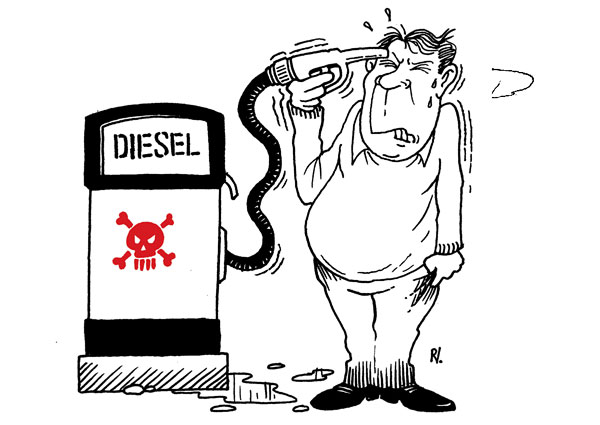
Diesel fumes are now increasingly seen as carcinogenic

ලෝක සෞඛ්‍ය සංවිධානය දැන් ඞීසල් දහන දුමාරය පිලිකාකාරයක් ලෙස සළකන බවත්, ඞීසල් නිසා ඇති වන වාත දුෂණය, පෙට‍්‍රල් වාහනවලට වඩා බෙහෙවින් වැඩි බවත් CSE ආයතන දත්ත සහිතව පෙන්වා දුන්නා. මෙරට වාත දුෂකයන් වන සල්ෆර් ඩයොක්සයිඞ් හා pm10 අංශුවලින් 96%ක් ම පිට වන්නේ ඞීසල් වාහනවලන්. මේ නිසා ඞීසල් ඉන්ධන පවිත‍්‍ර කර ගැනිම හා ඞීසල් වාහන එන්ජින් නඩත්තුව ගැන වැඩි අවධානයක් යොමු කළ යුතු බව දැන් පිළි ගැනෙනවා. වැඩි විස්තර සඳහා බලන්න http://tiny.cc/Gasp සහ http://tiny.cc/Gasp2

කොළඹ හා තදාසන්න ප‍්‍රදේශවල වාහන තදබදය හා වාත දුෂණය ගැන නිතර කථබහ කෙරුණත් ඒ ගැන දිගුකාලින විසදුම් සෙවීමට අපේ සාමූහික උත්සාහයන් සාර්ථක වී නහැ. වාහන පිටරටින් ගෙන්වීම ඉහළ ගොස් අපේ මාර්ග පද්ධතිය දැඩි ලෙස තදබදයට ලක් වීමෙන් පසු විසදුම් සෙවීමට දැන් අපට සිදු වී තිබෙනවා!

අපේ රටේ මහාමාර්ගවල වාහන ධාවන වේගයේ ජාතික සාමාන්‍යය පැයට කිමි 26ක් බවත්, කොළඹ දිස්ත‍්‍රික්කයේ එය පැයට කිමි 22ක් බවත් මොරටුව සරසවියේ ප‍්‍රවාහනය පිළිබඳ මහාචාර්ය අමල් කුමාරගේ කියනවා. එළඹෙන වසරවලදී මෙය පැයට කිමි 19 දක්වා අඩු විය හැකි බවත්, කොළඹ දිස්ත‍්‍රික්කයේ පැයට කිමි 15 විය හැකි බවත් ඔහු ප‍්‍රකේෂපනය කරනවා.

රටක වාහන තදබදය අඩුකිරිමට මහාමාර්ග පළල් කිරිම හෝ අළුතෙන් පාරවල් තැනීම සෑහෙන්නේ නැහැ. එයින් ලැබෙන සහනය තාවකාලිකයි. ඊට වඩා ක‍්‍රමානුකූලවත්, දිගුකාලීනවත් වාහන තදබදයට හා වාත දුෂණයට පිළියම් සොයා සාමූහිකව යොමු වීමේ බලවත් අවශ්‍යතාවය අද මතු වී තිබෙනවා.

සනියා හුසේන් වාර්තා චිත‍්‍රපටය නරඹන්න http://tiny.cc/SanFilm