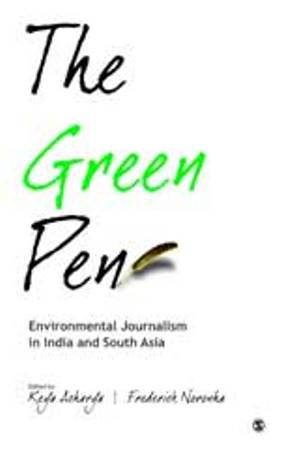
Making of ‘The Greenbelt Reports’ recalled in ‘The Green Pen’

The process of producing and distributing TVE Asia Pacific’s educational TV series, The Greenbelt Reports, is showcased in a new book on environmental journalism in South Asia, just published by Sage, a globally operating company that specialises in bringing out academic and professional books.

The book, titled The Green Pen: Environmental Journalism in India and South Asia, is edited by two senior Indian journalists, both good friends – Keya Acharya of Bangalore, and Frederick Noronha based in Goa. (In 2007, Fred and I co-edited Communicating Disasters: An Asia Pacific Resource Book.)

Arranged in 10 sections, the book brings together contributions from three dozen journalists, broadcasters and film makers in South Asia. It opens with a foreword by Darryl D’Monte, one time editor of The Times of India and Chair, Forum of Environmental Journalists of India (FEJI).

I co-wrote the chapter titled ‘Dispatches from the Frontline: Making of The Greenbelt Reports’ with my colleague Manori Wijesekera, TVEAP’s Regional Programme Manager. I was researcher and script writer of the 12-part, 4-country series that we made in 2006, in which Manori was series producer. The series looked at the environmental lessons of the 2004 Indian Ocean tsunami.

The title reflects the lingering print bias in media related discussions: in our case, the content we produced was disseminated on broadcast television, narrowcast DVD and online. We wielded cameras rather than pens, but are still very glad to share our experience in this book.

Keya Acharya (left) and Fred Noronha
The publisher’s blurb says: “This collection of essays by some of the most prominent environmental journalists in Indian and South Asia gives deep insights into their profession and its need and relevance in society. It looks at this ‘specialisation’ of journalism both in the past and the present. Underlying almost all the essays is the changing nature of media in the region and the dilemmas facing environmental journalists. The varied background of the writers ensures the showcasing of a wide range of realities and experiences from the field. Contributions include essays by Darryl D’Monte, the late Anil Agarwal and Sunita Narain, among others.”

“This is the first book of its kind on environmental journalism, which would be an excellent resource to aid the future evolution of the enterprise in the region. Apart from essays from India, there are contributions from Pakistan, Bangladesh, Sri Lanka, Nepal and the Maldives. The book will interest a wide readership, any informed reader, besides journalists and environmentalists.”

It’s an honour to be part of a book which features the work of respected seniors like Anil, Darryl and Sunita – all of who have influenced my own career and I’m privileged to count among my friends (alas, Anil is no longer with us). In fact, I have either met, worked with or am friends with more than half the three dozen contributing authors of this book.

Who says South Asia is large?

More in TVEAP news story: The Greenbelt Reports featured in new book on environmental journalism in South Asia

Looking back at Asian Tsunami of 2004…and media response

Nalaka Gunawardene talking about 2004 Asian Tsunami

To mark the fifth anniversary of the Indian Ocean Tsunami of December 2004, TVE Asia Pacific has just released excerpts from an in-depth TV interview I recorded four years ago.

The wide-ranging interview was originally filmed in November 2005 in Bangkok, Thailand, by Thai journalist and film maker friend Pipope Panitchpakdi. He used excerpts at the time for a Thai documentary to mark the first anniversary of the tsunami. It remains one of the best media interviews I have given, for which all credit goes to Pipope.

Selected segments of that interview, in its original English, can now be viewed on TVEAP’s YouTube channel, while the transcript is published on the TVEAP website.

To give a flavour of this belated release of archival material, here are the first two extracts:

Nalaka Gunawardene recalls Asian Tsunami of Dec 2004 Part 1 of 6

Part 2 of 6:


Watch all extracts on TVEAP’s YouTube channel

Asian Tsunami+5: Revisiting survivor Heshani Hewavitharana of Sri Lanka…

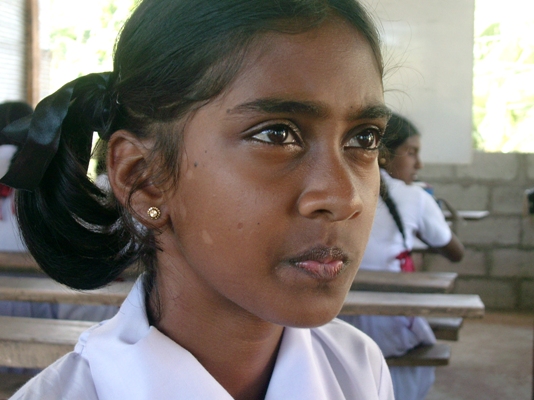
Heshani in Feb 2005: Creative and reflective - Photo courtesy TVEAP

Heshani Madushika Hewavitharana, 13, was an eager student in school who also excelled in creative writing, in which she’d won certificates and awards. All of these, along with her school books and everything else her family owned, was lost in the Asian Tsunami of 26 December 2004. Their beach front house, in Suduwella in Sri Lanka’s southern district of Matara, was badly damaged. They escaped with their lives — and were among the luckier ones.

When we found Heshani and family a few weeks after the tragedy, they were taking refuge in a friend’s house. Her fisherman father could not immediately return to his work without his boat and gear, also washed away by the waves. The family was living on the mother’s meagre income from spinning coir ropes.

Despite their plight, Heshani and family agreed to participate in the Children of Tsunami media project, where local film crews in India, Indonesia, Sri Lanka and Thailand tracked how eight survivor families were rebuilding their lives and livelihoods after the Asian tsunami disaster.

We at TVE Asia Pacific documented on TV, video and web the personal recovery stories of eight affected families in these worst affected countries for one year after the disaster. Our many media products — distributed on broadcast, narrowcast and online platforms -– inspired wide ranging public discussion on disaster relief, recovery and rehabilitation. In that process, we were also able to demonstrate that a more engaged, respectful kind of journalism was possible when covering post-disaster situations.

Watch Heshani’s first monthly video update, February 2005:

Not all our participating families recovered from the tsunami’s mighty blow within one year, but we ran out of money and had to stop capturing their stories by the end of 2005, which I called Asia’s longest year. In a goodbye tribute to the courage and resilience of these families, I wrote in December 2005: “Our journey with the eight families ends with the first anniversary. We know their own journeys to recovery are far from finished. We can only wish them well.

Heshani in Nov 2009 - Courtesy Xinhua
Since then, I have often wondered how the eight children were faring. (In March 2007, it suddenly became seven when the Theeban, the boy in Sri Lanka’s east whose story we tracked, was brutally murdered.) However, I have resisted the temptation to revisit the children as I felt we had been intrusive enough already during that first difficult year after the tsunami. They must now be allowed to continue their lives in private.

Yet, I was intrigued by a recent report where two correspondents working for the Chinese news agency Xinhua, Chen Zhanjie and Liu Yongqiu, tracked down Heshani and family. They wrote a story on Xinhua’s website for the Universal Children’s Day in November which focused attention on the protection and welfare of children. Heshani is now 17, and her younger sister Dimalka, 12. Already having passed the GCE Ordinary Level exam, Heshani is now preparing for her Advanced Level exam slated for August 2010.

While Dimalka aspires to be a doctor, Heshani wants to become a banker. Their father believes the tragedy has added a new dimension to the girls’ lives: “They have leant their responsibilities from the tsunami. Now the two girls have no fears.”

Read the full story on Xinhua website: From tsunami to trauma to trek ahead

Ahead of tsunami, journalist foresaw coastal disaster in Sri Lanka: “A Catastrophe Waiting to Happen”

Dilrukshi Handunnetti in Deep Divide film
Contrary to a popular belief, journalists don’t enjoy being able to say ‘I told you so!’. They much rather prefer if their investigative or analytical work in the public interest are heeded in time.

A few months before the Indian Ocean tsunami of December 2004, my friend and journalist Dilrukshi Handunnetti wrote an investigative story on how coastal zone management laws and regulations were openly flouted by developers. She cautioned that it was a ‘disaster waiting to happen’

She had no idea how forcefully her point will be driven home before that year ended.

“Little did anyone realise the price coastal communities would have to pay for the greed of a few dozen developers,” she said after the tsunami, interviewed for Deep Divide, a South Asian documentary on environmental justice that TVE Asia Pacific produced in 2005.

Watch Deep Divide – story from Sri Lanka:

Here’s the blurb I wrote at the time to promote the story:

Sri Lanka’s economic activities are concentrated in coastal areas: 80 per cent of the tourist related activities are found there, along with one third of the population. Seeking to accelerate economic growth, the Sri Lankan government took measures to develop the island’s coastal regions. Shrimp and prawn farming was encouraged, while many incentives were provided for developing tourist resorts along the island’s scenic beaches.

As the shrimp exports grew and tourist arrivals increased, there was a ‘cost’ that only local residents and a few environmentalists cared about: mangrove forests were cleared, coral reefs were blasted, and the coastal environment was irreversibly changed.

Shrimp farming damaged mangroves, aggravated tsunami impactCoastal zone management regulations and guidelines were openly flouted by developers. Local communities were the last to benefit from this development boom — they watched silently as their fish catch dwindled and their coastal environment was pillaged. But little did anyone realise the price coastal communities would have to pay for the greed of a few dozen developers.

When the tsunami struck, there were very few natural barriers to minimise its impact. More than 40,000 people died or went missing, while hundreds of thousands lost their homes and livelihoods. It was the biggest single disaster in the island’s history.

Dilrukshi reflects: “Post-tsunami, people realised that the mangroves have protected these little, you know, landmass. And where you find a little bit of protected mangroves, you also find the landmass protected.”

She adds: “I think we have committed lot of excesses and we have been made to answer for those sins. Hereafter, we cannot afford to not do it right.”

Filmed on location in India, Nepal and Sri Lanka, Deep Divide explores the reality of environmental justice in South Asia — home to 500 million people living in absolute poverty, or 40 per cent of the world’s total poor. Everywhere, it finds environmental injustice. This investigative film builds on the work by three local journalists, who act as our guides to understanding the complexities and nuances of development amidst poverty and social disparities.

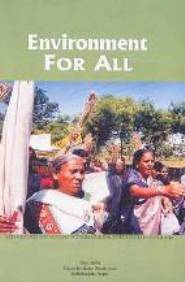
Environment For All book coverThe origins of Deep Divide go back to 2002. Panos South Asia, a regionally operating non-profit organization analyzing development issues, awarded media fellowships to selected journalists from five South Asian countries to explore specific cases of environmental injustice in their countries. They were to investigate issues as varied as land degradation, food and water insecurity, rising pollution, and mismanaged development.

Their findings were initially published in the local media – in the newspapers or magazines they worked for. In 2004, Panos South Asia compiled the articles in a book titled Environment for All. Three stories from this book were adapted into the documentary, directed by Indian film maker Moji Riba.

Children of Tsunami: No More Tears…

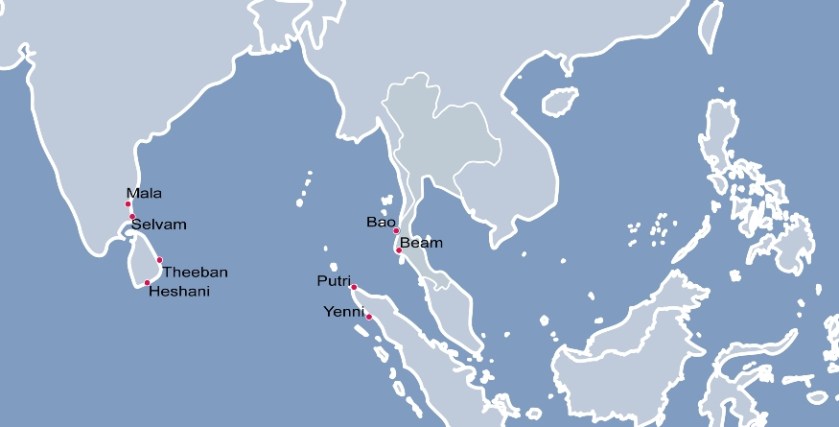
where Children of Tsunami stories were filmed for much of 2005
Four countries, eight locations: where Children of Tsunami stories were filmed for much of 2005

They have never met each other. Some have never travelled beyond their native village. On December 26 2004, the sea rose and rose and took everything they cherished.

Documented over the year, locally-based filmmakers returned to Asia’s battered coasts in India, Indonesia, Sri Lanka and Thailand to track the healing and the hurt through the eyes of children.

Asia’s recovery process from the tsunami is being captured through the stories of three girls and two boys aged 8 to 16 years.

Of different races, worshipping different Gods, they live on different shores in different countries. They are the tsunami generation, sharing the vulnerability of a child and the legacy of the tragic tides.

Young survivors of the Asian tsunami let us into their lives to personalise the mass of statistics, aid pledges and recovery plans. “Children of Tsunami” is a tapestry of intimate stories, woven by voices of individual and collective resilience, heroism and recovery.

Children of Tsunami: No More Tears – Part 1 of 3

Part 2 of 3

Part 3 of 3

Duration: 24 mins
Year of production: 2005
Countries filmed in: India, Indonesia, Sri Lanka, Thailand
In each country, a locally based production crew carried out filming for TVE Asia Pacific.

Regional Production Team
Supervising Producer: Bruce Moir
Production Assistant: Yohan Abeynaike
Production Manager: Manori Wijesekera
Executive Producers: Joanne Teoh Kheng Yau and Nalaka Gunawardene

Co-Produced by: Channel News Asia, Singapore
In partnership with TVE Asia Pacific

Broadcast Asia-wide on the first anniversary of the Asian Tsunami, 26 Dec 2005

For more information, visit: www.childrenoftsunami.info

See also: Channel News Asia – Making of a pan-Asian news channel

Pipope Panitchpakdi: “It’s Like Being Out There Naked!”

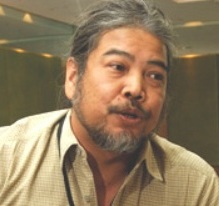
Pipope Panitchpakdi
“It’s Like Being Out There Naked.”

That’s the reason given by Thai film maker and media activist Pipope Panitchpakdi why he doesn’t want to be present when his films are being screened.

A reporter at the recent Mekong Media Forum held in Chiang Mai, Thailand, noted how Pipope headed for the door when his ambitious 2009 documentary, Mekong: The Untamed began to be screened on the first day.

Asked why he was stepping out, he replied: “I don’t like to watch when my films are shown. It’s like being out there naked.”

Fair enough – there isn’t one right way to handle such public sharing, and each film maker does it differently. I know some who simply want to be there from beginning to end, derive great satisfaction from being acknowledged upfront, and are eager to engage the audience after the screening (I’m one of this type). A few prefer to sit quietly and unrecognised amidst the viewers, observing candid reactions of the audience, and may (or may not) own up in the end. Then there are those who leave the room.

But one thing every film maker I know shares with equal passion is that their film be screened with proper visual and sounds. This isn’t as easily or commonly accomplished as you’d think – I’ve seen a good film sharing moment ruined by technical glitches in too many countries, both developed and developing. Having been the victim of such mishaps, I know just how unnerving and frustrating this can be. Ours may be the digital age, but video and audio literacy levels are still very uneven.

Have you had such an experience as a film maker or film user? If so, please share it here!

The Mekong: One river, six countries, two films — and many views

Mekong River flows through 6 countries, nurturing 65 million Asians

The Mekong is one of Asia’s major rivers, and the twelfth longest in the world. Sometimes called the ‘Danube of the East’, it nurtures a great deal of life in its waters – and in the wetlands, forests, towns and villages along its path.

The Mekong’s long journey begins in the Tibetan highlands. It flows through China’s Yunan province, and then across Burma, Thailand, Laos and Cambodia…before entering the sea from southern Vietnam. It’s a journey of nearly 5,000 kilometres, or some 3,000 miles.

The Mekong River Basin is the land surrounding all the streams and rivers that flow into it. This covers a vast area roughly the size of France and Germany combined.

On its long journey across 6 countries, the Mekong provides a life-line to over 65 million people. They share Mekong waters for drinking, farming, fishing and industry. Along the way, the river also generates electricity for South East Asia’s emerging economies.

Naturally, these teeming millions who share the river feel differently about how best to manage the river waters in their best interests. The Mekong River Commission (MRC) tries to nurture cooperation among the Mekong river countries, but differences still remain.

Some of these surfaced during the Mekong Media Forum being held in the northern Thai city of Chiang Mai from 9 to 12 December 2009. As IPS reporter Marwaan Macan-Markar reported, “A heated debate about the future of the Mekong River at a media conference in this northern Thai city exposed a fault line triggered by the regional giant China’s plans to build a cascade of dams on the upper stretches of South-east Asia’s largest waterway.”

At the centre of this debate was Pipope Panitchpakdi, my Thai film-maker friend who recently made the documentary Mekong: The Untamed. He is both an outstanding journalist and an outspoken media activist.

He told the Forum: “The most important issue for people who live along the banks (of the lower stretches) of the Mekong are the dams and how these affect them. They cannot see the river as a pretty sight.”

Mekong: The Untamed chronicles the journey of Suthichai Yoon, a leading Thai media personality, from the headwaters of the Mekong River in Tibet to the Mekong Delta in Vietnam. The question he seeks to answer through his travels is how the planned Chinese dams affect communities who live along the banks of the river.

“My Mekong journey goes to the heart of Asia’s complexities,” says the narrator as he makes his way from China’s southern province of Yunnan to the north-eastern Thai town of Chiang Khong. The scenes he passes range from the raging waters of the Mekong and hills swathed with mist to riverside communities being torn apart by a building frenzy. “I wonder if the Chinese realise what the people who are impacted by the dam feel?” Suthichai asks at one point.

According to Pipope, another documentary film about the Mekong made by Chinese filmmakers overlooks some serious issues: “There was nothing about a lot of villages disappearing, that there are floods and the doubts people have about the Chinese dams.”

This second film, also showcased at the Mekong Media Forum, is a 20-episode series titled Nourished by the Same River, and has been made by China Central Television (CCTV).

A Chinese journalist on the panel conceded that the planned development targeting the Mekong would provoke a range of responses. “It is natural that different people will have different perspectives on similar issues,” said Zhu Yan, a senior editor at the national broadcaster China Central Television. “In China there is a debate (around the question) of environment or dams.”

The Mekong is both a mighty river and a massive bundle of issues for any film or film series to tackle. And given the multitude of countries, interests and viewpoints involved, it’s unlikely that there will be consensus.

But it’s good that films are sparking off discussion and debate…just what we need for more informed choices to be made in the future.


Read full IPS story: Chinese Dams Expose Fault Lines, By Marwaan Macan-Markar

Moving images to animate the Mekong Media Forum in Chiang Mai


Some 225 participants, the bulk of them journalists from Mekong countries, are set to discuss, are debating and taking stock of their media environment against a backdrop of changing and often quite different news cultures at the Mekong Media Forum, being held in Chiang Mai from 9 to 12 December 2009.

I very much wanted to be there, for I’ve been covering the Mekong region as a journalist for 20 years, beginning with my first location filming visit to southern Vietnam in 1990. I’ve visited and worked in five of the six Mekong countries – Cambodia, China, Lao PDR, Thailand and Vietnam – with the exception of Burma.

But I’m missing this interesting event due to scheduling difficulties – I must try harder on my omnipresence act in the coming year…

The four-day media conference brings together a mix of participants, from print, television journalists and photojournalists to civil society, academics and developments, who will be discussing a menu of issues such as changes in the Mekong media scene, new trends, citizen journalism and new media, training, media challenges and reporting on water governance, children, as well as gender and sexuality.

Cinema Mekong, a strand within the forum, features the work of documentary filmmakers and video journalists who have been part of the Imaging Our Mekong Media Fellowship since 2002 — making this unique series of films very much from the lens of local filmmakers — as well as other films that focus on the Mekong region.

The films cover trans-boundary topics on environment, culture, children, women and cultural identity. TVE Asia Pacific (TVEAP)’s latest Asian regional television series, Saving the Planet is among the many regional and international films being screened

Watch Mekong Media Forum 2009 viral video:

The Mekong Media Forum is being organised by IPS Asia-Pacific news agency and Probe Media Foundation, Inc., which since 2002 have been running the Imaging Our Mekong media fellowships. More than 220 journalists from the region have been fellows in this programme.

Read more coverage on IPS TeraViva online newspaper

Safe Bottle Lamp: Life-saving bright idea wins World Challenge 2009

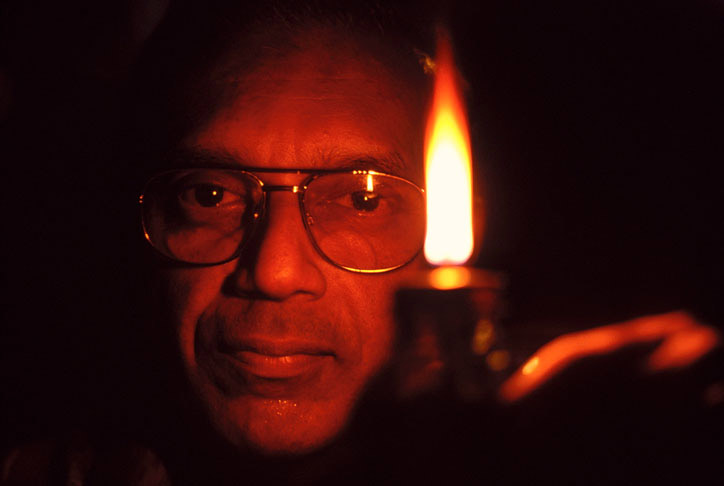
Dr Wijaya Godakumbura holding his invention - Photo courtesy Rolex Awards/Tomas Bertelsen

It’s easy to curse the darkness, and many among us regularly do. Only a few actually try to light even a small candle to fight it. Dr Wijaya Godakumbura of Sri Lanka is one of them – he literally lights lamps, thousands of them, against the darkness of ignorance and poverty.

But his lamps are different, and a great deal safer compared to normal lamps and kerosene, which can start fires risking life and property of users. The design is simple yet effective, inspired in part by the Marmite bottle known the world over: it’s small and squat, with two flat sides – equipped with a safe metal screw cap to hold the wick. It’s quite stable and hard to topple.

Surgeon turned inventor and social activist, Dr Godakumbura founded and runs the Safe Bottle Lamp Foundation which distributes safe, virtually unbreakable kerosene lamps to those who can’t afford electricity. For these untiring efforts that have saved hundreds of lives, the good doctor and his organisation have just been selected the overall global winner in the 5th annual World Challenge awards conducted jointly by BBC World News and Newsweek, together with Shell.

The Safe Bottle Lamp Foundation received a $20,000 grant from Shell to invest in the future of the project. The winner and runners-up were felicitated at an awards ceremony in the City of The Hague on 1 December 2009.

Now in its fifth year, World Challenge 2009 is a global competition aimed at finding projects or small businesses from around the world that have shown enterprise and innovation at a grass roots level. World Challenge is brought to you by BBC World News and Newsweek, in association with Shell, and is about championing and rewarding projects and business which really make a difference.

A record breaking 900 plus nominations were received this year and from these, twelve finalists were chosen by a panel of expert judges. BBC World News viewers and Newsweek readers then selected their favourite from these dozen unique and inspiring entries by casting more than 127,800 votes at http://www.theworldchallenge.co.uk.

Watch short film featuring the Safe Bottle Lamp when it emerged a finalist this year:

Dr Godakumbura and his foundation have been recognised many times before. Notable among these honours is the Rolex Award for Enterprise in 1998. Read Rolex profile about him and his continuing work.

BBC/Shell World Challenge series producer is my former colleague Robert Lamb, who has blazed many new trails in broadcast television and development communication. He specialises in telling complex environmental stories in engaging terms using moving images, and now runs his own independent film production company One Planet Pictures in the UK.

At the beginning of the World Challenge 2009 process, Robert wrote in the producer’s blog: “World Challenge is now in its fifth year. Over that time we have received thousands of nominations. Sadly, we have only been able to film a small selection. But it’s enough to know that there are millions of points of light out there. Watching the news is easy to forget that the vast majority of people go about their lives peacefully and productively.

“Our aim In World Challenge is briefly to bring stories of modest scale sustainable enterprise to the screens. Every year has thrown up big surprises. The diverse ways that ordinary people go about making a living without taxing the Earth’s resources is uplifting. This year we feature the most diverse crop of stories yet…And the really good news is that they are still going strong and proving that ‘sustainable’ is a term with a lot of meaning.”

Read Dr Wiyaya Godakumbura biography

Inventor Godakumbura promotes his safe bottle lamp

When it comes to climate change, we are all Maldivians!

It was Woody Allen who said ‘Ninety per cent of life is just showing up’. Well, part of the remaining 10 per cent must involve waving our hands and speaking out in this increasingly attention-challenged world.

My organisation, TVE Asia Pacific, lacks both a travel budget and a promotional budget. So I need to be both resourceful and persevering when showcasing our work in the vast Asia Pacific region and beyond. I attempt this by turning myself into a one-man cheering squad for our work in the public interest. (If this makes me something of a self-promoter, so be it!).

I was very grateful when our friends in Greenaccord accommodated my last minute request to screen our latest short film Small Islands – Big Impact at their 7th international media forum in Viterbo, Italy, today. This is what I recently made in the Maldives, one of the world’s most vulnerable countries to sea level rise.

I presented this at the end of the fourth day, soon after the gathering of 130 journalists and scientists from 55 countries had listened to 10 Climate Witnesses who travelled from far corners of the world to share their stories of ground level changes induced by climate change.

Here is what I said introducing the film:

Small and low lying island states are on the frontline of impact from climate change. That is why we made this film, so that we can highlight the plight of the Maldives in various climate related discussions around the world.

It is based on an exclusive interview that President Mohamed Nasheed of the Maldives gave me in August 2009. In this wide-ranging interview, he shared his concerns and visions for his island nation.

President Nasheed is an articulate, passionate climate witness on behalf of his endangered island nation of 325,000 people. The technocratic and amiable President is one of the youngest heads of state in the world today. Interestingly, he worked as a freelance journalist when he was in exile for several years, and remains very accessible to the international media.

As a journalist and broadcaster, I’ve been covering this story for over 20 years, from the late 1980s. I have seen how the vulnerability of small island states – like the Maldives – has risen up in the international discussions on climate. Sustained reporting by journalists has played a significant role in this process.

We have unfinished business. As President Nasheed says so emphatically, we are in this together. We need to work on coping and survival strategies.

When it comes to climate change, we are all Maldivians.

This is the second time a TVEAP film has been showcased at a Greenaccord event. In October 2006, the post-tsunami Asian environmental series The Greenbelt Reports was previewed at the 4th Greenaccord Forum.