9/11 plus 10: Recalling a news tremour through (archived) live TV news and front pages

Breaking News indeed!

I can remember exactly where I was and what I was doing when the news of 9/11 attacks on the World Trade Centre Twin Towers in New York reached me.

It was around 1.15 pm in the UK, a bright sunny afternoon. I was just entering London’s Kings Cross Station to buy tickets. My colleague Marietta, walking with me, received a call to her mobile phone giving the breaking news that somebody had just flown a plane into WTC.

Another clumsy pilot, I thought — recalling how a B-25 Mitchell bomber aeroplane had once accidentally crashed into the Empire State Building, back in 1945. But as we soon found out, this was no accident: it was a dastardly terrorist attack by suicidal fanatics who somehow penetrated the already high aviation security arrangements.

Life in London continued normally, but we were all completely distracted. I had work to do in an office, but can’t remember any of us actually focusing on our chores. Instead, we just watched the live TV coverage of unfolding events across the Atlantic with mounting horror. So did over a billion other people around the world.

It was a world changing event about which much has been written and said. More reflective and less impulsive commentary on this 10th anniversary puts events and their aftermath in better perspective. Of course, we now have the benefit of hindsight.

Journalism is the first rough draft of history. The reporters on duty that day were challenged to cover a breaking news event whose magnitude and historical context would become clearer only as the hours and days passed. CNN was the first to break the news live on the air, followed by the rest of the news pack. On the whole, journalists in all media rose to the enormous challenges of covering a scary, bewildering and earth-shattering story.

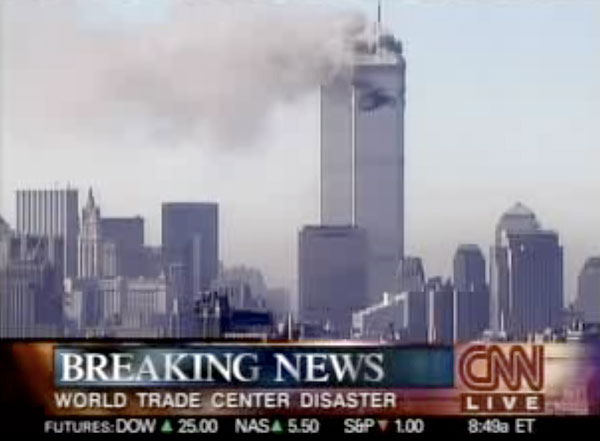
CNN Breaks the Big News at 8.49 am Eastern Standard Time on 9/11:

If anyone thought (like I did, for a few minutes) that it was a terrible accident, all doubts were removed when the second plane hit. By this time, all cameras were focused on the already burning first tower.

News networks cover the second plane crashing into the second tower LIVE on air at 9.03 am EST

And now, a decade later, media professionals and researchers are looking back at their own impressionistic, on-the-run coverage. Among the many attempts at retrospection, I’ve found two particularly interesting:

Understanding 9/11: A Television News Archive.
This collection contains television news programs recorded live from around September 11, 2001 by the non-profit Television Archive to help patrons research this important part of United States history. These materials were originally available on the televisionarchive.org site from October 2001 through 2003.


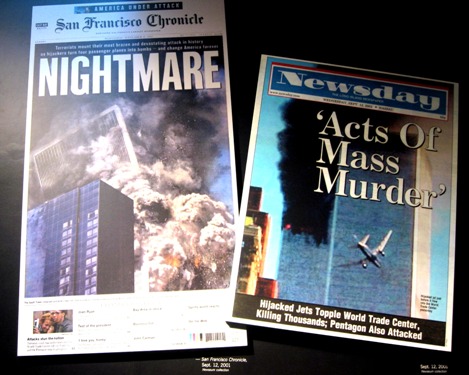
9/11 Gallery at Newseum in Washington DC: Chronicling an Attack on America

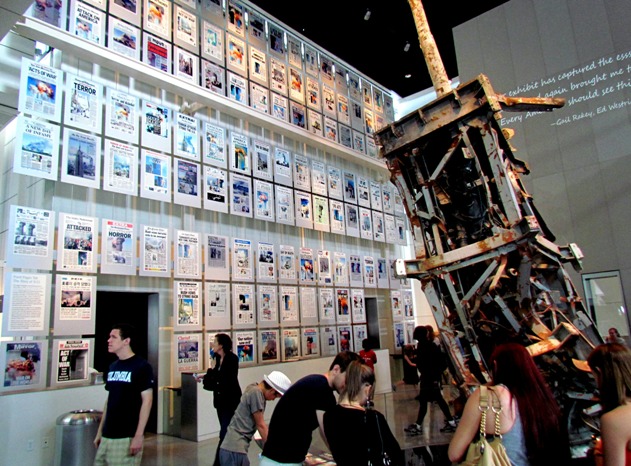
This gallery explores the horrendous events of Sept. 11, 2001, and the extraordinary challenges that faced the journalists trying to report the news to a shaken nation and world. The gallery includes a tribute to photojournalist William Biggart — a journalist who died covering the attacks — and some of the final photographs he took. Also featured are front pages from around the globe about the attacks and first-person accounts from reporters and photographers who covered the story.
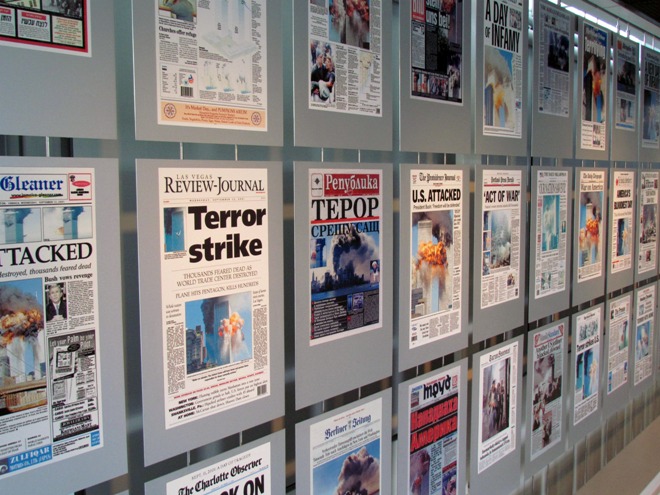
9-11 Frontpages at Newseum, photo by Nalaka Gunawardene
Visitors to 9/11 Frontpages exhibit at Newseum in Washington DC, photo by Nalaka Gunawardene
Front pages of fear, fury and more...

It’s an earthquake, stupid: Reflections on Virginia’s 5.8 tremble on Aug 23

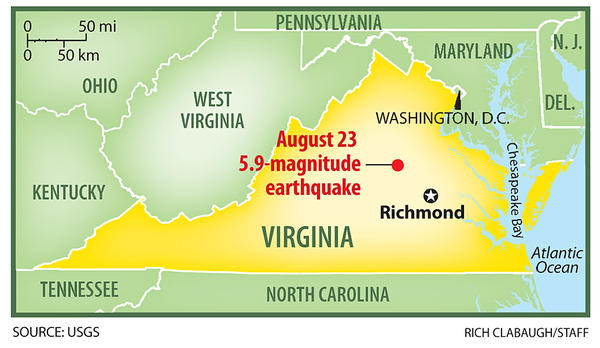
Map courtesy Christian Science Monitor
I’ve been travelling for 25 years, but never once experienced an earthquake. Oh, I regularly visit places located in highly seismically active zones: Japan, Indonesia and Nepal among them. However, I’ve never been in the right place at the right time — or should it be ‘the wrong place at the wrong time’?

That was finally corrected with the US East Coast earthquake on 23 August,the last day of my visit to Washington DC, where I’d been staying with a friend in Alexandria, Virginia. Daughter Dhara and I had just finished packing for our long return journey and making ourselves some lunch. Our friends were at work; we were alone with another visitor.

Around 2 pm, and without any warning, the whole house started shaking. The basement made the biggest noise and a cupboard full of glassware next to the dining table rattled quite hard – for a moment I thought it was going to crash forward.

But luckily it didn’t. The noise and vibrations last for about 20-30 seconds. By then I figured that it was an earthquake. We were within a few feet of the front door, so we quick ran outside. Wrong move, we later heard (we should instead have crept under a table and waited for things to settle). But all our neighbours too did the same, rushing out looking all panicked…

Things settled down soon enough, and no further tremours were felt. After a few minutes, we went back inside.

But I was puzzled: the US East Coast is not known to be seismically that active. Yet a few minutes later the US Geological Survey, which monitors earthquakes worldwide, posted an update: this was indeed a magnitude 5.8 quake which was centred in the state of Virginia — the epicentre was only around 50km from where we are at the time. The largest previous earthquake (magnitude 4.8) in this area had occurred in 1875. Smaller earthquakes that cause little or no damage are felt each year or two.

Within an hour of the incident (late by social media standards!), I tweeted: “After 25 yrs of world travel, incl a dozen visits to Japan, I’ve finally experienced a #quake in Virginia, USA. Shaken but not stirred…”

What I didn’t express, until now, is the sense of relief that as quakes go, this was a relatively harmless tremour!

As news started coming in, we heard that the impact had been felt more forcefully in nearby towns and neighbourhoods. Government and corporate offices – including the US Congress and Pentagon (Defence Dept) — evacuated as a precautionary measure. Many shopping malls and other public places closed up in a hurry. The cell phone networks were clogged with too many people calling each other. It was a mild form of panic, something the Californians on the West Coast — so accustomed to tremours in their lives — found amusing.

The US media — perhaps starved of breaking news in the lazy days of Summer — went into overdrive with saturation coverage. Much of it was cacophonous, but some outlets were more informed and measured.

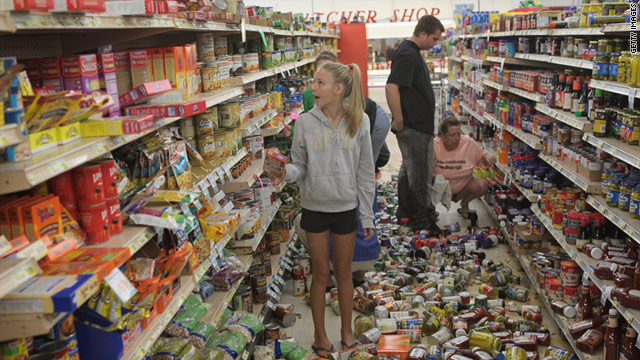
Volunteers help restock shelves in Mineral, Virginia, just a few miles from the epicenter of Aug 23 earthquake - Image courtesy CNN.com

Among the more perceptive pieces was what an op ed that appeared on CNN.com and written by Christa von Hillebrandt-Andrade, manager of the Caribbean Tsunami Warning Program of the U.S. National Weather Service and president of the Seismological Society of America, She noted: “Although seismologists, historians and emergency managers have recognized the potential for an earthquake along the East Coast for years, most people were caught by surprise and so responded inappropriately. The ground doesn’t shake as much in the East as it does in California, Alaska, the Pacific Northwest, Puerto Rico or the Virgin Islands. But because of the great concentration of population and infrastructure in the East, it’s an area of immense risk.”

She added: “Since earthquakes are infrequent in this region, most people don’t know earthquake preparedness measures. Instead of running out of buildings, they should have dropped, covered and held on. Earthquakes are natural phenomena that become disasters when we don’t prepare adequately — or are not educated in proper measures.

“The 2004 tsunami is an example of a rare event catching people unprepared, with catastrophic results. In December of that year, more than 230,000 lives were lost in countries around the Indian Ocean. Residents and tourists were taken by surprise — they were not warned, nor did they recognize the natural signs.”

She also cited the exception to that norm: the British school girl Tilly Smith who was vacationing on a Thai beach that day and recognised the tell-tale signs of the oncoming tsunami. In the wake of the Virginia quake, my Oct 2007 blog post about Tilly has attracted considerable attention.

Read the full article: Quake a wake-up call for Eastern U.S. By Christa von Hillebrandt-Andrade, CNN.com

The Island President: New film profiles Mohamed Nasheed at the Frontline of Climate Justice

When it comes to climate change, we're all Maldivians!
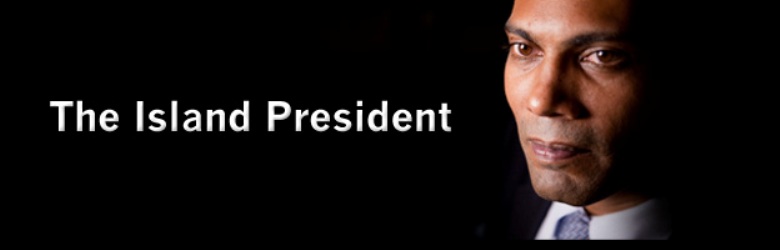
President Mohamed Nasheed of the Maldives is an articulate, passionate climate witness on behalf of his endangered island nation of 350,000 people. The technocratic and amiable President is one of the youngest heads of state in the world today. The one-time freelance journalist (who worked with and for various media when he was in political exile) remains very accessible to the international media. He knows the power of old and new media — and how to leverage it for his cause.

I admit to being a Nasheed fan. During the past couple of years, I have blogged about, interviewed and made a short film about President Nasheed. In the less than three years he has been in office, he has faced more than his fair share of economic and political challenges at home, but he has never lost sight of the long-term, bigger issue of climate change advocacy.

And now, his global status as the ‘rock star of climate change’ is enhanced by ‘The Island President’, a 90-minute, feature-style major documentary about him produced by a leading American production company, Actual Films. The film is to be released this summer at various film festivals. I can’t wait to catch it.

The Island President has been in the making for nearly two years. The film makers had exclusive access to the President both in his island nation and on his international travels.

The Island President: Official Trailer

The official Synopsis reads: “The Island President is a a dramatic feature documentary that lifts the issue of global warming out of the theoretical and into the personal. President Mohamed Nasheed is trying to save 385,000 people from drowning. His nation of 1,200 low-lying islands, the Maldives, is sinking into the Indian Ocean as sea levels rise due to global warming.

“With a young, charismatic South Asian leader updating a role once played by Jimmy Stewart, The Island President is like a non-fiction Mr. Smith Goes to Washington elevated to the world stage. Actual Films has secured exclusive access to follow President Nasheed as he prepares over the coming months for the 2009 Copenhagen Climate Summit in December. The terms of the 1997 Kyoto Treaty on Climate Change are about to expire, and leaders from around the world will converge on Copenhagen to hammer out a new treaty with renewed urgency. As the Danish Minister for Climate and Energy acknowledged, “the December days in Copenhagen in 2009 will be…a political thriller on an international scale.” The Summit will be an international showdown where President Nasheed will try to convince world leaders to finally take serious action against looming danger of climate change. The stakes couldn’t be higher-President Nasheed sees this as the last chance to save his homeland, and the world.”

The Island President is a co-production involving Actual Films, AFTERIMAGE PUBLIC MEDIA and the Independent Television Service (ITVS), with funding provided by the Corporation for Public Broadcasting (CPB).

Read about the film makers: Jon Shenk, Director; Bonni Cohen, Producer; and Richard Berge, Producer.

October 2009: President Mohamed Nasheed: Encounter with a genial climate crusader…

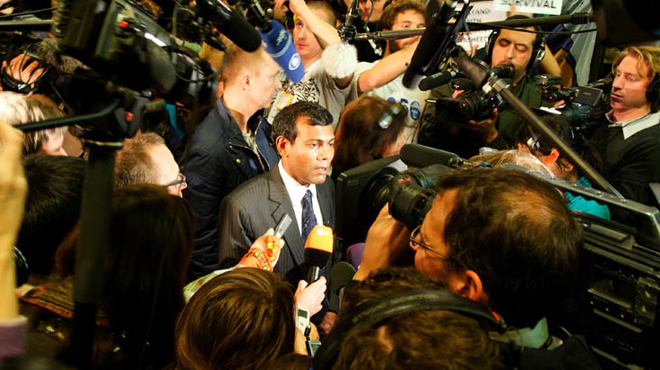
President Nasheed knows what to say and how to say it to the eager media...

A ‘Greek’ among Geeks and Greens…

Asking questions. Connecting the dots. Explaining matters.

These actions sum up what I have been doing in the spheres of communication and development for over 20 years. They form the cornerstone in my attempts to make sense of our globalised world and heady times.

As a journalist, I was trained to look for what’s New, True and Interesting (‘NTI Test’). Early on, I went beyond just reporting events, and probed the underlying causes and processes. With experience, I can now offer my audiences something more: perspective and seasoned opinion.

I look back (slightly) and look around (a lot) in a half-hour, in-depth TV interview with media researcher/activist and fellow citizen journalist Sanjana Hattotuwa. This was part of The Interview (third series) produced by Young Asia Television, and broadcast on two Sri Lankan TV channels, TNL and ETv on May 8 (with repeats).

Watch the full interview online: Sanjana Hattotuwa talks to Nalaka Gunawardene

Nalaka Gunawardene from Young Asia Television on Vimeo.

I have always worn multiple ‘hats’, and dabbled in multiple pursuits rather than follow narrow paths of enquiry. I see myself continuing to oscillate between the ‘geeks’ and greens, and where possible, bridging their worlds.

I sometimes feel a strange kinship with the ancient Greeks, who first asked some fundamental questions about the universe. They didn’t always get the answers right, and neither do I.

But it’s very important that we question and critique progress – I do so with an open mind, enthusiasm and optimism.

Note: I was also a guest in the first series of this show, in February 2009, which led to this blogpost.

Everybody Lives Downstream – but not with the same peace of mind!

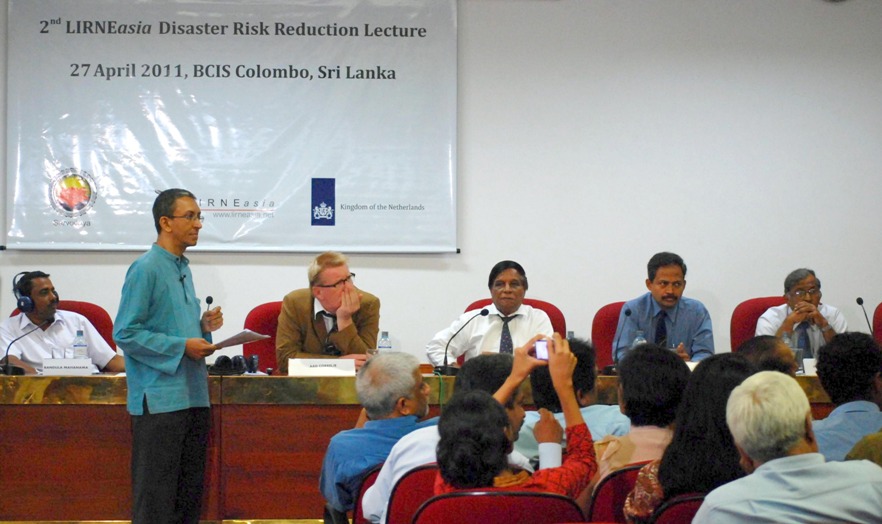
2nd LIRNEasia Disaster Risk Reduction Lecture, 27 April 2011 in Colombo: Nalaka Gunawardene (standing) moderates panel discussion
Writing on 20 April 2011, exactly 25 years after the Kantale large dam breached and washed away downstream villages, I posed the question: “If there were to be a catastrophic dam failure in Sri Lanka today, is there a warning system in place to detect the failure and issue timely warnings? Have the downstream communities participated in evacuation drills and know what action needs to be taken when a warning is issued?”

I’ve been asking such questions for a while. In fact, the post-mortem of the Kantale dam breach was one of the bigger stories I covered soon after I entered mainstream journalism in late 1987. By then, a few months after the incident, a presidential commission of inquiry was looking into what caused that particular disaster.

My interest in this subject is perhaps inevitable. I live in a country that has a high concentration of man-made water bodies. There are approximately 320 large and medium sized dams in Sri Lanka, and over 10,000 smaller dams, referred to as “wewas”, most of them built more than 1,000 years ago. In fact, Sri Lanka probably has the highest number of man-made water bodies in the world. According to the Sri Lanka Wetlands Database, the major irrigation reservoirs (each more than 200 hectares) cover an area of 7,820 hectares, while the seasonal/minor irrigation tanks (each less than 200 hectares) account for 52,250 hectares. This adds up to 60,070 hectares or just over 600 square kilometres — nearly a tenth of the island’s total land area.

Lankans are justifiably proud of their ancient hydrological civilisation — but don’t take enough care of it. Nothing lasts forever, of course, but irrigation systems can serve for longer if properly maintained. In a world where extreme weather is becoming increasingly commonplace, we can’t afford to sit on 25 centuries of historical laurels. Unless we maintain the numerous dams and irrigation systems – most of which are still being used for farming – heritage can easily turn into hazard.

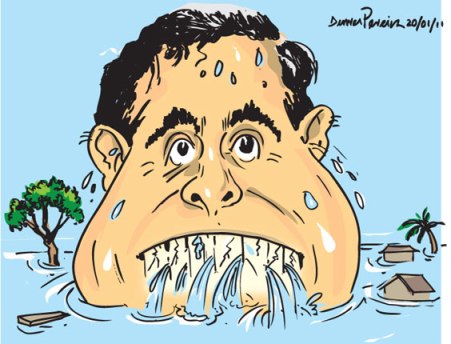
Cartoon from Daily Mirror, 20 Jan 2011
As indeed happened in early 2011, when massive and successive floods lashed the country’s Dry Zone where most reservoirs are located. It was a strong reminder how dams and reservoirs not only attenuate the effects of heavy rains, but if breached, can magnify the effects of such rainfall.

More than 200 small dams did breach during those rains, causing extensive damage to crops and infrastructure. The most dangerous form of breach, the over-topping of the earthen dams of large reservoirs, was avoided only by timely measures taken by irrigation engineers — at considerable cost to those living downstream. This irrigation emergency was captured by a local cartoonist: the head in this caricature is that of the minister of irrigation.

In early February, Sri Lanka announced that it will expand its dam safety programme to cover more large reservoirs and will ask for additional funding from the World Bank following recent floods. Never mind the irony of a proud heritage now having to be maintained with internationally borrowed money. Public safety, not national vanity, comes first.

All this provided a timely setting for the 2nd LIRNEasia Disaster Risk Reduction Lecture in Colombo, which I chaired and moderated. This enabled the issues of flood protection and dam safety to be revisited, building on the path-finding work in 2005-2006 done by LIRNEasia, Vanguard Foundation and Sarvodaya in developing an early warning system for dam hazards in Sri Lanka.

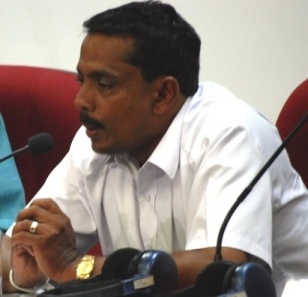
Bandula Mahanama
The main lecture was delivered by Dr Aad Correlje of the Delft University of Technology, the Netherlands. The response panel comprised Bandula Mahanama (a farmer organisation leader from one of the worst flood-affected areas in the Polonnaruwa District), S Karunaratne (Sri Lanka National Committee on Large Dams), Dr Kamal Laksiri (Ceylon Electricity Board) and U W L Chandradasa (Disaster Management Center). A summary is found on LIRNEasia’s blog.

Dams and irrigation systems are widely seen as the exclusive domain of civil engineers. They certainly have a critical role to play, but are not the only stakeholders. I was very glad that both our panel and audience included voices from many of these groups — especially the many communities who live immediately downstream of dams and reservoirs. Some of them are always in the shadow of a dam hazard, and yet helpless about it.

This was the gist of farmer leader Bandula Mahanama’s remarks – he made a passionate plea for a more concerted effort to improve proper maintenance of dams and reservoirs. “Wewas are part of our life, but right now our lives are in danger because the irrigation heritage is in a state of disrepair,” he noted.

I will write more about this in the coming weeks. My last thought from the chair was something I first heard many years ago in a global documentary. When it comes to water management, everybody lives downstream.

That’s certainly the case — but some are more downstream than others. And not everyone lives with the same peace of mind. We need to do something about it.

See also my recent writing in Sinhala on this topic, as part of my weekly science and development column in the Ravaya newspaper in Sri Lanka:

Nalaka Gunawardene’s Ravaya column – 27 Feb 2011 – Dam Safety in Sri Lanka

Gasping for Fresh Air in Delhi and Colombo: Miles to go before we can breathe easily!

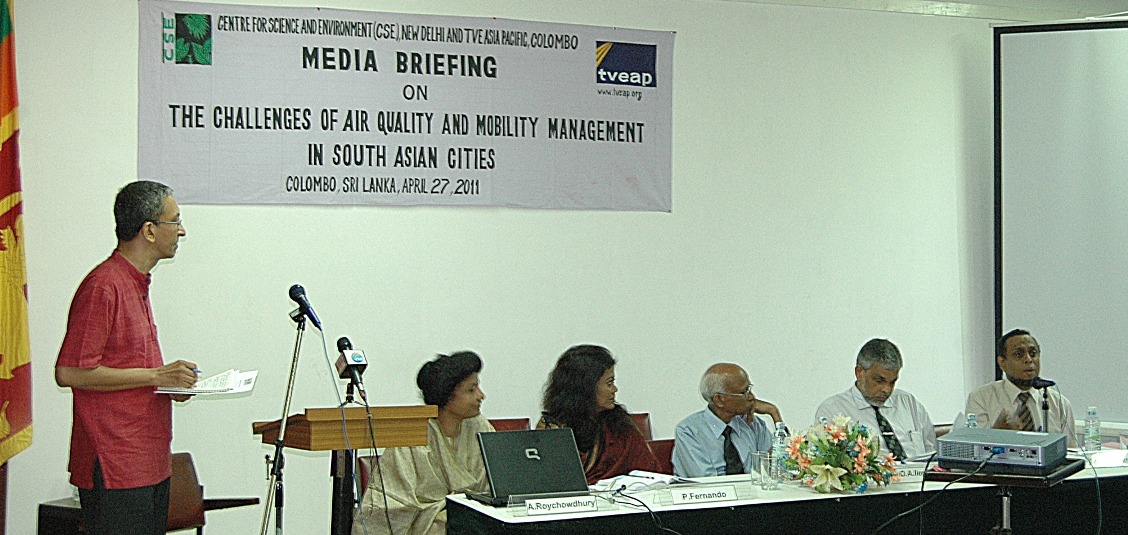
CSE TVEAP Media Briefing on Air Qualitry Issues in Colombo, 27 April 2011

Almost exactly four years ago, I wrote a blog post called Gasp! Asthma on the rise – and we made it all possible. I argued how we who suffer from Asthma — and our numbers keep increasing — are also contributing to making the bad problem worse.

So I write, speak and make films about clean air entirely with an enlightened self interest: I want to breathe more easily. This week, just a few days ahead of the annual World Asthma Day, I once again declared this as I opened a Media Briefing on the Challenges of Air Quality and Mobility Management in South Asian Cities organised in Colombo today by the Centre for Science and Environment (CSE), New Delhi and TVE Asia Pacific.

I held up my life-saving inhaler that I always carry around wherever I go, and am never more than a few feet away from. This is not theatrics, but drama in real life. Almost exactly a year ago, I was rushed to hospital at night for nebulisation. I don’t suffer such attacks too often, thank goodness, but I also don’t want to take chances — as I can never count on good air in my home city.

And I’m far from being alone. Wherever I go, I find increasing numbers of fellow asthma sufferers: we gripe and groan, but only a few among us realise that our lifestyles, choices and apathy contributes to the worsening quality of our air.

Almost every South Asian city today is reeling under severe air pollution and gridlocked urban traffic congestion. Colombo, a medium sized city by South Asian standards, has the (slight) advantage of the sea breeze flushing out part of its polluted air — but Greater Colombo is still struggling with polluting fuels, outdated vehicle technologies and rising numbers of private vehicles leading to massive congestion. Air quality levels vary considerably as we travel to the interior of the island, but some provincial cities now have mounting air pollution problems.

Finding the 'Common Air' in everybody's self interest...

This is why we collaborated with CSE, which has a long track record in knowledge-based advocacy for clean air in India and other countries of developing Asia, to organise this event. It was an open forum where air quality experts in Sri Lanka and India engaged Sri Lankan journalists and broadcasters on the status of Sri Lanka’s air quality and what it can learn from the neighbouring countries.

In my remarks, I said: “The quest for clean air in developing Asia is much more than a simple pollution story. It has many layers and complex links to government policies, regulation, industrial lobbies and technology options.

I added: “Our big challenge, as professional story-tellers, is to ask tough questions, seek clarity and then connect the dots for our audiences. At stake is our health, prosperity and indeed our very lives. Air pollution kills, slowly but surely!”

See my PowerPoint presentation:

Read more: Gasping for Fresh Air, Seeking More Liveable Cities in South Asia

Kantale Dam Breach, 25 years later: Film captures memories and worries

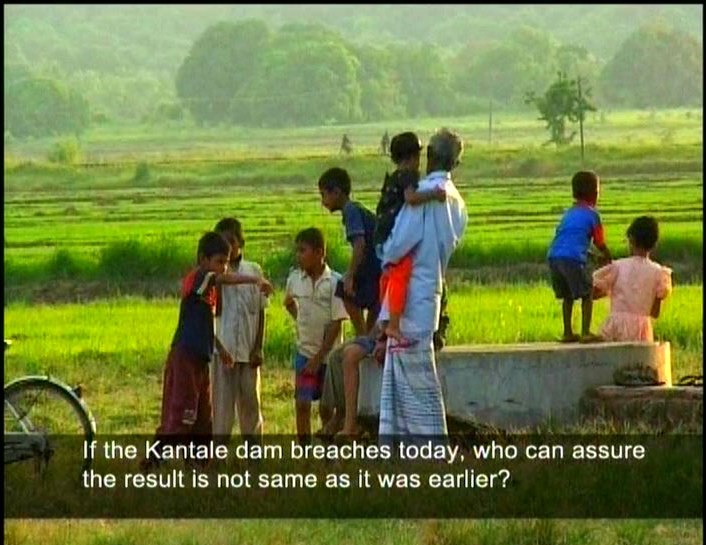
Kantale Reservoir: Full again, but what if another dam breach happens as in April 1986?

There are approximately 320 medium and large dams in Sri Lanka and over 10,000 small dams, most of which were built more than 1,000 years ago. The consequences of a major dam failure in Sri Lanka can be devastating to life, property and the environment.

One such dam disaster happened exactly 25 years ago, on 20 April 1986, when the ancient Kantale dam, 50 feet high and over 13,000 feet long, breached. Its waters rapidly flooded several villages downstream, killing 127 people and destroying over 1,600 houses and paddy lands.

A short documentary made in 2005 revisited the scene of this disaster 19 years later to gather memories and opinions of the affected people and engineers involved. The film, made by Divakar Gosvami, was part of a 2005 study on dam safety by LIRNEasia, Vanguard Foundation, Sri Lanka National Committee of Large Dams and Sarvodaya. Its final report asked: if there were to be a catastrophic dam failure in Sri Lanka today, is there a warning system in place to detect the failure and issue timely warnings? Have the downstream communities participated in evacuation drills and know what action needs to be taken when a warning is issued?

Kantale Dam Breach Revisited: Part 1 of 2

Kantale Dam Breach Revisited: Part 2 of 2

This film is not merely documenting a tragic moment of recent history. It also carries the caution: have we learned the lessons from this incident?

Dr Rohan Samarajiva, Chair and CEO of LIRNEasia, has just written: “As I watch it again in April 2011, I wonder whether all that they had built up since 1986 had got washed away, again. Two successive periods of heavy rainfall at the beginning of the year devastated the livelihoods of the people of the wav bandi rajje, the irrigation civilization we are so proud of. Flood upon flood. More than 200 small tanks breached; big tanks were saved by the emergency actions of irrigation engineers.”

In another recent piece, he asks: Twenty five years after Kantale: Have we learned?

Wiz Quiz 10: Japan’s struggle with the four elements

Image courtesy Vision Magazine
Earth, water, fire and air.

These are the four basic elements of matter as seen in ancient Greek, Hindu and other traditions. Each had different names for them, but the concepts were similar.

And in recent days, Japan has been experiencing multiple disasters involving all these elements.

It started with the 9.0-magnitude megathrust earthquake off the coast of Japan that occurred at 2.46 pm Japan time on 11 March 2011. Its epicentre was 130 kilometres off the east coast of the Oshika Peninsula of Tohoku, near Sendai. The earthquake triggered highly destructive tsunami waves of up to 10 meters (33 ft) that struck nearby coastal areas minutes after the quake, and in some cases travelled up to 10 km (6 miles) inland. The earthquake and tsunami waves killed over 5,000 people, caused massive property damage and started fires in some affected locations. Most worrying was the damage caused to the Fukushima II nuclear power plant where reactors damaged by the quake and tsunami led to an accidental leak of radioactivity.

Japan has a long history of living and coping with disasters, but the magnitude and confluence of multiple disasters has plunged the country into the worst crisis since the Second World War. This week’s Wiz Quiz devotes several questions to the history and science of tsunamis.

As it turns out, thanks to Japan’s strict building codes and preparedness, the country could absorb much of the powerful earthquake. But the massive tsunami is what caused most of the damage — there is little defence against the mighty waves that come roaring inland, wiping out everything in their path…

Read Wiz Quiz 10: Japan’s struggle with four elements

Grace under pressure: Japan faces tough test from 3/11 disasters – quake, tsunami, meltdown…

Cartoon by Geneva-based Patrick Chappatte, who works for International Herald and Le Temps

Since Friday March 11 afternoon, I’ve been watching the unfolding humanitarian tragedy in Japan caused by multiple disasters — 8.9 earthquake, tsunami, dam burst, fires, and now the meltdown of three nuclear reactors.

Our heart-felt sympathy goes out to all Japanese people, among whom I count many friends. No nation deserves to be battered simultaneously like this by natural and (partly) man-made calamities.

Yet, few nations are better prepared and equipped to deal with such crises. Japan may be reeling right now, but things could have been far worse if not for their readiness to face emergencies both at individual and institutional levels.

Amidst scenes of utter destruction and dislocation, the Japanese people were reacting with the stoic calm for which Japan is famous. “What’s amazing is that everyone I saw — cops on their white bicycles, boys reading comics in alleys, kids walking home with their parents — appeared graceful under this unexpected disaster,” Tokyo resident Irie Otoko wrote to The New York Times.

But make no mistake: this is a big one as disasters come. The death toll is feared to exceed 10,000, and the property damage alone is likely to be tens of billions of dollars. The societal, economic and emotional costs are hard to quantify at this early stage.

It was only a couple of weeks ago that I was walking the streets of Tokyo, enjoying the calm and orderly life in the modern Roppongi and the old world charm of Kagurazaka. But once again, Planet Earth has reminded us who is in charge.

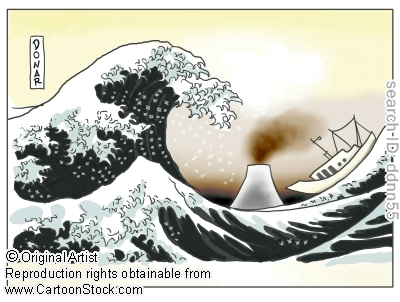
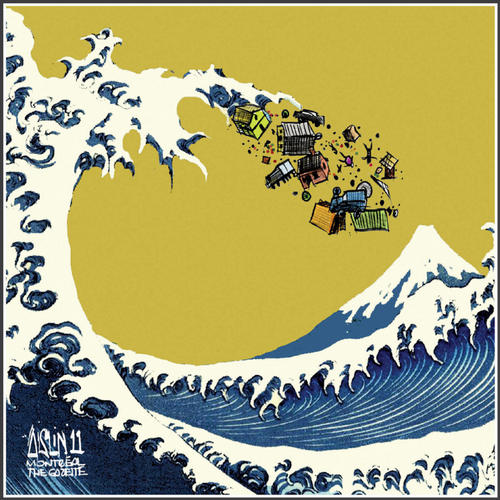
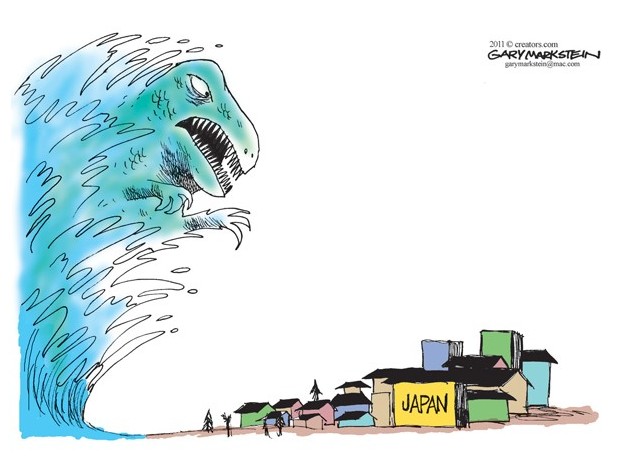
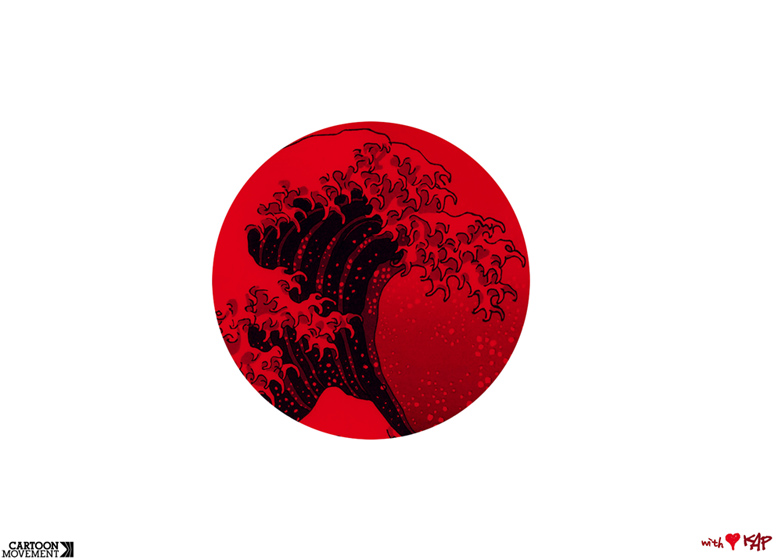
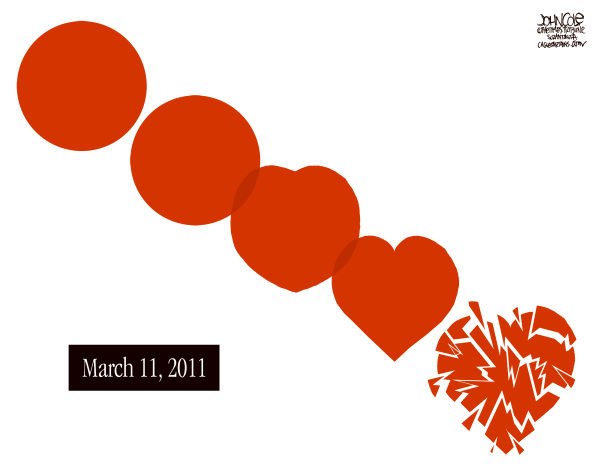
And cartoonists are capturing the planetary sentiment with their usual economy of words.

Cartoon by Terry Mosher, The Star, Toronoto, Canada
Cartoon by Gary Markstein, Copyright 2011 Creators Syndicate
Courtesy: Cartoon Movement

Blogging from Resilience 2011: Pathways for Staying Alive in an uncertain world


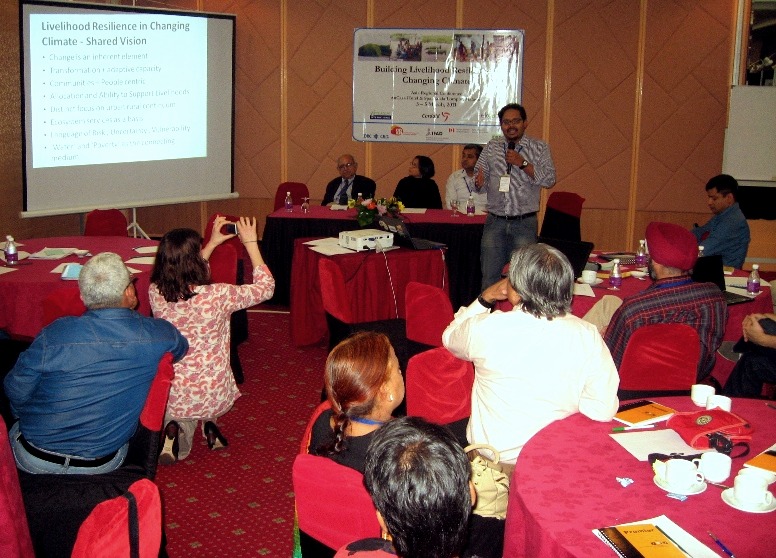
From 3 to 6 March 2011, I kept blogging from Resilience 2011: Asia Regional Conference on Building Livelihood Resilience in Changing Climate, held in Kuala Lumpur, Malaysia.

Along with a few other participants, I also tweeted from the conference. All our tweets are organised under #Resilience2011

Fred Noronha and I set up a YouTube channel for the conference where we posted short interviews filmed with selected participants. It has close to two dozen short videos, all filmed with a FlipVideo camcorder.

Here are links to all the blog posts I wrote on the conference website (text only as the platform didn’t allow visuals to be displayed easily).

6 March 2011: As the planet warms, we must all become more like bamboo!

6 March 2011: Slow disasters need not apply?

6 March 2011: Go beyond IPCC and SAARC, South Asian climate researchers urged

5 March 2011: Policy challenge to researchers: Summarise, simplify – and talk money!

5 March 2011: Wanted: Better Story Telling!

4 March 2011: ICTs for livelihood resilience: The importance of asking the right questions

4 March 2011: Hash-tagging Resilience2011: Twitter feeds from KL Conference

4 March 2011: Floods not always a disaster. Ask Mekong Delta farmers

3 March 2011: Banging Heads Together (nicely)

3 March 2011: SOS: Small Farmers need urgent help for climate adaptation

3 March 2011: Looking for the Bigger Picture