IUCN at 60 finally crosses the ‘Other Digital Divide’…

iucn.org
iucn.org
This news just came in, from IUCN – International Union for Conservation of Nature:
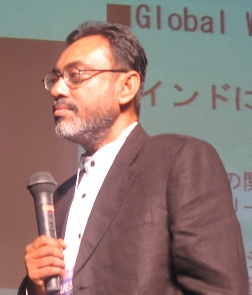
“Gland, Switzerland, 29 January 2009 (IUCN) – The world’s oldest and largest environmental organization is launching a new opinion page on its website, starting today with an article on President Obama written by IUCN’s President, Mr. Ashok Khosla.”

The press release quoted Julia Marton-Lefèvre, Director General of IUCN as saying: “Because we are a science-based organization and because we are also a membership organization, we tend to avoid controversies. While we, as an organization, will maintain our scientific rigor and strict neutrality in defending nature conservation, we wanted to provide our experts and members a space to freely express themselves, get feedback from a wide audience and generate informed debates around the big issues of our time.”

Intrigued, I quickly looked up the new Opinion page, and found this welcome note from Mario Laguë, its Head of Global Communications: “IUCN is an organization that built its enviable reputation on science and on the contributions of all its members. This combination of the need for both accuracy and democratic legitimacy can at times slow down our capacity to react to current events or to express opinions that are not ‘official positions’. While it is clear that the views expressed on this page are not necessarily those of IUCN, we expect them to be in accordance with its vision of ‘a just world that values and conserves nature’.
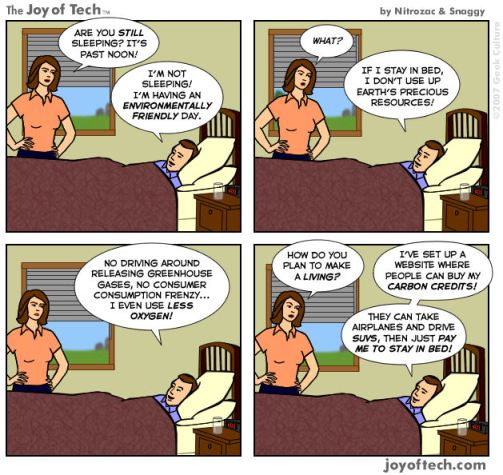
This isn't quite what IUCN would approve, but still an interesting idea...
Not quite what IUCN would approve, but still an interesting idea...
This is what I would call cautious engagement, but it’s certainly a welcome move. The first contribution to the Opinions page is an article by Dr Ashok Khosla, President of IUCN, titled ‘A new President for the United States: We have a dream’. In his characteristic analytical and perceptive style, Ashok sums up the promise the new US administration holds for pursuing the conservation agenda worldwide.

The opinions page allows comments by readers — moderated, and limited to 300 characters per comment, just enough to make a point briefly. Two days after the Khosla essay was posted online, it had attracted four comments…or at least that many were approved by people at IUCN headquarters who review comments.

Beyond these specifics, the launch of an interactive opinions page marks a new era for IUCN which brings together over 1,000 governments, state agencies and non-governmental organisations committed to preserving life on Earth. It signifies that the alliance as a whole is finally crossing what I have called the ‘Other Digital Divide’ — the one that separates the Digital Natives and Digital Immigrants.

I’m delighted to see IUCN belatedly crossing this divide, which I’ve been advocating for some time. In September 2007, participating in IUCN’s Fourth Asian Conservation Forum in Kathmandu, Nepal, I argued that scientific merit and rational (and often very articulate) reasoning alone won’t win them enough new converts to achieve significant changes in lifestyles, attitudes and practices needed to change business as usual.

I said: “To be heard and heeded in the real world outside the charmed development and conservation circles, we need to employ a multitude of platforms, media and ICT tools.”

I added: “IUCN and other conservationists, with their rigorous scientific analysis expressed in technical papers, print publications and the occasional op ed article in broadsheet newspapers, have to navigate in this whirlpool (of new media) — and it’s not easy. But their choice is between engagement and marginalisation. The planet cannot afford the latter.

“I’m not suggesting that conservation scientists and organisations must drop their traditional advocacy methods and rush to embrace the new ICT tools. But they need to survey the new media landscape with an open mind and identify opportunities to join the myriad global conversations.”

It takes time to turn around a large ship like IUCN, but they have been trying. For example, in September 2008, days before its World Conservation Congress in Barcelona, Spain, IUCN launched its own YouTube channel to share its videos online. Four months later, viewing numbers for the three dozen short videos posted are still in double digits, but a start has been made.

So it’s good to have the grand old lady of global conservation enter the endlessly chatty, cacophonic world of web 2.0. Let’s hope she won’t remain too aloof or elite (what I call the ‘broadsheet newspaper mentality’ when much of the world has gone tabloid or ‘compact’), or try to be too prim and proper in expressing her own views. The conversations online tend to evolve fast, and can sometimes be rough, spontaneous or unpredictable. Excessive moderating can leave out the passion and rhetoric that drive some discussions – sanitising is not recommended except to avoid libel and slander. These attributes can be very disconcerting to well-established organisations that have so far carefully managed their corporate communications. Engaging new media requires losing a good part of that control.

But as our friends in Gland have now recognised, it’s no longer a choice – but an imperative.

September 2007 blog post: Crossing the Other Digital Divide – Challenge to Conservation Community

August 2008 blog post: Wanted: Development 2.0 to catch up with web 2.0!
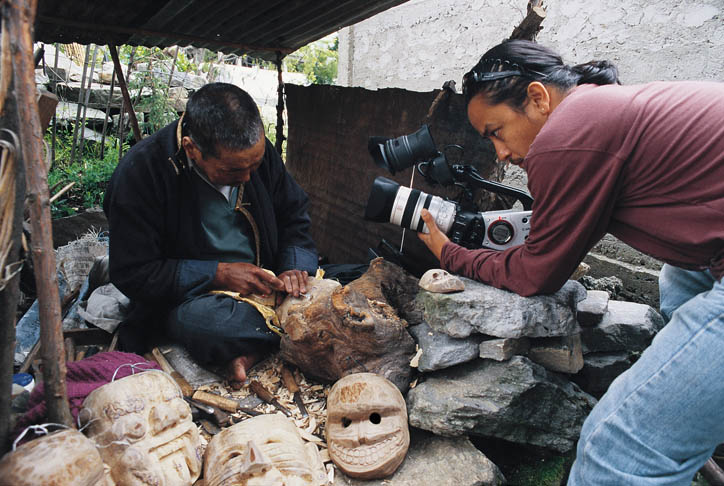
Moji Riba and Mountain Eye: A digital time capsule

Moji Riba capturing living cultural heritage before it's too late...
A race against time: Moji Riba capturing living cultural heritage before it's too late...

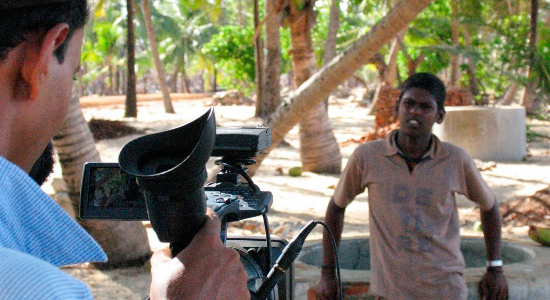
When young Moji Riba started taking an interest in video cameras and filming, his father was a bit concerned.

“I don’t want my son to end up as a cameraman,” he said, reflecting on the fact that a videographer was considered to be no more than a skilled worker in some sections of Indian society.

He need not have worried. Moji went on to become both a well respected film maker and a teacher of mass communications. But more importantly, he has turned his skill into capturing and preserving the highly diverse cultures and traditions of his home state of Arunachal Pradesh in India’s north-east.

Working below the mainstream media’s radar and improvising with available resources, Moji has been engaged in this pursuit passionately and diligently for nearly a dozen years. These efforts finally came into global spotlight in November 2008 when he was selected for a prestigious Rolex Award for Enterprise.

Rolex recognised Moji for ‘helping to preserve and document the rich cultural heritage of India’s Arunachal Pradesh tribes’. He was among the 10 winners of the 2008 Rolex Awards, which for more than 30 years have supported pioneering work in science and medicine, technology and innovation, exploration and discovery, the environment and cultural heritage.

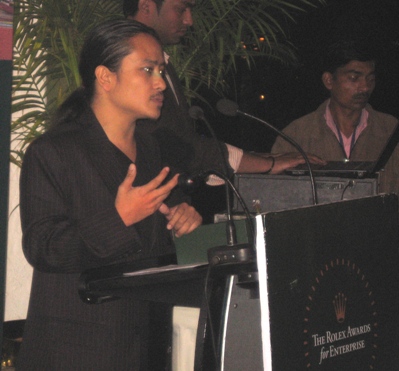
Moji Riba accepting Rolex Award 2008 in Delhi
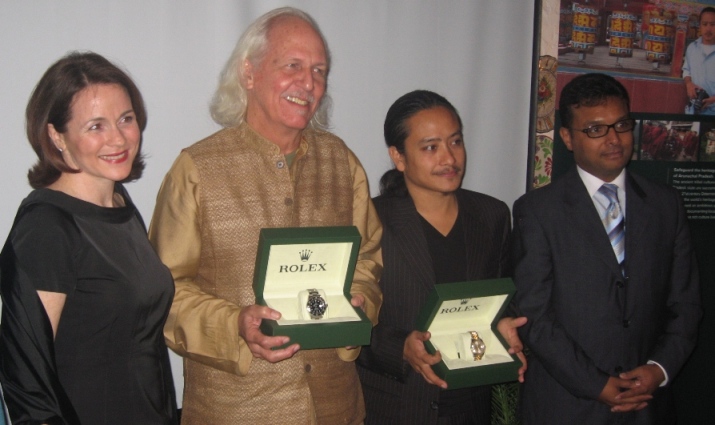
The award was presented to him at a simple ceremony held in New Delhi on 22 January 2009. I was glad to be a ‘fly on the wall’ on that joyous occasion, when Moji and fellow winner Romulus Whitaker were felicitated.

Accepting his award certificate and Rolex chronometer, Moji said: “In the end, this award is not about material rewards. Our most important gain was the process of the application and evaluation which were so intense and demanding that we have had to go through a lot of introspection.”

He added: “That process made us pause and ask ourselves: why are we doing our work, are we doing it right and what results are we going to achieve. That was worth a great deal for us.”

In his short and witty acceptance speech, Moji thanked everyone who has believed and supported his team’s work. His wife Purnima and two young children were there, along with several friends some of who had especially flown in for the occasion. Moji acknowledged his father, who, alas, didn’t live to share this proud moment.

Through a rigorous and discerning selection process, Rolex Awards support path-breaking work in progress, giving laureates new momentum and recognition. In the 2008 award cycle, Moji was one of 10 enterprising individuals chosen from among nearly 1,500 applicants in 127 countries by an independent panel of scientists, educators, economists and other experts.

Barbara Geary of Rolex Awards secretariat, Romulus Whitaker, Moji Riba & Yogesh Shah, CEO of Rolex India
L to R: Barbara Geary of Rolex Awards secretariat, Romulus Whitaker, Moji Riba & Yogesh Shah, CEO of Rolex India

Enthused by the Rolex Award, Moji will return to pursue his most ambitious project yet to preserve the living cultural heritage of Arunachal Pradesh, home to 26 major tribal communities. Each one has its own distinctive dialect, lifestyle, faith, traditional practices and social mores. They live side by side with about 30 smaller communities. Moji sees this richness “like a wonderful shawl woven in a myriad of colours and patterns”.

In recent years, this heritage has come under pressure from economic development, improved means of communication, the exodus of the young and the gradual renunciation of animist beliefs for mainstream religions. Instead of challenging these larger processes beyond anybody’s control, Moji is trying to harness digital technology to capture at least the essence of it for posterity.

That’s the basic idea behind the Mountain Eye Project, an unconventional initiative of his Centre for Cultural Research and Documentation (CCRD) based in Naharlagun. Magic Eye aims to create a ‘cinematic time capsule’ documenting a year in the life of 15 different ethnic groups.

Moji will train young people from each community to do the filming. This gives him access to enough film-makers as well as access to people with an intimate understanding of village life. Beginning in early 2009, these novice film-makers will capture a broad range of the tribes’ oral histories, as well as the rituals, ceremonies and festivals that take place over a year in their villages.

Moji expects to collect about 300 hours of film per village, all of which will be recorded and archived in their native languages. He believes that the resulting 4,000+ hours of video will provide an invaluable record of life as it has been lived in his state for centuries. The project will also engage scholars belonging to the 15 tribes from the Rajiv Gandhi University at Itanagar to analyse and translate this vast amount of data and organize it in a publicly accessible database.

This innovative work epitomises the spirit of Rolex Awards, which nurture excellence in individuals who often work against many odds — determined women and men lighting a few candles on their own, instead of just cursing the darkness…

As I enjoyed the company of Moji, Romulus and their many admirers well into Delhi’s chilly evening, these words the Malaysian social and environmental activist Anwar Fazal kept turning in my mind: “In a world that is increasingly violent, wasteful and manipulative, every effort at developing islands of integrity, wells of hope and sparks of action must be welcomed, multiplied and linked…”

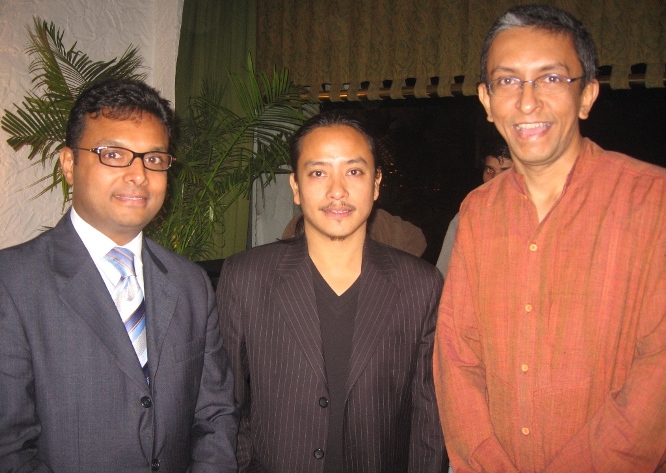
L to R - Yogesh Shah, Moji Riba, Nalaka Gunawardene
One more shot: L to R - Yogesh Shah, Moji Riba, Nalaka Gunawardene

MEAN Sea Level: An ironic film from the frontline of climate change

What does sea level rise mean to you and me?
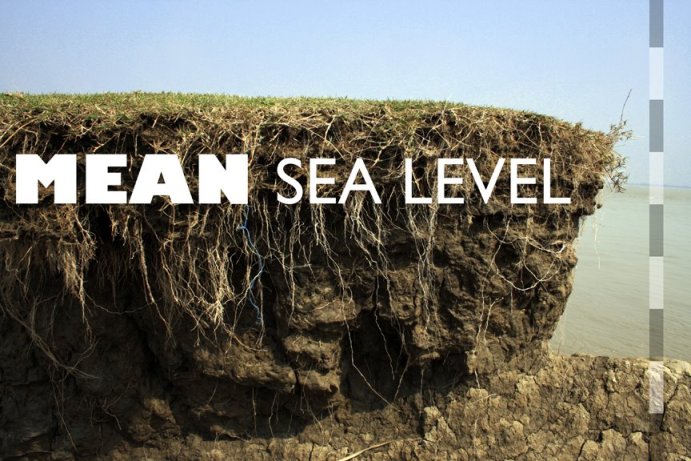
In October 2008, while attending an Asian regional workshop on moving images and changing climate in Tokyo, I had the chance to see Indian writer and film-maker Pradip Saha‘s latest film, MEAN Sea Level.

As I wrote at the time: “The few of us thus became the first outsiders to see the film which I found both deeply moving and very ironic. With minimal narration, he allows the local people to tell their own story. There’s only one expert who quickly explains just what is going on in this particularly weather-prone part of the world.”

The world’s rich are having a party, and millions living in poverty are the ones footing the bill. This is the premise of the film, which looks at the impact of climate change on the inhabitants of Ghoramara and Sagar islands in the the Sundarban delta region in the Bay of Bengal.

Almost 7,000 inhabitants have been forced to leave Ghoramara in the last 30 years, as the island has become half in size. The biggest island, Sagar which hosted refugees from other islands all these years is witnessing massive erosion now. 70,000 people in the 9 sea-facing islands are at the edge of losing land in next 15 years. For these people climate change is real.

As the sea level rises and takes with it homes and livelihoods in the delta, the villagers of Sagar are paying a hefty price for a problem that they did not create. Meanwhile, middle class India and the political elite are becoming aware of the problem of global warming, but prefer to look the other way.

I’m glad to note that the film is now being screened to various audiences and making ripples. By showing people – including those still not convinced about climate change – what sea level rise is already doing to poor people, the film is stretching the limits of debate and focusing attention on the need to act, not just talk.

It’s also creating ripples in environmental and/or human rights activist circles where all too often, passionate discussions don’t go very far beyond the rhetoric to bring in the real world voices and testimonies. Pradip’s film accomplishes this with authenticity and empathy yet, mercifully, without the shrill and overdose of analysis found in activist-made films. It powerfully and elegantly tells one of the biggest stories of our times.

Pradip Saha
Pradip Saha
In November 2008, Pradip showed and talked about his film at a screening organised by SACREDMEDIACOW (SMC), an independent postgraduate collective on Indian media research and production (and much more) at the School of Oriental and African Studies (SOAS) at the University of London. Before it started, Pradip told his audience to ‘forget that this is a documentary about climate change’ and just watch.

As one member of his audience, Sophia Furber, later wrote: “The film’s approach to climate change is completely non-didactic. Mean Sea Level is no acronym-fest sermon or disaster story, but an intimate portrait of a way of life which is on the verge of going underwater.”

In his day job as editor of Down to Earth magazine, published from India with a global outlook, Pradip excels in wading through the (rapidly expanding) sea of jargon and acronyms surrounding many topics related to science, environment and development. In typical style, his recently started blog is named alphabet soup @ climate dinner.

Read Sophia Furber’s account of SOAS screening in London

The more Pradip shares his film, the more people who notice the irony that I experienced in Tokyo. A short review by the Campaign against Climate Change says: “There is a greater irony. These poor people got nothing out of the economy that created climate change, nor do they contribute to global warming. Mean Sea Level is a testimony of reckless political economy of our times. Climate change is real, and only a sign of our recklessness.”

Last heard, Pradip was planning to screen MEAN Sea Level on Sagar Island so that the story’s participants can see the film for themselves. The idea was to power the event entirely through renewable energy sources, such as solar power.

I hope he will soon place his film – or at least highlights/extracts – online on YouTube or another video sharing platform. This film is too important to be confined to film festivals and public screenings. Whether it would also be broadcast on television in India and elsewhere, we’ll just have to wait and see. I won’t hold my breath on that one…


Down to Earth: Is climate changing? Yes, say Sundarbans Islanders

International Herald Tribune, 10 April 2007: Living on the Edge: Indians watch their islands wash away

Look carefully...
Look carefully...

Remembering the Children of Tsunami, four years later…

Jantakarn Thep-Chuay, known as Beam

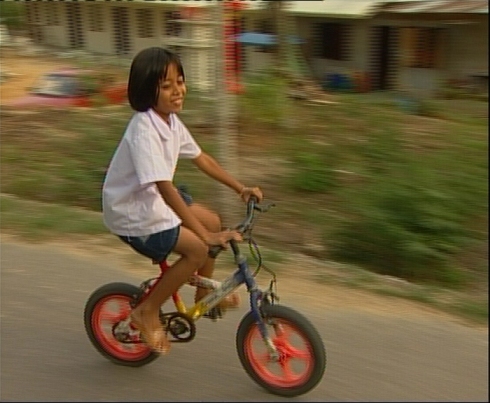
For many weeks, Jantakarn Thep-Chuay — nicknamed Beam -– did not understand why her father was not coming home. The eight-year-old girl, in Takuapa in Thailand’s southern district of Phang Nga, had last seen him go to work on the morning of 26 December 2004.

“On that Sunday, the day there was a wave, my dad wore his tennis shoes,” she recalls as she gets into his pair of sandals. “My dad didn’t have to do much work — he just walked around looking after workers.”

Beam’s father Sukaroak –- a construction supervisor at a new beach resort in Khao Lak –- was one of thousands of Thais and foreign tourists killed when the Asian Tsunami hit without warning. His body was never found.

For months, Beam would draw pictures of her family. These, and family photos of happier times, helped her to slowly come to terms with what happened.

The first year was long and hard for the family Sukaroak left behind: Beam, her two-year-old brother Boom, and mother Sumontha, 28. The determined young widow struggled to keep home fires burning -– and to keep her troublesome in-laws at bay.

As if that were not enough, she also had to engage assorted bureaucracies: even obtaining an official death certificate for her late husband entailed much effort.

Just a few weeks after the disaster, the local authorities approached Sumontha suggesting that she gives away one or both her children for adoption. Apparently a foreigner was interested. She said a firm ‘No’.

“Her dad wanted Beam to become an architect. He was hoping for a day when he could build something she draws,” says Sumontha. “If I am still alive, I want to raise my own children. I am their mother. For better or worse, I want to raise them myself.”

The Tsunami destroyed Beam’s school, but she continued to attend a temporary school set up with local and foreign help. Before the year ended, she moved to a brand new ‘Tsunami School’ that the King of Thailand built to guarantee education for all children affected by the disaster.

Sumontha, Beam and Boom are three ordinary Asians who have shown extraordinary courage, resilience and resourcefulness as they coped with multiple challenges of rebuilding their lives after the Tsunami. Theirs is one of eight families that we followed throughout 2005, under our empathetic communication initiative called Children of Tsunami: Rebuilding the Future.

It was a multi-country, multi-media project that tracked how ordinary Asians rebuilt their lives, livelihoods and futures after one of the biggest disasters in recent years. We at TVE Asia Pacific documented on TV, video and web the personal recovery stories of eight affected families in India, Indonesia, Sri Lanka and Thailand for a year after the disaster. Our many media products — distributed on broadcast, narrowcast and online platforms -– inspired wide ranging public discussion on disaster relief, recovery and rehabilitation. In that process, we were also able to demonstrate that a more engaged, respectful kind of journalism was possible when covering post-disaster situations.

where Children of Tsunami stories were filmed for much of 2005
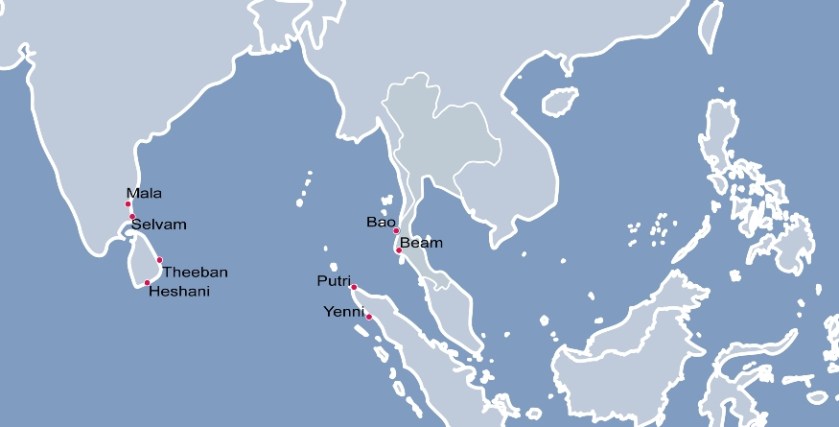
Four countries, eight locations: where Children of Tsunami stories were filmed for much of 2005

Meet the Children of Tsunami

They have never met each other. Yet they were united first in grief, then in survival. Five girls and three boys, between 8 to 16 years of age, living in eight coastal locations in four countries. Their families were impacted by the Asian Tsunami in different ways. Some lost one or both parents -– or other family members. Some had their homes or schools destroyed. Others found their parents thrown out of a job. During the year, these families faced many hardships and challenges in rebuilding their futures.

These remarkable children were our personal heroes for 2005:
Selvam, 13, Muzhukkuthurai, Tamil Nadu state, India
Mala, 11, Kottaikkadu, Tamil Nadu state, India
Putri, 8, Lampaya, Aceh province, Indonesia
Yenni, 15, Meulaboh, Aceh province, Indonesia
Heshani, 13, Suduwella, southern Sri Lanka
Theeban, 14, Karaitivu, eastern Sri Lanka
Bao, 16, Kuraburi, Phang Nga district, Thailand
Beam, 8, Takuapa, Phang Nga district, Thailand

With their trust and cooperation, we captured their unfolding realities unscripted and unprompted.

Read and experience much more on the Children of Tsunami dedicated website

Filming with Theeban in eastern Sri Lanka...now only a memory

As I recalled in early 2007, when we tragically lost one of eight survivor children – Theeban – to Sri Lanka’s civil war: As journalists, we have been trained not to get too attached to the people or subjects we cover, lest they affect our judgment and dilute our objectivity. The four production teams involved in Children of Tsunami initially agreed to follow this norm when we met in Bangkok in early 2005 for our first (and only) planning meeting. We also resolved not to reward our participating families in cash or kind, as they were all participating voluntarily with informed consent.

“But the ground reality was different. 2005, Asia’s longest year, wore on. As survivors slowly patched their lives together again, our film teams found themselves becoming friends of families or playing Good Samaritan. Sometimes our teams would find a survivor family close to starvation and — acting purely as human beings, not journalists — they would buy dry rations or a cooked meal. At other times, finding the children restless or aimless, they would buy them a football, kite or some other inexpensive toy that would produce hours of joy and cheer.

“As commissioners and publishers of Children of Tsunami stories, we didn’t object to these acts of kindness. Journalism with empathy was far preferable to the cold detachment that textbooks recommend.

In 2007, my colleague Manori Wijesekera – who served as production manager of this challenging effort – and I wrote up our definitive account of the project for Communicating Disasters: An Asia Pacific Resource Book. That chapter can be read online here.

Children of Tsunami: The Journey Continues
(25mins) was the end-of-year film that captured the highlights and ‘lowlights’ of our families’ first year following the disaster. It can be viewed online at the Children of Tsunami website.

Children of Tsunami: No More Tears (25 mins) was the shorter version of the end-of-year film that captured the highlights and ‘lowlights’ of our families’ first year following the disaster. We co-produced it with the Singapore-based regional broadcaster Channel News Asia.

Watch the first few minutes on YouTube:

All images courtesy TVE Asia Pacific

Iodised Salt: How to make the world smarter, faster?

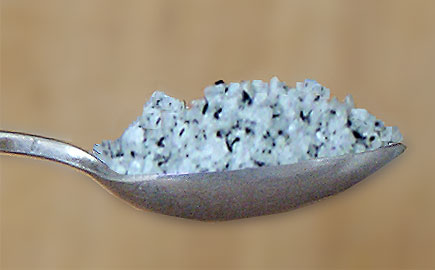
A miracle powder?
A miracle substance to get smarter?
One of the earliest video films I helped distribute at TVE Asia Pacific, soon after it was set up in 1996, was called Ending Hidden Hunger.

This 20 minute film, made in 1992 by Bedford Films of UK and narrated by Sir Peter Ustinov, described how the UN children’s agency UNICEF was working toward eliminating micronutrient deficiencies from iron, vitamin A and iodine in different parts of the developing world. Examples are taken from Africa and Asia to both illustrate the extent of the problem as well as steps being taken to reduce these deficiencies that cause mass-scale disability and death.

The main premise of the film was simple: those lacking micro-nutrients in their regular diet often don’t show immediate signs of starvation. This deprivation builds up over time and causes slow – sometimes irreparable – damage.

Nicholas Kristof
Nicholas Kristof
I was reminded of this film — and its still very relevant message — when reading an excellent essay by Nicholas Kristof in International Herald Tribune a few days ago. He is a columnist for the New York Times who travels the world reporting from the various frontlines of survival and struggle.

In Raising the World’s I.Q., dispatched from Rawalpindi, Pakistan, Kristof was talking about ‘a miracle substance that is cheap and actually makes people smarter’: iodised salt.

Here’s the context, as he put it:

“Almost one-third of the world’s people don’t get enough iodine from food and water. The result in extreme cases is large goiters that swell their necks, or other obvious impairments such as dwarfism or cretinism. But far more common is mental slowness.

“When a pregnant woman doesn’t have enough iodine in her body, her child may suffer irreversible brain damage and could have an I.Q. that is 10 to 15 points lower than it would otherwise be. An educated guess is that iodine deficiency results in a needless loss of more than 1 billion I.Q. points around the world.”

In nearly all countries, the best strategy to control iodine deficiency is iodisation of salt — one of the most cost-effective ways to contribute to economic and social development. Especially in these hard times, development professionals are looking for smart ways to get the biggest bang for their limited (and still shrinking) bucks. Investing in micronutrients – such as iodine – can provide some of the biggest bangs possible.

UNICEF Report 2008
UNICEF Report 2008
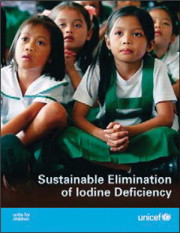
In June 2008, UNICEF published Sustainable elimination of iodine deficiency, a new report on progress since 1990 when the world’s governments set the target to eliminate iodine-deficiency disorders worldwide.

In October 2008, The Lancet, one of the world’s leading medical journals, published a report that noted: “Iodine deficiency is the most common cause of preventable mental impairment worldwide.”

The medical, public health and development communities have known and talked about iodine and other micronutrients for over 30 years. Significant progress has been made – for example, UNICEF says by 2006, more than 120 countries were implementing salt iodisation programmes, and 34 countries had managed to get rid of iodine deficiency among their people through this smart strategy.

But there still are major gaps — which continue to cause preventable damage to tens of millions of people including children.

Nicholas Kristof navigates through the heavy, jargon-ridden developmentspeak and churns out an eminently readable, accessible piece. It’s written in first person narrative from a part of the world where illiteracy, superstition – and their erstwhile companion, religious fanaticism – are trying to prevent people at risk from using iodised salt. This is science writing at its finest: anecdotal, personalised and purposeful.

And he’s absolutely right when he says iodised salt lacks glamour, doesn’t have too many stars or starlets singing its praise and (almost) no one writing about it despite its potential to improve lives for so many people.

I should know: one of the earliest topics I tackled as a young science reporter – getting started in the late 1980s – was salt iodisation. I struggled to put together a readable, engaging piece — which I then had to push through jaded editors who wondered what all this fuss was about.

I have only one (minor) bone to pick with Kristof. He pokes fun at Canada for hosting and supporting the Micronutrient Initiative, “an independent, not-for-profit organization committed to promoting simple cost-effective solutions for hidden hunger and developing innovative new solutions where needed.”

He calls Canada “earnest and dull, just like micronutrients themselves”. It’s a personal view – perhaps expressed with his tongue firmly in his cheek. Having travelled a fair amount in North America, and having good friends in both countries, I think that the nation north of the US-Canada border is a tad more civilised, certainly more caring and better engaged with the rest of the world.

But then, that too is a personal view. I’m darn lucky that I get enough iodine in my diet so that I can think for myself, keep asking lots of annoying questions…and occasionally even get some answers right.

Two billion people – almost a third of humanity – aren’t so lucky.

Read Raising the world’s I.Q. by Nicholas Kristof

Salt iodisation is not universally hailed. Read an alternative point of view that appeared in India’s Frontline magazine in 2006: Imposing iodine

Climate Neros: Films chained, unchained…

down-to-earth

“Twenty centuries ago, Emperor Nero fiddled while Rome burned. Today, some media companies are squabbling over copyrights while the planet is warming.”

These words, which I first uttered during an Asian workshop on moving images and changing climate in Tokyo in early October 2008, have resonated with many journalists, producers and activists concerned about climate change.

The latest outlet to carry my views is Down to Earth, the fortnightly magazine on science and environment published from New Delhi, India. They have included a condensed version of my remarks in their issue for 15 December 2008, under the heading: Films chained, unchained

It’s part of a special issue to mark the 14th Conference of Parties to the United Nations Framework Convention on Climate Change (UNFCCC) and the fourth meeting of Parties to the Kyoto Protocol, being held in the Polish city of Poznan from 1 to 12 December 2008.

In fact, Down to Earth editor Pradip Saha was part of our Tokyo workshop which called for climate change to be recognised as a copyright free zone.

When Down to Earth editors first mooted the idea of carrying my views, they suggested a catchy headline: Climate’s Niros. I rather liked that…but that didn’t survive their copyediting. Ah, well…

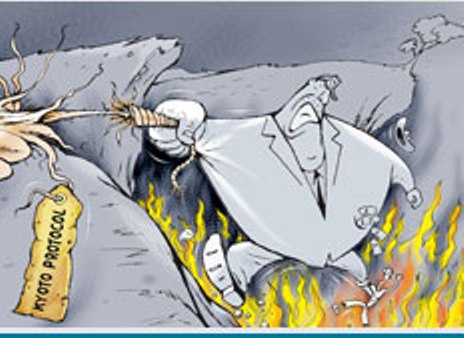
Last chance for Kyoto Protocol? Courtesy Down to Earth
Last chance for Kyoto Protocol?
In its preamble to the special climate change issue, Down to Earth editors say:
“Eleven years after the Kyoto Protocol was signed — only to be consigned to irrelevance over the subsequent decade — nations are meeting in Poland to negotiate post-2012 action.

“The realities of climate change are clearer than ever, and the cost of action is mounting. Rich countries, historically responsible for climate change, are proposing new mechanisms to share the burden. Leading developing countries such as India and China need to negotiate hard as well and make a big push for renewables…” Read full story

On 5 November 2008, SciDev.Net published my op ed essay:
Planet before profit for climate films

On 7 November 2008, Asia Media Forum published a longer version of this essay:
Climate Change or (c)limate (c)hange: Guarding copyrights on a warming planet

These have been linked to, or commented upon, by various blogs and websites. Interestingly, the big time TV/video production companies and broadcasters have been keeping quiet in this debate.

Perhaps they are too busy counting their money accruing from license fees?

Moji Riba: Capturing oral history in moving images

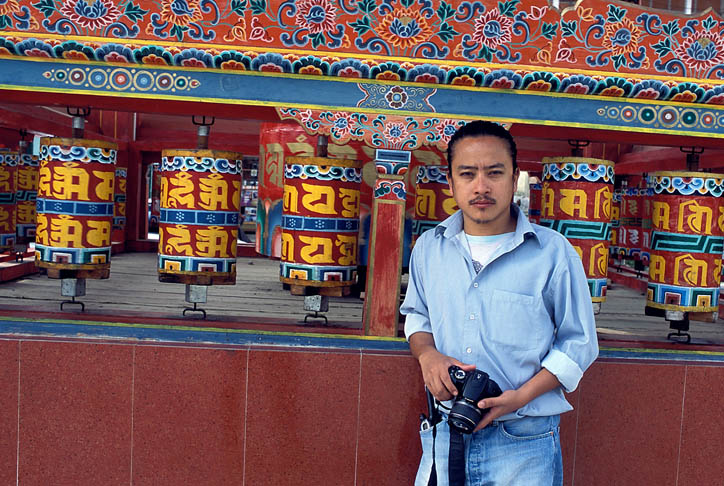
Moji Riba has been working since 1997 to document Arunachal Pradesh's rich cultural heritage. Image courtesy Rolex Awards

“I like to think of our heritage as an elastic band. I want to stretch this as much into the future generations as we can – till it reaches its edge and snaps. Each day I wake up and hope that this never happens. But that is sadly a finality we have to stare at – unless of course, there is a revolution of some kind!”

That’s how Moji Riba, Indian film-maker and cultural anthropologist, sums up the raison d’etre for his work.

He has reasons to worry. He lives and works in India’s north-eastern Arunachal Pradesh, which an isolated remote and sparsely populated part of the country that is home to 26 major tribal communities,. Each one has its own distinctive dialect, lifestyle, faith, traditional practices and social mores. They live side by side with about 30 smaller communities.

Today, a combination of economic development, improved communications, the exodus of the young and the gradual renunciation of animist beliefs for mainstream religions threatens Arunachal’s colourful traditions. “It is not my place to denounce this change or to counter it,” says Moji. “But, as the older generation holds the last link to the storehouse of indigenous knowledge systems, we are at risk of losing out on an entire value system, and very soon.”

Can anyone capture culture – a dynamic, hugely variable phenomenon – and preserve it in a museum or lab? Not quite. Preserving the communities as a living reservoir of culture is the best method. In addition, modern communication technologies can be used to record the myriad practices and memories – the indigenous knowledge and oral history of a people.

This is just what Moji Riba has been doing for over a decade. He founded and heads the Centre for Cultural Research and Documentation (CCRD) in Naharlagun, Arunachal Pradesh. The non-profit centre, established in 1997, focuses on audio-visual documentation of the folklore, ritual practices and oral histories of the diverse tribes that inhabit the north-eastern states of India and how the indigenous people are adapting to the processes of rapid change.

Moji, who holds a masters degree in mass communication from the prestigious Mass Communication Research Center (MCRC), Jamia Millia Islamia University, New Delhi, could easily have joined the exodus of talent from his state to the metropolitan centres in India. But he chosen to return to his roots with his enhanced skills and expanded worldview.

Over the past decade, he and the centre have made 35 documentaries for television stations and for government and non-governmental agencies. But the centre is more than just an archive or library: it is also a platform offering the tribal people an opportunity to voice their concerns and share experiences.

In 2004, Moji was instrumental in creating the diploma in mass communications at Itanagar’s Rajiv Gandhi University, to augment understanding of cultural values and local customs. He currently divides his time as head of the university’s communications department and running CCRD.

“CCRD has been using documentary films as a tool to document and understand the transitional tribal society and to share that experience through the medium of television,” says Moji. “In these 10 years, we have primarily produced television documentaries on linkages between issues of culture, environment and development and how one cannot be seen in isolation from the other.”

CCRD films have been showcased on Doordarshan, India’s national broadcaster, and various other national and international forums.

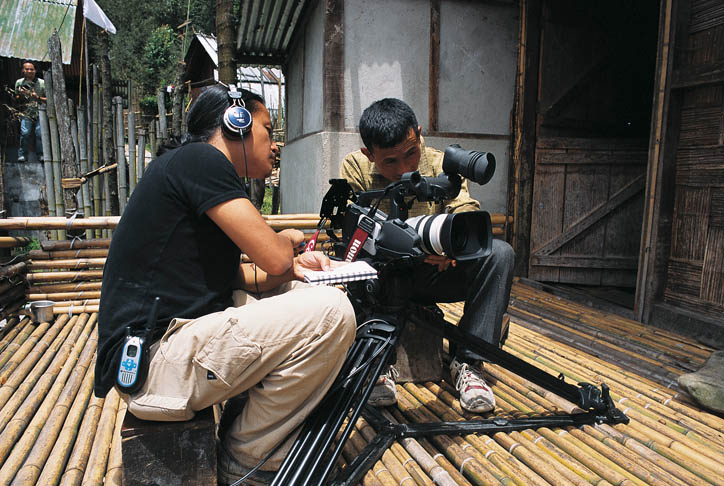
Riba teaches Hage Komo the basic camera skills that will allow the young Apatani to film an interview with his father and an animist priest, thus recording his tribe's oral history (Photo courtesy Rolex Awards)

Years of hard work and quiet persistence are beginning to pay off. Moji has just been selected as an Associate Laureate of Rolex Awards for Enterprise, a prestigious global honour. He is being recognised for ‘helping to preserve and document the rich cultural heritage of India’s Arunachal Pradesh tribes’.

He is among the 10 winners of the 2008 Rolex Awards for Enterprise, which for more than 30 years have supported pioneering work in science and medicine, technology and innovation, exploration and discovery, the environment and cultural heritage.

Read the full profile on Moji and his work on Rolex Awards website

I have known Moji for half a decade, in which time my admiration for him has continued to grow. We first met during a South Asian TV training workshop TVE Asia Pacific organised in Kathmandu in October 2003. Since then, Moji worked with us as a freelance film director and producer. In 2005, he directed Deep Divide, a half-hour, three-country documentary on the state of environmental justice in South Asia. In 2006, he filmed stories for TVEAP series Digita4Change (in Bhutan) and The Greenbelt Reports (in three locations in India).

Moji’s films have drawn the attention of film festivals and reviewers. My friend Darryl D’Monte, one of the most senior journalists in India, wrote in 2006 about one film titled When the Mist is Lifted: “As an insider, he (Moji) is able to draw out the contradiction between old and new lifestyles and practices. In remarks after the screening, he spoke about the difficulties of making films in the northeast, and understandably expressed his reluctance to make another film on Arunachal, which has been his staple over the years.”

rolex-awards-logoWith support from the Rolex Award, Moji and CCRD plan to implement in 2009 the Mountain Eye Project, an unconventional and ambitious initiative that aims to create a cinematic time capsule documenting a year in the life of 15 different ethnic groups. They will select and train young people from each community to do the filming. This gives him access to enough film-makers as well as access to people with an intimate understanding of village life.

According to Moji, the Mountain eye Project is the result of the learnings that have emerged from about a decade’s work on documentation of the folklore and cultural heritage of the tribal groups in northeast India. It seeks to involve local communities in extensively documenting the disappearing cultural practices and traditional knowledge and to build an audio-visual archive of this data.

It also proposes to activate a vast network of outreach activities through museums in order to inculcate in children and youth, an appreciation of traditional heritage and creating respect for cultural diversity.

Watch this space.

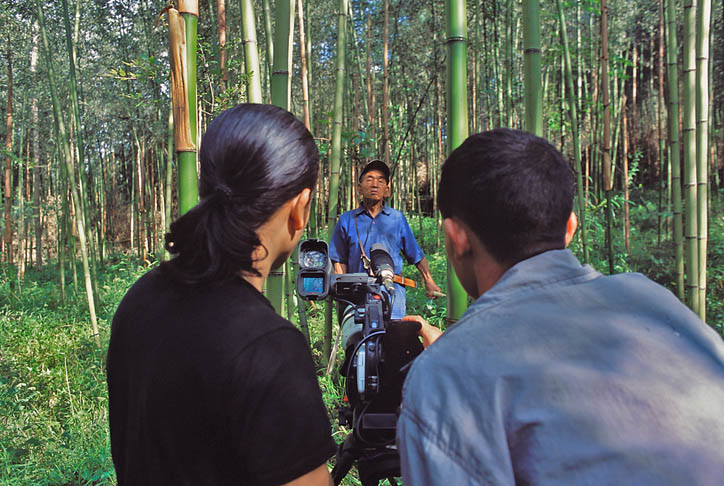
Hage Komo gets video instructions from Moji Riba, who is enlisting local young people to capture the oral histories, languages and rituals of their tribes for his project. Komo films his father gathering bamboo in a grove outside Hari Village. (Photo courtesy Rolex Awards)

Climate change and copyrights: What intellectual property on a dead planet?

Twenty centuries ago, Emperor Nero fiddled while Rome burned. Today, some media companies are squabbling over copyrights while the planet is warming.

This is the main thrust of my latest op ed essay, just published by the Science and Development Network (SciDev.Net) anchored in London, UK. It’s titled: Planet before profit for climate change films.

I have adapted for this commentary some of my ideas initially expressed on this blog – especially the post on 12 Oct 2008: Climate in Crisis and planet in peril – but we’re squabbling over copyrights!

Broadcasting on a warming planet

In writing this essay, I’ve also drawn on the excellent discussions we had last month during the Asia Pacific workshop on Changing Climate and Moving Images in Tokyo.

I’m challenging broadcasters to put their money where their mouth is.

Here’s an excerpt:

“Broadcast mandarins routinely support global struggles against poverty, HIV, corruption and climate change by offering free airtime to carry public interest messages. But few let go of their own products on these very subjects for non-broadcast uses.

“Making climate change a ‘copyright free zone’ for media products would increase the resource materials available to thousands of educators, social activists and trainers struggling to communicate this complex topic to audiences across the world. Moving images would make their task easier.

“The climate crisis challenges everyone to adopt extraordinary measures. Broadcasters and film-makers need to balance their financial interests with planetary survival.

“What use is intellectual property on a dead planet?”

Read my full essay on SciDev.Net: Planet before profit for climate change films.

In September 2006, speaking at the United Nations headquarters (photo below), I called for poverty to be recognised as a copyright free zone. The idea was to have broadcasters and other electronic publishers release copyrights on TV, video and online content relating to poverty and development issues -– at least until (MDG target year of) 2015.

The TV broadcast and film communities have reacted to this proposal with disdain or indifference, but I keep badgering on. If poverty didn’t motivate broadcasters to change business as usual, I hope, the planetary threat posed by climate change would.

2008: A Halloween Year – Prepare to get really scared…

Be scared...very scared!

Today, October 31, Halloween would be observed in several countries of the western world.

One Halloween custom is Trick-or-treating where children move from house to house in costumes, asking for treats such as sweets with the question: “Trick or treat?” The “trick” part of “trick or treat” is an idle threat to play a trick on the homeowners or their property if no treat is given.

2008 has been a highly turbulent year for most parts of the world. Oil and food prices went through the roof (and while oil has come down in recent weeks, food scarcities still loom large). Then came the global economic crisis, triggered by greedy bankers lending recklessly.

In such a year, what would it take to scare people on Halloween night? Or would Halloween be mild compared to the shocks and jolts we’ve been living through for much of the year?

Just when you think it can’t get any worse, it does. My favourite cartoon character Calvin had it figured out years ago:

Aren't you scared yet?

According to some analysts, the global economic crisis that we are living through at the moment just a harbinger of a much more dramatic global ecological collapse to come.

One of them is Patrik Etschmayer, who recently wrote an essay in Nachrichten, Switzerland, titled:
The Wall Street Crisis and the Coming Ecological Disaster”. His main point: the same people that got the world into the present crisis are driving the world over an ecological cliff.

Here’s an extract in translation: “What if this crisis was just a prelude – a precursor to a much greater threat – one that could possibly cost millions of lives? The current economic crises was based on the idea that we can live and consume based on credit – and the belief that we can continue to do so unabated as long as we steadfastly ignore the facts and spread the risks widely enough. That idea didn’t fly. Yet its seems that humanity still seems to believe that the things that have failed in the monetary economy, will, in the long run, still apply to the material reality of our world. Quite simply, because nature will not present us with a bill for the resources upon which we depend for our very survival.”

British journalist George Monbiot made the same point in his weekly environmental column. Writing in The Guardian on 14 Oct 2008, he said:

“As we goggle at the fluttering financial figures, a different set of numbers passes us by. On Friday, Pavan Sukhdev, the Deutsche Bank economist leading a European study on ecosystems, reported that we are losing natural capital worth between $2 trillion and $5 trillion every year, as a result of deforestation alone. The losses incurred so far by the financial sector amount to between $1 trillion and $1.5 trillion. Sukhdev arrived at his figure by estimating the value of the services – such as locking up carbon and providing freshwater – that forests perform, and calculating the cost of either replacing them or living without them. The credit crunch is petty when compared to the nature crunch.

“The two crises have the same cause. In both cases, those who exploit the resource have demanded impossible rates of return and invoked debts that can never be repaid. In both cases we denied the likely consequences. I used to believe that collective denial was peculiar to climate change. Now I know that it’s the first response to every impending dislocation.”

So the Halloween scares could be pretty mild compared to the scares of the real world. As the Hollywood copy writers used to say, we might as well: Get ready to be scared…really scared.

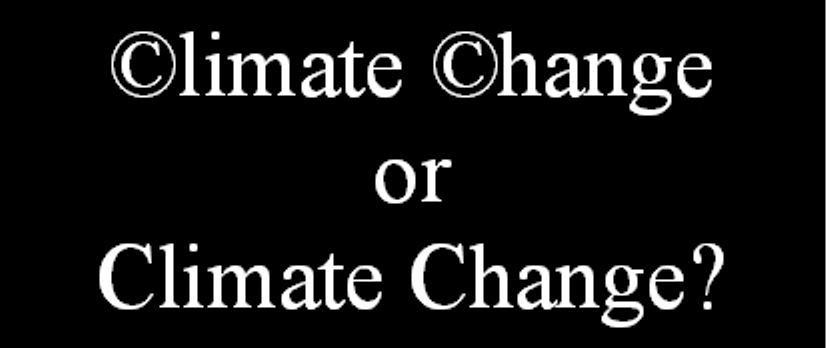
©limate ©hange or climate change? Copyrights on a warming planet

This is the real question!

OK, this is hot off my imaginative mind. I was writing an op ed essay today and turning phrases over in my mind when I came up with this…which neatly sums up what I’ve been saying for a while: confronted with the climate crisis, broadcasters and film-makers need to adopt a more liberal approach to copyrights on their creations.

For discussions on this, see my earlier blog posts:

15 Oct 2008: Standing on Al Gore’s Shoulders: Moving images in the climate debate

13 Oct 2008: ‘Climate Challenge’ marks turning point in Vietnam’s climate concerns

12 Oct 2008: India’s climate change NIMBYsm and middle class apathy

12 Oct 2008: Climate in Crisis and planet in peril – but we’re squabbling over copyrights!

See also these news items appearing on TVE Asia Pacific website:

6 Oct 2008:
Make climate change a ‘copyright free zone’: Asia Pacific TV and film professionals call

4 Oct 2008:
Climate coverage in media needs rational and emotional approaches