A few days ago, I was deeply saddened to hear the news that my mentor and colleague Robert Lamb is no more. He lost his battle with cancer on 13 Feb 2012. He was 59.
Robert will be greatly missed. He was a visionary mentor and a strong supporter of our ideal of Asians telling their own stories using TV, video and web. This was what he set up TVE Asia Pacific (TVEAP) to do, back in 1996.
I was still in shock and grief when I wrote TVEAP’s official tribute, and a short statement of condolences. But Robert would have expected nothing less. The show must go on, he used to say, and getting the record right is very important.
Our statement opens: “Robert Lamb knew the power of moving images. For over three decades, he used them effectively to move people all over the world to reflect on how their daily actions impact their local environment and the planet.”
We also note how “Robert was very well informed, highly analytical yet kept an open mind for fresh angles and new perspectives. He inspired us without imposing his own views.”
Robert was an Englishman by birth, globalist in outlook and a planetary scale thinker and story teller. Unlike some activists and journalists, Robert practised Gandhi’s timeless advice: “Be the change you wish to see in the world”.
This is why I added this line to our statement: “He walked his talk, practising in personal life what he advocated in his films. If he breathed heavily in the edit room, he trod softly on the Earth.”
And that, more than any of his professional accomplishments in print, on TV and online, is how I shall always remember Robert Paul Lamb, on whose broad shoulders I continue to stand.
Nalaka G at a giant digital clock in Tokyo: Wandering everywhere with a sense of wonder...
This is the Sinhala text of my weekly column published in Ravaya newspaper for 5 February 2012. Here, I look back at one year of weekly columns and reflect on some reader feedback and their participation in my efforts to make sense of the world in turmoil that is all around me. I say ‘Thank You’ to the few writer friends and public intellectuals who have advised and guided me. I reaffirm my commitment to keep asking questions, connecting dots and following my own simple language style with none of the intellectual pretensions common in Sinhala newspaper writing.
Communicating Disasters: ZiF Conference in BielefeldHow do we cope with a warming planet while living in an increasingly WikiLeakable world? Exactly one year ago, I explored this in my talk given at the University of Colombo during the LEAF Conference.
As I reflected then: “We live in a crisis-ridden world where we have to cope with multiple emergencies unfolding at the same time, impacting us on different fronts. This illustration captures three of them: crisis in biodiversity, man-made climate change, and the new reality of living in a rapidly WikiLeakable world — what I called the Global Glass House.”
I also built on ideas initially discussed in my 2007 book, Communicating Disasters, which was part of the reference material used during th ZiF research project.
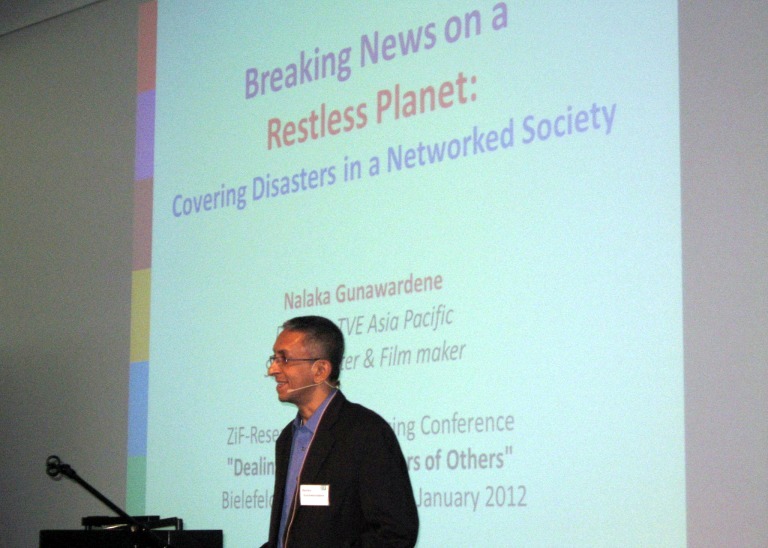
Nalaka Gunawardene speaks at ZiF Conference on Communicating Disasters, Bielefeld, Germany: 27 Jan 2012
Here’s the Summary (Abstract) of my talk. PowerPoint slides below.
Breaking News on a Restless Planet: Covering Disasters in a Networked Society
by Nalaka Gunawardene
Science Writer, Blogger & Columnist; Director – TVE Asia Pacific (TVEAP)
Communicating disasters — before, during and after they happen — is fraught with many challenges. The increased volume and flow of information, enabled by the proliferation of information and communication technologies (ICTs), fills some gaps — but not all. Other critical elements such as institution building, training and awareness raising are needed at all levels to create societies that are better informed and prepared.
The news media, driven by their quest for what is new, true and interesting, can be useful allies for disaster managers. But the nexus between these two groups has always been contentious, and the acceleration of the news cycle has made it more so. Having to sustain 24/7 coverage for their fragmented and distracted audiences places enormous pressures on news media to break news first — and reflect later. In this scenario, how can empathetic, ethical and balanced reporting happen?
As disasters increase in frequency and intensity partly due to climate change, mainstream media practitioners across Asia struggle to keep up. Disasters are more drawn out (e.g. Pakistan floods, 2010 & Thailand floods, 2011), geographically scattered (Indian Ocean tsunami, 2004) and economically devastating (Tohoku/Fukushima, 2011) than before. This stretches the capacities and resources of many news organisations. Saturation coverage of unfolding disasters can also cause ‘compassion fatigue’ and apathy in audiences.
In today’s networked society, news media are no longer the sole gatherers or distributors of news. Without the trappings and inertia of the institutionalised media, citizen journalists are quick to adopt ICT tools and platforms. What does this mean for communicating disasters that requires care and sensitivity? In which ways can we find synergy between mainstream and new/social media to better serve the public interest on a warming planet? What value-additions can the mainstream media still offer to the coverage of disasters near and far?
We examine these and other larger questions with reference to recent disasters in Asia.
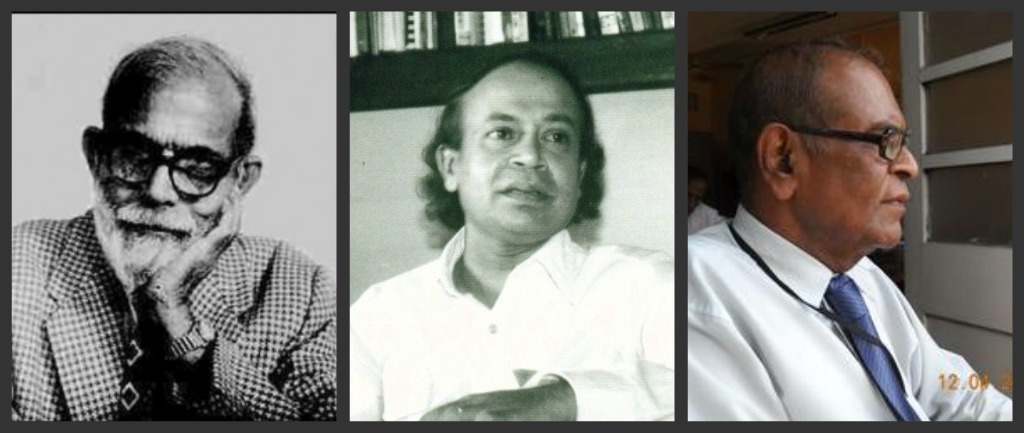
Keepers of Rationalist Flame L to R - Abraham Kovoor, Carlo Fonseka, Dharmapala Senaratne
Assorted charlatans and religious zealots across the island of Sri Lanka must have heaved a collective sigh of relief when they heard that Dharmapala Senaratne was no more. He had made it his business to make life difficult for those preying on the gullible public. Dharmapala was President of the Sri Lanka Rationalist Association (SLRA), a small group of earnestly sceptical enquirers who won’t take anyone’s word about anything. They want to investigate and debate.
The voluntary group was originally set up in 1960 by the late Dr Abraham Thomas Kovoor (1898 – 1978), a Kerala-born science teacher who settled down in newly independent Ceylon and, after his retirement in 1959, took to investigating so-called supernatural phenomena and paranormal practices. He found adequate physical or psychological explanations for almost all of them. In that process, he exposed many so-called ‘god men’ and black magicians who thrive on people’s misery and superstitions.
My column (in Sinhala) for Ravaya newspaper on 22 Jan 2012 is an exploration of the many challenges that rationalists and free thinkers face in today’s Sri Lanka. It’s also a critique of our mainstream media, where space/time for open discussion and debate today is LESS than what it was a generation ago — despite the channel explosion and proliferation of print publications.
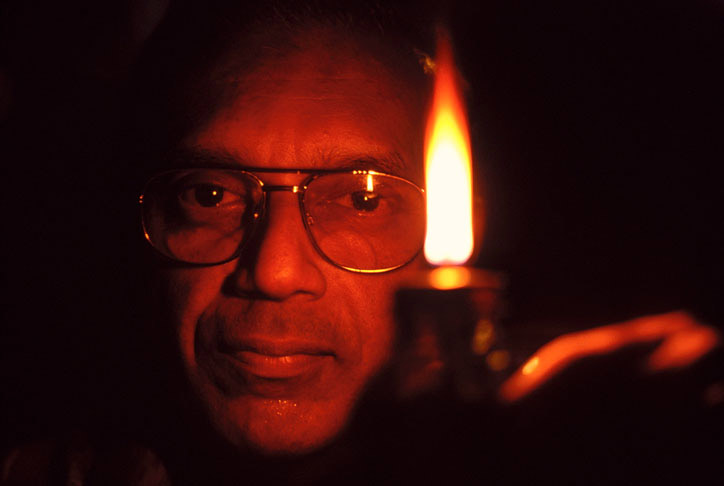
In December 2009, I wrote in a blog post: “It’s easy to curse the darkness, and many among us regularly do. Only a few actually try to light even a small candle to fight it. Dr Wijaya Godakumbura of Sri Lanka is one of them – he literally lights lamps, thousands of them, against the darkness of ignorance and poverty.”
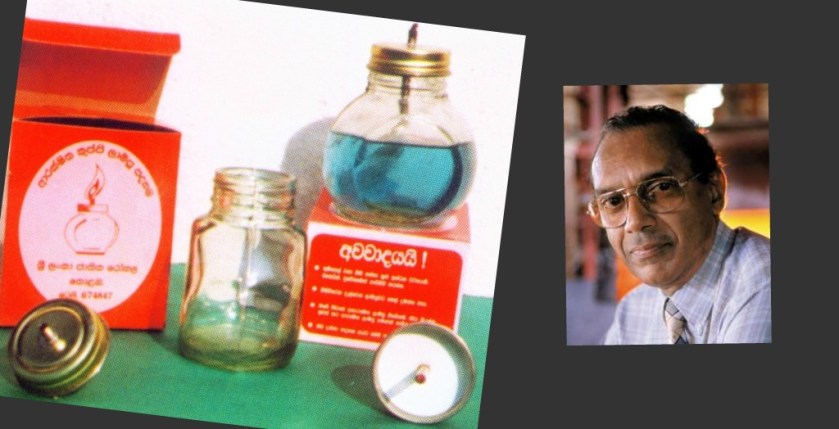
“But his lamps are different, and a great deal safer compared to normal lamps and kerosene, which can start fires risking life and property of users. The design is simple yet effective, inspired in part by the Marmite bottle known the world over: it’s small and squat, with two flat sides – equipped with a safe metal screw cap to hold the wick. It’s quite stable and hard to topple.”
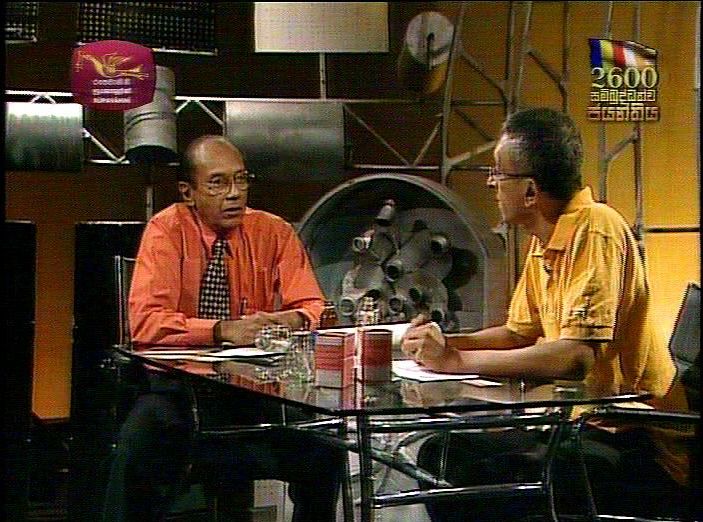
I have written this week’s Ravaya Sinhala science column about Dr Godakumbura and his innovative, life-saving bottle lamp. I also feature him in an interview in MALIMA – the new TV series on science, technology and innovation I host from this month on Sri Lanka’s national TV Rupavahini.
The inventive doctor and his life-saving bottle lamp
What’s new – or just round the corner? Join me on Malima to find out!
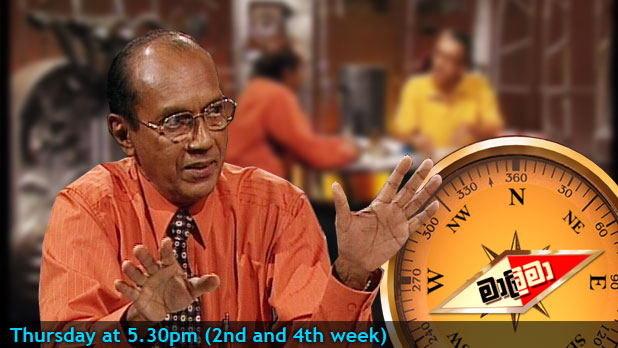
Malima is the Sinhala term for a compass. Malima is also the name of a new TV series on science, technology innovation that I am hosting from this month on Rupavahini, Sri Lanka’s national TV channel.
Produced by Suminda Thilakasena, the show premiered on 12 January 2012. It will be broadcast every other Thursday at 17:30 (5.30 pm) Sri Lanka time.
Malima is a half-hour show in magazine style. Each episode will have several short segments:
– compact interviews introducing accomplished Lankan inventors (with patents, awards, etc.)
– profiles of school children and/or youth who have come up with innovative devices or concepts
– interviews with leading scientists and engineers on frontiers of technology
– vignettes on traditional knowledge and Lankan technological heritage
– news from other countries on interesting new innovations or scientific insights
Dr Wijaya Godakumbura being interviewed by Nalaka Gunawardene on Malima
The first episode features:
• An interview with Dr Wijaya Godakumbura, inventor and promoter of the multi award winning Sudeepa safe bottle lamp that saves hundreds of lives
• German aircraft company e-volo has built the world’s first electric multicopter, a new kind of flying machine
• Ancient Lankan technology of extracting medicinal essence from plant products
• Interview with child inventor Sajini Jayanetti, 15, about two of her inventions: Automatic Fixed Amount Liquid Chemical Adder; and a new method to prevent drunken driving
In our age of technology, hundreds of millions of people — most of them poor, and women — are still toiling away in tasks where simple machines or devices could reduce their daily drudgery. Few inventors have bothered with these — probably because the beneficiaries are on the margins of society. Their needs are not a priority for most research institutes or high tech laboratories.
This is the theme of my Ravaya column (in Sinhala) published on 8 Jan 2012, reproduced in full below.It was inspired by, and mostly based on the inaugural Ray Wijewardene memorial lecture delivered by Dr Anil Kumar Gupta, India’s top innovation-spotter, in Colombo on 13 December 2011. He spoke on “Grassroots Innovation for Inclusive Development: From Rhetoric to Reality”
Aspirations are common; solutions are not...Cartoon by R K Laxman
The late Ray Wijewardene was very fond of this cartoon, drawn decades ago by the outstanding Indian cartoonist, R K Laxman.
It epitomised, in Ray’s view, poor people’s aspirations for useful technology: machines or processes that provided relief from drudgery and put money in their pockets.
The bicycle used to be a common aspiration among many people. Among today’s generation, the mobile phone is another. (But most people who want a phone have already got one – for a variety of personal and utilitarian reasons).
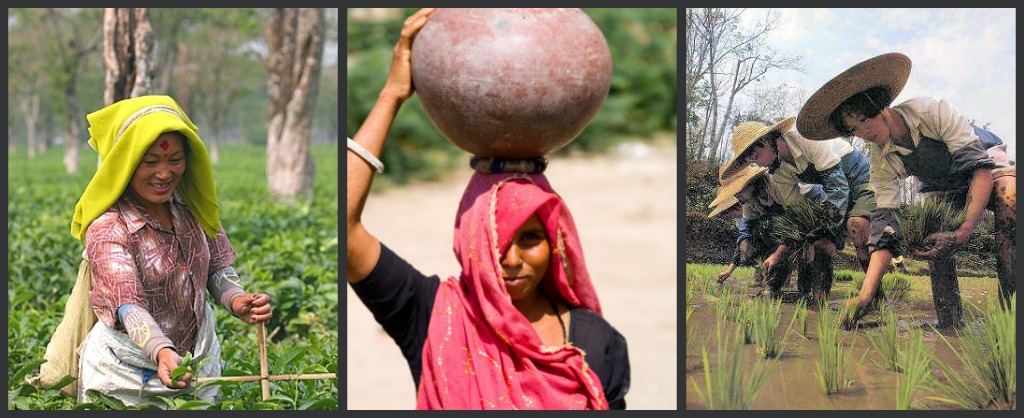
Ironically in our age of technology, hundreds of millions of people — most of them poor, and a majority of women — are still toiling away in tasks where simple machines or devices could reduce their daily drudgery.
Few inventors have bothered with these — probably because the beneficiaries are on the margins of society. Their needs are not a priority for most research institutes or high tech laboratories.
It was inspired by, and mostly based on the inaugural Ray Wijewardene memorial lecture delivered by Dr Anil Kumar Gupta, India’s top innovation-spotter, in Colombo on 13 December 2011. He spoke on “Grassroots Innovation for Inclusive Development: From Rhetoric to Reality”
India’s Honey Bee Network, which Gupta founded in the mid 1980s, has documented
thousands of grassroots innovations and traditional knowledge practices for a quarter century. And yet, many everyday life problems remain unresolved. Ones, when tackled, can bring immediate relief to hundreds of millions of men and women from their daily drudgery.
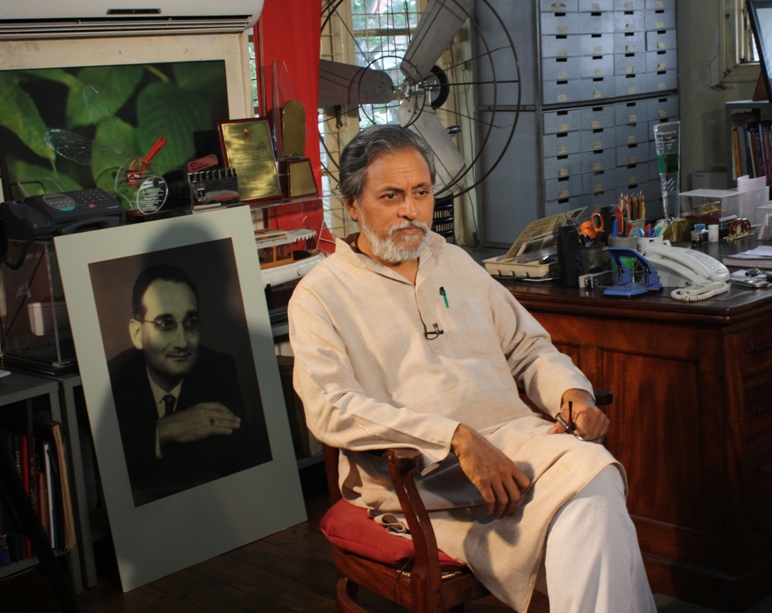
Prof Anil Gupta sits in the Colombo study of late Dr Ray Wijewardene - photo by Anisha Gooneratne
What does an inventor look like?
A nerdy kid in glasses and a white coat, tinkering perilously in a lab? Or a tightly-focused technician toiling away in a greasy workshop?
Perhaps. But most innovators are ordinary people moving among us. For the most part, they are unnoticed and unsung as they try to crack problems that have engaged their attention — or frustrated them for too long.
At one level, many of us improvise everyday for personal gain — to save money, lighten our workload or boost yields. Only a few take it to a higher level. They are unhappy with the status quo. They probe how things work and speculate how it can improve. They tackle problems that daunt most.
Spotting them isn’t easy. Such innovators may come from any social, educational or cultural background but they all march to the beat of a different drum. While education and training help, some of the most successful inventors in history were entirely self-taught.
The late Ray Wijewardene was one quintessential ‘tinkerer’ who led a life-long quest to solve practical problems and improve the quality of life – for himself, those around him, and society at large. He left his mark in agriculture, engineering design, renewable energy, transport and aviation. Just as importantly, he nurtured other innovators to go after nagging problems. A firm believer in trial and error, he encouraged constant experimentation.
Ray’s spirit of enquiry and enterprise was rekindled this week when one of the world’s leading innovation-spotters delivered the inaugural Ray Wijewardene Memorial Lecture in Colombo.
With inspiring examples and illustrations, Gupta emphasized that grassroots innovations can provide a new ray of hope – if we let them grow.
Speaking of his own country’s experience, he said: “Outside of India’s major cities, unsung heroes of the country are solving, or trying to solve, local problems in spite of the structures that have bypassed them so far. Creativity, compassion and collaboration are the key characteristics of these voices from grassroots. Let’s listen to them and resonate with them!”
And it isn’t just an Indian phenomenon. At the outset, Gupta listed a dozen recent innovations made by Lankans. Some, like the safe kerosene bottle lamp, are widely known but most remain obscure. Yet, all have been authenticated, and many granted patents.
Home-grown inventions
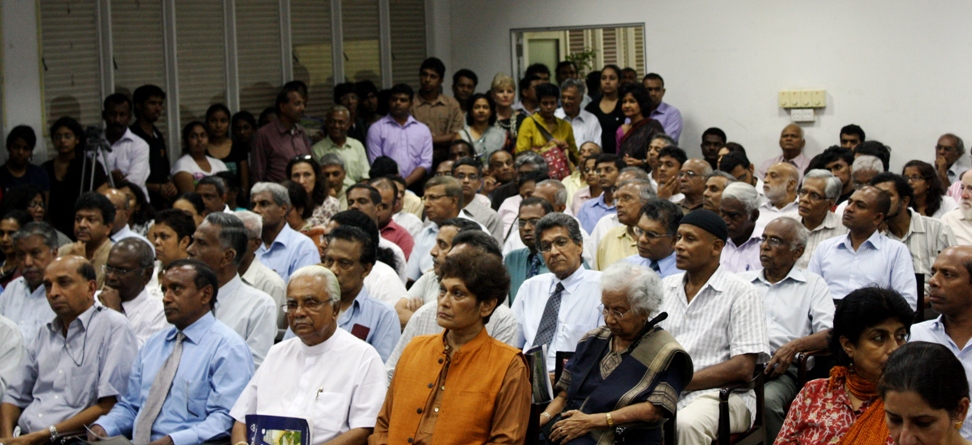
Few among the packed Colombo audience of over 200 seemed to recognise these home-grown innovations — just the point the professor was making.
“You get innovators all over Sri Lanka, but most are not known or recognised even in their own communities,” he said.
To make matters more challenging, most innovators tend to be loners: they are day-dreamers who don’t follow the pack.
“They don’t come to meetings or speak up much. We have to reach out to them, make them feel comfortable and valued,” Gupta added.
His suggestion: Sri Lanka should launch a national effort to discover its own innovators — both technological and social. The media can play a big role in spotting and promoting innovators, as can schools, universities and state agencies with relevant mandates.
But Gupta also had a strong word of caution: “Whatever we do, we must never try to convert these precious ‘odd-balls’ into conformists.”
Ray would surely have applauded. He was an accomplished non-conformist, or maverick, who didn’t fit into the stereotyped academic or engineering circles. Now the Ray Wijewardene Charitable Trust (RWCT), set up to promote his legacy, wants to nurture innovation in Sri Lanka.
The Trust made an auspicious start by inviting Anil Gupta to deliver the first lecture in Ray’s memory. Gupta and Wijewardene were kindred spirits who stayed in touch over the years across the Palk Strait.
Gupta himself defies the standard notion of an academic. He is an unusual professor who walks his talk — and walks through the villages and slums of India in search of innovation. His mission for the past two decades has been to ensure that grassroots innovators receive due recognition, respect and reward for their bright ideas. He also seeks to embed an innovative ethic in educational policy and institutions.
The man doesn’t sit in his campus; he goes innovator-scouting all over India. “In our walks, we move from village to village spotting grassroots innovations and honouring them. We have come across very simple modifications make life easier for people, and also help save natural resources,” Gupta said.
A simple example: at a rural location, he found someone had fitted six tapes on to the outlet of a single water pump. It allowed that many to draw water at the same time, and also reduced pumped up water going waste.
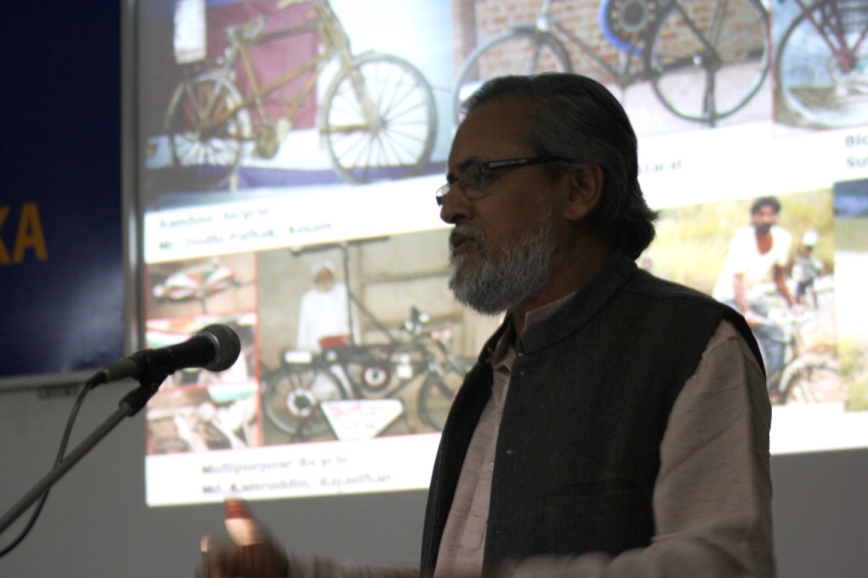
The bicycle is another invention that has been adapted for multiple purposes across India. Genius improvisers are using it for moving on land (and water), generating electricity, helping with the cooking, and even in washing clothes.
The popular Hindi film 3 Idiots featured a pedal-powered washing machine, which was inspired by the invention of a 20-year-old woman from Kerala, Remya Jose. It has since been showcased on Discovery Channel as part of the ‘Indian Innovators’ series of short films.
Part of audience at Ray Wijewardene Memorial Lecture in Colombo, 13 Dec 2011 - photo by Anisha Gooneratne
Benefit sharing
One defining characteristic of such grassroots innovation is that those tinkering are also immediate benefits of any improvements. As Gupta puts it: “From agricultural innovations to the gas-powered iron or pressure-cooker-driven coffee maker, we find that solutions developed by producers who are also users reflect the concerns of both the production and consumption environments.”
Not all inventions need to be earth-shattering. In fact, many aren’t – and that is perfectly fine, says Gupta.
“Even basic improvements in a water pump, for example, can make life easier for millions of people. When we look for design improvements, we should consider not only the benefits to humans, but even to domesticated animals.”
How can society ensure that grassroots innovators not just receive accolades but also get paid for their creative ideas?
Much of innovation related knowledge is ‘open source’ – meaning it has been developed by a number of people collaboratively and non-secretively. But that doesn’t mean their knowledge rights should be trampled with.
Taking out patents is one way to ensure such rights. The Honey Bee network has successfully obtained over 550 patents for grassroots innovations – more than some well-funded laboratories in India! This was made possible by mobilising pro bono lawyers and other volunteers.
The spirit of volunteerism common in Asian cultures can do much to nurture innovation and safeguard intellectual property rights at the same time, Gupta said.
His hope: “The Ray Wijewardene Trust should be able to find public-spirited lawyers in Sri Lanka to emulate the Indian experience.”
And what about glaring gaps that often exist between inventive minds and the ruthless market?
Don’t try to turn every innovator into businessman, Gupta said. “Most innovators are not good entrepreneurs because they are incorrigible improvisers. In many cases, we try to persuade and counsel innovators to work on their products. There are some who do very well, while others take time.”
Instead of trying to turn every inventor into an entrepreneur, we have to create institutions, schemes and networks that bring these two types together – the one who tinker and those who market.
We have to find ways to link innovation with investment and enterprise. Together, these three elements form what Gupta calls the ‘golden triangle’ for grassroots creativity.
Science writer Nalaka Gunawardene is a trustee of the Ray Wijewardene Charitable Trust, and has been profiling Lankan innovators for 25 years.




 Open Minds!