On 16 September, the International Day for the Preservation of the Ozone Layer will be observed once again all over the world. This year’s theme is “Protecting our atmosphere for generations to come”.
Exactly 25 years ago, governments of the world came together at a historic conference in Montreal, Canada, to adopt the Montreal Protocol on Substances that Deplete the Ozone Layer.
In a quarter century, it has rallied governments and industries in both developed and developing countries to phase out, or substantially reduce, nearly 100 chemicals that damage the ozone layer in the upper atmosphere.
The Ozone Secretariat and UNEP OzonAction have jointly produced two 30-second videos mark the 25th anniversary of the Montreal Protocol (MP).
These Public Service Announcements (PSAs) hail the extraordinary achievements of this Multilateral Environmental Agreement over a quarter century. They also project the MP as a protector of our shared atmosphere for generations to come.
The first PSA briefly introduces the ozone layer depletion issue and highlights its recovery that was made possible when countries of the world joined hands for saving the ozone layer – a global action at its best.
The second PSA revolves around the multiple benefits of the Protocol: it is not just a treaty protecting the ozone layer, but has multiple benefits for our biodiversity, climate, human health and the global economy.
The third version of this PSA (below) is twice as long, gives more info and moves at a more leisurely pace.
These PSAs, made by friends in the UK are proof that even a highly esoteric and technical subject like ozone protection can be presented in engaging, human interest terms.
Growing up in an Ozone Safe World: that’s worth celebrating!
Malima (New Directions in Innovation) is a Sinhala language TV series on science, technology and innovation. This episode was produced and first broadcast by Sri Lanka’s Rupavahini TV channel on 23 August 2012.
Produced by Suminda Thilakasena and presented by science writer Nalaka Gunawardene, this episode features the following items:
• An interview with prolific Lankan inventor M A Prince Chandrasena (of Mawathagama, Kurunegala) who holds 4 Lankan patents with fifth one pending. A refrigerator technician by training, he has developed a compact refrigerator that can remain cold (i.e. retain its low temperature) without mains power supply even for 24 hours. This is ideal for storing vaccines that require an uninterrupted cold chain (most vaccines need to be stored between 3 and 7 degrees C). The “Plus 4-7” refrigerator is particularly helpful to pharmacies and the public health service in a country like Sri Lanka that experiences frequent electricity failures. Profile at: http://tiny.cc/MAPrin
• A Japanese innovation: a small gadget that can ‘read’ basic emotions of dogs. Can this make us better understand our best friends?
• Introducing another indigenous technology of Sri Lanka: the ‘Dee-rangaya’ that is locally made and helps keep pests away from farmlands.
• An interview with young inventor D Chathura Madushanka, until recently a student of Pinnawela Central College, Rambukkana, who has invented a multi-function shoe. Fitted to the expanded sole of this shoe is a small dynamo that turns kinetic energy of walking into electrical energy. A battery stores this energy which can help charge a range of electronic devices including mobile phones and iPods. The shoe also comes fitted with a torch light that helps walkers at night. He recently participated in Intel International Science and Engineering Fair (ISEF) in Pittsburgh, USA, in May 2012. More info at: http://www.ft.lk/2012/05/24/sri-lankan-students-win-big-at-intel-isef-in-usa/
Malima (New Directions in Innovation) is a Sinhala language TV series on science, technology and innovation.
Produced by Suminda Thilakasena and hosted by science writer Nalaka Gunawardene, this episode was produced and first broadcast by Sri Lanka’s Rupavahini TV channel on 9 August 2012.
• An interview with Dinesh Katugampola, a textile engineer who has invented the world’s first Radius Metre that calculates the radius of a circle. The Radius Meter – which comprises measuring instruments as well as a software based calculator – instantly works out the radius an arch or sphere by measuring only small part of that arch or sphere. In practical terms, this helps plot major arches in mechanical engineering, road and building construction and in many other fields. This invention won a silver medal in mechanical designs category at ‘Inventions Geneva’ international exhibition in April 2012. More at: http://www.sundaytimes.lk/120429/BusinessTimes/bt25.html
• Introducing Sri Lanka’s indigenous technology: Dongaraya is a simple device used by farmers to make noise from the breeze that, in turn, scares birds away from paddy fields.
• A Japanese university research team has developed a machine that can measure brain waves and capture different moods. We have a news story on what this means for future of brain-machine interface.
• An interview with Nipun Kavishka Silva a Grade 9 student at De Mazenod College, Kandana, Sri Lanka, who — with his sister Pipunika Silva, has invented ‘NP System’: a computer operating system for blind and visually impaired people. It assists those who cannot see to use computers by providing voice instructions as they use a Braille keyboard and mouse or touchpad. They were winners at Intel International Science and Engineering Fair (ISEF) in Pittsburgh, USA, in May 2012. More info at: http://www.ft.lk/2012/05/24/sri-lankan-students-win-big-at-intel-isef-in-usa/
Text of my ‘When Worlds Collide’ column published in Ceylon Today Sunday newspaper on 9 September 2012
Yang Saing Koma is lean, soft spoken and modest – not your typical image of a revolutionary. But for 15 years, the Cambodian agronomist has driven a grassroots revolution that is changing farming and livelihoods in one of the least developed countries in Asia.
A champion of farmer-led innovation in sustainable agriculture, Koma founded the Cambodian Centre for Study and Development in Agriculture (CEDAC) in 1997. Today, it is the largest agricultural and rural development organisation in Cambodia, supporting 140,000 farmer families in 21 provinces.
However, he isn’t just another western educated Asian expert returning home to shake things up. Yes, his doctorate from the University of Leipzig and work experience with international development agencies helped open doors. But Koma is a rare systemic thinker who sees the bigger picture, has the right…
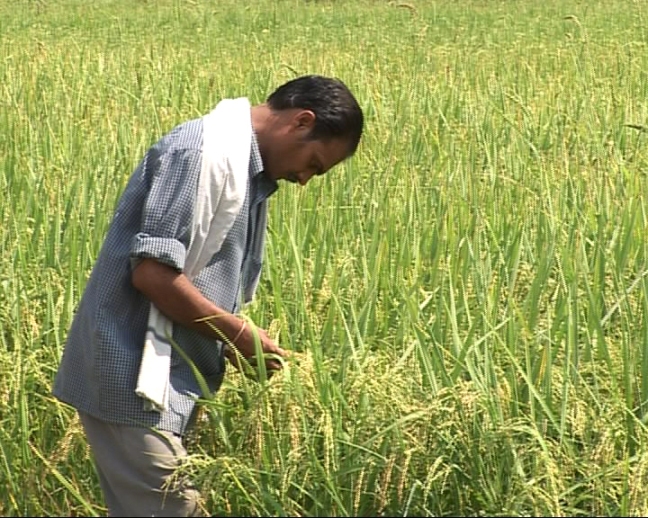
The chronic kidney disease (CKDu) that has already affected thousands in its heartland of farming, has brought into sharp focus some serious environmental concerns that ecologists have long highlighted. These stem from our farmers’ high reliance on inorganic (chemical) fertilisers.
While some fertiliser is needed to sustain soil fertility when growing crops repeatedly on the same land, the ‘Green Revolution’ from the 1960s urged Lankan farmers to use large volumes of fertiliser, provided to them on massive state subsidies. That, in turn, led to indiscriminate use and waste — and higher agricultural runoffs.
Farmers aren’t thrifty because they get fertiliser at a fraction of the market price. In this week’s Ravaya column (in Sinhala, on 2 September 2012), I look at what this national addiction to chemical fertiliser is doing to both our economy and ecology. I also look at organic alternatives and probe why they are not being adopted more widely.
Text of my ‘When Worlds Collide’ column published in Ceylon Today Sunday newspaper on 2 September 2012
Neil Armstrong’s death last week created news headlines worldwide. We indulged in some harmless nostalgia for a turbulent decade in another century that now belongs to a very different era.
For many of us who experienced it, the memory of Apollo 11 Moon landing is indelible. But did they really go to the Moon? Some still ask this question, all these years later. Was it all an elaborate hoax?
The Apollo Program had twin goals: to land astronauts on the moon; and to send back live TV transmissions so that everyone could see it – including the rival Russians and their allies.
To their credit, the Soviet Union accepted the Moon landings with good grace, although it meant they lost the Great Space Race where they scored some impressive initial victories.
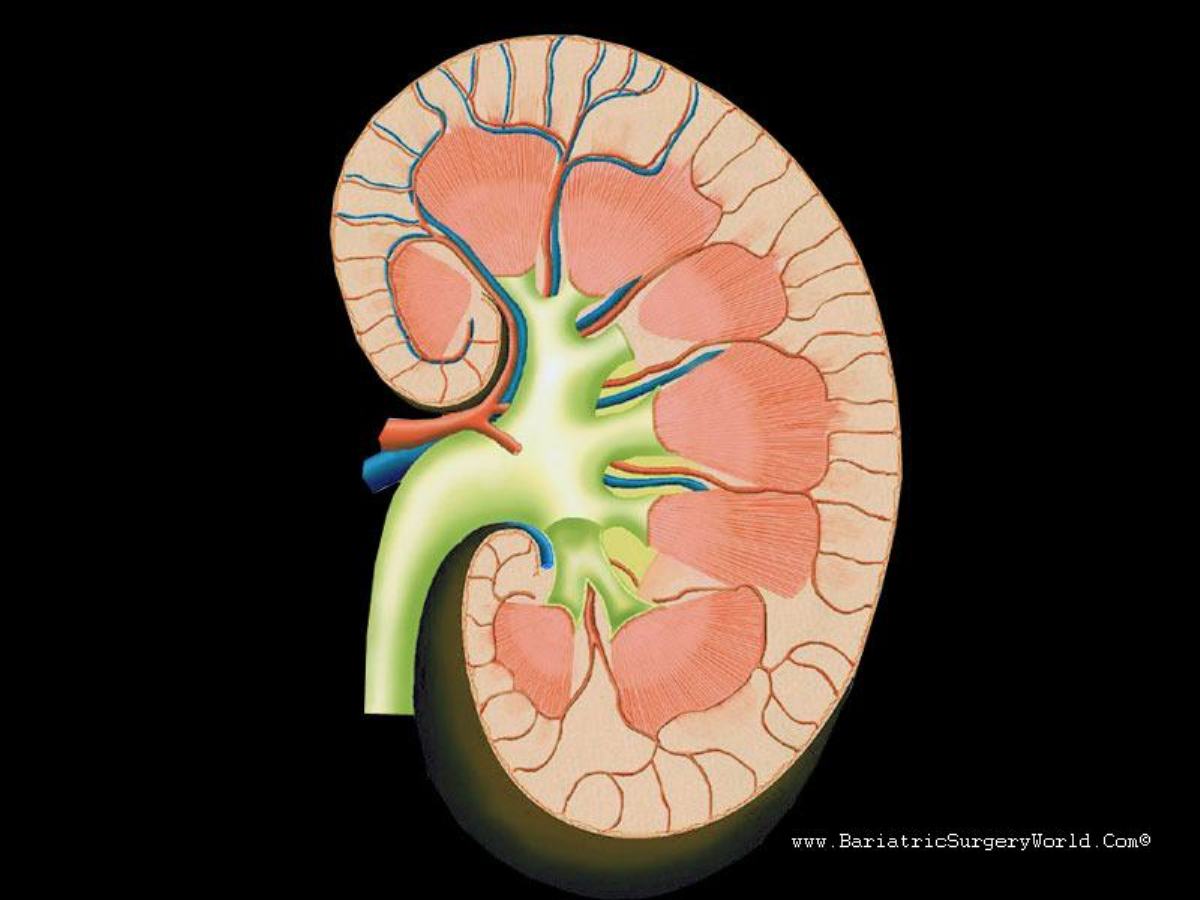
CKDu was first reported in the early 1990s from a single Province in our heartland of farming, but it has now spread across approximately 17,000 sq km (a quarter of the island), which is home to around 2.5 million people. Several thousand have already died; the exact number is not clear. Over 15,000 people are kept alive with regular kidney dialysis.
Investigating causes of this ailment — still not pinned down to a particular cause or factor — has been contentious with scientists, nationalists and politicians trying to hijack the issue for their own agenda setting. Some journalists have added fuel to the fire with sensationalist reporting and fear-mongering. In this column, I ask everyone to focus on the prolonged suffering of those already affected and their families.
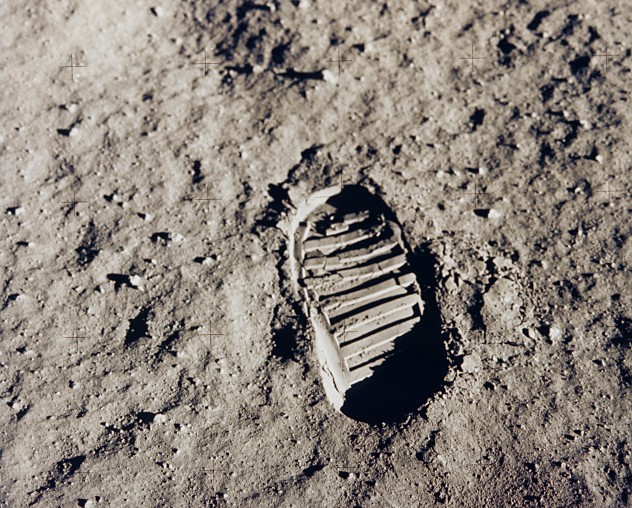
This footprint in the sand will stand the test of time and elements….
In her debut novel The Moon in the Water (2009), Lankan author Ameena Hussein uses a memorable line to describe her protagonist’s many dilemmas: “Her generation had the burden of being the link between the old world and the new. Between pre-man in the moon and post. Between letters and email.”
I’m as much a part of that in-between generation as her character Khadeeja. Rather than being a burden, however, I find it an extremely privileged vantage point to have been. There will never be another generation like ours that straddled two worlds…
For many of us who experienced it, the Apollo 11 ‘Moon shot’ will be among our most indelible memories. Among the various labels I can choose from those tumultuous times, I consider myself a Child of Apollo.
And the boyish, blue-eyed Neil Armstrong (already 39 when he went to the Moon) was my first hero.
These are excerpts from my personalised tribute to Armstrong, who signed off for good on 25 August 2012. In it, I reflect on how the first Moon Landing influenced me personally at the tender age of 3, and recall the very different times in which we lived our lives on the other side of the planet from where Apollo missions were taking off.
It’s a light-hearted, nostalgic and essentially personal tribute, not at all an academic or polemical discussion of the Cold War politics that inspired the Great Space Race. But I do touch on what it meant to be part of history’s first Big Media Moment that was shared in real time by 600 million TV viewers and another few dozen million radio listeners worldwide.
If Neil was originally a hero to me for riding atop the world’s greatest fireworks machine and taking that Giant Leap for Mankind, he is a hero for me now for what he chose to do with his life upon his return.
O voyagers, O seamen,
You who came to port, and you whose bodies
Will suffer the trial and judgement of the sea,
Or whatever event, this is your real destination.”
So Krishna, as when he admonished Arjuna
On the field of battle.
Not fare well,
But fare forward, voyagers.
– T. S. Eliot
Neil Armstrong – Driven by a sense of wonder, did his job quietly and well
Text of my ‘When Worlds Collide’ column published in Ceylon Today Sunday newspaper on 26 August 2012
My column last week, on large scale chronic kidney failure (scientifically abbreviated as CKDu) that has become a major public health crisis in Sri Lanka’s Dry Zone, inspired some discussion online — both on my blog and at Groundviews.org
Of course, scientists and environmentalists have been debating its causes for years without conclusive evidence or targeted action. Even then, the current silence of the state health bureaucracy frustrates many. A million US Dollar research study, initiated in 2008 with World Health Organisation (WHO) support, has been completed but its findings not released. Why?
As I noted, delays in releasing such studies will allow speculation and conspiracy theories to gain momentum. That helps no one.
At least two theories (among several competing ones) suggest a link between CKDu and agricultural runoff.
In my Ravaya column (in Sinhala) for 26 August 2012, I’ve written about the making of Ran Muthu Duwa, the first colour Sinhala feature film made in Sri Lanka, was released 50 years ago in August 1962.
Ran Muthu Duwa was a trail-blazer in the Lankan cinema industry in many respects. It not only introduced colour to our movies, but also showed for the first time the underwater wonders of the seas around the island.