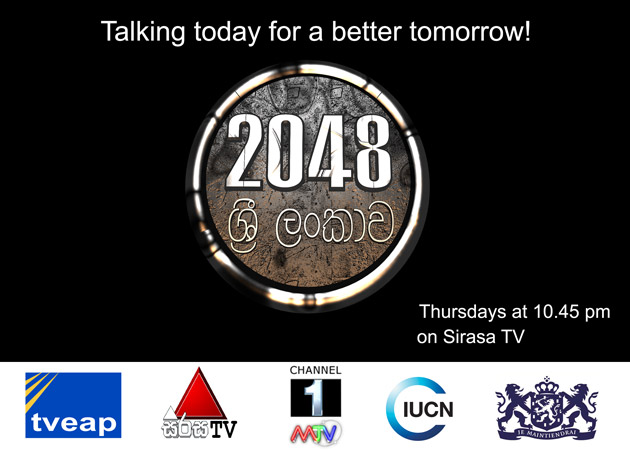
Sri Lanka 2048: Talking today for a better tomorrow!

Sri Lanka 2048 - TV Debate series on sustainable futures for Sri Lanka

I’m just coming up for fresh air after two hectic weeks – this blog was silent during that time as I was deep immersed in doing something new and interesting.

With my team at TVE Asia Pacific, I’m involved in producing a new TV series started airing on May 22 on Sri Lanka’s ratings-leading, privately-owned, most popular channel, Sirasa TV.

Named Sri Lanka 2048, it is an innovative series of one-hour television debates that explore prospects for a sustainable future for Sri Lanka in the Twenty First Century.

Each debate will involves -– as panel and studio audience -– over two dozen Sri Lankans from academic, civil society, corporate and government backgrounds. They are recorded ‘as live’ and broadcast every Thursday at 10.45 pm, which, in Sri Lankan TV viewing patterns, is the favoured time for serious current affairs and political programmes.

The debates are being co-produced by TVE Asia Pacific, the educational media foundation that I head, in partnership with IUCN, the International Union for Conservation of Nature, and MTV Channel (Private) Limited, which runs a bevy of radio and TV channels including Sirasa TV and Channel One MTV.

The editorially independent series will accommodate a broad spectrum of expertise and opinion.
The debates are based on topics such as managing our waste, reducing air pollution, protecting biodiversity on land and in the seas, and buffering communities from disasters. Two debates in English will look at the nexus between business and the environment, and coping with climate change.

Read detailed news story on TVEAP website
Read series line up and broadcast schedule

Sri Lanka 2048 image montage by The Nation newspaper

The series is based on the overall premise that Sri Lanka has abundant land and ocean resources that can be used to build such a future -– but it faces many challenges in taking the right action at the right time. We believe that public discussion and debate on issues, choices and alternatives is an essential part of this process. Read more on why this series.

Why 2048? For one thing, it’s the year Sri Lanka will mark 100 years of political independence. Being 40 years in the future, the year lies slightly more than a generation ahead, allowing ample time and opportunity to resolve deep-rooted problems of balancing development with conservation.

Sri Lanka 2048 follows an informal, talk show format that allows ample interaction between the panel and empowered audience. Although they take place within a clearly defined scope that enables some focus, all debates are unscripted.

Our amiable moderator Kingsly Rathnayaka (centre in the photo montage above), one of the most versatile presenters on Sri Lankan television today, keeps the panel and audience engaged. By design, we ask more questions than we are able to answer in a television hour (48 mins). But then, we don’t expect to resolve these burning issues in that time – all we can hope to do is to stretch the limits of public discussion.

Logistics and studio size limit the number of our audience to a two dozen. We’ve tried hard to ensure a good mix among them, drawn from all walks of life. To bring in additional voices and perspectives, we insert into each debate 2 or 3 short video reports produced in advance. These highlight solutions to environment or development problems that have been tried out by individuals, communities, NGOs, government agencies or private companies. Played at key points during debates, these help steer discussion in a particular direction.

Sri Lanka 2048 by TVE Asia Pacific

We are already receiving favourable media reviews and coverage. Here are some that appeared in English language newspapers (more have come up in Sinhala newspapers, the language in which most of this series is produced and broadcast):
The Morning Leader, 28 May 2008: Timely action to sustain Sri Lanka’s development

The Sunday Times, 18 May 2008: TV Debate series to create a sustainable future
The Nation, 1 June 2008: Pick the best at Sri Lanka 2048

Sri Lanka 2048 is the culmination of months of research, development and pre-production work carried out by TVE Asia Pacific’s production team in collaboration with IUCN Sri Lanka. Our preparatory work involved consultations with dozens of experts, activists, officials, entrepreneurs – and their various organisations or companies. We synthesize and package their information, opinions and experiences with the dynamic and creative production team at MTV Channel (Pvt) Limited.

The inspiration for this series came from my mentor Sir Arthur C Clarke, with whom I wrote an essay 10 years ago that outlined his personal vision for his adopted country in 2048. The celebrated futurist that he was, Sir Arthur often said that there is a range of possible futures, and our actions – and inaction – determine what kind of future actually happens. Desirable futures don’t just happen; they need to be worked on.

Sri Lanka 2048 is an attempt to discuss how Sri Lankans can pursue economic prosperity without trading off their good health, natural wealth and public order. This is not a series preaching narrowly focused green messages to a middle class audience. We want to rise above and beyond the shrill of green activists, and engage in informed, wide ranging discussions on the tight-rope balancing act that emerging economies like Sri Lanka have to perform between short term economic growth and long term health of people and ecosystems.

Contrary to popular perception, ‘sustainable development’ is not some utopian or technical ideal of environmental activists. It’s about creating a liveable society here and today – where everyone has an acceptable quality of life, ample opportunities to learn and earn, and the freedom to pursue their own dreams.

Doing good television takes a good deal of time, effort and money. This TV series is supported under the Raising Environmental Consciousness in Society (RECS) project of IUCN Sri Lanka, which is funded by the Government of the Netherlands. But neither is responsible for editorial content or analysis, which rests on my shoulders as the executive producer of the series.

And I, in turn, stand on the shoulders of dedicated, hard working production teams drawn from TVE Asia Pacific and MTV Channel (Pvt) Limited. Doing good television is all team work.
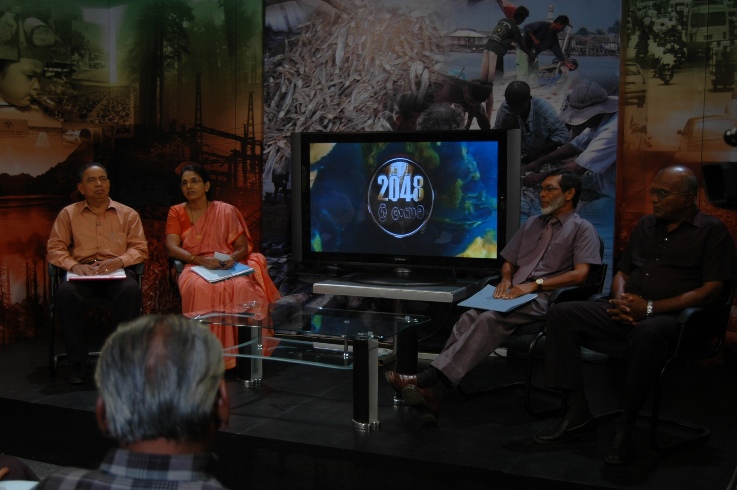
Sri Lanka 2048 - Fisheries panel at Sirasa Studio - Photo by TVEAP

All photos courtesy TVE Asia Pacific

Telecom Without Tears: Book Review

My review of the book, ICT Infrastructure in Emerging Asia: Policy and Regulatory Roadblocks, was printed in Financial Times on Sunday, Sri Lanka, on 18 May 2008.

The book, co-edited by Rohan Samarajiva (in photo, below) and Ayesha Zainudeen, is published jointly by Sage Books and Canada’s IDRC. It is based largely on the work of my friends and colleagues at LIRNEasia.

Although the book showcases recent telecom and ICT reform experiences in five economies in South and Southeast Asia (Bangladesh, India, Indonesia, Nepal and Sri Lanka), my review takes a closer look at the Sri Lankan situation partly because I live and work there, and because the review was intended more at a Sri Lankan readership.

Here’s my opening:

“In the early 1990s, I had to wait for nearly six years for my first (fixed) telephone – I refused to pay bribes or use ‘connections’ to bypass thousands of others on the notorious waiting list. Earlier this year, when I bought an extra mobile phone SIM from Dialog GSM, it took six hours for the company to connect it. I found that a bit too long.

“How things have changed! Connectivity without (social) connections, and practically off-the-shelf, is now possible in most parts of Sri Lanka. Telecommunications is the fastest growing sector in the economy, recording 47 per cent growth in 2007 (and 58 per cent in 2006). The country’s tele-density (number of telephones per 100 persons) jumped to 54 in 2007, from 36 at the end of 2006 -– thanks largely to the phenomenal spread of mobile phones, which now outnumber fixed phones by three to one.”

One quick – albeit a bit unfortunate – way to introduce this book is that it apparently scared some sections of Sri Lanka’s state bureaucracy. When copies arrived from the Indian publisher earlier this year, they were held up at Customs for over three months for no logical or coherent reason. The editors speculated whether it had something to do with one chapter (among 13) looking at telephone use in war-ravaged Jaffna during the ceasefire (which lasted from 2002 to 2008), but this was neither confirmed nor denied.

In my review, I make the point: “It was a stark reminder, if any were needed, of the turbulent settings and often paranoid times in which telecom liberalisation has been taking place in many parts of emerging Asia.”

And I return to the larger political reality in my conclusion, as follows:
“Now that the ICT genie has been set loose, it’s impossible to push it back into the dusty lamp of the monopolist past, even under that much-abused bogey of ‘national security’ (or its new, freshly squeezed version, ‘war against terror’). Despite this, the officialdom and its ultra-nationalist cohorts don’t give up easily. While this book was in ‘state custody’, Sri Lankans experienced the first government-sanctioned blocking of mobile phone SMS – ironically on the day marking 60 years of political independence.

Photo below shows several contributing authors at the book’s launch in Chennai in December 2007


Read the review online

Download the review as a pdf document (47kb)
telecom-without-tears-by-nalaka-gunawardene-may-2008

Read or download the book electronically from IDRC website

Arthur Clarke and Marconi: Waiting for the ultimate phone call

In view of the World Telecommunication and Information Society Day (May 17), I would like to share a short essay I wrote in early April 2008.

Courtesy SETI@Home

Waiting for the ultimate phone call
by Nalaka Gunawardene

Sir Arthur C Clarke was a true believer all his life, who ardently wished for a sign from the heavens. Alas, he never received one up to his death on March 19.

No, this had nothing to do with religion, a notion Clarke publicly dismissed as a dangerous ‘mind virus’. Rather, it’s the prospect of life elsewhere in the cosmos – an idea that always fascinated him, and on which he wrote many stimulating stories and essays.

It wasn’t surprising, then, that this topped the three ‘last wishes’ Clarke mentioned in a short video released in December 2007, on the eve of his 90th birthday.

“I would like to see some evidence of extra-terrestrial life,” Clarke said, wistfully. “I have always believed that we are not alone in the universe. But we are still waiting for ETs to call us – or give us some kind of a sign. We have no way of guessing when this might happen – I hope sooner rather than later!”

Read full transcript of Arthur C Clarke’s 90th birthday reflections, December 2007

Watch the video on TVE Asia Pacific channel on YouTube:
That ultimate ‘call’ never arrived in time for Clarke. And we have no way of telling which of his wishes would materialize first (the other two being adopting clean energy sources worldwide, and achieving peace in Sri Lanka, where he lived for over half a century).

When it came to ETs, Clarke had a good idea of the probabilities of a positive result in his own lifetime. He knew how it had eluded at least four generations of seekers, including the inventor of radio telegraph itself.

Accepting the Marconi Prize and Fellowship in 1982, Clarke recalled how Guglielmo Marconi had been interested in this prospect. He quoted from a letter he (Clarke) had written to the editor of the BBC’s weekly magazine, The Listener, in February 1939: “…On other planets of other stars there must be consciousness; on them there must be beings with minds…some far more developed than our own. Wireless messages from such remote conscious beings must be possible.”

The letter, sent via the then fledgling British Interplanetary Society, ended as follows: “The only time I met Marconi, he told me of his search for such messages. So far, we have failed to find them.”

After a century of radio and 60 years since its inventor’s death, such proof has yet to be found. However, as Carl Sagan – possibly the best known proponent of the subject – was fond of saying, the absence of evidence is not evidence of absence.

Clarke himself is widely attributed as saying: “Sometimes I think we’re alone in the universe, and sometimes I think we’re not. In either case the idea is quite staggering.”

Clarke not only wrote and talked passionately about the subject for decades, but also supported – in cash and kind – various groups engaged in the search for extra-terrestrial intelligence, or SETI.

“SETI is the most important quest of our time, and it amazes me that governments and corporations are not supporting it sufficiently,” he said in a 2006 letter supporting public donations to the SETI@Home project at the University of California, Berkeley.

SETI@Home Arthur C Clarke Tribute page

In the early 1990s, he applauded Steven Spielberg, director of ET: The Extra-Terrestrial (1982) for donating US$ 100,000 to SETI efforts. “It seems only appropriate that Steven…should put his money where his mouth is,” Clarke noted.

Clarke welcomed ET‘s box office success, as it departed from the Hollywood tradition of depicting aliens as malevolent. By showing a highly intelligent being as both benign and vulnerable, the movie stretched the public’s imagination to consider other possibilities. Not all aliens would arrive here to take over our world -– or to serve humanity, medium rare…

But Clarke realised how the vastness of space would make inter-stellar travel difficult and infrequent. It was more likely that signals from advanced alien civilisations would roam the universe at the speed of light.

Together with his long-time friend Carl Sagan, Clarke explored the philosophical implications of SETI – and its eventual success. It should be the concern of every thinking person, he said, “because it deals with one of the most fundamental questions that can possibly be asked: what is the status of Homo sapiens in the cosmic pecking order?”

Clarke believed the detection of intelligent life beyond the Earth would forever change our outlook on the Universe. “At the very least, it would prove that intelligence does have some survival value – a reassurance that is well worth having after a session with the late night news.”

Clarke speculated that ETs may be continuously broadcasting an easily decoded “Encyclopaedia Galactica” for the benefit of their less advanced neighbours. “It may contain answers to almost all the questions our philosophers and scientists have been asking for centuries, and solutions to many of the practical problems that beset mankind.”

He was sometimes ambivalent about the value of such an influx of new knowledge, noting that even the most well intentioned contacts between cultures at different levels of development can have disastrous results – especially for the less advanced ones. He recalled how a tribal chief once remarked, when confronted with the marvels of modern technology: ‘You have stolen our dreams’.

But Arthur C Clarke the perennial optimist continued: “I believe that the promise of SETI is far greater than its perils. It represents the highest possible form of exploration. And when we cease to explore, we’ll cease to be human.”

Clarke’s interest in ETs remained undiminished to the end. In his last media interview, given to IEEE Spectrum in January 2008 from his hospital bed in Colombo, Sri Lanka, he said: “I’m sure the ETs are all over the place. I’m surprised and disappointed they haven’t come here already… Maybe they are waiting for the right moment to come.”

He added, with a chuckle: “And I hope they are not hungry!”

I just called to say….I love my mobile phone!

On this World Telecommunication and Information Society Day (May 17), I have a confession to make. I carry a murder weapon on my person every day and night, and I go to bed with it next to me within easy reach. I rely on it for my work, my leisure and my pleasure. And I won’t part with it under any circumstances.

Neither would more than 3.3 billion people worldwide — or half of humanity.

I’m talking about the humble and increasingly ubiquitous mobile phone, now the world’s most widely used and fastest spreading consumer technology item.

And if any paranoid law enforcement agency worries about its murder potential…relax, people – we are talking figuratively here!

How come it’s a murder weapon when it has no sharp edges and is too light weight to do much damage?

What the mobile has already stabbed, and is in the process of effectively finishing off, is the development sector’s over-hyped and under-delivered phenomenon called the ‘telecentre’.

For those outside the charmed development circles (which is most of humanity), the Wikipedia describes telecentre as “a public place where people can access computers, the Internet and other digital technologies that enable people to gather information, create, learn and communicate with others while they develop essential 21st century digital skills.”

So how is the mobile phone slowly killing the telecentres, into which governments, the United Nations agencies and other development organisations have pumped tens of millions of dollars of development aid money in the past decade?

Well, it’s rapidly making telecentres redundant by putting most or all of their services into literally pocket-sized units. If everyone could carry around a miniaturised, personalised gadget that has the added privacy value, why visit a community access point?

At least this is the persuasive point made by LIRNEasia researcher Helani Galpaya, who made a presentation in September 2007 at the Annenberg School for Communication in the US.

Courtesy Joy of Tech

She argued that, although telecentres, which have become the bright “stars” in many e-development programs in Asian countries, do have a role to play in providing ‘higher’-end citizen services to people at the bottom of the pyramid (BOP) in India, Sri Lanka, Pakistan, Philippines and Thailand, telephones are the cheaper, immediate and ubiquitous tool for Asian governments to inform, transact and interact with almost 400 million of their most needy citizens.

And in these emerging Asian economies, when we talk of telephones it’s predominantly mobiles. In my native Sri Lanka, for example, there were 10.7 million phone subscribers by end 2007 – of them, almost 8 million were mobile users. Mobiles outnumber fixed phones by 3 to 1, and the disparity continues to widen.

Mobile kills the telecentre star‘ was the title of Helani’s presentation – it’s a play on a 1979 song celebrating the golden era of radio, “Video killed the radio star.” For the trivia buffs, it was the first music video shown on MTV.

The song has been the subject of various parodies, and Helani’s isn’t the first or last. But in this instance, I would heartily cheer the rapid demise of the telecentre, which is both conceptually and operationally flawed in many developing countries where it has been tried out. (While at it, let me repeat something that baffles me: how is it that not a single development donor or UN agency foresaw the phenomenal rise of mobile phones in the majority world, and instead bet all their ICT money on computers and internet? And why can’t some of them still appreciate the potential of mobiles, keep harping on obsolete telecentres and other troubled initiatives like One Laptop Per Child?).

It’s also worth noting that hard core development activists were initially against mobile phones, arguing instead for more public payphones, especially in rural areas. Only very recently have they started acknowledging that, just maybe, mobile phone can create or improve jobs, generate incomes and move millions out of poverty. In the humanitarian sector, as I wrote in October 2007, aid workers are still uncertain how to make best use of mobiles in their relief work.

Why are mobile phones somehow not ‘sexy enough’ for these men and women in suits who typically look at our real world problems from 33,000 feet above the ground?

But hey, why bother with doomed concepts like telecentres, when we can instead discuss about the lively and vibrant mobiles? (When the telecentres finally die after being kept on life support by gullible aid donors for a few more years, I hope to write a suitable obituary.)

Meanwhile, who’s afraid of mobile phones except the failed prophets of development and unimaginative humanitarian workers? There’s a handful of crusty, old fashioned people, usually those who can’t figure out just how to use the new fangled devices that do a lot more than just talk. Then there are tyrannical governments who fear the power of instant communication being in the hands of their own people.

The rest of us have now adjusted to Life After the Mobile Arrived. We may love it, or love to hate it — but can we imagine life without it?

And since we’re a blog about moving images, here’s a short film that I wrote and TVE Asia Pacific produced for LIRNEasia in late 2007. It was filmed in the Philippines and Sri Lanka, and was based on
LIRNEasia’s path-breaking 2006 survey on telephone use at the bottom of the pyramid in emerging Asia. We
premiered at the 3rd Global Knowledge conference in Kuala Lumpur in December 2007.

The film’s synopsis reads:
With the next billion telecom users expected mainly from the emerging markets, we urgently need to understand telecom use, especially at the bottom of the pyramid. Who is using what devices for which purposes — and how much are they willing or able to pay? Capturing highlights of LIRNEasia’s 2006 survey in India, Pakistan, the Philippines, Sri Lanka and Thailand, this film shows that when it comes to phone use, the poor are not very different from anyone else.

Teleuse@BOP Part 1 of 2

Teleuse@BOP Part 2 of 2

And now, just when you think I’m a harmless mobile junkie, here’s my real confession:
I own more than one mobile phone (hey, doesn’t everybody?) and stashed away in my travel bag I have a collection of SIM cards with active mobile accounts in half a dozen Asian countries that I visit regularly.

One day soon, when there are enough people like myself moving across jealously guarded political borders, those ITU statistics on ICTs would become seriously skewed….

TVE Asia Pacific News: Film highlights telephone revolution in Asia’s emerging markets
Teleuse@BOP Film screened at GK3
LIRNEasia 2006 survey on telephone use at the bottom of the pyramid in emerging Asia

Amitav Ghosh on Cyclone Nargis: High tech alone can’t save us!

Whenever Burma hits the international news headlines, I think of author Amitav Ghosh. His 2002 historical novel, The Glass Palace, was my introduction to Burma’s recent history. It describes – with historical accuracy and detail – how the British colonised a land of prosperity in 1824 and left it an impoverished nation in 1948.

I was intrigued, therefore, to read an excellent op ed essay by Amitav Ghosh in The New York Times of 10 May 2008. Titled When Death Comes Ashore, it is a commentary on the aftermath of Cyclone Nargis that particularly hit Burma in recent days. Ghosh offers both comfort and worry.

The bad news, as he puts it, is that “for the rapidly growing countries that surround the Bay of Bengal there is an increasing urgency to find a way to protect themselves. They have experienced some of the world’s most devastating storms.”

Courtesy Wikipedia

He makes a strong call for cooperation among the countries who surround the Bay of Bengal, which means Bangladesh, Burma, India, (part of) Indonesia and Thailand.

As he says: “Nation-states tend to see their interests as being confined within their own borders. But the reality is that the people who live around the Bay of Bengal have a vital interest in common that they do not share with their compatriots in the hinterlands: they are joined by the furies (and let it be said also, the blessings) of that body of water.”

To me, the most important point he makes is about disaster preparedness, a topic we covered in some depth and detail in Communicating Disasters: An Asia Pacific Resource Book that I co-edited last year.

“Recent experience has demonstrated in spectacular ways that rich, technologically advanced nations are not invulnerable to extreme weather. What has also been demonstrated, but more quietly, is that a nation need not be wealthy or technologically advanced to be well prepared for natural disasters.”

Ghosh talks about Mauritius, a small Indian Ocean island that meteorologists call a ‘cyclone factory’, which has “evolved a sophisticated system of precautions, combining a network of cyclone shelters with education (including regular drills), a good early warning system and mandatory closings of businesses and schools when a storm threatens.

He adds: Mauritius is a country that has learned, through trial and experience, that early warnings are not enough — preparation also demands public education and political will. In an age when extreme weather events are clearly increasing in frequency, the world would do well to learn from it.”

Let’s hope the Indian Ocean rim countries – especially those that share the Bay of Bengal’s blessings and lashings – would heed the celebrated Indian author’s call. After the 2004 tsunami, we saw a flurry of activity to set up high-tech and high cost early warning systems for future tsunamis. The United Nations and development donors huddled together in various exotic locations of our region to work out the details.

But I wrote in a SciDev.Net opinion piece in December 2005: “Setting up a state-of-the-art, high tech and high cost system is not a solution by itself. Because the most advanced early warning system in the world can only do half the job: alert governments and other centres of power (e.g. military) of an impending disaster. The far bigger challenge is to disseminate that warning to large numbers of people spread across vast areas in the shortest possible time“.

I called it the Long Last Mile (sorry, metric fans, it just doesn’t read right to say the last kilometre!), a phrase that I also used in the book chapter and the short film that I scripted for TVE Asia Pacific in 2007.
LIRNEasia’s National early warning system for Sri Lanka

LIRNEasia’s 2006-2007 project to Evaluate the Last Mile Hazard Information Dissemination

Read the full essay: Death Comes Ashore, By AMITAV GHOSH, in The New York Times, 10 May 2008
(requires free registration to read online)

Burmese television: Meet Asia’s model public broadcaster!

Photo courtesy Associated Press

In the wake of Cyclone Nargis that wreaked havoc in Burma, the world has once again realised the brutality and ruthlessness of the military regime that runs the country.

And as the United Nations and aid agencies struggle with the incredibly uncaring Burmese bureaucracy to get much needed emergency relief for the affected Burmese people, the media outside Burma are having great difficulty accessing authentic information and images.

Despite the massive disaster and resulting tragedy, Burma remains closed to foreign journalists, especially the visual media. No doubt the memories of the monk-led pro-democracy protests of late 2007 are still fresh in the minds of the ruling junta and their propagandists. The few courageous foreign reporters who managed to get in at the time ran enormous personal risks, and Japanese photojournalist Kenji Nagai was shot dead by a Burmese soldier while filming demonstrations.

Unable to report from the multiple scenes of disaster, and lacking a wide choice of reliable local sources willing to go on the record, international news agencies and broadcasters have been forced to quote the government-owned Burmese television station, MRTV.

Global news leaders like Al Jazeera, BBC and CNN have all used MRTV visuals to illustrate their news and current affairs reportage. A recent example from Al Jazeera, posted on 8 May 2008:

The image monopoly by MRTV wouldn’t have mattered so much if they at least provided an accurate account of the unfolding events in its own country. But that seems far too much to expect of this mouthpiece of the Rangoon regime. In Burma’s darkest hour in recent memory, MRTV would much rather peddle the official propaganda – never mind the millions made homeless by the recent disaster.

Here’s an insight from the Inter Press Service, the majority world’s own news agency, reporting from their Asia Pacific headquarters in Bangkok, Thailand:

BURMA: Cyclone Nargis Exposes Junta’s Anti-People Attitude
By Larry Jagan, IPS

Worse, there is evidence emerging that the military authorities had ample warning of a storm brewing in the Bay of Bengal but chose to ignore, or even suppress, it.

The Indian Meteorological Department (IMD) which keeps a close track of geo-climatic events in the Bay of Bengal and releases warnings not only to provinces on the Indian east coast but also to vulnerable littoral countries said it warned Burmese authorities of Cyclone Nargis’ formation and possible approach as early as on Apr. 26.

“We continuously updated authorities in Myanmar (as Burma is officially called) and on Apr. 30 we even provided them a details of the likely route, speed and locations of landfall,’’ IMD director B.P. Yadav told IPS correspondent in New Delhi, Ranjit Devraj.

Burma’s meteorology department did post a warning on its official website on Apr. 27 but no effort was made to disseminate information to the people, much less to carry out evacuations along the coastline or from the islands on the Irrawaddy Delta.

By the time state-run media, which has been continuously spewing propaganda and exhorting the public to vote ‘yes’ to Saturday’s constitution referendum, issued its first cyclone alert on Friday afternoon it was too late for the hapless residents of Rangoon.

courtesy Reuters

Elsewhere in the report, IPS says:

Pictures of soldiers removing fallen trees and clearing roads in Rangoon on the state-run television have further infuriated many in the city. “This is pure propaganda and it’s far from the truth,” e-mailed a Burmese journalist, asking not to be identified for fear of the consequences. “Why do foreign broadcasters show them too –Burmese government propaganda is a disgrace enough to journalism,” he fumed.

“I saw some soldiers getting onto a truck yesterday,” said a 50-year-old resident. “They had no sweat on their shirts, despite what was shown on TV!”

“My wife saw three truckloads of soldiers parked in front of a fallen tree, none of them got down to remove it,” he added.

And here is what Dinyar Godrej has to say on the website of New Internationalist, another pro-South, liberal media outlet. In a post titled ‘Seeing but not believing’, he says:

“Burma is shut off from foreign journalists (unless they are invited in by the military regime to cover specific showpiece events). Western news channels have had to rely on state run television for their moving images.

“So while the death toll is now officially 22,000 (unofficially up to 50,000), with 40,000 people missing and a million homeless; and while the regime is coming in for bitter criticism for its foot-dragging over opening up to international aid and the utter incompetence of its own relief effort so far (which has reached only a tiny fraction of the people affected), we are watching on our television screens soldiers handing over food parcels. We can see nothing of the grief or rage of the people going hungry and thirsty (many water sources are too contaminated to use). They do not talk on camera. Instead they sit obediently in the state TV images, taking what’s given to them. And we watch them, while listening to the numbers and being told of the heightening crisis.”

Appalling as these revelations are, they don’t surprise us. Indeed, MRTV is not alone in this kind of shameless abuse and prostitution of the airwaves, a common property resource. A vast majority of the so-called ‘public’ broadcasters in Asia behave in exactly the same callous manner. This is why I don’t use the term ‘public broadcaster’ to describe these government propaganda channels – because, whatever lofty ideals their founding documents might have, most of them are not serving the public interest any more (if they ever did).

As I commented in Feb 2008: “In developing Asia, which lacks sufficient checks and balances to ensure independence of state broadcasters, the only thing public about such channels is that they are often a drain on public money collected through taxes. Their service and loyalties are entirely to whichever political party, coalition or military dictator in government. When the divide between governments and the public interest is growing, most ‘public’ channels find themselves on the wrong side. No wonder, then, that discerning views have abandoned them.”

Read Feb 2008 post: Why do development Rip van Winkles prefer ‘Aunties’ without eyeballs?

I don’t hold a grudge against the hapless staff of MRTV, who simply must remain their Masters’ Voice at all times to stay alive. Those working for government channels in countries with greater levels of democratic freedom can’t take refuge in this excuse. They must be held accountable for their continuing propagandising and the disgusting pollution of the airwaves.

And the incredibly naive and sycophantic UN agencies – especially UNESCO – also share the blame for their feeble yet persistent defence of the so-called public broadcasters. Years ago, I stopped attending meetings discussing public service broadcasting (PSB) in Asia, which these agencies equate with what the government channels are doing. I see yet another of these exercises in futility being lined up as part of the Asia Media Summit 2008 coming up in a few days in Kuala Lumpor.

As I wrote in February, if these development agencies are seriously interested in broadcasting that serves the public interest, they must engage the privately-owned, commercially operated TV channels, which are the market leaders in much of Asia.

Except, that is, in tightly controlled, closed societies like Burma, where government channels are the only terrestrial TV available for the local people.

Images courtesy AP and Reuters, as published by The New York Times online

Arthur C Clarke on the Future of Food: We need a smarter and kinder world

The leading Indian newspaper The Hindu has just published (on 4 May 2008) my article on the future of food, based on the views of Sir Arthur C Clarke. It can be found here.

I originally wrote this article in mid 2000, based on an interview with the late Sir Arthur Clarke. It was produced at the request of the UN Food and Agriculture Organisation (FAO), which included it in an information pack to mark World Food Day in October that year. No doubt they circulated it among the charmed development circle, but as far as I know (or Google can find), it never appeared in a public media outlet – until now.

I came across this in the weeks following Sir Arthur’s death on March 19, when I was going through manuscripts of our collaborative essays and my interviews with him over the years. The Hindu‘s Sunday Magazine, which earlier printed my essay on Sir Arthur’s views on nuclear weapons in South Asia, agreed to publish it, which they did on 4 May 2008.

The essay, written in Sir Arthur’s first person narrative, makes a number of points that are very relevant to discussions on today’s global food crisis. In fact, these points are more valid today than when they were first made eight years ago.

An extract:

“Meeting everybody’s basic nutritional needs requires a combined approach of the mind and heart – of intellect and compassion. How can we explain the fact that one sixth of humanity goes to bed hungry every night, when the world already produces enough food for all?

“The short answer is that there are serious anomalies in the distribution of food. Capricious and uncaring market forces prevent millions of people from having at least one decent meal a day, while others have an abundance. For the first time in history, the number of severely malnourished persons now equals the number suffering from over-consumption: about a billion each!

“To adapt a remark that my late friend Buckminster Fuller once made about energy: there is no shortage of food on this planet; there is, however, a serious shortage of intelligence. And, I might add, compassion.

Sir Arthur then runs up his famous ‘crystal ball’ to gaze at the near and far future on how humanity can feed itself without damaging the planet. He offers some useful lateral thinking and suggests some unlikely new sources of food.

But all these are short term solutions, he says, because “eventually, the matter will be resolved when we are able to synthesise all the food we ever need, thus no longer depending on other animals to satisfy our hunger.”

Towards the end of the essay, he takes the big picture view:

“Improved communications and the free flow of information will not, by themselves, eradicate either hunger or poverty — but they can be instrumental in the struggle to create a world without these. And when the world’s collective conscience finally succeeds in mobilising sufficient political will and resources to banish those twin scourges, we will be left with another, far more insatiable but far less destructive substitute — the hunger for knowledge and wisdom.”

Read the full essay: The future of food – Arthur C Clarke talks to Nalaka Gunawardene

Who is afraid of Citizen Journalists? Thoughts on World Press Freedom Day

Today, May 3, is World Press Freedom Day. Proclaimed by the UN General Assembly in 1993, the day is celebrated each year on May 3 — the anniversary of the Declaration of Windhoek, a statement of free press principles put together by African newspaper journalists in 1991.

I’m holed up in a hotel in Singapore this whole weekend, attending the annual Board meeting of Panos South Asia, which works to promote greater public discussion and debate on development issues through the media. Our Board is drawn from Bangladesh, India, Nepal, Pakistan and Sri Lanka and includes leading journalists, publishers and social activists.

I’ve been busy preparing for and attending the intensive Board meeting that I’ve not had the time to do an original blog post on this important day. So like any resourceful journalist, I’m doing the second best thing – ‘recycling’ some material that I was recently associated with in producing.

First, here’s an extract from a chapter that I invited Sri Lankan ICT activist Sanjana Hattotuwa to write for Communicating Disasters: An Asia Pacific Resource Book that I edited last year. Sanjana traces the growing role played by digitally empowered citizens while disasters unfold as well as after disasters have struck. He then turns attention to the wider and more generic challenges faced by citizen journalists everywhere, especially in countries where democracy is under siege:

Who’s Afraid of Citizen Journalists?

But is it all good and positive? Put another way, merely because we now have access to a hundred times more content on a disaster than before does not mean that we get any closer to understanding it or responding to it.

Information overload is a real problem, as is the subjectivity of citizens, who only capture what they feel is important and often ignore aspects to a disaster beyond their own comfort zone and prejudices. There is still no widely accepted standard for citizen journalists, though organizations such as the Centre for Citizen Media are actively working towards such standards .

There are other challenges associated with citizen journalism, especially in a context of violent conflict. This author receives vicious hate mail, suffers public insults, is branded a ‘terrorist’ and even receives the occasional death threat – all because of the content he promotes on the citizen journalism websites he edits.

Not all citizens, even when they can do so and have access to digital devices, record disasters or human rights abuses – especially when their own security could be compromised for having done so. Governments can also clamp down hard on citizen journalism. The French Constitutional Council approved a law in early 2007 that criminalizes the filming or broadcasting of acts of violence by people other than professional journalists. The law could lead to the imprisonment of eyewitnesses who film acts of police violence, or operators of Web sites publishing the images. Sri Lanka unofficially banned a pro-Tamil nationalist website in 2007 and regularly cuts off mobile phone and Internet services in the North and East of the country.

Scared by the potential for embarrassment, political debacles and popular uprisings, countries such as Egypt, Iran, Cuba, North Korea and China vigorously censor and monitor content on blogs and exchanges through SMS, prompting Julien Pain, head of the Internet freedom desk at Reporters Without Borders (RSF) to note: “… all authoritarian regimes are now working to censor the Web, even countries in sub-Saharan Africa. The Ethiopian regime of Prime Minister Meles Zenawi has blocked openly critical Web sites and blogs since May 2006, and President Robert Mugabe of Zimbabwe is considering a law allowing security forces to intercept online messages without reference to the courts. One of the first moves by Thailand’s military rulers after their September (2006) coup was to censor news Web sites, even foreign ones, that criticized the takeover.”

Read Sanjana’s full chapter in Communicating Disasters book, placed online at TVEAP website

* * * * * *

When Citizens Turn on Journalists

The second extract is from my own recent essay under the above title, which was published by the Asia Media website managed by the University of California Los Angeles (UCLA). In this piece, written only a few weeks ago, I comment on a disturbing new threat to media freedom in my native Sri Lanka: misguided citizen vigilantes suspecting and attacking professional journalists engaging in their legitimate news and/or image gathering work in public places. When accredited journalists are affected by this paranoia, I point out how much more difficult it is for citizen journalists who lack the institutionalised media behind them.

Public interest blogging in Sri Lanka has been growing slowly but steadily since the Indian Ocean tsunami of December 2004, which marked a turning point for citizen journalism. According to researcher and new media activist Sanjana Hattotuwa, citizen journalists are increasingly playing a major role in meaningfully reporting deaths, the humanitarian fallout and hidden social costs of violent conflict that are often glossed over or sensationalised by the mainstream media.

Hattotuwa acknowledges, however, that the ready availability of information and communication technologies (ICTs) does not guarantee public-spirited citizen journalism.

“In Sri Lanka, the significant deterioration of democracy in 2006-2007 has resulted in a country where anxiety and fear overwhelm a sense of civic duty to bear witness to so much of what is wrong. No amount of mobile phones and PCs is going to magically erase this deep rooted fear of harm for speaking one’s mind out,” says Hattotuwa.

This makes the courage and persistence of the few citizen journalists even more remarkable. Unlike mainstream journalists, they lack official accreditation, trade unions and pressure groups to safeguard their interests. The state does not recognize bloggers as journalists; despite their growing influence online, most local news websites don’t enjoy any formal status either.

For now, the citizen journalist in Sri Lanka is very much a loner — and very vulnerable.

Read my full op ed essay on AsiaMedia website

Read my blog post for World Press Freedom Day 2007:
Press freedom in the digital age: Seeing beyond our noses and tummies

August 2007: The Road from Citizen Kane to Citizen Journalist

H R Premaratne: The Lankan artist who built a space station for 2001

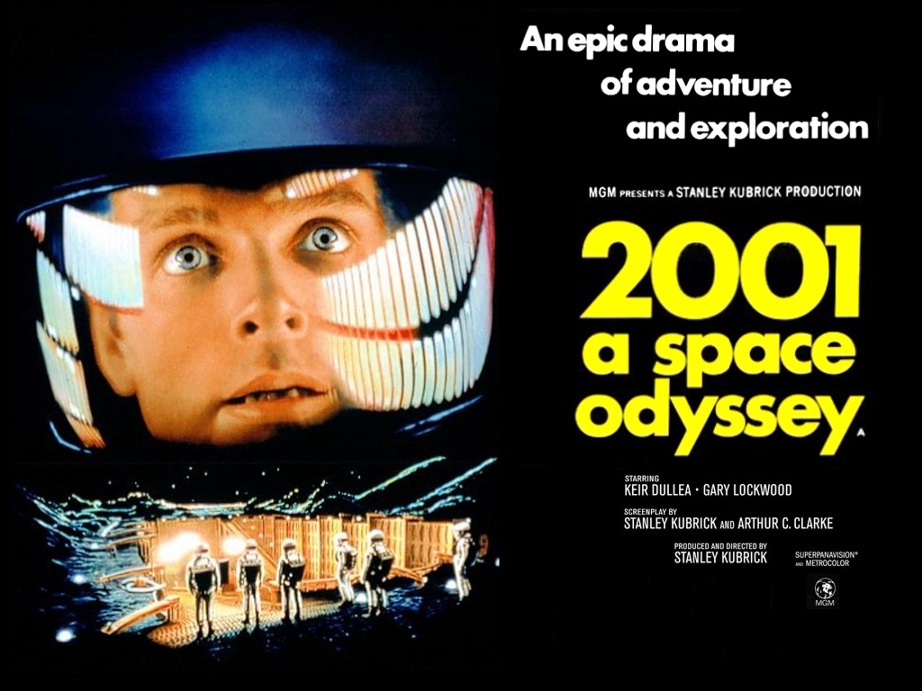
2001 A Space Odyssey movie poster from 1968

The Sunday Observer, Sri Lanka, reproduces this story on 11 May 2008

This month marks the 40th anniversary of the release of classic science fiction movie 2001: A Space Odyssey. The Academy of Motion Picture Arts and Sciences held a commemorative screening last week in Hollywood’s MGM theatre.

In May 1964 director Stanley Kubrick and science fiction author Arthur C Clarke embarked on a creative collaboration: a novel and a screenplay inspired by Clarke’s 1950 short story “The Sentinel.” In December 1965, many ideas, drafts, and titles later, filming commenced on 2001: A Space Odyssey. The futuristic epic, placed in the first year of the new millennium, premiered in the US in April 1968 — and went on to become one of the finest science fiction movies made.

Official MGM trailer for 2001: A Space Odyssey

As the Academy noted on its website: “With its epoch-spanning storyline and its nearly dialogue-free script, 2001: A Space Odyssey combined the production value of Hollywood film-making with the artistic sensibility of European cinema. Its cerebral approach to the genre helped usher in a new, more literate age of science fiction cinema, and its extraordinary imagery – the widescreen 70mm cinematography of Geoffrey Unsworth, the visually dazzling and scrupulously researched production design, and especially the Oscar®-winning special effects – instantly became the benchmark by which all space films would be judged.”

The film’s best known connection to Sri Lanka is that its co-creator Arthur C Clarke had by then settled down there. During the 1964-68 period that he was associated with the production, Clarke would make periodic returns to his Colombo home — first from New York, where he brainstormed with Kubrick for weeks, and then from England, where the movie went into production. Filming of 2001 began in December 1965 in Shepperton Studios, Shepperton, England. Soon, filming was moved to MGM-British Studios in Borehamwood.

The anniversary coverage has triggered my memories of another, much less known Sri Lankan connection with the film. The accomplished Sri Lankan engineer, painter and sculptor H R (Hapugoda Rankothge) Premaratne worked on the movie’s special effects, all of which was hand-made. (Not a single computer was involved in creating the movie, which still awes movie-goers many of who take computer generated imagery, or CGI, completely for granted today.)

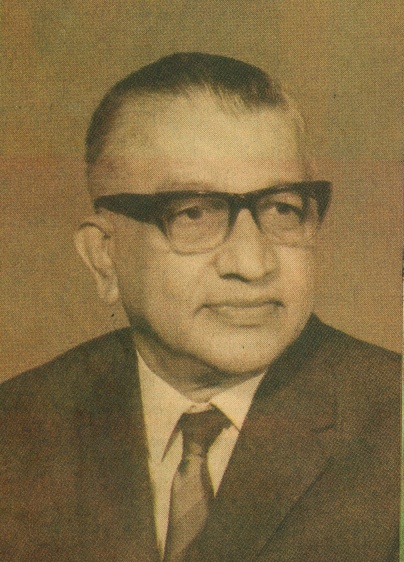
H R Premaratne

I got to know Premaratne (in photo above, affectionately known as Prema) in the late 1980s when he was special assistant to Arthur Clarke, in whose Colombo office I started working as a research assistant in 1987. I have just unearthed, from the depths of my own archives, an illustrated profile I wrote on Prema which appeared in The Island newspaper (Sri Lanka) on 26 January 1991. In a 2,000-word biographical sketch of the man that veteran journalist and biographer D B Dhanapala once called ‘a modern day Viswakarma’, I chronicle how Prema came to be associated with the movie’s production.

Prema had just retired in 1965 as Director of the Department of Public Works – in other words, the Ceylon government’s chief builder. By happy coincidence, 2001 was just entering its production stages around this time, so Clarke put Prema in touch with the Borehamwood Studios where elaborate sets for space scenes were being constructed. There, Prema worked with British and American set designers and special effects specialists.

For his efforts, he was listed as a member of the full production crew – even though he would go uncredited in the movie itself (as did dozens of others). When the Internet Movie Database was created decades later, he would also earn himself an entry there as Hapugoda Premaratne.

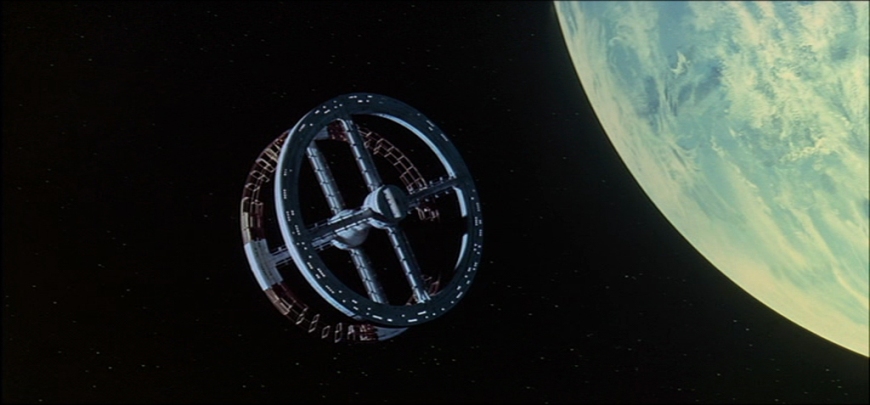
Space station in the movie 2001, envisaged in the mid 1960s

Harry Lange, chief designer of Hawke Films Limited who was in charge of production designs, later wrote to Prema: “Not one model could have been brought to the exceptionally high standard required in this production without the skills and imagination of people like yourself.”

Harry Lange recalls the making of 2001

“Prema was a very skilled architect, his best known work being the magnificent Independence Hall,” Clarke recalled years later in his tribute to Prema upon the latter’s death in the early 1990s. “During his stay in England in the mid 1960s, I put him in touch with Stanley Kubrick, who was then making 2001: A Space Odyssey. Prema’s expertise in art and engineering was very valuable in the production of the movie’s special effects, and he assisted in the building of the spectacular space station.”

Excerpt from 2001: Arrival at the space station in Earth orbit

Prema capped his long and illustrious public service as Sri Lanka’s ambassador to Burma, concurrently accredited to Thailand, Laos and Singapore (1974-78). From 1983, he worked as Clarke’s special assistant, while pursuing his own painting, sculpture and design work from his home at Wijerama Mawatha, Colombo — a short walk from Clarke’s own residence at Barnes Place.

I remember visiting Prema at home on several occasions. After his wife passed away and son moved overseas, he lived alone in a large, old house that was teeming with works of art – it was like a private art gallery or museum. All over the garden, there were scaled replicas of famous rock sculptures from places like Anuradhapura and Polonnaruwa. He pioneered a method of creating fibre glass replicas of archaeologically valuable statues and artefacts. These were used to showcase the best of Sri Lanka in major exhibitions in London, Washington DC and other capitals of the world in the 1980s.

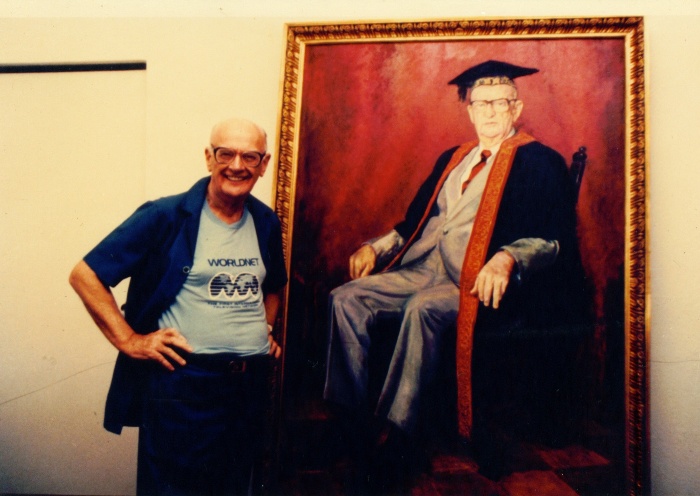
In the late 1980s, Prema also painted a life-size portrait Arthur C Clarke as Chancellor of the University of Moratuwa, which is still on display at the Arthur Clarke Centre there (photo, below).

It’s a bit cliched to say this, but they don’t seem to make renaissance men like H R Premaratne anymore. He straddled the arts and sciences with equal dexterity and with impressive results in both spheres. He not only built bridges in newly independent Ceylon, but was himself a bridge between the Two Cultures of the sciences and humanities.

Just like his friend Arthur C Clarke was…

Sir Arthur Clarke with his Chancellor portrait by H R Premaratne, circa 1990

More information on making 2001: A Space Odyssey is found in the documentary, 2001: The Making of a Myth.

The making of 2001: A Space Odyssey, by Richard Boyle (The Sunday Times, Sri Lanka, November 1998)

The other side of Reality TV: When Cicadas kill innocent people…

I have nothing against reality television. It’s a TV programming format that, according to Wikipedia, presents purportedly unscripted dramatic or humorous situations, documents actual events, and features ordinary people instead of professional actors.

In fact, I’ve been telling my friends who are factual film-makers that we can learn a thing or two from the recent successes of some reality TV shows.

But everything has its sane limits — and evidently these were exceeded in the recent controversy involving a British TV production company that stands accused of starting a ‘flu epidemic that left four people from a tribe of isolated Peruvian Indians dead and others seriously ill.

Matt Currington (in photo above, on the right), a London-based documentary maker, has been blamed for triggering a “mini-epidemic” in the village of 250 people which led to the deaths of three children and one adult of the Matsigenka people, who live in the isolated Amazonian Cumerjali area of south-eastern Peru.

The 38-year-old was employed by Cicada Films as researcher when he travelled to the area with a guide last year to scout for locations for the World’s Lost Tribes series, which airs on the Discovery Channel.

Here are some extracts from the story that appeared in The Guardian newspaper in the UK on 27 March 2008, written by its environment correspondent John Vidal:

The regional Indian rights organisation Fenama, government officials and a US anthropologist working in the region said in statements seen by the Guardian that a two-person crew working for London-based Cicada Films had visited groups of isolated Indian communities despite being warned not to. Fenama said the film team travelled far upriver and provoked an epidemic. It accused them of threatening the lives of Indians and called for Cicada Films to be barred from entering the area again.

It is understood the company was scouting for a location to set a TV show for Mark Anstice and Olly Steeds, in which the two British presenters would live with a remote tribe, in exchange for gifts. The company has already filmed episodes in New Guinea.

According to the Peruvian government’s protected areas department, Cicada was given a permit to visit only the community of Yomybato. It expressly prohibited visits to uncontacted or recently contacted Indians. “The Cicada team entered [remote headwaters] which are part of the strictly protected zone,” it said.


Read the full story: British reality TV crew accused as flu kills four in isolated Peruvian tribe

In case you think this is some left-wing or liberal conspiracy, read also The Times London story: TV researcher brought fatal flu to Amazon tribe.

The American anthropologist, Glenn Shepard, who met the film team on location, said he had urged them not to make the trip to the Cumerjali settlements, “where people were vulnerable to western illnesses”. “Reality tv seeks ever more dangerous, remote and exotic locales and communities,” he said.

Stephen Corey of the international tribal rights organization, Survival International, agreed. “There has been a whole rash of bizarre and extreme programmes on tribal rights. The key issue here is sensitivity which is not often a priority for television companies,” he said.

Survival International news: British TV company accused of bringing ‘epidemic’ to isolated Indians

British TV company deny allegations about Peru visit

Image from Survival International Image from Survival International

According to Survival International, Cicada Films previously caused controversy with a documentary about an expedition to visit Indians in Ecuador, which allegedly provoked an attack from uncontacted Waorani Indians.

But Cicada is certainly not alone when it comes to exploiting marginalised people in the global South in the course of film-making. And reality TV is not the only format of TV film making that often oversteps the ethical boundaries in search of a ‘good story’.

As I have been saying for sometime now, documentary film-makers and TV news gathering crews are equally guilty of many excesses, lapses and gross abuses all perpetrated in the name of media freedom.
Aug 2007 blog: Wanted – Ethical sourcing of international TV News

Nor is this sinister trend entirely new. I opened a September 2007 blog post with this bizarre request: “Can you help us to film a child’s leg being broken?” This was made by a visiting Canadian TV crew in the 1970s to my friend Darryl D’Monte, one of the most senior journalists in India and former editor of the Times of India.

This was in connection with a brutal practice that was believed to exist in India, so that forcefully maimed children could be employed as beggars. When Darryl was outraged, the film crew had shrugged off saying: “It’s going to happen anyway”.

December 2007: “Hands up who’s poor, speaks English – and looks good on TV!”

Film-makers and TV journalists roam the planet exercising their license to protect and promote the people’s right to know, and in the public interest. But this privileged position is grossly abused when they allow the end to justify their highly questionable means.

Commenting on TV’s latest crime against voiceless people, India’s Down to Earth magazine (30 April 2008 issue) says:

“These forays of reality tv perpetuate an imagery conceived by a 19th century alliance of anthropologers and photographers, that of tribals in their “innocent” state. It’s another matter these images were taken after the tribal groups were ravaged by colonialism.

“Today in the era of digital images when computer games mimic real wars, it might be hard for even the most naive eye to believe what it sees. But tv casts an enormous sway over audience perception and digitization has, in fact, aided it. We know of the images, not the circumstances in which they were taken. We believe them though they might be contrived. That’s why reality tv is dangerous.”

Read Down to Earth leader: Television has new stars