Celebrating Nelson Mandela…and South Africa’s television revolution

Nelson Mandela

Nelson Mandela‘s long walk to freedom is an epic story of our times, one that continues to inspire millions everywhere who are deprived of that freedom by state tyranny or economic hardships.

As Mandela turns 90 years today, we join people all over the world to celebrate his life and reiterate his message.

Send your greetings to Nelson Mandela on his birthday!

And as Mandela himself reminded us in London during the June 2008 mega musical concert to celebrate his 90th birthday: “Even as we celebrate, let us remind ourselves that our work is far from complete. Where there is poverty and sickness, including AIDS, where human beings are being oppressed , there is more work to be done. Our work is for freedom for all.

American film-maker, social activist and blogger Danny Schechter — who filmed Mandela’s struggle to end apartheid and restore democracy in South Africa — has just remarked: He (Mandela) is one of those leaders who not only helped free his own country and people but became an icon and symbol for freedom in the world. At a time when darkness seems to be descending again, with the economy on the edge amidst protracted wars and pervasive abuses of powers, he is the one person that people the world over look to as a symbol of that saying that ‘another world is possible.’ He is not perfect – who is? He has taken great risks, and made his share of mistakes, but the love and adoration he inspires speaks to how special he is – even as he sees himself as part of a collective, a movement…

The Mandela story has been told many times by many film-makers, writers and journalists. Few other leaders have engaged the media’s attention and popular imagination — both in and out of office — as Mandela has, and with reason.

This is how the BBC in the UK reported the release of Nelson Mandela, by then the world’s most celebrated prisoner, on 11 February 1990.

I find it interesting to go back and watch TV coverage of important events as they unfolded. They say journalists write the first draft of history — that’s done on the run, without the benefit of hindsight or chance to reflect for too long.

In that sense, this BBC television reportage did reasonably well to capture the historic moment of Mandela’s release — the reporter and presenter couldn’t have known what lay ahead for South Africa.

In the report, available on YouTube, there’s a reference to South African television giving live coverage for Mandela’s release. That would have been perfectly logical from a ‘breaking news’ point of view — but there is something very significant and symbolic about that.

During the 1950s and 1960s, South Africa was the only wealthy country in the world that did not have a national television broadcasting service. In fact, despite being the most economically advanced country on the continent, South Africa was among the last in Africa to introduce television broadcasting. The main reason: television was viewed as potentially undermining the apartheid government’s ideology. The white minority regime saw it as a threat to its control of the broadcasting media, even though the state-controlled South African Broadcasting Corporation (SABC) had a virtual monopoly on radio broadcasting.

The minister of broadcasting, Albert Hertzog, simply refused to permit television. He said that TV would come to South Africa “over my dead body”. He denounced it as “a miniature bioscope [cinema] over which parents would have no control.” He also argued that “South Africa would have to import films showing race mixing; and advertising would make (non-white) Africans dissatisfied with their lot.”

Many white South Africans, including Afrikaners, didn’t share Hertzog’s views, and regarded the hostility towards what he called “the little black box” as absurd. When Neil Armstrong became the first man to walk on the moon in 1969, South Africa was one of the few countries unable to watch the event live, prompting one newspaper to remark that “The moon film has proved to be the last straw… The situation is becoming a source of embarrassment for the country.”

But Hertzog was adamant. A few months later, in an interview with The Cape Times on 1 Dec 1969, he admitted: “If, at the present time, you introduce television, you will pay for it with the end of the white man…”

That was an extremely perceptive remark. From the white minority regime’s point of view, the minister was right: if the pen is mightier than the sword, the camera can be mightier than both.

No wonder that most governments, whether liberal or otherwise, try to control – or manipulate – what appears on television, especially domestic transmissions that a majority of their people regularly watch. The power of the idiot box is not to be underestimated, even if it’s often dominated by….well, idiots.

As events turned out, the national and international media – especially television – did play a major role in the transformation of South Africa during the last two decades of the twentieth century.

And we now know: Albert Hertzog’s worst fears came true.

But the world’s worst fears of South Africa descending into utter chaos did not — thanks, largely, to the compassionate vision and leadership of Nelson Mandela.

Watch Nelson Mendela’s inauguration speech, when he was sworn in as the 11th President of South Africa on 27 April 1994:

Historical footnote from Wikipedia:
In 1971, the SABC was finally allowed to introduce a television service. Initially, the proposal was for two television channels, one in English and Afrikaans, aimed at white audiences, and another, known as TV Bantu, aimed at black viewers, but when television was finally introduced, there was only one channel. Experimental broadcasts in the main cities began on 5 May 1975, before nationwide service commenced on 5 January 1976.

The Mandela legacy continues, on air and off air, and more films are still being made about his remarkable life and times. The latest is a new documentary being released this month to mark his 90th birthday. SABC television will premiere it in 18 July during prime time – how times have changed!

Here’s part of the press release from the South African production company that made it:

Viva Madiba: A Hero For All Seasons, a feature length film produced by Anant Singh and Videovision Entertainment as a 90th Birthday Tribute to former president, Nelson Mandela, will have its World Premiere when it is broadcast on Friday, 18 July 2008 on SABC 2 at 21h00.

Viva Madiba: A Hero For All Seasons is a celebration of Nelson Mandela’s epic life and his status as an international icon. In this, the year of his 90th birthday, he remains a man at the centre of attention, not only in South Africa, but around the world as a moral leader, an elder statesman and an exceptional human being.

Viva Madiba: A Hero For All Seasons takes one on a journey behind the headlines and away from the public eye and looks at Madiba as a loyal friend, a dependable comrade, a trusted confidant, a respected mentor, and a man who has touched and transformed countless lives.

For the first time his complete story is being told – a life of struggle, humanity, destiny and greatness is recalled and celebrated by those who knew him best and who worked with him in the quest to break the chains of oppression, taking us beyond the political and into the personal. The programme features exclusive interviews with politicians, close friends and comrades of Madiba, among whom are Archbishop Desmond Tutu, Oliver Tambo, George Bizos, Ahmed Kathrada, Pik Botha, Dorothy Masuka, Nthato Motlana, Cyril Ramaphosa, Helen Suzman, Zolani Mkiva, Jessie Duarte, Francois Pienaar, Sydney Kentridge, Mac Maharaj, Christo Brand and Gill Marcus.

Read and watch Danny Schechter talk about his role supporting the making of Viva Madiba


Happy 90th, (ex) prisoner 46664!

Nelson Mandela turns 90 on 18 July 2008.

Moving Images blog joins the world in wishing him many happy returns of the day — and many more birthdays to come!

To mark the occasion, we feature the song 46664 (That’s My Number) Nelson Mandela recorded some years ago to draw attention to HIV/AIDS.

This background story comes from the YouTube channel of Andrew Heath:

46664
was Nelson Mandela’s prison number when he was incarcerated on Robbin Island, Cape Town for 18 years.

46664 is a global movement fighting against HIV/AIDS in Africa and around the globe and MUSIC is a key element of the 46664 campaign.

In 2003 Jacqui Joseph (TV Presenter & Director of GHC Productions) was asked to host the first “live” Nelson Mandela 46664 Concert at Green Point Stadium in Cape Town with an audience of 40,000 that was broadcast globally and on the internet to 2 Billion people.

Jacqui provided her services for free and interviewed all the artists performing at the concert including Beyonce, Bono, The Edge, Peter Gabriel, Dave Stewart, Brian May, Roger Taylor, Ladysmith Black Mambazo and Angelique Kidjo and did the voice over for the official 46664 DVD.

As a result of her charity work and involvement with 46664 Jacqui and all involved in the campaign became official Ambassadors to the Nelson Mandela Foundation. Although a number of years have passed since Jacqui fronted the first big 46664 music event she now feels the time is right to re-energise and raise the public awareness and profile for the 46664 campaign.

In order to do this, Jacqui asked Max & Andy (remixer/producers) to come up with a fresh musical anthem & video for the 46664 campaign.

In 2006 Max & Andy completed the track and video and the result is: 46664 (THAT’S MY NUMBER)

46664 (That’s my Number) combines samples taken from Nelson Mandela’s inaugural 46664 speech in 2003 over dubbed onto an infectious re-mix of pop, ska and reggae classics.

The 46664 (that’s my number) video includes images sampled from the first official 46664 DVD and live concert shot in 2003 as well as original clips filmed for the GHC Productions video.

Nelson Mandela 46664

TV Southasia: Nothing official about this, yipee!

TV South Asia

Nearly one year ago, I wrote a blog post titled: Channel South Asia? Yes and No!

My closing words at the time were:
“I, for one, am relieved that South Asian governments are unlikely to come together in such a venture – we’ve suffered long enough and hard enough with our state-owned, government-controlled, ruling party mouthpieces (both radio and TV) that pollute our airwaves (a public commons) every day and night. Euphemistically called ‘national television’, these conduits of governmental propaganda have progressively lost audience share — and influence — since private channels started operating in the early 1990s. They are today reduced to vanity channels for vane politicians and bureaucrats. The mass audience has long ago abandoned them. I’d rather take chances with a South Asian Murdoch, than with our unaccountable, selfish governments.”

Chevaan Daniel, head of Sri Lanka’s enterprising Channel One MTV, posted a comment soon afterwards, on 27 July 2007, saying: “Maharaja Channels have pioneered this for Sri Lanka, by joining together in an initiative involving media companies from India, Pakistan, Nepal and Bangladesh to launch ‘The SouthAsian’. This collaboration includes a weekly programme produced in Calcutta, aired at the same time in the region. The next step is indeed a SouthAsian Channel, which we are working towards.

Well, I’m delighted to find that over the past 12 months, they have indeed been investing time, creative effort and money in this venture. TV Southasia is now a reality!

It’s a collaborative venture of commercial broadcasters in five countries of South Asia, who have joined hands to produce and share content across their national borders. Mercifully, no governments are involved and certainly none of the state-owned broadcasters (Babu TVs) whose lack of vision and creativity is only matched by their depleting audiences these days.

TV Southasia

Indeed, there’s nothing official about TV Southasia (TVSA), and that’s to be celebrated on its own merit. And if they get it right, TVSA founders — Rtv of Bangladesh, TARANEWS of India, Image Channel of Nepal, Aaj TV of Pakistan and News 1st of Sri Lanka — can tap into an enviably large audience. Between them, their countries have more than 1.5 billion people, most of who have access to television.

TVSA founders are taking one step at a time, perhaps knowing very well that cross-border ventures in South Asia need to be nursed slowly and incrementally, while dealing with assorted historical hang-ups and tonnes of red tape (or these days the colour could well be saffron or khaki, depending on where you live!).

It all started when a group of broadcasters and activists from across South Asia came together in Kolkata in December 2006 and agreed to forge the Southasian initiative. They swapped content to start producing a half-hour magazine programme (containing news analysis, music, features and interviews) from April 2007. Called Southasian, it was produced by Taranewz drawing on content from the participating channels, who then broadcast it weekly and also made it available online.

Taking the next logical step, the five broadcasters decided in August 2007 to form a channel, branded as TV Southasia. It started being previewed on 19 April 2008.
Read more about TV Southasia on its own website

The channel is being distributed by Thailand’s ThaiCom5 satellite, and would be available through cable operators across South Asia. It’s an English language channel, based on the reality that English is the only link language shared and understood by all countries of South Asia.

TVSA says it’s concentrating on talk shows, interviews, lifestyle, music, short films, sports, cuisine and quiz — most of this content is already available through many national channels and occasionally from global channels too. But TVSA can bring in a trans-boundary, pan South Asian outlook which is largely missing in these channels. In fact, it would be refreshing to see a TV channel covering South Asia as a whole, without giving into the frequent pressures or temptations of national tribalism and geopolitical posturing that we see all the time on both BabuTVs and many commercial channels.

Click here for programme lineup on TV Southasia

I have so far only caught glimpses of their offering, when Channel One MTV shows the Southasian magazine show. Going by this limited exposure, I can confirm that the products of this collaboration are superior to what BabuTVs have been struggling to do for two decades through the very official (read: officious and unimaginative) framework of SAARC Audio-Visual Exchange, or SAVE.

Started in 1987, just two years after the South Asian governments formed the regional grouping called South Asian Association for Regional Cooperation or SAARC, SAVE brought together the so-called national broadcasters in radio and TV. Trapped in inter-governmental bureaucracies, they tried to share and carry each other’s broadcast content. The officially sanctioned programmes, often made by committees, completely failed to capture the diversity and vibrancy of what’s going on in each South Asian country that interests the rest of the sub-region. I have no idea if SAVE still exists, because I don’t watch BabuTV anymore (does anybody?). Even in its formative days, I could tell that SAVE was beyond saving…

TV Southasia

Enter TV Southasia – and not a moment too soon. As its website says: “It is for the first time in history that the private electronic media channels have come together and have formed a collaborative channel sharing the same view points on diversity, heritage, bondage and possibilities.”

Unlike many broadcast ventures, TVSA declares its agenda – and it’s a lofty one. It wants to promote highly desirable values like liberalism, scientific temperament, education, heritage and cultural diversity. Rather courageously, it also declares what it is explicitly opposed to, which includes superstition, fundamentalism, corruption, violence, cultural hegemony and communalism — the long and depressing list of evils that keeps hundreds of millions of South Asians in misery, fear and trapped at the bottom of the development ladder. Read TVSA’s vision, mission and ideals

This agenda resonates with the equally passionate, secular idealism of Ujala TV, another satellite broadcast venture aimed at beaming to South Asia since mid 2006. I have been cheering them from the beginning, while my organisation TVE Asia Pacific has been a regular supplier of factual programming for them. Read my July 2007 blog post on Ujala TV – Enriching South Asian airwaves

Well, we need as many idealists as we can find in South Asia. Encouragingly, TV Southasia has already involved Himal Southasian founder and editor Kanak Mani Dixit, a great champion of people-to-people collaboration in South Asia. Perhaps it’s due to Kanak’s influence that the brave new channel is spelling Southasia as one word, as Himal Southasian has been doing for some years now. It might seem an aberration in spelling to some, but in fact, it separates these entirely unofficial, people’s ventures from the many committees and initiatives of the official SAARC, which are endlessly meeting yet constantly failing to forge regional trust, cooperation and cohesion.

The official, officious and unproductive SAARC will be on parade once again at the next Summit due in late July 2008. My SAARCasm is shared by many journalists, intellectuals and activists across South Asia who have tracked the origins and evolution of this grouping since its founding in Dhaka in 1985. To put it charitably, at 23 years of age, SAARC has the mental development of a 3-year-old (if that). We only need to take a look at the People’s SAARC Declaration, adopted in Kathmandu in March 2007, to realise how much the official SAARC has failed to accomplish.

That’s in spite of its frequent and highly expensive meetings. Alas, this time they have chosen to meet in my city of Colombo, which means – after footing a massive Summit bill of LKR 2.8 billion (over USD 27 million) – we ordinary citizens will very likely be kept under virtual house arrest for its duration. All in the name of security, of course.

I hope I can catch a bit more of TV Southasia when the visiting SAARC-babus drive us off our own streets.

Photos and images all courtesy TV Southasia

Below – photos from TV Southasia launch

The price of light: Insights from The Willow Tree

The Willow Tree

“There are two tragedies in life. One is not to get your heart’s desire. The other is to get it.”

These words, by George Bernard Shaw (in “Man and Superman”, 1903), came to my mind as we watched Iranian director Majid Majidi’s 2005 film The Willow Tree (96 mins, in Farsi with English subtitles) as TVE Asia Pacific’s monthly feature film screening this week.

The Willow Tree chronicles the revelations and shocks experienced by Youssef (Parvis Parastui), a blind professor of literature whose eyesight is miraculously restored 38 years after he lost it in a childhood firecracker accident. For nearly four decades, he lived in the care of his comfort zone, first in biological and then married family. But when he regained the ability to see, it opens up a whole new world — one which he is not fully prepared to face.

Some critics see The Willow Tree as closely linked to Majidi’s 1999 film, The Color of Paradise, the story of the lonely but strangely happy Mohammad, a blind 8-year-old boy whose widowed father reluctantly abandons him to the care of a rural carpenter. (Not having seen the latter film yet, I can’t comment.)

As Stephen Holden wrote in a New York Times review: “If the two films are viewed as a matched pair, as I think they should be, Youssef could be Mohammad’s urban grown-up counterpart. Both films are explicitly religious, intensely poetic meditations, filled with recurrent symbols and suffused with a spirit of divine apprehension. Both are sad beyond measure, and both risk seeming mawkishly sentimental.”

The Willow Tree is a soulful, emotionally moving film where Majidi once again proves his dexterity with multi-layered symbolicism and clever use of soundtrack, especially music, to convey much that is unsaid in dialogue.

At one level, the film reinforces the cautionary tale to be careful of what you wish for. At another, it makes us question the whole notion of what it means to be able to see the world with our eyes — something many of us take for granted, but is the defining attribute in Professor Youssef’s life.

It’s easy for us who work in moving images to forget that there is a wholly different world for those who cannot see, or whose vision is impaired as in, say, astigmatism or colour blindness. We sometimes tend to picture perfect our creations – with extra touches of visual effects, some of which are so subtle that they could easily be lost in the fleeting playback. We argue over the shades of gray, the seamlessness of a fade-in and fade-out, or the precise colour corrections, as if those choices were matters of life and death. We who play with light like to get things exactly right.

Well, it’s fine to strive for excellence, but it’s sobering to note that there are some who will never see and appreciate our hard-laboured visual subtleties. A few among them may listen to the soundtrack of our audio-visual creations. But on the whole, cinema, television and video are media catering to those who can both see and hear. Watching films like The Willow Tree, therefore, gives a sense of perspective to us that is not typically part of our daily work milieu.

In the end, we are what our sensory perceptions make us. Yes, it’s a blessing to have all or most of our five senses (and some among us seem to have an as yet undefined sixth sense). But before we rejoice, it’s good to reflect that there may be other beings in the vast universe (or in other dimensions) with far greater powers of sensory perception in realms we have no way of knowing.

This is what American poet Harry Kemp (1883—1960) hinted at in his most famous poem, ‘Blind’:

THE SPRING blew trumpets of color;
Her Green sang in my brain—
I heard a blind man groping
“Tap—tap” with his cane;

I pitied him in his blindness;
But can I boast, “I see”?
Perhaps there walks a spirit
Close by, who pities me,—

A spirit who hears me tapping
The five-sensed cane of mind
Amid such unguessed glories—
That I am worse than blind.

The Willow Tree

Broadcasters and climate change: Turn off your lights, but not your minds!

Let there be darkness!

That could well be a message from your local radio this weekend. Radio channels across Asia would be asking their listeners to turn off their lights for an hour or two today, 21 June 2008.

The Asia Pacific Broadcasting Union (Abu), an alliance of (mostly government-owned) radio and television stations across Asia, has urged broadcasters to join a campaign to encourage listeners to “Turn off Your Lights” for one or two hours as a step to raise awareness of global warming.

According to Abu, the Tokyo Broadcasting System (TBS) made the suggestion at a meeting in Tehran in November 2007. The Japanese broadcaster hopes that the event will encourage the public “to not only to save energy but to give consideration to wider global warming issues.”

Global warming and resulting climate change are such major concerns that every action counts. So we hope the Abu-inspired campaign, although hardly original, will be successful.

It might have made more sense for the broadcast alliance to be part of the more widely observed Earth Hour — an annual international event created by The World Wide Fund for Nature (WWF), held on the last Saturday of March, that asks households and businesses to turn off their non-essential lights and electrical appliances for one hour to raise awareness towards the need to take action on climate change. It was pioneered by WWF Australia and the Sydney Morning Herald in 2007, and achieved worldwide participation in 2008.

As this composite NASA image of the Earth at night shows, energy use is proportionate to the level of economic activity and social development. Asia accounts for a good deal of the world’s lights at night.

Earth at night - NASA composite image

But at the bigger picture level, broadcasters can and must do a great deal more than merely talk about the multi-faceted, rapidly-evolving issue. For a start, they need to take a closer look at their own industry, which is not known to be particularly efficient in its resource and energy use.

I’ve been writing and talking about the need for the TV broadcast and film-making industries to become more climate friendly (even if everybody can’t immediately become carbon-neutral). These industries are not particularly known for their energy or resource use efficiency.

At Asia Media Summit 2007 held in Kuala Lumpur, Malaysia, Abu’s secretary general himself chaired a session on climate change and the broadcsat media.

We heard passionate and articulate views from radio and television managers in Asia on how the airwaves can carry various messages that would sensitise governments, industry and individuals on the climate crisis — and how to live with its many impacts. But I was frustrated that the session was entirely on broadcasters carrying climate change related news and content.

All that’s necessary – but not sufficient. Surely, carrying relevant content is only one part of what broadcasters can do. When it was question time, I asked the more than 400 media managers in the audience: how can our own industries reorient core operations to become more climate friendly?

I noted that a good deal of carbon dioxide – the principal gas that warms up the planet – is emitted by the radio and TV production and broadcast processes, through the use of lights, cameras, transportation and transmitters, etc. Broadcast Television, in particular, is on a high energy mode with a fondness for dazzling lights, super-cooled studios and heavy production gear. The digital revolution has helped bring down size and weight, but it’s not yet a particularly light-weight business.

And energy is consumed not just at the production and transmission end, but when signals are received too. News from that front is not very encouraging: new plasma screens for High-definition Television (HDTV), the trendy new wave, gobble up more power at the viewing end too.

Have Asia Pacific companies engaged in the broadcast industry addressed these integral issues? How many of them calculate carbon dioxide emissions from their day-to-day operations and offset it by comparable investments in renewable energy or support for community-operated greening efforts?

I didn’t get clear answers to any of these questions from the dozens of movers and shakers in Asian broadcasting in the audience — which indicated that these concerns have not been given sufficient thought.

This was disappointing, but I can only hope it doesn’t stay that way for too long. Other players in the communication sector, such as telecom companies, have already started addressing industry-wide, smart contributions they can make in the pursuit of a more climate friendly society.

Lights, camera, action!

So here’s the challenge to radio and TV broadcasters across Asia: by all means, ask your audiences to turn unnecessary lights off every now and then, or even every day. But like charity, good climate conduct begins at home. It’s just not enough being a diligent distributor of climate messages or a mirror of contemporary society’s attempts to adopt climate-friendly lifestyles.

To confront climate change effectively and sincerely, broadcasters must turn those bright lights on to themselves — and adopt meaningful, lasting ways to contain and then reduce their own industry’s emissions.

That’s when they can switch from being part of the problem to part of the solution.

Don’t just do something, sit there!

Feb 2008
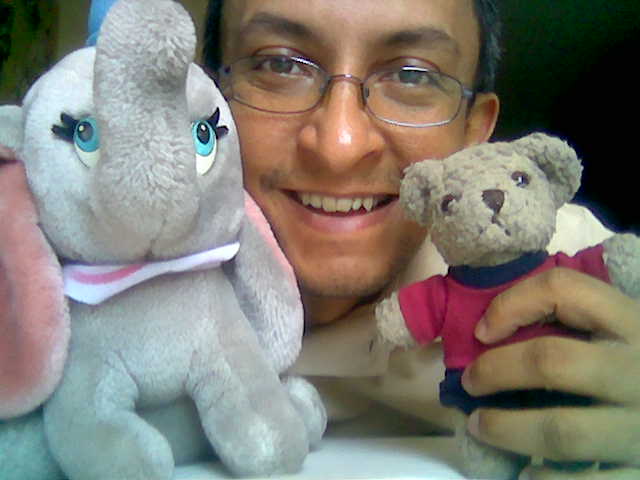
Dumbo, Nalaka and Spacey on writing retreat, Phuket, Thailand: Feb 2008

Don’t just sit there
Do something!

So the advice flows:
Don’t idle your life away!

Pack something, anything
into every waking moment!

Sleep an hour or two less
and gain months of life!

Don’t be a lazy bum
who’s good for nothing!

Time wasted
is time lost forever!

Yeah, yeah, yeah.
Blah, blah, blah!

Tell me what’s wrong
in goofing off
once every now and then
so that my mind roams
while my body rests?

Why must I run races
with others, or even
my very own self
every day and every night?

Listen, world!
I’m plain and simple tired
of filling all my time
with meaning and productivity.
So I’ve adopted a new motto
which goes like this:

Don’t just do anything,
Sit there!

Image above is a self portrait taken with my travelling buddies Dumbo and Spacey in Phuket on my 42nd birthday, Feb 2008. Captured with my Nokia phone.

Photograph by Nokia Gunawardene

Not in my backyard: The last urban oasis under siege

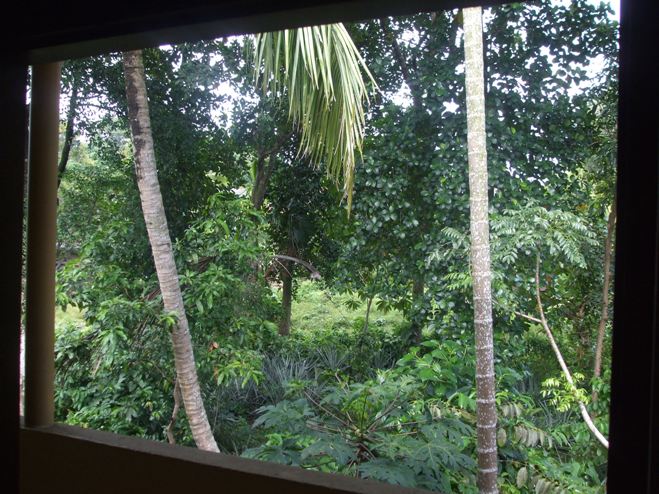
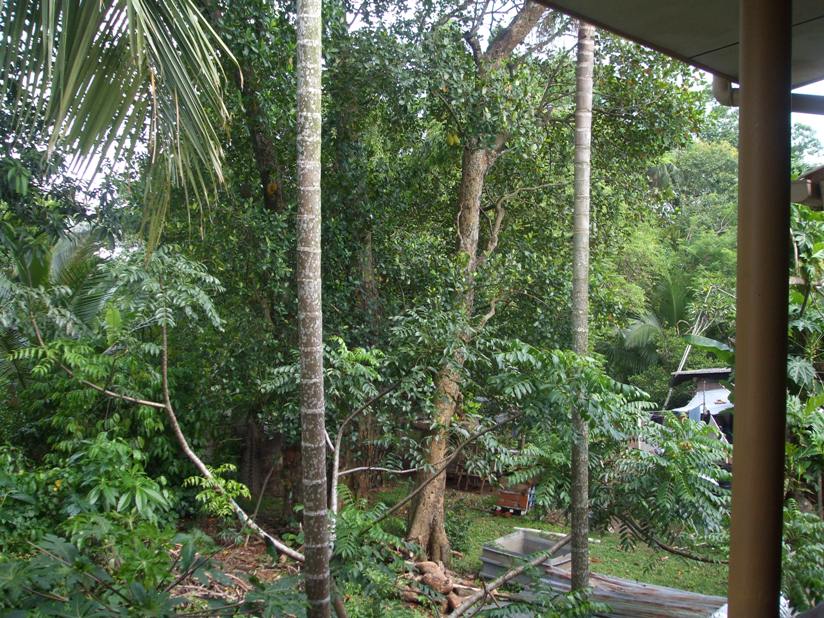
This is a view of what I see when I look out from the upstair back balcony of my home. And I’m so privileged to have this much of greenery in my backyard.

I live in Pagoda, Nugegoda, a suburb of Sri Lanka’s capital Colombo. This is a crowded, urbanised area, but there still are a few pockets of greenery left. Like this one, that I clicked with my daughter Dhara’s camera on June 5, World Environment Day.

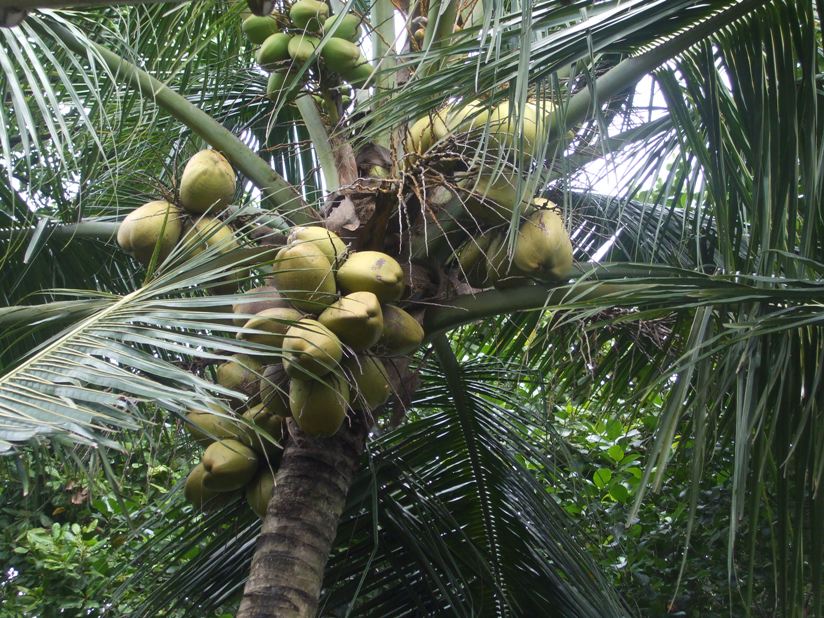
All this greenery is packed into an area no more than a few hundred square metres in extent – it’s really small. But at the same time, it has a concentration of larger trees like coconut, jak fruit and arecanut as well as a good deal of shrubs and undergrowth. And it attracts creatures who are looking for an oasis in a neighbourhood that is increasingly built up.

Last Christmas, I gifted a small, inexpensive digital camera to Dhara, who just turned 12. She has been having lots of fun in the past few months, shooting people and what little of Nature that she can find in our corner of suburbia.

It’s no rainforest for sure, but she’s captured images of several species of birds, snails, a lone monkey and even a couple of rabbits (Okay – these are being raised by a neighbour and aren’t exactly in the wild! But 30 years ago, we did find rabits in the wild in this same area…)

But this level of biodiversity might not last too long. In recent weeks, the little patch of suburban jungle in my backyard has come under siege. Apparently a change of ownership has taken place, and the new owners are drawing up plans to clear the land and build one or more houses. Already, some of the larger trees have been felled (they didn’t seem to value the timber either – they just chopped the trees and carried them away – for dumping?).

So in the near future, as the march of ‘progress’ claims yet another bit of unbuilt land, these photos may be all we are left with.

By happy coincidence, the same week my friend and eminent scientist Ray Wijewardene emailed me this poem which I first read many years ago. I’m very grateful to Ray for sharing this in the same week that I was lamenting the imminent demise of my wonderfully green backyard.

TREES…
A poem by Joyce Kilmer

I think that I shall never see
A poem lovely as a tree

A tree whose hungry mouth is pressed
Against the earths sweet flowing breast

A tree that looks art God all day,
And lifts her leafy arms to pray.

A tree that may in summer wear
A nest of robins in her hair;

Upon whose bosom snow has lain;
Who intimately lives with rain.

Poems are made by fools like me,
But only God can make a tree.


Photos by Dhara and Nalaka Gunawardene

Who’s Afraid of Citizen Journalists 2: Reflections from Asia Media Summit 2008

On World Press Freedom Day 3 May 2008, I wrote a blog post titled Who is Afraid of Citizen Journalists. The answer included the usual suspects: tyrannical governments, corrupt military and business interests, and pretty much everybody else who would like to suppress the free flow of information and public debate.

By end May, I realised that some people in the mainstream media (abbreviated MSM, and less charitably called old media or dinonaur media) are also afraid of citizen journalists. That was one insight I drew from attending Asia Media Summit 2008 in Kuala Lumpur, Malaysia (27-28 May 2008).

Asia Media Summit 2008

The two day event drew 530 broadcast CEOs, managing directors, media experts and senior representatives of development and academic institutions from more than 65 countries in Asia, Europe and the Middle East. Over eight plenary sessions and twice as many pre-summit events, they examined ‘new visions and new strategies broadcasters need to pursue to address the demands of new technologies, stiff competition, media liberalization and globalization’.

As I shared in my first impressions from the Summit, this annual event is still warming up to the new media. That’s understandable considering that most participants are those who work in MSM/OM/DM. Some, like myself, have been flirting or experimenting with new media in recent years, but even my own organisation, TVE Asia Pacific, still works largely with television broadcasters going out on terrestrial, cable or satellite platforms.

While the death of MSM/OM/DM has been greatly hyped, it’s a fact that they face more competition today than ever before. And instead of competing for eyeballs (and other sensory organs) with better content and higher levels of product customisation, some sections of MSM/OM/DM are trying to impose their own, obsolete mindset on the new media.

A session on ‘Regulations and New Media Models’ brought this into sharp focus. The session raised questions such as: Should we apply some principles from traditional media (meaning MSM) to the new media? Should we adopt some minimum rules to allow for sufficient legal space for new media businesses to find their niche in the market and evolve to fit the needs of consumers? What are the policy implications of User-Generated Content (UGC) with regard to copyright infringement, information accuracy and content quality?

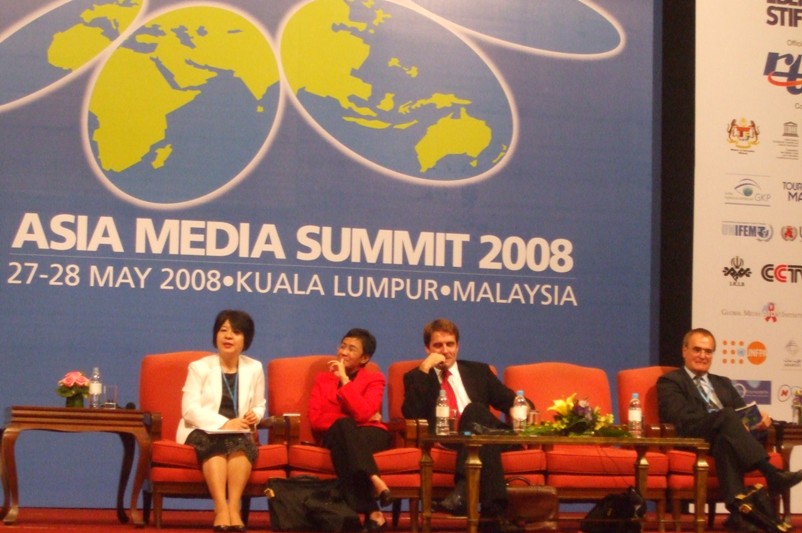
The panel comprised three Europeans and one American, all working in MSM or academia (it wasn’t immediately clear if any of them blogged personally). For the most part, they said predictably nice and kind things about new media. It was interesting to see how these professionals or managers – who have had their careers entirely or mostly working in or studying about MSM – were trying to relate to a new and different sector like the new media.

But the panel’s cautious attitude about the new media went overboard on the matter of regulation. This is where matters are highly contentious and hotly debated: while most of us agree that there should be some basic regulation to ensure cyber security and to keep a check on content that is widely deemed as unacceptable – for example, hate speech – there is no consensus on what content should be regulated by whom under which guiding principles.

Ruling unanimously in Reno v. ACLU, the US Supreme Court declared the Internet to be a free speech zone in 1997, saying it deserved at least as much First Amendment protection as that afforded to books, newspapers and magazines. The government, the Court said, can no more restrict a person’s access to words or images on the Internet than it could be allowed to snatch a book out of a reader’s hands in the library, or cover over a statue of a nude in a museum.

It was during question time that the discussion took a cynical – even hostile – attitude on the new media. Some members of the audience engaged Dr Venkat Iyer, a legal academic from University of Ulster in the UK, in a narrowly focused discussion on how and where bloggers may be sued for the opinions expressed on their blogs. The issue of multiple jurisdictions came up, along with other aspects of cyber libel and how those affected by criticism made online by individual bloggers (as opposed to companies or organisations producing online content) may ‘seek justice’.

These discussions were more than academic, especially in view of worrying trends in host Malaysia and neighbouring Singapore where bloggers have been arrested or are being prosecuted in recent weeks.
Asia Media Forum: Restrictions follow critics to cyber space
IHT: Malaysian blogger jailed over article


From the floor, I remarked that I was disturbed by the tone and narrow vision of this discussion, which merely repeated new media bashing by those who failed to understand its dynamics. Acknowledging the need for restraint where decency and public safety were concerned, I argued that it is a big mistake to analyse the new media from the business models or regulatory frameworks that suit the old media.

There are mischief makers and anti-social elements using the new media just as there have always been such people using the old media. Their presence, which is statistically small, does not warrant a knee-jerk reaction to over-regulate or over-legislate all activity online, as some Summit participants were advocating. To do that would be akin to throwing the baby out with the bathwater.

I continued: “This is not a healthy attitude to adopt, especially when we look at the bigger picture. In many countries where freedom of expression and media freedom are threatened or suppressed by intolerant governments and/or other vested interests, new media platforms have become the only available opportunity for citizens to organise, protest and sustain struggles for safeguarding human rights, better governance and cleaner politics. In countries where the mainstream media outlets are either state owned or under pressure from government (or military), and where newspapers, radio and TV have already been intimidated into silence, citizen journalists are the last line of defence…”

I also noted with interest that on this panel was Mogens Schmidt, UNESCO’s Deputy Assistant Director-General for Communication and Information (in charge of freedom of expression), and said that this was not the kind of rolling back of freedoms of expression that UNESCO was publicly advocating. In a brief response immediately afterwards, Schmidt said that he fully agreed with my views, and that this was UNESCO’s position as well.

Another panel member, Dr Jacob van Kokswijk, secretary of the International Telecom User Group in the Netherlands, noted that the new media required a totally new thinking and approach where its content is concerned – the rules that have worked for the old media can’t be applied in the same manner. He added that only 3 to 4 per cent of Internet content could be considered as ‘bad’ (by whatever definition he was using), and that should not blind us to seizing the potential of new media.

Another panel member, Joaquin F Blaya, a Board member of Radio Free Asia (RFA), made a categorical statement saying he was opposed to any and all forms of censorship. He knows what that means – RFA says its mission is ‘to provide accurate and timely news and information to Asian countries whose governments prohibit access to a free press’.

By the end of the session, I was relieved to see a more balanced view on the new media emerging in our discussion, with more moderate voices taking to the floor. No, we didn’t resolve any of the tough issues of new media regulation during the 90 mins of that session, but we at least agreed that the old media mindset of command-and-control was not going to work in the new media world.

From its inception in 2003, the annual Asia Media Summit has been very slow to come to terms with this reality, but this year the event moved a bit closer to that ideal – partly because they invited leading new media activist Danny Schechter to be a speaker.

We just have to wait and see if this momentum can be sustained next year when the Summit is hosted by the Macau Special Administrative Region of China.

I’m going to keep an open mind about this — but won’t bet on it…

3 May 2008: Who’s afraid of citizen journalists? Thoughts on World Press Freedom Day

Message to the UN on World Environment Day: Kick your own CO2 habit!

World Environment Day 2008 logo

The theme for this year’s World Environment Day (WED), being marked on 5 June 2008, is Kick the Habit! Towards a Low Carbon Economy.

Responding to worldwide concerns on climate change, the UN Environment Programme (UNEP) is asking countries, companies and communities to focus on greenhouse gas emissions and how to reduce them. UNEP says it plans to “highlight resources and initiatives that promote low carbon economies and life-styles, such as improved energy efficiency, alternative energy sources, forest conservation and eco-friendly consumption”.

UNEP has suggested 12 steps to help kick the CO2 habit. It also lists a series of examples of how groups or countries have reduced their carbon emissions. This emphasis on Carbon Dioxide is because it’s an important greenhouse gas that traps the Sun’s heat and warms up our planet.

All this is well and good — except that the United Nations does not practise what it preaches. UNEP or any other part of the UN system telling the world to kick the carbon habit is a bit like a heavily drunken person extolling the virtues of staying off liquor. It just doesn’t sound credible.

Let me explain. Having been a UN-watcher and critical cheer-leader of the UN system (though not always of individual agencies), I have personally seen how carbon thrift – or indeed, any kind of thrift – is not a strong point in that system.

Consider these well known facts.

The UN has long been known as a formidable ‘paper factory’ because of the millions of documents it cranks out every year. On an average, it produces over 700 million printed pages every year (2005 figures). The cost of printing documents in its New York and Geneva offices is over 250 million dollars annually.
IPS May 2005 story: World’s celebrated paper factory tries to save forests

And despite recent claims of trying to become carbon neutral, the UN system – including specialised agencies – convene thousands of international meetings every year. Only a few of them produce tangible outputs (some merely agree to meet again!) and even fewer are covered in the public media. But beneath media’s radar and public scrutiny, the UN officials and their buddies (mostly) in governments continue to huddle together in key world cities and some exotic locations.

A random example is Bali, Indonesia, which hosted a massive climate change conference in December 2007 that reportedly attracted over 12,000 participants from all over the world – most of who flew thousands of kilometres to get there. Yes, the meeting’s organisers claimed all their carbon emissions will be offset, and let us presume that they indeed kept their word (even if we question the measurable outcome of the mega-event for long-term climate change coping strategies).

But the mega talk shop in Bali (photo, below) did nothing to restore the UN’s already damaged credibility. How can the UN expect the ordinary people to adopt austere, low-carbon lifestyles when its own operations display such profligacy where resources and energy are concerned?

It would be worth investigating if the number and magnitude of numerous meetings convened by the UN system have shown any marked decrease since climate concerns rose to the top of the public agenda during the past couple of years.

Similarly, with the rise of electronic means of information storage and distribution, it would be interesting to find out if the UN’s endless churning out of paper-based documents has been reduced.

I doubt if either has happened, but we can keep looking for some evidence.

What I have noticed in recent months is the proliferation of meetings – convened or endorsed by the UN system – that address different aspects of climate change. That has become the latest excuse for the development set and its academic friends to have endless physical meetings.

The contradictions and incongruities reach dizzy heights when agencies like the International Telecommunications Union – keeping track of the world’s telecom and ICT developments – convene meeting after meeting to discuss how ICTs can help mitigate climate change.

Our regular readers know we’ve been pushing a simple yet effective slogan for this: Don’t commute; communicate!. Alas, that’s the very message that ITU and the world’s leading telecom/ICT companies managed to miss in Bali last December.

So what is to be done?

On this World Environment Day, let’s turn things around — and ask the United Nations secretariat and its specialised agencies (especially UNEP) to heed their own clarion call. Let change begin with them, and let’s see how (and if) the UN sets an example for the rest of the world.

So here’s a modest proposal that can have far-reaching benefits for the planet. Adopt and strictly observe for a year or two a moratorium on all large UN gatherings (no matter what they are called – Summits, conferences, symposia, meetings, etc.) that involve more than 500 persons. In this day and age of advanced telecommunications, it is possible to consult widely without always bringing people physically together.

It’s not just the carbon emissions of air travel that I’m talking about (aviation accounts for less than 5% of worldwide carbon emissions). Much more important is the message such UN austerity would send out to the world. Practising what you preach has a strong moral persuasive power — even if it goes against addictive habits formed for over 60 years of the UN’s history.

After all, the UN wants everyone on the planet to ‘kick the habit’. So let the ladies and gentlemen of the UN Secretariat and agencies lead by personal and institutional example — kicking their own addiction for meetings, more meetings and more paper.

PS: Don’t be too shy to turn up at Hydrocarbons Anonymous.

March 2007 blog post: Kicking the oil addiction: Miles to go

Declaration of interest: I have attended my share of UN meetings in the past 20 years, but the last mega event I joined was WSSD in Johannesburg in mid 2002. In 2007, I declined three sponsored invitations to go to Bali, and now selectively attend very few small meetings that promise clear focus and output.

Asia Media Summit 2008: Still warming up to new media…

Asia Media Summit 2008

Last week, I tried being in two places at once: executive producing an ambitious new TV debate series in my city of anchor Colombo (Sri Lanka) and participating in Asia Media Summit 2008 (AMS 2008) taking place in the Malaysian capital of Kuala Lumpur, May 27-28.

The two cities are 2.5 hours and a few thousand kilometres apart, and I just about managed being productive on both fronts. But I don’t recommend the experience: I ended up with a massive sleep deficit that I’m still trying to shake off.

According to the summit organisers, some 530 CEOs, managing directors, media experts and senior representatives of development and academic institutions from 65 countries joined the two-day event and 16 pre- Summit workshops.

The Summit had its moments — a few ‘Aha!’ ones and quite a few others where I found myself nodding (bored out of my mind, and not in agreement with what was going on). Unlike last year, when I chaired part of a pre-Summit seminar and also served as a plenary speaker, I was merely participating this year — which gave me the chance to network, take things easy and ask more questions from the audience.

Of the five Summits held since 2004, I’ve attended four (I missed the first one). The scope, content and quality of this annual event have certainly improved in this time. But I find the Summit still very much a gathering of the movers and shakers in the mainstream media, primarily radio and TV (which dominate the Asian media landscape). Very few new media practitioners – individual bloggers like myself, as well as online audio/video publishers and operators of web portals – turn up at this event.

And the Summit discussions in the past have sometimes been decidedly cynical or dismissive of new media. When this happened in the opening plenary itself at Asia Media Summit 2007, I was so disappointed that I asked if I was actually attending the Asia ‘Mediasaurus’ Summit.

Things could only get better this year – and they did. For one thing, they had invited new media practitioners to speak of their chaotic new world (unlike last time, when we heard fossilised old media worthies pontificate fuzzily on the new media). Perhaps this was the organisers heeding our critique of last year. Or it had something to do with the rise and rise of bloggers in the host country Malaysia: the March 2008 general election there saw five active bloggers being elected to national Parliament from the opposition in the biggest political upheaval Malaysia had seen in half a century.

Asia Media Summit 2008

For this reason, we were looking forward to the Summit’s opening by Malaysian Prime Minister Abdullah Ahmad Badawi, but for the second year running, he decided to skip the event. Instead, he sent his deputy Mohd Najib Tun Abdul Razak in his place to read his speech.

As Malaysia’s pro-government New Straits Times newspaper reported the next day, he urged journalists not to be too taken in by the “bells and whistles of technology”, but to hold to established virtues of accuracy, intelligence, fairness and grit as these formed the competitive advantage of the traditional press in the “anarchic environment of the new age”.

He added: “The right to freedom of speech and expression cannot be used as a pretext or excuse to violate and abuse the reputation and dignity of a people, to slander and libel or to defame religions or religious symbols. If this were the case, there would be no laws of defamation or libel and laws against those who incite racial or ethnic violence.”

During question time, the well known American blogger and media analyst Danny Schechter had an interesting exchange with the chief guest. Danny referred to the case of Malaysian blogger Raja Petra bin Raja Kamarudin who was recently charged of sedition for having written a political blog post.

DPM Najib and Schechter had very different views on the limits of freedom of speech and how far the new media can and should be allowed to comment on current affairs, especially politics. On the wider issue of human rights, Najib took the populist line and made references to America’s detention camps in Guantanamo Bay and the CIA outsourcing torture. Danny shot back saying that only 20% of the American people now support their president and his policies (and Danny certainly wasn’t one of them). He argued that human rights should be universal. Read Danny’s take on it here, and the more official version in the New Straits Times.

With that slightly bumpy start, AMS 2008 went on to display the mainstream media’s still uneasy relationship with the new media. For sure, the Summit had sessions on user-generated content and new media business models. But for the most part, these sessions brought out the narrow perspective of mainstream media’s managers or its long-standing researchers. With notable exceptions like Danny Schechter, other speakers talked about a fast-changing, rapidly-evolving reality that they’d barely skimmed or experienced themselves.

I would belatedly write more blog posts on some of the discussions that took place in later sessions, which prompted me to intervene several times from the audience.