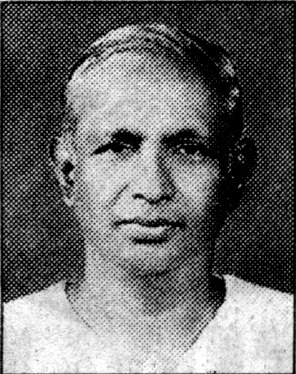
Tambiaiah SabaratnamI seem to be writing a few fond farewells to fellow travellers every year, becoming an obituarist of sorts in that process. I don’t go to funerals if I can help it (they’re too depressing), and instead I withdraw to a corner to write my memories. Some are published; others are privately circulated.
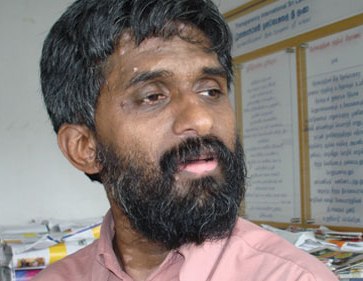
I’ve just published such a tribute on veteran Lankan journalist T (Tambiaiah) Sabaratnam, who died on March 5 aged 79. He was a senior colleague when I entered the world of journalism in the late 1980s. He retired (sort of) in 1997, but remained active in the world of media to the very end.
He was an outstanding journalistic story-teller. As I wrote in the tribute: “He was a pathfinder and leading light in Sri Lankan science journalism for over a generation. Throughout his long association with the English and Tamil press, he advocated the pursuit of public science: tax-payer funded scientific research for the benefit of the people and economy.”
Here’s another excerpt, more personalised:
“He was a source of inspiration and encouragement to me during my early years in science journalism. Our paths crossed often in the late 1980s and early 1990s when he and I covered many of the same scientific events. He was approachable and helpful, but I could never bring myself to call him ‘Saba’. When I knew him, he had already been in journalism for longer than I’d been alive. To me, he was always ‘Mr Sabaratnam’.
“He reached out despite our generational, media house and other divides. He was genuinely interested in my progress as a science journalist, and offered me advice on both style and substance. Occasionally, he also cautioned about on various ‘pitfalls’ in the local scientific scene — personal rivalries, exaggerated claims or oversized egos.”
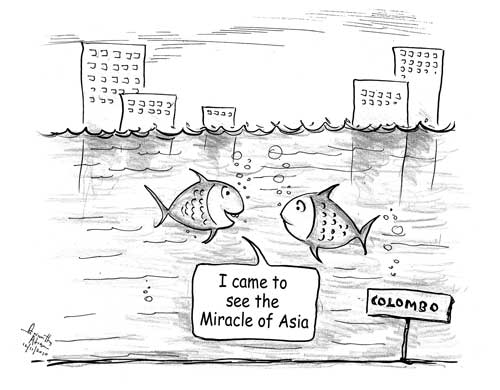
Cartoon in Daily Mirror, Sri Lanka, on 12 November 2010
Why do movie audiences in this part of the world cheer every time they see alien invaders blow up the White House? For a long time I thought it had something to do with anti-American sentiments; then I heard that many US audiences react the same way. Perhaps some among us get a kick out of seeing overbearing governments in trouble?
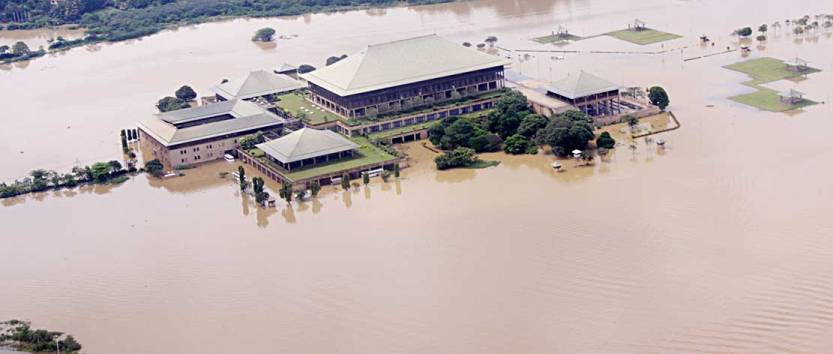
That might explain the gleeful tone with which the Colombo media reported the Sri Lankan Parliament being flooded after torrential rains in mid-November. Newspapers and television channels repeatedly showed images of the Parliamentary complex – built three decades ago on a marshland – completely marooned. The hapless people’s representatives were ferried across the expanse by the military, to take part in a brief session to extend Emergency Regulations. The symbolism was inescapable.
When the trapped rainwater engulfed many areas in and around Colombo, thousands of affected people groaned, but no one was really surprised. By now Sri Lankans know this is almost an annual routine. As I sat knee-deep in my own flooded office, I had a strong sense of déjà vu.
This is the opening of an op ed essay I’ve just written for Himal Southasian magazine, whose March issue carries a cover story on disasters in South Asia.
My essay, titled Drowning in media indifference, takes a personalised look at how the Lankan media have covered different disasters in the past two decades.
“Once again, the mainstream media in Sri Lanka has proven itself irrelevant in reporting and responding to catastrophic flooding,” says the intro — and that pretty much sums it up.
Sri Lankan Parliament flooded after torrential rains in mid-November 2010. The complex, built on a marshland, was completely marooned.
I recall how, back in 1992-93, the then media (fewer in number, with broadcasting still a state monopoly) provided saturation coverage for a major flood in the capital Colombo while under-reporting an even worse flood in the provinces a few months later.
“Fast forward to the present – and how little things have changed! During the past three months, as the fury of the formidable little girl (La Niña, the global weather anomaly) played havoc on the island, I have been struck by the similarly lop-sided coverage in the country’s mainstream print and broadcast media. Urban flooding once again received ample front-page coverage and ‘breaking news’ treatment. Everyone, from cartoonists and editorialists to talk-show hosts and radio DJs, ranted about what was taking place. Yet the much worse flooding, once again in the north, east and centre of the country, received proportionately much less attention. There were a few honourable exceptions, but by and large the 1992-93 disparity was repeated wholesale.”
I have been both an insider and outsider in this issue. I consider myself to be part of the extended mass media community in Sri Lanka for over two decades: I have worked for newspapers, magazines, radio and TV stations. At the same time, I retain the ability – and independence – to steps back and take a more critical and objective look at the media industry and community.
My interest in how disasters are covered and communicated go back to the time when my own house was flooded in mid 1992. I have since researched and commented extensively on this issue, and co-edited the 2007 book Communicating Disasters: An Asia Pacific Resource Book (TVEAP/UNDP).
In this latest essay, I reiterate an argument I’ve been making for sometime: “Media researchers have long accused the Western and globalised news media of having an implicit ‘hierarchy’ of death and destruction, in terms of how they report disasters in developing countries. But Sri Lanka’s own media’s indifference is equally appalling – the story of a quarter-million displaced people languishing in squalid conditions for weeks on end did not constitute front-page news. A starlet entering hospital after a domestic brawl excites news editors more than thousands of flood-affected provincial people starving while waiting for relief.”
As a journalist, I was trained to look for what’s New, True and Interesting (‘NTI Test’). Early on, I went beyond just reporting events, and probed the underlying causes and processes. With experience, I can now offer my audiences something more: perspective and seasoned opinion. These are needed today more than ever as we wade through massive volumes of information, trying to make sense of it all.
I’ve been privileged to chronicle and comment on the closing decade of the 20th Century and the opening one of the 21st – years of unprecedented change, and considerable turmoil, in my country (Sri Lanka), region (Asia) and the world. In my chosen areas of science, technology and sustainable development, changes have happened at a dazzling and often bewildering speed.
As a science writer and development film maker, I work with researchers, activists and officials across Asia who struggle to balance ecological concerns with economic development imperatives. I call myself a ‘critical cheer-leader’ of their efforts. Through TVE Asia Pacific, SciDev.Net and my other affiliations, I seek to enhance the public understanding of complex issues and choices required in pursuing sustainable development.
I sometimes feel a strange kinship with the ancient Greeks, who first asked some fundamental questions about the universe. They didn’t always get the answers right, and neither do I. But it is very important that we question and critique progress – I do so with an open mind, enthusiasm and optimism. On some occasions, this involves asking uncomfortable questions that irk those in positions of power and authority. In that sense, I sometimes play the role of that little boy who told the Emperor had no clothes on. (Does anyone know what happened to the boy after that?).
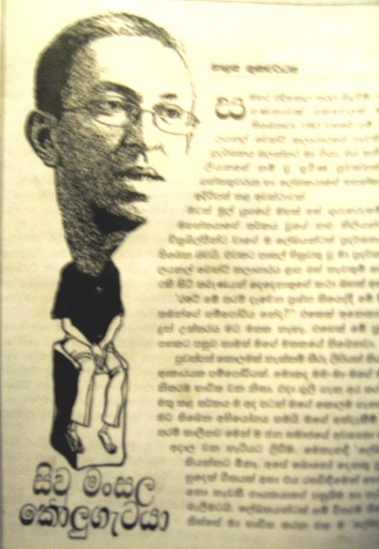
This is the basic premise for a new weekly newspaper column I am writing from this month in the Sinhala weekend newspaper Ravaya. A few weeks ago, the executive editor of Ravaya invited me to write a regular column, which I accepted after some hesitation. My hesitation was not about them; it was about my own ability to express myself in Sinhala, a language I studied more than a quarter century ago, but have not worked in for over 20 years. But I’ve decided to take it on as a challenge, and see how far I can go and how well I can write on topics and issues that are close to my heart: science, technology, environment and development. The first column has just appeared in the Ravaya issue for 6 Feb 2011. Ravaya: Always Open for Debate
I have been a regular reader of Ravaya in all its 25 years of publication. As I wrote in a book review last year: “It is an extraordinary publication that has, for nearly a quarter of a century, provided a platform for vibrant public discussion and debate on social and political issues. It does so while staying aloof of political party loyalties and tribal divisions. While it cannot compete directly (for circulation) with newspapers published by the state or press barons, this sober and serious broadsheet commands sufficient influence among a loyal and discerning readership.”
Published by a company owned by journalists themselves, Ravaya is almost unique among Lankan newspapers for another reason: its columnists and other contributors are allowed to take positions that are radically different from those of its formidable editor, Victor Ivan. I’m not sure how soon I will get to test this, but such pluralism is very rare in today’s mainstream media in Sri Lanka.
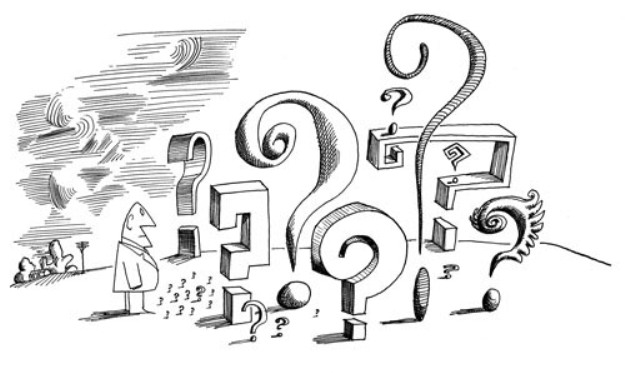
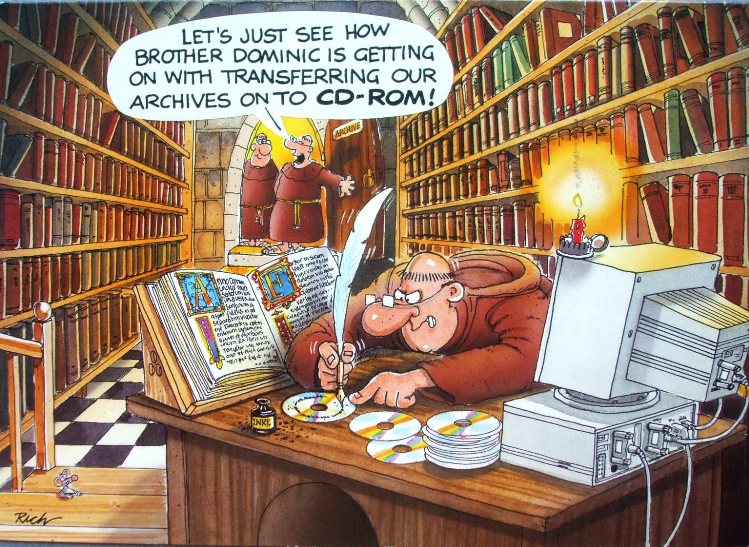
By Saul Steinberg (1914-1999), American cartoonist and illustrator
Question: Who said: “All the world is a quiz, and all the men and women merely players”?
Answer: The late Magnús Magnússon, iconic host of BBC television’s long-running quiz Mastermind.
I am fond of quoting these words, which sum up what quizzing is all about. I’ve been involved in quizzing most of my life, now for over 30 years. I was an avid ‘quiz kid’ in my time and later became a quiz compiler and quizmaster – I’ve been hosting long-running quizzes on radio and television in both in English and Sinhala.
The latest venture in that quiz career was launched today, with a new weekly quiz column in Daily News, Sri Lanka. It’s called Wiz Quiz. The first installment is found here, a quick look at 2011.
Every week, we will present a new set of 15 questions, and publish the answers to the previous week’s questions. The newspaper is arranging for prizes for those who get all the answers right.
I am partnering on this with my friend and long-standing quiz enthusiast (and film buff) Vindana Ariyawansa. Vindana too started quizzing as a school boy aged 13, and was later a member of University of Kentucky quiz team for three years. In 2008, he published a Quiz Book in English containing 1,000 questions and answers on general knowledge.
As we say in today’s intro: “We don’t want to ask questions that elicit esoteric answers that nobody knows. Instead of such trivial pursuits, we want to keep this quiz focused on interesting insights and factoids related to our island and the wider world outside.”
And while on the subject, here’s a great new quizzing website I’ve just discovered: Quizzing.in
My DIY as POY: Famous at last?“All I can hear I me mine, I me mine, I me mine.
Even those tears I me mine, I me mine, I me mine.
No-one’s frightened of playing it
Ev’ryone’s saying it,
Flowing more freely than wine,
All thru’ your life I me mine…”
When George Harrison sang those words in the 1970 Beatles song ‘I-Me-Mine’, he was in two minds about expressing in the first person (or ego). He wasn’t alone: mainstream journalism has long had reservations about where ‘I’ fit in journalistic narratives.
“Never bring yourself into what you write,” we were told in journalism school 20 years ago. Journalists, as observers and chroniclers of events, write the first drafts of history – and without the luxury of time or perspective that historians and biographers take for granted. We often have to package information and provide analysis on the run. Bringing ourselves into that process would surely distort messages and confuse many, it was argued. We had to keep our feelings out of our reportage lest it affects our ‘objectivity’.
In other words, we were simply mirrors reflecting (and recording) the events happening around us. Mirrors can’t – and shouldn’t — emit light of their own.
Occasionally, if we felt the urge to express how we personally felt about such trends and events, we were allowed the luxury of an op-ed or commentary piece. Of course, as long as we ensured that it was a measured and guarded expression. And if we really wanted to bring ourselves into the narrative, we could use the archaic phrase ‘this writer…’ to refer to ourselves.
But never use I-Me-Mine! That would surely sour, taint and even contaminate good journalism – right?
Well, it used to be the ‘norm’ for decades — but mercifully, not any longer. Thanks largely to the new media revolution triggered by the Internet, writing in the I-Me-Mine mode is no longer frowned upon as egotistic or narcissistic. It sometimes is one or both these, but hey, that’s part of cultural diversity that our information society has belatedly learnt to live with…
We journalists are late arrivals to this domain. The first person narrative was always valued in other areas of creative arts such as literary fiction, poetry and the cinema. In such endeavours, their creators are encouraged to tell the world exactly how they feel and what they think.
Of course, some writers ignored orthodoxy and wrote in the first person all along. One example I know personally is the acclaimed writer of science fiction and science fact, Sir Arthur C Clarke. Shortly after I’d started working with him in 1987, Sir Arthur encouraged me to fearlessly use the first person narrative even in technical and business writing. A lot of writing ended up being too dull and dreary, he said, because their writers were afraid of speaking their minds.
Yet we had to wait for the first decade of the Twenty First Century to see I-Me-Mine being widely accepted in the world of journalism. Did the old guard finally cave in, or (as sounds more likely) did Generation Me just redefine the rules of the game?
Whatever it is, I-Me-Mine is now very much in vogue. And not a moment too soon!
Joel Stein (Photo-illustration by John Ueland for TIME)As Time columnist Joel Stein, who often writes with his tongue firmly in his cheek, noted in a recent column: “All bloggers write in first person, spending hours each day chronicling their anger at their kids for taking away their free time. Every Facebook update and tweet is sophomoric, solipsistic, snarky and other words I’ve learned by Googling myself.”
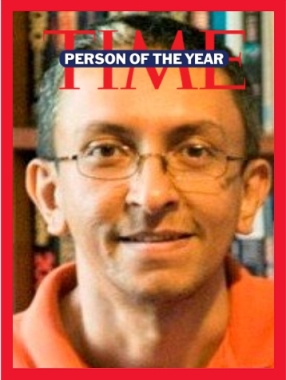
And look at what Time just tempted me to do: put myself on their cover, as the Person of the Year (POY), no less. While designating Facebook’s founder Mark Zuckerberg as its POY 2010, Time teamed up with the social media network to introduce a new application that allows anyone to become POY with just a few key strokes. Provided you have a Facebook account, of course.
Joel Stein quotes Jean M Twenge, professor of psychology at San Diego State University, as saying that we are living in the Age of Individualism, a radical philosophical shift that began with Sigmund Freud. It has exploded during the past decade with reality television, Facebook and blogging. “You’re supposed to craft your own image and have a personal brand. That was unheard of 10 years ago,” Twenge says.
What a difference a decade can make. Although trained in the pre-me era, I was never convinced as to why I had to keep myself out of what I write. However, my use of I-Me-Mine was done sparingly in the late 1980s (when I started my media work) and during the 1990s. It was only in the 2000s that I finally found both the freedom to speak my mind – and the ideal platforms for doing so: blogging and tweeting.
As my regular readers know, I blog about my family, friends, pet, travels, writing and conference speaking. I liberally sprinkle photographs of myself doing various things. I tell you more than you really want to know about my life. Ah yes, I’m self-referential too.
And not just on this blog. I’ve also been writing op ed essays for various mainstream media outlets for much of the past decade, and have never hesitated in expressing what I think, feel and even dream about. (Isn’t that what opinion pieces are meant to be?)
But the Digital Immigrant that I am, all my writing is shaped by my pre-Internet training. Even for a blog post or tweet, I still gather information, marshal my thoughts and agonise over every word, sentence and paragraph.
As my own editor and publisher on the blog, I don’t have gatekeepers who insist on any of this. My readers haven’t complained either. Yet I write the way I do for a simple reason. I may indulge in a lot of I-Me-Mine, but I don’t write just for myself. You, gentle reader, are the main reason why I strive for coherence and relevance.
(OK, if you really must know, it also ensures a joyful read when I occasionally go back and read my own writing…)
Every major disaster produces its own iconic images which determine how the collective memory of the world would remember the incident.
In a blog post to mark the sixth anniversary, I quoted photojournalist Shahidul Alam as saying: “The immediacy of an iconic image, its ability to engage with the viewer, its intimacy, the universality of its language, means it is at once a language of the masses, but also the key that can open doors. For both the gatekeepers and the public, the image has a visceral quality that is both raw and delicate. It can move people to laughter and to tears and can touch people at many levels. The iconic image lingers, long after the moment has gone. We are the witnesses of our times and the historians of our ages. We are the collective memories of our communities.”
Looking back six years later, which of the numerous images of the Asian Tsunami of 26 December 2004 have achieved that iconic status? It was one of the most widely photographed disasters of our time — but which handful of images do we remember now, more than 2,000 days later?
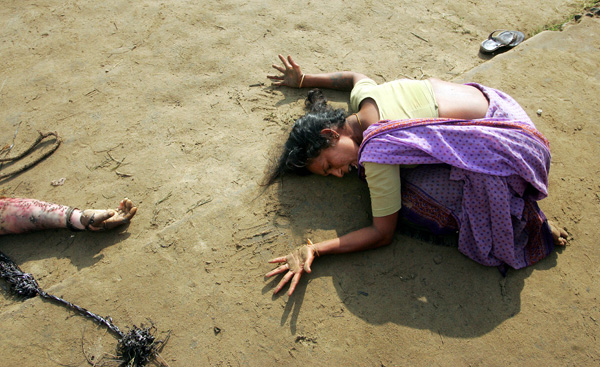
An Indian woman mourns the death of a relative killed in the Asian tsunami. The picture was taken in Cuddalore, Tamil Nadu, on 28 December 2004 (REUTERS, Arko Datta)
For a mega-disaster that was distributed over a very large area along the Indian Ocean rim, covering a dozen countries in South and Southeast Asia, there must be more iconic images — either globally or nationally. What image/s do YOU remember the December 2004 Tsunami by?
It doesn’t matter if they the image was taken by a professional photographer (i.e. one who is paid to do that job) or a holiday maker or a local resident…as long as it was widely shared and has entered our collective consciousness. Please nominate your images with links, which we will display here.
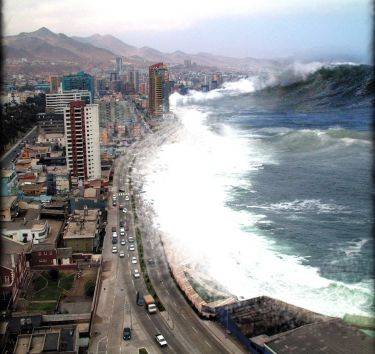
This photo is a fake!Note: Beware of fake tsunami images that are in circulation, which some people are peddling either knowingly or unknowingly. One of them — allegedly the waves hitting Phuket in Thailand — is exposed at Urban Legends as digitally imagined fantasy. Another set of images is real enough — but have nothing to do with the tsunami. These show people running away from an oncoming burst of water, seemingly a big wave. They are of a TIDAL BORE, not a tsunami, taken in October 2002 at the Qiantang Jian River in Hangzhou, Zhejiang, China — an area known for tidal bores.
As an avid watcher of ICTs and the Information Society they help create, I have always been interested in how new technologies are perceived and adopted by different individuals and communities.
In the wake of WikiLeaks, there is renewed interest in the free flow of information. Governments and large corporations are naturally anxious about their secrets being leaked. Journalists and activists are working overtime to produce coherent stories or advocacy positions out of the massive volumes of hitherto classified information being released by WikiLeaks. And the rest of society is bewildered on just how to make sense of it all.
Can humanity survive the deluge of information unleashed by ICTs?
This is the question I posed to Sir Arthur C Clarke in a wide-ranging interview I did on the eve of the first World Summit on the Information Society (WSIS) in December 2003. The full exchange was published on OneWorld.net, where it is still archived.
Here’s the relevant Q&A:
Q: So you are confident that humanity will survive the current deluge of information?
A: Undoubtedly. There are many who are genuinely alarmed by the immense amount of information available to us through the Internet, television and other media. To them, I can offer little consolation other than to suggest that they put themselves in the place of their ancestors at the time the printing press was invented. ‘My God,’ they cried, ‘now there could be as many as a thousand books. How will we ever read them all?’
Strangely, as history has shown, our species survived that earlier deluge of information, and some say, even advanced because of it. I am not so much concerned with the proliferation of information as the purpose for which it is used. Technology carries with it a responsibility that we are obliged to consider.
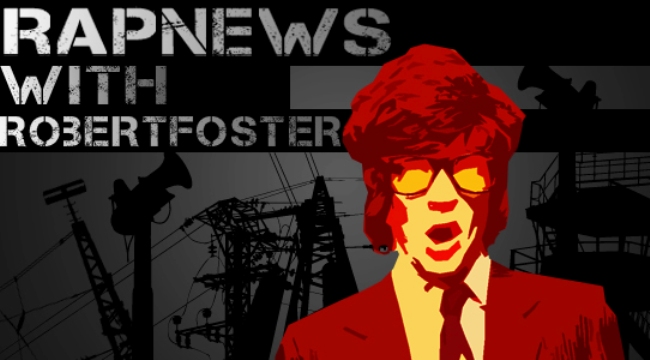
I’m delighted to highlight another commendable effort, this time on the web. It’s a website called The Juice Media, which presents news reports in, believe it or not, rap music! It has been online for a while, drawing rave reviews. One of them: “Like a mix of Eminem and Jon Stewart”.
TheJuiceMedia: Rap News is written and created by Hugo Farrant and Giordano Nanni in a home-studio/suburban backyard in Melbourne, Australia. In fact, Hugo appears as the amiable Rap News anchorman, Robert Foster.
Here are their latest three releases, which are hilariously serious.
Rap News 6 – Wikileaks’ Cablegate: the truth is out there
Rap News 5: Wikileaks & the war on journalism (ft. Julian Assange)
RAP NEWS 4: Wikileaks vs The Pentagon – the WWWAR on the Internet
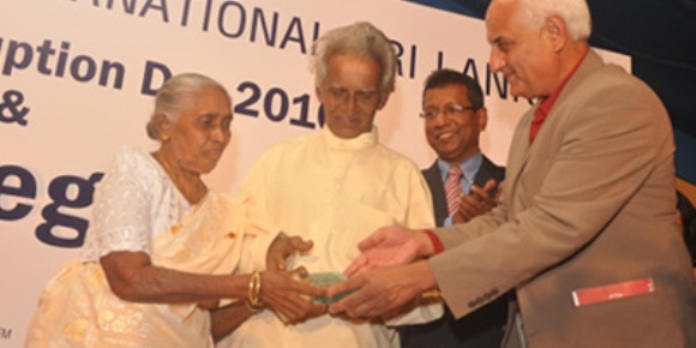
Poddala Jayantha's mother and father receiving award from Kanak Mani dixit (extreme R)
Two persons stood out among the several hundred people gathered at Sri Lanka National Integrity Awards ceremony on December 9 evening in Colombo. Dressed in off-white, the elderly couple looked dignified yet slightly bewildered by the pace of events at Colombo’s top conventions venue.
But when their moment arrived, the parents of investigative journalist Poddala Jayantha rose to the occasion: they accepted the Global Integrity Award presented to him by the anti-corruption watchdog Transparency International (TI).
Jayantha could not turn up in person because his is under threat and fled Sri Lanka for safety. In June 2009, he was abducted by unidentified persons and assaulted. The attack, one among many on journalists in Sri Lanka, left him permanently disabled in his legs. That’s the high price he had to pay for systematically exposing corruption and irregularities in government and corporate sector in Sri Lanka.
TI, which created this award to recognise the courage and determination of individuals and organisations fighting corruption around the world, commended Jayantha for his “dedication to exposing injustice in Sri Lanka”.
Poddala Jayantha“I am happy that I could fight against corruption and campaign for press freedom while working for the state media,” he told BBC Sinhala after the awards announcement. “But yes I had to leave the country as a result.”
I’ve long admired Poddala’s courage and meticulous research, and have been amazed that he managed to do so much while working in a state-owned media establishment like Lake House, where he was employed after leaving the independent Ravaya newspaper. Of course he was the exception to the rule, but what a refreshing exception that was — reminding us that even amidst all those sacred cows that state media journalists must tiptoe around, they can still serve the public interest if they want to…
Of course, there were also stories that he never got to write. In November 2008, I wrote about one such example in an essay commenting on the Lankan media’s shameful conduct in relation to our own Ponzi scheme and local Madoff called Sakvithi.
Television leads in Asia, including Sri LankaToday, 21 November, is World Television Day. The United Nations declared this in 1996 recognising “the increasing impact television has on decision-making by alerting world attention to conflicts and threats to peace and security and its potential role in sharpening the focus on other major issues, including economic and social issues”.
A new survey that I was closely associated with has just confirmed that broadcast television is the most dominant and most trusted source of information on news and current affairs by Lankans of all walks of life.
The mass media are the major source of public information on current news and affairs for Lankans living in cities, towns and villages – and broadcast television leads among the different types of media, according to the survey on public perceptions on climate change in Sri Lanka 2010.
Broadcast television is the single most popular source, cited by the highest number of respondents (94%). It is followed by radio (74%), and newspapers and magazines (taken together, 70%). There was no significant urban/rural difference in these preferences.
By mid 2010, Sri Lanka had 19 terrestrial channels broadcasting free-to-air transmissions in English, Sinhala or Tamil languages. Meanwhile, close to 50 radio channels – mostly on the FM band – crowd the airwaves.
The next most widely cited information source was friends, neighbours and colleagues. But interestingly, while 52% of all respondents listed this category, only very few (2%) acknowledged it as a credible source. In contrast, the credibility factor was higher for TV (88%), radio (42%) and print media (33%).
Educational institutions (schools, universities and training centres) were assigned a very low rank as a source (7%) and even lower status as a credible source (3%).
Although only 9% of the respondents cited the Internet as a regular source of information for themselves, its perception as a credible source was considerably high (51%). This makes the Internet the second most trusted source for the sample, behind only TV.
The exact survey question that elicited these answers was: “What are your main sources of information for current affairs/events?”



 Open Minds!