The undersea quake that triggered the Indian Ocean tsunami on 26 December 2004 was so powerful that it was felt around the globe, as far away as Alaska. Likewise, the killer waves that hammered the coasts of South and Southeast Asia left such a trail of destruction that it was like a lasting, unceasing wave.
On the eve of the mega-disaster’s fifth anniversary, I’ve been busy writing, talking and reflecting on what it meant for me personally, and my media profession and fellow Asians in general. I recently filmed an interview for Thai Public Television (TPBS), where my friend Pipope Panitchpakdi is doing a tsunami+5 documentary.
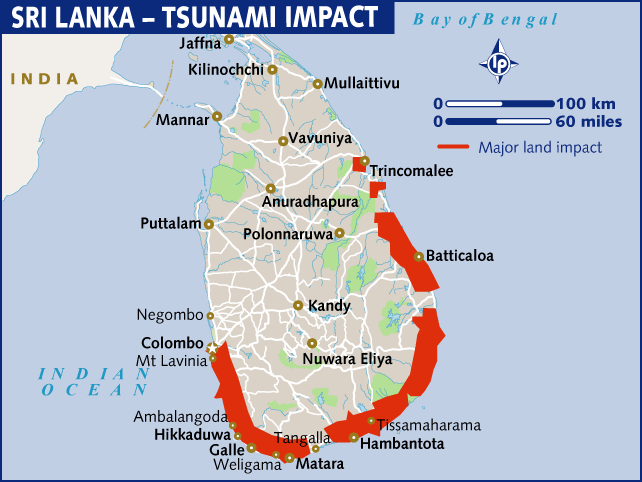
He was in Sri Lanka at the time of the tsunami, and spent two weeks working as a freelance reporter covering the aftermath for the western media. His piece sums up the mixed bag of lessons and recovery efforts that Sri Lanka, one of the hardest hit countries, has accomplished in the half decade this that momentous day.
An excerpt: “Five years later, life in the affected countries has resumed, and the world has learned immensely valuable lessons about responding to catastrophe. But as with any human endeavor, some opportunities have also been lost.”
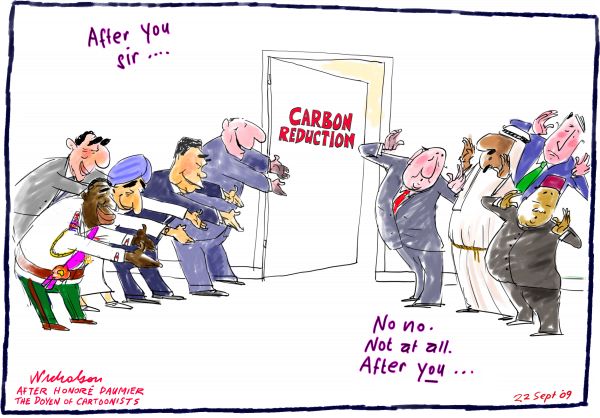
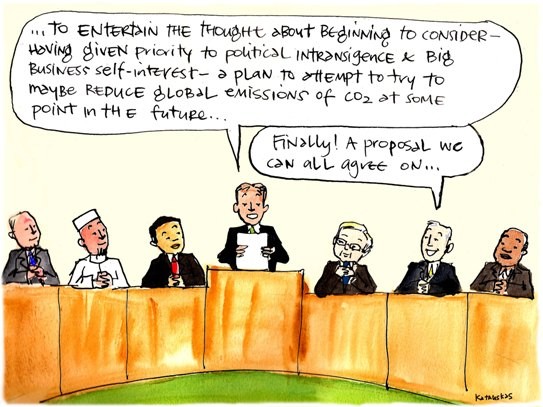
Polite or dodgy? Did anything more than this happen in Copenhagen?
What happens when over 3,500 journalists from all over the world roam around a two-week long UN conference that saw plenty of loud bickering and hot air in the name of saving the planet from global warming? Well, the media pack adds to the noise levels and hot air, for sure — and they are not above bickering themselves.
At least, that’s the report from Copenhagen, where the UN climate conference COP15 ended on Dec 18 with a watered down, disappointing something called the Copenhagen Accord.
Darryl D'MonteI’ve just read an interesting report filed from the Ground Zero of that half-event by my Indian friend (and senior journalist turned climate columnist) Darryl D’Monte.
He says: “The media in Copenhagen has been an unmanageable and unruly lot. There are some 3,500 of us covering the summit, most having come this week, and journalists – once again, the electronic media – don’t think twice about carrying on conversations at the loudest decibel levels, turning the room into a virtual Tower of Babel. The TV crews in particular are like packs of wolves. They station themselves at every available nook and corner where some VIP may enter and exit and try to get that exclusive byte as he or she makes an appearance“.
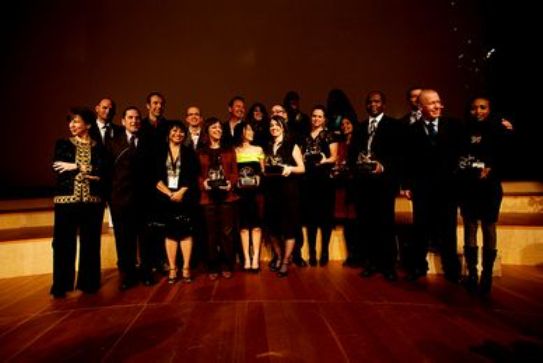
Earth Journalism 2009 Award winners “If we are to have any hope of reversing the effects of climate change, then we have a monumental task of educating the six billion people on our planet about how climate change works and what they can do to help. The media is critical in this effort, since just one reporter has the ability to reach thousands, even millions, of people. These awards help to expand and honour these vitally important efforts.”
So said Dr Rajendra Pachauri, 2007 Nobel Peace Prize co-winner and head of the UN climate panel (IPCC) at the gala ceremony in Copenhagen tonight to present the inaugural Earth Journalism Awards.
Among the other presenters were key figures on climate and environmental issues, including Mary Robinson, the former President of Ireland; Marina Silva, the former environment minister of Brazil; and award-winning Chinese movie star Li Bingbing, who is also the Global Ambassador for WWF’s Earth Hour.
Nearly 1,000 journalists, bloggers and citizen reporters from 148 countries participated in the competition by submitting their work. The 15 winners were selected through a process involving a globe-spanning, independent jury with over 100 media and climate change experts. The winning reports included a Kenyan group who spread environmental information to their peers in the Nairobi slums through a hip hop video filmed atop mountains of trash, a compelling account of a small Pakistani community adapting to climate change, and an investigative report on disturbing business practices in Papua New Guinea’s carbon market.
Full list of winning entries and winners found on Earth Journalism website.
The Global Public Award, determined by thousands of online votes, went to “The Route of Smoke,” a multimedia report by Brazilian journalists Andreia Fanzeres and Cristiane Prizibisczki, who documented how customary farming practices that contribute to the country’s emissions are clashing with new methods for responsible agriculture.
“Our reporting showed how complex this issue of burning forests in the Amazon really is,” Fanzeres said. “It’s not about ‘good guys’ versus ‘bad guys.’ If you understand the complexities of climate change, you can start to solve the problem.”
James Fahn, Internews’ Global Director of Environmental Programs, said: “The Earth Journalism Awards were established to boost climate change coverage in this critical year leading up to Copenhagen, and to highlight the efforts of journalists reporting on this challenging subject around the world.”
Some 225 participants, the bulk of them journalists from Mekong countries, are set to discuss, are debating and taking stock of their media environment against a backdrop of changing and often quite different news cultures at the Mekong Media Forum, being held in Chiang Mai from 9 to 12 December 2009.
I very much wanted to be there, for I’ve been covering the Mekong region as a journalist for 20 years, beginning with my first location filming visit to southern Vietnam in 1990. I’ve visited and worked in five of the six Mekong countries – Cambodia, China, Lao PDR, Thailand and Vietnam – with the exception of Burma.
But I’m missing this interesting event due to scheduling difficulties – I must try harder on my omnipresence act in the coming year…
The four-day media conference brings together a mix of participants, from print, television journalists and photojournalists to civil society, academics and developments, who will be discussing a menu of issues such as changes in the Mekong media scene, new trends, citizen journalism and new media, training, media challenges and reporting on water governance, children, as well as gender and sexuality.
Cinema Mekong, a strand within the forum, features the work of documentary filmmakers and video journalists who have been part of the Imaging Our Mekong Media Fellowship since 2002 — making this unique series of films very much from the lens of local filmmakers — as well as other films that focus on the Mekong region.
The Mekong Media Forum is being organised by IPS Asia-Pacific news agency and Probe Media Foundation, Inc., which since 2002 have been running the Imaging Our Mekong media fellowships. More than 220 journalists from the region have been fellows in this programme.
Given the surfeit of media stories on climate in the build-up to the Copenhagen climate conference (7-18 Dec 2009), it would appear that journalists have little or no difficulty in covering this literally hot topic, right?
Wrong. The planet is warming, but not all editors and other media gate-keepers have yet warmed up to the topic. (We might even say: some are thawing more slowly than glaciers these days!).
“While environment is fast becoming a trendy topic, environmental journalists say they are finding it increasingly difficult to sell their stories to editors. This is a confounding trend in the news media, given the increasing confusion – and resultant calls for clarity – about scientific data for climate change in the run up to the United Nations Climate Change Conference in Copenhagen. The experts, however, say the trick is to repackage the story alluringly.”
Zofeen T EbrahimThis is the thrust of an article just written by the experienced Pakistani journalist and blogger Zofeen T. Ebrahim on Dawn.com. In Little strokes make big pictures, she probes the challenges that South Asian journalists continue to face in reporting and analysing on climate change in their mainstream media.
Zofeen, who was with me at the recent IFEJ congress in New Delhi a few weeks ago, quotes me in her article: “Nalaka Gunawardene, a senior award-winning science writer from Sri Lanka, recalls that his mentor, Tarzie Vittachi, once advised that ‘ordinary people live and work in the day-to -day weather. Most can’t relate to long-term climate. It’s our job, as journalists, to make those links clear.’ Of course, three decades ago, well before climate change was a hot topic, Vittachi was speaking metaphorically. But the words have great import today.”
She also quotes South Asian colleagues like Kunda Dixit, Joydeep Gupta, Nirmal Ghosh and Aroosa Masroor Khan (all men, although they are among the finest in the profession :)).
Her conclusion: environmental stories may still be a hard sell in many media outlets, but committed journalists have found ways to market their stories first within their organisations, and then to their respective audiences. That is some good news as the crucial climate talks open in the cool climes of Copenhagen.
Zofeen T. Ebrahim is a Karachi-based independent journalist and has been writing for IPS since April 2003. She also writes for Women’s Feature Service, IRIN and Indo Asian News Service. The stories she has covered include human rights, specially pertaining to women and children, health and how development impacts environment.
Today, 7 December 2009, the latest UN-FCCC climate negotiations begin in Copenhagen, Denmark. It’s not just another environmental conference – this one can make or break the future of our world.
Recognising this, 56 newspapers from 45 countries across the world have up with common editorial and demanded that world leaders put aside their differences and step up to seal the deal. The text was drafted by a Guardian team during more than a month of consultations with editors from more than 20 of the papers involved. Like the Guardian most of the newspapers have taken the unusual step of featuring the editorial on their front page.
At Moving Images, we add our own modest echo to this call by reproducing the editorial in full, as is:
One World, One Climate, One Editorial...
Copenhagen climate change conference: ‘Fourteen days to seal history’s judgment on this generation’
This editorial calling for action from world leaders on climate change is published today by 56 newspapers around the world in 20 languages.
Today 56 newspapers in 45 countries take the unprecedented step of speaking with one voice through a common editorial. We do so because humanity faces a profound emergency.
Unless we combine to take decisive action, climate change will ravage our planet, and with it our prosperity and security. The dangers have been becoming apparent for a generation. Now the facts have started to speak: 11 of the past 14 years have been the warmest on record, the Arctic ice-cap is melting and last year’s inflamed oil and food prices provide a foretaste of future havoc. In scientific journals the question is no longer whether humans are to blame, but how little time we have got left to limit the damage. Yet so far the world’s response has been feeble and half-hearted.
Climate change has been caused over centuries, has consequences that will endure for all time and our prospects of taming it will be determined in the next 14 days. We call on the representatives of the 192 countries gathered in Copenhagen not to hesitate, not to fall into dispute, not to blame each other but to seize opportunity from the greatest modern failure of politics. This should not be a fight between the rich world and the poor world, or between east and west. Climate change affects everyone, and must be solved by everyone.
The science is complex but the facts are clear. The world needs to take steps to limit temperature rises to 2C, an aim that will require global emissions to peak and begin falling within the next 5-10 years. A bigger rise of 3-4C — the smallest increase we can prudently expect to follow inaction — would parch continents, turning farmland into desert. Half of all species could become extinct, untold millions of people would be displaced, whole nations drowned by the sea. The controversy over emails by British researchers that suggest they tried to suppress inconvenient data has muddied the waters but failed to dent the mass of evidence on which these predictions are based.
Few believe that Copenhagen can any longer produce a fully polished treaty; real progress towards one could only begin with the arrival of President Obama in the White House and the reversal of years of US obstructionism. Even now the world finds itself at the mercy of American domestic politics, for the president cannot fully commit to the action required until the US Congress has done so.
But the politicians in Copenhagen can and must agree the essential elements of a fair and effective deal and, crucially, a firm timetable for turning it into a treaty. Next June’s UN climate meeting in Bonn should be their deadline. As one negotiator put it: “We can go into extra time but we can’t afford a replay.”
At the deal’s heart must be a settlement between the rich world and the developing world covering how the burden of fighting climate change will be divided — and how we will share a newly precious resource: the trillion or so tonnes of carbon that we can emit before the mercury rises to dangerous levels.
Rich nations like to point to the arithmetic truth that there can be no solution until developing giants such as China take more radical steps than they have so far. But the rich world is responsible for most of the accumulated carbon in the atmosphere – three-quarters of all carbon dioxide emitted since 1850. It must now take a lead, and every developed country must commit to deep cuts which will reduce their emissions within a decade to very substantially less than their 1990 level.
Developing countries can point out they did not cause the bulk of the problem, and also that the poorest regions of the world will be hardest hit. But they will increasingly contribute to warming, and must thus pledge meaningful and quantifiable action of their own. Though both fell short of what some had hoped for, the recent commitments to emissions targets by the world’s biggest polluters, the United States and China, were important steps in the right direction.
Social justice demands that the industrialised world digs deep into its pockets and pledges cash to help poorer countries adapt to climate change, and clean technologies to enable them to grow economically without growing their emissions. The architecture of a future treaty must also be pinned down – with rigorous multilateral monitoring, fair rewards for protecting forests, and the credible assessment of “exported emissions” so that the burden can eventually be more equitably shared between those who produce polluting products and those who consume them. And fairness requires that the burden placed on individual developed countries should take into account their ability to bear it; for instance newer EU members, often much poorer than “old Europe”, must not suffer more than their richer partners.
The transformation will be costly, but many times less than the bill for bailing out global finance — and far less costly than the consequences of doing nothing.
Many of us, particularly in the developed world, will have to change our lifestyles. The era of flights that cost less than the taxi ride to the airport is drawing to a close. We will have to shop, eat and travel more intelligently. We will have to pay more for our energy, and use less of it.
But the shift to a low-carbon society holds out the prospect of more opportunity than sacrifice. Already some countries have recognized that embracing the transformation can bring growth, jobs and better quality lives. The flow of capital tells its own story: last year for the first time more was invested in renewable forms of energy than producing electricity from fossil fuels.
Kicking our carbon habit within a few short decades will require a feat of engineering and innovation to match anything in our history. But whereas putting a man on the moon or splitting the atom were born of conflict and competition, the coming carbon race must be driven by a collaborative effort to achieve collective salvation.
Overcoming climate change will take a triumph of optimism over pessimism, of vision over short-sightedness, of what Abraham Lincoln called “the better angels of our nature”.
It is in that spirit that 56 newspapers from around the world have united behind this editorial. If we, with such different national and political perspectives, can agree on what must be done then surely our leaders can too.
The politicians in Copenhagen have the power to shape history’s judgment on this generation: one that saw a challenge and rose to it, or one so stupid that we saw calamity coming but did nothing to avert it. We implore them to make the right choice.
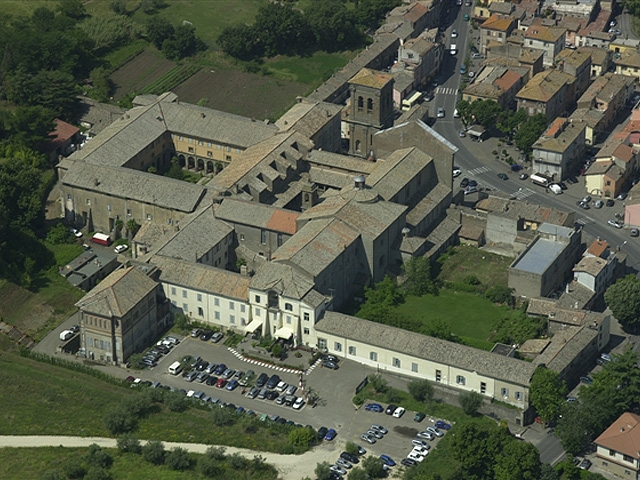
Renaissance period Domus La Quercia, venue of Greenaccord 2009 forum
“We know the climate is changing, probably as a result of humanity’s pollution; species are disappearing fast; deforestation is rampant; over-fishing is rife; water shortages are increasing; resource consumption is growing and so is the world’s population.
“…If this catastrophe unfolds, historians will look back and ask how that was allowed to happen with so little media debate. They may wonder what stories journalists were telling while the world was transformed around them.”
Those words are not new. In fact, they were part of the statement of concern issued at the end of the First International Media Forum organised by Greenaccord of Italy and held in Rapolano, Siena, Italy, in late 2003. I was one of 100+ journalists from all over the world who signed that original “Green Accord” for Journalists.
This year’s internationally acclaimed British climate film The Age of Stupid is based on a similar premise. This ambitious drama-documentary-animation hybrid features an old man living in the climate devastated world of 2055 AD, watching the ‘archive’ news footage from 2008 — and asking: “Why didn’t we stop climate change while we had the chance?”
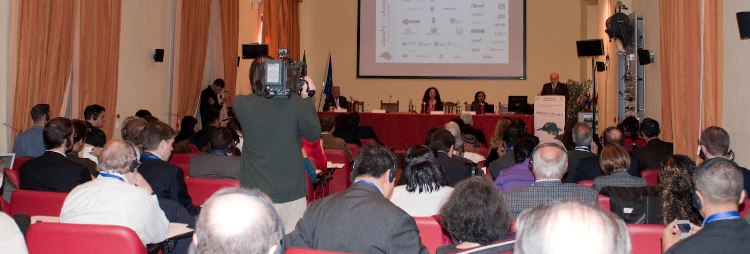
The 7th Greenaccord international forum, held in the central Italian city of Viterbo from 25 – 29 November 2009, has just ended calling upon world leaders to “draw a road map being a binding agreement for a total de-carbonization of world economy before 2050”.
Addressed to the UN climate conference opening in Copenhagen in a few days’ time, the forum’s final document – called the Viterbo Memorandum – urged that no more time be lost.
The Greenaccord forum’s theme this year was ‘Climate is changing: stories, facts and people’. Over five days, some 130 of us from 55 countries – drawn from all continents – stayed at the historic residence of Domus La Quercia in Viterbo, discussing and debating about the challenges faces by our warming planet, and how we as communicators can make a difference. It is what I recently called the Ultimate Race between education and catastrophe.
The Viterbo Memorandum pledged: “On their own side, they (journalists and scientists) vow to cooperate in order to spread correct information on the risk related to climate change and to make aware the public opinion on the need of individual contribution to the solution of problems by modifying their own life style.”
The Memorandum is to be delivered in early December 2009 to Dr Rajendra Pachauri, the Nobel Peace Prize winning Chairman of the UN’s climate panel, the IPCC.
Professor Andrea Masullo, President of Greenaccord’s Scientific Committee, said: “I don’t want our children and grandchildren, in 2050, finding themselves on a planet inhabited by more than 9 billion people and devastated by climate change, re-reading the scientific reports of today…to ask themselves what we were thinking and why we did not do anything when everything that was going to happen was clear.”
He added: ”In recent years the changes are progressing much faster than expected in the fourth IPCC report. Nevertheless, it seems that Copenhagen will not come again to a final agreement. Many governments feel they can take initiatives costly and complicated the current economic crisis. ”
Launched in 2003, the Greenaccord Forums have emerged as one of the largest annual gatherings of environmental journalists, broadcasters and activists at global level. As an organisation, Greenaccord aims to be an international “virtual table” open to all professionals in information and communication who want to deepen understanding about environment and its protection with their work.
I have been returning to Greenaccord’s annual forums the first one in 2003 – and always return with my knowledge updated and friendships renewed. This year was no exception.
Photos courtesy Yu-Tzu Chiu and Greenaccord
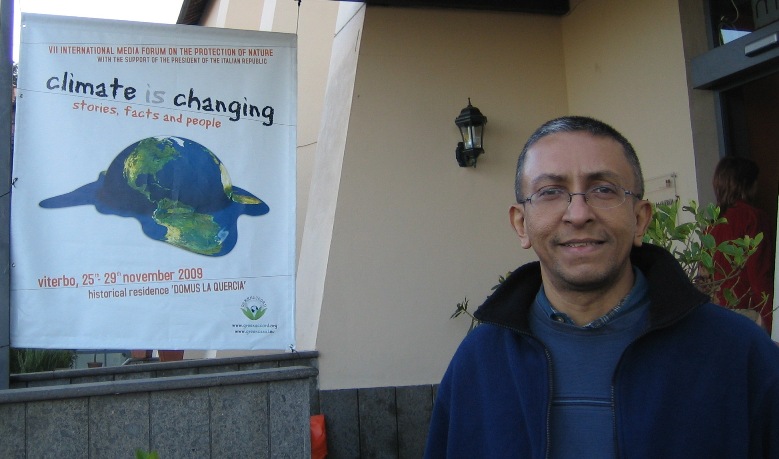
Nalaka Gunawardene at Greenaccord 2009 - Photo by Yu-Tzu Chiu
As I later heard, some in my audience had mistakenly believed that I was advocating everything going entirely online. Actually, I wasn’t. I like to think that both the physical and virtual media experiences enrich us in their own ways. Real world is never black and white; it’s always a mix or hybrid of multiple processes or influences.
So I’ve just revisited the topic. I adapted part of the talk, and included more personalised insights, and wrote an essay titled ‘Confessions of a Digital Immigrant‘, which has just been published on Groundviews, the path-breaking citizen journalism initiative.
It opens with these words:
“My daughter Dhara, 13, finds it incredible that I had never seen a working television until I had reached her current age — that’s when broadcast television was finally introduced in Sri Lanka, in April 1979. It is also totally inconceivable to her that my entire pre-teen media experience was limited to newspapers and a single, state-owned radio station.
“And she simply doesn’t believe me when I say — in all honesty and humility — that I was already 20 when I first used a personal computer, 29 when I bought my first mobile phone, and 30 when I finally got wired. In fact, my first home Internet connectivity — using a 33kbps dial-up modem — and our daughter arrived just a few weeks apart in mid 1996. I have never been able to decide which was more disruptive…
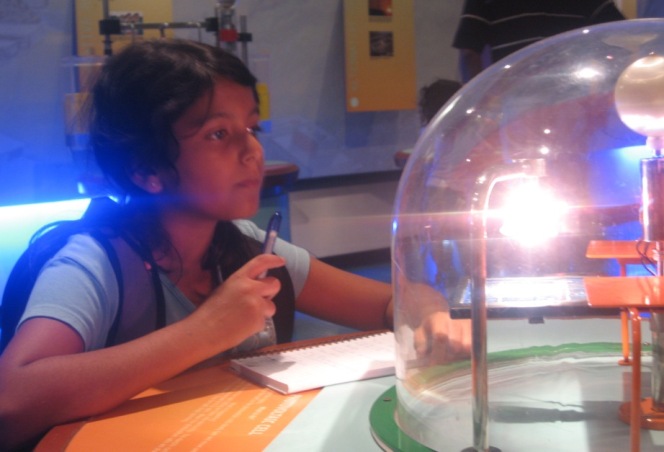
“Dhara (photographed above, in mid 2007) is growing up taking completely for granted the digital media and tools of our time. My Christmas presents to her in the past three years have been a basic digital camera, an i-pod and a mobile phone, each of which she mastered with such dexterity and speed. It amazes me how she keeps up with her Facebook, chats with friends overseas on Skype and maintains various online accounts for images, designs and interactive games. Yet she is a very ordinary child, not a female Jimmy Neutron.
“Despite my own long and varied association with information and communication technologies (ICTs), I know I can never be the digital native that Dhara so effortlessly is. No matter how well I mimic the native ‘accent’ or how much I fit into the bewildering new world that I now find myself in, I shall forever be a digital immigrant.”
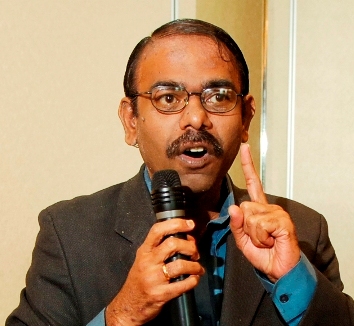
“There are no full-stops in good journalism, only commas,” he declared. He was referring to two of the most commonly used punctuation marks in modern writing.
This metaphor neatly sums up the nature of journalism, whose coverage of public affairs and society is often on-going, unfinished and open-ended. This prompted Phil Graham, the former publisher of the Washington Post, to describe journalism as the “first rough draft of history”. The reason is that journalists, in the performance of their duty often record important events, producing hurried written reports (in text, sound or pictures) often generated on short deadlines.
Panneer, who likes to call himself ‘a failed physicist and a failed journalist’, added that the intrinsic value of a journalist as one who tries to bring back the idea of commons — resources that are collectively owned, which can range from physical goods to artistic or creative products.
I always welcome occasions when his and my paths cross as we move in overlapping South Asian circles. Listening to him this time around, I recalled his clear, emphatic words on a previous occasion, at an Asian regional brainstorming on ‘Communicating Disasters: Building on the tsunami experience and responding to future challenges’ that I convened in December 2006 in Bangkok, Thailand.
He said the media is plural term, not a singular one. This implies that the media are not a monolith. Some are excellent; many are mediocre; some are downright bad. Some in the media are also indifferent to some issues but may be outstanding in addressing other issues.
He added that media is also very much a contested and contentious space where arguments rage on. Not everything is moderate, balanced or ‘evidence-based’.
Panneer’s day job is as the executive director of Panos South Asia. He was formerly the managing editor of Sun TV and bureau chief for Outlook magazine in India. Having been with the mainstream media for 20 years, he is now moving in that interesting overlap between media and development sectors. This gives him both insight and perspective.
Contributing a chapter to Communicating Disasters: An Asia Pacific Resource Book in 2007, Panneer wrote: “Development agencies rarely bring journalists into their universe at a stage which can be called ‘work-in-progress’. They usually just come to the media with a finished product. There is hardly any joint exploration. When presented with a finished product, there is just one alternative for a reporter — that is, to review the product that is already done.
“Imagine a scenario where journalists are brought into the process right from the word go. There would have been a series of stories, and when the final report of the development agencies is realised, that may well serve as the winding-up story tracking the entire trajectory.
“A journalist is expected to report and not just reproduce. Development agencies like their versions to be reproduced to a large extent. This becomes an assault on the journalists’ work-pride. He or she would like to do a field report, taking a cue or two from the work of the development agency. But, to merely reproduce a report is seen only as providing a free plug, an unpaid advertisement, and doing a stenographer’s job.”
Journalism as if the planet mattered... Who speaks for the Earth?
Thirty years ago, public astronomer Carl Sagan posed this question in his trail-blazing television series Cosmos: A Personal Voyage. And this is how he answered it:
“Our loyalties are to the species and to the planet. We speak for earth. Our obligation to survive and flourish is owed not just to ourselves, but also to that cosmos ancient and vast from which we spring!”
While we all can – and must – speak for our home planet, journalists covering environmental issues do that everyday as part of their job. And now, the rest of the world can vote for the year’s best efforts in this line of work.
Fifteen winners of the inaugural Earth Journalism Awards were announced this week in Paris. The organisers — Internews, an international NGO that works to empower local media worldwide — have opened the online public voting to find the winner of a 16th prize.
“The Earth Journalism Awards were established to boost climate change coverage in this critical year leading up to Copenhagen, and to highlight the efforts of journalists reporting on this challenging subject around the world,” says James Fahn, Internews’ Global Director of Environmental Program. “We were overwhelmed by the tremendous response we received, and would like to thank the hundreds of journalists who entered their stories for participating.”
Winning stories include: a compelling account from Pakistan of how a small coastal community is responding to the multiple challenges that climate change is already posing them; a multi-media investigation on the use and effects of fire in the Amazon; and a business report from East Africa on how Kenyan companies are missing out on the growing global carbon credits market.
They were chosen through a process involving a globe-spanning, independent jury that involved over 100 media and climate change experts. I was part of that process.
Watch video announcing the Earth Journalism Awards 2009:
Internews is inviting the winners of the Earth Journalism Awards to cover the negotiations at the United Nations Climate Change Conference in Copenhagen, (COP15) December 7-18. There they will receive support from Internews to report on the negotiations to their media organizations back home. They will also attend a high profile awards ceremony, to be co-hosted by Nobel Peace Prize Winner Dr. Rajendra K. Pachauri, at the Danish Radio Hall on December 14, the eve of the final high-level negotiations. Each of the fifteen winners will receive one of the coveted regional or thematic awards as determined by the independent juries.
The Earth Journalism Awards is being implemented by Internews in association with partners that include the Government of Denmark, hosts of the negotiations; The World Bank; MTV International, the leading global broadcaster and youth brand; The Government of Italy, The V. Kann Rasmussen Foundation and the Edgerton Family Fund; Flip Video Spotlight; the Open Society Network, WWF International, The Global Canopy Programme and the Tcktcktck campaign, part of the GCCA, the international alliance of campaigning NGOs that includes Oxfam, WWF, and Greenpeace, Global Forum for Media Development and IMS.








 “The Earth Journalism Awards were established to boost climate change coverage in this critical year leading up to Copenhagen, and to highlight the efforts of journalists reporting on this challenging subject around the world,” says
 Open Minds!