Rust in Peace: Tribute to my old faithful Toshiba Satellite Pro A100

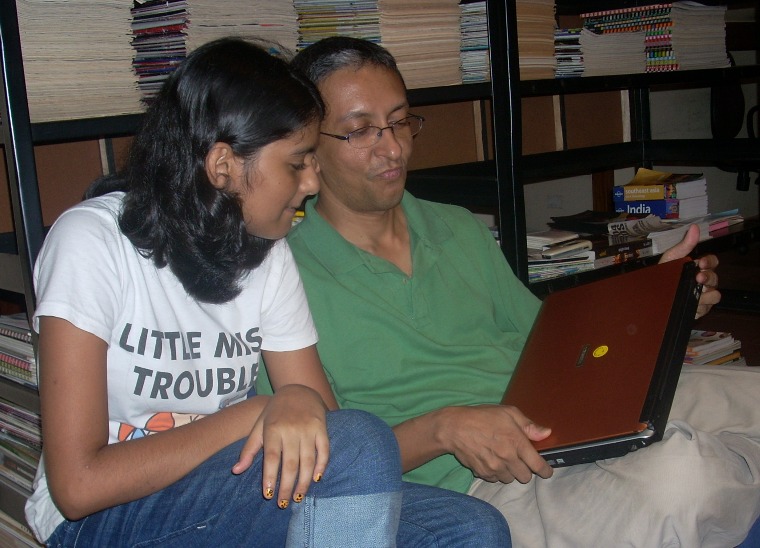
Dhara and Nalaka with their old faithful Toshiba, 24 Dec 2009 - Photo by Niroshan Fernando

For many of us, computers have become essential silicon extensions of our carbon selves — and we can’t imagine how we managed our work and leisure before their arriva. In my case, the attachment to my laptop goes beyond professional: it’s also my constant companion and travel partner.

So it’s akin to a death in the family when the old faithful finally goes the way of…all silicon. In 20 years of laptop use, I have mourned six: the average productive lifespan seems to be between three and four years. (Confession time: I have a cabinet full of very tired and fully expired laptops, mostly Toshiba.)

The latest calamity happened in early December, pushing me into a few days of digital turbulence just when I was trying to tie up various loose ends in what has been another hectic year. Fortunately, no data were lost, and I eventually managed a fairly orderly transfer.

It didn’t come entirely as a surprise. My Toshiba Satellite Pro (model A100) had been showing signs of wear and tear for a few months. The laptop screen is usually the first to develop problems of old age, but switching to a new machine is such a chore (and expense) that I was willing to live with an occasionally misbehaving display. But when bigger and deeper problems manifested – which our IT Manager Indika found were due to a malfunctioning motherboard – it was time to let go…

When I bought my latest Toshiba in mid 2006, I didn’t immediately like its metallic orange colour. I’d been using laptops with silver or electric blue coloured exteriors, and this was a clear departure from that range. But my female colleagues thought orange was rather ‘cool’. I didn’t easily warm up to this colour shift — until I realised the potential for some harmless fun.

Every few weeks, someone would ask me – inevitably, in the ICT circles that I move — whether I used Apple (the geekdom’s ultimate standard). For the past three and a half years, my honest yet confounding answer has been: ‘No, I’m perfectly happy with my Orange!’

Of course, my affection for the laptop was a lot more than skin deep. It has been an integral part of much of what I did professionally and personally in the past three and half years, both online and offline. My substantial volume of published output (op ed essays, book chapters, reviews and film scripts, etc.) took shape within it before flowing out in many and varied directions. I also generated a good deal of unpublished material, all of which is safely stored but not yet ready to see the light of day…

It was also the launch pad for this Moving Images blog, which I started from my friend Sue’s home in Washington DC in early Spring 2007.

It has travelled the world with me, going through hundreds of airports and keeping me much needed company in endless hotel rooms, conferences and meetings.

It has been my confidante in times of crisis – and the past 1,300 days have been among the most tumultuous in my personal and professional lives. While I’m not a social recluse, and cherish the company of my few close (human) friends, it’s sometimes nice to just pour my heart out to someone who listens, doesn’t judge and never resorts to wisecracks or amateur psychology…

So why do I then keep referring to such a trusted companion in the heartless third person as ‘it’? If ships and countries are decidedly female, what about computers that far more people in the world today relate to? That’s a good question, even if it brings up the heated – and as yet unresolved – debate among computer users on the correct gender of computers.

Assigning a gender isn’t that simple when I wasn’t the only regular user of the recently departed Toshiba. That is also another good reason why I was more attached to the last laptop than any of its predecessors: it’s the first machine that connected my Digital Native daughter Dhara to the internet. It arrived within days of her 10th birthday, and I finally ran out of excuses why she shouldn’t go online and get a digital life. (As I reported a few weeks ago, she has since made rapid progress.)

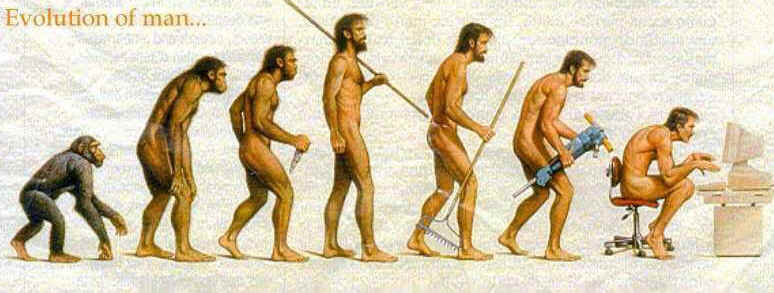
So it was rather apt that Dhara should come up with the perfect epitaph for our beloved, sorely missed silicon companion. It isn’t quite original, but sums up our shared sentiments very well: RIP: Rust In Peace…

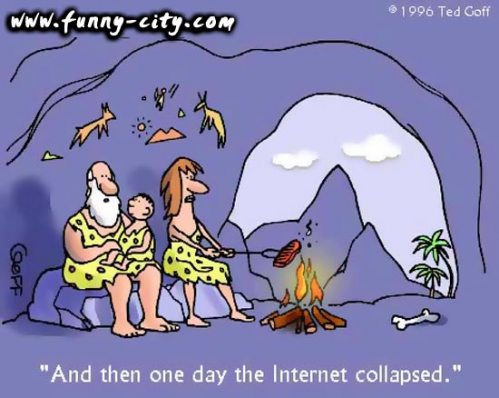
PS: Rust in Peace is also the title of an interesting collection that New York magazine recently published of everyday stuff rendered obsolete in the first decade of this century. Among the 17 items listed are the fax machine, audio cassette, answering machine, cathode ray tube TV and incandescent bulb…

Asian Tsunami+5: How a packed train headed to disaster with no warning…

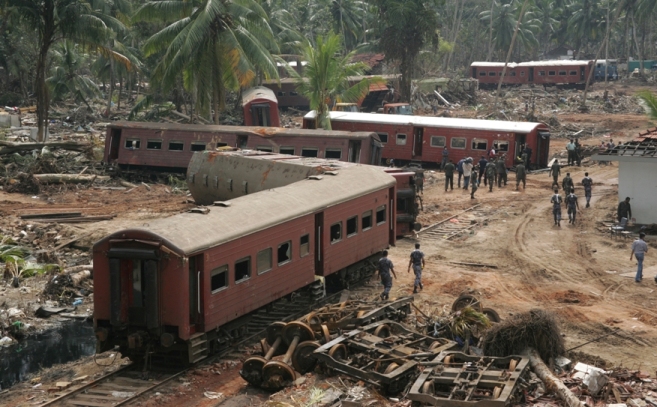
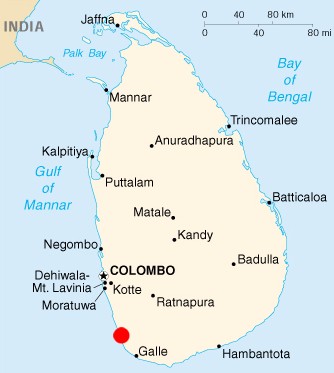
Scene of Peraliya train disaster - in Dec 2005 and Dec 2009 - Photos courtesy AFP

We tend to think of trains and railways as solid, tough objects. When the Asian Tsunami’s killer waves started rolling in without warning, the coastal residents of Telwatte and Peraliya areas in southern Sri Lanka thought a passing train offered them relative safety. They were dead wrong…

The train’s many tons of steel were no match for the enormous seismic energy that the sea waves were transmitting that day. There is no precise estimate of how many people perished on that train, ironically named Samudra Devi (Queen of the Sea) on the morning of 26 December 2004. The estimate ranges between 1,500 and 2,500 – some bodies were never recovered and washed into the sea. They joined a total of nearly 40,000 people dead or missing in Sri Lanka.

This is how the Wikipedia introduces the incident: “The Queen of the Sea rail disaster, the greatest train crash in railroad history, occurred when an overcrowded passenger train was destroyed on a coastal railway in Sri Lanka by the tsunami which followed the 2004 Indian Ocean Earthquake. Up to 2,000 people were killed, making it the world’s worst railway accident and eclipsing the previous record set by the Bihar train disaster in India in 1981, when a train had derailed and fell off a bridge, drowning about 800 people.”

Peraliya, scene of world's biggest train disaster
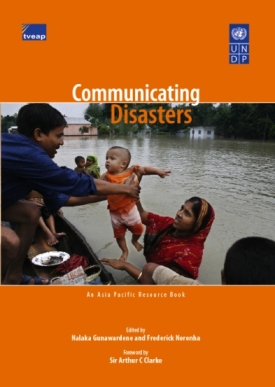
My friend Chanuka Wattegama, engineer turned ICT researcher, has done a detailed analysis of how and why no early warnings were issued anywhere in Sri Lanka that day, thus allowing many preventable deaths to occur. The tsunami, though extremely forceful, impacted only coastal areas and rapid evacuation could certainly have saved lives. He summed up his findings in a chapter on the subject he wrote for Communicating Disasters: An Asia Pacific Resource Book that I co-edited with Frederick Noronha two years ago.

This is what he says about the train tragedy, which sounds every bit gripping like a disaster movie script (but alas, was every bit real):

The railway authorities realise that one of their trains is moving down south, towards a risk prone area. They attempt to call the railway stations en route. The train is parked at the Ambalangoda railway station, when the station master’s phone rings constantly. Nobody answers it. Both the station master and his deputy are busy supervising the unloading of some goods from the train. By the time they receive the message, the train had already left the station. They do not have any way of issuing a warning, as the engine drive does not have a mobile phone.

“The train stops sometime later, in the middle of a village that had already been hit by the first waves. Those who are running for their lives assume the train to be a shield against the waves. They are wrong. The next waves hit the train, carrying it away like a child’s toy. The railway tracks get crumpled like a Möbius strip. If it can be called a railway accident, this would have been the worst train accident the world had ever witnessed. It alone costs more then 2,500 lives. Perhaps many of those lives could have saved if only the engine driver has been given a mobile phone.

We didn’t hear of any responsible official resigning or being sacked even after such massive bungling. But now Sri Lanka Railway has the dubious distinction of allowing the biggest train disaster to happen, which could have been prevented with quick thinking and action. Think about this before you next board a train anywhere in Sri Lanka…


Read full chapter: Nobody told us to run, by Chanuka Wattegama

Peraliya train disaster - photo by Shahidul Alam, Drik

Asian Tsunami+5: Are we sure there won’t be a surprise next time?

A monumental failure in communication...

This is one of the most memorable cartoons about the Asian Tsunami of December 2004. It was drawn by Jim Morin, the Pulitzer Prize winning editorial cartoonist of the Miami Herald.

It summed up, brilliantly, one of the biggest shocks associated with that mega-disaster. As I wrote in my op ed essay to mark the fifth anniversary: “It took a while for the tsunami waves, traversing the Indian Ocean at the speed of a jetliner, to reach India, the Maldives, Sri Lanka and Thailand. Yet, in this age of instantaneous telecom and media messaging, coastal residents and holiday makers were caught completely unawares — there was no public warning in most locations. Institutional, technological and systemic bottlenecks combined to produce this monumental failure in communication.”

Chanuka Wattegama
My friend Chanuka Wattegama, trained as an engineer and now working as a senior research manager at LIRNEasia, has studied this vital aspect of early warnings. He contributed a whole chapter on the subject to Communicating Disasters: An Asia Pacific Resource Book that I co-edited with Frederick Noronha two years ago.

After doing a dispassionate analysis of what went wrong in Sri Lanka in the crucial hours just before and during the 2004 tsunami, he asked: “So what remedies one can suggest so that when the next disaster happens — which may or may not be a tsunami — we do not see the same series of events repeated? What exactly is the role that the media can play?”

He outlined five action areas, all of which can be read in his chapter available for free online access (as is the rest of the book).

Here’s an excerpt:

Disaster warning is everyone’s business: Life for most of us would have been easier had the government taken full charge of disaster warnings. Unfortunately, the things do not work that way. These are some of key stakeholders and they have specific roles that they can play:

Views from Ground Zero of several disasters...
• The scientific community: Develop the early warning systems based on their expertise, support the design of scientific and systematic monitoring and warning services and translate technical information to layman’s language.
• National governments: Adopt policies and frameworks that facilitate early warning, operate Early Warning Systems, issue warnings for their country in a timely and effective manner.
• Local governments: Analyse and store critical knowledge of the hazards to which the communities are exposed. Provide this information to the national governments
• International bodies: Provide financial and technical support for national early warning activities and foster the exchange of data and knowledge between individual countries.
• Regional institutions and organizations: Provide specialized knowledge and advice in support of national efforts, to develop or sustain operational capabilities experienced by countries that share a common geographical environment.
• Non-governmental organizations: Play a critical role in raising awareness among individuals and organizations involved in early warning and in the implementation of early warning systems, particularly at the community level.
• The private sector: Play an essential role in implementing the solutions, using their know-how or donations (in-kind or cash) of goods or services, especially for the communication, dissemination and response elements of early warning.
• The media: It has to play an important role in improving the disaster consciousness of the general population, and disseminating early warnings. This can be the critical link between the agency that offer the warning and the recipients.
• Communities: These are central to people-oriented early warning systems. Their input to system-design and their ability to respond ultimately determines the extent of risk associated with natural hazards.

And here’s his conclusion:
“Technology is important. The sole reason behind the seemingly incredible advancements that have happened in the field of human development is the spurt in the growth of new technology. However without people to handle it properly, the technology per se can achieve little. What we can expect a sophisticate earthquake detecting device to do, if there are no human beings to take note what it indicates? So, while giving technology its due position, let us focus on the people-side of the problems. “

Spoken like an uncommon engineer, for sure.

Read full chapter: Nobody told us to run, by Chanuka Wattegama

e-Asia 2009 in Colombo: Huge gaps remain between Sri Lanka’s ICT hype and reality

Say eeeeeeeeeee - and don't ask questions!
The much-hyped e-Asia 2009 conference and exhibition opens in Colombo, Sri Lanka, today. It is organised by our good friends at the Centre for Science, Development and Media Studies (CSDMS) in India and the Sri Lankan government agency known as Information and Communication Technology Agency (ICTA).

According to the conference website, e-Asia 2009 is meant also to celebrate Sri Lanka’s Year of ICT and English, 2009. The event has been preceded by a massive advertising blitz in Sri Lanka’s print and broadcast media, while Colombo and suburbs have been plastered with promotional banners and posters.

The foreign delegates will be exposed to a great deal of sunshine stories from the ICTA which was originally set up as a sunset agency (but hey, the sun never sets on some people!). Sri Lankan delegates will be too embarrassed or well mannered to point out glaring gaps between the hype and reality. Few people want to rock the boat these days!

I am reminded of a popular Sri Lankan folk tale. It relates an incident that happened when we were ruled by hereditary kings, and concerns jaggery — a delicious sugar substitute we make from the sap of the coconut palm.

The King of Lanka, being the curious type, wanted to know how jaggery was made. He sent for the official jaggery supplier to the Palace, who claimed that it was being produced under the most hygienic conditions by people who had mastered the technique for decades.

Unlike today’s rulers, however, the kings of yore didn’t believe everything they were told. So one day the King went in disguise to investigate. Which was just as well — because the reality was completely different! The king found his jaggery being made in a rickety old shack, with none of the hygienic conditions!

A very angry king revealed who he was, and demanded an explanation. He was then told: “That’s the hype, Your Majesty, and this is the reality!”

For one thing, today’s heads of state – overexposed in the media – can hardly expect to go anywhere incognito (and if they tried, security officers and assorted sycophants would immediately prevent it!). All the same, it is an interesting thought experiment to wonder what the President of Sri Lanka might uncover if he were to probe beyond the glitzy (almost giddy) propaganda being unleashed by ICTA!

As I wrote in CSDMS’s own regional magazine i4d a couple of years ago, the gulf between the hype and reality in our ICT circles can be as wide as it is shocking. When an agency invests so much time, effort and money in publicity, we can always suspect that there is more than what meets the eye…

People want their needs met and problems solved, not fancy projects...

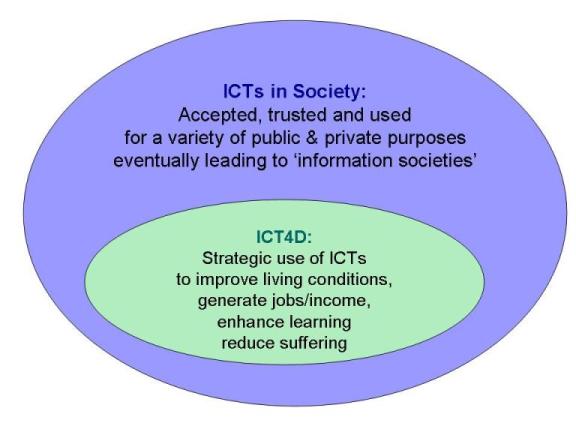
The proof of the ICT pudding is in the societal acceptance and integration of ICT tools, processes and services in the daily living, work and leisure of people. As I said in my i4d essay: “Tragically, the ICT Agency of Sri Lanka, which has the mandate and powers to address these issues, is instead dissipating its energy and resources on setting up rural tele-centres, a task that it should leave to better positioned and experienced groups. This glaring inability to set and pursue the right priorities has been a bane of Sri Lankan ICT sector for years.”

What I wrote a couple of years ago is still valid. Here’s another excerpt:

No amount of legislation, policy formulation and paid propaganda by the ICTA is going to mainstream ICTs in Sri Lankan society. ICTs have to prove their worth, and be accepted as adding value to living and working conditions of ordinary people.

We can assess the utility and relevance of any new technology by asking a few simple questions. Does the new technology or process:
– put more food on their table?
– add More money in people’s pockets?
– make interfacing with govt easier?
– save time and effort involved in commuting?
– support cultural and personal needs of individuals and groups?
– put a smile on users’ faces?

Finally, is it affordable, user-friendly and widely available, with minimum entry level barriers?

Read my full essay, ICT Hype and Realities in i4d magazine

Confessions of a Digital Immigrant: Reflections on mainstream and new media

The Digital Native: Was there a life before the Internet, Dad?

In early August 2009, I talked to a captive audience of media owners, senior journalists and broadcasters in Colombo about the ‘digital tsunami’ now sweeping across the media world. (It has been reported and discussed in a number of blog posts on Aug 6, Aug 7, Aug 8 and Aug 31).

As I later heard, some in my audience had mistakenly believed that I was advocating everything going entirely online. Actually, I wasn’t. I like to think that both the physical and virtual media experiences enrich us in their own ways. Real world is never black and white; it’s always a mix or hybrid of multiple processes or influences.

So I’ve just revisited the topic. I adapted part of the talk, and included more personalised insights, and wrote an essay titled ‘Confessions of a Digital Immigrant‘, which has just been published on Groundviews, the path-breaking citizen journalism initiative.

It opens with these words:

“My daughter Dhara, 13, finds it incredible that I had never seen a working television until I had reached her current age — that’s when broadcast television was finally introduced in Sri Lanka, in April 1979. It is also totally inconceivable to her that my entire pre-teen media experience was limited to newspapers and a single, state-owned radio station.

“And she simply doesn’t believe me when I say — in all honesty and humility — that I was already 20 when I first used a personal computer, 29 when I bought my first mobile phone, and 30 when I finally got wired. In fact, my first home Internet connectivity — using a 33kbps dial-up modem — and our daughter arrived just a few weeks apart in mid 1996. I have never been able to decide which was more disruptive…

Groundviews: 1,000 posts and counting...“Dhara (photographed above, in mid 2007) is growing up taking completely for granted the digital media and tools of our time. My Christmas presents to her in the past three years have been a basic digital camera, an i-pod and a mobile phone, each of which she mastered with such dexterity and speed. It amazes me how she keeps up with her Facebook, chats with friends overseas on Skype and maintains various online accounts for images, designs and interactive games. Yet she is a very ordinary child, not a female Jimmy Neutron.

“Despite my own long and varied association with information and communication technologies (ICTs), I know I can never be the digital native that Dhara so effortlessly is. No matter how well I mimic the native ‘accent’ or how much I fit into the bewildering new world that I now find myself in, I shall forever be a digital immigrant.”

Read the full essay ‘Confessions of a Digital Immigrant’ on Groundviews…

BigShot: A little camera with a Big potential — inspired by a film!

BigShot: Inspiration with every click?
“Build a better mousetrap, and the world will beat a path to your door.” This remark is attributed to one of my favourite essayists and philosophers, Ralph Waldo Emerson.

That was probably true for the 19th century in which he lived and died, but it takes a bit more than a mousetrap to generate a buzz these days. But simple and elegant inventions are still the best. BigShot is one of these.

It’s still in testing stage, but already being hailed as “a camera that could improve the way children learn about science and one another”.

BigShot is an innovation by Indian-born Shree K. Nayar, now the T. C. Chang Professor of Computer Science at Columbia University in New York, USA.

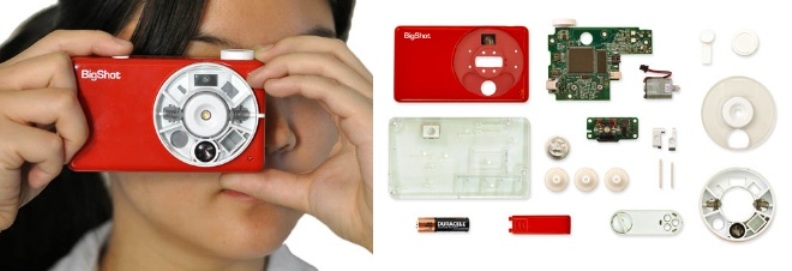
As his university’s newspaper reports: “He came up with a prototype as sleek as an iPod and as tactile as a Lego set: the Bigshot digital camera. It comes as a kit, allowing children as young as eight to assemble a device as sophisticated as the kind grown-ups use—complete with a flash and standard, 3-D and panoramic lenses—only cooler. Its color palette is inspired by M&Ms, a hand crank provides power even when there are no batteries and a transparent back panel shows the camera’s inner workings.”

With the BigShot, Nayar wants to not only empower children and encourage their creative vision, but also get them excited about science. Each building block of the camera is designed to teach a basic concept of physics: why light bends when it passes through a transparent object, how mechanical energy is converted into electrical energy, how a gear train works.

Watch Professor Shree Nayar talk about the purpose and development of the Bigshot camera project.

Nayar would like to roll out the camera, now in prototype form, along the lines of the One Laptop Per Child campaign: For each one sold at the full price of around $100, several would be donated to underprivileged schools in the United States and abroad. He will soon begin looking for a partner—a company or nonprofit—to help put Bigshot into production.

Life inspires innovation...
Wired magazine wrote in a recent review: “(It) is a super-simple digicam from the Computer Vision Lab at Columbia University. It comes in parts, ready to be assembled (by kids, but I can’t wait to get my hands on one), and teaches you along the way how these things work. It’s not quite the transparent view you get from making an old analog camera, where you can see how everything works, but it’s as close as you can get from a machine that uses circuit boards.”

Interestingly, the initial inspiration for BigShot came from a documentary: Born into Brothels (85 mins, 2004), a film about the children of prostitutes in Sonagachi, Kolkata’s red light district. The widely acclaimed film, written and directed by Zana Briski and Ross Kauffman, won a string of accolades including the Academy Award for Documentary Feature made in 2004.

I saw that film during the AIDS Film Festival I helped organise in Bangkok in July 2004. In this film, the film maker, British photographer Zana Briski, gave 35 mm film cameras to eight children and watched as those cameras transformed their lives.

“The film reaffirmed something I’ve believed for a long time, which is that the camera, as a piece of technology, has a very special place in society,” says Nayar. “It allows us to express ourselves and to communicate with each other in a very powerful way.”

Watch an overview of Born into Brothels, featuring the film makers:

How to become a global publisher or broadcaster in just 100 minutes!

cartoons_02
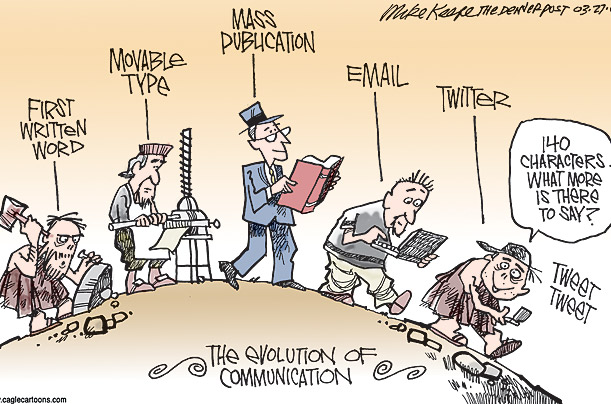
Evolution or revolution?

I was born three years before the Internet (which turned 40 a few weeks ago), and raised entirely on newspapers and radio in a country where broadcast television didn’t arrive until I was 13.

From the time I could read and write, I always wanted to be a media publisher. In that pre-history of the Personal Computer and Internet, my choices were pretty limited: I published a hand-written household newspaper and was its editor, reporter, printer and distributor all rolled into one. But I was obsessive in my work even then, and the newspaper lasted a couple of years in which over two dozen issues were released (all of them now mercifully lost).

My school teacher parents were my first patrons, supplying me with plenty of paper, pencils and ink. But there must have times when they rather wished that I didn’t indulge in my own brand of independent journalism. I loved to criticise and lampoon the ‘management’ in my editorials — even as a kid, I was already critical of the establishment!

Fortunately for me, the ‘management’ left me alone and to my own devices, but most independent editors in history haven’t been so lucky. As the American journalist A.J. Leibling (1904 -1963) once said, “Freedom of the press is guaranteed only to those who own one.” In his time, this was perfectly true.

There was a time, until recently, when press barons and media moguls led, and the rest of society followed. In our topsy-turvy times, however, the reverse is increasingly true.

In theory, at least, anyone can be a global broadcaster and publisher in less than two hours using free tools that can be downloaded and activated in minutes.

david brewer photo
David Brewer (photo from http://www.i-m-s.dk)
My British media activist friend David Brewer has just published an online guide on how to become a publisher or broadcaster in 100 minutes. (Okay, the non-geeks among us might need a bit longer than that, but still, you can be in business in just a few hours.)

David Brewer’s journalistic and managerial experience spans newspapers, radio, television, and online, and he now runs Media Ideas International Ltd, a media strategy consultancy with clients in Europe, the Balkans, the CIS, the Middle East, Asia, Africa and Central America.

David has worked with what I like to call the A-B-C of global broadcasting. He was the launch managing editor of BBC News Online in 1997, and moved to CNN, as managing editor, to set up CNN.com Europe, Middle East and Africa and CNNArabic.com. He was an editorial consultant for the launch of Al Jazeera English in 2006 and continues to work with Al Jazeera English as a new media consultant.

In his spare time, he runs Media Helping Media , a network and online resource to support media in areas where freedom of expression is under threat.

Who’s making video clips? Not me…but does it matter anymore?

video clip
Clip, clip, clip...
I’m usually happy and eager to explain my work to anyone who asks. I keep cool when people mix up technicalities related to film and video – after all, I don’t know the finer points in other professions and industries.

One thing I’m a bit tired of hearing is the wide-spread misuse of the term ‘video clip’. I try to keep a straight face when well-meaning people ask me about recent ‘video clips’ I’ve made. The truth is, I don’t make any: I make fully edited films – sometimes long, sometimes short, but always finished (That is, if a film can ever be called ‘finished’. An industry giant once told me that no film is ever finished; it’s only abandoned…)

For example, my latest climate film Small Islands – Big Impact is slightly under 6 minutes, yet it’s a complete product. I spent two months working on actually making it, and almost 20 years covering the story itself.

But the distinction between film and clip is not widely understood. In fact, the digital revolution seems to have added to the confusion.

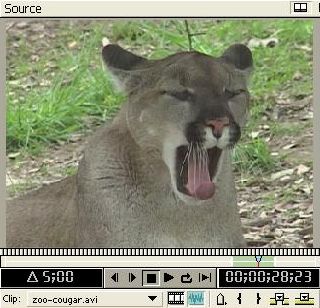
The Wikipedia says a media clip is a short segment of media either an audio clip or a video clip. In other words, a part of something bigger.

It further explains: “Media clips may be promotional in nature, as with movie clips. For example, to promote upcoming movies, many actors are accompanied by movie clips on their circuits. Additionally, media clips may be raw materials of other productions, such as audio clips used for sound effects.”

Video clips are short clips of video, usually part of a longer piece. Wikipedia adds, however, that this term is “also more loosely used to mean any short video less than the length of a traditional television program.”

That’s part of the confusion. With the spread of broadband Internet , which enabled greater bandwidth to both content creators and users, video clips have become very popular online.

About.com, another widely used online reference, says: “A video clip is a small section of a larger video presentation. A series of video frames are run in succession to produce a short, animated video. This compilation of video frames results in a video clip.”

But that’s not all. While the TV/video industry widely accepts the above definition, the computer industry seems to use ‘video clip’ generically to mean any short video, processed or otherwise. This is how video clip is defined, for example, by YourDictionary.com and PC Magazine’s online encyclopedia.

New Real Player
Snip, snip, snip...?
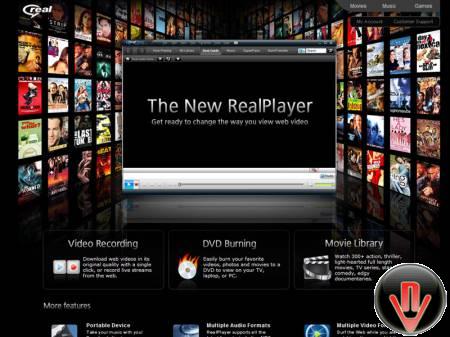
In this era of media convergence, when films an TV programmes are made using non-linear technologies enabled by computers, it’s no wonder that ‘video clip’ means different things to different people.

Wikipedia also talks of an emerging clip culture: “The widespread popularity of video clips, with the aid of new distribution channels, has evolved into clip culture. It is compared to “lean-back” experience of seeing traditional movies, refers to an internet activity of sharing and viewing a short video, mostly less than 15 minutes. The culture began as early as the development of broadband network, but it sees the boom since 2005 when websites for uploading clips are emerging on the market, including Shockinghumor, YouTube, Google Video, MSN Video and Yahoo! Video. These video clips often show moments of significance, humour, oddity, or prodigy performance. Sources for video clips include news, movies, music video and amateur video shot. In addition to the clip recorded by high-quality camcorders, it is becoming common to produce clips with digital camera, webcam, and mobile phone.”

Until recently, I used to get irked when people ask me about ‘video clips’ I make. My stock answer has been: “We only make fully edited, self-contained short films of various durations…partly because less is more these days. We don’t, as a policy, make ‘clips’ which in TV industry terms means semi-edited or unedited extracts that are not self-contained.”

Maybe I should stop being such a purist. After all, as I keep reminding my colleagues, students and anyone else who cares to listen to me, media is a plural!

One thing is for sure. Literacy rates and computer literacy rates have been rising worldwide in recent decades. But when it comes to basic media literacy, our societies still have a long way to go.

PS: In July 2007, we had an interesting discussion on this blog on the shrinking durations of Nature and environment films and TV programmes. The moving images community seems divided on this, with some purists holding out that to pack complex, nuanced messages into a few minutes is akin to ‘dumbing down’. Noted film-makers like Neil Curry disagreed.

Internet at 40: Over the hill or real life begins from now?

Where does wireless come in?

When Apollo XI astronauts became the first humans to land on the Moon in July 1969, the whole world knew – and about a quarter of humanity actually watched it live on television. The 40th anniversary of that ‘giant leap for mankind’ was marked a few months ago.

Something else with far-reaching implications happened a few weeks later, but was not noted as significant outside the circles of nerds and geeks. On 2 September 1969, computer scientists at the University of California, Los Angeles, established a network connection between two computers — creating the very first node of what we now know as the Internet.

At the time, engineer and computer scientist Leonard Kleinrock and his colleagues were charged with developing the Advanced Research Projects Agency Network (or ARPANET), a US government-funded research project in global computer communications that eventually grew into the Internet.

Although some celebrated the Internet’s 40th birthday on 2 September 2009, others held that the network didn’t really have ‘life’ until 29 October 1969. On that day, a message was typed by Kleinrock and sent to the second node at Stanford Research Institute. That “was the first breath of life the Internet ever took,” says Kleinrock.

Given the complexity that the Internet has evolved to, it isn’t surprising that the actual birthday is hard to pin down and is the subject of endless discussion among geeks and wonks online. For the rest of us grateful users of the Internet — most of the 1.6 billion people estimated as connected — we can celebrate the Internet’s 40th birthday through the months of September and October 2009.

But as this recent AP story reminds us, goofy videos weren’t on the minds of Len Kleinrock and his team at UCLA when they began tests 40 years ago on what would become the Internet.

Associated Press story, 31 August 2009: Internet Creators Didn’t Foresee Today’s Web

So as the Internet turns 40 – is it downhill from now? Or does life actually begin at 40? (As someone who is three years older than the Internet, I would say yes!).

“The Internet has just reached its teenage years,” Kleinrock said in an interview with Computerworld recently. “It’s just beginning to flex its muscles. The fact that it’s just gotten into its dark side – with spam and viruses and fraud — means that it’s like an [unruly] teenager. That too will pass as it matures.”

British techno-historian and columnist John Naughton (author of ‘A Brief History of the Future: Origins of the Internet‘) describes the Internet as an attempt to answer the following question: How do you design a network that is “future proof”–that can support the applications that today’s inventors have not yet dreamed of? The solution was to devise a network of networks that would not be biased in favor of any particular application. The Internet’s creators didn’t want the network architecture–or any single entity–to pick winners and losers. Because it might pick the wrong ones. Instead, the Internet’s open architecture pushes decision-making and intelligence to the edge of the network–to end users, to the cloud, to businesses of every size and in every sector of the economy, to creators and speakers across the country and around the globe.

In the words of Tim Berners-Lee, the Internet is a “blank canvas”–allowing anyone to contribute and to innovate without permission. It was Berners-Lee, as a young computer scientist, who is credited with inventing the World Wide Web, making the first proposal for it in March 1989. So the web turns 20 this year as the Internet itself passes 40.

Anyone dares to predict what can happen in the next 20 years? Here’s one prophecy I hope will never come to pass…

Back to Year Zero?
Back to Year Zero?

Cory Aquino (1933 – 2009): Unleashed People Power, still haunting tyrants worldwide

The remains of former Philippine president Corazon Aquino passes through the historical EDSA road with some 300,000 supporters waving to pay their last respect. The road is remembered in 1986 as then anonymous Cory and some 2 million people rallied out the streets to fight a 20-year government dictatorship through peaceful people power revolution. Photo by Arwin Doloricon/ Voyage Film

I know this post appears rather late, but I couldn’t let Cory Aquino’s death on 1 August 2009 pass without comment. The original inspiration for People Power that toppled one of the worst tyrants of the 20th Century, she would now turn the Patron Saint of peaceful democratic struggles everywhere.

Last week, I was reduced to tears reading two links that my Filipino friend Ruth Villarama, who runs Voyage Films in Manila, sent me of new comments posted on their website.

In the first post, A housewife, a leader, an angel in yellow (3 August 2009), Joan Rae Ramirez wrote: “Her death at 3 AM on August 1 has stopped a nation from its apathetic works to once again remember what was once fought by this ordinary housewife. It is on these rarest moments where the oligarchs came down from their kingdoms to pay their respect and mingle with the people who truly represent the real state of the Philippine nation.”

Karen Lim, who works with Voyage Films as a producer and project coordinator, wrote a more personalised piece titled The Famous Anonymous.

It opened with these words: “I see her on TV. In some instances I even covered her for a story. Our relationship did not go deeper than the reporter-subject, or the audience and the watched. Yet I feel a certain affinity to the most revered President. And when she died I got sad, a strange feeling of sadness where the source is unknown.”

Karen was too young to have remembered much of those heady days of the People Power Revolution of February 1986 — a series of nonviolent and prayerful mass street demonstrations in the Philippines that eventually toppled the 20-year autocracy of Ferdinand Marcos. Indeed, a whole generation of Filipinos has been born since. But that doesn’t stop them from relating to the monumental events that unfolded at at Epifanio de los Santos Avenue, known more commonly by its acronym EDSA, in Quezon City, Metropolitan Manila and involved over 2 million ordinary Filipinos as well as several political, military and religious figures.

As Karen wrote in her tribute: “Cory’s life became ours too. We watched her, sometimes we joined her. We experienced her highs and lows. We are her “Mga minamahal kong kababayan”(my beloved fellowman). She did what no stranger did in my family – unite us in prayer for the country, unite us in laughter amidst the uncertainties of those times. I had no personal connection to this lady, but I have now every reason to mourn her passing.”

Woman of the Year 1986
I can only echo her Karen’s words. As a politically curious 19-year-old, I had followed with much interest the daring gamble and eventual triumph of People Power unfolding thousands of kilometres away from my Colombo home. In the pre-Internet era, and before satellite TV channels provided 24/7 coverage across Asia, my sources were daily newspapers, evening news bulletins on local TV and, once every few weeks, the second-hand copies of Time magazine passed on to me by an uncle. The housewife in yellow ended up becoming Time Woman of the Year for 1986, with Pico Iyer writing a suitably reflective piece.

In the years since the return of democracy – with all its imperfections and idiosyncrasies – I have stood at EDSA more than once, and wondered what it must have been like to mobilise millions of ordinary, concerned people in the days before email, Internet and mobile phones — communication tools that today’s political activists, and indeed everyone else, take for granted. There is a thin line between a non-violent struggle and a passionate yet violent mob that, ultimately, works against their own interests. I am amazed that Cory and her activists didn’t cross the line, despite provocations and 20 years of repression.

Of course, it wasn’t just the human numbers that turned the tide in EDSA. Cory Aquino’s charismatic leadership and moral authority persuaded other centres of power – including the Catholic church and sections of the military – to align with the struggle to restore democracy. It was this combination, and the sudden change of mind by the Americans who had backed Marcos all along, that enabled People Power to triumph.

Elsewhere in Asia, where these elements didn’t align as forcefully and resolutely in the years that followed, the outcome was not as dramatic or positive. We’ve seen that, for example, in places as diverse as Tiananmen Square in China (1989), Burma (2007) and most recently, in the streets of Tehran, Iran. In contrast, it did indeed work and ushered in regime change in places like Nepal, even though it entailed more protracted struggles.

What interests me, in particular, is the role played by information and communication technologies (ICTs) in such People Power movements. Alex Magno, a political analyst and professor of sociology in Manila, sees clear links between new communications technologies and political agitation. Interviewed on the Canadian documentary Seeing Is Believing: Handicams, Human Rights and the News (2002), he said: “In the last two decades or so, most of the political upheavals had some distinct link to communications technology. The (1979) Iranian Revolution was closely linked to the audio cassette. The first EDSA uprising in the Philippines was very closely linked to the photocopying machine and so we called it the ‘Xerox Revolution’. Tiananmen, the uprising that failed in China, was called the ‘Fax Revolution’, because the rest of the world was better informed than the rest of the neighbourhood because of the fax machine. The January (2002) uprising in the Philippines represents a convergence between electronic mail and text messaging. And that gave that uprising its specific characteristics.”

Mobile phones' role in People Power II acknowledged in a Manila mural
But it was People Power II in the Philippines that is perhaps the best known example of ICTs fuelling and sustaining a revolution. The ability to send short text messages on cell phones helped spawn that political revolution in early 2001, a full decade and a half after the original wave that swept Cory Aquino into office.

President Estrada was on trial facing charges of bribery, corruption and breach of the public trust. Despite mounting evidence against him, the President was let off the hook. That was the turning point. According to Ramon Isberto, a vice-president at Smart Telecom in the Philippines: “People saw it on television, and a lot of people were revolted. They started text messaging each other, sending each other messages over the Internet, and that thing created a combustion.”

Because of texting and email, within two hours over 200,000 people converged in the main street of Manila demanding the president’s resignation. The vigil lasted for four days and four nights, until President Estrada finally got the message and stepped down. It ended with Gloria Macapagal-Arroyo taking her oath of office in the presence of the crowd at EDSA, becoming the 14th president of the Philippines.

Those events have been documented, analysed and interpreted by many people from various angles. The Cold War had ended and the geopolitical map of the world had been redrawn. By this time, 24/7 satellite television was commonplace in Asia and the mobile phone was already within ordinary people’s reach. Gloria was no Cory, and Estrada wasn’t Marcos. But the forces and elements once again aligned on EDSA, and with history-making results. The role that the humble mobile phone played is acknowledged, among other places, in a mural in Manila.