Celebrating Kalpana Sharma, a super-star of good journalism

My friend Kalpana Sharma just stepped down after serving on the Panos South Asia board for over a decade. The Executive Director A S Panneerselvan asked me to write a personalised piece felicitating her. Part of this was read at the annual meeting of the Board held in Dhaka last weekend. Here’s the full essay — a couple of mutual friends who read it say it isn’t too eulogistic! Now you can decide for yourself…

* * * * *

The Curious Ms Sharma of Mumbai

I knew Kalpana Sharma from her by-line long before I met her in person. Now, more than a dozen years after we became friends, she remains an inspiration and a role model.
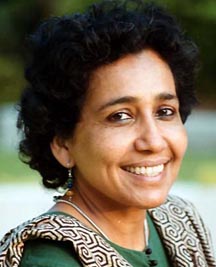
Kalpana Sharma
Kalpana has been a path-finder and trail-blazer in journalism that cares. She has set the gold standard in investigating and critiquing development in the Indian media. Today, she continues her nearly four decades of association with the Indian media as a respected columnist, journalist and writer. Her stock in trade is a mix of curiosity, sense of social justice, wanderlust and a deep passion for people and issues. She is living proof that quality journalism can be pursued even in these turbulent and uncertain times for the mainstream, corporatised media.

Kalpana has been covering the ‘other India’ that is largely ignored by the Indian media. Its denizens are some 456 million people living under the global poverty line of $1.25 per day — a third of the world’s poor. (If they declared independence, they would immediately become the world’s third most populous nation.) Kalpana’s reporting from the ‘Ground Zero’ of many disasters and conflict zones has highlighted the multiple deprivations of these people living on the margins of survival.

For many such communities, a headline-creating event is just the latest episode in their prolonged and silent suffering. The media pack that descends on them after a sudden development can’t seem very different from the assorted politicians who turn up periodically during election campaigns. For too long, the grassroots have been treated merely as a grazing ground for stories or votes.

Kalpana doesn’t hesitate to be part of the media pack when duty calls, but once in the field, she sees connections often missed by other journalists looking for a quick sound byte or dramatic image. Unlike some news hounds, she doesn’t exploit the misery of affected people (“Hands up who’s poor, speaks English – and looks good on TV!”). And she returns to the same locations months or years later to follow up.
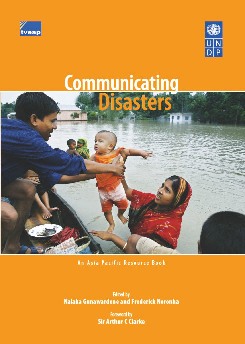
For all these reasons, Kalpana was our first choice to write the last chapter in a regional book on disasters and media that I co-edited with Indian journalist Frederick Noronha in 2007. Her 2,000-word reflective essay should be required reading for any journalist covering disasters and social disparity in South Asia.

Here is a passage that sums up her views on the subject: “Much of disaster reporting sounds and reads the same because the reporters only see what is in front of them, not what lies behind the mounds of rubble, figuratively speaking. What was this region before it became this disaster area? How were social relations between different groups? What was its history? What were its relations with the state government? Was it neglected or was it favoured? How important was it to the politics of the state?”

Kalpana has been asking such probing questions all her professional life. And it’s not just in the rural hinterland of India that Kalpana has travelled extensively listening and talking to people from all walks of life. Living in the world’s second most populous city Mumbai, she has been equally concerned with its burning issues of urban poverty, gender disparity, environmental mismanagement and governance.
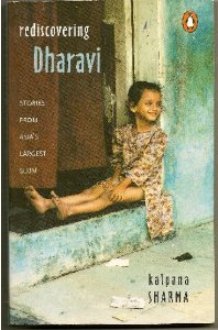
Kalpana once wrote an insightful book about the Dharavi slum in Mumbai, looking at both its social inequalities and the people’s remarkable resilience. Titled Rediscovering Dharavi: Stories from Asia’s largest slum (Penguin, 2000), it was called ‘a model of sane, human, down-to-earth writing’. All this was years before the Oscar-winning movie Slumdog Millionaire (2008) popularised the location through a dramatic tale.

In her quest for untold human stories, Kalpana has taken a particular interest in the plight of poor women. She has written many authentic and moving stories about women who struggle on the margins of the margin. A recurrent theme in her writing is how invisible ‘superwomen’ hold the social fabric together in much of India. Many communities and production systems –ranging from domestic work and child care to waste disposal and farming – would simply grind to a halt if these unseen and unsung women took even a single day off. In reality, of course, they just can’t afford such luxuries.

Kalpana’s column The Other Half, which started in The Indian Express and now appears in The Hindu, is a regular eye-opener. She takes a current topic – from politics, culture, sport or environment — and explores its gender dimensions. She does so by carefully blending facts, personal insights and opinion that makes her writing very different to the rhetorical shrill of gender activists.

Make no mistake: Kalpana is an activist in her own right, and one of the finest in modern India. It’s just that her approach is more subtle, rational and measured – and in the long run, wholly more effective. Long ago, she found how to balance public interest journalism with social activism. This is one more reason why I look up to her.
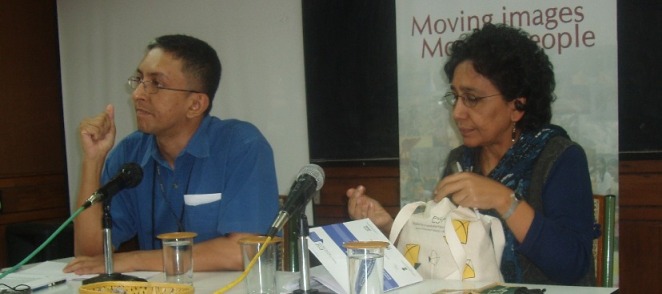
Partners in crime: Nalaka and Kalpana speaking at the Education for Sustainable Future conference in Ahmedabad, India, January 2005.

In her writing, television appearances and public speaking, Kalpana stays well within the boundaries of good, old-fashioned journalism based on its A, B and C: accuracy, balance and credibility. In my view, she enriches the mix by adding a ‘D’ and ‘E’: depth and empathy. Without these qualities, mere reporting is sterile and dispassionate.

And once we get to know her, we also discover the ‘F’ in Kalpana Sharma: she is a fun-loving, cheerful woman who doesn’t take herself too seriously. We can count on her to be adventurous, enthusiastic and endlessly curious.

Cultivating these attributes would certainly enrich any journalist. I can’t agree more when Kalpana says (in her chapter to a recent book on environmental journalism in South Asia): “Journalists are good or bad, professional or unprofessional. I am not sure if other labels, such as ‘environmental’ or ‘developmental’, ought to be tagged on to journalists.”

I hope Kalpana has no retirement plans. She has earned a break after a dozen years on the Board of Panos South Asia. But we want her to remain a guiding star – a bundle of energy that shines a light into the Darkness, and helps make sense of the tumult and frenzy that surrounds us.
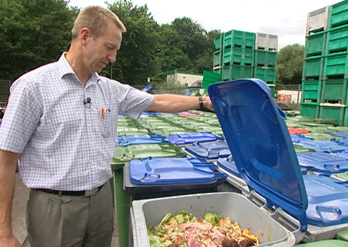
Taste the Waste: Uncovering a crime against humanity and Nature

Opening the lid...

“How can we explain the fact that one sixth of humanity goes to bed hungry every night, when the world already produces enough food for all?

“The short answer is that there are serious anomalies in the distribution of food. Capricious and uncaring market forces prevent millions of people from having at least one decent meal a day, while others have an abundance of it. For the first time in history, the number of severely malnourished persons now equals the number suffering from over-consumption: about a billion each!”

That was the opening of an article on the future of food, co-authored by Sir Arthur Clarke and myself in 2000. It was circulated by the UN Food and Agriculture Organisation (FAO) to mark World Food Day that year, and was reproduced in 2008 in The Hindu newspaper, India.

Nearly a decade after we wrote those words, the situation hasn’t really improved. There still are a billion people for whom chronic hunger is a grim fact of life. About 25,000 people die of hunger every day. Meanwhile, at the other end of the spectrum, the number of obese people has grown to 1.5 billion.

Talk about a world of contrast and disparity!

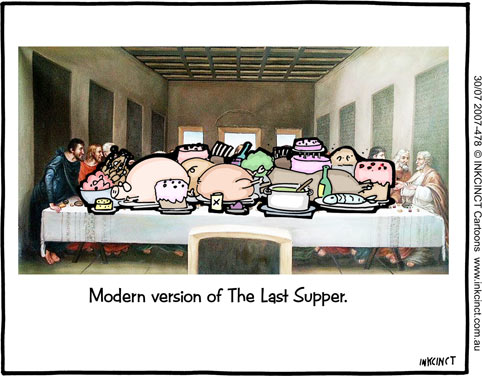
Here’s more shocking news: we routinely throw away half of all food produced in this world. Between plough and plate, or from farms to homes, we waste almost as much food as we eat.

Eyes Wide Shut?
Many countries don’t have the slightest idea how much is wasted. Britain made an effort to measure the waste pile and came to a staggering 15 million tons of food a year. This includes 484 million unopened tubs of yoghurt, 1.6 billion untouched apples, bananas worth £370 million and 2.6 billion slices of bread.

In his recent book Waste: Uncovering the Global Food Scandal, Tristram Stuart documented the extent of waste in the food industry worldwide.

Taste the Waste is a new documentary film linked to an online campaign that shows us what is being thrown away: where, why, when and by whom.

The film maker turned campaigner, Valentin Thurn, has come up with one more reason why we should stem this callous waste: “Cutting food waste is an easy solution to reduce climate emissions and hunger,” he says.

Reducing food waste means a big opportunity to reduce greenhouse gas emissions – if we threw away only half of the avoidable waste, the consequences for the climate would be the same as taking one out of five cars off our roads.

It would also help the hungry, because they also depend on the global food cycle. Cash crops from all over the world are traded on the stock exchange. The agricultural resources on this planet are limited. The farmland taken up to produce the food that we throw away could instead be producing food for them.

Young activists protest against this situation by rescuing the wasted food. People eating rubbish – a habit that sounds disgusting until you see the loads of perfectly edible food in the bins of your supermarket or sandwich shop around the corner.

Thurn’s call to action: “We need your help! Go out, look around and tell us about the food in the bins where you live. Send texts, photos, videos, and help to reveal the huge scandal of how we are wasting food.”

Watch the film’s trailer on YouTube:


According to the latest FAO figures, there are more hungry people in the Asia Pacific (642 million) than all other regions combined. This is followed by Sub-Saharan Africa (265 million), Latin America and the Caribbean (53 million), and the Near East and North Africa (42 million). Sub-Saharan Africa has the highest percentages of people living in hunger, while the Middle East and North Africa saw the most rapid growth in the number of hungry people (13.5%) during 2008.

The UN’s definition of hunger is based on the number of calories consumed. Depending on the relative age and gender ratios of a given country, the cutoff varies between 1,600 and 2,000 calories a day.

Starting in 2008, activist groups worldwide observe 16 October as World Foodless Day. Their argument: World Food Day is a mockery and is much better named World Foodless Day.

It’s a day of global action on the crises that beleaguer the people. The objectives are to: “create public awareness and media attention on the root causes of the food crisis; provide policy recommendations and organize meetings with government officials, opinion makers and leaders; organise activities to raise our voices against neoliberal policies and their impact; and highlight people’s recommendations to respond to the world food crisis.”

Watch PAN-Asia Pacific’s video for World Foodless Day 2008:


Read an excellent review of Tristram Stuart’s book: Watching our wasteline, By Darryl D’Monte

Asia Pacific Rice Film Award: Say thank you to rice in moving images!

Have a rice day!
Have a rice day!

If an alien spaceship were to randomly descend to the one third of our planet that is not covered by ocean, chances are high that it would land on a rice field.

So I was told a few years ago, when spending time with some rice researchers. Rice is the most widely cultivated food crop in the world. It is also the most important staple food for a large part of the world’s human population, especially in East Asia, South Asia, Southeast Asia, Latin America and the West Indies. From risotto to sushi to paella, food-savvy consumers are using rice as the main ingredient in recipes from around the world. Rice lends substance and texture to many dishes.

Despite all this, rice is under some pressures both economically and culturally. For one thing, it has been taken for granted by many of those who regularly have a ‘rice day’ and think nothing further about it.

That’s the reason for the first-ever Asia Pacific Rice Film Award – a regional competition to celebrate the role of rice in Asian cultures and societies. This is a regional partnership involving Pesticide Action Network Asia Pacific (PAN-AP), my own organisation TVE Asia Pacific and Public Media Agency of Malaysia.

APRFA logo
APRFA logo
I have just given an interview to TimeOut Kuala Lumpur magazine, October 2009 issue. In my capacity as head of the seven-member international jury, I answered questions from the magazine’s Brian Kwan. Here is the full text of the interview, which is also available online here:

How effective do you think this award will be?
When we set out on this joint effort, we posed two big questions: What feeds 3 billion people? And what is slowly but surely disappearing without anyone noticing it? The answer to both questions is Rice! We wanted this film award to draw attention to the central role that rice plays in Asian and Pacific cultures and economies. The measure of our success will be a long term one, and will depend on how many take part in this competition and how far and wide we will be able to distribute their creative efforts.

Why do you think Asia is in need for a wake up call on the subject of rice?
Rice one of our most revered treasures in the Asia Pacific, and many of us take it for granted. It is central to the Asian way of life — its cultural heritage and diversity, spirituality and traditions. This precious rice heritage is under threat from corporate or industrialized agriculture, neo-liberal globalization, private control of the rice seeds, and genetic engineering of the rice genome. Rice lands are also being torn away from small rice farming communities in the name of “development” projects such as special economic zones, cash cropping, and agro-fuel plantations.

Time Out KLPesticide Action Network Asia Pacific (PAN-AP) has for the last two decades championed the food sovereignty of the grassroots, namely, farmers, agricultural workers, indigenous people and consumers. In 2003, PAN-AP launched the SAVE OUR RICE CAMPAIGN. It is founded on Five Pillars of Rice Wisdom: Rice Culture, Community Wisdom, Biodiversity based Ecological Agriculture, Safe Food and Food Sovereignty. Last year, PAN-AP joined TVE Asia Pacific and Public Media Agency to organise this film competition as part of the on-going campaign. We all share the ideals of promoting rice in Asia and the Pacific.

APRFA co-organisers
APRFA co-organisers
What would you be looking out for in the short films?
The Asia Pacific Rice Film Award will be presented to creators of short innovative television, video or cinematic films that effectively educate the public on the role of rice in Asian cultures, economies and communities/societies. The films should use the ‘Five Pillars of Rice Wisdom’ as guiding principles. They should enhance appreciation of the rice heritage of Asia; raise public awareness of the issues on and threats to rice; highlight the role of small farmers, women in rice; strengthen the people’s resolve and action to save rice; and encourage a stronger role for youth in rice.

Any tips for the participants?
We are looking for short films that are innovative, imaginative and ultimately effective in raising public awareness. Rice may be a pervasive topic in Asia, but the threats to rice are not yet widely appreciated. How do we take this message to the three billion rice growers and eaters of Asia using moving images? How do we engage the YouTube generation – predominantly youthful populations of Asia – with films that open eyes and provoke minds to think further? What would work best — factual reportage, drama, humour, performing arts or other formats? These questions are worth pondering. As organisers, we are open to all formats. We want to be surprised!

After all this, what would be the next step/project?
As I said, this is an on-going campaign, so the winning and commended entries will become new tools and resources for that campaign. Making films and ranking them is only the first half of our shared challenge. We then have to get these films distributed far and wide, using broadcast, narrowcast, webcast and mobile platforms. Three billion people means six billion eye balls that need to be reached! That should keep all of us busy for a while…

Read more about the Asia Pacific Rice Film Award 2008/2009

Deadline for entries is 31 December 2009!

Teenage Affluenza: A viral video to stir our minds

I’m a bit anxious about impending teenhood. No, not my own, thank you, but my kid’s.

As a single parent raising a 12-year-old who will soon turn 13, I keep reading and hearing all kinds of advice these days on how best to cope with a teenager in the house — that phase in growing up that everyone predicts will involve some turbulence.

On top of all else that comes with hormones-on-legs, there’s now the worry of Teenage Affluenza. It’s a condition that affects millions of teenagers around the world. Most of them live in the developed countries, but in this topsy-turvey, globalised world, there’s no stopping the rapid spread of such conditions all over the majority world.

Look closely, and you can see the symptoms of TA
Look carefully, and you can see the symptoms of TA - image courtesy WorldVision Australia

I belatedly came across this campaign video called Teenage Affluenza, made by the charity WorldVision Australia in mid 2007. It was first made for a promotion kit for the 40 Hour Famine, to be used in Australian schools. World Vision media staff worked with Rohan Zerna Films, Melbourne, who had worked on previous spots for World Vision. The team decided to take the route of irony, providing a spoof feel. The budget wasn’t high. A family friend of the producer starred as the Melbourne teenager. The voice-over was donated by a regular with World Vision promotions. Overseas footage, already held by World Vision Australia, was spliced into the story.

Read news story in The Age newspaper, Australia, on 2 July 2007

Erin is a fifteen year old girl living deep in the South Eastern suburbs of Melbourne, Australia. She is at risk from teenage affluenza, like five million children and teenagers in her country. She still sleeps in the wooden colonial bed her parents bought her when she was ten. Although meals, travel and education are readily available to girls like Erin, many are forced to live on less than $40 pocket money each week. Erin’s iPod only holds 1 GB.

And so the satirical commentary continues. Juxtaposed with Erin’s ‘tragic life’ is the reality faced by children and teenagers in Vietnam, Sudan and other countries affected by famine and the long term impact of civil war. The video ends with the message “Do something else. Do something real. Do something.”

Teenage Affluenza is Spreading Fast: From WorldVision Australia

The video has attracted thousands of responses on YouTube’s online-comments section, including some honest self-analysis from teenagers, while others started a discussion about who is to blame – corrupt governments or first-world greed.

Meanwhile, WorldVision US has released another version of the video, slightly shorter and featuring American teeangers. If anything, the condition is more prevalent there.

Teenage Affluenza: from WorldVision United States


The message to parents is clear: we’re the ones who can prevent our teenagers from contracting Affluenza. All it takes is thoughtful and sustained action. When teens say gimme-gimme-gimme, we have to known when it’s really needed and when it’s wanted. Easier said than done. I know, because teenages seem to arrive in pre-teens these days.

We the parents would certainly welcome reinforcements from any sensible source. WorldVision Australia runs an interesting website called Stir, which tries to engage youth on issues of development and global justice. As a direct intervention charity, WorldVision doesn’t leave it to governments, but urges people to get involved — and do something.

Bill Gates and mosquitoes: World’s top geek now works for its meek

More bugs from Gates...
Bill Gates can’t seem to get enough of bugs.

On 4 February 2009, he let loose a swarm of mosquitoes at the TED 2009 technology, entertainment and design conference in California to highlight the dangers of malaria.

“Malaria is spread by mosquitoes,” he reminded his audience of leading scientists, designers, researchers and entrepreneurs. Turning to an upturned jar on stage, he announced: “I brought some. Here…I’ll let them roam around. There is no reason only poor people should be infected.”

Luckily, the mosquitoes were not carrying the disease. But it had the intended effect. Wired editor Chris Anderson, curator of the show, suggested a headline: “Gates releases more bugs into the world”.

Watch Bill Gates’s mosquito moment:

Watch the full 20-minute video of Bill Gates at TED 2009

As stunts go, this one was pretty mild and harmless. There are many shocking ways in which the harsh daily realities of the world’s poor can be brought into gatherings of the rich and famous. They could be served glasses of the contaminated, sludgy (and often smelly) water that tens of millions drink everyday. Or all the toilets could be locked up and the keys thrown away – for good. Or electricity supply could be cut off, or frequent ‘black-outs’ or ‘brown-outs’ could be staged. You get the idea…

Of course, few event organisers would dare try any of these, if only for health and safety considerations. Reminds me of a rare exception: when he was director of information with the UN’s population agency (UNFPA), journalist-turned-UN official Tarzie Vittachi once hosted delegates of a high level meeting to lunch which consisted soley of a bread roll and a glass water. He told his guests: the meal was better more than what most poor people in the global South on any given day.

Bill to the rescue...
Meanwhile, billions of poor and needy – and not just those in the majority world – are glad that Bill Gates caught the ‘development bug’ and has switched his formidable creative energies (not to mention his billions) to address their survival issues. The Bill & Melinda Gates Foundation – which carefully manages the giving away of Gates wealth – operates on the belief that all lives have equal value. “We think all people deserve the chance to have healthy, productive lives”.

They have set priorities such as improving health and reducing extreme poverty in the developing world, and improving high school education in the United States.

The New York Times columnist Nicholas Kristof recently described it as a paradox: “In these brutal economic times, one of the leading advocates for the world’s poorest people is one of the richest.”

He noted: “Mr. Gates ended his full-time presence at Microsoft last July and since then has thrown himself into work at his foundation. He is now trying to do to malaria, AIDS, polio and lethal childhood diarrhea what he did to Netscape, and he just may succeed.”

In his TED talk, Bill Gates addressed two questions that occupy much of his time these days: How do we stop Malaria? How do you make a teacher great?

Look, no computers!
Look, no computers!
He said: “The market does not drive scientists, thinkers, or governments to do the right things. Only by paying attention and making people care can we make as much progress as we need to.”

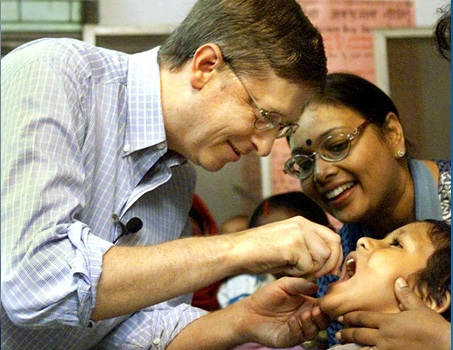
He called for greater distribution of insect nets and other protective gear, and revealed that an anti-malaria vaccine funded by his foundation and currently in development would enter a more advanced testing phase in the coming months.

“I am an optimist; I think any tough problem can be solved,” he said. That’s the geek in him talking: marshall all information, analyse problems, respond strategically — and keep at it.

A friend who now works with the Gates Foundation confirms how the charity seeks evidence and rigour in all its social investments. This is no bleeding-heart do-gooding or ‘social work’ for its CSR value. The new wave of geeks lining up to serve the meek bring business acumen to the development sector long under-served by unimaginative aid agencies and self-serving UN organisations.

As Kristof wrote: “Gates ended his full-time presence at Microsoft last July and since then has thrown himself into work at his foundation. He is now trying to do to malaria, AIDS, polio and lethal childhood diarrhea what he did to Netscape, and he just may succeed.”

Gates has announced that despite the economic crisis the Gates Foundation will increase spending by US$500 million this year.

In late January 2009, the billionaire philanthropist released the first ‘Annual Letter from Bill Gates‘ where he discussed his work at the foundation and spoke candidly about what has gone well, what hasn’t.

He compared his earlier work at Microsoft with the challenges he now tackles at the charitable foundation. “What I’ve found now is that really those same key elements are there. The opportunity for big breakthroughs is absolutely just as great–now it’s vaccines, it’s seeds that have better yield, it’s ways of sharing teaching practices…they will take the same kind of patience that we had for software breakthroughs.”

Just ahead of the letter’s release, Nicholas Kristof talked with Bill Gates about why aid to developing countries is more important during the economic downturn and vaccine breakthroughs on the horizon. Watch the interview:

Read: Bill Gates’s Next Big Thing by Nicholas D Kristoff, published in the New York Times on 24 January 2009

Iodised Salt: How to make the world smarter, faster?

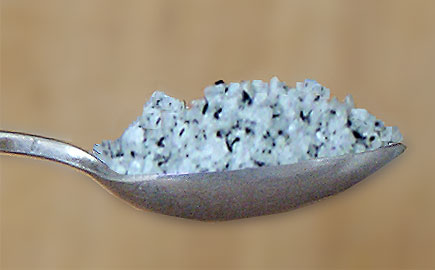
A miracle powder?
A miracle substance to get smarter?
One of the earliest video films I helped distribute at TVE Asia Pacific, soon after it was set up in 1996, was called Ending Hidden Hunger.

This 20 minute film, made in 1992 by Bedford Films of UK and narrated by Sir Peter Ustinov, described how the UN children’s agency UNICEF was working toward eliminating micronutrient deficiencies from iron, vitamin A and iodine in different parts of the developing world. Examples are taken from Africa and Asia to both illustrate the extent of the problem as well as steps being taken to reduce these deficiencies that cause mass-scale disability and death.

The main premise of the film was simple: those lacking micro-nutrients in their regular diet often don’t show immediate signs of starvation. This deprivation builds up over time and causes slow – sometimes irreparable – damage.

Nicholas Kristof
Nicholas Kristof
I was reminded of this film — and its still very relevant message — when reading an excellent essay by Nicholas Kristof in International Herald Tribune a few days ago. He is a columnist for the New York Times who travels the world reporting from the various frontlines of survival and struggle.

In Raising the World’s I.Q., dispatched from Rawalpindi, Pakistan, Kristof was talking about ‘a miracle substance that is cheap and actually makes people smarter’: iodised salt.

Here’s the context, as he put it:

“Almost one-third of the world’s people don’t get enough iodine from food and water. The result in extreme cases is large goiters that swell their necks, or other obvious impairments such as dwarfism or cretinism. But far more common is mental slowness.

“When a pregnant woman doesn’t have enough iodine in her body, her child may suffer irreversible brain damage and could have an I.Q. that is 10 to 15 points lower than it would otherwise be. An educated guess is that iodine deficiency results in a needless loss of more than 1 billion I.Q. points around the world.”

In nearly all countries, the best strategy to control iodine deficiency is iodisation of salt — one of the most cost-effective ways to contribute to economic and social development. Especially in these hard times, development professionals are looking for smart ways to get the biggest bang for their limited (and still shrinking) bucks. Investing in micronutrients – such as iodine – can provide some of the biggest bangs possible.

UNICEF Report 2008
UNICEF Report 2008
In June 2008, UNICEF published Sustainable elimination of iodine deficiency, a new report on progress since 1990 when the world’s governments set the target to eliminate iodine-deficiency disorders worldwide.

In October 2008, The Lancet, one of the world’s leading medical journals, published a report that noted: “Iodine deficiency is the most common cause of preventable mental impairment worldwide.”

The medical, public health and development communities have known and talked about iodine and other micronutrients for over 30 years. Significant progress has been made – for example, UNICEF says by 2006, more than 120 countries were implementing salt iodisation programmes, and 34 countries had managed to get rid of iodine deficiency among their people through this smart strategy.

But there still are major gaps — which continue to cause preventable damage to tens of millions of people including children.

Nicholas Kristof navigates through the heavy, jargon-ridden developmentspeak and churns out an eminently readable, accessible piece. It’s written in first person narrative from a part of the world where illiteracy, superstition – and their erstwhile companion, religious fanaticism – are trying to prevent people at risk from using iodised salt. This is science writing at its finest: anecdotal, personalised and purposeful.

And he’s absolutely right when he says iodised salt lacks glamour, doesn’t have too many stars or starlets singing its praise and (almost) no one writing about it despite its potential to improve lives for so many people.

I should know: one of the earliest topics I tackled as a young science reporter – getting started in the late 1980s – was salt iodisation. I struggled to put together a readable, engaging piece — which I then had to push through jaded editors who wondered what all this fuss was about.

I have only one (minor) bone to pick with Kristof. He pokes fun at Canada for hosting and supporting the Micronutrient Initiative, “an independent, not-for-profit organization committed to promoting simple cost-effective solutions for hidden hunger and developing innovative new solutions where needed.”

He calls Canada “earnest and dull, just like micronutrients themselves”. It’s a personal view – perhaps expressed with his tongue firmly in his cheek. Having travelled a fair amount in North America, and having good friends in both countries, I think that the nation north of the US-Canada border is a tad more civilised, certainly more caring and better engaged with the rest of the world.

But then, that too is a personal view. I’m darn lucky that I get enough iodine in my diet so that I can think for myself, keep asking lots of annoying questions…and occasionally even get some answers right.

Two billion people – almost a third of humanity – aren’t so lucky.

Read Raising the world’s I.Q. by Nicholas Kristof

Salt iodisation is not universally hailed. Read an alternative point of view that appeared in India’s Frontline magazine in 2006: Imposing iodine

Arthur C Clarke on the Future of Food: We need a smarter and kinder world

The leading Indian newspaper The Hindu has just published (on 4 May 2008) my article on the future of food, based on the views of Sir Arthur C Clarke. It can be found here.

I originally wrote this article in mid 2000, based on an interview with the late Sir Arthur Clarke. It was produced at the request of the UN Food and Agriculture Organisation (FAO), which included it in an information pack to mark World Food Day in October that year. No doubt they circulated it among the charmed development circle, but as far as I know (or Google can find), it never appeared in a public media outlet – until now.

I came across this in the weeks following Sir Arthur’s death on March 19, when I was going through manuscripts of our collaborative essays and my interviews with him over the years. The Hindu‘s Sunday Magazine, which earlier printed my essay on Sir Arthur’s views on nuclear weapons in South Asia, agreed to publish it, which they did on 4 May 2008.

The essay, written in Sir Arthur’s first person narrative, makes a number of points that are very relevant to discussions on today’s global food crisis. In fact, these points are more valid today than when they were first made eight years ago.

An extract:

“Meeting everybody’s basic nutritional needs requires a combined approach of the mind and heart – of intellect and compassion. How can we explain the fact that one sixth of humanity goes to bed hungry every night, when the world already produces enough food for all?

“The short answer is that there are serious anomalies in the distribution of food. Capricious and uncaring market forces prevent millions of people from having at least one decent meal a day, while others have an abundance. For the first time in history, the number of severely malnourished persons now equals the number suffering from over-consumption: about a billion each!

“To adapt a remark that my late friend Buckminster Fuller once made about energy: there is no shortage of food on this planet; there is, however, a serious shortage of intelligence. And, I might add, compassion.

Sir Arthur then runs up his famous ‘crystal ball’ to gaze at the near and far future on how humanity can feed itself without damaging the planet. He offers some useful lateral thinking and suggests some unlikely new sources of food.

But all these are short term solutions, he says, because “eventually, the matter will be resolved when we are able to synthesise all the food we ever need, thus no longer depending on other animals to satisfy our hunger.”

Towards the end of the essay, he takes the big picture view:

“Improved communications and the free flow of information will not, by themselves, eradicate either hunger or poverty — but they can be instrumental in the struggle to create a world without these. And when the world’s collective conscience finally succeeds in mobilising sufficient political will and resources to banish those twin scourges, we will be left with another, far more insatiable but far less destructive substitute — the hunger for knowledge and wisdom.”

Read the full essay: The future of food – Arthur C Clarke talks to Nalaka Gunawardene

The Step-children of Tsunami: Overlooked and forgotten

india-malas-family-lost-their-home-jobs.jpg

Meet Mala. She lives in in Kottaikkadu village in Kancheepuram District in India’s southern Tamil Nadu state.

She was 11 years old when, in December 2004, the Asian Tsunami crashed into village without warning. This made her very poor family desperate and destitute.

The disaster didn’t kill anyone in her village, but caused considerable property damage. In her case, the waves that rolled in spared their small hut, but her fisherman father was nearly drowned: he survived with some injuries.

But the family’s fishing boat and gear were gone. That was a mighty blow.

After the waves had retreated, they returned to their house and started rebuilding their lives. They thought the world’s generosity in responding to the Asian Tsunami will somehow bring some help.

They were wrong.

When the Tsunami triggered massive aid donations, all affected countries pledged to distribute it in a fair, equitable and transparent manner. But as the aid trickled down layers of government and charities, various biases and distortions crept in.

What happened in Mala’s village was an example. We came across the situation when tracking Mala’s family for a whole year (2005) after the Tsunami, documenting their long road to recovery as part of our Children of Tsunami media project.

We tracked two affected families each in India, Indonesia, Sri Lanka and Thailand, filming their progress — or the lack of it — every month and producing video reports that were uploaded to a dedicated website.

Follow Mala’s story through monthly video reports on our website

The most striking example of aid disparity came from India. Even months after the disaster, Mala’s family — or anyone else in her village — received absolutely no relief or recovery assistance.

Officially, it was because ‘no one was killed’ in her village. But everybody in Kottaikkadu village knew the real reason: in the Indian social hierarchy, they occupy the lowest level, known as ‘Dalits’.

Apparently, that was why both government agencies and charities stayed clear of the village.

Our India production team, led by senior journalist and film-maker Satya Sivaraman (with video camera in the photo, below), investigated further. They compared Kottaikadu with its adjoining village of Alambara. Both had suffered similar damage during the Tsunami: people lost their boats and nets, but there were no deaths.

Image from Children of Tsunami website

Yet the people of Alambara – who belong to a supposedly higher caste of fishermen — received food items, boats and fishing nets from various outside sources.

In fact, they felt quite sorry for their neighbours in Kottaikkadu. “On the day of the tsunami we ran over 15 kilometers,” said Kuppuraj, a resident of Alambara. “Kottaikadu villagers, who live just 600 meters away…ran with us — but nobody has helped them to recover.”

There was another incident that showed up the caste-based discrimination, which my colleague Manori Wijesekera, production manager of Children of Tsunami, has just reminded me.

In March 2005, our India film crew found Mala’s father seriously ill with a lung infection (triggered by his near-drowning during the Tsunami) and his family so helpless that they were unable to even seek medical attention.

So the crew put their filming gear aside, and became good Samaritans: they rushed the sick man to a nearby government-run hospital. But once there, doctors refused to admit or treat him — all due to the patient’s supposedly low caste!

It was only when Satya and crew threatened to film the entire sorry episode, and have it broadcast on television later that day, that medical attention was finally provided. Discarding their production plans, our crew stayed with Mala’s family at the hospital through the night and next day to ensure the doctors gave her father the correct medical attention. The family believes that the production team saved her father’s life that day.

Read more about what happened at Children of Tsunami website

Watch the March 2005 video report that covered the hospitalisation incident

mala-with-her-neighbours.jpg

While their father was recovering, Mala’s mother toiled as a labourer to keep the home fires burning. Mala has one younger sister and two younger brothers.

Children of Tsunami: Rebuilding the Future was TVE Asia Pacific’s response to largely superficial media coverage of the Indian Ocean Tsunami of December 2004. It tracked on TV, video and web the personal recovery stories of eight affected families in India, Indonesia, Sri Lanka and Thailand for a year after the disaster. Its many media products — distributed on broadcast, narrowcast and online platforms -– inspired public discussion on aid management and optimum rehabilitation choices.

As we discovered along the way, some of the affected could be better described as Step-children of Tsunami.

In one of my early blog posts, I paid a tribute to the most extreme example of such a child, Thillainayagam Theeban.

The Tsunami has become yesterday’s news, but there are thousands of affected children, women and men who are still living on the edge of survival.

Related links:

Children of Tsunami: Documenting Asia’s longest year

Children of Tsunami revisited two years later

All images courtesy Children of Tsunami media project, TVE Asia Pacific

Feeding Oliver Twists of the world…and delivering UN logos with it!

“Please, Sir: I want some more!”

These simple yet evocative words were etched into our memories by Charles Dickens, who created the story of Oliver Twist (1838), the poor orphan struggling – and suffering – in 19th century England.

Dickens mocks the hypocrisies of the time by surrounding the novel’s serious themes with sarcasm and dark humour. The novel may have been inspired by the story of Robert Blincoe, an orphan whose account of his hardships as a child laborer in a cotton mill was widely read in the 1830s.

Image courtesy Wikipedia

The world has seen unprecedented creation of wealth since those dark and miserable days 180 years ago. But sadly, there still are hundreds of millions of children who share young Oliver plight — or worse: many go to bed entirely hungry in a world that does not have an overall shortage of food anymore.

Fighting Hunger 2007

Today, 13 May, thousands of people in different parts of the world will walk wherever they can as part of a global campaign in support of ending hunger – one lingering great shame of our time.


Fight Hunger: Walk the World
is a global fundraising and awareness event that takes place every year in all times zones with one sole purpose – to call for an end to child hunger.

Fighting hunger website tells us:

Hunger is more than having an empty stomach. Hunger means not getting the necessary daily nutrition to lead a fully active, productive and healthy life.

Hunger affects more than 800 million people around the world. A child dies every 5 seconds because he or she is hungry.

This year, the organisers – led by the UN World Food Programme – had a viral video contest. It asked anyone, anywhere to do a short video promoting the event – and the issue of hunger – and upload. Some interesting videos have been received — even if some are blatantly in-your-face propaganda for the UN WFP.

That’s my big, long-lasting complaint about the UN family of agencies addressing and tackling the world’s ills. After a while, they allow their worthy issues to be eclipsed by their own self-promotion, public relations and spin. I wrote last month about how the entire MDG campaign has been subsumed by needless volumes of spin.

If only the World Food Programme and its sister agencies can resist their temptation to see every campaign, issue and programme as a logo-delivery mechanism, they will do a whole lot more good.

For that reason, while I will privately walk and think of those in hunger today, I will not contribute any money to the bloated bureaucracy of the United Nations World Food Programme. I would also ask that they go before a mirror today just before they step out to go walking with the world — and sincerely ask: do you see part of the problem or part of the solution?

Thank you, WFP, for delivering food to tens of millions of people worldwide who would not otherwise be fed, or fed adequately. But try and deliver a little less of your image and your logo, if you can. (We saw so much of this happen in the days and weeks that followed the Asian Tsunami disaster, and it was simply disgusting.)

Both hunger and hypocricy thrive nearly two centuries after Dickens and Oliver Twist. We must walk today to end not just one, but both!

Happy walking, everyone.

Watch the winning and commended videos in Fighting Hunger online video contest

Read UN WFP fact sheet about hunger worldwide