සිවුමංසල කොලූගැටයා #25: “බටහිර විද්‍යාව”, “සාම්ප්‍රදායික දැනුම” සහ දකුණු අප‍්‍රිකාවේ බිහිසුනු HIV/AIDS මංමුලාව

In my Ravaya column (in Sinhala) for 31 July 2011, I look back at South Africa’s HIV/AIDS misadventure under President Thabo Mbeki, who refused to accept the well-established scientific consensus about the viral cause of AIDS and the essential role of antiretroviral drugs in treating it. Instead, he and his health minister embarked on a highly dubious treatment using garlic, lemon juice and beetroot as AIDS remedies — all in the name of ‘traditional knowledge’.

It turned out to be a deadly experiment, and one of the worst policy debacles in the history of public health anywhere in the world. In 2008,  A study by Harvard researchers estimated that the South African government could have prevented the premature deaths of 365,000 people if it had provided antiretroviral drugs to AIDS patients and widely administered drugs to help prevent pregnant women from infecting their babies.

There are lessons for all governments addressing complex, technical issues: do not allow a vocal minority to hijack the policy agenda, ignoring well established science and disallowing public debate on vital issues.
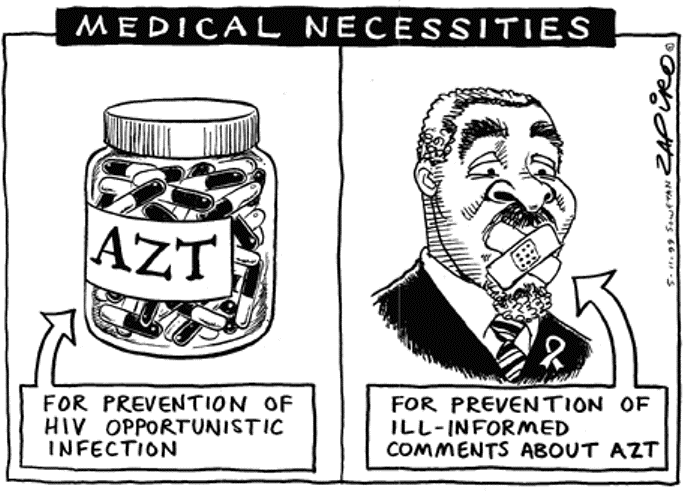
South African cartoonist  Zapiro lampooned President Mbeki's HIV folly
South African cartoonist Zapiro lampooned President Mbeki’s HIV folly

AIDS රෝගය මුලින් ම වාර්තා වී වසර තිහක් ගත වී තිබෙනවා. අමෙරිකාවේ මුල් වරට මේ රෝග ලක්ෂණ සහිතව රෝගීන් වාර්තා වන්නට පටන් ගත්තේ 1981දී. එයට හේතුව HIV නම් වයිරසය බව සොයා ගත්තේ ඊට දෙවසරකට පසුව.

අද HIV/AIDS ලෝක ව්‍යාප්ත වසංගතයක් හා ලෝකයේ ප්‍රධාන පෙළේ සංවර්ධන අභියෝගයක් බවට පත්ව තිබෙනවා. අළුත් ම සංඛ්‍යා ලේඛනවලට අනුව 2009 වන විට HIV ශරීරගත වී ජීවත්වන සංඛ්‍යාව මිලියන් 33ක්. අළුතෙන් ආසාදනය වන සංඛ්‍යාව වසරකට මිලියන් 2.6ක්. HIV ආසාදන උත්සන්න අවස්ථාවේ AIDS රෝගය ඇති වී මිය යන සංඛ්‍යාව වසරකට මිලියන් 2ට වැඩියි.

HIV/AIDS ගැන විවිධ කෝණවලින් විග්‍රහ කළ හැකියි. දුගී දුප්පත්කම, බලශක්ති අර්බුද, පරිසර දූෂණය හා ගැටුම්කාරී තත්ත්වයන්ට මුහුණ දෙන දියුණුවන ලෝකයේ බොහෝ රටවලට ගෙවී ගිය දශක තුන තුළ HIV/AIDS නම් අමතර අභියෝගයට ද මුහුණ දීමට සිදු වුණා. එයින් දැඩි සේ පීඩාවට පත් දකුණු අප්‍රිකාවේ HIV/AIDS ප්‍රතිපත්තිය වසර ගණනක් අයාලේ ගිය කථාවයි අද විග්‍රහ කරන්නේ. මෑතදී මා නැවතත් දකුණු අප්‍රිකාවට ගිය අවස්ථාවේ මගේ දැනුම අළුත් කර ගන්නට ලැබුණු නිසායි.

ලෝකයේ වැඩි ම HIV ආසාදිත ජන සංඛ්‍යාවක් සිටින රට දකුණු අප්‍රිකාවයි. 2007 දී HIV සමග ජීවත් වන දකුණු අප්‍රිකානුවන් සංඛ්‍යාව මිලියන් 5.7 ක් පමණ වුණා. එනම් මුළු ජනගහනය මිලියන් 48න් සියයට 12ක්. එය එරට සෞඛ්‍ය අර්බුදයක් පමණක් නොව සමාජයීය හා ආර්ථීක ප්‍රශ්නයක් ද වෙනවා.

ජනාධිපති නෙල්සන් මැන්ඩෙලාගේ 1994-99 ධූර කාලයේ HIV/AIDS පිළිබඳව දකුණු අප්‍රිකාවේ සෞඛ්‍ය ප්‍රතිපත්ති සකස් වූයේ ලොව පිළිගත් වෛද්‍ය දැනුම හා උපදෙස් මතයි. HIV සමග ජීවත් වන අයට හැකි තාක් කල් නීරෝගීව දිවි ගෙවන්නට ඖෂධ සපයන අතරේ වයිරසය පැතිරයාම වැළැක්වීමේ දැනුවත් කිරීම් හා මහජන අධ්‍යාපන ව්‍යාපාරයක් දියත් වුණා.

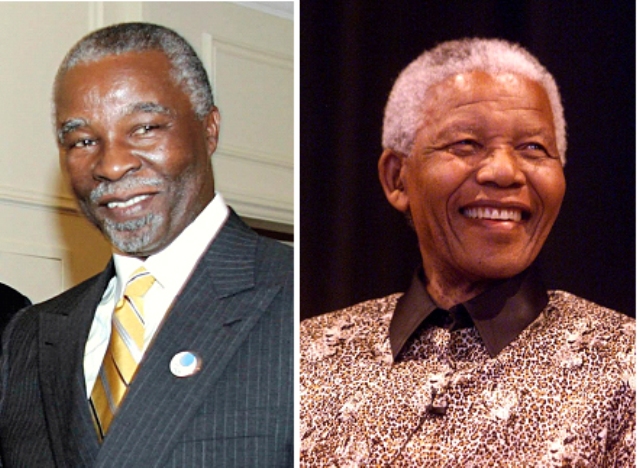
Thabo Mbeki (left) succeeded Nelson Mandela

එහෙත් ඔහුගෙන් පසු ජනාධිපති වූ තාබෝ එම්බෙකි (Thabo Mbeki) මේ ගැන ප්‍රධාන ප්‍රවාහයේ වෛද්‍ය විද්‍යාත්මක දැනුම ප්‍රශ්න කරන්නට පටන් ගත්තා. වෛද්‍ය විශේෂඥ දැනුමක් නොතිබුණත් තියුණු බුද්ධියකින් හෙබි එම්බෙකි, මෙසේ අසම්මත ලෙස සිතන්නට යොමු වුණේ HIV/AIDS ගැන විකල්ප මතයක් දරන ටික දෙනකුගේ බලපෑමට නතු වීම නිසයි.

මේ අයට ඉංග්‍රීසියෙන් AIDS Denialists කියනවා. ඔවුන්ගේ තර්කය AIDS රෝගය හට ගන්නේ HIV වයිරසය නිසා නොව දුප්පත්කම, මන්ද පෝෂණය වැනි සමාජ ආර්ථීක සාධක ගණනාවක ප්‍රතිඵලයක් ලෙසින් බවයි.

එම්බෙකිගේ සෞඛ්‍ය ඇමතිනිය (1999-2008) ලෙස ක්‍රියා කළ මාන්ටෝ ෂබලාලා සිමැංග් (Manto Tshabalala Msimang) මේ අවුල තවත් ව්‍යාකූල කළා. HIV ආසාදනය පාලනය කරන බටහිර වෛද්‍ය විද්‍යාවේ ඖෂධ වෙනුවට සම්ප්‍රදායික අප්‍රිකානු දැනුමට අනුව සුදුළුෑනු, දෙහි සහ බීට්රූට් යුෂ ගැනීම සෑහෙන බවට ඇය ප්‍රසිද්ධියේ ප්‍රකාශ කළා!

මේ නිසා HIV වයිරසයට ප්‍රහාර එල්ල කිරීම වෙනුවට දුප්පත්කම පිටුදැකීම කළ යුතු යයි ස්ථාවරයකට එම්බෙකි යොමු වුණා. HIV මර්දන සෞඛ්‍ය කටයුතු අඩපණ කරන්නටත්, මහජන සෞඛ්‍ය සේවා හරහා ඖෂධ ලබා දීම නතර කිරීමටත් එම්බෙකි රජය පියවර ගත්තා.

HIV සමග ජීවත්වන බහුතරයක් දකුණු අප්‍රිකානුවන්ට AIDS රෝග ලක්ෂණ පහළ වී නැහැ. HIV ශරීරගත වීමෙන් පසු වසර හෝ දශක ගණනක් ජීවත්වීමේ හැකියාව අද වන විට වෛද්‍ය විද්‍යාත්මකව ලබා ගෙන තිබෙනවා. එහෙත් ඒ සඳහා නිතිපතා Anti-Retroviral (ARV) ඖෂධ ගැනීම අවශ්‍යයි.

බොහෝ දියුණු වන රටවල අඩු ආදායම් ලබන HIV ආසාදිතයන්ට මේ ඖෂධ ලබා දෙන්නේ රජයේ වියදමින්. HIV ආසාදිත කාන්තාවන්ට ARV ඖෂධ නිසි කලට ලැබුණොත් ඔවුන් බිහි කරන දරුවන්ට මවගෙන් HIV පැතිරීම වළක්වා ගත හැකියි. එහෙත් එම්බෙකි රජය HIV වයිරසය ගැන විශ්වාස නොකළ නිසා ප්‍රජනන වියේ සිටින HIV ආසාදිත කාන්තාවන්ට එම ඖෂධ දීමත් නතර කළා.

දකුණු අප්‍රිකාව ජාතීන්, භාෂා හා දේශපාලන පක්ෂ රැසක සම්මිශ්‍රණයක්. එමෙන් ම 1994 සිට නීතියේ ආධිපත්‍යය හා රාජ්‍යයේ බල තුලනය පවතින රටක්. ප්‍රජාතන්ත්‍රවාදී සම්ප්‍රදායයන් හා ආයතන ප්‍රබල කරන්නට සැබෑ උත්සාහ ගන්නා රටක්.

මෙබඳු රටක වුවත් වසර කිහිපයක් පුරා ජනාධිපතිවරයාට හා සෞඛ්‍ය ඇමතිනියට මෙබඳු ප්‍රබල ප්‍රශ්නයකදී මේ තරම් අයාලේ යන්නට ඉඩ ලැබුණේ කෙලෙසදැයි මා එරට විද්‍යාඥයන් හා මාධ්‍යවේදීන් කිහිප දෙනකුගෙන් ඇසුවා. ඔවුන් දුන් පිළිතුරුවල සම්පිණ්ඩනය මෙයයි.

තාබෝ එම්බෙකි යනු වර්ණභේදවාදයට එරෙහිව දශක ගණනක් අරගලයක යෙදුණු,  පාලක ANC පක්ෂයේ ප්‍රබල චරිතයක්. ඔහුගේ දේශපාලන කැපවීම පිළිබඳව විවාදයක් නැහැ. මැන්ඩෙලා 1994දී ජනාධිපති වන විට එම්බෙකි උප ජනාධිපති වුණා.

1994-99 කාලය තුළ එරට ආර්ථීක වර්ධනයට හා සමාජ සංවර්ධනයට නායකත්වය සැපයූ ඔහු අප්‍රිකානු කලාපයේ දක්ෂ රාජ්‍ය තාන්ත්‍රිකයකු ලෙස නමක් දිනා ගත්තා. මැන්ඩෙලා එක් ධූර කාලයකින් පසු කැමැත්තෙන් විශ්‍රාම ගිය විට එම්බෙකි ANC ජනාධිපති අපේක්ෂකයා වී ජයග්‍රහණය කළා.

පරිණත දේශපාලකයකු රටේ ජනාධිපති ලෙස මහජන ඡන්දයෙන් තේරී පත්ව සිටින විටෙක, වැරදි උපදෙස් නිසා එක් වැදගත් ප්‍රශ්නයක් සම්බන්ධයෙන් ඔහු නොමග යාමට අභයෝග කරන්නේ කෙසේ ද? දකුණු අප්‍රිකාවේ වෛද්‍යවරුන් හා අනෙක් විද්වතුනට තිබූ ප්‍රශ්නය එයයි. සාම්ප්‍රදායික දැනුම එක එල්ලේ හෙළා නොදැක, එහි සීමාවන් ඇති බව පෙන්වා දෙමින්, රටේ නායකයා හා සෞඛ්‍ය ඇමති සමග හරවත් සංවාදයක යෙදෙන්නට සීරුවෙන් හා සංයමයෙන් කටයුතු කරන්නට ඔවුන්ට සිදු වුණා.

South African cartoonist Zapiro ridicules HIV denialist health minister 'Madam Beetroot'
South African cartoonist Zapiro ridicules HIV denialist health minister ‘Madam Beetroot’

ANC පක්ෂය තුළ ම එම්බෙකිගේ HIV/AIDS ස්ථාවරය ගැන ප්‍රශ්න මතු වුණා. එහෙත් මැන්ඩෙලා මෙන් විකල්ප අදහස් අගය කිරීමේ හැකියාවක් එම්බෙකිට නොතිබූ නිසාත්, ජනාධිපති හැටියට වඩා ඒකමතික පාලනයක් ඔහු ගෙන යන්නට උත්සාහ කළ නිසාත් පක්ෂය ඇතුළෙන් දැඩි ප්‍රතිරෝධයක් ආවේ නැහැ.

2002 දී පැවති ANC පක්ෂ රැස්වීමකදී මැන්ඩෙලා මේ ගැන සාවධානව අදහස් දැක් වූ විට එම්බෙකි හිතවාදියෝ ‘ජාතියේ පියා’ හැටියට අවිවාදයෙන් සැළකෙන මැන්ඩෙලාට වාචිකව ප්‍රහාර එල්ල කළා. එයින් පසු මැන්ඩෙලා ද තම අනුප්‍රාප්තිකයාගේ HIV/AIDS ප්‍රතිපත්ති ප්‍රසිද්ධියේ ප්‍රශ්න කිරීමෙන් වැළකුණා.

එම්බෙකි හිතවාදියෝ එතැනින් නතර වුණේ නැහැ. සිය නායකයාගේ අසම්මත HIV/AIDS න්‍යායට එරෙහිව කථා කරන විද්‍යාඥයන් හා වෛද්‍යවරුන්ට මඩ ප්‍රහාර දියත් කළා. දකුණු අප්‍රිකාවේ සිටින ලොව පිළිගත් ප්‍රතිශක්තිවේදය පිළිබඳ විශේෂඥයකු වූ මහාචාර්ය මක්ගොබා (Prof Malegapura Makgoba) ජනාධිපතිගෙන් ඉල්ලා සිටියා ලොව හිනස්සන මේ න්‍යායෙන් අත් මිදෙන ලෙස.

මේ මහාචාර්යවරයා බටහිර විද්‍යාවට ගැතිකම් කරන, අප්‍රිකාවේ සාම්ප්‍රදායික දැනුම හෙළා දකින්නකු ලෙස ජනාධිපති කාර්යාලය විසින් හදුන්වනු ලැබුවා. සුදු ජාතික හෝ ඉන්දියානු සම්භවය සහිත විද්වතකු ජනාධිපති මතවාද ගැන ප්‍රශ්න කළ විට එය ‘කළු ජාතික නායකයාට අවමන් කිරීමේ’ සරල තර්කයකට ලඝු කරනු ලැබුවා.

මේ මඩ ප්‍රහාර හා රාජ්‍ය යාන්ත්‍රණයට එරෙහිව හඬක් නැගූ සුදු හා කළු ජාතික දකුණු අප්‍රිකානුවන් ටික දෙනකු ද සිටියා. ඔවුන් විද්‍යා ක්‍ෂෙත‍්‍රයෙන් පමණක් නොව සාහිත්‍ය, කලා සහ සාමයික ක්‍ෂෙත‍්‍රවලින් ද මතුව ආවා.

එහිදී  දැවැන්ත කාර්ය භාරයක් ඉටු කළේ කේප්ටවුන්හි ආච්බිෂොප් ඩෙස්මන්ඩ් ටූටූ. වර්ණභේදවාදයට, අසාධාරණයට හා දිළිඳුබවට එරෙහිව දශක ගණනක් තිස්සේ අරගල කරන, 1984 නොබෙල් සාම ත්‍යාග දිනූ ඔහු, මුළු ලෝකය ම පිළිගත් චරිතයක්. 1994න් පසු ඡන්දයෙන් බලයට පත් හැම රජයක ම හොඳ දේ අගය කරන අතර වැරදි ප්‍රතිපත්ති නොබියව විවේචනය කරන්නෙක්.

ඩෙස්මන්ඩ් ටූටූ මුලදී පෞද්ගලිකවත් පසුව මහජන සභාවලත් එම්බෙකිගේ HIV/AIDS මංමුලාව ගැන කථා කළා. මහජන උන්නතියට ඍජුව ම බලපාන මෙබඳු ප්‍රශ්න සම්බන්ධයෙන් විවෘත සංවාදයක් පැවතිය යුතු බවත්, බහුතර විද්වත් මතයට ගරු කිරීම ප්‍රජාතන්ත්‍රවාදී රජයක වගකීම බවත් ඔහු අවධාරණය කළා.

2004 දී එක් ප්‍රසිද්ධ දේශනයකදී ඔහු කීවේ: “සුදු පාලකයන්ට එරෙහිව අරගල කරන සමයේ අපි ඉතා ප්‍රවේශමෙන් කරුණු ගවේෂණය කර, තර්කානුකූලව ඒවා ඉදිරිපත් කළා. දැන් ටිකෙන් ටික ඒ වෙනුවට එහෙයියන්ගේ හා ප්‍රෝඩාකාරයන්ගේ සම්ප්‍රදායක් ඉස්මතු වෙමින් තිබෙනවා. HIV/AIDS ගැන ජනාධිපති එම්බෙකිගේ විශ්වාස මීට වඩා බෙහෙවින් විවාදයට ලක් කළ යුතුයි. අභියෝග හා විවාදවලට ලක් කිරීමෙන් සත්‍යයට හානි වන්නේ නැහැ. එය වඩාත් නිරවුල් වෙනවා. මෙසේ ප්‍රශ්න කිරීම නිසා මා ජනාධිපතිගේ හතුරකු වන්නේ නැහැ. ජනසම්මතවාදී සමාජවල නායකයා කියූ පළියට යමක් පරම සත්‍යය වන්නේ නැහැ. එය තර්කානුකූල හා සාක්ෂි මත පදනම් වී ඇත්දැයි විවාදාත්මකව විග්‍රහ කිරීම අත්‍යවශ්‍යයි.”

1991 නොබෙල් සාහිත්‍ය ත්‍යාගය දිනූ සුදු ජාතික දකුණු අප්‍රිකානු ලේඛිකා නැඩීන් ගෝඩිමර් ද මේ සංවාදයට එක් වුණා. 2004 දී ඇය ප්‍රසිද්ධ ප්‍රකාශයක් කරමින් කීවේ ජනාධිපති එම්බෙකීගේ අනෙක් සියළු ප්‍රතිපත්ති තමා අනුමත කරන නමුත් HIV/AIDS ගැන ඔහුගේ ස්ථාවරය පිළි නොගන්නා බවයි.

දකුණු අප්‍රිකාවේ ස්වාධීන ජනමාධ්‍ය ද ජනාධිපති හා ඇමතිනියන්ගේ HIV/AIDS මනෝ විකාර දිගට ම විවේචනය කළා. ඇමතිනියට Madam Beetroot හෙවත් ‘බීට්රූට් මැතිනිය’ යන විකට නාමය දෙනු ලැබුවා. එහෙත් මේ දෙපළ දිගු කලක් තම වැරදි මාර්ගයෙන් ඉවත් වූයේ නැහැ. විවේචකයන්ගේ දේශපාලන දැක්ම, ජාතිය හා සමේ වර්ණය අනුව යමින් මේවා හුදෙක් ‘විරුද්ධවාදීන්ගේ කඩාකප්පල්කාරී වැඩ’ ලෙස හඳුන්වා දුන්නා.

2002 වන විට ANC පක්ෂය තුළින්, රට තුළින් හා ජාත්‍යන්තර විද්වත් සමූහයා වෙතින් මතුව ආ ප්‍රබල ඉල්ලීම් හමුවේ ජනාධිපති එම්බෙකි එක් පියවරක් ආපස්සට ගත්තා. එනම් ආන්දෝලනයට තුඩු දුන් HIV/AIDS ප්‍රතිපත්ති ගැන මින් ඉදිරියට ප්‍රසිද්ධියේ කිසිවක් නොකීමට. ජනාධිපති මෙසේ මුනිවත රැක්කත් සෞඛ්‍ය ඇමතිනියගේ අයාලේ යාම තවත් කාලයක් සිදු වුණා.

2003 දී විශ්‍රාමික අමෙරිකානු ජනාධිපති බිල් ක්ලින්ටන් එම්බෙකි හමු වී පෞද්ගලික ආයාචනයක් කළා. නොමග ගිය දකුණු අප්‍රිකානු HIV/AIDS ප්‍රතිපත්ති නැවත හරි මඟට ගන්නට ක්ලින්ටන් පදනම විද්වත් හා මූල්‍ය ආධාර දීමට ඉදිරිපත් වූ විට එම්බෙකි එය පිළි ගත්තා. (මෙය ප්‍රසිද්ධ වූයේ වසර ගණනාවකට පසුවයි.)

එහෙත් එරට HIV/AIDS ප්‍රතිපත්ති යළිත් ප්‍රධාන ප්‍රවාහයට පැමිණීම එම්බෙකිගේ ධූර කාලය හමාර වන තුරු ම හරිහැටි සිදුවුණේ නැහැ. 2008 සැප්තැම්බරයේ ඔහු තනතුරින් ඉල්ලා අස් වූ පසු කෙටි කලකට ජනාධිපති වූ කලේමා මොට්ලාතේ තනතුරේ මුල් දිනයේ ම එම්බෙකිගේ සෞඛ්‍ය ඇමතිනිය ඉවත් කළා. ඒ වෙනුවට HIV/AIDS සම්බන්ධයෙන් කාගේත් විශ්වාසය දිනාගත් බාබරා හෝගන් සෞඛ්‍ය ඇමති ලෙස පත් කළා. ඇය ප්‍රතිපත්ති හරි මගට ගන්නට හා ARV ප්‍රතිකාර ව්‍යාප්ති කරන්නට ඉක්මන් පියවර ගත්තා.

එහෙත් ඒ වන විට අතිවිශාල හානියක් සිදු වී හමාරයි. 2008 නොවැම්බරයේ අමෙරිකාවේ හාවඩ් සරසවියේ පර්යේෂකයෝ ගණන් බැලීමක් කළා. 2002-2005 වකවානුවේ නොමග ගිය HIV/AIDS ප්‍රතිපත්ති නිසා ප්‍රතිකාර හා සෞඛ්‍ය පහසුකම් අහිමි වූ දකුණු අප්‍රිකානුවන් සංඛ්‍යාව පිළිබඳව. ඍජු හෝ වක්‍ර වශයෙන් 365,000ක් දෙනා මේ අවිද්‍යාත්මක ප්‍රතිපත්ති නිසා අකාලයේ මිය ගිය බව ඔවුන්ගේ නිගමනයයි. (ක්‍රමවේදය සඳහා බලන්න: http://www.hsph.harvard.edu/news/magazine/spr09aids/)

මේ ජීවිත හානි වලට වගකිව යුත්තේ කවුද?

දිවි සුරකින දැනුම සම්බන්ධයෙන් සෙල්ලම් කරන්නට යාමේ අවදානම හා එහි භයානක ප්‍රතිඵලවලට දකුණු අප්‍රිකාවේ HIV/AIDS මංමුලාව මතක හිටින පාඩමක්.

‘Amazing Grace’ movie: Story of William Wilberforce, the Model Campaigner

One man, one resolve -- and history is changed!
“When people speak of great men, they think of men like Napoleon – men of violence. Rarely do they think of peaceful men. But contrast the reception they will receive when they return home from their battles. Napoleon will arrive in pomp and in power, a man who’s achieved the very summit of earthly ambition. And yet his dreams will be haunted by the oppressions of war. William Wilberforce, however, will return to his family, lay his head on his pillow and remember: the slave trade is no more.”

Those words are uttered by the character Lord Charles Fox in the British House of Commons towards the end of the 2006 movie Amazing Grace. They sum up the singular accomplishment of William Wilberforce (1759 – 1833), British politician, philanthropist and leader of the movement to abolish the slave trade.

The movie, based on his true story, is not just a well-made period drama. It also offers dramatic insights into one of the most successful – and consequential – social justice campaigns in history. It reminds us that a determined man or woman can, indeed, make a difference in our complex world.

Inspired by a recent visit to Yorkshire, where Wilberforce hailed from, I’ve just watched the movie — and am amazed to find how many such striking parallels there are to evidence-based policy change and law reform in a very different world of ours more than two centuries later.

But first, here’s the storyline from the Internet Movie Database (IMDb):

“In 1797, William Wilberforce, the great crusader for the British abolition of slavery, is taking a vacation for his health even while he is sicker at heart for his frustrated cause. However, meeting the charming Barbara Spooner, Wilberforce finds a soulmate to share the story of his struggle. With few allies such as his mentor, John Newton, a slave ship captain turned repentant priest who penned the great hymn, “Amazing Grace,” Prime William Pitt, and Olaudah Equiano, the erudite former slave turned author, Wilberforce fruitlessly fights both public indifference and moneyed opposition determined to keep their exploitation safe. Nevertheless, Wilberforce finds the inspiration in newfound love to rejuvenate the fight with new ideas that would lead to a great victory for social justice.”

A detailed plot synopsis on IMDB

Wikipedia has a good summary of how Wilberforce and his few determined friends sustained a campaign against this inhuman yet highly lucrative trade.

Wilberforce was every bit the resolute campaigner: used every trick in the book, and then some. He diligently amassed incriminating evidence about the mass-scale abuse of human rights taking place in far-away Africa and on the high seas transporting captured African slaves. He wrote and spoke extensively using facts and figures as well as appeals to human emotions. He collected eye witness testimonials, and gathered over 300,000 signatures in a petition from ordinary people calling for abolition of slavery — which countered the political argument that people didn’t care.

William Wilberforce by Karl Anton Hickel, circa 1794
Wilberforce must have been among the first to realise the power of collective consumer action. On his urging, conscientious consumers in Britain boycotted sugar grown in the Caribbean with slave labour. One of the most sucessful campaigns the Abolition Movement was responsible for was the Sugar Boycott. According to one source: “In 1791 the society distributed leaflets encouraging the public, and especially women, not to buy or use sugar produced in the West Indies by slaves. As a result about 300,000 people boycotted sugar and sales began to drop. In an effort to increase sales, some shops stocked only sugar imported from India, which had not been produced by slaves, and goods were labelled to show this.”

He also worked on and with influential religious and political connections. He surrounded himself with a few trustworthy friends who stay the course despite multiple setbacks, ridicule and character assassination. He was passionate to the point of being obsessive. Yet he also knew when to speak and when to make a tactical retreat. His timing was impeccable as were his patience and commitment.

He wasn’t successful with every social justice campaign he took up. First elected to Parliament in 1780, he campaigned unsuccessfully for penal and electoral reform. It was in 1787, at the encouragement of William Pitt the Younger — his long-long friend and Prime Minister — that he took up the cause of abolition at Westminster. But his humanitarian and ethical arguments had to meet the economic interests of those who had made vast fortunes from the slave trade or the use of slave labour. Many of his fellow Parliamentarians had deep vested interests that wanted to see the status quo continue. Others were in the pay of slave traders.

It was not until 1807 — full 20 years after Wilberforce first started his campaign — that the Abolition Bill was finally passed. Just before that, Wilberforce wrote his famous ‘Letter on the Abolition of the Slave Trade, Addressed to the Freeholders and Other Inhabitants of Yorkshire’, justifying his preoccupation with abolition against claims that he was neglecting their local interests at Westminster, and setting out all his arguments against the slave trade.

Then, as now, elected people’s representatives have to perform this difficult balancing act — between their constituency’s immediate, everyday needs and the greater good or national interest. Which is why all progressive legislators and social justice campaigners should watch Amazing Grace, and read the Wilberforce biography.

Times have indeed changed, but their challenges have not.

Wikipedia entry on Amazing Grace movie

Watch the trailer for Amazing Grace:

Everybody Lives Downstream – but not with the same peace of mind!

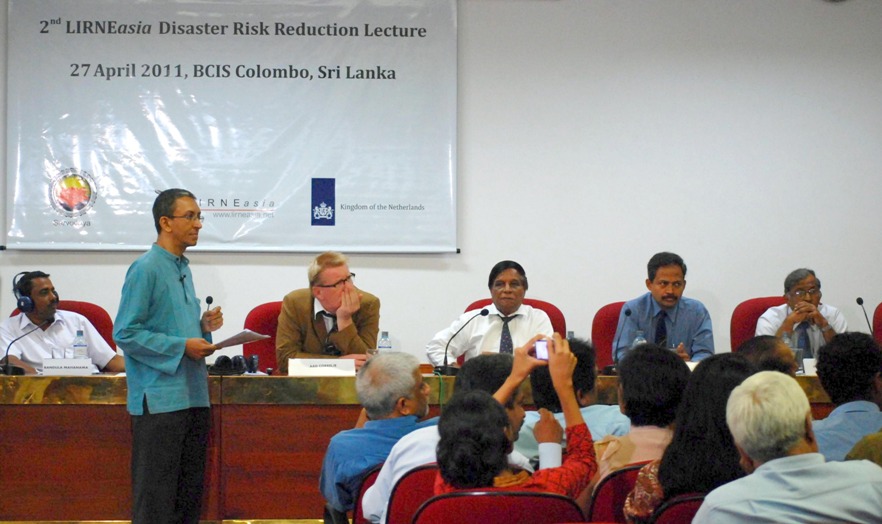
2nd LIRNEasia Disaster Risk Reduction Lecture, 27 April 2011 in Colombo: Nalaka Gunawardene (standing) moderates panel discussion
Writing on 20 April 2011, exactly 25 years after the Kantale large dam breached and washed away downstream villages, I posed the question: “If there were to be a catastrophic dam failure in Sri Lanka today, is there a warning system in place to detect the failure and issue timely warnings? Have the downstream communities participated in evacuation drills and know what action needs to be taken when a warning is issued?”

I’ve been asking such questions for a while. In fact, the post-mortem of the Kantale dam breach was one of the bigger stories I covered soon after I entered mainstream journalism in late 1987. By then, a few months after the incident, a presidential commission of inquiry was looking into what caused that particular disaster.

My interest in this subject is perhaps inevitable. I live in a country that has a high concentration of man-made water bodies. There are approximately 320 large and medium sized dams in Sri Lanka, and over 10,000 smaller dams, referred to as “wewas”, most of them built more than 1,000 years ago. In fact, Sri Lanka probably has the highest number of man-made water bodies in the world. According to the Sri Lanka Wetlands Database, the major irrigation reservoirs (each more than 200 hectares) cover an area of 7,820 hectares, while the seasonal/minor irrigation tanks (each less than 200 hectares) account for 52,250 hectares. This adds up to 60,070 hectares or just over 600 square kilometres — nearly a tenth of the island’s total land area.

Lankans are justifiably proud of their ancient hydrological civilisation — but don’t take enough care of it. Nothing lasts forever, of course, but irrigation systems can serve for longer if properly maintained. In a world where extreme weather is becoming increasingly commonplace, we can’t afford to sit on 25 centuries of historical laurels. Unless we maintain the numerous dams and irrigation systems – most of which are still being used for farming – heritage can easily turn into hazard.

Cartoon from Daily Mirror, 20 Jan 2011
As indeed happened in early 2011, when massive and successive floods lashed the country’s Dry Zone where most reservoirs are located. It was a strong reminder how dams and reservoirs not only attenuate the effects of heavy rains, but if breached, can magnify the effects of such rainfall.

More than 200 small dams did breach during those rains, causing extensive damage to crops and infrastructure. The most dangerous form of breach, the over-topping of the earthen dams of large reservoirs, was avoided only by timely measures taken by irrigation engineers — at considerable cost to those living downstream. This irrigation emergency was captured by a local cartoonist: the head in this caricature is that of the minister of irrigation.

In early February, Sri Lanka announced that it will expand its dam safety programme to cover more large reservoirs and will ask for additional funding from the World Bank following recent floods. Never mind the irony of a proud heritage now having to be maintained with internationally borrowed money. Public safety, not national vanity, comes first.

All this provided a timely setting for the 2nd LIRNEasia Disaster Risk Reduction Lecture in Colombo, which I chaired and moderated. This enabled the issues of flood protection and dam safety to be revisited, building on the path-finding work in 2005-2006 done by LIRNEasia, Vanguard Foundation and Sarvodaya in developing an early warning system for dam hazards in Sri Lanka.

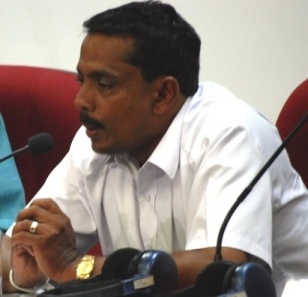
Bandula Mahanama
The main lecture was delivered by Dr Aad Correlje of the Delft University of Technology, the Netherlands. The response panel comprised Bandula Mahanama (a farmer organisation leader from one of the worst flood-affected areas in the Polonnaruwa District), S Karunaratne (Sri Lanka National Committee on Large Dams), Dr Kamal Laksiri (Ceylon Electricity Board) and U W L Chandradasa (Disaster Management Center). A summary is found on LIRNEasia’s blog.

Dams and irrigation systems are widely seen as the exclusive domain of civil engineers. They certainly have a critical role to play, but are not the only stakeholders. I was very glad that both our panel and audience included voices from many of these groups — especially the many communities who live immediately downstream of dams and reservoirs. Some of them are always in the shadow of a dam hazard, and yet helpless about it.

This was the gist of farmer leader Bandula Mahanama’s remarks – he made a passionate plea for a more concerted effort to improve proper maintenance of dams and reservoirs. “Wewas are part of our life, but right now our lives are in danger because the irrigation heritage is in a state of disrepair,” he noted.

I will write more about this in the coming weeks. My last thought from the chair was something I first heard many years ago in a global documentary. When it comes to water management, everybody lives downstream.

That’s certainly the case — but some are more downstream than others. And not everyone lives with the same peace of mind. We need to do something about it.

See also my recent writing in Sinhala on this topic, as part of my weekly science and development column in the Ravaya newspaper in Sri Lanka:

Nalaka Gunawardene’s Ravaya column – 27 Feb 2011 – Dam Safety in Sri Lanka

Kantale Dam Breach, 25 years later: Film captures memories and worries

Kantale Reservoir: Full again, but what if another dam breach happens as in April 1986?

There are approximately 320 medium and large dams in Sri Lanka and over 10,000 small dams, most of which were built more than 1,000 years ago. The consequences of a major dam failure in Sri Lanka can be devastating to life, property and the environment.

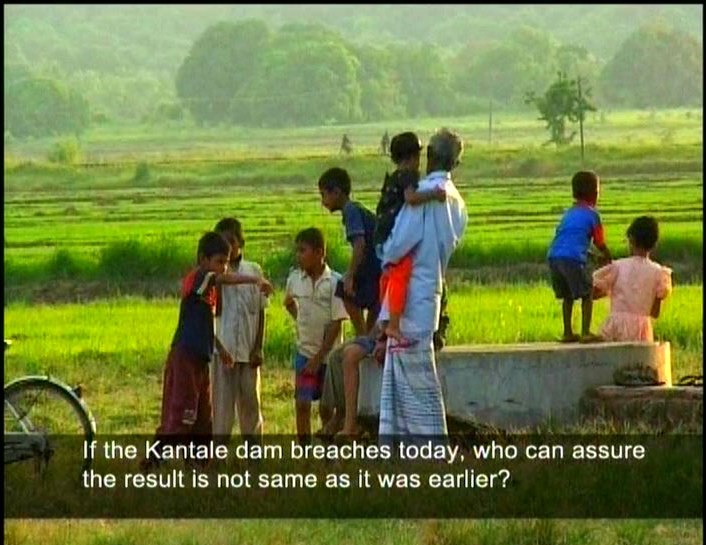
One such dam disaster happened exactly 25 years ago, on 20 April 1986, when the ancient Kantale dam, 50 feet high and over 13,000 feet long, breached. Its waters rapidly flooded several villages downstream, killing 127 people and destroying over 1,600 houses and paddy lands.

A short documentary made in 2005 revisited the scene of this disaster 19 years later to gather memories and opinions of the affected people and engineers involved. The film, made by Divakar Gosvami, was part of a 2005 study on dam safety by LIRNEasia, Vanguard Foundation, Sri Lanka National Committee of Large Dams and Sarvodaya. Its final report asked: if there were to be a catastrophic dam failure in Sri Lanka today, is there a warning system in place to detect the failure and issue timely warnings? Have the downstream communities participated in evacuation drills and know what action needs to be taken when a warning is issued?

Kantale Dam Breach Revisited: Part 1 of 2

Kantale Dam Breach Revisited: Part 2 of 2

This film is not merely documenting a tragic moment of recent history. It also carries the caution: have we learned the lessons from this incident?

Dr Rohan Samarajiva, Chair and CEO of LIRNEasia, has just written: “As I watch it again in April 2011, I wonder whether all that they had built up since 1986 had got washed away, again. Two successive periods of heavy rainfall at the beginning of the year devastated the livelihoods of the people of the wav bandi rajje, the irrigation civilization we are so proud of. Flood upon flood. More than 200 small tanks breached; big tanks were saved by the emergency actions of irrigation engineers.”

In another recent piece, he asks: Twenty five years after Kantale: Have we learned?

Grace under pressure: Japan faces tough test from 3/11 disasters – quake, tsunami, meltdown…

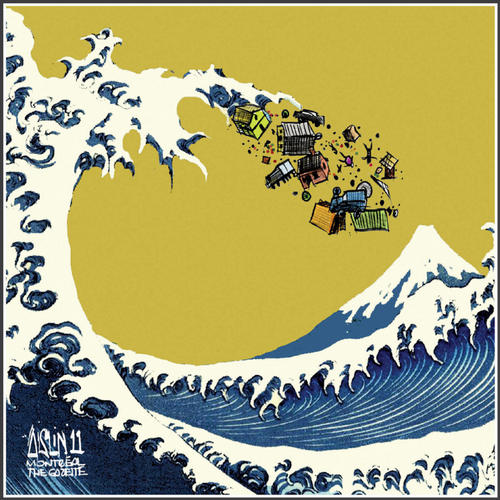
Cartoon by Geneva-based Patrick Chappatte, who works for International Herald and Le Temps

Since Friday March 11 afternoon, I’ve been watching the unfolding humanitarian tragedy in Japan caused by multiple disasters — 8.9 earthquake, tsunami, dam burst, fires, and now the meltdown of three nuclear reactors.

Our heart-felt sympathy goes out to all Japanese people, among whom I count many friends. No nation deserves to be battered simultaneously like this by natural and (partly) man-made calamities.

Yet, few nations are better prepared and equipped to deal with such crises. Japan may be reeling right now, but things could have been far worse if not for their readiness to face emergencies both at individual and institutional levels.

Amidst scenes of utter destruction and dislocation, the Japanese people were reacting with the stoic calm for which Japan is famous. “What’s amazing is that everyone I saw — cops on their white bicycles, boys reading comics in alleys, kids walking home with their parents — appeared graceful under this unexpected disaster,” Tokyo resident Irie Otoko wrote to The New York Times.

But make no mistake: this is a big one as disasters come. The death toll is feared to exceed 10,000, and the property damage alone is likely to be tens of billions of dollars. The societal, economic and emotional costs are hard to quantify at this early stage.

It was only a couple of weeks ago that I was walking the streets of Tokyo, enjoying the calm and orderly life in the modern Roppongi and the old world charm of Kagurazaka. But once again, Planet Earth has reminded us who is in charge.

And cartoonists are capturing the planetary sentiment with their usual economy of words.

Cartoon by Terry Mosher, The Star, Toronoto, Canada
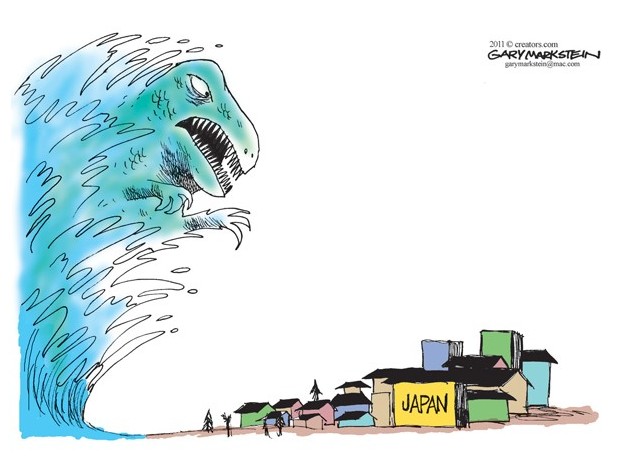
Cartoon by Gary Markstein, Copyright 2011 Creators Syndicate
Courtesy: Cartoon Movement

Blogging from Resilience 2011: Pathways for Staying Alive in an uncertain world


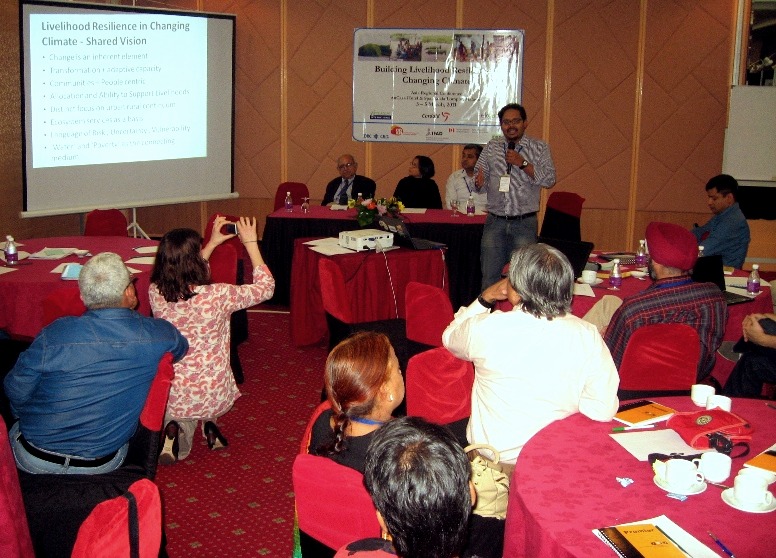
From 3 to 6 March 2011, I kept blogging from Resilience 2011: Asia Regional Conference on Building Livelihood Resilience in Changing Climate, held in Kuala Lumpur, Malaysia.

Along with a few other participants, I also tweeted from the conference. All our tweets are organised under #Resilience2011

Fred Noronha and I set up a YouTube channel for the conference where we posted short interviews filmed with selected participants. It has close to two dozen short videos, all filmed with a FlipVideo camcorder.

Here are links to all the blog posts I wrote on the conference website (text only as the platform didn’t allow visuals to be displayed easily).

6 March 2011: As the planet warms, we must all become more like bamboo!

6 March 2011: Slow disasters need not apply?

6 March 2011: Go beyond IPCC and SAARC, South Asian climate researchers urged

5 March 2011: Policy challenge to researchers: Summarise, simplify – and talk money!

5 March 2011: Wanted: Better Story Telling!

4 March 2011: ICTs for livelihood resilience: The importance of asking the right questions

4 March 2011: Hash-tagging Resilience2011: Twitter feeds from KL Conference

4 March 2011: Floods not always a disaster. Ask Mekong Delta farmers

3 March 2011: Banging Heads Together (nicely)

3 March 2011: SOS: Small Farmers need urgent help for climate adaptation

3 March 2011: Looking for the Bigger Picture

Resilience 2011: Banging Heads together to make lives better

What does Livelihood Resilience mean to them?

I am at Resilience 2011: Asia Regional Conference on Building Livelihood Resilience in Changing Climate, being held in Kuala Lumpur, Malaysia, from 3 – 5 March 2011. It is jointly organised by Wetlands International-South Asia (WISA), International Development Research Center (IDRC), The Climate and Development Knowledge Network (CDKN), Cordaid and ekgaon technologies

The conference has attracted three dozen researchers, practitioners and policy makers from across the Asia Pacific region, and from different ‘domains’: Disaster Risk Reduction (DRR) and disaster management; Ecosystem services and conservation; and livelihoods and socio-economic development.

I like hobnob with researchers and activists from whom I learn much. As a science and development communicator, I sit through their often very technical discussions and find ways of relating them to the bigger realities. For a start, I created a word map of the keywords being used in the conference. That gives an idea of concerns at a glance.

I then tried to make sense of the conference introduction note, published on the event website. It looks and reads like the work of a committee, and not the easiest to read and absorb unless one is deep immersed in these areas. Since most of us aren’t, I spent an hour or two rewriting it in my own language. Here it is — my version of what Resilience 2011 conference is trying to accomplish:

Building Livelihood Resilience in Changing Climate Asia Regional Conference
Kuala Lumpur, Malaysia, 3 – 5 March 2011
A layman’s interpretation of the vision, scope and aims of the conference

Asia, home to over 60 per cent of all human beings, is the largest and most diverse geographical region in the world. It is also a region of sharp contrasts and disparities in economic and social development.

Some Asian economies have been growing faster than any other on the planet, and even the global recession has not slowed them down too much. This growth has helped push tens of millions of people out of poverty during the past three decades. Yet, Asia still has the largest number of people living in poverty and food insecurity.

In some respects, gains have been lost. For example, the UN Millennium Development Goals Report for 2010 revealed that the proportion of undernourished Asians has increased recently to levels last seen during the 1990s. Two thirds of the world’s undernourished people live in Asia. At the same time, the natural resources on which food supplies depend – land, water and biodiversity – are degrading rapidly. Food shortages and water scarcities are already being experienced, or anticipated, in many countries.

Growing number and intensity of disasters adds further pressures. According to the international disaster database EM DAT, Asia accounted for nearly half (46 per cent) of the all water related disasters in the world, and 90 per cent of all affected people during 1980 to 2006. During this period, disasters in Asia caused a total of US$ 8 billion worth of economic damage. These disasters impacted disproportionately on the poor and vulnerable sections of society.

Climate change impacts will make this situation worse for everyone, and especially for the poor who already have limited options and ability to adjust to rapid changes. It is now clear that all efforts aimed at reducing poverty and protecting the socially vulnerable groups need to factor in the additional pressures created by changing climate.

To cope with these challenges, we need better understand how livelihoods are threatened, and what strategies can be adopted to improve resilience especially at the grassroots. Researchers and practitioners in natural resource management and poverty reduction are now focusing more and more on the nexus between resources, climate changes and livelihoods.

New ways of looking at the inter-linked challenges have emerged:
• Humanitarian aid workers active on disasters now focus on disaster risk reduction, expanding the scope of risk management to include preparedness and risk reduction.
• Development practitioners working on poverty reduction emphasize on increasing access to various capitals to help address disaster risk and poverty.
• A ‘systems approach’ is being used to look at poverty in broader terms of well-being of people and ecosystem services of Nature.

In addition, researchers and activists emphasize the value of freedoms for participation, economic facilities, social opportunities, transparency guarantees, protective security and ecological security. It is only by ensuring these freedoms that the poor will have a meaningful chance to assert their rights and make their own choices in what they do, and how they do it.

The slowly but steadily warming planet challenges everyone to rethink their conceptual frameworks, and redefine or reconfigure how they work. If there is one thing certain about these uncertain and turbulent times, it is business-as-usual won’t do!

What do we seek to achieve?

Each sector has accumulated a knowledge base, set of best practices and lessons learnt exist within individual domains. Each sector’s theories, approaches and actions within various domains differ on how to make livelihoods more resilient, especially in the often harsh realities of the developing world.

They are all necessary, but not sufficient. Taken individually, no single approach or solution can help make everybody’s livelihoods resilient from the multitude of pressures and impacts. Yet, what one strand cannot withstand on its own, a bundle of strands very likely can: bringing different areas of research, advocacy and practice is the way forward to ensuring better resilience at the grassroots.

This is easier said than done. Both researchers and practitioners have long worked in their own silos or compartments, with occasional nods at each other’s work and periodic exchanges. From this, we need to evolve more integrated framework that brings in the ecologists, disaster managers, social scientists and everyone else who share an interest in making lives better at the grassroots and at the bottom of the income pyramid.

The Kuala Lumpur conference attempts to address this formidable challenge. It will provide a common platform to practitioners and researchers from various ‘domains’ related to livelihoods to work out a shared vision on livelihoods resilience by seeking answers to these questions:
• What are the existing challenges to achieving livelihood resilience?
• What are the gaps in existing livelihood frameworks in relation to disaster, climate change adaptation and conservation in addressing livelihood resilience?
• What are the challenges in scaling up pilot models of Livelihood Resilience?
• How does social adaptation occur in resilience building?

What were the most iconic images of Asian Tsunami of December 2004?

Every major disaster produces its own iconic images which determine how the collective memory of the world would remember the incident.

In a blog post to mark the sixth anniversary, I quoted photojournalist Shahidul Alam as saying: “The immediacy of an iconic image, its ability to engage with the viewer, its intimacy, the universality of its language, means it is at once a language of the masses, but also the key that can open doors. For both the gatekeepers and the public, the image has a visceral quality that is both raw and delicate. It can move people to laughter and to tears and can touch people at many levels. The iconic image lingers, long after the moment has gone. We are the witnesses of our times and the historians of our ages. We are the collective memories of our communities.”

Looking back six years later, which of the numerous images of the Asian Tsunami of 26 December 2004 have achieved that iconic status? It was one of the most widely photographed disasters of our time — but which handful of images do we remember now, more than 2,000 days later?

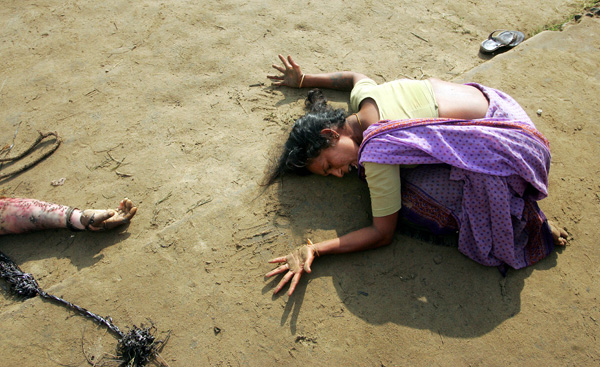
One image that lingers, for its frozen horror and tragedy, is this one taken by Reuters photojournalist Arko Datta in Tamil Nadu, southern India. It later won him the World Press Photo and other international awards.

An Indian woman mourns the death of a relative killed in the Asian tsunami. The picture was taken in Cuddalore, Tamil Nadu, on 28 December 2004 (REUTERS, Arko Datta)

For a mega-disaster that was distributed over a very large area along the Indian Ocean rim, covering a dozen countries in South and Southeast Asia, there must be more iconic images — either globally or nationally. What image/s do YOU remember the December 2004 Tsunami by?

It doesn’t matter if they the image was taken by a professional photographer (i.e. one who is paid to do that job) or a holiday maker or a local resident…as long as it was widely shared and has entered our collective consciousness. Please nominate your images with links, which we will display here.

This photo is a fake!
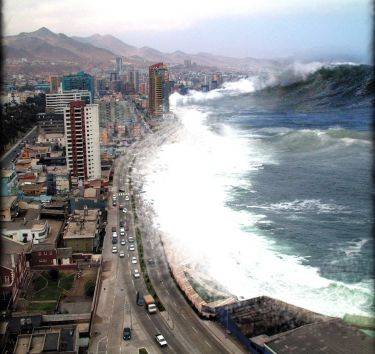
Note: Beware of fake tsunami images that are in circulation, which some people are peddling either knowingly or unknowingly. One of them — allegedly the waves hitting Phuket in Thailand — is exposed at Urban Legends as digitally imagined fantasy. Another set of images is real enough — but have nothing to do with the tsunami. These show people running away from an oncoming burst of water, seemingly a big wave. They are of a TIDAL BORE, not a tsunami, taken in October 2002 at the Qiantang Jian River in Hangzhou, Zhejiang, China — an area known for tidal bores.

Capturing Nature’s Fury: Revisiting Asian Tsunami memories through photographs

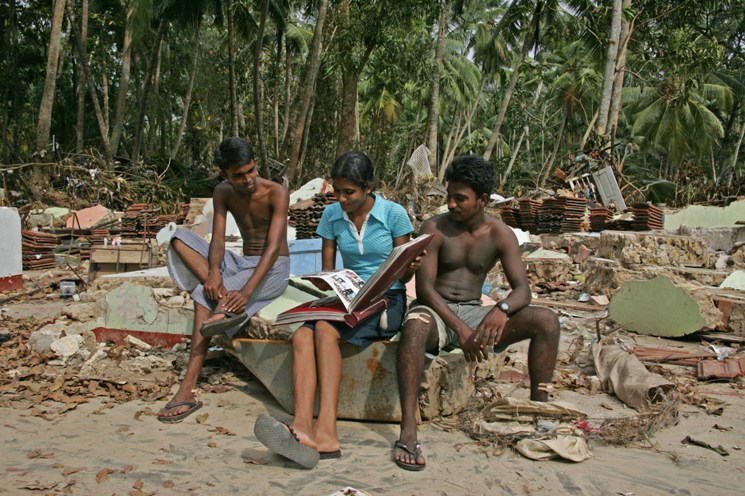
Tsunami survivors look at an lbum of family photos in Telwatte, Sri Lanka - Photo by Shahidul Alam

Today marks the 6th anniversary of the Boxing Day Tsunami of December 2004. The occasion is being marked solemnly in many locations hit by the waves all along the Indian Ocean rim countries.

Among them is Peraliya, close to Telwatte, where the worst train crash in railroad history occurred that day — when an overcrowded passenger train was destroyed on a coastal railway in Sri Lanka by the tsunami. The government-owned Sri Lanka Railways will never be able to live down their day of infamy when a packed train headed to disaster with no warning… They have the gumption — and insensitivity — to operate a memorial train today along the same path that led more than 2,000 passengers to a watery grave six years ago.

After six years, most survivors have moved on and rebuilt their shattered lives. Memories are also beginning to fade a bit, but for those directly affected, they will remember 26 December 2004 for the rest of their lives. And we who shared their tragedy and misery will keep reliving the memories through photographs, videos and the growing body of creative writing that the region-wide disaster inspired.

Photographs stand out as possibly the most enduring memory aids of a disaster. As disaster survivors sift through what is left of their homes, family photo albums are among the most cherished possessions they seek to recover. Why are snapshots of frozen moments so powerfully evocative to individuals, communities and the world?

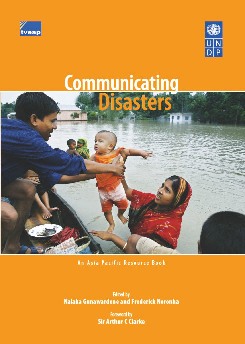
I posed this question in the introductory blurb I wrote for my friend Shahidul Alam‘s chapter on disasters and photography in our 2007 book, Communicating Disasters: An Asia Pacific Resource Book.

Titled Capturing Nature’s Fury, the chapter drew on Shahidul’s experiences not only with the tsunami, which he covered in Sri Lanka, but also the earthquakes in Bam, Iran (December 2003) and Kashmir (October 2005), and cyclones and floods in his native Bangladesh.

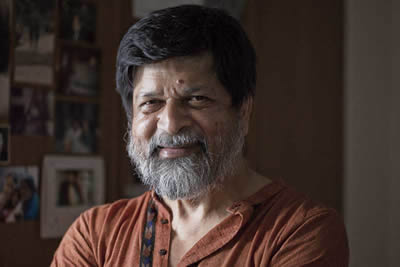
Shahidul Alam. Photo: Rahnuma Ahmed/Drik/Majority World
Describing the circumstances of the above photo, Shahidul wrote: “In the ruins of Telwatte, where the fateful train disaster had taken place, I came across a family that had gathered in the wreckage of their home. I wanted to ask them their stories, find out what they had seen, but stopped when I saw them pick up the family album. They sat amidst the rubble and laughed as they turned page after page.”

Zooming out, he further reflected:

“I had seen it before. As people rummaged through the ruins of their homes, the first thing they searched for was photographs. Years earlier at a disaster closer to home, I had photographed a group of children amidst the floods of 1988. The children insisted on being photographed. As I pressed the shutter, I realised that the boy in the middle was blind. He would never see the photograph he was proudly posing for. Why was it so important for the blind boy to be photographed?

“Though my entry into photography had been through a happy accident, my choice of becoming a photographer had been a very conscious one. Having felt the power of the image I recognised its ability to move people. The immediacy of an iconic image, its ability to engage with the viewer, its intimacy, the universality of its language, means it is at once a language of the masses, but also the key that can open doors.

“For both the gatekeepers and the public, the image has a visceral quality that is both raw and delicate. It can move people to laughter and to tears and can touch people at many levels. The iconic image lingers, long after the moment has gone. We are the witnesses of our times and the historians of our ages. We are the collective memories of our communities.

“For that blind boy in Bangladesh and for the many who face human suffering but may otherwise be forgotten, the photograph prevents them from being reduced to numbers. It brings back humanity in our lives.”

Read the full chapter: Capturing Nature’s Fury, by Shahidul Alam


Photographer Chuli de Silva’s memories of the Tsunami, recalled six years later

Dec 2007: Asian Tsunami: A moving moment frozen in time

Celebrating Kalpana Sharma, a super-star of good journalism

My friend Kalpana Sharma just stepped down after serving on the Panos South Asia board for over a decade. The Executive Director A S Panneerselvan asked me to write a personalised piece felicitating her. Part of this was read at the annual meeting of the Board held in Dhaka last weekend. Here’s the full essay — a couple of mutual friends who read it say it isn’t too eulogistic! Now you can decide for yourself…

* * * * *

The Curious Ms Sharma of Mumbai

I knew Kalpana Sharma from her by-line long before I met her in person. Now, more than a dozen years after we became friends, she remains an inspiration and a role model.

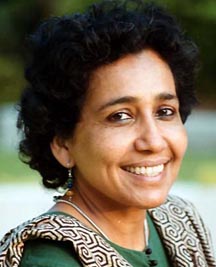
Kalpana Sharma
Kalpana has been a path-finder and trail-blazer in journalism that cares. She has set the gold standard in investigating and critiquing development in the Indian media. Today, she continues her nearly four decades of association with the Indian media as a respected columnist, journalist and writer. Her stock in trade is a mix of curiosity, sense of social justice, wanderlust and a deep passion for people and issues. She is living proof that quality journalism can be pursued even in these turbulent and uncertain times for the mainstream, corporatised media.

Kalpana has been covering the ‘other India’ that is largely ignored by the Indian media. Its denizens are some 456 million people living under the global poverty line of $1.25 per day — a third of the world’s poor. (If they declared independence, they would immediately become the world’s third most populous nation.) Kalpana’s reporting from the ‘Ground Zero’ of many disasters and conflict zones has highlighted the multiple deprivations of these people living on the margins of survival.

For many such communities, a headline-creating event is just the latest episode in their prolonged and silent suffering. The media pack that descends on them after a sudden development can’t seem very different from the assorted politicians who turn up periodically during election campaigns. For too long, the grassroots have been treated merely as a grazing ground for stories or votes.

Kalpana doesn’t hesitate to be part of the media pack when duty calls, but once in the field, she sees connections often missed by other journalists looking for a quick sound byte or dramatic image. Unlike some news hounds, she doesn’t exploit the misery of affected people (“Hands up who’s poor, speaks English – and looks good on TV!”). And she returns to the same locations months or years later to follow up.

For all these reasons, Kalpana was our first choice to write the last chapter in a regional book on disasters and media that I co-edited with Indian journalist Frederick Noronha in 2007. Her 2,000-word reflective essay should be required reading for any journalist covering disasters and social disparity in South Asia.

Here is a passage that sums up her views on the subject: “Much of disaster reporting sounds and reads the same because the reporters only see what is in front of them, not what lies behind the mounds of rubble, figuratively speaking. What was this region before it became this disaster area? How were social relations between different groups? What was its history? What were its relations with the state government? Was it neglected or was it favoured? How important was it to the politics of the state?”

Kalpana has been asking such probing questions all her professional life. And it’s not just in the rural hinterland of India that Kalpana has travelled extensively listening and talking to people from all walks of life. Living in the world’s second most populous city Mumbai, she has been equally concerned with its burning issues of urban poverty, gender disparity, environmental mismanagement and governance.

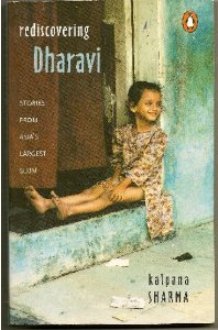
Kalpana once wrote an insightful book about the Dharavi slum in Mumbai, looking at both its social inequalities and the people’s remarkable resilience. Titled Rediscovering Dharavi: Stories from Asia’s largest slum (Penguin, 2000), it was called ‘a model of sane, human, down-to-earth writing’. All this was years before the Oscar-winning movie Slumdog Millionaire (2008) popularised the location through a dramatic tale.

In her quest for untold human stories, Kalpana has taken a particular interest in the plight of poor women. She has written many authentic and moving stories about women who struggle on the margins of the margin. A recurrent theme in her writing is how invisible ‘superwomen’ hold the social fabric together in much of India. Many communities and production systems –ranging from domestic work and child care to waste disposal and farming – would simply grind to a halt if these unseen and unsung women took even a single day off. In reality, of course, they just can’t afford such luxuries.

Kalpana’s column The Other Half, which started in The Indian Express and now appears in The Hindu, is a regular eye-opener. She takes a current topic – from politics, culture, sport or environment — and explores its gender dimensions. She does so by carefully blending facts, personal insights and opinion that makes her writing very different to the rhetorical shrill of gender activists.

Make no mistake: Kalpana is an activist in her own right, and one of the finest in modern India. It’s just that her approach is more subtle, rational and measured – and in the long run, wholly more effective. Long ago, she found how to balance public interest journalism with social activism. This is one more reason why I look up to her.

Partners in crime: Nalaka and Kalpana speaking at the Education for Sustainable Future conference in Ahmedabad, India, January 2005.

In her writing, television appearances and public speaking, Kalpana stays well within the boundaries of good, old-fashioned journalism based on its A, B and C: accuracy, balance and credibility. In my view, she enriches the mix by adding a ‘D’ and ‘E’: depth and empathy. Without these qualities, mere reporting is sterile and dispassionate.

And once we get to know her, we also discover the ‘F’ in Kalpana Sharma: she is a fun-loving, cheerful woman who doesn’t take herself too seriously. We can count on her to be adventurous, enthusiastic and endlessly curious.

Cultivating these attributes would certainly enrich any journalist. I can’t agree more when Kalpana says (in her chapter to a recent book on environmental journalism in South Asia): “Journalists are good or bad, professional or unprofessional. I am not sure if other labels, such as ‘environmental’ or ‘developmental’, ought to be tagged on to journalists.”

I hope Kalpana has no retirement plans. She has earned a break after a dozen years on the Board of Panos South Asia. But we want her to remain a guiding star – a bundle of energy that shines a light into the Darkness, and helps make sense of the tumult and frenzy that surrounds us.