Why do we still go to the movies in the 21st Century?

Going to the movies has been a shared cultural activity for at least four generations. In that time, technology has marched forward in leaps and bounds — but the core experience remains the same. And we still keep going to the movies, at the cinema, even though we now have other ways of seeing the same films. Why?

On the penultimate day of 2009, I went to the local cinema to see 2012, Roland Emmerich’s latest depiction of the mother of all disasters. For 158 gripping minutes, I willingly suspended disbelief and allowed the myth-makers of Hollywood to thoroughly scare me out of my wits. As did, it seemed, the few hundred other people watching it on wide screen with surround sound. There is no way the literally earth-shattering scenes of this movie would seem and feel remotely realistic anywhere else…

But cinemas are far from perfect – for instance, we had put up with a bunch of screaming brats whose parents had unwisely brought them for the wrong kind of movie. I’ve sat through far more noisy and boorish behaviour at cinemas: notable among them is watching Titanic at a massive, packed cinema in downtown Mumbai sometime in 1998 — and discovering how ‘interactive’ Indian movie-goers can get. (After the initial irritation wears off, I became almost oblivious to the distractions, thanks to James Cameron’s superb story telling.)

I just refuse to see such blockbusters on a small screen. (Ok, I might watch movies on long flights when I get tired of reading, but I have never been able to bring myself to watching a movie on an ipod…)

In fact, the movie industry is as much caught up in the digital wave as all other aspects of media. As Manohla Dargis of the New York Times noted in a perceptive essay this week: “How much our world of moving-image entertainment has changed in the past decade! We now live in a world of the 24-Hour Movie, one that plays anytime and anywhere you want (and sometimes whether you want it to or not). It’s a movie we can access at home by pressing a few buttons on the remote (and agreeing to pay more for it than you might at the local video store) or with a few clicks of the mouse. The 24-Hour Movie now streams instead of unspools, filling our screens with images that, more and more, have been created algorithmically rather than photographically.”
Yet, unlike in other media experiences, the changes in the movie industry have gone largely unnoticed by ordinary viewers. As Dargis writes: “Film is profoundly changing — or, if you believe some theorists and historians, is already dead — something that most moviegoers don’t know. Yet, because the visible evidence of this changeover has become literally hard to see, and because the implications are difficult to grasp, it is also understandable why the shift to digital has not attracted more intense analysis outside film and media studies.”

Dargis is probably right: by adapting and evolving with the times, the cinema has survived for over a century. As Donald Clarke noted in The Irish Times at the beginning of December 2009: “Television failed to kill movies. Video failed to kill movies. Internet piracy – not to mention all the other diversions available online – has also failed to annihilate this most stubbornly resilient of art forms. Film-makers will, it is true, tell you that it is now more difficult than ever to negotiate financing for movies that cost between $3 million and $15 million. But you couldn’t say that the current recession has crippled the movie business.”

All this makes me wonder what movie-going might be like in another decade or two. 3D and IMAX are no longer so uncommon or special, and the entertainment industry is working hard to relate to not just our seeing and hearing, but other senses as well. (Did you know that, as long ago as 1960, they tried to introduce smelling movies? Smell-O-Vision was a system that released odors during the projection of a film so that the viewer could “smell” what was happening in the movie. The technique injected 30 different smells into a movie theater’s seats when triggered by the film’s soundtrack. For some reason, it never caught on…)

Perhaps it’s not simply a matter of money or technology. There is also a whole sociology of movie going and movie watching – many of us go to the cinema (not nearly often enough in my case) not just for the personal sensory experience of a celluloid dream, but also for the shared experience of it. I like bumping into friends at cinemas. At a premiere or special screening, I also get to steal a few glimpses of the glitterati of the film world.

Have you been to a film musical and had the uncontrollable urge to burst into song? London’s Prince Charles Cinema not only allows, but encourages viewers to do just this — though only on certain days of the month. Their most famous offering is Sing-a-long-a Sound of Music: a few years ago, I joined several hundred other assorted ‘nuns’, von Trapp family members and Julie Andrews look-a-likes in such a memorable experience. I have the digitally remastered DVD of the 1965 movie, an ever-green title in my household. But watching it at home can’t compare with the sense of community that one feels when the lyrics for all the songs appear on the movie screen, giving the audience every reason to sing their hearts out…

I’m not sure how popular (or even acceptable) such community movie watching would be in different cultures. But going to the movies retains its charm and appeal in this digital age, even if we have come a long way since the glorious days of movie going as captured in this wonderful and memorable song from the musical Annie (1982) – Let’s Go To The Movies
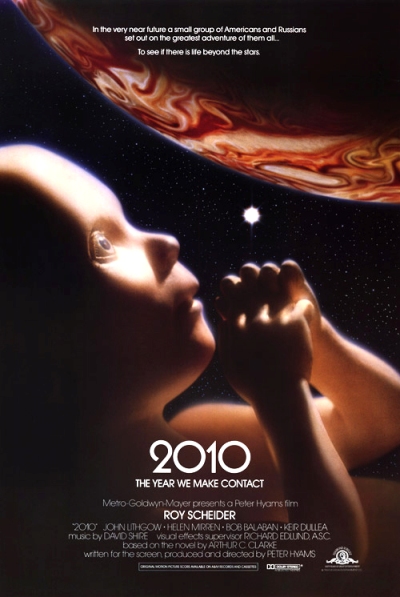
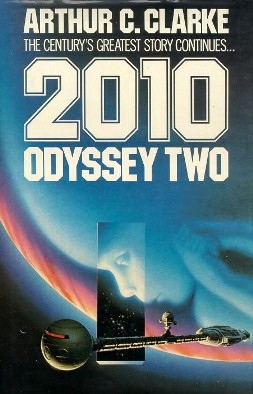
2010: The Year We Make Contact…?

We apologise for the delayed arrival of the future?

The year 2010 has finally arrived, but as they often say in the imagination business, the future isn’t what it used to be.

Actually, any number of futures can be anticipated — but only one of them becomes real. Which one does depends on an infinite number of actions (and inactions)…

2010 holds a special significance for science fiction and movie buffs because both a well known novel and a movie have been set in that year by the grandmaster of near-future imagination, Arthur C Clarke.

2010: Odyssey Two is a best-selling science fiction novel by Clarke, published in January 1982. It was a sequel to 2001: A Space Odyssey.

The story is about seven Russians and three Americans who embark on a joint space mission to Jupiter to figure out what happened to the previous Jupiter mission nine years earlier. They start off as acquaintances and end up as friends – the author hoped that would help improve understanding between the US and the USSR.

The book was dedicated to celebrated cosmonaut Alexei Leonov and Andrei Sakharov, physicist, Nobel laureate and humanist, whose outspoken views led to his internal exile in Gorky until 1986.

In fact, the spacecraft in 2010 is named Alexei Leonov. As Sir Arthur recalled a dozen years later: “I had just sent the manuscript of 2010 to my editors when I visited Russia for a most memorable and enjoyable visit. In between toasts at Leonov’s apartment, I revealed that most of the action in my novel was taking place on board the Cosmonaut Alexei Leonov. A delighted Leonov quipped: ‘Then it must be a good ship.'”

The novel was adapted as a movie by Peter Hyams and released in 1984. Its promotional title was 2010: The Year We Make Contact! (although this never appears in the film itself.) Unlike 2001: A Space Odyssey, the novel and the screenplay were not written simultaneously, and there are significant differences between the two. According to the Wikipedia, the film was only a moderate success, disappointing many critics as well as viewers.

If nothing else, the book and movie of 2010 remind us how difficult it is to write near-future stories — most of them are completely overtaken by reality.

Several elements in 2010 have become anachronistic in the years following their original release. The most striking is the end of the Cold War and the disintegration of the once mighty Soviet Union (which ceased to exist in 1991).

As Sir Arthur said in an interview in May 2005: “I’ve been more interested in the medium to long-term prospects for humanity, rather than in near-term developments. Politics and economics are so unpredictable that it’s practically impossible to make geopolitical forecasts with any degree of certainty.”

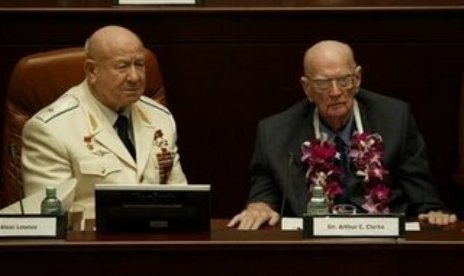
Alexei Leonov (left) and Arthur C Clarke at their last encounter in Colombo, 16 Dec 2007
Interestingly, he had peppered the novel with names of various Soviet dissidents, including physicists Andrei Sakharov and Yuri Orlov, human-rights activists Mykola Rudenko and Anatoly Marchenko, Russian Orthodox activist Gleb Yakunin, among others. That was the author’s not-so-subtle jibe at the Soviet Union, despite the fact that he was both admired and respected in the country that pioneered humanity’s entry into space.

At first, this had somehow gone unnoticed by the Soviet censors. The Russian language youth magazine Tekhnika Molodezhy began serialising 2010: Odyssey Two. Halfway through the story, the serialisation was abruptly stopped. The Central Committee then summoned Cosmonaut Leonov to ask why in the novel the crew of the spaceship Alexei Leonov consisted of Soviet dissidents. (Clearly, that was another regime that couldn’t discern between fictional and real worlds — and tried, in vain, to rule over both.)

That’s when Leonov, Hero of the Soviet Union and one of its most decorated citizens, told off the Central Committee: “You aren’t worth the nail on Arthur C. Clarke’s little finger.” This was revealed years later in Two Sides of the Moon: Our Story of the Cold War Space Race, co-authored by Alexei Leonov and American astronaut David Scott (Simon and Schuster, 2004).

As Sir Arthur – a long standing friend of Leonov – remarked in a review of their book, Leonov was “perhaps the only man in the USSR who could have got away with that kind of remark”.

Well, that 2010 is finally here — even though Sakharov and Clarke never lived to see it, Leonov is very much with us. We are not yet heading to Jupiter, but at least the Cold War is now history…

Who can predict what surprises await us as the real 2010 unfolds?

Looking back at Asian Tsunami of 2004…and media response

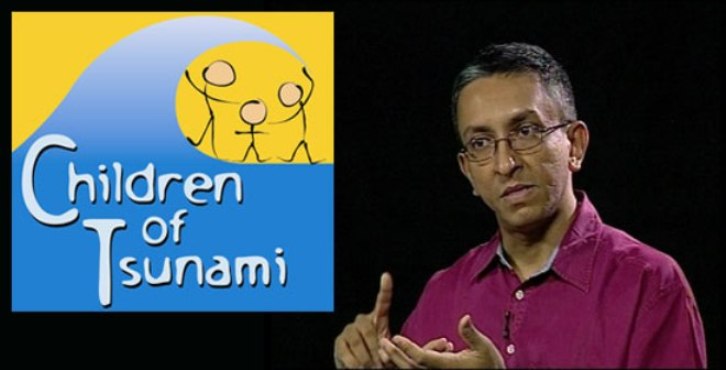
Nalaka Gunawardene talking about 2004 Asian Tsunami

To mark the fifth anniversary of the Indian Ocean Tsunami of December 2004, TVE Asia Pacific has just released excerpts from an in-depth TV interview I recorded four years ago.

The wide-ranging interview was originally filmed in November 2005 in Bangkok, Thailand, by Thai journalist and film maker friend Pipope Panitchpakdi. He used excerpts at the time for a Thai documentary to mark the first anniversary of the tsunami. It remains one of the best media interviews I have given, for which all credit goes to Pipope.

Selected segments of that interview, in its original English, can now be viewed on TVEAP’s YouTube channel, while the transcript is published on the TVEAP website.

To give a flavour of this belated release of archival material, here are the first two extracts:

Nalaka Gunawardene recalls Asian Tsunami of Dec 2004 Part 1 of 6

Part 2 of 6:


Watch all extracts on TVEAP’s YouTube channel

Asian Tsunami+5: Revisiting survivor Heshani Hewavitharana of Sri Lanka…

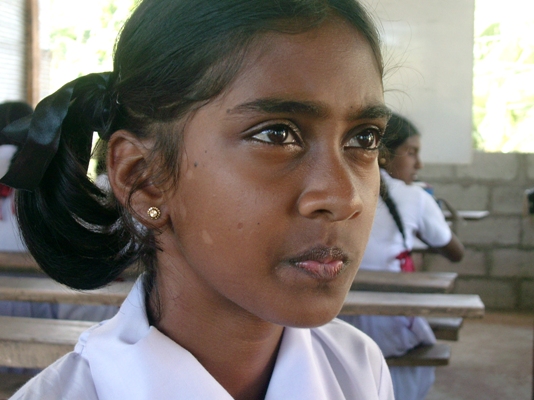
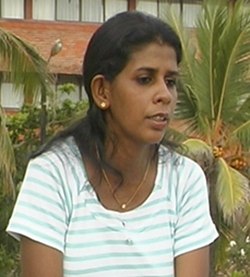
Heshani in Feb 2005: Creative and reflective - Photo courtesy TVEAP

Heshani Madushika Hewavitharana, 13, was an eager student in school who also excelled in creative writing, in which she’d won certificates and awards. All of these, along with her school books and everything else her family owned, was lost in the Asian Tsunami of 26 December 2004. Their beach front house, in Suduwella in Sri Lanka’s southern district of Matara, was badly damaged. They escaped with their lives — and were among the luckier ones.

When we found Heshani and family a few weeks after the tragedy, they were taking refuge in a friend’s house. Her fisherman father could not immediately return to his work without his boat and gear, also washed away by the waves. The family was living on the mother’s meagre income from spinning coir ropes.

Despite their plight, Heshani and family agreed to participate in the Children of Tsunami media project, where local film crews in India, Indonesia, Sri Lanka and Thailand tracked how eight survivor families were rebuilding their lives and livelihoods after the Asian tsunami disaster.

We at TVE Asia Pacific documented on TV, video and web the personal recovery stories of eight affected families in these worst affected countries for one year after the disaster. Our many media products — distributed on broadcast, narrowcast and online platforms -– inspired wide ranging public discussion on disaster relief, recovery and rehabilitation. In that process, we were also able to demonstrate that a more engaged, respectful kind of journalism was possible when covering post-disaster situations.

Watch Heshani’s first monthly video update, February 2005:

Not all our participating families recovered from the tsunami’s mighty blow within one year, but we ran out of money and had to stop capturing their stories by the end of 2005, which I called Asia’s longest year. In a goodbye tribute to the courage and resilience of these families, I wrote in December 2005: “Our journey with the eight families ends with the first anniversary. We know their own journeys to recovery are far from finished. We can only wish them well.

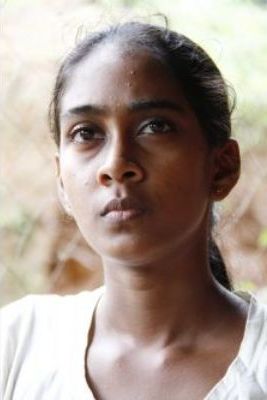
Heshani in Nov 2009 - Courtesy Xinhua
Since then, I have often wondered how the eight children were faring. (In March 2007, it suddenly became seven when the Theeban, the boy in Sri Lanka’s east whose story we tracked, was brutally murdered.) However, I have resisted the temptation to revisit the children as I felt we had been intrusive enough already during that first difficult year after the tsunami. They must now be allowed to continue their lives in private.

Yet, I was intrigued by a recent report where two correspondents working for the Chinese news agency Xinhua, Chen Zhanjie and Liu Yongqiu, tracked down Heshani and family. They wrote a story on Xinhua’s website for the Universal Children’s Day in November which focused attention on the protection and welfare of children. Heshani is now 17, and her younger sister Dimalka, 12. Already having passed the GCE Ordinary Level exam, Heshani is now preparing for her Advanced Level exam slated for August 2010.

While Dimalka aspires to be a doctor, Heshani wants to become a banker. Their father believes the tragedy has added a new dimension to the girls’ lives: “They have leant their responsibilities from the tsunami. Now the two girls have no fears.”

Read the full story on Xinhua website: From tsunami to trauma to trek ahead

Ahead of tsunami, journalist foresaw coastal disaster in Sri Lanka: “A Catastrophe Waiting to Happen”

Dilrukshi Handunnetti in Deep Divide film
Contrary to a popular belief, journalists don’t enjoy being able to say ‘I told you so!’. They much rather prefer if their investigative or analytical work in the public interest are heeded in time.

A few months before the Indian Ocean tsunami of December 2004, my friend and journalist Dilrukshi Handunnetti wrote an investigative story on how coastal zone management laws and regulations were openly flouted by developers. She cautioned that it was a ‘disaster waiting to happen’

She had no idea how forcefully her point will be driven home before that year ended.

“Little did anyone realise the price coastal communities would have to pay for the greed of a few dozen developers,” she said after the tsunami, interviewed for Deep Divide, a South Asian documentary on environmental justice that TVE Asia Pacific produced in 2005.

Watch Deep Divide – story from Sri Lanka:

Here’s the blurb I wrote at the time to promote the story:

Sri Lanka’s economic activities are concentrated in coastal areas: 80 per cent of the tourist related activities are found there, along with one third of the population. Seeking to accelerate economic growth, the Sri Lankan government took measures to develop the island’s coastal regions. Shrimp and prawn farming was encouraged, while many incentives were provided for developing tourist resorts along the island’s scenic beaches.

As the shrimp exports grew and tourist arrivals increased, there was a ‘cost’ that only local residents and a few environmentalists cared about: mangrove forests were cleared, coral reefs were blasted, and the coastal environment was irreversibly changed.

Shrimp farming damaged mangroves, aggravated tsunami impactCoastal zone management regulations and guidelines were openly flouted by developers. Local communities were the last to benefit from this development boom — they watched silently as their fish catch dwindled and their coastal environment was pillaged. But little did anyone realise the price coastal communities would have to pay for the greed of a few dozen developers.

When the tsunami struck, there were very few natural barriers to minimise its impact. More than 40,000 people died or went missing, while hundreds of thousands lost their homes and livelihoods. It was the biggest single disaster in the island’s history.

Dilrukshi reflects: “Post-tsunami, people realised that the mangroves have protected these little, you know, landmass. And where you find a little bit of protected mangroves, you also find the landmass protected.”

She adds: “I think we have committed lot of excesses and we have been made to answer for those sins. Hereafter, we cannot afford to not do it right.”

Filmed on location in India, Nepal and Sri Lanka, Deep Divide explores the reality of environmental justice in South Asia — home to 500 million people living in absolute poverty, or 40 per cent of the world’s total poor. Everywhere, it finds environmental injustice. This investigative film builds on the work by three local journalists, who act as our guides to understanding the complexities and nuances of development amidst poverty and social disparities.

Environment For All book coverThe origins of Deep Divide go back to 2002. Panos South Asia, a regionally operating non-profit organization analyzing development issues, awarded media fellowships to selected journalists from five South Asian countries to explore specific cases of environmental injustice in their countries. They were to investigate issues as varied as land degradation, food and water insecurity, rising pollution, and mismanaged development.

Their findings were initially published in the local media – in the newspapers or magazines they worked for. In 2004, Panos South Asia compiled the articles in a book titled Environment for All. Three stories from this book were adapted into the documentary, directed by Indian film maker Moji Riba.

Children of Tsunami: No More Tears…

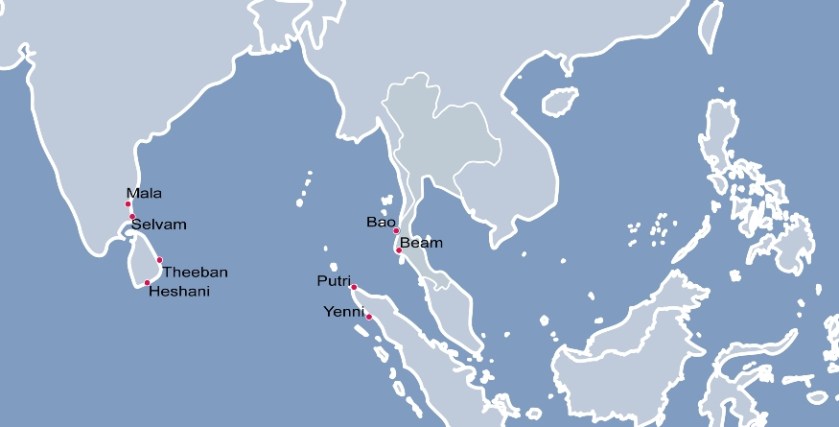
where Children of Tsunami stories were filmed for much of 2005
Four countries, eight locations: where Children of Tsunami stories were filmed for much of 2005

They have never met each other. Some have never travelled beyond their native village. On December 26 2004, the sea rose and rose and took everything they cherished.

Documented over the year, locally-based filmmakers returned to Asia’s battered coasts in India, Indonesia, Sri Lanka and Thailand to track the healing and the hurt through the eyes of children.

Asia’s recovery process from the tsunami is being captured through the stories of three girls and two boys aged 8 to 16 years.

Of different races, worshipping different Gods, they live on different shores in different countries. They are the tsunami generation, sharing the vulnerability of a child and the legacy of the tragic tides.

Young survivors of the Asian tsunami let us into their lives to personalise the mass of statistics, aid pledges and recovery plans. “Children of Tsunami” is a tapestry of intimate stories, woven by voices of individual and collective resilience, heroism and recovery.

Children of Tsunami: No More Tears – Part 1 of 3

Part 2 of 3

Part 3 of 3

Duration: 24 mins
Year of production: 2005
Countries filmed in: India, Indonesia, Sri Lanka, Thailand
In each country, a locally based production crew carried out filming for TVE Asia Pacific.

Regional Production Team
Supervising Producer: Bruce Moir
Production Assistant: Yohan Abeynaike
Production Manager: Manori Wijesekera
Executive Producers: Joanne Teoh Kheng Yau and Nalaka Gunawardene

Co-Produced by: Channel News Asia, Singapore
In partnership with TVE Asia Pacific

Broadcast Asia-wide on the first anniversary of the Asian Tsunami, 26 Dec 2005

For more information, visit: www.childrenoftsunami.info

See also: Channel News Asia – Making of a pan-Asian news channel

Dance for the Climate: dance your anger and joys to a U2 tune!

Hopenhagen?
As the UN climate conference culminates today in Copenhagen, there seem to be lots of angry people in the Danish capital. Many civil society and environmental activists, and some journalists, have been frustrated by the inter-governmental bickering process and the occasionally tough crowd control measures by the Danish police.

As author and activist Naomi Klein wrote at the end of the first week: “By the end, around 1,100 people had been arrested. That’s just nuts. Saturday’s march of roughly 100,000 people came at a crucial juncture in the climate negotiations, a time when all signs point either to break down or a dangerously weak deal. The march was festive and peaceful but also tough. ‘The Climate Doesn’t Negotiate’ was the message, and Western negotiators need to head it.”

I’m not in Copenhagen for uptodate news, but the 5,000+ journalists and over 10,000 activists are keeping us well informed on what’s happening (or not happening). Perhaps part of their anger can be dissipated by heeding a creative call to Dance for the Climate.

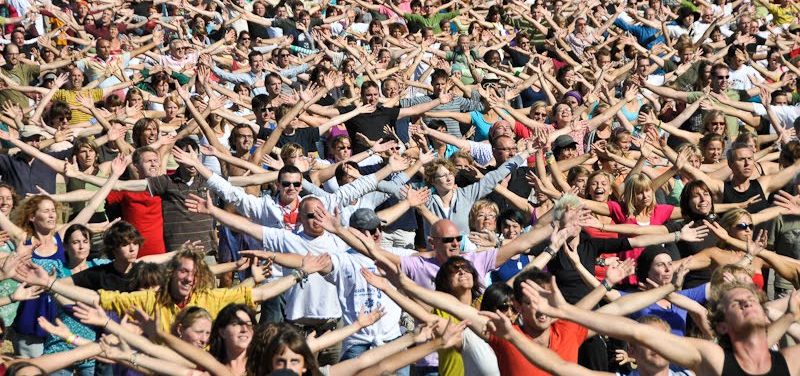
It’s an alternative way of demonstration, made into an inspiring and hopeful video clip by award winning Belgian film director Nic Balthazar. It shows 12 000 people on a Belgium beach in a truly spectacular simultaneous choreography dancing to the U2 hit single ‘Magnificent’. Bono and his band graciously gave the rights to their music. The message of the clip to politicians in Copenhagen is to ‘start moving, together, before it’s too late. The time is now to change climate change’.

In a recent email, Seppe Verbist, handling international distribution of “Dance for the Climate” clip, wrote: “We believe that the chances of success of the UN Conference are influenced by the clear signals from ordinary people to their politicians. The ‘Dance for the Climate-clip’ wants to contribute to this, and we sincerely hope we can count on your support!”

According to her, the clip has been released three weeks ago and they are now trying to spread it worldwide. In Europe the distribution goes pretty well as the European Broadcasters Network (EBU) offered the clip to all her members. They are picking up the offer and integrating the clip into their Copenhagen content. In Canada weather forecasters from different broadcast networks are organizing an imitation of Dance For The Climate, and the clip will be shown 24/7 at the World Expo 2010 in Shanghai in the Meteo World Pavilion. They’re expecting 100 000 visitors every day for six months. The Al Gore Climate Project also supported the clip and shared it with their network. It’s been on TV in Brazil and Mexico as well.

Dancing can be a powerful way to express not just joy, but a range of emotions. One of my favourite calls to action came from Ken Saro-Wiwa, the Nigerian poet, author, environmentalist and minority rights activist (for his Ogoni people) who was executed by Nigeria’s military on 10 November 1995. While in jail facing an uncertain future, he wrote these momentous words:
“Dance your anger and your joys,
Dance the military guns to silence,
Dance oppression and injustice to death,
Dance my people,
For we have seen tomorrow
And there is an Ogoni star in the sky.”

And today, we must also dance for saving our climate.

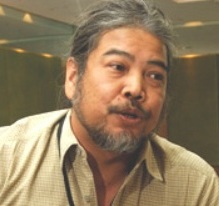
Pipope Panitchpakdi: “It’s Like Being Out There Naked!”

Pipope Panitchpakdi
“It’s Like Being Out There Naked.”

That’s the reason given by Thai film maker and media activist Pipope Panitchpakdi why he doesn’t want to be present when his films are being screened.

A reporter at the recent Mekong Media Forum held in Chiang Mai, Thailand, noted how Pipope headed for the door when his ambitious 2009 documentary, Mekong: The Untamed began to be screened on the first day.

Asked why he was stepping out, he replied: “I don’t like to watch when my films are shown. It’s like being out there naked.”

Fair enough – there isn’t one right way to handle such public sharing, and each film maker does it differently. I know some who simply want to be there from beginning to end, derive great satisfaction from being acknowledged upfront, and are eager to engage the audience after the screening (I’m one of this type). A few prefer to sit quietly and unrecognised amidst the viewers, observing candid reactions of the audience, and may (or may not) own up in the end. Then there are those who leave the room.

But one thing every film maker I know shares with equal passion is that their film be screened with proper visual and sounds. This isn’t as easily or commonly accomplished as you’d think – I’ve seen a good film sharing moment ruined by technical glitches in too many countries, both developed and developing. Having been the victim of such mishaps, I know just how unnerving and frustrating this can be. Ours may be the digital age, but video and audio literacy levels are still very uneven.

Have you had such an experience as a film maker or film user? If so, please share it here!

The Mekong: One river, six countries, two films — and many views

Mekong River flows through 6 countries, nurturing 65 million Asians

The Mekong is one of Asia’s major rivers, and the twelfth longest in the world. Sometimes called the ‘Danube of the East’, it nurtures a great deal of life in its waters – and in the wetlands, forests, towns and villages along its path.

The Mekong’s long journey begins in the Tibetan highlands. It flows through China’s Yunan province, and then across Burma, Thailand, Laos and Cambodia…before entering the sea from southern Vietnam. It’s a journey of nearly 5,000 kilometres, or some 3,000 miles.

The Mekong River Basin is the land surrounding all the streams and rivers that flow into it. This covers a vast area roughly the size of France and Germany combined.

On its long journey across 6 countries, the Mekong provides a life-line to over 65 million people. They share Mekong waters for drinking, farming, fishing and industry. Along the way, the river also generates electricity for South East Asia’s emerging economies.

Naturally, these teeming millions who share the river feel differently about how best to manage the river waters in their best interests. The Mekong River Commission (MRC) tries to nurture cooperation among the Mekong river countries, but differences still remain.

Some of these surfaced during the Mekong Media Forum being held in the northern Thai city of Chiang Mai from 9 to 12 December 2009. As IPS reporter Marwaan Macan-Markar reported, “A heated debate about the future of the Mekong River at a media conference in this northern Thai city exposed a fault line triggered by the regional giant China’s plans to build a cascade of dams on the upper stretches of South-east Asia’s largest waterway.”

At the centre of this debate was Pipope Panitchpakdi, my Thai film-maker friend who recently made the documentary Mekong: The Untamed. He is both an outstanding journalist and an outspoken media activist.

He told the Forum: “The most important issue for people who live along the banks (of the lower stretches) of the Mekong are the dams and how these affect them. They cannot see the river as a pretty sight.”

Mekong: The Untamed chronicles the journey of Suthichai Yoon, a leading Thai media personality, from the headwaters of the Mekong River in Tibet to the Mekong Delta in Vietnam. The question he seeks to answer through his travels is how the planned Chinese dams affect communities who live along the banks of the river.

“My Mekong journey goes to the heart of Asia’s complexities,” says the narrator as he makes his way from China’s southern province of Yunnan to the north-eastern Thai town of Chiang Khong. The scenes he passes range from the raging waters of the Mekong and hills swathed with mist to riverside communities being torn apart by a building frenzy. “I wonder if the Chinese realise what the people who are impacted by the dam feel?” Suthichai asks at one point.

According to Pipope, another documentary film about the Mekong made by Chinese filmmakers overlooks some serious issues: “There was nothing about a lot of villages disappearing, that there are floods and the doubts people have about the Chinese dams.”

This second film, also showcased at the Mekong Media Forum, is a 20-episode series titled Nourished by the Same River, and has been made by China Central Television (CCTV).

A Chinese journalist on the panel conceded that the planned development targeting the Mekong would provoke a range of responses. “It is natural that different people will have different perspectives on similar issues,” said Zhu Yan, a senior editor at the national broadcaster China Central Television. “In China there is a debate (around the question) of environment or dams.”

The Mekong is both a mighty river and a massive bundle of issues for any film or film series to tackle. And given the multitude of countries, interests and viewpoints involved, it’s unlikely that there will be consensus.

But it’s good that films are sparking off discussion and debate…just what we need for more informed choices to be made in the future.


Read full IPS story: Chinese Dams Expose Fault Lines, By Marwaan Macan-Markar

Moving images to animate the Mekong Media Forum in Chiang Mai


Some 225 participants, the bulk of them journalists from Mekong countries, are set to discuss, are debating and taking stock of their media environment against a backdrop of changing and often quite different news cultures at the Mekong Media Forum, being held in Chiang Mai from 9 to 12 December 2009.

I very much wanted to be there, for I’ve been covering the Mekong region as a journalist for 20 years, beginning with my first location filming visit to southern Vietnam in 1990. I’ve visited and worked in five of the six Mekong countries – Cambodia, China, Lao PDR, Thailand and Vietnam – with the exception of Burma.

But I’m missing this interesting event due to scheduling difficulties – I must try harder on my omnipresence act in the coming year…

The four-day media conference brings together a mix of participants, from print, television journalists and photojournalists to civil society, academics and developments, who will be discussing a menu of issues such as changes in the Mekong media scene, new trends, citizen journalism and new media, training, media challenges and reporting on water governance, children, as well as gender and sexuality.

Cinema Mekong, a strand within the forum, features the work of documentary filmmakers and video journalists who have been part of the Imaging Our Mekong Media Fellowship since 2002 — making this unique series of films very much from the lens of local filmmakers — as well as other films that focus on the Mekong region.

The films cover trans-boundary topics on environment, culture, children, women and cultural identity. TVE Asia Pacific (TVEAP)’s latest Asian regional television series, Saving the Planet is among the many regional and international films being screened

Watch Mekong Media Forum 2009 viral video:

The Mekong Media Forum is being organised by IPS Asia-Pacific news agency and Probe Media Foundation, Inc., which since 2002 have been running the Imaging Our Mekong media fellowships. More than 220 journalists from the region have been fellows in this programme.

Read more coverage on IPS TeraViva online newspaper