How do you measure progress? Count simply the economic growth numbers? Or something more? Are people in richer countries necessarily happier? If not, what’s the key to real progress that makes people better economically, environmentally and socially?
The Organisation for Economic Co-operation and Development (OECD) wants to hear from young people about these issues through a video competition. To celebrate the OECD’s 50th Anniversary, young people worldwide are invited to create a short video describing their vision of Progress. In 3 mins, or 180 secs. The competition is open to young people (18-25 years) in every country worldwide.
Upload your video on YouTube and register online before MIDNIGHT (Paris time) on 1 March 2011. Details here. Promo video below:
It’s the film award season once again! Awards for the best performances and technical accomplishments in feature films released during 2010 will be announced during the first quarter of 2011.
‘A handful of Oscars’ is the title on our weekly Wiz Quiz this week in Daily News. Film buff Vindana Ariyawansa and I have chosen a few of the great many records and outstanding feats from the rich and colourful history of Oscar awards.
There aren’t too many notable Asians in this history, but we’ve focused on some: Satyajit Ray, Dr Haing S. Ngor
Akira Kurosawa and Ang Lee among them.
The first Academy/Oscar Awards ceremony was held on 16 May 1929, at the Hotel Roosevelt in Hollywood to honour outstanding film achievements of the 1927/1928 film season. The 83rd Oscar awards ceremony is scheduled for 27 February 2011, and will honour the best of films released during 2010. Nominations for the 2010 Awards have just been announced, on 25 January 2011.
Click here to see full list of Oscar Award nominations for 2010
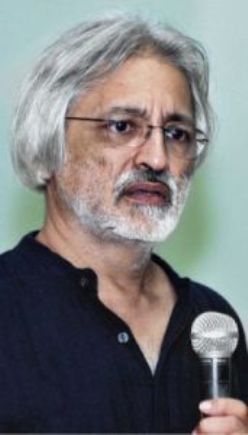
Anand Patwardhan is one of India’s best known and most outspoken documentary film makers. He has been making political documentaries for over three decades, pursuing diverse and controversial issues that are at the crux of social and political life in India. He epitomises the activist film maker and has inspired a generation of socially sensitive film makers.
In the world’s largest democracy that is India, and in a country with a vibrant and diverse media that is considered to be among the most free in the developing world, Anand has constantly run into problems getting his films seen on broadcast television. Many of his films were at one time or another banned by state television channels in India and became the subject of litigation by Anand, who successfully challenged the censorship rulings in court.
As his website notes, several of his films have also incurred the wrath of right wing fundamanentalists both in India and abroad. “In keeping with the uneven nature of India’s democratic institutions and its sharply divided polity, bouquets have been accompanied by brickbats.”
I came across a good interview with Anand Patwardhan in the Indian current affairs magazine Frontline, issue for 4 – 17 December 2010. Here are two questions concerning the censorship problems he has often faced:
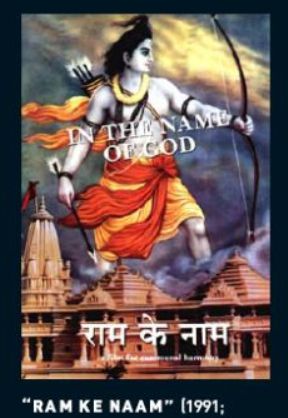
Ram Ke Naam (In the Name of God), 1991Q: You have had problems getting clearance from the Central Board of Film Certification for almost all your films, and then later they were not allowed to be screened on Doordarshan. Your films are also not screened on private channels. How do you see this constant struggle with these forms of censorship?
A: Right from the first film, I faced censorship in some form or the other. Even the Janata Party after it came to power refused to screen Waves of Revolution though it was against the Emergency. L.K. Advani was the Information and Broadcasting Minister then. I had added an epilogue which said that the janata raj [people’s rule] that the film spoke about was not the same as [that of] the Janata Party now in power. I also drew attention to the political prisoners still being held in jail. Finally, after media pressure built up, the film was screened on Doordarshan.
Prisoners of Conscience also got into trouble with the censor board, and it took a letter from Satyajit Ray to the government saying that they must not stop a film like this to get the required clearance.
Ram Ke Naam followed the rath yatra of Advani and the violence in Ayodhya on October 30, 1990, when the Babri Mosque was attacked for the first time. It was meant to be a warning to the nation about the rise of Hindutva fundamentalism. I had trouble with the censors initially, but it finally got through in 1992 and then I had trouble with Doordarshan, which refused to show it. Finally, after the film won a national award for Best Investigative Documentary, I was able to go to court and argue that the government cannot give me a national award and yet say that I cannot show the film on Doordarshan, which it had been doing systematically. In fact, whenever any film of mine won a national award, I used it to go to court. I argued that not showing such a film on national TV was a denial of my right to freedom of expression and of the viewers’ right to information.
On these grounds I have won seven cases till now – five in the High Courts and two in the Supreme Court after the government went in appeal. Ram Ke Naam was finally shown on Doordarshan in 1997. The judge ordered that the film should be telecast at prime time.
Stills from Anand Patwardhan (courtesy his website) Q: Why have you not approached private channels to screen your films?
A: The private media, including television, are not about giving people information. They are run by corporates more interested in providing entertainment. Their news and analysis are restricted to five and 10 second [sound] bites. Their clear mandate is commercial. They will ask, “Where are the advertisers who will endorse your product? Who is going to give the money to show this? Are we going to waste one and a half hours of TV time on issues?”
I have also discovered that even in the private domain there is political censorship. A few days before the Allahabad High Court verdict on [the] Ayodhya [title suit] was due, a private channel approached me to screen Ram Ke Naam. They paid me for three broadcasts but stopped after showing the film just once despite extremely positive feedback from viewers. On inquiring, I was told that the channel was pressured not to show the film by both the Information and Broadcasting Ministry and the TV Broadcasters’ Association. Anyone who watches Ram Ke Naam will realise that this censorship was done to protect the interests of unscrupulous politicians who had used the emotive appeal of Ram for financial and political gain.
The situation today is such that you cannot pinpoint where the censorship is coming from. During the Emergency you at least knew who the enemy was. But now what do you do when every wing of society – whether it’s the legal system, and so on – is complicit in a blanket suppression of facts.
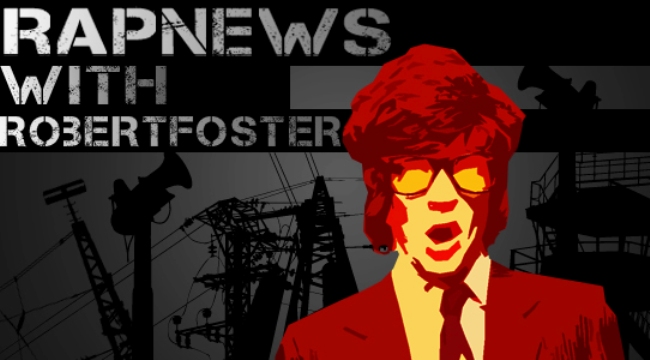
I’m delighted to highlight another commendable effort, this time on the web. It’s a website called The Juice Media, which presents news reports in, believe it or not, rap music! It has been online for a while, drawing rave reviews. One of them: “Like a mix of Eminem and Jon Stewart”.
TheJuiceMedia: Rap News is written and created by Hugo Farrant and Giordano Nanni in a home-studio/suburban backyard in Melbourne, Australia. In fact, Hugo appears as the amiable Rap News anchorman, Robert Foster.
Here are their latest three releases, which are hilariously serious.
Rap News 6 – Wikileaks’ Cablegate: the truth is out there
Rap News 5: Wikileaks & the war on journalism (ft. Julian Assange)
RAP NEWS 4: Wikileaks vs The Pentagon – the WWWAR on the Internet
The United Nations designated 2010 as the International Year of Biodiversity (IYB). It is a celebration of biological diversity and its value for life on Earth, taking place around the world throughout the year 2010.
The 10th meeting of the Conference of the Parties (COP 10) of the Convention on Biological Diversity is being held in Nagoya, Aichi Prefecture, Japan, from 18 to 29 October 2010.
To mark these twin events, we feature some short videos on biodiversity found online.
Official video of the International Year of Biodiversity 2010
This video, produced by our friends at dev.tv in Geneva for the CBD Secretariat, is superbly crafted and engagingly presented. It visualises the core message of IYB 2010:
Biodiversity is life
Biodiversity is our life
Biodiversity Countdown 2010 video
In the puzzle of life each element is essential. Man has the power to do good, do bad, destroy or protect. What will you do?
Nature Our Precious Web: A photo montage
The exhibition is the result of a collaboration between Geo Magazine, GTZ, Countdown 2010, the Secretariat of the Convention on Biological Diversity and the United Nations Development Programme.
And finally, here’s an example of how not to produce a video on biodiversity. This 2006 film, made for the CBD Secretariat, has a good sound track and some excellent still photos. But it’s evidently been put together by a committee of UN agency officials and/or researchers who wanted to pack everything into 5 mins. The result – a wasted opportunity.
If we put a cash price on the economic services that, say, watersheds or insects or coastal mangroves provide, would we value Nature more? Would we be prepared to change our ways of measuring wealth and economic growth? And if we did, would that slow down the extinctions and collapse of ecosystems?
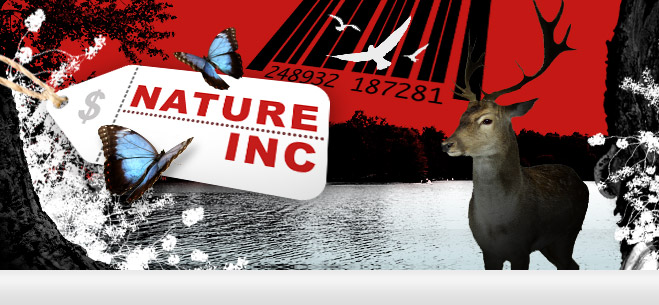
These are some of the issues that are explored in Nature, Inc., a path-breaking TV documentary series that puts a price-tag on environmental services such as forests, wildlife and coral reefs.
First broadcast in 2008 and 2009 on BBC World News, Nature Inc. broke new ground for environmental programming by seeking out a new breed of investor – those who believe they can make money out of saving the planet.
Watch Nature, Inc. series trailer:
Nature Inc. offers new insights into valuing the benefits of natural systems and biodiversity. It takes its lead from economists who have worked out that ecosystem services are worth more than the total of all the world’s national economies.
The first and second series are now available from TVE Asia Pacific (TVEAP). Each series comprises six half-hour episodes, compacting stories filmed in different parts of the world. Broadcast, civil society and educational users across the Asia Pacific may order copies at the cost of duplication and dispatch, and without having to pay a license fee.
The series was produced by One Planet Pictures of the UK, in association with dev.tv of Switzerland.
“There is new green thinking out there and some of it is grappling with pricing renewable assets. As such we felt it was a legitimate new area to take as an organising theme for the new series,” says Robert Lamb, series producer of Nature, Inc. “Perhaps the global recession has made viewers more aware of the ‘eco’ in economics”.
Robert LambThe series is based on new research and analysis being done on the subject. Among these new studies is the Economics of Ecosystems and Biodiversity (TEEB), a major international initiative to draw attention to the global economic benefits of biodiversity, to highlight the growing costs of biodiversity loss and ecosystem degradation, and to draw together expertise from the fields of science, economics and policy to enable practical actions moving forward.
But adding a price tag to Nature is not something that pleases all scientists or activists. Robert says the producers received “an overwhelmingly positive reaction” to the first series, but there was also a small minority who wrote in to say they hated the premise of the whole series.
He adds: “That’s good, we want to foster discussion in Nature Inc. which is why we are encouraging viewers to contribute ideas for the next series.”
Here’s a sample episode from the series, titled Coral Cashpoint. In this, Nature Inc investigates a claim that our coral reefs are worth $30 billion a year. In this fourth episode, we go diving on the Great Barrier Reef, the Maldives and to the bottom of the North Sea to find out how coral reefs supply 500 million of us with food and work. But we are destroying the reefs so quickly, they could vanish entirely in less than a hundred years.
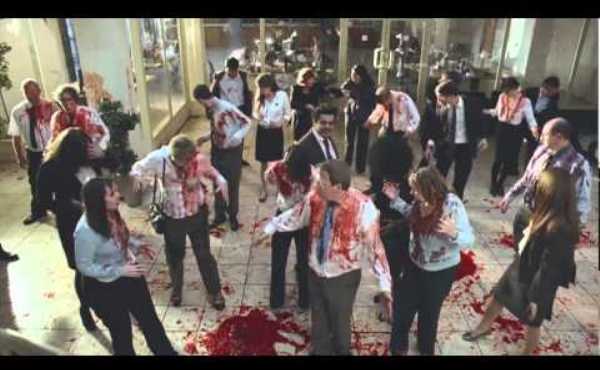
Still from No Pressure film: We do live in The Age of Stupid!Shock therapy is known to work, when handled carefully. We can sometimes shock people out of apathy or indifference, for sure — but the same shock, if overdone, can also numb people or turn them off completely.
That’s certainly the case with a new climate advocacy video film called No Pressure, released on 1 October 2010 by the by the climate mitigation campaign named 10:10.
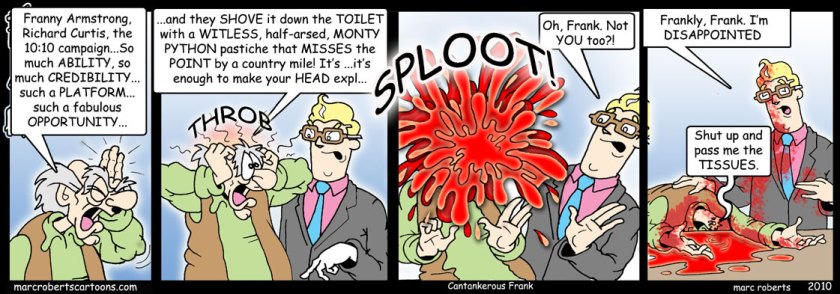
Written by Richard Curtis and Franny Armstrong (who made the acclaimed 2009 climate documentary, The Age of Stupid) and directed by Dougal Wilson, the film is a tragi-comic attempt to ridicule those who don’t share the same level of concern on global climate change as the climate activists do.
The four-minute film consists of a series of short scenes in which groups of people are asked if they are interested in participating in the 10:10 project to reduce carbon emissions. Those failing to show sufficient enthusiasm for the cause, including two schoolchildren, are gruesomely executed by being blown to pieces.
Well, see for yourself. Caution: this video contains violent scenes that can be offensive to most sensible people:
The normally balanced UK’s Guardian newspaper, which got the online exclusive, introduced the video on 30 September 2010 calling it “attention grabbing” and “pretty edgy.” There were a few others who found artistic or creative merit in the film, which has got high production values — no basement production, this.
But where it fails miserably is in winning any new friends for the climate cause, or at lease to influence people to change their high carbon lifestyles.
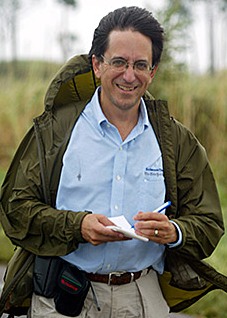
Amdrew RevkinAs Andrew Revkin, who writes the Dot Earth blog for the New York Times,wrote on 1 October: “If the goal had been to convince people that environmental campaigners have lost their minds and to provide red meat (literally) to shock radio hosts and pundits fighting curbs on greenhouse gases, it worked like a charm.”
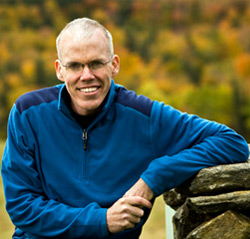
He isn’t alone. Bill McKibben, author, educator and environmentalist — who founded the serious climate group 350.org — wrote on the same day: “The climate skeptics can crow. It’s the kind of stupidity that hurts our side, reinforcing in people’s minds a series of preconceived notions, not the least of which is that we’re out-of-control and out of touch — not to mention off the wall, and also with completely misplaced sense of humor.”
His group, 350.org, issued a statement that emphatically said they had nothing to do with this misplaced British climate extremism. McKibben added, more reflectively: “What makes it so depressing is that it’s the precise opposite of what the people organizing around the world for October 10 are all about. In the first place, they’re as responsible as it’s possible to be: They’ll spend the day putting up windmills and solar panels, laying out bike paths and digging community gardens. And in the second place, they’re doing it because they realize kids are already dying from climate change, and that many many more are at risk as the century winds on. Killing people is, literally, the last thing we want.”
Bill McKibbenNow contrast such concern with the initial reaction from British film maker Franny Armstrong, who wrote a half-hearted, almost defiant apology on the 10:10 UK website, saying: “With climate change becoming increasingly threatening, and decreasingly talked about in the media, we wanted to find a way to bring this critical issue back into the headlines whilst making people laugh. We were therefore delighted when Britain’s leading comedy writer, Richard Curtis – writer of Blackadder, Four Weddings, Notting Hill and many others – agreed to write a short film for the 10:10 campaign. Many people found the resulting film extremely funny, but unfortunately some didn’t and we sincerely apologise to anybody we have offended.”
Adding gross insult to injury, Armstrong signed off saying: “As a result of these concerns we’ve taken it off our website. We won’t be making any attempt to censor or remove other versions currently in circulation on the internet.”
Both the 10:10 UK campaign and its sponsors Sony have been more unequivocal in their apologies in the days that followed. But that’s too little, too late. Enough damage done — climate activists and campaigners worldwide will take months, if not years, to live down this one.
And nothing really goes away on the web — this video will be lurking somewhere for a long time. YouTube currently carries the video in several places, with the warning: “This video or group may contain content that is inappropriate for some users, as flagged by YouTube’s user community.”
Andrew Revkins has posted comments from those who condemned as well as those who found some merit in the offensive climate video. Some of these comments take a dispassionate view, which is to be welcomed.
This incident teaches all of us engaged in environmental communication some important lessons. Environmentalists have over-stated their case before, and every time, that did them (and their causes) far more harm than good. Crying wolf, and ridiculing the non-believers, are never good tactics in winning friends or influencing people.
As Bill McKibben noted: “There’s no question that crap like this (video) will cast a shadow, for a time, over our efforts and everyone else who’s working on global warming. We’re hard at work, as always, but we’re doing it today with a sunk and sad feeling.”
One more thing: even in this age of globalised media, humour doesn’t travel well across cultures and borders. As mainstream corporate media companies have often found out, British humour sometimes doesn’t even cross the Atlantic very well — let alone to other parts of the world. Perhaps this is a key point that this all-British team of film makers and campaigners simply missed.
The world is a bit bigger — and more diverse — than your little island, Ms. Armstrong. By failing to grasp that, and with your crude display of insensitivity, you have really proved the premise of your good climate film.
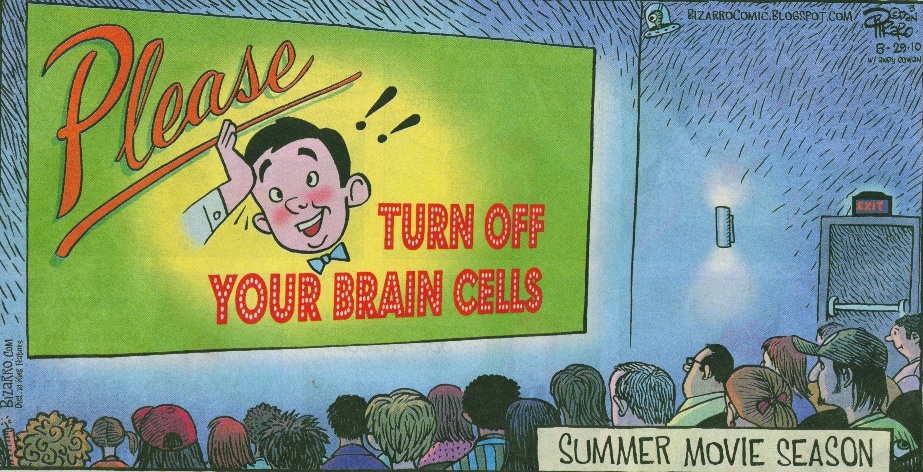
We’re all familiar with the request at cinemas, theatres and concert halls for everyone to turn off their cell phones (a.k.a. mobiles) before the show starts. Not that everyone complies — there are enough deviants among us who just can’t disengage themselves from their electronic leashes even for a couple of hours.
But here’s a new twist to that common (and much needed) request: I came across this in the Bizarro cartoon, which offers some fascinating insights into our topsy turvy times. There are times when I feel that every TV set should come with this line printed on top!
Everyone has a story about cell phones going off at the wrong time in the wrong place. Here’s my favourite.
Together with my TVEAP team, I was running the 2004 AIDS Film Festival in Bangkok, Thailand, during the 15th International AIDS Conference, in July 2004. The festival was held across three venues, and showcased over 50 film titles from around the world — we had nearly half the film makers turning up in person to be introduce their films.
One such film maker, an academic turned film maker, was eagerly talking about his film (an excellent one, unusual for academics) when somebody’s cell phone went off.
The film maker wasn’t amused. He told the full house: “Unless you’re a person with nuclear trigger responsibility, can everyone PLEASE turn off their cell phones?”
But the cell phone ring continued, getting louder.
It took a full minute for its owner to be found — who turned out to be our speaker himself! His own cell phone had been ringing in his trouser pocket all this time, disrupting his own talk.
Moral of the story: Turn off your cell phone at a public performance, especially if it’s your own performance!
Vasanthi Hariprakash exploring One Square Mile in Kathmandu, Nepal
It’s funny how, more than a generation after most of the world adopted the metric system of measurements, relics of the earlier, ‘imperial’ units still linger in our language and popular culture.
Frequent flyers stlll accumulate air-miles, not kilometres. Disaster managers grapple with the challenges of communicating credible early warnings on that the crucial ‘last mile’ (it’s not yet the ‘last kilometre’). And many among us, including those who have grown up in a metric world, can better grasp a square mile than a square kilometre.
One Square Mile is also the name of an interesting new TV series produced by One Planet Pictures of the UK, and first airing this month on BBC World News. In this series, reporters visit a neighbourhood in different parts of the developing world and try and find out what the residents’ hopes and aspirations
Says its producer Robert Lamb: “One Square Mile is an experiment. So much in television is set up. In this series our reporters explore a small patch of a city with the aim of providing the viewer with an authentic slice of life.”
According to Robert, One Square Mile takes the lid off a neighbourhood. Reporters wander around a marked out section of a town and city and talk to the people they meet to find out what their everyday concerns are.
Of this months shows, two are presented by Zeinab Badawi . In one, she goes walkabout in Juba, capital of south Sudan which is on the verge of becoming an independent state. In the other, Badawi encounters murder on the streets in Guatemala City.
The other two are presented by my friend Vasanthi Hariprakash, whose day job is with India’s leading TV news network NDTV. These two are of particular interest to me as she travels to countries in Asia that are closer to me in distance and closer to my heart.
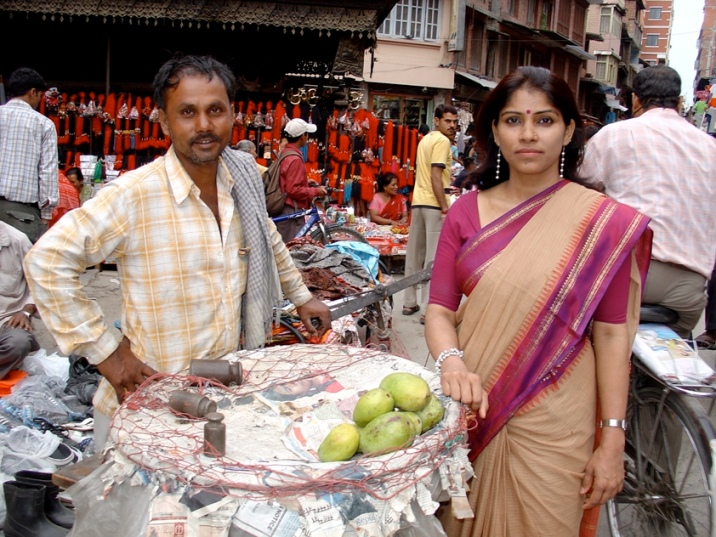
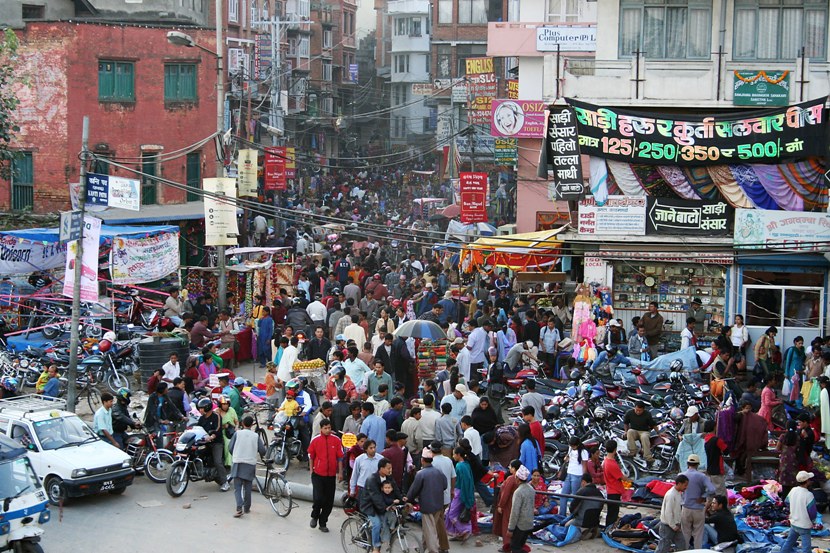
In one show, Vasanthi travels to Kathmandu, the capital of Nepal. The blurb says: “Despite a recent record of political instability that has seen a monarchy overthrown and an uneasy peace struck with the Maoist insurgents, reporter Vasanthi Hariprakash finds a city population surprisingly upbeat. But a long dawn queue outside the passport office tells a different story – young Nepali men are desperate to get out to find work in the Gulf and Southeast Asia.”
I’m familiar with that city having made multiple visits since 1995, and have shared the pains and anxieties of my Nepali friends as they went through political turmoil and a bloody insurgency. I saluted them when their ‘people power’ got rid of the despotic king in 2006.
Vasanthi did remarkably well in presenting her first-time appearance on a BBC-broadcast show. She came across as informed, eager and empathetic to the people and place she was exploring. Not once did I notice a hint of cynicism or condescension in her voice. This is quite in contrast to regular BBC reporters, many of who are far too judgemental and dismissive than good journalists should ever be. We can only hope vasanthi never aspires to those despicable professional levels…
Amidst political intrigue and uncertainties, life goes on in Kathmandu...
In her second show, Vasanthi travels to a small village in Laos next to the old Ho Chi Minh trail where the dominant concern is unexploded cluster bombs from the Vietnam war. The synopsis reads: “From the capital Vientiane it takes 10 hours for reporter Vasanthi Hariprakash to reach her square mile – a village next to the old Ho Chi Minh trail. Today it’s a peaceful highway for enterprising Vietnamese traders but during the war it was a target for the B 52 bombers with their deadly cargo of cluster bombs. 40% are live – called UXOs – Unexploded Ordinance – and Hariprakesh finds the villagers’ poverty leaves them no choice but to run the gauntlet of the unexploded munitions as they work in their paddy fields.”
This reminds me of a short film I saw in Cambodia many years ago about a poor, rural community who faced a similar dilemma living and working in a countryside littered with unknown and unexploded landmines. The Cold War conflicts in Southeast Asia may have ended decades ago, but local people still live in the shadow of their deadly legacies…
I can’t wait for more real-life stories in One Square Mile, and I hope Robert Lamb will send out his intrepid and charming reporters to far corners of the real world where real people are taking on life’s many challenges 24/7. These people’s resilience and resourcefulness inspire us all.
And that’s what good television is all about. Moving images, moving us all!
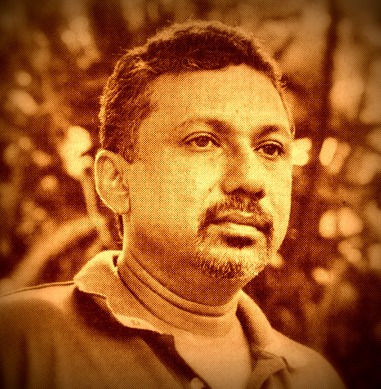
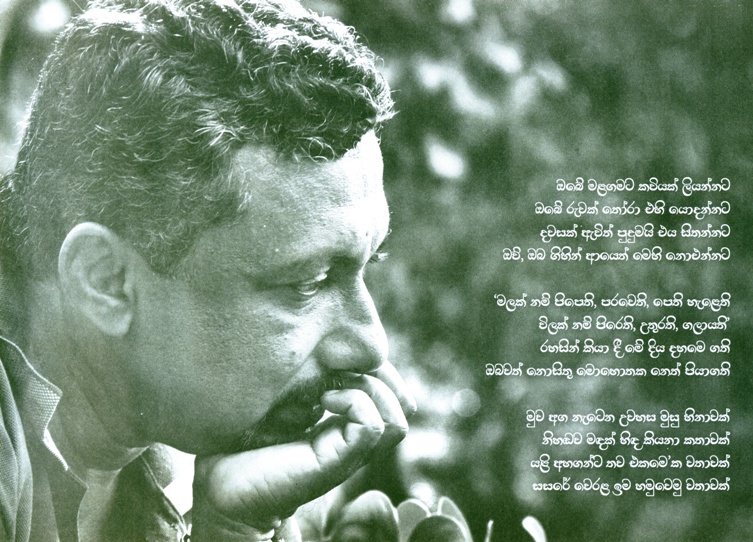
Palitha Lakshman de Silva, 1959-2010For the second time in just over three months, I went to the Colombo general cemetery to bid farewell to a fellow traveller. This is becoming a worrying habit.
Those of us who’ve opted for the path less travelled don’t expect crowds or accolades. At least we have each other for company and inspiration. Suddenly it’s getting a bit lonely: long-standing friends and colleagues are dropping dead in the prime of their lives.
First, it was environmentalist, journalist and public intellectual Piyal Parakrama who left in early March. Now, it’s Palitha Lakshman de Silva — journalist, photographer, cartoonist, puppet animator and television professional among other pursuits and talents.
Uncannily, what I wrote upon hearing Piyal’s death applies – word by word – to Palitha too. I just have to change the name and date: Palitha died so suddenly and unexpectedly on the evening of June 11 that it’s hard to believe that he is no longer among us. Another public-spirited individual has left the public space all too soon…
Both men had just passed 50, and were leading active, productive and busy lives. They had no known ailments, and were in apparent good health. Yet in the end, it was the unseen, gradual clogging of the heart’s arteries that struck them both down: the first heart attack was swift and fatal. Neither man reached the nearest hospital alive.
I had known Palitha for twice as long as I worked with him (in the past decade). Although we weren’t close friends, we shared a passionate, life-long interest in using broadcast television and narrowcast video to communicate public interest messages. Some call it non-formal education, but we avoided the e-word for it reminds some people of school that they didn’t enjoy. We believed – and demonstrated too – that the audio-visual medium can blend information with entertainment in ways that make learning effortless and painless.
Having started his career as a reporter and photojournalist at a leading newspaper, Palitha later moved on to TV, where he blazed new trails in cartoon animation, puppetry and documentary making. He was part of Sri Lanka’s first generation of television and video professionals who experimented with the medium, and found new ways of combining education, information and entertainment.
I’ll write more reflectively once I recover from the shock of another colleague signing off for good. For now, I can only echo the lyrical sentiments in this leaflet distributed at Palitha’s funeral by his artistically-inclined friends. The English approximation (below) is mine, and not particularly good (though bilingual, I’m a lousy translator). I’m glad, however, that the original verse captures one intrinsic quality of Palitha: his gentle, soft-spoken nature which often concealed the creative genius inside him.
Goodbye, Palitha Lakshman de Silva
The day has arrived
Suddenly and shockingly
When you’ve gone away
Leaving us alone
All by ourselves
To write a verse
And choose an image
In your fond memory.
Flowers bloom and wither
Lakes flourish and drain
Such is the Circle of Life
Which your hasty exit
Once again reminds us
With a soft, little whisper.
We’ll travel to the end of time
If can we see, just once more,
Your gentle and soothing smile,
And listen to your stories
That you told us so gently.


 Open Minds!