Michael Jackson (1958 – 2009): Mixed celebrity, entertainment and good causes

Did you ever stop to notice...The crying Earth the weeping shores?

Read later blog post: 8 July 2009 – Michael Jackson: A Tale of Two Moonwalks

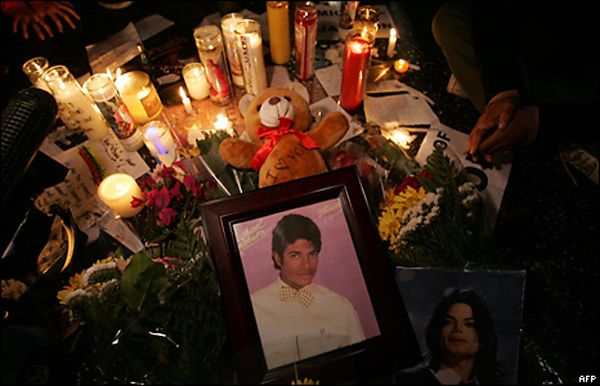
Michael Jackson, who has just died aged 50, has been called the Elvis Presley of our times. He certainly was a global cultural icon with an enormous following in the West and East, North and South. And he used this celebrity status for more than mere entertainment (which he did exceedingly well): he had a long-standing history of releasing socially conscious songs that spread public interest messages with great ease and power.

Mixing social messages with entertainment is a difficult and delicate art that only a few artistes manage to get right. Jackson was one of them — his mass appeal or sales didn’t suffer because he occasionally endorsed a worthy cause. He wasn’t overtly political like Pete Seeger, who turned 90 last month, but Jackson did it in his own unique way in songs like “We Are the World“, “Man in the Mirror” and “Heal the World“.

In fact, Michael Jackson’s biggest selling UK single ever was a song about the environment: Earth Song. Released in November 1995, it sold over a million copies and was at the top of the charts for six weeks.

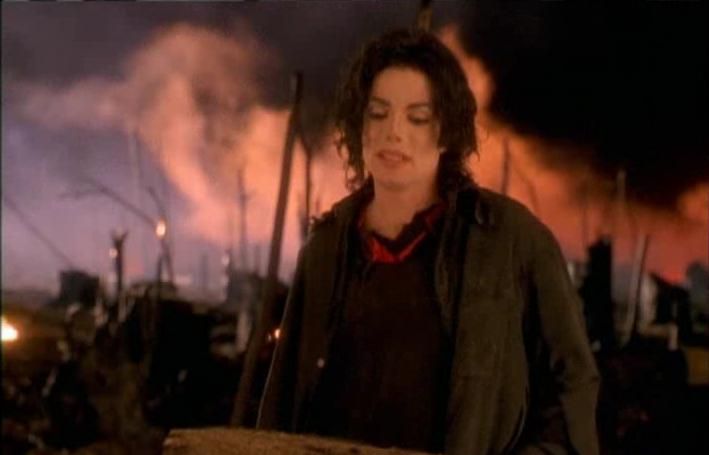
Earth Song was the first of his songs that overtly dealt with the environment and animal welfare. Written and composed by Jackson himself, Earth Song opened with these words:
MichaelJackson-EarthSong
What about sunrise
What about rain
What about all the things
That you said we were to gain.. .
What about killing fields
Is there a time
What about all the things
That you said was yours and mine…
Did you ever stop to notice
All the blood we’ve shed before
Did you ever stop to notice
The crying Earth the weeping shores?

Jackson wanted to create a song that was lyrically deep yet melodically simple, so the whole world, particularly non-English-speaking fans, could sing along. He conceptualized a song that had an emotional message.

As he later recalled: “I remember writing Earth Song when I was in Austria, in a hotel. And I was feeling so much pain and so much suffering of the plight of the Planet Earth. And for me, this is Earth’s Song, because I think nature is trying so hard to compensate for man’s mismanagement of the Earth. And with the ecological unbalance going on, and a lot of the problems in the environment, I think earth feels the pain, and she has wounds, and it’s about some of the joys of the planet as well. But this is my chance to pretty much let people hear the voice of the planet. And this is ‘Earth Song’. And that’s what inspired it. And it just suddenly dropped into my lap when I was on tour in Austria.”

The video of the Earth Song was among the most expensive ever made – it was filmed in four geographic regions and involved scenes from the Amazon forest, Croatia, Tanzania and New York city, USA. It starts with a long tracking shot through a lush rain forest that then cuts to a scene showing Jackson walking through a scorched, desolate landscape. The environmental imagery then rolls on: dead elephants, evil loggers, belching smoke stacks, snared dolphins, seal clubbing, and hurricane winds. The video closes with a request for donations to Jackson’s Heal the World Foundation.

Watch Earth Song by Michael Jackson:

Although not as widely selling, ‘Will you be there‘ is my personal favourite among Jackson’s socially conscious songs. First released as a single in 1993, it was taken from the 1991 album Dangerous and also appeared on the soundtrack to Free Willy – the charming story of a boy befriending a killer whale.

The song won the MTV Movie Award for “Best Song in a Movie” in 1994. It was also included in the album All Time Greatest Movie Songs, released by Sony in 1999. Jackson also performed songs for the film’s two sequels.

Watch Michael Jackson’s ‘Will You Be There’ in Free Willy:

However, Earth Song had much wider and more lasting appeal, almost becoming an anthem for the global environmental movement in the past decade. But its real impact was not among the converted – with this song, Jackson took the green message to the heartland of the Facebook generation.

Few global figures commanded the audience he had – as the New York Times noted: “At the height of his career, he was indisputably the biggest star in the world; he has sold more than 750 million albums.”

“The song is a very rare thing: a hit record with a powerful message about our impact on the environment,” says Leo Hickman writing in The Guardian earlier today.

He adds: “What struck me today watching the video was how it is very much the product of an age before climate change had become a mainstream concern. The lyrics and imagery speak of over-fishing, deforestation, and smog. All of them are still huge and legitimate concerns, of course, but they have all now become somewhat dwarfed by climate change, the most compelling and over-arching environmental issue of our age.

“But that shouldn’t distract us from the song’s impact on its fans. Given its universal success and the repeated showing of its powerful video, it is highly likely that it was the spark that made many people – particularly young Michael Jackson fans, which, even in the mid-1990s, would have numbered many millions of people around the world – stop and think about environment for the first time.”

Talk about moving images moving people!
Peace...at last
Peace...at last

Communicating disasters on film: Experts, please don’t cross this line!

Global Platform bannerExperts should let film-makers produce professional films in simple terms that are more appropriate for public audiences, instead of trying to produce films that have little chance of being broadcast or distributed in other ways. There is a role for technical experts – but that’s not in the crafting and directing of films, but in providing the knowledge, clarifications and guidance to film-makers and journalists who are professionals in communicating complex issues to non-specialist publics.

Self-evident as it may be, these home truths are well worth reiterating every now and then — especially to experts and officials who keep forgetting them (sometimes with disastrous and expensive results!). So I was very glad to read that these points were emphatically made at a ‘film debate’ held in Geneva last week.

The occasion was a panel discussion, ambitiously titled ‘The role of film-makers in promoting climate change adaptation and disaster risk reduction stories’. It was held on 17 June 2009 as part of the Second Session of the Global Platform for Disaster Risk Reduction in Geneva.

Moderated by the well known journalist, writer and producer Edward Girardet, from Media21, Geneva, it involved five panelists drawn from media/communication sector and the disaster/humanitarian sectors. Among the panelists was my colleague Robert Lamb, director of One Planet Pictures, UK, and consultant producer with dev.tv, Switzerland.

The debate’s premise was simple: So far much of the thrust of the film industry, NGOs, UN organizations and media in portraying disasters and climate change has focused on outcome – which is more visually stimulating – rather than showcasing vital prevention and adaptation solutions. This is necessary, but not sufficient. What can be done to improve the interaction between the film/news industry and leading organizations dealing with disaster risk management and climate change adaptation on a daily basis?

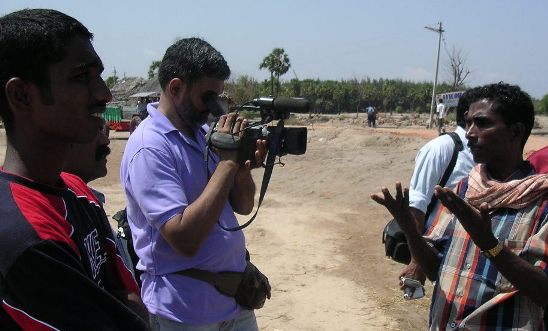
Interviewing tsunami survivor in Tamil Nadu, India - image from TVEAP
This was similar to the approach we had in TVE Asia Pacific’s Communicating Disasters project in Asia (2006-2007). We too explored the common ground for these two sectors, with their distinctive needs, and asked how the two can support each other without stepping on each others’ toes.

The same discussion continued in Geneva. I’ve limited information on what actually transpired during the debate, and am hoping someone will soon write it up. For now, here’s a summary adapted from UN-ISDR daily coverage (the official language is theirs, not mine):

“More than 150 participants attended a thought-provoking film debate. The five panelists discussed how to enhance the interaction between the film/news industry and leading organizations dealing with climate change adaptation (CCA) and disaster management to increase CCA visibility which is very limited today in film productions.

“Eight short films were presented during the session, among them a short trailer of ‘An Inconvenient Truth’ and a CCA film shot in Burkina Faso produced by Christian Aid. After identifying a number of challenges due to their formats and audiences, film-makers and experts agreed it was important to work more closely to make more films on the solutions offered by CCA.

“Film-makers suggested that experts should let them produce professional films in simple terms that are more appropriate to their audiences and focus on bringing expert knowledge to enrich the content of their current productions instead of producing films that have little chance to be broadcast or distributed.”

All this reminds me of a discussion we had around an earlier blog post where I asked: Anyone can make video film, right? So why do we need professionals?

Wanted, urgent: Reporters Sans Labels!

DW GMF 2009
A top European Union official recently cautioned against the concept of ‘peace journalism‘, under which journalists actively promote peace as part of their coverage of conflicts. His views resonated much with my own reservations about this particular brand of journalism.

Javier Solana, EU High Representative for the Common Foreign and Security Policy, made the remarks in a written contribution to the Deutsche Welle Global Media Forum, held in Bonn, Germany, from 3 to 5 June 2009. I wasn’t there in person, but have been reading up some of the presentations and media coverage of the event.

Javier Solana
Javier Solana
In his wide-ranging talk, on ‘Conflict prevention in the multi-media age – The EU’s role in the world‘, Solana asked: should we incorporate peace journalism into our conflict prevention strategies? Yes, he said, “if this means striving to give as much impartial, quality information as possible to the press and media, in all their forms”.

The Spanish physicist-turned-politician added: “We all want to promote peace, reconciliation and conflict resolution and we want the media to help us in this. The best way in which they can do this is to inform us. This is the journalist’s fundamental task.”

He then sounded a word of caution: “The reporter is there to report. We should be careful not to weigh down the media with additional responsibilities over and above their primary task of providing information. A healthy media environment is diverse and plural; it is there to explain but not take sides. The profession of journalism needs no justification and no sophisticated qualification.”

Solana also referred to the early notion of ‘development journalism’ that was promoted in the 1970s, which called upon journalists in the developing countries to always support their governments’ development efforts. Such uncritical cheer-leading, which resulted in many ‘sunshine stories’ that glossed over problems, eventually did a lot more harm than good: development journalists became mere propagandists for governments pursuing wrong development models that squandered natural resources and brought misery to millions.

In fact, after having been part of the media and communications profession for over two decades, I no longer like to box myself into any category. For some years during my first decade of working life, I proudly called myself an ‘environmental journalist’. I still cover environmental issues with the same interest and passion, but now question whether the growth of environmental journalism as a media specialisation has, inadvertently, ghettoised environmental issues within the editorial considerations of media organisations. I also feel that at one point we became too ‘green’ for our own good.

Show things as they are!
This is not to argue against journalists specialising in environment or other sectors such as health, gender, peace or human rights. As issues become more complicated, journalists require a great deal of background knowledge, sustained interest and context to do their job well. But it’s poor strategy to leave sustainable development issues entirely in the hands of ‘environmental journalists’. Or coverage of conflict to ‘peace journalists’.

At best, such specialist journalists can only weave part of the much-nuanced, multi-faceted tapestry of sustainable development. To grasp that bigger picture, and to communicate it well, we need the informed and active participation of the entire media industry -– from reporters, feature writers and producers to editors, managers and media owners.

What we lack – and urgently need – is plain good journalism that covers development, conflict and other issues as an integral part of human affairs. Noble intentions of saving the planet, or making world peace, sound good at beauty pageants. But these catch-all lines don’t give anyone the license to engage in shoddy journalism that lacks accuracy, balance and credibility – the core tenets of the profession. It applies equally to mainstream and citizen journalists.

So it’s time to take a few steps back, grasp the bigger picture ourselves, and then show it as is to our audiences. We need Reporters Without Labels.

The only label worth aspiring to is a good journalist. May their tribe increase!

‘Stars of Science’ shine brightly in the Arab World: Reality TV with a difference!

Reality TV with a purpose: Stars of Science on Pan Arab TV network

“I believe that every TV programme has some educational value. The cathode ray tube – and now the plasma screen – is a window to the world.”

So said Sir Arthur C Clarke, inventor of the communications satellite and one of the greatest science communicators of our time. He knew what he was talking about: he was not only a prolific and well-loved science writer, but also a genial host of popular science programmes on TV that made his a household name (and face) around the world.

I have sometimes wondered if he would still have endorsed the television medium so enthusiastically if he saw some of the reality TV shows that have become a staple of ratings-craving broadcasters in recent years. This obsession with reality TV – which presents purportedly unscripted dramatic or humorous situations, documents actual events, and features ordinary people instead of professional actors – has sometimes appeared like a race to the bottom.

I’m all for trying out new formats, and been telling my friends who are factual film-makers that we can learn a thing or two from the recent successes of some reality TV shows. I’m delighted, therefore, to hear about Stars of Science, a new reality TV show being beamed across the Arab world, where brainy youngsters compete to produce the best invention.

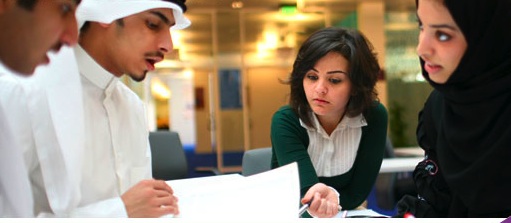
The weekly programme, which started airing on 16 pan Arabic TV channels from end May 2009, differs from existing reality shows: it will not emphasize and showcase the best voices, appearances or dance abilities, and instead seek out the best brains and problem solving skills.

Stars of Science rising over the Arab world
Throughout the five weeks the first series will air, young participants (aged 21 to 30 years) will have the opportunity to develop their inventions from mere ideas on paper to actual products that can be mass produced and sold worldwide. Throughout this processes, cameras follow their every move, capturing their successes – as well as their failures – as they are confronted by the many challenges that come with creating new technologies.

This show has an interactive format. During the final episode, to be broadcast live from Aspire Sports Academy in Doha, Qatar, on 26 June 2009, will have the two finalists given the opportunity to launch their ‎product. Viewers will vote by SMS and telephone to decide the winner of a US$300,000 grand prize.‎

The programme attracted more than 5,600 applicants from across the Arab world, from among whom 100 were selected to vie for the 16 positions on the air.

The newly inaugurated Science and Technology Park in Doha is hosting the reality show. State of the art workshops, classrooms and lounging areas have been built specifically for the show. The innovative programme is the initiative of Qatar Foundation for Education, Sciences and Community Development, who aim to “endorse a healthy competitive spirit, encourage creativity, team-building and innovative careers amongst the youth in the Arab world.

“The show has deliberately eschewed the cruelty of booting out losing candidates: instead, they are invited to team up with successful competitors,” says British journalist Ruth Sutherland, writing in The Observer, London. “Stars of Science encapsulates the huge faith Qatar puts in research and innovation; the contrast between it and our version of reality TV also says something about the arrogance of assuming western cultural values are automatically superior…”

Added on 27 June 2009: Watch Al Jazeera International’s news story on this series:
TV contest promotes Arab entrepreneurs

Al Jazzera: Audience offer opinions at ‘Stars of Science’ contest

Mamma Mia! Italy is really a part of South Asia!!

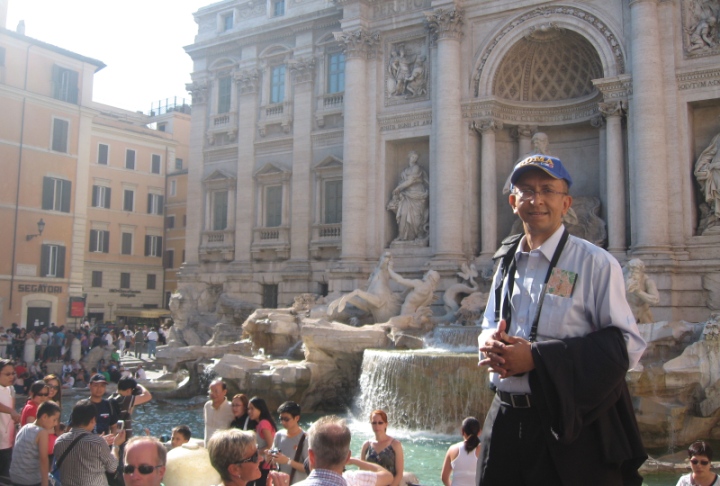
At Fontana Di Trevi: Guess which tourist escaped from a formal meeting?

I’ve just spent a week in Rome, and felt entirely at home enjoying the hot and humid summer days and clear blue skies. The latest experience has reaffirmed my impression – formed on several visits over two decades – that Italy isn’t a part of Europe at all. It’s really an extension of South Asia.

Hanuman, the super-monkey who features prominently in the Indian epic Ramayana, is said to have carried whole chunks of the Himalayas and dropping them off in far away places. Perhaps, unknown to the chroniclers, Hanuman did some freelance transplanting in the Mediterranean.

The similarities are uncanny: Italians and South Asians have too much in common. Generalisations are dangerous, I know, but then, I’m a South Asian – we do it all the time (and get it right about half the time). So here goes…

For a start, we are both expressive people, and we have no compunction in being loud in public places. Understatement is for the polite (and dull) British; we prefer to exclaim and exaggerate. We also gesticulate wildly when we speak – there is probably an extra nerve linking our mouth with our arms.

We are opinionated and argumentative, often passionately (and needlessly) so. We can rarely agree on any matters of private or public interest, yet, almost miraculously, we manage to get by without coming to blows. Well, at least most of the time…

Heirs to rich and diverse culinary traditions, we South Asians love and cherish our food – as do the Italians. We have our rice, chapatti and roti. They have their infinite array of pastas, pizzas and lasagnas. Our youngsters may fancy an occasional hamburger, but no American fast food can ever compete with our myriad aromas and flavours perfected literally over millennia. We take pride and joy in our food, and break bread with family, friends and strangers. Given a chance, we’ll spend half our waking hours eating.

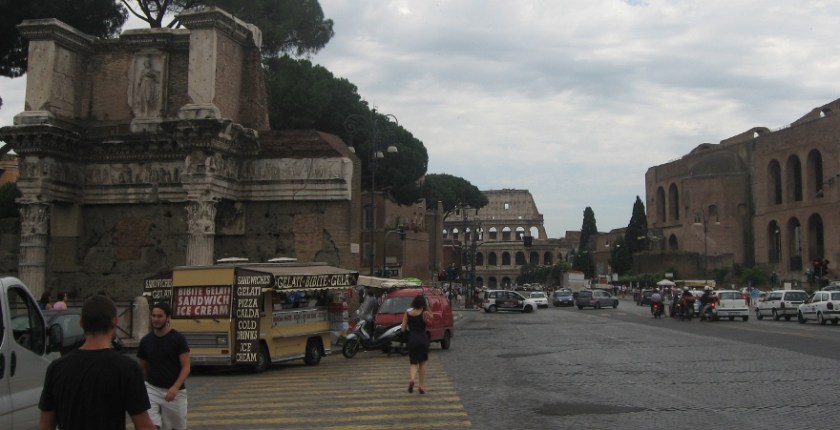
Blending old and new with ease: average Roman doesn't the burden of history

Next to food, we have an abundance of laws, rules and regulations – too many, if you ask me. But we take our laws with a pinch of salt, or more. We happily and frequently bend them that they sometimes actually snap. Then we’d say Mamma Mia or Aiyo, and just move on.

Just look at the roads, and Italy’s similarity with South Asia is immediately clear. No other western European country comes close to Italy for the sheer chaos factor. We all drive as much with our horns as with the accelerators. We curse and yell at others on the road. Our streets are crowded, noisy and messy. We ignore traffic lights, speed limits and zebra crossings. Cyclists and pedestrians move at their peril.

This completely stuns the more orderly nationals like the Japanese and Swiss, who are puzzled how we don’t have more accidents on our roads (it puzzles us too). Partly because we all try to drive like James Bond, but more because too many of us are using privately owned two, three or four wheel vehicles, we often end up going nowhere at all. Some of our big cities now have traffic almost 24/7. Ancient Romans would be impressed by how much time we spend on our roads, an invention they perfected.

Dreary babudom failed to dampen her spirit
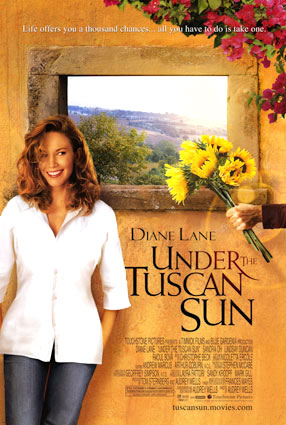
It’s not just Fiats, Ferraris and Marutis that move ever so slowly as we march towards progress. If anything, the wheels of our governments are even slower. In Under the Tuscan Sun, Frances Mayes chronicles her frustrations with the local bureaucracy when she bought and renovated an abandoned villa in the Tuscany Valley. Any South Asian who has tried to engage their own governments – on property, taxes or anything else – can well and truly empathise with her experience. In these days of global warming, glaciers probably move (recede) faster than our bureaucracies.

No wonder, then, that we just love to hate our governments in Italy and South Asia – we never tire of complaining about our politicians and bureaucrats. Strangely, however, we do little to overhaul the sick system. We often put up with our bungling, lying and sometimes stealing public officials. Worse, we idolise some of the biggest offenders despite their staggering lapses or excesses, and keep re-electing them!

Ah yes, we love our elections too. Until recently, Italians used to change their governments with such regularity – it has had 62 governments in the 64 years since the Second World War ended. While no South Asian country can match this record, thank goodness, few elected governments in South Asia complete their full term. And we share with Italians a fondness for coalition governments in all their variations and vicissitudes.

Come to think of it, is there anything surprising that Italian-born Edvige Antonia Albina Maino, better known as Sonia Gandhi, is today the most powerful woman in South Asian politics? As head of both Indian National Congress and the ruling coalition, she manages a menagerie of political animals.

Our obsession with politics is amplified (and some say exploited) by our cacophonous media. Our newspapers, radio and TV titillate, enthrall and occasionally inform their audiences. Many follow their own peculiar definitions of the public interest — which includes gleefully venturing into private lives of public figures. If Italians originated the term paparazzi, the South Asian media have turned it into a fine art. Our modern pantheons include a motley collection of show biz and sporting personalities, a few of who fall from grace frequently enough to keep our industrial gos mills turning day and night.

This same nosy media somehow manage to miss out or actively avoid probing the conduct of many public officials controlling very large amounts of public funds. It’s perhaps too simplistic to say corruption, cronyism and nepotism have become deep rooted in our countries. We have institutionalised these processes so much that they have become part of our political and business landscapes. The correct euphamism for these practices is public-private partnerships.

If you think all this makes us a sleazy, unethical and uncaring lot, you’re sadly mistaken. Please be informed that Italians and South Asians are both very religious. In fact, we take our faiths very seriously indeed, and practise it with such passion that some spoilsports might call us fanatical.

It doesn’t matter in the least that we worship at different altars – Italians at their soccer stadiums, and we at our cricket grounds. Our faith is equally intense and unwavering. When you make fun of our history, governments, laws and mannerisms, we’ll laugh heartily with you. But if you dare to criticise the performance of our national sporting teams, you will immediately find what fundamentalists we really are.

Every nation must have its sacred cows, no?

Tiananmen + 20: Tribute to Tank Man, or the Unknown Rebel

One man vs. the mighty Red Army
One man vs. the mighty Red Army - photo by Jeff Widener for Associated Press

This is of the most famous photos of modern times. The official caption, given by Associated Press, reads: “An anti-government protester stands in front of artillery tanks in Beijing’s Tiananmen Square on June 5, 1989, at the height of the pro-democracy protests.”

It’s a moment deeply etched in the consciousness of our media-saturated world. The solitary, unarmed man was standing up against not just a brute of a tank, but the might of the entire Chinese Red Army, which had just cracked down ruthlessly on pro-democracy student protests.

It was on the morning of June 5 that the Tank Man appeared from nowhere. A line of 18 tanks were pulling out of Tiananmen Square and driving east along the Avenue of Eternal Peace. The previous day, the square had been cleared of students and much blood had been spilled. The streets were now empty except for soldiers.

Suddenly a man in a white shirt and black trousers, with a shopping bag in each hand, steps out on to the road and stands waiting as the tanks approach. The lead vehicle halts, assessing its options.

It moves right to go around him. The man waves the shopping bag in his right hand then dances a few steps to the left to block the tank again. The tank swerves back left to avoid him. The man waves the bag again and stepps to the right. Then both stop. The tank even turned off its engine.

Then more things happened.
Watch a video montage of this breathtaking standoff, captured by western journalists filming from a safe distance:

Watch first few minutes of the 2006 PBS documentary on the Tank Man incident and aftermath:

Twenty years on, the identify of the Tank Man remains a mystery. There are conflicting reports on who he was, and what happened to him after that single, defining act of defiance. Practically all we know is that he wasn’t run down by the tanks, and was instead arrested a few minutes later by the Chinese authorities. Naturally, there are few official comments on the incident or the Tank Man.

But during those few minutes, when individual soldiers hesitated and refrained from running him over, the Unknown Rebel secured his worldwide fame. He probably wasn’t doing it for any notion of posterity – in all likelihood, he was horrified bystander who’d seen the carnage in the preceding days and felt, as we do from time to time, that enough was enough.

And unlike most of us, he decided to risk his life to register his protest. In April 1998, Time magazine included the “Unknown Rebel” in its feature entitled Time 100: The Most Important People of the Century.

Charlie Cole, a Newsweek photographer who captured the moment, says: “Personally I think the government most likely executed him. It would have been in the government’s interest to produce him to silence the outcry from most of the world. But, they never could. People were executed at that time for far less than what he did.”

He adds: “I think his action captured people’s hearts everywhere, and when the moment came his character defined the moment rather than the moment defining him. He made the image, I just took the picture. I felt honoured to be there.” Read the full account by Charlie Cole

Read the recollections of the four photojournalists who captured this historic moment

A ground level view of Tank Man preparing for his showdown with tanks - photo by Terril Jones In early June 2009, a fifth photographer shared his own image of the incident – disclosing photos that had never before been circulated. Associated Press reporter Terril Jones revealed a photo he took showing the Tank Man from ground level, a different angle than all of the other known photos. (Tank Man is the second from left, in the background.) Jones initially didn’t realise what he had captured until a month later when printing his photos from that momentous week.

As we celebrate the memory of the Tank Man – and his defiance of brutal, oppressive use of state power to crush dissent – we must also salute the courage and resourcefulness of photojournalists and TV reporters who risked their own lives to capture this moment for posterity. Tank Man became iconic only because his act was frozen in time by those bearing witness. All too often, states – from Burma to Zimbabwe, and others in between – ensure that there is no one to bear such witness when they unleash the full force of police, armies and weapons on their own people.

There can be no doubt that Tank Man was not the first of his kind, nor would he be the last. Other ordinary men and women have found uncommon courage to stand up against injustice and state brutality wielded in the name of national security, law and order or anti-terrorist crackdown. But in the absence of witnesses – whether professional journalists or citizen journalists – the rest of the world will never know.

Living with diversity: Salad or soup, asks Mallika Sarabhai

Standing up for a pluralistic society

The recently concluded general election in India saw thousands of candidates contest to enter the Indian Parliament. Among the candidates I watched closely were writer Shashi Tharoor (who ran on the Congress ticket and was elected from Kerala state) and dancer Mallika Sarabhai (who ran as an independent candidate in the Gujarat state and didn’t win).

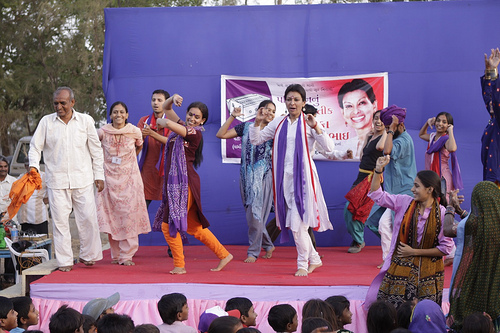
The classical dancer turned social activist had one of the more colourful campaigns in the world’s largest election: her public rallies included dance numbers, and her website (UPDATE in March 2013: no longer online) – featuring interactive elements like blogging, flickr images and online fund raising – was ranked the best by a communication research agency.

But where Mallika – whose performances I have enjoyed watching on successive visits to her home town of Ahmedabad – really stood out was in whom she opposed. She was the independent candidate from Gandhinagar, one of India’s most high-profile constituencies, a state capital that has been polarized along Hindu-Muslim lines since riots in 2002. Her opponent was Lal Krishna Advani, the prime ministerial candidate of the BJP.

Mallika Sarabhai dances during campaign trail
The two candidates couldn’t have been more different. The 82-year-old veteran politician epitomised Hindu nationalism and majority hegemony with its attendant intolerance of minorities. Mallika, hailing from an upper class Indian family of freedom fighters, industrialists and intellectuals (her father Vikram Sarabhai was father of the Indian space programme), stood for pluralism, non-violence and tolerance. When she entered the fray in March 2009, she described her candidature as a Satyagraha against the politics of hatred.

She didn’t win the election, but lost with grace and dignity. Within days, she wrote in Outlook magazine one of the most remarkable pieces coming out of the cacophonous Indian election. She made it into an open letter addressed it to L K Advani, her main opponent.

“As a proud Hindu and a proud Indian, I feel vilified by you,” she wrote. “You have reduced the great Sanatana philosophy to a Taliban-style Hindutva. As an Indian, you have tried to reduce my identity to a single factor—Hindu or not. You let your goons, saffron-clad terror units wielding lathis and worse, terrorise us and live above the laws of this country.”

For me, the most insightful paragraph is this where she takes on what it means to live with the huge cultural, social and political diversity that makes up India: “I am a post-Independence Indian. I was brought up to value and treasure my unique Indianness, to value our Constitution, which gives equal rights to all Indians, irrespective of belief, culture, practice or language. I learnt to revel in the differences that made us a rainbow country. We are a salad-like melange of cultures and not a soup where all variations get reduced to a homogeneous pulp—this, to me, is our greatest strength.”

Read full text of Dear Shri Advani by Mallika Sarabhai

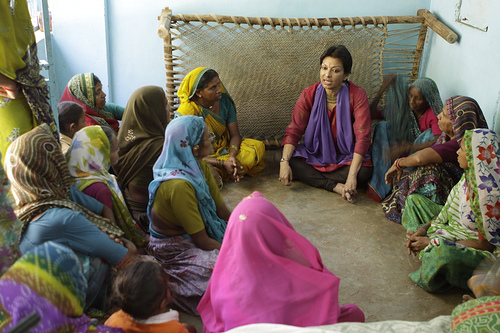
Eschewing grand speeches, microphones, banners and slogans, she just listened to voters
Salad or soup – that’s an interesting way of framing the challenge. And not just in the delightful melting pot that is India, but in many other mixed-up, tossed up cultures and societies of today…not the least in my native Sri Lanka, where we have seen the primitive forces of tribalism over-ride all other considerations in recent years. One released, it’s very hard to put this genie back in the bottle.

And how I wish our own privileged upper middle classes would take to the rough and dirty game of politics, if only to stand up against the peddlers of hatred and hegemony. If only…

Mallika could easily have continued her cultural work through the Darpana Academy of Performing Arts and her social activism. She decided to take the plunge this year because she thought the time had come to get into active politics. She was encouraged by her friends, mainly social activists, united under the banner of Friends of Democracy. Mallika is one of the several petitioners demanding justice in the post-Godhra riot cases. She was quoted in The Times of India as saying she decided not to join any party as she believed that there was no party free of corruption, criminalization and horse-trading.

As the Washington Post reported during her campaign trail: “Sarabhai, one of a handful of professional people running as independents in the upcoming elections, rejects the standard Indian political appeals to caste, religion and linguistic ethnicity, and speaks of empowering voters to unseat corrupt and ineffective politicians. Her campaign, she said, seeks to reclaim the shrinking space left for ordinary people’s voices in a democracy dominated by political parties that too often rely on mudslinging, muscle-flexing and money power.”

She and other courageous Indians have miles to go before they can sleep. Encouragingly, she has pledged that her campaign will continue.

As she says signing off her essay in Outlook: “I may have lost this election, but I will continue to work for the disadvantaged and dispossessed, and to ensure that their voice shall be silenced no more.”

Images courtesy Mallika Sarabhai campaign website and Friends of Democracy Flickr account

Sri Lanka: Memories of War, Dreams of Peace

Sri Lanka: Island of suspended dreams has a second chance...

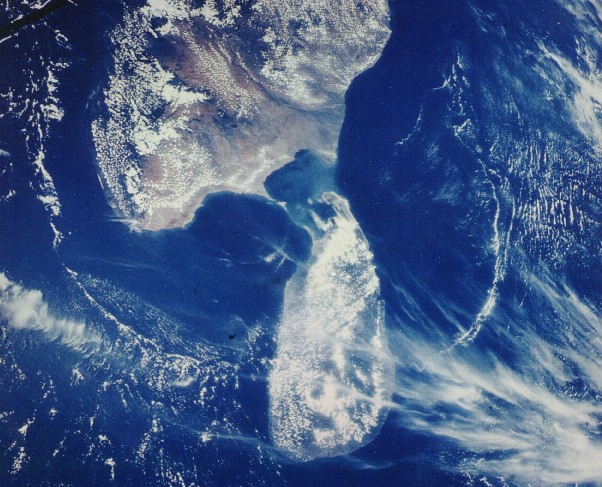
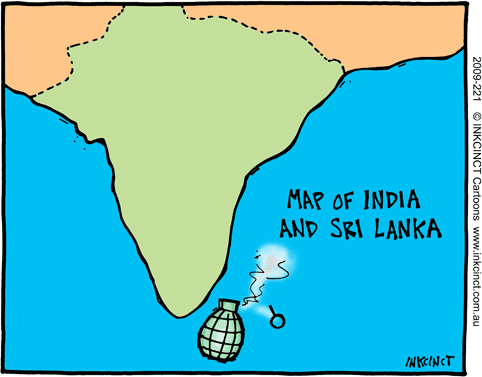
This is one of my favourite images. Showing southern part of India and my native Sri Lanka, it was captured by one of the early US space missions, nearly four decades ago.

Much has happened on the tear-drop shaped island since this image was taken: among other things, we’ve been through a civil war that lasted a generation, and robbed the dreams of at least two generations. That war officially ended on 18 May 2009.

The Day After, on 19 May 2009, I wrote a 1,500-word essay titled Memories of War, Dreams of Peace. The editor of Groundviews, Sri Lanka’s leading citizen journalism website, published it in full, and within minutes of my emailing the text to him.

I’m humbled and gratified that in the past few days, it has been widely read, commented on, quoted online and reproduced. Some have agreed with me; others have dismissed me as a naive dreamer. A writer cannot ask for more.

20 May 2009: MediaChannel.org (New York) reproduces the essay in full


24 May 2009: The Sunday Leader (Colombo) reprints the essay in full

I look back briefly on the brutal and tragic war – not in anger, but in great sadness. I then look forward in a wistful, dreamy mode. My premise was: “Now that the war is officially over, will this mark the beginning of real peace? I want to believe so. I want to audaciously dream of peace. The alternative is too dreadful to consider.”

This is not exactly what I’ve been trained to do. As a science writer and film-maker, I gather and analyse information, which I try to present in logical, coherent and accessible ways. In recent years, I’ve also been writing op ed essays in areas where I have some competence and experience. In writing this essay, I consciously departed from all that. I’m neither political scientist nor activist to engage in ideological or technocratic discussions, which others have already started in earnest. I wrote this at an emotional level, looking back and looking forward.

But my training did come in handy in framing the timely and necessary questions. My chosen ‘author intro’ for this essay thus reads: “Writer Nalaka Gunawardene has been a dreamer for all his 43 years. He asks more questions than he can answer.”

We've doused the flames of war, but much more needs to be done...
If my views come across as naive or idealistic, I shall plead guilty as charged. My emotions this week are best described as cautiously optimistic, but as some readers on Groundviews pointed out in their comments, our high hopes have been betrayed before. But can we afford not to dream privately and publicly at this juncture? I don’t think so. We have suspended our dreams for too long, and it’s time to start dreaming again.

There are as many kinds of dreamers as there are dreams. One of my favourite quotes comes from the British soldier and writer T E Lawrence (of Lawrence of Arabia fame): “All men dream, but not equally…the dreamers of the day are dangerous men, for they may act their dream with open eyes, to make it possible.”

Post-war Sri Lanka: Can we dial up a better future?

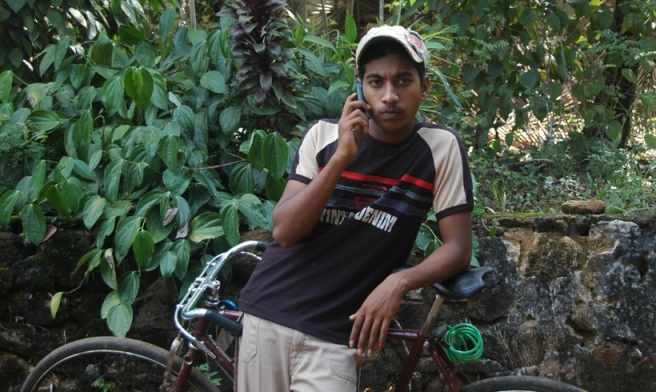
Chamara Pahalawattage: At 18, he is already using his 6th mobile (Photo by Niroshan Fernando, TVEAP)

When many able-bodied young men and women of his age were joining the armed forces in large numbers, Sri Lankan school-leaver Chamara Pahalawattage chose differently. He decided to try his luck with odd jobs at construction sites.

That, by itself, was nothing unusual. Tens of thousands of young men and women like Chamara join the labour market every year. Schools don’t equip them with attitudes or skills for self employment, so most would idle years away looking for regular jobs in Sri Lanka’s public and private sectors. Frustration would prompt some to take to political agitation, or worse.

Chamara is at such crossroads in his own life, but he is unlikely to go astray. The enterprising young man has boosted his chances of part-time work by getting himself a mobile phone.

“After buying a phone, I get calls asking me to come for work. The phone makes it so easy,” he says. “Otherwise people will have to come looking for me…or I have to go to them.”

If a skilled mason or carpenter takes him on as an assistant, Chamara gets a daily wage of LKR 700 (US$ 6 approx) plus a mid-day meal. That income augments the modest LKR 4,000 a month (US$35) his mother makes cooking meals at a nearby factory.

In February 2009, we filmed a day in the life of Chamara, a resident of Gonapola, in Sri Lanka’s western province. This was part of a profiling of telephone users at the bottom of the (income) pyramid – or BOP – in emerging Asian economies, undertaken by TVE Asia Pacific on behalf of the regional ICT research organisation LIRNEasia.

Watch our short video profile of Chamara Pahalawattage:

Going by his household income, Chamara is BOP at the moment – but his aspirations extend above and beyond. An only child raised by his widowed mother, Chamara developed an interest in mobiles while still in his mid teens. He bought his first mobile two years ago, when in Grade 11 at school.

“Almost everyone had phones, so I also wanted one,” he recalls. “From then on, I got used to having a phone!”

And has he been keeping up with technology! He buys second-hand phones for better features: he currently owns his sixth phone in just over two years. He had paid LKR 7,500 (US$ 65) for his latest phone at the beginning of 2009.

Besides voice and SMS (texting), his phone supports MP3, video recording, song downloading, voice recording and some other functions. After a hard day’s work, he unwinds listening to the radio, or swapping songs with friends — all using their mobiles.

Chamra spends an average of US$3 to 4.50 per month on phone use, and – like all other BOP telephone users we interviewed in India, Philippines and Thailand – he is thrifty with value added services that cost extra. This is something that has been confirmed by LIRNEasia’s Teleuse@BOP 2008 survey.

“Some of my friends access the internet through their phones and download songs,” he says. “I then get these songs from them. My phone has bluetooth. I use it to transfer songs from my friends’ phones.”

Chamara has every intention of moving up the labour market – someday, he wants to hold a more regular job, with an assured monthly income. Right now, in spite of being connected, he can’t predict how many days a month he’d find work.

Hello, can you hear our dreams?
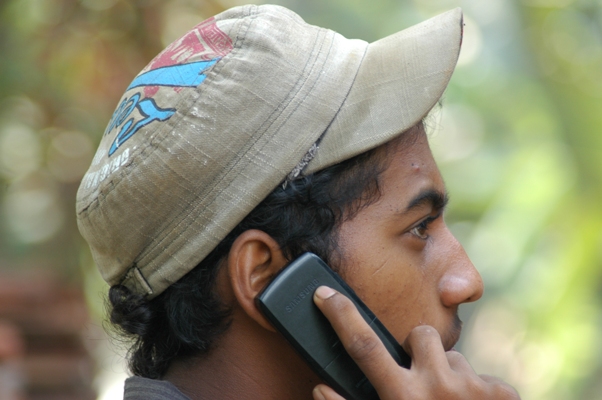
Hello, can you hear our dreams? Photo by Niroshan Fernando, TVEAP
“I don’t check newspapers for jobs. Instead I ask the people I know…mostly my friends,” he says. This probably indicates another shift from a wide-spread habit among literate Sri Lankans scanning newspapers for recruitment notices.

LBO 9 March 2009: Sri Lankan low income customers can use mobiles more for business: study

The official end of the 30-year-long war should be good news for Chamara and millions of other tech-savvy, eager youth like him. Like me, they can once again start dreaming of better tomorrows.

Telecommunications would be a good place to start. For several years, it has been the fastest growing sector in the Sri Lankan economy — one that has not only connected people across distances and cultures, but also been a ‘social leveller’.

The telephone subscriber base grew by 35.5% in 2008 (and 47% in 2007). The country’s tele-density (number of telephones per 100 persons) jumped to 71.9 in 2008, from 53.4 in 2007 -– thanks largely to the phenomenal spread of mobile phones.

As I noted last year: “It is not by accident that telecom has remained the fastest growing sector in the economy for a decade. This was triggered and sustained by the far-reaching policy and regulatory reforms which ended the then fully state-owned telecom operator’s monopoly, and allowed the entry of new players, technologies and business models.”

Of course, improved telecommunications are necessary, but not sufficient by itself, for us to evolve into an inclusive information society. Building on technology and systems, we must become discerning creators and users of information. Knowledge – not paranoia or rhetoric – needs to form the basis of policy and actions that propel us to the future.

Photos courtesy Niroshan Fernando, TVE Asia Pacific

I remember Auden: We must love one another or die…

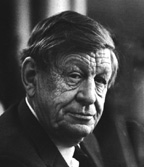
W H Auden (1907 - 1973)
It begins in a bar, and ends with a prayer. It was written in another century by a poet on the opposite side of the planet on the day the deadliest war in history broke out.

Almost 70 years later, at the end of my own 30-year-long war, I have been reading and re-reading September 1, 1939. I’m trying to make sense of what is happening around me. The near hysterical mass euphoria on one side, and bewildered dejection on the other.

I was just six when the poet W H Auden died, and only 13 when this bloody, protracted war started. As I wrote in an essay published on the day after the war ended, I have lived all my adult years with this war providing a constantly grim, sometimes highly disruptive backdrop.

I survived the war in its various phases, including uneasy lulls when guns were temporarily silent. I watched most of my own friends join the exodus of genes and talent from a land where they saw no hope or future. I chose to stay on, but questioned the wisdom of it each time a major atrocity took place. I went through six jobs and one marriage, and raised a child who would soon be the same age as I was when the war started.

Are we at the end of the long, dark tunnel? Is the promised land of peace and prosperity now at hand? Have we seen the last of multi-barrel guns, grenade launchers, helicopter gunships, claymore mines and the deadly suicide bombers? Or will national security and anti-terrorism continue to dictate what we can or cannot do as citizens in a free, democratic and finally peaceful country?

I honestly don’t know. Probably it’s too early to tell. But I’m uneasy with celebrations when so much healing and rebuilding need to be done. I’m worried about continuing the simplistic division of people into patriots and traitors. As I wrote earlier this week, this perception of Us and Them is our first landmine on the long road to peace. I don’t know why we as a people continue to insist on everything being in black and white. What happened to the myriad shades of grey?

For some months now, I’ve been turning to classical and modern poems for solace and comfort. When prose fails, verse must take over. Auden himself disliked this poem, but few words in English move me as his line: “We must love one another or die.”

So here it is, the full and original words of September 1, 1939 – for whatever resonance it may offer us across the gulf of seven decades straddling two centuries:

September 1, 1939

I sit in one of the dives
On Fifty-second Street
Uncertain and afraid
As the clever hopes expire
Of a low dishonest decade:
Waves of anger and fear
Circulate over the bright
And darkened lands of the earth,
Obsessing our private lives;
The unmentionable odour of death
Offends the September night.

Accurate scholarship can
Unearth the whole offence
From Luther until now
That has driven a culture mad,
Find what occurred at Linz,
What huge imago made
A psychopathic god:
I and the public know
What all schoolchildren learn,
Those to whom evil is done
Do evil in return.

Exiled Thucydides knew
All that a speech can say
About Democracy,
And what dictators do,
The elderly rubbish they talk
To an apathetic grave;
Analysed all in his book,
The enlightenment driven away,
The habit-forming pain,
Mismanagement and grief:
We must suffer them all again.

Into this neutral air
Where blind skyscrapers use
Their full height to proclaim
The strength of Collective Man,
Each language pours its vain
Competitive excuse:
But who can live for long
In an euphoric dream;
Out of the mirror they stare,
Imperialism’s face
And the international wrong.

Faces along the bar
Cling to their average day:
The lights must never go out,
The music must always play,
All the conventions conspire
To make this fort assume
The furniture of home;
Lest we should see where we are,
Lost in a haunted wood,
Children afraid of the night
Who have never been happy or good.

The windiest militant trash
Important Persons shout
Is not so crude as our wish:
What mad Nijinsky wrote
About Diaghilev
Is true of the normal heart;
For the error bred in the bone
Of each woman and each man
Craves what it cannot have,
Not universal love
But to be loved alone.

From the conservative dark
Into the ethical life
The dense commuters come,
Repeating their morning vow;
“I will be true to the wife,
I’ll concentrate more on my work,”
And helpless governors wake
To resume their compulsory game:
Who can release them now,
Who can reach the deaf,
Who can speak for the dumb?

All I have is a voice
To undo the folded lie,
The romantic lie in the brain
Of the sensual man-in-the-street
And the lie of Authority
Whose buildings grope the sky:
There is no such thing as the State
And no one exists alone;
Hunger allows no choice
To the citizen or the police;
We must love one another or die.

Defenceless under the night
Our world in stupor lies;
Yet, dotted everywhere,
Ironic points of light
Flash out wherever the Just
Exchange their messages:
May I, composed like them
Of Eros and of dust,
Beleaguered by the same
Negation and despair,
Show an affirming flame.

– W. H. Auden