‘Avatar’ unfolds in the Amazon: Find out the Real Price of Oil!

This is no Avatar: It's Real!
A few days ago, reviewing the blockbuster movie Avatar, I wrote: “Film critics and social commentators around the world have noticed the many layers of allegory in the film. Interestingly, depending on where you come from, the movie’s underlying ‘message’ can be different: anti-war, pro-environment, anti-Big Oil, anti-mining, pro-indigenous people, and finally, anti-colonial or anti-American. Or All of the Above…”

Indeed, an Avatar-like struggle is unfolding in the Amazon forest right now. The online campaigning group Avaaz have called it a ‘Chernobyl in the Amazon’. According to them: “Oil giant Chevron is facing defeat in a lawsuit by the people of the Ecuadorian Amazon, seeking redress for its dumping billions of gallons of poisonous waste in the rainforest.”

From 1964 to 1990, Avaaz claims, Chevron-owned Texaco deliberately dumped billions of gallons of toxic waste from their oil fields in Ecuador’s Amazon — then pulled out without properly cleaning up the pollution they caused.
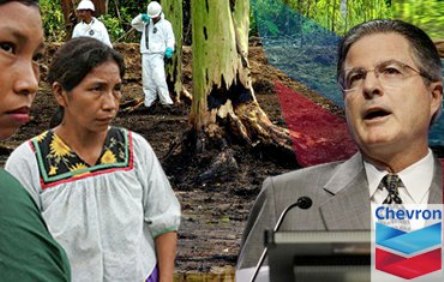
In their call to action, they go on to say: “But the oil multinational has launched a last-ditch, dirty lobbying effort to derail the people’s case for holding polluters to account. Chevron’s new chief executive John Watson knows his brand is under fire – let’s turn up the global heat.”

Avaaz have an online petition urging Chevron to clean up their toxic legacy, which is to be delivered directly to the company´s headquarters, their shareholders and the US media. I have just signed it.

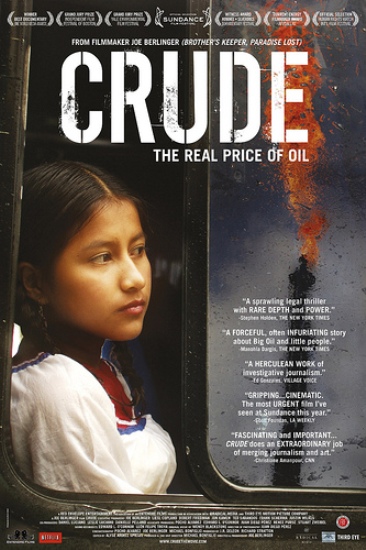
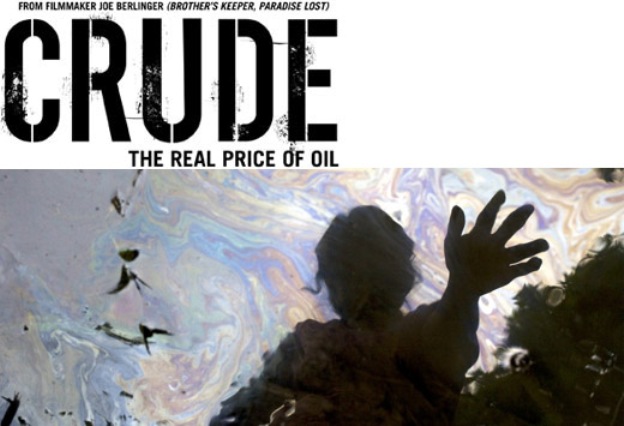
Others have been highlighting this real life struggle for many months. Chief among them is the documentary CRUDE: The Real Price of Oil, made by Joe Berlinger.

The award-winning film, which had its World Premiere at the 2009 Sundance Film Festival, chronicles the epic battle to hold oil giant Chevron (formerly Texaco) accountable for its systematic contamination of the Ecuadorian Amazon – an environmental tragedy that experts call “the Rainforest Chernobyl.”

Here’s the official blurb: Three years in the making, this cinéma-vérité feature from acclaimed filmmaker Joe Berlinger is the epic story of one of the largest and most controversial legal cases on the planet. An inside look at the infamous $27 billion Amazon Chernobyl case, CRUDE is a real-life high stakes legal drama set against a backdrop of the environmental movement, global politics, celebrity activism, human rights advocacy, the media, multinational corporate power, and rapidly-disappearing indigenous cultures. Presenting a complex situation from multiple viewpoints, the film subverts the conventions of advocacy filmmaking as it examines a complicated situation from all angles while bringing an important story of environmental peril and human suffering into focus.

Watch the official trailer of Crude: The Real Price of Oil

According to Amazon Watch website: “With key support from Amazon Watch and our Clean Up Ecuador campaign, people are coming together to promote (and see) this incredible film, and then provide ways for viewers to support the struggle highlighted so powerfully by the film.”

They go on to say: “A victory for the Ecuadorian plaintiffs in the lawsuit will send shock waves through corporate boardrooms around the world, invigorating communities fighting against injustice by oil companies. The success of our campaign can change how the oil industry operates by sending a clear signal that they will be held financially liable for their abuses.”

While Avatar‘s story unfolds in imaginary planet Pandora — conjured up by James Cameron’s imagination and created, to a large part, with astonishing special effects, the story of Crude is every bit real and right here on Earth. If one tenth of those who go to see Avatar end up also watching Crude, that should build up much awareness on the equally brutal and reckless conduct of Big Oil companies.
Civilisation's ultimate addiction?

Others have been making the same point. One of them is Erik Assadourian, a Senior Researcher at Worldwatch Institute, whom I met at the Greenaccord Forum in Viterbo, Italy, in November 2009.

He recently blogged: “The Ecuadorians aren’t 10-feet tall or blue, and cannot literally connect with the spirit of the Earth (Pachamama as Ecuadorians call this or Eywa as the Na’vi call the spirit that stems from their planet’s life) but they are as utterly dependent—both culturally and physically—on the forest ecosystem in which they live and are just as exploited by those that see the forest as only being valuable as a container for the resources stored beneath it.”

Erik continues: “Both movies were fantastic reminders of human short-sightedness, one as an epic myth in which one of the invading warriors awakens to his power, becomes champion of the exploited tribe and saves the planet from the oppressors; the other as a less exciting but highly detailed chronicle of the reality of modern battles—organizers, lawyers, and celebrities today have become the warriors, shamans, and chieftains of earlier times.”
Making of ‘The Greenbelt Reports’ recalled in ‘The Green Pen’

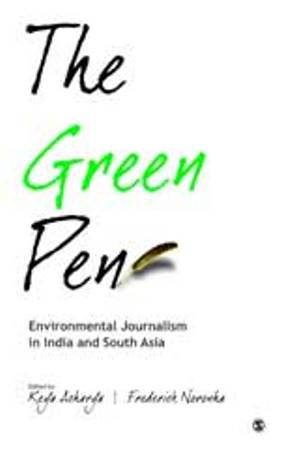
The process of producing and distributing TVE Asia Pacific’s educational TV series, The Greenbelt Reports, is showcased in a new book on environmental journalism in South Asia, just published by Sage, a globally operating company that specialises in bringing out academic and professional books.

The book, titled The Green Pen: Environmental Journalism in India and South Asia, is edited by two senior Indian journalists, both good friends – Keya Acharya of Bangalore, and Frederick Noronha based in Goa. (In 2007, Fred and I co-edited Communicating Disasters: An Asia Pacific Resource Book.)

Arranged in 10 sections, the book brings together contributions from three dozen journalists, broadcasters and film makers in South Asia. It opens with a foreword by Darryl D’Monte, one time editor of The Times of India and Chair, Forum of Environmental Journalists of India (FEJI).

I co-wrote the chapter titled ‘Dispatches from the Frontline: Making of The Greenbelt Reports’ with my colleague Manori Wijesekera, TVEAP’s Regional Programme Manager. I was researcher and script writer of the 12-part, 4-country series that we made in 2006, in which Manori was series producer. The series looked at the environmental lessons of the 2004 Indian Ocean tsunami.

The title reflects the lingering print bias in media related discussions: in our case, the content we produced was disseminated on broadcast television, narrowcast DVD and online. We wielded cameras rather than pens, but are still very glad to share our experience in this book.

Keya Acharya (left) and Fred Noronha
The publisher’s blurb says: “This collection of essays by some of the most prominent environmental journalists in Indian and South Asia gives deep insights into their profession and its need and relevance in society. It looks at this ‘specialisation’ of journalism both in the past and the present. Underlying almost all the essays is the changing nature of media in the region and the dilemmas facing environmental journalists. The varied background of the writers ensures the showcasing of a wide range of realities and experiences from the field. Contributions include essays by Darryl D’Monte, the late Anil Agarwal and Sunita Narain, among others.”

“This is the first book of its kind on environmental journalism, which would be an excellent resource to aid the future evolution of the enterprise in the region. Apart from essays from India, there are contributions from Pakistan, Bangladesh, Sri Lanka, Nepal and the Maldives. The book will interest a wide readership, any informed reader, besides journalists and environmentalists.”

It’s an honour to be part of a book which features the work of respected seniors like Anil, Darryl and Sunita – all of who have influenced my own career and I’m privileged to count among my friends (alas, Anil is no longer with us). In fact, I have either met, worked with or am friends with more than half the three dozen contributing authors of this book.

Who says South Asia is large?

More in TVEAP news story: The Greenbelt Reports featured in new book on environmental journalism in South Asia

Looking back at Asian Tsunami of 2004…and media response

Nalaka Gunawardene talking about 2004 Asian Tsunami

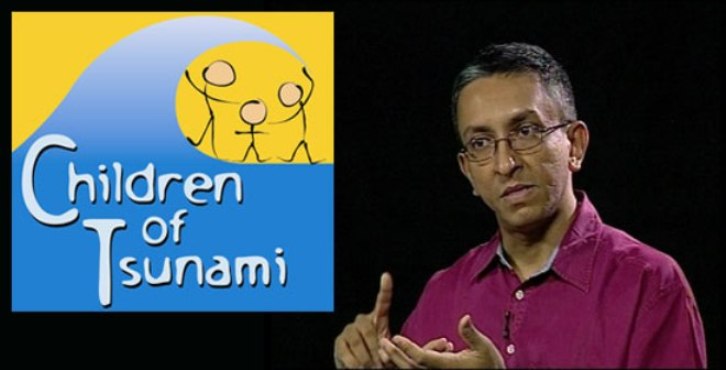
To mark the fifth anniversary of the Indian Ocean Tsunami of December 2004, TVE Asia Pacific has just released excerpts from an in-depth TV interview I recorded four years ago.

The wide-ranging interview was originally filmed in November 2005 in Bangkok, Thailand, by Thai journalist and film maker friend Pipope Panitchpakdi. He used excerpts at the time for a Thai documentary to mark the first anniversary of the tsunami. It remains one of the best media interviews I have given, for which all credit goes to Pipope.

Selected segments of that interview, in its original English, can now be viewed on TVEAP’s YouTube channel, while the transcript is published on the TVEAP website.

To give a flavour of this belated release of archival material, here are the first two extracts:

Nalaka Gunawardene recalls Asian Tsunami of Dec 2004 Part 1 of 6

Part 2 of 6:


Watch all extracts on TVEAP’s YouTube channel

Ahead of tsunami, journalist foresaw coastal disaster in Sri Lanka: “A Catastrophe Waiting to Happen”

Dilrukshi Handunnetti in Deep Divide film
Contrary to a popular belief, journalists don’t enjoy being able to say ‘I told you so!’. They much rather prefer if their investigative or analytical work in the public interest are heeded in time.

A few months before the Indian Ocean tsunami of December 2004, my friend and journalist Dilrukshi Handunnetti wrote an investigative story on how coastal zone management laws and regulations were openly flouted by developers. She cautioned that it was a ‘disaster waiting to happen’

She had no idea how forcefully her point will be driven home before that year ended.

“Little did anyone realise the price coastal communities would have to pay for the greed of a few dozen developers,” she said after the tsunami, interviewed for Deep Divide, a South Asian documentary on environmental justice that TVE Asia Pacific produced in 2005.

Watch Deep Divide – story from Sri Lanka:

Here’s the blurb I wrote at the time to promote the story:

Sri Lanka’s economic activities are concentrated in coastal areas: 80 per cent of the tourist related activities are found there, along with one third of the population. Seeking to accelerate economic growth, the Sri Lankan government took measures to develop the island’s coastal regions. Shrimp and prawn farming was encouraged, while many incentives were provided for developing tourist resorts along the island’s scenic beaches.

As the shrimp exports grew and tourist arrivals increased, there was a ‘cost’ that only local residents and a few environmentalists cared about: mangrove forests were cleared, coral reefs were blasted, and the coastal environment was irreversibly changed.

Shrimp farming damaged mangroves, aggravated tsunami impactCoastal zone management regulations and guidelines were openly flouted by developers. Local communities were the last to benefit from this development boom — they watched silently as their fish catch dwindled and their coastal environment was pillaged. But little did anyone realise the price coastal communities would have to pay for the greed of a few dozen developers.

When the tsunami struck, there were very few natural barriers to minimise its impact. More than 40,000 people died or went missing, while hundreds of thousands lost their homes and livelihoods. It was the biggest single disaster in the island’s history.

Dilrukshi reflects: “Post-tsunami, people realised that the mangroves have protected these little, you know, landmass. And where you find a little bit of protected mangroves, you also find the landmass protected.”

She adds: “I think we have committed lot of excesses and we have been made to answer for those sins. Hereafter, we cannot afford to not do it right.”

Filmed on location in India, Nepal and Sri Lanka, Deep Divide explores the reality of environmental justice in South Asia — home to 500 million people living in absolute poverty, or 40 per cent of the world’s total poor. Everywhere, it finds environmental injustice. This investigative film builds on the work by three local journalists, who act as our guides to understanding the complexities and nuances of development amidst poverty and social disparities.

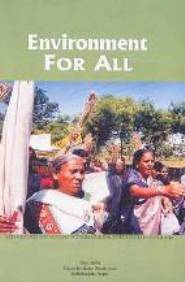
Environment For All book coverThe origins of Deep Divide go back to 2002. Panos South Asia, a regionally operating non-profit organization analyzing development issues, awarded media fellowships to selected journalists from five South Asian countries to explore specific cases of environmental injustice in their countries. They were to investigate issues as varied as land degradation, food and water insecurity, rising pollution, and mismanaged development.

Their findings were initially published in the local media – in the newspapers or magazines they worked for. In 2004, Panos South Asia compiled the articles in a book titled Environment for All. Three stories from this book were adapted into the documentary, directed by Indian film maker Moji Riba.

Media melee at Copenhagen: Chasing a hazy story in a crazy conference?

Polite or dodgy? Did anything more than this happen in Copenhagen?

What happens when over 3,500 journalists from all over the world roam around a two-week long UN conference that saw plenty of loud bickering and hot air in the name of saving the planet from global warming? Well, the media pack adds to the noise levels and hot air, for sure — and they are not above bickering themselves.

At least, that’s the report from Copenhagen, where the UN climate conference COP15 ended on Dec 18 with a watered down, disappointing something called the Copenhagen Accord.

Darryl D'Monte
I’ve just read an interesting report filed from the Ground Zero of that half-event by my Indian friend (and senior journalist turned climate columnist) Darryl D’Monte.

He says: “The media in Copenhagen has been an unmanageable and unruly lot. There are some 3,500 of us covering the summit, most having come this week, and journalists – once again, the electronic media – don’t think twice about carrying on conversations at the loudest decibel levels, turning the room into a virtual Tower of Babel. The TV crews in particular are like packs of wolves. They station themselves at every available nook and corner where some VIP may enter and exit and try to get that exclusive byte as he or she makes an appearance“.

Read the full story at InfoChange India:
Media melee at Copenhagen, By Darryl D’Monte

Was it a non-event, half event or what?

Remembering Dr Cyril Ponnamperuma: Inspirational maverick of Sri Lankan science

Dr Cyril Ponnamperuma: erudite, cultured and articulate

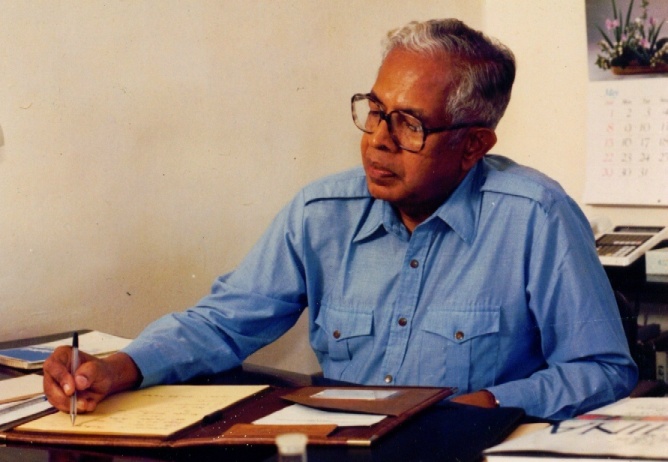
On 20 December 2009, we mark the 15th death anniversary of Professor Cyril Ponnamperuma, one of the best known scientists produced by Sri Lanka during the Twentieth Century.

I grew up reading about him in school text books as a living icon of modern science: a developing country scientist whose brilliance and hard work took him to the highest echelons of global science, and one who was respected in the West and East.

He was both an internationally recognised researcher on the origins of life on Earth, and an early promoter of science and technology for development. His interests and involvements transcended his own discipline and homeland. He worked closely with the Pakistani Nobel laureate Dr Abdus Salam to promote science and infrastructural facilities in developing countries.

I focus on the few years from 1984 to 1990, when he served as science and technology advisor to two Presidents of Sri Lanka. Concurrently, he served as director of the Institute of Fundamental Sciences (IFS) from 1984 to 1990, and was also founder director of the Arthur C Clarke Centre for Modern Technologies (ACCCMT) from 1984 to 1986. In these positions, he worked simultaneously on several fronts covering science policy, institutional building, fund raising, capacity building and public engagement.

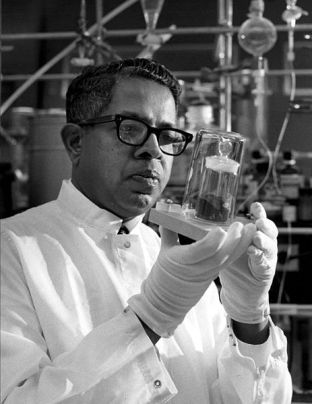
Dr Cyril Ponnamperuma analyzing a moon sample at NASA
I’ve just written a tribute, recalling my own interactions with him in the last 1980s, when he was dividing time between Sri Lanka and the US. It’s published online at Groundviews website.

As I note: “Erudite, cultured and articulate, Ponnamperuma was a journalist’s dream: he could sum up complex issues in simple and engaging terms and metaphors — but these were more than mere soundbites. He was full of insights and anecdotes that humanised both science and its practitioners.”

After looking back at his accomplishments and failures of his Sri Lanka years, I contend: “His biggest accomplishment — and lasting legacy — was not so much buildings, laboratories or institutions, but sparking off the interest in science among thousands of young people. That is much harder to achieve, and also impossible to quantify in Rupee or Dollar terms…”

In this essay, I recall both his accomplishments and failures. I ask why his passion for public science was not shared by many fellow scientists in Sri Lanka, who wanted to remain aloof of non-scientists and the community. Ponnamperuma’s tried to bridge this gap, and for this sin he was harassed and driven out of Sri Lanka and back to the United States where he returned to his research and teaching to the very end of his life.

“Chemistry is the ‘other woman’ in my life,” Ponnamperuma used to joke. It was while working at his university office in the US that he suffered cardiac arrest and rushed to a Washington hospital, where he passed away on 20 December 1994. He was 71. His sudden death came as a shock to all those whose lives and careers were touched, influenced and inspired by him.

Read my full essay:
Dr. Cyril Ponnamperuma (1923-1994): A Passionate Champion of Public Science

Have they dropped the ball (Earth) in Copenhagen?

The news from Copenhagen, on the last day of the UN climate conference, has been a bit confusing. Have they got a climate deal, or have they simply agreed to meet again and talk more while the planet warms up?

As one news item put it: “Representatives of 192 countries quibbled over every word through the night as a weak political declaration started to emerge out of the climate summit once scheduled to finalise a treaty that would tackle global warming.”

The declaration remains “weak” and “wishy washy” in the absence of agreement over the main sticking points dogging this December 7-18 UN Framework Convention of Climate Change (UNFCCC) conference – the refusal by industrialised countries to commit more emission reductions and their unwillingness to put on the table money to help poor countries cope with climate change effects.

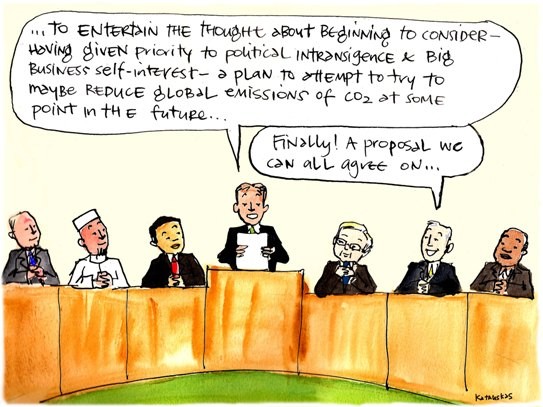
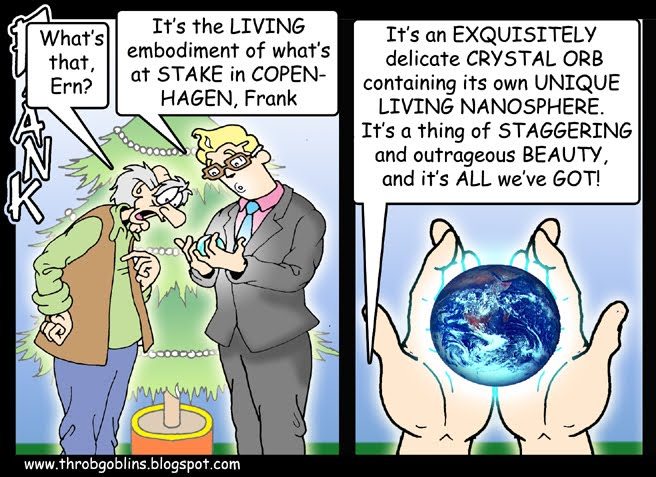
So, less than one week to go for Christmas, have the men (and few women) in suits dropped the ball (read: Earth) in Copenhagen? Clarity and interpretations will soon flow. I still hope it won’t come to what cartoonist Marc Roberts envisaged in this cartoon, originally drawn a year ago:

THROBGOBLINS INTERNATIONAL brings dark green humour to brighten your day

Dance for the Climate: dance your anger and joys to a U2 tune!

Hopenhagen?
As the UN climate conference culminates today in Copenhagen, there seem to be lots of angry people in the Danish capital. Many civil society and environmental activists, and some journalists, have been frustrated by the inter-governmental bickering process and the occasionally tough crowd control measures by the Danish police.

As author and activist Naomi Klein wrote at the end of the first week: “By the end, around 1,100 people had been arrested. That’s just nuts. Saturday’s march of roughly 100,000 people came at a crucial juncture in the climate negotiations, a time when all signs point either to break down or a dangerously weak deal. The march was festive and peaceful but also tough. ‘The Climate Doesn’t Negotiate’ was the message, and Western negotiators need to head it.”

I’m not in Copenhagen for uptodate news, but the 5,000+ journalists and over 10,000 activists are keeping us well informed on what’s happening (or not happening). Perhaps part of their anger can be dissipated by heeding a creative call to Dance for the Climate.

It’s an alternative way of demonstration, made into an inspiring and hopeful video clip by award winning Belgian film director Nic Balthazar. It shows 12 000 people on a Belgium beach in a truly spectacular simultaneous choreography dancing to the U2 hit single ‘Magnificent’. Bono and his band graciously gave the rights to their music. The message of the clip to politicians in Copenhagen is to ‘start moving, together, before it’s too late. The time is now to change climate change’.

In a recent email, Seppe Verbist, handling international distribution of “Dance for the Climate” clip, wrote: “We believe that the chances of success of the UN Conference are influenced by the clear signals from ordinary people to their politicians. The ‘Dance for the Climate-clip’ wants to contribute to this, and we sincerely hope we can count on your support!”

According to her, the clip has been released three weeks ago and they are now trying to spread it worldwide. In Europe the distribution goes pretty well as the European Broadcasters Network (EBU) offered the clip to all her members. They are picking up the offer and integrating the clip into their Copenhagen content. In Canada weather forecasters from different broadcast networks are organizing an imitation of Dance For The Climate, and the clip will be shown 24/7 at the World Expo 2010 in Shanghai in the Meteo World Pavilion. They’re expecting 100 000 visitors every day for six months. The Al Gore Climate Project also supported the clip and shared it with their network. It’s been on TV in Brazil and Mexico as well.

Dancing can be a powerful way to express not just joy, but a range of emotions. One of my favourite calls to action came from Ken Saro-Wiwa, the Nigerian poet, author, environmentalist and minority rights activist (for his Ogoni people) who was executed by Nigeria’s military on 10 November 1995. While in jail facing an uncertain future, he wrote these momentous words:
“Dance your anger and your joys,
Dance the military guns to silence,
Dance oppression and injustice to death,
Dance my people,
For we have seen tomorrow
And there is an Ogoni star in the sky.”

And today, we must also dance for saving our climate.

Climate cartoons: When less is definitely more!

While politicians, scientists and activists were jostling in Copenhagen at the crucial climate conference, I spent a few hours this week laughing my head off about climate change.

That’s when I judged the Sri Lanka entries for the cartoon contest on climate change, organised by the British Council and the Ken Sprague Fund of UK.

Joining me on this enjoyable challenge were professional cartoonist Wasantha Siriwardena and environmentalist Nimal Perera. We started off with close to 150 entries – many of them good, and some excellent – and ended up with a shortlist or 30 or so of the best.

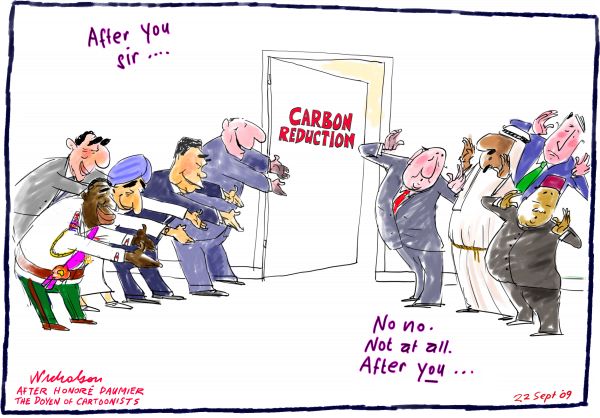
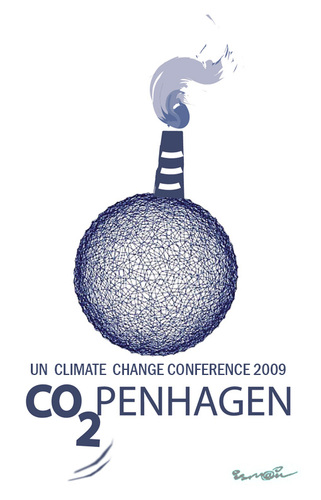
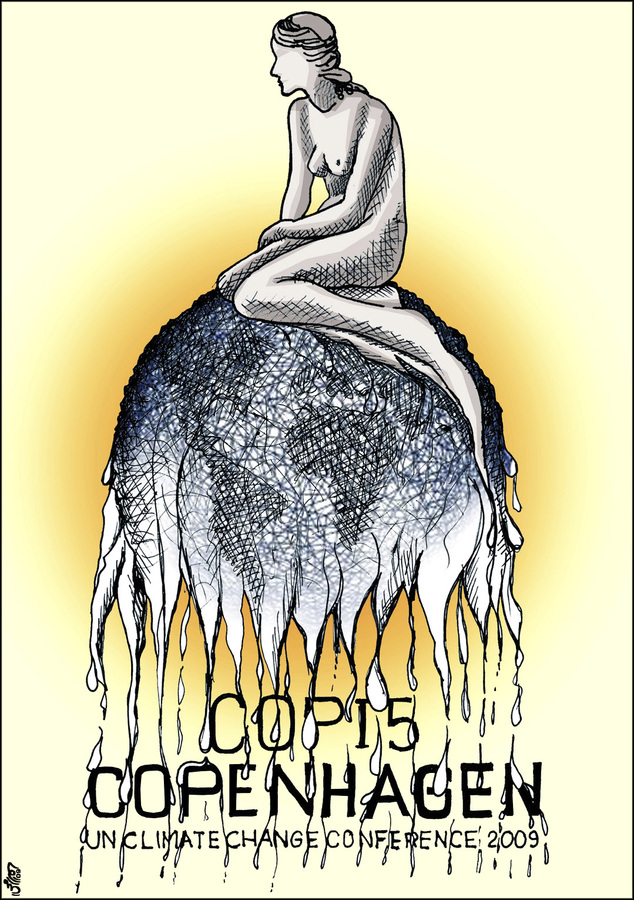
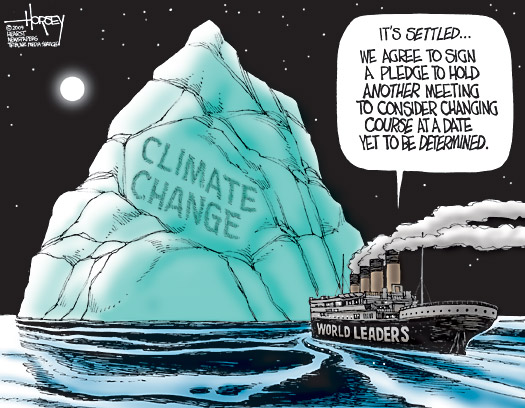
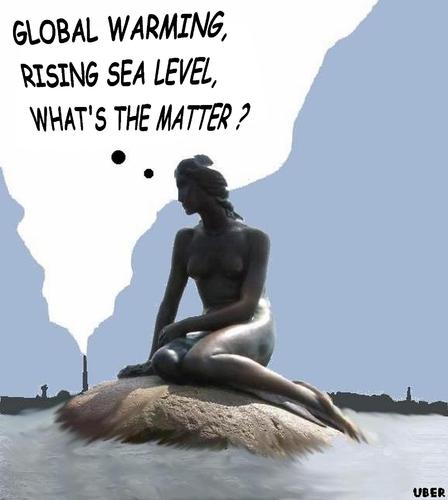
That’s all I can say about it for now, since the final selection of winners will only be made in January 2010. In the meantime, I’ve been looking at many climate related cartoons inspired by the Copenhagen conference. Here are some that particularly appealed to me…

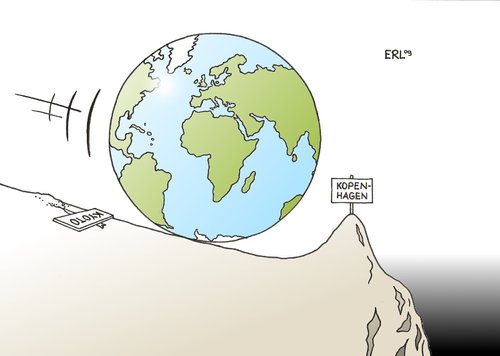
Last chance, by Erl
CLIMATE SUMMIT OF COPENHAGEN! by ismail dogan
copenhagen 09 logo - by samir abdl-fatah ramahi
by David Horsey
by uber

Earth Journalism award winners: Front-runners in the race to save the planet

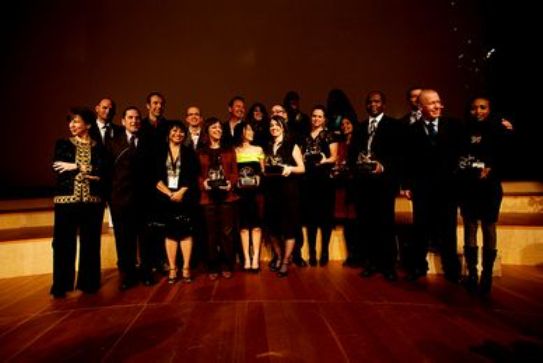
Earth Journalism 2009 Award winners

“If we are to have any hope of reversing the effects of climate change, then we have a monumental task of educating the six billion people on our planet about how climate change works and what they can do to help. The media is critical in this effort, since just one reporter has the ability to reach thousands, even millions, of people. These awards help to expand and honour these vitally important efforts.”

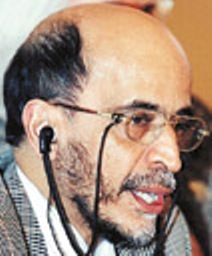
So said Dr Rajendra Pachauri, 2007 Nobel Peace Prize co-winner and head of the UN climate panel (IPCC) at the gala ceremony in Copenhagen tonight to present the inaugural Earth Journalism Awards.

Among the other presenters were key figures on climate and environmental issues, including Mary Robinson, the former President of Ireland; Marina Silva, the former environment minister of Brazil; and award-winning Chinese movie star Li Bingbing, who is also the Global Ambassador for WWF’s Earth Hour.

Nearly 1,000 journalists, bloggers and citizen reporters from 148 countries participated in the competition by submitting their work. The 15 winners were selected through a process involving a globe-spanning, independent jury with over 100 media and climate change experts. The winning reports included a Kenyan group who spread environmental information to their peers in the Nairobi slums through a hip hop video filmed atop mountains of trash, a compelling account of a small Pakistani community adapting to climate change, and an investigative report on disturbing business practices in Papua New Guinea’s carbon market.

Full list of winning entries and winners found on Earth Journalism website.

The Global Public Award, determined by thousands of online votes, went to “The Route of Smoke,” a multimedia report by Brazilian journalists Andreia Fanzeres and Cristiane Prizibisczki, who documented how customary farming practices that contribute to the country’s emissions are clashing with new methods for responsible agriculture.

“Our reporting showed how complex this issue of burning forests in the Amazon really is,” Fanzeres said. “It’s not about ‘good guys’ versus ‘bad guys.’ If you understand the complexities of climate change, you can start to solve the problem.”

James Fahn, Internews’ Global Director of Environmental Programs, said: “The Earth Journalism Awards were established to boost climate change coverage in this critical year leading up to Copenhagen, and to highlight the efforts of journalists reporting on this challenging subject around the world.”

10 Nov 2009: Earth Journalism Awards: Vote online for your favourite climate story!