සිවුමංසල කොලූගැටයා #28: සැබෑ හරිත විප්ලවයක් සොයා ගිය රේ විජේවර්ධන

In this Ravaya column (in Sinhala), I summarise the views of late Dr Ray Wijewardene on sustainable farming. Written to mark his first death anniversary, it is the beginning of a series of explorations of his critical thinking on issues of agriculture, energy, environmental conservation and innovation.

This first appeared in Ravaya Sunday broadsheet newspaper on 21 August 2011.

See also next week’s column:
28 Aug 2011: සිවුමංසල කොලූගැටයා #29: වෙලට නොබැස පොතෙන් ගොවිතැන් කරන කෘෂි විද්‍යාඥයෝ

‘ඔබ මෙහි ආවේ කොහොම ද?’

ආචාර්ය රේ විජේවර්ධන තමන් හමු වන්නට ආ අමුත්තන්ගෙන් නිතර මේ ප‍්‍රශ්නය ඇසුවා. බොහෝ දෙනකුගේ උත්තරය වූයේ මෝටර් රථයකින් හෝ බස් රථයකින් පැමිණි බවයි.

“ඔබ පැමිණ ඇත්තේ පිටරටින් ගෙනා වාහනයක්, පිටරටින් ගෙනා ඛනිජ තෙල් දහනය කරමින්, පිටරටින් ම ගෙනා තාර දමා තැනූ මහ පාරක් ඔස්සේයි.” එවිට ඔහු කියනවා. “ඉතින් ඔබ තවමත් සිතනව ද මේ නිදහස් හා ස්වාධීන රටක් කියා?’

මේ ප‍්‍රශ්නය දුසිම් ගණනක් දෙනා සමග රේ විජේවර්ධන මතු කරන්නට ඇති. ඒ තරමට ඔහු එබඳු දේ ගැන දිවා රාත‍්‍රී කල්පනා කළා. හැකි සෑම අවස්ථාවක ම රටේ විද්වතුන්, පාලකයන් හා ව්‍යාපාරිකයන්ගේ අවධානය යොමු කළා.

ඉංග‍්‍රීසියෙන් නිදහසට කියන ‘independent’ යන වචනයට වඩා ඔහු කැමති වූයේ ‘non-dependent’ යන්නටයි. අපේ මූලික අවශ්‍යතා හැකි තාක් දුරට අප ම සම්පාදනය කර ගැනීමෙන් පමණක් අපේ රටට සැබෑ නිදහසක් හා ස්වාධීපත්‍යයක් ලද හැකි බව ඔහු තරයේ විශ්වාස කළා.

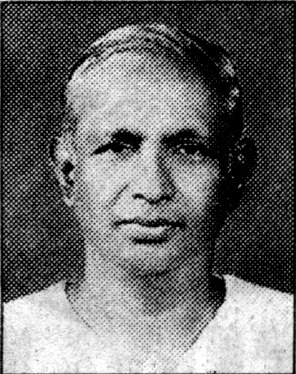
විද්‍යා ජ්‍යොති, දේශමාන්‍ය ආචාර්ය පිලිප් රේවත (රේ) විජේවර්ධන අපෙන් වියෝ වී වසරක් පිරෙන මේ මොහොතේ ඔහුගේ අදීන චින්තනය ගැන ටිකක් කථා කරමු.

ඉංජිනේරුවකු හැටියට බි‍්‍රතාන්‍යයේ කේම්බි‍්‍රජ් සරසවියේ ඉගෙනුම ලැබූවත් ඔහු පසු කලෙක තමන් හදුන්වා දුන්නේ ‘ගොවියකු හා කාර්මිකයකු’ හැටියටයි (farmer and mechanic). පොතේ දැනුම හා න්‍යායයන්ට වඩා ප‍්‍රායෝගික අත්දැකීම් හා අත්හදා බැලීමෙන් ලබා ගන්නා අවබෝධය ඉතා වටිනා බව ඔහු නිතර ම කියා සිටියා.

බටහිර සම්ප‍්‍රදායට විද්‍යා අධ්‍යාපනයක් හා තාක්‍ෂණ පුහුණුවක් ලද ඔහු, පසු කලෙක තම උත්සාහයෙන් පෙරදිගට හා ශ්‍රී ලංකාවට උරුම වූ දේශීය දැනුම ප‍්‍රගුණ කළා. එහෙත් ඇතැම් අන්තවාදීන් මෙන් එක් දැනුම් සම්ප‍්‍රදායක එල්බ ගෙන අනෙක් සියළු දැනුම් සම්ප‍්‍රදායන් හෙළා දැකීමක් කළේ නැහැ. ඒ වෙනුවට ඔහු පෙර-අපර දෙදිග යා කරමින්, හැම තැනින් ම හරවත් හා ප‍්‍රයෝජනවත් දැනුම උකහා ගනිමින් අපේ කාලයේ සංවර්ධන අභියෝගයන්ට ප‍්‍රතිචාර දැක්විය හැකි ක‍්‍රමෝපායයන් සොයා ගියා.

කෘෂිකර්මය, බලශක්තිය, ඉඩම් පරිහරණය හා පරිසර සංරක්‍ෂණය යන ක්‍ෂෙත‍්‍ර හතරේ නිරවුල් හා නිවහල් දැක්මක් මත පදනම් වූ ප‍්‍රායෝගික ප‍්‍රතිපත්ති, කි‍්‍රයාමාර්ග හා විසඳුම් රාශියක් ඔහු යෝජනා කළා. රේ විජේවර්ධනට කළ හැකි ලොකු ම ගෞරවය නම් ඔහු එසේ දායාද කළ දැනුම් හා අදහස් සම්භාරය ප‍්‍රයෝජනයට ගැනීමයි.

කුඩා වියේදී රේට උවමනා වුණේ අහස්යානා පදවන්න හා නිපදවන්න. එහෙත් උපන් රටට වඩා ප‍්‍රයෝජනවත් වන ශාස්ත‍්‍රයක් උගන්නා හැටියට පියා දුන් අවවාදයට අනුව ඔහු කෘෂිකර්ම ඉංජිනේරු විද්‍යාව (agricultural engineering) හදාරා පසු කලෙක ශෂ්‍ය විද්‍යාව (agronomy) පිළිබඳ විශේෂඥයකු වුණා. නමුත් එම ක්‍ෂෙත‍්‍රයට ප‍්‍රවේශ වන වෙනත් විද්වතුන් මෙන් පොතෙන් ගොවිතැන් කිරීමට හෝ විද්‍යාගාරවල පර්යේෂණ කිරීමට හෝ පමණක් ඔහු සීමා වුණේ නැහැ.

හේන් ගොවියාට හා වෙල් ගොවියාට බලපාන ගැටළු හා අභියෝග හඳුනා ගන්නට ඔහු ඔවුන් සමග ගොවි බිම් හා වෙල්යායවල කල් ගත කළා. මුළු ජීවිත කාලය පුරා ම කෘෂිකර්මය පිළිබඳ ඔහුගේ දැක්මට පාදක වුණේ කුඩා ගොවියාගේ ජීවන තත්ත්වය නගා සිටුවීම හා ගොවිතැනේදී කුඩා පරිමාන ගොවීන් හා ගෙවිලියන්ගේ පරිශ‍්‍රමය වඩාත් කාර්යක්‍ෂම කිරීමයි.

හරිත විප්ලවය (Green Revolution) 1950 දශකයේ ආරම්භ වන අවධියේ තරුණ විද්‍යාඥයකු හා ඉංජිනේරුවකු හැටියට රේ විජේවර්ධනත් එහි කොටස්කරුවකු වුණා. ඝර්ම කලාපීය රටවල කුඩා ගොවීන්ට ලෙහෙසියෙන් හැසිරවිය හැකි, නඩත්තුව වඩාත් පහසු වූ රෝද දෙකේ අත් ට‍්‍රැක්ටරයක් ඔහු නිර්මාණය කළා. බි‍්‍රතාන්‍යයේ සමාගමක් මගින් LandMaster නමින් 1960 හා 1970 දශකවල ලොව පුරා අලෙවි කළේ මේ නිර්මාණයයි.

එහෙත් වසර කිහිපයකින් ඔහු තම නිර්මාණයේ සැබෑ සීමාවන් හඳුනා ගත්තා. 1964 දී අමෙරිකාවේ හාවඞ් සරසවියේ ව්‍යාපාරික පාසලේ තම නිර්මාණය පිළිබඳව තොරතුරු ඉදිරිපත් කරන විට සභාවේ සිටි සුප‍්‍රකට අමෙරිකානු නිපැයුම්කරු හා ඉංජිනේරු බක්මින්ස්ටර් ෆුලර් (Buckminster Fuller) රේට මෙහෙම ප‍්‍රශ්නයක් මතු කළා: “ඔබේ ට‍්‍රැක්ටරය කළේ ගොවිතැන් කටයුතු යාන්ත‍්‍රික කිරීම ද? නැත්නම් මීහරකා යාන්ත‍්‍රික කිරීම ද?”

20 වන සියවසේ තාක්‍ෂණ කේෂත‍්‍රයේ දැවැන්තයකු මතු කළ මේ සරල ප‍්‍රශ්නය හමුවේ තමන් නිරුත්තර වූ බවත්, ඒ ඔස්සේ දිගට කල්පනා හා සංවාද කිරීමෙන් පසු කෘෂිකර්මය පිළිබඳ එතෙක් තිබූ ආකල්ප මුළුමනින් ම වෙනස් කරගත් බවත් රේ පසුව ඉතා නිහතමානීව ප‍්‍රකාශ කළා. එම තීරණාත්මක මුණ ගැසීමෙන් අනතුරුව බක්මින්ස්ටර් ෆුලර් හා රේ විජේවර්ධන සමස්ත හරිත විප්ලවය විචාරශීලීව විග‍්‍රහ කළා. රේ එතැන් පටන් සිය ජීවිත කාලය ම කැප කළේ සොබා දහමට වඩාත් සමීප වන ගොවිතැන් කිරීමේ ක‍්‍රම ප‍්‍රගුණ කරන්නට හා ප‍්‍රචලිත කරන්නටයි. පරිසරයට හිතකර ගොවිතැන (conservation faming) අපට අළුත් දෙයක් නොවන බව ඔහු පෙන්වා දුන්නා.

පසු කලෙක (1995) ඔහු හරිත විප්ලවය දෙස හැරී බැලූවේ මේ විදියටයි.  “හරිත විප්ලවයේ ප‍්‍රධාන අරමුණ වුණේ හැකි තාක් බාහිර එකතු කිරීම් (රසායනික පොහොර, කෘමි නාශක, වල් නාශක, දෙමුහුම් බීජ වර්ග) හරහා අස්වැන්න වැඩි කිරීමයි. එහෙත් එහිදී අප අමතක කළ දෙයක් තිබුණා. ගොවින්ට අවශ්‍ය හුදෙක් අස්වනු වැඩි කර ගැනීමට පමණක් නොවෙයි. ගොවිතැනින් හැකි තරම් වැඩි වාසියක් හා ලාබයක් උපයා ගන්නටයි. නමුත් හරිත විප්ලවය හඳුන්වා දුන් හැම දෙයක් ම මිළට ගන්නට යාමේදී ගොවියාගේ නිෂ්පාදන වියදම ඉහළ ගියා. එයට සාපේක්‍ෂව (අස්වනු වැඩි වූවත්) ඔවුන්ගේ ශුද්ධ ලාභය එතරම් වැඩි වූයේ නැහැ. ඔවුන්ගේ ණයගැති භාවය නම් වැඩි වුණා. ඊට අමතරව බාහිර රසායනයන් අධිකව එක් කිරීම නිසා ගොවිබිම්වල ස්වාභාවික පරිසරය දරුණු ලෙස දුෂණයට ලක් වුණා.”

අද මේ කරුණු බොහෝ දෙනා පිළි ගෙන ඇතත් 1960 දශකය අගදී රේ මෙබඳු අදහස් ප‍්‍රසිද්ධියේ ප‍්‍රකාශ කළ විට ඒවා මනෝ විකාර හා සංවර්ධන-විරෝධී, කඩාකප්පල්කාරී අදහස් හැටියට සැළකුණා. බතින් බුලතින් රට ස්වයංපෝෂණය කිරීමේ ඒකායන ඉලක්කයට කොටු වී සිටි දේශපාලකයන්ට හා නිලධාරීන්ට මේ අදහස්වල වටිනාකම වැටහුනේ බොහෝ කලක් ගත වූ පසුවයි.

ප‍්‍රශ්නයක් මතු කළ හැම විට ම එයට හොඳ විසඳුම් සොයා යාමේ මාහැගි පුරුද්දක් රේට තිබුණා. හරිත විප්ලවය බලාපොරොත්තු වූ තරම් දිගු කාලීන වාසි ලබා නොදුන් නිසා එයට විකල්ප සෙවීම අවශ්‍ය වුණා. එහිදී ඔහු නවීන විද්‍යා දැනුම ප‍්‍රතික්‍ෂෙප කළේ නැහැ. දෙවන ලෝක යුද්ධයේ නිමාවෙන් පසු ලොව පුරා සීඝ‍්‍රයෙන් වර්ධනය වූ ජනගහනයට සරිලන තරමට ආහාර නිෂ්පාදනය වැඩි කිරීමේ ප‍්‍රායෝගික අවශ්‍යතාවය ඔහු හොඳ හැටි දුටුවා.

ඔහු කියා සිටියේ පෙරදිග අපේ වැනි රටවල දිගු කලක් තිස්සේ ගොවිතැන් සඳහා යොදා ගත් දේශීය දැනුම කාලීන අවශ්‍යතාවයන්ට අනුව සකසා ගැනීමෙන් වඩාත් කාර්යක්‍ෂම, පරිසරයට මෙන් ම අපේ සෞඛ්‍යයටද හිතකර ආහාර බෝග නිෂ්පාදනයකට යොමු විය හැකි බවයි. මෙය හඳුන් වන්නේ low external input sustainable agriculture (LEISA) කියායි.

මා රේ විජේවර්ධන හඳුනා ගත්තේ 1980 දශකය මැද දී. ඔහු ඉතා නිහතමානී ලෙසින් හා උද්‍යොගයෙන් තරුණ විද්‍යා ලේඛකයකු හා පුවත්පත් කලාවේදීයකු වූ මගේ ප‍්‍රශ්නවලට පිළිතුරු දුන්නා. ඔහුගේ විෂය ක්‍ෂෙත‍්‍රයන්ට අදාල කරුණක් ගැන අසා දැන ගැනීමට  ඕනෑ ම වේලාවක දුරකථනයෙන් හෝ මුණගැසී හෝ කථාකිරීමේ අවකාශය ඔහු ලබා දුන්නා.

ඒ බොහෝ අවස්ථාවල ඔහුගේ ඉල්ලීම වූයේ ඔහුගේ නම සඳහන් නොකර නව අදහස් හා තොරතුරු මගේ පාඨකයන්ට බෙදා දෙන ලෙසයි. විශ්වාසනීයත්වය වඩාත් තහවුරුවන්නේ ඒවා මූලාශ‍්‍ර සමග ම ප‍්‍රකාශයට පත් කිරීම බව මා පහදා දුන් විට ඔහු එය පිළි ගත්තා. නමුත් සමහර විද්වතුන් මෙන් ඔහු කිසි දිනෙක මාධ්‍ය ප‍්‍රසිද්ධිය සොයා ගියේ නැහැ. මේ රටේ බොහෝ දෙනකු රේ විජේවර්ධනගේ හපන්කම් හා චින්තනය ගැන නොදන්නේ ඒ නිසා විය හැකියි.

1995 මැද දී ඉන්දියාවේ මුල් පෙළේ විද්‍යා ලේඛකයකු හා පරිසර චින්තකයකු වූ අනිල් අගර්වාල් (Anil Agarwal) මගෙන් සුවිශේෂී ඉල්ලීමක් කළා. ඔහුගේ සංස්කාරකත්වයෙන් පළ කරන Down to Earth විද්‍යා හා පරිසර සඟරාව සඳහා රේ සමග සම්මුඛ සාකච්ජාවක් කරන ලෙසට.”රේ කියන්නේ දියුණුවන ලෝකයේ සිටින අංක එකේ කෘෂි හා ශෂ්‍ය විද්‍යා විශේෂඥයකු පමණක් නොවෙයි, අපට සිටින ඉතාම ස්වාධීන හා නිර්මාණශීලී චින්තකයෙක්” අනිල් මට කියා සිටියා.

අනිල්ගේ ඉල්ලීම පරිදි මා රේ සමග දීර්ඝ සම්මුඛ සාකච්ඡුාවක් පටිගත කළා. එයට වරු දෙක තුනක් ගත වූ බවත්, එහි තොරතුරු සම්පූර්ණ කරන්නට තව දින ගණනාවක් වෙහෙස වූ සැටිත් මට මතකයි. එහි සාරාංශයක් Down to Earth සඟරාවේ 1995 ඔක්තෝබර් 31 කලාපයේ පළ වුණා. වී ගොවිතැන, හේන් ගොවිතැන, හරිත විප්ලවය හා එහි අහිතකර ප‍්‍රතිඵල, බලශක්ති අර්බුදයට දේශීය පිළියම් ආදී තේමා රැසක් ගැන අප කථා කළා.

තමා මාධ්‍යවේදියකු සමග කළ වඩාත් ම විස්තරාත්මක හා ගැඹුරු සංවාදය එය බව රේ පසුව මට කීවා. එහි සම්පූර්ණ සාකච්ජා පිටපත වසර 15ක් මගේ ලේඛන ගොනුවල රැදී තිබුණා. අන්තිමේදී රේගේ අවමංගල්‍යය පැවැත් වුණු දිනයේ, එනම් 2010 අගෝස්තු 20දා, එය මා groundviews.org වෙබ් අඩවිය හරහා පළ කළා. සාකච්ජාව කියවීමට පිවිසෙන්න: http://tiny.cc/RayBye

රේ විජේවර්ධන චින්තනය පිළිබඳ නව වෙබ් අඩවියක් ද මේ සතියේ එළි දකිනවා.
http://www.raywijewardene.net/

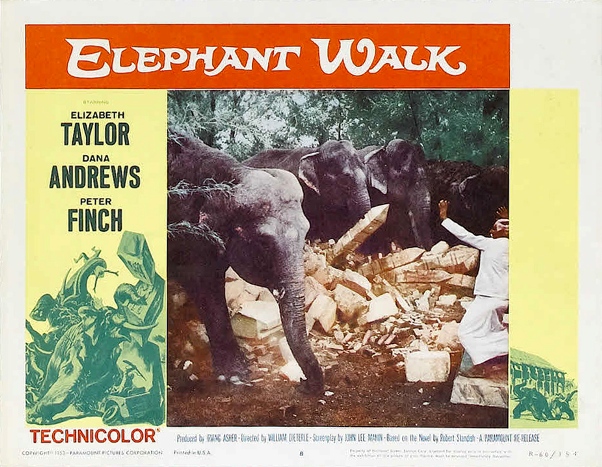
Elephant Walk film review: Prescient movie that forewarned about Ceylon’s crowded, troubled future?

Elephant Walk: Another century, another island - but casting its shadow on us?
How can anyone review a film made nearly six decades ago — especially if its first release took place even before I was born? Well, there is only one way to find out – by just doing it.

I’ve just done it with Elephant Walk (103 mins, colour), released by Paramount Pictures in April 1954 — a dozen years before I was born on the same island (then Ceylon, now Sri Lanka) where the movie was set and filmed. In fact, this was among several that were shot on location in Ceylon in the 1950s when Hollywood studios ‘discovered’ the island as an exotic, relatively inexpensive and hassle-free location. But this is the only one whose story is actually set in Ceylon.

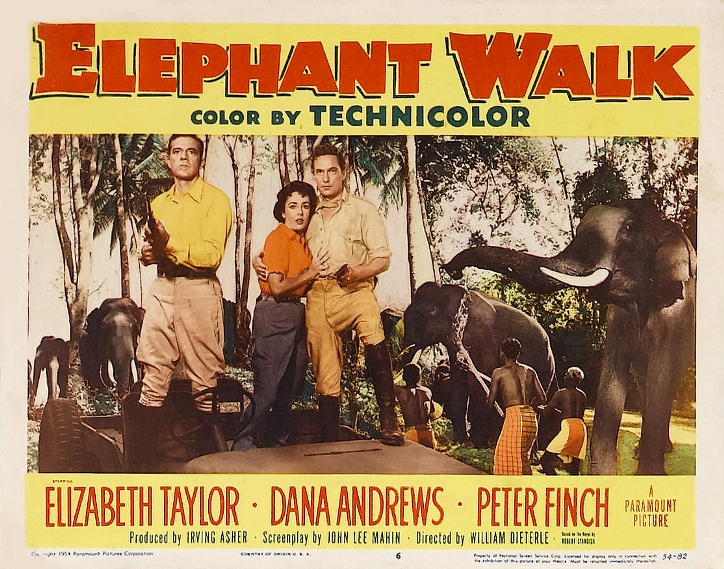
Elephant Walk was directed by William Dieterle, and based on the 1948 novel with the same title, written by “Robert Standish” — actually the pseudonym of English novelist Digby George Gerahty (1898-1981). It starred Elizabeth Taylor, Dana Andrews, Peter Finch and Abraham Sofaer.

One benefit of reviewing a film so long after its original release is that it allows the benefit of hindsight and perspective. I have exploited this to the full in my review cum op ed essay, titled Elephant Walk revisited: Mixing Tea, Jumbos and Monsoons, just published on Groundviews.org.

Here’s an excerpt:

“The movie has been remarkably prescient on several fronts, which can only be appreciated now — in another century, and on a wholly different island. A key theme of the movie was the human-elephant conflict, but passing references to social exclusion and rampant poverty in post-independent Ceylon are also of much interest.

“I doubt if Paramount’s writers were intentionally making any social commentary. One of the studio’s co-founders, Samuel Goldwyn, had famously cautioned against it. When asked about movies with a “message” some years earlier, he had replied, “If you want to send a message, use Western Union.”

“Nevertheless, the movie (and perhaps the book on which it is based, which I haven’t read) was contrasting the British planters’ opulent lifestyle with the forced austerity in post-War Britain. Even more striking is the poverty and squalor among the hundreds of resident workers whose sweat, toil — and occasional tears — ensured that the ‘cups that cheer’ were always brimming.”

Read the full review:
Elephant Walk revisited: Mixing Tea, Jumbos and Monsoons, on Groundviews.org

A ‘Greek’ among Geeks and Greens…

Asking questions. Connecting the dots. Explaining matters.

These actions sum up what I have been doing in the spheres of communication and development for over 20 years. They form the cornerstone in my attempts to make sense of our globalised world and heady times.

As a journalist, I was trained to look for what’s New, True and Interesting (‘NTI Test’). Early on, I went beyond just reporting events, and probed the underlying causes and processes. With experience, I can now offer my audiences something more: perspective and seasoned opinion.

I look back (slightly) and look around (a lot) in a half-hour, in-depth TV interview with media researcher/activist and fellow citizen journalist Sanjana Hattotuwa. This was part of The Interview (third series) produced by Young Asia Television, and broadcast on two Sri Lankan TV channels, TNL and ETv on May 8 (with repeats).

Watch the full interview online: Sanjana Hattotuwa talks to Nalaka Gunawardene

Nalaka Gunawardene from Young Asia Television on Vimeo.

I have always worn multiple ‘hats’, and dabbled in multiple pursuits rather than follow narrow paths of enquiry. I see myself continuing to oscillate between the ‘geeks’ and greens, and where possible, bridging their worlds.

I sometimes feel a strange kinship with the ancient Greeks, who first asked some fundamental questions about the universe. They didn’t always get the answers right, and neither do I.

But it’s very important that we question and critique progress – I do so with an open mind, enthusiasm and optimism.

Note: I was also a guest in the first series of this show, in February 2009, which led to this blogpost.

Everybody Lives Downstream – but not with the same peace of mind!

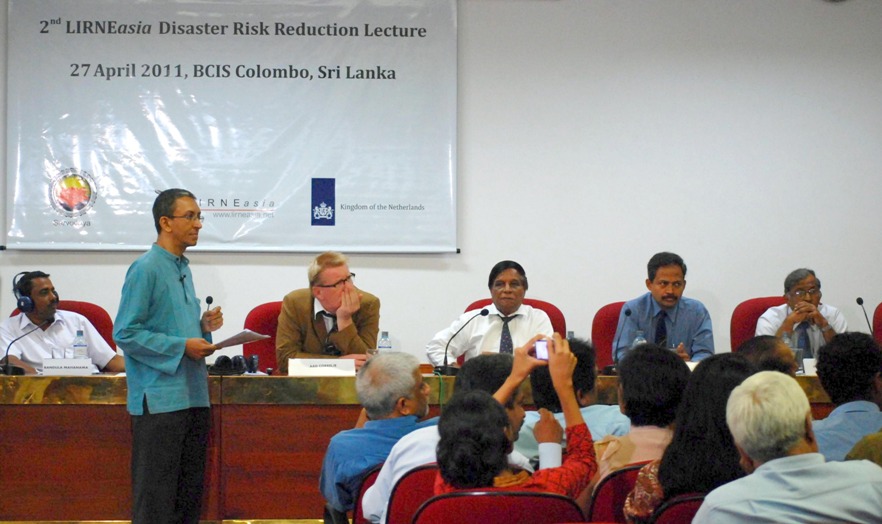
2nd LIRNEasia Disaster Risk Reduction Lecture, 27 April 2011 in Colombo: Nalaka Gunawardene (standing) moderates panel discussion
Writing on 20 April 2011, exactly 25 years after the Kantale large dam breached and washed away downstream villages, I posed the question: “If there were to be a catastrophic dam failure in Sri Lanka today, is there a warning system in place to detect the failure and issue timely warnings? Have the downstream communities participated in evacuation drills and know what action needs to be taken when a warning is issued?”

I’ve been asking such questions for a while. In fact, the post-mortem of the Kantale dam breach was one of the bigger stories I covered soon after I entered mainstream journalism in late 1987. By then, a few months after the incident, a presidential commission of inquiry was looking into what caused that particular disaster.

My interest in this subject is perhaps inevitable. I live in a country that has a high concentration of man-made water bodies. There are approximately 320 large and medium sized dams in Sri Lanka, and over 10,000 smaller dams, referred to as “wewas”, most of them built more than 1,000 years ago. In fact, Sri Lanka probably has the highest number of man-made water bodies in the world. According to the Sri Lanka Wetlands Database, the major irrigation reservoirs (each more than 200 hectares) cover an area of 7,820 hectares, while the seasonal/minor irrigation tanks (each less than 200 hectares) account for 52,250 hectares. This adds up to 60,070 hectares or just over 600 square kilometres — nearly a tenth of the island’s total land area.

Lankans are justifiably proud of their ancient hydrological civilisation — but don’t take enough care of it. Nothing lasts forever, of course, but irrigation systems can serve for longer if properly maintained. In a world where extreme weather is becoming increasingly commonplace, we can’t afford to sit on 25 centuries of historical laurels. Unless we maintain the numerous dams and irrigation systems – most of which are still being used for farming – heritage can easily turn into hazard.

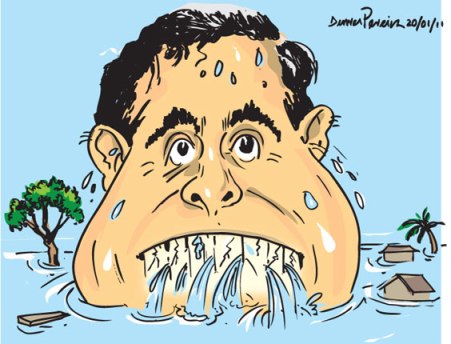
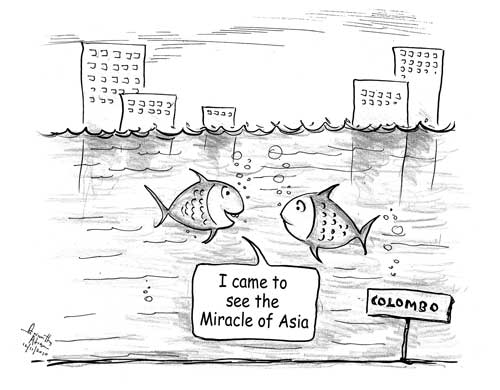
Cartoon from Daily Mirror, 20 Jan 2011
As indeed happened in early 2011, when massive and successive floods lashed the country’s Dry Zone where most reservoirs are located. It was a strong reminder how dams and reservoirs not only attenuate the effects of heavy rains, but if breached, can magnify the effects of such rainfall.

More than 200 small dams did breach during those rains, causing extensive damage to crops and infrastructure. The most dangerous form of breach, the over-topping of the earthen dams of large reservoirs, was avoided only by timely measures taken by irrigation engineers — at considerable cost to those living downstream. This irrigation emergency was captured by a local cartoonist: the head in this caricature is that of the minister of irrigation.

In early February, Sri Lanka announced that it will expand its dam safety programme to cover more large reservoirs and will ask for additional funding from the World Bank following recent floods. Never mind the irony of a proud heritage now having to be maintained with internationally borrowed money. Public safety, not national vanity, comes first.

All this provided a timely setting for the 2nd LIRNEasia Disaster Risk Reduction Lecture in Colombo, which I chaired and moderated. This enabled the issues of flood protection and dam safety to be revisited, building on the path-finding work in 2005-2006 done by LIRNEasia, Vanguard Foundation and Sarvodaya in developing an early warning system for dam hazards in Sri Lanka.

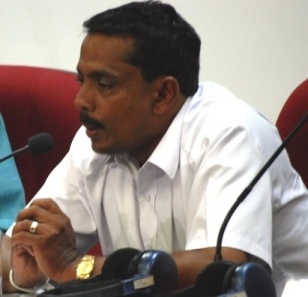
Bandula Mahanama
The main lecture was delivered by Dr Aad Correlje of the Delft University of Technology, the Netherlands. The response panel comprised Bandula Mahanama (a farmer organisation leader from one of the worst flood-affected areas in the Polonnaruwa District), S Karunaratne (Sri Lanka National Committee on Large Dams), Dr Kamal Laksiri (Ceylon Electricity Board) and U W L Chandradasa (Disaster Management Center). A summary is found on LIRNEasia’s blog.

Dams and irrigation systems are widely seen as the exclusive domain of civil engineers. They certainly have a critical role to play, but are not the only stakeholders. I was very glad that both our panel and audience included voices from many of these groups — especially the many communities who live immediately downstream of dams and reservoirs. Some of them are always in the shadow of a dam hazard, and yet helpless about it.

This was the gist of farmer leader Bandula Mahanama’s remarks – he made a passionate plea for a more concerted effort to improve proper maintenance of dams and reservoirs. “Wewas are part of our life, but right now our lives are in danger because the irrigation heritage is in a state of disrepair,” he noted.

I will write more about this in the coming weeks. My last thought from the chair was something I first heard many years ago in a global documentary. When it comes to water management, everybody lives downstream.

That’s certainly the case — but some are more downstream than others. And not everyone lives with the same peace of mind. We need to do something about it.

See also my recent writing in Sinhala on this topic, as part of my weekly science and development column in the Ravaya newspaper in Sri Lanka:

Nalaka Gunawardene’s Ravaya column – 27 Feb 2011 – Dam Safety in Sri Lanka

Kantale Dam Breach, 25 years later: Film captures memories and worries

Kantale Reservoir: Full again, but what if another dam breach happens as in April 1986?

There are approximately 320 medium and large dams in Sri Lanka and over 10,000 small dams, most of which were built more than 1,000 years ago. The consequences of a major dam failure in Sri Lanka can be devastating to life, property and the environment.

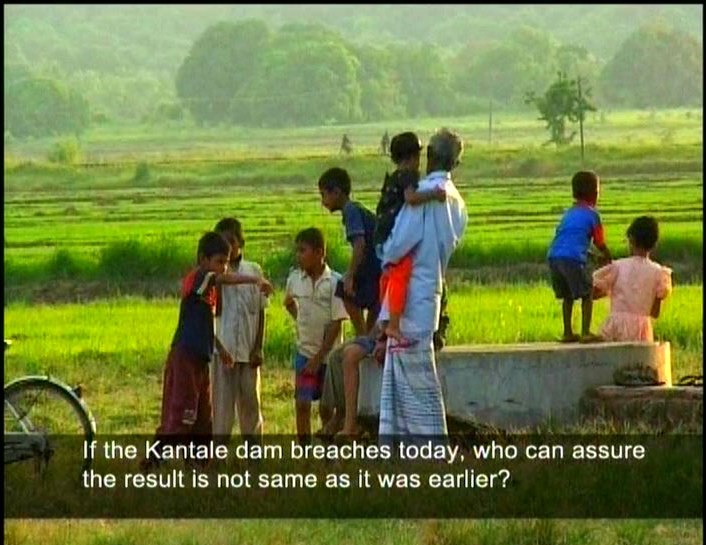
One such dam disaster happened exactly 25 years ago, on 20 April 1986, when the ancient Kantale dam, 50 feet high and over 13,000 feet long, breached. Its waters rapidly flooded several villages downstream, killing 127 people and destroying over 1,600 houses and paddy lands.

A short documentary made in 2005 revisited the scene of this disaster 19 years later to gather memories and opinions of the affected people and engineers involved. The film, made by Divakar Gosvami, was part of a 2005 study on dam safety by LIRNEasia, Vanguard Foundation, Sri Lanka National Committee of Large Dams and Sarvodaya. Its final report asked: if there were to be a catastrophic dam failure in Sri Lanka today, is there a warning system in place to detect the failure and issue timely warnings? Have the downstream communities participated in evacuation drills and know what action needs to be taken when a warning is issued?

Kantale Dam Breach Revisited: Part 1 of 2

Kantale Dam Breach Revisited: Part 2 of 2

This film is not merely documenting a tragic moment of recent history. It also carries the caution: have we learned the lessons from this incident?

Dr Rohan Samarajiva, Chair and CEO of LIRNEasia, has just written: “As I watch it again in April 2011, I wonder whether all that they had built up since 1986 had got washed away, again. Two successive periods of heavy rainfall at the beginning of the year devastated the livelihoods of the people of the wav bandi rajje, the irrigation civilization we are so proud of. Flood upon flood. More than 200 small tanks breached; big tanks were saved by the emergency actions of irrigation engineers.”

In another recent piece, he asks: Twenty five years after Kantale: Have we learned?

Can cricket unite a divided Sri Lanka? Answer is in the air…will it be caught?

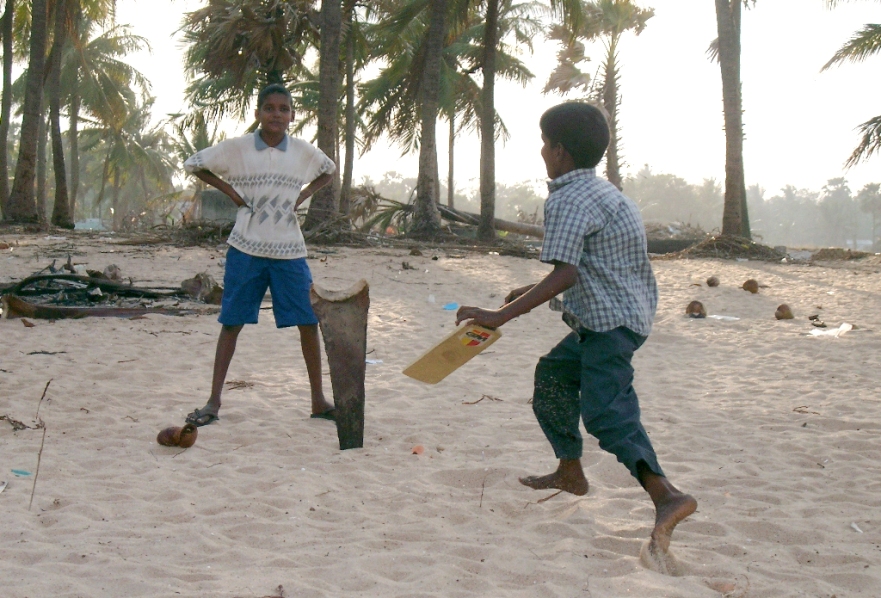
Boys playing cricket on tsunami hit beach in eastern Sri Lanka, January 2005 (photo by Video Image)

Two boys playing cricket on a beach, with a makeshift bat and wicket. What could be more ordinary than this in cricket-crazy Sri Lanka, where every street, backyard or bare land can host an impromptu game?

But the time and place of this photo made it anything but ordinary. This was somewhere along Sri Lanka’s east coast, one day in mid January 2005. Just a couple of weeks after the Indian Ocean tsunami had delivered a deadly blow to this part of the island on 26 December 2004.

My colleagues were looking for a survivor family whose story we could document for the next one year as part of the Children of Tsunami media project that we had just conceived. On their travels, they came across these two boys whose family was hit hard by the tsunami: they lost a sibling and their house was destroyed.

They were living in a temporary shelter, still recovering from the biggest shock of their short lives. But evidently not too numbed to play a small game of cricket. Perhaps it was part of their own way of coping and healing.

More than six years and many thousand images later, I still remember this photo for the quiet defiance and resilience it captured. Maybe that moment in time for two young boys on a devastated beach is symbolic of the 20 million plus men, women and children living in post-war Sri Lanka today.

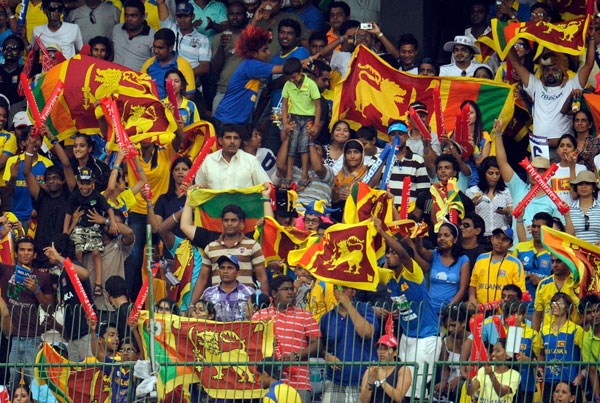
We are playing cricket, or cheering cricket passionately and wildly even as we try to put a quarter century of war, destruction and inhumanity behind us. And at least on the cricket front, we’re doing darn well: the Sri Lanka national team beat New Zealand on March 29 to qualify for the ICC Cricket World Cup finals on April 3 in Mumbai.

We’ve been here once before – in March 1996 – and won the World Cup against many odds. Can we repeat or improve that performance? We’ll soon know.

Of course, rebuilding the war-ravaged areas and healing the deep-running wounds of war is going to be much harder than playing the ball game.

My friends at Groundviews is conducting an interesting informal poll: World Cup cricket aiding reconciliation in Sri Lanka: Fact or fiction?

A few days ago, Captain of Lankan cricket team Kumar Sangakkara described post-war northern Sri Lanka as a scene of devastation after paying his first visit to the region. People of the north have been deprived for 30 years of everything that is taken for granted in Colombo, he told the media.

He toured the north with team mate and wiz bowler Muttiah Muralitharan, who is patron of the Foundation of Goodness. The charity, itself a response to the 2004 tsunami, “aims to narrow the gap between urban and rural life in Sri Lanka by tackling poverty through productive activities”.

Earlier this month, Lankan novelist Shehan Karunatilaka wrote a highly moving essay in the London Observer titled ‘How cricket saved Sri Lanka’. The blurb read: “As co-host of the current World Cup, Sri Lankans are relishing their moment on the sport’s biggest stage. And no wonder. For them, cricket is much more than a game. After years of civil war, the tsunami and floods, it’s still the only thing holding their chaotic country together.”

In that essay, which is well worth a read, he noted: “Many of us believe in the myth of sport; some more than others. Clint Eastwood and Hollywood have turned the 1995 Rugby World Cup into a sport-conquers-apartheid fantasy in Invictus. CLR James believed cricket to be the catalyst for West Indian nationalism. A drunk in a Colombo cricket bar once told me that Rocky IV had hastened the fall of the Soviet Empire.”

He added: “Let’s abandon the myths for now. Sport cannot change a world. But it can excite it. It can galvanise a nation into believing in itself. It can also set a nation up for heartbreak.”

Cricket has indeed excited the 20 million Lankans from all walks of life, and across the various social, economic and cultural divides. It has rubbed off on even a cricket-skeptic like myself.

We will soon know whether the Cricket World Cup will be ours again. Whatever happens at the Wankhede Stadium in Mumbai on April 2, we have a long way to go on the road to recovery and reconciliation.

Colombo, 29 March 2011: When Sri Lanka beat New Zealand to qualify for Cricket World Cup 2011 Finals

T (Tambiaiah) Sabaratnam: Fond farewell to a pathfinder science journalist

Tambiaiah Sabaratnam
I seem to be writing a few fond farewells to fellow travellers every year, becoming an obituarist of sorts in that process. I don’t go to funerals if I can help it (they’re too depressing), and instead I withdraw to a corner to write my memories. Some are published; others are privately circulated.

I’ve just published such a tribute on veteran Lankan journalist T (Tambiaiah) Sabaratnam, who died on March 5 aged 79. He was a senior colleague when I entered the world of journalism in the late 1980s. He retired (sort of) in 1997, but remained active in the world of media to the very end.

He was an outstanding journalistic story-teller. As I wrote in the tribute: “He was a pathfinder and leading light in Sri Lankan science journalism for over a generation. Throughout his long association with the English and Tamil press, he advocated the pursuit of public science: tax-payer funded scientific research for the benefit of the people and economy.”

Here’s another excerpt, more personalised:
“He was a source of inspiration and encouragement to me during my early years in science journalism. Our paths crossed often in the late 1980s and early 1990s when he and I covered many of the same scientific events. He was approachable and helpful, but I could never bring myself to call him ‘Saba’. When I knew him, he had already been in journalism for longer than I’d been alive. To me, he was always ‘Mr Sabaratnam’.

“He reached out despite our generational, media house and other divides. He was genuinely interested in my progress as a science journalist, and offered me advice on both style and substance. Occasionally, he also cautioned about on various ‘pitfalls’ in the local scientific scene — personal rivalries, exaggerated claims or oversized egos.”

Read the full tribute on Groundviews.org: Tambiaiah Sabaratnam (1932 – 2011): The Storyteller of Public Science

Read compact version in Daily News, 15 March 2011: Tambiaiah Sabaratnam (1932 – 2011): Storyteller of public science

Drowning in Media Indifference: Who cares for the backwoods?

Cartoon in Daily Mirror, Sri Lanka, on 12 November 2010

Why do movie audiences in this part of the world cheer every time they see alien invaders blow up the White House? For a long time I thought it had something to do with anti-American sentiments; then I heard that many US audiences react the same way. Perhaps some among us get a kick out of seeing overbearing governments in trouble?

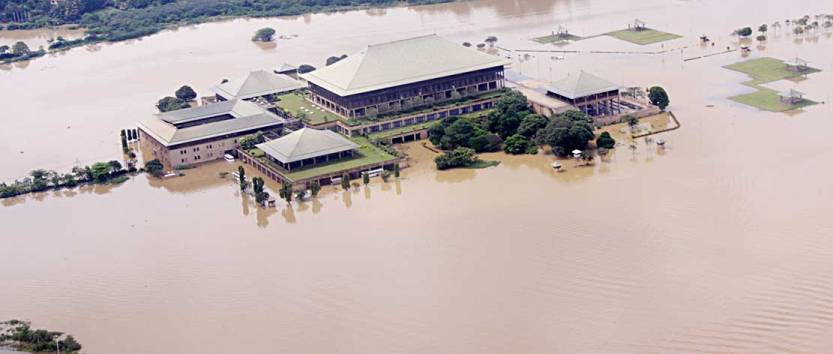
That might explain the gleeful tone with which the Colombo media reported the Sri Lankan Parliament being flooded after torrential rains in mid-November. Newspapers and television channels repeatedly showed images of the Parliamentary complex – built three decades ago on a marshland – completely marooned. The hapless people’s representatives were ferried across the expanse by the military, to take part in a brief session to extend Emergency Regulations. The symbolism was inescapable.

When the trapped rainwater engulfed many areas in and around Colombo, thousands of affected people groaned, but no one was really surprised. By now Sri Lankans know this is almost an annual routine. As I sat knee-deep in my own flooded office, I had a strong sense of déjà vu.

This is the opening of an op ed essay I’ve just written for Himal Southasian magazine, whose March issue carries a cover story on disasters in South Asia.

My essay, titled Drowning in media indifference, takes a personalised look at how the Lankan media have covered different disasters in the past two decades.

“Once again, the mainstream media in Sri Lanka has proven itself irrelevant in reporting and responding to catastrophic flooding,” says the intro — and that pretty much sums it up.

Sri Lankan Parliament flooded after torrential rains in mid-November 2010. The complex, built on a marshland, was completely marooned.

I recall how, back in 1992-93, the then media (fewer in number, with broadcasting still a state monopoly) provided saturation coverage for a major flood in the capital Colombo while under-reporting an even worse flood in the provinces a few months later.

“Fast forward to the present – and how little things have changed! During the past three months, as the fury of the formidable little girl (La Niña, the global weather anomaly) played havoc on the island, I have been struck by the similarly lop-sided coverage in the country’s mainstream print and broadcast media. Urban flooding once again received ample front-page coverage and ‘breaking news’ treatment. Everyone, from cartoonists and editorialists to talk-show hosts and radio DJs, ranted about what was taking place. Yet the much worse flooding, once again in the north, east and centre of the country, received proportionately much less attention. There were a few honourable exceptions, but by and large the 1992-93 disparity was repeated wholesale.”

I have been both an insider and outsider in this issue. I consider myself to be part of the extended mass media community in Sri Lanka for over two decades: I have worked for newspapers, magazines, radio and TV stations. At the same time, I retain the ability – and independence – to steps back and take a more critical and objective look at the media industry and community.

My interest in how disasters are covered and communicated go back to the time when my own house was flooded in mid 1992. I have since researched and commented extensively on this issue, and co-edited the 2007 book Communicating Disasters: An Asia Pacific Resource Book (TVEAP/UNDP).

In this latest essay, I reiterate an argument I’ve been making for sometime: “Media researchers have long accused the Western and globalised news media of having an implicit ‘hierarchy’ of death and destruction, in terms of how they report disasters in developing countries. But Sri Lanka’s own media’s indifference is equally appalling – the story of a quarter-million displaced people languishing in squalid conditions for weeks on end did not constitute front-page news. A starlet entering hospital after a domestic brawl excites news editors more than thousands of flood-affected provincial people starving while waiting for relief.”

Read the full essay, Drowning in media indifference, on Himal Southasian magazine’s website.

Capturing Nature’s Fury: Revisiting Asian Tsunami memories through photographs

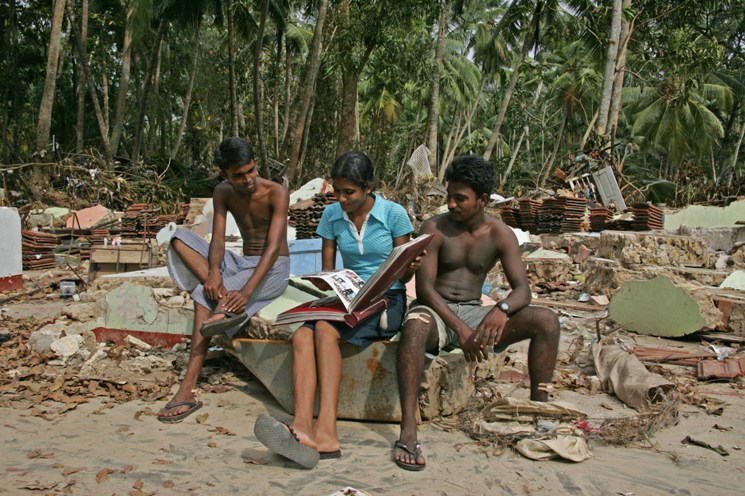
Tsunami survivors look at an lbum of family photos in Telwatte, Sri Lanka - Photo by Shahidul Alam

Today marks the 6th anniversary of the Boxing Day Tsunami of December 2004. The occasion is being marked solemnly in many locations hit by the waves all along the Indian Ocean rim countries.

Among them is Peraliya, close to Telwatte, where the worst train crash in railroad history occurred that day — when an overcrowded passenger train was destroyed on a coastal railway in Sri Lanka by the tsunami. The government-owned Sri Lanka Railways will never be able to live down their day of infamy when a packed train headed to disaster with no warning… They have the gumption — and insensitivity — to operate a memorial train today along the same path that led more than 2,000 passengers to a watery grave six years ago.

After six years, most survivors have moved on and rebuilt their shattered lives. Memories are also beginning to fade a bit, but for those directly affected, they will remember 26 December 2004 for the rest of their lives. And we who shared their tragedy and misery will keep reliving the memories through photographs, videos and the growing body of creative writing that the region-wide disaster inspired.

Photographs stand out as possibly the most enduring memory aids of a disaster. As disaster survivors sift through what is left of their homes, family photo albums are among the most cherished possessions they seek to recover. Why are snapshots of frozen moments so powerfully evocative to individuals, communities and the world?

I posed this question in the introductory blurb I wrote for my friend Shahidul Alam‘s chapter on disasters and photography in our 2007 book, Communicating Disasters: An Asia Pacific Resource Book.

Titled Capturing Nature’s Fury, the chapter drew on Shahidul’s experiences not only with the tsunami, which he covered in Sri Lanka, but also the earthquakes in Bam, Iran (December 2003) and Kashmir (October 2005), and cyclones and floods in his native Bangladesh.

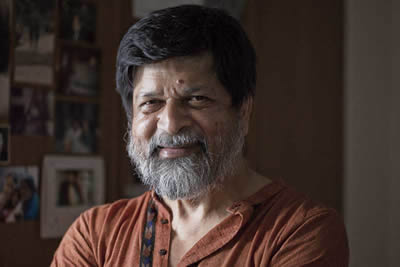
Shahidul Alam. Photo: Rahnuma Ahmed/Drik/Majority World
Describing the circumstances of the above photo, Shahidul wrote: “In the ruins of Telwatte, where the fateful train disaster had taken place, I came across a family that had gathered in the wreckage of their home. I wanted to ask them their stories, find out what they had seen, but stopped when I saw them pick up the family album. They sat amidst the rubble and laughed as they turned page after page.”

Zooming out, he further reflected:

“I had seen it before. As people rummaged through the ruins of their homes, the first thing they searched for was photographs. Years earlier at a disaster closer to home, I had photographed a group of children amidst the floods of 1988. The children insisted on being photographed. As I pressed the shutter, I realised that the boy in the middle was blind. He would never see the photograph he was proudly posing for. Why was it so important for the blind boy to be photographed?

“Though my entry into photography had been through a happy accident, my choice of becoming a photographer had been a very conscious one. Having felt the power of the image I recognised its ability to move people. The immediacy of an iconic image, its ability to engage with the viewer, its intimacy, the universality of its language, means it is at once a language of the masses, but also the key that can open doors.

“For both the gatekeepers and the public, the image has a visceral quality that is both raw and delicate. It can move people to laughter and to tears and can touch people at many levels. The iconic image lingers, long after the moment has gone. We are the witnesses of our times and the historians of our ages. We are the collective memories of our communities.

“For that blind boy in Bangladesh and for the many who face human suffering but may otherwise be forgotten, the photograph prevents them from being reduced to numbers. It brings back humanity in our lives.”

Read the full chapter: Capturing Nature’s Fury, by Shahidul Alam


Photographer Chuli de Silva’s memories of the Tsunami, recalled six years later

Dec 2007: Asian Tsunami: A moving moment frozen in time

Higher Education in Sri Lanka: Squabbling while our future burns?

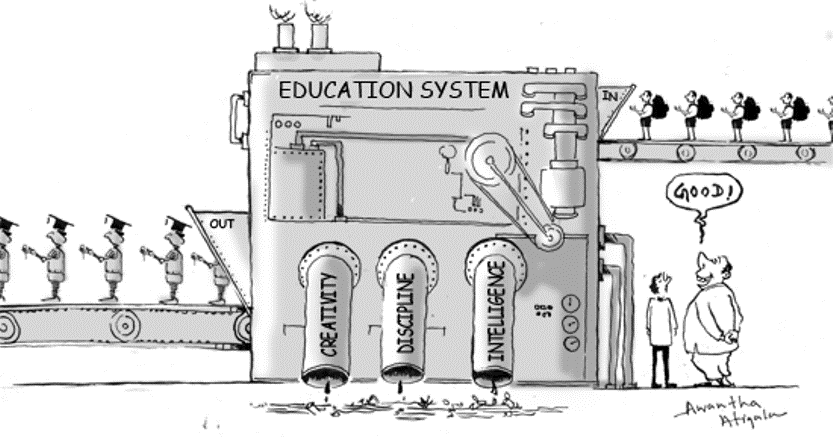
Cartoon by Awantha Atigala

What do you think of higher education in Sri Lanka, a young documentary film maker asked me a few weeks ago.

That would be a good idea, I replied. I wasn’t trying to be too cynical, but that’s the stark reality.

Sri Lanka’s 20 million population is served by 15 public universities. Between them, these had a total of 65,588 students (not counting those enrolled with the Open University) and 4,738 faculty members in 2009.

None of these universities come anywhere near the top 1,000 (or even top 2,000) of the world’s universities as independently ranked using measurable criteria. Some say we have universities in name only, which of course those inside the system protest and deny vehemently.

University World News, an online global higher education publication focusing on international higher education news and analysis, recently asked me for a comment article on the crisis in Sri Lanka’s higher education sector. When I said I was a complete outsider to the system, they replied that’s precisely why they wanted my view.

So I wrote a 1,100 words which has just been published. My original title was ‘Squabbling while our future burns’ but some editors like to understate (their prerogative). I’m glad the rest of my text has largely survived their considerate editing.

Here are the opening paras:

“Sri Lanka’s university system is overburdened, outdated, and badly in need of reform. But politicians, academics and students just can’t agree on how to do it. So they fight.

“The recent wave of student protests have focused on one element of a wider package of proposed reforms: inviting private universities into a country where publically -funded universities currently dominate.

“In Sri Lanka’s heavily polarised political culture, the much-needed reforms have become the latest source of bickering. Yes, we need public discussion and debate to make the best policy choices. But what progress can be achieved when rhetoric replaces reason?

“As a concerned citizen and anxious parent, I call this reckless squabbling while our children’s future burns…”

Read the full essay on University World News website
SRI LANKA: Squabbling while higher education burns

The essay ends with the brief author bio, part of which reads: “Nalaka Gunawardene sometimes calls himself a ‘higher education refugee'”. My regular readers know how and why.