A perceptive review of my Sinhala language book, Mind Journeys with Arthur C Clarke, which came out in December 2012, has just appeared in Silumina broadsheet newspaper.
The writer is Sunil Mihindukula, a senior journalist who is best known for his writing on the performing arts, especially cinema. But Sunil has broad interests, and is a rare open-minded and skeptical person among Sinhala language journalists many of who are ‘true believers’ of assorted dogmas.
Sunil places my book in the context of rationalism and critical thinking that is so lacking in today’s Sri Lanka. Here’s an excerpt:
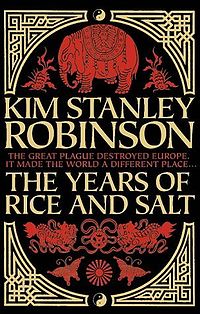
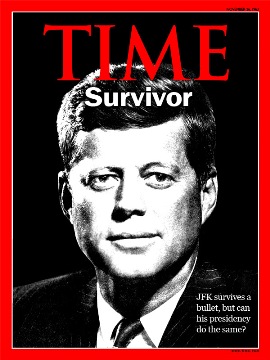
Journalists are trained to ask six basic questions in pursuit of their stories. “What If?” is not among them – but is one of my personal favourites. I’ve been fascinated by might-have-beens all my life, at all levels: personal and collective.
In this week’s Sunday column (6 May 2012) in Ravaya newspaper (in Sinhala), I start exploring alternative history possibilities for Sri Lanka where very few creative writers have ventured into that realm. Is this because Lankan history is considered ‘sacrosanct’ by many?
I set off by challenging this widely held assumption, pointing out that history is but a set of chronicles written by the winners and the powerful, that is (or should be!) open to question, scrutiny and speculation. I plan to revisit this theme with specific alternative history scenarios for Sri Lanka in the coming weeks. Watch this space — and make your own suggestions!
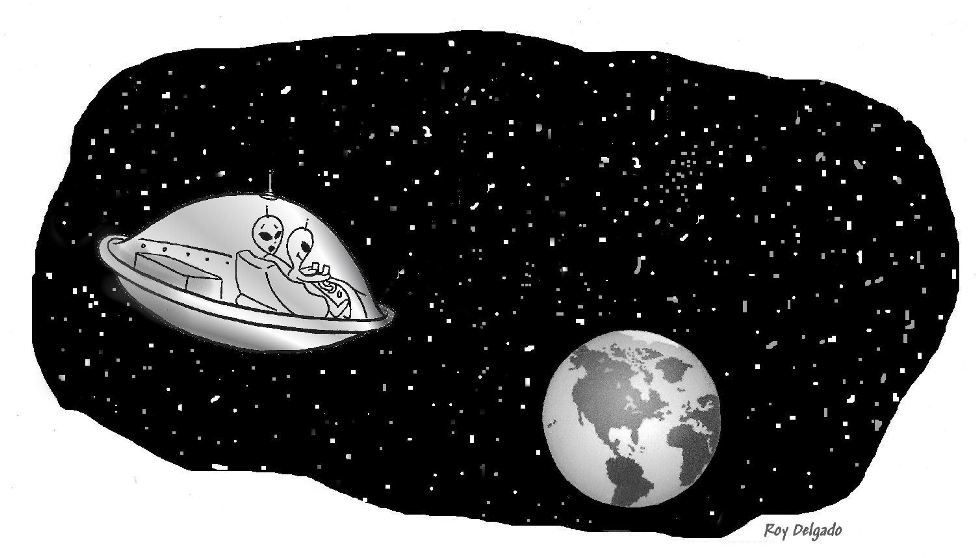
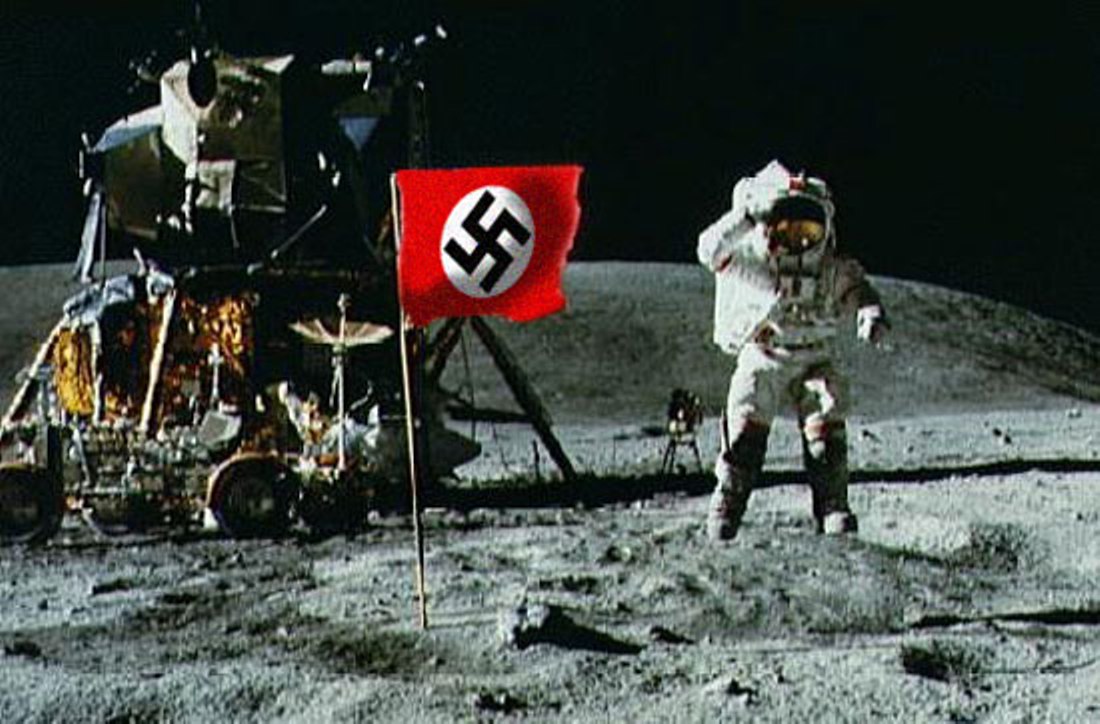
What if Germany won World War 2 – and conquered not just Earth, but outer space?
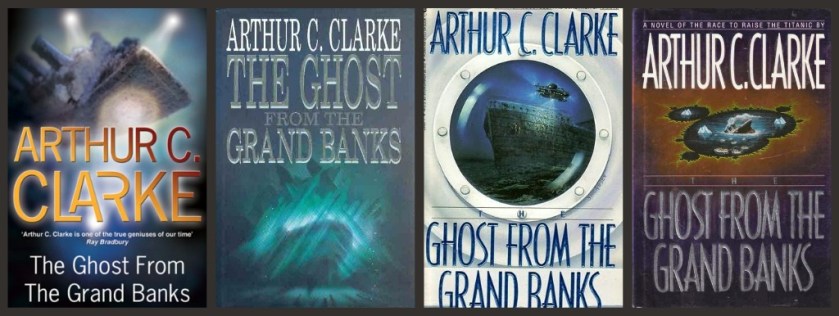
The Ghost from the Grand Banks - many covers, one story
Writing the Foreword to the book on ‘Communicating Disasters‘ that I co-edited in 2007, Sir Arthur C Clarke said: “I was born five years after the biggest maritime disaster the world had known: the sinking of the ‘unsinkable’ RMS Titanic while on her maiden voyage. My home town Minehead, in Somerset, was not more than a couple of hundred kilometres from Southampton, from where the Titanic set off. All my life, I have been intrigued by the Titanic disaster.”
The Titanic — whose wreck not discovered at the time — made a cameo appearance in his 1976 novel, Imperial Earth. For the Quincentennial of the United States, the wreck is raised and carried to New York.
But he continued to be haunted by the mighty ship (as did, and do, many others). He finally had to write a whole novel to exorcise it from his mind.
One day in early 1989, Sir Arthur asked me: “Does ‘Ghost from the Grand Banks’ mean anything to you?”
It didn’t — but that wasn’t surprising as I’d been raised on the other side of the planet, in an entirely different generation.
The Grand Banks of Newfoundland are a group of underwater plateaus southeast of Newfoundland on the North American continental shelf. The cold Labrador Current mixes with the warm waters of the Gulf Stream here — making it one of the richest fishing grounds in the world.
It is also close to where the Titanic sank on the night of 14/15 April 1912, and has served as the launching point of various shipwreck expeditions.
That heralded the genesis of an entirely new Arthur C Clarke novel. For me, it was the beginning of an exhilarating journey across space and time, supporting the creative process of one of the finest science fiction writers of the 20th Century.
I was working as Sir Arthur’s research assistant at the time, two years into my fascinating association with the late author (which lasted 21 years).
Over the next few months, I was to research and/or cross-check all sorts of records, data and other nuggets of information, which Sir Arthur — the master weaver of narratives — then worked into an entirely new novel.
The novel, published in late 1990 as The Ghost from the Grand Banks, was an ocean-based thriller set in the (then) near future. It revolved around rival British-American and Japanese teams trying to raise the legendary ship’s wreck in time for the centenary in 2012. Both teams mobilise mega-bucks and cutting edge technology: while one team relies on 50 billion little glass balls, the other’s ambitious plan involves making the world’s largest ice cube…
Two weeks before the centenary of the Titanic‘s maiden voyage – and its tragic sinking – I re-read the novel. On the information society front, at least, I found that The Ghost from the Grand Banks stands up remarkably well in 2012.
Living as we do at the time when his story culminated, we can now compare Sir Arthur’s ‘extrapolations of the future’ – he carefully avoided labelling any of his ideas as ‘predictions’ – with what has become our reality.
In this week’s Sunday column, published in Ravaya newspaper of 18 March 2012, I take a critical look at the mounting hype and hysteria about the world ending in December 2012.
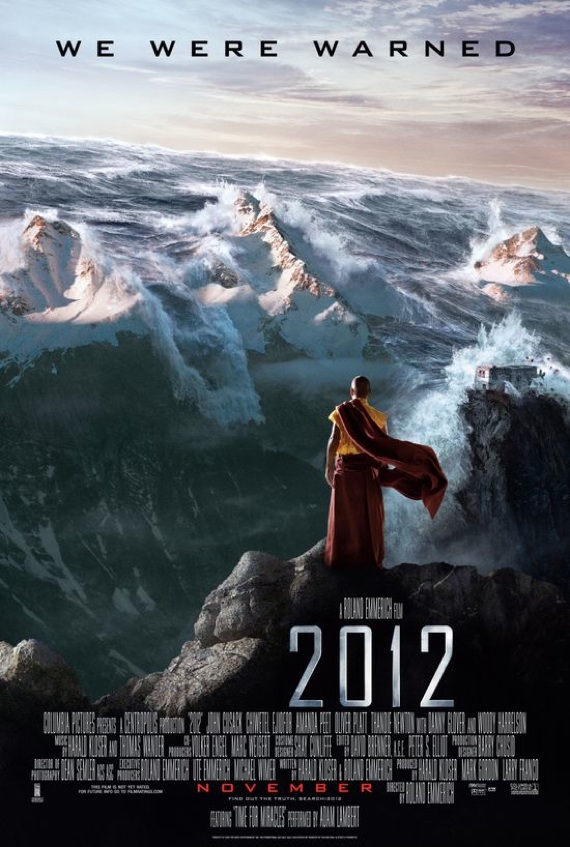
The Wikipedia describes the ‘2012 phenomenon’ as comprising a range of eschatological beliefs according to which cataclysmic or transformative events will occur on 21 December 2012. In reality, it’s a blockbuster Hollywood movie, rather than any ancient prophecy, that triggered this wave of public concern!
Simple explanations are always the best - but not entertaining enough?
So 2012 is finally here! I’ve been waiting for you…
Citing various ancient lore, some say this year will see the end of the world — where have we heard that before?
The Wikipedia describes the ‘2012 phenomenon’ as comprising a range of eschatological beliefs according to which cataclysmic or transformative events will occur on 21 December 2012.
And to think that a blockbuster Hollywood movie, rather than any ancient prophecy, likely triggered this wave of public concern!
Wikipedia notes: “The 2009 disaster film 2012 was inspired by the phenomenon, and advance promotion prior to its release included a stealth marketing campaign in which TV spots and websites from the fictional ‘Institute for Human Continuity’ called on people to prepare for the end of the world. As these promotions did not mention the film itself, many viewers believed them to be real and contacted astronomers in panic.”
The campaign was heavily criticized by scientists, of course, but the public chose to believe the scary make-believe rather than the more sober reality.
Will life imitate art? Find out on 21 Dec 2012The film 2012 became one of the most successful of that year, grossing nearly $770 million worldwide. So the film’s producers were laughing all the way to their bank…
The US space agency NASA has stepped into the debate with sobering analysis. Its website says: “Impressive movie special effects aside, Dec. 21, 2012, won’t be the end of the world as we know. It will, however, be another winter solstice.”
Recalling the Year 2000 computer bug (Y2K problem) that didn’t quite materialise, it says: “Much like Y2K, 2012 has been analyzed and the science of the end of the Earth thoroughly studied. Contrary to some of the common beliefs out there, the science behind the end of the world quickly unravels when pinned down to the 2012 timeline.”
Meanwhile, a few weeks before 2012 started, Lankan astrophysicist Dr Kavan Ratnatunga issued a public challenge on prime time TV.
“I will give 10% of the value of any property to (its) legal owner who will write a deed of sale of their property to me, effective from 22 December 2012, after that owner is so confident the World was going to end on December 21st!”
So far, Kavan has had no takers.
But the hype continues, with the media stirring things up as much as they can: after all, if Hollywood made money from people’s gullibility, why not others?
So might End-of-the-World industries end this year? Not a chance. A sucker is born every minute, and this is one industry that will continue to thrive as long as there are credulous believers.
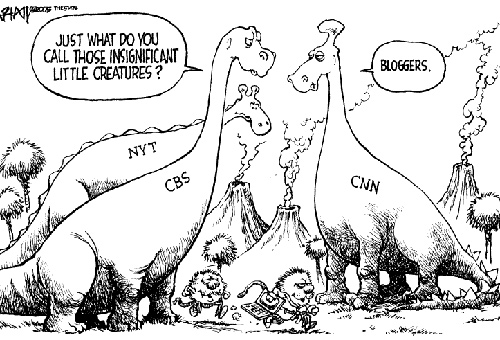
This is the Sinhala text of my weekend column in Ravaya, published on 6 Nov 2011. To mark the newspapers’s 25th anniversary that falls this month, I begin some reflections on the future of newspapers. In this first piece, I discuss how science fiction and thriller writer Michael Crichton (1942-2008) once foresaw the fate of what he called ‘Mediasaurus’.
Thor: Another spectacular moving image creation from MarvelLast evening, I wanted an escape from reality. So I walked into a local cinema with two friends and watched Thor – the latest cinematic production from Marvel Comics.
It’s another superhero spectacle, with lots of special effects and great fireworks. Not entirely plausible in the universe as we know it, but hey – we enter cinema halls willing to suspend disbelief. As C S Lewis was fond of saying, the only people really against escapism are…jailers!
Thor even has some reasonable acting and occasionally enjoyable dialogue. Half way into the story, I was pleasantly surprised to see Natalie Portman’s character quote Arthur C Clarke’s Third Law (of prediction): “Any sufficiently advanced technology is indistinguishable from magic”.
Then I realised how much the story depends on this ‘Law’ to make it plausible. Returning home, I asked my resident magician Google for some insights, and she found others have already noted this.
“…the Marvel universe is internally consistent… Clarke’s rule of magical tech helps create some of that consistency. I both love and loathe Clarke for that statement. Love because it strikes at the heart of what technology is: a way for humans to do things previously believed not just implausible, but impossible. Loathe because it creates an infinite caveat for lazy authors and screenwriters. It seems like anytime some preposterous technology is injected into a narrative either as a McGuffin or a deus ex machina, that damn quotation from Clarke gets trotted out as the defense.”
He adds: “Thor does not pull a George Lucas and attempt to over-science the magical elements. Thor is not superhuman because he has some Norse equivalent of midichlorians. He is superhuman because he is magical. Sure, that magic is allegedly based in technology, but technology so incredibly advanced, we can’t distinguish it from magic. That lack of distinguishability is the indicator of just how advanced the Asgardians actually are. It’s also what let’s us enjoy the movie for what it is.” Read the full post.
On the indispensable Internet Movie Database, it says: “This acknowledgement that one man’s science is another man’s magic/faith (with a hat tip to Arthur C. Clarke’s “Third Law”) is just enough to make Marvel’s comic book appropriation of mythology palatable for a mainstream Hollywood audience.”
So Clarke’s Third Law keeps popping up in popular culture, and as Kyle Munkittrick says, it’s so very convenient for script writers! The grandmaster of science fiction has given them a blanket cover to take whatever creative liberties…
And some don’t always acknowledge the source when they take cover in this quote/law. For example, the Third Law was famously uttered by Lex Luthor in Superman Returns (2006) — but without any mention of the source.
At that time, I was working with Sir Arthur as his research assistant, and remember how much the late author was intrigued by this reference. For a brief few seconds, he was (slightly) miffed that there was no attribution — and then he cheered up. He accepted that Clarke’s Three Laws are now out there in popular culture and the public imagination, having assumed a momentum and identity of their own. The product of his fertile mind was roaming free.
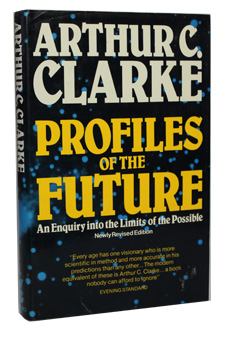
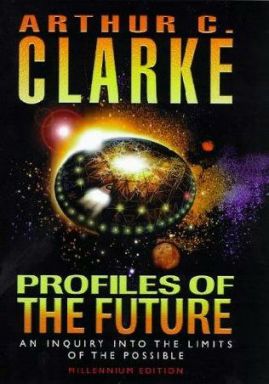
Profiles of the Future - 1982 UK editionIt’s about time too. The Three Laws have been in print for nearly half a century, in various forms. The first law was published in an essay titled “Hazards of Prophecy: The Failure of Imagination'” in the timeless Arthur C Clarke non-fiction classic Profiles of the Future: An Enquiry into the Limits of the Possible, 1962. The book itself was a collection of essays exploring the far future, written during the period 1959 – 1961, and originally published in various popular magazines — most notably Playboy, where many Clarke pieces first appeared in the 1950s and 1960s.
The First Law read: “When a distinguished but elderly scientist states that something is possible, he is almost certainly right. When he states that something is impossible, he is very probably wrong.”
In the original essay, Sir Arthur actually offered further insights on the threshold of elderly: “Perhaps the adjective ‘elderly’ requires definition. In physics, mathematics and astronautics, it means over thirty; in the other disciplines, senile decay is sometimes postponed to the forties. There are, of course, glorious exceptions; but as every researcher just out of college knows, scientists of over fifty are good for nothing except board meetings, and should at all costs be kept out of the laboratory.”
The Second Law was included as a simple observation in the same essay; its status as Clarke’s Second Law was conferred on it by others. That read: “The only way of discovering the limits of the possible is to venture a little way past them into the impossible.”
In an endnote to the ‘Hazards of Prophecy’ chapter (two) in the 1982 revised edition of the book, Sir Arthur wrote: “Originally, I had only one law, but my French editor started numbering them. The Third, which arises from material in this chapter, is perhaps the most interesting (and most widely quoted).”
In fact, this best known Third Law didn’t appear in its currently known form until the 1973 revision of Profiles of the Future. He wanted to round out the number, he said, and added: “Since three laws were sufficient for both the Isaacs — Newton and Asimov — I have decided to stop here. At least for the present…”
Profiles of the Future - 1999 Millennium editionAs Sir Arthur’s biographer, Neil McAleer, wrote in the 1992 biography Odyssey: “Profiles of the Future has been, and continues to be, an influential book for all those interested in science, technology and the future. Some thirty years after its original publication, it still stands out from the dozens of less important books that attempted to imitate it.”
Neil quotes Gene Roddenberry, creator of Star Trek, as saying how Profiles left a lasting impression on him. Says Roddenberry: “I read Childhood’s End, of course, and was mightily moved by it. And I should say that Profiles of the Future was the next most important Clarke work in my life because a great deal of what I did on Star Trek was guided by that.”
Profiles of the Future was revised by Sir Arthur Clarke on three occasions — in 1973, 1982 and again in 1999. The last revision, where I played a part in assisting the author, came out as the Millennium Edition.
These revisions were not extensive. As the cover blurb of the first revision noted: “Since it (the book) was concerned with ultimate possibilities, and not with achievements to be expected in the near future, even the remarkable events of the last decade have dated it very little.”
The same held for the last revision. But by then, the First Law was updated for Political Correctness:
“When a distinguished but elderly scientist states that something is possible, (s)he is almost certainly right. When (s)he states that something is impossible, (s)he is very probably wrong.”
Next year, 2012, will mark the 50th anniversary of this future-shaping book’s first publication. Fans of science fiction and science fact should perhaps do something to mark the occasion — and not leave it entirely to the whim and fancy of Hollywood script writers.
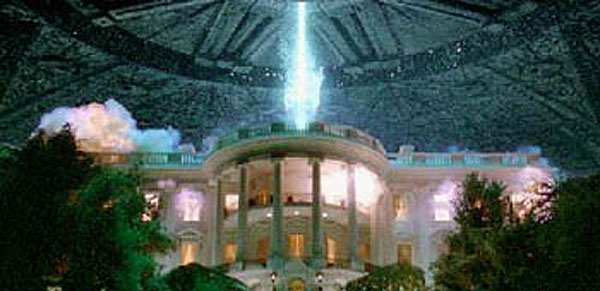
Why waste all that energy when there are smarter ways? Image courtesy movie 'Independence Day'
It’s time to come clean: I have a fascination with alien invasions of our planet.
As a kid, I was an avid listener of radio (my only electronic medium, as I grew up in a land without television, and in a time before the Internet) — and expected the regular transmissions to be interrupted any moment to break the news of an alien invasion underway. The spoilsports shattered my childhood dreams everyday.
Now slightly older, I keep looking for the perfect moments for that history-shattering event. A widely reproduced op ed essay I wrote in July 2010 opened with these words:
“If you’re an alien planning to invade the Earth, choose July 11. Chances are that our planet will offer little or no resistance. Today, most members of the Earth’s dominant species – the nearly 7 billion humans – will be preoccupied with 22 able-bodied men chasing a little hollow sphere. It’s only a game, really, but what a game: the whole world holds its breath as the ‘titans of kick’ clash in the FIFA World Cup Final…”
The careless aliens didn’t heed my advice, but I live in hope. I keep looking for the strategic moments and smart ways to take over the planet — with as little violence as possible. After all, I’m a peace-loving person (even if I’m unhappy with the planet’s current management).
I’m not alone in this noble quest. Science fiction writers have been at it for decades, and future Earth invaders are well advised to first study these useful instructions masquerading as popular literature. In an op ed essay published today, I highlight one such story by Sir Arthur C Clarke.
Click on this ONLY if you're a prude...I wrote WikiLeaks, Swiss Banks and Alien invasions with my tongue in my cheek about half the time (go figure!). I’ve been following the WikiLeaks cablegate saga for several weeks, and was intrigued to read that other critically sensitive secrets — that have nothing to do with garrulous American diplomats — were also reaching this online platform for assorted whistle-blowers.
I describe how PLAYBOY Magazine used the story as a basis for a psychedelic comic strip illustrated by the American underground cartoonist Skip Williamson. That appeared in their issue for May 1972 — and I’m still trying to locate that story. All in the interests of pop culture, of course.
Humanity’s journey to the stars began here…Photo by Greg Fewer
I seem to have a knack for visiting the UK just when Nature decides to remind the hapless islanders who is really in charge. Last April it was the Icelandic volcano Eyjaffjalljokull coughing up. Last week it was sub-zero temperatures and freezing winds coming all the way, with love, from Siberia…
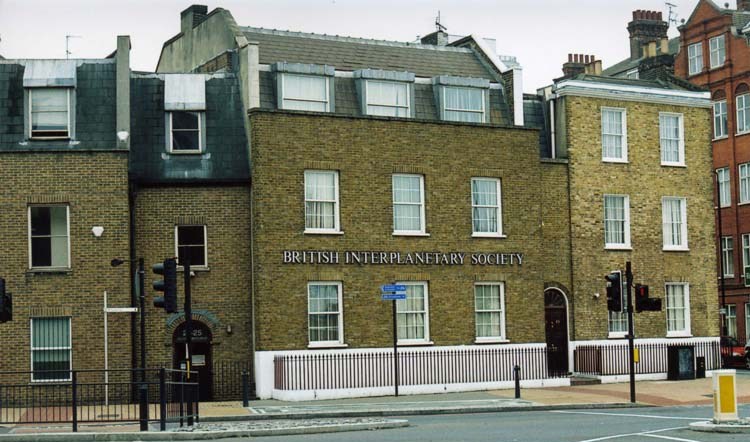
But London’s spirits are not so easily dampened by ash or snow (but they all groaned when their bid for FIFA World Cup 2018 lost to Russia’s). A highlight of my week’s stay was a visit to the British Interplanetary Society (BIS) headquarters on South Lambeth Road.
BIS, founded in 1933 by Phil E Cleator, is the oldest organisation in the world whose aim is exclusively to support and promote astronautics and space exploration. It was originally set up not only to promote and raise the public profile of astronautics, but also to undertake practical experiments in rocketry. But the pioneering British ‘space cadets’ soon discovered that Britain’s the Explosives Act of 1875 prevented any private testing of liquid-fuel rockets.
Undaunted, they continued with their thought experiments, discussions and public advocacy. Perhaps it was just as well that they didn’t get into the messy (and potentially hazardous) business of rocketry. For over 75 years, they have been preparing humanity’s engagement with the realm and challenges of space. Unlike its American and German counterparts, the BIS never became absorbed into the rocket or space industries that developed after the Space Age began in 1957.
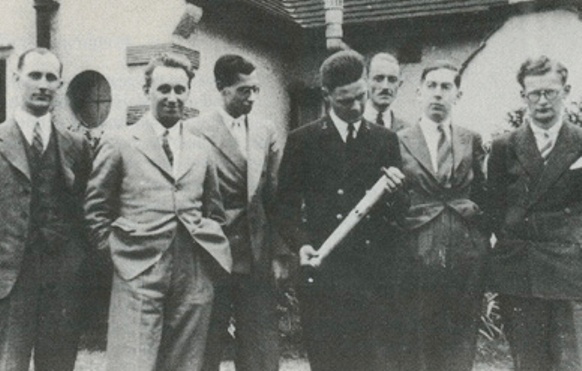
Arthur C. Clarke (far right) and other members of the British Interplanetary Society had a visit from rocket pioneer Robert Truax (holding the rocket model) in 1938
I have always admired the BIS for their pioneering role in popularising space travel, and having ha the audacity to dream of it and in public too. So I was delighted to be invited to the BIS annual Christmas get-together on the evening of December 1. This year, they celebrated the life and times of their founder member and two-time chairman, Arthur C Clarke.
Mark Stewart, the energetic librarian and archivist at BIS, heard I was visiting London and invited me to join their members-only event. Mark is currently looking after one of the finest collections on astronautics on this side of the Atlantic. Some records and documents at the BIS Library go back to the 1930s.
It was good to finally visit ‘ground zero’ of where it all began — nothing less than humanity’s long (and eventual) journey to the stars, hatched by a group of starry-eyed youth as an entirely private, citizen initiative. It took another 20 years — and considerable battering of London by Germany’s V2 rockets — for the British government to take it seriously.
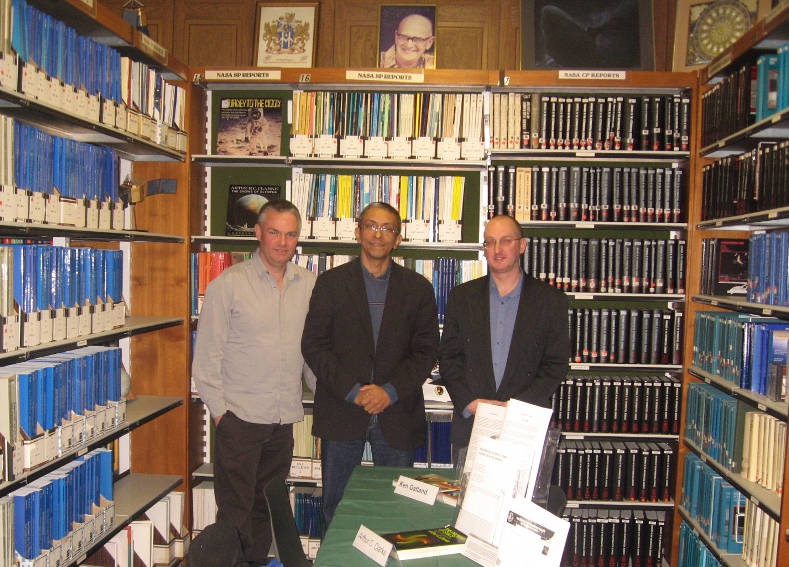
I spent the afternoon chatting with Mark and Colin Philip, a BIS Fellow. Joining us later was Mark’s teenage son Alex, a next-gen space cadet already volunteering at the society. They gave me the guided tour — only a few months ago, I heard, a certain N. Armstrong had been similarly shown around. The society is certainly proud of its history and Sir Arthur’s photos, books, papers and posters are prominently displayed.
L to R – Colin Philip, Naaka Gunawardene, Mark Stewart, BIS Library 1 Dec 2010
The evening gathering was attended by 40 – 50 members, who were treated to an illustrated talk by Mat Irvine, British TV personality who has worked on many science and science fiction shows over the years, gave an illustrated talk about his friend Arthur. (Confession: I was so engrossed in his talk that I forgot to take any photos of him making it!)
I was familiar with much of the ground that Mat covered, but there were occasional revelations. For example, I didn’t know that circa 1995, Mat and (Sir Arthur’s brother) Fred Clarke had worked with the Isle of Man Post Office to issue some stamps bearing Sir Arthur’s visage and other iconic images associated with him, e.g. the monolith from 2001, comsats, etc. Alas, the plans didn’t work out, but Mat still has the designs and is hopeful that the British Post Office might consider it for the author’s birth centenary in 2017. Of course, some lobbying will be needed…but there’s plenty of time for that.
Like all non-profits these days, the BIS is struggling financially. It also faces the challenge of recruiting younger members – the average age of the Christmas gathering seemed to be 55 or 60. They have fascinating stories to tell (among them: the inside story how Apollo 13 was saved), but forward transmission requires more new blood.
The Council, I heard, is working on repositioning the society for the Facebook generation, and I wish them every success. ‘Imagination to reality’ is their motto, and they have seen a good deal of day-dreaming of the pioneering space cadets come true.
Nalala Gunawardene (L) with Mark Stewart at BIS Library











 Open Minds!