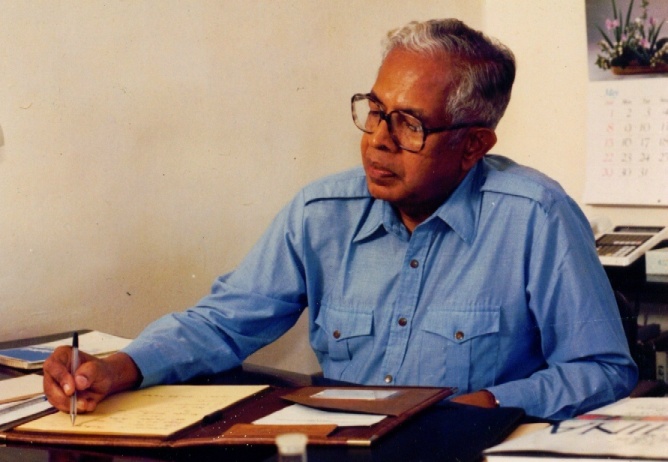
Remembering Dr Cyril Ponnamperuma: Inspirational maverick of Sri Lankan science

Dr Cyril Ponnamperuma: erudite, cultured and articulate

On 20 December 2009, we mark the 15th death anniversary of Professor Cyril Ponnamperuma, one of the best known scientists produced by Sri Lanka during the Twentieth Century.

I grew up reading about him in school text books as a living icon of modern science: a developing country scientist whose brilliance and hard work took him to the highest echelons of global science, and one who was respected in the West and East.

He was both an internationally recognised researcher on the origins of life on Earth, and an early promoter of science and technology for development. His interests and involvements transcended his own discipline and homeland. He worked closely with the Pakistani Nobel laureate Dr Abdus Salam to promote science and infrastructural facilities in developing countries.

I focus on the few years from 1984 to 1990, when he served as science and technology advisor to two Presidents of Sri Lanka. Concurrently, he served as director of the Institute of Fundamental Sciences (IFS) from 1984 to 1990, and was also founder director of the Arthur C Clarke Centre for Modern Technologies (ACCCMT) from 1984 to 1986. In these positions, he worked simultaneously on several fronts covering science policy, institutional building, fund raising, capacity building and public engagement.
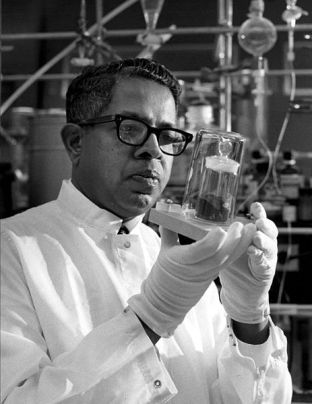
Dr Cyril Ponnamperuma analyzing a moon sample at NASA
I’ve just written a tribute, recalling my own interactions with him in the last 1980s, when he was dividing time between Sri Lanka and the US. It’s published online at Groundviews website.

As I note: “Erudite, cultured and articulate, Ponnamperuma was a journalist’s dream: he could sum up complex issues in simple and engaging terms and metaphors — but these were more than mere soundbites. He was full of insights and anecdotes that humanised both science and its practitioners.”

After looking back at his accomplishments and failures of his Sri Lanka years, I contend: “His biggest accomplishment — and lasting legacy — was not so much buildings, laboratories or institutions, but sparking off the interest in science among thousands of young people. That is much harder to achieve, and also impossible to quantify in Rupee or Dollar terms…”

In this essay, I recall both his accomplishments and failures. I ask why his passion for public science was not shared by many fellow scientists in Sri Lanka, who wanted to remain aloof of non-scientists and the community. Ponnamperuma’s tried to bridge this gap, and for this sin he was harassed and driven out of Sri Lanka and back to the United States where he returned to his research and teaching to the very end of his life.

“Chemistry is the ‘other woman’ in my life,” Ponnamperuma used to joke. It was while working at his university office in the US that he suffered cardiac arrest and rushed to a Washington hospital, where he passed away on 20 December 1994. He was 71. His sudden death came as a shock to all those whose lives and careers were touched, influenced and inspired by him.

Read my full essay:
Dr. Cyril Ponnamperuma (1923-1994): A Passionate Champion of Public Science
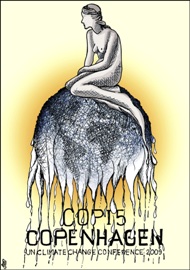
Dance for the Climate: dance your anger and joys to a U2 tune!

Hopenhagen?
As the UN climate conference culminates today in Copenhagen, there seem to be lots of angry people in the Danish capital. Many civil society and environmental activists, and some journalists, have been frustrated by the inter-governmental bickering process and the occasionally tough crowd control measures by the Danish police.

As author and activist Naomi Klein wrote at the end of the first week: “By the end, around 1,100 people had been arrested. That’s just nuts. Saturday’s march of roughly 100,000 people came at a crucial juncture in the climate negotiations, a time when all signs point either to break down or a dangerously weak deal. The march was festive and peaceful but also tough. ‘The Climate Doesn’t Negotiate’ was the message, and Western negotiators need to head it.”

I’m not in Copenhagen for uptodate news, but the 5,000+ journalists and over 10,000 activists are keeping us well informed on what’s happening (or not happening). Perhaps part of their anger can be dissipated by heeding a creative call to Dance for the Climate.

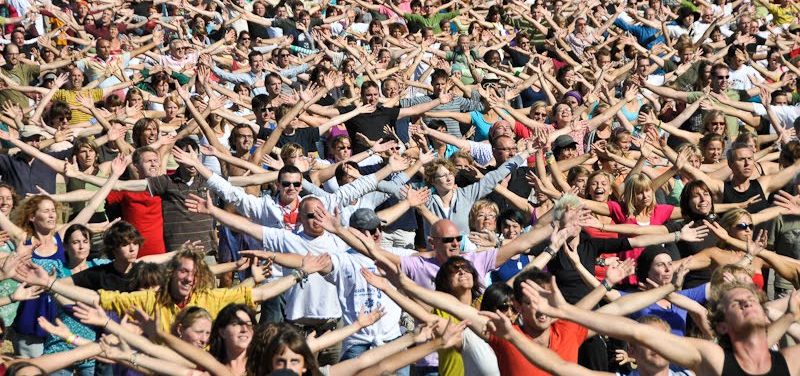
It’s an alternative way of demonstration, made into an inspiring and hopeful video clip by award winning Belgian film director Nic Balthazar. It shows 12 000 people on a Belgium beach in a truly spectacular simultaneous choreography dancing to the U2 hit single ‘Magnificent’. Bono and his band graciously gave the rights to their music. The message of the clip to politicians in Copenhagen is to ‘start moving, together, before it’s too late. The time is now to change climate change’.

In a recent email, Seppe Verbist, handling international distribution of “Dance for the Climate” clip, wrote: “We believe that the chances of success of the UN Conference are influenced by the clear signals from ordinary people to their politicians. The ‘Dance for the Climate-clip’ wants to contribute to this, and we sincerely hope we can count on your support!”

According to her, the clip has been released three weeks ago and they are now trying to spread it worldwide. In Europe the distribution goes pretty well as the European Broadcasters Network (EBU) offered the clip to all her members. They are picking up the offer and integrating the clip into their Copenhagen content. In Canada weather forecasters from different broadcast networks are organizing an imitation of Dance For The Climate, and the clip will be shown 24/7 at the World Expo 2010 in Shanghai in the Meteo World Pavilion. They’re expecting 100 000 visitors every day for six months. The Al Gore Climate Project also supported the clip and shared it with their network. It’s been on TV in Brazil and Mexico as well.

Dancing can be a powerful way to express not just joy, but a range of emotions. One of my favourite calls to action came from Ken Saro-Wiwa, the Nigerian poet, author, environmentalist and minority rights activist (for his Ogoni people) who was executed by Nigeria’s military on 10 November 1995. While in jail facing an uncertain future, he wrote these momentous words:
“Dance your anger and your joys,
Dance the military guns to silence,
Dance oppression and injustice to death,
Dance my people,
For we have seen tomorrow
And there is an Ogoni star in the sky.”

And today, we must also dance for saving our climate.

Little strokes make big pictures: Covering climate change in South Asian media

Given the surfeit of media stories on climate in the build-up to the Copenhagen climate conference (7-18 Dec 2009), it would appear that journalists have little or no difficulty in covering this literally hot topic, right?

Wrong. The planet is warming, but not all editors and other media gate-keepers have yet warmed up to the topic. (We might even say: some are thawing more slowly than glaciers these days!).

“While environment is fast becoming a trendy topic, environmental journalists say they are finding it increasingly difficult to sell their stories to editors. This is a confounding trend in the news media, given the increasing confusion – and resultant calls for clarity – about scientific data for climate change in the run up to the United Nations Climate Change Conference in Copenhagen. The experts, however, say the trick is to repackage the story alluringly.”

Zofeen T Ebrahim
This is the thrust of an article just written by the experienced Pakistani journalist and blogger Zofeen T. Ebrahim on Dawn.com. In Little strokes make big pictures, she probes the challenges that South Asian journalists continue to face in reporting and analysing on climate change in their mainstream media.

Zofeen, who was with me at the recent IFEJ congress in New Delhi a few weeks ago, quotes me in her article: “Nalaka Gunawardene, a senior award-winning science writer from Sri Lanka, recalls that his mentor, Tarzie Vittachi, once advised that ‘ordinary people live and work in the day-to -day weather. Most can’t relate to long-term climate. It’s our job, as journalists, to make those links clear.’ Of course, three decades ago, well before climate change was a hot topic, Vittachi was speaking metaphorically. But the words have great import today.”

She also quotes South Asian colleagues like Kunda Dixit, Joydeep Gupta, Nirmal Ghosh and Aroosa Masroor Khan (all men, although they are among the finest in the profession :)).

Her conclusion: environmental stories may still be a hard sell in many media outlets, but committed journalists have found ways to market their stories first within their organisations, and then to their respective audiences. That is some good news as the crucial climate talks open in the cool climes of Copenhagen.

Read the full article: Little strokes make big pictures, by Zofeen T Ebrahim

Zofeen T. Ebrahim is a Karachi-based independent journalist and has been writing for IPS since April 2003. She also writes for Women’s Feature Service, IRIN and Indo Asian News Service. The stories she has covered include human rights, specially pertaining to women and children, health and how development impacts environment.

Safe Bottle Lamp: Life-saving bright idea wins World Challenge 2009

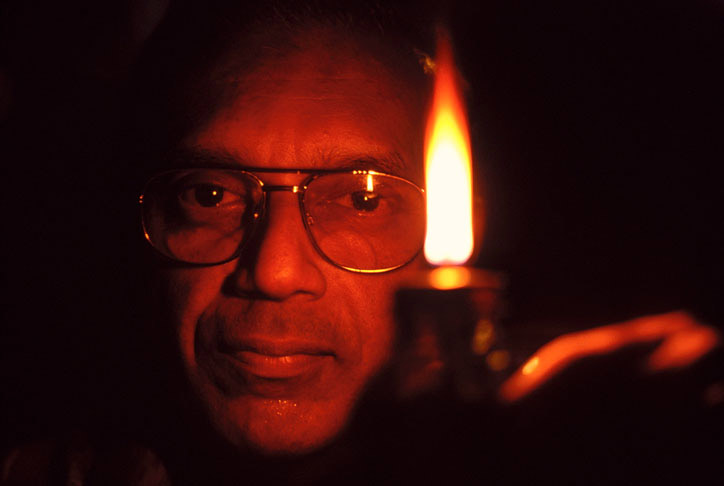
Dr Wijaya Godakumbura holding his invention - Photo courtesy Rolex Awards/Tomas Bertelsen

It’s easy to curse the darkness, and many among us regularly do. Only a few actually try to light even a small candle to fight it. Dr Wijaya Godakumbura of Sri Lanka is one of them – he literally lights lamps, thousands of them, against the darkness of ignorance and poverty.

But his lamps are different, and a great deal safer compared to normal lamps and kerosene, which can start fires risking life and property of users. The design is simple yet effective, inspired in part by the Marmite bottle known the world over: it’s small and squat, with two flat sides – equipped with a safe metal screw cap to hold the wick. It’s quite stable and hard to topple.

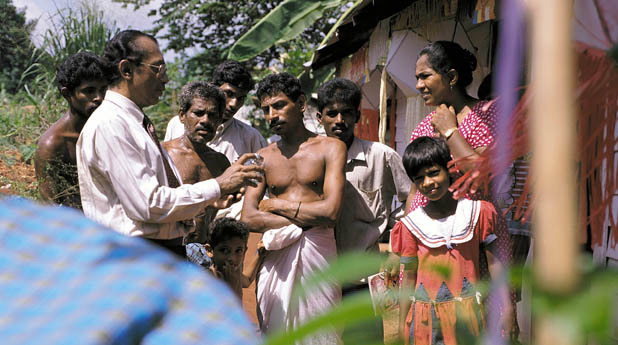
Surgeon turned inventor and social activist, Dr Godakumbura founded and runs the Safe Bottle Lamp Foundation which distributes safe, virtually unbreakable kerosene lamps to those who can’t afford electricity. For these untiring efforts that have saved hundreds of lives, the good doctor and his organisation have just been selected the overall global winner in the 5th annual World Challenge awards conducted jointly by BBC World News and Newsweek, together with Shell.

The Safe Bottle Lamp Foundation received a $20,000 grant from Shell to invest in the future of the project. The winner and runners-up were felicitated at an awards ceremony in the City of The Hague on 1 December 2009.

Now in its fifth year, World Challenge 2009 is a global competition aimed at finding projects or small businesses from around the world that have shown enterprise and innovation at a grass roots level. World Challenge is brought to you by BBC World News and Newsweek, in association with Shell, and is about championing and rewarding projects and business which really make a difference.

A record breaking 900 plus nominations were received this year and from these, twelve finalists were chosen by a panel of expert judges. BBC World News viewers and Newsweek readers then selected their favourite from these dozen unique and inspiring entries by casting more than 127,800 votes at http://www.theworldchallenge.co.uk.

Watch short film featuring the Safe Bottle Lamp when it emerged a finalist this year:

Dr Godakumbura and his foundation have been recognised many times before. Notable among these honours is the Rolex Award for Enterprise in 1998. Read Rolex profile about him and his continuing work.

BBC/Shell World Challenge series producer is my former colleague Robert Lamb, who has blazed many new trails in broadcast television and development communication. He specialises in telling complex environmental stories in engaging terms using moving images, and now runs his own independent film production company One Planet Pictures in the UK.

At the beginning of the World Challenge 2009 process, Robert wrote in the producer’s blog: “World Challenge is now in its fifth year. Over that time we have received thousands of nominations. Sadly, we have only been able to film a small selection. But it’s enough to know that there are millions of points of light out there. Watching the news is easy to forget that the vast majority of people go about their lives peacefully and productively.

“Our aim In World Challenge is briefly to bring stories of modest scale sustainable enterprise to the screens. Every year has thrown up big surprises. The diverse ways that ordinary people go about making a living without taxing the Earth’s resources is uplifting. This year we feature the most diverse crop of stories yet…And the really good news is that they are still going strong and proving that ‘sustainable’ is a term with a lot of meaning.”

Read Dr Wiyaya Godakumbura biography

Inventor Godakumbura promotes his safe bottle lamp

Making fun of climate change: Calling all cartoonists…

Cartoon courtesy CSE India

My mentor Sir Arthur C Clarke was fond of saying that there is nothing too serious in this world that you can’t make fun of it. (He should know – he once wrote a funny story about the end of the world, the mother of all disasters!)

On this blog, I’ve written about creative efforts at being seriously funny – for example, making fun of HIV/AIDS, and poking fun at politicians through political satire on television.

I’ve also argued that, when it comes to commenting on our topsy-turvy times, no one can beat cartoonists for their economy of words. They offer us popular social philosophy that is piercing, witty and hilarious – all in an amazingly tiny space.

The British Council and the Ken Sprague Fund of UK are currently running a cartoon contest on climate change open to Sri Lankan citizens from 18 to 35 years. They offer attractive prizes for those who can be seriously funny about this global crisis. The award winning and commended entries are to be exhibited in Colombo and Kandy in March 2010.

The deadline for submitting entries is 7 December 2009. More details here.

Declaration of interest: As a long time admirer of cartoons, I have agreed to be on the national selection panel.

‘Thank you for warming the planet (good for business)’ — Africa’s malaria mosquitoes

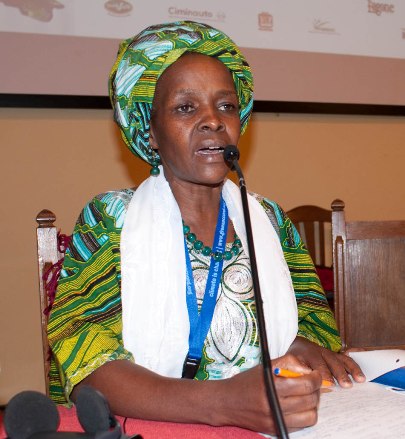
Nelly Damaris Chepkoskei: Voice of Hope
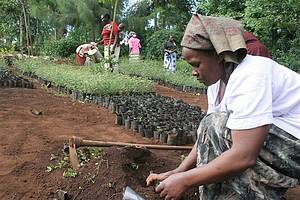
Malaria still claims over a million lives every year, most of them in Africa. This is not simply a public health statistic for Nelly Damaris Chepkoskei – she lost a daughter to the ancient scourge that continues to outsmart human attempts to control it.

“It was very sad when my daughter died of malaria at the age of four,” she recalls. What makes it especially tragic is the fact that malaria is a new arrival in her area.

Nelly, 51, is a farmer living in Kenya’s Kericho District. Located high in the mountains, Kericho’s cold weather has kept mosquitoes at bay for centuries. But not any longer: global warming has raised the area’s average temperature, and mosquitoes have appeared in recent years, bringing malaria with them.

“I had never seen a mosquito until I was 20 years old. But now they are everywhere – people are even dying of malaria, something that was virtually unheard of 20 or 30 years ago,” Nelly told the 7th Greenaccord International Media Forum on the Protection of Nature, being held in Viterbo, Italy, 25 – 29 November 2009.

The theme this year is ‘Climate is changing: stories, facts and people’. Nelly Chepkoskei is one of 10 Climate Witnesses who travelled to the historic city from far corners of the world to share their stories of ground level changes induced by climate change.

Climate Witness is a global programme by WWF International to enable grassroots people to share their story of how climate change affects their lives and what they are doing to maintain a clean and healthy environment. All Climate Witness stories have been authenticated by independent scientists.

Married with five children, Nelly grows maize and tea, and keeps a few cows – the pride and joy of Kenyan farmers. Lacking faith in politicians and government, she is working with women in her community to pursue their own development.

Life was never easy, but climate change is making it even harder.

“Rainfall patterns have changed drastically in recent decades,” she says. “In the Kericho district, we used to have rain throughout the year. I remember clearly that my family celebrated Christmas when it was raining heavily. But today, Christmas is usually dry.”

Unlike 20 years ago, the dry season is now hotter, drying up all the grass. In the past, the grass would remain green throughout the year.

“This means there isn’t enough fodder for my cows, leading to a drop in milk production and my income,” she explains. “The soils are also left bare during the dry season, which means more erosion when rains come in.”

With higher temperatures, more pests have turned up to damage crops. This prompts farmers to use more pesticides, increasing production costs and polluting the environment with hazardous chemicals.

Nelly turned out to be the most outspoken Climate Witness in Viterbo. In a frank exchange with an audience of 130 journalists, activists and scientists drawn from 55 countries, she exclaimed: “Don’t talk to politicians – they are the same everywhere! I can’t understand why journalists always follow politicians and are so keen to talk to them!”

She continued: “There is so many good things happening in Africa, but we don’t see it reported in the local and international media. You only hear about fighting, famine and corruption. So we continue to be seen and known as the Dark Continent.”

In her view, what Africa needs more than anything else is education. She firmly believes that higher levels of literacy and education would reduce the incidence of conflict and plunder.

Nelly herself is a high school drop out, and places a very high value on education to empower all Africans, especially women.

“There is a big gap between Kenyan intellectuals and the ordinary people. Knowledge is not where and how it is needed,” she says.

I asked her what she thought of foreign aid to Kenya and rest of Africa. This elicited a passionate and emphatic response: “If you want to spoil and corrupt Africa more, then keep giving aid to our governments. Aid money mostly ends up in the wrong hands, or buying guns to fight each other.”

She added: “We do need help, but don’t give aid to our governments. Instead, support NGOs who are better in delivering to the grassroots.”

Nelly and her network of women are digitally empowered. They refer the web to find out information on what aid and opportunities are available and then pursue them with all available means. Armed with the latest data, they lobby local and provincial governments to ensure that aid pledged from international donors reach the intended communities.

Nelly may not be Wangari Maathai, the Kenyan environmentalist and women’s right activist, but she admits to being a Wangaari in spirit. And having listened to the first African woman to win the Nobel Peace Prize at a previous Greenaccord forum, I readily agree: women like Nelly are a beacon of hope not just for Africa, but to the entire Majority World.

If only the mosquitoes could spread their passion and concern for the land and people…

Read WWF report on climate change impacts in East Africa

Images courtesy Greenaccord and WWF

We need more Reflective Mirrors in the media!

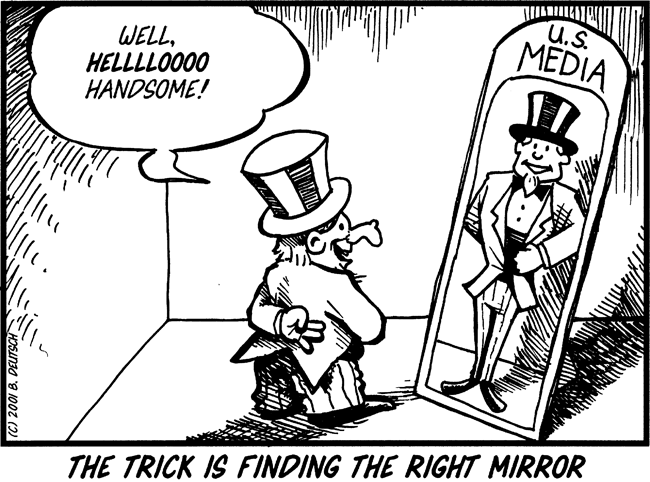
rightmirror
Mirror, Mirror, on the wall...

A friend of mine recently shared a wonderful quote by the French poet and film maker Jean Cocteau (1889 – 1963): “Mirrors should reflect a little before throwing back images.”

That ideal could very well serve as an aspiration for the industry I have been part of, in one way or another, for over 20 years: the public media. At the very basic, the media are expected to reflect our society and our times.

The reality is, there are many different kinds of mirrors:
• Some mirrors show us things exactly as they are – we might call them true mirrors.
• There are some ‘funny mirrors’ that distort – showing us as too thin, too fat, or elongated!
• There are concave and convex mirrors used in everyday situations from rear view mirrors in cars to shaving mirrors in bathrooms.
• Then there are a few mirrors that have cracked, which now give out a totally warped reflection.

Of course, the properties and behaviour of these mirrors are determined the laws of physics.

But must the public media behave just like glass mirrors do, throwing back images without some inner reflection?

This is certainly worth pondering.

How to become a global publisher or broadcaster in just 100 minutes!

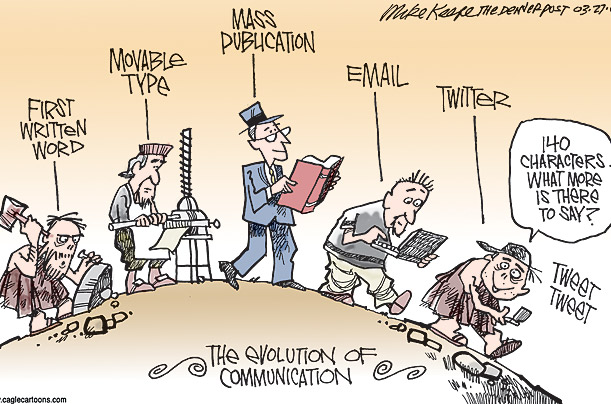
cartoons_02
Evolution or revolution?

I was born three years before the Internet (which turned 40 a few weeks ago), and raised entirely on newspapers and radio in a country where broadcast television didn’t arrive until I was 13.

From the time I could read and write, I always wanted to be a media publisher. In that pre-history of the Personal Computer and Internet, my choices were pretty limited: I published a hand-written household newspaper and was its editor, reporter, printer and distributor all rolled into one. But I was obsessive in my work even then, and the newspaper lasted a couple of years in which over two dozen issues were released (all of them now mercifully lost).

My school teacher parents were my first patrons, supplying me with plenty of paper, pencils and ink. But there must have times when they rather wished that I didn’t indulge in my own brand of independent journalism. I loved to criticise and lampoon the ‘management’ in my editorials — even as a kid, I was already critical of the establishment!

Fortunately for me, the ‘management’ left me alone and to my own devices, but most independent editors in history haven’t been so lucky. As the American journalist A.J. Leibling (1904 -1963) once said, “Freedom of the press is guaranteed only to those who own one.” In his time, this was perfectly true.

There was a time, until recently, when press barons and media moguls led, and the rest of society followed. In our topsy-turvy times, however, the reverse is increasingly true.

In theory, at least, anyone can be a global broadcaster and publisher in less than two hours using free tools that can be downloaded and activated in minutes.

david brewer photo
David Brewer (photo from http://www.i-m-s.dk)
My British media activist friend David Brewer has just published an online guide on how to become a publisher or broadcaster in 100 minutes. (Okay, the non-geeks among us might need a bit longer than that, but still, you can be in business in just a few hours.)

David Brewer’s journalistic and managerial experience spans newspapers, radio, television, and online, and he now runs Media Ideas International Ltd, a media strategy consultancy with clients in Europe, the Balkans, the CIS, the Middle East, Asia, Africa and Central America.

David has worked with what I like to call the A-B-C of global broadcasting. He was the launch managing editor of BBC News Online in 1997, and moved to CNN, as managing editor, to set up CNN.com Europe, Middle East and Africa and CNNArabic.com. He was an editorial consultant for the launch of Al Jazeera English in 2006 and continues to work with Al Jazeera English as a new media consultant.

In his spare time, he runs Media Helping Media , a network and online resource to support media in areas where freedom of expression is under threat.

Sheri Liao: From ‘Time for Environment’ to TIME Hero of the Environment 2009

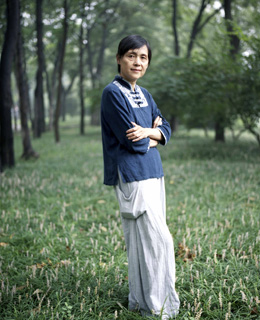
Sheri Liao photographed for TIME by Elisa Haberer

Copyright infringement – or piracy – in video, film and software is a highly contentious issue. I have good friends on both sides of the divide: film maker friends who insist on protecting all their rights to their creations, and open source advocates who want everything to be free and accessible in the public domain.

I can appreciate both points of view, but my own attitude to anyone copying any video films I have helped make or am distributing is: just sit back and enjoy it! After all, the kind of films I make and/or distribute through TVE Asia Pacific are all issue-based and in the public interest. If anyone pirates them, that can only peddle our content and messages to more people…

It’s a pragmatic response to a reality that I can do little to change anyway. Five of the world’s top 10 countries for video piracy are found in the Asia Pacific region, with China at No 2 and India at No 5. If you can’t beat ’em, cheer ’em — and even join ’em!

That’s just what I did in mid 1996, when we received first reports of a Chinese TV presenter making unauthorised use of environmental programming being broadcast on BBC World, the global TV channel. I was then the head of Asia Pacific programme for the non-profit foundation producing Earth Report series, which first aired on BBC and then offered to other TV channels and networks around the world.

Further investigations revealed that the person involved was a woman named Sheri (Xiaoyi) Liao, a former researcher at the Chinese Academy of Social Sciences who had formed an environmental group called Global Village of Bejing, and was presenting a weekly TV show called ‘Time for Environment’. To bring environmental news and views from other parts of the world, she was using Chinese dubbed extracts of Earth Reports recorded straight off the BBC World satellite channel.

By happy coincidence, I was visiting Beijing – for the first time – for a few days in October 1996, to participate in an international conference of rocket scientists (not my usual orbit, but fortuitous in this instance!). I managed to contact Sheri Liao, and one evening I escaped from the conference to meet this woman who was fast becoming the environmental face of Chinese television.

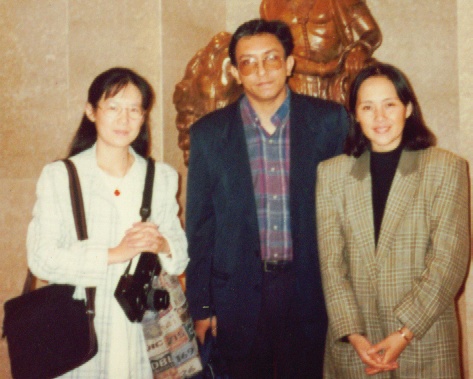
L to R Dr Li Hao, Nalaka Gunawardene & Sheri Liao, Beijing Oct 1996
Sheri Liao came to meet me with Dr Li Hao, a Chinese biologist who had recently returned from Germany and teamed up with Global Village in its quest to raise environmental awareness in China.

In a long chat over drinks and dinner, I found out Sheri had been a visiting scholar on International Environmental Politics at the University of North Carolina, but returned to her homeland to found the Global Village of Beijing earlier that year. She was keen to introduce responsible environmental conduct by Chinese citizens at every level. And early on, she realised the massive power of broadcast television to reach China’s one billion plus people. She approached her work with an obsession bordering on missionary zeal: in that process, she was even willing to ‘pirate’ foreign TV content – all for a good cause.

Soon after that encounter, I negotiated for Sheri Liao to make authorised use of Earth Report films in China. Instead of catching it off the airwaves, she soon started receiving proper master tapes and scripts, so a more professional versioning into Chinese could be done. My then British colleagues, who were initially peeved that a Chinese woman was pirating their programmes, soon became her ardent supporters.

That was also the beginning of many years of my engagement with environmental education and communication work in China. (Li Hao later left Global Village to establish her own non-profit, Beijing Earthview Environment Education and Research Centre).

All this is a long way of saying how delighted I am to see Sheri Liao being named as a Hero of the Environment by TIME Magazine earlier this month. She is one of several Asian leaders, researchers and activists included in this year’s roll call of men and women who are fighting on behalf of our beleaguered plant. Read full list here.

Sheri Liao: Greening the Airwaves of China...
Chronicling her close association with China’s rising levels of environmental awareness and activism, TIME noted: “Liao was helped by the fact that the birth of GVB coincided with China’s economic takeoff in the mid-’90s. The group became active in Beijing neighborhoods, raising environmental awareness on the local level. But in recent years it has expanded its work across the country, and it is now involved in everything from promoting plastic-recycling to encouraging building managers to reduce electricity consumption.”

Our paths have crossed a few times since that first meeting in the Fall of 1996. We have been in workshops and conferences together, where I saw Sheri in action – always intense, with a sense of urgency and resolve.

She has been recognised before. In 2002, she was awarded one of the ‘Ten Outstanding Women in China’ by the magazine Chinese Women. She was also honored as the ‘Green Guide’ by China National Planting Tree Committee in 2003 and became one of the ‘Ten National Outstanding Women’ in 2004. In 2005, she won the ‘Annual Economic Figure Social Commonwealth Award’ by China Central Television (CCTV). In 2006, she was honored Green Chinese Annual Figure.

Sheri also continues to be an unofficial bridge between China and the rest of the world. She works with UN agencies, foreign universities and charities like the Clinton Global Initiative – which honoured her with one of its Global Citizen Awards 2008.

China’s road to environmental salvation is a long and hard one. As TIME noted, “Environmental groups continue to run afoul of the Chinese government, which is wary of any power not concentrated in the hands of the Communist Party. But Liao is well connected — she served as an environmental adviser on the Beijing Organizing Committee for the 2008 Olympic Games — and in China’s tricky political landscape, those who walk a prudent line often travel furthest.”

Asians prominent in TIME Magazine’s Heroes of the Environment 2009

Celebrating Heroes
Celebrating Heroes

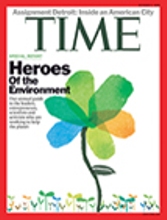
Asian environmental leaders, activists and visionaries feature prominently in TIME Magazine’s Heroes of the Environment 2009 list, published in its issue dated 5 October 2009.

This isn’t surprising, since the Asia Pacific accounts for nearly two thirds of humanity. As I’ve been saying for some years, the quest for sustainable development will be won – or lost – in Asia.

By happy coincidence, I have met three of the two dozen remarkable men and women in this year’s Heroes list — and count two of them among my extended network of friends across Asia.

One friend is the Indian film-maker Mike Pandey, who has been making environment and wildlife films for over 30 years in India, where he is one of the most respected names in conservation circles.

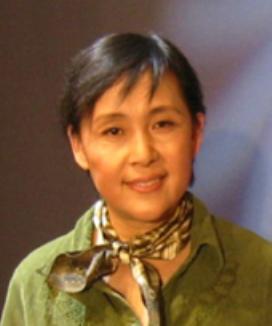
The other is Sheri Liao, Founder of the Global Village of Beijing (GVB), one of the earliest non-governmental organisations addressing environmental issues in China. She is an indefatigable Chinese activist and campaigner whom I first met on my first visit to Beijing in 1996. Our paths have crossed a couple of times since then, and I have always admired her zeal and single-minded pursuit of ‘greening’ China. Added on 17 Oct 2009: Blog post on Sheri Liao and greening the airwaves in China

The third ‘hero’ is the amiable and technocratic Mohamed Nasheed, President of the Maldives. I filmed an exclusive TV interview with him a few weeks ago, which I am currently editing into a short documentary on climate change. His country, the smallest independent state in Asia (by both land area and population), is on the frontlines of impact from rising sea levels and extreme weather events triggered by global warming.

heroes_1005“From saving wild mountain rivers in China to measuring the Arctic’s icy expanse, our green heroes are informed by this simple notion: We can all make a difference,” Time editors wrote in introducing this year’s list.

I just wrote a separate blog post on Prince Mostapha Zaher, Afghanistan’s environmental chief.

And I have already blogged about another TIME Hero well ahead of their selection: environmental lawyer Syeda Rizwana Hasan, a determined environmental activist who keeps dozens of ships from coming to die on the beaches of her native Bangladesh.

In the coming days and weeks, I plan to write separate posts on these other heroes whose selection is both timely and inspiring to all of us working in the broader development sector.