Impressions of GK3: All geek but very little meek…and at what high cost?

I spent a good part of my last week (9 – 13 December 2007, both days inclusive) in the Malaysian capital of Kuala Lumpur participating in the Third Global Knowledge Conference or GK3.

GK3 was organised by a network called the Global Knowledge Partnership, as a platform for those interested in using information and communications technologies (ICTs) for the greater good – to solve real world problems of poverty, under-development, illiteracy and various other disparities that afflict our world.

Those within the GKP call it ICT for Development, abbreviated as ICT4D. I prefer the more catchy phrase ‘Geek2Meek’ (or using geeks’ tools/toys to serve the needs of the meek).

In the spirit of spawning endless acronyms and abbreviations that contribute to the Alphabet Soup, I will compress this as G2M.

GK3 was meant to showcase the best of G2M products, practices and processes in every area of human endeavour — education, health, natural resource management, poverty reduction, empowering youth and women, promoting enterprise, etc.
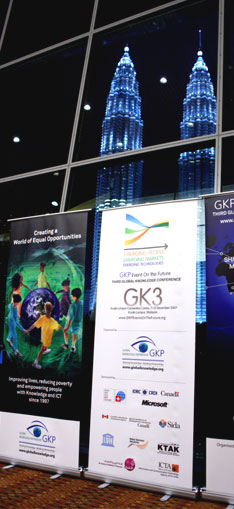
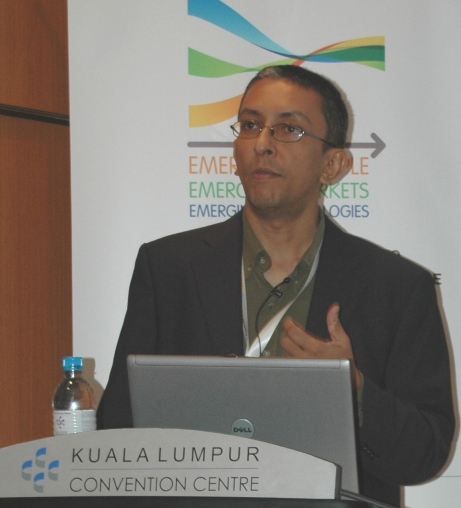
klcc-gk3-03.jpg nalaka-gunawardene-at-gk3.jpg

After spending a good deal of my time and energy sampling many of GK3’s offerings, my cumulative impression was: there was a lot of geek for sure, but very little of the meek.

And the nexus between geek (tools) and meek (needs) was hopelessly lost in the incredible volume of hype, PR and spin generated by the platform organisers. What a missed opportunity it was for everyone!

To be fair, GK3 was not a single conference, but a whole platform of events sharing the large physical space of the KL Convention Centre and spread through the week of 9 to 13 December 2007. During that time and using that space, various groups organised diverse events and activities — ranging from the usual talk sessions and workshops to training, exhibitions, quiz shows, a TV debate and a documentary film festival. There were also several social events that provided many hours networking among individuals and organisations.

Event platforms like GK3 mean very different things to different people. Some turn up mainly to show and tell (or share) what they are doing. Some attend simply to find out what’s going on. Others look for markets, partners or opportunities. With some planning and work, most participants get to take away something in the end.

All this certainly happened during GK3 to one extent or another. It brought together hundreds of people from all over the world who share an interest in G2M — according to official figures, a total of 1,766 registered participants from 135 countries, comprising 19% from public sector, 21% from private sector, 29% from civil society, 20% from international organisations, 5% from media and 6% from academia. Among them, 82% of participants were from developing countries. And half of all participants were from Asia, which was not surprising given their easier access to KL.

These participants — most of them eager, energetic and creative individuals — talked and mixed in a myriad combinations around the overall platform theme: how the threads of emerging people, markets and technologies will intertwine to deliver the future. There was discussion, debate, sharing and networking.

I myself did all of this. I attended part of the 3rd World Electronic Media Forum, joined the GKP’s 10th birthday celebration, sat through some plenary and parallel sessions and moderated two sessions myself. Some TVE Asia Pacific documentary films that I had scripted or directed were screened at the i4d film festival, a key side event. The week also saw the release of two Asian regional books that I was involved in creating (one I co-edited, and the other I wrote a chapter for).

But being the professional skeptic that I am, I don’t buy the GK3 secretariat’s post-event claim that “An overwhelming number of participants indicated that GK3 is the only event of its kind, is absolutely critical and worthwhile.” I have no doubt that a statistically higher number of people made nice and kind remarks about the week’s offerings, as many such people are wont to, especially if their participation was supported by travel scholarships. (I would be interested to know how many of the 1,700 people came on their own steam, as I did.)

In fact, style (and hype) over substance characterised the entire GK3 platform — the hype had actually started months before the event, with all registered participants being bombarded by endless promotional emails that I found simply intolerable. (And no, the organisers didn’t offer us the option of unsubscribing.) So much time, energy and donor funds were spent – nay, squandered – on dressing it up and inflating everything to the point of losing all credibility. If anyone was laughing all the way to their banks after GK3, it must be the assorted spin doctors!
copy-of-all-inf-no-solutions.jpg
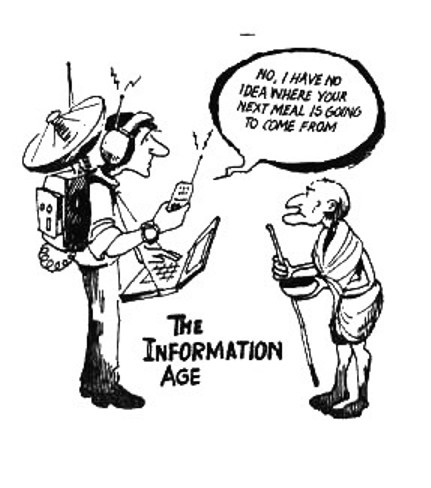
As I have written and spoken (for example in an op ed article in i4d magazine, June 2006), the gulf between the (expensive) hype and reality in ICT circles can be wide and shocking. What is worth investigating is the development effectiveness of this whole platform, and the value for money it delivered.

Take, for example, an email circular sent out by the GK3 organisers days after the platform ended. Under ‘key initial findings’, they list the following for emerging technologies, the area that interests me the most (verbatim reproduction here):

Four future-oriented outlook involving technologies were highlighted – media, cybersecurity, low cost devices, and green technologies.
* Increased convergence of different media allows single broadcasting (one to many) to be complemented by social broadcasting (many to many), and in turn increases interactivity in the exchange of information.
* Cybersecurity, cybercrimes and cyberwaste are becoming real dangers which deserve special attention.
* More new low cost devices are needed to facilitate affordable access to information, knowledge, communication and new forms of learning.
* Demand for innovative green technologies is welcomed and growing.

I don’t see how any of this can be labelled as ‘findings’ — these are not even articulate expressions of already known trends, conditions or challenges. Is this how the ‘Event of the Future’ going to be recorded for posterity? Surely, GK3 achieved more than this – probably below the radar of its spin doctors?

GK3 to me was more evidence of the disturbing and very unhealthy rise of spin in international development circles, where both development organisations and development donors are increasingly investing in propagandistic, narcissistic communications products and processes. While publicity in small doses does little harm, it is definitely toxic in the large volume doses that are being peddled whether in relation to MDGs or humanitarian assistance or, as with GK3, in relation to Geek2Meek. Full-page, full-colour paid advertisements in the International Herald Tribune don’t come cheap — but they come at the expense of the poor and marginalised.

I was also struck by how web 1.0 the GK3 organising effort was — all official statements, images and communication products (and even social events) were so carefully crafted, orchestrated, controlled. Whatever spontaneous action came not from the Big Brotherly organisers but from some free-spirited participants who seized the opportunity to express or experiment. The defining characteristics of web 2.0 – of being somewhat anarchic, highly participatory and interactive – were not the hallmarks of GK3. Again, a missed opportunity.

Then there was the ridiculously named Moooooooooooooo – sorry, it was actually MoO, an abbreviation for ‘Marketplace of Opportunities’, which GK3 was supposed to create or inspire for all those engaged in Geek2Meek work.

The MoO turned out to be just another exhibition where two or three dozen organisations put up their ware to show and tell (and a few did brag and sing, but that’s allowed at places like this). Strangely for an ICT gathering, there was so much paper floating around — posters, leaflets, booklets, books, postcards, you name it! And very few CDs, DVDs and electronic formats being distributed.

Oct 2007 Blog post: Say Moooooooooo – Mixing grassroots and iCT in KL

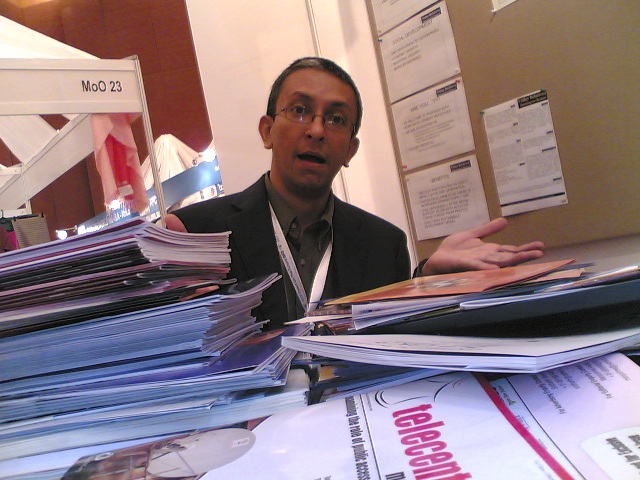
In the last hour of the final day, I walked around the MoO (I must admit I was half curious to see if the cows have come home!). I was stunned by the massive volumes of mixed up paper lying around everywhere. The week’s events were drawing to an end, and it was unlikely there would be too many more takers for all this paper. My colleague Manori captured on her mobile phone this image of an exasperated me surrounded by mountains of paper.
nalaka-gunawardene-sinking-in-a-sea-of-paper-at-gk3-dec-2007.jpg

The MoO exhibitors were not alone in their profligacy and wastefulness – the GK3 secretariat easily wins the prize for producing the greatest volume of glossy, expensive paper-based promotional material for at least a year preceding the event. These were often sent in multiple copies to heaven knows how many thousands of people all over the planet.

All this happened in a year (2007) when scientific confirmation of global climate change prompted governments, industry and civil society to realise that business as usual cannot continue, and more thrifty ways to consume energy and resources must be adopted. Ironically, GK3 was largely ignored by the world’s news media who focused much more attention on the UN Climate Change conference underway in neighbouring Indonesia’s Bali island.

I have commented separately on the missing link between KL and Bali. It is highly questionable what value-for-money benefit an ICT event like GK3 could derive from the abundance of paper-based materials produced to promote it. It’s revealing that the GKP’s oft-repeated claims of attracting 2,000 participants to GK3 were under-achieved despite excessive promotion.

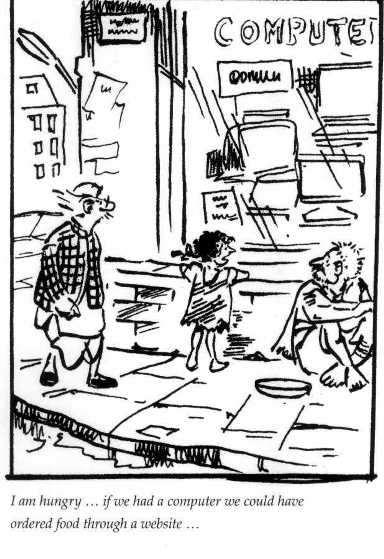
Writing in October 2007, I said: “An informed little bird saysGK3 has milked development donors well and truly for this 3-day extravaganza. I hope someone will calculate the cost of development aid dollars per ‘Mooo’…”
poor-hungry-boy-cartoon.jpg

Well, now is the time to ask those difficult questions. The donor agencies of several developed countries — and from Canada and Switzerland in particular — invested heavily in the GK3 extravaganza. These are public funds collected through taxes, given in trust to these agencies for rational and prudent spending. And it’s fair to say that most of this official development assistance (ODA) money is given with the noble aim of reducing poverty, suffering and socio-economic disparities in the majority world.

The GK3 organisers — that is, the GKP Secretariat — often talk in lofty terms about good governance, extolling the virtues of accountability and transparency. Here’s your chance to practise what you preach to the governments and corporations of the world: disclose publicly how much in total was collected for GK3 (from development donors, corporate sponsors, hefty registration fees), and how this money was spent. In sufficient detail, please!

We will then decide for ourselves whether GK3 provided value for money in the truest sense of that concept, and assess if GK3 was ‘absolutely critical and worthwhile’ as the organisers so eagerly claim.

It’s easy for like-minded people to become buddies and get cosy in international development networks. It’s also common to engage in self congratulatory talk and mutual back-slapping at and after gatherings like GK3. But too much manufactured (spun?) consensus and applause can blind our collective vision and lead us astray.

If we genuinely want to engage in Geek2Meek (or, ICT4D), we have to keep repeating the vital questions: what is the value addition that ICTs bring to the development process, and what is the value addition that mega-events like GK3 provide for turning geek tools to serve the meek? Answers must be honest, evidence-based and open to discussion (and dissension, if need be).

In not sharing the euphoria of GK3 organisers, I probably sound like that little boy who dared to point out that the mighty emperor had no clothes. If nobody talks these inconvenient truths and asks some uncomfortable questions, we would be going round and round in our cosy little grooves till the cows come home.

Did someone say Mooooooooooooo?

Read my November 2005 op ed essay written just after WSIS II: Waiting for pilots to land in Tunis

From KL to Bali: Why were ICT and climate change debates worlds apart?
Moving images moving research…beyond academic circles!

Although I’ve dabbled in some media research at times, I don’t think of myself as a researcher. So when Sri Lanka’s Centre for Poverty Analysis (CEPA) invited me to speak at their 8th Annual Symposium on Poverty Research in Sri Lanka, I spoke on what I know a little bit about — communicating research using the audio-visual media.

My panel remarks, delivered on the morning of 30 November 2007, were on ‘alternative mediums of communication to influence change’. I opened with the provocative title “Hands up who is poor, speaks English – and looks good on TV!” (see separate blog post on media related aspects of my talk).

These days, so much of research in physical, biological and social sciences is justified in the name of poverty reduction. Yes, studying and understanding development problems is the essential first step of solving them. But without properly communicating this research, the results won’t help the poor — or anyone else.

We at TVE Asia Pacific are committed to covering Asia’s development issues using TV, video and web. Our small challenge is to capture the many and varied facets of how Asians are working for a better today and better tomorrow. Reducing and eventually eliminating poverty is a significant part of that process.

As Asia’s billions strive for better lives, there are millions of stories at the bottom of the income pyramid. But most mainstream media manage to miss these stories due to their ignorance, or arrogance, or both.

For us, one key source of information and analysis is researchers – people who study trends and conditions, and keep reflecting on how and why. Their knowledge and insights are invaluable for us to tell stories from and about the bottom of the pyramid.

filming-living-labs-in-uttar-pradesh-india.jpg

As I told the researchers in my audience: “Part of our challenge is to know what you are studying — and then figure out the public interest and human interest angles of your work. As communicating research to those outside the scientific or research communities is more an art than a science.”

I cited three recent examples where we had produced engaging TV/video content to communicate research directly relevant or related to the poor.

Digits4Change
was our attempt to understand and document how information and communication technologies (ICTs) are changing the way Asians live, work and play. We covered technologies such as Internet, computers, mobile phones and satellite communications applied in education, healthcare and rural business development. The knowledge base for this 2006 series came from IDRC’s Pan Asia programme which supports action research that addresses specific problems.

Also in 2006, we produced The Greenbelt Reports to take a close look at the environmental lessons of the Indian Ocean tsunami. We visited a dozen locations in India, Indonesia, Sri Lanka and Thailand to find out how community and conservation interests can be balanced in relation to coral reefs, mangroves and sand dunes. In telling these stories, we worked with researchers from global agencies like IUCN the World Conservation Union and UNEP as well as national organisations like the M S Swaminathan Research Foundation in India.

The Greenbelt Reports

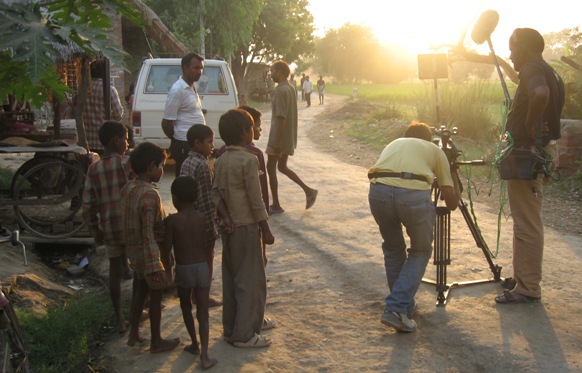
Living Labs is our most recent series, released in March 2007. Filmed in 9 countries in Africa, Asia, Europe and Latin America, it looked at how researchers are addressing different aspects of a major challenge in agriculture: how to grow more food with less water. We worked with a global action research project called the CGIAR Challenge Programme on Water and Food, which gave us exclusive access to their on-going field work and emerging findings in nine major river basins of the developing world.

living-labs-by-tveap.jpg

In telling these and other stories, we work within a certain framework we have defined for ourselves. Among its salient points:
• We don’t set out trying to communicate messages; we just want to tell good stories and development communication is a by-product.
• We look for under-reported/ignored development issues, or a less covered angle in a widely reported story.
• We don’t just talk to technical experts but to many other individuals involved or affected – women, men and children from all walks of life.
• We seek and accommodate different points of view, not allowing single-issue activists or one source to dominate/monopolise a story.
• Our finished products are informed by science but never immersed in science – we always keep in mind that our audience is non-specialsits.

All our stories cover real people dealing with real world issues and challenges. And since Asia has more people living in poverty than anywhere else in the world, most of the time our stories concern what’s happening at the bottom of the pyramid – or what can directly impact people living there.

And without exception, all these TV series and individuals films are available free of any license fees for broadcast, civil society and educational use. They are also available for online viewing at TVE Asia Pacific’s channel on YouTube.

Communicating research through moving images is not easy. Packing years of hard work into a few mins of engaging visuals and narration involves ruthless condensation which sometimes leaves some researcher egos bruised. When covering the work of large research organisations, we’ve also had deal with internal politics and hierarchies: for example, what to do when a junior researcher is more authentic and articulate than her supervisor?

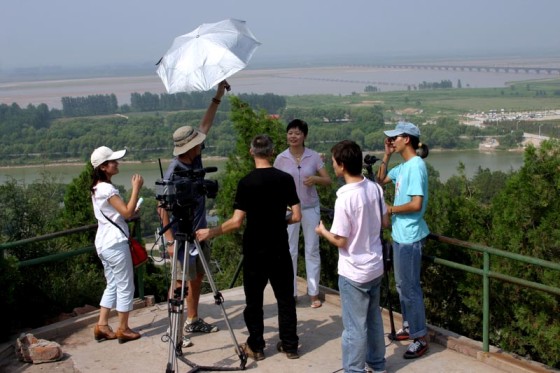
Producing Living Labs based on filming in 9 countries on 3 continents in just 5 months during 2006 was a challenge in both logistics and political negotiations. As editor-in-chief, I had to balance the public accessibility of our end product with researchers’ keenness to pack their stories with facts and figures.

living-labs-being-filmed-in-yellow-river-basin-china.jpg

We didn’t please everyone. One senior researcher told us that his multi-faceted, multi-year nad multi-million dollar was like an elephant — and we’d only glimpsed just one part of that big creature!

That’s just the point: we can never cover the whole elephant in a media product intended for non-specialists. So we choose which part of the elephant is most interesting and present it in a way that will make viewers realise — and hopefully, appreciate — that there’s a lot more that’s worth finding out.

Moving image products often act only as ‘teasers’ — communicating highlights of research, and directing those interested to online or offline sources that offer more information.

Because they act as a/v versions of executive summaries, these ‘teasers’ by themselves are a powerful way of reaching out those who are unlikely to look up the details: that includes many policy makers, government officials and business people.

Winston Churchill used to ask his staff to give him everything ‘on one page’. These days, he might have asked for everything to be summed up in a five minute video — as we often do.

Bretton Woods on fire: Hard times ahead for World Bank and IMF

800px-deerfire_high_res.jpg

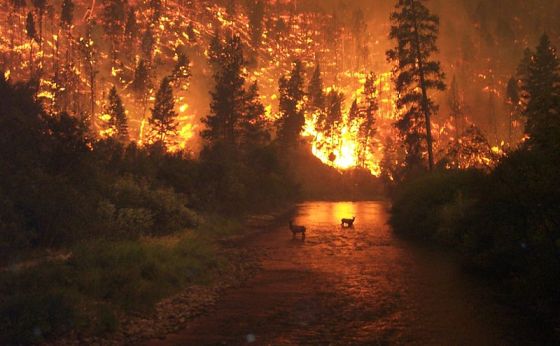
As the California forest fires raged over many days in October 2007, it dominated the US and some sections of the global media. Focus was on how the fires started and what factors contributed to their rapid spread.

Below the media’s radar, another kind of ‘fire’ has been building up over the past few months on the US East Coast. According to one leading intellectual-activist that I heard this week, this is a development whose reverberations will be felt right around the world, and for years to come.

The Bretton Woods are on fire. Actually, it’s the Bretton Woods institutions, namely the World Bank and International Monetary Fund (IMF).

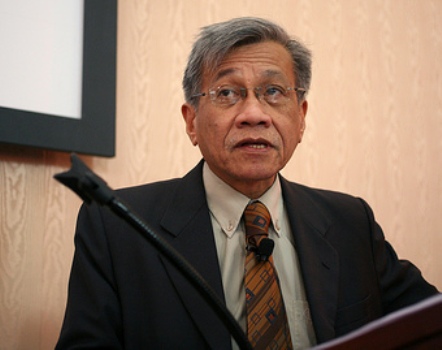
Speaking at the Greenaccord Media Forum in Rome on 10 November 2007, Walden Bello, Filipino academic and executive director of the Focus on Global South, suggested that the World Bank and IMF are headed for turbulent times as countries in the global South (majority world) assert themselves economically.

Preparing to rebuild the international economic system as World War II was still raging, 730 delegates from all 44 Allied nations gathered at the Mount Washington Hotel in Bretton Woods, New Hampshire for the United Nations Monetary and Financial Conference. The delegates deliberated upon and signed the Bretton Woods Agreements during July 1944. That marked the birth of the World Bank and IMF.

The World Bank and IMF are essentially lenders of money to governments for development purposes. If these lending institutions run short of borrowers, they will be out of business.

That hasn’t happened yet, but Bello (photo, below) identified several trends that must make the Bretton Woods duo worry about losing control.

professor-walden-bello.jpg

According to Bello, the resistance is led by countries of Latin America, a region where the twin lenders have long been controversial. In May 2007, Venezuela under President Hugo Chavez announced it would be leaving both the World Bank and IMF.

Venezuela has repaid its remaining debts to the World Bank five years ahead of schedule and paid off its debts to the IMF shortly after Mr Chavez first took office in 1999. Bello says the oil-rich country has sought to provide alternative forms of credit and financial support for countries in the region. One such project is the “Bank of the South”, which aims to financially help Latin American countries to pay off their IMF loans ahead of schedule.

In October 2007, Nobel prize-winning economist Joseph Stiglitz endorsed the Chávez plan to create a pan-regional bank for Latin America. Professor Stiglitz, a Washington insider and former World Bank chief economist, said the Bank of the South would benefit the region and give a welcome shakeup to western lending institutions.

Read March 2006 commentary by Mark Engler in Common Dreams: Latin America Unchained: Will the U.S. Lose its Influence Over Countries That Have Paid Off Their IMF Loans?

These trends, coupled with the rise of a new set of Southern countries willing and able to provide loans or grant aid to fellow countries of the South, are slowly but steadily eroding the domination and power the Bretton Woods twins have exercised for over half a century, Bello said.

Some of these alternative lenders are giving money with fewer conditions and restrictions. These include China, Saudi Arabia and Venezuela. This is what the editor of the influential US journal Foreign Policy called ‘rogue aid’ in an article he wrote in the journal’s March/April 2007 issue.

As the global South asserts itself and begins to exercise the power of their recent economic growth – which, ironically, is partly thanks to past borrowing from the Bretton Woods twins, the coming years will be crucial for the future World Bank and IMF.

The fire in the Bretton Woods is only just smouldering. But watch that smoke…

* * * * *

Walden Bello won the Right Livelihood Award (the Alternative Nobel) in 2003, for his decades of advocacy, activism and research. As the award foundation noted: “Walden Bello is one of the leading critics of the current model of economic globalisation, combining the roles of intellectual and activist. As a human rights and peace campaigner, academic, environmentalist and journalist, and through a combination of courage as a dissident, with an extraordinary breadth of published output and personal charisma, he has made a major contribution to the international case against corporate-driven globalisation.”

While campaigning on human rights he saw how the World Bank and IMF loans and grants were supporting the Marcos regime in power. To expose their role, he took the risk of breaking into the World Bank headquarters in Washington, and brought out 3,000 pages of confidential documents. These provided the material for his book Development Debacle (1982), which became an underground bestseller in the Philippines and contributed to expanding the citizen’s movement that eventually deposed Marcos in 1986.

Read full profile on Walden Bello on Right Livelihood Award website


Meeting photos courtesy Adrian Gilardoni’s Flickr account

Say ‘Mooooooooo’! Mixing grassroots and ICT in KL…

Remember the ‘Alphabet Soup’ made up of the endless acronyms and abbreviations (A&As) coined by the development and technology communities? (See July 2007 blog post: Who makes the best Alphabet Soup of all?)

Last week in Geneva, attending UN OCHA’s conference on information for humanitarian action, I realised that the humanitarian community has its own share of A&As, some more memorable than others. HIC, SPHERE and FAST stuck in mind.

In this strange jungle, nothing is quite what they seem. While still recovering from that overdose, I was hit by the latest in the field of ICT (that’s information and communication technologies for you): believe it or not, it’s called MOO.

Well, actually the correct spelling is MoO (the middle o is lower case). It’s described as “a place where people SEEK and OFFER expertise, experience, project support, ideas, solutions and other resources that leverage on knowledge and ICT to fulfil the needs of ‘Emerging People, Emerging Markets and Emerging Technologies’.”

Wow, that’s somehow sounds important. This is going to happen as part of a big platform of events called Global Knowledge 3, inevitably abbreviated as GK3, to be held in Kuala Lumpur (KL), Malaysia, from 11 to 13 December 2007.

According to the load of hype on the conference website, the will be a ‘Virtual MoO’ and the ‘Physical MoO’ and the anticipated 2,000 conference participants will be browsing both, “seeking an exchange”.

Ok, let me not prolong the suspense any longer. MoO stands for Marketplace of Opportunities, which GK3 is supposed to create or inspire for all those engaged in using ICT tools for meeting the real world’s needs — to reduce poverty, increase incomes, create safer communities, create sustainable societies and support youth enterprise, etc.

Of course, if we browse through the massive GK3 website, we will be overwhelmed with a whole heap of technicalities, self-important hype and knowledge made incomprehensible to all but those who are already within the charmed ICT circle.

For example, take a deep breath and read how the conference is introduced:
“GK3 will explore concrete solutions and possibilities within the interplay, interface and interweaving of issues related to the Knowledge for Development (K4D) and Information and Communication Technologies for Development (ICT4D) in the context of our globally evolving societies, economies and technologies worldwide.”

Aaaaaaaaaaaaah! Or, shall I just say: Mooooooooooooooooo!

PS: Despite this skepticism, I’m planning to be there – I can’t afford to miss this chance to meet fellow activists who are so concerned about welfare at the grassroots.

PPS: An informed little bird says GK3 has milked development donors well and truly for this 3-day extravaganza. I hope someone will calculate the cost of development aid dollars per ‘Mooo’…

Can somebody please update ‘The Development Set’ by Ross Coggins?

At the UN European Headquarters in Geneva this week, while attending a conference of humanitarian aid workers from around the world, I heard two of them compare the flat-beds in business class of two international airlines.

The conversation was more than just a passing one. They were passionately discussing the relative merits of different business class seats and perks.

I almost felt like butting in and saying that Singapore Airlines – the world’s finest airline, no argument – has just created a new product that they can now lust after: personal cabin suites in the air.

Coincidentally this week, on 25 October 2007, Singapore Airlines began operating the first commercial flights of the new Airbus380 double-decker super-jumbo.

Here are two images from the airlines’s website:

From Singapore Airlines

I’m all for humanitarian aid workers being well paid, well protected and well cared for. After all, they risk life and limb for the rescue, relief and recovery of large numbers of people caught in disasters or conflicts.

Perhaps I’m being naive, but there’s something incongruent about aid workers aspiring to flat-beds and space beds in the air.

Which reminds me, it’s about time somebody updated the well known poem, The Development Set, by Ross Coggins. First published in “Adult Education and Development” September 1976, it’s now more than 30 years old — the luxuries both in the air and on the ground have evolved a bit in that time.

Graham Hancock’s book “Lords of Poverty: The Power, Prestige, and Corruption of the International Aid Business” gleefully reprinted this poem in the 1980s.

I’m no poet, but there’s a need to update this to include GPS, satellite phones, four-wheel drives, and yes, business class beds.

If you are not familiar with the original poem, here it is:

The Development Set
by Ross Coggins

Excuse me, friends, I must catch my jet
I’m off to join the Development Set;
My bags are packed, and I’ve had all my shots
I have traveller’s checks and pills for the trots!

The Development Set is bright and noble
Our thoughts are deep and our vision global;
Although we move with the better classes
Our thoughts are always with the masses.

In Sheraton Hotels in scattered nations
We damn multi-national corporations;
injustice seems easy to protest
In such seething hotbeds of social rest.

We discuss malnutrition over steaks
And plan hunger talks during coffee breaks.
Whether Asian floods or African drought,
We face each issue with open mouth.

We bring in consultants whose circumlocution
Raises difficulties for every solution —
Thus guaranteeing continued good eating
By showing the need for another meeting.

The language of the Development Set
Stretches the English alphabet;
We use swell words like “epigenetic”
“Micro”, “macro”, and “logarithmetic”

It pleasures us to be esoteric —
It’s so intellectually atmospheric!
And although establishments may be unmoved,
Our vocabularies are much improved.

When the talk gets deep and you’re feeling numb,
You can keep your shame to a minimum:
To show that you, too, are intelligent
Smugly ask, “Is it really development?”

Or say, “That’s fine in practice, but don’t you see:
It doesn’t work out in theory!”
A few may find this incomprehensible,
But most will admire you as deep and sensible.

Development set homes are extremely chic,
Full of carvings, curios, and draped with batik.
Eye-level photographs subtly assure
That your host is at home with the great and the poor.

Enough of these verses – on with the mission!
Our task is as broad as the human condition!
Just pray god the biblical promise is true:
The poor ye shall always have with you.

The many lives of PI: Crisis communication and spin doctors

banner.jpg

Where does public information (PI) work end and public communication (PC) work begin?

And how can we separate public information work, which is mostly institutional propaganda, from public communication of issues and knowledge directly relevant to saving lives or improving them?

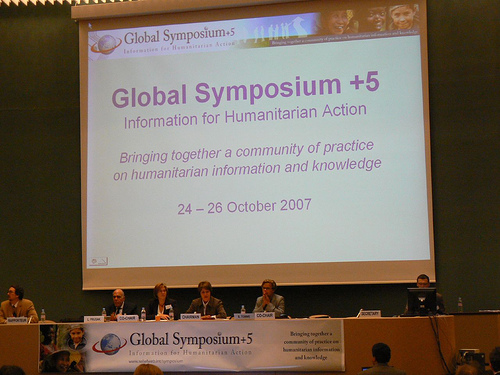
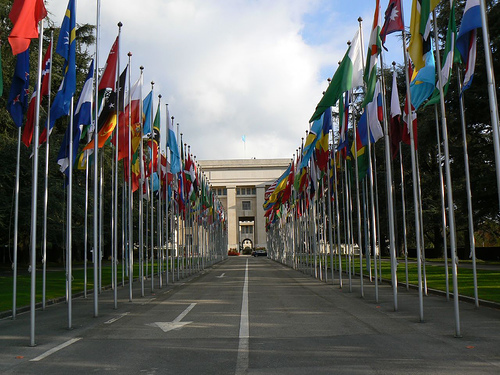
This is the question that we often grappled with this week in Geneva, during the Global Symposium+5 on ‘Information for Humanitarian Action’ organised by the United Nations Office for the Coordination of Humanitarian Affairs (UN-OCHA). The meeting, held from 22 – 26 October 2007 at the Palais des Nations, brought together over 200 persons involved or interested in information and communication aspects of humanitarian work. I was part of working group on ‘Communicating with affected communities in crisis’.

I raised the importance of separating PI from PC from the very beginning of our discussions. PI and public relations (PR) both have their place, I said, but it was not in the same league as communicating issues and knowledge.

Members of my working group – drawn from humanitarian organisations, UN agencies and the media – broadly agreed with this view. But many couldn’t help sliding back to their own agency’s PI/PR agendas during our discussions!

This is no accident. In this age of spin and soundbites, many development and humanitarian agencies are under pressure to raise their individual profiles in the public eye. In trying to do so, they give far higher priority – and resources – to PI/PR than to engaging in issue-based communication, or, to use one of their own favourite phrases, ‘evidence based advocacy’.

For public communication to assume its rightful place in the development process and humanitarian intervention, all key players will need to be more restrained with their PI/PR agenda. But looking around the massive UN complex in Geneva, where a dozen UN agencies are competing with each other for the public’s and media’s attention, I can’t quite see this happening soon.

I touch on this in an essay in August 2007 titled Cheque-book development corrupting the media. Here’s an extract:

As development organisations compete more intensely for external funding, they are increasingly adopting desperate strategies to gain higher media visibility for their names, logos and bosses.

“Communication officers in some leading development and humanitarian organisations have been reduced to publicists. When certain UN agency chiefs tour disaster or conflict zones, their spin doctors precede or follow them. Some top honchos now travel with their own ’embedded journalists’ – all at agency expense.

“In this publicity frenzy, these agencies’ communication products are less and less on the issues they stand for or reforms they passionately advocate. Instead, the printed material, online offerings and video films have become ‘logo delivery mechanisms’.

So the first step would be to deliver less logos and more real information.

Read my other relevant blog posts:

August 2007: Cheque-book Development: Paying public media to deliver development agency logos

April 2007: Say MDG and smile, will ya?

April 2007: MDG: A message from our spin doctors?

Everyone has information ‘needs’ — and information ‘wants’ too!

banner.jpg

When the development community talks of people living in poverty (or ‘the poor’) they almost always talk about somebody else — it is not ‘us’ but a remote, often nameless ‘them’.

And when the humanitarian community talks of people affected by crises — disasters or conflict — that too almost always is about somebody else, typically in a poor country.

The well-meaning, do-good people in development and humanitarian communities are fond of talking about the information needs of the poor or crisis affected. These ‘needs’ are usually defined in terms of survival, sustenance or relief.

It’s as if people in poverty or crisis situations only have a simple set of information needs, but none of the information ‘wants’ that we, the privileged, have in abundance.

In Geneva this week, I have argued that everyone has a right to not only information needs, but also information ‘wants’. Development or emergency relief would become truly meaningful only when both these are met.

I’m participating in the Global Symposium+5 on ‘Information for Humanitarian Action’ organised by the United Nations Office for the Coordination of Humanitarian Affairs (UN-OCHA). The meeting, held from 22 – 26 October 2007 at the Palais des Nations, UN headquarters in Europe, brought together over 200 persons involved or interested in information and communication aspects of humanitarian work.

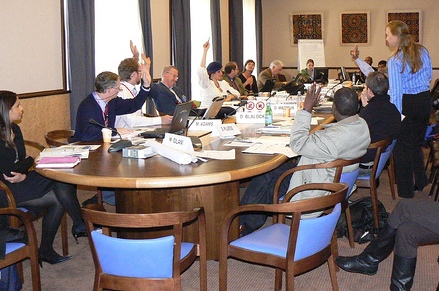
I was invited to be part of working group 5 on ‘Communicating with affected communities in crisis’. Members of this group were drawn from national and international humanitarian aid agencies, UN system, governments and the media.

global-symposium5-in-geneva-oct-2007.jpg

Our brief was to ‘look at the information needs of affected populations both during emergencies and in longer term recovery efforts’. We were to ‘evaluate the nature of these needs, to identify actions necessary to achieve operational reality, and to consider the strategies required to integrate beneficiary communications into the humanitarian response framework, particularly through the opportunities offered by the current reform process’.

Now that’s all well and good, and we did that part of our work in earnestly and seriously. The outcome was presented on Oct 25 to the plenary stimulating discussion and debate.

But I kept reminding our working group that we really have to think beyond the mere information needs of people, and address their information wants as well.

This basically means information related to cultural and social aspects. Humans don’t live on bread, water, clothing and shelter alone. We are complex and nuanced beings with a vast array of interests — and that’s equally true for the city stockbroker, village farmer and the aid worker wearing a UN cap.

Evidence of this is all around us if we only care to notice. For example:

* Tens of thousands of people driven to temporary shelters by disasters or wars followed the 2006 Football World Cup in Germany from their make-shift homes. Football mania didn’t stop at the periphery of a camp.

* Every time there is an important cricket match in South Asia, it unites the rich and poor, the sheltered and homeless, and those living normal or crisis disrupted lives.

The sooner we in the development and humanitarian sectors recognise this reality, the better.

1692836466_2c493ea8ec.jpg
Photo shows working group 5 in session: photo courtesy UN OCHA.

I made a similar point in an essay written in mid 2004 on using information and communication technologies (ICTs) for poverty reduction:
I cringe every time I hear remarks about the poor just needing survival or sustenance related information. The information needs and wants of the poor can be as diverse as everybody else’s. Sarvodaya – Sri Lanka’s largest development NGO — once surveyed the information needs of poor people in rural and semi-urban areas. Their findings included: health and nutrition information, as well as details on bank loans, foreign jobs and insurance policies. There was also interest in world affairs, national politics and cultural affairs…

Read my full essay in GKP Partners Newsletter (My essay is the last one, so keep scrolling down, down, down.)

Three years later I found myself making the same point to a different group, many of who are information specialists working in crisis and emergency situations.

This kind of perception will continue as long as we harbour the us-and-them divide.

1687780850_168f228e8a.jpg

Stop that Traffick: ‘The Girl Next Door’ becomes ‘Trade’ the Movie

Image from Trade the Movie Image from Trade the Movie

When 13-year-old Adriana (played by Paulina Gaitan) is kidnapped by sex traffickers in Mexico City, her 17-year-old brother, Jorge (Cesar Ramos), sets off on a desperate mission to save her. Trapped by an underground network of international thugs who earn millions exploiting their human cargo, Adriana’s only friend throughout her ordeal is Veronica (Alicja Bachleda), a young Polish woman captured by the same criminal gang. As Jorge dodges overwhelming obstacles to track the girl’s abductors, he meets Ray (Kevin Kline), a Texas cop whose own family loss leads him to become an ally.

From the barrios of Mexico City and the treacherous Rio Grande border, to a secret internet sex slave auction and a tense confrontation at a stash house in suburban New Jersey, Ray and Jorge forge a close bond as they frantically pursue Adriana’s kidnappers before she is sold and disappears into a brutal underworld from which few victims ever return.

This is the synopsis of Trade, a feature film that opens across the United States on 28 September 2007.

Inspired by Peter Landesman’s chilling NY Times Magazine story on the U.S. sex trade, “The Girls Next Door,” (published in January 2004), TRADE is a thrilling story of courage and a devastating expose of one of the world’s most heinous crimes. The American debut of Marco Kreuzpaintner, one of Germany’s leading young directors, TRADE is produced by Roland Emmerich and Rosilyn Heller from a screenplay by Academy Award(R) nominee Jose Rivera (The Motorcycle Diaries).

Watch the trailer for Trade the movie

Image from Trade the Movie

Explaining the social context to this dramatised story, the movie’s website says:
“The practice of slavery in the US is something most people think ended with the 13th Amendment in 1865, but in recent years it has returned in an even more virulent form. Fueled by the collapse of the Soviet Union and other eastern European countries, new technologies like the internet, and sieve-like borders, the traffic in human beings has become an epidemic of colossal dimensions. The State Department estimates that as many as 800,000 people are trafficked over international frontiers each year, largely for sexual exploitation. Eighty percent are female and over fifty percent are minors. Many people in this country push this atrocity out of their minds, believing that it only occurs in faraway countries like Thailand, Cambodia, the Ukraine and Bosnia. The truth is that the United States has become a large-scale importer of sex slaves. Free the Slaves, America’s largest anti-slavery organization estimates that at least 10,000 people a year are smuggled or duped into this country by sex traffickers.”

Image courtesy Trade the Movie

The film’s makers, Roadside Attractions, says it will donate 5 per cent of the opening week box-office gross divided among four organisations participating in the release of the film; United Nations Office on Drugs and Crime (UNODC), Equality Now, International Justice Mission (IJM), and David Batstone’s Not For Sale Campaign.

On 19 September 2007, they held a benefit premiere at the United Nations headquarters in New York that included supper in the UN Delegates dining room. This marked the first film premiere event ever to take place at the United Nations, with the crusty UN officials mingling with film stars and artistes.

Read about the film-makers

Get involved in anti-traffick activism

Image courtesy Trade the movie

UN-ODC press release about Trade the movie

All images courtesy Trade the movie website

MTV Exit: Entertainment TV takes on human trafficking

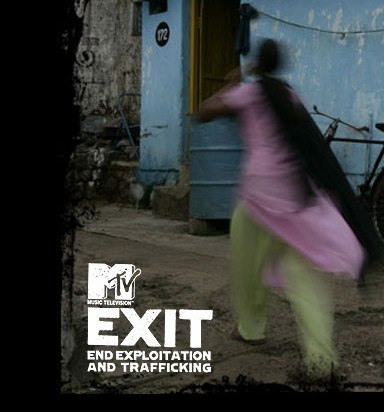
mtv-exit.jpg

Television gets blamed for lots of things that go wrong in our world. This isn’t surprising, given it’s the world’s most powerful medium and the key role it plays in our cultural, social and political lives.

A sociological study some years ago said broadcast TV was partly responsible for the movement of millions of people from villages to cities in search of jobs, higher incomes and better living standards. The glitzy lifestyles dramatised on TV was creating illusions in the minds of rural women and men, especially the youth, it said.

Of course, such migrants soon discover a very different reality in the cities. But few want to go back to where they came from. As they hang on in the cities, some fall prey to human traffickers, always on the prowl for vulnerable people to trade in.

The United Nations estimates that the total market value of human trafficking is 32 billion dollars — one of the most lucrative illicit trades in the world. The International Labour Organisation (ILO) estimates that worldwide, about 2.5 million people are victims of trafficking.

If TV indirectly contributed to this human perversion, it can also help society stand up and fight against it. As Music Television (MTV) is now doing.

MTV, the most popular music channel in the Asia Pacific region, will be playing a different tune in the weeks to come. For half an hour at least, beginning 18 September 2007 for MTV Thailand, live and hip music will give way to the harrowing accounts of three victims of human trafficking. This is part of the MTV Exit campaign.

Trafficking of people in the region will be given a human face through the personal accounts of Anna, Eka and Min Aung. Anna was forced into prostitution in the Philippines, while Eka is an Indonesian who was an abused domestic worker in Singapore. Min Aung from Burma recounts his sad experiences working and being practically imprisoned in a factory in Thailand for two years.

Lynette Lee Corporal writing for Inter Press Service (IPS) quotes MTV Thailand campaign director Simon Goff as saying: “We worked with organisations and talked with experts to see what forms of trafficking we would focus on, the most prevalent forms that affect our audiences. We selected regions that would best represent the issue. Then, finally we brought in a production team, led by a Thai producer and a director from the UK.”

More extracts from her article:

Goff said that it took them six weeks of pre-production work, including research and sourcing, another six weeks to shoot the documentary, and six weeks more of post-production work. It took about four and a half months of “solid production,” he added.

Beyond the emotional and unsettling accounts of the trafficking survivors and the disturbing re-enactments of rape, beatings and abuse, the documentary also had interviews with a trafficker and a ‘client’ who openly admitted to the crime. In an interview with ‘The Chairman’, a Filipino recruiter who forces young girls into prostitution, revealed the horrific experiences young girls go through, and this was reinforced by what ‘Ama’ , a Chinese client who admitted to paying for sex with trafficked girls, narrated.

The challenge now, said Goff, is to break the people’s apathy and denial about human trafficking. “Ultimately, time will tell. We have launched the campaign and it’s already out there in the media. We hope that the show will make people realise that they are both a part of and a solution to the problem,” he said.

In Thailand’s case, he added that it is also important for Thais to realise that it is not just about Thai victims being trafficked abroad, but it’s also “necessary to look that we have other nationalities, such as Min Aung, who has been trafficked here”.

Read the full article on The Asian Eye website of IPS Asia Pacific

Watch or download the celebrity-presented MTV EXIT documentaries for Asia Pacific and South Asia

United Nations Office on Drugs and Crime website on human trafficking

More information on trafficking and how to fight it

“Can you help us to film a child’s leg being broken?”

“Can you help us to film a child’s leg being broken?”

This question, posed by a visiting Canadian TV crew in the 1970s, startled my good friend Darryl D’Monte, one of the most senior journalists in India and former editor of the Times of India.

Darryl was having a chat with the crew, giving them some insights on the extent of poverty in his home city of Bombay, since renamed as Mumbai. It is routine for visiting journalists to have such chats with their local counterparts to get context and advice.

It was when the conversation turned to beggars, that this western TV crew asked if they could film the intentional breaking of a poor child’s leg — a brutal practice that was believed to exist so that maimed children could be employed as beggars. A disabled child would evoke more sympathy, and consequently, more alms.

darryl-dmonte-speaking-at-ifej-2005-congress.jpg

The articulate Darryl must have expressed his exasperation in strong terms. But even he couldn’t have anticipated the response.

“It’s going to happen anyway,” was how the film crew rationalised their bizarre request.

So why not be there, capture it on film, and get a great story out of it — which can be packaged as the brutal side of India’s poverty! This must have been the crew’s line of reasoning. Maybe their editors had exerted pressure to come back with something out of the ordinary.

I quoted this incident in my essay, Ethical newsgathering challenge for Al Jazeera International, published in November 2006. It was a plea for the newest entrant to international TV newsgathering to play by a different, and more ethical, set of rules.

These and worse practices are certainly not confined to India, or to TV crews originating from any single country. And sadly, these have not been abandoned after the 1970s. In fact, the emergence of 24/7 satellite news channels since the 1980s has inspired much more competition in the TV newsgathering industry, creating an alarming race to the bottom.

Such journalists’ only operating guideline seems to be: get the story, no matter what — or who gets hurt in that process.

In filming wildlife documentaries, film-makers sometimes have to make a choice: do they interfere in the processes of Nature, such as a predator setting on a hapless prey? There is an unwritten rule that things must be allowed to happen, with humans only capturing actuality on film.

But when it comes to filming wild life of our species in our cities and villages, the ethical dilemmas are not so easily resolved. This is why all journalists and film-makers, especially those in newsgathering, need a strong ethical framework for their work.

Journalists represent the public’s right to know, which is extremely important. Media coverage and exposes can trigger much needed aid, reform or public outcry on certain issues. But that is not a justification for getting the story by any means.

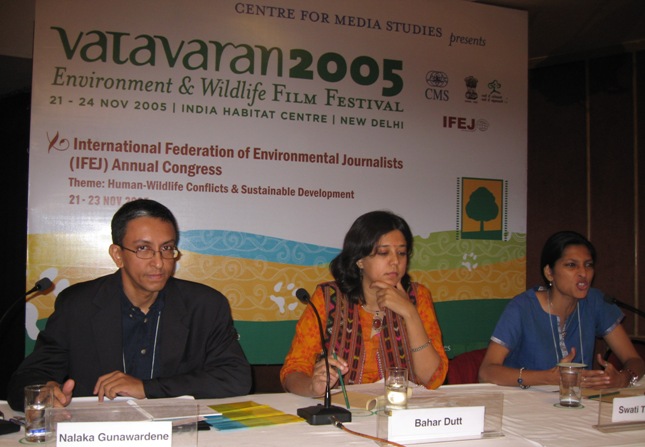
Darryl D’Monte shared the above story at panel discussion on ‘Does TV do a better job on environmental reporting?’ which I chaired during the annual congress of the International Federation of Environmental Journalists (IFEJ), held in New Delhi, India, in November 2005. That year it was part of the Vatavaran 2005, the national environmental film festival of India.

panel-discussion-at-ifej-2005-congress-new-delhi.jpg

I was reminded of this story because the 4th CMS Vatavaran film festival is round the corner: it will be in New Delhi from 12 to 16 September 2007. I won’t be there in person; my colleague Manori Wijesekera is representing TVEAP this time.

TVE Asia Pacific News: Environmental film-makers call for ethical framework

Read official report of IFEJ Congress in 2005

Related blog posts:

Al Jazeera: Looking hard for the promised difference

Wanted: Ethical sourcing of international TV news

Cheque-book Development: Paying public media to deliver development agency logos