සිවුමංසල කොලූගැටයා #106: ‘ඔබ මට විශ්වාසයි’ ඕස්ටේ‍්‍රලියාවට හදුන්වා දුන් ලාංකිකයා

In my Ravaya column (in Sinhala) this week, I write about Lentil As Anything, the uncommon restaurant chain in Melbourne, Australia. It has no prices on the menu, no cashier, no cash register. Customers are invited to dine first — and pay what they think their meal was worth. This pay-as-you-feel approach has survived a dozen years, earning its founder Shanaka Fernando honours and accolades.

I wrote about this topic in English in my Ceylon Today column on 23 Jan 2013.
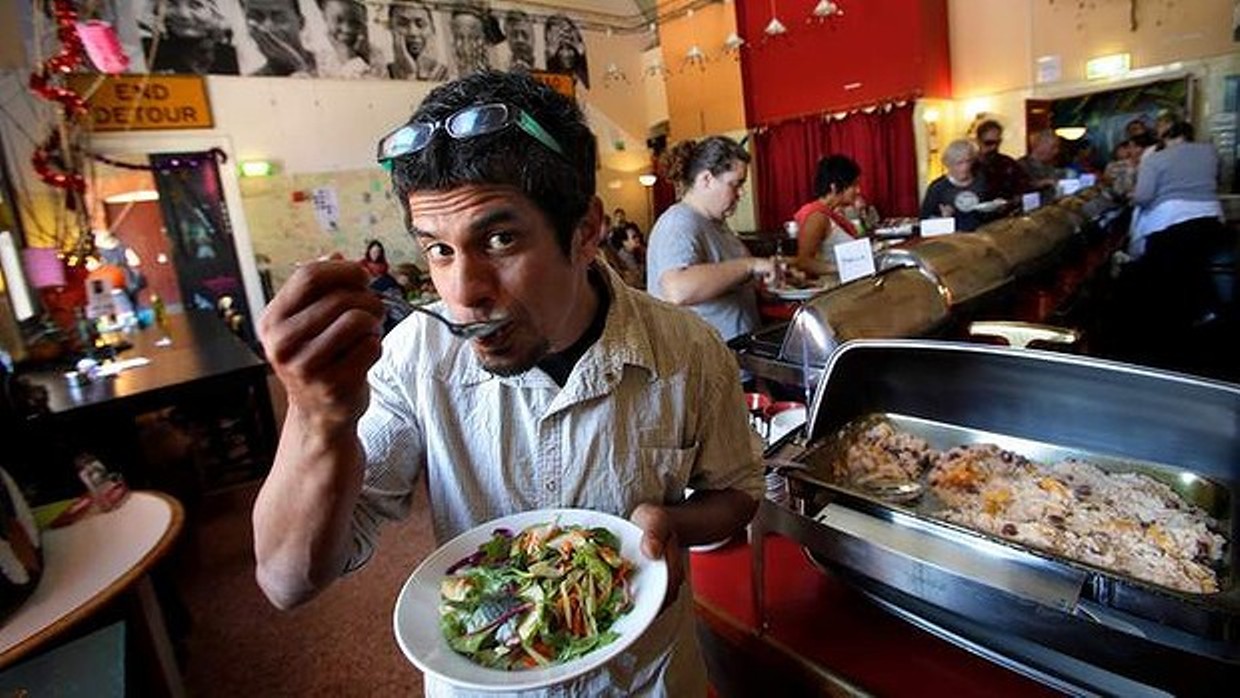
Shanaka Fernando, image courtesy Goodfood.com

වෙළඳපොල සමාජයේ හැම භාණ්ඩයකට හා සේවාවකට ම මිළක් නියම කැරෙනවා. එය නිෂ්පාදකයා හෝ අලෙවිකරුවා හෝ විසින් ගන්නා තීරණයක්. භාණ්ඩයේ වටිනාකම, පාරිභෝගික ඉල්ලූම, තරගකාරී සපයන්නන් එයට දී තිබෙන මිළ ආදී සාධක සැළකිල්ලට ගෙන මිළ නියම කිරීම සිරිතයි.

එහෙත් මේ ප‍්‍රවාහයට එරෙහිව, පාරිභෝගිකයාගේ අභිමතය පරිදි ‘සාධාරණ මිළක්’ ගෙවන්නට නිදහස දෙන අවස්ථාද ඉඳහිට හමු වනවා. අපේ බොහෝ පාරම්පරික ආයුර්වේද වෛද්‍යවරුන් රෝගීන්ට ප‍්‍රතිකාර කිරීමෙන් පසු එයට සංඛ්‍යාත්මක ගාස්තුවක් ඉල්ලා සිටියේ නැහැ. රෝගියාට දරා ගත හැකි හා සාධාරණ යයි සිතෙන මුදලක්, එසේ නොමැති නම් ද්‍රව්‍යමය පරිත්‍යාගයක් කරනු ලැබුවා.

එහෙත් මේ උතුම් පිළිවෙත ධනවාදී ආර්ථික ක‍්‍රමය ස්ථාපිත වූ පාරිභෝගික සමාජයේ වෙනත් ගනුදෙනුවලට සාර්ථකව යොදා ගත හැකි ද? එසේ කළහොත් බංකොලොත් නොවී ව්‍යාපාරයක් කොපමණ කලක් පවත්වා ගත හැකි ද?

මේ ගැන දියුණු හා ධනවාදී රටකින් අසාමාන්‍ය ගනයේ උදාහරණයක් මීට වසර කිහිපයකට පෙර මා අත්දුටුවා ඔස්ටේ‍්‍රලියාවේ මෙල්බර්න් නුවරදී.

මෙල්බර්න්, වික්ටෝරියා ප‍්‍රාන්තයේ අගනුවර හා එරට දෙවන විශාලතම නගරයයි. මහා මෙල්බර්න් ප‍්‍රදේශයේ මිලියන් 4කට අධික ජනකායක් වෙසෙනවා. ජන විවිධත්වය අතින් ඉහළ මේ නගරයේ ලොව විවිධ රටවලින් සංක‍්‍රමණය වූවන් හමු වනවා. දේශගුණික, සාංස්කෘතික හා වෙනත් සාධක රැසක් සළකා බැලූ විට ලෝකයේ ජීවත්වීමට වඩාත්ම හොඳ නගරය (world’s most livable city) ලෙස 2011 හා 2012 යන දෙවසරේ ලෝක ව්‍යාප්ත සමීක්ෂණයකදී ඉහළට ම ආවේ මේ නගරයයි.

1996 පටන් කිහිප විටක් මා මෙල්බර්න් නගරයට ගොස් තිබෙනවා. 2006දී මගේ ඔස්ටේ‍්‍රලියානු මිත‍්‍ර සංගීතවේදී හා චිත‍්‍රපට අධ්‍යක්ෂ ඇන්ඩෘ ගාර්ටන් මා අමුතු ආකායේ අවන්හලකට (රෙස්ටුරන්ට් එකකට) කැඳවා ගෙන ගියා. රසවත් නිර්මාංශ (vegetarian) ආහාරවේලක් පමණක් නොව අසාමානය සමාජශීලී අත්දැකීමක් ද පාරිභෝගිකයන්ට ලබා දෙන එහි නම Lentil as Anything. (කෙටි නම: LAA).

ලොව විවිධ සූප ක‍්‍රමවේදවලින් ආභාෂය ලැබූ නිර්මාංශ ආහාර වට්ටෝරු රාශියක් එහිදී ඇනවුම් කළ හැකියි. හැබැයි එහි විශේෂත්වය නිර්මාංශ ආහාර පමණක් තිබීම නොවෙයි. ඔවුන්ගේ කෑම ලයිස්තුවේ (menu) කිසි තැනෙක මිළ ගණන් සඳහන් කර නැහැ. එයට හේතුව ඔවුන්ගේ ක‍්‍රමයෙහි මිළ දර්ශනයක් නොතිබීමයි.

අප කැමති ආහාරවේලක් ඔවුන්ගේ සිත් ගන්නා සුළු අවන්හල ඇතුළේ විවේකීව රස විදීමෙන් පසුව නික්ම යන විට අප ‘සාධාරණ යයි සිතන ගණනක්’ දමා යන්නට කුඩා බාස්කට්ටු තබා තිබෙනවා. එහෙත් හැම පාරිභෝගිකයා ම එසේ කරනවා ද යන්න සෝදිසි කිරීමට සේවකයන් රඳවා නැහැ.

මෙය ‘දන් සැලක්’ නොවෙයි! නොඑසේ නම් දුගී හා අසරණයන්ට සහන සළසන පුණ්‍යායතනයක් ද නොවෙයි. ඔස්ටේ‍්‍රලියානු සමාජයේ හැම තරාතිරමක ම වැසියන් (සහ සංචාරකයන්) යන එන, සම්භාවනීය ලෙසින් පවත්වා ගෙන යන ව්‍යාපාරික ස්ථානයක්. එක ම වෙනස නම් ඔවුන්ගේ ව්‍යාපාරික ආකෘතිය (business model) පදනම් වී ඇත්තේ පාරිභෝගිකයා විශ්වාස කිරීමේ සංකල්පය මතයි.

“අපි අපේ පාරිභෝගිකයන්ට රසවත් හා ගුණදායක ආහාරවේලක් සතුටින් පිළි ගන්වා, එය භුක්ති විදින්නට හිතකර පරිසරයක් පවත්වා ගන්නවා. පාරිභෝගිකයන් ද එවිට හරි දේ කරනවා යයි අප විශ්වාස කරනවා,” LAA කළමණාකරුවන් කියනවා.

මා LAA වෙත කැඳවා ගෙන ගිය ඇන්ඩෘ ගාර්ට්න් කීවේ 2000දී කුඩා පරිමානයෙන් එක් තැනක පටන් ගත් මේ ව්‍යාපාරය 2006 වන විට ජනප‍්‍රිය වී අවන්හල් කිහිපයක් ම විවෘත කර ඇති බවයි. මේ සංකල්පය ලාංකික සංක‍්‍රමනිකයකුගේ අදහසක් බවත් ඇන්ඩෘ කීවා. LAA නිර්මාතෘවරයා ශානක ප‍්‍රනාන්දු (Shanaka Fernando). ඔහු මුණ ගැසීමට මට අවස්ථාවක් නොලැබුණත්, ඔහු ගැන තොරතුරු සමුදායක් සොයා ගත හැකි වුණා.

ඉසුරුබර ලාංකික පවුලක උපන් ශානක ප‍්‍රනාන්දු ළමා විය ගත කළේ ශ‍්‍රී ලංකාවේ බවත්, 1983 කළ ජූලිය ඇතුළු මෑත ඉතිහාසයේ අමිහිරි සිදුවීම් අත්වි`දි බවත් කියැවෙනවා. 1995දී ඔහු ඔස්ටේ‍්‍රලියාවට ගියේ මෙල්බර්න් සරසවියේ නීති විෂයය හදාරන්න.

එහෙත් ටික කලකින් එය අතහැර දැමූ ඔහු තමන්ගේ සිත් ගත් නොයෙක් රැකියා කළා. ත‍්‍රාසජනක ඔංචිල්ලා පදවන්නකු, සජීව විකට ශිල්පියකු (comedian) හා නැට්ටුවකු ලෙස ජීවිකාව උපයා ගන්නා අතර දේශ සංචාරය හා විවිධ සංස්කෘතීන් හැදෑරීම කළ ඔහු මෙල්බර්න් තදාසන්න ප‍්‍රදේශයක මුල් ම LAA අවන්හල 2000දී ඇරඹුවා.

LentilAsAnything_logo

ඒ සඳහා ඔහු සම්බන්ධ කර ගත්තේ ඔහු වැනි ම වෙනත් රටවල සිට ඔස්ටේ‍්‍රලියාවට සංක‍්‍රමනය වූ, අන්ත ධනවාදී ක‍්‍රමය පිළි නොගන්නා ‘ආර්ථික විකල්පවාදීන්’ පිරිසක්. නමුත් ධනවාදයට එරෙහිව විප්ලව කරනවා වෙනුවට ධනවාදී සමාජය තුළ ම වඩාත් සානුකම්පිත ප‍්‍රවේශයක් අත්හදා බලන්නට ඔවුන්ට ඕනෑ වුණා.

“හැම දෙයක්ම ඇති-හැකි අයට පමණක් සීමා වුණු නගරයක හා කාලයක අපි එයට එරෙහිව යන්නට තීරණය කළා. අපේ අවන්හලේ කැෂියර් (අයකැමියෙක්) නැහැ. ගෙවන කවුන්ටරයක්, බිල්පත්, මිළ දර්ශන කිසිවක් නැහැ. නික්ම යන තැන පෙට්ටියක් හෝ බාස්කට්ටුවක් තිබෙනවා. අපේ පාරිභෝගිකයාගේ හෘද සාක්ෂිය අනුව ගණනක් තබා යන්නට අප ඇරැයුම් කරනවා,” ශානක කියනවා.

ඔස්ටේ‍්‍රලියානු සමාජයේ ද දුගී දුප්පත්කම තිබෙනවා. කිසි දිනෙක සිය නිවෙසින් බැහැරව අවන්හලක කෑම වේලක් ගන්නට හැකියාව නැති අය LAA අවන්හල් නිසා සමාජශීලී වීමේ නිදහස අත් විදිනවා. නැතිබැරි අය පවා අති බහුතරයක් හැකි අන්දමින් මුදලක් ඉතිරි කර නික්ම යනවා. එය ඔවුන්ගේ ආත්ම ගරුත්වයයි. ඒ අතර වඩාත් දානපති හැගීමක් ඇති අයට තමන් රස විදි කෑම වේලට වඩා ඉහළ මට්ටමේ ආධාරයක් කිරීමේ විවෘත ඇරැයුමක් ද තිබෙනවා.

නන්නාදුනන පාරිභෝගිකයන්ගේ හිත හොඳකම මත විශ්වාසය තබා ව්‍යාපාරයක් පවත්වාගෙන යා හැකි ද? (අපේ රටේ නම් මෙය අදහන්නටවත් පුළුවන් ද?) මේ ගැන මා LAA අත්දැකීම ලද ඔස්ටේ‍්‍රලියානුවන්ගෙන් විමසා බැලූවා.

මුල් වසර කිහිපයේදී ශානක විකාරකාරයෙක් යයි එරට අනෙක් අවන්හල් හිමියන් හාස්‍යයෙන් බැහැර කොට තිබෙනවා. එසේම රස්තියාදුකාර, කඩාකප්පල්කාරී පාරිභෝගිකයන් ටික දෙනකුගෙන් LAAට අලාබ සිදු වී තිබෙනවා.

එක් අවස්ථාවක ශානක හා LAA සමාගම බංකොලොත් වීම අබියසට ම ගියා. එහෙත් හිත හොඳ පාරිභෝගිකයන් මේ සද්කාර්යය වැසී යන්නට ඉඩ දෙන්නේ නැහැ. ඔවුන් මේ වටා ඒක රාශීවීම මේ ව්‍යාපාරයේ ලොකු ම සවිය වෙලා.

මේ අතර නිලධාරිවාදයට මේ අසාමාන්‍ය සංකල්පය තේරුම් ගන්නට අමාරු වුණා. බිල්පත් හෝ මිළ දර්ශන නැති මේ අවන්හලෙන් පාරිභෝජන බද්ද (GST) අය කර ගන්නේ කෙලෙසද? මේ නිසා බදු නිලධාරීන් දිගින් දිගට ම LAAට අරියාදු කළා. අන්තිමේදී මේ ව්‍යාපාරයෙන් ඨීඔ අය නොකළ යුතු බවට අධිකරණ තීන්දුවක් ලබා ගන්නට ශානකට සිදු වුණා.

වසර කිහිපයක් අමාරුවෙන් වැඩ කොට සංකල්පය ස්ථාපිත කළ පසු ප‍්‍රශංසා හා සාර්ථකත්වය ටිකෙන් ටික ළගා වුණා. ඔස්ටේ‍්‍රලියාවේ පොදු ජන උන්නතියට කැපවී ක‍්‍රියා කරන අයට වාර්ෂිකව පිරිනමන වසරේ හොඳම ඔස්ටේ‍්‍රලියානුවා රාජ්‍ය සම්මාන ක‍්‍රමයේ ප‍්‍රජා වීරයා සම්මානය (Australian of the Year – Local Hero) 2007දී ශානක ප‍්‍රනාන්දුට පිරිනැමුණා.

එහි හේතුපාඨයේ LAA හදුන්වා තිබුණේ “ගතානුගතික පාරිභෝගික සමාජය උඩුකුරු යටිකුරු කරමින්, විශ්වාසය මත පදනම් වූ ව්‍යාපාරික සංකල්පයක් සමාජ පර්යේෂණයක් ලෙස ඉදිරියට ගෙන යාමක්” හැටියටයි.

ඕස්ටේ‍්‍රලියානු කැන්බරා අගනුවර පිහිටි ප‍්‍රජාතන්ත‍්‍රවාදය පිළිබඳ කෞතුකාගාරයේ මහජන ප‍්‍රදර්ශනයට මුල් ම LAA ‘පින් පෙට්ටිය’ තබා තිබෙනවා. එයට හේතුව LAA අවන්හල් නිසා මුල් වරට සියළු තරාතිරම්වල ඕස්ටේ‍්‍රලියානුවන්ට නිවසින් බැහැරව සිත සැහැල්ලූවෙන්, ආත්ම ගෞරවයක් ඇතිව කෑම වේලක් භුක්ති විදීමේ නිදහස ලැබුණු නිසායි. ජන සමාජයේ සමානාත්මතාවය හා පුද්ගලයන්ගේ ආත්ම ගෞරවය ඉහළින් සළකන ඔස්ටේ‍්‍රලියාව වැනි රටක මේ ඇගැයීම පුදුමයක් නොවෙයි.

LAA අවන්හල් ක‍්‍රමය දැන් ටිකෙන් ටික එරට පාසල් කැන්ටින්වලටත් හදුන්වා දීම ඇරඹිලා. 2008දී මුල් ම LAA ක‍්‍රමයේ කැන්ටිම මෙල්බර්න්හි කොලිංවුඞ් විද්‍යාලයේ පටන් ගත්තා. පාසල් තුළත්, වෙනත් හැම තැනකමත් LAA පිළි ගන්වන්නේ නිර්මාංශ ආහාර පමණයි. හැකි සැම විට ම කාබනික ක‍්‍රමයට වවන ලද එළවළු හා පළතුරු ඔවුන් යොදා ගන්නවා.

1995දී ශිෂ්‍යයකු හැටියට මුල් වරට එහි ගොස්, සරසවි අධ්‍යාපනය හමාර නොකළ ශානක ප‍්‍රනාන්දු අද මෙල්බර්න් නගරයේත්, ඔස්ටේ‍්‍රලියාව පුරාත් පරමාදර්ශී චරිතයක්. තවමත් තමන්ගේ පෞද්ගලික වත්කම් හා හිමිකම් ඉතා අල්පේච්ඡ මට්ටමින් පවත්වා ගන්නා, සරල චාම් ජීවිතයක් ගත කරන, බයිසිකලයෙන් ගමන් යන කෙනෙක්. ඔහුගේ අමුතු අත්දැකීම් ගැන දැන් ව්‍යාපාරිකයන්ට, ශිෂ්‍යයන්ට හා අනෙකුත් සභාවල නිතර දේශන පවත්වන්නට ශානකට ඇරයුම් ලැබෙනවා.

“මගේ පියාගේ ආසාව වූයේ මා BMW කාර් එකක් පදවන, මහා සුවිසල් නිවෙසක වෙසෙන ධනවත් නීතිඥයකු වනවා දකින්නයි. ඔහුගේ පැතුම මා ඉටු නොකළත් මා සිටින්නේ ඉතා සතුටින්. මගේ සේවක පිරිස සමග මා කරන මේ ව්‍යාපාරයෙන් ගුණදායක රසවත් ආහාර සමග සතුට හා සමාජශීලිත්වයත් අපි බෙදා දෙනවා,” ඔහු කියනවා.

LAA සංකල්පය දැක පැහැදීමට පත් වූ සංචාරකයන් තමන්ගේ රටවලත් එය ක‍්‍රියාත්මක කරන්නට තැත් කරනවා. ඒ ගැන සම්පූර්ණ තොරතුරු LAA සතුව නැතත්, අයර්ලන්තයේ Killarney නගරයේ දැනටමත් එබදු අවන්හලක් අරඹා තිබෙනවා යයි ශානක 2012 ඔක්තෝබර් සම්මුඛ සාකච්ඡුාවක දී කියා සිටියා.

ව්‍යාපාරික ලෝකය මේ සංකල්පය Pay-As-You-Please යයි නම් කරනවා. ශානක මුණ ගැසීමේ ලොකු ආසාවක් මට තිබෙනවා. ඔහු මගේ සම වයසේ, අසම්මත මගක ගිය තවත් කෙනකු නිසා.

එවිට මා ඔහුගෙන් අසන ප‍්‍රධාන ප‍්‍රශ්නය: අපේ ලංකාවේ මේ සංකල්පය සාර්ථකව ක‍්‍රියාත්මක කළ හැකි වෙයි ද?

Watch Shanaka speak at TEDx Melbourne 2012:

Shanaka Fernando on Social Enterprise and the Purpose of Money (2010 video)

‘Amazing Grace’ movie: Story of William Wilberforce, the Model Campaigner

One man, one resolve -- and history is changed!
“When people speak of great men, they think of men like Napoleon – men of violence. Rarely do they think of peaceful men. But contrast the reception they will receive when they return home from their battles. Napoleon will arrive in pomp and in power, a man who’s achieved the very summit of earthly ambition. And yet his dreams will be haunted by the oppressions of war. William Wilberforce, however, will return to his family, lay his head on his pillow and remember: the slave trade is no more.”

Those words are uttered by the character Lord Charles Fox in the British House of Commons towards the end of the 2006 movie Amazing Grace. They sum up the singular accomplishment of William Wilberforce (1759 – 1833), British politician, philanthropist and leader of the movement to abolish the slave trade.

The movie, based on his true story, is not just a well-made period drama. It also offers dramatic insights into one of the most successful – and consequential – social justice campaigns in history. It reminds us that a determined man or woman can, indeed, make a difference in our complex world.

Inspired by a recent visit to Yorkshire, where Wilberforce hailed from, I’ve just watched the movie — and am amazed to find how many such striking parallels there are to evidence-based policy change and law reform in a very different world of ours more than two centuries later.

But first, here’s the storyline from the Internet Movie Database (IMDb):

“In 1797, William Wilberforce, the great crusader for the British abolition of slavery, is taking a vacation for his health even while he is sicker at heart for his frustrated cause. However, meeting the charming Barbara Spooner, Wilberforce finds a soulmate to share the story of his struggle. With few allies such as his mentor, John Newton, a slave ship captain turned repentant priest who penned the great hymn, “Amazing Grace,” Prime William Pitt, and Olaudah Equiano, the erudite former slave turned author, Wilberforce fruitlessly fights both public indifference and moneyed opposition determined to keep their exploitation safe. Nevertheless, Wilberforce finds the inspiration in newfound love to rejuvenate the fight with new ideas that would lead to a great victory for social justice.”

A detailed plot synopsis on IMDB

Wikipedia has a good summary of how Wilberforce and his few determined friends sustained a campaign against this inhuman yet highly lucrative trade.

Wilberforce was every bit the resolute campaigner: used every trick in the book, and then some. He diligently amassed incriminating evidence about the mass-scale abuse of human rights taking place in far-away Africa and on the high seas transporting captured African slaves. He wrote and spoke extensively using facts and figures as well as appeals to human emotions. He collected eye witness testimonials, and gathered over 300,000 signatures in a petition from ordinary people calling for abolition of slavery — which countered the political argument that people didn’t care.

William Wilberforce by Karl Anton Hickel, circa 1794
Wilberforce must have been among the first to realise the power of collective consumer action. On his urging, conscientious consumers in Britain boycotted sugar grown in the Caribbean with slave labour. One of the most sucessful campaigns the Abolition Movement was responsible for was the Sugar Boycott. According to one source: “In 1791 the society distributed leaflets encouraging the public, and especially women, not to buy or use sugar produced in the West Indies by slaves. As a result about 300,000 people boycotted sugar and sales began to drop. In an effort to increase sales, some shops stocked only sugar imported from India, which had not been produced by slaves, and goods were labelled to show this.”

He also worked on and with influential religious and political connections. He surrounded himself with a few trustworthy friends who stay the course despite multiple setbacks, ridicule and character assassination. He was passionate to the point of being obsessive. Yet he also knew when to speak and when to make a tactical retreat. His timing was impeccable as were his patience and commitment.

He wasn’t successful with every social justice campaign he took up. First elected to Parliament in 1780, he campaigned unsuccessfully for penal and electoral reform. It was in 1787, at the encouragement of William Pitt the Younger — his long-long friend and Prime Minister — that he took up the cause of abolition at Westminster. But his humanitarian and ethical arguments had to meet the economic interests of those who had made vast fortunes from the slave trade or the use of slave labour. Many of his fellow Parliamentarians had deep vested interests that wanted to see the status quo continue. Others were in the pay of slave traders.

It was not until 1807 — full 20 years after Wilberforce first started his campaign — that the Abolition Bill was finally passed. Just before that, Wilberforce wrote his famous ‘Letter on the Abolition of the Slave Trade, Addressed to the Freeholders and Other Inhabitants of Yorkshire’, justifying his preoccupation with abolition against claims that he was neglecting their local interests at Westminster, and setting out all his arguments against the slave trade.

Then, as now, elected people’s representatives have to perform this difficult balancing act — between their constituency’s immediate, everyday needs and the greater good or national interest. Which is why all progressive legislators and social justice campaigners should watch Amazing Grace, and read the Wilberforce biography.

Times have indeed changed, but their challenges have not.

Wikipedia entry on Amazing Grace movie

Watch the trailer for Amazing Grace:

Remembering Anita Roddick, a year after her hasty departure

September 10 marked a year since Anita Roddick left us in hurry, with so much unfinished business.

At the end of our last encounter in the summer of 2003, she autographed for me a copy of her latest book with these words: “Remember me!”.

She remains one of the most remarkable people I have met. Especially in the past year, which has been eventful and tumultuous for me, I have often thought of Anita’s long and colourful journey from working class mom to one of the most successful entrepreneurs of our time….and onward to become an outspoken and passionate activist for social justice, human rights and the environment.

As she has written, it was not an easy ride to do well in the male-dominated world of business, nor was it any easier to do good in the greed-dominated world at large. But she not only did it, but had great fun doing so.

What would Anita do? I find myself asking this question every now and then when I seem to be struggling against enormous odds (which is increasingly often). I don’t always find the answers I’m looking for, but it’s always a useful reflection.

I now find that others have been asking this question. Visiting Anita Roddick’s official website this week, I read a moving post by Brooke Shelby Biggs, who worked with Anita for 8 years. She writes:
“I’ve lived most of this past year having conversations with Anita in my mind. What would she say when I told her about considering a move back to magazine journalism? How should I handle my role in the Free the Angola 3 movement? How would she get on with my new romantic interest? Should I move back to my parents’ home town to help care for my ailing mother? I’ve tried to spend this time living according to the philosophy of What Would Anita Do (WWAD?). It was a lot easier when I could ask her myself. But some part of me knows she gave me a lot of tools to figure the hard stuff out on my own. Sometimes I just wish I had her courage.”

website inspired by Anita Roddick
I am an activist: website inspired by Anita Roddick

Brooke links to a website called I am an Activist that draws information and inspiration from Anita’s many and varied struggles in support of various local and global causes. Prominently displayed on the home page are Anita’s now famous words: “This is no dress rehearsal. You’ve got one life, so just lead it and try and be remarkable.”

Well, we can honestly say that she’s one person who practised what she preached.

‘I am an Activist’ is also the sub-title of a DVD that celebrates the life of Dame Anita Roddick, which is available for sale and/or download from Anita Roddick.com. It compiles footage gathered on 23 October 2007, when thousands of thinkers, artists, activists, and other heroic saboteurs of the status quo gathered to celebrate the remarkable life and legacy of Anita Roddick. According to the blurb, it features key people from groups like Amnesty International, Greenpeace, Reprieve, The Body Shop, as well as family and close friends, as they laugh and cry and ultimately take to the streets to launch.

Anita’s daughter Sam is quoted as saying in her tribute: “My mother treated life like each day was her last, and this gave her the permission for incredible bravery. … Tonight I am personally pledging that I Am An Activist, and within that, I also will have a lot of fun, and I also will be silly. I will not be polite and I will never, ever, ask for permission.”

In the weeks and months since Anita’s death, more video material featuring her public talks and interviews have been shared on YouTube by individuals and organisations. I have this week watched several of them, and felt there still isn’t sufficiently good moving images about her. In her time she must have done hundreds or thousands of interviews for broadcast television, corporate audiences as well as community groups. At least some of these must have been recorded and archived. But we still don’t see enough out there, at least in easily accessible public video platforms like YouTube.

Here are two that I did find which are interesting:

Anita speaks on the lessons she learnt from running her own home business, which she started in 1976 to augment her family income. She talks about how she had absolutely no business training, faced many odds and put up with male sarcasm:

From University of California Television comes this video of Anita delivering the Nuclear Peace Age’s third annual Frank K. Kelly Lecture on Humanity’s Future in Feb 2004.

Arthur C Clarke on the Future of Food: We need a smarter and kinder world

The leading Indian newspaper The Hindu has just published (on 4 May 2008) my article on the future of food, based on the views of Sir Arthur C Clarke. It can be found here.

I originally wrote this article in mid 2000, based on an interview with the late Sir Arthur Clarke. It was produced at the request of the UN Food and Agriculture Organisation (FAO), which included it in an information pack to mark World Food Day in October that year. No doubt they circulated it among the charmed development circle, but as far as I know (or Google can find), it never appeared in a public media outlet – until now.

I came across this in the weeks following Sir Arthur’s death on March 19, when I was going through manuscripts of our collaborative essays and my interviews with him over the years. The Hindu‘s Sunday Magazine, which earlier printed my essay on Sir Arthur’s views on nuclear weapons in South Asia, agreed to publish it, which they did on 4 May 2008.

The essay, written in Sir Arthur’s first person narrative, makes a number of points that are very relevant to discussions on today’s global food crisis. In fact, these points are more valid today than when they were first made eight years ago.

An extract:

“Meeting everybody’s basic nutritional needs requires a combined approach of the mind and heart – of intellect and compassion. How can we explain the fact that one sixth of humanity goes to bed hungry every night, when the world already produces enough food for all?

“The short answer is that there are serious anomalies in the distribution of food. Capricious and uncaring market forces prevent millions of people from having at least one decent meal a day, while others have an abundance. For the first time in history, the number of severely malnourished persons now equals the number suffering from over-consumption: about a billion each!

“To adapt a remark that my late friend Buckminster Fuller once made about energy: there is no shortage of food on this planet; there is, however, a serious shortage of intelligence. And, I might add, compassion.

Sir Arthur then runs up his famous ‘crystal ball’ to gaze at the near and far future on how humanity can feed itself without damaging the planet. He offers some useful lateral thinking and suggests some unlikely new sources of food.

But all these are short term solutions, he says, because “eventually, the matter will be resolved when we are able to synthesise all the food we ever need, thus no longer depending on other animals to satisfy our hunger.”

Towards the end of the essay, he takes the big picture view:

“Improved communications and the free flow of information will not, by themselves, eradicate either hunger or poverty — but they can be instrumental in the struggle to create a world without these. And when the world’s collective conscience finally succeeds in mobilising sufficient political will and resources to banish those twin scourges, we will be left with another, far more insatiable but far less destructive substitute — the hunger for knowledge and wisdom.”

Read the full essay: The future of food – Arthur C Clarke talks to Nalaka Gunawardene

Beyond coffee and bananas: We need fair trade in international media!

Fair trade is gaining momentum worldwide. More products are coming within the scope of fair trade in more countries.

That’s certainly good news in a world full of exploitation, inequality and unfairness at various levels.

But are we, in the mass media whose business it is to gather and deliver news and information, yet part of this good news ourselves? In other words, isn’t it high time there was fair trade in international media products too?

This is the simple question I raised this week at the V Greenaccord International Media Forum on the Protection of Nature, held from 7 to 11 Novmeber 2007 at the historic Villa Mondragone in Frascati, some 20km southeast of Rome.

During the 3.5 day international gathering of journalists and scientists concerned about the environment, we had several speakers referring to fair trade in Europe and at a global level. As more consumers become aware of environmental and social justice considerations, they are doing something about it in their buying of goods that are fairly traded, we heard.

The Wikipedia describes fair trade as ‘an organised social movement and market-based model of international trade which promotes the payment of a fair price as well as social and environmental standards in areas related to the production of a wide variety of goods.’

The movement focuses in particular on exports from developing countries to developed countries, most notably handicrafts, coffee, cocoa, tea, bananas, honey, cotton, wine and fresh fruit.

Fair trade is all about creating opportunities for small scale producers in the developing countries to get organised and supply directly to consumers in different parts of the world. When they sell direct, with few or no intermediaries, they can earn three or four times more, and that money will enhance their incomes, living standards and societies.

Read more about fair trade at Oxfam website, Make Trade Fair

Fair trade is certainly a cherished ideal, but it’s mired in complex economic and political realities. The globalised march of capital, profit-maximising corporations and developed country farm subsidies are among many factors that make fair trade difficult to achieve.

Fair trade activists are well aware of these realities. Their success is built on connecting producers with individual consumers. The proliferation of new media – especially the Internet – has made it easier to sustain such communications.

But the fair trade movement is still largely rooted in goods, not services. In my view, this is necessary but not sufficient in a modern world economy where nearly two thirds of global GDP comes from the services sector. (The Wikipedia’s breakdown for global GDP is agriculture 4%; industry 32%; services 64%).

I can’t immediately find how much the print, broadcast and online media contribute to that 64%, but it must be significant in the media saturated world today. And certainly the flow of media products — text, audio, photographs, moving images, online content and derivatives of these — has become more globalised in the past two decades.

So why not begin to agitate for fair trade in media products when they cross borders? Why aren’t we practising fair trade in our own media industry even as we cover fair trade as a story in our editorial content?

I didn’t get a very clear answer from fair trade activists that I posed this question to this week. While agreeing with me that the same fair trade principles can be applied to the media sector, they acknowledged that each sector has its own dynamics and must develop realistic ways to accomplish fair trade.

So it’s up to us who produce, distribute and manage assorted media products to begin this transformation from within.

Let’s not kid ourselves about what we are taking on. As I wrote in a blog post in September 2007:

“In the media-rich, information societies that we are now evolving into, media and cultural products are an important part of our consumption — and therefore, more of these have to be produced. In the globalised world, more television and film content is being sourced from the majority world — or is being outsourced to some developing countries where the artistic and technical skills have reached global standards.

“But in a majority of these media production deals, the developing country film and TV professionals don’t enjoy any fair terms of trade or engagement. Their creativity and toil are being exploited by those who control the global flow of entertainment, news and information products.

“This is why the top talent in the global South become assistants, helpers and ‘fixers’ to producers or directors parachuting in to our countries to cover our own stories for the Global Village. Equitable payments and due credits are hardly ever given.”

In the same commentary, I added:
“Unfair trade in film and TV is also how the unsung, unknown creative geniuses contribute significantly to the development of new cartoon animation movies or TV series, as well as hip video games that enthrall the global market. Lacking the clout and skill to negotiate better terms, freelancers and small companies across the global South remain the little elves who toil through the night to produce miracles. They work for tiny margins and even tinier credit lines. Some don’t get acknowledged at all.”

Read my blog post: Wanted: Fair trade in film and television!

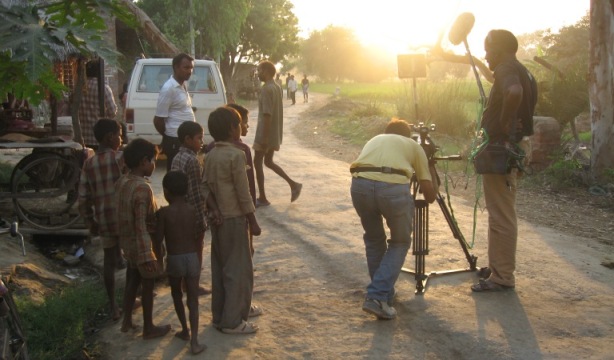
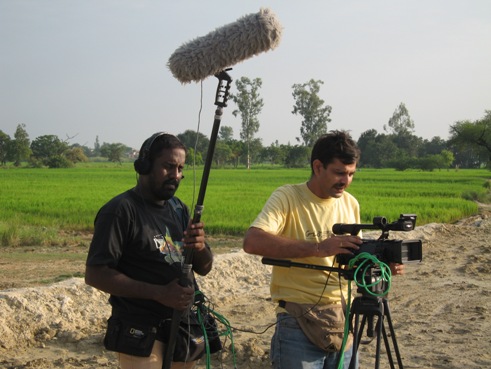
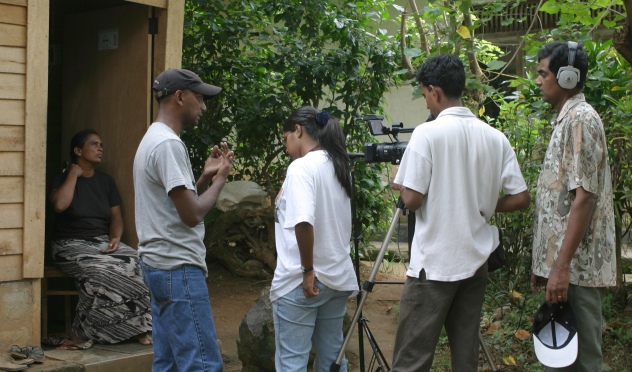
tveap-camera-crew-in-lucknow-india.jpg

Raising this amidst 60 journalists and producers from Africa, Asia, Europe, Latin America and the Caribbean attending the annual Greenaccord meeting, I pointed out that many of us were keen to contribute to media outlets beyond the countries where we are based. It gives us a chance to tell our stories to a bigger audience, and to have our voices heard about a range of issues and topics important to our communities.

And yes, the additional income that such work brings in is quite useful too, thank you.

Heads were nodding when I pointed out how hard it is for a talented, hard working journalist based in the majority world to break into the tightly controlled international media outlets. Even when they make an occasional breakthrough, they are often exploited by being paid lower professional fees for the same output and quality of work.

Or worse, majority world journalists are slighted and insulted for being where they are and who they are, rather than be judged on the merit of their work. As I wrote in a commentary published by SciDev.Net in November 2005: “Media gatekeepers in the North often dismiss the better-informed and equally competent Southern professionals — saying, insultingly, that ‘they don’t have the eye’! And for years, I have resisted the widespread practice of Northern broadcasters and filmmakers using the South’s top talent merely as ‘fixers’ and assistants.”

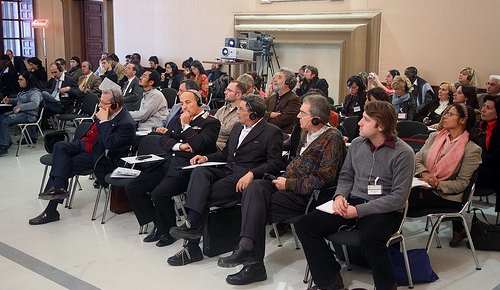
greenaccord-v-forum-in-progress-nov-2007.jpg

All this makes it imperative for us in the globalised media — in the developed North and developing South — to begin agitating for fair trade in media products and services. As in other products, we are not looking for charity or tokenism or a lowering of standards. We must strive for fairness and equality while working on building the capacity of southern journalists to generate world class media products.

And as my friend Darryl D’Monte — whom we missed dearly at this year’s Greenaccord forum — has been saying for years, publishing each other’s stories is one great step forward.

Mahatma Gandhi put it this way: we must be the change we wish to achieve.

Note: My own organisation, TVE Asia Pacific, practises what I preach here, and always engages local camera crews when we film TV stories across Asia. We will be taking up Fair Trade in Film and Television (FTinFT) as a campaign from 2008.

Read other related blog posts:

Images from the Majority World: Global South telling its own stories

Wanted: Fair trade in film and television!

Image of camera crews courtesy Pamudi Withanaarachchi of TVEAP.

Meeting photos courtesy Adrian Gilardoni’s Flickr account

Images from the Majority World: Global South telling its own stories

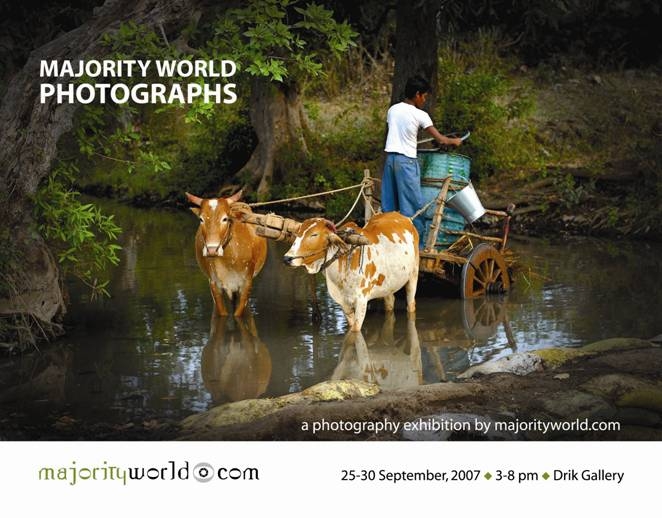
majority-world.jpg

This image captures a typical scene in a South Asian village. The invitation arrived from Suchit Nanda, a talented Indian photographer who shoots men, women and scenes from different cultures and societies as he moves around Asia and elsewhere.

Suchit’s work is being marketed by MajorityWorld.com, a new global initiative founded through the collaboration of The Drik Picture Library of Bangladesh and KijijiVision in the UK to champion the cause of indigenous photographers from the developing world and the global South – the Majority World!

“Very few published images of the South are taken by local photographers. They are invisible and don’t get a fair deal. This is what kijiji*Vision is campaigning to change,” says Colin Hastings of kijiji*Vision, a co-founder of Majorityworld.com.

Read more about Majority World

By coincidence, just this week I’m involved in buying some photographs from Drik Picture Library to illustrate an Asia Pacific resource book on Communicating Disasters that TVE Asia Pacific is compiling. It is being co-authored by Frederick Noronha and myself, and due for a December 2007 release.

Whether in photography or videography, the global South – or Majority World – has to speak for itself. Our still images and moving images must tell our own story.

But try doing this in the commercial worlds of publishing or mass media, and suddenly we are competing in an extremely unfair and uneven playing field. Astonishingly, many development agencies – including the UN – don’t commission or acquire the work of talented Southern photographers or film-makers. Talk about not practising what they preach!

Read my recent blog post: Wanted – Fair Trade in Film and Television

In an essay titled Communication rights and communication wrongs written in November 2005, I criticised the globalised media for persistently using stereotyped images of the South — captured mostly by northern photographers and camera crews.

I quoted Shahidul Alam as saying: “Invariably, films about the plight of people in developing countries show how desperate and helpless they are… Wide-angle black and white shots and grainy, high-contrast images characterise the typical Third World helpless victim.”

I added: “Media gatekeepers in the North often dismiss the better-informed and equally competent Southern professionals — saying, insultingly, that ‘they don’t have the eye’! And for years, I have resisted the widespread practice of Northern broadcasters and film-makers using the South’s top talent merely as ‘fixers’ and assistants.”

Read my full essay on SciDev.Net, which published it after Panos Features – the original commissioners – declined to carry it. Apparently my views were too outspoken for Panos London, which claims to champion communication for development…

Experience the visual treats offered by Suchit Nanda:
Suchit Nanda

Support Majority World photographers by using their work

The Daily Star (Dhaka) reviews the exhibition

Wanted: Fair Trade in Film and Television!

This short film, Fair Trade: The Story (8 mins) has been produced by Eq.tv (Equilibrium Television).

It’s very well made, with great use of images and sound, and powerfully sums up the complex issues around fair trade in an accessible manner. The best part: we don’t feel it’s an activist film, even though fair trade is, by definition, progressive and activist.

What is your power as a consumer? The film, produced in association with TransFair USA and TinCan Productions, begins with this question.

It then tells us: “Fair Trade combines stringent environmental criteria with the highest income and labour standards of any product certification. Fair Trade ensures a fair price for farmers, fair wages for workers, safe working conditions, direct marketing access, community development, democratic decision making, sustainable farming methods, environmental protection.”

Chris White of TransFair USA quips: “Fair trade isn’t a product. Fair trade isn’t a brand. Fair trade is a story.”

Fair trade is all about creating opportunities for small scale producers in the developing countries to get organised and supply directly to consumers in different parts of the world. When they sell direct, with few or no intermediaries, they can earn three or four times more, and that money will enhance their incomes, living standards and societies.

Read more about fair trade at Oxfam website, Make Trade Fair

Fair trade is certainly a cherished ideal, but it’s mired in complex economic and political realities. The globalised march of capital, profit-maximising multinational corporations and developed country farm subsidies are three among many factors that made fair trade difficult to achieve in the real world.

Difficult, but not impossible. Determined producers and consumers have shown over the years that they can connect to each other, ensuring greater fairness and justice in transaction. That’s the power of the consumer.

Now here’s another kind of fair trade that I have been advocating for a long time: Fair Trade in Film and Television (FTinFT for short). It’s high time we started promoting this as another plank in fair trade activism.

Let me explain. In the media-rich, information societies that we are now evolving into, media and cultural products are an important part of our consumption — and therefore, more of these have to be produced. In the globalised world, more television and film content is being sourced from the majority world — or is being outsourced to some developing countries where the artistic and technical skills have reached global standards.

But in a majority of these media production deals, the developing country film and TV professionals don’t enjoy any fair terms of trade or engagement. Their creativity and toil are being exploited by those who control the global flow of entertainment, news and information products.

This is why the top talent in the global South become assistants, helpers and ‘fixers’ to producers or directors parachuting in to our countries to cover our own stories for the Global Village. Equitable payments and due credits are hardly ever given.

I personally know many award winning film-makers in developing countries across the Asia Pacific who have been engaged on such unfair, uneven terms. Lacking sufficient market opportunities and trade unions in their own countries, these professionals have little choice but accept the occasional assignment that comes their way from BBC, CNN, AJI or other global players.

Remember, film-makers have families to feed too.

Unfair trade in film and TV is also how the unsung, unknown creative geniuses contribute significantly to the development of new cartoon animation movies or TV series, as well as hip video games that enthrall the global market. Lacking the clout and skill to negotiate better terms, freelancers and small companies across the global South remain the little elves who toil through the night to produce miracles. They work for tiny margins and even tinier credit lines. Some don’t get acknowledged at all.

If you think this is inevitable in the big bad world of profit-making business, hear this. I also know some western charities that champion global justice who are equally guilty of repeatedly exploiting southern film-makers — sometimes, ironically, to produce documentaries about social justice issues!

Even as they cover stories about fair trade practices in coffee or cotton, these entities practise unfair trade in their own industry.

I can cite many examples. Last year, the London-based Panos Institute approached me for recommendations for development-sensitive film-makers in two Asian countries where they wanted to implement some training programmes. I asked if the professionals I can gladly recommend – whose skills are on par with any western counterpart – would be paid international rates. Panos backed out saying they can only pay a local rate, which they felt was good enough.

Then there are UN agencies who always haggle with local film-makers over rates and fees. The same agencies that happily commission PR media agencies from Madison Avenue for hundreds of thousands of US Dollars would ask southern film-makers to donate their time, or work at a reduced fee, for the United Nations causes!

Local rates for local talent is simply not good enough if their work contributes to an international media effort. Southern film-makers and photographers, who lack opportunities to roam the planet looking for stories and work, should be engaged on fair, international rates in any media venture whose products will be consumed globally.

I’m proud to say that TVE Asia Pacific practises what I preach here. We are small time commissioners of southern film-making talent, but we always pay international rates, and engage local talent in every country we work in. And they get due, proper credit in all our productions.

This, then, is the essence of Fair Trade in Film and Television that we must advocate and agitate for. As long as the story tellers of the global struggles for social justice are themselves excluded from the story, there can be no fair trade, or true global justice.

There is now an urgency to address FTinFT because Media Process Outsourcing (MPO) is emerging as a growth industry. May 2007 news: India’s InfoSys and TV18 set up MPO firm.

Let me return to the question frequently posed by fair trade activists: What is your power as a consumer?

Now ask that question as a consumer of media products on TV, video, DVD, web and mobile devices. Don’t take anything for granted. Don’t accept the lofty PR claims of big time (or even small time) producers and peddlers of media content on how ethically they have sourced or made this content.

For a start, look carefully at where stories have been made, and whether local film and TV professionals get proper, on-screen credit. And write to the big players – 24/7 news channels, cartoon corporations and others – demanding to know their fair trade policies and practices in content creation and sourcing.

Make the same demands on the United Nations agencies peddling media products on their social causes. See how many of them will stand a simple test: do they engage southern film-makers to tell stories of development and social justice in the South? If not, why not?

And if you are in a position to decide on commissioning a new film, TV or video product, please consider engaging local talent — but pay them international rates if your product is going to cross borders (these days it very likely will).

We have a long way to go to achieve Fair Trade in Film and Television. Let’s get moving!

Read my call for ethical sourcing of international TV news

Photos from TVE Asia Pacific image archives