Animation films are hard to make all around. Even with digital technologies, the art and science of making entertaining and informative animations remains a challenge — and that’s why there are few good ones around.
I was thus happy to discover There’s No Tomorrow, a half-hour animated documentary about resource depletion, energy and the impossibility of infinite growth on a finite planet.
Inspired by the pro-capitalist cartoons of the 1940s, the film is an introduction to the energy dilemmas facing the world today. It is made by Incubate Pictures.
Their intro text says:
“The average American today has available the energy equivalent of 150 slaves, working 24 hours a day. Materials that store this energy for work are called fuels. Some fuels contain more energy than others. This is called energy density.”
“Economic expansion has resulted in increases in atmospheric nitrous oxide and methane, ozone depletion, increases in great floods, damage to ocean ecosystems, including nitrogen runoff, loss of rainforest and woodland, increases in domesticated land, and species extinctions.”
“The global food supply relies heavily on fossil fuels. Before WW1, all agriculture was Organic. Following the invention of fossil fuel derived fertilisers and pesticides there were massive improvements in food production, allowing for increases in human population.The use of artificial fertilisers has fed far more people than would have been possible with organic agriculture alone.”
Text of my news feature published in Ceylon Today newspaper on 23 June 2012
The UN Kicks the Paper Habit – at last!
By Nalaka Gunawardene
In Rio de Janeiro, Brazil
The United Nations secretariat – the world’s largest bureaucracy – has long been known as a formidable ‘paper factory’. It cranks out millions of documents every year in the organisation’s six working languages. Some of it is not read even once.
A few years ago, it acknowledged producing over 700 million printed pages every year (2005 figures). The cost of printing documents in its New York and Geneva offices along was over 250 million dollars a year.
And major international conferences convened by the UN have seen a splurge of paper – both official documents and many that are simply self-promotional of various participating national delegation, development agencies or companies. When such events end, literally tons of paper are left behind convention sites.
Environmentalists have been urging the UN to go easy on paper for many years, both to save trees pulped to make paper, and to reduce chemicals use and carbon emissions in printing or copying.
The message is finally being heeded. The United Nations Conference on Sustainable Development in Rio de Janeiro is the first major UN event to reduce paper use – and it shows.
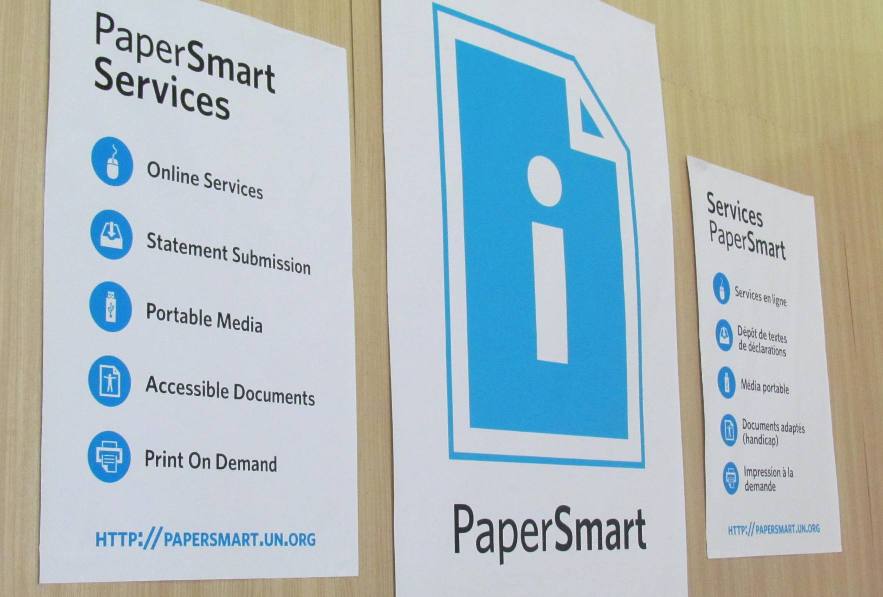
The entire meeting process is using less paper, and more electronic means for generating and sharing information. It’s the result of a new initiative called PaperSmart.
The vast Rio Centro convention centre, where the main inter-governmental meetings and major groups’ discussions are being held, is surprisingly paper-free.
So is the media centre, the operations base for hundreds of journalists from all over the world covering dozens of parallel sessions and events. In the past, this was a favourite ‘dumping ground’ for paper based materials.
At Rio+20 this week, only a handful of non-governmental organisations, academic bodies and activist groups still peddled paper. Most others had cut back on indiscriminate distribution of publications, posters, postcards and other materials.
Of course, the UN system loves to belabour the point. A dedicated website (http://papersmart.un.org) explains the underlying thinking and mechanics. PaperSmart is based on four principles: sustainability, efficiency, accessibility and knowledge management.
Switching from atoms to electrons has not been easy or smooth. Some participants – including web-savvy journalists – have been struggling with the complicated Rio+20 website and related online UN information services.
It’s still a work in progress, but PaperSmart is definitely a positive development to be cheered.
“After decades of sanctimonious preaching about the environment, the United Nations is taking a step in the right direction,” says Thalif Deen, the UN Bureau Chief of the developing world’s news agency, Inter Press Service (IPS).
Deen is a veteran of many UN conferences and processes who has seen how telexes and teleprinters gave way to instant global communications with Internet-enabled laptops and smartphones.
He recalls: “I was on the reporting staff of the first conference newspaper IPS published during the 1992 Earth Summit in Rio where the UN’s carbon foot print was all over the conference centre: reams and reams of reports and documents and thousands of UN staffers flying in from UN offices the world over.”
Deen hails Rio+20 as “a major breakthrough for a global institution long accused of extravagance and conspicuous consumption”.
A few years ago, Deen asked Shashi Tharoor, then UN under-secretary-general for public information, on when the paperless office might finally arrive at the UN Secretariat.
The digitally savvy Tharoor admitted the UN’s track record was not a good one. He then offered a comparison: “The amount of paper we use in a year to produce every single UN document, in all six official languages, is equivalent to what the New York Times consumes to print a single Sunday edition.”
Things have evolved a bit both in the newspaper industry and the UN bureaucracy since that remark was made in 2005. Newspapers in the west are now selling less, especially in paper editions.
Simply stamping out paper use can be misleading unless the total energy and resource uses are factored in. In recent years, concerns have been raised on the carbon emissions of massive internet servers.
Of course, these are dwarfed by the amount of planet-warming gases spewed out by delegates flying long distances to be in the same crowded conference with thousands of others.
As at June 20 evening, Rio+20 had close to 40,000 officially registered participants in various categories. Many unofficial events attract more.
Environmentalists, relieved by the reduced use of paper, would also be quick to point out growing problems of electronic waste.
It seems there is no such thing as an impact-free communication!
Text of my news feature published in Ceylon Today newspaper on 22 June 2012
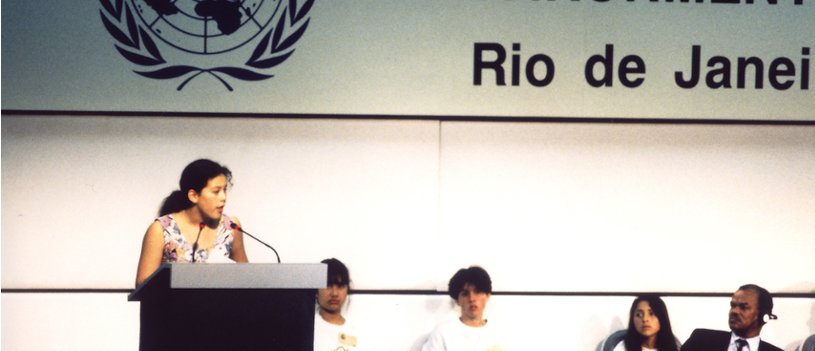
Severn Cullis-Suzuki addressing Earth Summit in Rio, June 1992
Next Election or Next Generation? By Nalaka Gunawardene in Rio de Janeiro, Brazil
Twenty years ago, a passionate young girl addressed – and challenged – the world leaders gathered at the Earth Summit in Rio de Janeiro, Brazil.
They called it the speech that stopped the world for six minutes. All the platitudes and rhetoric of heads of state are long forgotten, but this speech endures. It has been viewed million of times online.
Her speech was uncluttered and sincere. “I am only a child and I don’t have all the solutions, but I want you to realize neither do you…If you don’t know how to fix it, please stop breaking it!”
Her name was Severn Cullis-Suzuki, and she was 12 years old. The young Canadian environmental activist closed a Plenary Session with her powerful speech that received a standing ovation.
Raised in Vancouver and Toronto, Severn is the daughter of writer Tara Elizabeth Cullis and environmental activist turned TV personality David Suzuki. When she was 9, she started the Environmental Children’s Organization (ECO), a small group of children committed to learning and teaching other kids about environmental issues.
They did various local projects and in 1992, raised enough money to go to the Rio Earth Summit. Their wanted to remind the world leaders that the future of all children – indeed, all future generations – were going to be impacted by decisions made at the Summit.
Listen to the memorable speech at the Earth Summit by Severn Cullis-Suzuki:
Two decades on, another young girl from the Asia Pacific earned her chance to address Rio+20, the follow up to the original Summit, this time with the theme ‘The Future We Want’
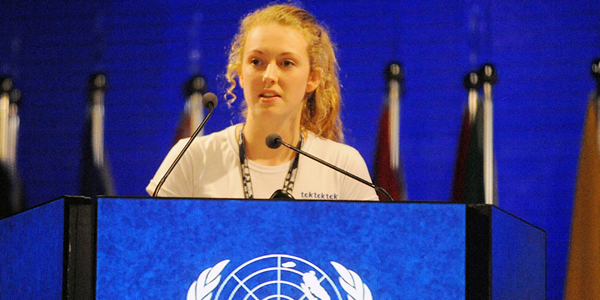
As it opened on the morning of 20 June 2012, Brittany Trilford, a 17-year-old school girl from New Zealand, spoke truth to power.
Brittany Trilford at Rio+20 conference on 20 June 2012
Addressing over 130 heads of state from around the world, assembled in Rio Centro conference centre, she said: “Please ask yourselves why you are here. Are you here to save face? Or are you here to save us?”
Brittany won an international competition to earn her five minutes of fame. The ‘Date with History Contest’ was a global online search for a person under 30 to represent youth and future generations at Rio+20.
Organised by the Global Campaign for Climate Action, Climate Nexus and the Natural Resources Defence Council (NRDC), contest participants were asked to upload a 2 to 3 minute short video speech about the future they wanted.
After entries closed in early May 2012, online voting was allowed for 22 finalists – which included at least 3 from each region of the world. The final winner was chosen by an international panel that included environmentalists, UN officials and celebrities such as actor Leonardo DiCaprio.
Brittany Trilford addresses world leaders at the UN Earth Summit
Brittany is a final year student attending school in Wellington, New Zealand. In her winning entry, she wished for more innovation and imagination.
“One solution would be to change our education system to embrace creativity and innovation. To tackle our problems there are definitely out there. Our leaders have to listen, be open-minded and persistent enough to give these ideas a chance,” she said.
As she ended the speech: “I want a future where education encourages innovative thinking, creativity and entrepreneurship. I want a future where we run with natural processes and not against them. I want a future where leaders will stop talking and start acting. I want a future where leaders lead.”
Her video was filmed at home with basic camera equipment. As she explained, “I entered to show solidarity with youth around the world, demanding that our leaders remember we are all their children and they owe us a fighting chance at a future we want to inherit.”
In a poignant media event hours before the Summit opened, the star of 1992 Severn Cullis-Suzuki joined the winner of 2012, Brittany Trilford.
Severn is now a writer and activist on culture and environmental issues, as well as the mother of two young boys.
“I have grown up a lot these 20 years but those six minutes of speaking to the UN two decades ago remains the most powerful thing I have ever done in my life to affect people,” she said wistfully.
Shortly after arriving in Rio – her first time since 1992 – Severn addressed a group of young delegates working with Green Cross International, the global environmental group created by Mikhail Gorbachev.
Severn’s message today remains the same, but now she also thinks about the future of her own children. She returned to Rio on their behalf to appeal for solutions to issues like global climate change which she called an “inter-generational crime”.
The world’s children have spoken loud and clear, twice over. But will they be heard by the world’s governments – preoccupied with multiple crises and more concerned about staying on in office.
Will the next generation prevail over the next election?
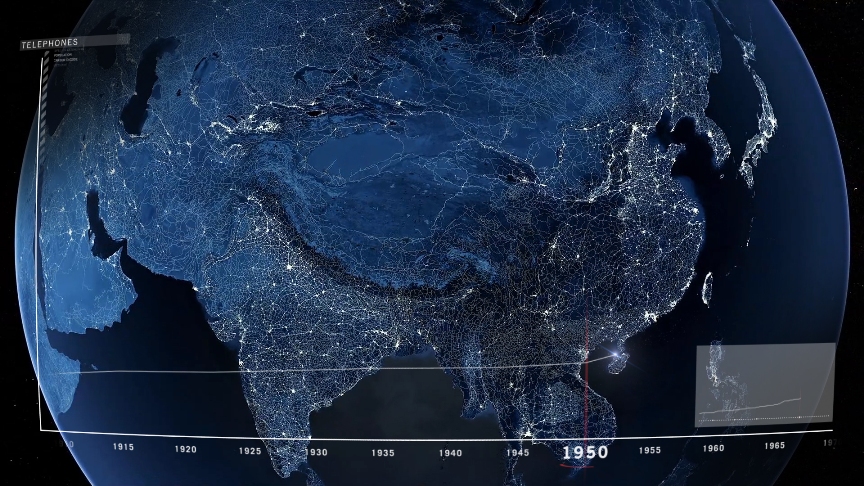
A scene from The Anthropocene film
In March, I wrote about the high impactful short film called Welcome to the Anthropocene that launched the Planet Under Pressure conference, London 26-29 March 2012.
It is a three-minute blast through the last few centuries of Earth’s history, starting in 1750 and finishing at the Rio+20 Summit. It graphically depicts how one species has transformed Earth and shows why many scientists now say we have entered a new geological epoch, the Anthropocene.
Produced by the International Geosphere-Biosphere Programme (IGBP) and partners, it opened the United Nations Rio+20 summit today in Rio de Janeiro.
This information is found in a media notice released by IGBP today:
The data visualization, which is already an online viral hit with over 700,000 views, demonstrates that while we have had a dramatic impact on Earth for many thousands of years, it has only been since the 1950s we have grown into a colossal global force.
“The Anthropocene changes our relationship with the planet. We have a new responsibility and we need to determine how to meet that responsibility,” says co-director of the film, Owen Gaffney, director of communications at the International Geosphere-Biosphere Programme (IGBP), based in Stockholm.
“The Rio+20 summit is the largest UN event ever held and the first major international gathering on global sustainability since the concept of the Anthropocene was first popularised,” added Mr Gaffney.
The film opens at the beginning of the Industrial Revolution. As the camera swoops over Earth, viewers watch the planetary impact of humanity: cities, roads, railways, pipelines, cables and shipping lanes until finally the world’s planes spin a fine web around the planet. The film is produced as part of the world’s first educational portal on the Anthropocene.
The film was co-directed by Canadian data visualization expert and anthropologist Felix Pharand-Deschenes from the education organization GLOBAIA.
Pharand-Deschenes said: “Data visualization is a powerful tool to help us view the world and our place in it and to help foster the global awareness needed to support global sustainability and governance. Science can make use of these tools to help bring research to more people.”
The film was commissioned for a major international science conference, Planet Under Pressure, held in March 2012. The conference was designed to provide scientific leadership in support of the Rio+20 summit.
Conference co-chair Dr Mark Stafford Smith from CSIRO in Australia, said: “The film picks up the main theme of the Planet Under Pressure conference: the risks we face are global, urgent and interconnected. Our search for solutions must take this into account.”
The film was produced by the International Geosphere-Biosphere Programme and Globaia. It is part of the website, Anthropocene.info which is co-sponsored by IGBP; Globaia, CSIRO, Stockholm Resilience Centre, Stockholm Environment Institute, International Human Dimensions Programme.
This week’s Ravaya column (in Sinhala) is a preview of a key challenge being taken up at the UN Conference on Sustainable Development being held in Rio de Janeiro, Brazil, this month. I raise the question: how can Sri Lanka transform its economy into a green economy in pursuit of sustainable development?
This was the title of a talk I gave to Sri Lanka Rationalists’ Association (SLRA) in Colombo, Sri Lanka, on 7 June 2012 — two days after World Environment Day.
In this, I shared my observations on how attempts aimed at environmental conservation and sustainable resource use in Sri Lanka are often hindered by many misconceptions and myths about natural resources and our impact on them.
I invoked the words of George Monbiot, journalist/columnist, The Guardian, UK: “One of the most widespread human weaknesses is our readiness to accept claims that fit our beliefs and reject those that clash with them. We demand impossible standards of proof when confronted with something we don’t want to hear — but will believe any old cobblers if it confirms our prejudices…”
At the outset, I proposed a basic categorization of eco-myths as myths of the first, second and third kind – the last one being the most pervasive and harmful. Drawing on my 25 years of experience as a science writer and journalist, I cite several examples from air pollution, biodiversity and climate change.
There is also the mother of all eco-myths that Lankan nationalists never tire of repeating: romanticising the ‘good old days’ before modernisation and colonisation. Ah, if only real life were that simple…
I acknowledged that scientific knowledge and understanding on some ecological matters are evolving so have to keep an open, inquisitive mind: science does not have all the answers, but provides a framework in which to ask the right questions and to go in search of answers supported by evidence.
I also conceded that many individuals – and their societies – are not always rational. Governments (at least in democracies) take their cue from the people, and so…irrationality feeds on itself.
The bottomline: it’s a free world and individuals may cling on to any fantasy or belief. As long as it doesn’t harm others around the believer, and/or affects collective thinking. When it does, the good of the many must outweigh the good of one.
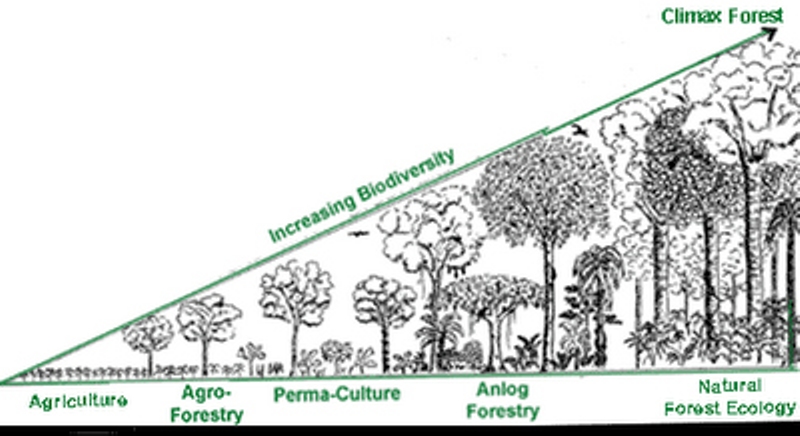
In this week’s Ravaya column (in Sinhala), I write about Analog Forestry, a Lankan innovation that is now adopted in many tropical countries in Africa, Asia and Latin America.
Analog Forestry is a system of planned, managed forests that are designed to mimic the function and ecology of the pre-existing climax vegetation for the area, and are also designed to provide economic benefits.
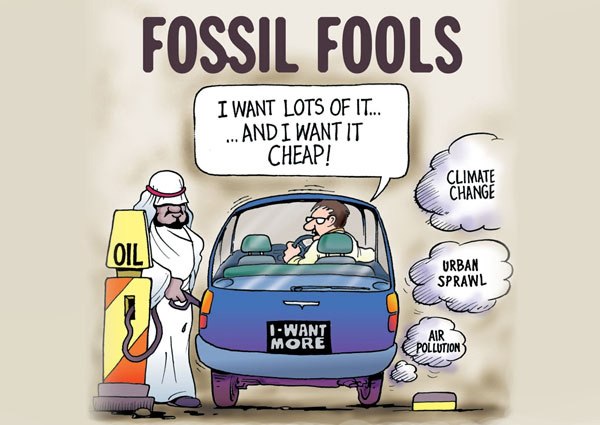
Cartoon courtesy Down to Earth magazine, CSE India
• To tackle enhanced global warming that leads to climate change, we need to better understand the global carbon cycle.
• Critical to this understanding is distinguishing between fossil carbon (coal and petroleum) and biotic carbon (photosynthetic biomass – living matter capable of absorbing atmospheric carbon).
• Biotic Carbon offers a ‘lifeboat’ to a world in search of solutions. Valuing biotic carbon can transform the role of farmers and rural communities currently sidelined in global climate change negotiations.
• Current methodologies of carbon trading have seriously warped both economics and ecology. What takes place today is more like carbon laundering.
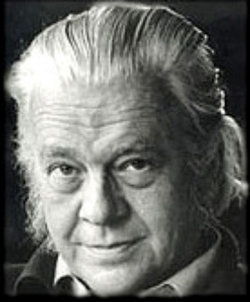
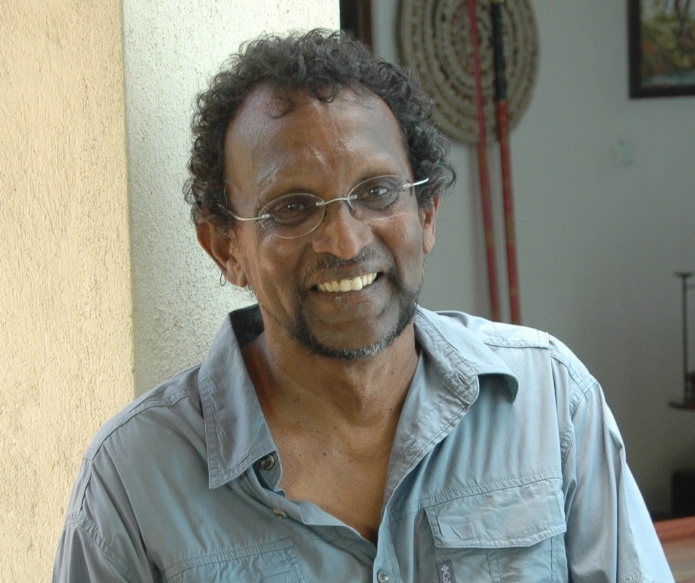
These outspoken views are expressed in a new web video by Dr Ranil Senanayake, a globally experienced systems ecologist with four decades of experience across Asia, Africa and Latin America.
I made this appeal at the end of an op-ed essay written in July 2009, when I was concerned about increasing levels of insularity and suspicion of everything foreign among Lankans as they adjusted to the post-war realities.
My metaphor was spices, for which Lanka was famed for millennia. I wrote: “The traditional Lankan curry contained up to a baker’s dozen of spices and herbs. Most such plants were not native – black pepper came from South India, cloves from Indonesia and chilli all the way from the Americas. Cinnamon was Sri Lanka’s contribution to this delightful mix. The diverse origins didn’t really matter: the islanders knew just how to mix the native and foreign to achieve legendary results.”
As with the spices, ancient Lankans knew how to mix the home-grown with external elements. Indeed, the island’s fauna, flora and people would be radically different today if such influences and cross-fertilisation didn’t happen.
In this week’s Ravaya column (in Sinhala) I explore the same theme, based on a recent interview with zoologist and systems ecologist Dr Ranil Senanayake, a rare public intellectual in Sri Lanka with the courage of his convictions.
But in this digital age, most scientists can use online platforms and simple digital tools to communicate directly with the public and/or policy makers. At least some scientists try to tap this potential — and we are grateful.
The World Resources Institute (WRI), a respected non-profit research and advocacy group, is currently trying to understand “how recent climate science discoveries can best be communicated via video”.
With support from Google, and with the help of three climate scientists, WRI has recently produced 3 different video types in order to test which works best. They are currently on display on their website, with a request for readers to vote and comment:
1. “A webcam talk” uses a self-recorded video of the scientist discussing his findings
2. “A conversation” uses a slideshow with a voiceover of the scientist discussing his findings
3. “A whiteboard talk” is a professionally shot video of the scientist in front of whiteboard discussing his findings
Here is the comment I submitted: the challenges WRI face are common and widely shared. And I do have some experience covering climate and other complex science and environmental stories across Asia for the visual and print media.
First, thanks for asking — and for exploring best public engagement method, which most technical experts and their organisations don’t bother to do.
Second, Andy Dessler comes across as an eager expert — not all scientists are! Some are visibly condescending and disdainful in doing ‘public’ talks that they immediately put off non-technical audiences.
Third, the options you’ve presented above are NOT mutually exclusive. For best results, you can mix them.
Webcam method is helpful, but people don’t want to see any talking head for more than a few seconds at a time. They want to see WHO is talking, and also WHAT is being talked about. The images in Conversation method come in here.
I realise webcams are usually set up inside buildings, but visually speaking the more interesting backdrops are in the open. In this case, if Andy Dessler were to record his remarks outdoors, on a clear and sunny day with some clouds in the far background sky, that would have been great!
I’m personally less convinced about Whiteboard Talk: many in your audience probably don’t want to be lectured to, or be reminded of college days. I would avoid that.

 Open Minds!