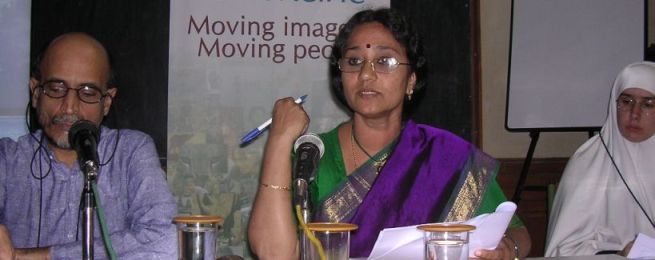
Wanted: Fair Trade in Film and Television!

This short film, Fair Trade: The Story (8 mins) has been produced by Eq.tv (Equilibrium Television).

It’s very well made, with great use of images and sound, and powerfully sums up the complex issues around fair trade in an accessible manner. The best part: we don’t feel it’s an activist film, even though fair trade is, by definition, progressive and activist.

What is your power as a consumer? The film, produced in association with TransFair USA and TinCan Productions, begins with this question.

It then tells us: “Fair Trade combines stringent environmental criteria with the highest income and labour standards of any product certification. Fair Trade ensures a fair price for farmers, fair wages for workers, safe working conditions, direct marketing access, community development, democratic decision making, sustainable farming methods, environmental protection.”

Chris White of TransFair USA quips: “Fair trade isn’t a product. Fair trade isn’t a brand. Fair trade is a story.”

Fair trade is all about creating opportunities for small scale producers in the developing countries to get organised and supply directly to consumers in different parts of the world. When they sell direct, with few or no intermediaries, they can earn three or four times more, and that money will enhance their incomes, living standards and societies.

Read more about fair trade at Oxfam website, Make Trade Fair

Fair trade is certainly a cherished ideal, but it’s mired in complex economic and political realities. The globalised march of capital, profit-maximising multinational corporations and developed country farm subsidies are three among many factors that made fair trade difficult to achieve in the real world.

Difficult, but not impossible. Determined producers and consumers have shown over the years that they can connect to each other, ensuring greater fairness and justice in transaction. That’s the power of the consumer.

Now here’s another kind of fair trade that I have been advocating for a long time: Fair Trade in Film and Television (FTinFT for short). It’s high time we started promoting this as another plank in fair trade activism.

Let me explain. In the media-rich, information societies that we are now evolving into, media and cultural products are an important part of our consumption — and therefore, more of these have to be produced. In the globalised world, more television and film content is being sourced from the majority world — or is being outsourced to some developing countries where the artistic and technical skills have reached global standards.

But in a majority of these media production deals, the developing country film and TV professionals don’t enjoy any fair terms of trade or engagement. Their creativity and toil are being exploited by those who control the global flow of entertainment, news and information products.

This is why the top talent in the global South become assistants, helpers and ‘fixers’ to producers or directors parachuting in to our countries to cover our own stories for the Global Village. Equitable payments and due credits are hardly ever given.

I personally know many award winning film-makers in developing countries across the Asia Pacific who have been engaged on such unfair, uneven terms. Lacking sufficient market opportunities and trade unions in their own countries, these professionals have little choice but accept the occasional assignment that comes their way from BBC, CNN, AJI or other global players.

Remember, film-makers have families to feed too.
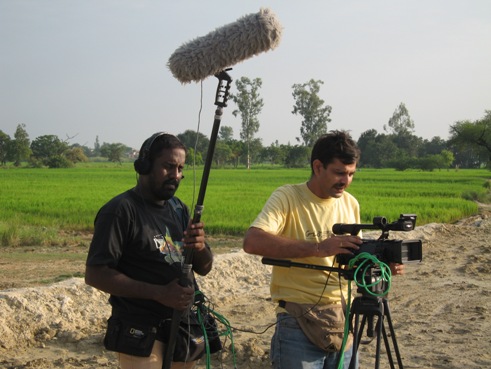
Unfair trade in film and TV is also how the unsung, unknown creative geniuses contribute significantly to the development of new cartoon animation movies or TV series, as well as hip video games that enthrall the global market. Lacking the clout and skill to negotiate better terms, freelancers and small companies across the global South remain the little elves who toil through the night to produce miracles. They work for tiny margins and even tinier credit lines. Some don’t get acknowledged at all.

If you think this is inevitable in the big bad world of profit-making business, hear this. I also know some western charities that champion global justice who are equally guilty of repeatedly exploiting southern film-makers — sometimes, ironically, to produce documentaries about social justice issues!

Even as they cover stories about fair trade practices in coffee or cotton, these entities practise unfair trade in their own industry.

I can cite many examples. Last year, the London-based Panos Institute approached me for recommendations for development-sensitive film-makers in two Asian countries where they wanted to implement some training programmes. I asked if the professionals I can gladly recommend – whose skills are on par with any western counterpart – would be paid international rates. Panos backed out saying they can only pay a local rate, which they felt was good enough.

Then there are UN agencies who always haggle with local film-makers over rates and fees. The same agencies that happily commission PR media agencies from Madison Avenue for hundreds of thousands of US Dollars would ask southern film-makers to donate their time, or work at a reduced fee, for the United Nations causes!

Local rates for local talent is simply not good enough if their work contributes to an international media effort. Southern film-makers and photographers, who lack opportunities to roam the planet looking for stories and work, should be engaged on fair, international rates in any media venture whose products will be consumed globally.

I’m proud to say that TVE Asia Pacific practises what I preach here. We are small time commissioners of southern film-making talent, but we always pay international rates, and engage local talent in every country we work in. And they get due, proper credit in all our productions.

This, then, is the essence of Fair Trade in Film and Television that we must advocate and agitate for. As long as the story tellers of the global struggles for social justice are themselves excluded from the story, there can be no fair trade, or true global justice.

There is now an urgency to address FTinFT because Media Process Outsourcing (MPO) is emerging as a growth industry. May 2007 news: India’s InfoSys and TV18 set up MPO firm.

Let me return to the question frequently posed by fair trade activists: What is your power as a consumer?

Now ask that question as a consumer of media products on TV, video, DVD, web and mobile devices. Don’t take anything for granted. Don’t accept the lofty PR claims of big time (or even small time) producers and peddlers of media content on how ethically they have sourced or made this content.

For a start, look carefully at where stories have been made, and whether local film and TV professionals get proper, on-screen credit. And write to the big players – 24/7 news channels, cartoon corporations and others – demanding to know their fair trade policies and practices in content creation and sourcing.

Make the same demands on the United Nations agencies peddling media products on their social causes. See how many of them will stand a simple test: do they engage southern film-makers to tell stories of development and social justice in the South? If not, why not?

And if you are in a position to decide on commissioning a new film, TV or video product, please consider engaging local talent — but pay them international rates if your product is going to cross borders (these days it very likely will).

We have a long way to go to achieve Fair Trade in Film and Television. Let’s get moving!

Read my call for ethical sourcing of international TV news
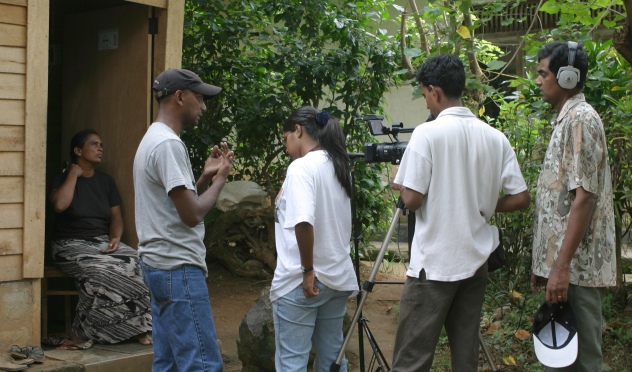
Photos from TVE Asia Pacific image archives

Shimu: Bangladesh’s real life ‘Meena’ enthralls millions on TV

Meena’s uncle has arranged for his daughter Rita to marry Babu, a shopkeeper’s son. But Rita is only 15 and has not yet finished school. With Meena’s help, it comes to light that Babu, who is studying to be a doctor, does not want to get married yet, especially since he knows it is unsafe for young girls to become mothers. To everyone’s satisfaction, the marriage is postponed until Rita is 18 and has completed her education.

That’s the storyline in Meena: Too Young to Marry, which is part of the hugely successful cartoon animation series Meena, which Unicef produced with leading animation houses in South Asia during the 1990s. It was part of the Meena Communication Initiative.

Its central character is Meena: a spirited, nine-year-old girl, living in a typical South Asian village, facing all the usual challenges of growing up — whether in her efforts to go to school, or having enough to eat, or in fighting the stigma surrounding HIV/AIDS in her village. In a sub-region where many families still favour boys over girls, life is not easy for Meena, but she finds ways to not just cope but flourish.

Now comes the news of a real life Meena in Bangladesh.

Shimu - photo courtesy Washington Post

Alo Amar Alo is the name of a live action television drama series that promotes girls’ education in Bangladesh. Launched in July 2007, it is currently running on Bangladesh Television, BTV.

Alo Amar Alo (“Light My Light”) centers around a girl named ‘Alo’ who stops going to school when she completes Class V. Throughout 26 episodes, the story follows Alo as she struggles to overcome life’s challenges through the support and friendship of a renowned actress.

Playing the role of Alo is 13-year-old Shimu, who suddenly finds herself the star of the country’s most popular television series.

In an article profiling her, The Washington Post wrote on 14 September 2007: “Shimu, a youthful Bangladeshi version of Winona Ryder, is recognized across the country for her moving role as the spunky 11-year-old heroine Alo. On Wednesday nights, more than 10 million viewers tune in after the 8 p.m. news to see her character put through the gantlet of family entanglements and financial strains that afflict many of the young girls in this desperately poor, densely populated South Asian nation. Alo must fight to stay in the fifth grade while her uncle demands that she work in a garment factory and other family members urge her to marry so they will have one less mouth to feed.”

“Teachers say that Shimu’s photograph hangs in classrooms across the country on posters advertising the show and that her story has become a symbol of the struggle to keep girls in school.”

Elsewhere, the article notes:
“As in Latin America’s telenovelas and many African and South Asian TV dramas, story lines in Bangladeshi programs are often infused with messages decrying social ills such as child labor, domestic violence and early marriage. Many of the shows are low-budget productions funded by nonprofit organizations or the government. Shimu’s show…is funded by the Education Ministry and UNICEF; actors receive modest stipends.

Being a TV star has not changed Shimu’s life, says Washington Post writer Emily Wax. Even though Shimu is on television, her family does not own a TV set. She and her friends watch the show at the theater group’s center.

Her grandfather, Mohamed Siddiq, 61, is quoted saying he wants Shimu to stay in school but is worried that she may end up marrying or working, since their family is being evicted in a month and has no savings.

“We are illiterate. I really want Shimu to stay in classes,” Siddiq said. “It’s just so hard to survive here.”

Read the full article about Shimu in The Washington Post online

The Alo Amar Alo series is funded by Unicef and the Ministry of Education in Bangladesh. It’s part of a communication strategy which includes interactive popular theatre shows, folksong performances, wall paintings and Meena Communication Initiatives.

“These have been extremely effective in raising awareness on the value of education as well as reaching the remote corners of the country through the mass media. Parents have shown more willingness to send girls to school. The increase in the enrollment of girls has also been the impact of multiple awareness raising campaigns,” says Unicef Bangladesh.

But big challenges remain. The Washington Post article draws parallels between the character Alo and child actor Shimu.

“Sometimes I feel she should support me,” Shimu’s grandmother, Ayesha, 49, who was herself married at 12, is quoted as saying. “Boys want to marry her. They are always harassing her. Even though she is known for her acting, it’s very hard to make a living here. If she were married, we wouldn’t have to worry about feeding her.”

To which Shimu says, simply: “It’s better to stay in learning for the future. I want to try.”

One concern is I have why Unicef is exploiting a child actor without adequate pay. The article refers to actors receiving ‘modest stipends’. If Shimu was paid better for her natural talent as well as considerable time she doubtless spends on acting in Alo Amar Alo, surely that can make a difference in one child’s life? Or is that not statistically significant for Unicef?

Photo of Shimu courtesy The Washington Post

Meena image courtesy Unicef

Crossing the other Digital Divide: Challenge to conservation community

Digital Divide refers to the gap between those who have regular, easy access to modern information and communication technologies (ICTs) and those who don’t. In the past decade, the IT industry and development community have launched various initiatives to bridge this divide. The One Laptop Per Child project is among the better known examples.

As digital technologies and media gain momentum and wider coverage than ever before, another kind of digital divide has emerged. This week in Kathmandu, during the Fourth Asian Conservation Forum, some of us have been talking about this new divide — between the Digital Natives and Digital Immigrants.

This latter divide is mainly a product of age, not socio-economics. Market research and sociological studies now confirm that today’s younger people – raised on a diet of mobile phones, video games and mp3 (music) players – have radically different ways of accessing, receiving and coping with information.

Recognising this new Digital Divide is vital for communication and advocacy work of conservation groups, such as IUCN – The World Conservation Union, conveners of the Kathmandu forum.

For nearly 60 years, IUCN has been an effective platform for knowledge-based advocacy. Using scientific evidence and reasoning, it has influenced conservation policies, laws and practices at country and global levels. The world would be a worse place to live in if not for this sustained advocacy work by thousands of experts and activists who were mobilised by IUCN.

Much of that work has been accomplished through the classical advocacy tools: scientific papers, books, conferences and, in recent years, ‘policy dialogues’ — meetings where experts and activists would sit down and talk things through with those who make policy in governments and industry.

IUCN continues to pursue all these methods, with creditable impact. IUCN’s Red List of Threatened Species, whose latest edition is being released today (12 September 2007), is among the best known examples of how the Union’s work informs and inspires urgent action for saving the world’s animals and plants driven to the edge by human activity.

To remain similarly effective in the coming years, IUCN — and the rest of the conservation community — need to evolve and adapt to changing realities in human society. One such reality is the proliferation of ICTs in the past two decades.

The International Telecommunications Union (ITU) announced recently that the world’s telephone connections had passed four billion. Largely thanks to the explosion of mobile phones in the majority world, the total number of telephones (fixed and mobile) had quadrupled in the past decade.

While exact figures are hard to come by, it is estimated that around 1.17 billion people (almost 1 in 6 persons) have access to the Internet, even though varying levels of quality.

These are the more widely quoted figures, but the media mix keeps diversifying even as the size of the overall ‘ICT pie’ keeps increasing. For example, the 1990s saw a channel explosion in both FM radio and television across much of Africa, Asia Pacific and Latin America, hugely increasing viewers’ choice and enhancing the outreach of broadcasting. The popularity of video games (and now, online games) has spawned trans-boundary subcultures that were inconceivable even a decade ago.

It is this bewilderingly media-enriched world that IUCN’s members and experts are trying to engage, hoping to persuade everyone — from governments and industry to communities and individuals — to live and work as if the planet mattered.

In Kathmandu this week, I argued that scientific merit and rational (and often very articulate) reasoning alone won’t win them enough new converts to achieve significant changes in lifestyles, attitudes and practices. To be heard and heeded in the real world outside the charmed development and conservation circles, we need to employ a multitude of platforms, media and ICT tools. And we have to talk in the language of popular culture.

We have come a long way since the 1980s, with the new ICTs evolving parallel to our own understanding of sustainability.

When we were involved in processes leading up to the Earth Summit in Rio de Janeiro, back in 1992, most of us were still using fax and snailmail to exchange information. Email was confined to academic circles and the web was not even conceived.

By the time Johannesburg Summit was held a decade later, email had come into wide use and static websites were being used to disseminate information and opinions. E-commerce and music file sharing were gaining momentum.

Just five years on, the rapidly evolving web 2.0 offers us more tools and platforms to not just engage in one-way dissemination, but to truly communicate with a two-way flow. Wikis allow participatory document drafting. Web logs or blogs enable faster, easier expression and discussion. YouTube and other platforms have suddenly made sharing of moving images much simpler (assuming we have sufficient bandwidth).

In fact, connectivity is improving in many parts of the world, though there still are many gaps, frustrations and cost issues to be resolved. Young people, under 25 years, are leading the charge in entering and ‘colonising’ the new media. Social networking platforms such as MySpace and FaceBook are only the tip of this cyber iceberg. And virtual worlds — such as Second Life, with over 8 million online members — are moving in from the periphery to occupy a clear niche in our new digital world.

800px-web_20_mapsvg.png

Every indication is that these trends will continue. IUCN and other conservationists, with their rigorous scientific analysis expressed in technical papers, print publications and the occasional op ed article in a broadsheet newspaper, have to navigate in this whirlpool — and it’s not easy. But their choice is between engagement and marginalisation. The planet cannot afford the latter.

I’m not suggesting that conservation scientists and organisations must drop their traditional advocacy methods and rush to embrace the new ICT tools. But they need to survey the new media landscape with an open mind and identify opportunities to join the myriad global conversations.

A good part of that is what intellectuals might see as chatter, or tabloid culture. It’s precisely this mass tabloid audience that needs to be engaged for conservation.

There are inspiring examples of how other sections of the development spectrum are seizing new media opportunities:

* Some humanitarian groups now use Google Earth online satellite maps for their information management and advocacy work, for example in Darfur, Sudan, and the Central African Republic.

* In an attempt to name and shame offenders, human rights activists are using YouTube to post incriminating video evidence of human rights abuses worldwide. The influential Foreign Affairs journal recently called this the YouTube Effect.

Fortunately, at least a few Asian conservation leaders already appreciate this enormous new media potential. In Kathmandu, Surendra Shrestha, UNEP’s regional director for Asia Pacific, echoed my views.

“My young kids spend several hours each weekend in virtual worlds. We need to get in there and engage them with our content,” he said. “To do that, we have to get inside their minds, and speak their language.”

Shrestha mentioned how UNEP in Asia is attempting this with ICT-based projects for youth, such as e-generation which, according to him, has involved half a million young people.

Such initiatives are beginning to happen, thanks to a few conservationists who are pragmatic enough to exploit the inevitable. But much more needs to be done to make conservation ‘cool’ and hip for Asia’s youthful population, half of them under 35, and many of them Digital Natives.

For sustainability measures to have a chance of success, these upwardly mobile, spend-happy youth have to be reached, touched and persuaded. If it takes tabloid tactics to achieve this, so be it.

And given Asia’s growing economic clout and ecological impact – with China and India leading the way – the fate of the planet will be decided by what is done, or not done, in our region.

While they debate the finer points of conservation strategies and activities in Kathmandu, Bangkok and other cities across our massive region, Asia’s conservation community must quickly cross the new Digital Divide that currently separates them from Digital Natives.

Declaration of interest: I was part of IUCN Sri Lanka Secretariat (1992-1994), where I started its communication division, and have been a member of IUCN Commission on Education and Communication since 1991.

Read my April 2007 post: Do ICTs make a difference?

Talking Big Foot in Yeti Land: Got a spare planet, mate?

The names Yeti and Meh-Teh are commonly used by the local people to describe the Abominable Snowman said to inhabit the deep Himalayan valleys of Nepal and Tibet. Most scientists consider this legendary ape to be part of cryptozoology – which searches for creatures said to exist but have never been documented.

But this does not take away from the allure of Yeti – it’s like the North American fascination with Big Foot.

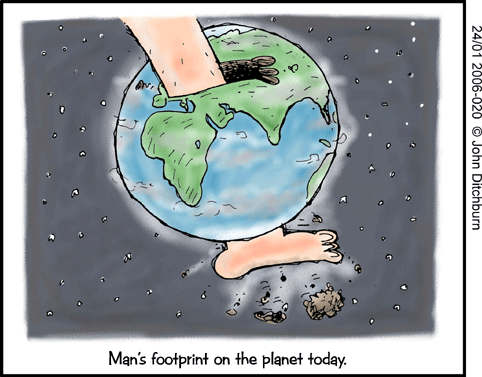
I’m spending the week at the 4th Asia Conservation Forum in Kathmandu, organised by IUCN, the World Conservation Union. Here, we have been talking about another kind of Big Foot, and the increasingly crushing footprint that this assertive creature stamps everywhere.

This, of course, is a reference to us Homo sapiens – and the growing ecological footprint (EF) that our species is generating.

EF quantifies our demand on Nature and natural systems. It measures the amount of biologically productive land and water required to meet our demands (for food, timber, shelter), and to absorb the pollution we generate.

Using this assessment, it is possible to estimate how many planet Earths it would take to support all of humanity if everybody lived a given lifestyle. For example, if everyone aspires to European lifestyles, we are going to need three planets. And for American way of life, four.

As of now, the Earth is the only naturally habitable planet that we know and have.

The term and concept of Ecological Footprint were proposed in 1992 by William Rees, a Canadian professor at the University of British Columbia.[1] In 1995, Rees and coauthor Mathis Wackernagel published Our Ecological Footprint: Reducing Human Impact on the Earth.

The Kathmandu meeting’s first substantive session, on the Future of Sustainability, heard how we are dangerously close to the Earth’s tipping point. Indian development thinker Ashok Khosla, UNEP’s regional director Surendra Shrestha and other leading analysts presented unmistakable indicators for this trend.

This resonates with a new report that came from WWF in late 2006, which concluded that our global footprint has already exceeded the earth’s bio-capacity by 25% in 2003. This meant that the Earth could no longer keep up with the demands being placed upon it.

2006-020-footprint-on-the-planet.gif

The WWF Report has presented this graphically by sorting countries as eco-creditors and eco-debtors. Much of Asia falls into the latter category (map, below, courtesy BBC Online):


So here’s the news headline from YetiLand: we have finally met Big Foot. And it is us.

The Step-children of Tsunami: Overlooked and forgotten

india-malas-family-lost-their-home-jobs.jpg

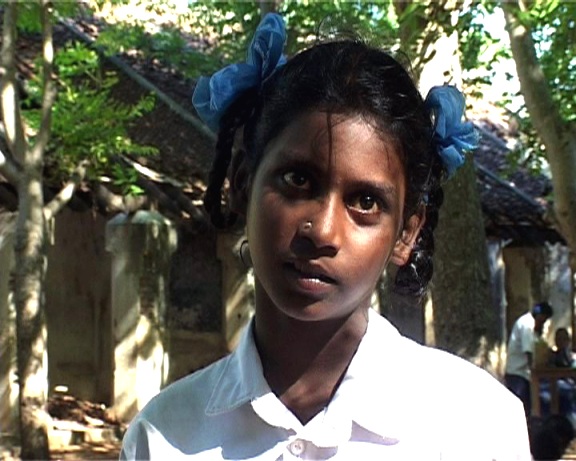
Meet Mala. She lives in in Kottaikkadu village in Kancheepuram District in India’s southern Tamil Nadu state.

She was 11 years old when, in December 2004, the Asian Tsunami crashed into village without warning. This made her very poor family desperate and destitute.

The disaster didn’t kill anyone in her village, but caused considerable property damage. In her case, the waves that rolled in spared their small hut, but her fisherman father was nearly drowned: he survived with some injuries.

But the family’s fishing boat and gear were gone. That was a mighty blow.

After the waves had retreated, they returned to their house and started rebuilding their lives. They thought the world’s generosity in responding to the Asian Tsunami will somehow bring some help.

They were wrong.

When the Tsunami triggered massive aid donations, all affected countries pledged to distribute it in a fair, equitable and transparent manner. But as the aid trickled down layers of government and charities, various biases and distortions crept in.

What happened in Mala’s village was an example. We came across the situation when tracking Mala’s family for a whole year (2005) after the Tsunami, documenting their long road to recovery as part of our Children of Tsunami media project.

We tracked two affected families each in India, Indonesia, Sri Lanka and Thailand, filming their progress — or the lack of it — every month and producing video reports that were uploaded to a dedicated website.

Follow Mala’s story through monthly video reports on our website

The most striking example of aid disparity came from India. Even months after the disaster, Mala’s family — or anyone else in her village — received absolutely no relief or recovery assistance.

Officially, it was because ‘no one was killed’ in her village. But everybody in Kottaikkadu village knew the real reason: in the Indian social hierarchy, they occupy the lowest level, known as ‘Dalits’.

Apparently, that was why both government agencies and charities stayed clear of the village.

Our India production team, led by senior journalist and film-maker Satya Sivaraman (with video camera in the photo, below), investigated further. They compared Kottaikadu with its adjoining village of Alambara. Both had suffered similar damage during the Tsunami: people lost their boats and nets, but there were no deaths.

Image from Children of Tsunami website

Yet the people of Alambara – who belong to a supposedly higher caste of fishermen — received food items, boats and fishing nets from various outside sources.

In fact, they felt quite sorry for their neighbours in Kottaikkadu. “On the day of the tsunami we ran over 15 kilometers,” said Kuppuraj, a resident of Alambara. “Kottaikadu villagers, who live just 600 meters away…ran with us — but nobody has helped them to recover.”

There was another incident that showed up the caste-based discrimination, which my colleague Manori Wijesekera, production manager of Children of Tsunami, has just reminded me.

In March 2005, our India film crew found Mala’s father seriously ill with a lung infection (triggered by his near-drowning during the Tsunami) and his family so helpless that they were unable to even seek medical attention.

So the crew put their filming gear aside, and became good Samaritans: they rushed the sick man to a nearby government-run hospital. But once there, doctors refused to admit or treat him — all due to the patient’s supposedly low caste!

It was only when Satya and crew threatened to film the entire sorry episode, and have it broadcast on television later that day, that medical attention was finally provided. Discarding their production plans, our crew stayed with Mala’s family at the hospital through the night and next day to ensure the doctors gave her father the correct medical attention. The family believes that the production team saved her father’s life that day.

Read more about what happened at Children of Tsunami website

Watch the March 2005 video report that covered the hospitalisation incident

mala-with-her-neighbours.jpg

While their father was recovering, Mala’s mother toiled as a labourer to keep the home fires burning. Mala has one younger sister and two younger brothers.

Children of Tsunami: Rebuilding the Future was TVE Asia Pacific’s response to largely superficial media coverage of the Indian Ocean Tsunami of December 2004. It tracked on TV, video and web the personal recovery stories of eight affected families in India, Indonesia, Sri Lanka and Thailand for a year after the disaster. Its many media products — distributed on broadcast, narrowcast and online platforms -– inspired public discussion on aid management and optimum rehabilitation choices.

As we discovered along the way, some of the affected could be better described as Step-children of Tsunami.

In one of my early blog posts, I paid a tribute to the most extreme example of such a child, Thillainayagam Theeban.

The Tsunami has become yesterday’s news, but there are thousands of affected children, women and men who are still living on the edge of survival.

Related links:

Children of Tsunami: Documenting Asia’s longest year

Children of Tsunami revisited two years later

All images courtesy Children of Tsunami media project, TVE Asia Pacific

Making fun of HIV: Welcome to the Scenarios from Africa

General Assembly of Diseases: In the city of Contaminobo, assorted germs in an emergency session. Tuberculosis, Polio, Hepatitis and others are all angry and afraid because their favourite target – humans – are fighting back. Enter ‘His Royal Heinous, Overlord AIDS’. Hope at last! When he attacks the immune system of humans, other germs can still have a chance…The humans are so careless, that it’s easy for AIDS to quickly spread from one to many. But wait a minute – somebody has been listening into all their talk. Which means the secret of defending humans from HIV and his cronies is out.

Iron Will: Moussah is a young man with a healthy, or bubbling, interest in girls. His male friends advise him to be play it safe — carefree sex can easily expose him to HIV, for which there is no cure. They talk about condoms, and another strategy that is an alternative to using the rubber latex. But Moussah doesn’t quite understand the expression ‘iron will’. He interprets it differently, and gets custom made iron underpants made — much to the amusement of his friends, who remind him the most important sex organ is…the brain!

Just Once: A man returns from the field and feels like making love to his wife. She is living with HIV and insists that he uses a condom — but they’ve run out of stocks. So he cycles far and wide in search of condoms – where is a rubber when you need one? Finally he succeeds and rushes home, only to find that his wife did have one last, unused condom with her. So why didn’t you tell me, he asks in exasperation. Her answer is revealing….

Intrigued? There’s a lot more where they came from.

These three stories are part of Scenarios from Africa — a highly successful and popular pan-African initiative to use moving images to get young people talking and acting on HIV/AIDS. The decade-long project has been carried out with and for young people, with community mobilisation, education and media elements.

Integral to this communication effort are television drama vignettes about different scenarios involving HIV in everyday life.

Some are very funny while others are very moving. They cover many dimensions of the HIV epidemic, from preventing the virus spreading to taking care of persons living with HIV. Underlying themes include safe sex, removing social stigma from the epidemic and dispelling misconceptions about how HIV spreads or does not spread.

The project was started in 1997 and is coordinated by the non-profit Global Dialogues Trust. It gave African children and young adults an exciting opportunity to educate themselves and others about HIV/AIDS by inviting them to participate with internationally acclaimed directors in the production of these short films.

The films are based on ideas thought up by young people in a series of contests. So far, over 105,000 young people from 37 African countries have taken part in these contests. Over 1,000 local and international partner organisations have been involved in organising the contests and selecting the winning ideas.

The films range in duration from just under 2 minutes to almost 15 minutes. They were produced by top fiction film-makers and animation specialists in Africa.

All stories use African actors, locations and situations – and employ different story telling tactics.

Scenarios from Africa is a multi-media communication project that has been widely acclaimed by practitioners, activists and scholars worldwide. The films are supported by a user’s guide and online discussion points that help teachers, trainers and activists to make the best use of these stories in their work.

The films are all distributed on a non-commercial basis across Africa and beyond, for broadcast and narrowcast use. The Scenarios films have been broadcast on locally-based television stations in almost every country in sub-Saharan Africa. The films are also collected on compilation DVDs and video cassettes for use by organisations and schools. Some 60,000 copies of the films (DVDs and video cassettes) of the films have been distributed to date.

The films are now available in a wide and growing range of African and European languages, and are reaching tens of millions of people.

Says Daniel Enger of the Global Dialogues Trust: “Although the films were originally produced for the sub-Saharan African cultural context, we have been pleased to learn over the years that the films have proven useful as awareness-raising tools in many countries of the Asia Pacific area. Indeed, most of the HIV-related topics raised in the Scenarios from Africa collections have universal relevance, making the films useful discussion starters across the globe.”

TVE Asia Pacific has recently taken on the task of distributing all Scenarios films across the Asia Pacific region. As with all other films in its catalogue, TVEAP will distribute Scenarios on a non-exclusive, non-commercial basis to broadcast, civil society and educational. We have been promoting the Scenarios films since we screened them to packed houses during the 2004 AIDS Film Festival in Bangkok

Meanwhile, the 5th Scenarios contest will be held from 1 December 2007 to 15 March 2008. Please contact for more information.

Watch Scenarios films on the official website (RealPlayer required)

Scenarios from Africa now available from TVE Asia Pacific

All images used in this post are courtesy Global Dialogues Trust.

Read my other blog posts on HIV:
HIV: Stigma a bigger killer than the virus?
Three Amigos: Funny condoms with a serious mission
Beware of Vatican condoms!
50? In South African terms, you’re probably dead!
Ratomate’s best cup of tea
A girl named Nan-nan

‘Cheque-book Development’: Paying public media to deliver development agency logos

In their ceaseless efforts to keep their organisations in the media spotlight, spin doctors of development agencies are distorting news values and corrupting the media, turning issue-based communication products into ‘logo delivery mechanisms’.

This is the thrust of my latest op ed essay, titled ‘Cheque-book Development’ corrupting the media. It has just published by the popular media-watch website anchored in the US, MediaChannel.org

Image courtesy MediaChannel.org

In this essay, I draw on several years of first hand observations in development, humanitarian and broadcasting circles at Asian and global levels. I focus on a disturbing practice that more and more development/humanitarian agencies engage in: paying intermediaries for getting their stories on global news and current affairs TV channels.

This is nothing short of cash-for-media coverage.

Here’s an extract:

“As development organisations compete more intensely for external funding, they are increasingly adopting desperate strategies to gain higher media visibility for their names, logos and bosses.

“Communication officers in some leading development and humanitarian organisations have been reduced to publicists. When certain UN agency chiefs tour disaster or conflict zones, their spin doctors precede or follow them. Some top honchos now travel with their own ’embedded journalists’ – all at agency expense.

“In this publicity frenzy, these agencies’ communication products are less and less on the issues they stand for or reforms they passionately advocate. Instead, the printed material, online offerings and video films have become ‘logo delivery mechanisms’.

Image courtesy MediaChannel.org Cartoon courtesy Global Journalist

Some of these communication officers I write about have become friends over the years — I empathise with their pressures, but don’t approve of what their organistions do. As I write in the essay:

“This practice is wrong on two counts. One, allowing intermediaries to sell access to the airwaves is a form of corruption. Two, every time this happens, it siphons off tax-payer supported development funds intended for combating poverty and suffering in the majority world.

“It is the reverse of cheque-book journalism, where some media organisations pay celebrity or other sources for exclusive access to their stories. When development agencies are paying sections of the media to get promotional or favourable stories aired, we must call it ‘cheque-book development’.”

Make no mistake — this is a form of media corruption. It’s not just the development sector’s vanity that fuels this process. Many 24/7 news channels are struggling to fill their hours inexpensively. Some turn a blind eye to ethical sourcing as long as they can have a steady supply of subsidised content.

Read my full essay on MediaChannel.org

Note: Being a US-anchored outlet, MediaChannel.org spells ‘cheque-book’ as ‘check-book’, which is correct in American spelling of English! As I write in my essay, it appears that TV channels and networks on that side of the Atlantic seem a bit harder to corrupt. But then, what do I know?

Read my Nov 2006 essay on MediaChannel.org: Ethical News Gathering Challenge for Al Jazeera

I have been speaking about the growing threat of cheque-book development for some time. For instance, I referred to it during Communicating Disasters: An Asian Brainstorming organised by TVE Asia Pacific and UNDP in Bangkok in December 2006.

Essay republished on Asia Media Forum
asia-media-forum.gif

“HIV is our virus; go find one of your own!”

“HIV is our virus; go find one of your own!”

Well, the nice lady on the phone didn’t actually say that. But that message was heard loud and clear.

And she is one at the forefront of fighting HIV/AIDS in my native Sri Lanka. My organisation had gone with an offer of help, in our own small way, to augment their good fight. But for reasons best known to her, she chose to brush us off.

It happens in the context of the 8th International Conference on AIDS in Asia and the Pacific, or ICAAP8. The year’s most important regional event on HIV is scheduled to be held in Colombo, Sri Lanka, from 19 to 23 August 2007. Several hundred members of our region’s HIV community — from activists and researchers to development aid officials and persons living with HIV — are expected to turn up.

HIV virus

TVE Asia Pacific has been involved in communicating about HIV for a few years. One highlight was when, at the invitation of the International AIDS Society and the Thai Ministry of Public Health, we organised the 2004 AIDS Film Festival in Bangkok. That was part of the XV International AIDS Conference.

We also distribute across Asia some outstanding factual films on HIV/AIDS produced in different parts of the world. Among them is the highly acclaimed Scenarios from Africa.

With these and other credentials, we had hoped that we could share our experience in using audio-visual media for communicating the HIV message in all its nuances and complexity.

Earlier this year, we responded to a call for skills building activities appearing on the Conference website. We didn’t know anyone involved, but we submitted a proposal to the website, outlining our offer to conduct a ‘Skills Building Workshop on Strategic use of moving images for HIV/AIDS Advocacy’. We didn’t ask for any money – our offer was to do it entirely at our cost. We planned to involve some Asian communicators who are regional leaders in this area.

A few weeks later we had a phone and email exchange with a Sri Lankan member of the secretariat
about our proposal. We don’t know this lady at all, but relating to her was not a pleasant experience. In fact, she was very dismissive and almost rude. She found fault with us for submitting our proposal late, when in fact we’d done so well within deadline!

We felt rebuffed and put off by her attitude. Although she said she was going to get back to us, it never happened. Evidently, our offer had touched on somebody’s raw nerve.

We still don’t know what irked this lady — it’s possible that my outspoken public views on HIV/AIDS in Sri Lanka may have been taken personally by a small mind. This is the problem with some people: they take evidence-based criticism personally.

Whatever was responsible, we won’t be at ICAAP8. Our friends who are part of the media team at the conference belatedly tried to involve us. But by then, our spirits were shattered.

A missed opportunity. And there’s some irony that while the Thai Ministry of Health invited us to run an entire film festival in their capital, the Sri Lankan Health Ministry (organisers of ICAAP8) would actually keep us out of this event!

Such are the politics of HIV, which I’m only just beginning to understand. And I thought we needed to unite against the common, invisible enemy…

Read my other blog posts on HIV:

HIV: Stigma a bigger killer than the virus?

Three Amigos: Funny condoms with a serious mission

Beware of Vatican condoms!

50? In South African terms, you’re probably dead!

Ratomate’s best cup of tea

A girl named Nan-nan

A Silent Emergency: More television sets than toilets!

Read a later blog post: Faecal Attraction: There’s no such thing as a convenient flush…

It was September 2004. My daughter Dhara, eight years at the time (or ‘eight plus’ as she insisted on saying), had a complaint.

The toilets in her school were not clean enough. She was finding it squeamish to use them. So she was doing her best to avoid going to the loo: she’d drink less, and try to ‘hold back’ until she could rush home.

Like many sheltered middle class kids, she was still coming to terms with the wider world outside her home. And she attends a well endowed private school where, I am told, toilets are cleaned regularly by janitors engaged by the school.

Now we cut to eleven-year-old Susheela, a girl growing up in neighbouring India. I’ve never met her in person, but this sentence summed up her tragic story:
“I was always first in the class. I am very much interested in studies. I want to become a lawyer. But my mother stopped me from going to school after Class V as the middle school I was attending, 5 km from my house, had no toilet. Can someone help me?”

This was the opening of an article on water and sanitation written by Indian journalist Dr Asha Krishnakumar and published in the news magazine Frontline (part of The Hindu group) at the end of 2003. It was titled: A Silent Emergency.

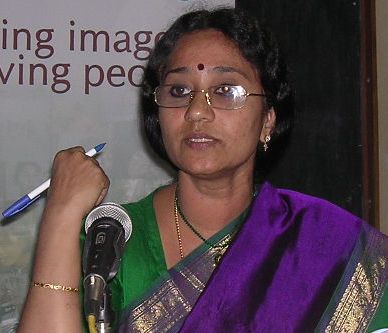
dr-asha-krishnakumar.jpg Image courtesy WSSCC

It was several months later that I actually read Asha’s article. By coincidence, my daughter was having her own ‘toilet issue’ at the time — and the contrast was striking.

Asha’s article continued:
Susheela’s anguish is shared by a large number of girls in India who drop out of school for what sounds like an absurd reason: want of a toilet in school. “Sanitation is closely linked to female literacy in India,” says a United Nations Children’s Fund (UNICEF) study. According to V. Balakrishnan, convener of the Tamil Nadu Primary Schools Improvement Campaign, the lack of proper toilet facilities in schools has a definite and significant bearing on the drop-out rate of girls, particularly around the time they reach Class VIII. In 2000, barely 10 per cent of Tamil Nadu’s 40,000 government schools had usable toilets; the figure is much lower for the country as a whole.

I’d been covering development issues in the media for over 15 years, but this stark reality had not occurred to me. In some developing countries, girls face a greater struggle in enrolling in school and staying on. There are cultural, social and economic factors working against educating girls.

And as Asha’s article revealed, there are other, less known factors adding to this burden.

I shouldn’t have been surprised. Indian census data had revealed in 2001 that, some parts of the country had more television sets than toilets.

Asha’s was one of three dozen excellent media articles on water and sanitation that I read that month as a judge in an international award scheme to recognise the best media reporting on the issue. Organised by the Water Supply and Sanitation Collaborative Council (WSSCC), it was meant to to encourage broader media coverage of water supply, sanitation and hygiene (WASH) issues in the developing world.

The initiative, first launched in 2002, is open to journalists from developing countries, who write or broadcast original investigative reports on WASH issues. The Collaborative Council seeks to use the WASH Media Awards as part of the broader goals of fostering sustainable relations with journalists in developing nations, and increasing media coverage of WASH issues.

WASH has recently announced the next media awards, covering print and broadcast media coverage from 1 July 2007 to 30 April 2008. This time around, it also involves the Stockholm International Water Institute (SIWI).

Winning entries will be presented at the World Water Week in Stockholm , Sweden in August 2008. Deadline for the submission of entries is on or before May 15, 2008. Read the announcement

In 2004, the recipient of the first WASH Media Award was Nadia El-Awady from Egypt for her outstanding article “The Nile and its People”. It illustrated the impacts of industrial pollution, sewage and solid waste management on people’s health and dignity along the River Nile.

We evaluated a large number of high quality entries and decided to give special recognition and Certificates of Appreciation to several other journalists. Asha was one of them.

A few months later, it was my privilege to meet Asha in person at a workshop on media and sustainable development that TVE Asia Pacific organised as part of the Education for a Sustainable Future conference in Ahmedabad, India, in January 2005. The photo shows Asha addressing our workshop while Darryl D’Monte, fellow judge in WASH media awards looks on.

l-to-r-darryl-dmonte-asha-krishnakumar-and-nadia-el-awady.jpg

By another coincidence, the lady on the right is Nadia El-Awady who was overall winner of the WASH media award. At the time she was the Health and Science Page Editor of IslamOnline.net. She has since been promoted.

Either the world is smaller than we think, or our networks are larger than we imagine.

But I will always be grateful to Asha for opening my eyes on a silent emergency. One that I have since explained to my daughter. She no longer complains.

Read the WASH press release on 2004 media award winners

Read the publication on WASH Media Awards 2004

Read WASH media guide on The Biggest Scandal of the last 50 Years

Photos by Janaka Sri Jayalath, TVE Asia Pacific

Who makes the best ‘Alphabet Soup’ of all?

Image courtesy Wikipedia

Take a close look. This is the original Alphabet Soup.

It’s is a kind of soup containing noodles shaped like the letters of the Latin alphabet. According to the ever-helpful Wikipedia, it comes as a prepared, canned vegetable soup with letter-shaped noodles. Read full Wikipedia entry

Metaphorically, alphabet soup means “an abundance of abbreviations or acronyms”. In this sense, the term goes back at least as far as President Franklin D. Roosevelt’s alphabet agencies of the New Deal (1933-38). In the United States, the Federal Government is described as an ‘alphabet soup’ on account of the multitude of agencies that it has spawned, including the NSA, CIA, FBI, USSS, BATF, DEA and INS.

But Uncle Sam’s expertise in making alphabet soups has been challenged by another entity – the United Nations. (Interestingly, Roosevelt was an architect of the UN, and coined the term with Winston Churchill). The UN’s propensity for enriching the alphabet soup has few parallels.

In the early 1990s, when I was earning a living as a UN consultant in Asia, I had to wade through the sea of acronyms and abbreviations as part of my daily bread. Funnily enough, some high-level peddlers of arconyms no longer even remembered what they stood for!

The UN has enriched the alphabet soup even more in the years since. MDG is a current favourite – it stands for Millennium Development Goals, a blue print for achieving basic socio-economic development by 2015.

It’s not just the UN, but the entire development community that is in love with coining abbreviations and then liberally bandying them about. Some are manageable. Others are unpronounceable tongue-twisters. PLWHA comes to mind – that stands for Persons Living with HIV/AIDS.

And then there are too many meanings or expansions for the same abbreviation, causing confusion to those who don’t know the context. ICT is a good example. We in media and development circles use it to mean Information and Communications Technologies. But the Wikipedia shows at least another two dozen meanings for the same three letter combination!

Journalism taught me to explain every technical term and abbreviation when introducing it. I still do, but on the whole I avoid abbreviations if we can help it.

But I have to watch out. A colleague reminded me recently that I’ve been happily coining inhouse acronyms myself. Examples:
GBR – The Greenbelt Reports (Asian TV series)
STP – Saving the Planet (Asian regional project and upcoming TV series)
D4C – Digits4Change (Asian TV series)

Does this make me a minor chef in expanding the Alphabet Soup?

Maybe it does! If I can’t beat ’em, I’ll join ’em….