Sir Arthur C Clarke’s death on 19 March 2008 inspired a tremendous amount of coverage and commentary in print, broadcast and web media outlets.
Among all these, one of the wittiest and funniest was this cartoon by Gihan de Chickera, appearing in Daily Mirror, Sri Lanka, on 20 March 2008.
Gihan said it with a brilliant economy of words that Sir Arthur would surely have approved. In fact, Sir Arthur was a regular reader of the Daily Mirror (Colombo) right up to his death.
As someone who was part of Sir Arthur’s personal office for two decades, I can confirm how willingly and gladly he accommodated requests for autographs. If anyone bought a book of his, that was reason enough to sign it, the late author used to say.
He was aware that not all requests for signatures and book autographs were from genuine personal collectors. Some of them ended up being auctioned on eBay and other online trading platforms. That didn’t dampen Sir Arthur’s willingness.
In fact, he used to joke about it all, saying: “I have this vision that one day in the future, there’s an auction where a rare un-autographed Arthur Clarke book sells for an outrageous price!”
Purists might point out to our cartoonist that there’s a certain incongruity of Arthur C Clarke turning up in Heaven. He didn’t believe in an after-life of any kind – but was famously quoted as saying ‘I don’t believe in God, but I’m very interested in meeting Her!‘
Ah, to be a fly on the Heavenly walls when that encounter happens…
I belong to what’s arguably the biggest club in the world, whose members number not in millions but billions. Everywhere I go, I meet fellow members and, sooner or later, conversation drifts to our shared membership in – parenthood.
Last weekend, I was absorbing the sights, sounds and smells of the Laguna province in the Philippines in the exalted company of academic colleagues from the College of Development Communications, University of Philippines Los Banos. At one point, we walked past some old houses designed in Spanish style – a reminder of the country’s strong Spanish legacy.
I heard how the Filipino language has absorbed or adapted hundreds of Spanish words, so much so that the younger generations don’t realise the Spanish origins of many words they use everyday.
Happy coincidence: my daughter Dhara (still 11) and I are fans too of the smart and adventurous little French girl who lives with 11 other kids Miss Clavelle’s boarding school in Paris. Although the smallest girl, Madeline nevertheless manages to get herself into one predicament after another, giving her friends and teachers much to worry about. In the end, though, she always comes out all right.
Madeline is a good friend of the Spanish Ambassador’s son, Pepito. The young boy occasionally slips in a few Spanish words or phrases. This happened in one episode when Pepito was talking about sombreros.
The Filipino girl was excited. She exclaimed: “Mom, Pepito is talking in Filipino!”
It’s a small reminder of how delightfully mixed up our cultures are – and not just in language. Many of our metaphors, references and other expressions have been borrowed and adapted from other cultures and traditions in far corners of the planet. After a generation or two, few remember the origins.
It’s becoming impossible to discern or define what is ‘local’ anymore in this rapidly globalising and integrating world. Sociologists and communication researchers who split hairs about preserving ‘local content’ have a romanticised notion that is hard to find in the real world.
‘Content creation’ describes something that we journalists, as well as film-makers, writers and creative artistes have been doing for centuries. For much of that period, content was entirely local. It was only in recent decades that information and communications technologies (ICTs) enabled content to be swapped around the world at the speed of light.
And some ICT activists feel the need to make content more local again. No doubt an ideal. But I keep asking them: just what is local anymore in our rapidly integrating and hopelessly mixed up world?
Does it really matter anyway, except to the cultural purists who live in ivory towers?
Dewitt Wallace, the American founder of the Reader’s Digest magazine, was fond of pointing out how much his publication had become a part of the everyday lives of millions of people worldwide. One of his favourite anecdotes was about two children born and raised on a Caribbean island.
On their first visit to the United States, the kids were walking on the streets of New York, in the magazine’s home state of New York (Reader’s Digest is owned and published by The Reader’s Digest Association, a privately held company based in Chappaqua, New York, but the mailing address is actually Pleasantville, New York). On seeing the magazine on sale at newsstands, one of them exclaimed: “Look dad, they have the Reader’s Digest here too!”.
I personally think we should focus more on content that is locally relevant and locally useful. If it is also locally generated, that’s well and good — but does the point of origin matter too much in this knowledge society, when we are swapping electrons and ideas across political boundaries?
In September 2007, I wrote about Ozzy Ozone, an energetic, cheerful little ozone molecule – part of the ozone layer in the upper atmosphere that prevents the Sun’s harmful ultra-violet rays from coming through and causing skin cancer, cataract and other health problems.
Ozzy Ozone is part of a global public education effort by the UN Environment Programme (UNEP) to tell everyone how harmful UV rays are to our health, and how Ozzy and his fellow ozone molecules are literally protecting life on earth from being zapped out.
Last week, while attending a UNEP meeting in Bangkok to plan the next ozone communication strategy for Asia Pacific, I heard some disturbing news: little Ozzy has become a prisoner of his brand guardians. As a result, he is not as free as he could be to roam the planet, spreading the vital ozone message.
Anne Fenner, Information Officer of UNEP’s OzonAction Programme revealed how she routinely turns down requests to produce toys and other material using the popular character.
“I have had so many requests from companies, but we cannot allow commercial exploitation of this brand,” Anne said.
I was stunned. Here is one of the more popular communication products to emerge from the UN, not generally known for such successful engagement of popular culture. And there we were, brainstorming on ways to get the ozone message to large, scattered (and distracted) audiences.
Ozzy was created by a graphic artist in Barbados, as part of a government-supported campaign to raise public awareness on ozone layer thinning. This cartoon character served as a “mascot” and was very effective in raising awareness in Barbados. The cartoon series was printed in local newspapers. Additionally, promotional items produced for local public awareness and education campaigns using the Ozzy graphic include posters, key rings, rulers, erasers, refrigerator magnets, mouse pads, pens, pencils, stickers, and envelopes.
Ozzy has been a run-away success, giving UNEP a high profile, widely popular character — and a great deal of media coverage and interest. The kind of media engagement that is typically enjoyed by Unicef, the most media-savvy of all UN agencies.
But we now know that Ozzy’s brand guardians don’t allow him to go as far as he could. They may be playing by the rules, but do they realise that huge opportunities are being lost?
There we were, a small group of journalists, communicators, scientists and government officials discussing for three days how to get the biggest bang for our collectively limited buck where ozone messaging is concerned.
It was frustrating to know that the best brand ambassador has been locked up in brand integrity and copyright restrictions.
I suggested to Anne Fenner that protecting the brand integrity need not be so rigidly pursued. For example, careful franchising could be undertaken based on a set of guidelines — and the royalty could go into a trust fund that supports ozone communication work.
Indeed, the challenge for development communicators everywhere is to find the common ground between the public interest and the commercial interest. In this era of globalised media and CSR, the two interests are no longer mutually exclusive. Some might argue they never were.
The long-established copyright regimes themselves are being questioned, challenged and bypassed by a growing number of research, advocacy and activist groups. Many now publish their academic or artistic work under Creative Commons licenses, that enable their creators to be acknowledged and retain some control — and yet allow many types of uses without excessive restriction.
UNEP has some catching up to do. Turning the pages of lavishly illustrated Ozzy Ozone comic story books (of which 3 titles have come out so far), I found that UNEP has the standard copyright restriction. However, they add a line: “This publication may be reproduced in whole or part and in any form for educational or non-profit purposes without special permission from the copyright holder, provided acknowledgement of the source is made.”
That’s encouraging – but not good enough. What happens if a commercially operated media organisation wants to use this content for public interest? Will they qualify under ‘educational or non-profit purposes’?
Probably not. And that’s when the dreaded copyright lawyers could come marching out.
It’s the assorted lawyers and over-cautious officials who are keeping Ozzy Ozone a virtual prisoner.
And sadly, little Ozzy is not alone. Everywhere in the publishing and media world, we can find many examples of how creative works are being held back – usually by over-protective lawyers or accountants. Sometimes that’s the case even if the artistes or media professionals themselves would much rather let go of the rights.
In July 2007, I wrote a blog post called ‘The lawyers who locked up the butterfly tree’ — which revealed how lawyers working for the publicly-funded BBC had systematically blocked a multi-award winning African documentary film from being used for environmental education, awareness and advocacy. All because the BBC had partly funded its production, and therefore had a claim on its copyright.
So here’s our plea to Ozzy’s brand guardians in UNEP: let him roam free, taking the vital message to millions. And while at it, let him make some money (from franchisees) which can suppot the rest of UNEP’s ozone communication work.
And if some spoilsport of a copyright lawyer gets in the way, tell him/her to take a beach vacation — without sunblock.
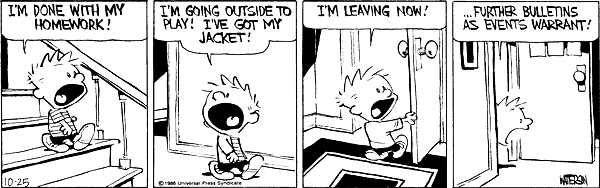
This came in a few days ago – as part of my daily diet of emailed Calvin and Hobbes comic strips sent free by Go Comics.
It reminded me of our South Asian governments and many 24/7 news channels who sound just like Calvin.
Governments – at least in popularity-conscious democracies – are constantly trying to create news, even when there is nothing new, true or interesting (the triple test for news). There’s a lot more rhetoric, plans and claims than actual accomplishments.
TV news channels, having to fill 24 hours of the day, cover news needlessly and in endless repetitions and detail. (By the way, covering news needlessly is an irreverent expansion of the abbreviation CNN!).
Actually, I shouldn’t compare either entity with the smart six-year-old Calvin. He is a great deal more interesting on an on-going basis than most of our governments and much of our news media.
I’m a long-standing fan of the comic – and followed it while Bill Watterson was still drawing them from 1985 to 1995. It was a sad day indeed when he decided on 31 December 1995 not to draw any more Calvin and Hobbes.
It’s very well made, with great use of images and sound, and powerfully sums up the complex issues around fair trade in an accessible manner. The best part: we don’t feel it’s an activist film, even though fair trade is, by definition, progressive and activist.
What is your power as a consumer? The film, produced in association with TransFair USA and TinCan Productions, begins with this question.
It then tells us: “Fair Trade combines stringent environmental criteria with the highest income and labour standards of any product certification. Fair Trade ensures a fair price for farmers, fair wages for workers, safe working conditions, direct marketing access, community development, democratic decision making, sustainable farming methods, environmental protection.”
Chris White of TransFair USA quips: “Fair trade isn’t a product. Fair trade isn’t a brand. Fair trade is a story.”
Fair trade is all about creating opportunities for small scale producers in the developing countries to get organised and supply directly to consumers in different parts of the world. When they sell direct, with few or no intermediaries, they can earn three or four times more, and that money will enhance their incomes, living standards and societies.
Fair trade is certainly a cherished ideal, but it’s mired in complex economic and political realities. The globalised march of capital, profit-maximising multinational corporations and developed country farm subsidies are three among many factors that made fair trade difficult to achieve in the real world.
Difficult, but not impossible. Determined producers and consumers have shown over the years that they can connect to each other, ensuring greater fairness and justice in transaction. That’s the power of the consumer.
Now here’s another kind of fair trade that I have been advocating for a long time: Fair Trade in Film and Television (FTinFT for short). It’s high time we started promoting this as another plank in fair trade activism.
Let me explain. In the media-rich, information societies that we are now evolving into, media and cultural products are an important part of our consumption — and therefore, more of these have to be produced. In the globalised world, more television and film content is being sourced from the majority world — or is being outsourced to some developing countries where the artistic and technical skills have reached global standards.
But in a majority of these media production deals, the developing country film and TV professionals don’t enjoy any fair terms of trade or engagement. Their creativity and toil are being exploited by those who control the global flow of entertainment, news and information products.
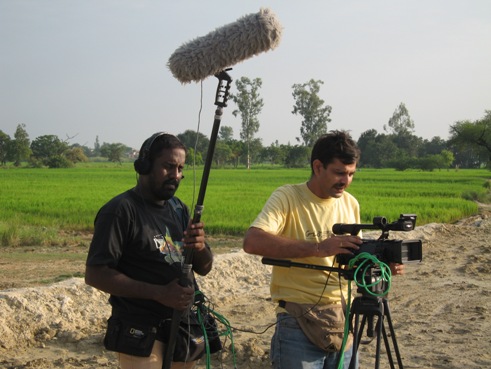
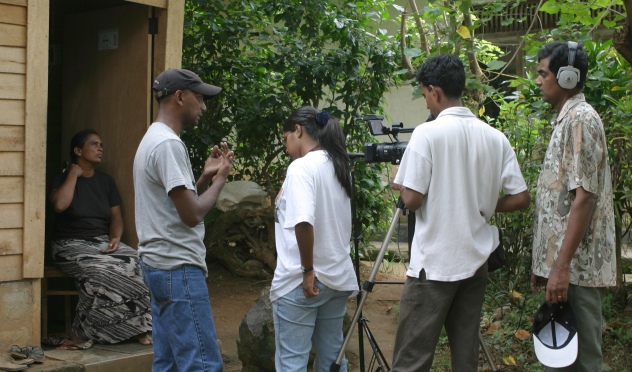
This is why the top talent in the global South become assistants, helpers and ‘fixers’ to producers or directors parachuting in to our countries to cover our own stories for the Global Village. Equitable payments and due credits are hardly ever given.
I personally know many award winning film-makers in developing countries across the Asia Pacific who have been engaged on such unfair, uneven terms. Lacking sufficient market opportunities and trade unions in their own countries, these professionals have little choice but accept the occasional assignment that comes their way from BBC, CNN, AJI or other global players.
Remember, film-makers have families to feed too.
Unfair trade in film and TV is also how the unsung, unknown creative geniuses contribute significantly to the development of new cartoon animation movies or TV series, as well as hip video games that enthrall the global market. Lacking the clout and skill to negotiate better terms, freelancers and small companies across the global South remain the little elves who toil through the night to produce miracles. They work for tiny margins and even tinier credit lines. Some don’t get acknowledged at all.
If you think this is inevitable in the big bad world of profit-making business, hear this. I also know some western charities that champion global justice who are equally guilty of repeatedly exploiting southern film-makers — sometimes, ironically, to produce documentaries about social justice issues!
Even as they cover stories about fair trade practices in coffee or cotton, these entities practise unfair trade in their own industry.
I can cite many examples. Last year, the London-based Panos Institute approached me for recommendations for development-sensitive film-makers in two Asian countries where they wanted to implement some training programmes. I asked if the professionals I can gladly recommend – whose skills are on par with any western counterpart – would be paid international rates. Panos backed out saying they can only pay a local rate, which they felt was good enough.
Then there are UN agencies who always haggle with local film-makers over rates and fees. The same agencies that happily commission PR media agencies from Madison Avenue for hundreds of thousands of US Dollars would ask southern film-makers to donate their time, or work at a reduced fee, for the United Nations causes!
Local rates for local talent is simply not good enough if their work contributes to an international media effort. Southern film-makers and photographers, who lack opportunities to roam the planet looking for stories and work, should be engaged on fair, international rates in any media venture whose products will be consumed globally.
I’m proud to say that TVE Asia Pacific practises what I preach here. We are small time commissioners of southern film-making talent, but we always pay international rates, and engage local talent in every country we work in. And they get due, proper credit in all our productions.
This, then, is the essence of Fair Trade in Film and Television that we must advocate and agitate for. As long as the story tellers of the global struggles for social justice are themselves excluded from the story, there can be no fair trade, or true global justice.
Let me return to the question frequently posed by fair trade activists: What is your power as a consumer?
Now ask that question as a consumer of media products on TV, video, DVD, web and mobile devices. Don’t take anything for granted. Don’t accept the lofty PR claims of big time (or even small time) producers and peddlers of media content on how ethically they have sourced or made this content.
For a start, look carefully at where stories have been made, and whether local film and TV professionals get proper, on-screen credit. And write to the big players – 24/7 news channels, cartoon corporations and others – demanding to know their fair trade policies and practices in content creation and sourcing.
Make the same demands on the United Nations agencies peddling media products on their social causes. See how many of them will stand a simple test: do they engage southern film-makers to tell stories of development and social justice in the South? If not, why not?
And if you are in a position to decide on commissioning a new film, TV or video product, please consider engaging local talent — but pay them international rates if your product is going to cross borders (these days it very likely will).
We have a long way to go to achieve Fair Trade in Film and Television. Let’s get moving!
Meena’s uncle has arranged for his daughter Rita to marry Babu, a shopkeeper’s son. But Rita is only 15 and has not yet finished school. With Meena’s help, it comes to light that Babu, who is studying to be a doctor, does not want to get married yet, especially since he knows it is unsafe for young girls to become mothers. To everyone’s satisfaction, the marriage is postponed until Rita is 18 and has completed her education.
Its central character is Meena: a spirited, nine-year-old girl, living in a typical South Asian village, facing all the usual challenges of growing up — whether in her efforts to go to school, or having enough to eat, or in fighting the stigma surrounding HIV/AIDS in her village. In a sub-region where many families still favour boys over girls, life is not easy for Meena, but she finds ways to not just cope but flourish.
Now comes the news of a real life Meena in Bangladesh.
Alo Amar Alo (“Light My Light”) centers around a girl named ‘Alo’ who stops going to school when she completes Class V. Throughout 26 episodes, the story follows Alo as she struggles to overcome life’s challenges through the support and friendship of a renowned actress.
Playing the role of Alo is 13-year-old Shimu, who suddenly finds herself the star of the country’s most popular television series.
In an article profiling her, The Washington Post wrote on 14 September 2007: “Shimu, a youthful Bangladeshi version of Winona Ryder, is recognized across the country for her moving role as the spunky 11-year-old heroine Alo. On Wednesday nights, more than 10 million viewers tune in after the 8 p.m. news to see her character put through the gantlet of family entanglements and financial strains that afflict many of the young girls in this desperately poor, densely populated South Asian nation. Alo must fight to stay in the fifth grade while her uncle demands that she work in a garment factory and other family members urge her to marry so they will have one less mouth to feed.”
“Teachers say that Shimu’s photograph hangs in classrooms across the country on posters advertising the show and that her story has become a symbol of the struggle to keep girls in school.”
Elsewhere, the article notes: “As in Latin America’s telenovelas and many African and South Asian TV dramas, story lines in Bangladeshi programs are often infused with messages decrying social ills such as child labor, domestic violence and early marriage. Many of the shows are low-budget productions funded by nonprofit organizations or the government. Shimu’s show…is funded by the Education Ministry and UNICEF; actors receive modest stipends.
Being a TV star has not changed Shimu’s life, says Washington Post writer Emily Wax. Even though Shimu is on television, her family does not own a TV set. She and her friends watch the show at the theater group’s center.
Her grandfather, Mohamed Siddiq, 61, is quoted saying he wants Shimu to stay in school but is worried that she may end up marrying or working, since their family is being evicted in a month and has no savings.
“We are illiterate. I really want Shimu to stay in classes,” Siddiq said. “It’s just so hard to survive here.”
The Alo Amar Alo series is funded by Unicef and the Ministry of Education in Bangladesh. It’s part of a communication strategy which includes interactive popular theatre shows, folksong performances, wall paintings and Meena Communication Initiatives.
“These have been extremely effective in raising awareness on the value of education as well as reaching the remote corners of the country through the mass media. Parents have shown more willingness to send girls to school. The increase in the enrollment of girls has also been the impact of multiple awareness raising campaigns,” says Unicef Bangladesh.
But big challenges remain. The Washington Post article draws parallels between the character Alo and child actor Shimu.
“Sometimes I feel she should support me,” Shimu’s grandmother, Ayesha, 49, who was herself married at 12, is quoted as saying. “Boys want to marry her. They are always harassing her. Even though she is known for her acting, it’s very hard to make a living here. If she were married, we wouldn’t have to worry about feeding her.”
To which Shimu says, simply: “It’s better to stay in learning for the future. I want to try.”
One concern is I have why Unicef is exploiting a child actor without adequate pay. The article refers to actors receiving ‘modest stipends’. If Shimu was paid better for her natural talent as well as considerable time she doubtless spends on acting in Alo Amar Alo, surely that can make a difference in one child’s life? Or is that not statistically significant for Unicef?
This is Ozzy Ozone. He is an energetic, cheerful little ozone molecule – part of the ozone layer in the upper atmosphere that prevents the Sun’s harmful ultra-violet rays from coming through.
It was a landmark international environmental treaty — one which has galvanized governments, industry and society into sustained action for two decades to give using close to a hundred chemicals, all of which – when released into the air – go up to damage the ozone layer.
Ozzy Ozone has been part of the many-faceted public education programme mounted by the UN Environment Programme (UNEP) to tell everyone how harmful UV rays are to our health, and how Ozzy and his fellow ozone molecules are literally protecting life on earth from being zapped out.
In this video, Ozzy Ozone and Alberta the Albatross take a voyage of discovery to find out exactly who and what is attacking the ozone layer and how children can play an important role in making a difference.
Ozzy himself is now 10 years old. He was created by a graphic artist in Barbados, as part of a government-supported campaign to raise public awareness on ozone layer thinning. This cartoon character served as a “mascot” and was very effective in raising awareness in Barbados. The cartoon series has been printed in the local newspapers on several occasions. Additionally, promotional items produced for local public awareness and education campaigns using the Ozzy graphic include posters, key rings, rulers, erasers, refrigerator magnets, mouse pads, pens, pencils, stickers, and envelopes.
The character was enduring and popular that UNEP struck a deal with Barbados to ‘globalize’ Ozzy. An animated video was produced, along with a dedicated website, comic strips and other media adaptations.
This is an amusing and clever video I’ve just come across on YouTube: Internet People. As its creators say “it’s an animated tribute to the internet people of the world, wherever you may be.”
It celebrates those ordinary people who found expression — and sometimes, fame — on YouTube before political campaign managers and corporate spin doctors realised its potential.
Animated by Dan Meth, with music by Dan Meth and Micah Frank, Internet People captures and celebrates our shared Internet experiences over the last half-decade with cartoon caricatures that are somehow funnier than the original footage.
“I dare you to watch it just once—or to get all the references after even three viewings,” says animator Meth.
Today, 15 August 2007, India marked its 60th anniversary of political independence from the British. Pakistan, which was created by the British partitioning of India at the time of independence, marked their 60th birthday yesterday.
So here’s wishing the Indo-Pak combine a meaningful 60th.
For human beings, 60 is a landmark age. In some cultures, it marks the beginning of senior citizen stage. Wisdom, maturity and exemplary conduct are assumed and expected of those reaching 60.
When it comes to nation states, however, things don’t quite work that way. India and Pakistan at 60 are a good example.
Yes, they have made significant advances on many fronts in the past six decades. But before that progress can be celebrated, we have to take note of the political and socio-economic turmoil that these two nations — harbouring close to 1.5 billion human beings between them — find themselves in.
Those tensions are exacerbated by the bitter nuclear arms race between these two still-impoverished nations.
When it comes to geopolitics of nuclear weapons, India and Pakistan behave worse than two sill school boys. This is how my friends at Himal Southasian magazine summed it up brilliantly:
And here’s another Himal cartoon which punctures the juvenile male obsession with weapons of mass destruction:
So let’s hope that the 60-year-olds will finally begin to act their age at least now!
I’m not sure if the interest is really in condoms, the Vatican or global warming, but since we must be demand-driven, here’s a new condom story! It concerns the three funniest condoms I’ve met.
They are called The Three Amigos – they are three differently shaped and coloured condoms, each with distinctive personality. They go places — certainly more than your average condom — to airports, forests, football games, recording studios, even television talk shows!
They are funny, amiable and out to have a good time. Occasionally they are also fallible and gullible — just like many humans are.
And like many of us, they grapple with hard choices in life – for example, between caution and temptation, or between right and wrong.
So far there are 20 adventures of The Three Amigos — each no longer than a minute: in those precious few seconds, a compact story is told with stunning effect. Talk about packing a punch.
Wherever they go, and whatever they do, the three friends have one mission: to remind us of many ways in which we can help stop the spread of HIV/AIDS.
The Three Amigos is a series of twenty Public Service Announcements (PSAs) in the form of short comedic sketches, featuring three animated, talking condoms. Some 80 volunteers in Canada, India and South Africa have created this ground-breaking behaviour modification programme to stop the spread of HIV/AIDS.
It is a multi-award winning series that has been endorsed by Bishop Desmond Tutu of South Africa, who believes these PSAs are a powerful communicating tool to encourage people to change their behaviour. Read Desmond Tutu letter here See testimonials from all over.
The Three Amigos is a north-south joint production. Its producers are Brent Quinn of South Africa and Firdaus Kharas of Canada. They are jointly responsible for the project and its contents.
Firdaus Kharas, who was also the Director of the series, is Ottawa-based and specializes in the creation of television programmes, feature films and animation. Most of the productions are international in creation and on international themes such as children’s rights.
We screened The Three Amigos every day, always to a packed house. Amidst the often depressing, long-format documentaries dealing with the death and misery unleashed by HIV (very much part of the HIV story), the animated cartoons livened up the audience — and showed that discussing HIV on television can be funny yet serious at the same time.
Our participants, all engaged in non-formal education through civil society organisations from South and Southeast Asia, had interesting things to say about The Three Amigos. In conservative Philippines that extends the Vatican’s dictates, for example, our friends can’t go very far — and it was uncertain if they could go on the air at all.
In conservative yet secular India, some of it could get on broadcast television – but not the more explicit ones. Clearly, making fun of sex, sexuality and sexual habits is a very delicate task, and such humour does not always travel across cultures.
As Asia grapples with an increasing incidence of HIV, countries will have to make some hard choices on confronting the epidemic. One choice is how to make the best use of tried and tested, existing public educational materials like The Three Amigos, all too willing to traverse Asia spreading their message: use condoms to stop AIDS.
PS: The website is careful to stress this:
“These PSA’s should be used as one component only in a comprehensive HIV/AIDS prevention programme. The PSA’s will not be appropriate in all settings and in all cultures and careful evalualtion of the appropriateness of each PSA should be made.”






 Open Minds!