UK Nepal Climate Change Film Competition: We’re toast in 3 minutes!

Tell a climate story in just 180 seconds...

In July 2007, we had an interesting discussion on this blog on the shrinking durations of Nature and environment films and TV programmes. The moving images community is divided on this, with some purists holding out that to pack complex, nuanced messages into a few minutes is akin to dumbing everything down. Noted film-makers like Neil Curry disagreed.

I revisited this topic in August 2008, saying: “But there’s no argument of the sheer power of well produced public service announcements (PSAs) to move people with a specific, short message. Nothing can beat them for the economy of time and efficacy of delivery.”

Kathmandu to Copenhagen - in three minutes?
The trend to make ever shorter films has been fuelled by the growth of online video, where the dominant value seems to be: less is certainly more! This is the premise, for example, of the current competition One Minute to Save the World.

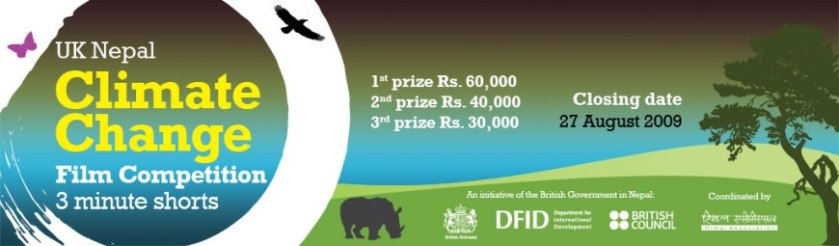
In Nepal, they were more generous — and allowed three minutes. I recently came across the winners of the UK Nepal Climate Change Film Competition, where Nepali film makers were invited to “make short, effective films of up to 3 minutes on the theme of Climate Change”. The submitted films had to be original in concept, innovative and highly motivational – no restrictions were set in terms of discipline or genre. It was organised by our friends at Himal Association, better known for sustaining Film South Asia festival for a decade.

The winning films were screened at an awards ceremony in September 2009 at the Regional Climate Change Conference in Kathmandu. They will also be screened at Kathmandu International Mountain Film Festival 2009 (10-14 December) and will be broadcast on television.

The winning film, Act locally think globally, was directed by Santoshi Nepal and Ishu Lama:

First runner-up, Jeopardy, is an animation directed by Shiva Sharan Koirala:

Second runner-up, 3 Cs of Climate Change, directed by Binod K Dhami and Padam Raj Paneru:

The competition attracted an impressive 124 entries. Angelo D’Silva, an educationist and media critic in Kathmandu, recently reviewed the entries in Himal Southasian special issue on climate change. He wrote: “In cash-strapped times, these contests focusing on climate change prove to be a cost-effective strategy in generating content. With no funding directed to the filmmaker for production, and prize money amounting to NPR 130,000 (USD 1700) for the three winners, the climate-change film contest is a way to make a splash on the cheap.”

He added: “While the filmmakers, all of whom were Nepali, exhibited an impressive range and quality, it was a range obscured by the selection of some fairly typical public-service-announcement-type finalists. Hopefully, however, two sets among the entries will soon see the light of day: those documenting the effects of climate change on Nepali communities, and those exploring (and exploiting) anxieties and fears about the burgeoning climate crisis.”

Read full review here.

I have only seen the three winning entries that are available online, so it would be unfair to comment on other entries. But I found the three winners predictably text-bookish. For sure, simple awareness raising is always helpful, but much more is needed – and urgently so – to deal with climate change. Film can be a powerful force for changing lifestyles, and not all of them have to be feature film length in Al Gore style.

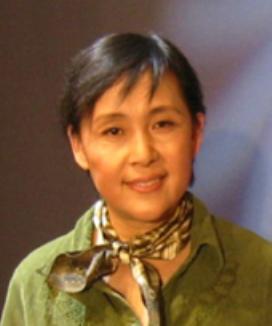
Sheri Liao: From ‘Time for Environment’ to TIME Hero of the Environment 2009

Sheri Liao photographed for TIME by Elisa Haberer

Copyright infringement – or piracy – in video, film and software is a highly contentious issue. I have good friends on both sides of the divide: film maker friends who insist on protecting all their rights to their creations, and open source advocates who want everything to be free and accessible in the public domain.

I can appreciate both points of view, but my own attitude to anyone copying any video films I have helped make or am distributing is: just sit back and enjoy it! After all, the kind of films I make and/or distribute through TVE Asia Pacific are all issue-based and in the public interest. If anyone pirates them, that can only peddle our content and messages to more people…

It’s a pragmatic response to a reality that I can do little to change anyway. Five of the world’s top 10 countries for video piracy are found in the Asia Pacific region, with China at No 2 and India at No 5. If you can’t beat ’em, cheer ’em — and even join ’em!

That’s just what I did in mid 1996, when we received first reports of a Chinese TV presenter making unauthorised use of environmental programming being broadcast on BBC World, the global TV channel. I was then the head of Asia Pacific programme for the non-profit foundation producing Earth Report series, which first aired on BBC and then offered to other TV channels and networks around the world.

Further investigations revealed that the person involved was a woman named Sheri (Xiaoyi) Liao, a former researcher at the Chinese Academy of Social Sciences who had formed an environmental group called Global Village of Bejing, and was presenting a weekly TV show called ‘Time for Environment’. To bring environmental news and views from other parts of the world, she was using Chinese dubbed extracts of Earth Reports recorded straight off the BBC World satellite channel.

By happy coincidence, I was visiting Beijing – for the first time – for a few days in October 1996, to participate in an international conference of rocket scientists (not my usual orbit, but fortuitous in this instance!). I managed to contact Sheri Liao, and one evening I escaped from the conference to meet this woman who was fast becoming the environmental face of Chinese television.

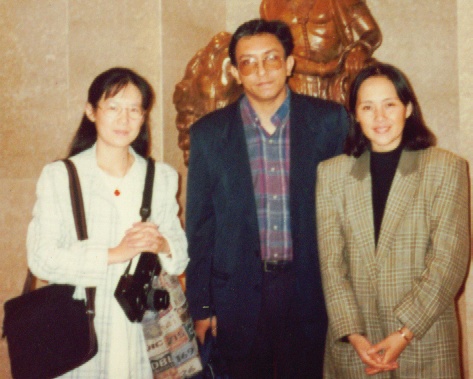
L to R Dr Li Hao, Nalaka Gunawardene & Sheri Liao, Beijing Oct 1996
Sheri Liao came to meet me with Dr Li Hao, a Chinese biologist who had recently returned from Germany and teamed up with Global Village in its quest to raise environmental awareness in China.

In a long chat over drinks and dinner, I found out Sheri had been a visiting scholar on International Environmental Politics at the University of North Carolina, but returned to her homeland to found the Global Village of Beijing earlier that year. She was keen to introduce responsible environmental conduct by Chinese citizens at every level. And early on, she realised the massive power of broadcast television to reach China’s one billion plus people. She approached her work with an obsession bordering on missionary zeal: in that process, she was even willing to ‘pirate’ foreign TV content – all for a good cause.

Soon after that encounter, I negotiated for Sheri Liao to make authorised use of Earth Report films in China. Instead of catching it off the airwaves, she soon started receiving proper master tapes and scripts, so a more professional versioning into Chinese could be done. My then British colleagues, who were initially peeved that a Chinese woman was pirating their programmes, soon became her ardent supporters.

That was also the beginning of many years of my engagement with environmental education and communication work in China. (Li Hao later left Global Village to establish her own non-profit, Beijing Earthview Environment Education and Research Centre).

All this is a long way of saying how delighted I am to see Sheri Liao being named as a Hero of the Environment by TIME Magazine earlier this month. She is one of several Asian leaders, researchers and activists included in this year’s roll call of men and women who are fighting on behalf of our beleaguered plant. Read full list here.

Sheri Liao: Greening the Airwaves of China...
Chronicling her close association with China’s rising levels of environmental awareness and activism, TIME noted: “Liao was helped by the fact that the birth of GVB coincided with China’s economic takeoff in the mid-’90s. The group became active in Beijing neighborhoods, raising environmental awareness on the local level. But in recent years it has expanded its work across the country, and it is now involved in everything from promoting plastic-recycling to encouraging building managers to reduce electricity consumption.”

Our paths have crossed a few times since that first meeting in the Fall of 1996. We have been in workshops and conferences together, where I saw Sheri in action – always intense, with a sense of urgency and resolve.

She has been recognised before. In 2002, she was awarded one of the ‘Ten Outstanding Women in China’ by the magazine Chinese Women. She was also honored as the ‘Green Guide’ by China National Planting Tree Committee in 2003 and became one of the ‘Ten National Outstanding Women’ in 2004. In 2005, she won the ‘Annual Economic Figure Social Commonwealth Award’ by China Central Television (CCTV). In 2006, she was honored Green Chinese Annual Figure.

Sheri also continues to be an unofficial bridge between China and the rest of the world. She works with UN agencies, foreign universities and charities like the Clinton Global Initiative – which honoured her with one of its Global Citizen Awards 2008.

China’s road to environmental salvation is a long and hard one. As TIME noted, “Environmental groups continue to run afoul of the Chinese government, which is wary of any power not concentrated in the hands of the Communist Party. But Liao is well connected — she served as an environmental adviser on the Beijing Organizing Committee for the 2008 Olympic Games — and in China’s tricky political landscape, those who walk a prudent line often travel furthest.”

Tata Young: Singing up a storm for the Ozone Layer

Tata Young - photo by Nirmal Ghosh
“Tata Young sings up a storm for Ozone Layer.”

That was a headline in the Bangkok Post newspaper on 8 October 2009, while I was in Thailand for the Ozone Media Roundtable. My friends at the UN Environment Programme (UNEP) were ecstatic.

Tata Young, 28, is a Thai-American singer, model and actress who is one of the best known performers in Thailand, with a growing following across Southeast Asia. Last week, she was among the performers at the “What on Earth!” concert in Bangkok, part of the EU Green Days event to coincide with the latest round of negotiations of the UN Framework Convention on Climate Change, UN-FCCC.

Tata is the latest Asian entertainment celebrity to join the climate bandwagon. Inside the UN Convention Centre in Bangkok, the climate negotiations were making slow progress. Environmental activists and campaigners were trying every trick in their books to speed things up — but governments bickered over selfish interests even as the planet heated up.

Tata’s newest album, Ready for Love, has its cover printed on recycled paper and sports a sticker that says “Protect the Ozone Layer”. Her interest in campaigning for ozone was sparked when she donated her time filming an ozone related public service announcement for UNEP last year.

The PSA is one of four that UNEP’s ozone team in Asia produced in 2008 as part of their public awareness campaign. They all draw attention to an important date that is drawing close: by or before 1 January 2010, all consumption and production of chlorofluorocarbons, or CFCs, one of the main destroyers of the ozone layer would be phased out in all countries of the world. That is a significant achievement under the Montreal Protocol that nations of the world adopted in 1987 to save the endangered ozone layer.

The PSAs started screening in movie theatres in the Philippines earlier this year, to be followed by Thailand and other countries in the region.

Watch Tata Young’s ozone PSA for UNEP:

In June this year, talking to journalist Nirmal Ghosh, Tata Young said: “It’s important that people are aware of the little things you can do to protect our world, are aware (of ozone) and know what’s going on, especially because unlike garbage and other types of pollution, you can’t see the ozone layer.”

Read the full text on Nirmal’s blog: More Than Just Hot Air, 4 June 2009

Tata is now singing and speaking for the ozone layer on her own steam. Unlike some other UN agencies, UNEP does not have a formal goodwill ambassador programme. But she has de facto become one.

Full credit to her for this choice. After all, the Ozone Layer – located between 10 and 50 kilometres above the Earth, and invisible to the naked eye – is not something tangible like cuddly animals or endangered plants. Moving ordinary people to care for something they can’t see or touch is that much harder, even if all life on Earth depends critically on it (the Ozone Layer absorbs most of the Sun’s harmful ultra-violet days).

Tata used to hit the headlines in Thailand for some songs which were considered a little too ‘hot’ for the conservative guardians of culture. But looking at the less-than-glacial pace kept by climate change talks in Bangkok, perhaps activists should roll out Tata Young to turn on the heat…

Calling All Climate Films: Engage the world with EngageMedia!

May a million Al Gores rise to this challenge!

Exactly this time last year, in early October 2008, I spoke to a group of Asian broadcasters and film-makers gathered in Tokyo on what it takes to stand on Al Gore’s shoulders.

Whatever we might think about the artistic and technical merits of his climate film An Inconvenient Truth, it has settled with a resounding ‘yes’ one question: can a single film make a difference in tipping public opinion about a matter of global importance?

But the climate crisis that confronts us is so formidable that we need many more Al Gores to come up with as many moving images creations as they can.

EngageMedia, a video sharing site about social justice and environmental issues in the Asia Pacific, has put out a call for video/TV films on climate crisis, climate action, climate justice and climate solutions. They plan to ‘put the best stories on a DVD and in an online package to be screened and distributed before, during and after the United Nations Framework Convention on Climate Change (UNFCCC) Summit meeting in Copenhagen in December 2009.

Their call out for all climate films says: “This December thousands of delegates, decision makers, stakeholders and activists will converge on Copenhagen. To be part of this EngageMedia is putting together a compilation of Asia-Pacific climate films to be screened and distributed at the event and around the world. Submit your film to EngageMedia and be part of the action. Global action is urgent and essential – the time for debate is over.”

TVE Asia Pacific
, already a partner on EngageMedia platform, is submitting all its recently produced climate change films.

Read the full text of Climate Crisis Video Call-Out: Time for Reel Action!

Passing the buck or passing the planet? Saving the Planet is everybody’s business!

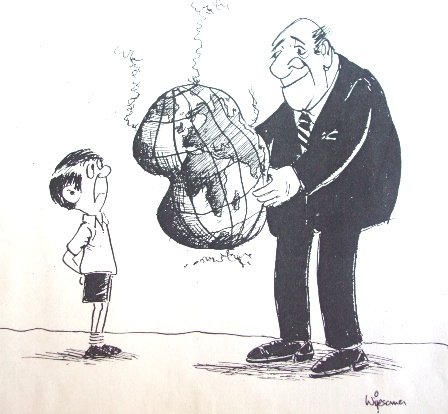
Passing the buck? Cartoon by W R Wijesoma
This was one of the most memorable cartoons drawn by W.R. Wijesoma, Sri Lanka’s pre-eminent political cartoonist (and my one-time colleague). If I remember right, it first appeared sometime in the late 1980s in ‘Mihikatha’, Sri Lanka’s first all-environmental newspaper.

Alas, both Mihikatha and Wijesoma are no more among us. But the message in this cartoon is more timely than ever before.

“Is this what we are going to hand over to our future generations? Please……no!” was the emphatic message from Yugratna Srivastava, a 13-year-old Indian girl who addressed over 100 world leaders gathered at the United Nations headquarters on 22 September 2009 for the historic Summit on Climate Change.

Passing the ball – or buck – is something that governments are good at. Most governments are so narrowly focused on the now and here, and sometimes rightfully so, that they have neither the time nor interest for medium to long term scenarios. As I wrote earlier this week, “it’s going to take many more meetings, bickering and hard bargaining before the leaders begin to think in terms of the next generation.”

This is where citizen action comes in. Governments are not going to save this planet from environmental catastrophes; if at all, it would be the ordinary people. This is the premise of TVE Asia Pacific’s latest Asian TV series, Saving the Planet.

Where does the buck stop?

Governments, experts and big corporations alone cannot solve all these problems. Real change requires changing how each and every human being lives and works. Education becomes the biggest key to achieving environmentally sustainable development at local and global levels.

Filmed in six countries in South and Southeast Asia, Saving the Planet profiles groups working quietly and relentlessly to spread knowledge, understanding and attitudes that inspire action that will help humans to live in harmony with the planet. They often work without external funding and beyond the media spotlight. They have persisted with clarity of vision, sincerity of purpose and sheer determination. Their stories inspire many others to pursue grassroots action for a cleaner and safer planet.

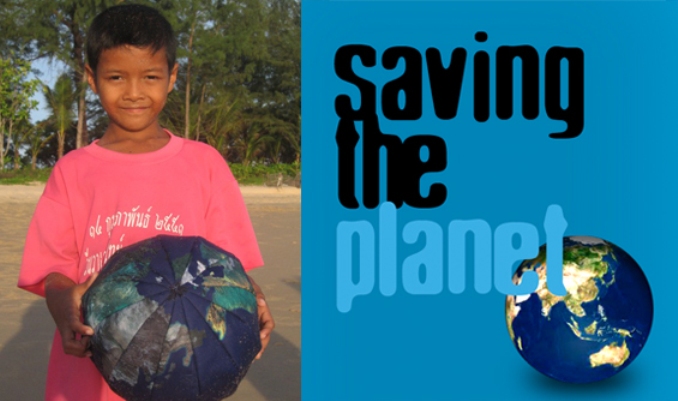
We tried out a creative idea for the series opening sequence (20 seconds), an extended version of which became the series trailer (see below). It was planned and filmed in all the six countries where the stories came from — Cambodia, India, Laos, Nepal, the Philippines and Thailand. In each country, our roving director-producers filmed different individuals – young and old, men and women, in all their Asian diversity – passing around an inflated ball made to look like planet Earth.

I know my colleagues had fun filming these sequences, and back in our studio, it was also great fun to mix and match these various shots to create the apparently seamless passing around of our planet in peril. (Who said planet saving cannot be fun?)

Watch Saving the Planet trailer (1 minute):

Now it can be revealed: our original inspiration came from an unexpected source: the world’s largest media corporation, Google! In one brainstorming, our then production coordinator Buddhini Ekanayake remembered an open challenge that Google had made online just before introducing their email service, GMail. Google asked people to “imagine how an email message travels around the world” using a video camera.

In all, Google received over 1,100 clips from fans in more than 65 countries around the world — each one of them a different creative idea, playing with the iconic Gmail M-velope.

“The clips you submitted were amazing and it was hard to choose selections for the final video,” Google said when releasing the outcome of this collaborative video project.

See Gmail: Behind the Scenes (Final Cut)

Read more about the GMail collaborative video on Google’s blog

Watch all submissions Google received for its GMail promo video.

As Oscar Wilde once said, “Talent borrows. Genius steals.” You can decide which of these we have done!

Next Election or Next Generation? World leaders, time to choose is NOW!

Yugratna Srivastava: Lend me your ears...
This week saw the UN’s invisible man hosting mostly indifferent leaders at a Summit on one of the world’s most pressing challenges: climate change.

Nearly 100 world leaders accepted UN Secretary General Ban Ki-moon’s invitation to participate in an historic Summit on Climate Change in New York on 22 September to mobilise political will and strengthen momentum for a fair, effective and ambitious climate deal in Copenhagen this December.

The call for action at the summit did not just come from world leaders – many of who simply can’t see beyond their next election – but also from the next generation who stand the most to lose if climate talks fail.

On their behalf, Yugratna Srivastava, a 13-year-old Indian girl, spoke forcefully at the podium, sending a wake-up call to those assembled. “We received a clean and healthy planet from our ancestors and we are gifting a damaged one to our successors. What sort of justice is this?,” she said.

She added: “The Himalayas are melting, polar bears are dying, 2 of every 5 people don’t have access to clean drinking water, earth’s temperature is increasing, we are losing the untapped information and potential of plant species, Pacific’s water level has risen,Is this what we are going to hand over to our future generations? Please……no!”

She said the three billion young people in the world need them to take action now to protect the planet for future generations.

Watch part of her speech in this TV news story:

Read full text of her speech

Read Indian TV news channel IBN’s interview with Yugratna Srivastava just after delivering her speech.

Read Ban Ki-Moon’s summary of the Summit, delivered at its end

All this news coverage reminded me of another passionate young girl who similarly addressed – and challenged – the world leaders 17 years ago at the Earth Summit held in Rio de Janeiro, Brazil.

Her name was Severn Cullis-Suzuki, and she was a young Canadian environmental activist. Then 12-year-old Severn closed a Plenary Session with a powerful speech that received a standing ovation.

Raised in Vancouver and Toronto, Severn Cullis-Suzuki is the daughter of writer Tara Elizabeth Cullis and environmental activist and TV personality David Suzuki. When she was 9, she started the Environmental Children’s Organization (ECO), a small group of children committed to learning and teaching other kids about environmental issues. They were successful in many projects before 1992, when they raised enough money to go to the UN’s Earth Summit in Rio. Their aim was to remind the decision-makers of who their actions or inactions would ultimately affect.

Listen to the memorable speech at the Earth Summit by Severn Cullis-Suzuki:

Severn was every bit as sincere, concerned and passionate about the global environment as Yugratna Srivastava was this week. Seventeen years later, notwithstanding the lofty pledges at the Earth Summit and later gatherings, the environmental crises have multiplied and worsened.

Very few of the world leaders who assembled in Rio are still in office — and that underlines part of the problem. Governments have far shorter time horizons than what many of today’s global challenges demand. I am constantly reminded of what the eminent Indian scientist Dr M S Swaminathan told me in my first interview with him in 1990 (yes, even before the Earth Summit): “In democracies, rulers think in terms of the next election. In dictatorships, about the next coup d’état. Nobody is thinking in terms of the next generation!”

It was no small feat for the UN’s Invisible Man to bring 100 heads of state or heads of government together on such a long-term issue. But it’s going to take many more meetings, bickering and hard bargaining before the leaders begin to think in terms of the next generation.

Read my June 2008 comment: Message to the UN on World Environment Day: Kick your own CO2 habit!

Timeless Gandhian advice: Be the change you wish to see in the world…

Biggest gap: between rhetoric and practice!
It happened a decade ago, but I still remember the incident.

I was visiting London while the British Isles were having their typically limited experience with summer. My then colleague and I had gone for a business meeting, and were returning by Tube, or the London underground railway. Being the afternoon rush hour, the trains were packed to capacity.

My colleague didn’t say much on the journey, but I noticed her look of dismay. As we emerged from the tube station, she finally spoke: “Gosh, it’s another world down there, isn’t it? I didn’t know people smell so much!”

The warm and sweaty summer would surely have added to the experience, but as Londoners know well, the tube is the best mode of transport to get around quickly and inexpensively in that metropolis. It was only then that I realised my liberal, bleeding-heart colleague was not a regular user of public transport. She either uses taxis or drives around in her own Volvo car. She doesn’t normally commute with the Great Unwashed…

Yet, the same snooty ex-colleague speaks and writes so passionately on the virtues of public transport and mass transit systems as a means to better manage urban challenges in the developing world. Listening to her, one could hardly imagine her disdain for using public transport in her own city.

Practise what you preach. That’s a simple yet profound piece of advice for everyone promoting public interest causes in development, conservation or anything else. Or, as Mahatma Gandhi put it: you must be the change you wish to see in the world.

Saving the Planet: Living the Change

‘Living the change’ is also the title, and underlying message, of one film in Saving the Planet, TVE Asia Pacific’s new regional TV series showcasing communities thinking globally and acting locally.

The series features outstanding efforts in education for sustainable development (ESD) in South and Southeast Asia. It goes in search of answers to these key questions:
• What can ordinary people do for our planet, now under siege from multiple environmental crises?
• How can we change attitudes and lifestyles to consume less and generate less waste?

Here’s the synopsis of the India story:

For people in Dindigul in India’s Tamil Nadu state, waste isn’t really a problem – it’s just a resource in the wrong place. School children and housewives have been at the forefront in collecting household and market waste to turn them into compost. They have not only cleaned up the streets, but also persuaded people to grow organic food. As the word spreads, more towns and villages are emulating this example set by CLEAN India project and Gandhigram Trust.

Watch Saving the Planet: Living the Change

Read more information on this effort on Saving the Planet website.

Full credits and acknowledgements here

Radio Sagarmatha: Voice of a Valley and Hope of a nation

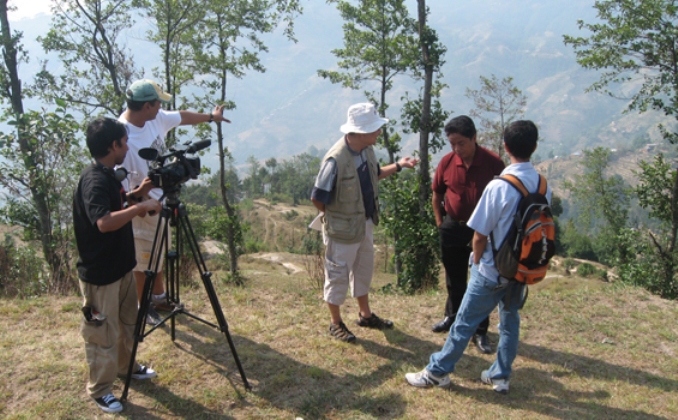
Location filming Saving the Planet in Nepal

I have written more than once in this blog about Radio Sagarmatha of Nepal, the first independent community broadcasting station in South Asia.

In May 2007, on the occasion of their 10th anniversary, I called it Kathmandu Valley’s beacon of hope. I have known and admired the Nepali friends who are running the award-winning, public-spirited radio station.

I’m delighted, therefore, to be able to make a short film about one facet of Radio Sagarmatha: their contribution to education for sustainable development, ESD for short.

Radio Sagarmatha’s path-breaking work in the resort town of Nagarkot is the story in one film of Saving the Planet, TVE Asia Pacific’s new regional TV series showcasing communities thinking globally and acting locally.

The six-episode series, which was 18 months in the making, features outstanding efforts in education for sustainable development in South and Southeast Asia.

It goes in search of answers to these key questions: Can ordinary people help save our planet under siege from multiple environmental crises? How can everyone change attitudes and lifestyles to consume less and generate less waste?

Here’s the official synopsis of the Nepal story, titled Voice of a Valley:

Tourism generates incomes, jobs and markets for the people of Nagarkot, a popular resort close to the Nepali capital Kathmandu. But it had a bumpy start when hoteliers initially bypassed local communities. These tensions were diffused by Radio Sagarmatha, the country’s first independent public radio station, which brought all interested parties together on the air. This example shows how media can do more than just report. By inspiring discussion and debate, media can help communities to find the best solutions or compromises for their development needs.

Watch Saving the Planet: Voice of a Valley

Many thanks to friends at the Nepal Forum of Environmental Journalists (NEFEJ), for their help in making this short film about one of their most outstanding efforts.

Find the full credits of the film here

Animating and singing our way to a Low Carbon Future…

Low Carbon, High Priority
Some 100 world leaders are due to gather at the United Nations headquarters in New York this week for the highest level summit meeting on climate change ever convened.

As the New York Times reported: “In convening the meeting, the United Nations is hoping that collectively the leaders can summon the will to overcome narrow nationalinterests and give the negotiators the marching orders needed to cut at least the outline of a deal.”

Recognising climate change as one of the greatest social, economic, political and environmental challenges facing our generation, the British Council has launched the Low Carbon Futures project. It has focus on mitigating the effects of climate change in an urban environment. It is part of the British Council’s major global climate security project and India is, along with China, one of the top two priority countries for this work. Sri Lanka, with less than 2% of India’s population and correspondingly lower carbon emissions, is a lower priority.

One strand in the Low Carbon Futures project is to engage communications professionals – journalists, writers and film makers to help them better understand the issues around mitigation and get across key messages to readers/viewers more effectively.

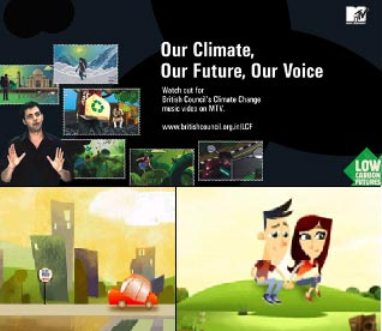
As part of this project, the British Council collaborated with Music Television (MTV) to produce a music video and two viral video animations on climate friendly, low-carbon lifestyles.

British Council’s first Music Video on Climate Change produced by MTV features VJ Cyrus Sahukar. Combining animation, lyrics and melody, the video talks about how small individual actions can help conserve natural resources and save the climate. MTV VJs have a cult following and the video ends with Cyrus Sahukar, MTV’s face in India, encouraging young people to take that first step. The video was launched in New Delhi on 1 June 2009 in the presence of 50 International Climate Champions from across India & Sri Lanka.

According to the British Council India website, “The video has created a flutter and there is growing demand to screen the video on various institutional networks across India and even outside fulfilling higher level objectives of impacting young urban aspirants. Young Indians are an emerging generation who are ambitious and internationally minded with the potential to be future leaders. The MTV video aims to influence this influential group.”

The Low Carbon Futures project has also released two short, powerful, animated messages that are ‘tongue-in-cheek’- making use of everyday events with a touch of humour. “We are hoping that the messages will be seen as creative, funny and innovative to tempt the recipient to forward it to their peer group. As the virus spreads, so will the message. The British High Commission and the The Energy and Resources Institute (TERI) are also promoting these virals to spread the message amongst the staff members and their external audiences,” says the project website.

The first viral video animation is called Green Journey, and shows a little known benefit of car pooling. Its blurb reads, simply: Meet 3 Mr Rights on the wrong side of the road!

The second viral video animation is called Play Cupid, and gives us one more reason to plant more trees! Blurb: Lets leave the young couples in peace and solitude of nature!

Watch out for more interesting videos from British Council India’s YouTube channel.

XYZ Show controversy: Kenyan politicians forgetting ‘Hakuna matata’?

Politics no longer a laughing matter?

“The trouble with political jokes is that they keep getting elected!”

Ayesha, a regular reader of this blog, left that one-liner comment in response to my blog post of 13 August 2009 on an interesting experiment in political satire on Kenyan television that ended its first season on 9 August 2009.

It’s a show called the XYZ Show, broadcast weekly on Kenya’s Citizen TV. Started in mid May 2009, the first season introduced Kenyan viewers to a new form of satire television, with life-sized puppets made to resemble famous persons, mostly politicians.

Now comes the report that the show has riled some Kenyan politicians – surprise, surprise! I have only just come across this Citizen TV news report, broadcast a couple of weeks ago:

Controversy Over The XYZ Show

The satirical puppet show XYZ on Citizen Television every Sunday night, has attracted the attention of non other than the Public Service Minister Dalmas Otieno. The Minister says the caricature show is depicting politicians in bad light. The Director of Communication Ezekiel Mutua avers that, the show is representative of just how free the media is, in Kenya.

Well, what can we say? We thought politicians in general had thicker skins. Perhaps some Kenyan politicians are in danger of forgetting that timeless piece of Swahilian advice: Hakuna matata!

Hakuna matata is a Swahili phrase that is literally translated as “There are no worries”. It is sometimes translated as “no worries”, although is more commonly used similarly to the English phrase “no problem”.